Trou de Fer
Trou de Fer, France
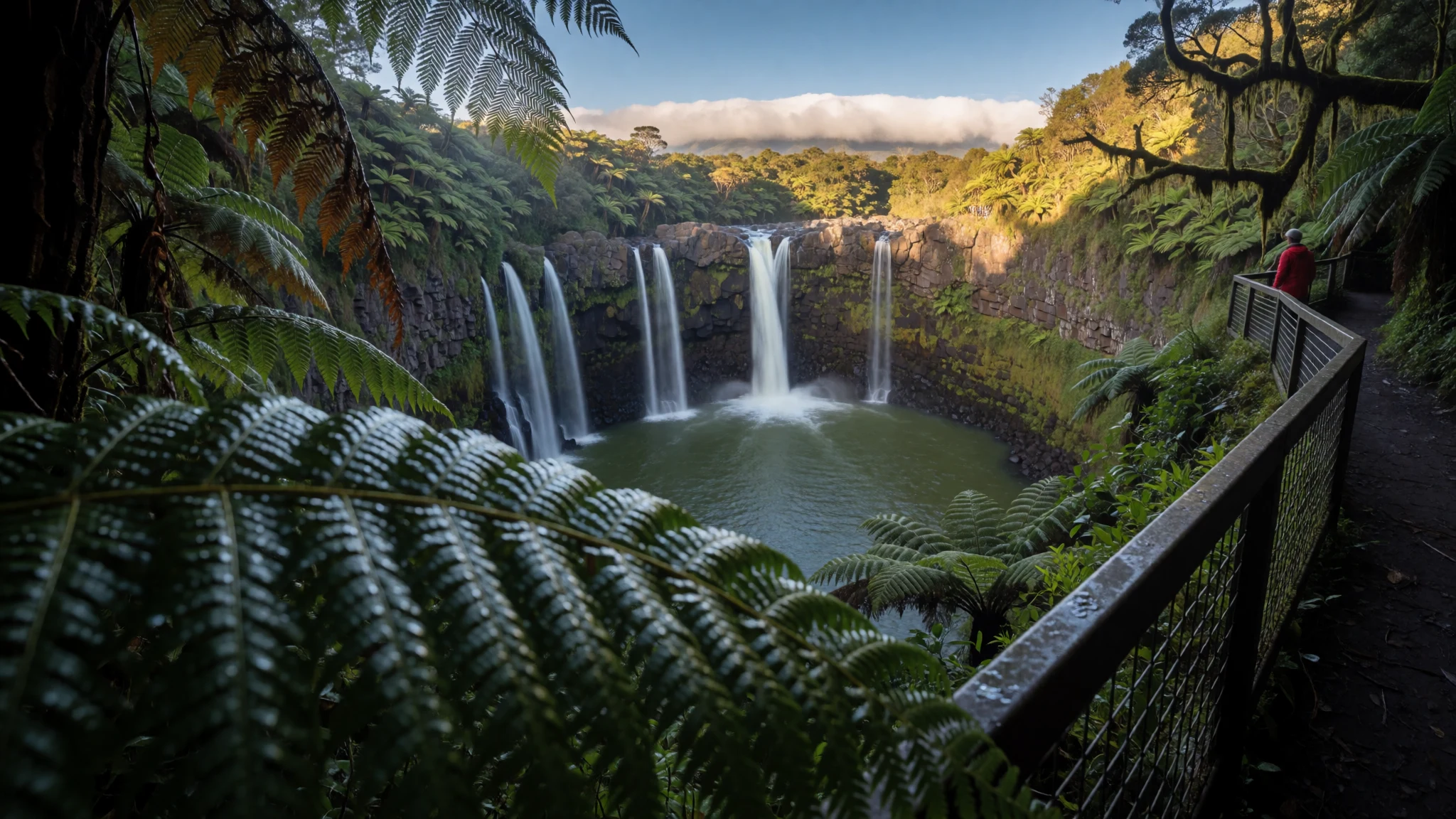
Trou de Fer is a deep Réunion canyon where six waterfalls drop into a forest-ringed bowl, best seen from above on a clear morning.
The place
Trou de Fer, the "Iron Hole", is a canyon on Réunion, a French island in the Indian Ocean off the coast of Madagascar. It is really two landforms joined end to end. The first is a wide, steep-walled bowl into which six prominent waterfalls drop. The second is a narrow slot, known as the Narrows, which starts at the foot of the bowl and makes up most of the canyon's length. The gorge is up to 300 m deep. Its main water comes from the Bras de Caverne, a stream that later joins the Rivière du Mât. The Bras de Caverne descends in stages: a first drop that is often dry or close to it, a second after springs have added water, and a final plunge over an undercut cliff, so that the water falls clear of the rock into the pool below. Beside it, other streams leave the same rim. One lands on a ledge in two channels before reaching the same pool, and another plunges in further along. How many of them are running depends on recent rain. Because the bowl is so deep and its rim so high, the usual way to see Trou de Fer is from a viewpoint above, looking down through spray and drifting cloud. The floor mostly stays out of sight. On a clear morning the whole amphitheatre opens up; on a cloudy one it can disappear for an hour at a time, leaving only the sound of water.
Its story
Trou de Fer is a young landscape in the way volcanic islands are young: raw rock, fast water and constant change. Réunion was raised from the sea floor by volcanoes, and this canyon is what rain has cut out of that fresh rock. Streams gather on the wet high ground, join as the Bras de Caverne, and spend their energy cutting downwards. That is why the gorge is steep and narrow rather than broad and gentle. The undercut cliffs tell the same story. Softer layers wear away faster than harder ones, hollowing the base until the lip overhangs and the water falls free. Nobody can give a tidy date for when the bowl took its present form, and it would be wrong to invent one. The process is still running, and a heavy downpour can turn a thin thread of water into a roaring curtain within hours. Human history here is mostly a history of looking. The name is a plain description of a dark, hard-walled pit, and for most visitors the canyon has been something seen from its rim rather than entered. Walkers reach the lookouts through the forest of Bélouve, and helicopter flights offer a view along the full length of the gorge. Photographs from both angles show the same thing: a small plume of white against a very large green hole.
What to see
- Bélouve forest viewpoint — Bélouve forest, above Salazie
The Bélouve forest is where most visitors get their view of Trou de Fer. A path through dense, moss-heavy vegetation leads to a railed lookout above the bowl. On a clear morning the falls can be picked out one by one; in cloud, only sound and spray remain. Arrive early, before the weather closes in.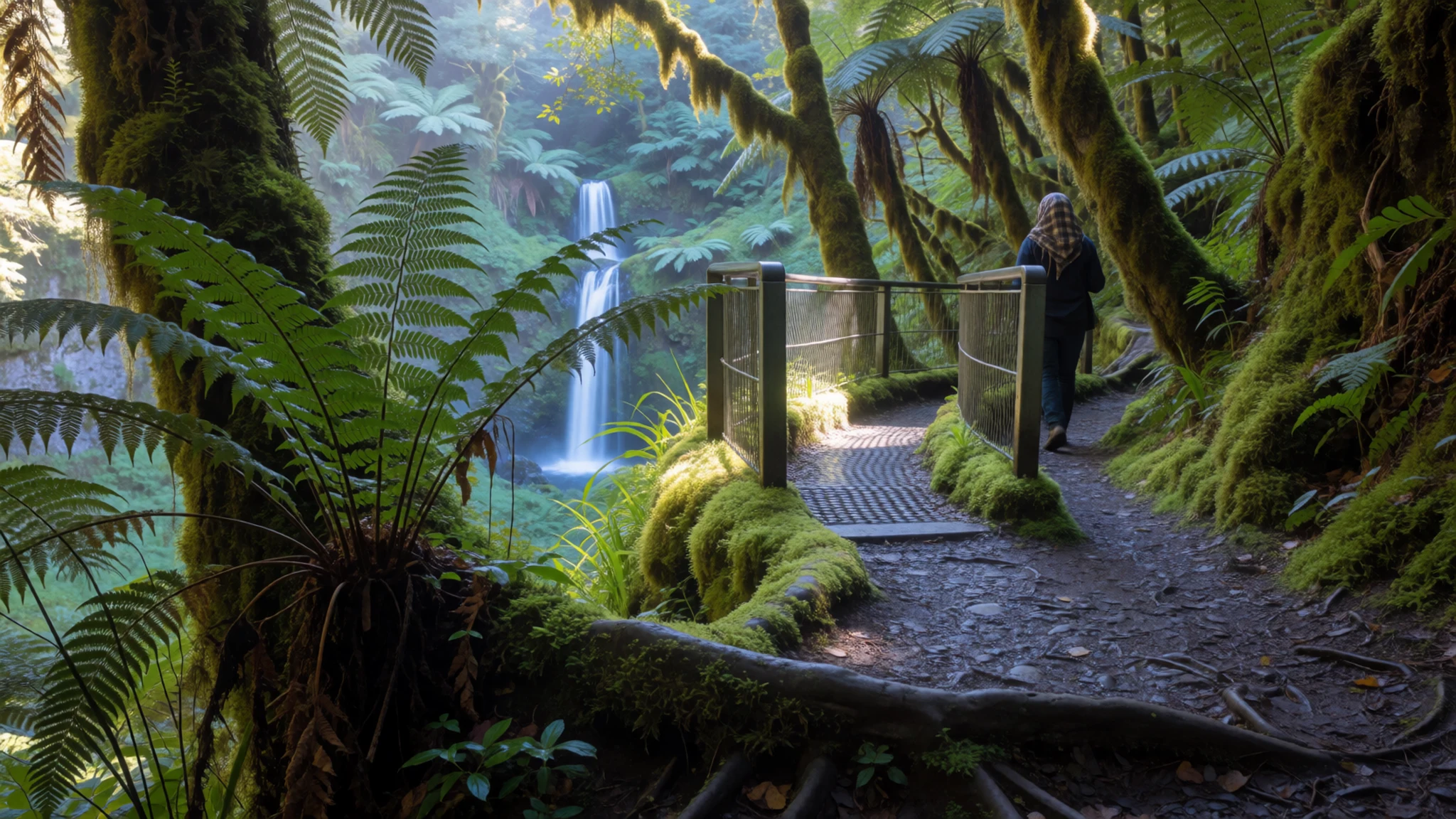
- Helicopter flight over the canyon — Flights from the island's airfields
Helicopter flights follow the canyon from the bowl down into the Narrows, which cannot be seen properly from the rim. Flights depend on weather and local operators, so check each operator's own website for schedules and prices. Cancellations are common when cloud sits on the ramparts, so a morning slot and a spare day are sensible.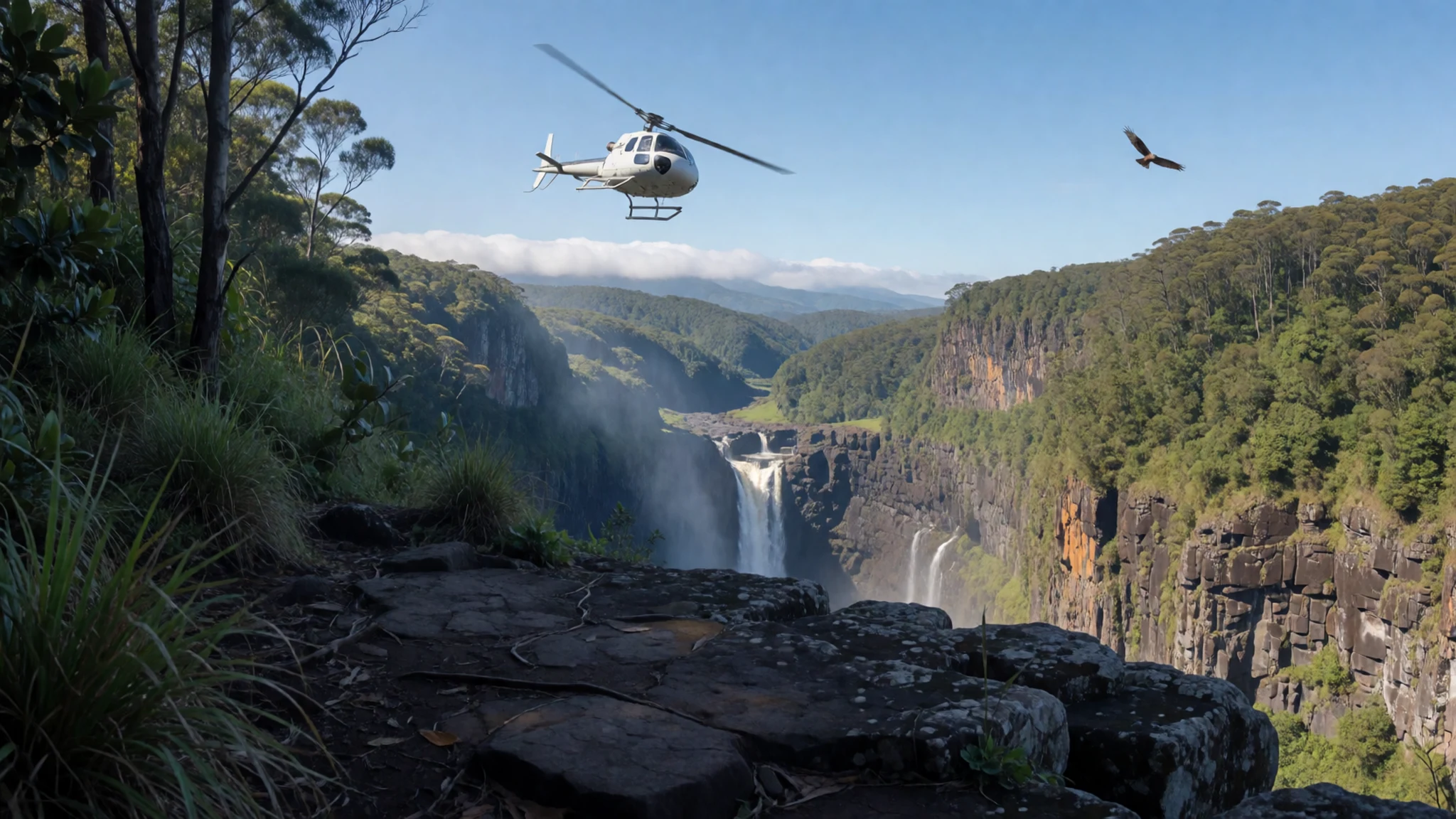
- The Narrows — Downstream of the bowl
At the foot of the bowl the canyon closes into a slot that makes up most of its length. Few visitors see it. From the air it reads as a dark crack in the forest. Anyone thinking of going in on foot should ask local guides and the island's mountain authorities first, since water levels can rise quickly.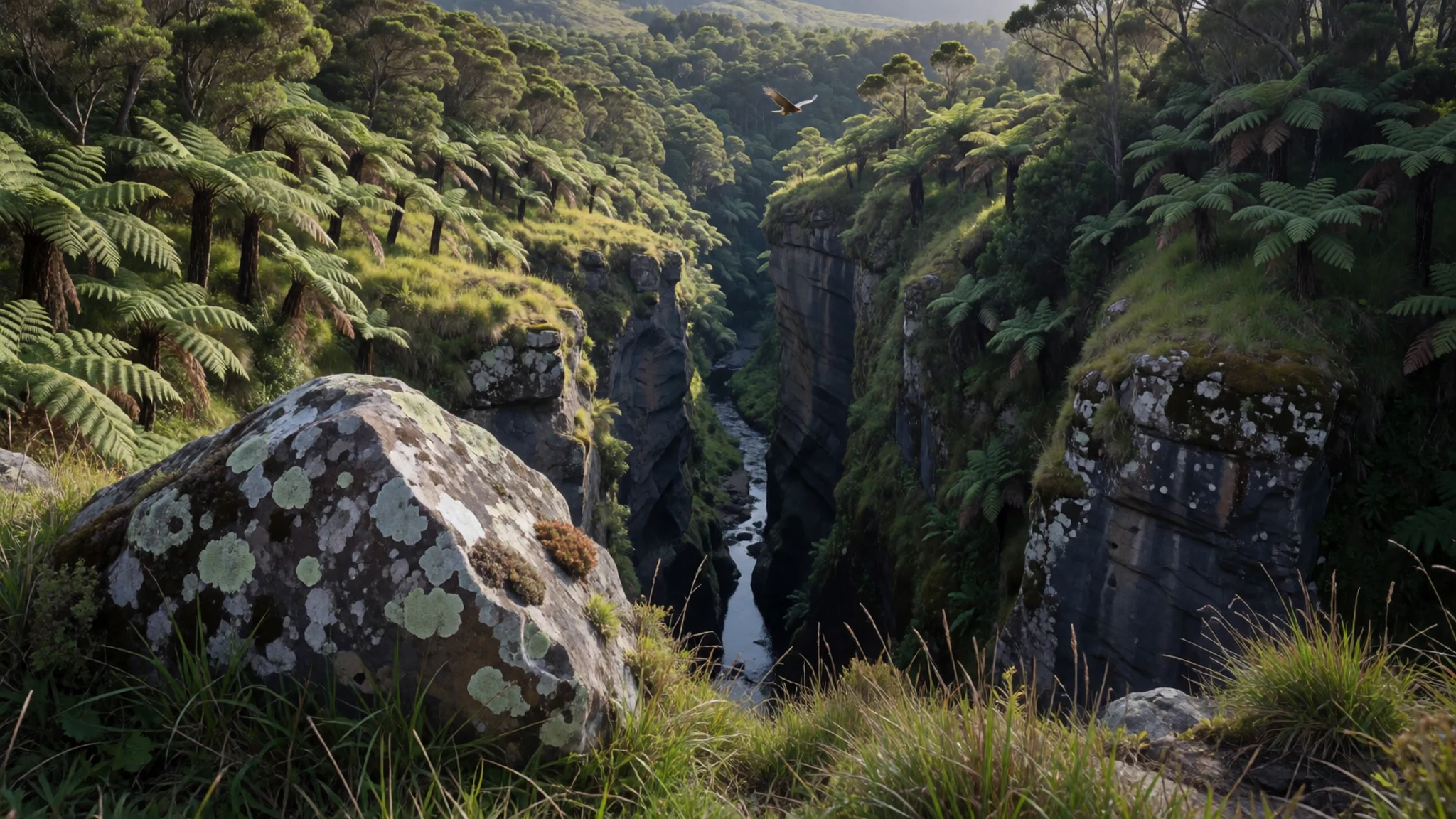
- Salazie waterfalls — Salazie
The cirque of Salazie lies beside the Bélouve plateau and has waterfalls of its own, including one near Mare à Poule d'Eau that photographers catch with a rainbow across it. These roadside falls are an easy way to feel the island's wetness if the canyon itself is hidden in cloud.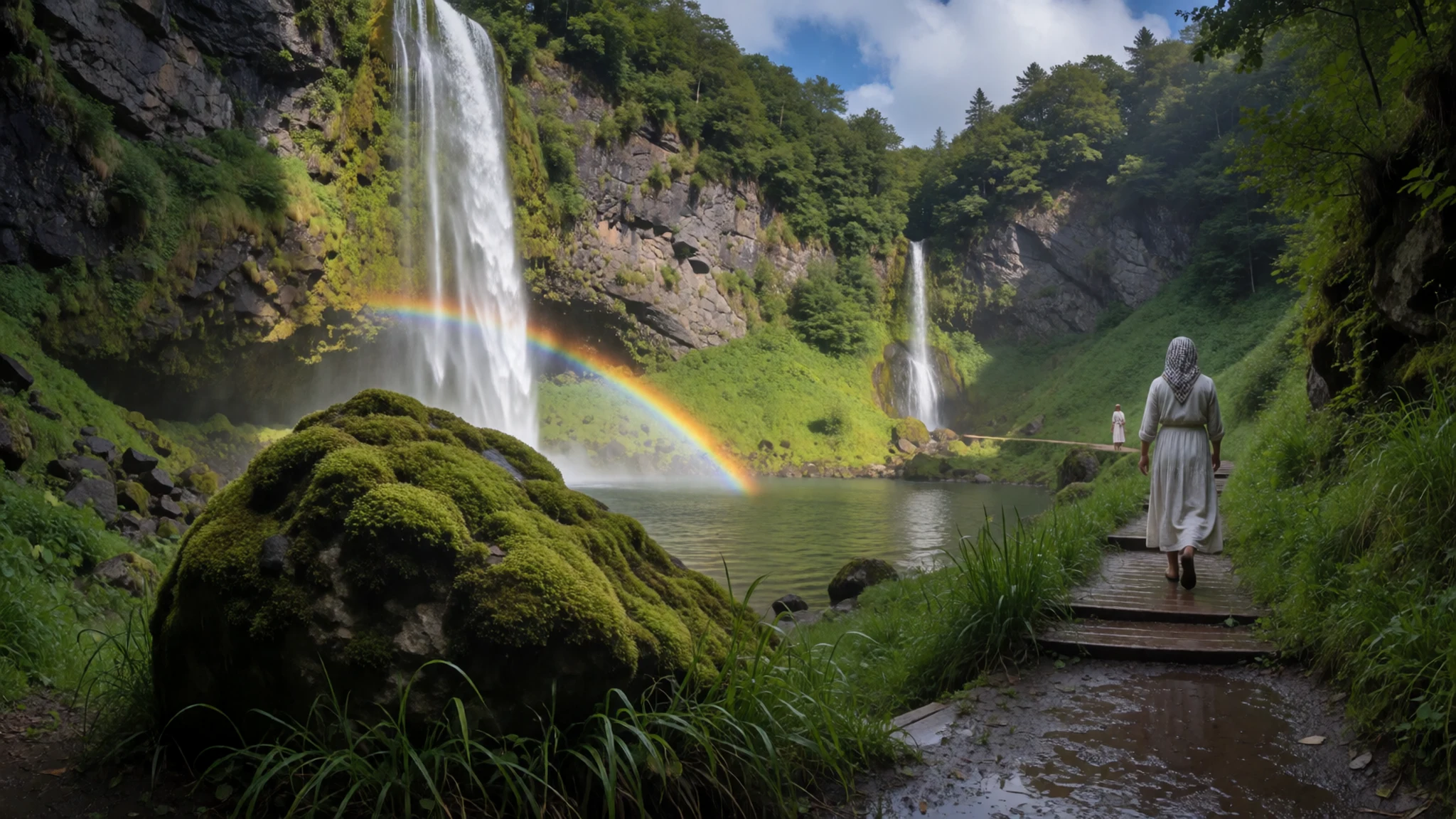
- Piton de la Fournaise — South of the island
In the south of the island, the active volcano Piton de la Fournaise offers a very different day: bare lava, a crater rim and a path down to the crater floor. The approach across the Plaine de Sable is part of the draw. Guided hikes are the sensible choice, because markers can be hard to spot and cloud closes in fast.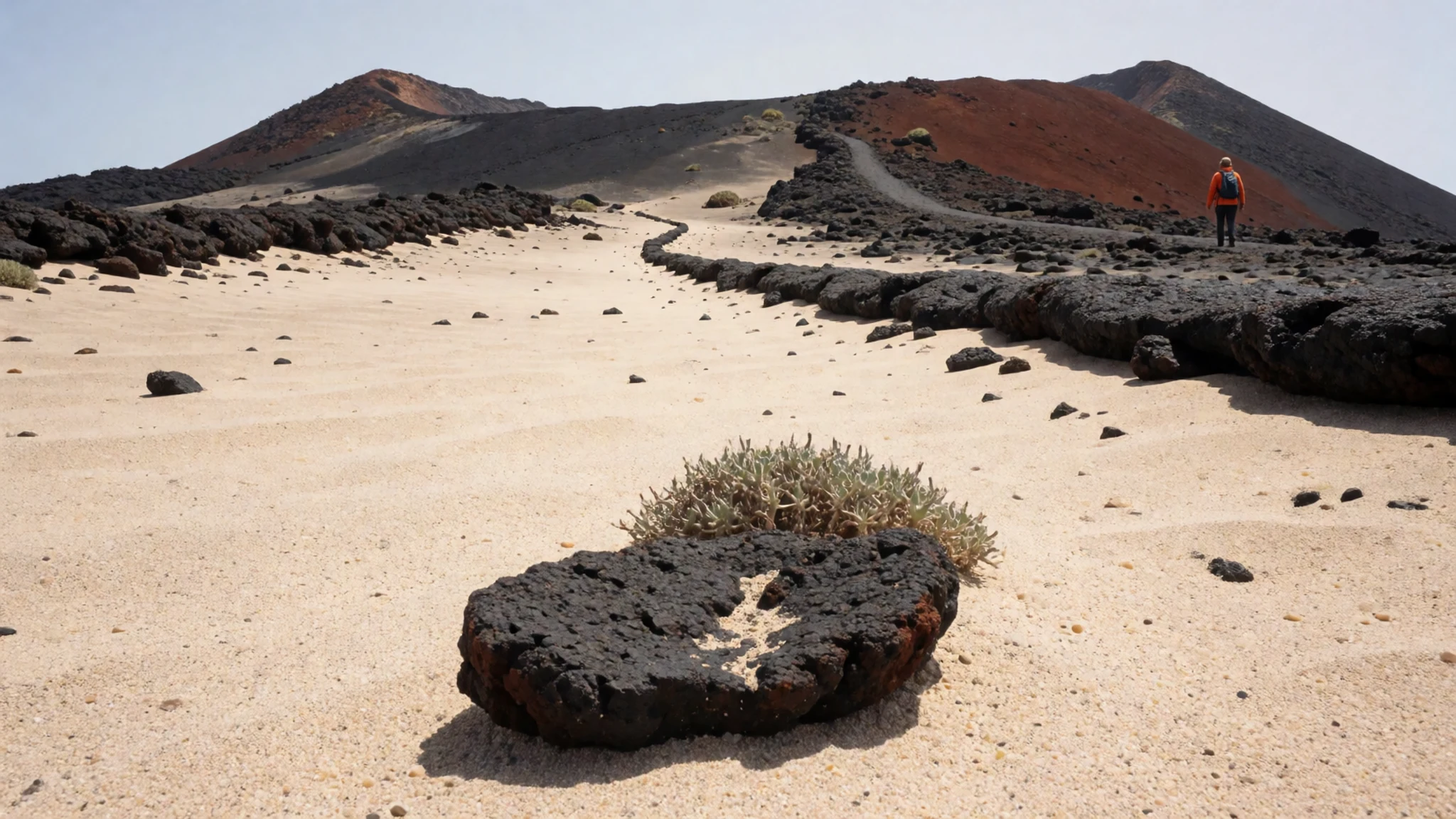
Culture
Trou de Fer sits in the French island of Réunion, where local identity is strong and openly voiced. Réunionnais people take real pride in their island, and the island-first talk can seem odd to someone from the mainland, but it is affectionate rather than hostile and there is no need to read it as xenophobia. The culture is layered. French, Indian, Chinese and African influences have mixed over generations, and Creole is spoken everywhere alongside French. That mixture shows in the landscape too, where temples, churches and mosques stand within a short drive of each other, and in the table, where a single meal can combine all of those traditions. Around the canyon the atmosphere is more outdoor than ceremonial. Forest paths, viewpoints and picnic spots are used by local families as well as visitors, and weekends tend to be busier than weekdays. Weather decides plans here as much as any custom does: a walk that is cancelled for cloud or rain is accepted with a shrug, and people will often tell you straight away whether the view is worth the drive that day. It is worth asking, since local advice on conditions is usually better than any forecast. Greet people with a friendly bonjour before asking anything, and stay behind the railings at the viewpoints.
What to wear
Around Trou de Fer, dress follows the island's mixed heritage. Traditional Réunionnais Creole dress draws on French and Indian influences, with long skirts, light cotton, checked madras-style headscarves and, in Tamil communities, saris and festival silks. It appears mostly at festivals, folk performances and family occasions rather than in daily life. What people actually wear now is ordinary French-style casual clothing: T-shirts, shorts, linen shirts and sandals in town, and practical outdoor kit in the highlands, where many locals walk at weekends. Beachwear is for the coast, and people tend to cover up when leaving it. A visitor heading to the canyon should think in layers. The forest around the viewpoints is damp, the air near the rim is cooler than at sea level, and rain can arrive without warning, so a light waterproof jacket is more useful than an umbrella. Shoes with a proper grip matter, because the paths through the forest are wet, root-tangled and slippery after rain. Quick-drying trousers are more comfortable than jeans, and a hat and sun cream are needed whenever the cloud lifts. There is no strict dress code at the viewpoints. If you plan to visit a temple or church elsewhere on the island, carry something that covers shoulders and knees, and be ready to remove your shoes at Hindu temples.
What to eat
- Cari — Family-run eateries and market-town restaurants
Cari is the island's everyday curry: meat or fish cooked slowly in a spiced sauce and served with rice. It is milder than most Indian curries, and the sauce is built around ginger, onion and tomato. Look for it on the daily menu of any family-run eatery.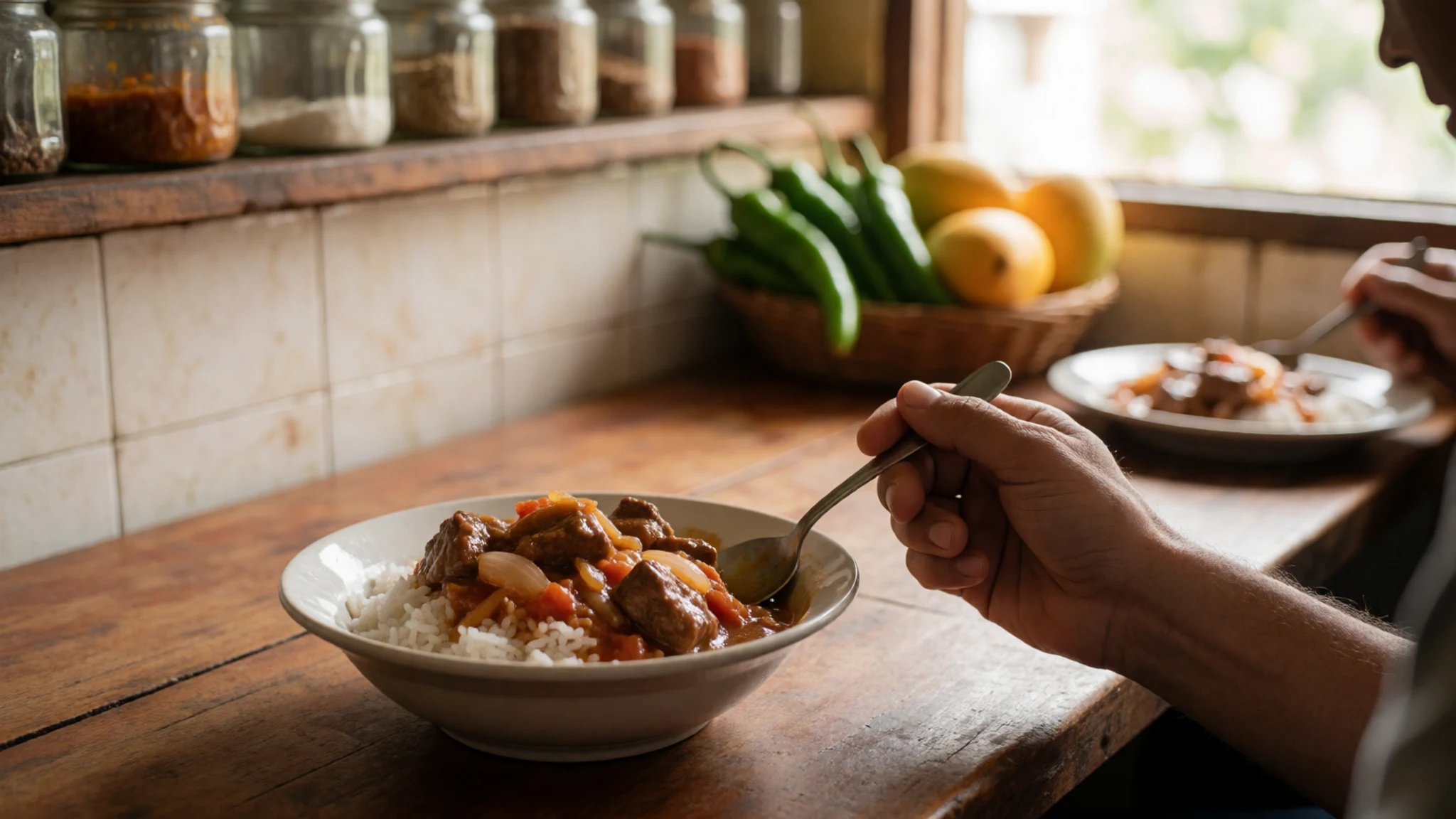
- Rougail — Roadside eateries and lunch counters
Rougail is a tomato-based sauce, often with sausage or fish, cooked down thick and eaten over rice. It sits close to cari but is usually sharper, with chilli and fresh herbs. Ask how hot it is before ordering, as spice levels vary from cook to cook.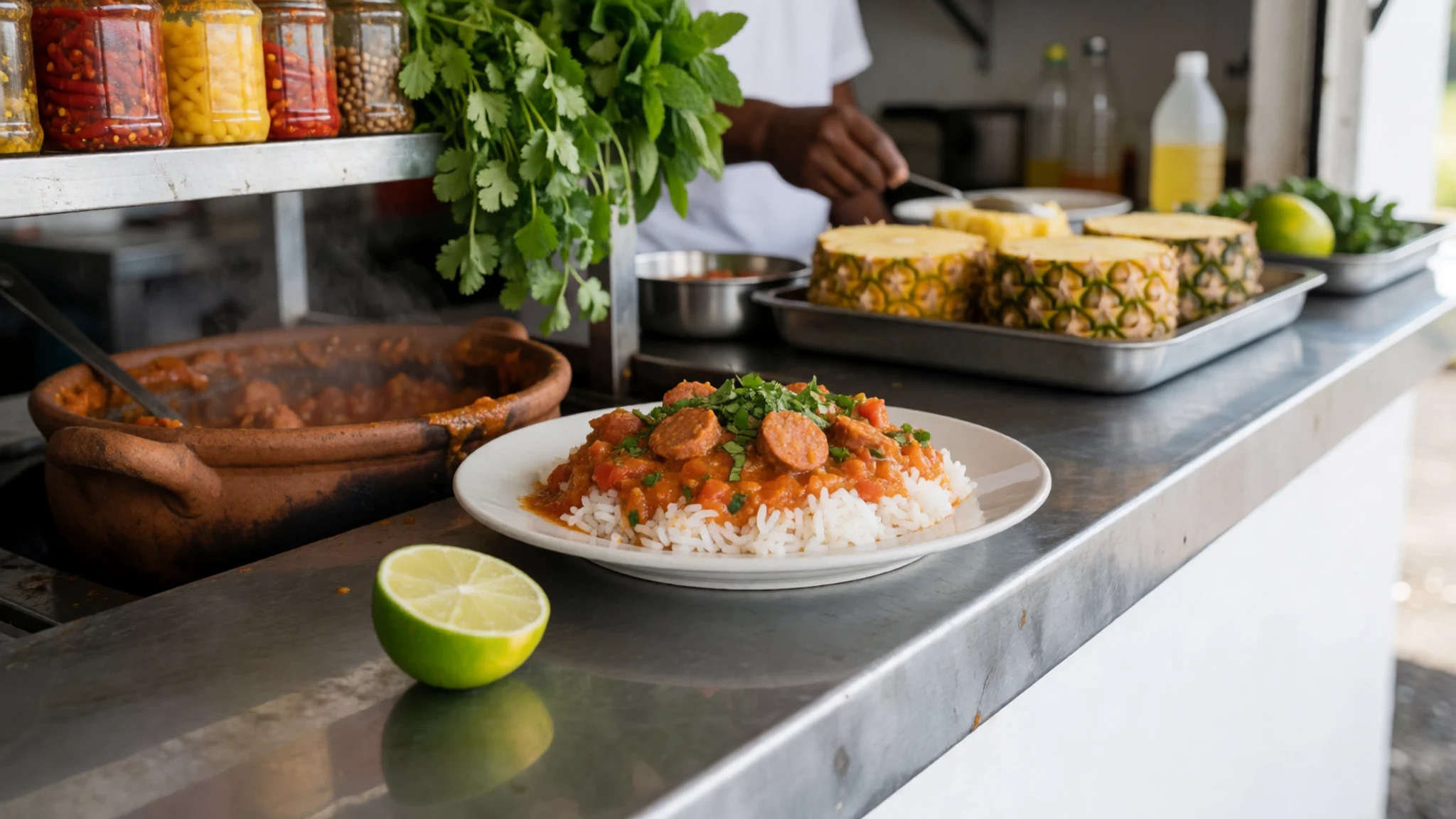
- Bonbons piments — Snack bars and bakery counters
Bonbons piments are small, spiced fritters made with chilli and fried until crisp outside and soft within. They are a snack rather than a meal, usually eaten warm from a paper bag. Many cafés and snack bars sell them alongside samosas. - Bouchons — Small restaurants and takeaway counters
Bouchons are steamed parcels of meat or fish wrapped in a rice-paste dough and served with soy sauce. They reflect the island's Chinese influence and are filling after a morning on the trails. Order a few to share. - Gâteaux patates — Bakeries and village markets
Gâteaux patates are dense, sweet cakes made from sweet potato. Island pastries tend to be thick and sugary, and these are a good example. A slice goes well with strong coffee after a wet walk. Gâteaux manioc, made from cassava, are the more adventurous version. - Rhum arrangé — Restaurants and small bars across the island
Rhum arrangé is rum steeped with fruit and spices, a common way to drink the island's cane spirit. It is usually served in small measures after a meal and varies from sweet to sharp. Plain clear rum is also widely made. Drink sensibly if driving back down mountain roads.
Plan it
Best time. September to mid-December is the most settled period for clear viewpoints, as rain is uncommon then. The cyclone season runs from October to April, and heavy rain can close paths and hide the canyon. Mornings are generally clearer than afternoons in any month.
How long. 1–2
Getting there. Fly to Roland Garros International Airport, near Saint-Denis, with most long-haul flights coming via mainland France. Hire a car for the drive up to the Bélouve forest, then walk the final stretch to the viewpoint.
Budget. mid
Tips
- Start early, as cloud often builds on the ramparts by late morning
- Check the weather and trail status locally before driving up, and keep a second day spare
- Carry a waterproof layer and shoes with grip, since the forest path is wet and slippery
- Book helicopter flights directly with the operator and check the official site for schedules and prices
- Check current entry rules before booking; Réunion has its own visa rules separate from mainland France, and Indian citizens may be limited to a short package-tour visit
Etiquette
- Stay behind railings and on marked paths at the viewpoints
- Greet people with a bonjour before asking for help or directions
- Take all rubbish back down with you
Nearby
Sources
- Wikidata Q593481 (CC0)
- Wikipedia: Trou de Fer (rev 1290859085) (CC BY-SA 4.0)
- Wikivoyage (rev 5375883) (CC BY-SA 4.0)
- Photo: La Réunion Trou-de-Fer3, BBCLCD (CC BY-SA 4.0)
- Photo: Trou-de-Fer hélico (Public domain)
- Photo: Bébour-Bélouve, view on the Trou de Fer, Mart.wain (CC BY-SA 4.0)
- Photo: Cascade Salazie rempart plateau Bélouve, fabien rozé (CC BY-SA 4.0)
- Photo: La Réunion Trou-de-Fer2, BBCLCD (CC BY-SA 4.0)
- Photo: Le Trou de Fer, Jean-Louis Sicot (CC BY-SA 4.0)
- Photo: ReU TROUdeFER, Bbb (CC BY-SA 1.0)
- Photo: Réunion TrouDeFer Fall, B.navez (CC BY 3.0)


