Victoria Falls
Victoria Falls, Zambia
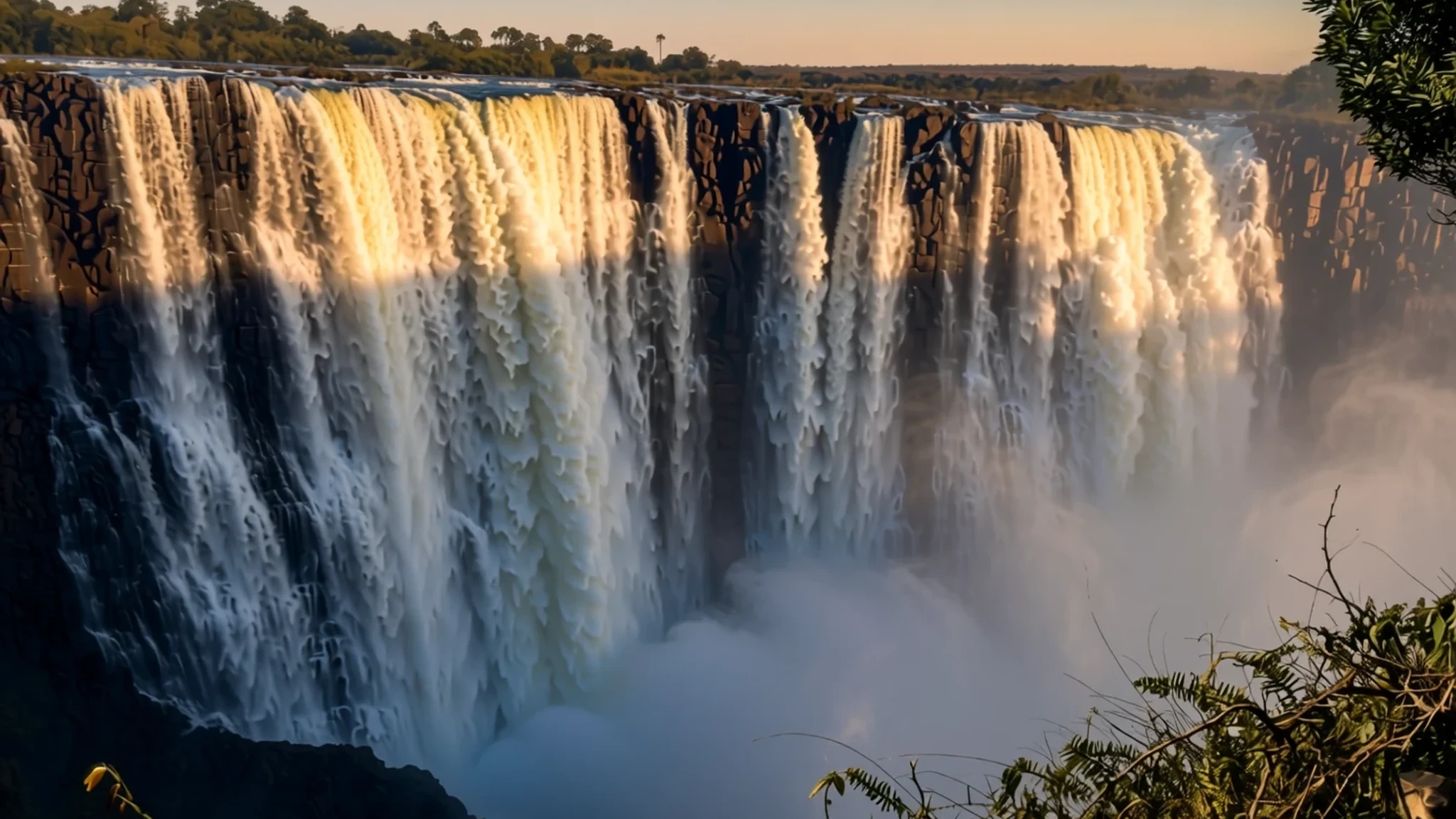
Witness the thunderous power and vast curtain of spray where the mighty Zambezi River plummets into the African earth.
The place
Victoria Falls sits astride the border between Zambia and Zimbabwe along the course of the Zambezi River. Strung across a basalt plateau that was formed millions of years ago, the river drops over a sheer precipice to create what is widely recognised as an immense sheet of falling water. Indigenous communities have lived with and named the phenomenon for generations, calling it names that translate to smoke that thunders or boiling water, reflecting the perpetual mist and roar that rise from the depths. The surrounding terrain is a vibrant mosaic of riverine woodland, dry forest, and open savanna, supporting a rich variety of plant and animal life within protected national parks on both banks. Upstream, the river flows gently around braided channels and islands before reaching the abrupt fracture in the earth where the plateau gives way to a deep labyrinth of gorges. Down below, the water forces its way through narrow turns, creating turbulent pools and eddies before eventually continuing its journey toward the Indian Ocean. The climate here is marked by distinct wet and dry seasons, which dramatically alter the volume of water cascading over the rock face from month to month. During peak flow periods, the sheer volume of spray creates a permanent cloud that can be seen from miles away, drenching anyone who wanders too close to the rainforest paths on the riverbanks.
Its story
Long before European travellers recorded the location, the landscape around Victoria Falls was home to generations of African societies. Archaeological excavations across the area have uncovered ancient stone implements ranging from Early Stone Age Acheulean tools and Oldowan artefacts to Middle Stone Age Sangoan and Lupemban items. Later deposits reveal Early Iron Age pottery and evidence of traditional metal smelting from the late first millennium. Indigenous peoples including the southern Tonga, known as the Batoka or Tokalea, referred to the roaring waters by descriptive terms in their own tongues, while later groups such as the Matabele, Batswana, and Makololo contributed additional names conveying the same sensory experience of smoke and thunder. Early European cartographers noted the waterfall on maps drafted centuries prior to official "discovery," including a 1715 rendering by Nicolas de Fer and a mid-18th-century map by Jacques Nicolas Bellin that marked the site as a cataract. In the nineteenth century, Scottish missionary David Livingstone journeyed through the region and became the first European to view the cascade, renaming it after his reigning monarch. Following his travels, the area gradually transformed into a focal point for global exploration, leading eventually to the construction of the grand steel bridge across the gorge and the establishment of shared national parks designed to protect the fragile ecosystem surrounding the waterfall.
What to see
- Victoria Falls National Park — Zimbabwean side
Follow the winding rainforest paths on the Zimbabwean side to find various viewing points that reveal different angles of the cascading water, accompanied by lush foliage and occasional glimpses of local wildlife.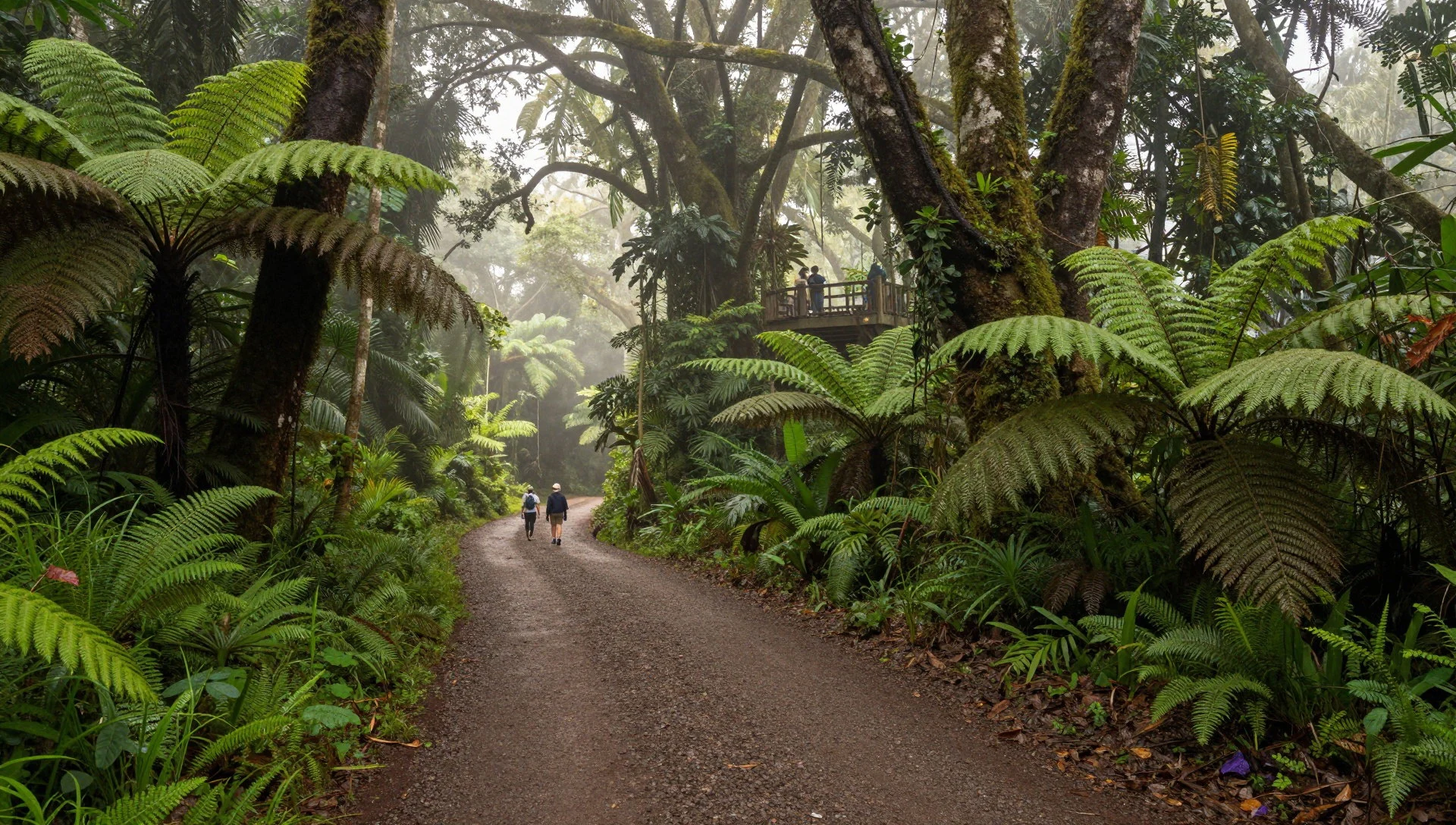
- The Boiling Pot — Zambian side
Descend a steep footpath on the Zambian side to reach this turbulent pool where the full force of the river collects and turns after plunging over the precipice, tucked directly beneath the towering iron bridge.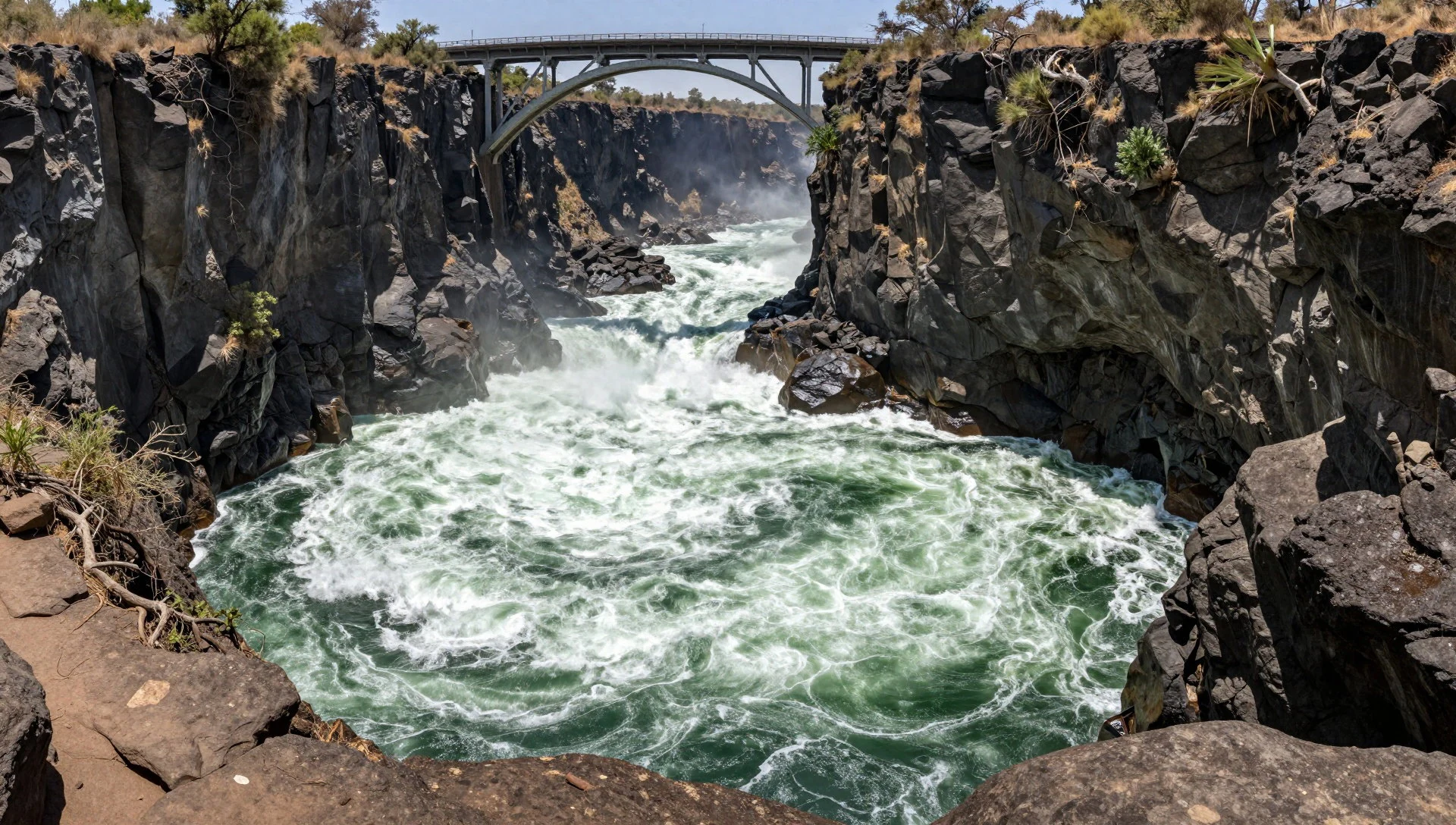
- Devil's Pool — Livingstone Island
Swim in a naturally formed rock pool right at the absolute edge of the waterfall during lower water months, guided by experienced locals who help visitors peer safely over the vertical drop.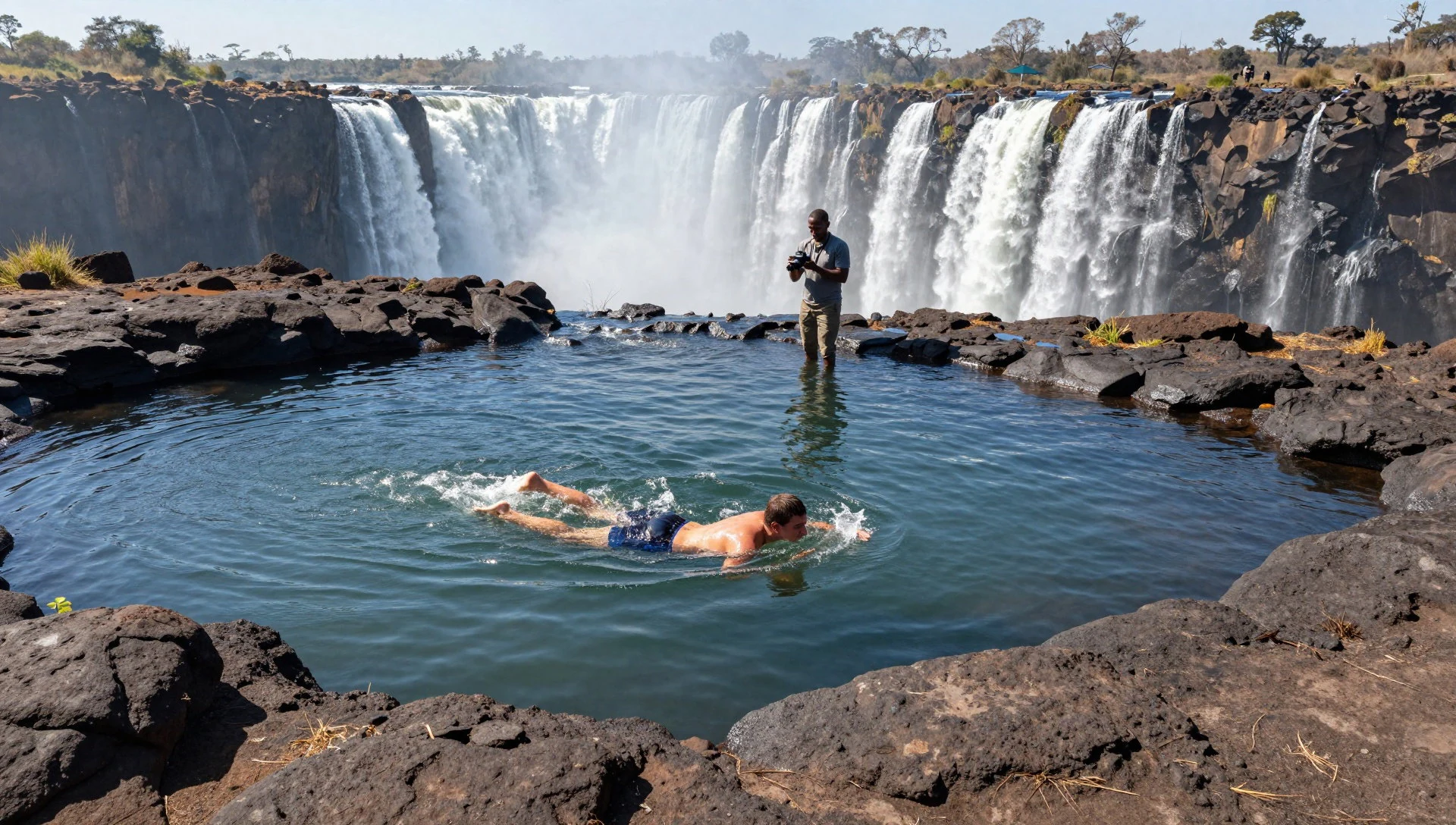
- Victoria Falls Bridge — Border crossing
Walk across the historic steel arch constructed across the canyon to enjoy striking vistas of the gorge, the churning river below, and the mist rising from the cascade.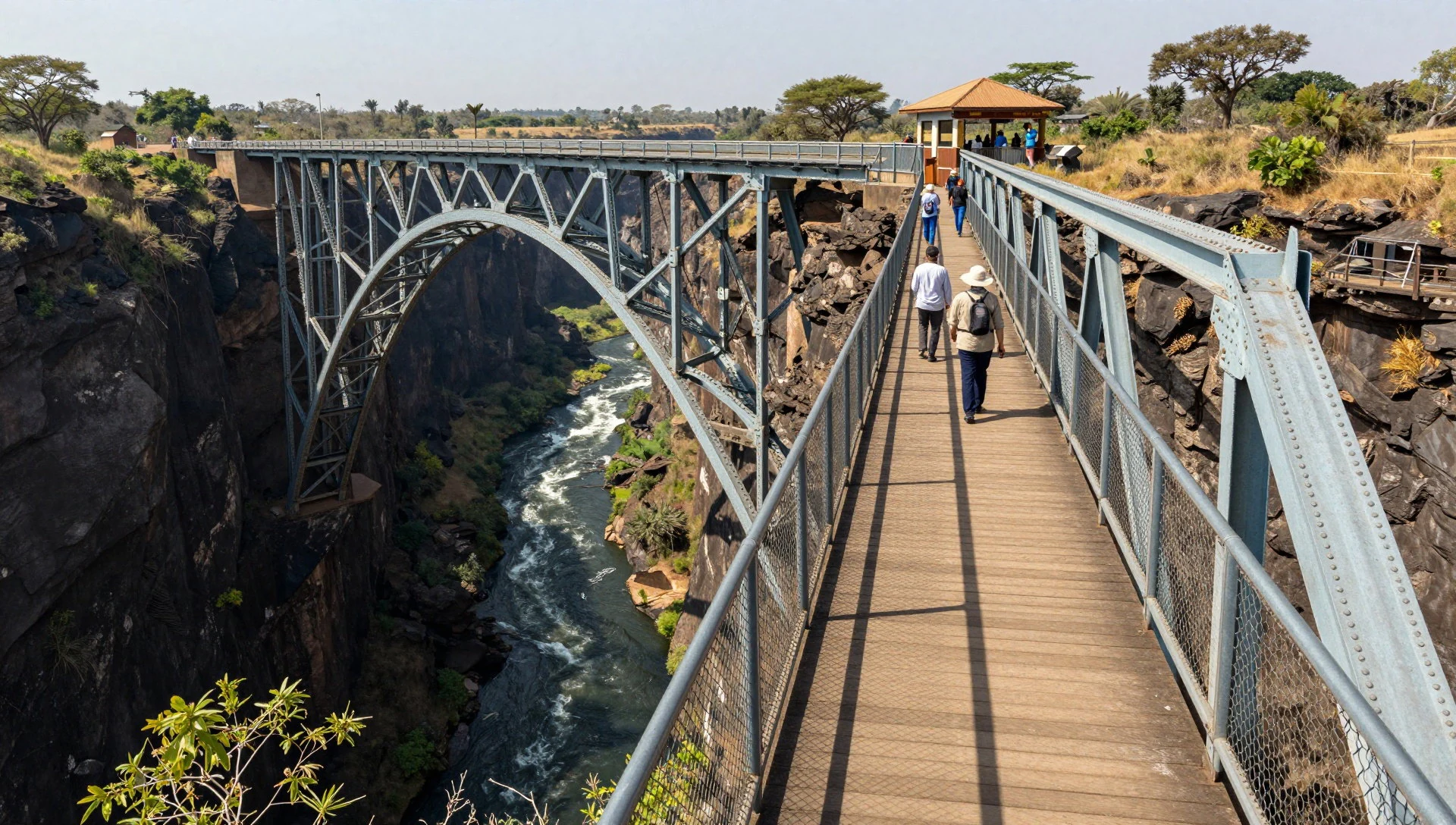
- The Big Tree — Outside town
Stand beneath the sprawling branches of an ancient baobab situated just outside the main town area, representing one of the oldest and largest specimens of its kind in the region.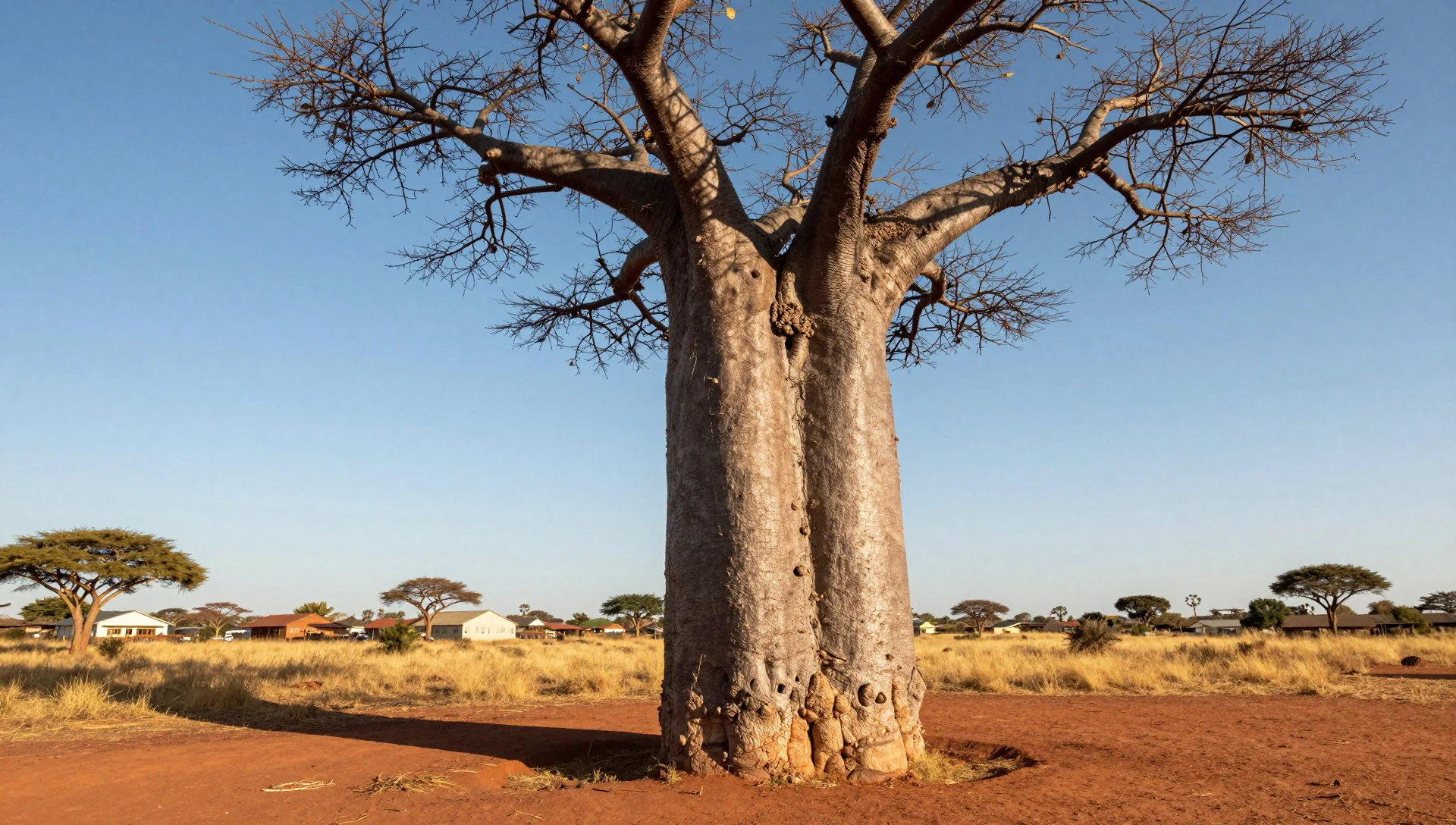
Culture
The cultural fabric around Victoria Falls is shaped by the heritage of the Tonga, Shona, Ndebele, and Lozi communities who inhabit the borderlands of Zambia and Zimbabwe. Traditional gatherings, music, and storytelling play a central role in preserving historical ties to the land and the river. Oral traditions pass down knowledge of the sacred nature of the gorge and the surrounding forest spirits. Visitors will encounter local crafts such as intricate woodcarvings, basketry, and stone sculpture created by regional artisans. Modern daily life blends contemporary urban conveniences with deep-rooted community customs, traditional ceremonies, and respect for elders. When photographing local residents or attending cultural performances, always ask for permission first out of respect for personal privacy and tradition.
What to wear
Traditional dress in the region historically reflected practical adaptation to the warm climate, utilizing lightweight woven fabrics, wraps, and natural materials adorned with beadwork that signifies tribal heritage and social standing. In contemporary daily life around the town centres, residents generally wear modern casual clothing, including t-shirts, jeans, and practical footwear, alongside vibrant African wax print fabrics used for special occasions and ceremonial gatherings. For visitors exploring the falls and surrounding national parks, breathable, lightweight clothing in neutral earth tones is ideal to stay comfortable in the tropical heat. Sturdy walking shoes or trainers with good grip are essential for navigating the wet, slippery rainforest pathways near the spray, and a waterproof jacket or poncho is a practical necessity during high-flow months when the mist acts like persistent rain.
What to eat
- Lookout Café Grill Specialties — Overlooking the canyon near the bridge
Sample regional game meats such as antelope and crocodile while dining on outdoor terraces perched directly over the deep river canyon. - Stanley's Terrace Lunch — The historic Victoria Falls Hotel
Enjoy a leisurely midday meal or traditional afternoon tea on the historic veranda overlooking the lush gardens and distant bridge. - Boma Dinner Experience — Victoria Falls Safari Lodge grounds
Feast on an expansive all-you-can-eat buffet featuring local dishes accompanied by energetic traditional dance performances and drumming. - Town Centre Cafes — The main town centre
Find quick coffee, fresh sandwiches, and affordable light bites served in casual neighbourhood eateries around the central shopping district.
Plan it
Best time. March and April offer maximum water volume and dramatic spray, while October and November are best for lower water levels and viewing wildlife along the riverbanks.
How long. 2–3
Getting there. Fly into the regional airports on either the Zambian or Zimbabwean side, then take a short taxi ride to the falls and town centre.
Budget. mid
Tips
- Pack a waterproof bag or dry case for cameras and electronics to protect them from the heavy mist near the paths
- Book activities such as helicopter flights or guided gorge tours in advance during peak holiday seasons
- Carry cash in small denominations for local markets and minor purchases
- Drink plenty of bottled water to stay hydrated in the strong tropical heat
Etiquette
- Always ask permission before taking photographs of local residents or traditional dancers
- Dress modestly when visiting local communities away from the main tourist resorts
Nearby
Sources
- Wikidata Q43278 (CC0)
- Wikipedia (rev 1378459043) (CC BY-SA 4.0)
- Wikivoyage (rev 5269305) (CC BY-SA 4.0)