Tonle Sap
Tonle Sap, Cambodia
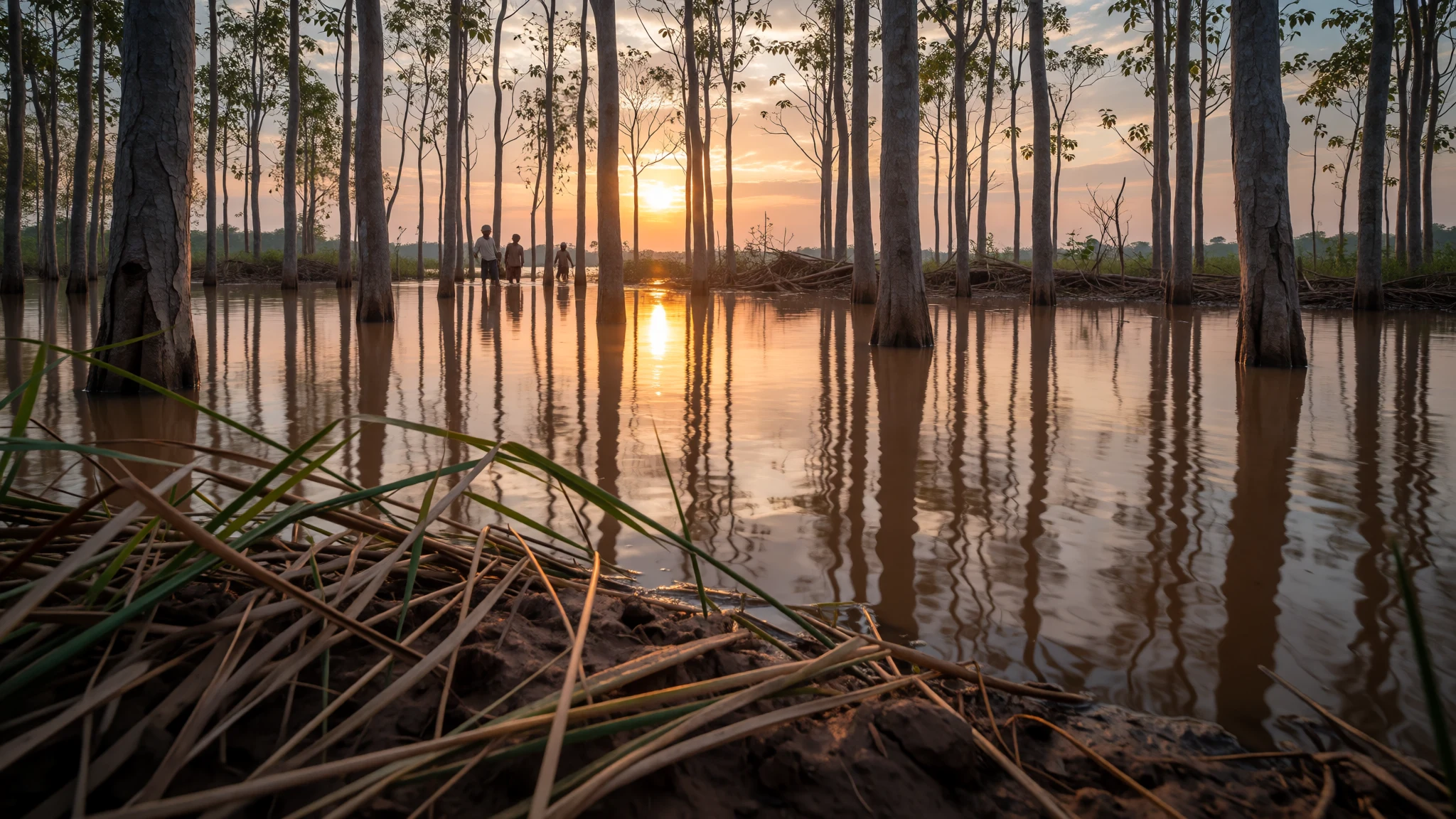
Tonle Sap is a lake that breathes with the monsoon, where fishing villages rise and fall with the water.
The place
Tonle Sap (ទន្លេសាប) lies in the Cambodian plain, lake and river by turns, the name itself speaking of fresh water rather than of the sea. For part of the year the shores pull inward and the margins turn to mud, scrub and exposed trunks. When the monsoon raises the Mekong, the short river that joins the lake to that main river can no longer empty the basin in the usual direction. The current turns, floodwater spreads back across the plain, and woodland that stood on dry ground ends the season standing in a brown lake. Stilt houses that look stranded and oddly tall in the low months sit near the surface when the flood is in. Other households live on rafts and boats that rise without being rebuilt. The water is warm and full of silt, the colour of strong tea, and the horizon is often a low band of drowned trees under a bright, hazy sky. Fish organise the day more than roads do. Boats, not pavements, join the hamlets, and a journey is measured in channels rather than in streets. Nets, traps and long-tail boats are the ordinary traffic, and the morning smells of smoke, river mud and drying catch. Flooded forest — trees that tolerate months of inundation — gives the edge of Tonle Sap a dark, broken line rather than a beach. Most visitors arrive from the Siem Reap side, where a road ends at a boat landing and a busy channel leads outward. At high water the world is reflection and forest; at low water it is stilts, dust and a narrower way through.
Its story
Tonle Sap has fed the Cambodian plain for as long as people have farmed and fished its margins, and the old Khmer capitals inland are hard to imagine without it. Each year's flood lays silt over the low ground and fills the forest with fish; when the water retreats, fields are planted and the catch is dried, salted and traded. Court and hamlet both lived by that pulse. Accounts of the Angkor centuries describe a kingdom supplied by the lake's fisheries, with boats carrying food towards the temples and the royal city. When political power moved away from those temples, Tonle Sap did not become a relic. Fishing families stayed, fitted their houses to the rise and fall, and kept the channels as streets. Khmer villagers share the shore and the open water with Cham and Vietnamese families, so speech, nets and boat-building on the lake have never belonged to a single tradition. War in the modern era emptied settlements, and the years of Democratic Kampuchea broke households and the practical knowledge that had been passed on the water rather than in books. People returned, raised platforms and stilts again, and put the nets back to work. What has changed within memory is the pressure: more fishers, more gear, dams upstream that trouble anyone who watches the flood arrive late or thin, and a steady flow of visitors through the landings nearest Siem Reap. The story of Tonle Sap is that moving edge, and the households that set their floor to the water.
What to see
- Flooded forest — open shores of the lake
The flooded forest of Tonle Sap is a belt of trees that stands in the lake for part of the year and on bare mud for the rest. Trunks rise from brown floodwater, and the shade beneath is welcome. A boat can pass between the trees while the flood is in. When the lake falls, that same wood is left standing on a wide bank of silt.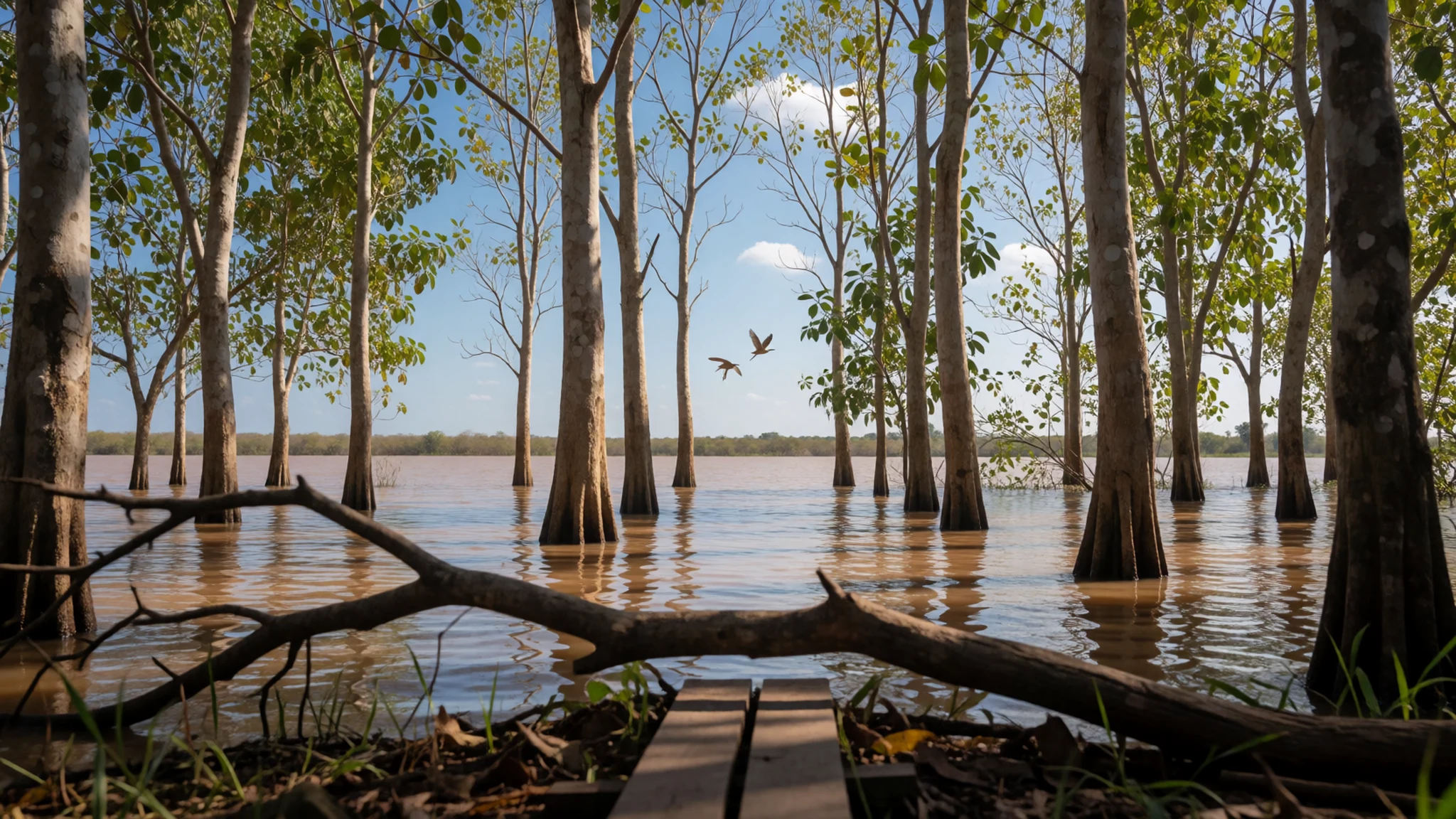
- Chong Khneas — channel south of Siem Reap
Chong Khneas is the floating village visitors usually reach from Siem Reap on Tonle Sap, strung along the channel that leads from the road out towards open water. Houses, shops and a pagoda sit on platforms and hulls, and the traffic of small boats is thick from early morning. The channel is busy with tour boats.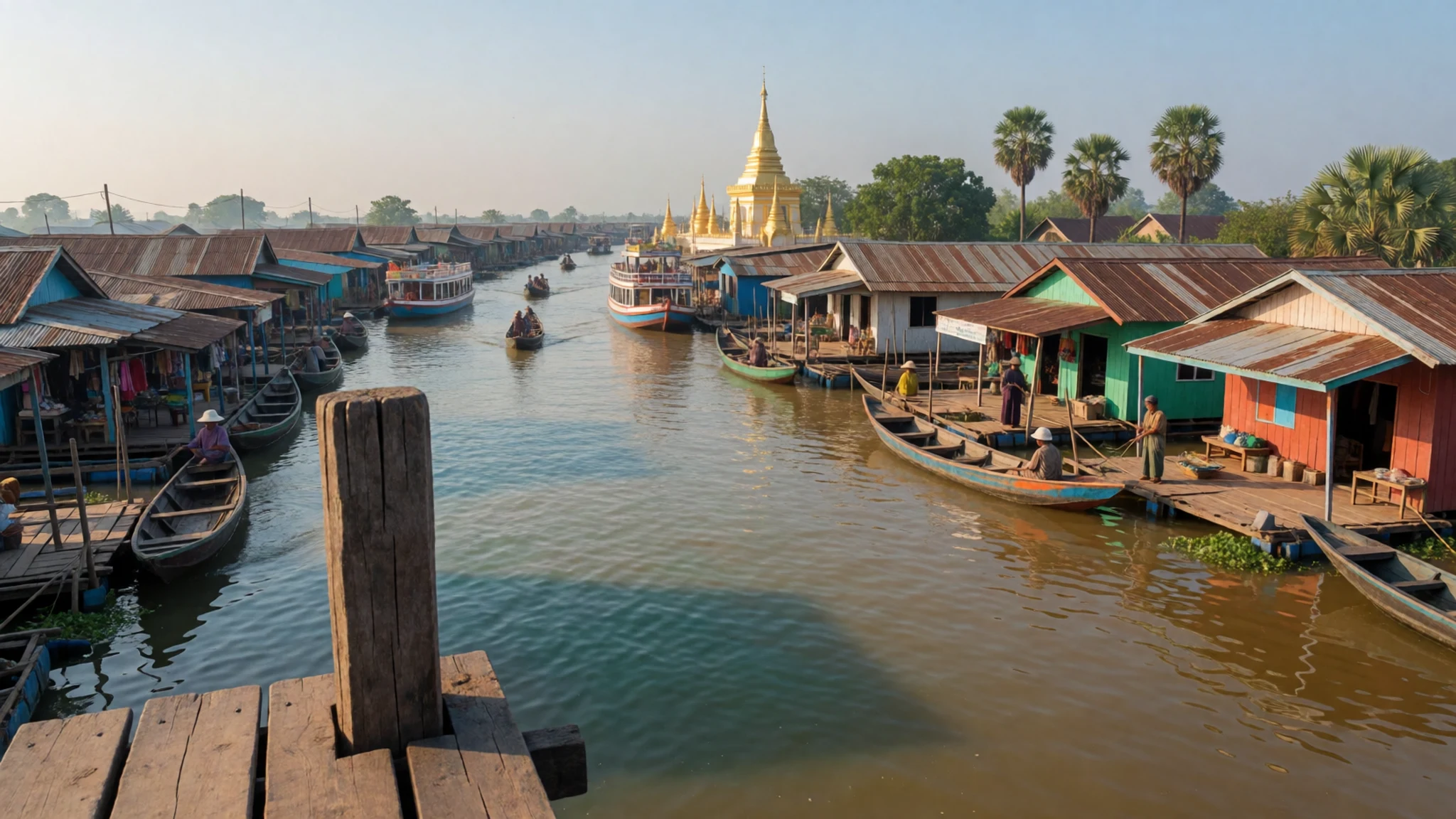
- Kampong Phluk — floodplain southeast of Siem Reap
Kampong Phluk stands on tall stilts where flooded forest meets a village on the edge of Tonle Sap. In the high-water months, boats pass between the houses; when the lake falls, the posts look like a bare grove and people climb down ladders to the mud. The trees around the houses belong to the same seasonal wood that rims the lake.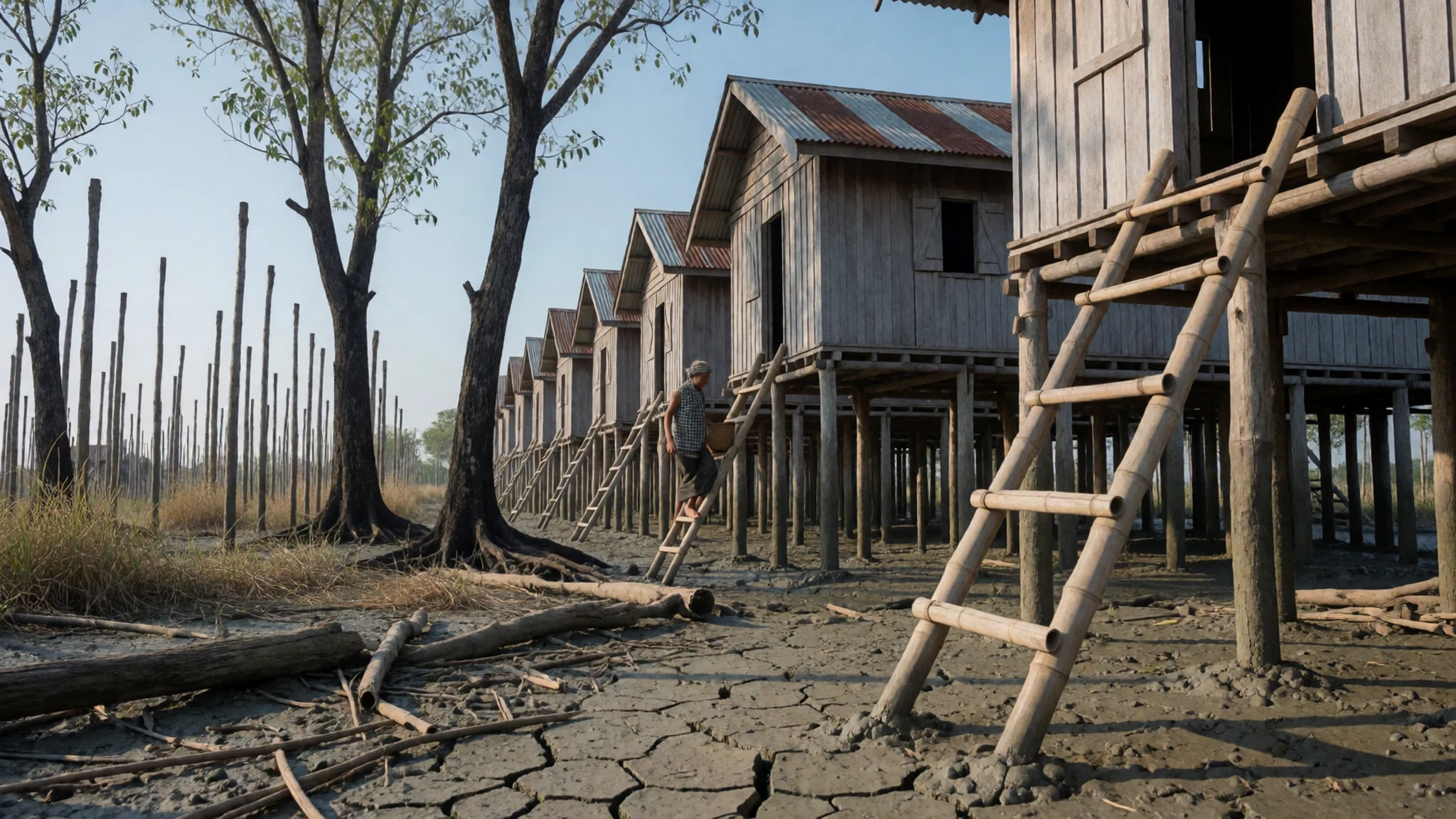
- Kampong Khleang — northern shore
Kampong Khleang is a long stilt settlement on the northern side of Tonle Sap, lived in as a fishing town rather than arranged as a short tour stop. Houses run a long way along the water, and the real architecture is gear: traps, nets and boats leaned to posts. A road and then a boat reveal the length of the shore.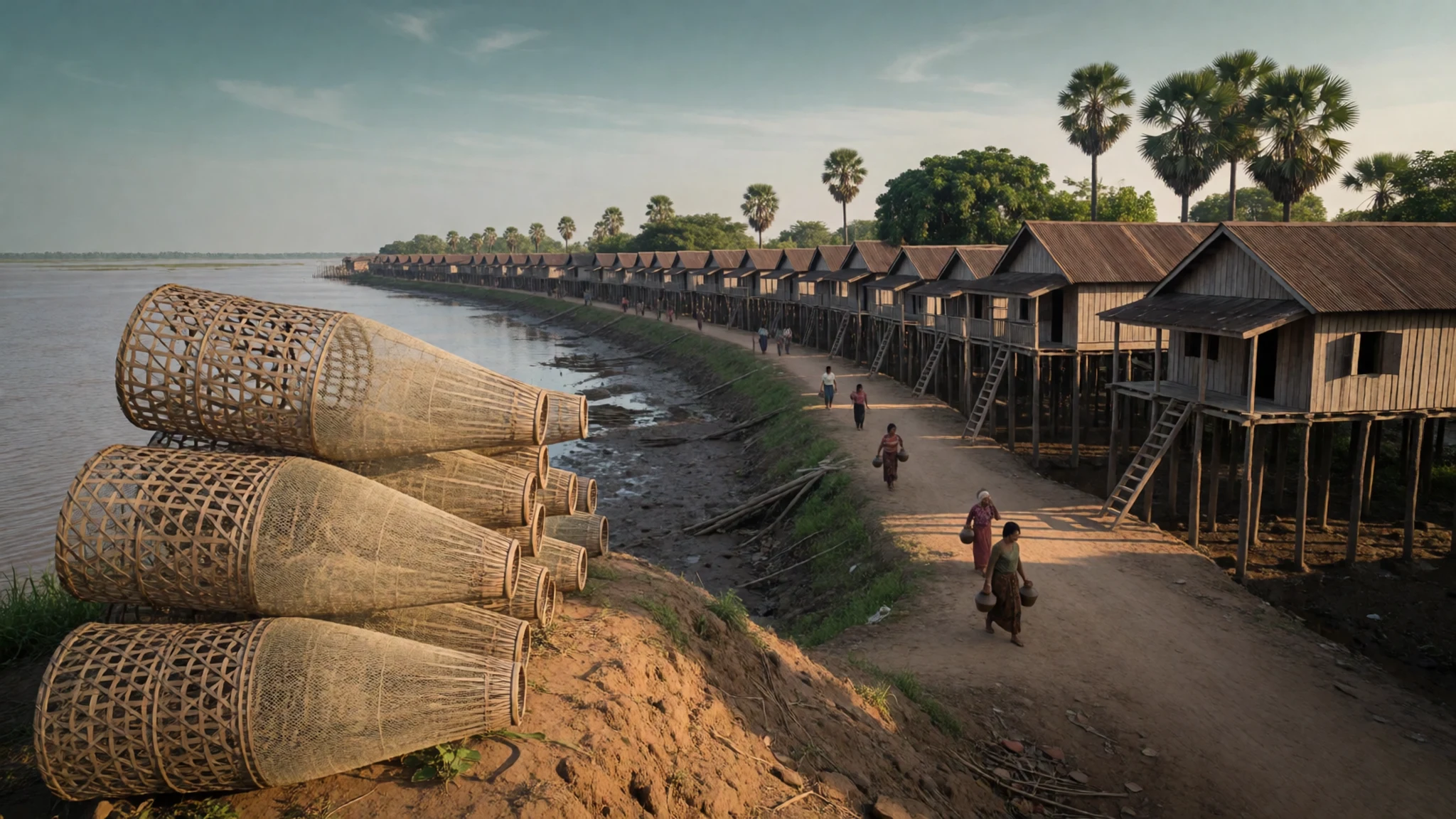
- Prek Toal — northwestern lake
Prek Toal is a flooded corner of Tonle Sap known for its waterbirds, a spread of scrub, pools and trees rather than a village. When the water draws back, large waterbirds gather on the remaining pools in a way the high-flood months do not offer. An outpost among the trees is reached by boat from the Siem Reap side, and the worthwhile hours are early, before the glare builds.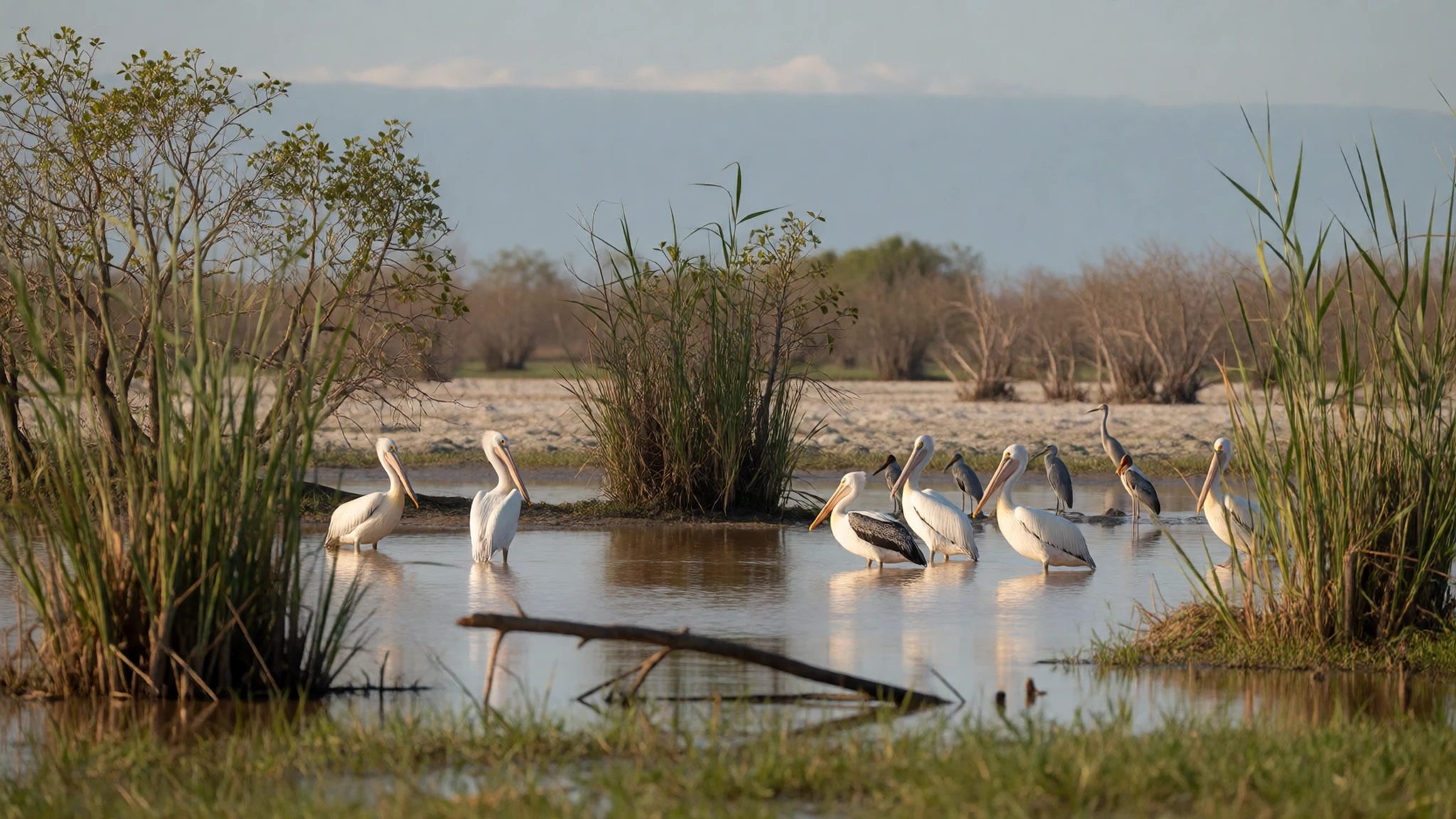
Culture
Tonle Sap is a Buddhist landscape that also holds Cham Muslim communities and Vietnamese family boats, so the lake is not a single congregation. Pagodas stand on stilts or on floating platforms, and festival days bring saffron robes, drums and a crowd on a narrow deck that is also someone's front step. Spirit houses and small offerings sit beside more formal worship; the water itself is treated with the caution people give a road they depend on. The public rite attached to this water is the boat festival held in the capital at the end of the rains, a race and a gathering tied to the river's reversal, though the current does not always turn on the festival days. A house, a school boat or a pagoda platform is private even when it has no fence. At a pagoda, cover shoulders and knees, leave your shoes where the household's shoes are, ask before you photograph a person, and do not climb a house ladder or step onto a boat unless someone there has invited you.
What to wear
Tonle Sap's formal dress is Khmer dress: the sampot, a wrapped lower garment in cotton for daily life and in patterned silk, the hol, when a wedding, a pagoda festival or the New Year calls for it. Men may wear the sampot chang kben, the same cloth drawn up between the legs for work or ceremony. The textile people actually carry every day is the krama, a chequered cotton scarf woven in the countryside and sold in the markets that serve the lake towns. What people wear now on the water is the same mix as in Siem Reap's streets: T-shirts, long trousers or a simple skirt, football shirts, sun hats, and sandals that can be kicked off at a pagoda step. Few households spend a weekday in ceremonial sampot. A visitor should dress for sun, glare off the water, and sudden rain in the wet months, and for floors where shoes come off. Light cotton, a shirt that covers the shoulders, and trousers or a skirt below the knee suit both the boat and a wat. Leave beachwear for a swimming pool in town; villages and pagodas are people's homes and shrines.
What to eat
- Prahok — lakeshore markets and Siem Reap stalls
Prahok is the fermented fish paste that seasons much of home cooking around Tonle Sap. Lake fish are salted and stored when the catch is heavy, then used by the spoon to deepen soups and dips. Lakeshore markets and Siem Reap stalls sell it from open trays.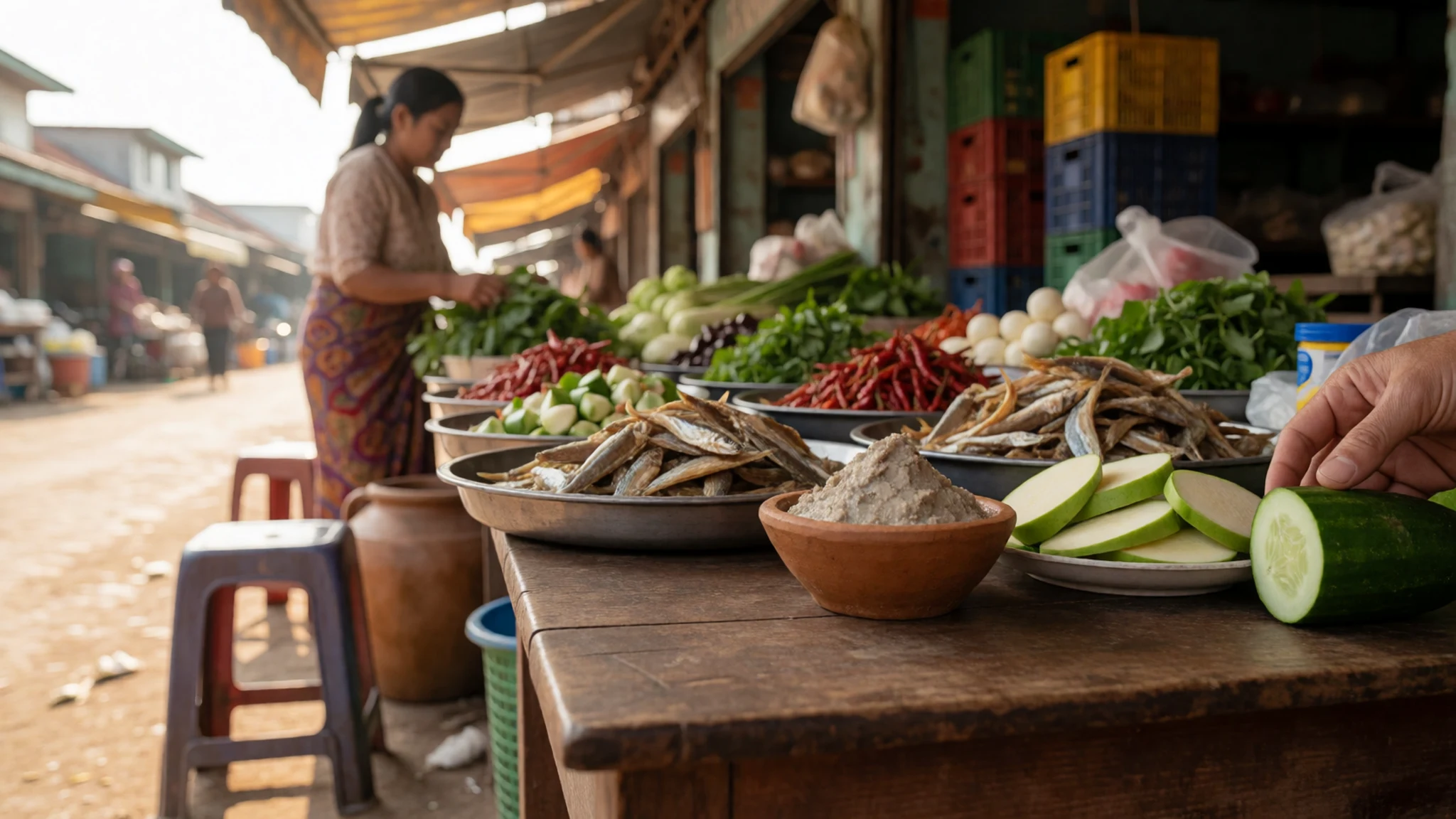
- Trey ang — piers and village platforms
Trey ang, freshwater fish grilled over charcoal, is the plain meal of Tonle Sap. Snakehead and other lake fish are split, salted and cooked at stalls beside the piers and on village platforms. With rice, lime and a sharp herb dip, it tastes of smoke and the morning's catch.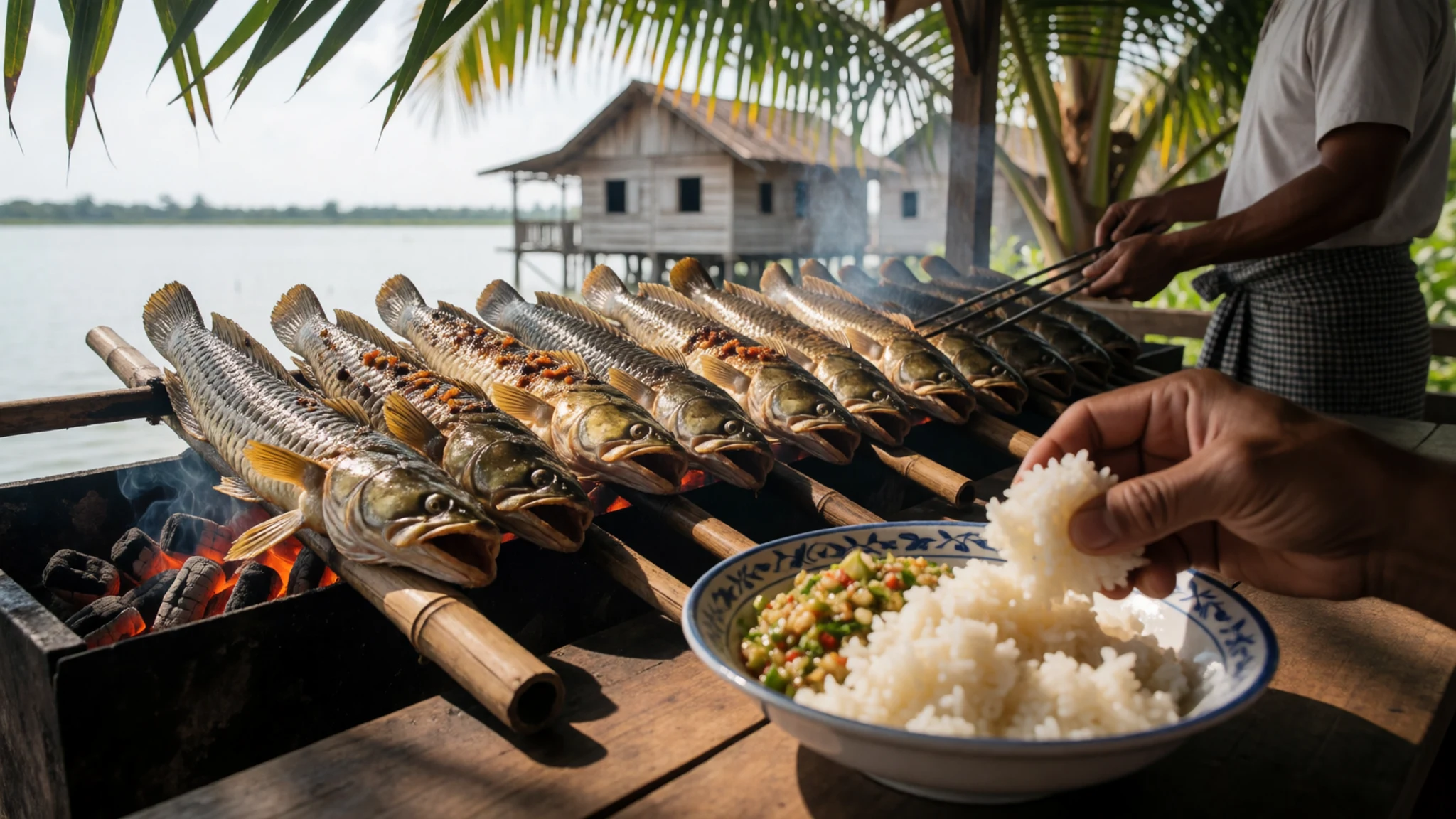
- Samlar machu — morning markets and eateries near the boat landings
Samlar machu is a sour soup built on fish, tamarind or lime, and herbs, and it turns up wherever a Tonle Sap kitchen is cooking for the family. Morning markets around Siem Reap and small eateries near the boat landings serve it beside a mound of rice. - Nom banh chok — morning markets between Siem Reap and the landings
Nom banh chok is a Tonle Sap breakfast of thin rice noodles under a light fish gravy with herbs, cucumber and banana flower. The gravy uses freshwater fish and a little prahok. Women sell it from baskets in the morning markets between Siem Reap and the landings. - Fish amok — Siem Reap eateries and landing kitchens
Fish amok at Tonle Sap is freshwater fish steamed with coconut, lemongrass and a mild curry paste, often in a banana-leaf cup. Kitchens still cook this old court recipe with the lake fish the villages land. Siem Reap eateries and some landing kitchens serve it.
Plan it
Best time. November to February brings cooler, drier air, and early in that stretch the water is still high enough to move among the flooded trees. March and April are hotter, and the lake sits lower. From about May the monsoon raises the water again and rain is part of the day. Ask locally which villages the week's water level will actually let you reach.
How long. 1–2
Getting there. Fly into Siem Reap; the city's airport is the usual air gateway, with Phnom Penh the other common entry. From Siem Reap a road runs to a landing such as Chong Khneas, and the last leg is by boat. No railway serves the shore.
Budget. mid
Tips
- Set out early; heat, glare and engine noise all build through the morning.
- Match the village to the season: high water opens the flooded forest, low water means long ladders and mud.
- Carry cash in riel or US dollars; small landings rarely take cards alone.
- The Chong Khneas channel is crowded; a village farther along the shore is a calmer hour on the water.
- For the bird pools at Prek Toal, arrange the boat ahead with a licensed operator in Siem Reap and follow that operator's own guidance.
Etiquette
- Ask before photographing people, especially children.
- Remove shoes before stepping onto a pagoda platform or into a house.
- Do not enter a boat, a school or a home without an invitation.
- Keep shoulders and knees covered at religious sites.
Nearby
Sources
- Wikidata Q192914 (CC0)
- Wikipedia: Tonlé Sap (CC BY-SA 4.0)
- Wikivoyage: Siem Reap (CC BY-SA 4.0)