Ha Long Bay
Ha Long Bay, Vietnam

Ha Long Bay offers thousands of dramatic limestone karsts and islands rising from emerald waters, forming an ancient marine labyrinth in northeastern Vietnam.
The place
Ha Long Bay sits in northeastern Vietnam, administered by the city of Quảng Ninh. Its name translates to descending dragon, reflecting local lore about protective deities spitting out jade jewels that turned into the rocky islands. The scenery is defined by thousands of limestone karsts and islets scattered across green waters, shaped over millions of years by tropical weathering. The broader marine region incorporates Bai Tu Long Bay to the northeast and Cát Bà Island to the southwest, sharing similar geological roots and coastal ecosystems. The environment sustains a complex mix of tropical evergreen biosystems and rich marine habitats, supporting numerous endemic species of plants and animals. While day cruises bustle along designated routes, the outer waters retain a quieter atmosphere where limestone cliffs sheer straight down into the tide. Prehistoric human groups have inhabited these coastal shelters for millennia, leaving behind traces of ancient shellfish gathering and early maritime economies. Today, the bay serves as a major draw for travellers seeking limestone labyrinths, hidden caves, and floating communities that have adapted entirely to life upon the tides. Modern infrastructure and maritime traffic now bring new pressures to the coastal waters, yet the scale of the karst landscape remains vast and otherworldly, shifting continually as mist rolls across the Gulf of Tonkin.
Its story
The human history of Ha Long Bay stretches back tens of thousands of years through successive coastal civilisations. The earliest known inhabitants belonged to the Soi Nhụ culture, who lived in coastal caves and mountain shelters, gathering shellfish from spring and mountain habitats alongside wild roots and fruits. Their economy relied on basic stone tools and coastal foraging rather than inland agriculture. As sea levels and climates shifted, the Cái Bèo culture emerged, developing more sophisticated maritime skills and serving as a technological bridge toward later coastal societies. This progression culminated in the Hạ Long culture, whose communities mastered maritime trade and sea exploitation across the islands. Beyond archaeology, the bay served as a strategic marine stronghold during Vietnam's dynastic conflicts. In the winding channels of the Bạch Đằng River near the islands, Vietnamese armies successfully repelled invading naval fleets on multiple occasions by utilizing the treacherous currents and sharp submerged stakes. These historical battles cemented the bay's role not only as a natural sanctuary but as a vital defensive frontier. Over centuries, fishermen and traders built floating villages sheltered beneath the limestone towers, living in close harmony with the tides and seasonal monsoons while passing down oral traditions of dragons that shaped the jagged horizon.
What to see
- Thien Cung Cave
Known as the Heavenly Palace Grotto, this chamber features intricate stalactites and stalagmites illuminated by coloured lights. It sits along the heavily travelled Route 1 cruise itineraries, drawing steady streams of visitors who come to admire the massive limestone formations and hidden subterranean pools.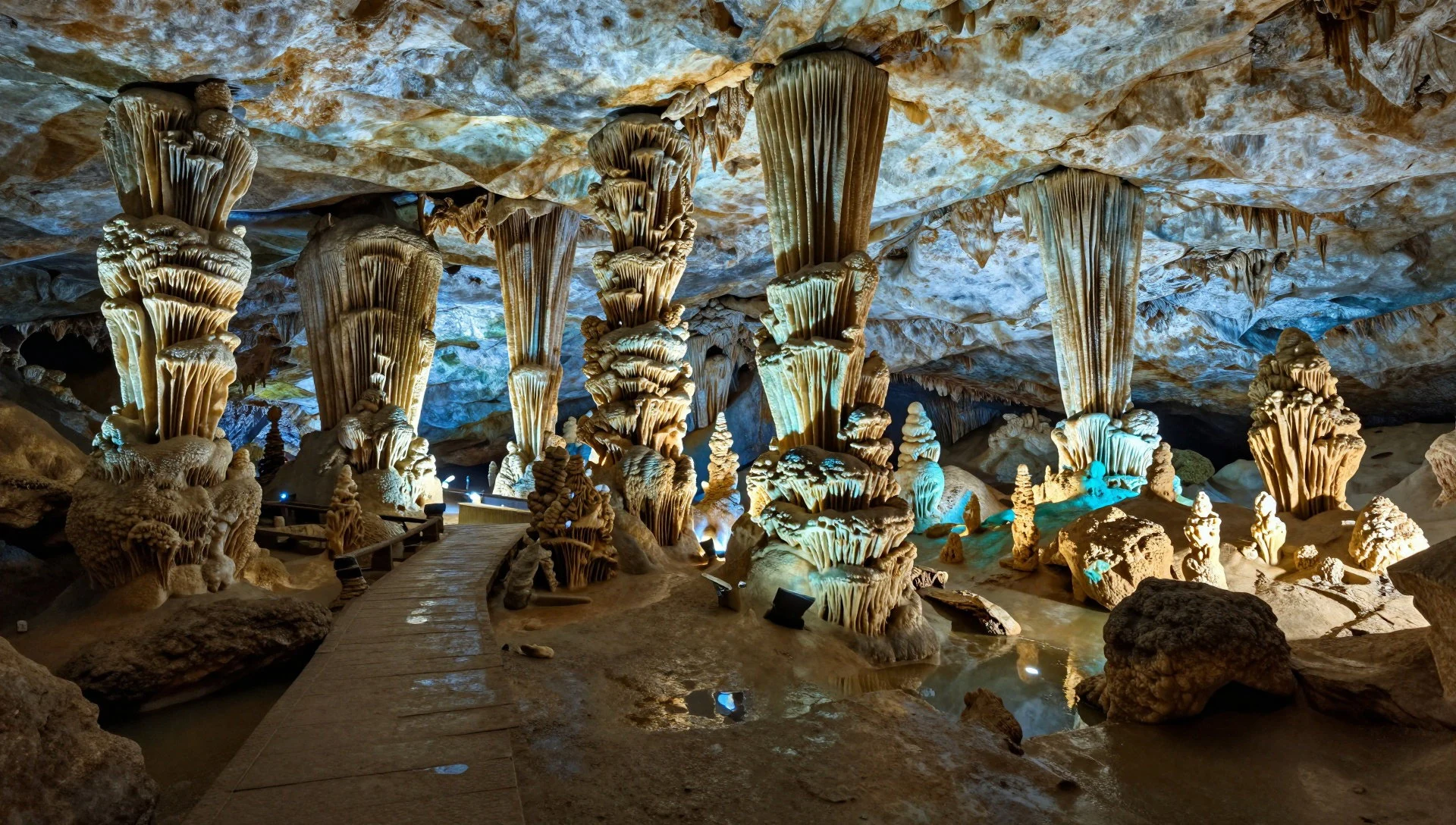
- Ti Top Island
A popular stop on Route 2 cruises offering a sandy crescent beach and a steep stone stairway leading to a panoramic viewpoint near the summit. The lookout provides sweeping vistas across the surrounding maze of limestone pillars and tour boats navigating the emerald channels.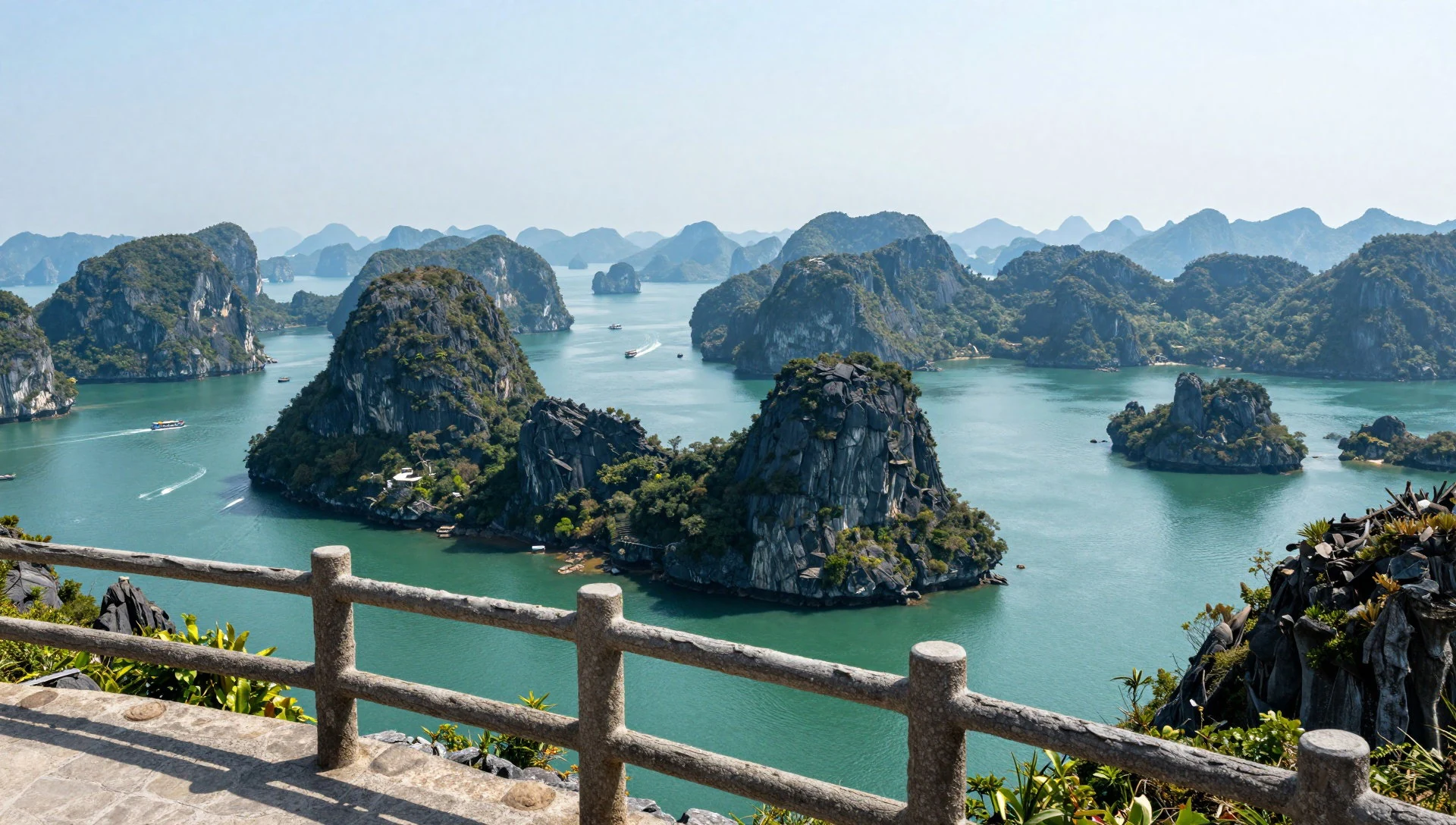
- Luon Cave
A water-level archway that opens into a tranquil, circular lagoon enclosed by sheer vertical cliffs. Visitors transfer from larger vessels onto small bamboo boats rowed by local residents or paddle kayaks through the low passage to spot monkeys scrambling along the rocky ledges.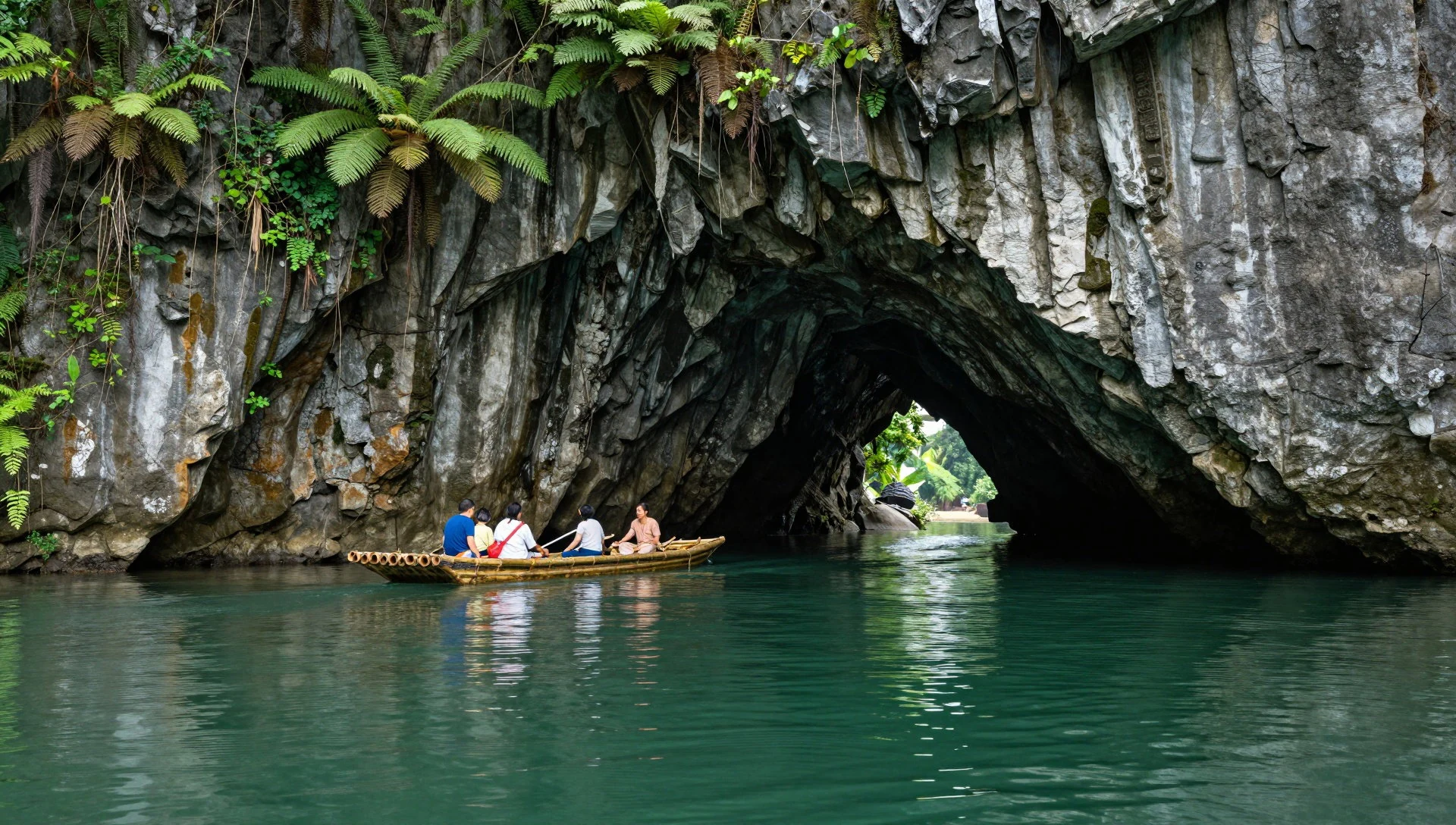
- Floating Fishing Villages
Traditional floating communities where houses, schools, and fish farms float upon the sheltered bay waters. These settlements showcase how generations of families have sustained a unique way of life dependent entirely on aquaculture and boat transport beneath the shadow of limestone peaks.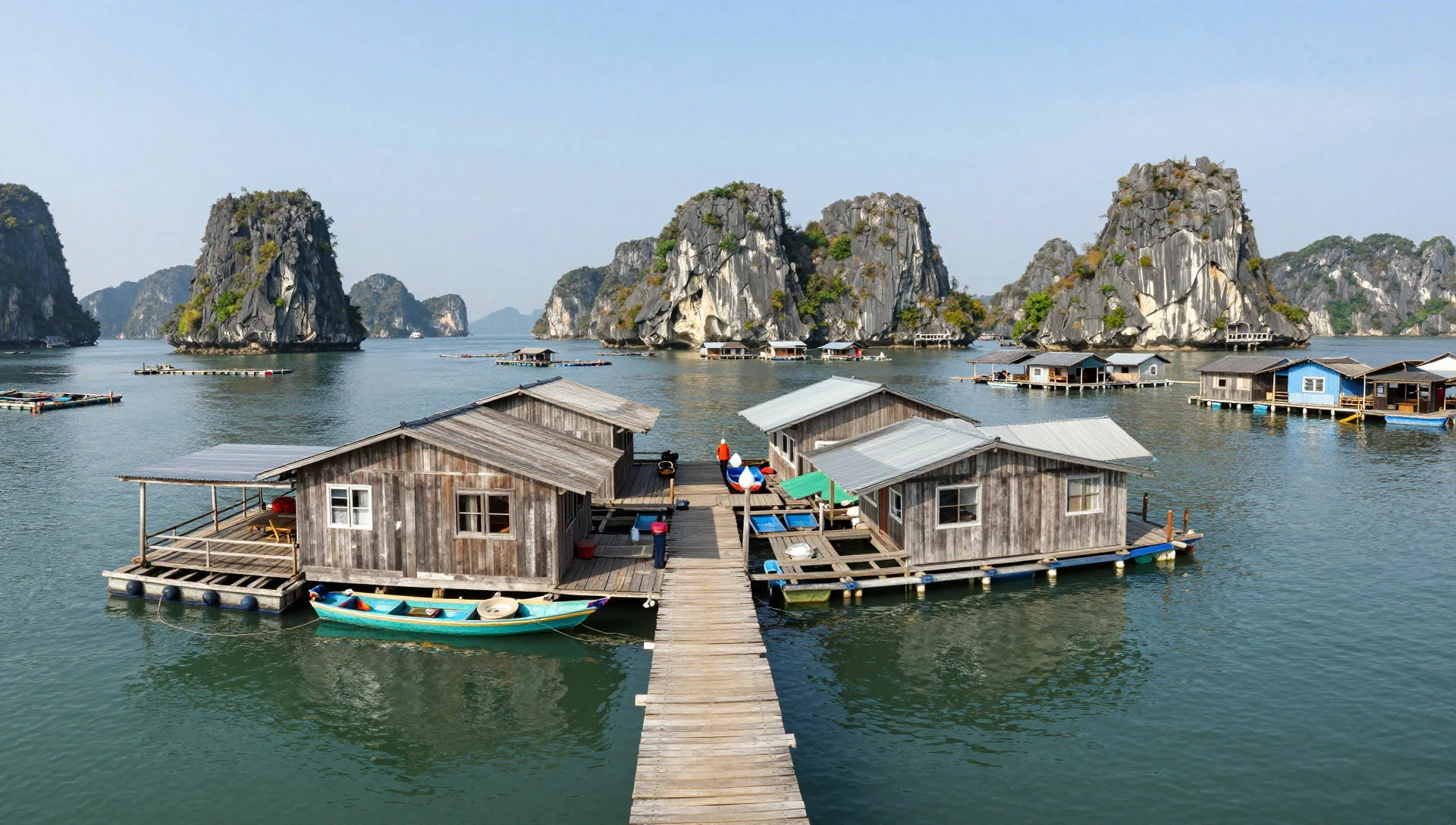
- Bai Tu Long Bay
Located immediately north of the main bay, this quieter expanse features equally stunning limestone scenery with a fraction of the visitor traffic. Cruises departing from Hon Gai wharf offer a more peaceful alternative to explore remote islets, hidden beaches, and less crowded marine channels.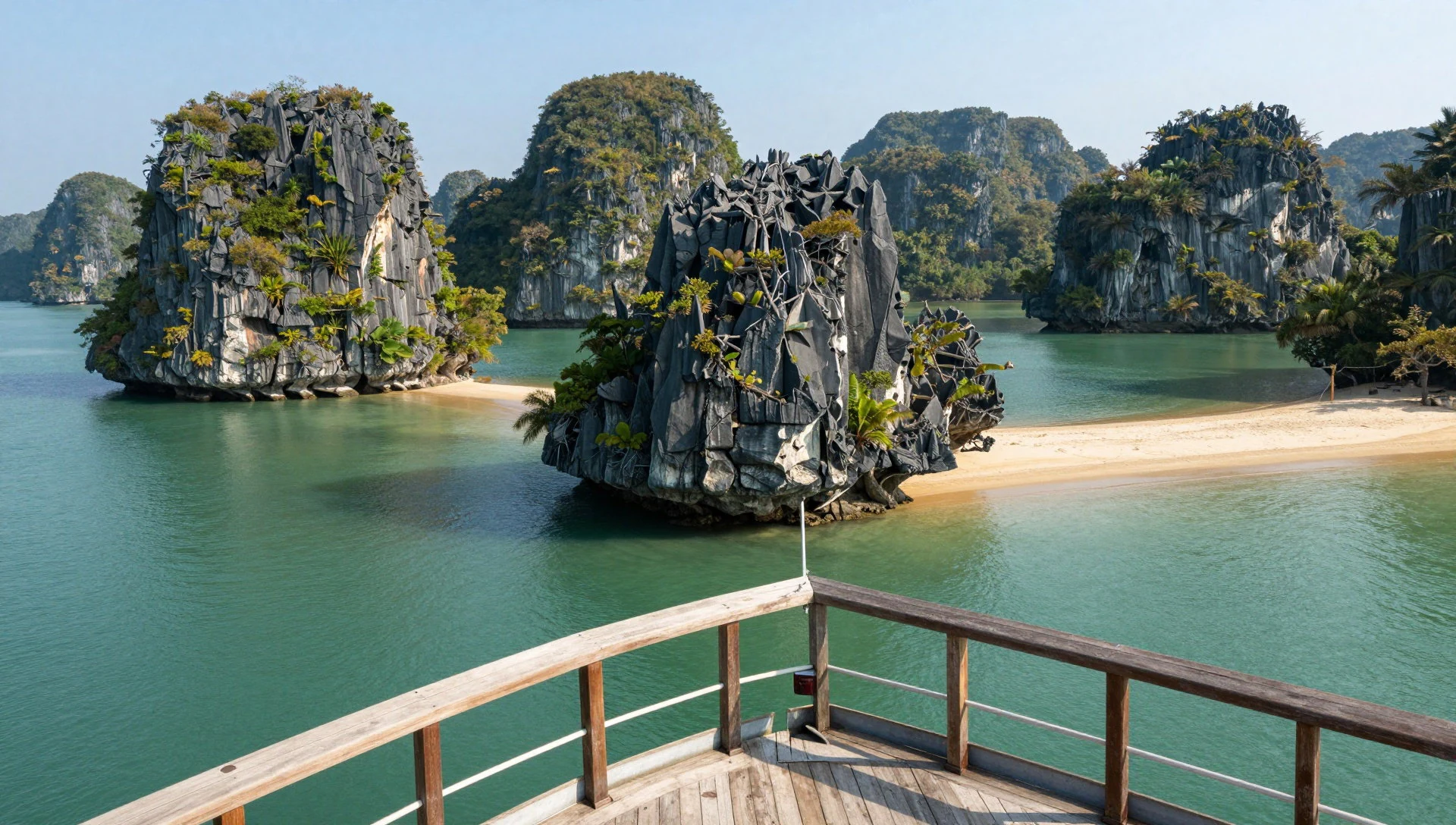
Culture
The cultural fabric of Ha Long Bay is deeply intertwined with maritime traditions, fishing heritage, and coastal beliefs passed down through generations. Families living in floating communities maintain close-knit social structures rooted in cooperative fishing and aquaculture, adapting their daily routines to the rhythm of the tides and monsoons. Traditional festivals often honour guardian spirits and the mythical dragon ancestry of the bay, blending folk religion with Buddhist practices. Visitors engaging with local boat operators and village residents will find a welcoming, resilient community proud of its maritime lineage. When visiting local homes or religious shrines in the coastal settlements, remove your shoes before entering and dress modestly with shoulders and knees covered.
What to wear
Traditional attire across northern coastal Vietnam includes lightweight cotton garments suited to humid subtropical conditions, alongside the iconic conical leaf hat known as non la, which provides essential protection from both blazing sun and heavy rain. Fishermen and maritime workers historically wore practical, quick-drying tunics and trousers designed for life on the water. Modern locals in Ha Long City and the surrounding port towns dress in contemporary casual wear, including t-shirts, jeans, and practical footwear. For travellers visiting the bay, clothing should prioritize comfort and breathability due to high humidity. Lightweight layers are ideal for boat decks where sea breezes can pick up, while sturdy sandals or slip-on shoes with good grip are essential for navigating damp cave floors, steep island stairways, and swaying boat docks. Modest attire covering shoulders and knees is recommended when visiting local shrines or inhabited coastal communities.
What to eat
- Tu hài — Local seafood restaurants and floating eateries in the Van Don district
Also known as snail spout or gaper clam, this prized gourmet shellfish is harvested around Van Don Island and celebrated for its sweet, distinct flavour. It is typically prepared steamed with subtle spices, baked, or added to nourishing soups.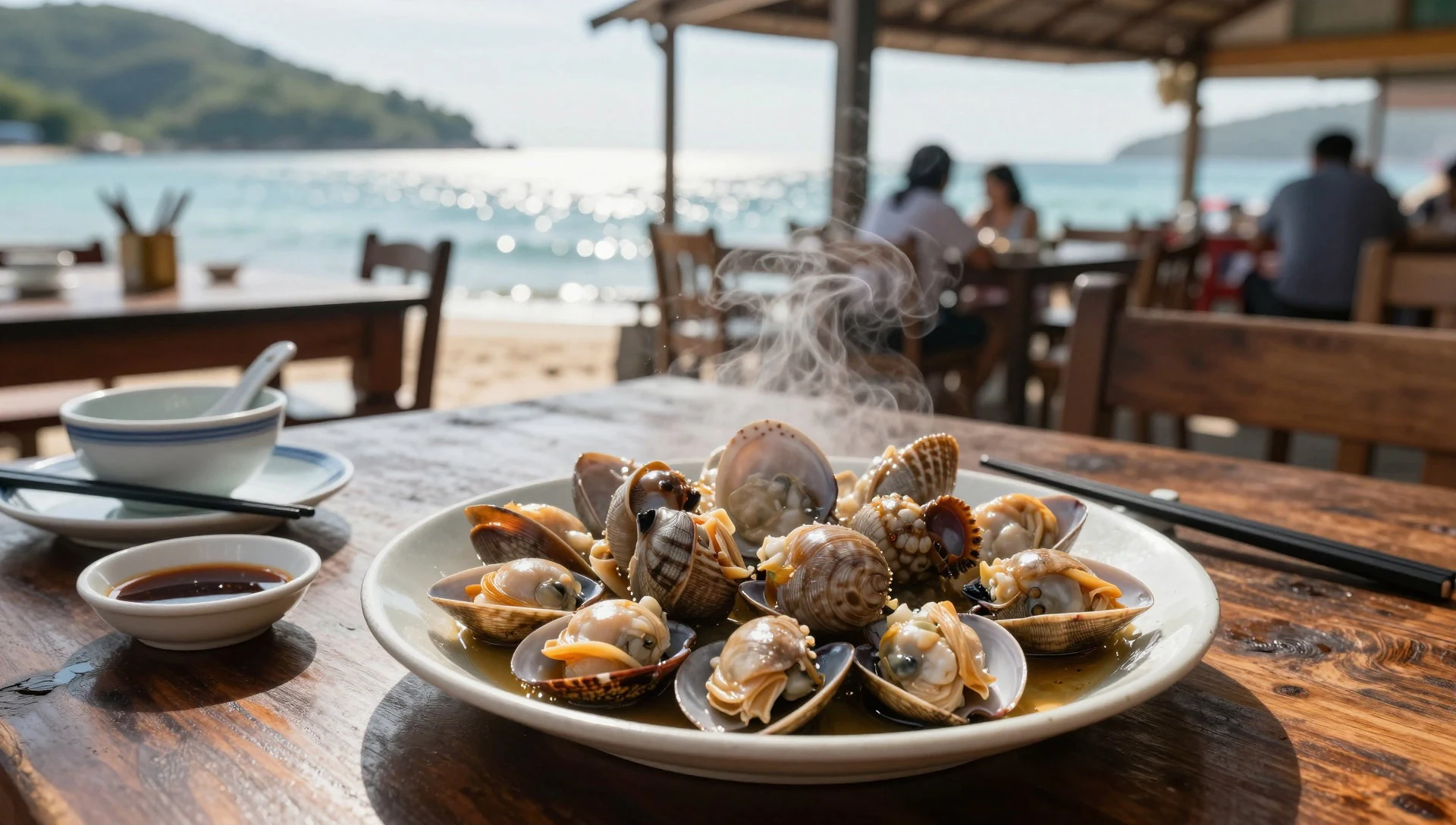
- Horseshoe Crab — Seafood dining establishments along the waterfront in Ha Long City
A local culinary specialty prepared in various styles such as sweet and sour stir-fries, salads, or deep-fried dishes with robust herbs and spices. It requires careful preparation by experienced local cooks in coastal dining rooms.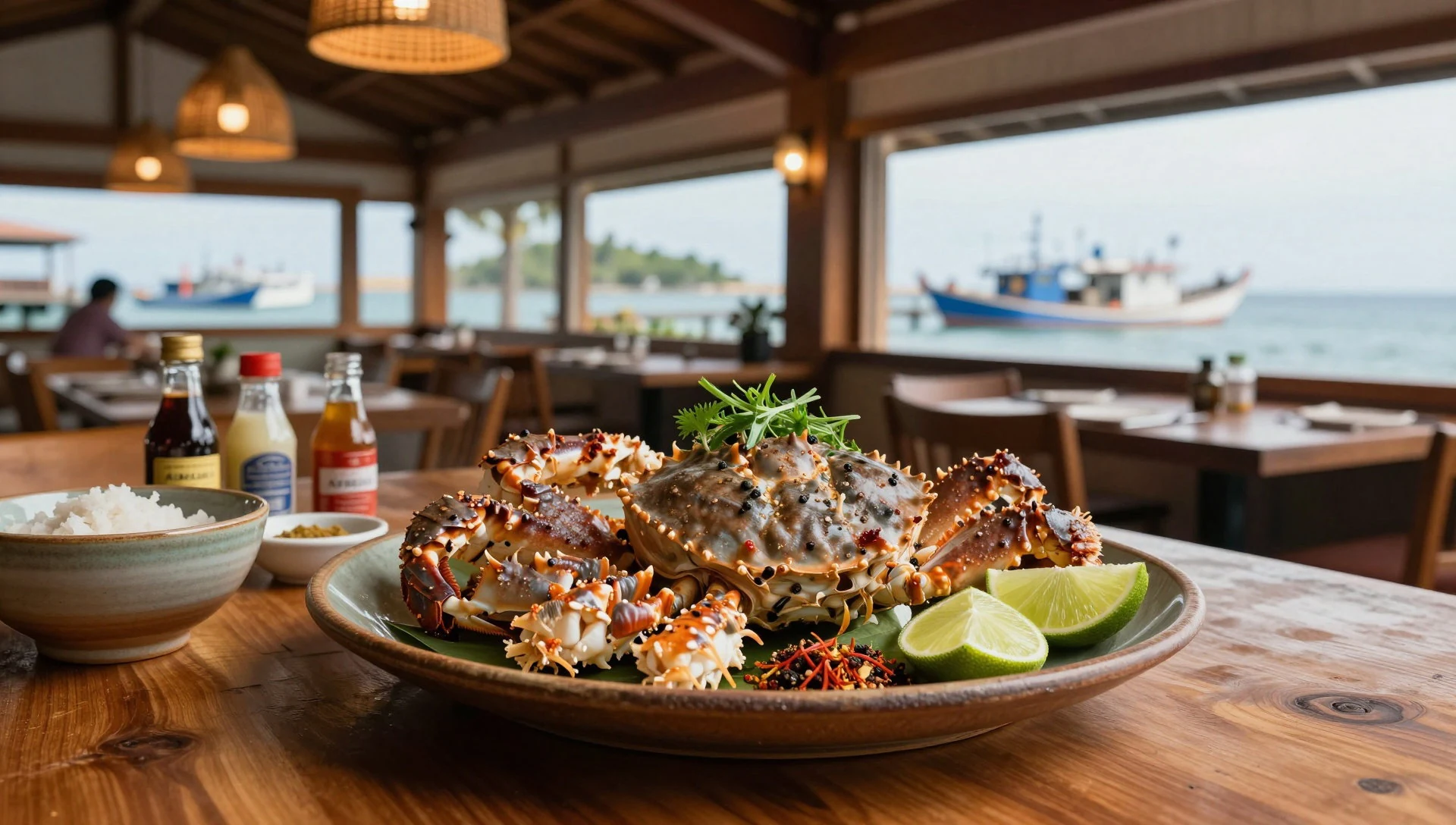
- Grilled Squid Cakes — Morning markets and street food stalls across Ha Long City
A famous regional delicacy made from freshly caught squid hand-pounded into a paste, seasoned with local pepper and dill, and pan-fried until golden and springy. They are commonly served alongside warm rice noodles or steamed rice. - Mantis Shrimp — Floating restaurants and harbour seafood markets
A succulent crustacean abundant in the local waters, prized for its sweet, tender meat. It is frequently steamed with lemongrass and chilli or salt-roasted to highlight its natural ocean flavour.
Plan it
Best time. March and October to November offer the most pleasant weather, with milder temperatures and lower rainfall, avoiding the hot, humid, rainy summer months of June to August and the winter monsoon mist.
How long. 2–3
Getting there. Fly into Van Don International Airport from Ho Chi Minh City, or travel from Hanoi to Ha Long City or Tuan Chau Marina by bus, private car, or seaplane, the bus journey taking about four hours by road and the seaplane about 45 minutes.
Budget. mid
Tips
- Book overnight cruises or day trips in advance through reputable operators to secure preferred routes.
- Arrive early at port terminals to manage crowds and avoid bottlenecks during peak departure times.
- Carry cash in local currency for small purchases, market stalls, and optional activities on the water.
- Drink bottled or filtered water and protect yourself from strong sun reflection off the bay.
Etiquette
- Remove shoes before stepping inside local homes or floating community prayer spaces.
- Always ask permission before photographing residents in floating villages or working fishermen.
- Dispose of all rubbish responsibly and avoid single-use plastics to help protect the marine ecosystem.
Nearby
Sources
- Wikidata Q190128 (CC0)
- Wikipedia Hạ Long Bay (CC-BY-SA 4.0)
- Wikivoyage Ha Long Bay (CC-BY-SA 4.0)