Kampong Phluk
Kampong Phluk, Cambodia
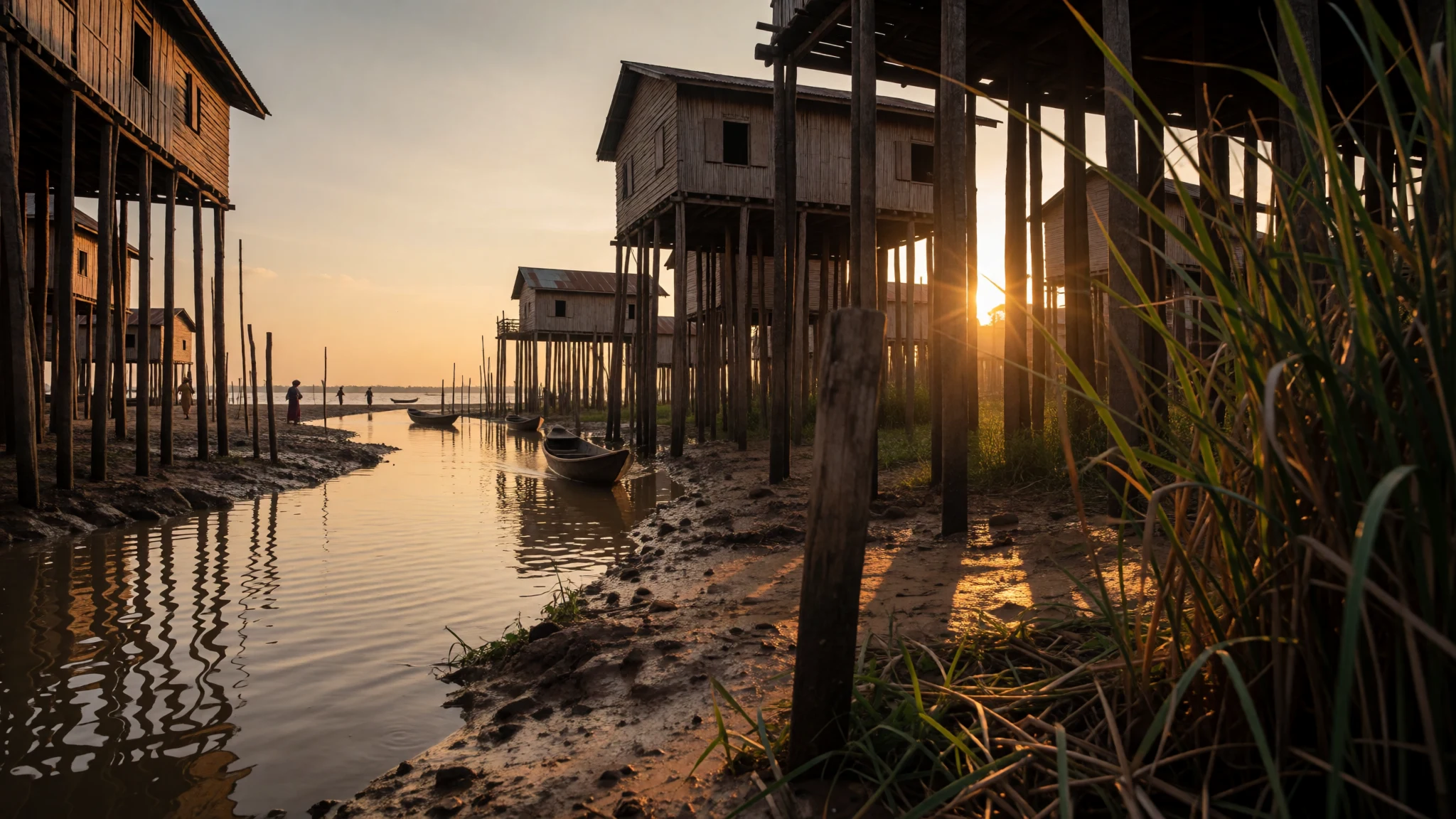
Kampong Phluk is a working fishing commune on Tonle Sap lake, where houses stand on tall stilts and boats replace streets when the water rises.
The place
Kampong Phluk (Khmer: កំពង់ភ្លុក) is a commune in Prasat Bakong District, Siem Reap Province, on the edge of the Tonle Sap lake in Cambodia. Its name translates as Harbour of the Tusks. About 3,700 people live here, spread across three villages: Tnaot Kambot, Dey Krahom and Kok Kdol. What strikes a first-time visitor is the vertical scale of the place. Houses, shops and the odd temple stand on tall wooden or concrete stilts, because the water rises and falls so far between seasons. In the wet months, May to October, the buildings float above a wide brown channel and people move by boat. In the dry months, November to April, the water recedes, the stilts stand exposed like a forest of poles, and the lanes become muddy banks and dusty paths. Fishing, mainly for shrimp, carries household incomes through the wet season. When the water thins, many families turn to farming to top up their earnings. Tourism is a newer layer and a growing one, mostly boat trips run from the Siem Reap side. This is a working village rather than a set, so the best moments are ordinary ones: a woman sorting a catch, a child paddling to school, laundry strung between stilts. Heat is fierce, shade is scarce on the water, and the channel is silty brown rather than postcard blue, so it pays to come for texture and daily life, not for tidy scenery.
Its story
The story of Kampong Phluk is the story of a lake that breathes. The Tonle Sap swells in the wet season and shrinks in the dry, and the community here has built its whole way of living around that rhythm instead of fighting it. Tall stilts are the visible answer; the yearly switch between fishing and farming is the quieter one. Households read the water the way farmers elsewhere read the sky, and their calendar follows it. Behind the village sits a much larger national history. The Khmer Empire was once centred a short distance to the north at Angkor, but after that capital fell, in the fifteenth century, the country was repeatedly pressed and plundered by its neighbours. French colonial rule came in the nineteenth century, followed by a short-lived independence, civil war, heavy aerial bombing, the Khmer Rouge years and a period of Vietnamese occupation. Recovery began slowly once UN-sponsored elections had been held, and it is still unfinished. Basic services in rural Cambodia remain patchy, and short power cuts are an accepted part of daily life. For a lakeside commune like this one, that background helps explain why fishing and farming still form the backbone of the economy, and why tourism, which arrived only in recent years, is welcomed as extra income rather than a replacement for the old livelihoods. Seen that way, the village is less a spectacle than a community that has adapted, again and again, to forces far larger than itself.
What to see
- The stilt-house lanes — Village centre
The main run of stilt houses is what most visitors come for, and it rewards a slow look. Wooden platforms, hammocks, nets and small shops sit high above the ground or water, joined by ladders and planks. In the dry season the height of the poles becomes obvious; in the wet season boats tie up at the doors.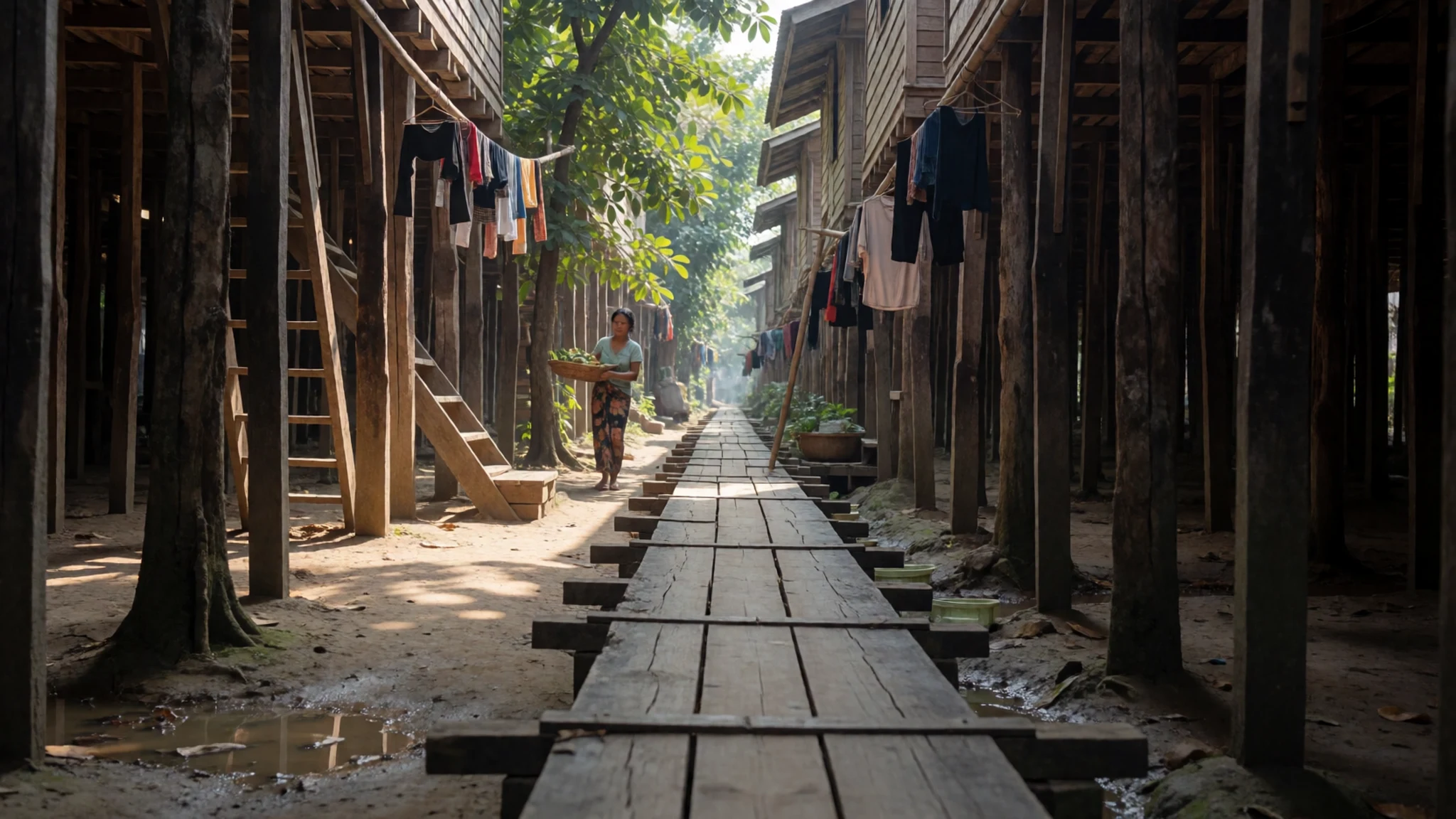
- The river channel by boat — Main channel
A boat along the river channel is the standard way to see the commune, and the best view of how the houses relate to the water. Expect fishing skiffs, children travelling to school and neighbours visiting by paddle. Shade is minimal, so a hat and water matter more than a camera.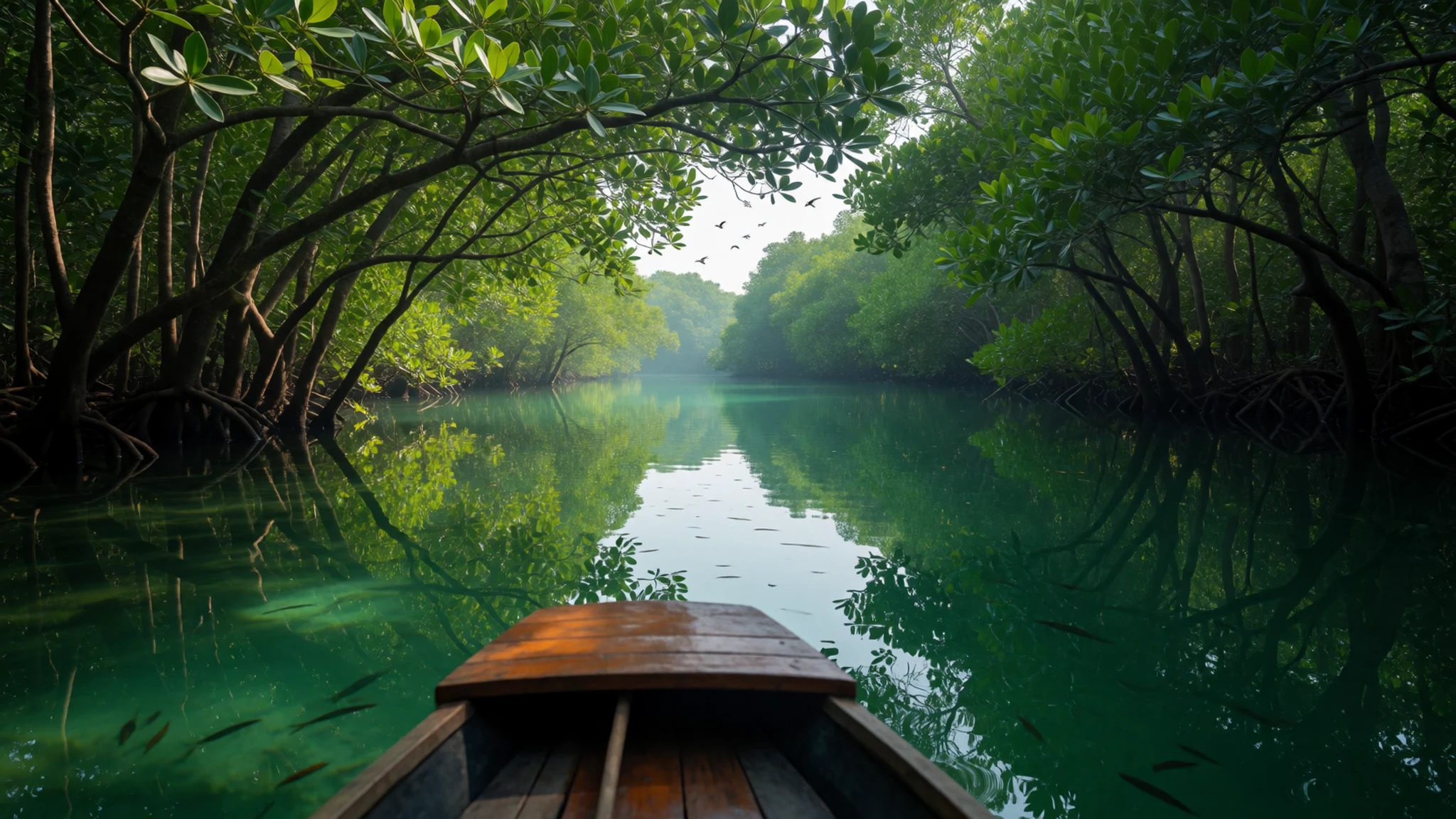
- The flooded forest edge — Channel towards the lake
Beyond the houses the channel opens towards stands of trees that stand in water when levels are high. Quieter paddling trips are sometimes possible here, depending on the month, so ask the boat operator what is feasible rather than assuming. Early morning light is softer and fewer tour boats are out.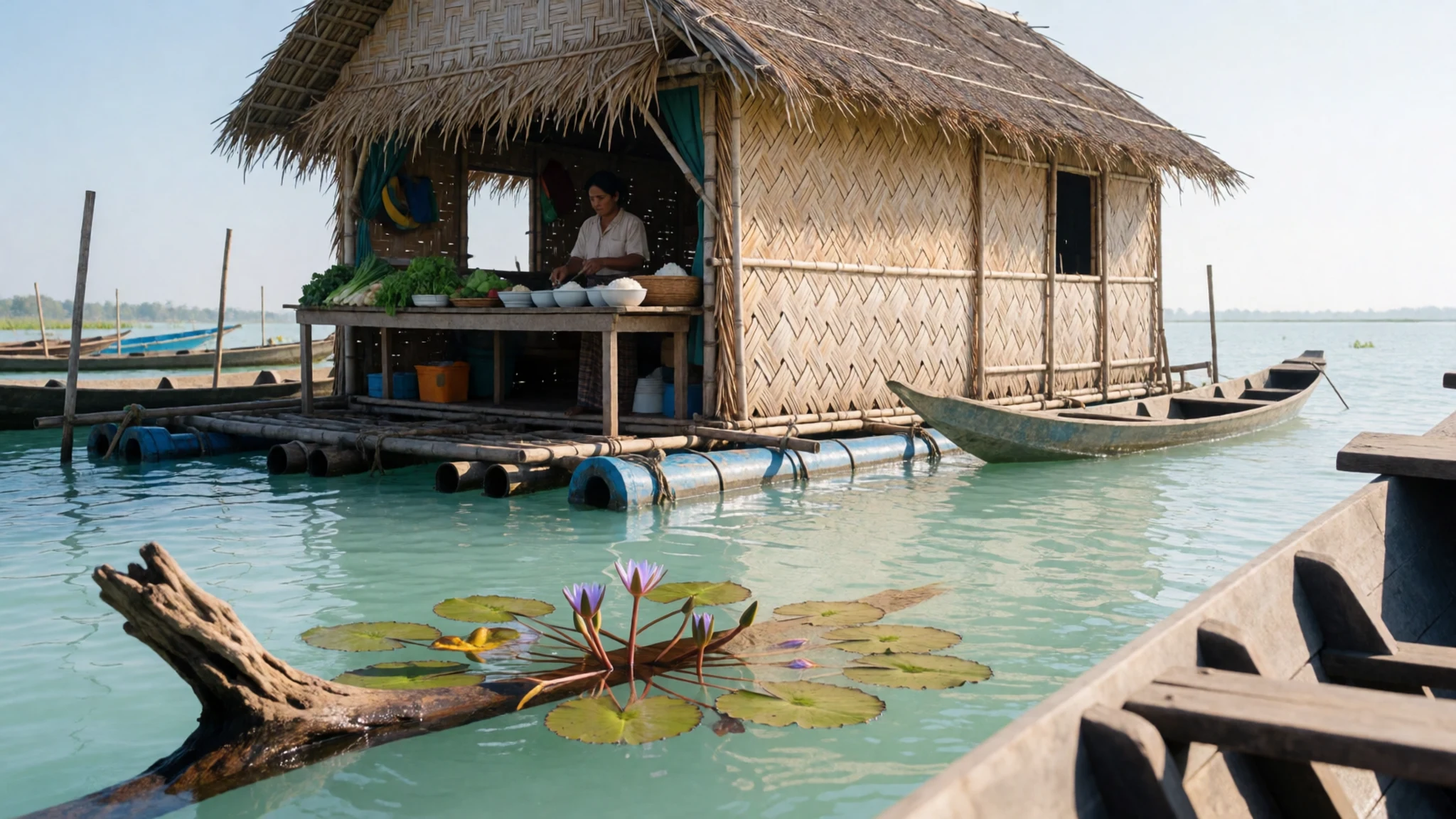
- The Tonle Sap lake edge — Lake mouth
Where the channel meets the open lake, the horizon flattens into water and sky, and the scale of the Tonle Sap becomes clear. Whether boats can go out depends on the season and the operator, so treat it as an option rather than a promise. The wind is welcome after the village heat.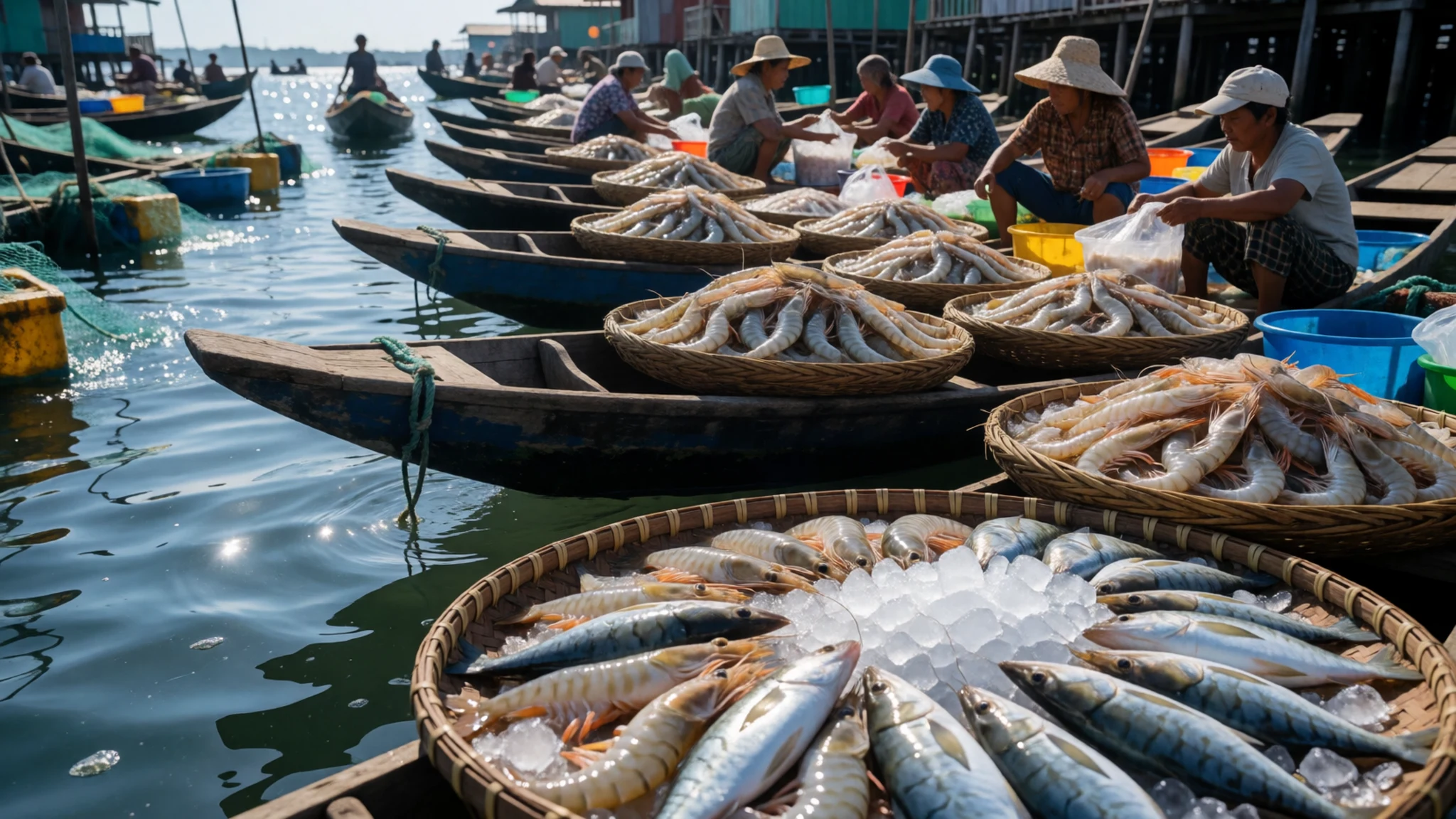
- Dry-season paths and the school run — Village edges
Between November and April the receding water leaves mud banks, farm plots and walking paths below the stilts. This is the season to see daily routines at ground level, including children walking or boating to school. Keep a respectful distance and do not treat anyone's routine as a photo opportunity.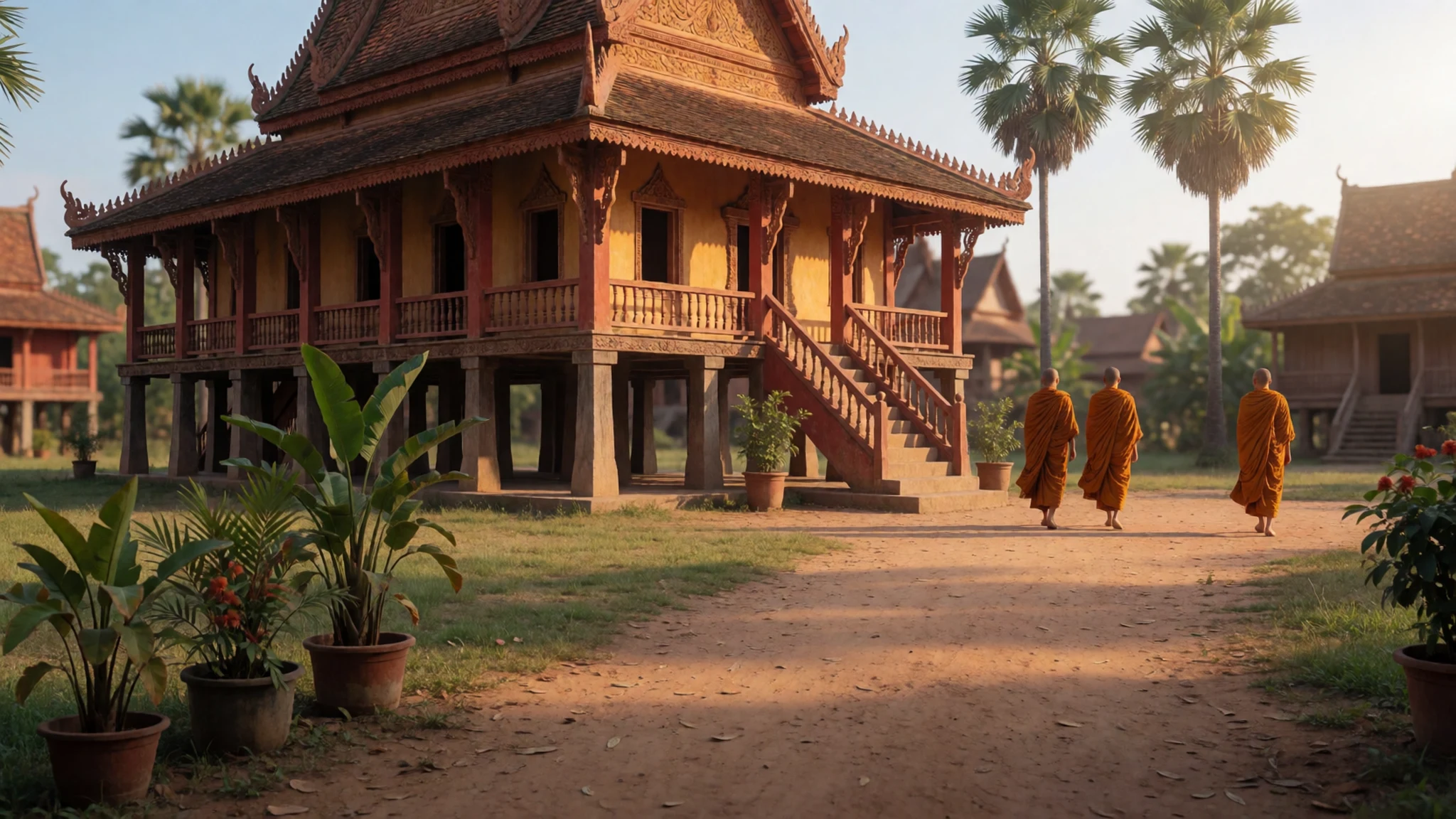
Culture
Kampong Phluk is a Khmer Buddhist community whose culture is shaped by the lake: boats, nets, shrimp and the changing level of the water. Life is practical and family-centred, and visitors are guests in a place where people live and work, not performers. Cambodia is a country still rebuilding after decades of conflict, and many older residents carry that history quietly. Places near Siem Reap are well used to visitors, but villages are less accustomed to being photographed than the temples nearby, and some people dislike it. Always ask before taking a portrait, and be ready to accept a refusal, because some people in tourist areas will ask for payment. Groups of children may offer friendship bracelets or small goods; a polite, friendly no is usually enough, and it is better to support the village by hiring local boat operators and eating at local eateries than by handing out sweets or money. Dress tends to be conservative, especially for women, and covering shoulders and knees shows respect, particularly if a pagoda is visited. Noise and wake from boats can disturb homes at water level, so quiet engines and slow passes are appreciated. Ask permission before taking anyone's photograph in Kampong Phluk, and never photograph children or people at home without a nod from them or a parent.
What to wear
Kampong Phluk's traditional dress follows wider Khmer custom. The sampot is a length of silk or cotton wrapped around the hips as a skirt or drawn through the legs in a style for formal wear, and it is mostly worn today at weddings, festivals and temple ceremonies. The krama, a light checked cotton scarf, is the everyday classic: it shades the neck, wraps a baby, ties up a hammock or serves as a towel. Silk, often woven in patterned styles, is kept for special occasions. In daily life, people in the commune wear what suits fishing and farming: long-sleeved shirts, loose trousers or sarongs, rubber sandals and wide-brimmed hats. Women often cover up in the daytime to keep the sun off their skin. T-shirts and football shirts are common among the young, and a smarter outfit is saved for pagoda days. Visitors should dress for heat, sun and water. Light, loose, long-sleeved cotton or linen is cooler than bare skin and protects against sunburn. Knee-length shorts or trousers are more respectful than short shorts, and a scarf is handy for a pagoda visit. Wear sandals with a secure strap and a decent grip, since planks and boat steps get slippery, and bring a hat, sunglasses and a small waterproof bag for phones and cards.
What to eat
- Amok — Local eateries near the boat landing and in Siem Reap
Amok is a steamed Khmer curry, soft and gently spiced, served in banana leaves or a hollowed coconut. Traditionally made with fish, it may also come with chicken or tofu. Look for it at family-run eateries around the village landing and in Siem Reap.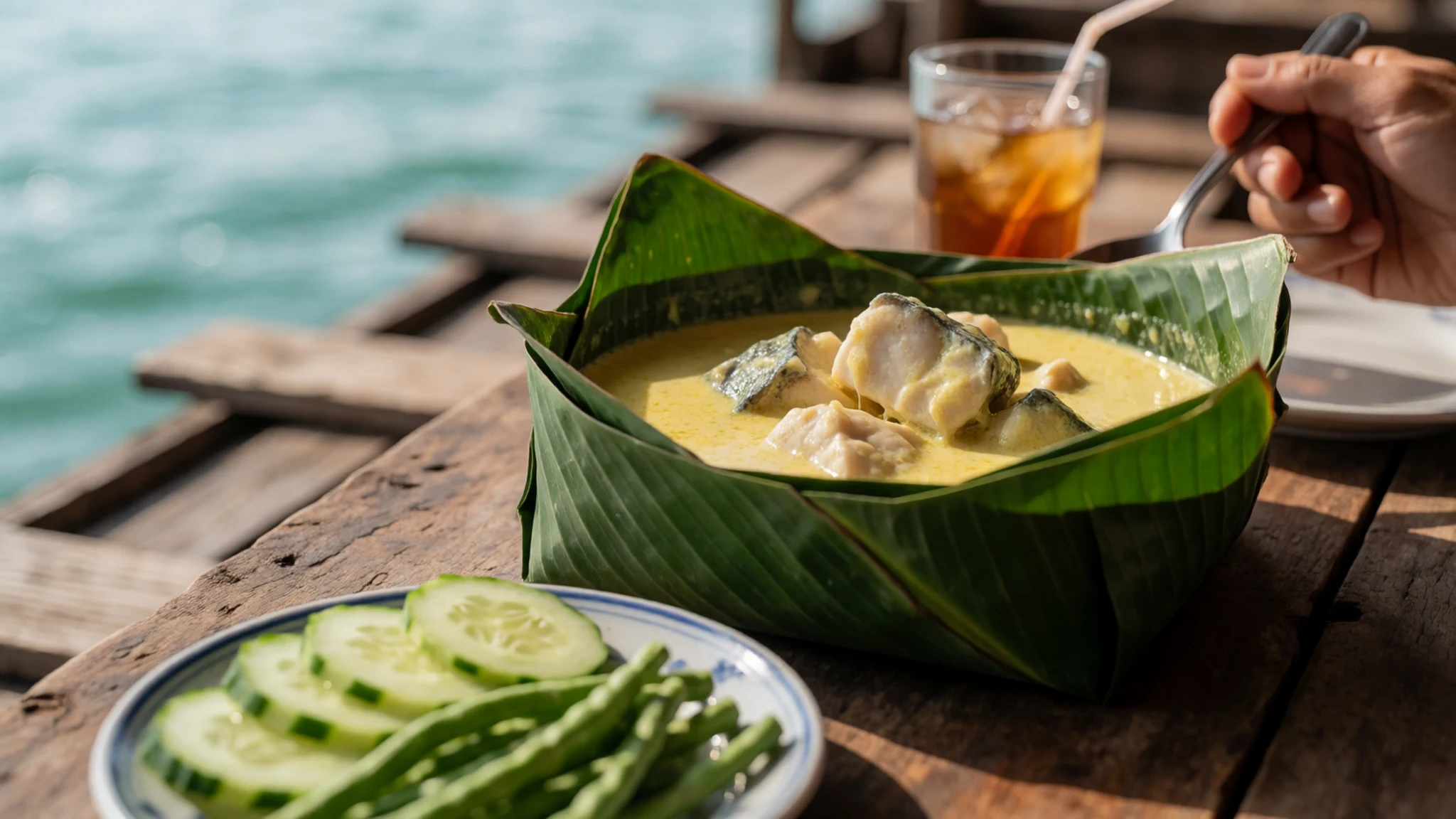
- Grilled lake fish — Simple riverside eateries and the roadside stalls on the way in
Fresh freshwater fish from the Tonle Sap is typically grilled whole over charcoal and served with rice, herbs and a sour or salty dipping sauce. It tastes best simply cooked and eaten the day it is caught.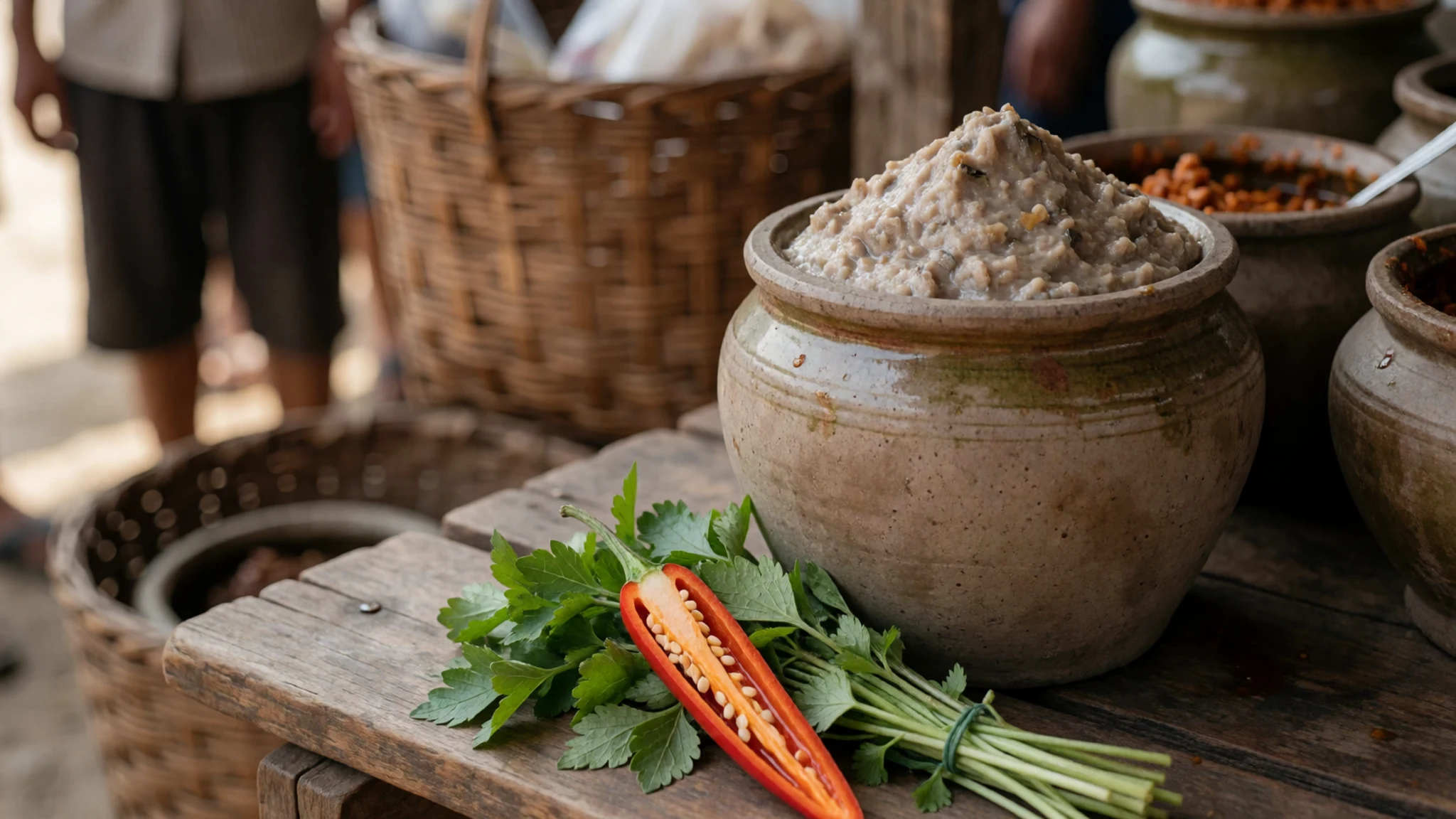
- Shrimp dishes — Eateries run by fishing families around the village
Shrimp is the village's main catch in the wet season, so it turns up in stir-fries, soups and grilled with garlic and pepper. Black pepper rather than chilli is the Khmer way, with chillis served on the side for those who want heat. - Prahok — Home-style eateries and village markets
Prahok is fermented fish paste, a strong, salty seasoning at the heart of much Khmer cooking. It may be stirred into soups and dips or served with fresh vegetables. Its pungency does not suit every palate, so try a small amount first. - Num banh chok — Morning market stalls in Siem Reap and village stalls
Num banh chok is a morning dish of fresh rice noodles topped with a fish-based green gravy and heaps of raw herbs and vegetables. It is light, sour and fragrant, and it makes a good start before an early boat trip.
Plan it
Best time. November to December, when the water is still high enough for boats and the heat has eased a little. The wet season, May to October, brings rain and the most floating-village feel, while the dry months of January to April are hotter, and the channel shrinks and exposes mud banks and stilts.
How long. 1
Getting there. Fly to Siem Reap-Angkor International Airport, then travel by road to the commune, usually by tuk-tuk, taxi or a booked tour. The last leg is by boat from the village landing; check with the operator how far boats can go in your month.
Budget. low
Tips
- Go early in the morning for softer light, cooler air and fewer tour boats
- Bring a hat, sun cream and plenty of drinking water, as there is little shade on the water
- Carry small cash for boats, snacks and small purchases, as cards are rarely accepted in the village
- Ask the boat operator what the water level allows before you pay, since routes change with the season
- Expect short power cuts and stay calm; they usually pass in a few minutes
Etiquette
- Ask before photographing anyone, and accept a refusal politely
- Ask boat operators to slow down near homes at water level to reduce wake and noise
- Cover shoulders and knees if you visit a pagoda
Nearby
Sources
- Wikidata Q6359305 (CC0)
- Wikipedia: Kampong Phluk (rev 1377803315) (CC BY-SA 4.0)
- Wikivoyage: Cambodia (rev 5395048) (CC BY-SA 4.0)
- Photo: Stilt houses in Kampong Phluk floating village (PsamatheM) (CC BY-SA 4.0)
- Photo: Houses on the water in Kampong Phlouk (Krzysztof Golik) (CC BY-SA 4.0)
- Photo: Go to school (Rayakali6) (CC BY-SA 4.0)
- Photo: Stilt houses in Kampong Phluk floating village (PsamatheM) (CC BY-SA 4.0)
- Photo: Stilt houses on Tonle Sap Lake (Jakub Hałun) (CC BY-SA 4.0)
- Photo: Kampong Phluk (PsamatheM) (CC BY-SA 4.0)
- Photo: Stilt houses in Kampong Phluk floating village (PsamatheM) (CC BY-SA 4.0)
- Photo: Kampong Phlouk, Siem Reap Province (Krzysztof Golik) (CC BY-SA 4.0)


