Kirirom National Park
Kirirom National Park, Cambodia
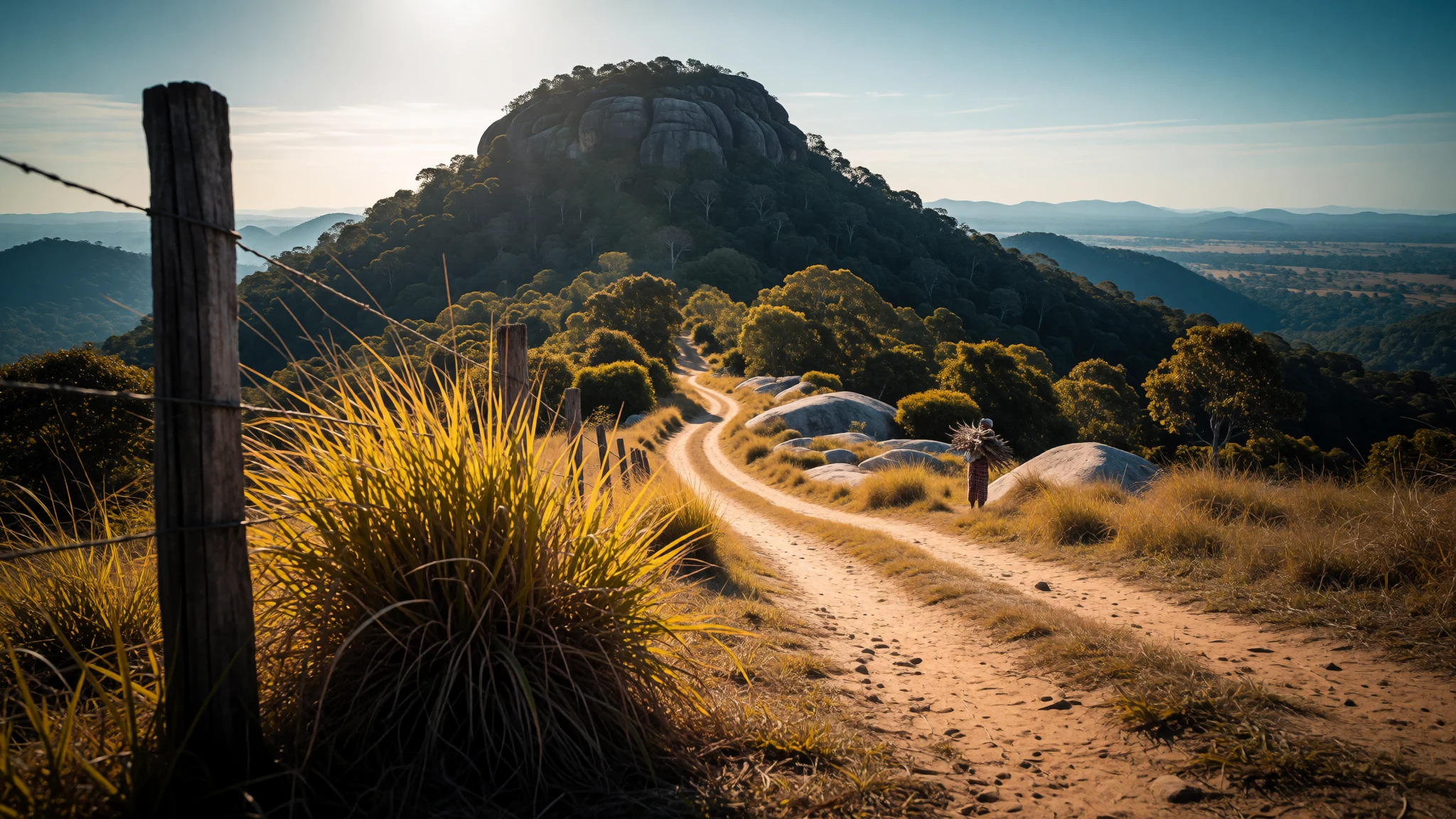
Kirirom National Park is Cambodia's cool, green plateau escape, a short drive from Phnom Penh, with waterfalls, forest walks and mountain air.
The place
Kirirom National Park sits in Kampong Speu Province, about 120 km west of Phnom Penh, on a plateau in the eastern Cardamom Mountains. The name is Khmer for Happiness Mountain, or Mountain of Joy, and the full official title adds Preah Suramarit-Kossamak (ឧទ្យានជាតិព្រះសុរាម្រិត-កុសមៈ គិរីរម្យ). It was established in 1993 and is Cambodia's first officially designated national park. The high point is Phnum Chivit, at 949 m.
What shapes a visit here is altitude. The plateau is noticeably cooler than the lowland plains around the capital, with daytime temperatures averaging about 25 °C and nights that feel properly cool. After the heat of Phnom Penh, that is the whole appeal: mist in the early morning, forest air, and walks that do not leave anyone wilting.
The landscape is a mix of forest, open ridges and streams that spill over rock, fullest in the rainy months. It is popular with Phnom Penh families and groups of friends for short breaks, so weekends and public holidays are likely to be busier than weekdays. Facilities are simple compared with the hill stations of Thailand or Malaysia, and services can be patchy once off the main routes.
Kirirom suits people who want fresh air, short walks and views rather than a list of famous monuments. It works well as a one- or two-night break from the capital, and as a first look at Cambodia's uplands before going deeper into the Cardamoms.
Its story
Kirirom National Park is young as a protected area, but it belongs to a long and hard national story. Cambodia's past is usually told through Angkor, the great capital of the Khmer Empire, which declined and was abandoned after its fall in 1431. In the centuries afterwards the kingdom was repeatedly plundered by its neighbours, and in the nineteenth century it came under French colonial rule.
Independence in the middle of the twentieth century did not bring peace. Civil war followed, along with heavy bombing, then the Khmer Rouge years of terror, and after that occupation by Vietnamese forces. The nation only started its slow recovery following the UN-backed elections of 1993.
That same year, 1993, Kirirom was set aside as Cambodia's first officially designated national park. It makes a quiet marker of recovery: a stretch of highland protected for its forest, water and fresh air, in a country that spent decades with other priorities. The Khmer name, Happiness Mountain, fits that mood.
Visitors who want the harder side of the history will find it near Phnom Penh, at the Choeung Ek Memorial, often called the Killing Fields, and at the Tuol Sleng Genocide Museum. Many travellers pair those sombre visits with a day or two on the cool plateau, and the contrast is part of understanding the country.
What to see
- Chambak waterfall — Kirirom plateau
Chambak waterfall is the best-known water feature on the plateau, a wide curtain of water over rock that is at its fullest in the rainy season. In the dry months the flow thins considerably. Go with sturdy shoes, as rocks near the water are slippery, and expect more company at weekends.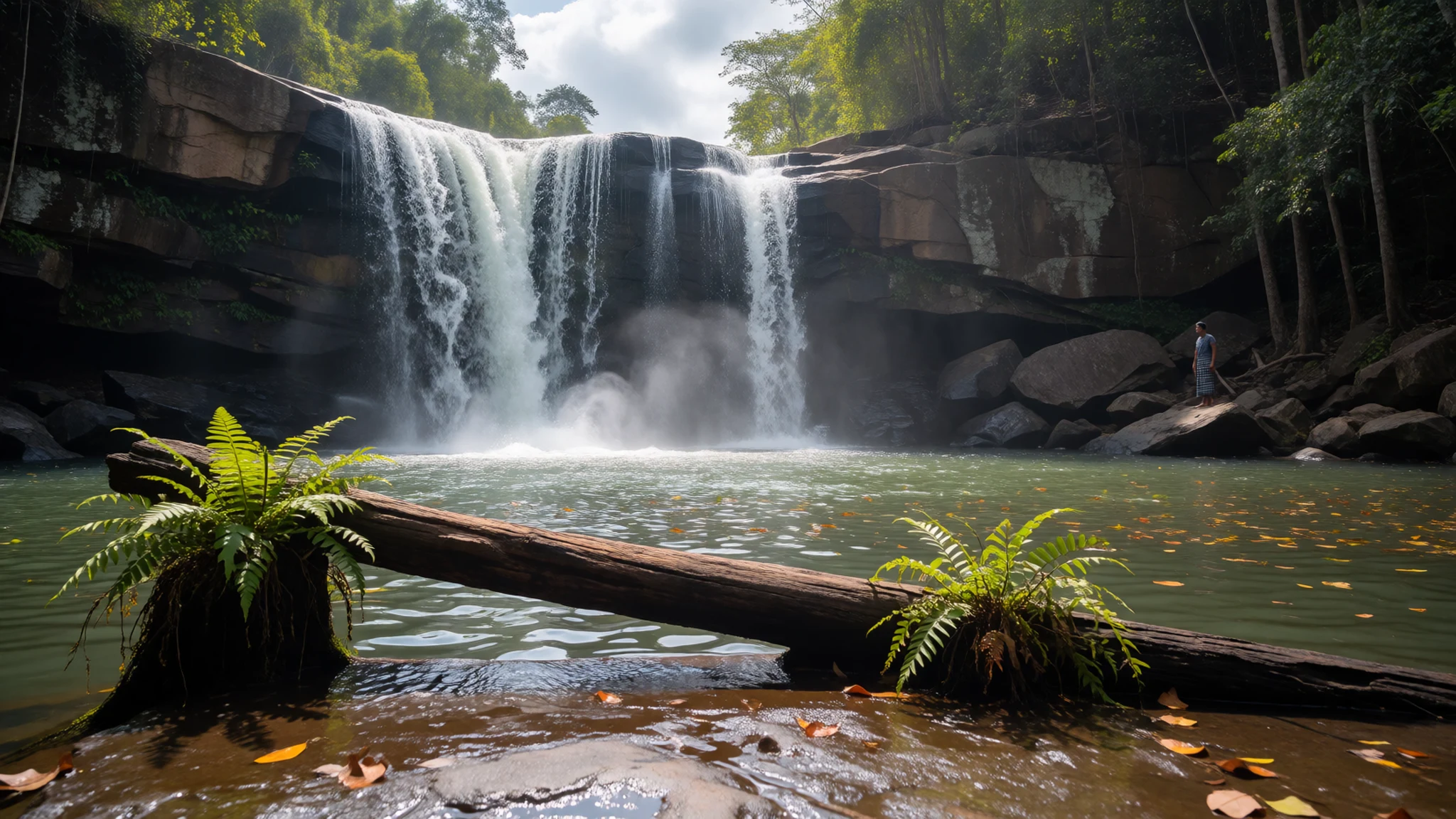
- The plateau and its forest tracks — Kirirom plateau
The plateau itself is the main sight: forest, open ridges and cool air above the plains. Walking tracks and quiet roads let visitors wander without a fixed plan. Early morning is the best time, when mist often lingers and the light is soft before day trippers arrive.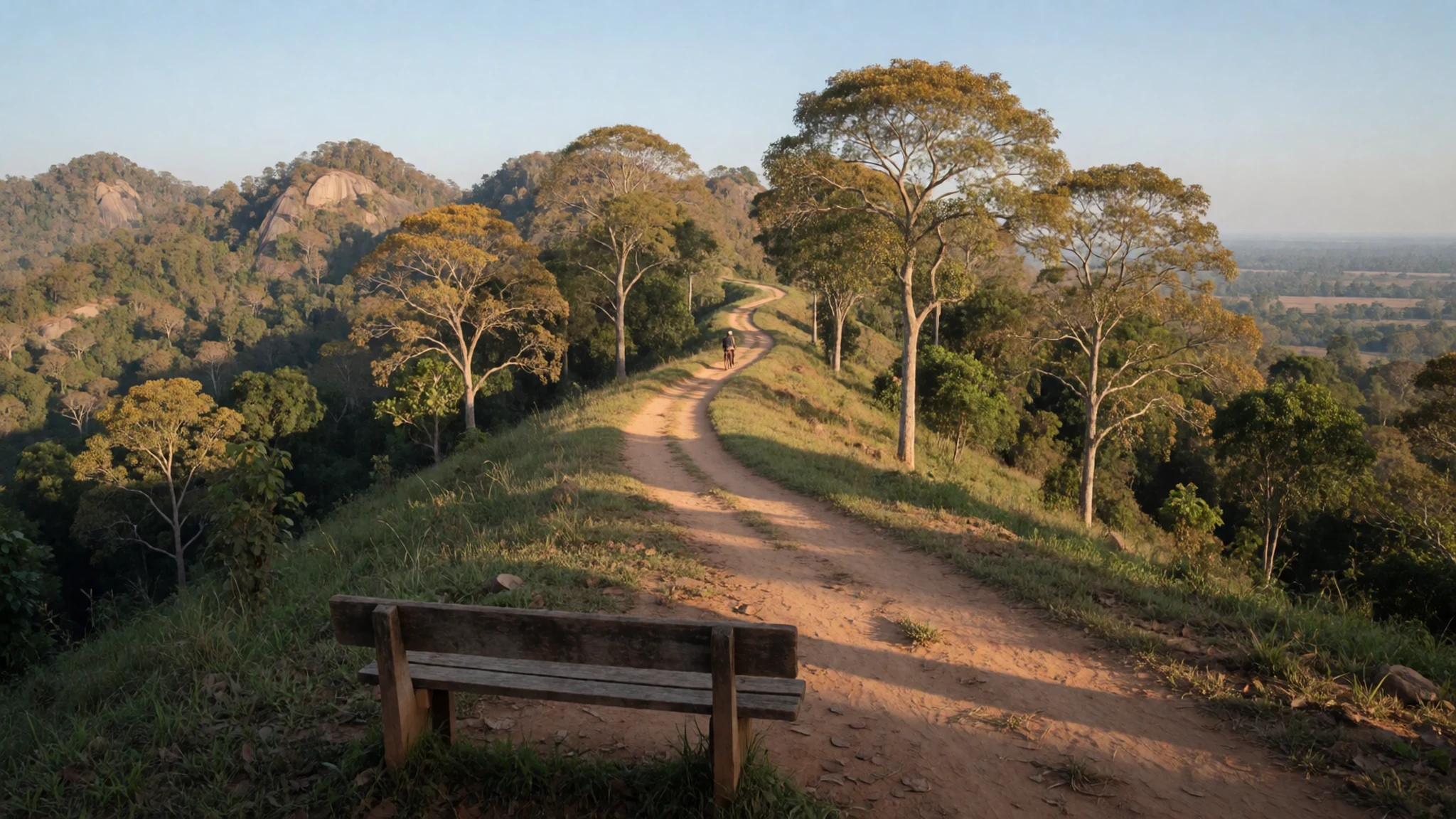
- Phnum Chivit — Kirirom National Park
Phnum Chivit is the park's highest peak, at 949 m. It is a good goal for a walking day if the weather is clear, though conditions on the ground change with the season. Ask rangers or your guesthouse about current routes, and set out early to avoid midday heat and afternoon cloud.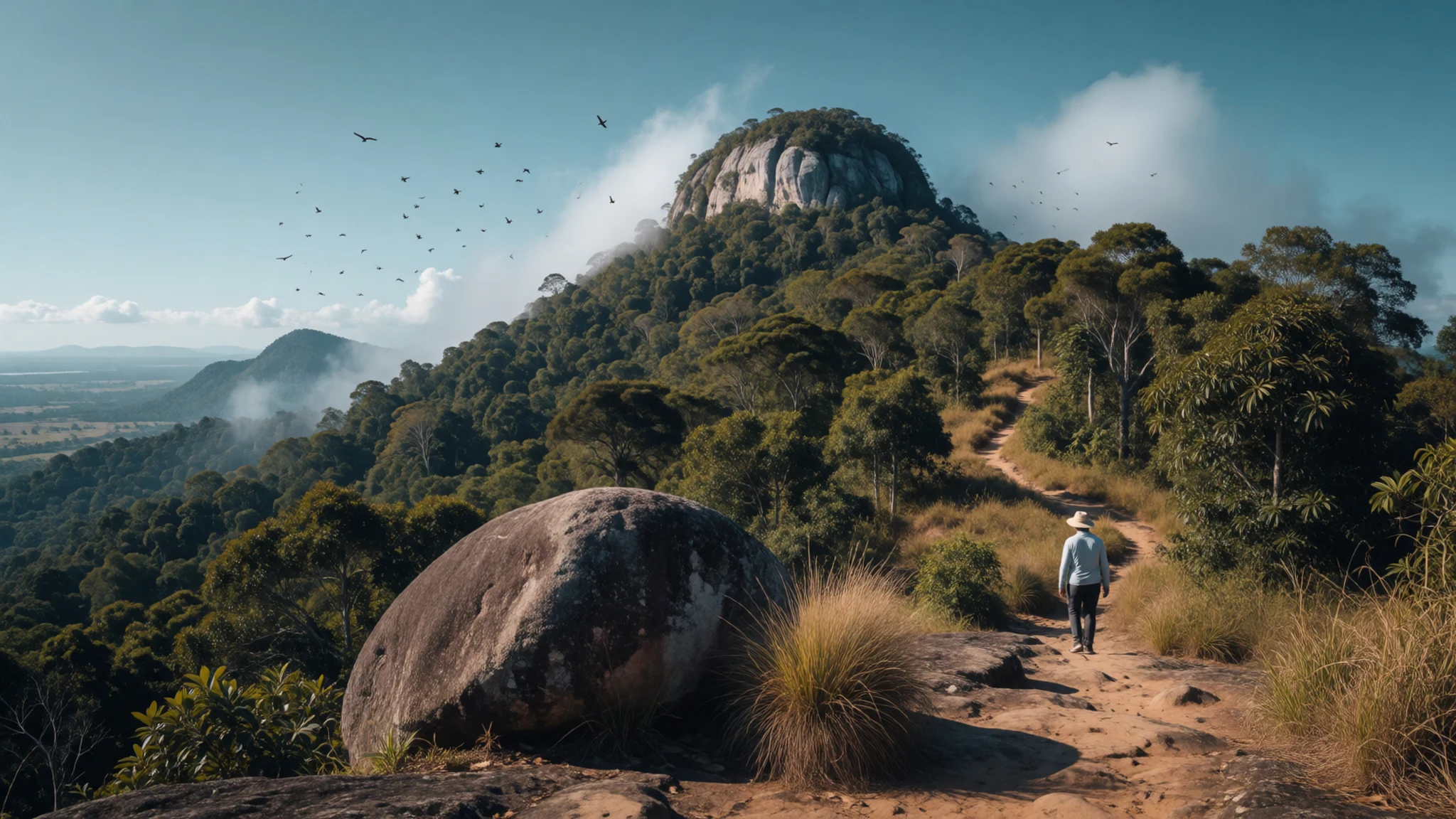
- Fungi and lichens of the forest floor — Forest paths
Close-up photographers will find plenty to look at beneath the trees. Fungi and lichens have been recorded and photographed in the park, and they are most noticeable after rain. Look rather than pick, and keep to paths so the damp ground and its small residents are not trampled.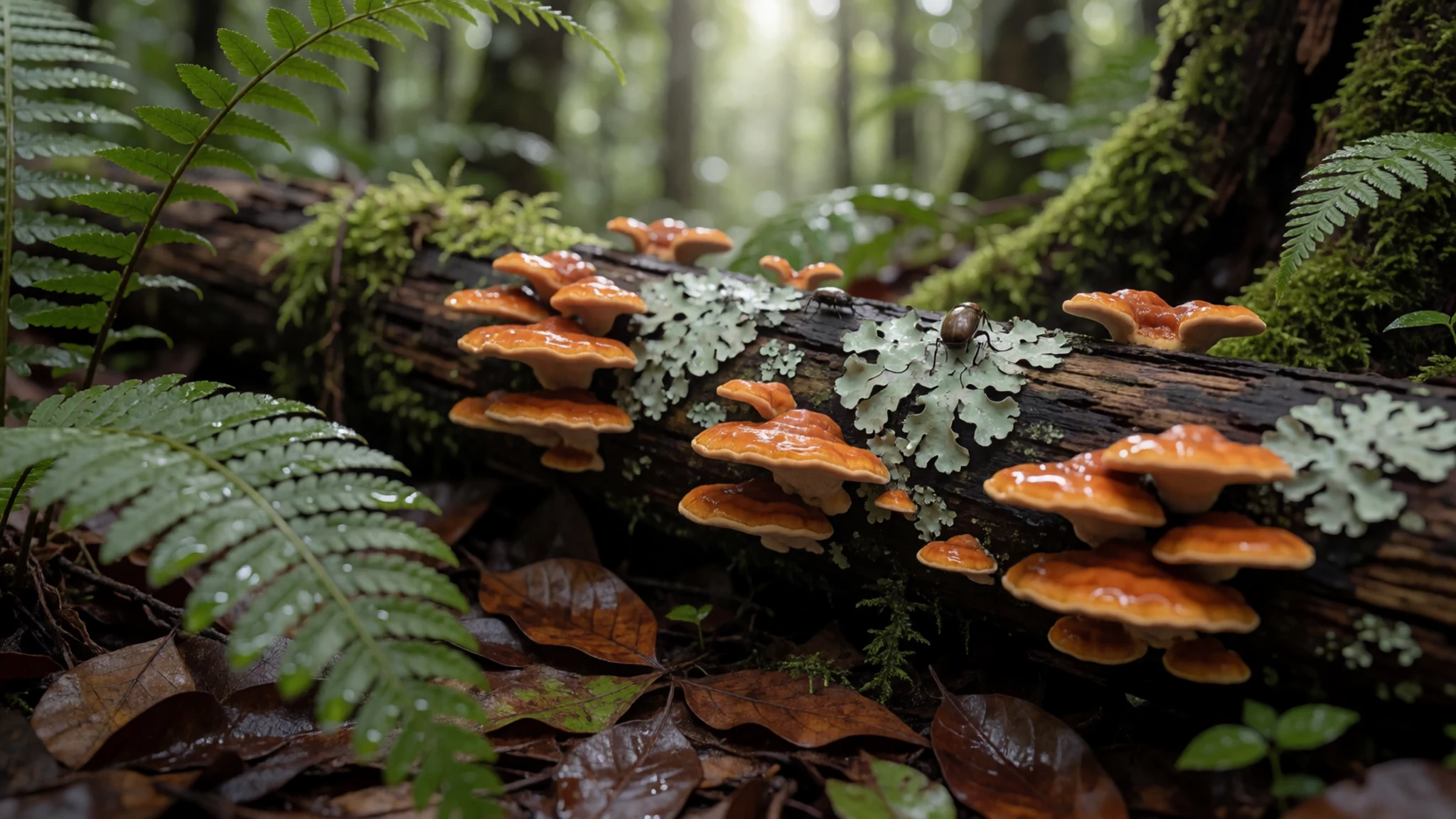
- The edge of the Cardamom Mountains — Approach road to the plateau
Kirirom lies in the eastern part of the Cardamom Mountains, so the climb from the lowlands is itself a sight. Fields and villages give way to hills and cooler air as the road rises. Stop where it is safe to look back over the plains, ideally in clear morning light.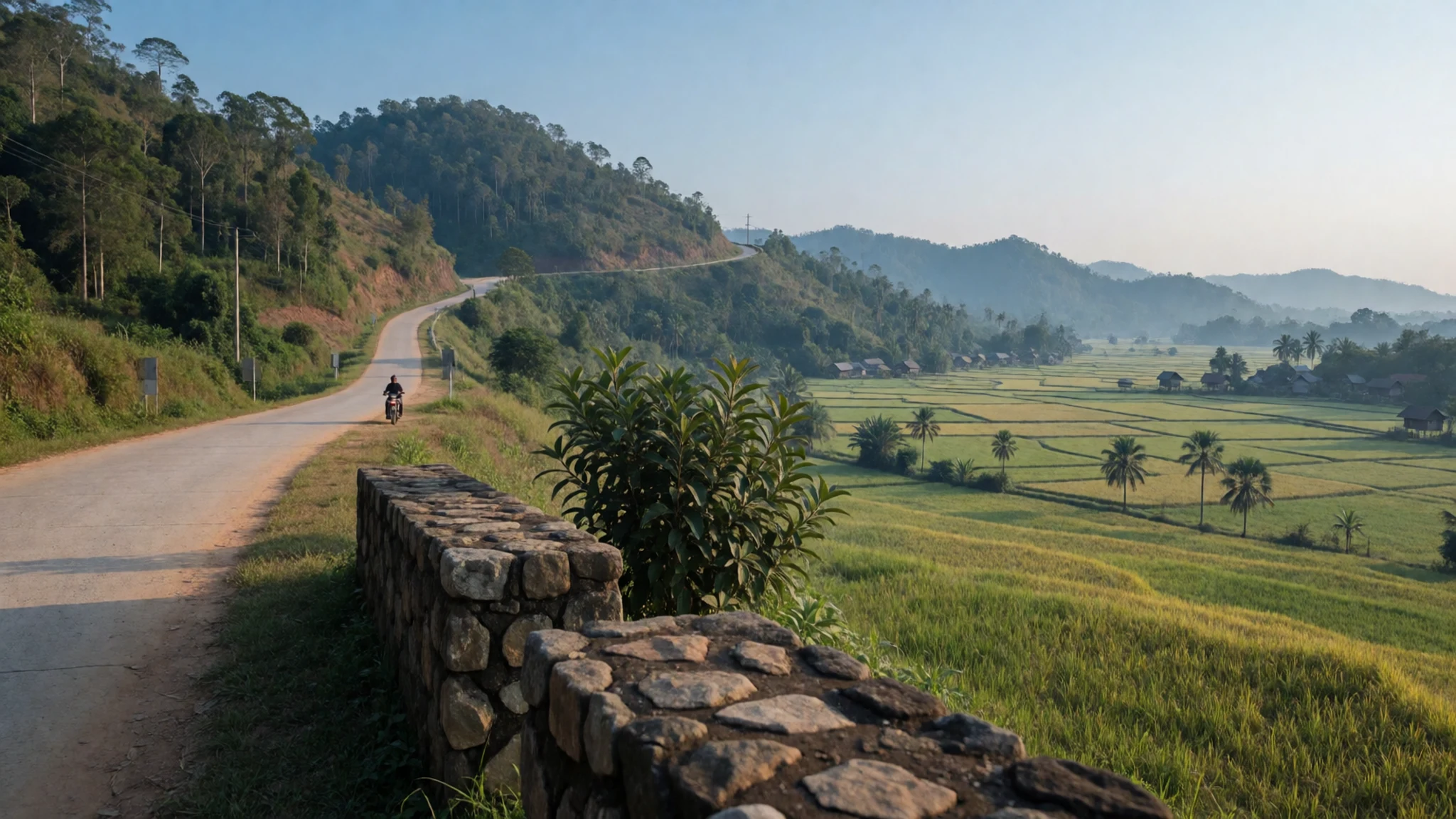
Culture
Kirirom National Park is a leisure destination for Cambodians as much as for foreigners, and the atmosphere reflects that: family picnics, groups of friends, and weekend visitors from Phnom Penh enjoying cooler air. The culture to understand here is Khmer everyday courtesy, which is polite, modest and fairly reserved with strangers.
Cambodia is a country at a crossroads. Places such as Phnom Penh and Siem Reap are well used to tourists, but the countryside and smaller towns are less so, and the villages around the park follow rural habits. Many people there do not like being photographed, and a few in urban areas may ask for payment. Asking first is both polite and practical.
Dress is generally conservative, particularly for women. Shorts are now accepted in the big tourist centres, but outside them knee-length shorts or trousers are more respectful. Many Cambodian women cover up in the daytime partly to avoid a tan, which is not considered attractive, while evenings out in town tend to be more relaxed. None of that should be read as an invitation or a judgement.
Buddhism shapes daily life, and the pace of rural Cambodia is unhurried. Patience, a smile and a calm voice go a long way when plans change or services are slow.
Ask before photographing anyone, especially villagers and children, and keep music and loud voices down in the forest and at the waterfall.
What to wear
Traditional Cambodian dress centres on the sampot, a length of cloth wrapped around the waist and legs, and the krama, a checked cotton scarf. The finest sampot are woven from silk, sometimes in patterned ikat styles, and are worn for weddings, festivals, temple ceremonies and formal occasions. The krama is far more everyday: farmers and drivers use it against the sun, as a head covering, a towel, a sling or a belt. Older people around Kirirom are the most likely to wear both as part of normal life.
What people wear now is mostly practical and modest: T-shirts, light long trousers or skirts, caps and sandals. Weekend visitors from Phnom Penh often dress casually but cover their shoulders and knees, and in the cool evenings a jumper or jacket appears. Women tend to dress conservatively by day.
For visitors, the plateau's climate drives the packing. Bring light, breathable layers for the day and a warm layer for nights, which are cool. A thin waterproof is useful in the rainy season. Wear closed shoes with real grip for waterfall rocks and wet forest paths, and a hat and sunscreen for open ridges. Knee-length shorts or trousers and covered shoulders are the safe choice in villages and at any pagoda, where shoes should also be easy to slip off.
What to eat
- Rice with grilled meat or fish — Simple roadside eateries near the park entrance
Rice is the staple of Khmer meals, and a plate of it with grilled pork, chicken or fish is the simplest, most dependable lunch near the park. Dishes are tasty and cheap, and chillies usually come on the side rather than in the food.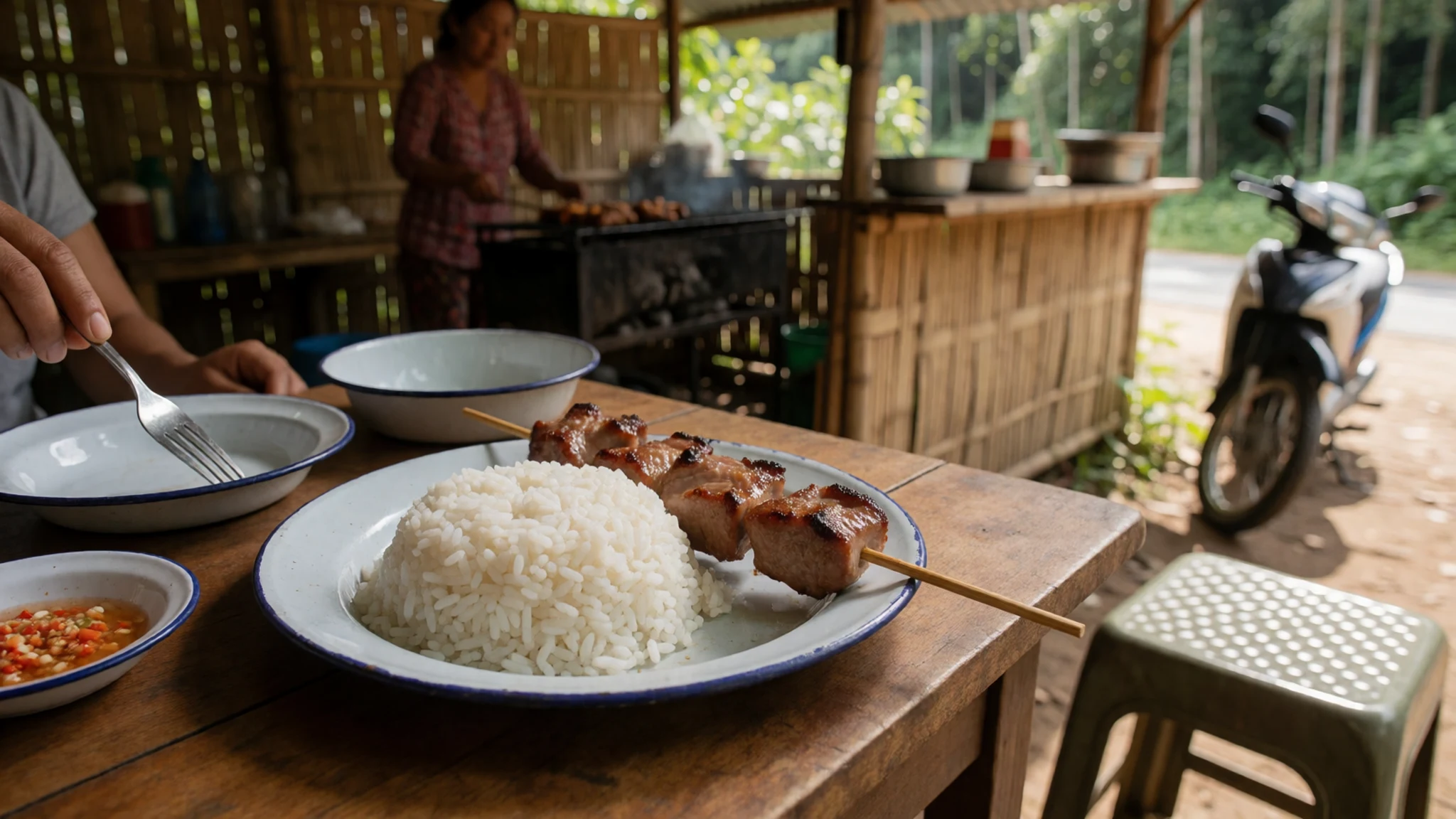
- Sour soup — Family-run restaurants on the plateau and in nearby towns
Cambodians like strong sour flavours, and sour soups with fish or meat show it best. Expect a bright, tangy broth eaten alongside rice. It is a good choice after a damp, cool morning walk on the plateau.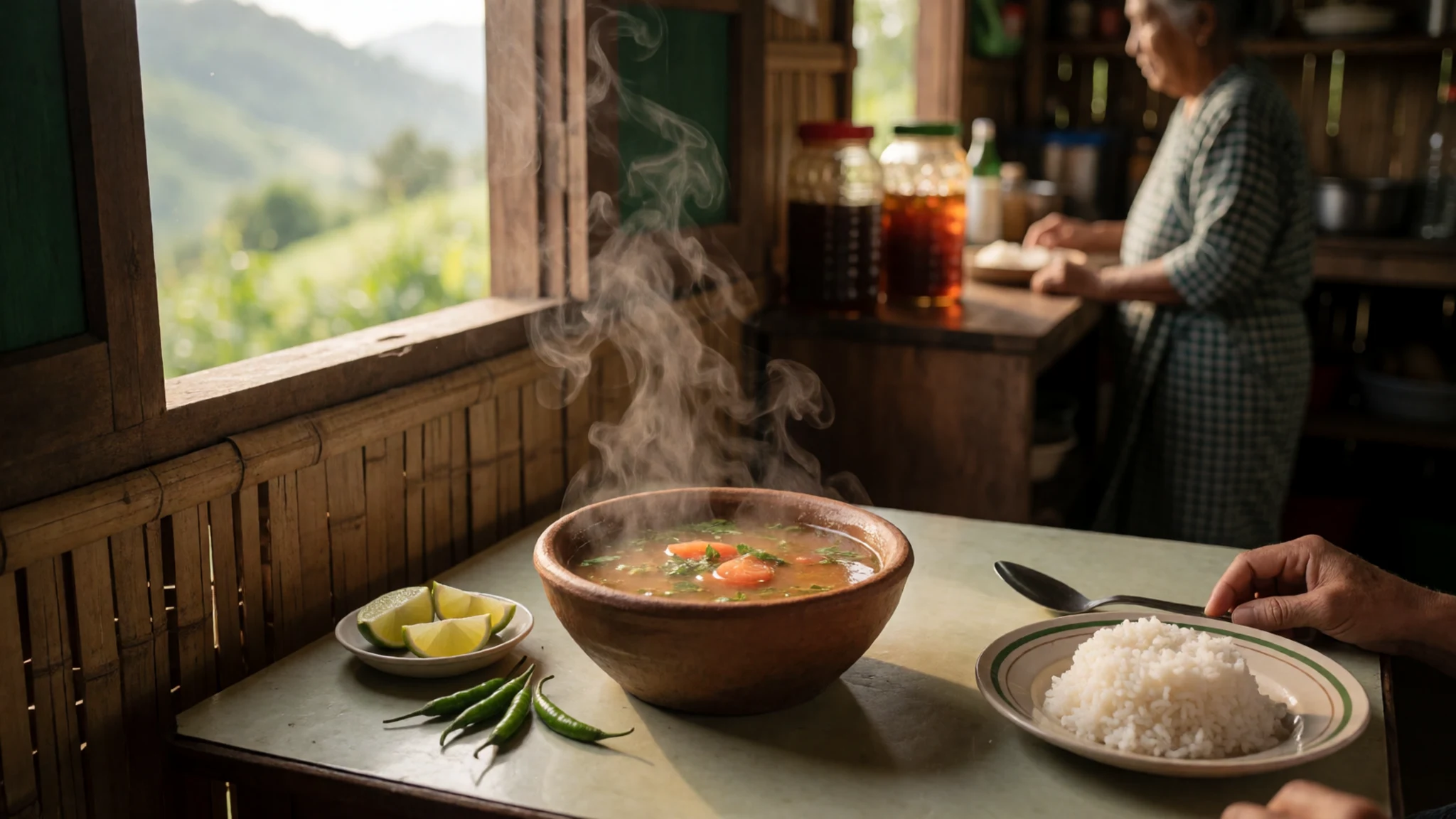
- Noodle soup — Morning stalls and market food counters in nearby towns
Noodles appear less often than rice but turn up in breakfast bowls and quick lunches. A hot noodle soup suits the cool plateau mornings well, and many stalls serve it with fresh herbs and lime on the side. - Prahok — Local restaurants and village kitchens
Prahok is a fermented fish paste used widely in Khmer cooking, adding a deep, salty, pungent note. It can be an acquired taste for visitors, so try it as a seasoning inside a dish before trying it on its own. - Fresh fruit and picnic snacks — Market stalls on the approach road
Day visitors often carry picnic food, and fruit sellers and snack stalls are easy to find on the road to the park. Peeled fruit, grilled snacks and cold drinks make an easy lunch by the water. Carry rubbish out with you.
Plan it
Best time. November to February is the most comfortable stretch, when the dry season brings clearer skies and cool plateau air. The rainy season brings fuller waterfalls but wetter paths and more cloud, and the hotter months before it can be warm even at altitude.
How long. 2
Getting there. Fly into Phnom Penh's international airport, then travel west by road for about 120 km to the plateau in Kampong Speu Province. A hired car with driver or a taxi from the capital is the simplest last leg; check current road conditions and entry rules with the park or your guesthouse.
Budget. low
Tips
- Go on a weekday if possible, as weekends and public holidays draw crowds from Phnom Penh
- Start walks early, before the midday heat and afternoon cloud
- Carry cash, as cards may not work at small eateries and stalls
- Bring drinking water and a warm layer, since nights on the plateau are cool
- Book accommodation ahead for weekends and holidays, and confirm entry rules with the park or your guesthouse
Etiquette
- Ask permission before photographing people, especially in villages
- Dress modestly in villages and at pagodas, with knees and shoulders covered
- Take rubbish away and keep to marked paths in the forest
Nearby
Sources
- Wikidata Q1929766 (CC0)
- Wikipedia: Kirirom National Park (rev 1383887932) (CC BY-SA 4.0)
- Wikivoyage: Cambodia (rev 5395048) (CC BY-SA 4.0)
- Map of Koh Kong Province, Stefan Fussan (Public domain)
- 1 Chambak waterwall 21-11-2010, Vanna 0885599228 (CC BY 3.0)
- 1 Kirirom nation park 21-11-2010, Vanna 0885599228 (CC BY 3.0)
- 2 Chambak waterwall 21-11-2010, Vanna 0885599228 (CC BY 3.0)
- 2 kirirom nation park 21-11-2010, Vanna 0885599228 (CC BY 3.0)
- Parmotrema tinctorum, Dmitriy Bochkov, Mushroom Observer (CC BY 3.0)
- Scleroderma sinnamariense, Dmitriy Bochkov, Mushroom Observer (CC BY 3.0)
- Turbinellus floccosus, Dmitriy Bochkov, Mushroom Observer (CC BY 3.0)


