Kampong Khleang
Kampong Khleang, Cambodia
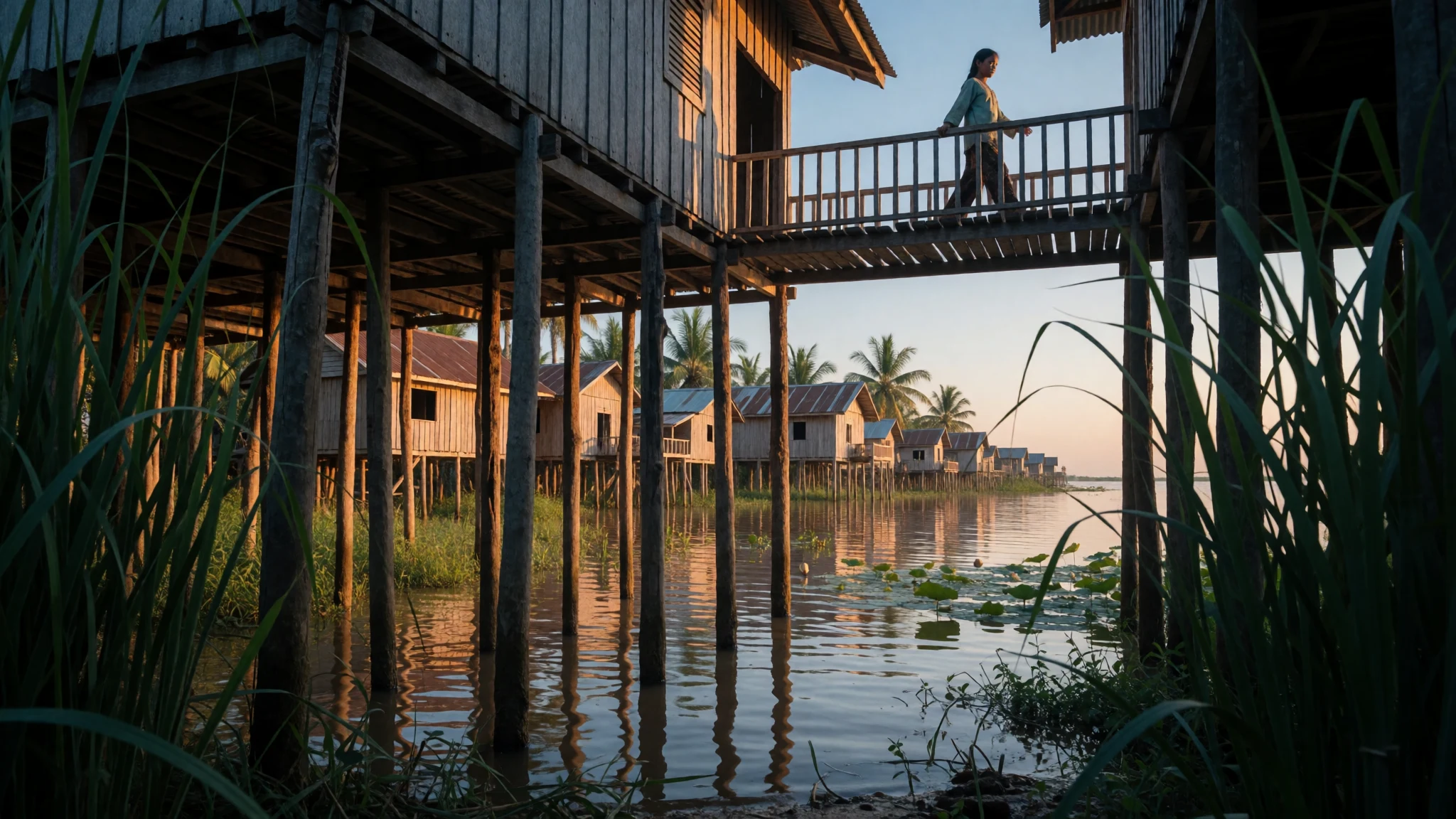
Kampong Khleang is a Tonle Sap lake village where houses stand on stilts as tall as trees and the street turns into a river.
The place
Kampong Khleang is a commune on the northern shore of the Tonle Sap lake in Cambodia, a working fishing community rather than a resort. Its wooden houses are lifted high on stilts, because the lake does not stay still. In the wet season the water climbs, swallows the fields and the lower lanes, and reaches the edge of the village. In the dry season it shrinks away and leaves a dusty, cracked landscape where the stilts stand exposed like the legs of a heron. Same village, two completely different faces.
Most of the settlement runs along a long road and the channel beside it. Houses, shops, a school, small pagodas and fish-processing yards sit side by side, with boats tied up beneath balconies. Beyond the last homes, a channel leads out through flooded forest towards open water, where some families live on floating houses and keep their pigs and fish in pens below the floor.
The village sits well away from the Siem Reap hotel strip and the temple crowds, and it feels like it. Visitors are still a sideshow here, and the daily rhythm is set by fishing, mending nets, drying catch and school hours. Electricity and other basic services can be patchy, as in much of rural Cambodia, so facilities are simple. Come for the way water shapes every decision, from where a house is built to how children get to class, and expect to be a quiet guest rather than the main event.
Its story
The story of Kampong Khleang is really the story of the Tonle Sap, and of how Cambodians have lived with its moods for centuries. The Khmer Empire, whose capital at Angkor lies not far to the north-west, grew rich partly by taming water: its engineers dug canals and built dams to carry it to rice fields. The lake itself was never tamed. Each year its river reverses direction, swelling the lake in the wet months and draining it again afterwards, and communities along its edge have always had to bend to that cycle.
Fishing families like those of Kampong Khleang took the opposite approach to the Angkorians. Rather than control the water, they built around it. Tall stilt houses, boats as everyday transport and floating homes further out are all answers to the same problem. When the lake is full the fish come into the flooded forest to feed and breed, and the village's livelihood follows them.
Cambodia's wider history has not been kind. After the empire's decline the country was pressed by its neighbours, later colonised by France, and then devastated by bombing, civil war and the Khmer Rouge years. Recovery began in earnest only after elections organised by the United Nations in the early 1990s, and rural places like this one have rebuilt slowly. Today the village is a reminder that ordinary life in Cambodia continues far from the famous ruins, still tied to the water that made the empire possible in the first place.
What to see
- The stilt-house main street — Village centre
Kampong Khleang's main road is the best introduction. Walk or cycle slowly along it and look up: living rooms, hammocks, kitchens and shrines sit high above the ground, with ladders and boats below. In the dry season the height of the stilts is startling. It is also where daily errands, school runs and small shops are easiest to see.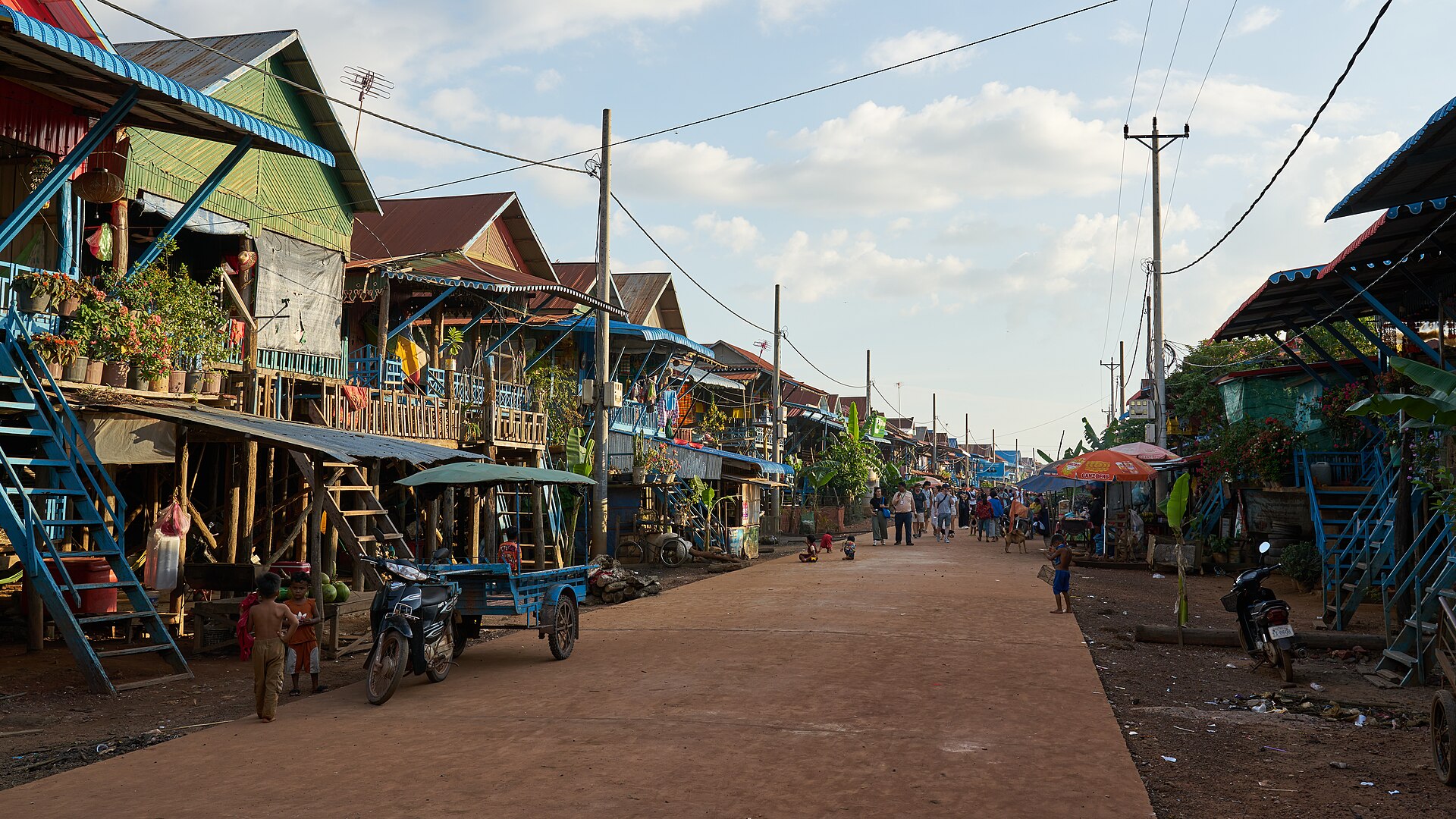
- The boat pier — Village edge, by the channel
A small pier at the edge of the settlement is where boats leave for the floating community and the open lake. Early morning is lively, with fishing crews coming and going and boats being loaded. Agree the route with the boatman before setting off, check that lifejackets are on board, and expect a pace that follows the water level.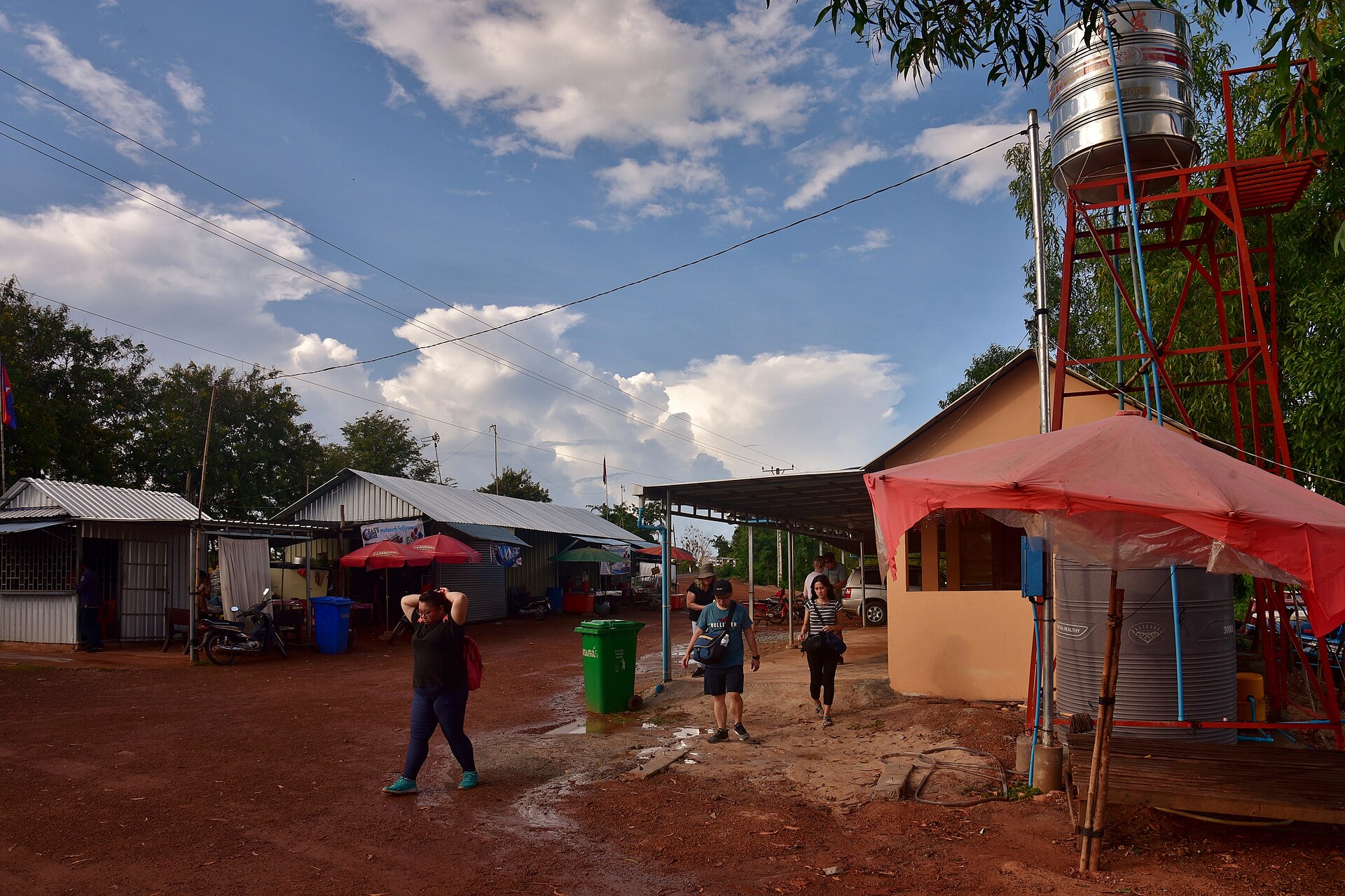
- The flooded forest — Channel towards the lake
Beyond the village, the channel runs through trees standing in water, their trunks half submerged in the wet season. This is a nursery for fish, which is why the community depends on it. Boats thread slowly between branches, and the quiet is striking. Kingfishers and egrets are common sights for patient visitors.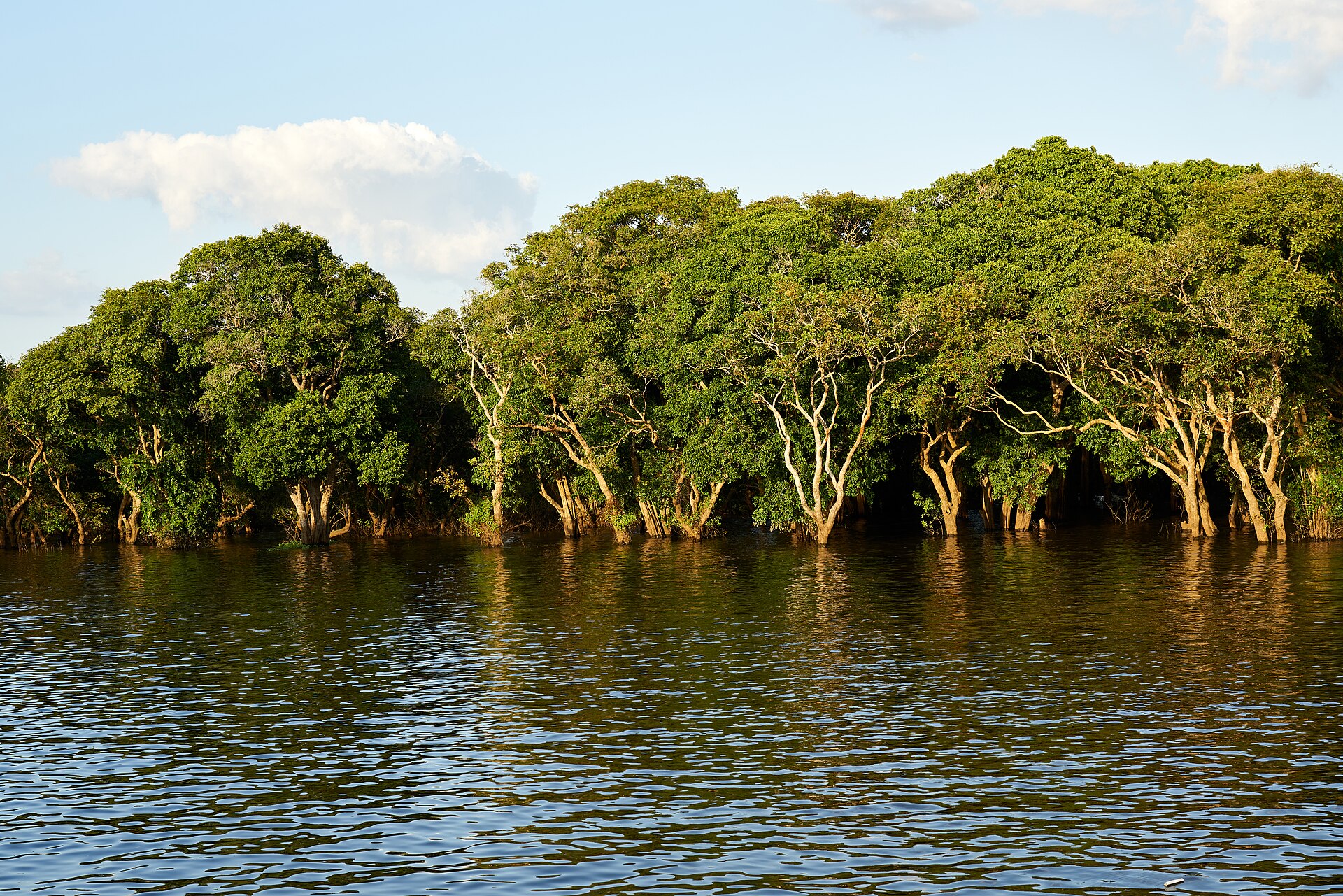
- The floating houses on open water — Out on the Tonle Sap
Further out, some families live on houses that rise and fall with the lake instead of standing on stilts. Pens below hold fish, and sometimes pigs. Visits are best treated as a glimpse into someone's home, not a stage set: keep voices low, ask before photographing, and consider buying something small from a family shop.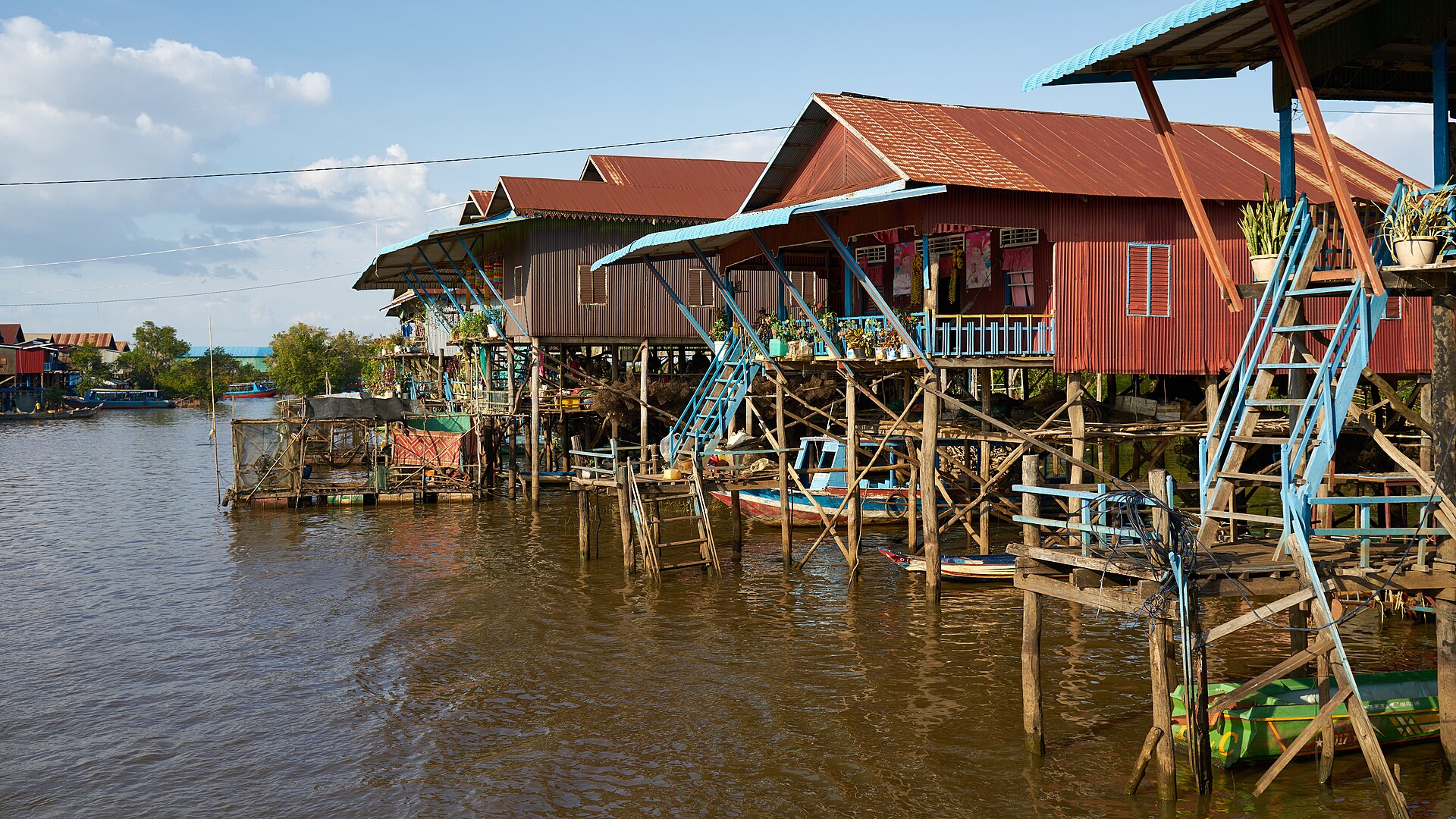
- Evening on the waterfront — Lake shore
As the day cools, the lake shore at Kampong Khleang fills with life: children playing, boats returning, smoke rising from kitchens. The light turns soft and coppery over the water. It is a good time for a slow walk, and for watching a community settle down for the night rather than chasing a postcard sunset.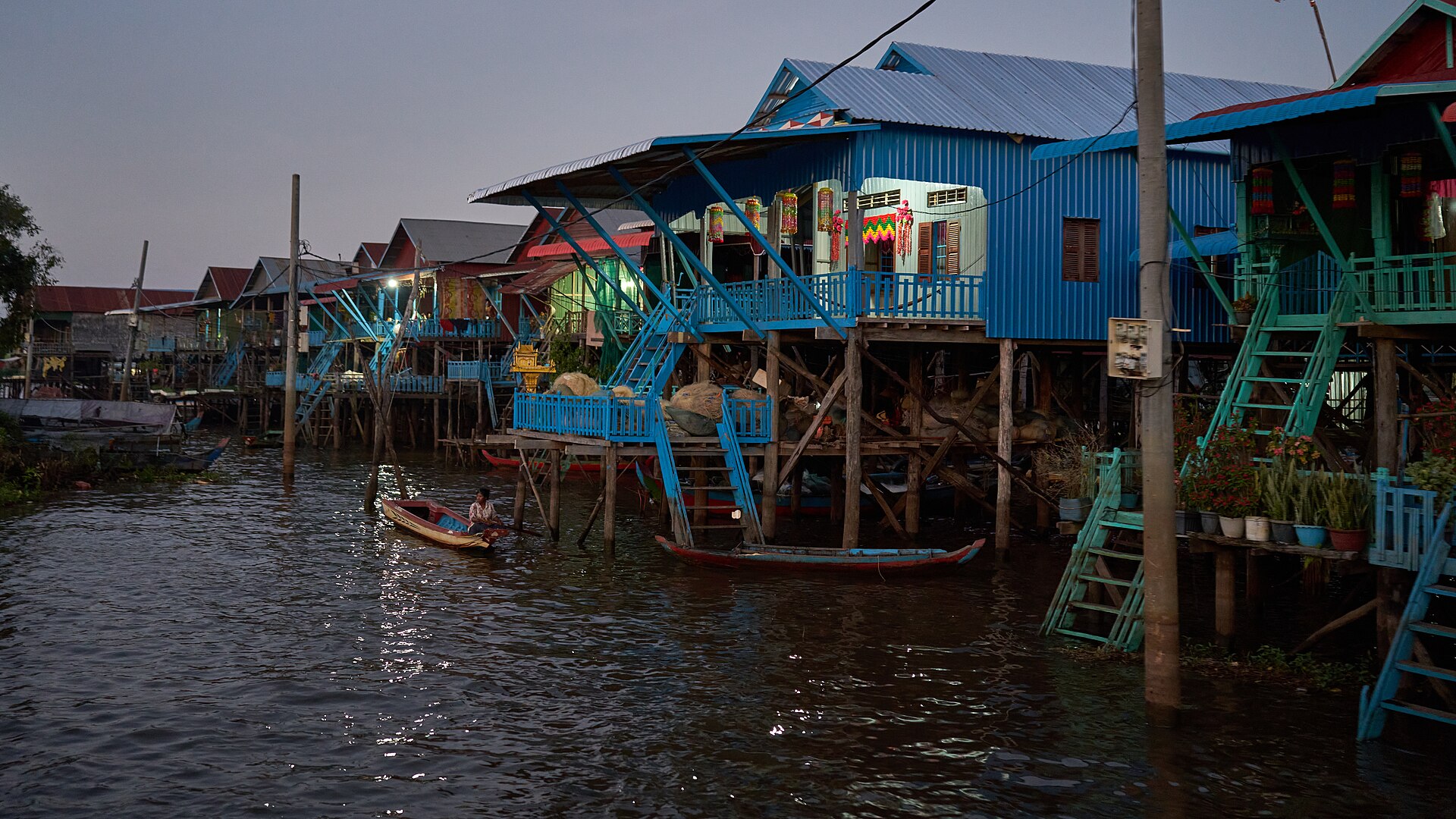
Culture
Kampong Khleang is a Khmer Buddhist community in which family, fishing and the village pagoda shape daily life. Cambodia as a whole is predominantly Buddhist, and small temples serve as meeting places, schools of a kind, and the focus of festivals and merit-making. Elders are treated with courtesy, greetings often come with a slight bow and pressed palms, and politeness counts for more than directness.
The lake dictates the calendar. Fishing seasons, water levels and the movement of boats set the timing of work and celebration, and families here are used to adapting plans to the water. Houses are often open to the street, so life is visible, but that visibility is not an invitation. Many people in rural Cambodia are uneasy about being photographed, and some in busier areas will ask for payment, so the courteous habit is to ask first and accept a refusal gracefully.
Children are everywhere, and visitors are sometimes approached to buy bracelets or small items. A friendly, unhurried no works better than ignoring them, and a simple conversation is often what they really want. Noise carries easily across water, so loud music on a boat or a drone overhead would feel intrusive in a place where everyone lives close together.
Always ask before photographing anyone, especially children and people at home, and cover your shoulders and knees when you enter a village pagoda.
What to wear
Kampong Khleang shows Cambodian dress at its most practical, and the traditional garments are still part of it. The sampot is a length of cloth wrapped around the waist and legs, made in cotton or silk and sometimes woven in patterned styles; it is worn at weddings, festivals and temple ceremonies, and older women may still wear it day to day. The krama, a checked cotton scarf, is the everyday all-rounder: it shades the head, wipes sweat, ties on a baby and serves as a towel on the boat.
What people wear now is mostly simple and modest. Fishing families favour loose cotton shirts, long trousers or wrap skirts, rubber sandals and wide hats, and women often cover up in the daytime to protect their skin from the sun. Children wear school uniforms of white shirts and dark bottoms. For festivals and weddings, brighter silk and tailored outfits appear.
Visitors should dress for heat, sun and respect together. Light, long cotton trousers or knee-length shorts and a shirt covering the shoulders suit both the climate and the village's conservative feel. Bring a hat, sunglasses and a scarf, which doubles as a pagoda cover-up. Sandals with a grip or trainers are better than flip-flops, since boat decks, muddy lanes and wooden ladders can all be slippery. A light rain jacket helps in the wetter months.
What to eat
- Fish amok — Simple eateries along the main road
Kampong Khleang's lake setting makes freshwater fish the natural choice for amok, a Khmer steamed curry set in coconut cream and served in banana leaf or a coconut shell. A good one is soft and mousse-like, and mild rather than hot. Look for it at village eateries. - Kuytheav — Morning stalls and small noodle shops near the village centre
A Khmer breakfast noodle soup, served in a clear, savoury broth with rice noodles, herbs and meat or seafood, and topped with lime, chilli and sauces at the table. It is a quick, filling start before a morning on the boats. - Grilled or fried lake fish — Family restaurants and open-air stalls by the waterfront
Fish drawn from the lake are grilled over charcoal or fried until crisp and eaten with rice, fresh herbs and a sour or salty dipping sauce. The catch changes with the season, so ask what came in that morning. - Sour fish soup — Home-style eateries and shared family tables
Khmer cooks love sour flavours, and a soup of fish, tamarind or lime and fresh greens shows it well. It is gently spiced, with black pepper preferred over chilli, and chillies on the side for those who want heat. - Prahok and rice dishes — Village markets and everyday family kitchens
Prahok, a fermented fish paste, underpins much Khmer cooking and gives dishes a deep, salty, pungent edge. Fishing communities like this one make and use it daily. Try it in small amounts, stirred into a dip or soup, before judging it.
Plan it
Best time. November to February, when the rains have eased, the air is cooler and the water is still high enough for boats to reach the flooded forest and floating houses; the dry months from March to May are hot and the lake falls, leaving the stilts towering over bare ground.
How long. 1–2
Getting there. Fly to Siem Reap airport, then take a taxi or arrange a driver for the road trip across rice country to the village. Boats from the village pier cover the last leg onto the water.
Budget. low
Tips
- Go early in the morning, when the light is soft, the air is cooler and fishing activity is busiest
- Carry cash in small notes, as cards are rarely taken in the village and cash machines are far away
- Bring water, sun protection and insect repellent, and expect basic facilities
- Agree the boat route and lifejacket use before you leave the pier
- Check current road and water conditions with your driver or guesthouse, since levels change through the year
Etiquette
- Ask before photographing people, especially children, and accept a no
- Dress modestly, covering shoulders and knees, particularly near the pagoda
- Keep noise down on the water and buy small items from local families rather than handing out sweets or money
Nearby
Sources
- Wikidata Q56321668 (CC0)
- Wikipedia, Kampong Khleang (CC BY-SA 4.0)
- Wikivoyage, Cambodia (rev 5395048) (CC BY-SA 4.0)
- Radek Kucharski, Kâmpóng Khleăng, via Wikimedia Commons (CC BY 2.5)
- Radek Kucharski, Kampong Khleang on Tonle Sap lake shore, via Wikimedia Commons (CC BY 2.5)
- Radek Kucharski, Kampong Khleang, Cambodia, via Wikimedia Commons (CC BY 2.5)
- Radek Kucharski, Cambodian village on water, via Wikimedia Commons (CC BY 2.5)
- Radek Kucharski, Tonle Sap Lake, Cambodia, via Wikimedia Commons (CC BY 2.5)
- Radek Kucharski, Tonle Sap lake, Cambodia, via Wikimedia Commons (CC BY 2.5)
- Radek Kucharski, Tonle Sap Lake, Cambodia, via Wikimedia Commons (CC BY 2.5)
- Bahnfrend, Kampong Khleang 2018 (01), via Wikimedia Commons (CC BY-SA 4.0)


Wildlife
- Kingfisher (animal)
The common kingfisher is a small bird that people also call the river kingfisher, so think of it as a little fisher of the water. It lives across a wide stretch of Eurasia and North Africa, usually staying put, though some birds move away where rivers freeze in winter. Around Kampong Khleang it counts as a common sight, but only for patient visitors, so settle down, wait calmly and let it come to you.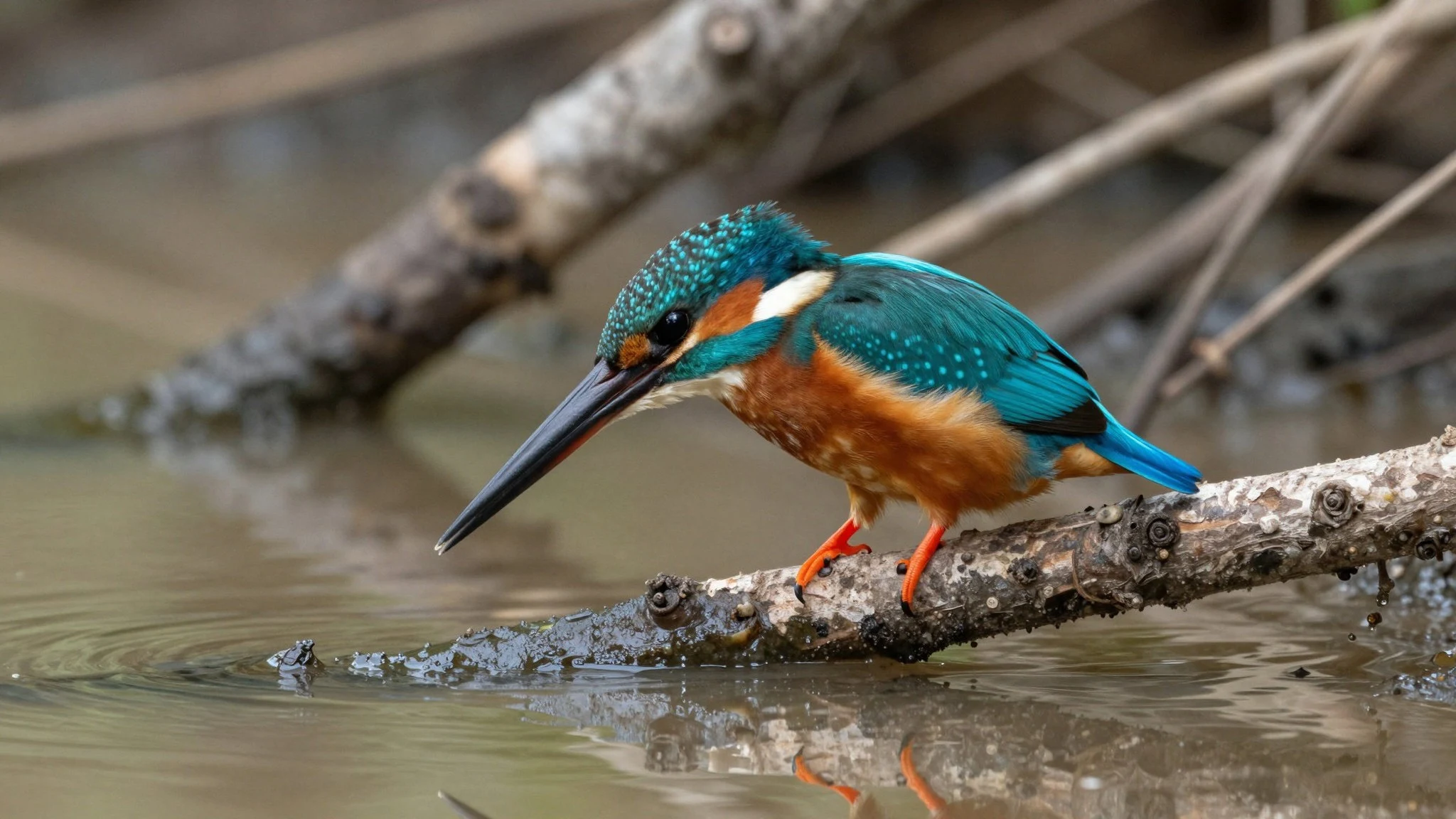
- Egret (animal)
The great egret is a large bird, also called the great white heron, so think of a big white heron. It lives across most warm parts of the world, and it nests in trees alongside others, close to water. Around Kampong Khleang it is a common sight for patient visitors, so wait calmly, keep still and enjoy it going about its day without hurrying it.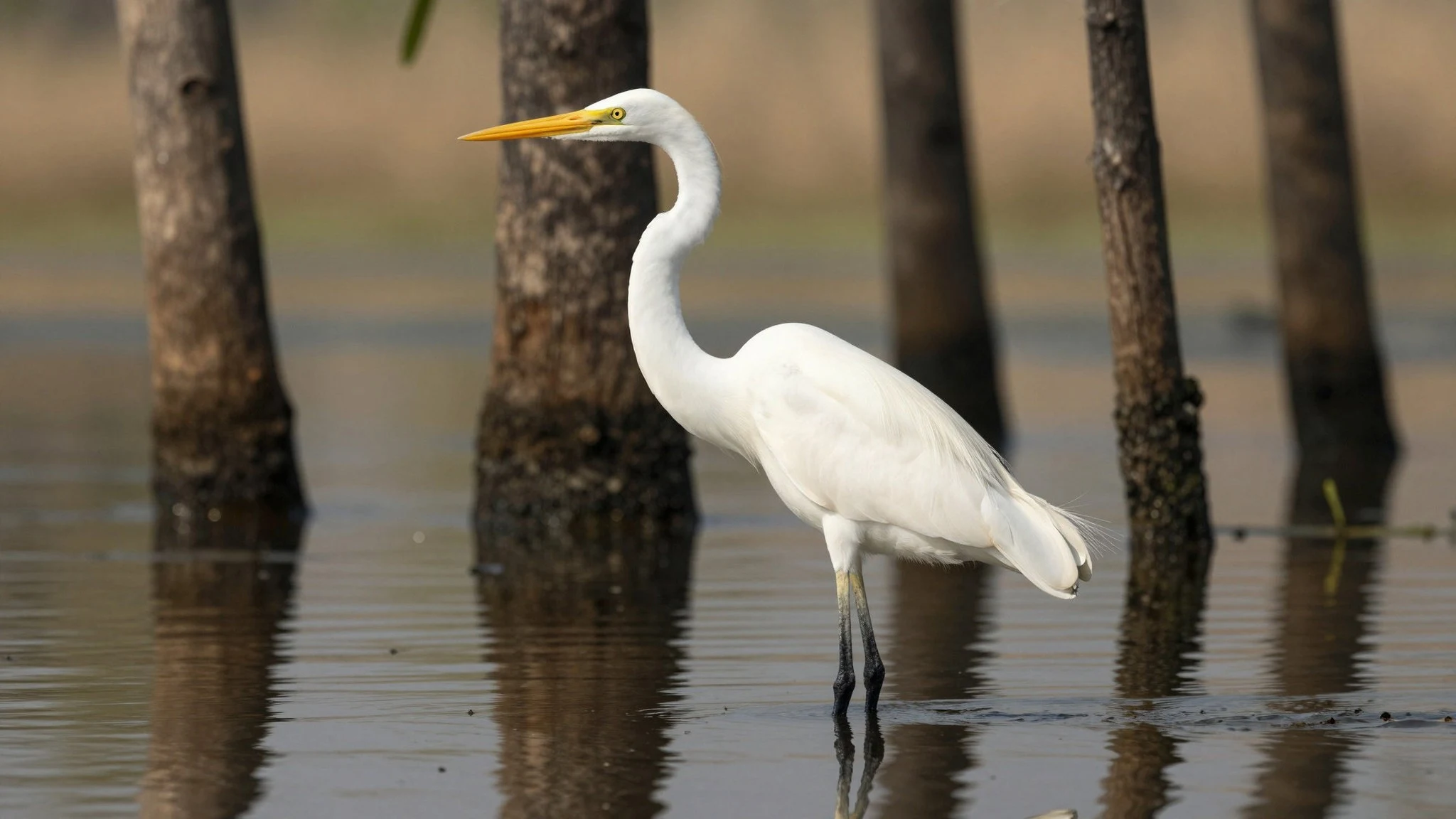
- Common kingfisher (bird)
The common kingfisher is a small bird that people also call the river kingfisher, so think of it as a little fisher of the water. It lives across a wide stretch of Eurasia and North Africa, usually staying put, though some birds move away where rivers freeze in winter. Around Kampong Khleang it counts as a common sight, but only for patient visitors, so settle down, wait calmly and let it come to you. - Great egret (bird)
The great egret is a large bird, also called the great white heron, so think of a big white heron. It lives across most warm parts of the world, and it nests in trees alongside others, close to water. Around Kampong Khleang it is a common sight for patient visitors, so wait calmly, keep still and enjoy it going about its day without hurrying it.