Bokor Hill Station
Bokor Hill Station, Cambodia
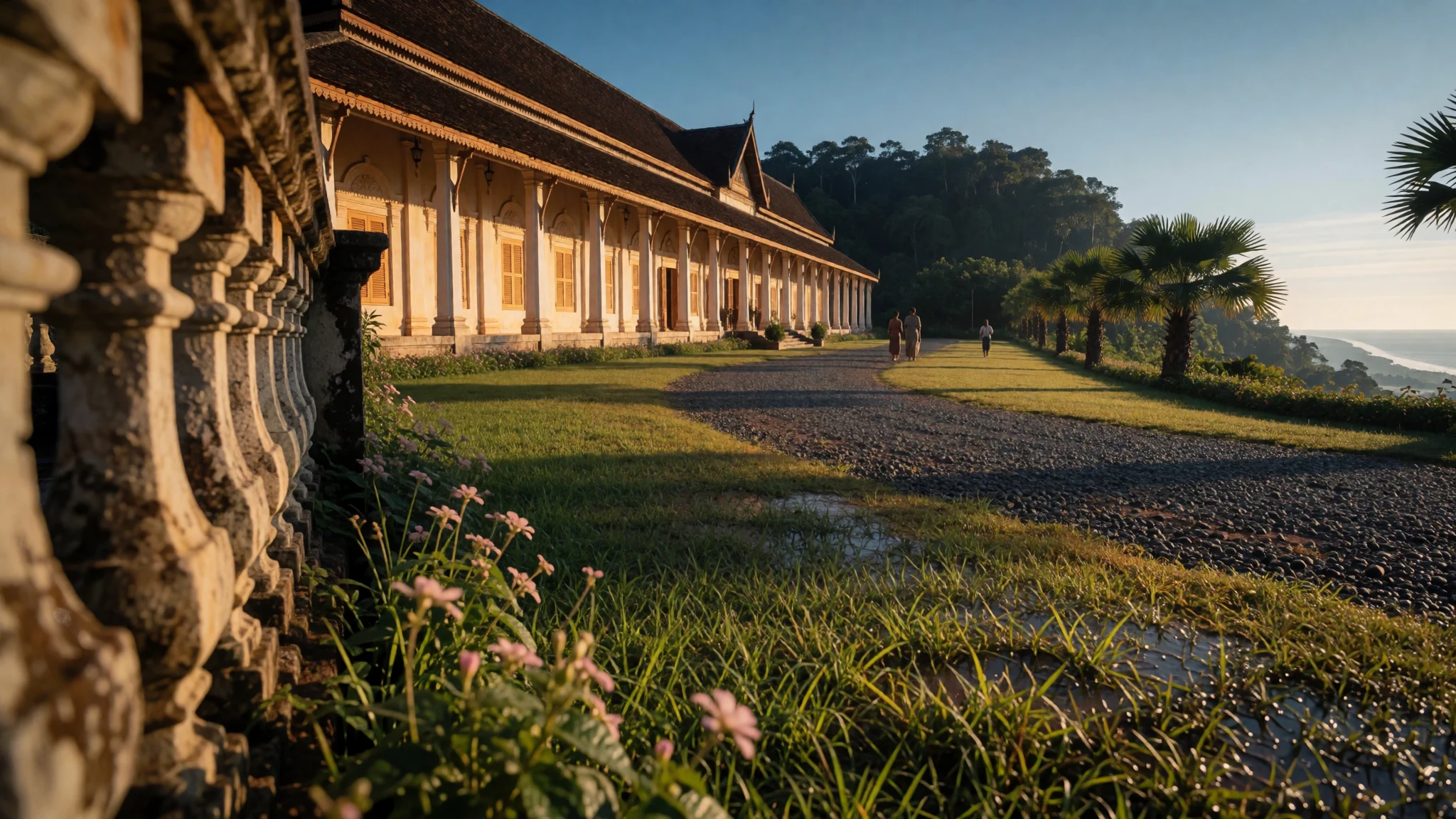
Bokor Hill Station is a misty colonial plateau above Kampot, where ruins, a guardian statue and cloud share the mountain.
The place
Bokor Hill Station stands on the plateau of Phnom Bokor, above the Cambodian coast and the town of Kampot. The old French settlement was laid out as a retreat from lowland heat, and the mountain still earns that role: cloud sits on the grass in the morning, the forest drips, and the plain below shows itself only when the mist tears. Colonial buildings and a newer resort share the same shelf, so the hilltop reads as separate periods at once. A long palace hotel, a Catholic church and the summer palace of King Sihanouk hold the old ground. The road that reaches them is a later cut through thick forest. From the lip of the hill the land falls away towards Kampot, a wide coastal plain that cloud can wipe out within the hour. The forest is the larger presence. It presses in at the edge of every lawn, loud with insects once the vehicles thin out, and it keeps the stone damp and the light soft well past noon. People often come for the panorama and find, on a clouded day, that the quiet of a half-abandoned hill town is the real substance of the visit. Bokor Hill Station is not an ordinary living village. It is a cluster of restored and weathered buildings, a shrine to the guardian spirit Lok Yeay Mao, and a resort platform set in mountain forest, with Kampot's pepper gardens and river markets at the foot of the climb.
Its story
Bokor Hill Station began as a French plan to put a cool town on Phnom Bokor, high enough above the Cambodian coast to offer relief from the heat and the mosquitoes of the plain. A hotel, a church and the houses of officials took shape on the plateau, and King Sihanouk kept a summer palace among them, tying the colonial retreat to the Cambodian court. For a while the hill functioned as a small seasonal capital of leisure: dances at the hotel, mass at the church, and a road that made Kampot feel far below. War ended that. The station was left as fighting moved through the country, and the buildings spent long years empty while the forest weathered paint, timber and plaster. During the years of civil war and Khmer Rouge control the mountain was a redoubt rather than a resort, and the ruins became part of a landscape people feared to visit. When peace returned, a new road and a resort project pulled the plateau back into reach. Some old shells were repaired and opened again; others remain gaunt. The story of Bokor Hill Station is that paired survival: a colonial hill town that died, and a mountain that Cambodian travellers, pilgrims of Lok Yeay Mao and weekend visitors from the coast have occupied once more, fog and all. What a visitor meets now is neither the French brochure nor the empty ruin of later memory, but a working compromise between them, with forest still winning at the edges.
What to see
- Bokor Palace Hotel — central plateau
Bokor Hill Station's former palace hotel is the long pale block at the centre of the plateau. It was the social heart of the French retreat, then stood empty while damp worked on the walls. Repairs have brought the shell back into use beside the newer resort, so the visit is a colonial outline rather than a bare ruin, with cloud and wet lawns all around.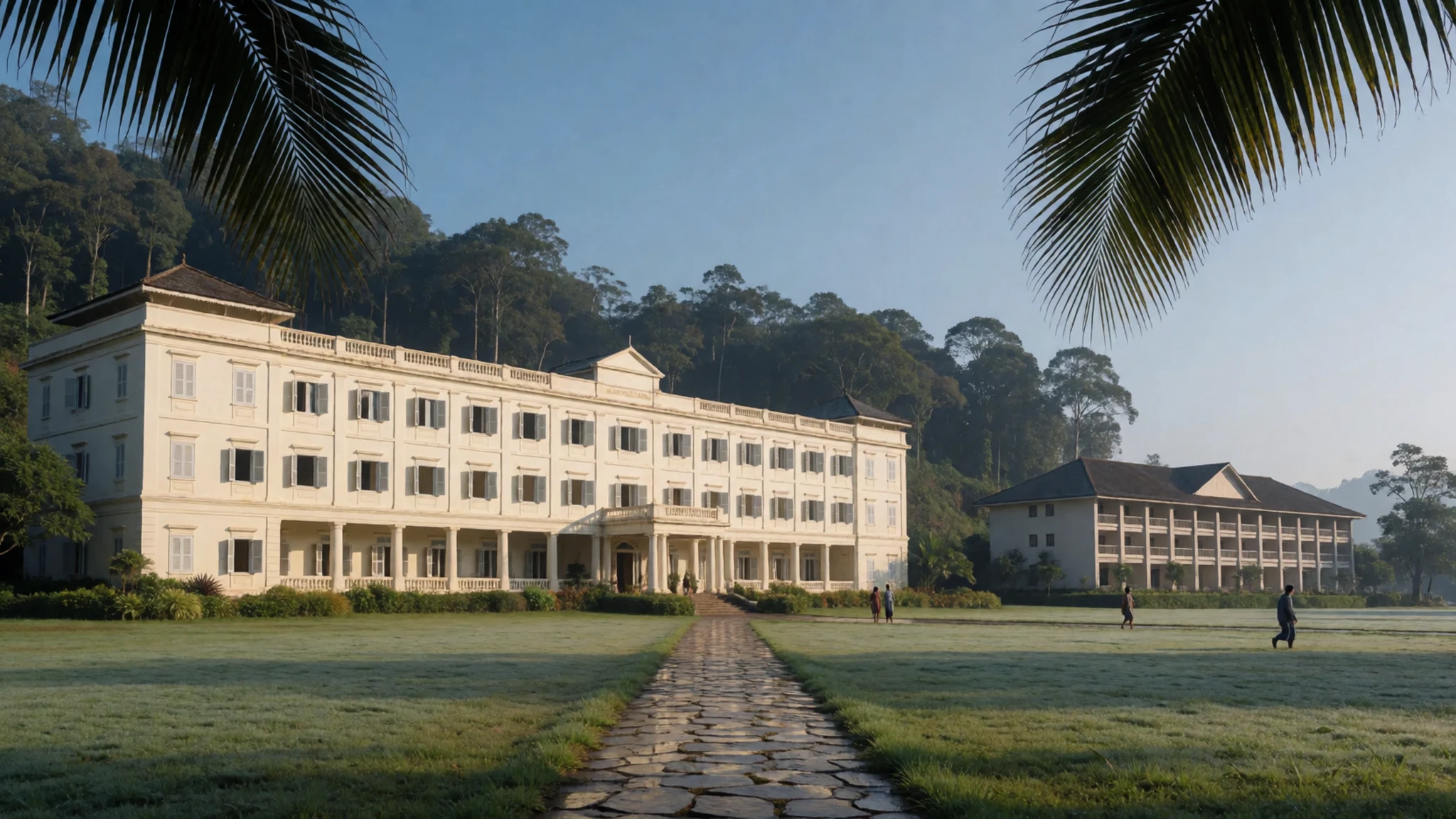
- Catholic church — the plateau, apart from the hotel
The Catholic church at Bokor Hill Station is a small stone building with a square front, set apart from the hotel on the same plateau. It belongs to the French effort to make the hill a proper town. Inside, the space is plain and often quiet, a contrast with resort traffic outside. Moss on the walls and cloud at the door do more for the mood than any decoration.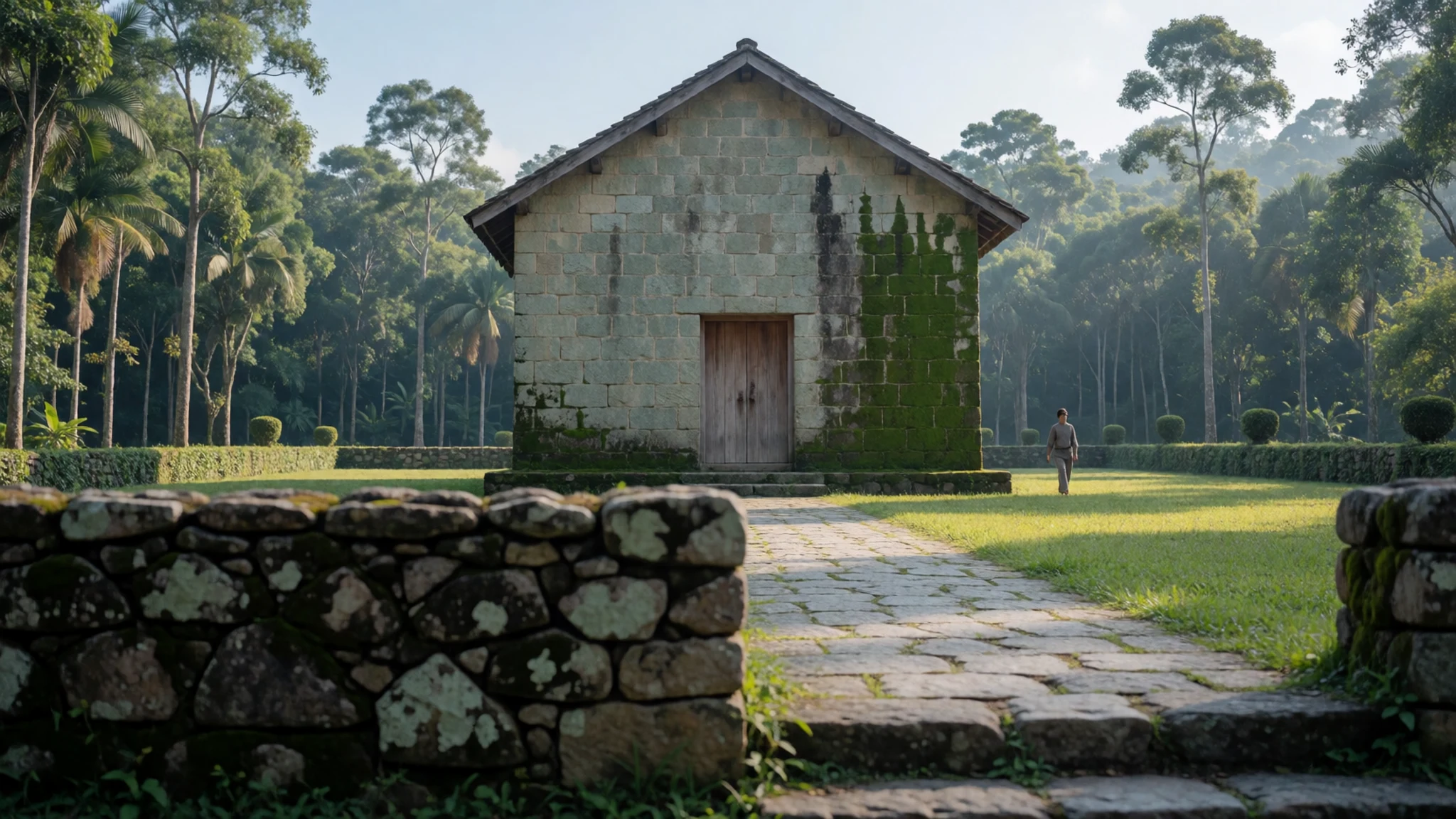
- Summer palace of King Sihanouk — the plateau
The summer palace of King Sihanouk stands on the Bokor Hill Station plateau, a dark weathered house set apart from the hotel. It gave the king a retreat when the French hill town was still in use. The rooms are spare, and the view from the grounds vanishes whenever cloud sits on the hill. A slow circuit of the outside tells more than the empty interior does.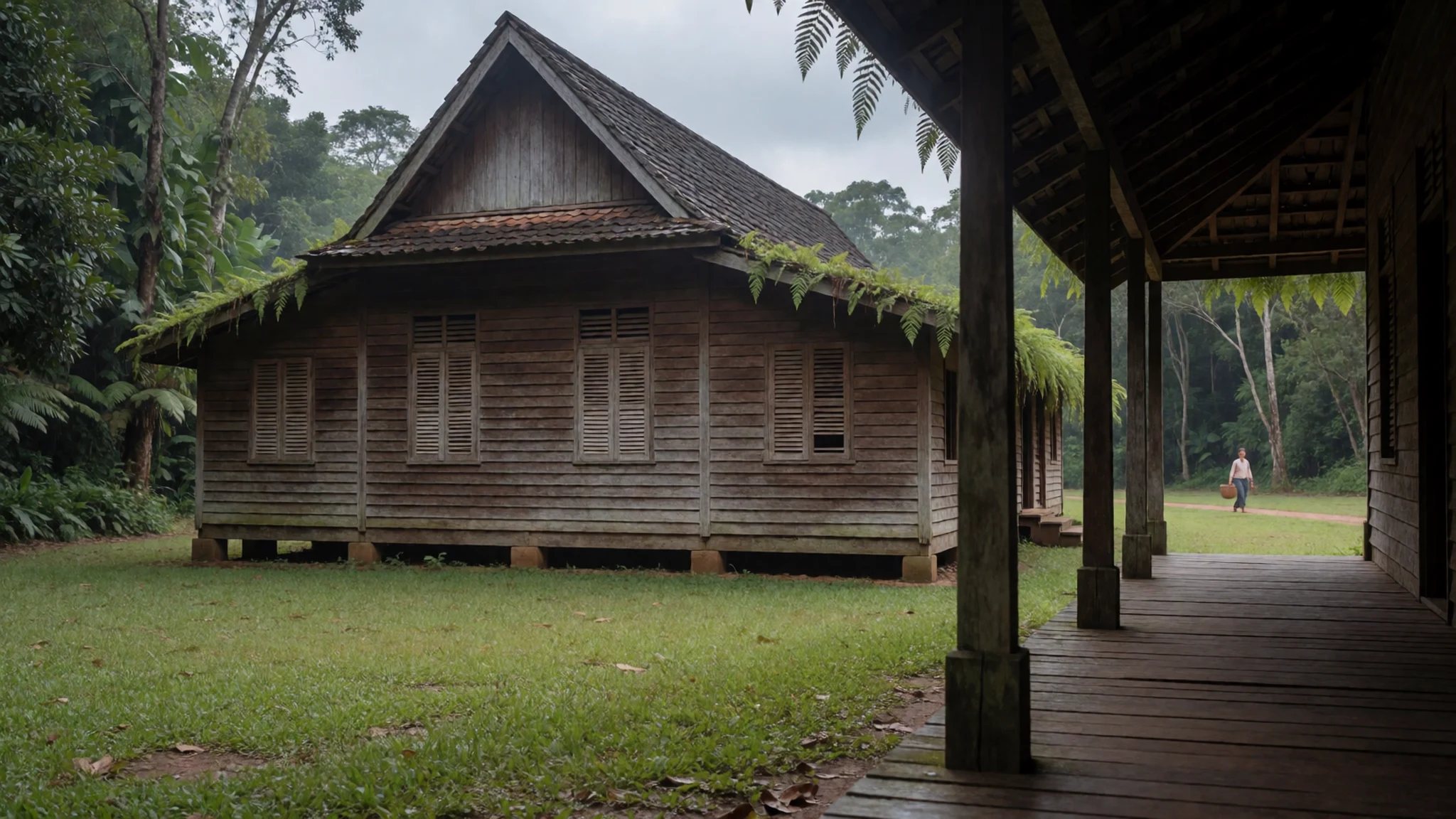
- Plateau viewpoint towards Kampot — the lip of the hill towards Kampot
The Bokor Hill Station plateau is a broad shelf of mountain, with the old buildings scattered on it and forest falling away on every side. On a clear stretch the land opens towards Kampot, a pale plain far below. Most hours that view is a white wall of cloud, and the shelf becomes damp grass and sudden rain. Both versions are the real visit.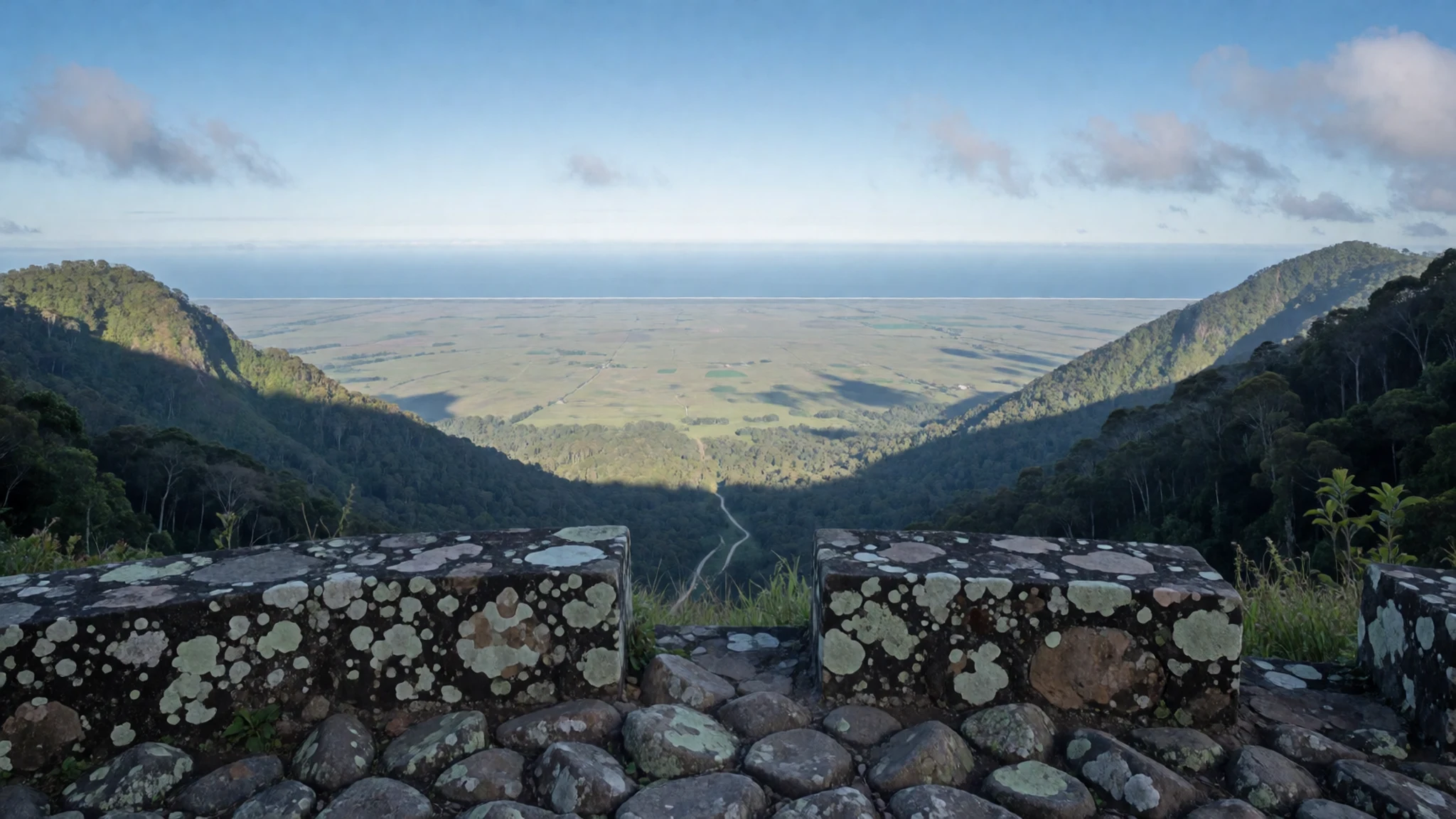
- Lok Yeay Mao — beside the road near the hill station
Lok Yeay Mao at Bokor Hill Station is a large sculpture of the guardian spirit whom travellers on this coast still greet. She stands near the hill station, fierce and formal, with offerings sometimes left at the base. The figure marks the passage between the lowland and the mountain, not a ruin of the French town. The right pace is a pause, then a step back.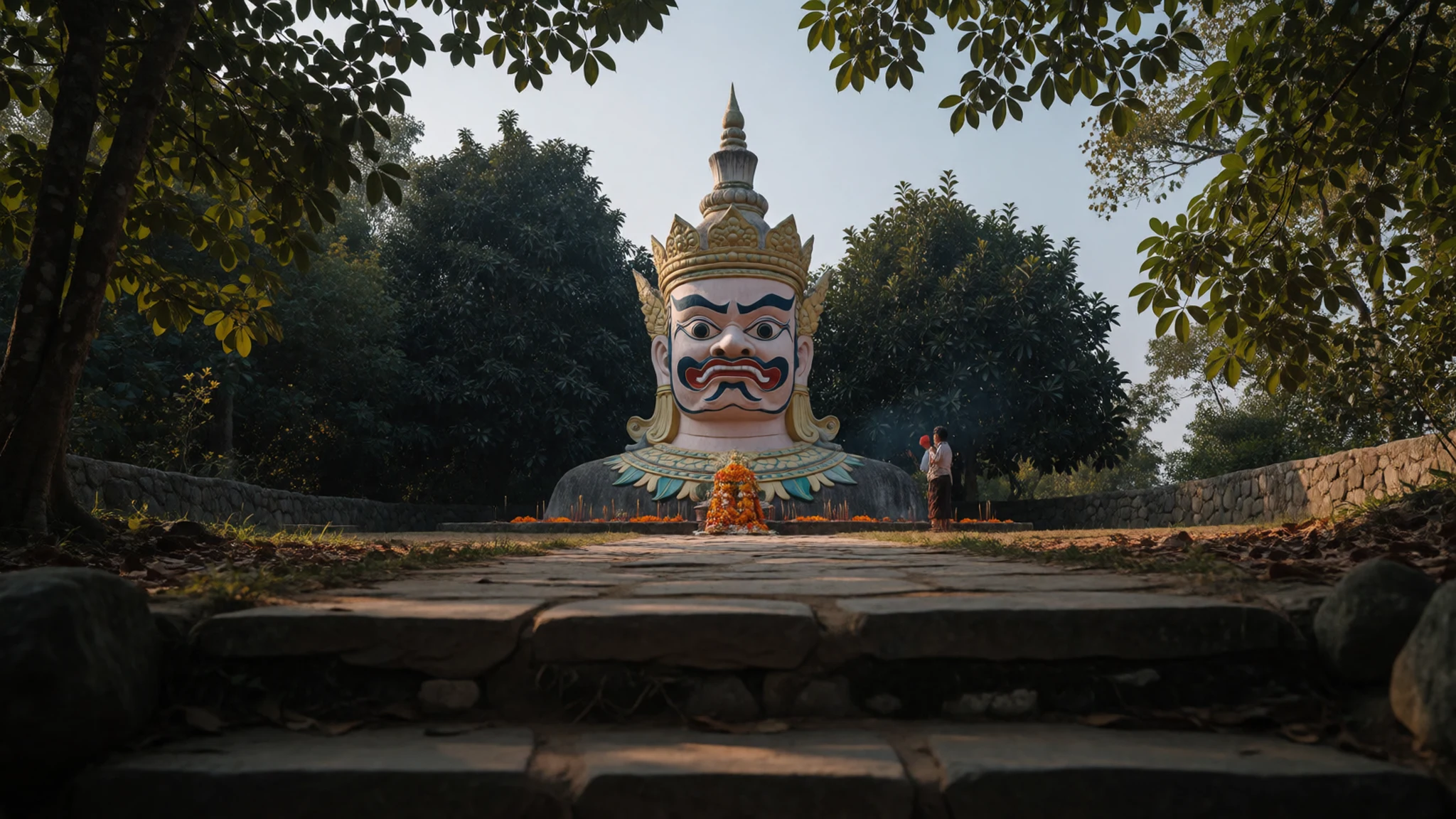
Culture
Bokor Hill Station carries several devotional habits, and none cancels the others. The Catholic church is a relic of the French town, used now more as a quiet monument than as a busy parish, while Lok Yeay Mao belongs to a much older Khmer regard for guardian spirits who watch roads, coasts and the people who move between them. Offerings at her statue, incense, flowers, a small gift of fruit, sit comfortably inside the Buddhism of everyday Cambodia, where monastery, ancestor and local spirit are not asked to compete. King Sihanouk's palace adds a further layer: the hill was also a royal retreat, so the plateau is national memory as well as colonial scenery. Down in Kampot the living culture is Khmer and coastal, shaped by pepper farming, fishing and a slow river town that treats the mountain as a day away rather than a separate world. On the plateau the culture a visitor actually meets is this mix of walking the ruins, stopping at the shrine and resort leisure, often in the same hour and often in the wet hush of cloud. Dress modestly and keep a respectful distance when people are leaving offerings at Lok Yeay Mao.
What to wear
Bokor Hill Station is a poor place to see formal Khmer dress in ordinary hours, but the coast below still explains what those clothes are. The traditional lower garment is the sampot, a wrapped length of silk or cotton, worn as a skirt or, in the sampot chang kben, drawn up between the legs for work and ceremony. Patterned hol silk, with its uneven twill and deep reds, golds and greens, appears at weddings and in the pagoda, not on a misty viewpoint. The krama, a chequered cotton scarf, is the textile people actually use: sun cover, dust mask, bundle, child's sling. On the road to the plateau and in Kampot's market the everyday clothes are lighter and newer: T-shirts, jeans or loose trousers, sandals, and a helmet on a motorbike, with a krama still knotted at the neck or stuffed in a bag. A visitor should dress for a damp mountain rather than a beach. The plateau is cooler and wetter than the coast, so a light layer, a rain jacket in the wet months and shoes with a grip matter more than a linen suit. At the church and at Lok Yeay Mao, covered shoulders and knees are the considerate choice, and shoes come off where a mat or a step of offerings makes that obvious.
What to eat
- Fish amok — riverside eateries in Kampot
Fish amok is the dish to eat in Kampot, below Bokor Hill Station, rather than on the plateau itself. Coconut curry scented with lemongrass and kroeung is steamed in a leaf cup and eaten with rice. Riverside eateries in Kampot serve it with whatever fish the morning boats brought in.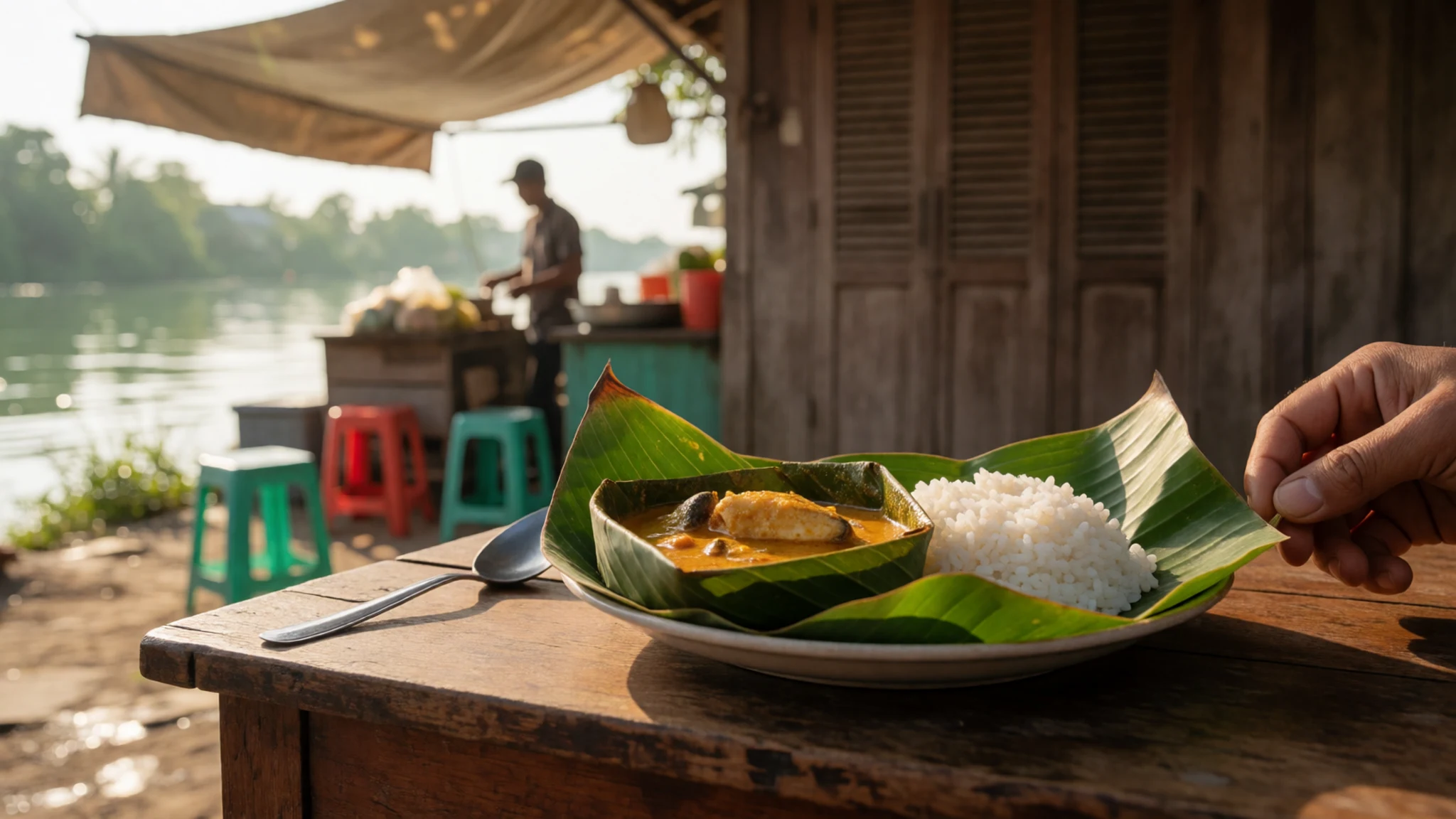
- Kampot pepper crab — crab eateries along the Kampot riverfront
Kampot pepper crab is the coast's answer to a day on Bokor Hill Station. Local green or black pepper is tossed with crab in a hot wok, floral and sharp rather than bluntly hot. Crab eateries along the Kampot riverfront, near the fishing boats, are the right setting.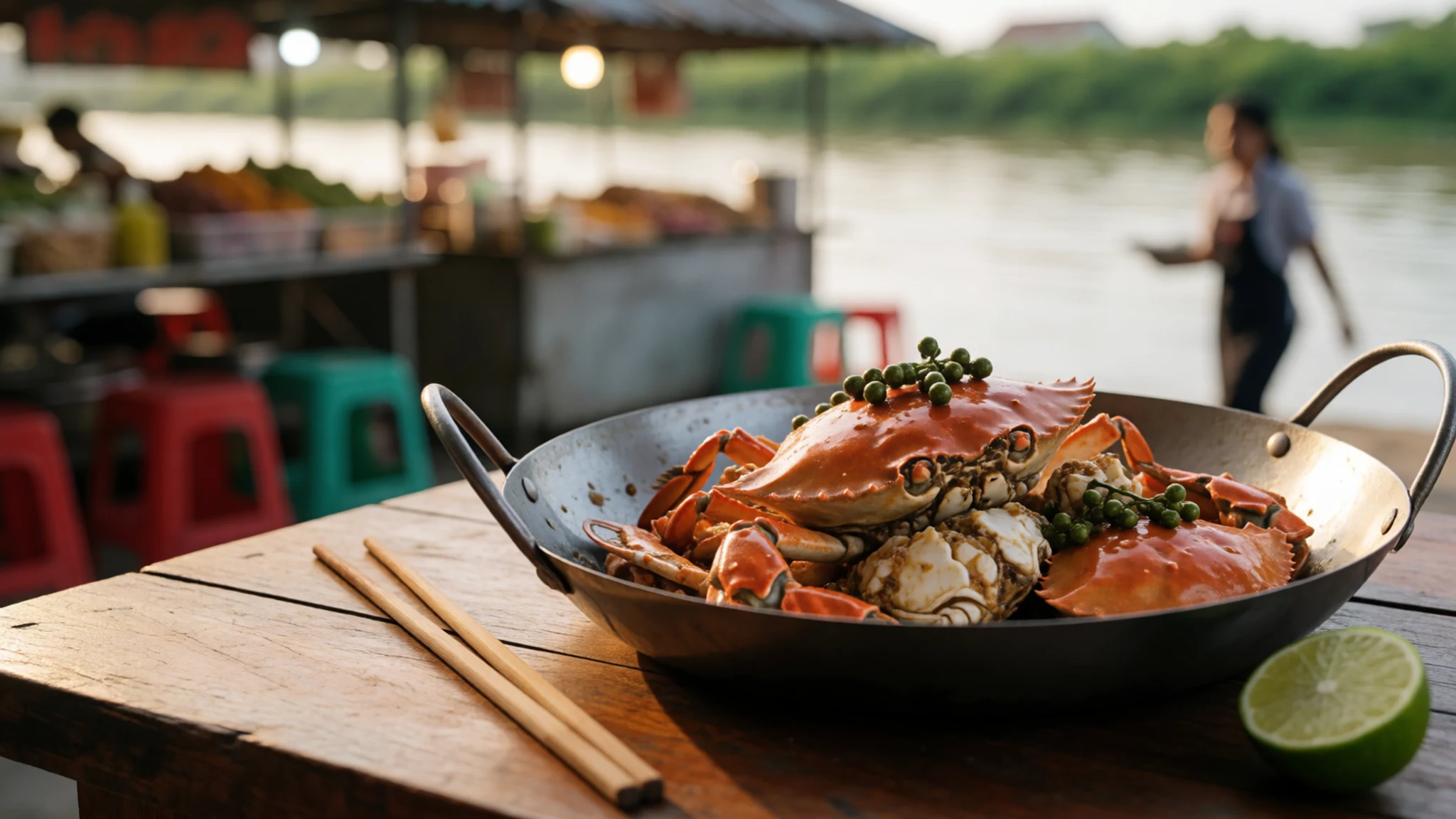
- Nom banh chok — the morning market in Kampot
Nom banh chok is the breakfast of Kampot, the town below Bokor Hill Station. Fresh rice noodles come with a light fish gravy, cucumber, banana blossom and a handful of herbs. The morning market, and the street stalls beside it, serve bowls early, before the road up the mountain fills. - Bai sach chrouk — market-street grills in Kampot
Bai sach chrouk, grilled pork over broken rice, is the ordinary morning plate in Kampot before a climb to Bokor Hill Station. The pork is sweet with palm sugar and fish sauce, with pickles and a clear broth beside the rice. Charcoal grills along the market streets start early. - Beef lok lak — simple riverside eateries in Kampot
Beef lok lak is the peppered stir-fry to order in Kampot after Bokor Hill Station. Tomato, lettuce and a lime dip come with the meat, and the pepper should lead the sauce. Simple riverside eateries serve it as a sit-down plate once the mist is left on the hill.
Plan it
Best time. The dry months, roughly November to April, give the better chance of a view from Bokor Hill Station back towards Kampot. From May into October the plateau spends long stretches inside cloud, the forest is vivid, and rain can slow the mountain road. Come prepared for mist in every month.
How long. 2–3
Getting there. Most visitors fly into Phnom Penh or Sihanoukville, then continue by road to Kampot. The last leg is the mountain road that climbs through forest to the Bokor Hill Station plateau. Shared cars and private transfers both run the coast road; the hill road is steep and often wet, so leave daylight for the descent.
Budget. mid
Tips
- Start up the mountain early, before cloud stacks on the viewpoint.
- Treat the road as slow and changeable; rain and fog are normal, not an exception.
- Carry a light layer, since the plateau is cooler and damper than Kampot.
- Use cash in Kampot's markets; cards belong at the resort, not at the morning stalls.
- If the view has vanished, walk the old buildings and the forest edge anyway.
- Check official notices before leaving; access and building works on the plateau change.
Etiquette
- Dress modestly at the Catholic church and at the Lok Yeay Mao statue.
- Do not climb on sculptures, offerings or weathered ruins.
- Ask before photographing people who are praying or leaving gifts.
- Remove shoes where a mat, a step or a row of footwear shows that others have.
Nearby
Sources
- Wikidata (CC0)
- Wikipedia (CC BY-SA 4.0)
- Wikivoyage (CC BY-SA 4.0)