Angkor Wat
Angkor Wat, Cambodia
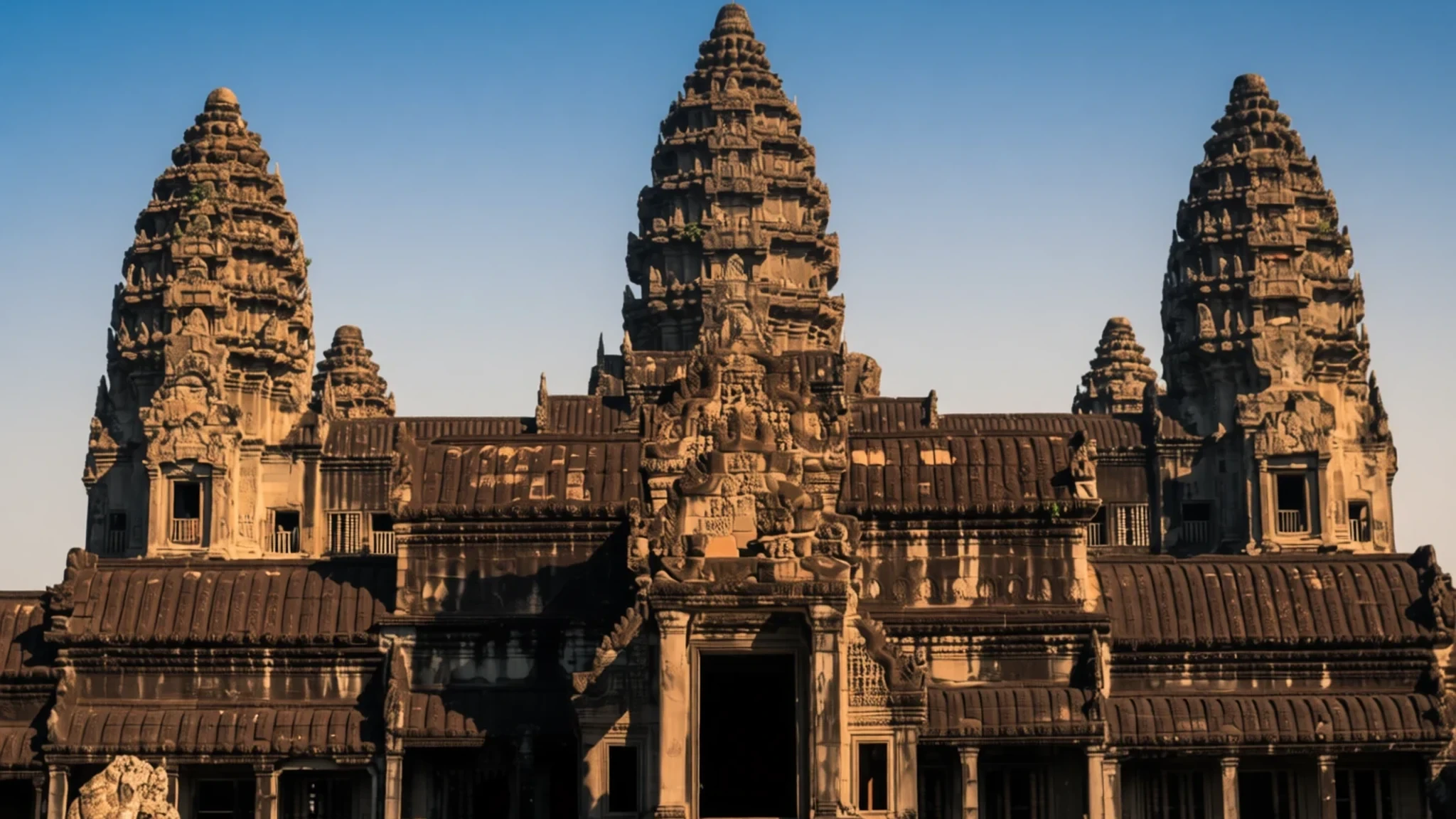
Angkor Wat is the largest religious complex in the world, offering an incomparable journey through ancient Khmer architecture and sprawling jungle ruins.
The place
Angkor Wat stands as a masterpiece of Khmer design, occupying a vast medieval site in Siem Reap, Cambodia, elevated slightly above the surrounding plains. Built within an enclosure measuring hundreds of acres, Angkor Wat reflects an architectural unity and monumental scale that distinguishes it from almost all other structures in the region. Unlike the majority of ancient Khmer shrines, which face eastward toward the rising sun, this immense sanctuary is oriented toward the west, a directional alignment traditionally associated with funerary monuments and the setting sun. The complex combines the classic architectural forms of the temple-mountain and the galleried temple, creating a series of concentric enclosures rising step by step toward central towers. This layout serves as a grand architectural representation of Mount Meru, the sacred cosmic center shared by Hindu and Buddhist belief systems. Visitors wandering through the site encounter intricately carved stonework, soaring galleries, and reflective water basins that mirror the ancient sandstone masonry. Although the site is ancient, it remains an active centre of worship where Buddhist monks maintain a continuous spiritual presence among the stone corridors.
Its story
Angkor Wat was commissioned during the medieval era as a grand state temple by the Khmer king Suryavarman II, who ruled the empire centred at Yaśodharapura. The construction of the temple commenced under royal direction and was dedicated primarily to the Hindu deity Vishnu, serving as a monumental expression of divine kingship and royal authority. Historical analysis suggests that the complex functioned not merely as an isolated place of worship, but as a vibrant temple-city that accommodated thousands of residents within its protective enclosure walls. Following the death of Suryavarman II, construction work on the sanctuary slowed and left portions of the extensive wall carvings incomplete. Decades later, the capital suffered an invasion by the Chams, traditional rivals of the Khmer empire. Order and imperial strength were subsequently restored by Jayavarman VII, who established a new royal capital nearby at Angkor Thom. Over the ensuing centuries, as successive Khmer rulers embraced Buddhism, the complex gradually transitioned from its Hindu origins into a Theravada Buddhist monastery. This spiritual evolution preserved the site through changing political dynasties, allowing Angkor Wat to endure as a living sanctuary of faith and a enduring symbol of national identity.
What to see
- The Main Sanctuary
Angkor Wat presents an awe-inspiring facade with its distinctive lotus-bud towers rising high above the surrounding galleries. Visitors can climb the steep wooden steps to the upper tiers for sweeping views across the moat, the outer courtyard, and the dense forest canopy beyond.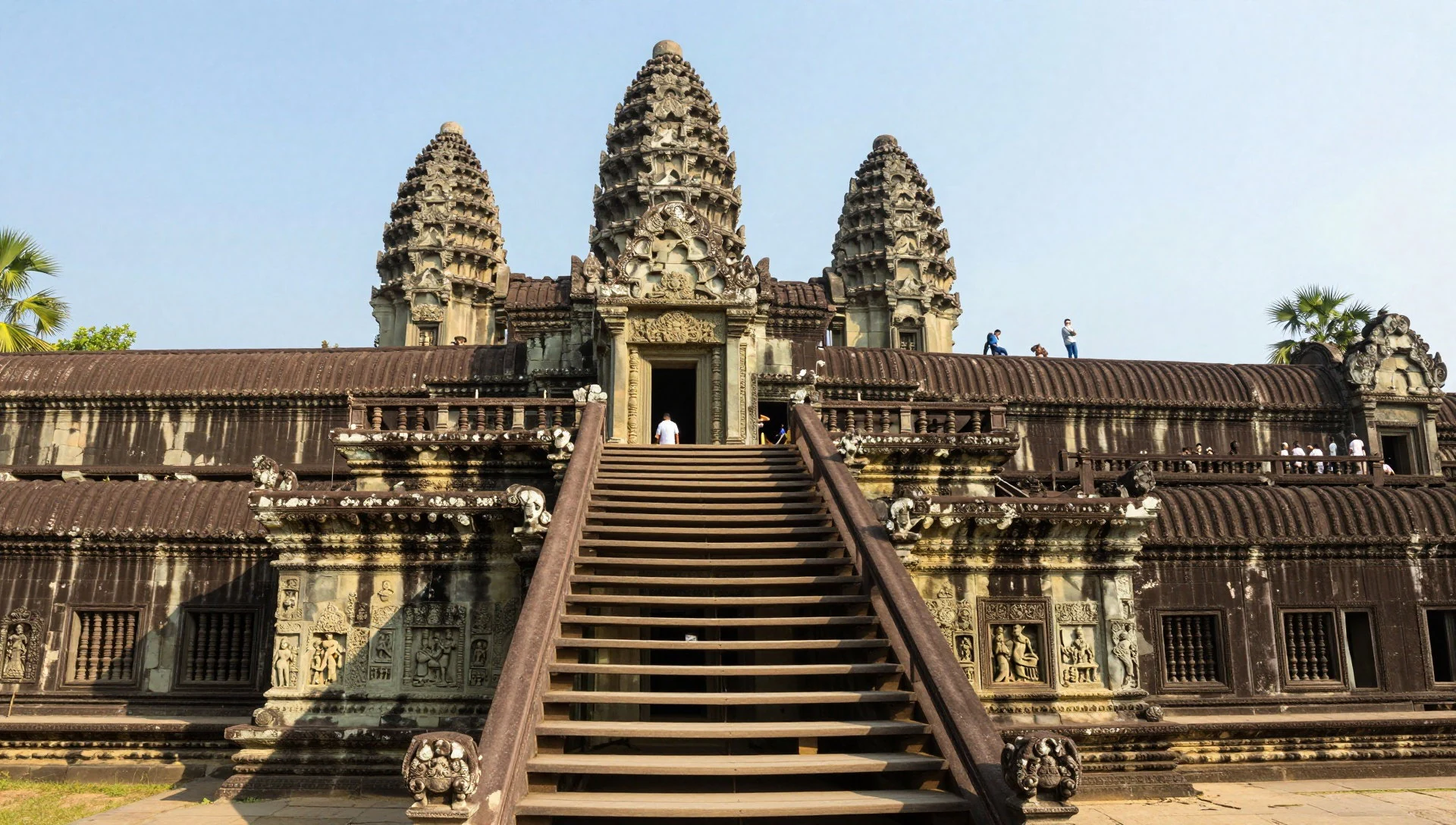
- The Western Causeway
Angkor Wat welcomes visitors across a long stone bridge flanked by carved balustrades featuring mythical naga serpents and guardian stone lions. This grand approach spans a wide moat, offering the classic symmetrical view of the entire temple complex reflected in the glassy waters.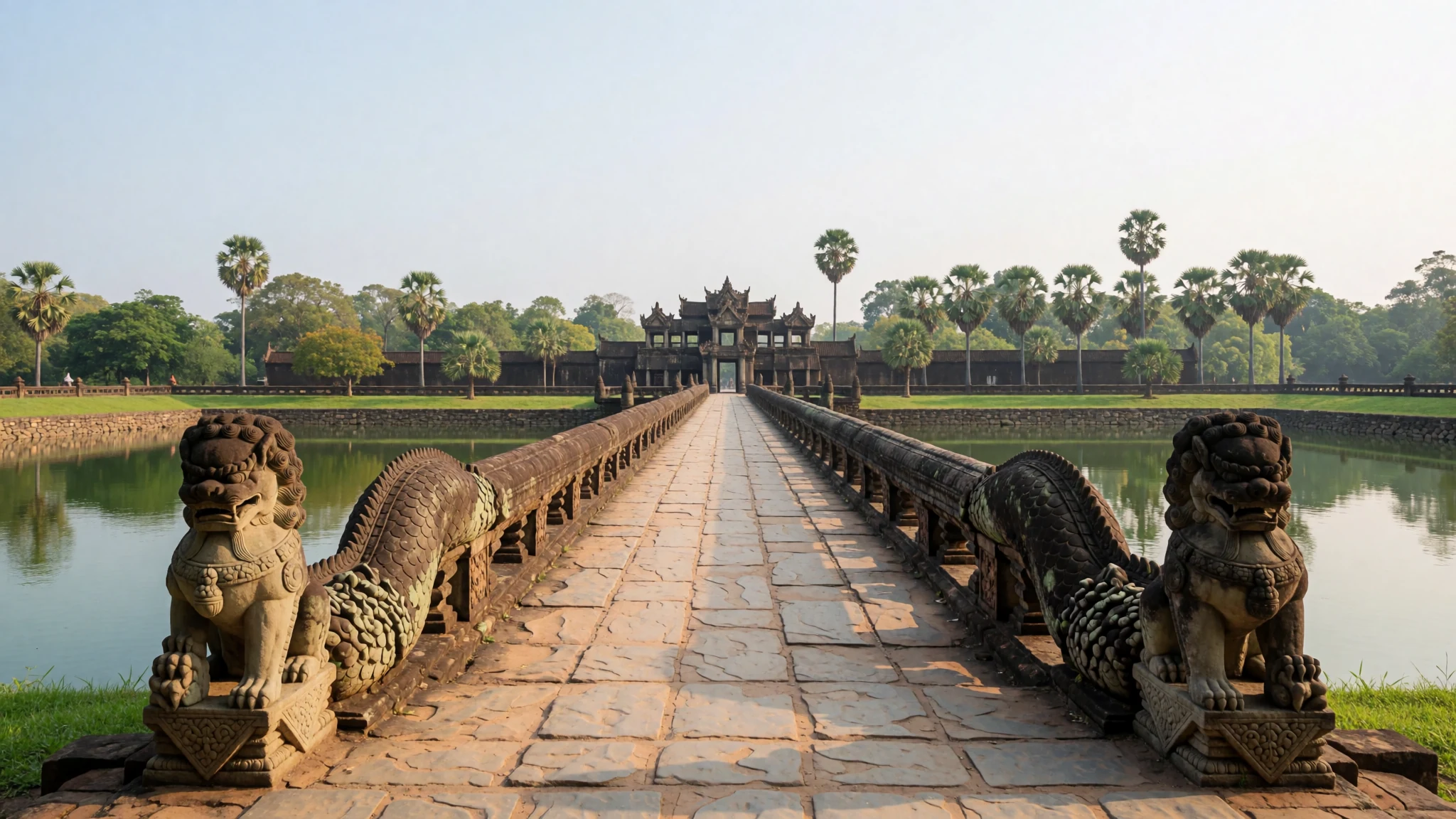
- Bas-Relief Galleries
Angkor Wat contains miles of continuous wall carvings illustrating epic Hindu tales, historical battles, and celestial dancers known as apsaras. The intricate details etched into the sandstone provide an astonishing window into the artistic mastery and spiritual beliefs of the medieval Khmer empire.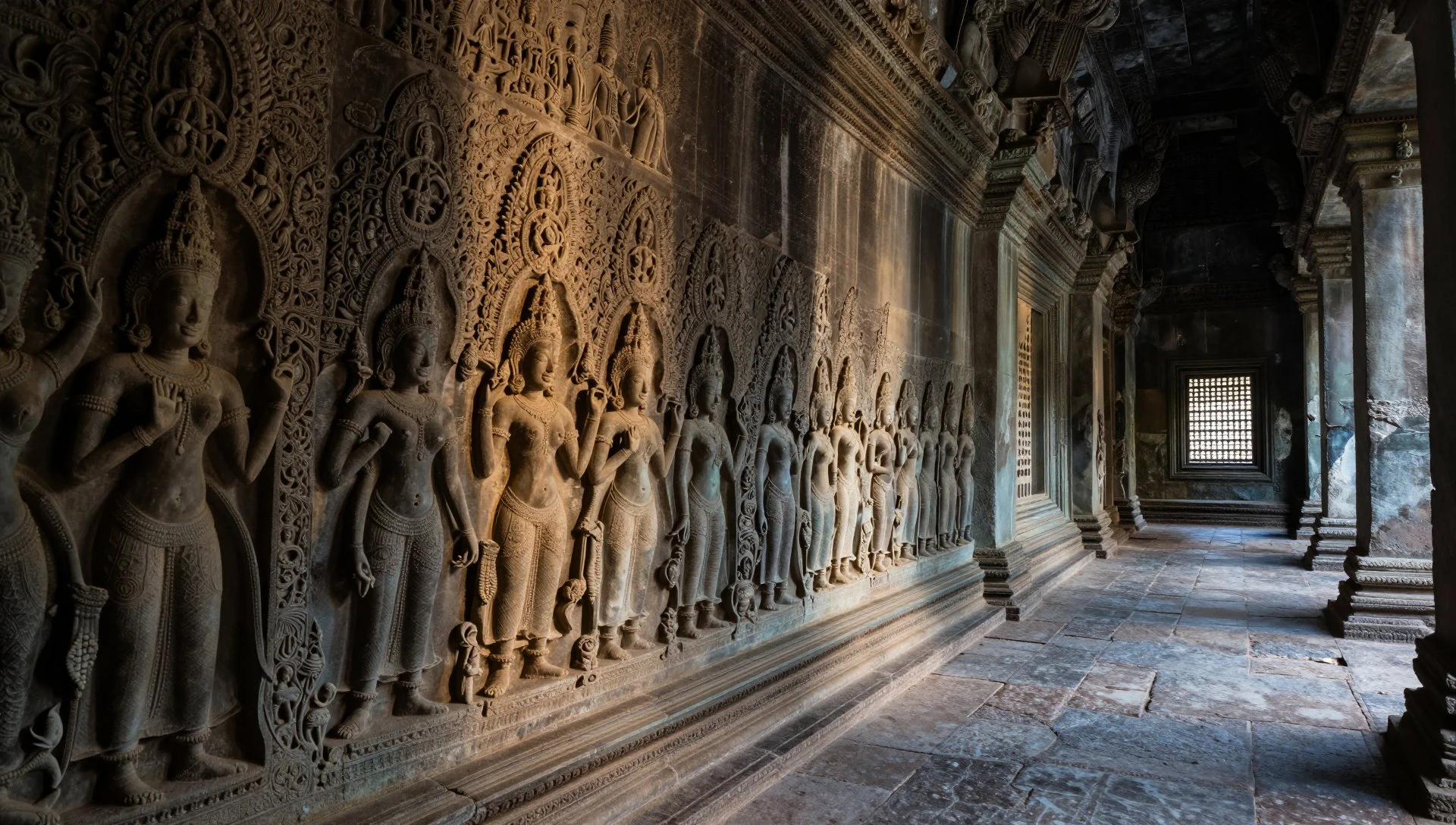
- Ta Prohm
Angkor Wat and its surrounding archaeological park include atmospheric outlying ruins such as Ta Prohm, where massive silk-cotton tree roots engulf ancient stone corridors. Made famous globally as a cinematic filming location, this untamed temple offers a haunting glimpse of nature reclaiming human architecture.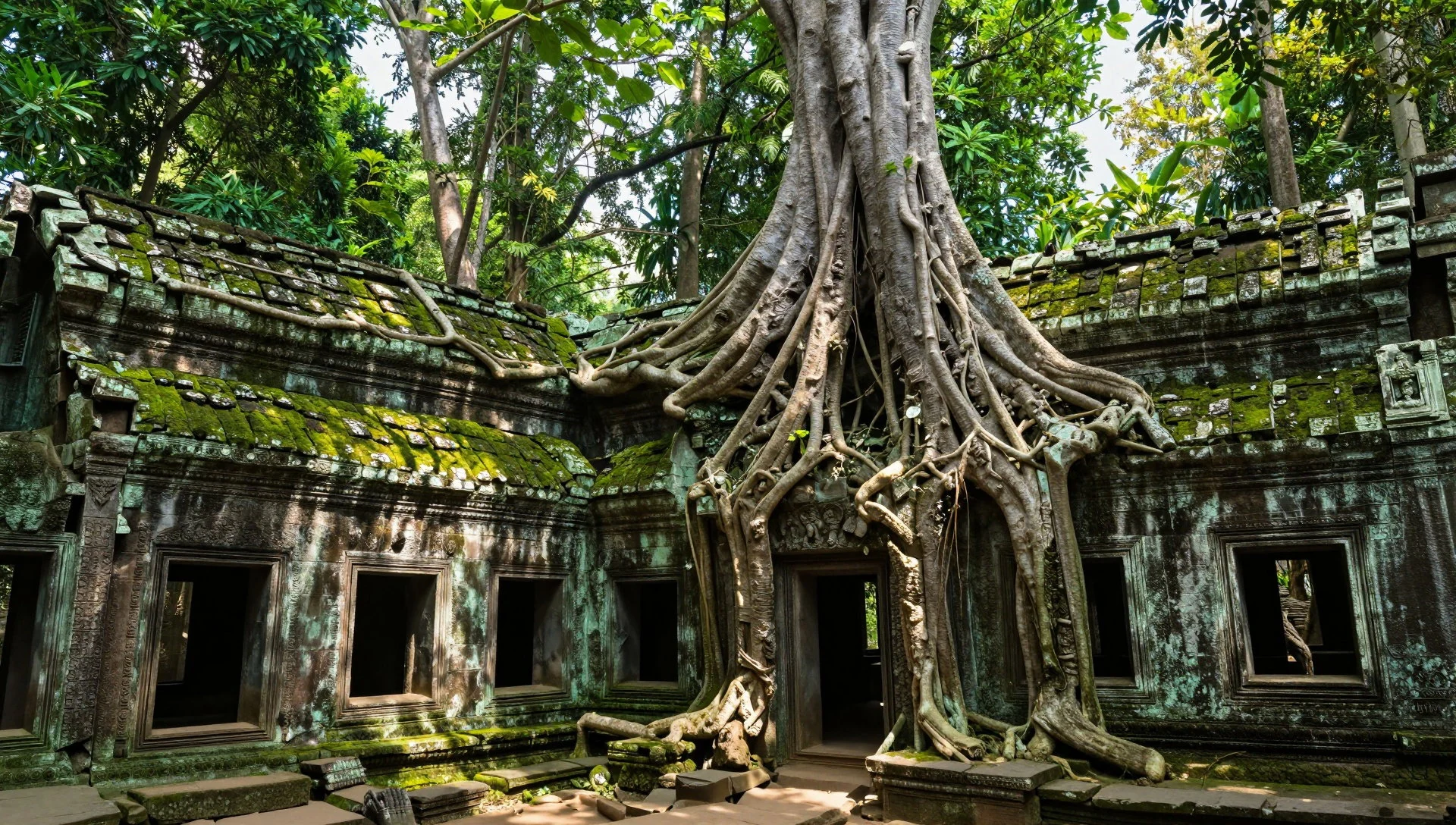
- Phnom Bakheng
Angkor Wat and the wider archaeological landscape can be viewed from this elevated hilltop temple perched on a rocky slope. Crowds gather here in the late afternoon to watch the sun descend over the jungle canopy and cast a golden glow across distant stone towers.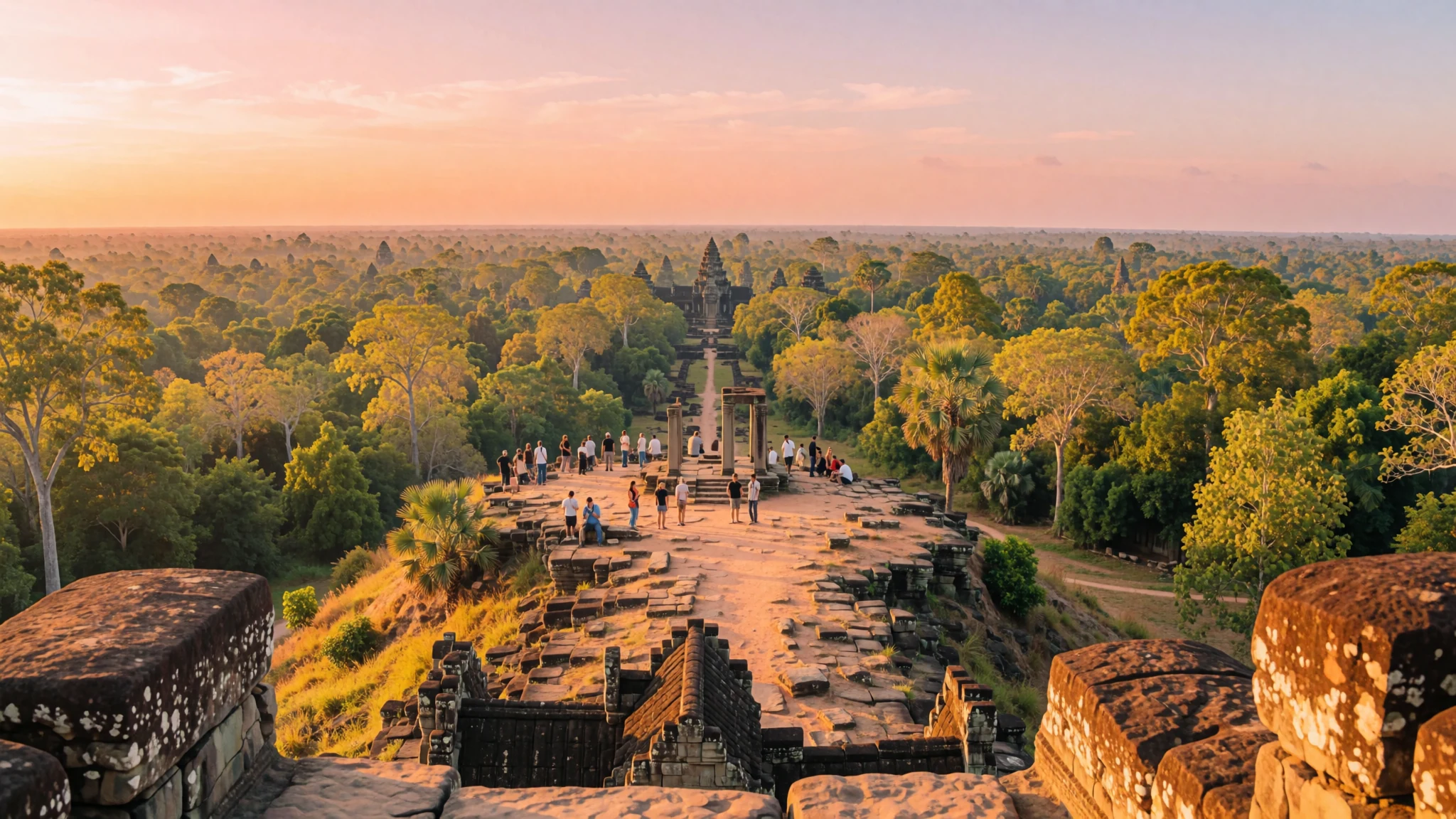
Culture
Angkor Wat and the wider communities of Cambodia exist at a fascinating cultural crossroads where ancient traditions meet modern tourism. While urban centres and tourist hubs are accustomed to international visitors, more remote regions retain traditional ways of life and may be less familiar with foreign customs. Cambodian society places a strong emphasis on modesty and respectful interpersonal conduct, particularly in rural districts and sacred spaces. Traditional dress for women tends to be conservative during daylight hours, often with an emphasis on sun protection, while urban nightlife venues feature more contemporary attire. When interacting with local residents, it is customary to greet people with a gentle bow of the head and a pressing of the palms together, known as the sampeah. Always ask permission before photographing local people, as residents in remote areas may feel uncomfortable, and urban individuals may expect payment for their time. Cover your shoulders and knees before entering sacred temple precincts.
What to wear
Angkor Wat and modern Cambodia see a blend of traditional textiles and contemporary everyday clothing. Traditional Khmer garments include the sampot, a wrapped skirt worn by both men and women on ceremonial occasions, often crafted from woven silk or cotton with intricate regional patterns. Krama scarves, checked cotton cloths worn around the neck or head, remain ubiquitous across the country for protection against dust and sun. In cities like Phnom Penh and Siem Reap, residents wear casual modern clothing such as t-shirts, jeans, and lightweight trousers suited to the tropical climate. Visitors exploring Angkor Wat and other sacred sites must dress respectfully by wearing clothes that cover the shoulders and knees at all times. Lightweight, breathable natural fabrics such as cotton or linen are essential for managing the heat and humidity, while sturdy walking shoes or comfortable trainers are necessary for navigating uneven stone steps and dusty paths.
What to eat
- Amok Trey — Any traditional local eatery or night market stall
Angkor Wat visitors can sample this quintessential Cambodian curry featuring freshwater fish cooked in a rich coconut milk and kroeung paste base, traditionally steamed inside a banana leaf cup until it reaches a delicate, mousse-like consistency.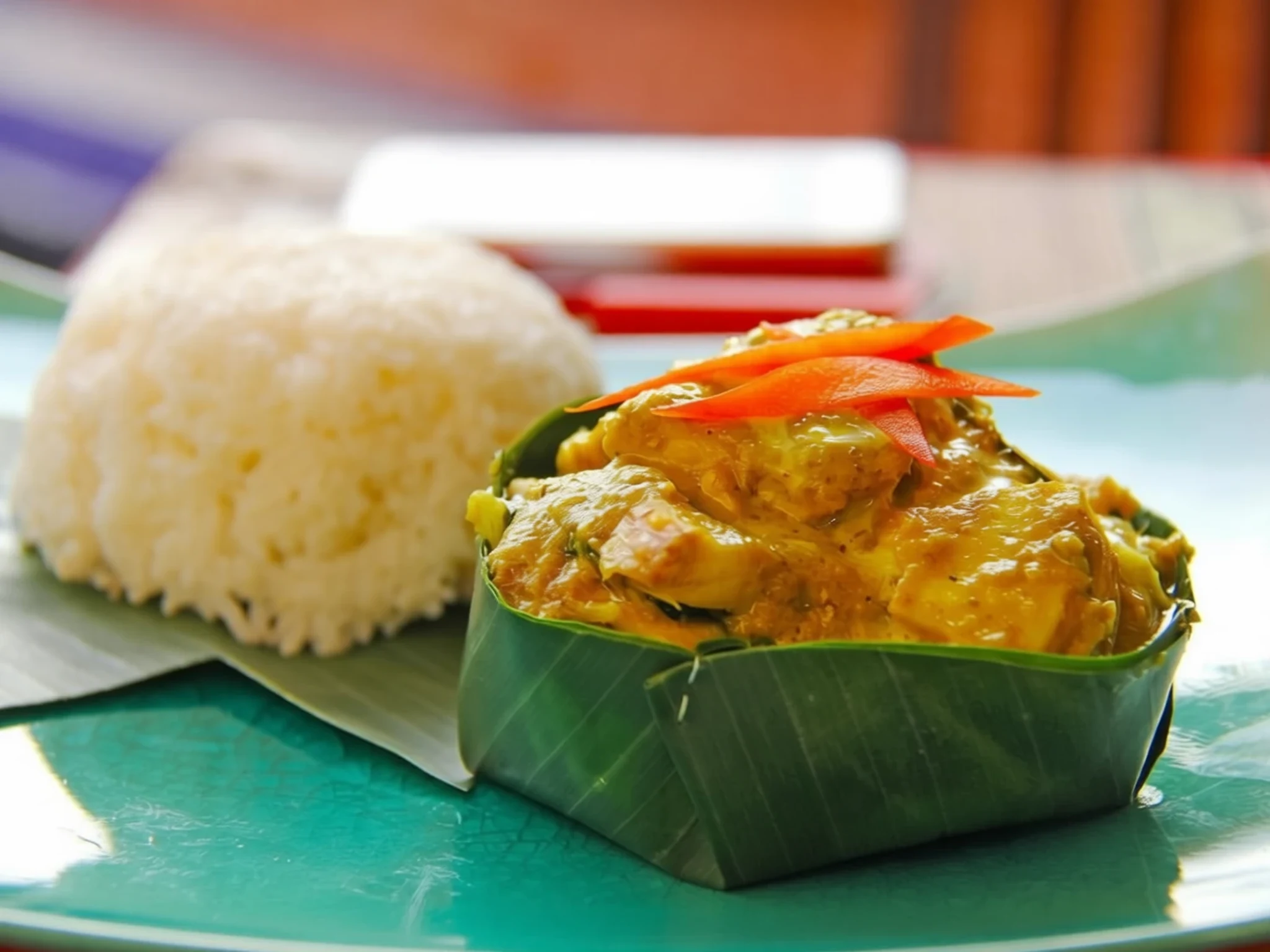
- Khmer Red Curry — Family-run neighbourhood restaurants and roadside canteens
Angkor Wat travellers often enjoy this milder alternative to Thai curries, prepared with lemongrass, galangal, garlic, and turmeric, combined with beef, chicken, or vegetables along with sweet potatoes and coconut milk.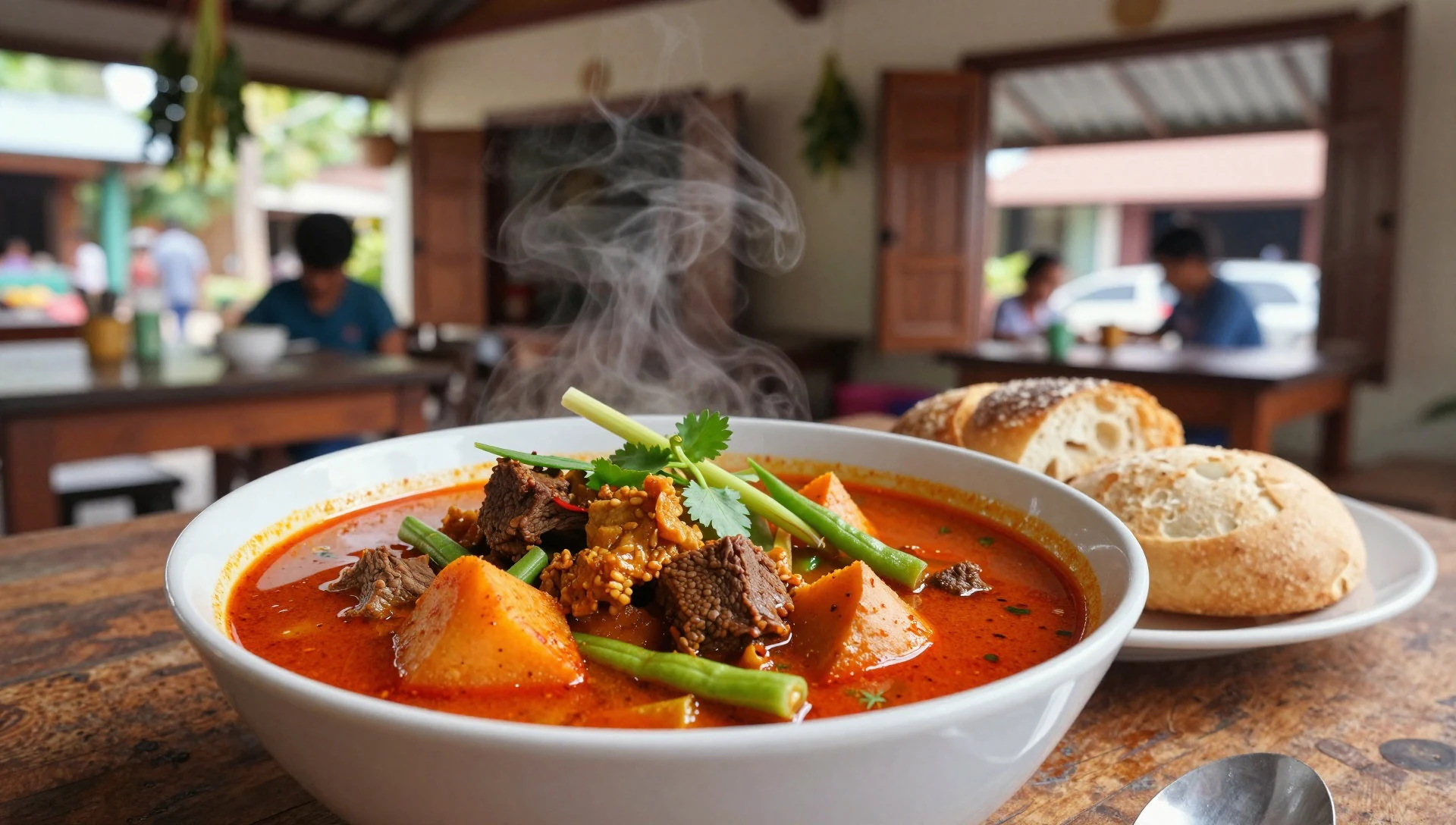
- Nom Banh Chok — Morning markets and street food stalls across town
Angkor Wat explorers frequently start their morning with these traditional Khmer fermented rice noodles served with a greenish fish gravy, crisp cucumbers, bean sprouts, and fresh aromatic herbs. - Bai Sach Chrouk — Stall vendors and local breakfast diners at dawn
Angkor Wat early risers can try this popular breakfast dish consisting of thinly sliced pork marinated in garlic and coconut milk, grilled over charcoal, and served over broken rice with pickled vegetables.
Plan it
Best time. November to April offers drier weather and cooler temperatures, while the hotter months from March onwards bring intense heat before the monsoon rains arrive.
How long. 2–3
Getting there. Fly into Siem Reap International Airport, then take a taxi, remork, or shuttle for the remaining journey into the city and the temple complex.
Budget. mid
Tips
- Start your temple visits early in the morning to beat the intense midday heat and large tour groups
- Purchase your temple admission pass online or at the official ticket centre before arriving at the gates
- Carry sufficient small-denomination cash in US dollars or local currency for minor purchases and transport
- Bring a refillable water bottle, sunscreen, and a wide-brimmed hat to stay protected during long hours outdoors
- Hire a licensed local guide at the entrance to gain deeper historical context about the bas-reliefs
Etiquette
- Cover your shoulders and knees completely before entering any sacred temple enclosure
- Remove your shoes and hats when stepping inside active monastery spaces or prayer halls
- Always ask for permission before taking photographs of local residents or monks
Nearby
Sources
- Wikidata Q43473 (CC0)
- Wikipedia (CC BY-SA 4.0)
- Wikivoyage (CC BY-SA 4.0)