Tongyeong
Tongyeong, South Korea
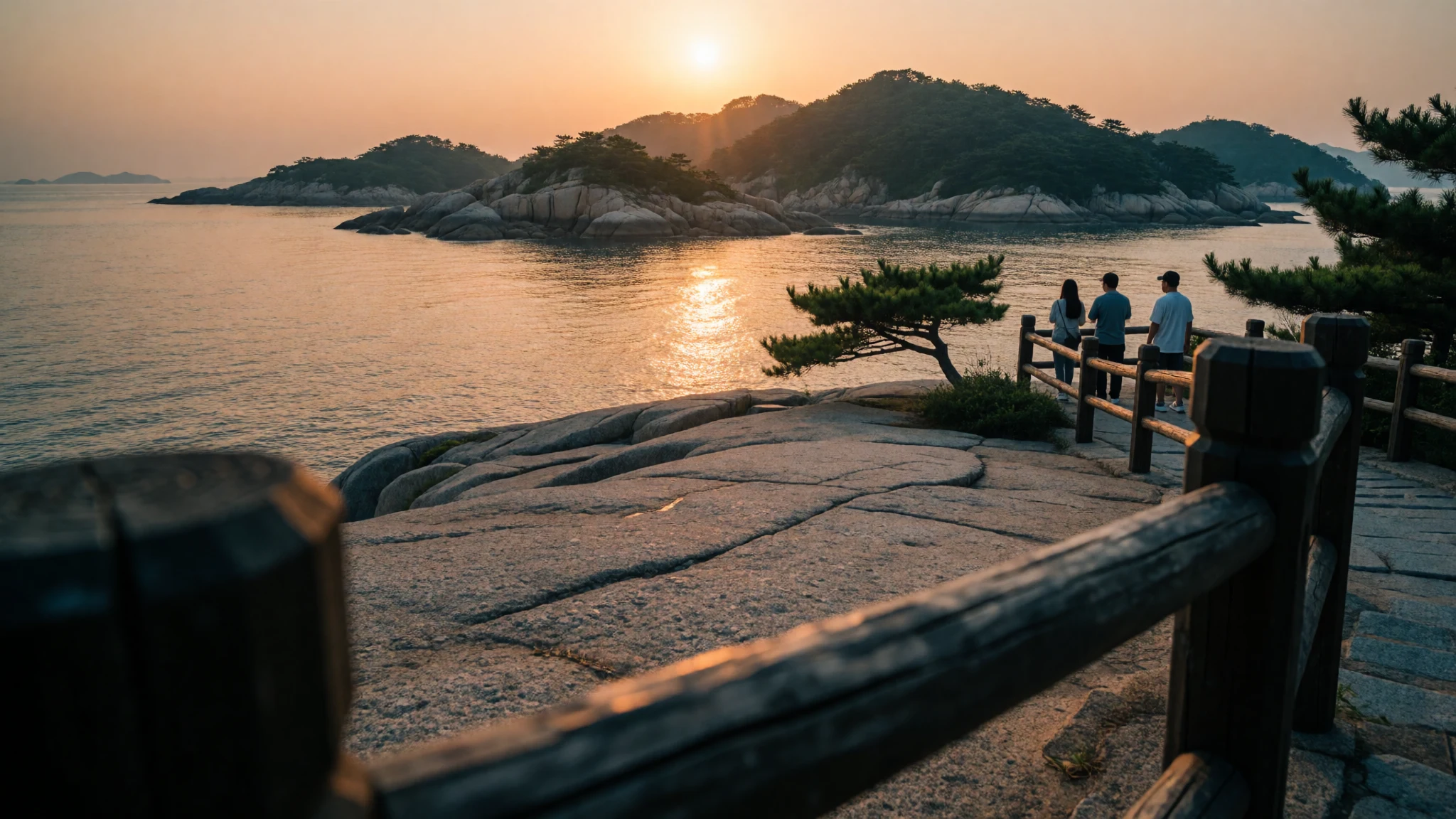
Tongyeong is a working fishing port on Korea's south coast, with island ferries, mural lanes, naval history and very good seafood.
The place
Tongyeong sits on the southern tip of the Goseong Peninsula in South Gyeongsang Province, with the sea on three sides. About 117,000 people live in the city today, and its territory runs well beyond the peninsula to take in Hansando, Mireuk Island, Yokji Island and a long scatter of smaller islands, many of them uninhabited. From the harbour front the bay looks like a flooded mountain range, with green humps and channels stretching to the horizon.
The land behind the port is hilly rather than dramatic. Low ridges run down the peninsula, and the town squeezes into the gaps between them, so streets climb steeply from the waterfront and almost every rise gives a view of boats. Tongyeong works as the eastern entrance to Hallyeo Marine National Park, which stretches out through the islands towards Yeosu.
The climate is gentle for Korea. A warm offshore current keeps the city milder than much of the country, so winters are cool rather than harsh and summers hot and humid without the extremes found inland. January is the coldest month and August the warmest, and the gap between them is smaller here than in most Korean cities.
The name Tongyeong means command post. For a long period the town was called Chungmu, after the posthumous title of Admiral Yi Sun-sin, and the old and new names still turn up side by side on food and street signs. The city is compact enough to walk, and the harbour, fish market and mural hills all sit within easy reach of each other.
Its story
Tongyeong owes its character to Admiral Yi Sun-sin, the Joseon naval commander who defended Korea against Japanese invasion. His main base lay on nearby Hansando, and the later town took its name from that headquarters: Tongyeong, the command post. Later it was renamed Chungmu in his honour, and the older name came back only after the city and the surrounding county were merged again in 1995.
The admiral's reputation rests on sea battles fought among exactly these narrow, island-choked waters. His fleet used local knowledge of currents and channels, and the turtle ship, an armoured vessel, became the emblem of that campaign. Full-size replicas now sit near the harbour, and the story is told again at the shrine on Hansando and in the city's parks and monuments.
Naval history is only half of it. Because the headquarters needed craftsmen to build, repair and supply its ships, Tongyeong grew a tradition of skilled workshops. That heritage lives on in the city's reputation for lacquerware inlaid with mother-of-pearl and for fine woodwork, and in a local pride in the arts that is unusual for a town of its size. Composers, poets and painters have been born or inspired here.
Today the working harbour is still the centre of life. Fishing boats unload at dawn, the market fills, and ferries leave for the islands, while the old command-post identity has been softened into something closer to a cultural port town.
What to see
- Dongpirang Mural Village — Dongpirang, above Gangguan harbour
Dongpirang in Tongyeong is a hillside neighbourhood where residents' walls and stairways are covered in painted murals, a project that rescued the area from demolition. Walk up from the harbour for views over the rooftops and the bay. Weekends and holidays bring crowds, so go early.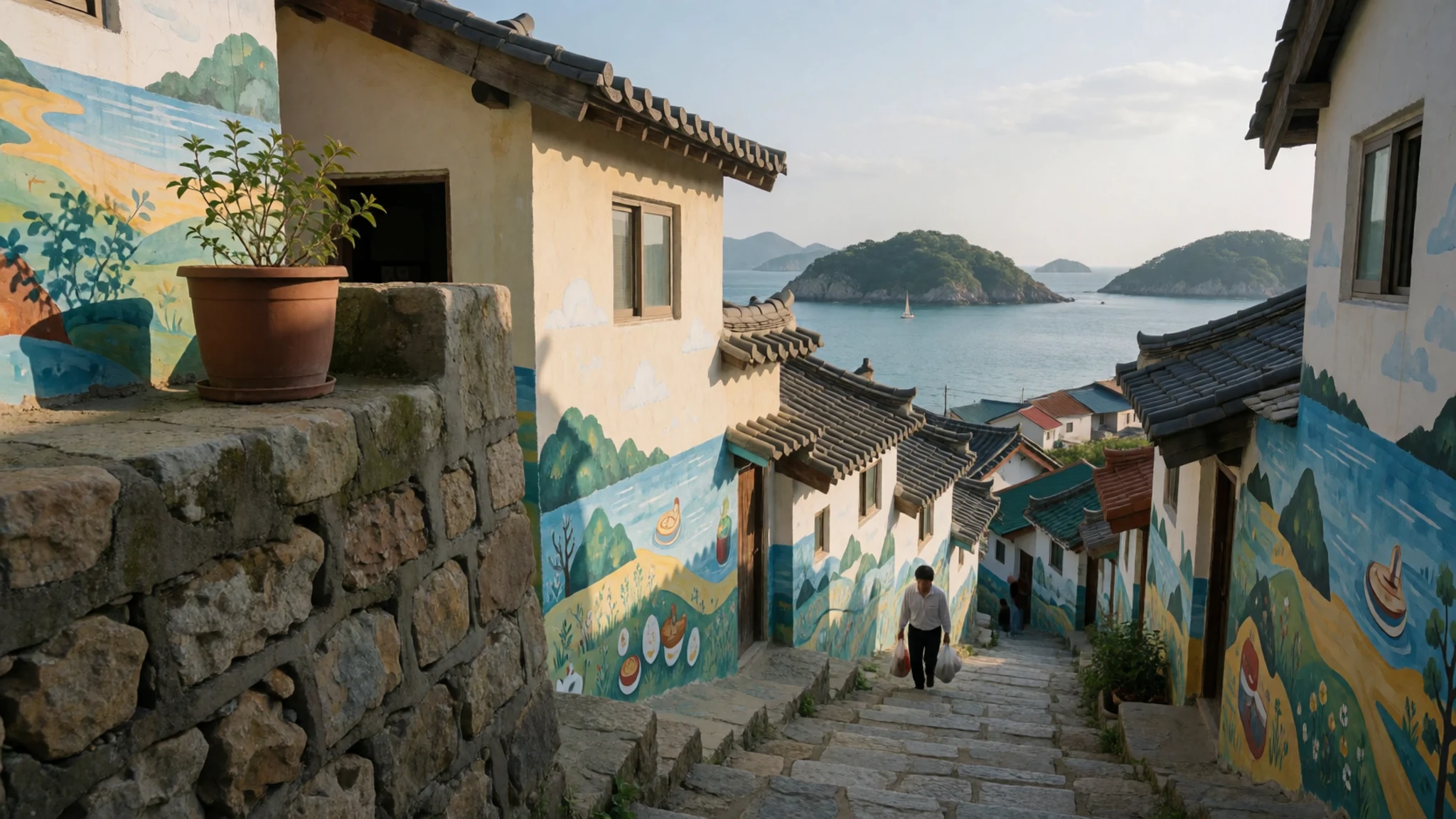
- Turtle Ship Replica and Tongyeong Port — Tongyeong Port, Gangguan area
Tongyeong's waterfront is the natural starting point, with a replica of the turtle ship moored near the quay that defended Korea in its naval campaigns. Fishing boats, ferry piers and seafood stalls surround it, and the shoreline walk is flat, free and good in the evening light.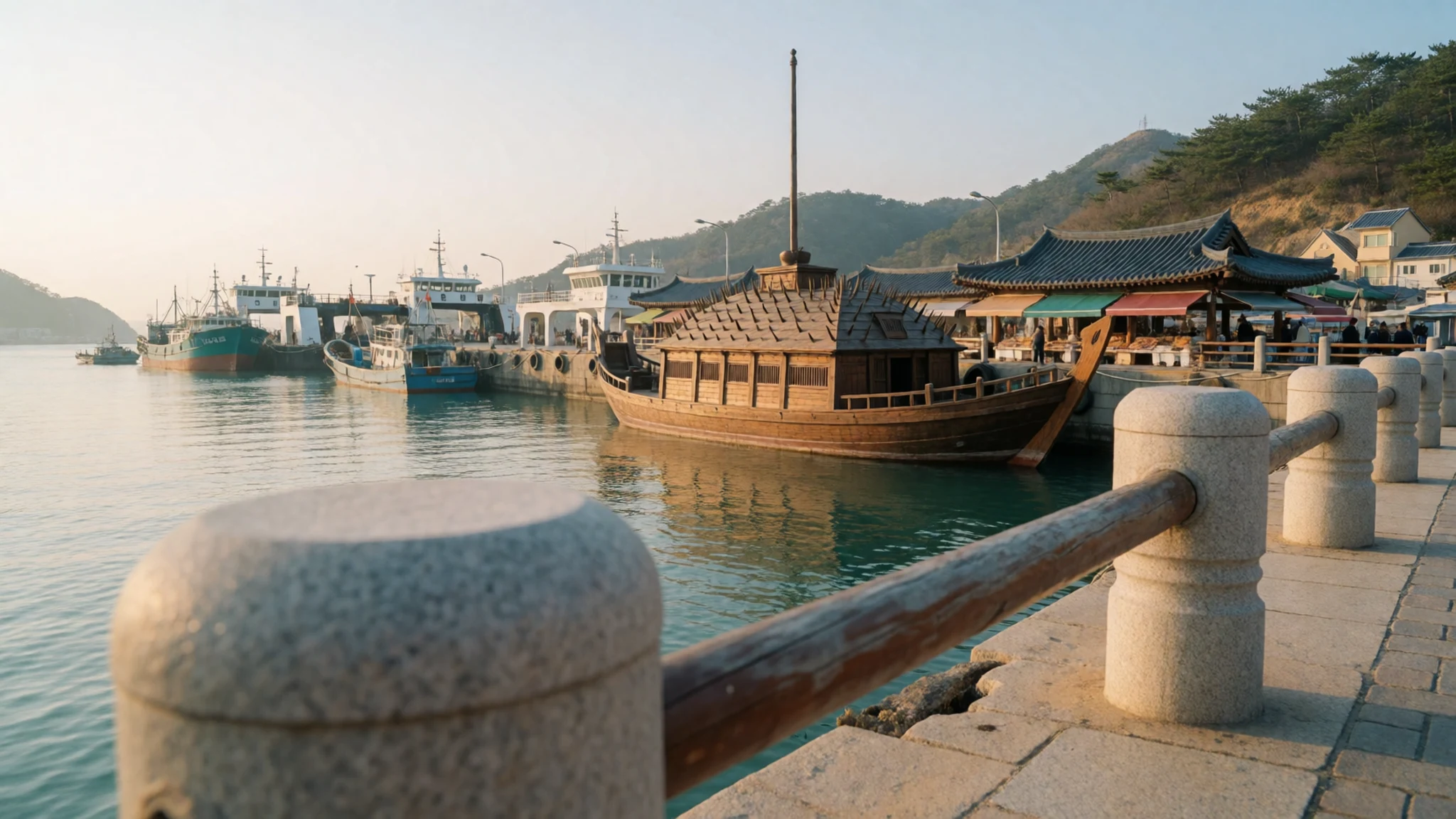
- Jeseungdang Shrine, Hansando — Hansando island
On Hansando, the island that held the admiral's command post, Jeseungdang is a shrine built to honour Yi Sun-sin. It is reached by a short ferry from Tongyeong, and the pine-shaded grounds look over the water where his fleet once anchored. Allow half a day with the ferry timings.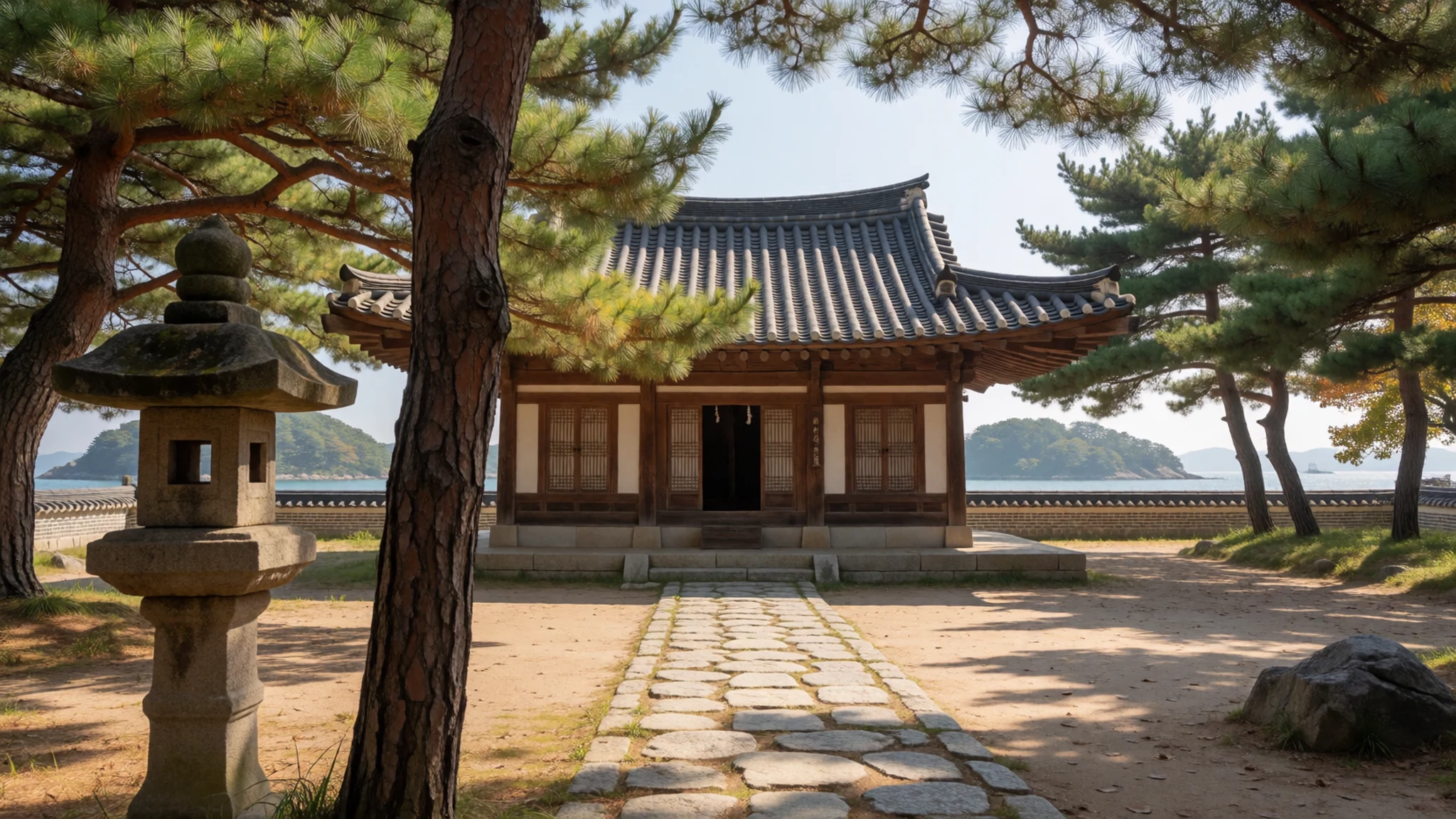
- Hallyeo Marine National Park — Offshore from Tongyeong Port
Tongyeong is the eastern gateway to Hallyeo Marine National Park, whose waters thread between countless green islands towards Yeosu. Excursion boats and ferries from the port let visitors take in the archipelago without hiking. Sea mist can hide the views, so check the weather first.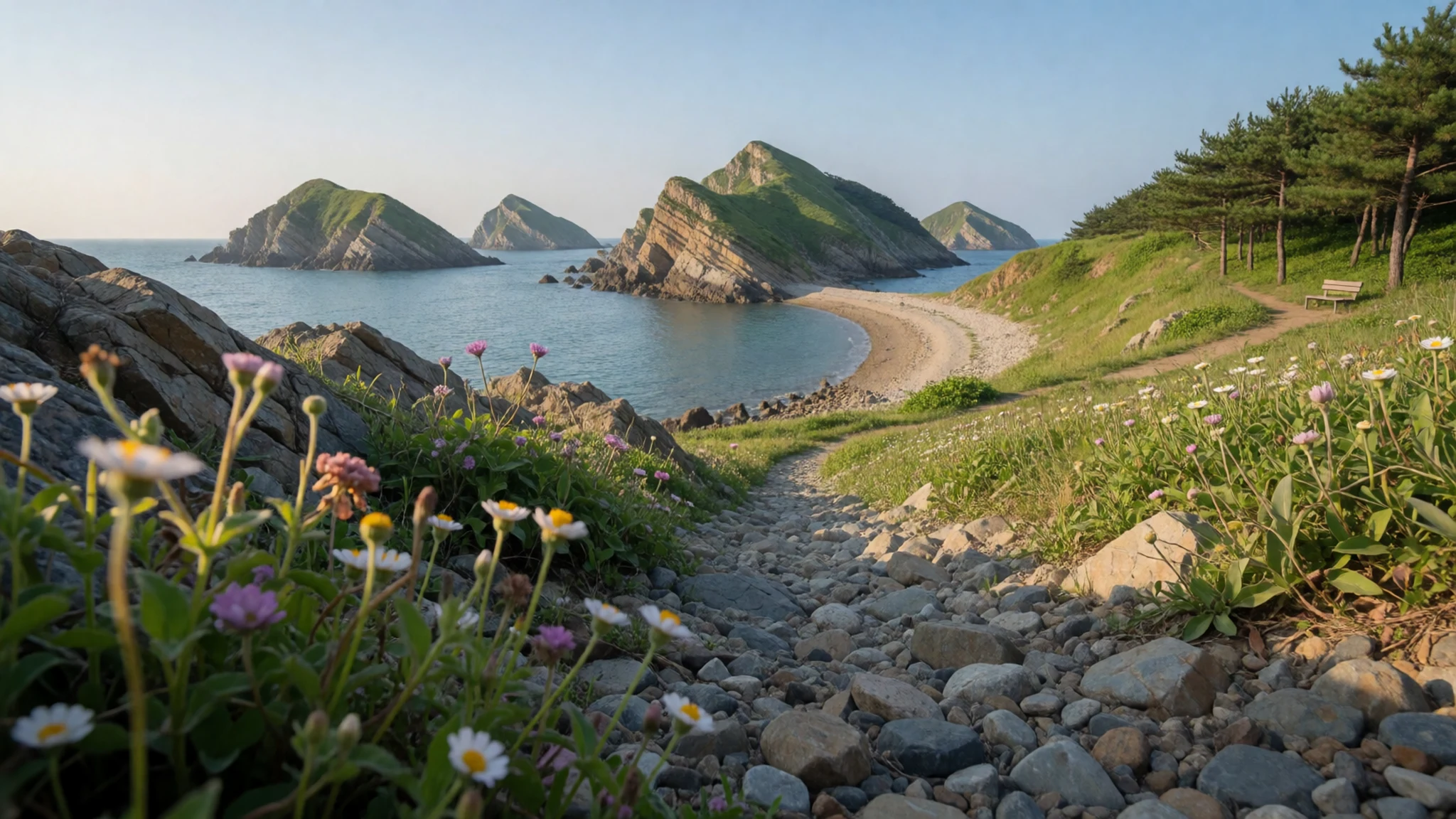
- Dal-a Park — Southern edge of Tongyeong
Dal-a Park lies on the edge of Tongyeong, on a point whose shape suggested a back tooth to the people who named it. It is a favoured spot for watching the sun go down behind the islands. Bring a light jacket, as the breeze off the water cools quickly after dusk.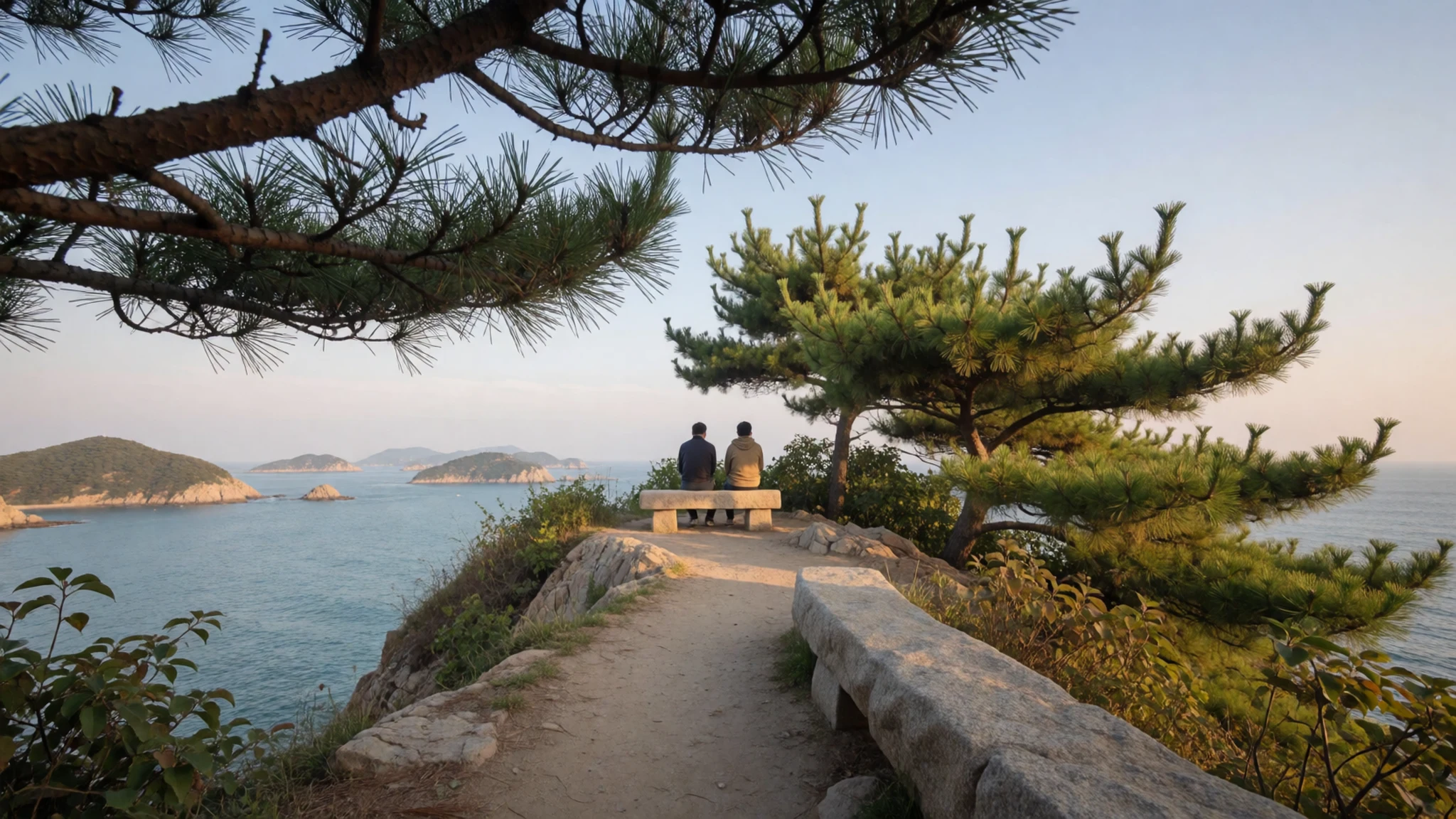
Culture
Tongyeong's culture is that of a port with a strong sense of craft and a long memory. Admiral Yi Sun-sin is the town's patron figure, and his name appears on parks, streets and ceremonies. Local people speak of him with the kind of familiarity usually kept for family, and school groups visit the replica ships and shrines as a matter of course.
Craft is the other thread. Workshops here were historically tied to the naval headquarters, and the region is known for mother-of-pearl lacquerware, fine woodwork and traditional horsehair hats. Small studios and museums let visitors see pieces made, and buying direct from a maker is a good way to bring something home that is not mass produced.
Art and music are taken seriously, and a performance hall and open-air plaza host regular events. Mural projects in the old hill neighbourhoods have become a second kind of local expression, giving residents a say in how the streets look.
Daily life follows the sea. Fish auctions start early, restaurants hum at lunchtime, and evenings are for sitting over seafood and drink. Dachi, the local style of drinking, involves a set spread of fresh seafood chosen by the kitchen rather than ordered dish by dish. Hospitality is warm, but the tone is practical and unhurried.
In Dongpirang and other mural neighbourhoods, people live behind the painted walls, so keep your voice low and do not photograph residents or look into their windows and doorways.
What to wear
Tongyeong shares the national dress tradition of the hanbok, a garment of a short jacket (jeogori) and a wrap skirt (chima) for women, and jacket and loose trousers (baji) for men. It is made from silk for formal wear, and from ramie or hemp and cotton for summer and everyday use. People wear hanbok now mainly for Lunar New Year, Chuseok, weddings and family milestones, and rental shops in tourist cities do a trade with visitors. Tongyeong's own craft contribution is accessories: horsehair hats (gat) and mother-of-pearl lacquer pieces, which belong to the formal side of the older costume.
Everyday dress in Tongyeong is practical and casual. Fishing-port work calls for waterproof boots, aprons and rubber gloves at the market, while office and shop staff wear plain, neat clothes. Younger people follow Korean city fashion, with clean sneakers, loose trousers and layered knitwear in cooler months. Hiking clothes are common even on ordinary outings, because the hills are close.
Visitors should dress for a mild but changeable coast. Light layers and a windproof jacket suit spring and autumn, while summer needs breathable fabric, a hat and sun protection, and winter needs a proper coat. Shoes matter more than clothes, since mural lanes and shrine paths are steep and often uneven, so wear grippy trainers or walking sandals. Shrines and temples have no strict dress code beyond covered shoulders and knees, which is polite and sensible.
What to eat
- Chungmu gimbap — Harbour-front eateries around Gangguan
Tongyeong's signature take on gimbap is a thin seaweed-wrapped roll of rice alone, served with spicy marinated baby octopus or squid and radish kimchi on the side. It is eaten in separate bites rather than stuffed together.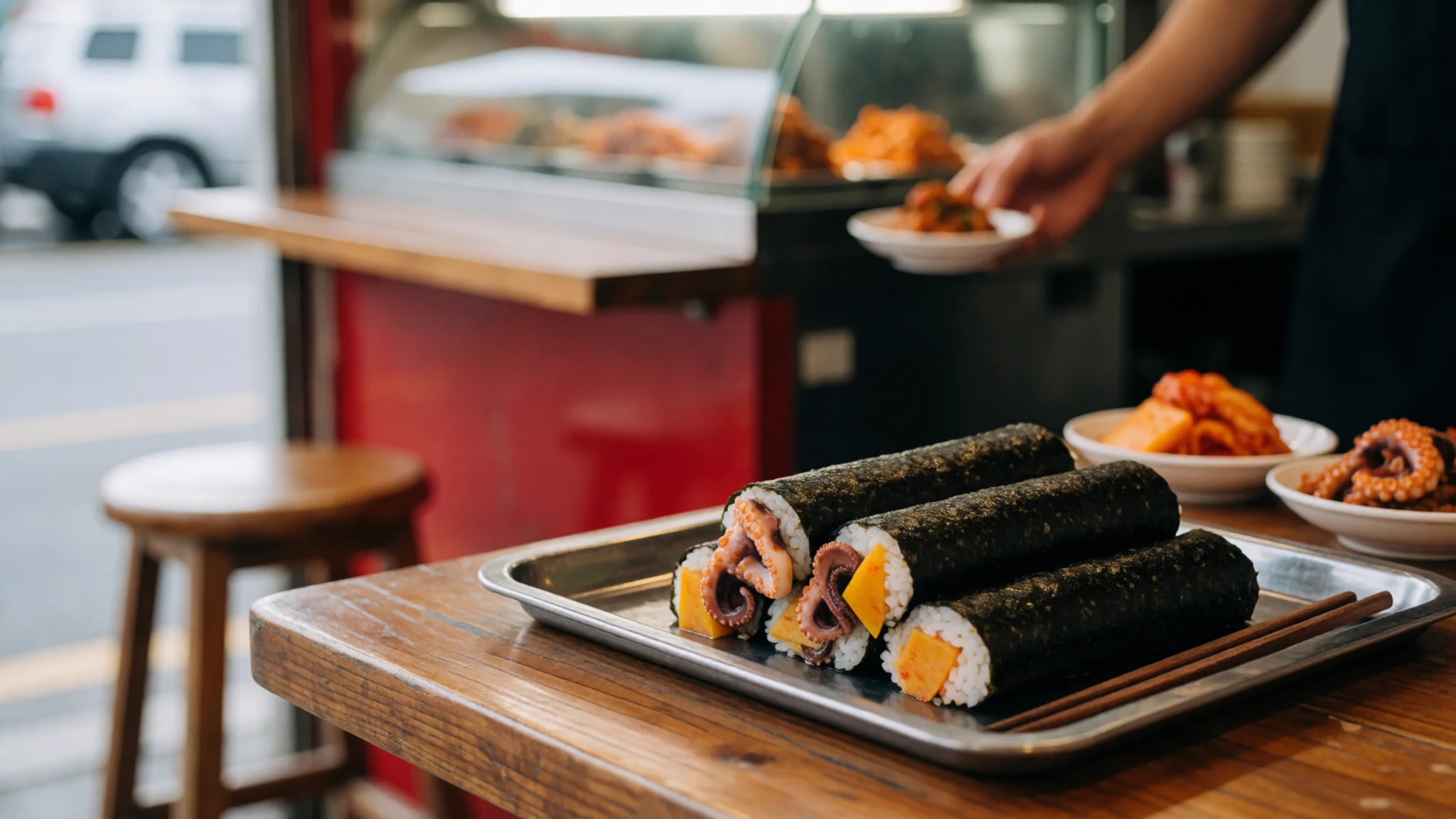
- Kkulppang — Joongang market and the Gangguan area
Tongyeong's most famous snack is a honey-glazed fried dough ball filled with sweet red bean paste. It is sticky, dense and best eaten fresh, with tea. Many local bakeries sell boxed sets to take home.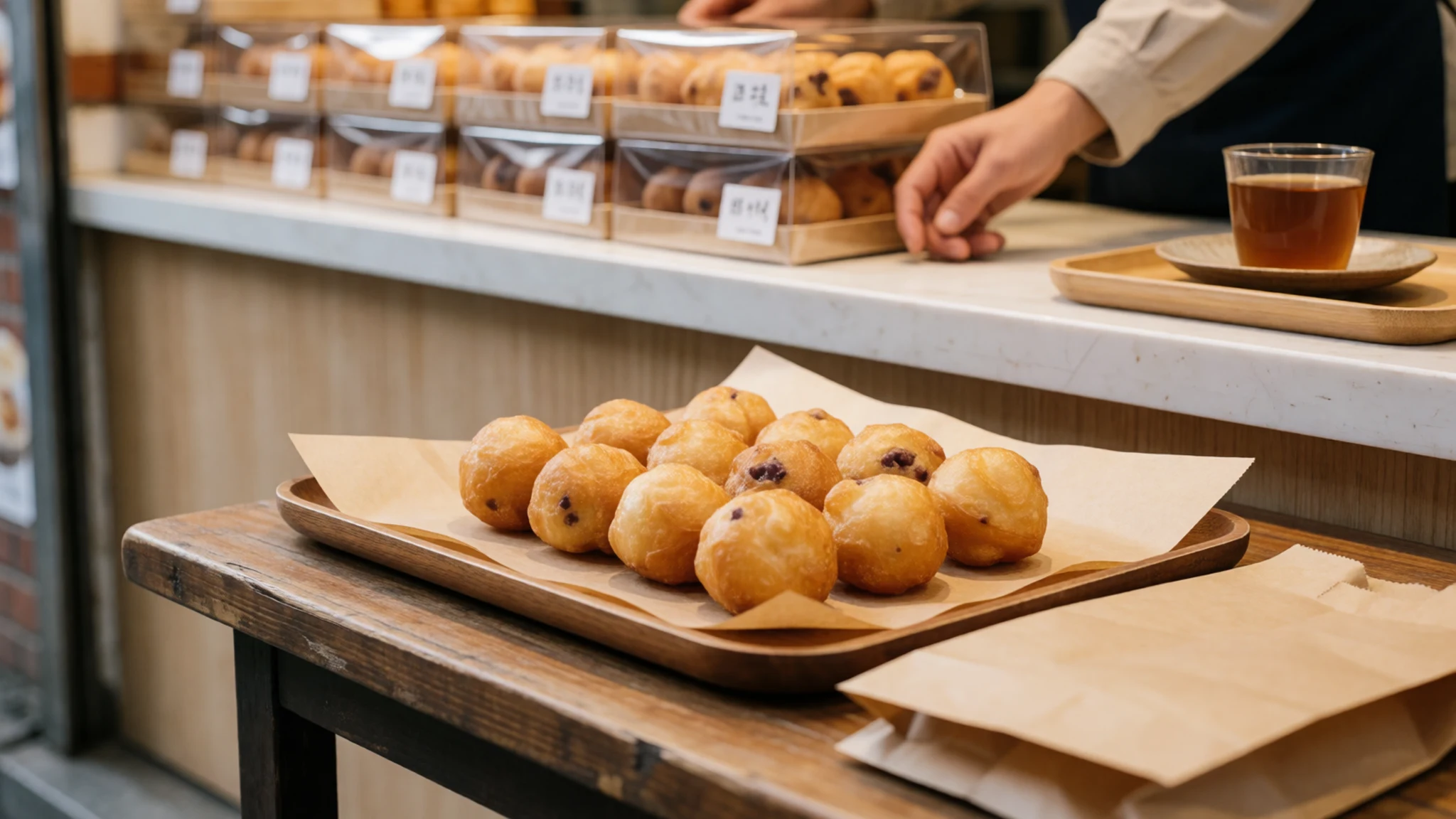
- Oyster set meals — Harbour-side oyster restaurants
The surrounding sea farms oysters, and Tongyeong restaurants serve them several ways in one set meal: raw with seasoning, steamed, fried and in rice. Winter is the best season for plump, sweet oysters. - Ujja — Small noodle shops near the market
A local noodle oddity, ujja puts thick udon noodles under a dark jajang sauce, the sweet-savoury black bean paste usually served over wheat noodles. The name blends two dish names. It is cheap, filling and a good mid-day stop. - Seafood soups and raw fish — Fish market and surrounding restaurants
As a port, Tongyeong serves fish in simple forms: spicy mixed seafood stew, clear blowfish soup, sliced raw fish and grilled catch of the day. Choose a place busy with local diners, and ask about the day's fish.
Plan it
Best time. April–May and October–November, when the air is mild and clear and the islands are at their best. Summer is hot and humid with rain and sea mist, and winter is cool but gentler than inland Korea.
How long. 2–3
Getting there. Fly to Gimhae International Airport at Busan, about an hour's drive away, or to Sacheon airport, which is a little closer. Tongyeong has no direct rail link, so trains from Seoul run to Jinju Station, followed by a bus or taxi for the last stretch. Express buses from Seoul take roughly four hours.
Budget. mid
Tips
- Book weekend accommodation early, especially for rooms with a sea view, which cost extra
- Visit Dongpirang early in the morning to avoid the heaviest crowds
- Check ferry timetables on the official website before planning island trips
- Carry some cash for market stalls and small snack shops
Etiquette
- Keep your voice low in mural neighbourhoods where people live
- Do not photograph residents without asking
- Take rubbish with you from viewpoints and harbour paths
Nearby
Sources
- Wikidata Q42152 (CC0)
- Wikipedia: Tongyeong (CC BY-SA 4.0)
- Wikivoyage: Tongyeong (CC BY-SA 4.0)
- Photo 01: Cityscape of Tongyeong, Junho Jung (CC BY 3.0)
- Photo 02: Tongyeong collage, Jungho Jung and User:Asfreeas (CC BY 3.0)
- Photo 03: Jeseungdang, Asfreeas (CC BY 3.0)
- Photo 04: Tongyeong islands, Ken Eckert (CC BY-SA 4.0)
- Photo 05: Tongyeong from the air, Allen R Francis (Public domain)
- Photo 06: Hallyeo National Marine Park, Junho Jung (CC BY 3.0)
- Photo 07: Dongpirang Village, Junho Jung (CC BY 3.0)
- Photo 08: Turtle ship replica, Junho Jung (CC BY 3.0)


