Tiryns
Tiryns, Greece
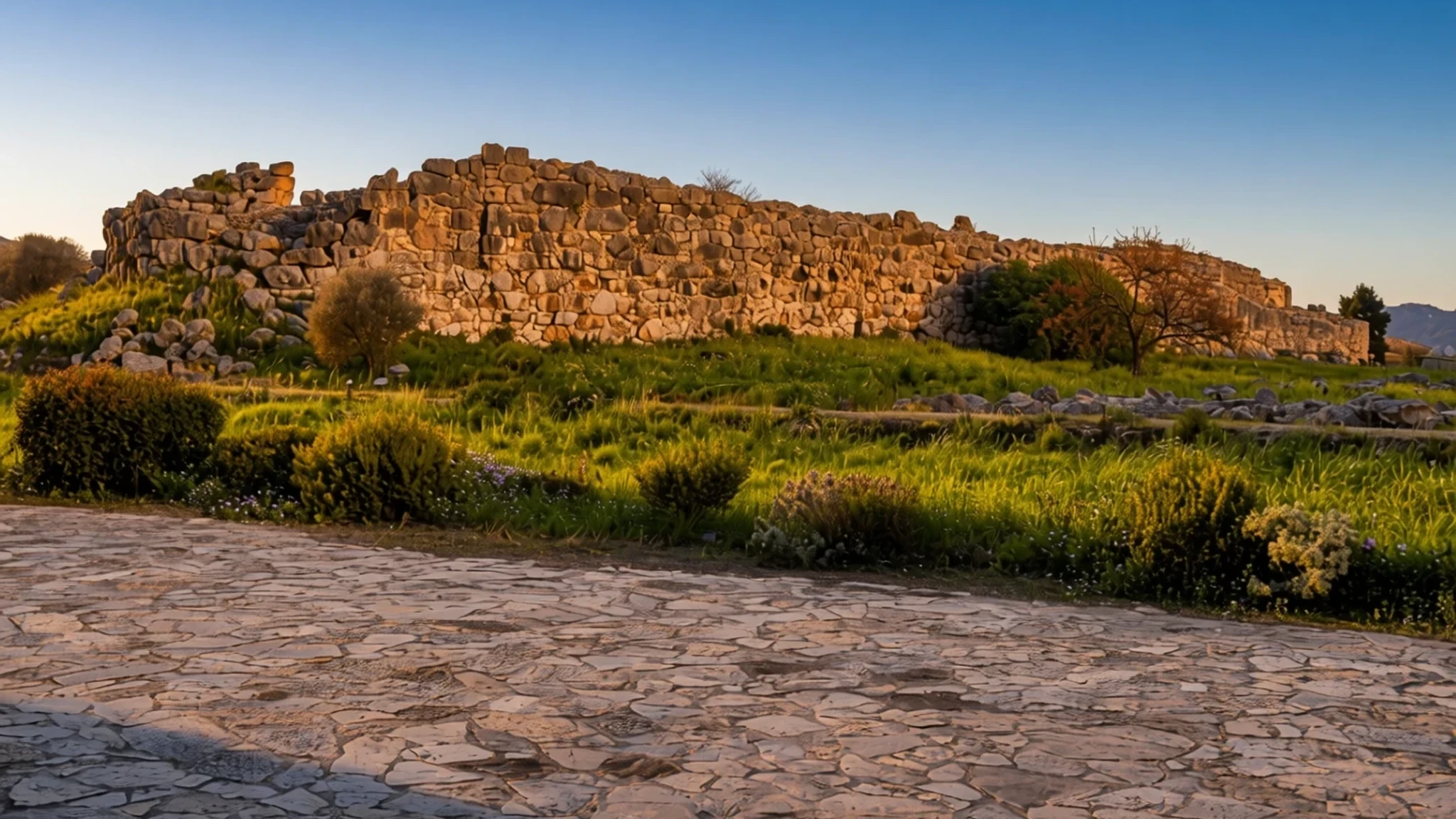
Tiryns is a Bronze Age citadel near Nafplio where enormous stone walls and a vaulted passage survive, quieter than nearby Mycenae.
The place
Tiryns sits on a low rocky hill in Argolis, in the Peloponnese, a short drive inland from the Argolic Gulf and close to the town of Nafplio. It is a Mycenaean archaeological site, and the surrounding plain is now farmland, with orange and olive groves running up to the edge of the fence. The hill is modest in height, but the walls built on it make it feel far larger than it is.
The site is best known for those walls, made of huge rough limestone blocks that later Greeks thought only giants could have lifted. That belief gave us the word Cyclopean for this kind of masonry. Homer called the place mighty-walled Tiryns, and the description still fits. Inside the circuit there are ramps, gateways, long covered galleries with pointed stone roofs, and the foundations of a palace with a grand hall, or megaron, where a throne and a central hearth once stood.
Tiryns also carries myth. Ancient writers linked it to Heracles, who was said to have lived here while performing his Twelve Labours. The site lies about 20 km south of Mycenae, and many visitors pair the two in a single day. Tiryns is the smaller and calmer of them, with more room to wander, climb and look closely at how the stonework was put together. Shade is scarce, so the experience is mostly sun, stone and wide views over the plain. It is part of a UNESCO World Heritage listing shared with Mycenae.
Its story
Tiryns was lived in long before it became a palace. A small settlement existed here in the Neolithic, and by the middle of the third millennium BC the hill held a flourishing community. Archaeologists found the remains of a remarkable round building beneath the later palace courtyard, about 28 m across, with thick walls made of concentric rings of stone. It may have been a refuge in wartime, a ruler's residence, or both.
Greek-speaking people settled the hill at the start of the Middle Helladic period, and the place grew steadily with the rise of Mycenaean culture. The citadel that visitors see today was built in three phases across the Late Helladic period, and the surviving ruins belong to the last of them. This was the moment when Tiryns was one of the leading centres of Argolis, a busy fortified town with a harbour-facing economy and a lower town spreading around the hill.
Then the Mycenaean world broke down. The palace was destroyed, and the site declined, though people lingered on. Part of the old megaron was later absorbed into an archaic temple of Hera, showing that the ruins kept a sacred aura. By the time the Greek travel writer Pausanias came through in the 2nd century AD, Tiryns was deserted, and only the walls remained to astonish him, as they still astonish visitors now.
What to see
- The Cyclopean walls — Perimeter of the citadel
The great circuit of massive limestone blocks is the reason to come. Walk along the outside first to judge the scale, then follow the inner faces, where in places the walls still stand tall. Look for how the blocks are fitted with small stones wedged into the gaps.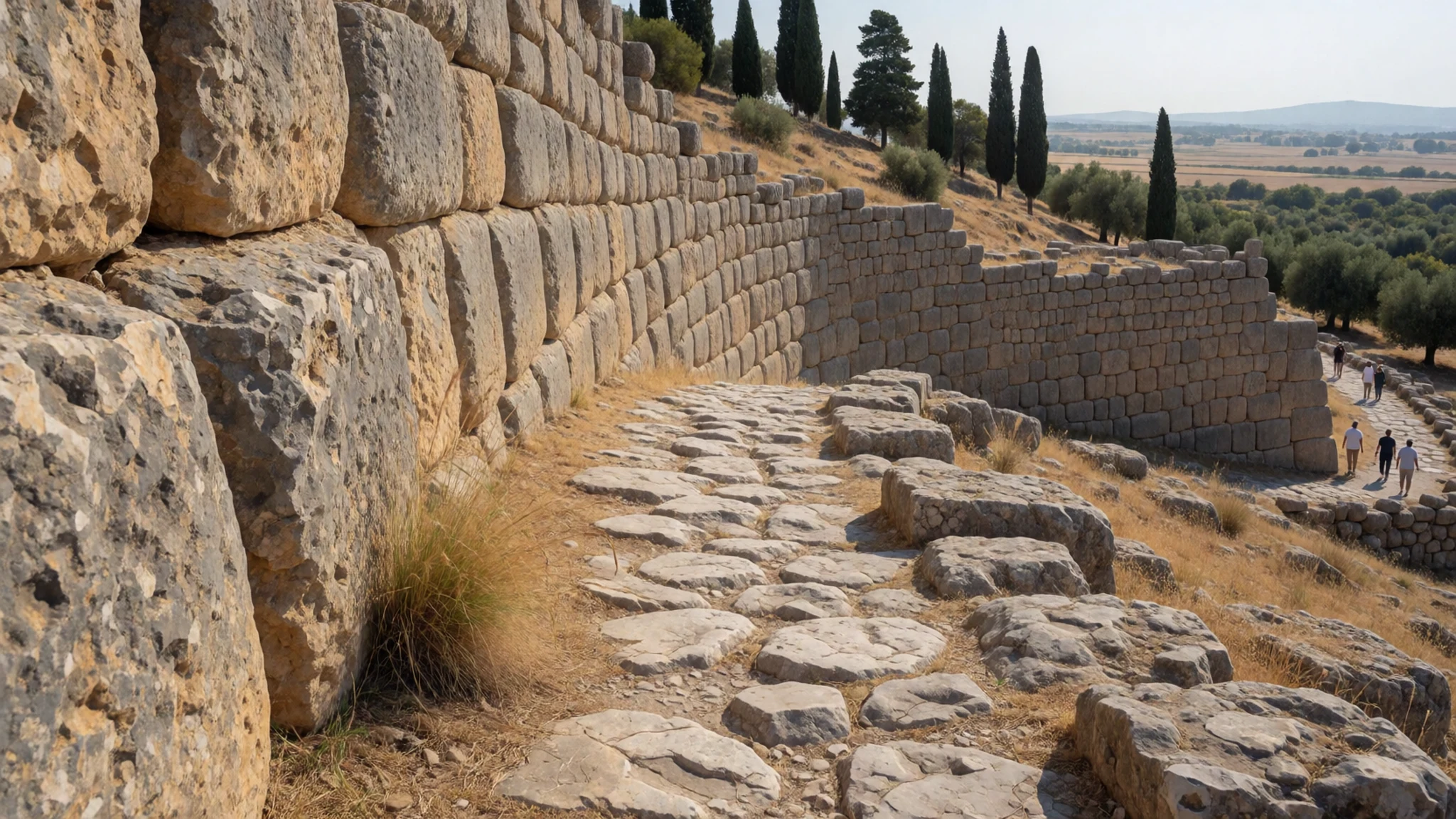
- The entrance ramp and gateways — East side of the citadel
Visitors climb a long, wide ramp that kept approaching attackers exposed beside the wall, then pass through a sequence of gateways. It is a clear lesson in Bronze Age defence, and the route is largely the same one used by the people who lived here.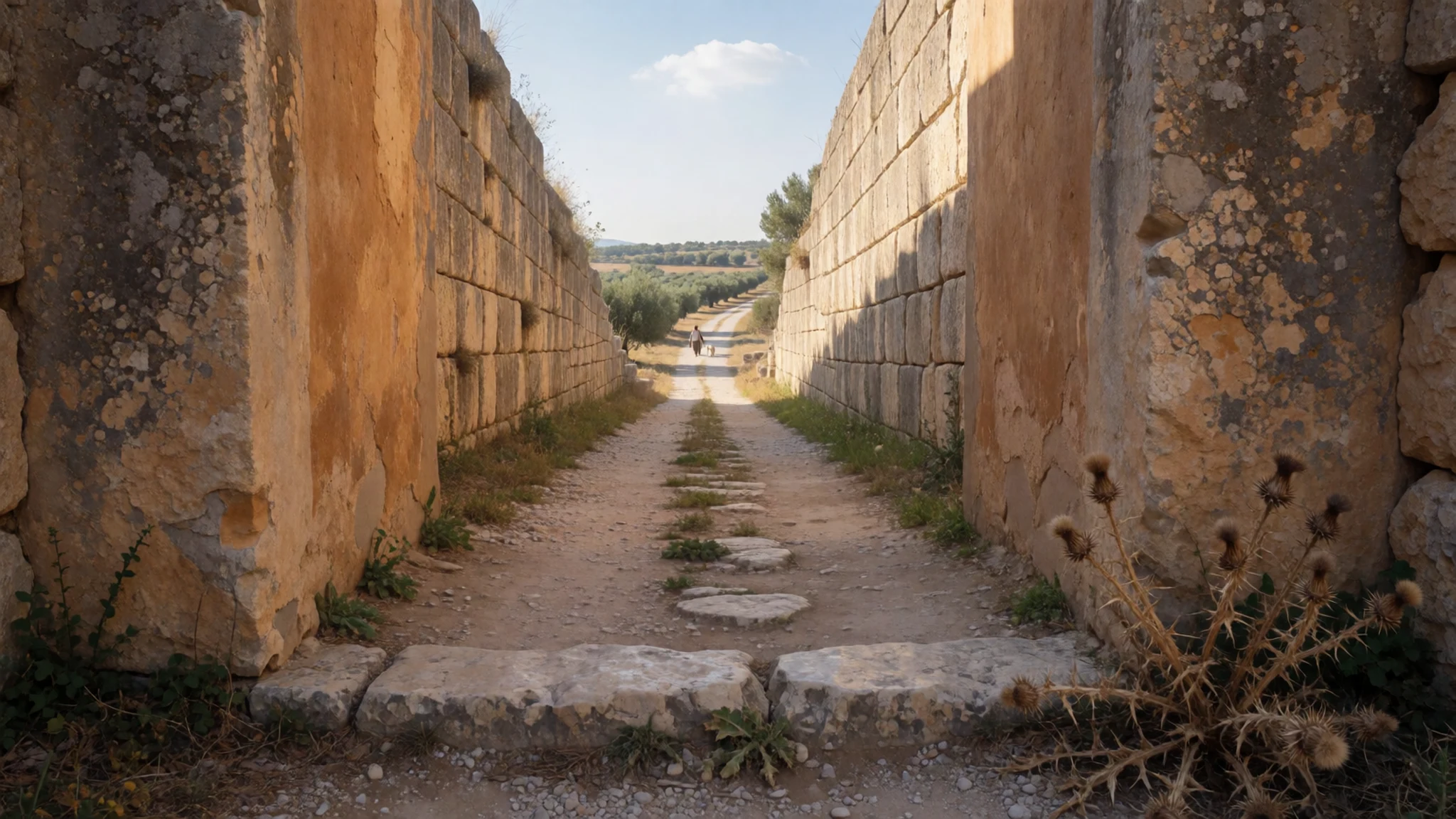
- The vaulted galleries — Within the lower citadel walls
Inside the thickness of the walls run long passages roofed with pointed corbelled stone, used for storage and movement under cover. Walking through one is a cool relief on a hot day and shows the builders' skill far better than any photograph can.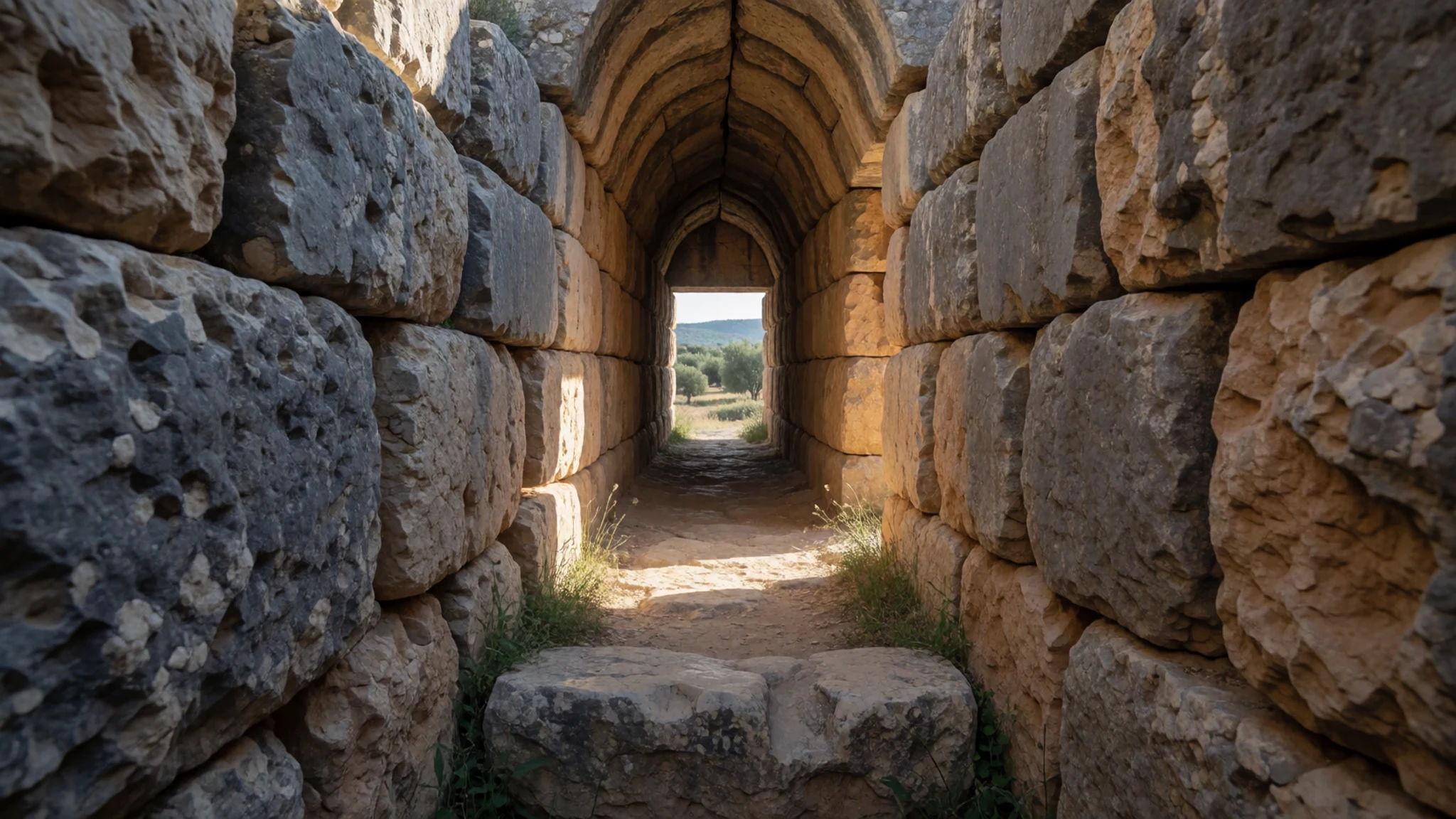
- The palace megaron — Upper citadel
On the upper citadel are the foundations of the palace hall, with the position of the throne and the circular hearth still readable on the ground. Imagine four wooden columns around the fire, and a courtyard in front where visitors were received.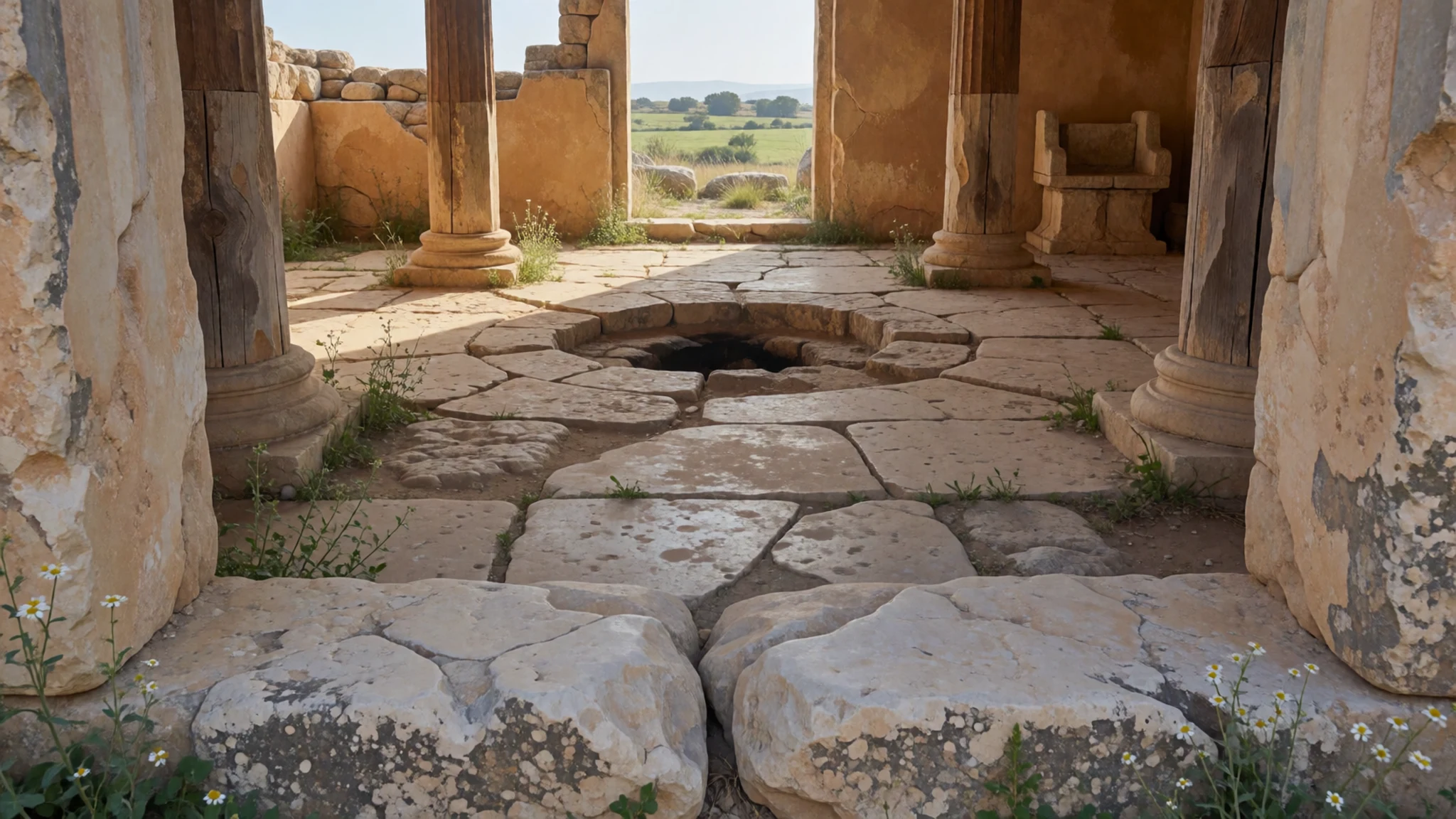
- Views from the upper citadel — Highest point of the hill
From the top of the hill the Argolid plain opens out in every direction, with the sea visible on a clear day. It explains why this spot was chosen, and it is a good place to read the site plan and see how the parts fit together.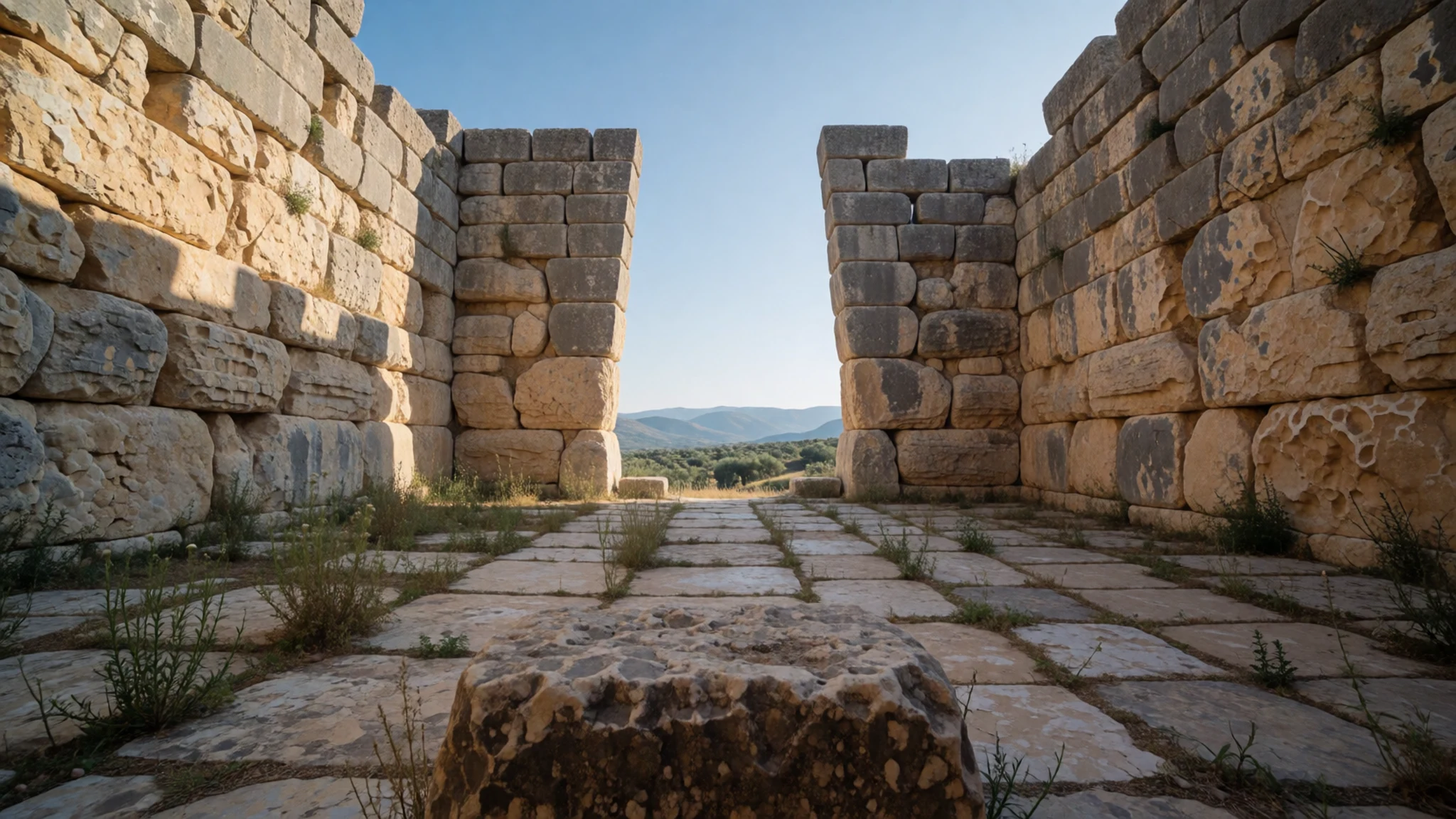
- Mycenae and Nafplio nearby — Argolis, short drive away
Mycenae, about 20 km north, has its own citadel and tombs and makes a natural second stop. Nafplio, close to Tiryns, offers the Palamidi Fortress, a Venetian-built hilltop stronghold above the gulf, plus a pleasant old town for the evening.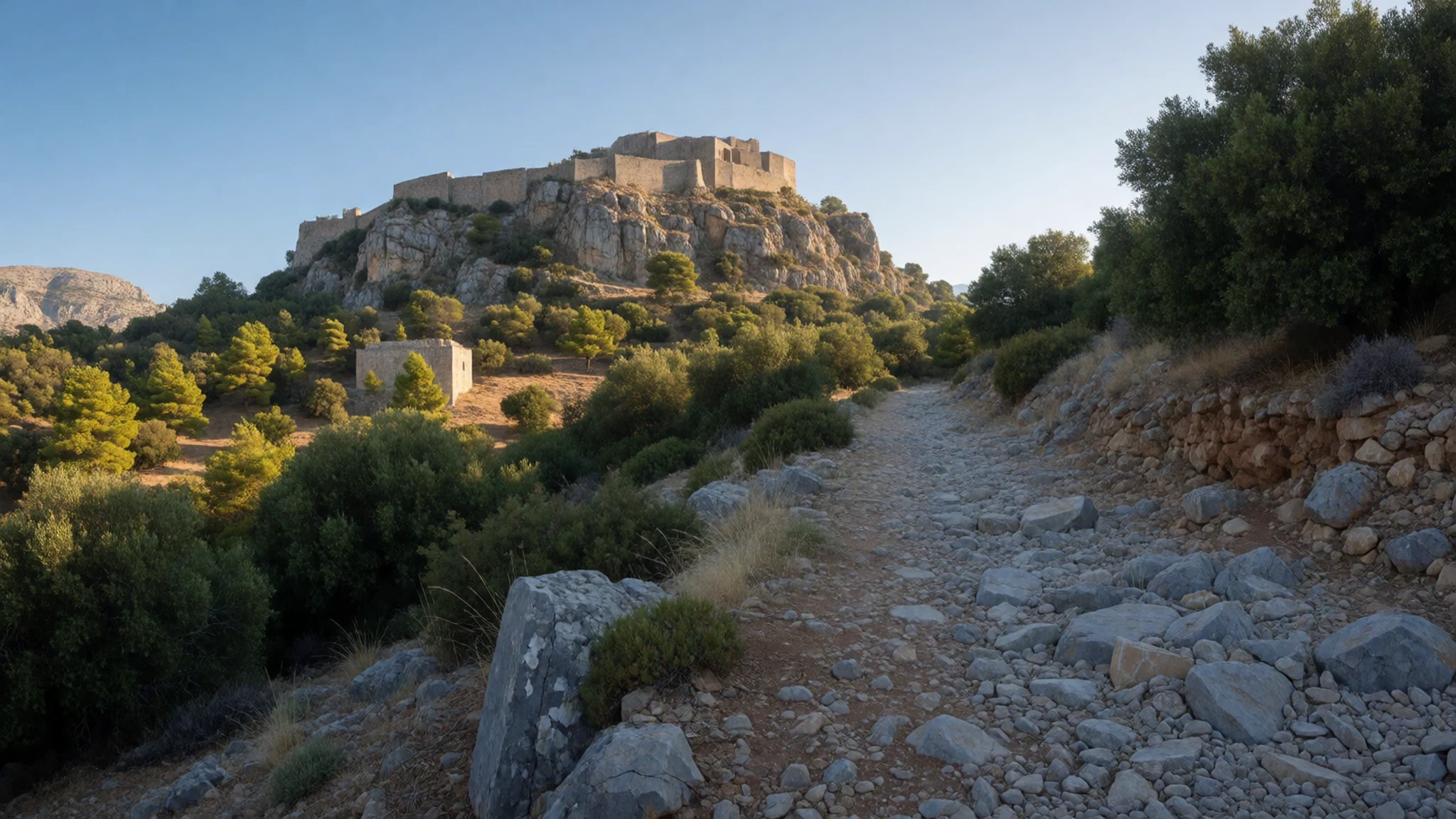
Culture
Tiryns belongs to the Mycenaean world, a Bronze Age culture whose palaces, trade and warrior ideals shaped later Greek memory. Its people were literate in a script called Linear B, kept palace records, and built fortresses to protect rulers and stored wealth. Little of their own voice survives, so much of what we feel about the place comes from later poetry and myth.
Homer's epics gave Tiryns its famous epithet, and later Greeks told stories of Heracles serving the king here. Those stories were already ancient when Pausanias wrote, and they show how the ruins stayed in the imagination long after the people had gone. The temple of Hera built over part of the palace is another sign of continued reverence.
Today the site is managed by the Greek state as an archaeological monument, and the culture around it is more local than touristic. Nearby villages grow citrus and olives, and the rhythms of the day follow farming, with a long afternoon pause in summer. Greeks tend to be proud of their antiquities, and guides and custodians appreciate visitors who take the place seriously. Walk only on the marked paths and do not climb on or sit on the ancient walls, since the stones are fragile and the custodians will ask you to come down.
What to wear
Tiryns has no dress tradition of its own that survives, and the Mycenaeans left only painted frescoes and figurines to show what they wore. Women appear in flounced skirts and fitted bodices, men in kilts and tunics, in wool and linen, often with bright borders. Those images are known mostly from palace wall paintings elsewhere in Greece.
In later centuries the Peloponnese developed its own regional costumes, with embroidered wool and linen, woven sashes and, for men, the pleated fustanella kilt. These are now seen mainly at festivals, folk dance performances and on ceremonial guards in Athens, not in the villages around Tiryns.
Everyday dress in Argolis today is relaxed and practical: shorts, light cotton shirts and sandals in summer, jeans and jackets in winter. Older villagers dress a little more formally in town, but nobody expects visitors to follow suit.
For the site, think sun and uneven ground. Wear sturdy shoes with a good grip, since the paths are stony and the ramp is steep in places. Bring a hat, sunglasses and a light long-sleeved shirt, because there is almost no shade. There is no dress code for the ruins, though modest clothes are appropriate when visiting village churches and monasteries nearby, with shoulders and knees covered.
What to eat
- Souvlaki and gyros — Grill shops in Nafplio and Argos
Grilled skewers of pork or chicken, or meat shaved from a spit, wrapped in pita with tomato, onion and yoghurt sauce. It is the quick lunch of the region, easy to find in the towns near the site.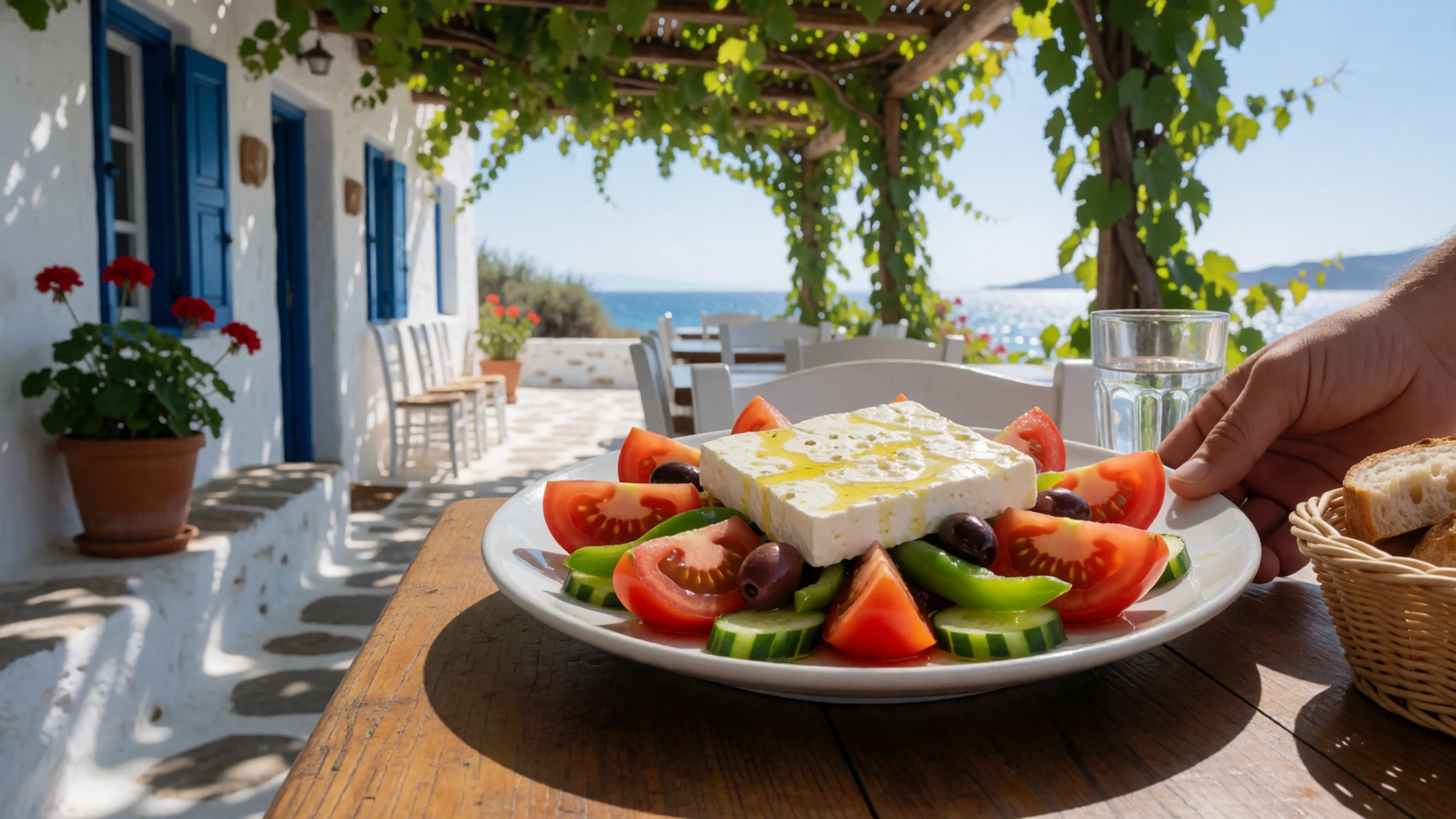
- Greek salad — Any village taverna
Tomatoes, cucumber, onion, olives and a slab of feta dressed with olive oil and oregano. In the Argolid summer the tomatoes are sweet, and the salad is a good counterpoint to the heat after a morning on the hill.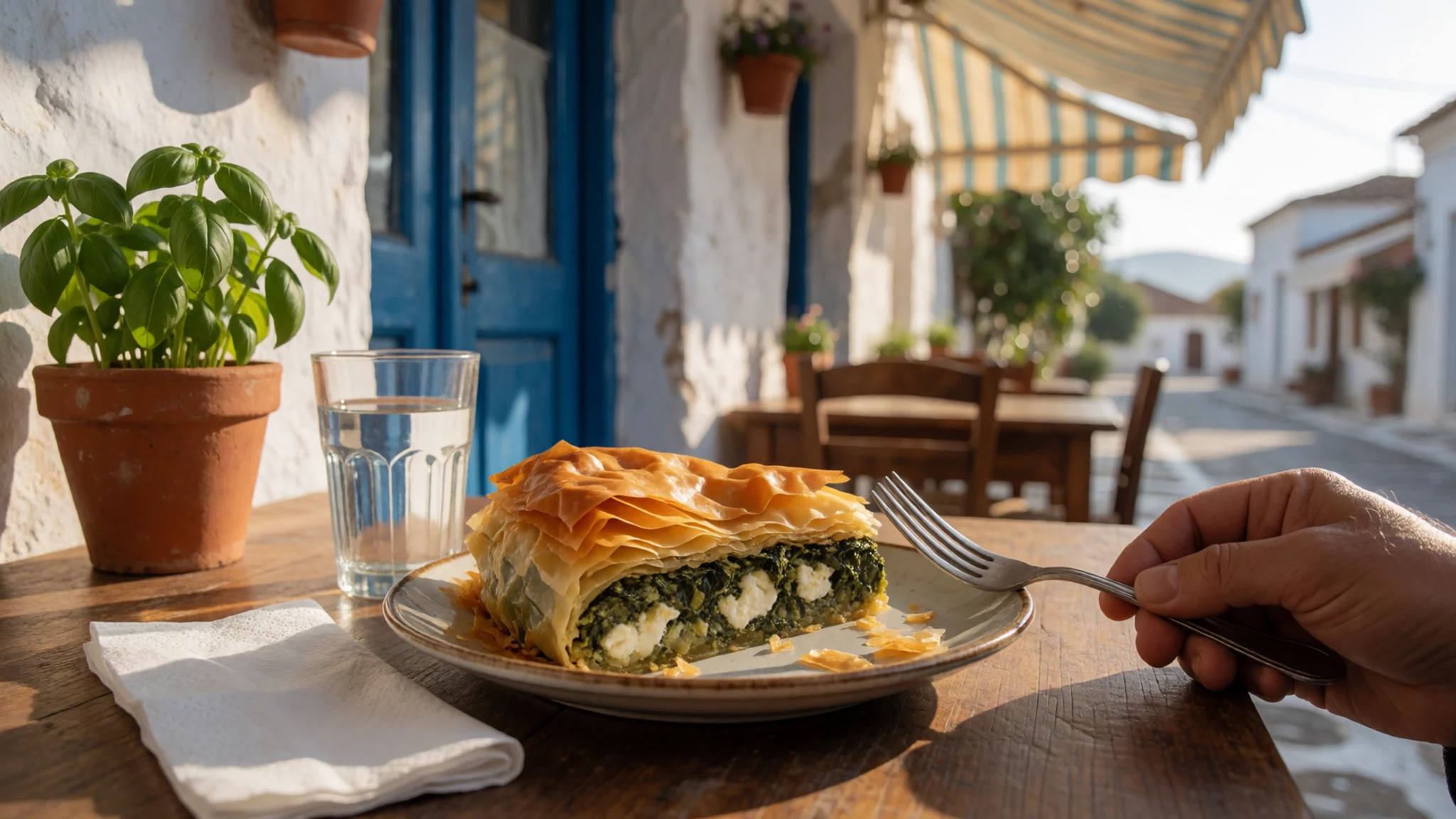
- Moussaka — Family-run tavernas and traditional eateries
Layers of aubergine, spiced minced meat and a thick béchamel, baked until golden. It is filling comfort food, a good evening dish when you want something slow after a day of walking.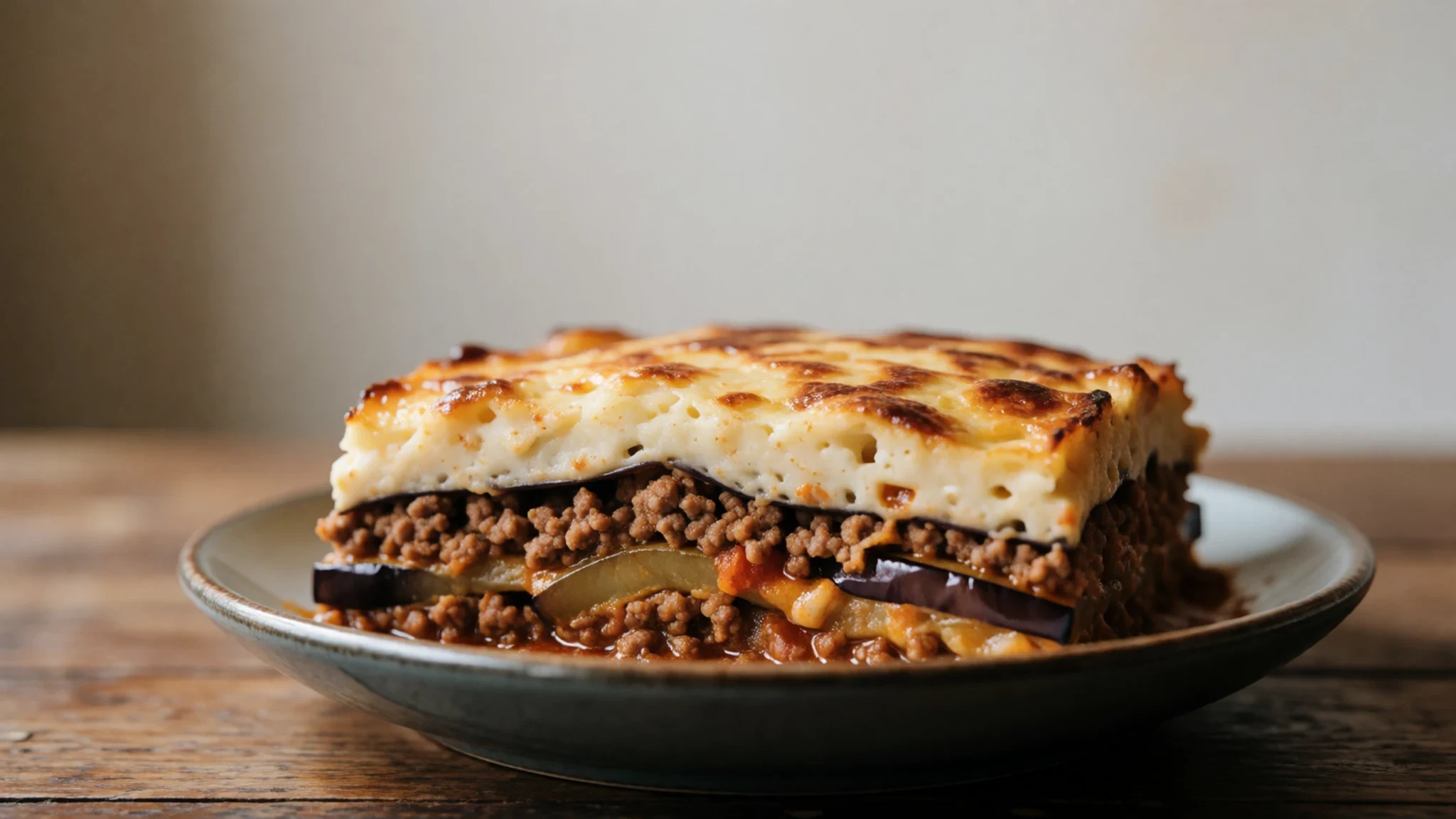
- Fresh fish and seafood — Harbour-side tavernas in Nafplio and coastal villages
Grilled fish, fried small fish and squid from the Argolic Gulf, usually served simply with olive oil and lemon. Ask what came in that day and choose whichever is freshest.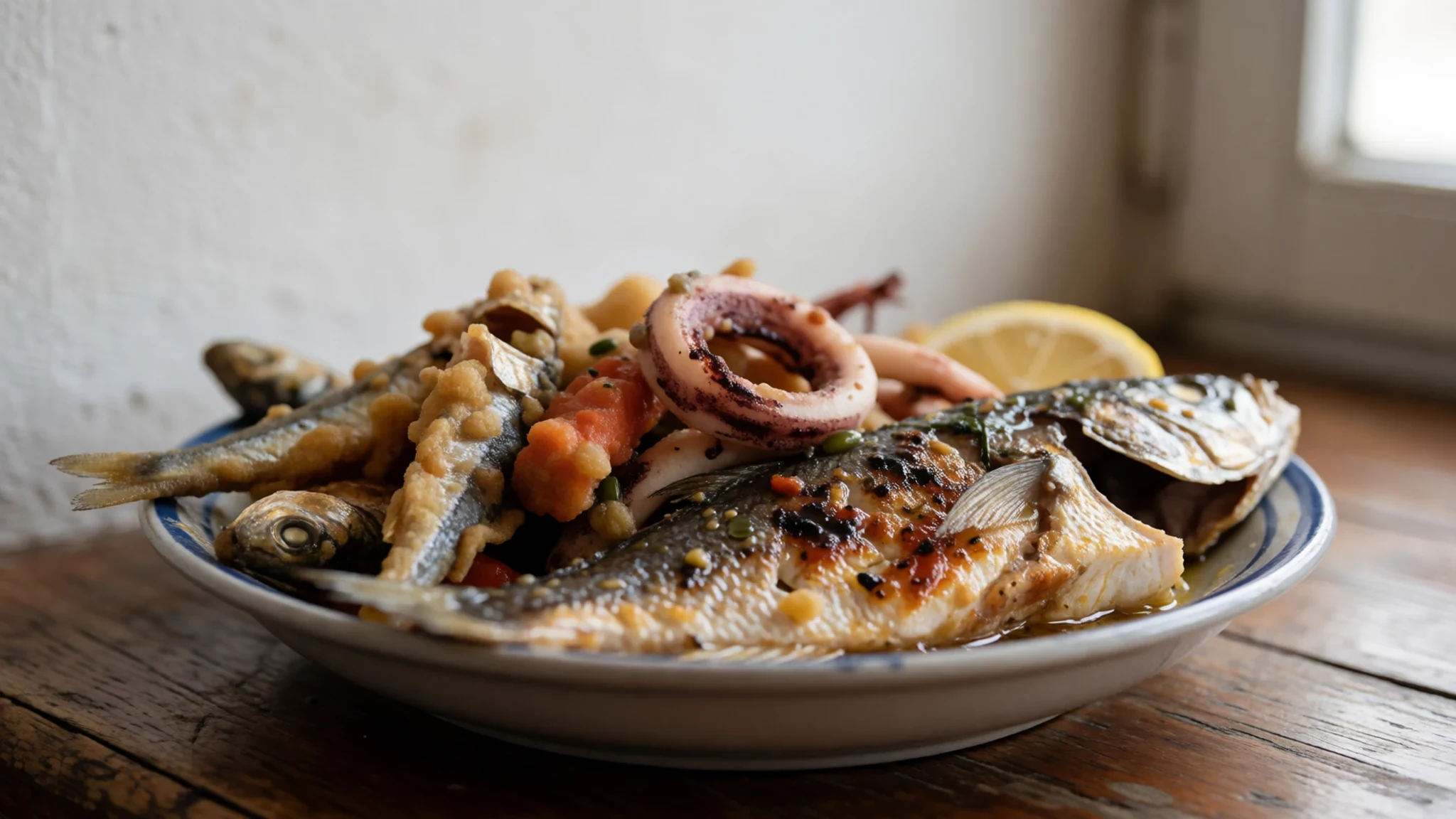
- Local oranges and citrus — Village cafés, roadside stalls and bakeries
The plain around Tiryns is known for orange groves. In season, fresh juice, sweet preserves and citrus peel spoon sweets turn up in cafés and village shops, and they make an easy, refreshing snack.
Plan it
Best time. April–May and October–November, when the days are warm but not punishing and the hillside is walkable. July and August are very hot with almost no shade, so go at opening time if you must; winter is mild but can be wet.
How long. 1
Getting there. Fly to Athens International Airport, then take the X93 express bus to the Athens Central Bus Station at Kifissos and a bus on to Nafplio or Argos, or drive the A7 highway. There is no train service to Argolis. The site is a short taxi or car ride from Nafplio. Check the official site for opening details: http://odysseus.culture.gr/h/3/eh355.jsp?obj_id=2382
Budget. low
Tips
- Arrive early in summer, before the heat builds
- Bring water, a hat and sun cream, as shade is minimal
- Combine Tiryns with Mycenae and Nafplio in a single day by car
- Check opening hours and ticket details on the official site before you travel
- Wear shoes with good grip for stony paths and the steep ramp
Etiquette
- Stay on the marked paths and do not climb on the ancient walls
- Do not remove stones or other objects from the site
- Follow the custodians' instructions, especially around fragile areas
Nearby
Sources
- Wikidata Q217379 (CC0)
- Wikipedia: Tiryns (rev 1371814750) (CC BY-SA 4.0)
- Wikivoyage: Argolis (rev 4659778) (CC BY-SA 4.0)
- Passageway of the galleries within the walls of Tiryns, Alun Salt (CC BY-SA 2.0)
- Tiryns - Cyclopean masonry, Nick Stenning (CC BY-SA 2.0)
- Plan of the citadel of Tiryns, Napoleon Vier (CC BY 3.0)
- The entrance to the citadel of Tiryns, DAI Athens (CC BY-SA 4.0)
- A destroyed part of the ancient wall of Tiryns (CC BY-SA 4.0)
- A distant view of the walls of Tiryns (CC BY-SA 4.0)
- A higher view of the interior, Dimitrios Nikolopoulos (CC BY-SA 4.0)
- A lower view of the interior, Dimitrios Nikolopoulos (CC BY-SA 4.0)


