Corfu
Corfu, Greece
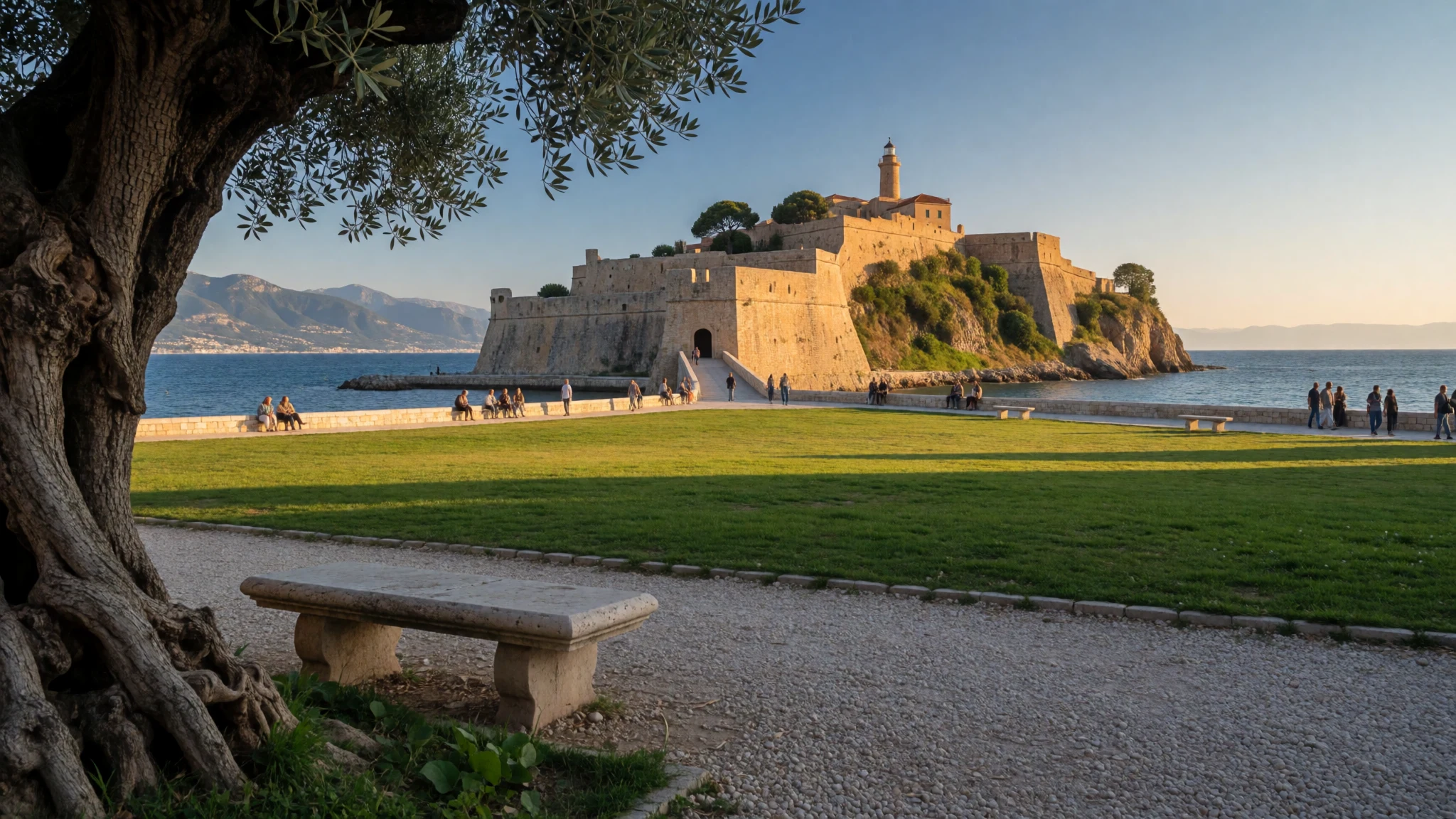
Corfu pairs a Venetian old town and fortress with Ionian coves, cliff walks and a kitchen that still tastes of Italy.
The place
Corfu, known in Greek as Kerkyra (Κέρκυρα), is an island in the Ionian Sea off western Greece. It stands furthest north among the main Ionian Islands. Only the Diapontian Islands, its small neighbours, lie farther out, and they are the westernmost land in Greece. Hydrographers draw the boundary between the Adriatic Sea, to the north, and the Ionian Sea, to the south, through this group. The regional unit of Corfu continues southward to the smaller island of Paxoi. Its capital is a city of the same name, on the eastern shore, looking across a short strait to the mainland. The population is 100,854. The land itself is long and gently curved. Northern slopes are the rougher walking country; the south holds Korission, an inland lake kept from the open sea by a strip of sand. Coves, longer bays and pale cliff capes alternate around the coast, so the island reads as both a town and a shoreline. Corfu's past is tangled with the wider Greek story from myth onward. Ancient Korkyra kept a serious navy. Thucydides placed its fleet beside those of Athens and Corinth, the three navies he counted as Greece's strongest in the fifth century BCE. He also described the Battle of Sybota, fought in these waters, as the greatest clash of city-state fleets up to then, and as a spark of the Peloponnesian War. Temple ruins and other remains of that city stand at Palaiopolis. Medieval castles, scattered over the island, recall later fights with pirates and Ottoman forces. Rule after that passed through Venice, France, the Septinsular Republic and the United States of the Ionian Islands before the island joined modern Greece.
Its story
Corfu enters the written record, as far as it survives, in the Late Bronze Age. Around 1300 BC a scribe using Linear B wrote ko-ro-ku-ra-i-jo, a Mycenaean Greek label for someone from Kerkyra. That label is the earliest name tied to the island, long before the classical city of Korkyra quarrelled with Corinth and Athens. Later writers tried to set the island inside Homer. Strabo treated Corcyra as Scheria, home of the Phaeacians in the Odyssey, and a number of scholars since have taken the same view. The poem itself gives no chart, and no object from the ground has closed the case. The theory remains a live story rather than a settled fact: a seafaring people on a green island at the edge of the Greek world. A different myth gives Corfu another name. In the Argonautica, Apollonius of Rhodes brings the Argonauts ashore here, and Jason and Medea are married in a place known as Medea's Cave. He calls the island Drepane, Greek for sickle. In one telling, the sickle is the one Cronus turned on his father Uranus, and the Phaeacians descend from the blood that spilled; in another, the buried blade belongs to Demeter. Apollonius may have been fitting a legend to a coastline. The island is long and hooked, and the name Drepane most likely started from that shape. Under the fortress and the tiled town, those older pictures remain: a Bronze Age word, an Odyssean island that cannot be proved, and a wedding cave.
What to see
- Old Fortress and Old Town — Corfu Town
The Old Fortress occupies a rocky headland on the eastern edge of Corfu Town, and the old town's tiled roofs sit tight against its walls. Venetian lanes and arcades run inland, altered again under French rule and the Ionian government. Walking the citadel, the seafront and the museum quarter takes a morning on foot. In summer the alleys fill by afternoon, so the ramparts are calmer early.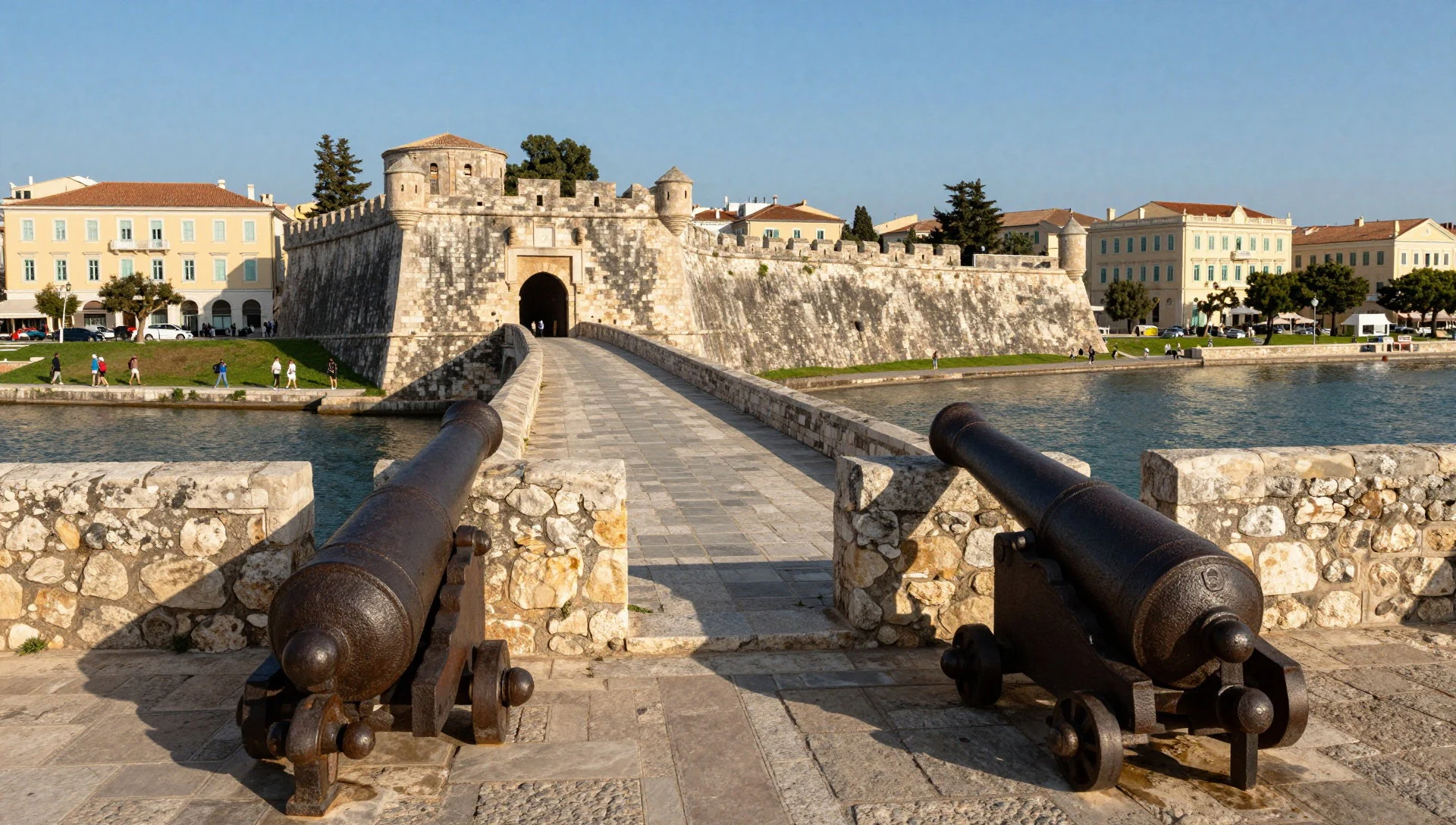
- Pontikonisi — Kanoni, south of Corfu Town
Pontikonisi, or Mouse Island, is a small cypress islet in a bay south of Corfu Town, seen from the Kanoni bluff. A white chapel stands in the trees, and a causeway links a neighbouring convent island to the shore. People stop for that compact view: chapel, dark foliage, pale water. Boats cross in calm weather. It is near enough to the old town to pair with the fortress.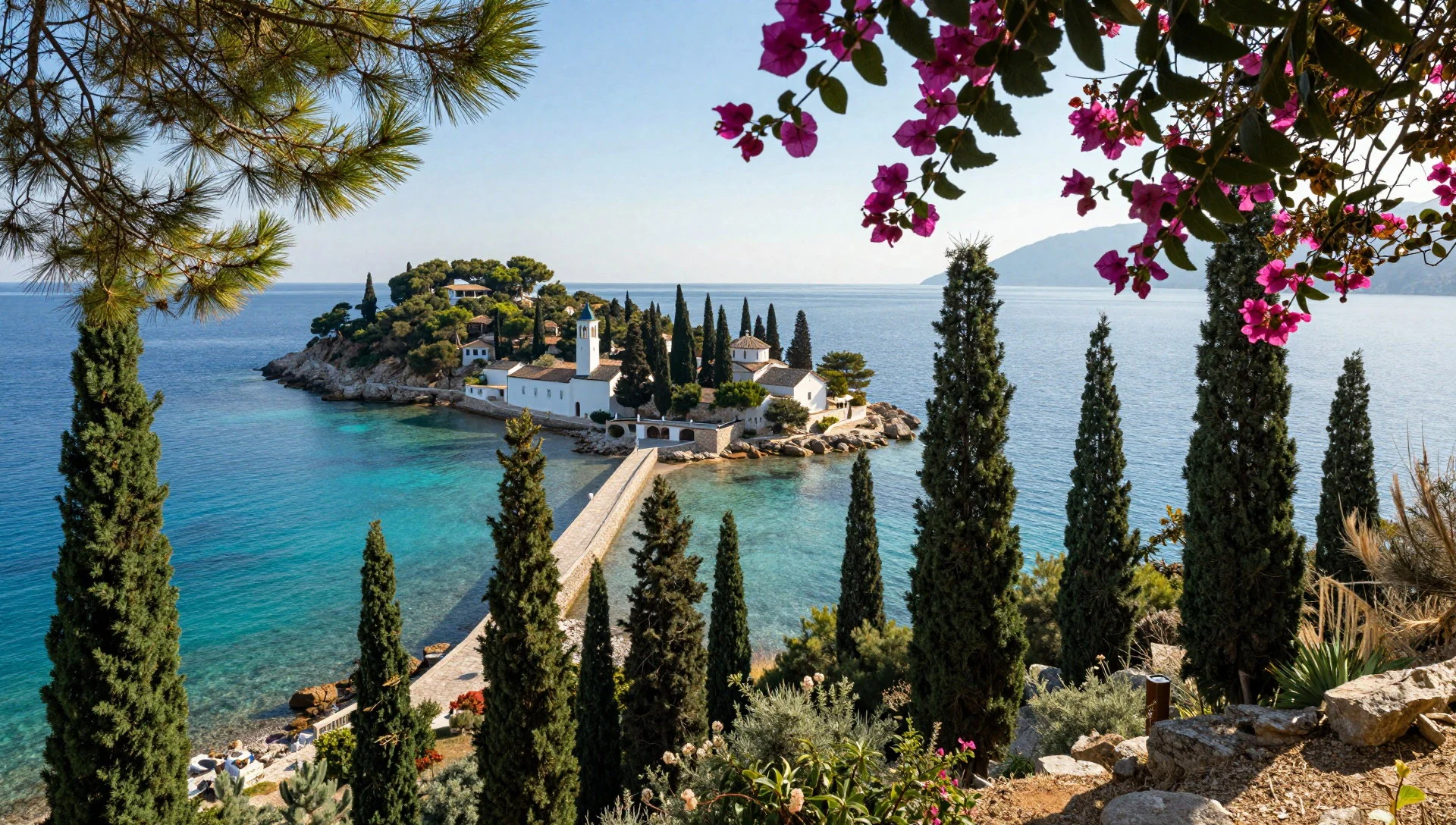
- Cape Drastis — Northwest Corfu
Cape Drastis is the pale cliff coast at Corfu's northwest corner, where layered rock falls into clear water and small stacks stand offshore. Viewpoints look along the white face toward the open sea and, in clear weather, the Diapontian Islands. It works as a lookout rather than a beach: paths are rough, the pale rock throws back the midday sun, and places to swim are few and exposed.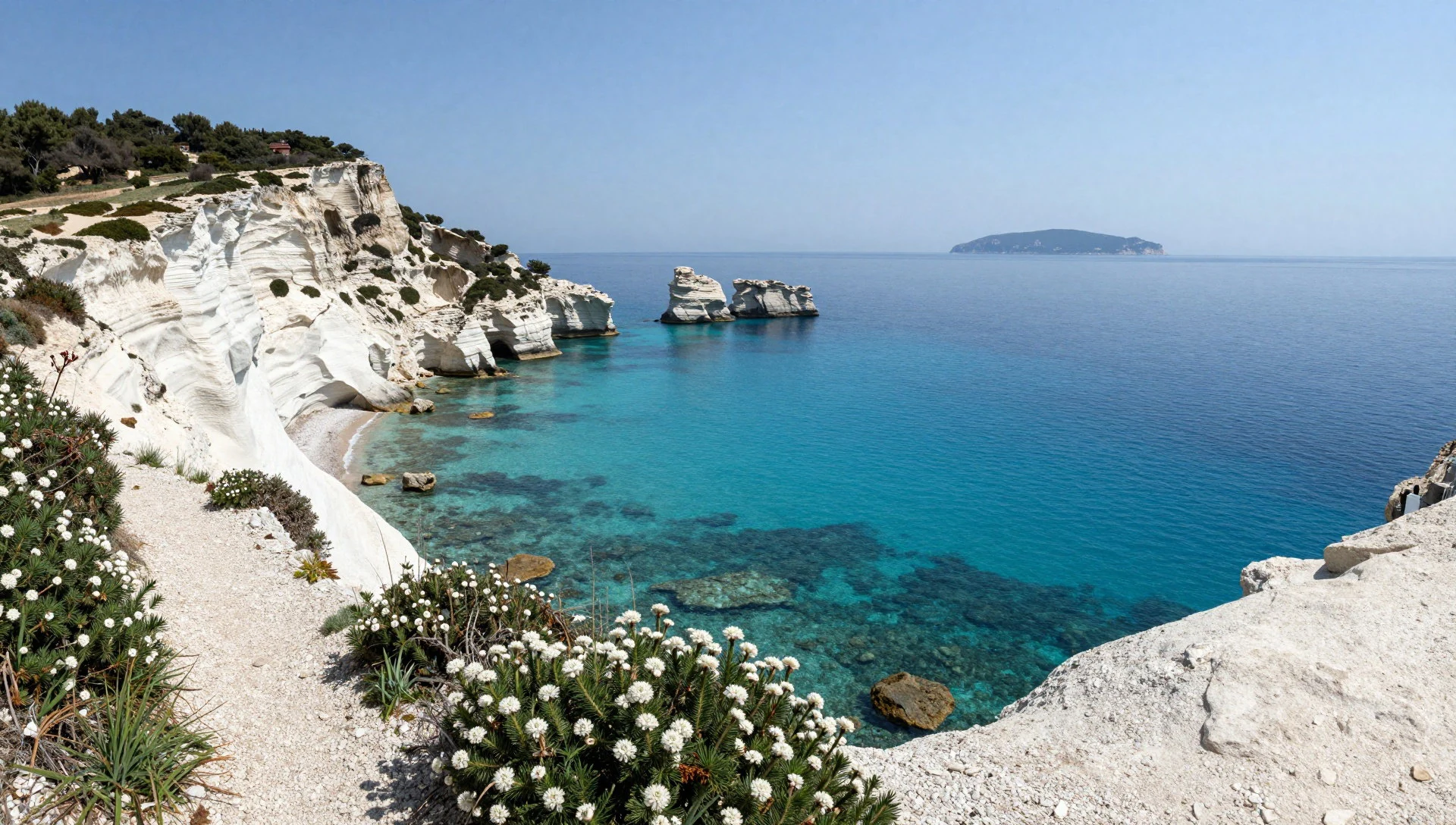
- Aghios Georgios — Sandy bay, Corfu
Aghios Georgios is a long sandy bay on Corfu, quite unlike the rocky capes or the fortified town. The beach shelves gently and suits an unhurried swim; in summer, umbrellas and families take much of the sand. A loose line of tavernas and rooms sits behind the beach. Wind is common on the open shore, and the bay is calmer early, before the rental rows fill.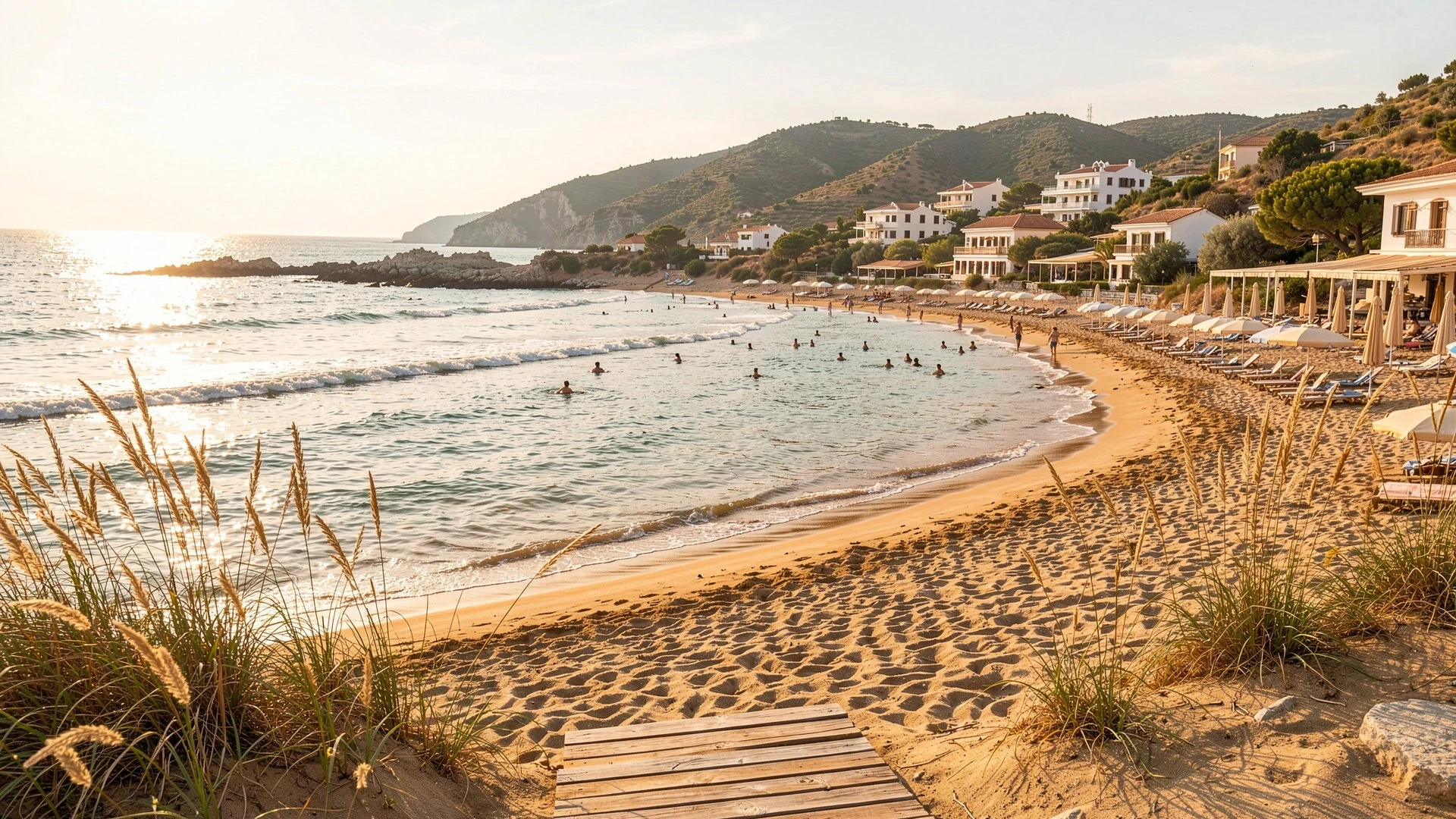
- Archaeological Museum — Corfu Town
The Archaeological Museum in Corfu Town shows finds from ancient Palaiopolis. The large Gorgon pediment from the temple of Artemis, uncovered there in the early twentieth century, dominates the collection. A further pediment depicts Dionysus and companions in the patterned carving of local archaic workshops. These rooms are a practical stop on a hot afternoon. Opening days should be checked on the official website.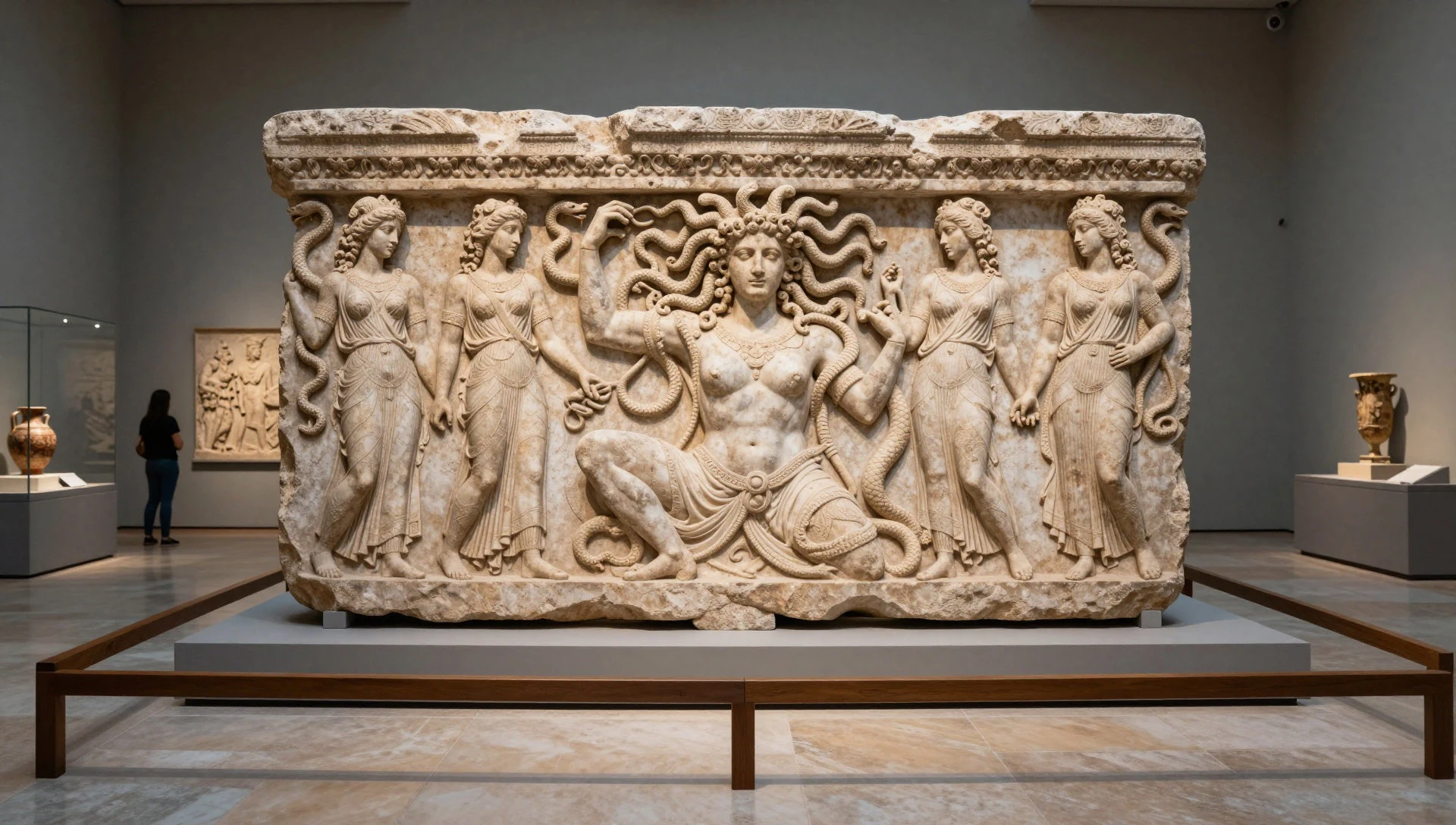
Culture
Corfu's public culture has long faced both the Greek mainland and Italy. Under Venetian rule the island built a habit of opera and spoken theatre that outlasted the republic itself. The Nobile Teatro di San Giacomo di Corfù, in the town, is credited as modern Greece's earliest house for plays and opera, and it was where Spyridon Xyndas's The Parliamentary Candidate, a work with an entirely Greek libretto, reached the stage. People treated applause in Corfu as a serious compliment for an opera. Bands, choirs and parish celebrations still carry that musical thread through the town, especially on feast days. The museums sit in Corfu Town. The Archaeological Museum, opened in 1967, was raised to house the Gorgon pediment from the temple of Artemis at ancient Palaiopolis, uncovered in the early twentieth century. Galleries beside it keep later centuries too: Venetian pictures, Ionian portraits and libraries that mix Italian and Greek shelves. Between a band on a square and a pediment in a cool room, the island's culture is urban and accumulative, not a single costume or a single rite. In Corfu, cover shoulders and knees before entering a church, and wait at the edge rather than walking through a liturgy or a street procession.
What to wear
Corfu's older dress belongs to the Ionian, Venetian-influenced world rather than to the shepherd costume of the mainland mountains. In portraits and feast-day wear, women wore long skirts, embroidered jackets and lace or linen caps, and men wore breeches, waistcoats and caps, in wool or linen by season. Silk, lace and fine cotton came through the port, and embroidery on cuffs and hems marked a town family as surely as cut did. Those clothes now come out mainly for weddings and the folk groups that play on feast days, not for the street. Daily dress on Corfu is ordinary warm-weather clothing. In Corfu Town people wear light cotton and linen, sandals on the stone streets, and a smarter shirt or dress after work. Beach villages dress for sand and salt: swimwear, a shirt over the top, and shoes that survive hot paving and pebbles. Visitors should copy that split. Swimwear belongs on the beach, not in the old town or a church. Shoulders and knees need a cover before anyone goes inside a church. The Corfu Trail and the cliff paths need trainers or light boots rather than flip-flops. A hat and a layer for the evening breeze on the seafront are enough for most of a summer stay.
What to eat
- Pastitsada — Tavernas in Corfu Town and inland villages
Pastitsada is Corfu's slow braise of beef or cockerel in tomato sauce with cinnamon, clove and bay, served beside thick pasta. That spice mix is the Venetian note in the island pot. Tavernas in Corfu Town and inland villages cook it in the morning and serve it through the day.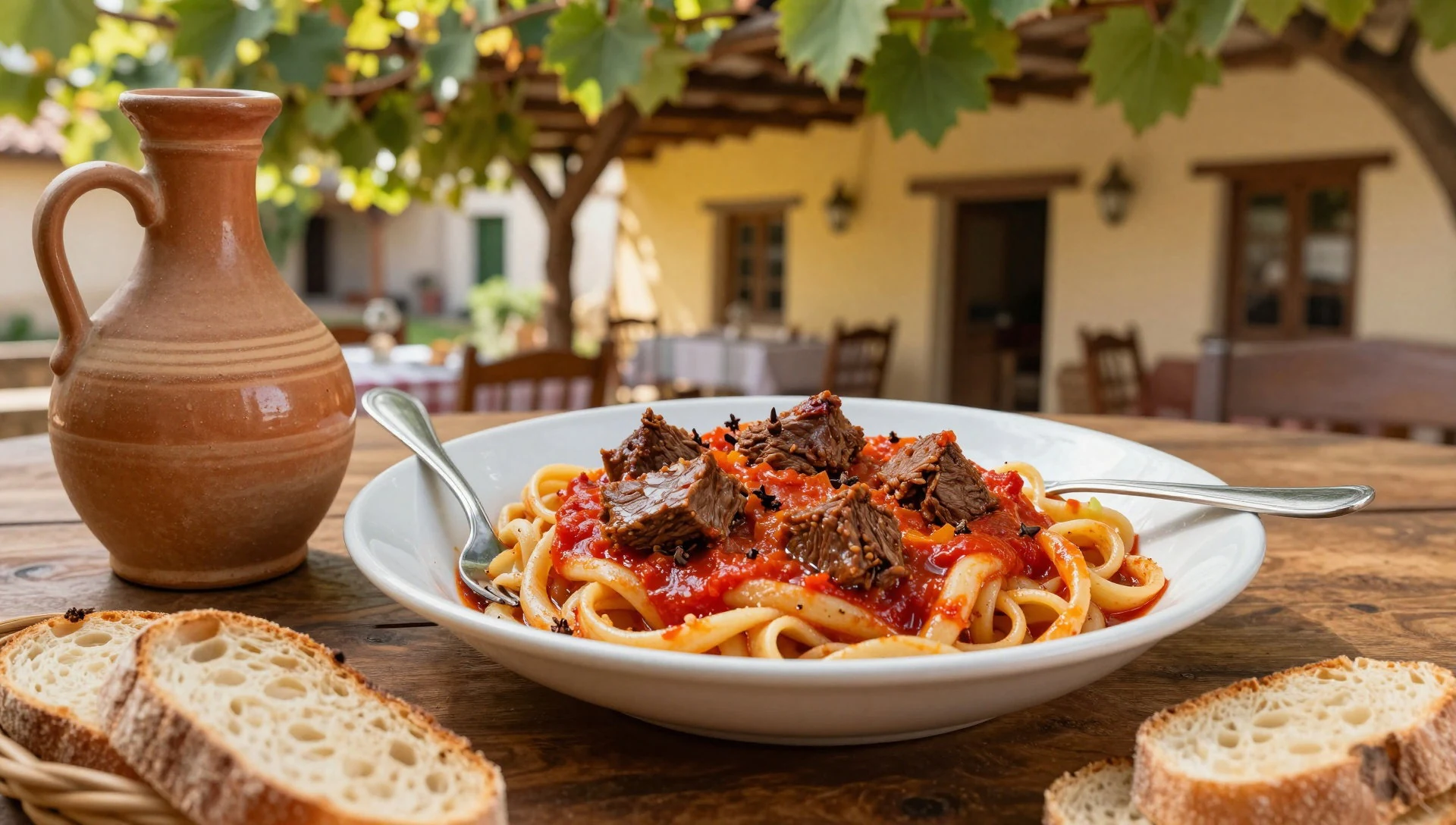
- Sofrito — Tavernas around the old harbour, Corfu Town
Sofrito, a Corfu dish uncommon on the mainland, is veal sliced thin and simmered with garlic, white wine, parsley and vinegar until pale and soft. Tavernas around the old harbour in Corfu Town are the place to ask for it.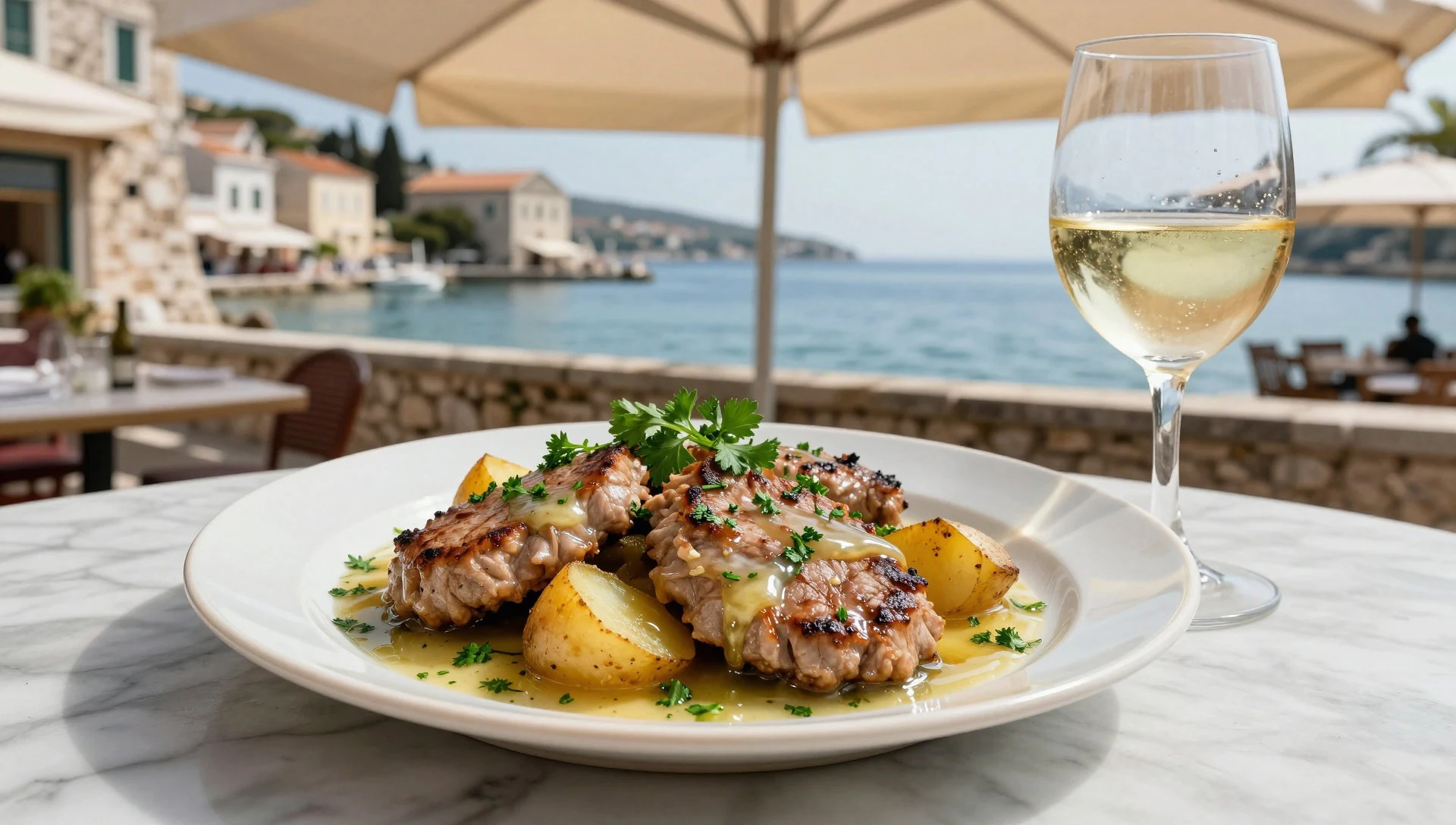
- Bourdeto — Coastal tavernas in northern Corfu
Bourdeto is a Corfiot fish stew: firm fish cooked in olive oil, tomato, garlic and a bold amount of hot red pepper. Little else is added, and bread is there for the sauce. Coastal tavernas in northern Corfu serve it more often than mild plates made for day boats. - Grilled fish — Town waterfront and tavernas beside the larger bays
Grilled bream, mullet or octopus, dressed with olive oil, lemon and oregano, is the plain face of Corfu's seafood cooking. Citrus and herbs stand in for heavy sauces. Fish tavernas on the town waterfront and beside the larger bays cook the morning's landing, and the board changes with the weather. - Kumquat — The market in Corfu Town and village shops
Kumquat is Corfu's citrus: a small, sharp fruit eaten as a spoon sweet or sipped as a clear liqueur after the meal. Cooks candy the rind rather than serving it like an orange. Jars and bottles fill the market in Corfu Town and shops in the villages.
Plan it
Best time. On Corfu, May, June, September and October are the easier months: ferries and tavernas are open, and the summer crush at the airport is either still ahead or already easing. July and August draw the most flights, and those are the departure queues to plan around.
How long. 3–4
Getting there. Fly into Corfu International Airport (CFU); summer schedules bring aircraft from across Europe, and the departures hall is slow at that time of year. Ferries link the island with Igoumenitsa and Patras on the Greek mainland, with Venice, Ancona, Bari and Brindisi in Italy, and with Saranda and Himara in Albania. Both the airport and the town ferry quay are a short local ride from the old town. Check the operator for current sailings.
Budget. mid
Tips
- Allow extra time for departure queues at Corfu Airport in July and August.
- Walk Corfu Town and the Old Fortress in the morning, before the alleys fill.
- The signed Corfu Trail runs about 222 kilometres along the island and passes Old Perithia under Mount Pantokrator; walk it in sections.
- On cliff paths at Cape Drastis and the southern capes, wear shoes that grip and do not expect an easy swim.
- For opening days and local notices, check the official site at http://www.kerkyra.gr/ rather than a reused timetable.
Etiquette
- Cover shoulders and knees before going into a church, and do not cross a service.
- Step aside for bands and street processions instead of stopping them for a photo.
- Ask before photographing people close up, above all during worship or a family meal.
Nearby
Sources
- Wikidata Q121378 (CC0)
- Wikipedia (rev 1382420162) (CC BY-SA 4.0)
- Wikivoyage (rev 5389343) (CC BY-SA 4.0)
- Photo: The Old Fortress and the Old Town of Corfu (CC BY-SA 4.0)
- Photo: Pontikonisi (Public domain)
- Photo: Cape Drastis (CC BY-SA 4.0)
- Photo: Aghios Georgios Bay (CC BY 3.0)
- Photo: Cape Asprokavos (CC BY-SA 4.0)
- Photo: Othonoi (CC BY 3.0)
- Photo: Lazaretto island (CC BY 3.0)
- Photo: Dionysus pediment, Museum of Corfu (CC BY-SA 1.0)


