Aegina
Aegina, Greece
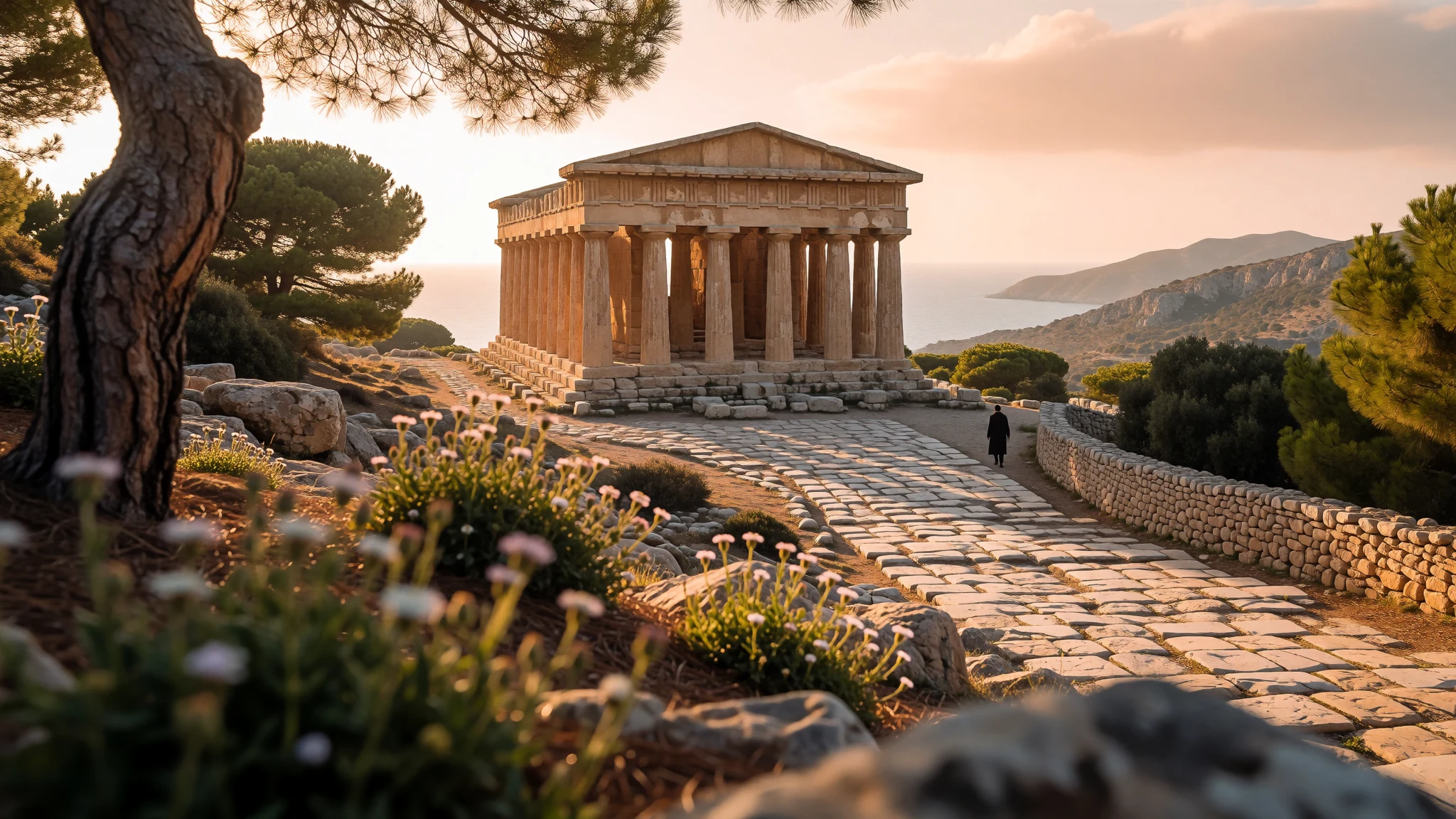
Aegina is an easy ferry hop from Athens to an island of Greek temples, pistachio groves and harbour-side seafood.
The place
Aegina sits in the Saronic Gulf, about 27 km from Athens, which explains both its charm and its crowds. Many Athenians keep holiday homes here, and the boats from the mainland fill up on summer weekends. The island is roughly triangular and splits into two very different halves. An extinct volcano makes up most of it, and the southern part is rugged and largely barren, rising to the cone of Mount Oros at 531 metres. The north and west are gentler, with stony but fertile plains that grow olives, almonds, vines and figs. The crop that now defines the island is the pistachio, and the orchards are a familiar part of the view inland. Aegina town is the main harbour and the place most visitors arrive. Ferries use the west pier, cruise ships the east pier, and small boats shelter in the inner harbour, with a long line of cafes along the front. Other clusters of life are Agia Marina, Perdika at the south-west tip, and a string of seaside villages running north through Souvala to Vagia. The population is about 13,000, so outside July and August the island feels like a working Greek place rather than a resort. Beaches are popular, but the sea breeze hides how strong the sun is, and summer afternoons are hot. For a first look, the island works as a long day trip, though a night or two lets the harbour settle once the day-trippers have left.
Its story
Aegina's position between Attica and the Peloponnese made it a trading place long before the classical age. Herodotus described it as a colony of Epidaurus, and he recorded that its first settlers were said to have come from Asia Minor. The best-documented early settlement is Kolonna, a fortified, stone-built site from the Early Bronze Age. Finds there show contact mainly with the Greek mainland, with echoes of the Cyclades and Crete. Austrian archaeologists also uncovered a rich cache of gold and silver jewellery from that period. Later Bronze Age layers add more detail. Minoan pottery turns up, a purple dye workshop was found at Cape Kolonna, and the famous Aegina Treasure, now in the British Museum, belongs to the Middle Bronze Age. Gold jewelry from the final stage of Mycenaean art indicates that this cultural influence stayed on the island for a few generations following the Dorian takeover of Argos and Lacedaemon, while a surviving Mycenaean settlement was also uncovered on Mount Ellanio. The island was probably not Dorian in character until some way into the Iron Age. By classical times Aegina was a powerful city-state and, for a while, a rival of Athens. The ancient story of the nymph Aegina and the birth of her son Aeacus, from whom the island took its name, belongs to the same layered past. Much of what visitors see today sits on top of that history.
What to see
- Temple of Aphaea — East Aegina
Aegina's temple of Aphaea stands on a pine-covered ridge on the eastern side of the island, and it is the main reason most people cross the water. Aphaea was a local goddess who was worshipped here before eventually merging with Athena and Artemis. Visit early or late for softer light and fewer coach groups.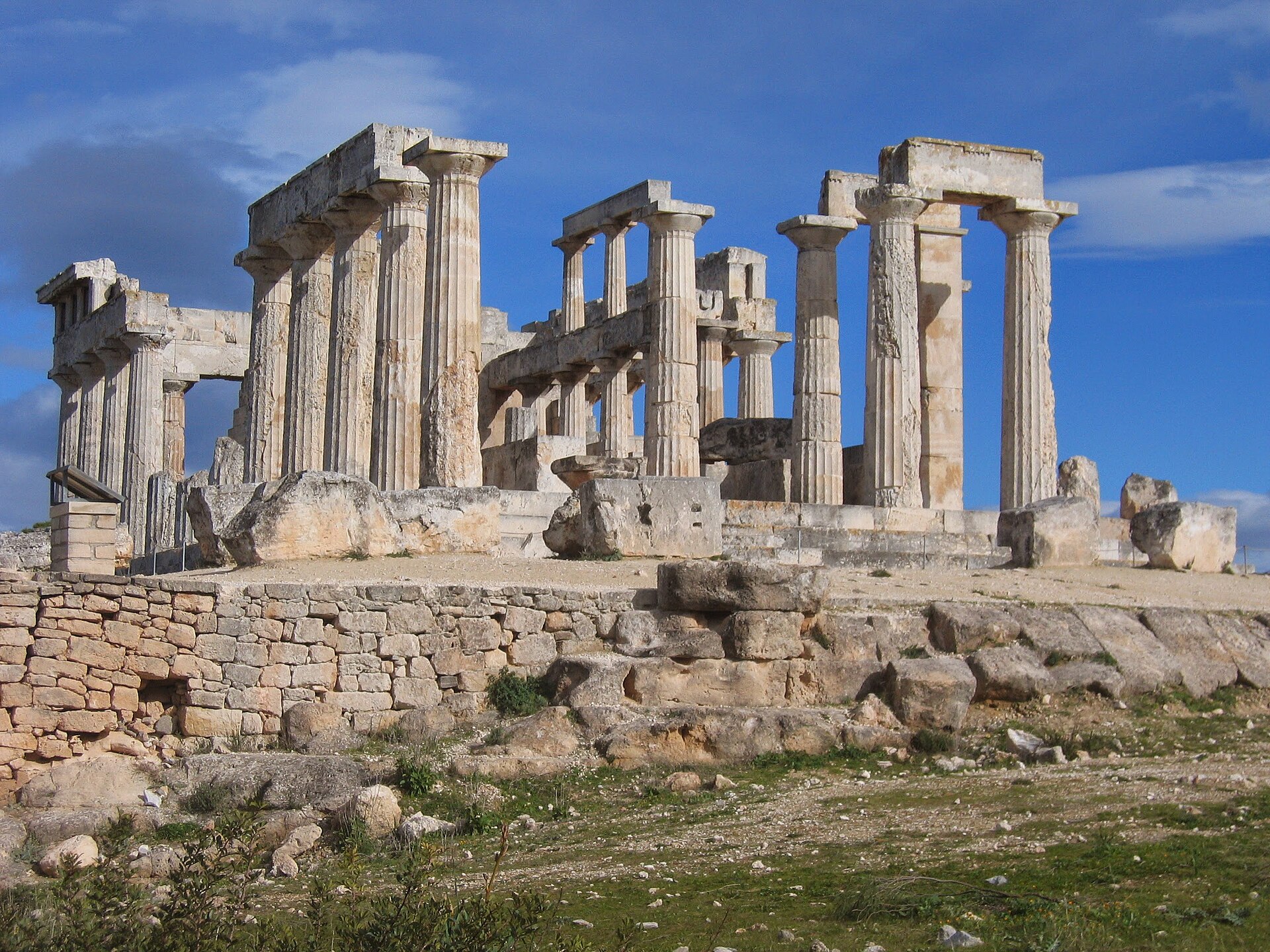
- Temple of Apollo and Kolonna — Kolonna, near Aegina town
Aegina's Kolonna headland, just outside the main town, holds the ruins of a citadel and a small museum. Most people come for the view over the water. One surviving column gives the headland its name and once served as a daymark for ships approaching the harbour. It is an easy walk from town.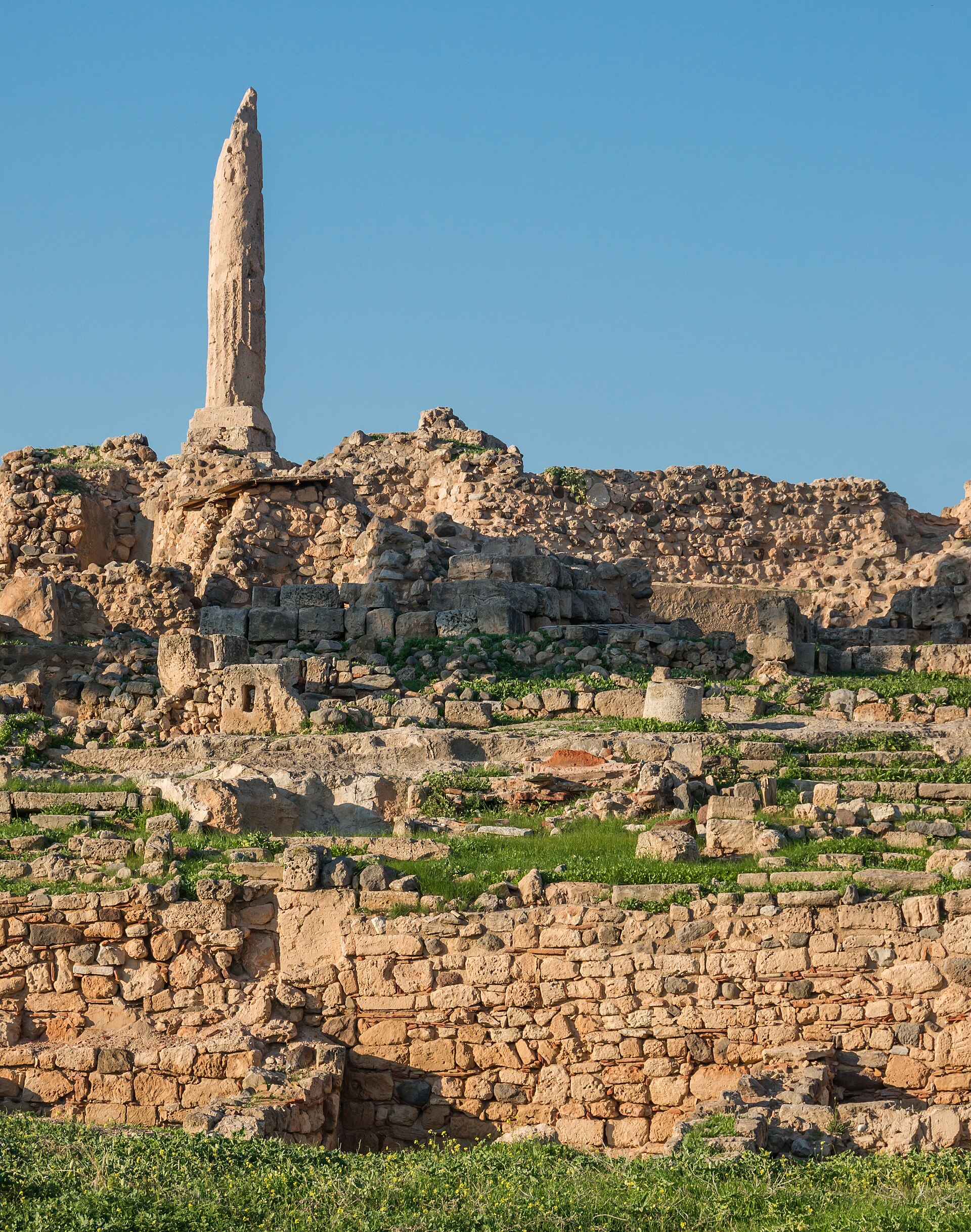
- Christos Kapralos Museum — Near Aegina town
Aegina's Kapralos Museum honours a Greek sculptor who often spent his summers working on the island. You will know you have arrived by the statue of his mother outside. His best-known work is the Pindus Frieze, which is monumental in scale. It is a quiet, short stop that suits a hot afternoon. - Archaeological Museum of Aegina — Aegina town
Aegina's archaeological museum houses finds from the island, including the remains of a late-antique synagogue floor in mosaic. It is a useful companion to the open-air sites, putting the Bronze Age and classical material in context. Check the official island site for current opening arrangements before you go.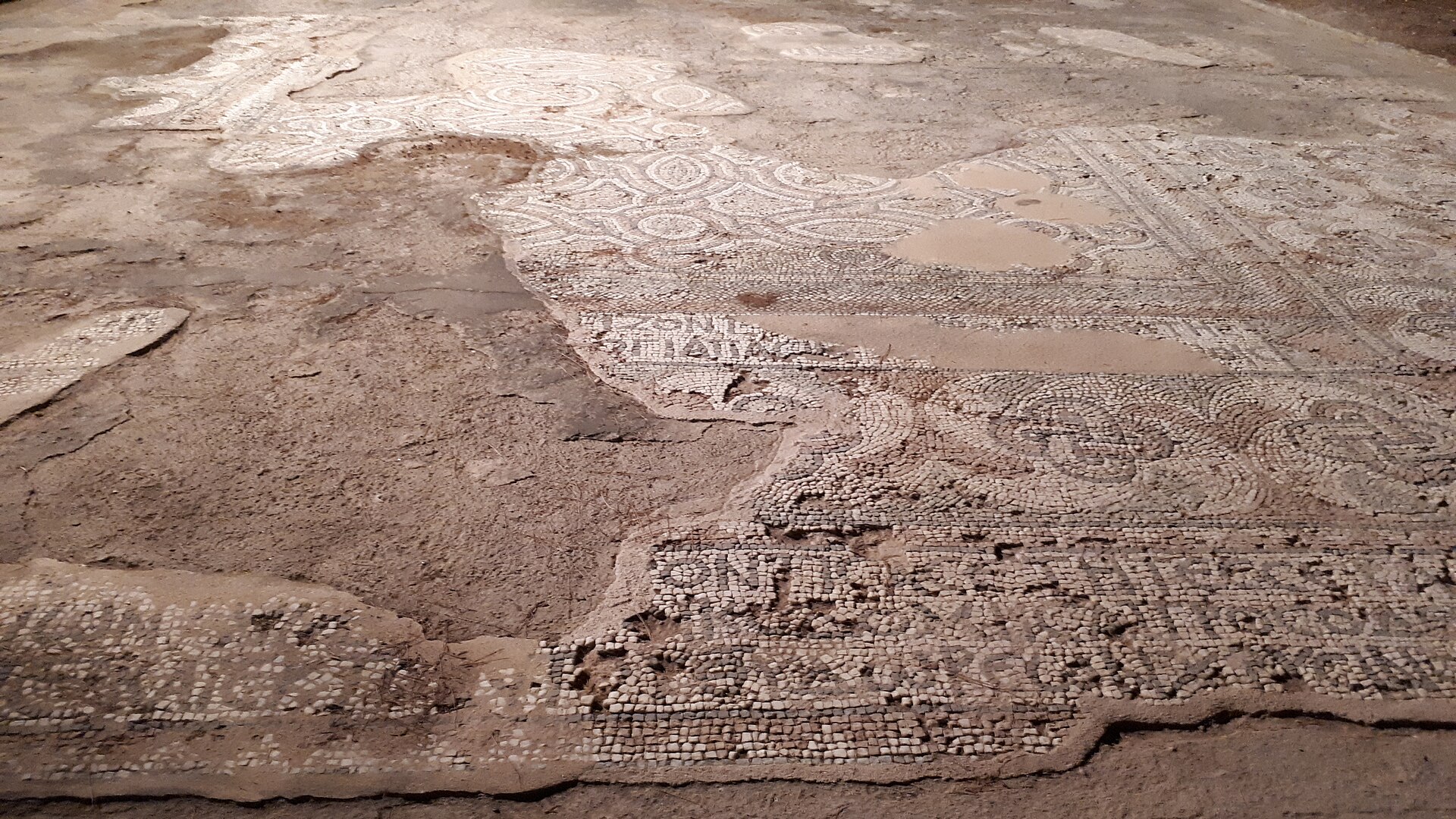
- Omorfi Ekklisia — Inland Aegina
Aegina's Omorfi Ekklisia, the Beautiful Church, is a small Byzantine church whose name says it all. Its modest scale makes a good contrast with the grand temples elsewhere on the island. It is best seen in a slow wander through the countryside, with a stop for a cold drink afterwards.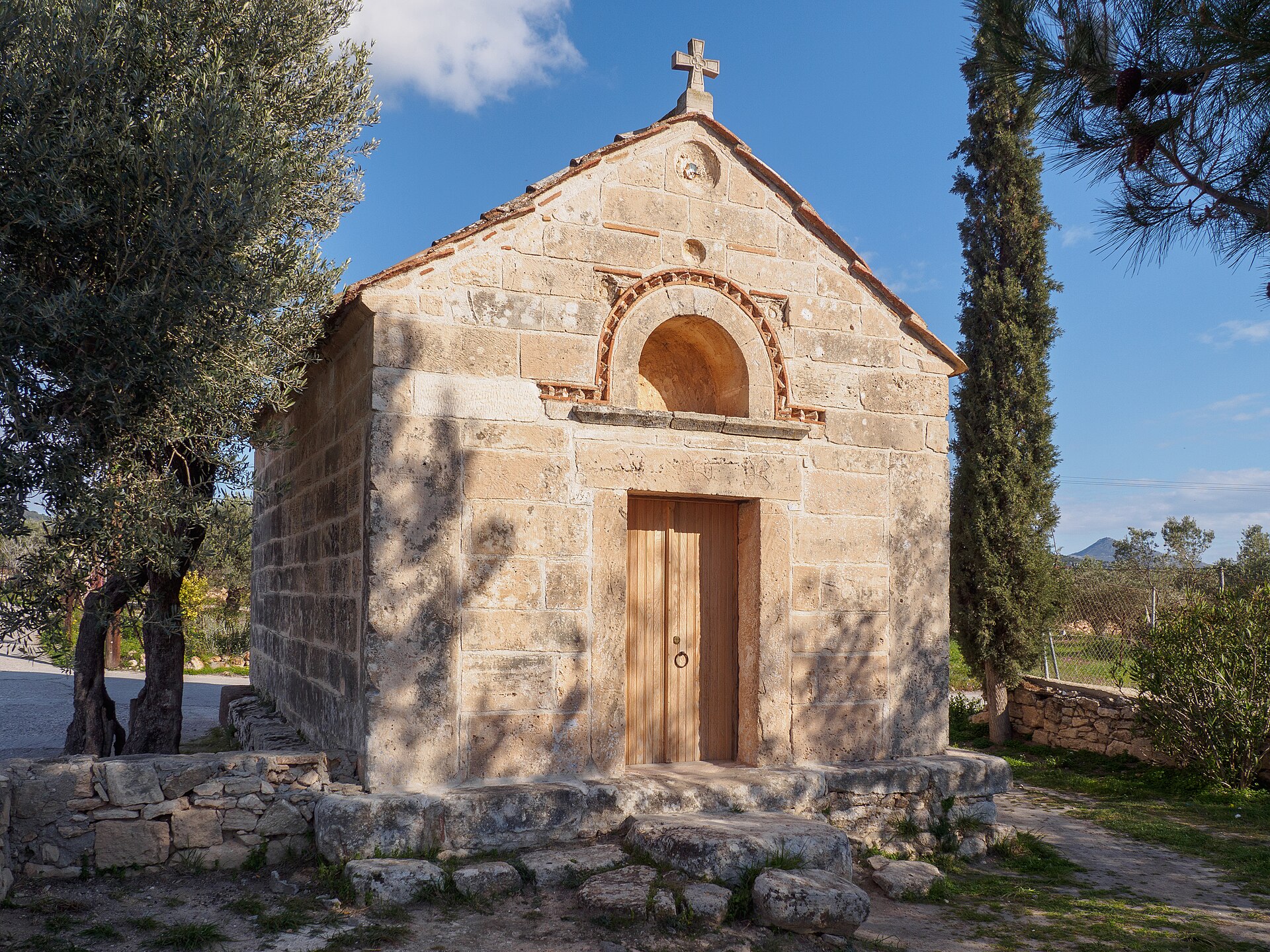
Culture
Aegina has a mythology that is unusually tied to its own name. According to the old story, Aegina was the offspring of the river deity Asopus and a nymph named Metope. Zeus carried her off to an island near Attica and she bore him a son, Aeacus, who became king, and the island took her name. A second legend says that Zeus found the island empty and turned ants into warriors, the Myrmidons, who were said to gather and train here. These stories are told with a smile today, but they show how deeply the island's identity is tied to antiquity. The living side of Aegina is Orthodox Christian. The island is a pilgrimage site for St Nektarios, and churches and chapels dot the countryside as well as the town, with processions and feast days marked through the year. Alongside that is the weekend rhythm of Athenians who keep second homes here, which gives the harbour a lively evening feel, with long dinners and promenades beside the water. Pistachio growing and fishing, including sponge fisheries, give the island a working side that visitors can see in the orchards and boats. Greek hospitality is relaxed, and a slow pace at meals is normal. Cover your shoulders and knees when entering churches and monasteries, speak quietly inside, and ask before photographing worshippers or icons.
What to wear
Aegina's traditional dress follows the general pattern of Greek island costume. Women's outfits used embroidered cotton and linen, with woollen waistcoats or jackets in cooler weather, and men wore dark breeches or trousers with a sash. Today you are most likely to see these costumes at festivals, church feast days and folk-dance performances rather than in daily life. Details vary from village to village, so a local dance group or museum is the best guide. What people actually wear now is simple and summery. Day-trippers from Athens dress in light cotton, linen shirts, shorts, sandals and sunhats, and evenings along the harbour are smart-casual rather than formal. Fishermen and farmers still favour practical work clothes, and some older residents wear dark, modest clothes to church. For a visitor, the climate and the sites set the rules. Summers are hot and dry, so choose breathable fabrics, a wide-brimmed hat, sunglasses and sunscreen, because the sea breeze hides how fierce the sun is. Wear sturdy sandals or trainers for the temple ridge and for rocky coves, where loose stones and uneven paths are common. Pack a light scarf or shirt that covers shoulders and a skirt or trousers below the knee for churches and monasteries. Swimwear is for the beach and boat only, so put something on over it in town. In spring and autumn, add a light jacket for windy ferry decks and cooler evenings.
What to eat
- Aegina pistachios — Shops and stalls along the Aegina town waterfront
Pistachios are the island's signature crop, eaten roasted and salted as a snack and used in sweets and ice cream. Look for them in the shops and stalls along the harbour front in Aegina town, where bags are sold for the ferry home. - Grilled fish and seafood — The row of waterfront tavernas at Perdika
Fresh fish grilled with olive oil and lemon is the standard order beside the water, often with a plate of greens. Perdika, at the south-west tip, has a whole row of good tavernas, and watching the boats come in is half the pleasure. - Souvlaki and gyros — Casual grill eateries in Agia Marina and Aegina town
For a quick, inexpensive meal, souvlaki and gyros wrapped in warm pitta are cooked fresh and eaten standing or on a bench. They suit a day of temple-hopping when a long lunch would cost too much time. - Greek salad and mezedes — Any harbour-front taverna in Aegina town
Tomatoes, cucumber, olives and feta with local olive oil make a simple summer lunch, often shared alongside small plates such as fried courgette, dips and grilled vegetables. Order several to share and let the table fill slowly. - Coffee and sweets by the harbour — Cafes along the Aegina town harbour
Aegina town's waterfront is lined with cafes where locals sit over a Greek coffee or frappé for an hour or more. Pair it with a pistachio sweet, and use the time to watch ferries come and go.
Plan it
Best time. May–June and September–October are the best months, with warm sea, long days and less heat than midsummer. July and August are hot and dry, and the weekend boats from Athens are crowded. Winter is mild but quieter, and some seasonal places close.
How long. 1–2
Getting there. Fly to Athens, then reach Piraeus port by metro or taxi. Boats run from Piraeus to Aegina town: hydrofoils for foot passengers are the quicker option, and slower conventional vessels carry cars and motorbikes. Follow the signs for Aegina in the port and check the electronic screens for the gate, since it can change. Operators and schedules change, so check the official island site at http://www.aegina.gr and the ferry companies before travelling.
Budget. mid
Tips
- Check ferry operators and timetables close to your date, since services change by season
- Visit the Temple of Aphaea early in the morning or late in the day for heat and crowds
- Carry sunscreen, a hat and water, because the sea breeze hides how strong the sun is
- Carry some cash for small tavernas and stalls, though most places in town take cards
- Book accommodation ahead for summer weekends, when Athenians fill the island
Etiquette
- Cover shoulders and knees in churches and monasteries
- Ask before photographing people, worshippers or icons
- Keep voices low at religious sites and in quiet villages in the afternoon
Nearby
Sources
- Wikidata Q191082 (CC0)
- Wikipedia: Aegina (rev 1381882790) (CC BY-SA 4.0)
- Wikivoyage: Aegina (rev 5389197) (CC BY-SA 4.0)
- Blick vom Hafen auf Ägina — Xocolatl (Public domain)
- Inhabited islands of Argo-saronic, Greece — Panagiotis Botsis (CC BY-SA 2.5)
- A panorama of the Greek island of Aegina — Nikthestoned (CC BY 3.0)
- Temple of Aphaea on the island of Aegina — Blouet & Ravoisié (Public domain)
- Temple of Aphaia on the island of Aegina near Athens, Greece — Runner1928 (CC BY-SA 4.0)
- Temple of Apollo in Ægina, Greece — Jebulon (CC0 1.0)
- The remains of the synagogue at the Archaeological Museum of Aegina — EliMes (CC BY-SA 4.0)
- The Byzantine church Omorfi Ekklisia in Aegina — C messier (CC BY-SA 4.0)


