Crete
Crete, Greece
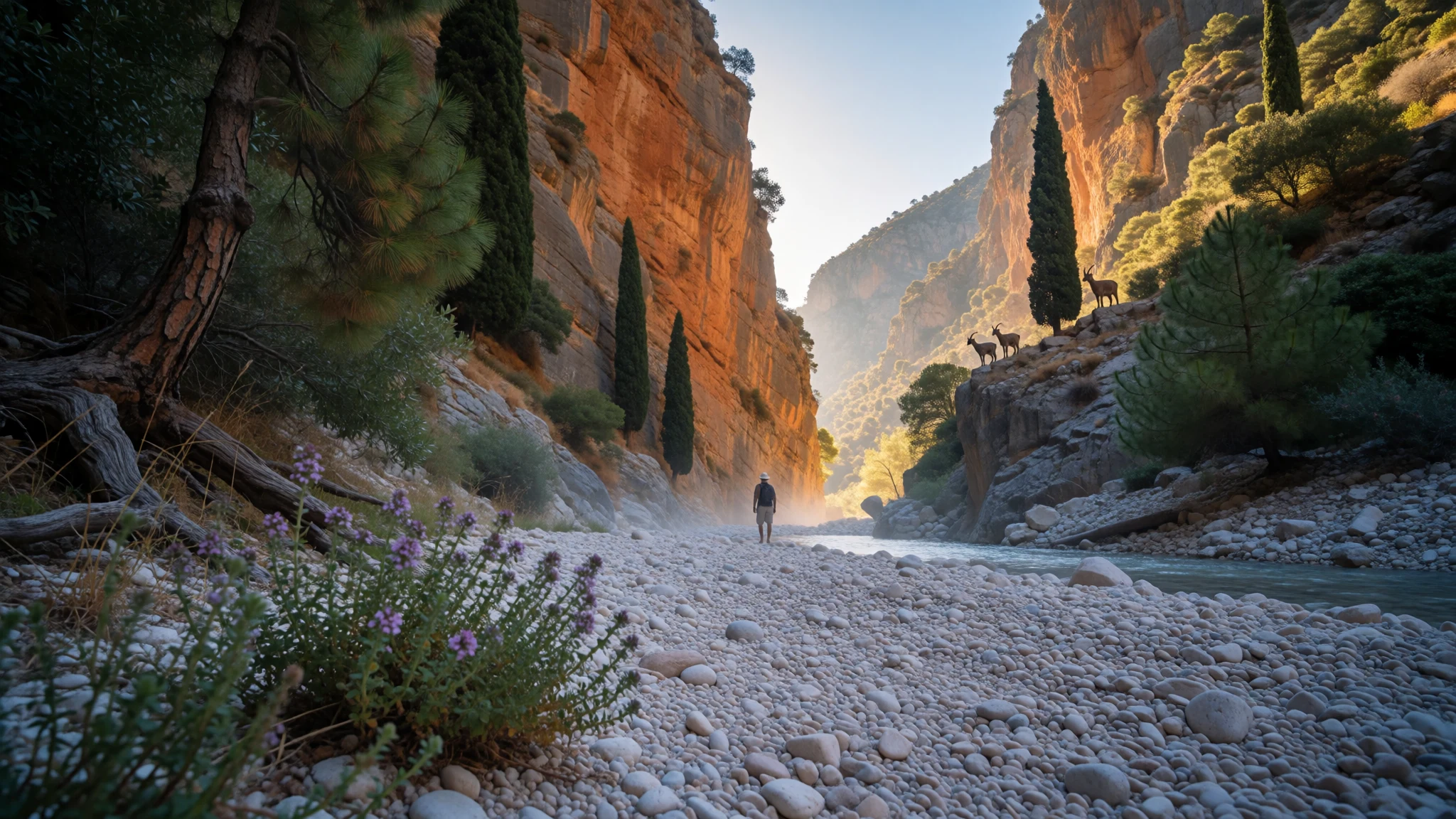
Crete packs Minoan palaces, snow-streaked mountains, deep gorges and long Mediterranean beaches into one island that rewards a slow week.
The place
Crete is the largest island of Greece, and it behaves more like a small country than a single holiday stop. About 620,000 people live here, mostly along the northern coast, where the capital Heraklion, the ports of Chania and Rethymno, and the main airports and ferry terminals sit. The island is long and narrow, stretched from west to east, with the Sea of Crete on its northern side and the Libyan Sea to the south. Between them runs a spine of mountains: the Lefka Ori (White Mountains) in the west, Psiloritis in the centre, and lower ranges towards the east. The highest point reaches 2,456 m, so snow can linger on the summits long after the beaches have warmed up. That geography shapes everything. The north coast is busier, with resorts, harbours and the fastest roads. The south is steeper and quieter, with small villages, pebble coves and gorges that drop to the sea, some reachable only on foot or by boat. Distances look short on a map, but mountain roads are slow, and a drive from Chania to the far east can take most of a day. Visitors who settle in one region and then add a second usually enjoy the island more than those who try to cover it all. Summer is hot, dry and crowded; spring and autumn are gentler, and the countryside is greenest in between.
Its story
Crete was the home of the Minoans, a Bronze Age people often described as the centre of Europe's first advanced civilisation. They built vast palace complexes, of which Knossos is the best known, kept records in a script that archaeologists call Linear A, and left painted walls, pottery and carved seals that point to a seafaring, trading society. Their world was overrun by Mycenaeans from the Greek mainland, and the island then passed through many hands: ancient Greek city-states, Rome, Byzantium, an Arab emirate, Venice and the Ottoman Empire. Each left buildings behind, from Roman Gortyn and Byzantine churches to Venetian harbours and fortresses and Ottoman baths and houses. Farming here is far older than any palace. Neolithic settlers brought cattle, sheep, goats and cereals, and Knossos itself began as one of those early villages. After a brief spell of independence under a provisional Cretan government, the island joined the Kingdom of Greece. During the Second World War it was occupied by Nazi Germany, and that period is still remembered in the mountain villages. Cretans have also shaped Greek writing: Vikentios Kornaros composed the verse romance Erotokritos, and Nikos Kazantzakis wrote novels read far beyond Greece. On Crete, the layers matter more than any single date. A town such as Chania can show a Venetian harbour, an Ottoman mosque and modern cafés within a short walk, which is why the island suits people who like reading a landscape as a long conversation.
What to see
- Knossos — Just south-east of Heraklion
Knossos, just outside Heraklion, is the Minoan palace most visitors start with. The site is a sprawl of courts, storerooms and corridors, partly reconstructed in colour, so a short guide read beforehand helps a great deal. Go early in summer, when tour groups arrive and shade is scarce. Check the official site for opening details.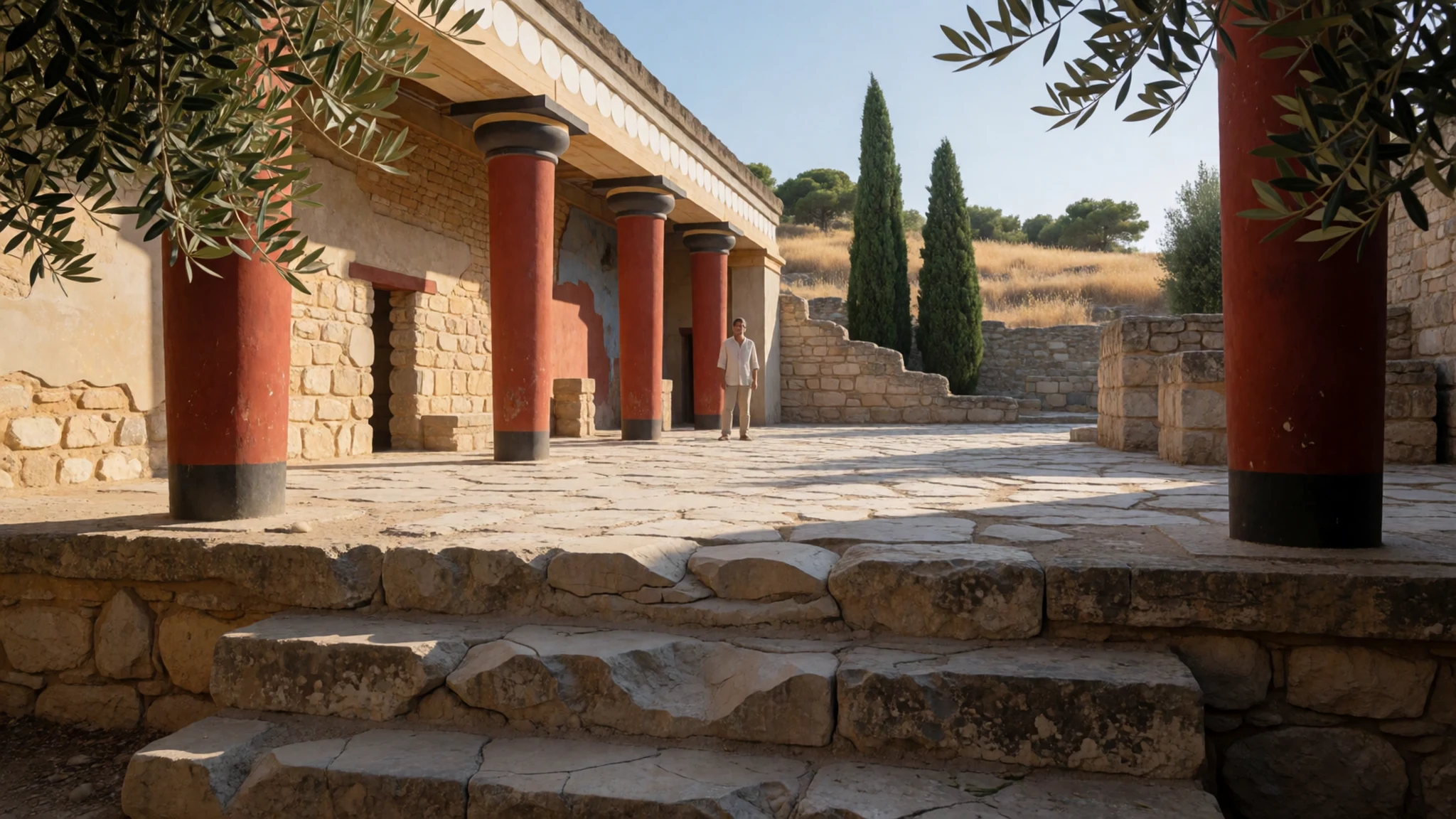
- Phaistos and Gortyn — Messara plain, south-central Crete
Phaistos sits on a ridge above the Messara plain, with the Ida mountains rising behind. It is quieter than Knossos and left largely unrestored, so the stone courtyards read as honest ruins. Pair it with Gortyn, a Roman-era site nearby, for a full day in the south.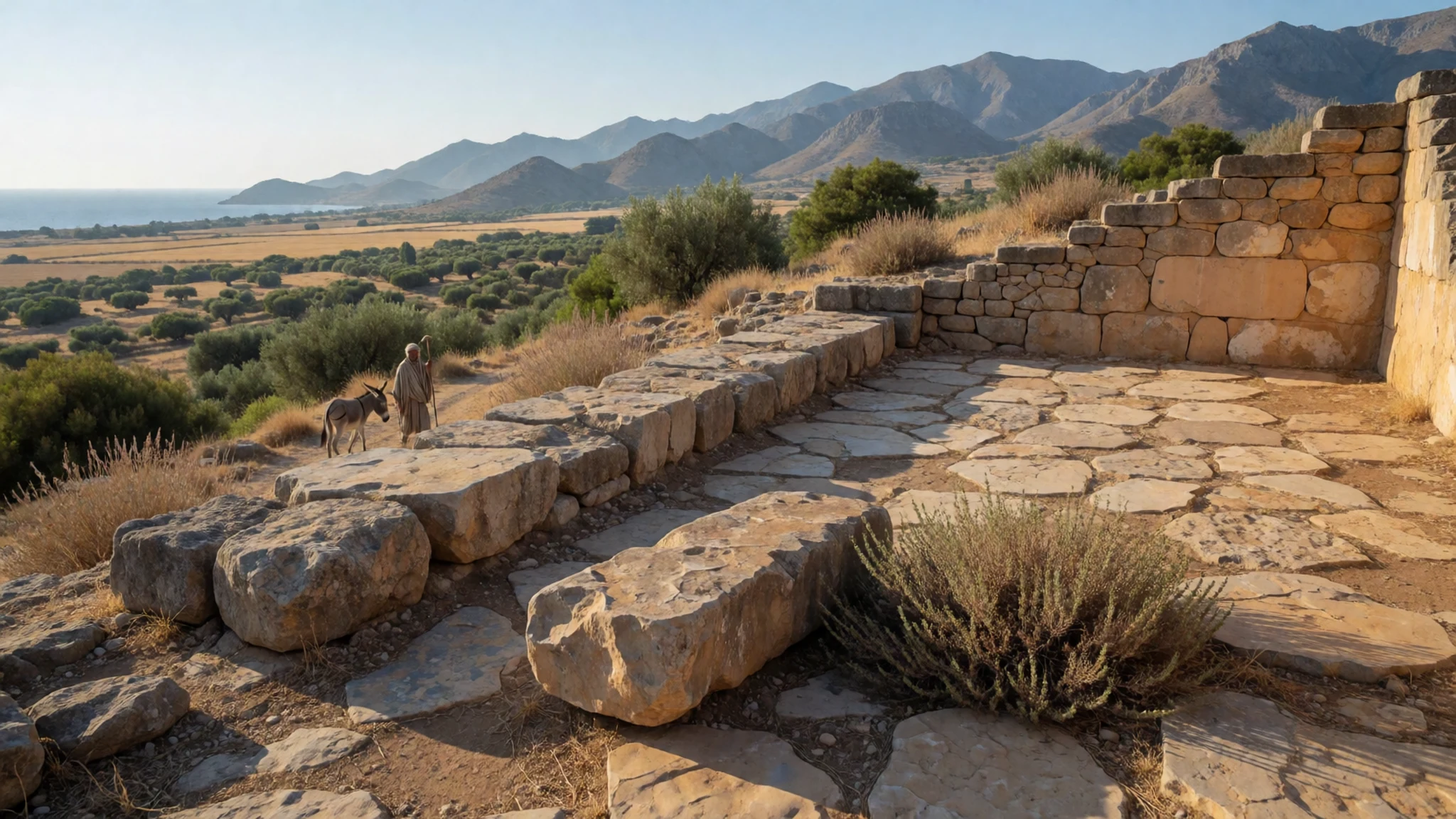
- Samaria Gorge — Lefka Ori, western Crete
Samaria Gorge is a long walking route through the White Mountains, ending at the south coast, where a boat is needed to continue. It is a full day on rough ground, hot in summer, and open only in the drier months, so check the official site first. Carry water and wear proper shoes.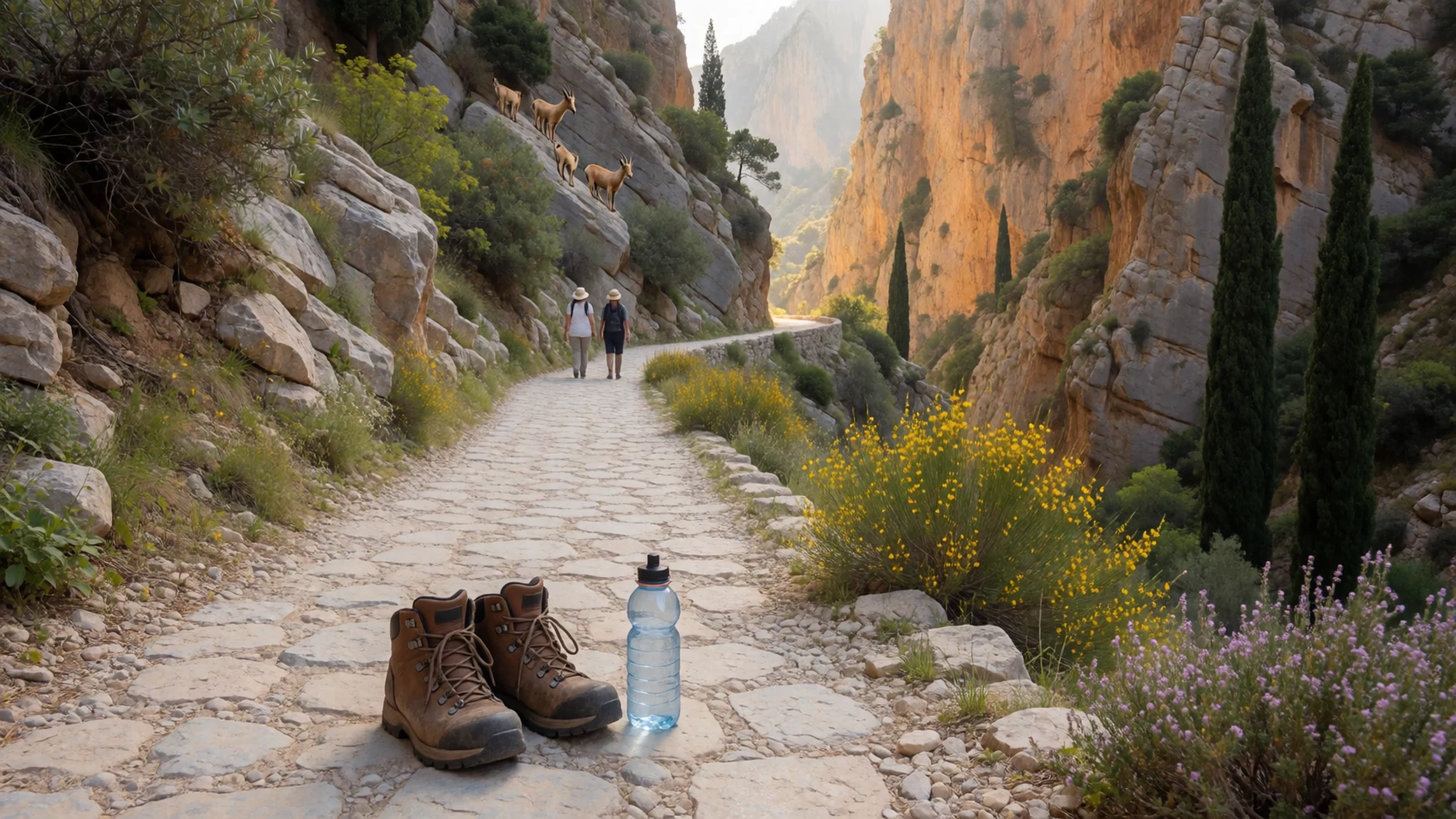
- Vai beach — Far eastern coast, near Sitia
Vai, on the far eastern coast, is a bay where a grove of palms stands behind pale sand. It makes an easy day trip from Sitia and gets crowded in July and August, so go early or in the shoulder seasons. Shade is limited beyond the palms, so bring a hat and sun cream.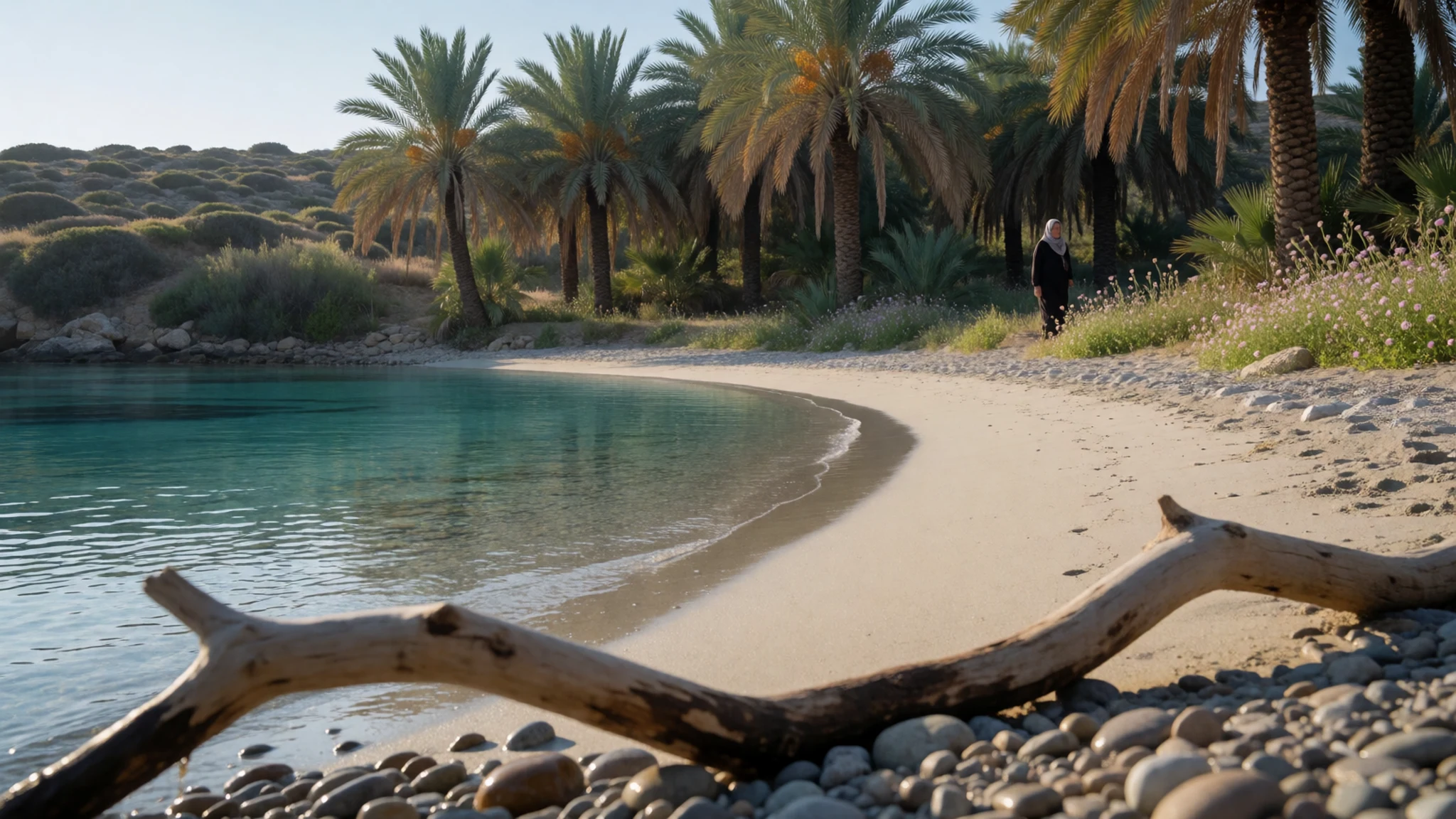
- Chania old town and harbour — North-west coast
Chania's old town shows Crete's layers in a short walk: a Venetian harbour with a lighthouse, an Ottoman-era mosque by the water, narrow lanes and old churches. Evenings are lively, but early morning is best for quiet and photographs. Rethymno, further east, offers a similar mix beneath a large Venetian fortress.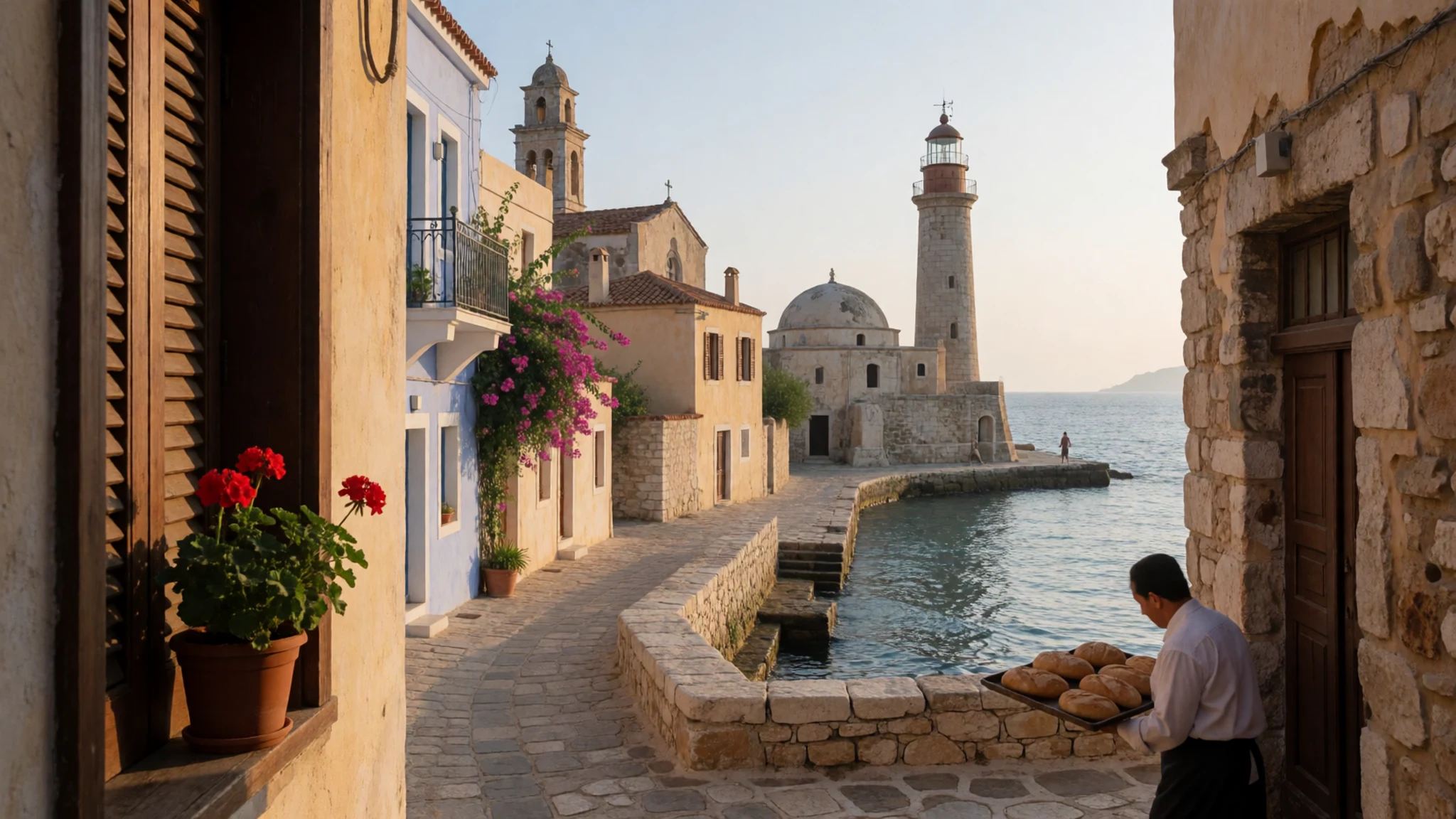
Culture
Crete has a proud local identity, and it shows most clearly in poetry, music and dance. The mantinada is a rhymed couplet, made up on the spot at celebrations or sung as a quick comment on love, life and rivalry. It is often set to the lyra, a small bowed instrument held upright on the knee, with the laouto, a long-necked lute, keeping the rhythm. Dancers link hands for the pentozali, a lively stepping dance seen at weddings and village festivals. In recent decades, cultural associations have sprung up to teach dancing and singing, including the rizitiko songs of the west, and islanders still debate whether this revives tradition or merely stages it. Religion is part of everyday life. There are hundreds of monasteries and convents, most open to visitors, and even small villages keep a main church and several chapels. Feast days draw whole communities together with music, food and long tables. The kafeneion, the traditional coffee house, remains a social centre, particularly for older men, where one coffee can last an afternoon of conversation. Hospitality is taken seriously: if a host offers a small glass of raki or a spoonful of something sweet, accepting is polite. Cretans also take pride in their writers, among them Kornaros and Kazantzakis. Cover your shoulders and knees before entering a monastery or church, and ask before photographing inside or photographing monks and nuns.
What to wear
Traditional Cretan dress is now mostly seen at festivals, weddings, dance performances and church feasts. Men's costume centres on the vraka, baggy dark breeches gathered at the knee, worn with tall leather boots (stivania), a woven sash and a fringed black headscarf. Women's village dress varied by area, with long skirts or pinafores, embroidered aprons and headscarves, often in wool, linen or cotton woven on home looms. Weaving survives as a living craft in some mountain villages, and shops in Chania and Rethymno sell hand-woven bags and runners. Day to day, Cretans dress as people do across southern Europe, in jeans or light trousers, linen shirts and trainers, though black is still common among older villagers. Visitors should dress for the sun first. Light cotton or linen, a brimmed hat, sunglasses and sun cream suit the coast from late spring to early autumn, and a thin layer helps on evenings and boat trips. Beachwear is fine on beaches and in resort towns, but villages, churches and monasteries call for covered shoulders and knees, so carry a scarf or light shawl. Gorge walks and ruins need closed shoes with good grip, because paths are rocky and worn stone is slippery. In winter and in the mountains, pack a waterproof and warm layers.
What to eat
- Dakos — Any village taverna, and in the old towns of Heraklion and Chania
Dakos is a hard barley rusk, briefly moistened and topped with chopped tomato, soft white cheese such as mizithra, olive oil and oregano. It is a simple starter or light lunch, and it tastes best in summer when tomatoes are ripe.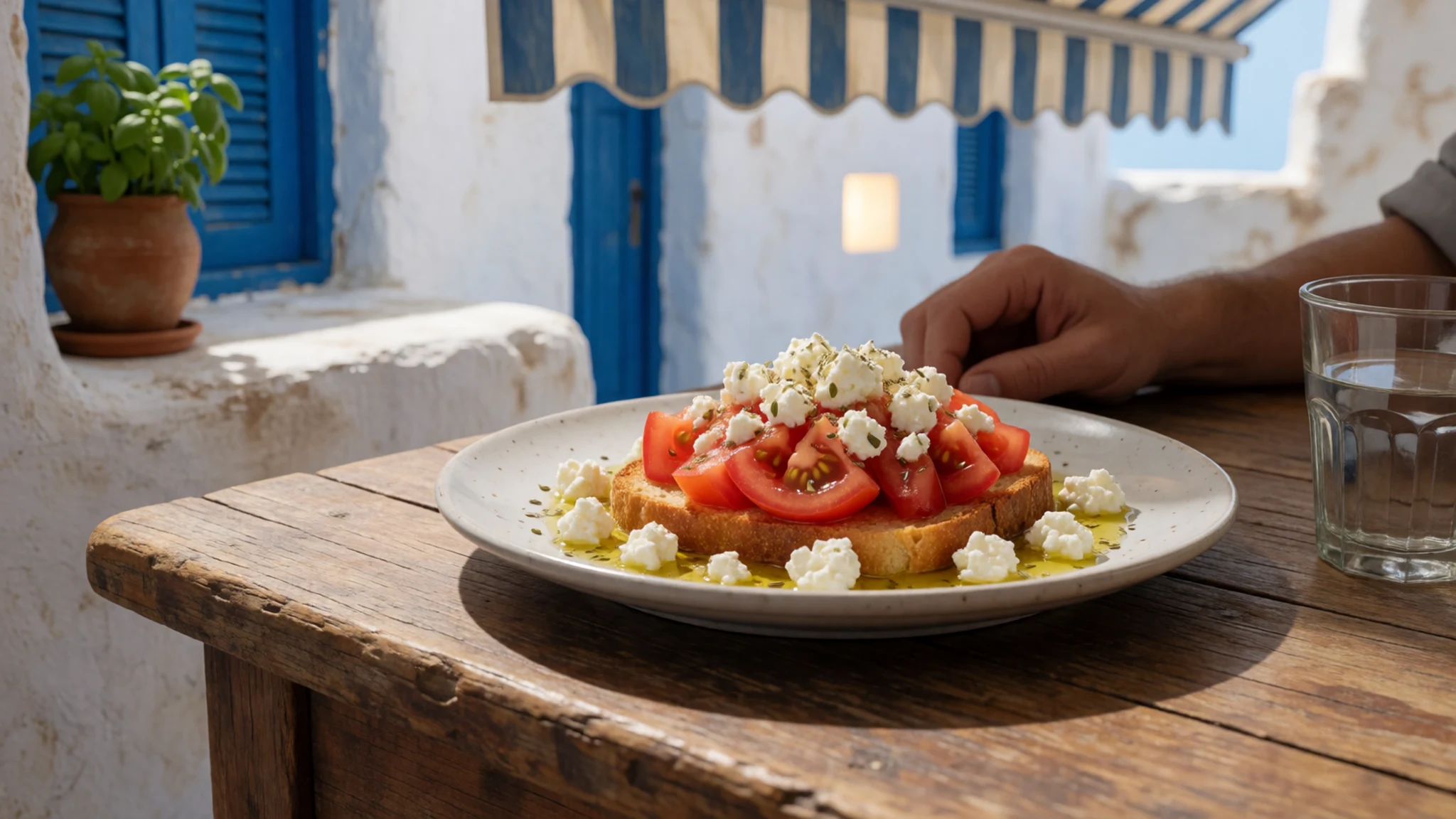
- Kalitsounia — Town bakeries and pastry shops, and village festivals
Kalitsounia are small folded pastries filled with fresh cheese, sometimes with mint or honey, or with wild greens. Both sweet and savoury versions exist, and many families make them at Easter. A bakery is the place to try one warm.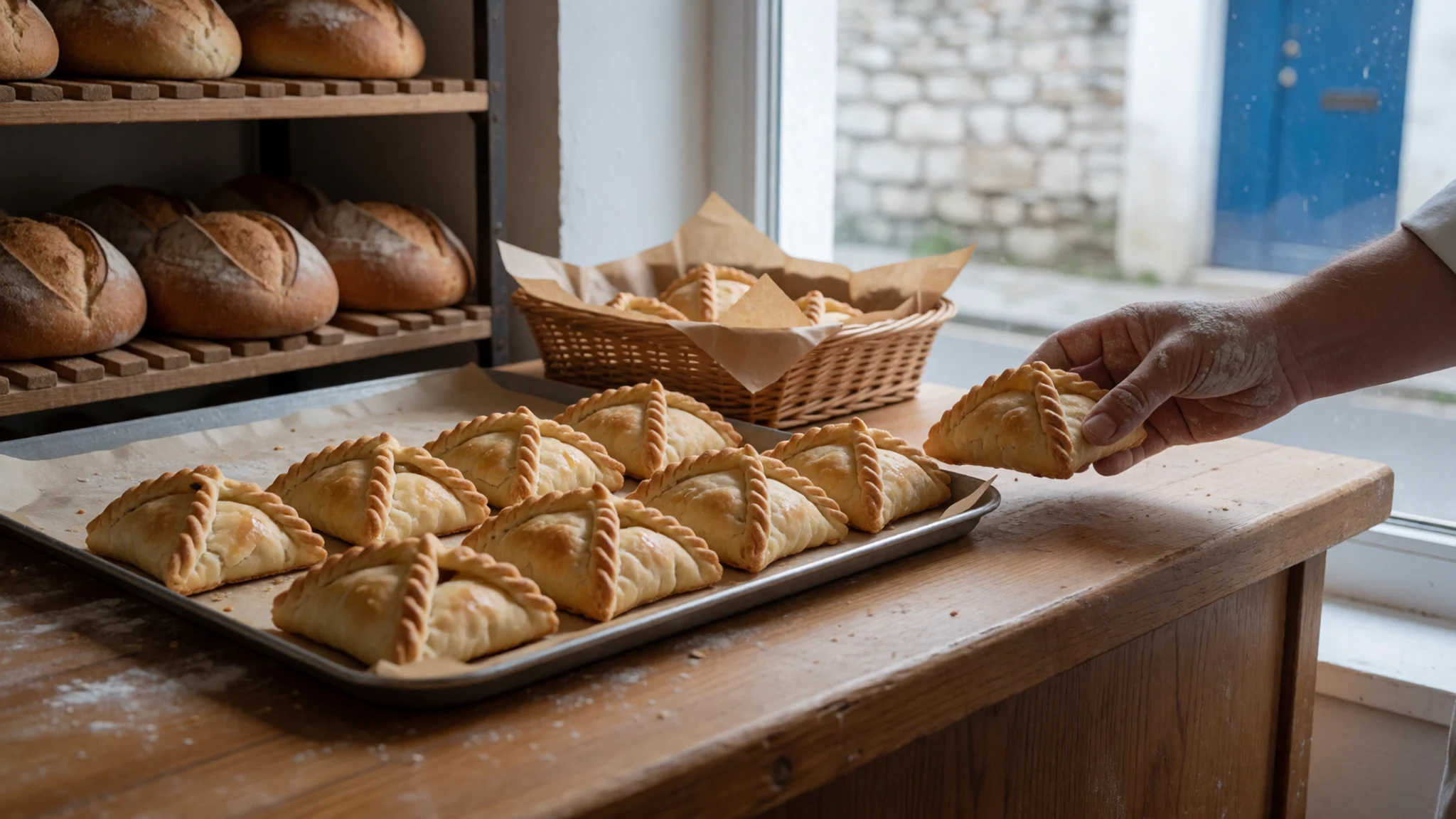
- Chochlioi boubouristoi — Village tavernas in the hills
Chochlioi boubouristoi are snails fried in olive oil with rosemary and a splash of vinegar. They sound unusual but taste of herbs and crisp edges, and they are a traditional island meze. Order them with bread and a small glass of raki. - Gamopilafo — Hill-village tavernas on festival days
Gamopilafo, literally wedding pilaf, is rice cooked in rich meat stock until creamy and finished with lemon. It is served at weddings and festivals, and some tavernas in the hills offer it on certain days. Ask what is being cooked that day. - Apaki — Butchers, delicatessens and the covered market in Chania
Apaki is lean pork marinated in vinegar and herbs, then smoked and sliced thin. It is eaten as a meze with bread and local cheese, and it travels well, making a good picnic item for a beach or gorge day. - Raki (tsikoudia) — Tavernas, kafeneia and village homes
Raki, also called tsikoudia, is a clear spirit distilled from grape pomace. It is poured into small glasses at the end of a meal, often with fruit or sweets, as a gesture of hospitality. Sip it slowly, and know that declining politely is fine.
Plan it
Best time. April to June, when wildflowers are out and the sea is warming, and September to October, when the water is still warm and crowds thin. July and August are hot, dry and busy; winter is wet and windy, with snow on the high peaks, and some coastal businesses close.
How long. 5–7
Getting there. Fly to Heraklion or Chania, the two main airports, or to Sitia in the east; there are daily flights from Athens and seasonal charters from many European cities between April and early November. Overnight ferries run from Piraeus to Chania and Heraklion, taking about eight and a half hours, with some daytime sailings in high season. From the airports, a hire car or bus covers the last leg.
Budget. mid
Tips
- Hire a car if you want the south coast and villages; mountain roads are slow, so plan fewer stops per day
- Book ferries and summer accommodation early, especially for July and August
- Start gorge walks and ruins early, carry plenty of water and wear closed shoes
- Carry some cash for village tavernas, small shops and rural bus tickets
- Check the official sites for Knossos, Phaistos and Samaria Gorge before planning, as opening details change by season
Etiquette
- Cover shoulders and knees in churches and monasteries, and ask before photographing inside
- Accept a small offer of raki or sweets from a host; a polite sip is enough
- Keep beachwear for the beach and resort areas, and dress more modestly in villages
Nearby
Sources
- Wikidata Q34374 (CC0)
- Wikipedia: Crete (rev 1385042777) (CC BY-SA 4.0)
- Wikivoyage: Crete (rev 5321566) (CC BY-SA 4.0)
- Crete Nasa.jpg, Public domain, via Wikimedia Commons (Public domain)
- Island of Crete, Greece, ISS Expedition 28 crew, via Wikimedia Commons (Public domain)
- Mount Ida chain and Messara plain from Phaistos, Jebulon, via Wikimedia Commons (CC0 1.0)
- Vai beach, MJJR, via Wikimedia Commons (CC BY 3.0)
- Lefka Ori, Jlundqvi, via Wikimedia Commons (CC BY 3.0)
- Psiloritis from the west, Jerzy Strzelecki, via Wikimedia Commons (CC BY 3.0)
- Exit of Ha Gorge, Lourakis, via Wikimedia Commons (CC BY 3.0)
- Samaria Gorge, Lapplaender, via Wikimedia Commons (CC BY-SA 3.0 de)


