Cape Sounion
Cape Sounion, Greece
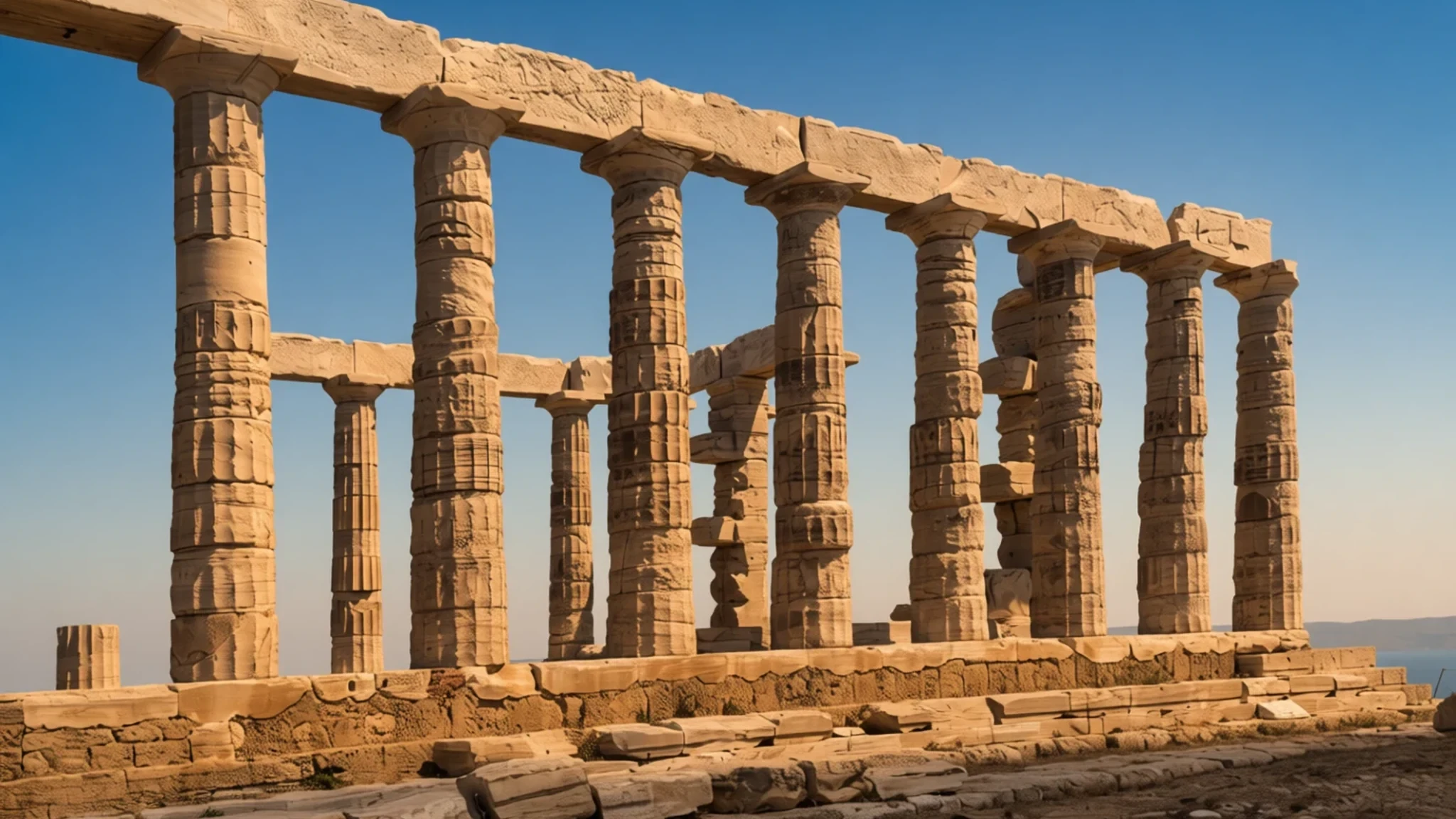
Cape Sounion puts a ruined Doric temple on a cliff edge above the Aegean, and the sunset there is why people make the trip.
The place
Cape Sounion is the southernmost tip of the Attica peninsula, a rocky headland washed by the Aegean on three sides. It lies in the Lavreotiki municipality of East Attica, on the stretch of coast known as the Athens Riviera, roughly 8 kilometres south of the town of Lavrio and about 69.5 km south-east of Athens. The Venetians called it Capo Colonne, the Cape of Columns, which tells you what sailors saw first: a row of pale pillars on the skyline.
The site is open and exposed. There is little shade among the ruins, the ground is stony and uneven, and the wind can be strong even on a calm day in the city. The climate is hot semi-arid, with hot, dry summers and mild, wetter winters, so the experience changes a great deal with the season. In midsummer the middle of the day is punishing; in spring and autumn the light is softer and the walk around the stones is far more pleasant.
What holds the place together is the view. From the headland the sea runs out to the islands of the Aegean, and the temple sits at the end of the land like a marker. Visitors arrive by coach tour, bus and car, and the crowd peaks around sunset, when the site fills with people waiting for the light to turn. Most come for an afternoon or an evening, and that is about the right length of visit, though the coast road and the beaches nearby reward a slower day.
Its story
Cape Sounion appears early in Greek literature. In the Odyssey, Menelaus of Sparta, sailing home from Troy, puts in at 'Holy Sounion' after his helmsman dies at the steering oar, and gives him a full funeral on the shore. Whatever one makes of the tale, it shows the cape was already a landmark for sailors, the point where ships rounded the land towards Athens.
Digs on the site have turned up finds from as early as 700 BC. Herodotus records that in the 6th century BC the Athenians held a festival here every four years, with their leaders making the voyage by sea to honour the god of the waters. The headland was a shrine to Poseidon long before the marble temple that now stands there.
Sounion was also a working place. It was a deme, an administrative district of Athens, and its lands took in part of the Laurion silver mines, whose wealth fed Athenian power. In 413 BCE, in the Peloponnesian War, the Athenians walled the cape with towers so that the grain ships bound for their city could pass under protection. The walls are still traceable where the cliffs did not already defend the site. By the time of Cicero the town had fallen into decline, and the headland became what it remains today: a place of ruins, sea and wind.
What to see
- Temple of Poseidon — Tip of the cape
The Doric temple was raised in the Golden Age of Athens and stands on the edge of the headland, high above the water. Only a handful of columns survive, but they frame the sea well. Go in the late afternoon, and walk round the outside for different angles.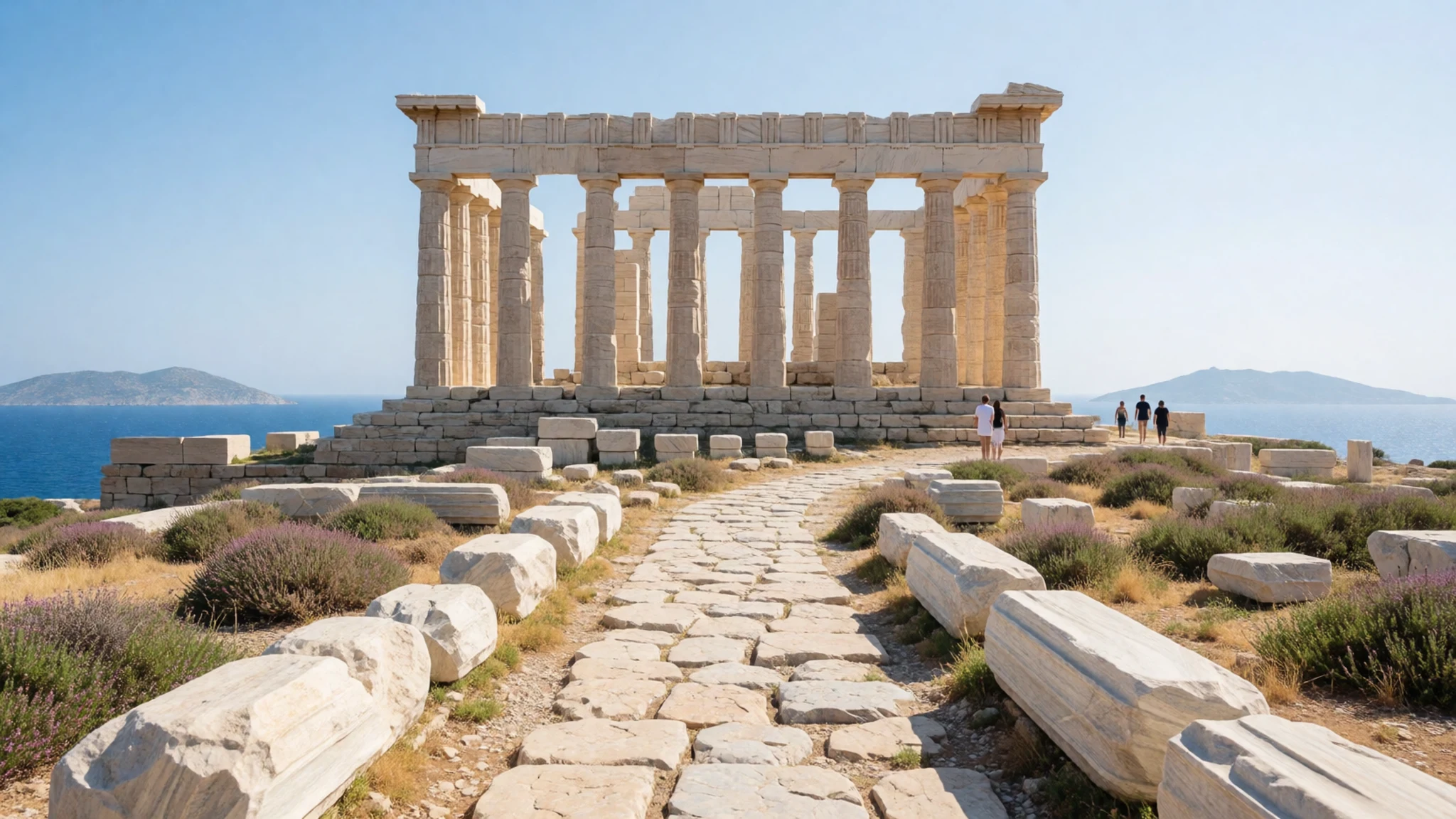
- Temple of Athena — Low hill north-east of the main temple
A short walk from the larger temple, this smaller sanctuary on a low rise dates to 470 BC. It was pulled down in Roman times and little is left, mostly foundations. It is quiet compared with the main temple, which makes it a pleasant place to stop and look back at the columns.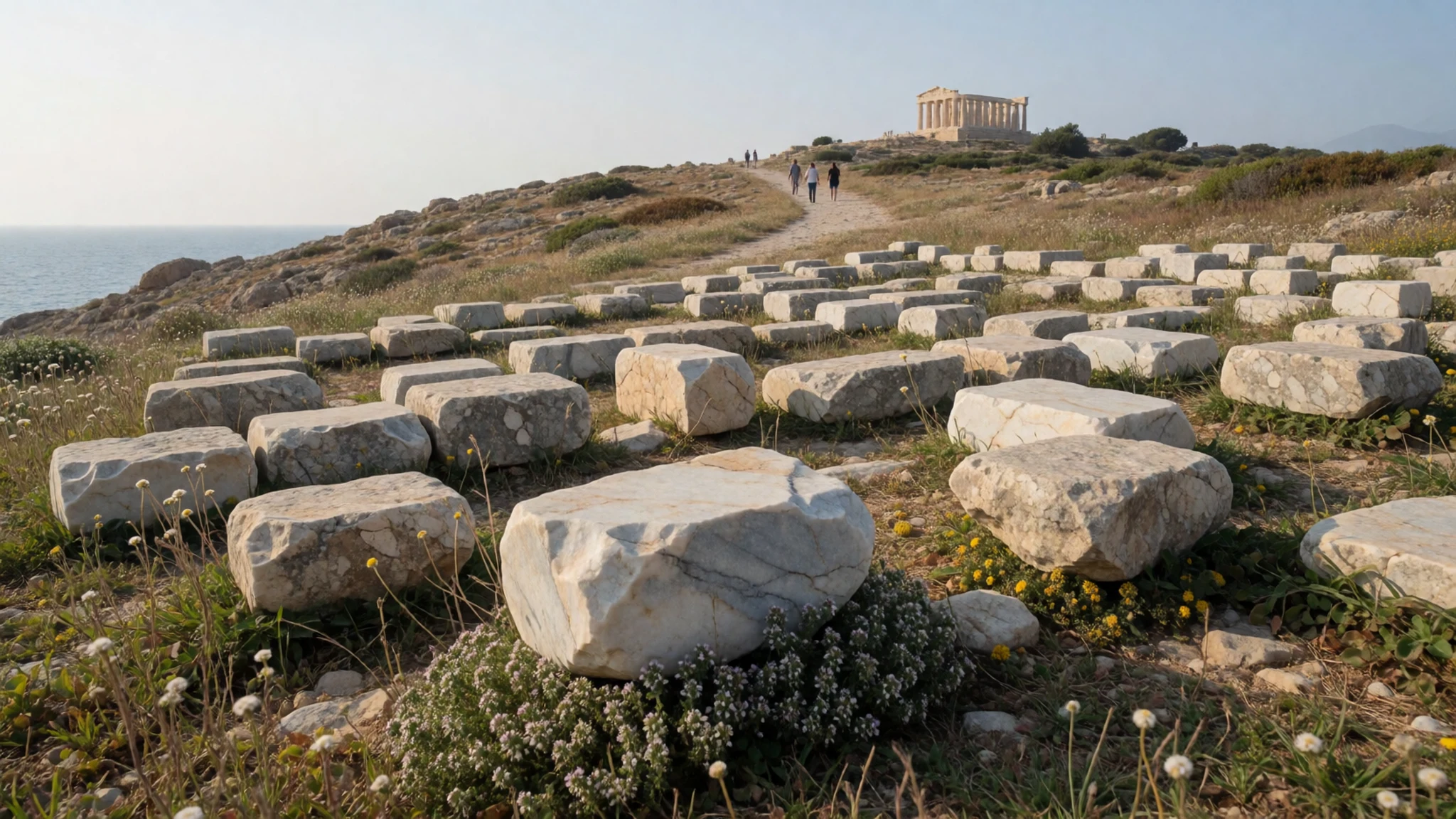
- The fortress walls — Around the headland
The Athenians built these walls and square towers in 413 BC during the war with Sparta. Stretches of regular masonry can be followed along the approach path, and one bastion is easy to spot from the north. They are easy to walk past, but they explain why the cape mattered.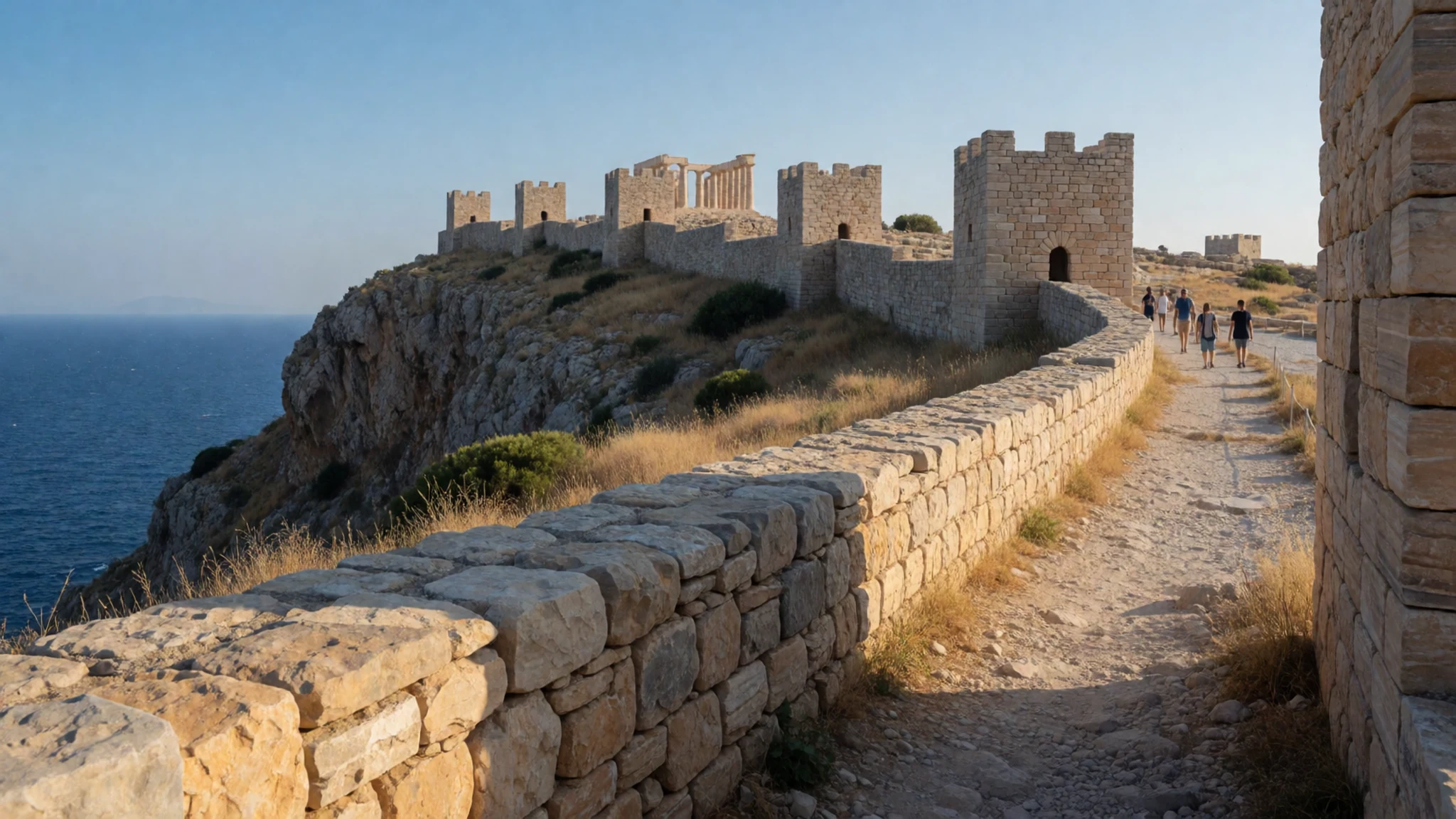
- The kouros from Sounion — National Archaeological Museum, Athens
A marble statue of a standing young man was found at Sounion as an offering to Poseidon. It is kept in Athens rather than on the cape, so it suits a day in the capital before or after the trip. Check the museum's official site for opening arrangements.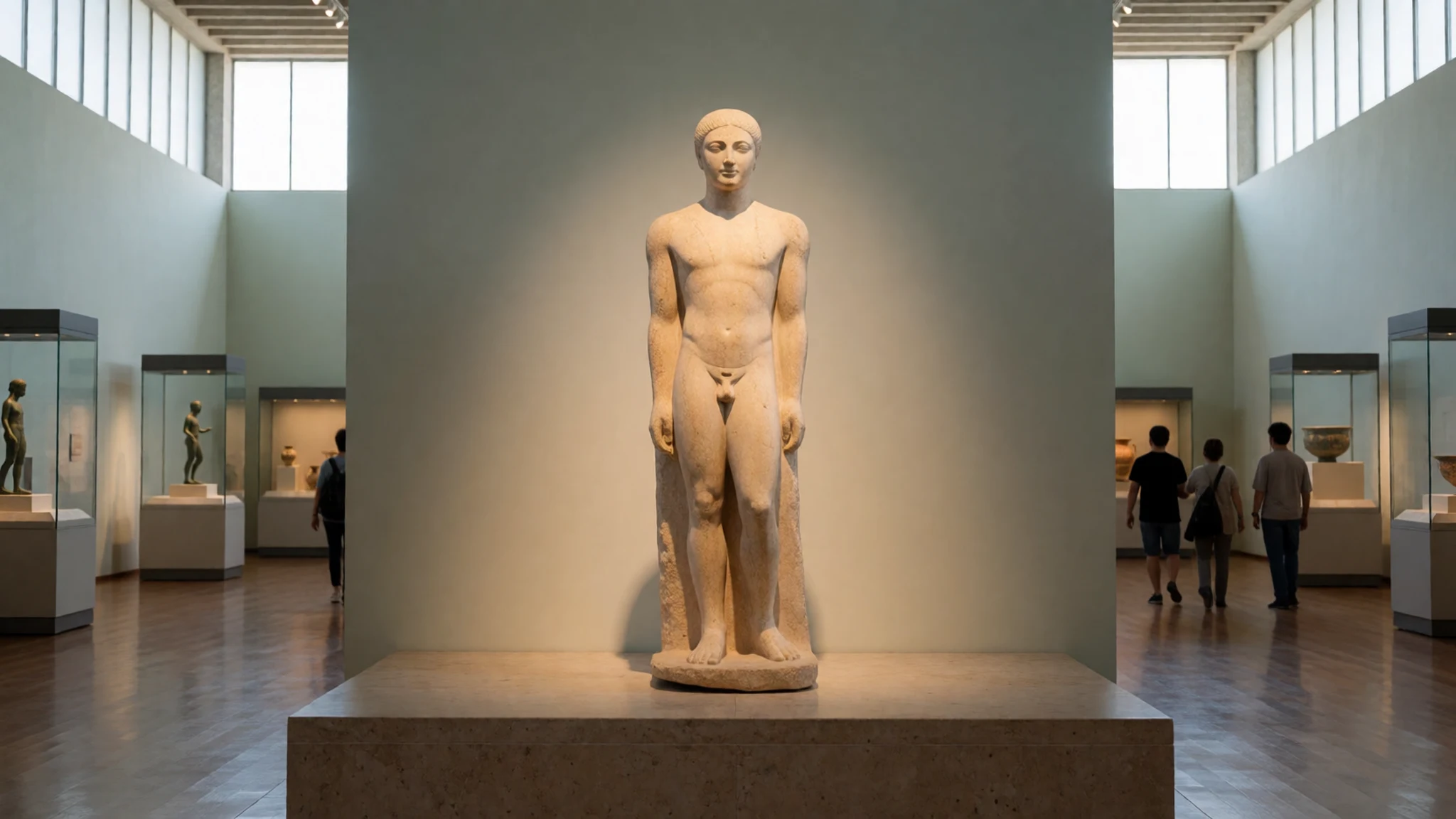
- Sunset over the Aegean — Temple terrace
The sunset is the cape's famous moment, with columns turning gold against the sea. It is also the busiest time, so claim a spot early and expect a crowd along the path. Bring a layer, as the wind cools quickly once the sun drops.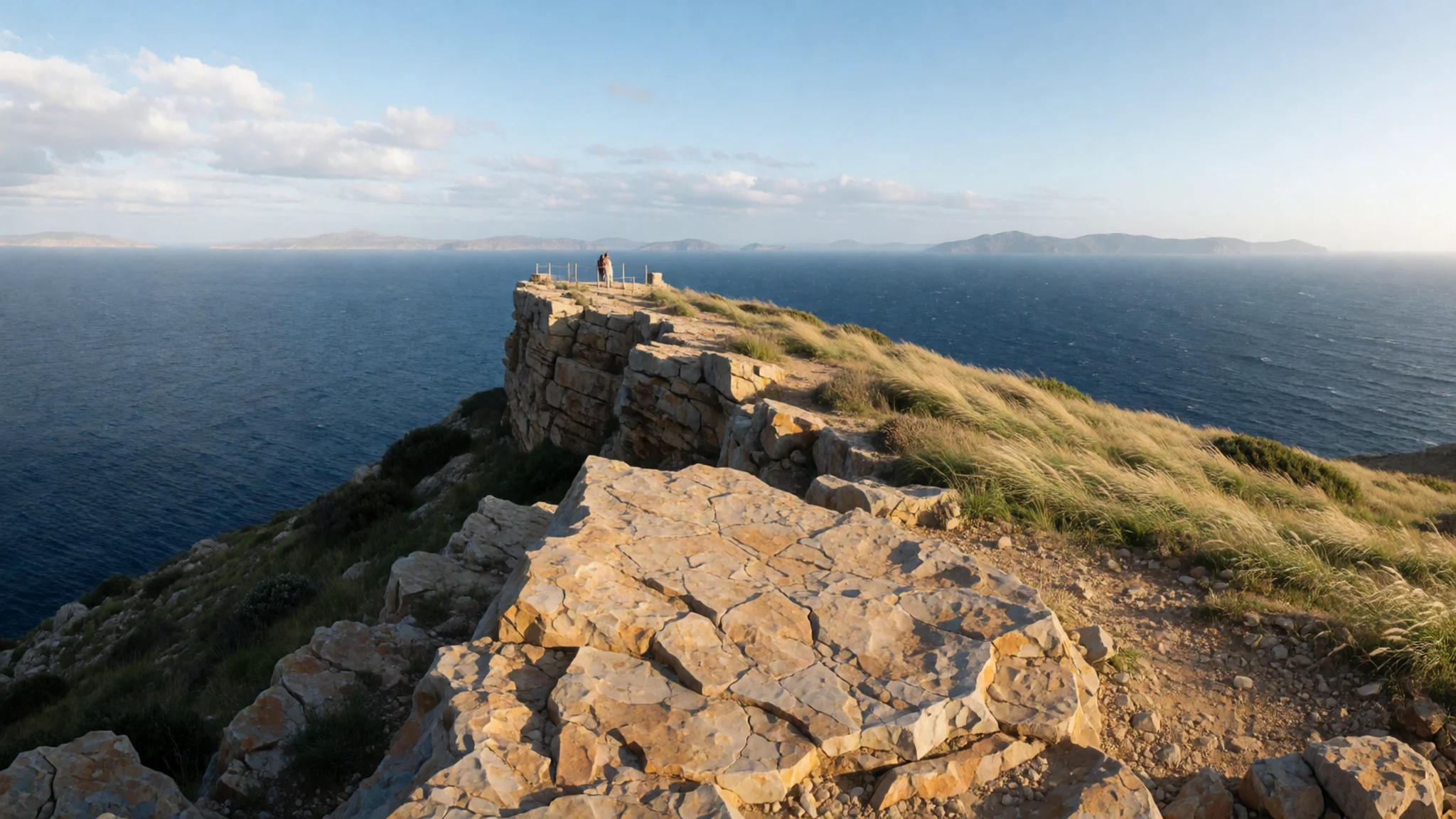
Culture
Cape Sounion belongs to the tradition of Greek sea-faring religion. Poseidon, god of the sea and of earthquakes, was worshipped here by people whose lives and livelihoods depended on the water, and the temple was visible from far out at sea as a sign of home. Sailors from Athens would have known it as the last or first sight of their land.
The temple also carries a more modern layer. Since the 18th century and the age of the Grand Tour, travellers have come to see it, and some left their names carved into the stone. Today that practice is understood as damage, and the site is protected and watched over by the Greek archaeological service.
Greek visitors often come in the evening, in the way people elsewhere go for a walk along the sea, and the site has a relaxed, social feel at dusk. Locals tend to treat the headland as part of the Athenian summer: a drive down the coast, a swim, a meal by the water, and then the sunset.
Please stay on the marked paths and do not climb on, lean against or scratch the ancient stones, as the site staff will ask you to step away.
What to wear
Greece has no single national costume worn in daily life, and Attica's traditional dress is mostly seen today at festivals, in dance groups and in museums. Older rural dress in the region used wool and linen, with embroidered aprons, woven belts and headscarves for women, and woollen vests and sashes for men. The Athenian ceremonial uniform of the evzones, with its pleated white kilt, is the best-known formal costume, though it belongs to the guards in the capital rather than to the coast.
What people wear now is ordinary and relaxed. Around Athens and the coast you will see light cotton and linen, sundresses, shorts, sandals and trainers, and in summer swimwear on the beaches and beach towns. Evening outings are smart-casual rather than formal.
For a visit to Sounion, dress for sun, wind and stone. A hat, sunglasses and light, long-sleeved cotton help in summer when there is almost no shade. The ground is rocky, worn and sometimes slippery, so wear closed shoes with a good grip rather than flip-flops. Bring a windproof layer for the evening, as it can feel cool once the sun goes down, especially outside summer. There are no strict modesty rules at the temple, since it is an archaeological site rather than a place of worship, but cover up sensibly if you are travelling on to a working church or monastery.
What to eat
- Grilled fresh fish — Seafront tavernas in the coastal villages near the cape
Fish grilled whole over charcoal and dressed with olive oil and lemon is the classic coastal meal. Ask what came in that day and have it weighed at the counter. It is usually served with boiled greens or a simple salad.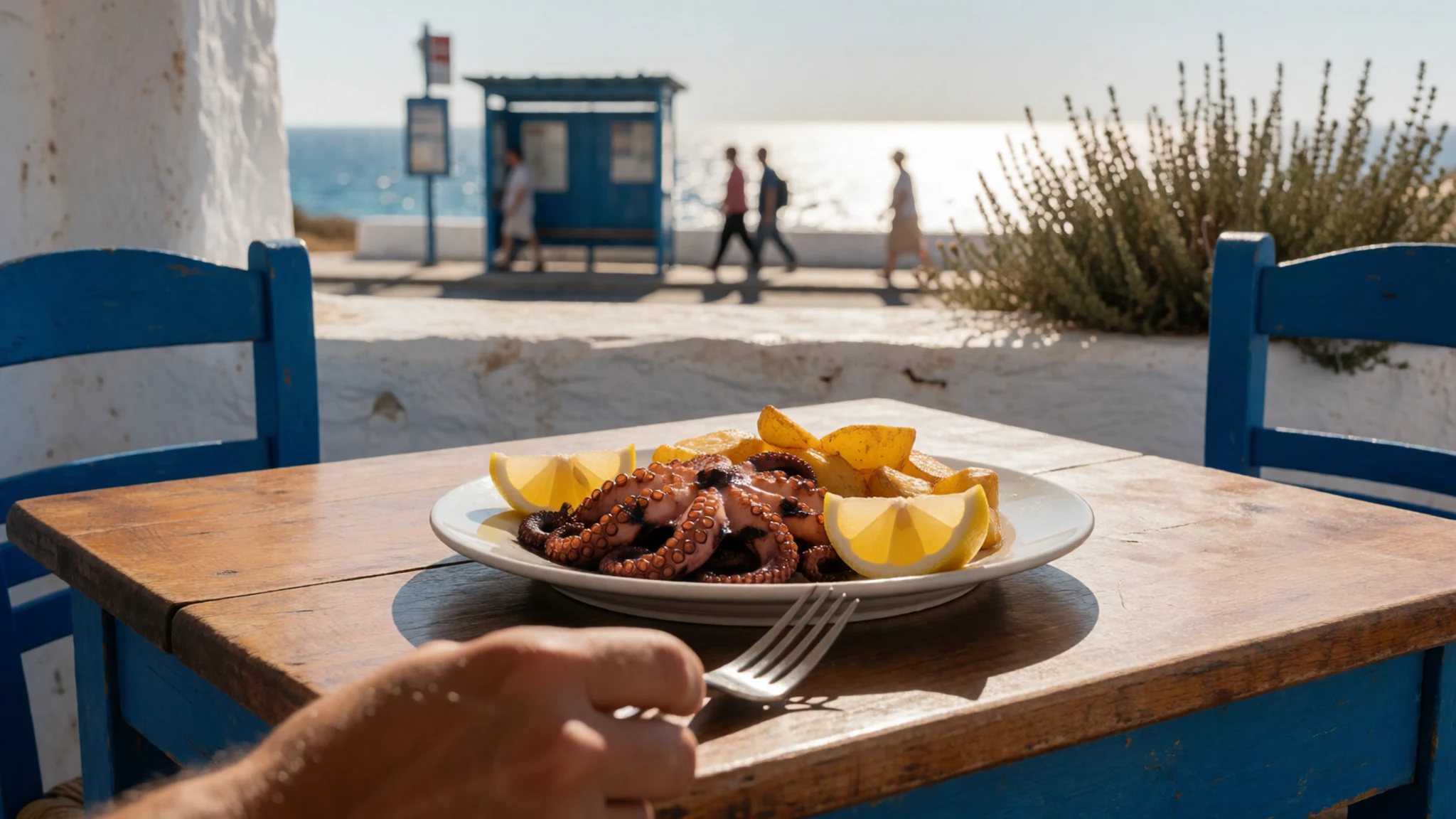
- Greek salad (horiatiki) — Any taverna
Tomatoes, cucumber, onion, olives and a slab of feta, finished with olive oil and oregano, and no lettuce. In summer it is a meal in itself and a cooling companion to anything off the grill.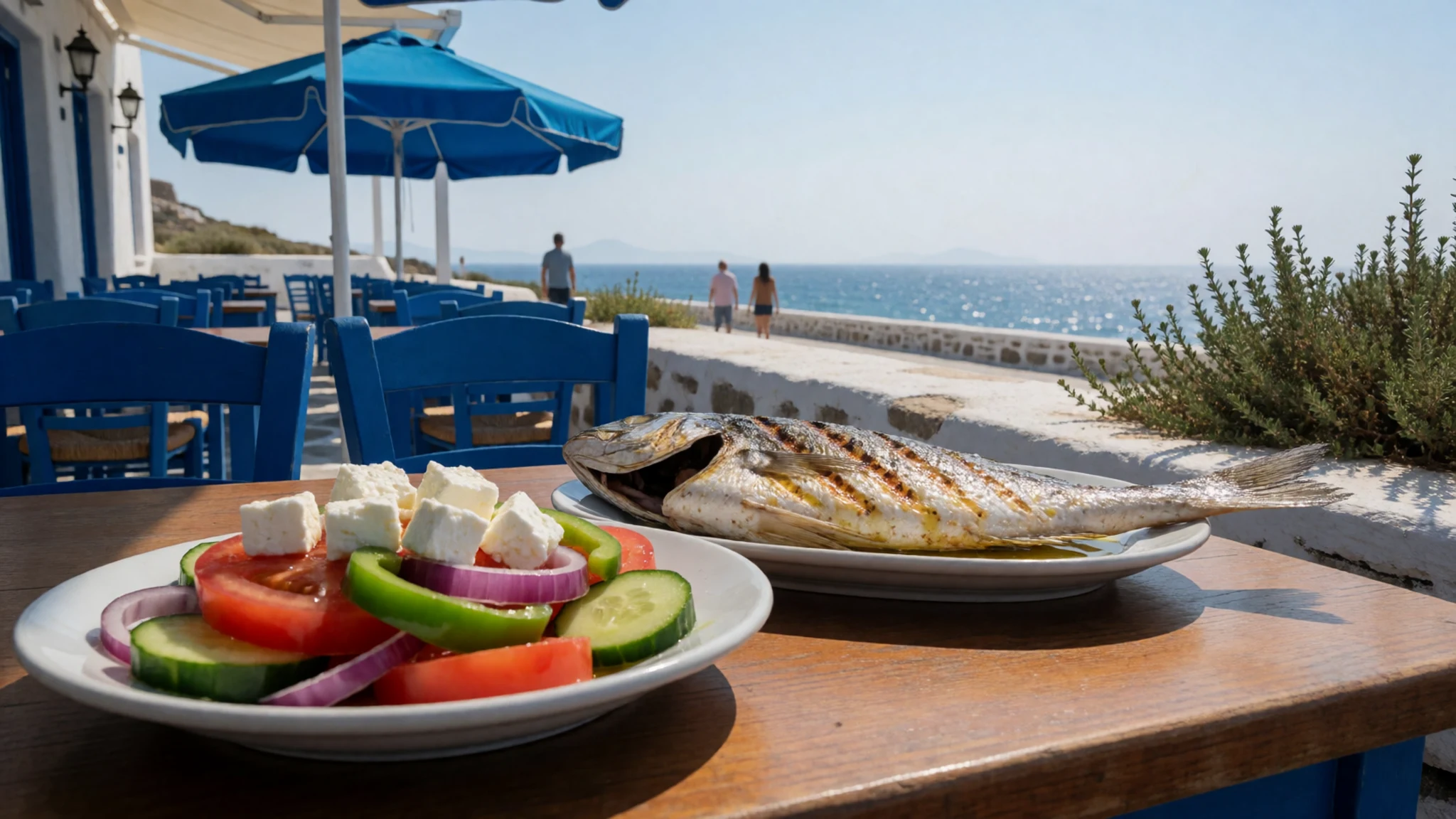
- Calamari and fried small fish — Beachfront eateries along the Athens Riviera
Squid and small fish, lightly floured and fried, arrive in a heap with lemon wedges. Easy to share and easy to eat while watching the water. Good as a starter before a main. - Souvlaki — Grill shops and street stalls in Lavrio and the Athens suburbs
Skewers of grilled pork or chicken, wrapped in pita with tomato, onion and yoghurt sauce, or served on a plate. It is the quick, cheap option for a day of sightseeing and easy to carry. - Spanakopita and cheese pies — Bakeries in towns along the coast road
Flaky filo pastry filled with spinach and cheese, or with plain cheese. Bakeries sell them warm in the morning, which makes them a sensible snack to carry up to the ruins.
Plan it
Best time. April–June and September–October. The climate is hot semi-arid, with hot, dry summers and mild, wetter winters, so spring and early autumn give pleasant walking weather. July and August are very hot on a shadeless site; winter is mild but can be wet and windy.
How long. 1
Getting there. Athens International Airport, then onward into the city. Long-distance buses to Sounio leave from a terminal in central Athens, run roughly hourly and stop a few times on the way; ask at the KTEL kiosk for current details. The Sounio stop is just below the temple. By car it is about two hours one way.
Budget. mid
Tips
- Go in the late afternoon for the sunset, but arrive early to find a good spot
- Check the last bus back to Athens before you settle in for the sunset
- Bring water, a hat and sun cream, as there is little shade
- Check the official archaeological site listings for opening times and tickets before you go
- The taverna by the bus stop is reported as pricey, so consider eating in a nearby village
Etiquette
- Stay on the marked paths and keep off the ancient stones
- Do not carve or scratch names into the columns
- Keep noise down at dusk, when many visitors are watching the light
Nearby
Sources
- Wikidata Q1136637 (CC0)
- Wikipedia: Sounion (rev 1378545779) (CC BY-SA 4.0)
- Wikivoyage: Sounio (rev 5418533) (CC BY-SA 4.0)
- Photo: Cape Sounion view from the archaeological site, A.Savin (CC BY-SA 1.0)
- Photo: Cape Sounion looking out to the Aegean, Adam Carr (CC BY 3.0)
- Photo: Sunset at Cape Sounion, Kuno Lechner (CC BY 3.0)
- Photo: Statue of a kouros, Dorieo (CC BY-SA 4.0)
- Photo: Sounio Naos Poseidona, GeorgiosDiamantopoulos (CC BY-SA 4.0)
- Photo: Temple of Poseidon, A.Savin (CC BY-SA 1.0)
- Photo: Temple of Athena, Mirjanamimi (CC BY-SA 4.0)
- Photo: Bastion Delta, Carole Raddato (CC BY-SA 2.0)


