Acropolis of Athens
Acropolis of Athens, Greece
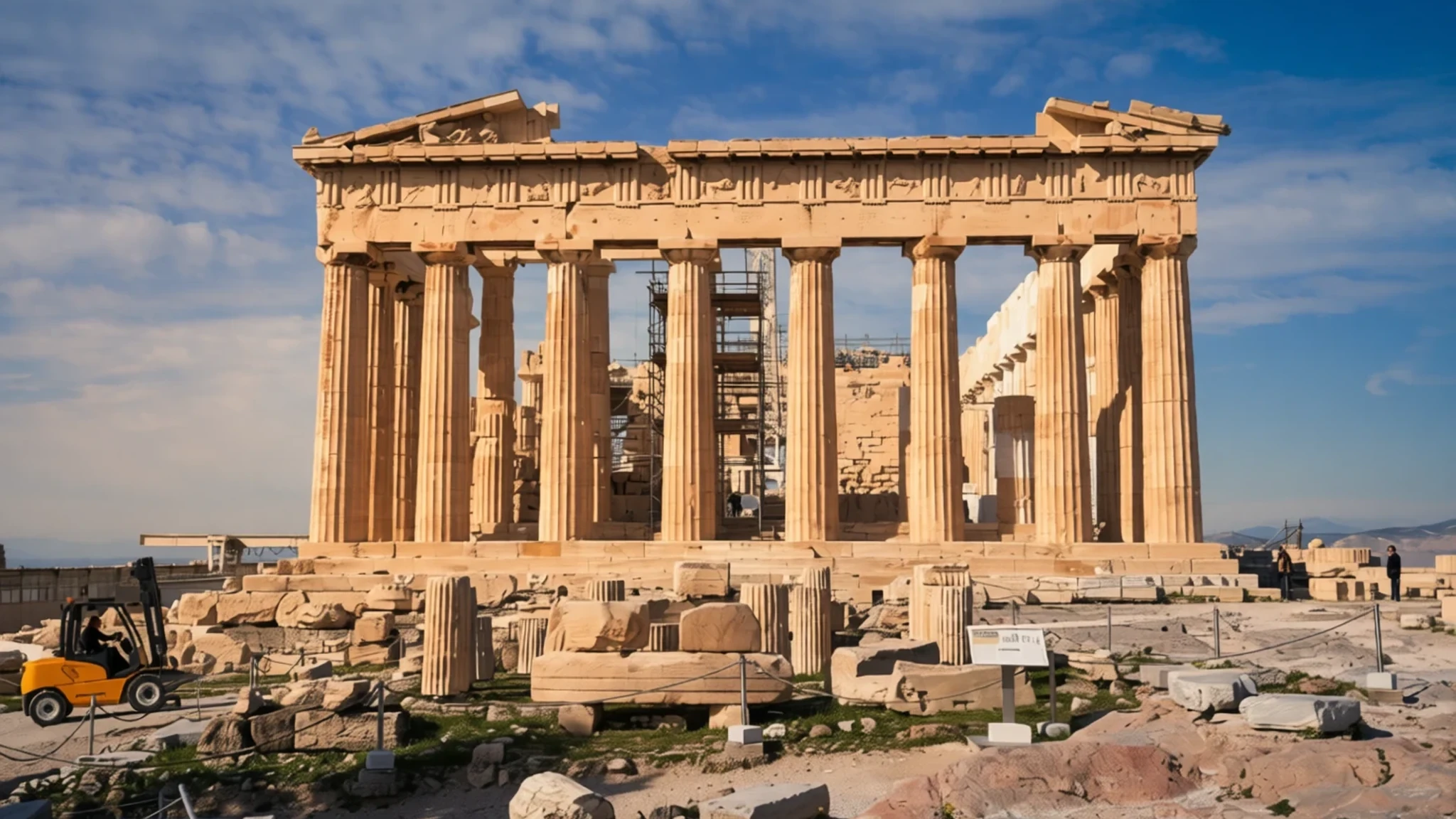
Climb the ancient citadel of the Acropolis of Athens to walk among timeless marble monuments that shaped Western architecture and political thought.
The place
The Acropolis of Athens rises as a magnificent ancient citadel on a rocky outcrop above the modern Greek capital, holding the remains of several structures of immense historical and architectural importance. At its crown stands the Parthenon, alongside monumental gateways and sacred shrines that have commanded the skyline since antiquity. The name combines the Greek terms for a highest point and a city, a descriptive title shared by other citadels across the region, though this particular height was historically known as Cecropia after an early legendary king.
Geologically, the citadel is a striking klippe formed by layers of soft reddish schist overlaid by durable limestone, a geological structure shaped by ancient tectonic compression and subsequent erosion. Natural springs and karstic caves emerge where these different rock strata meet along the slopes. The stone utilized for the grand classical construction projects was quarried directly from Mount Pentelicus, situated to the northeast. Because the underlying limestone is prone to shifts and weathering, modern conservation teams continually employ retaining walls, drainage systems, and rock bolts to stabilise the slopes and protect the fragile archaeological layers from slipping.
Surrounding the central rock are other notable elevations formed through similar erosional processes, including Lykabettos, Areopagus, and Mouseion. Visitors approaching the archaeological zone pass through dry Mediterranean scrub and olive trees, ascending the historic slopes to reach the monumental marble gateways. The site bears witness to millennia of human habitation, weathering seismic activity, conflicts, and imperial changes while retaining its silhouette against the Attic sky.
Its story
The story of the Acropolis of Athens spans from prehistoric Neolithic settlements through Mycenaean palaces to the golden age of classical Greece and centuries of later foreign rule. Long before the classical temples appeared, the flat-topped rock supported a heavily fortified Mycenaean megaron palace surrounded by massive Cyclopean walls constructed from huge stone blocks held together with earth mortar. Homer is believed to reference this early citadel when writing of the strong-built house of Erechtheus. An ancient seismic event created a fissure near the northern edge, leading to the creation of a protected subterranean well that provided vital drinking water during times of siege.
During the archaic and classical eras, the site transformed into a grand religious sanctuary. After Persian forces destroyed the original structures, the statesman Pericles launched a major 5th-century BCE building campaign. Led by master architects and sculptors, this project created the Parthenon, Propylaea, Erechtheion, and Temple of Athena Nike.
Subsequent centuries brought sweeping changes as the ancient sanctuaries were converted into Christian churches, a Catholic cathedral, and an Ottoman mosque complete with a minaret. The greatest structural catastrophe befell the monuments during a Venetian siege, when gunpowder stored inside the Parthenon ignited after a direct artillery strike, causing a devastating explosion that blew out the central colonnade and left the building in its iconic ruined state. Modern restoration efforts have worked painstakingly to piece together scattered fragments of Pentelic marble, returning some semblance of order to the ancient skyline.
What to see
- The Parthenon — Central summit of the Acropolis
Dominating the highest point of the citadel, the Parthenon is the supreme monument of classical Greek architecture, dedicated to the goddess Athena. Constructed entirely from gleaming Pentelic marble under the direction of Pericles, its majestic Doric columns and sculptural friezes have symbolised Western civilisation for nearly two and a half millennia.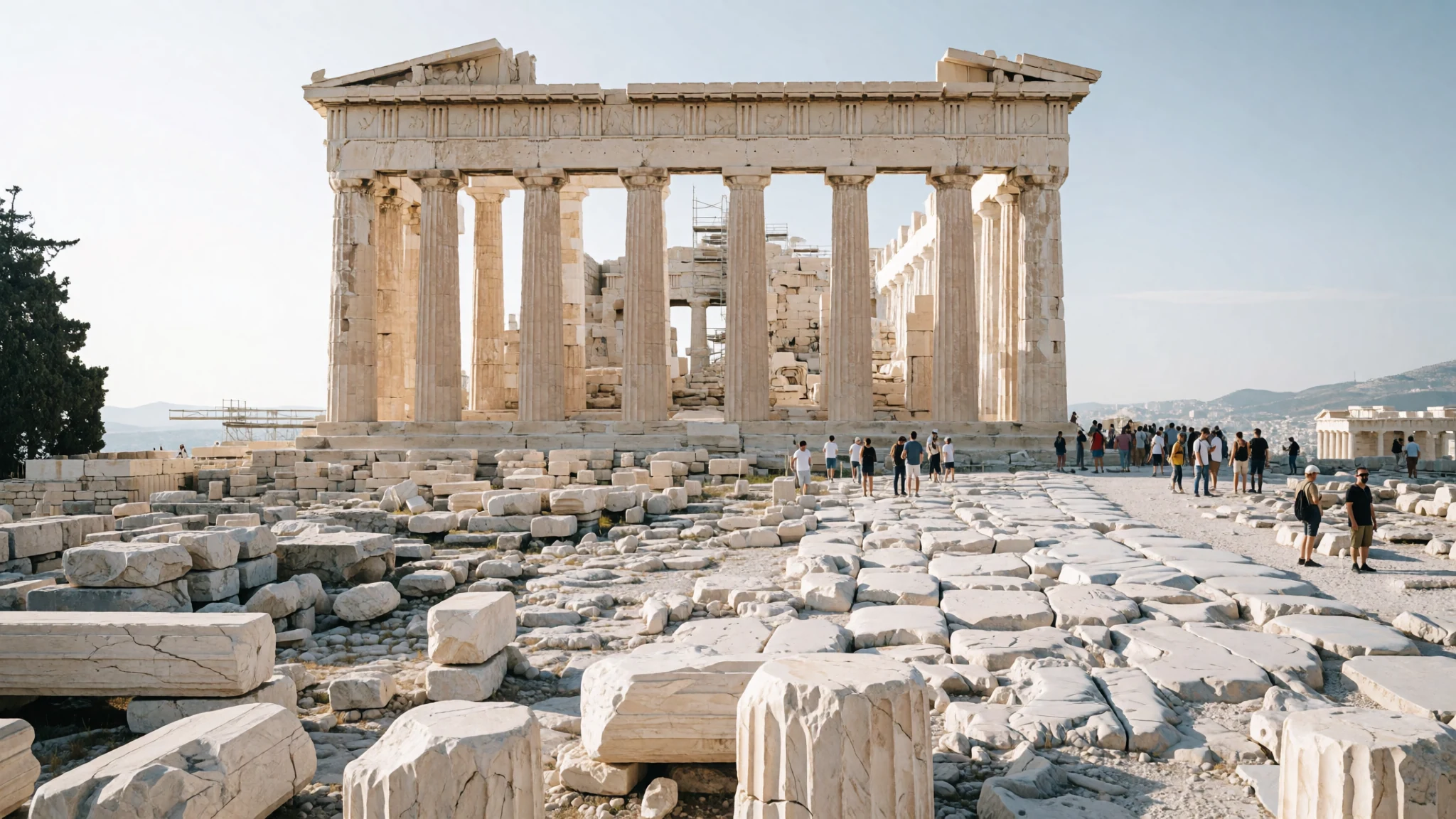
- The Erechtheion — Northern sector of the Acropolis
This intricate temple stands on the northern side of the citadel, renowned for its elegant Porch of the Maidens where sculpted female figures known as Caryatids serve as structural columns. The sacred building is linked to ancient myths concerning the foundational contest between Athena and Poseidon.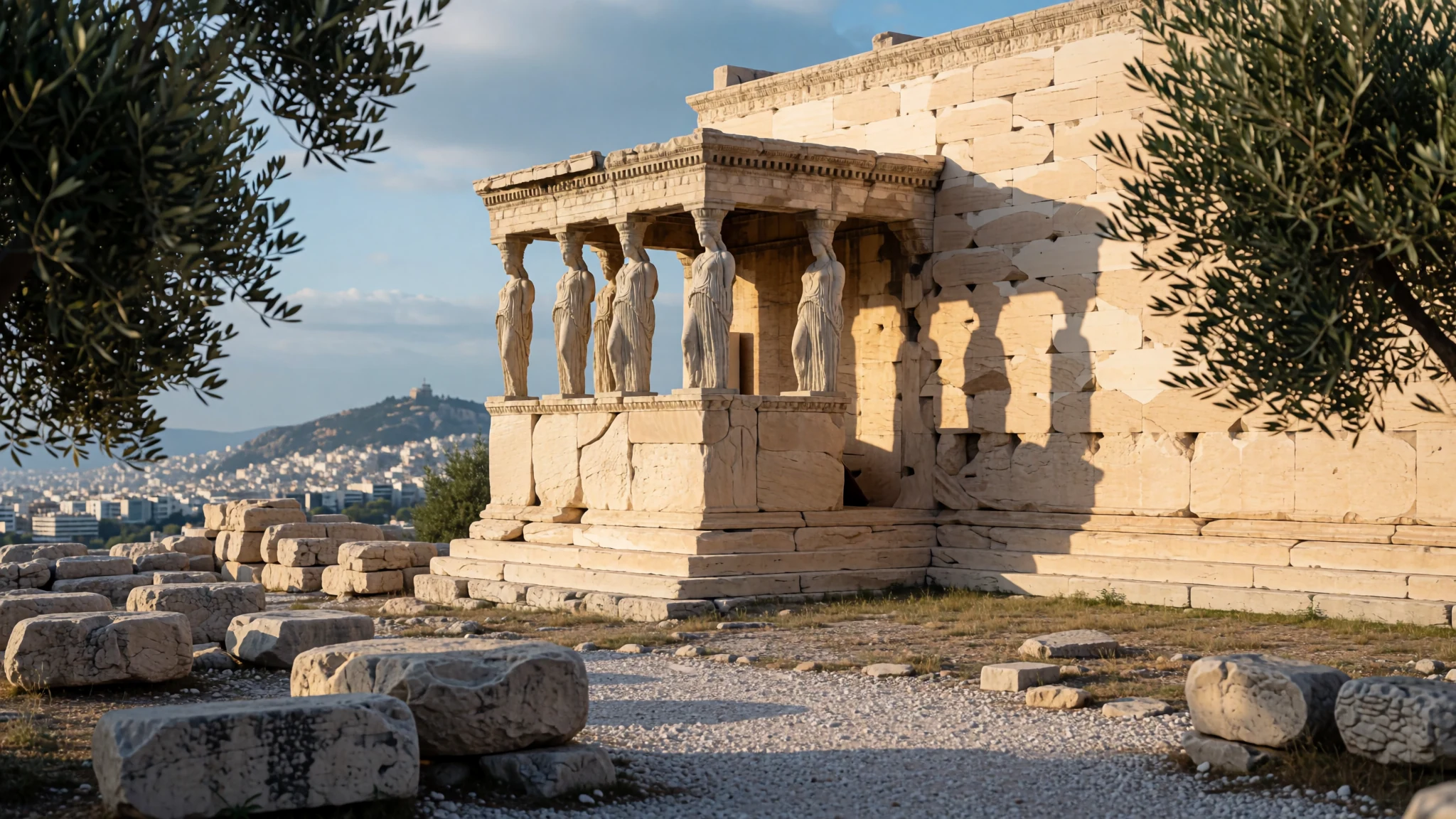
- The Propylaea — Western entrance of the Acropolis
Serving as the monumental gateway to the sanctuary, the Propylaea was designed to impress visitors as they ascended the western slope. Its grand marble staircases, deep porticoes, and heavy Doric and Ionic colonnades marked a majestic transition from the secular world below into the sacred realm of the gods.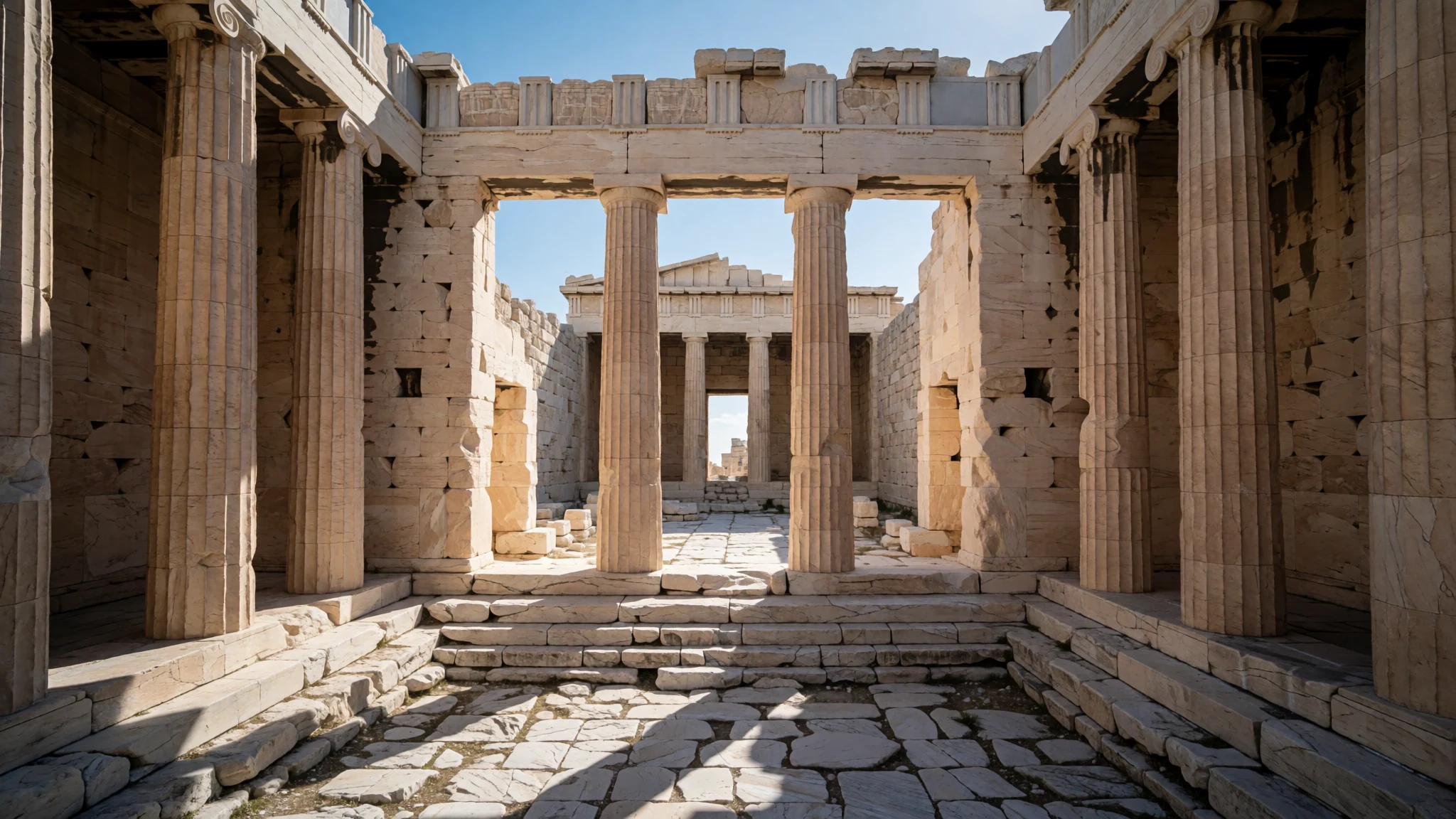
- Temple of Athena Nike — Southwestern bastion of the Acropolis
Perched precariously on a bastion near the entrance gate, this graceful little Ionic temple honours Athena as the bringer of victory. Its delicate proportions, elegant columns, and surviving sculptural relief panels celebrating military triumphs make it one of the most refined architectural gems on the hill.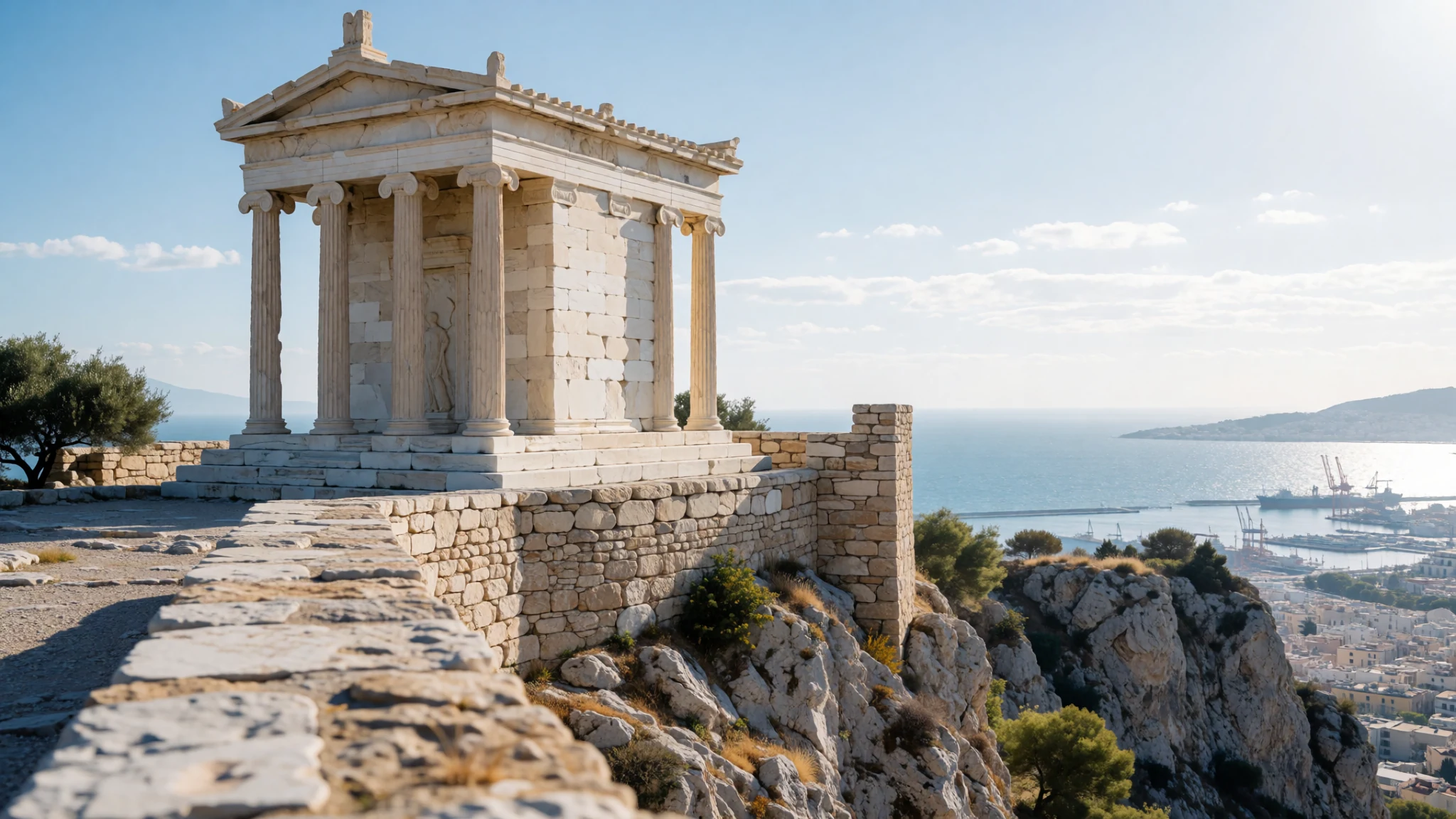
- Philopappos Hill — Southwest of the Acropolis
Rising directly opposite the main citadel, this adjacent green hill offers the finest panoramic viewpoint for photographing the entire Acropolis and the surrounding urban sprawl of Athens. Shaded dirt paths wind past pine trees to the prominent Roman marble monument perched on the summit.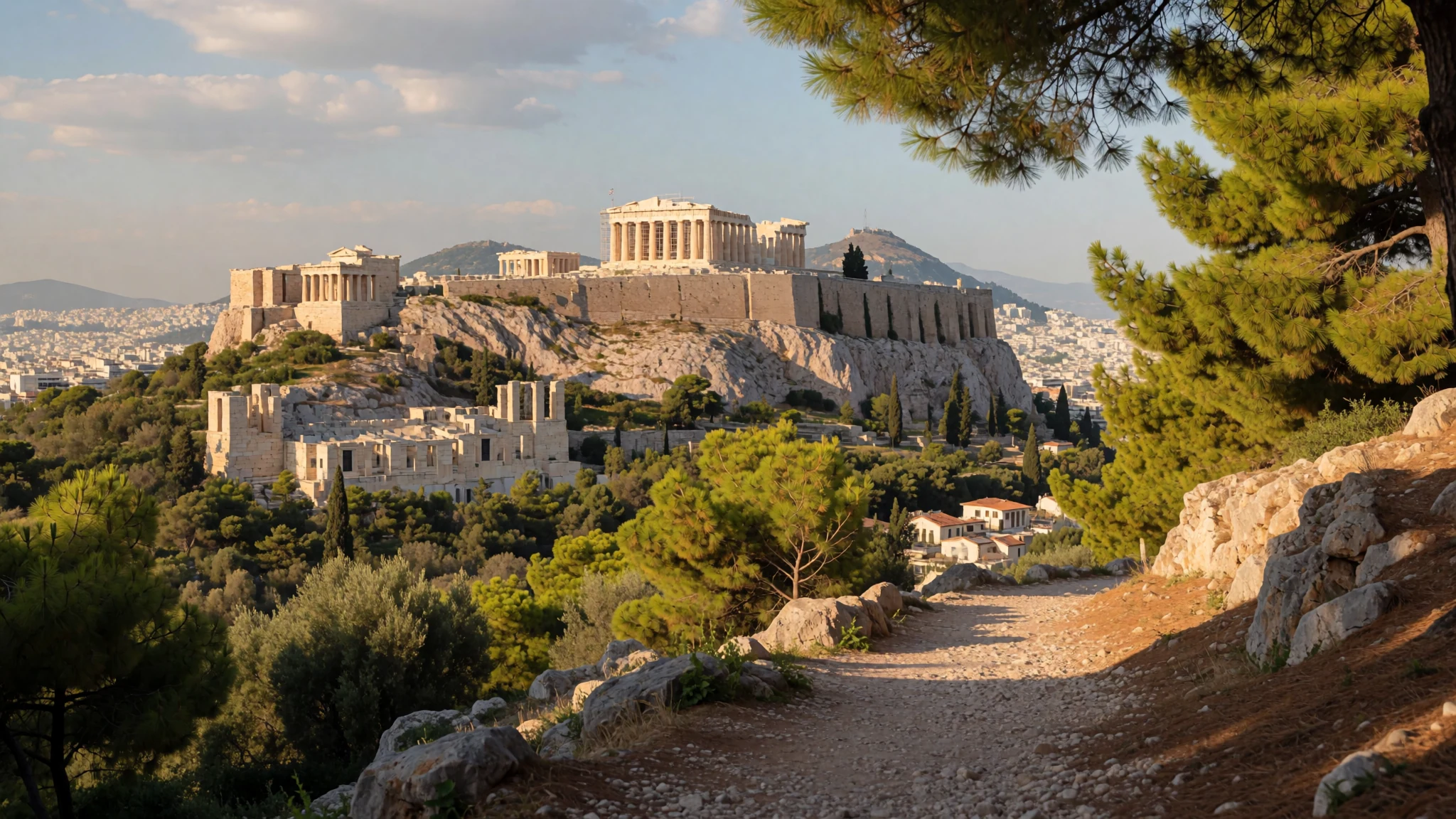
Culture
At the Acropolis of Athens, the surrounding culture is deeply rooted in Mediterranean warmth, philoxenia (hospitality), and a profound pride in classical heritage. Athenians navigate their daily routines with a lively urban rhythm, balancing long café conversations with a strong appreciation for family, seasonal dining, and the arts. Traditional Greek music and neighbourhood taverna gatherings remain central to social life, while religious festivals and Orthodox traditions continue to shape the calendar across the city. Visitors will find locals eager to converse, share recommendations, and debate current affairs over thick Greek coffee or ouzo. When exploring the ancient archaeological site and nearby sacred spaces, visitors must dress modestly with covered shoulders and knees out of respect for the historic sanctuary.
What to wear
Traditional Greek attire historically featured garments woven from local wool and linen, ranging from ancient chitons and himations to regional folk costumes distinguished by embroidered vests, pleated kilts known as fustanellas, and cloth headwear. While these historical textiles are now largely preserved for national holidays and folkloric dances, everyday fashion in modern Athens mirrors contemporary European urban trends. Locals wear tailored trousers, casual denim, breathable cotton shirts, and stylish sneakers suited for navigating warm weather and steep marble pavements. For visitors exploring the Acropolis of Athens, practical footwear is essential due to the slippery, polished ancient stone steps that can become treacherous underfoot. Lightweight, breathable layers, sunglasses, and sun hats are strongly recommended during the hotter months, alongside modest clothing that covers the shoulders and knees when visiting sacred ruins.
What to eat
- Souvlaki and Gyros — Monastiraki square and surrounding neighbourhood lanes
Tender pieces of marinated meat grilled on skewers or shaved from a vertical rotisserie, wrapped in warm pita bread with tomatoes, onions, fried potatoes, and cooling tzatziki garlic sauce. Found at traditional street food stalls throughout the Plaka and Monastiraki districts.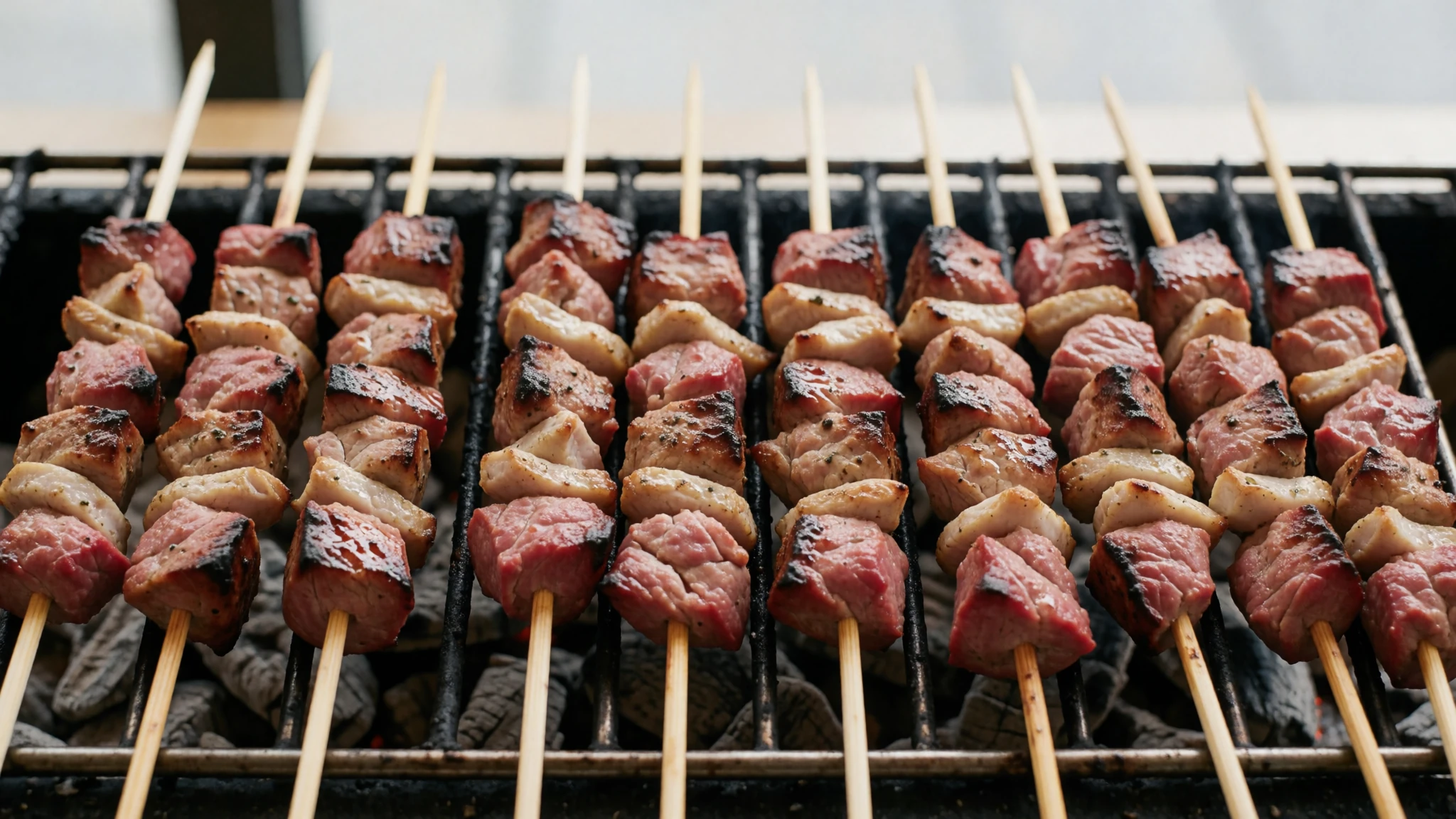
- Spanakopita — Local bakeries throughout the Plaka district
Flaky, golden layers of crisp phyllo pastry filled with a savoury mixture of chopped spinach, feta cheese, spring onions, dill, and fresh herbs. Available all day at neighbourhood bakeries and traditional pie shops across central Athens.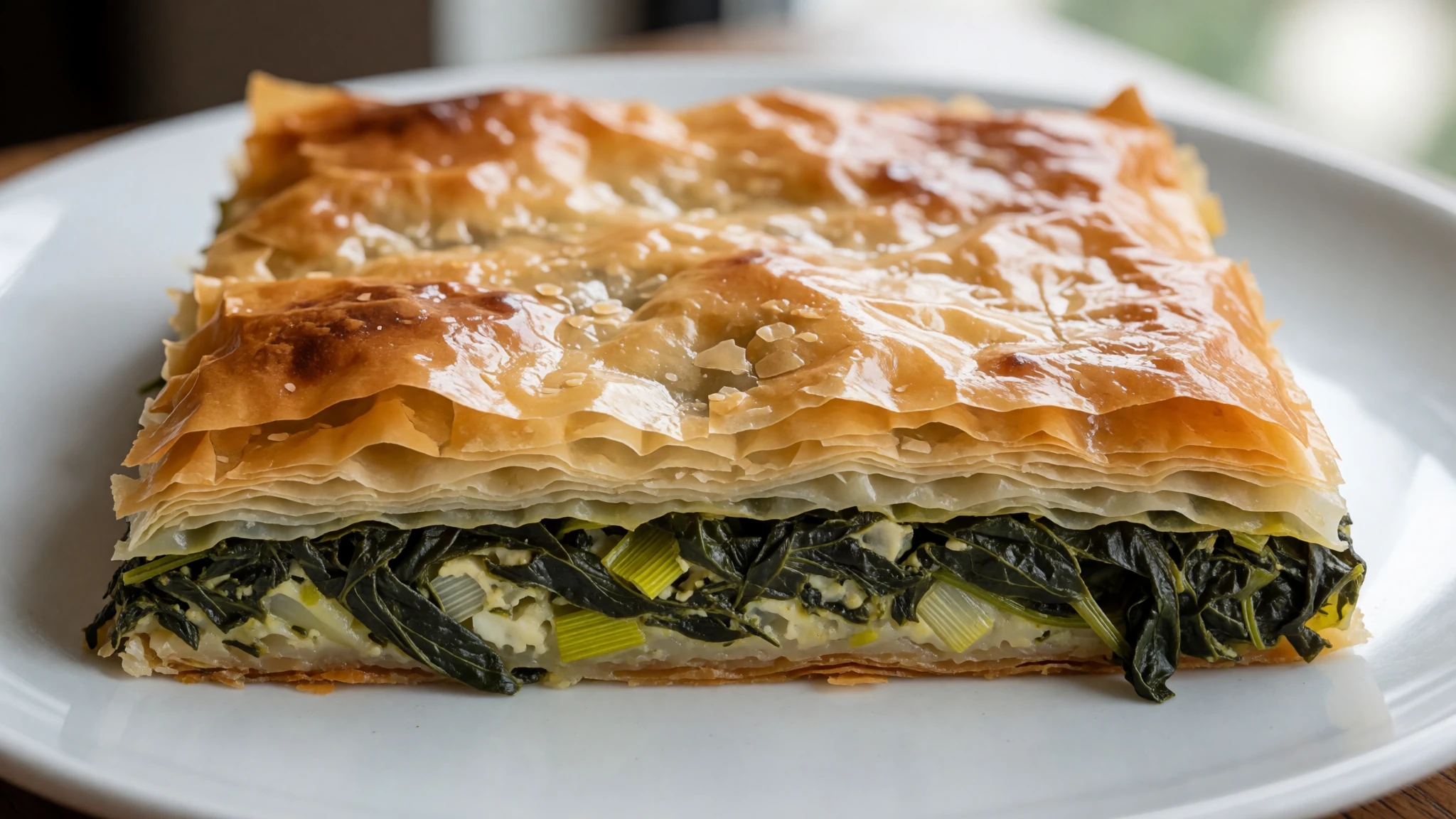
- Moussaka — Traditional tavernas in the Plaka and Psiri neighbourhoods
A comforting baked casserole featuring layered slices of pan-fried aubergine, minced lamb or beef in a rich tomato sauce, topped with a thick layer of creamy béchamel sauce and baked until golden brown. Served across traditional family tavernas.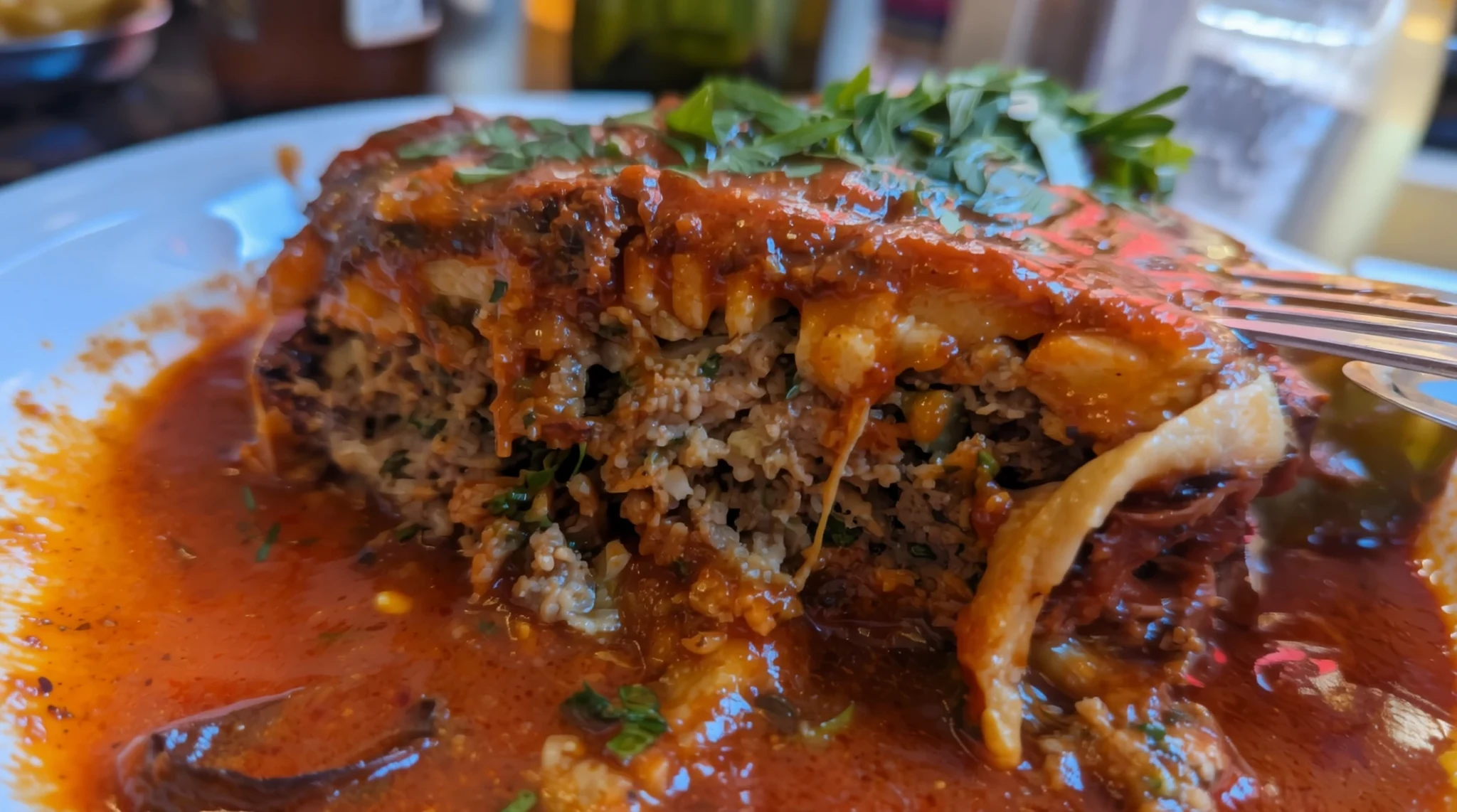
- Greek Salad (Horiatiki) — Open-air tavernas surrounding the ancient city centre
A refreshing, vibrant salad made with chunky ripe tomatoes, crisp cucumber slices, green bell peppers, sliced red onion, Kalamata olives, and a generous block of authentic feta cheese drizzled with extra virgin olive oil and oregano. Offered at every local eatery. - Loukoumades — Speciality sweet shops near Aiolou Street
Puff-pastry dough balls deep-fried until golden and crisp, then drenched in warm honey syrup and dusted with cinnamon, crushed walnuts, or sesame seeds. Sourced from specialised dessert shops and pastry counters near the central markets.
Plan it
Best time. April and October offer mild, pleasant weather for climbing the citadel, avoiding the scorching heat of May through September and heavy tourist crowds.
How long. 2–3
Getting there. Fly into Athens International Airport, then take the Metro Line 3 or the direct express bus straight into the city centre to reach the foot of the citadel.
Budget. mid
Tips
- Arrive right at opening time to beat the heavy midday crowds and intense summer heat
- Wear sturdy walking shoes with good grip, as the ancient marble steps are extremely slippery
- Book your entry tickets in advance online to secure your preferred morning time slot
- Carry a refillable water bottle, sunglasses, and a hat, as shade on the summit is very limited
Etiquette
- Dress modestly with covered shoulders and knees when exploring the archaeological sanctuary
- Do not touch, climb on, or lean against any of the ancient marble ruins and monuments
- Refrain from using flash photography inside restricted exhibition areas
Nearby
Sources
- Wikidata Q131013 (CC0)
- Wikipedia (rev 1381933875) (CC BY-SA 4.0)
- Wikivoyage (CC BY-SA 4.0)