Chios
Chios, Greece
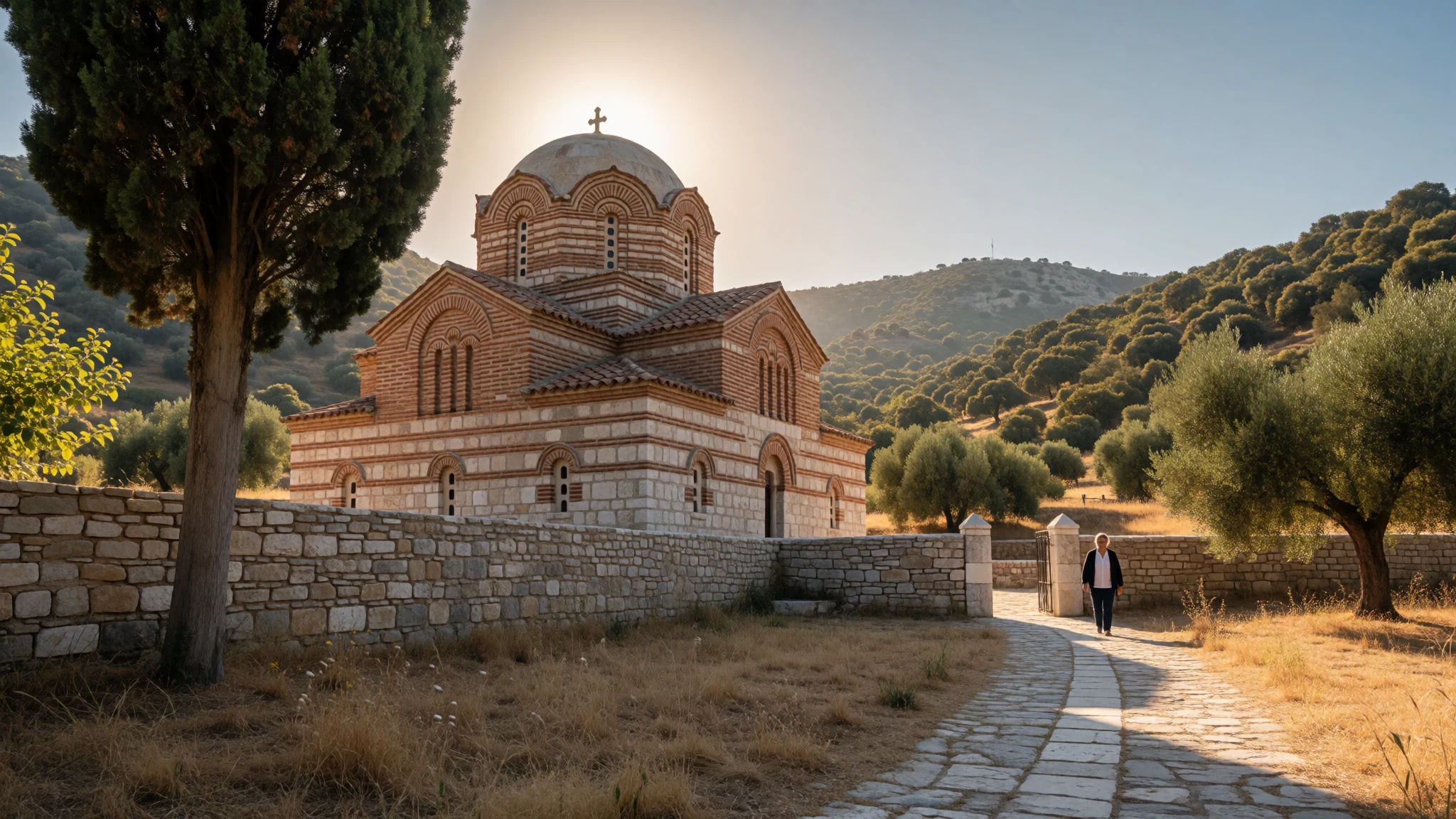
Chios is a Greek island of mastic villages, Byzantine mosaics and quiet Aegean coast, where visitors still come second to daily island life.
The place
Chios is a Greek island in the northern Aegean, shaped like a crescent or a kidney and lying close to the Turkish coast across the Chios Strait. It stretches about 50 km from north to south and about 29 km at its widest, with a mountain ridge along its length that reaches 1,297 m. The land is dry and rocky, and summer heat is real. Chios is known as the Mastic Island, because the southern villages grow the mastic tree, whose resin has been harvested here for generations and ends up in sweets, drinks, cosmetics and chewing gum. That crop shaped the island's wealth, its fortified villages and its shipping families. The main town, also called Chios and known locally as Chora, is a working port with a harbour front, a castle and a busy market district rather than a resort strip. Beyond it the island splits into distinct moods: the mastic villages of the south, the monastery and stone-village country of the centre, and the quieter, wilder north. Chios forms one municipality within the North Aegean region. Tourism is modest compared with the better-known Greek islands, so beaches and villages are rarely packed outside August, though flights and ferries still fill in peak weeks. Distances are bigger than they look on a map and the roads wind, so most visitors hire a car to reach the villages properly.
Its story
Chios has been inhabited since at least the Neolithic period, with cave dwellings at Hagios Galas in the north and a settlement and cemetery at Emporeio in the far south. Scholars admit how little is firmly known about these early communities, since the size and duration of the settlements are unclear, and much of the evidence comes from British excavations at Emporeio in the middle of the last century. The island's names are a story in themselves. Ancient writers linked Chios to a son of Poseidon born in a snowfall, from the Greek word for snow, while others preferred a nymph called Chione. In antiquity it was also called Ophioussa, snake island, and Pityoussa, pine-tree island. In the later Middle Ages outside powers ruled it and the names changed with them: Scio for the Genoese, Chio in Italian, Sakız in Ottoman Turkish. An inscription now in the island's archaeological museum, from a funerary monument, traces one family back fourteen generations to the tenth century BC, before Greece kept written records. The most painful chapter came in 1822, during the Greek War of Independence, when Ottoman troops massacred, expelled or enslaved tens of thousands of islanders. Chios stayed part of the Ottoman Empire until 1912. That memory sits behind the empty houses of some villages and the island's sense of itself as a place that rebuilt.
What to see
- Nea Moni — Central Chios, in the hills above the main town
Nea Moni is a monastery in the hills of central Chios, founded in the 11th century and listed by UNESCO as a World Heritage Site. Its fine mosaics date from the reign of Constantine IX. The interior is small, so arrive early, before tour groups. Check the official island site for opening times.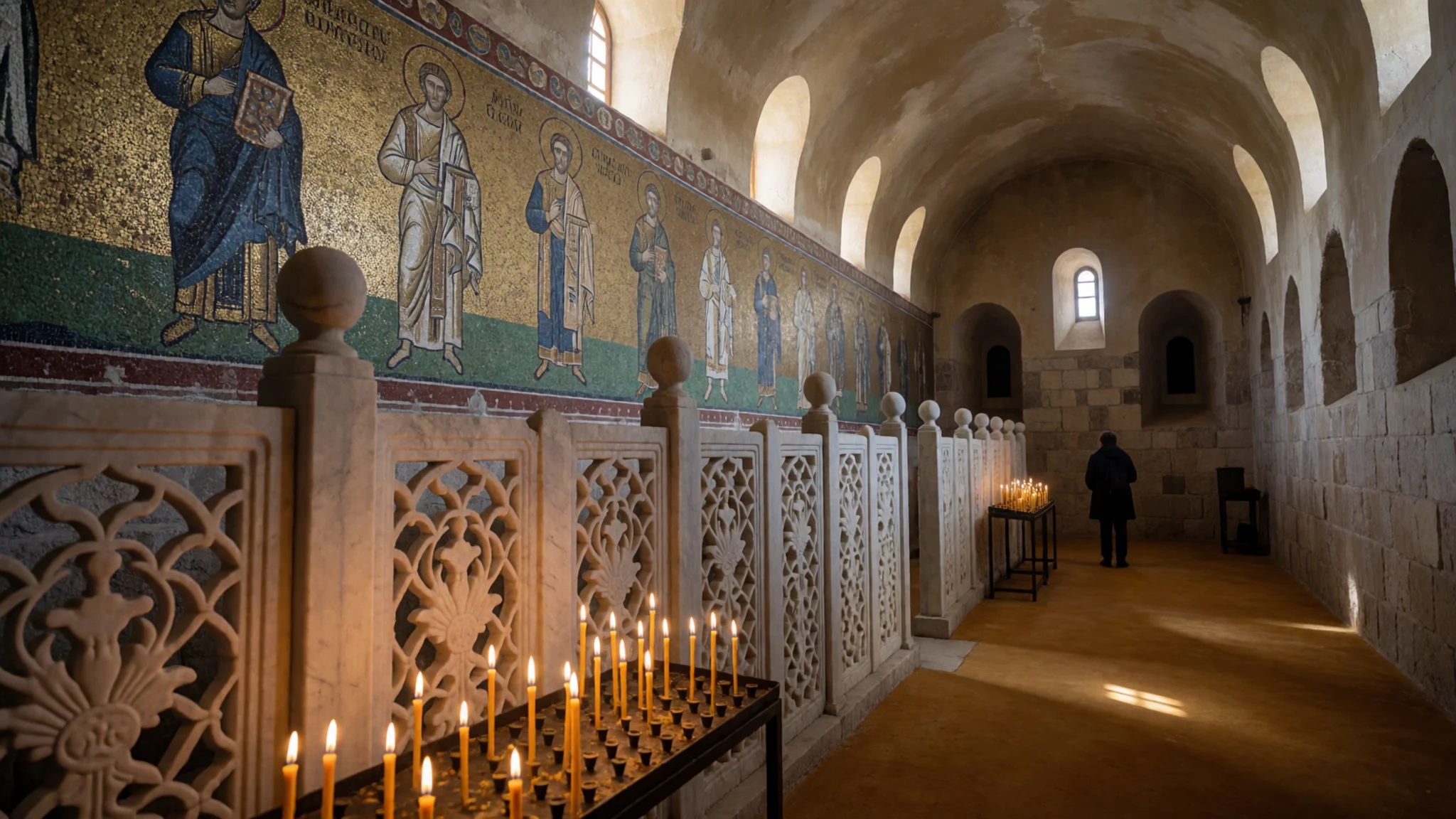
- Anavatos — Western-central Chios
Anavatos is a Byzantine village whose tall stone houses stack up like towers on a rocky crag. Many are roofless and the lanes are steep and uneven, so wear shoes with grip. It is a sombre, atmospheric place to walk, and a reminder of the island's difficult past.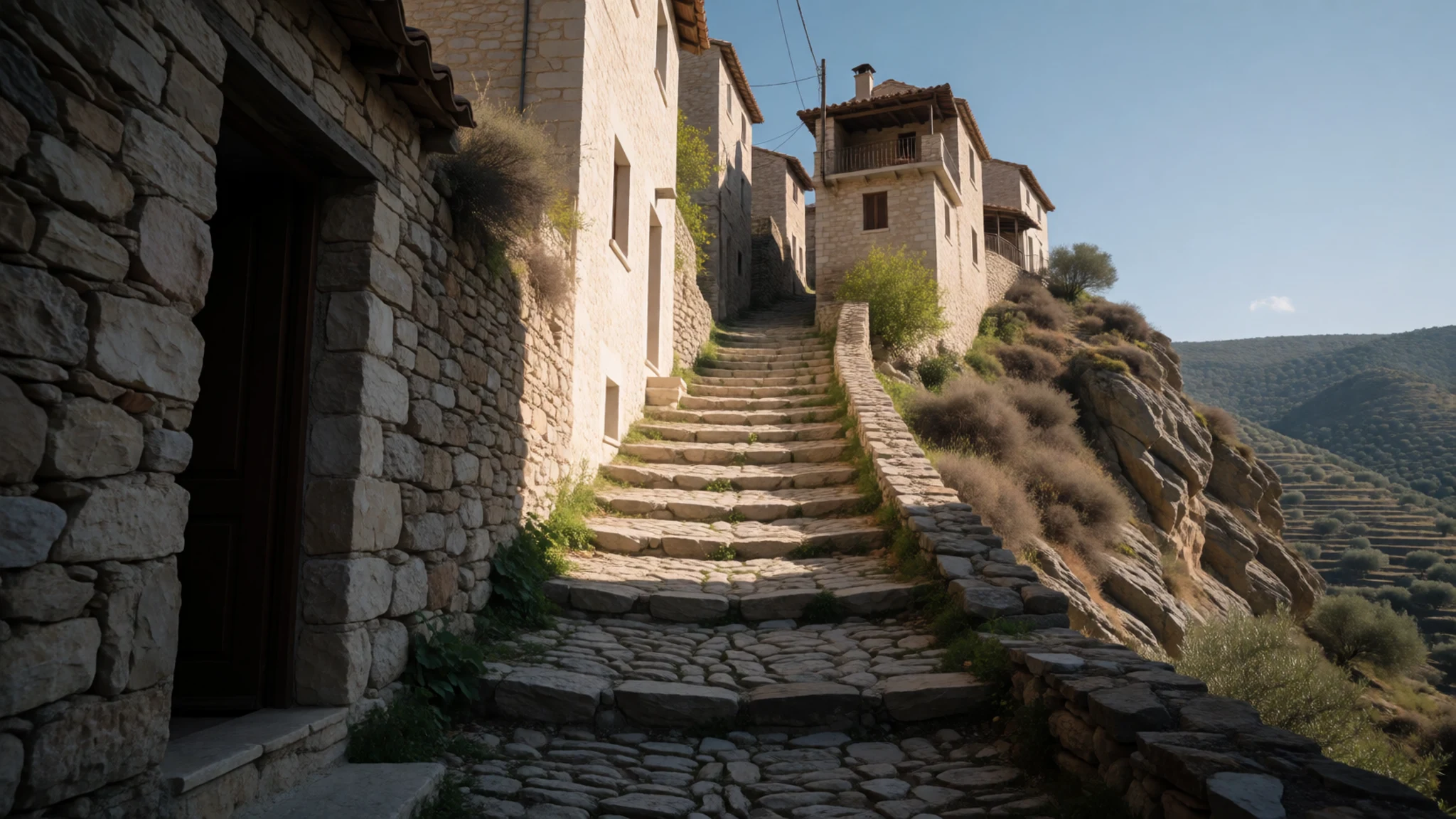
- Mesta — Southern Chios, mastic villages
Mesta is one of the medieval villages of the mastic-growing south, with narrow lanes, vaulted passages and tightly packed stone houses built for defence. It is easiest to enjoy on foot in the morning, before the heat, with a coffee in the small square afterwards.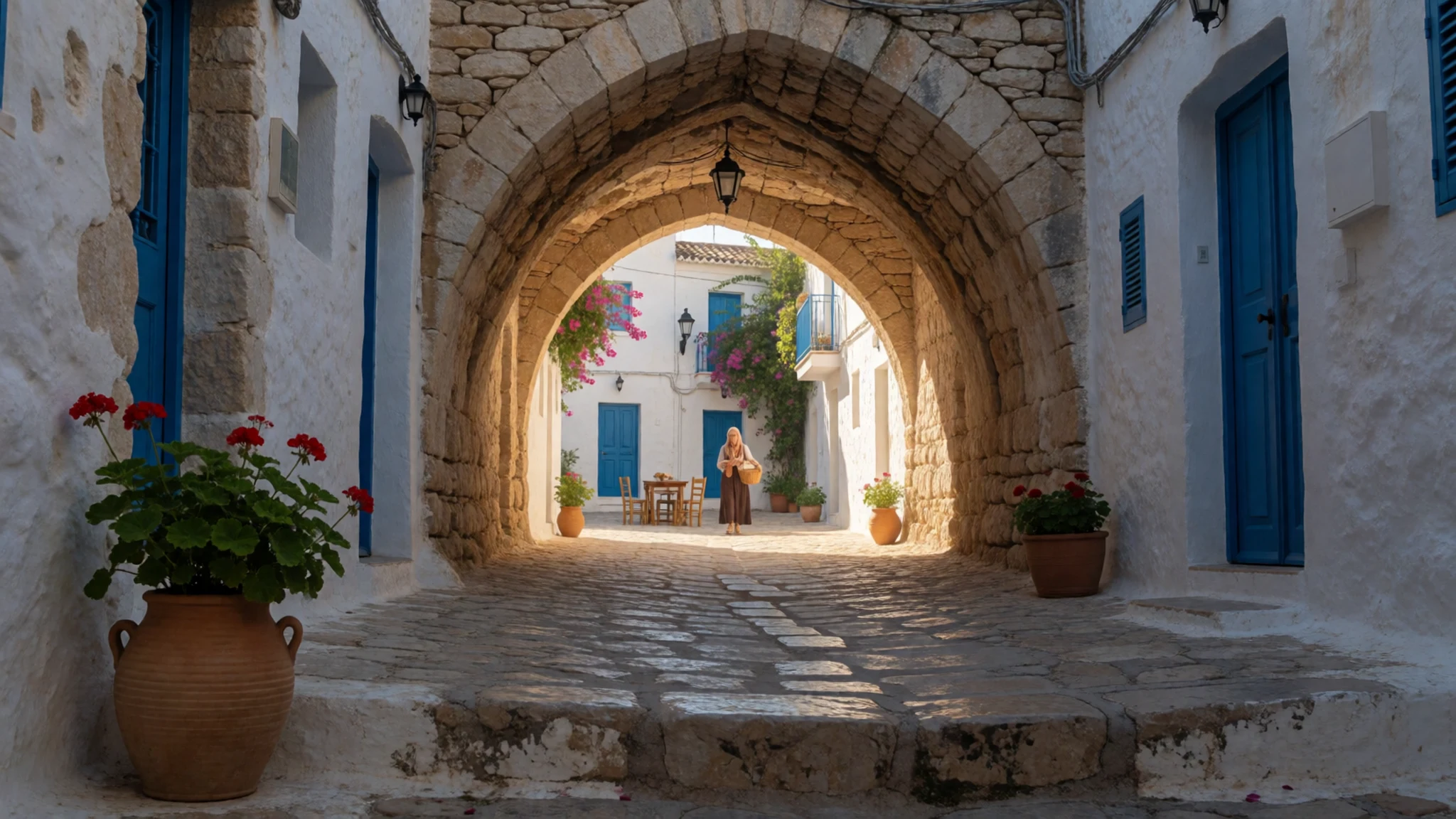
- Pyrgi — Southern Chios, mastic villages
Pyrgi is another southern mastic village, known for house fronts decorated with patterned designs. Wander the lanes slowly, since many streets are narrow and residents live behind those walls. Cafés near the central square are a good place to try local sweets made with mastic.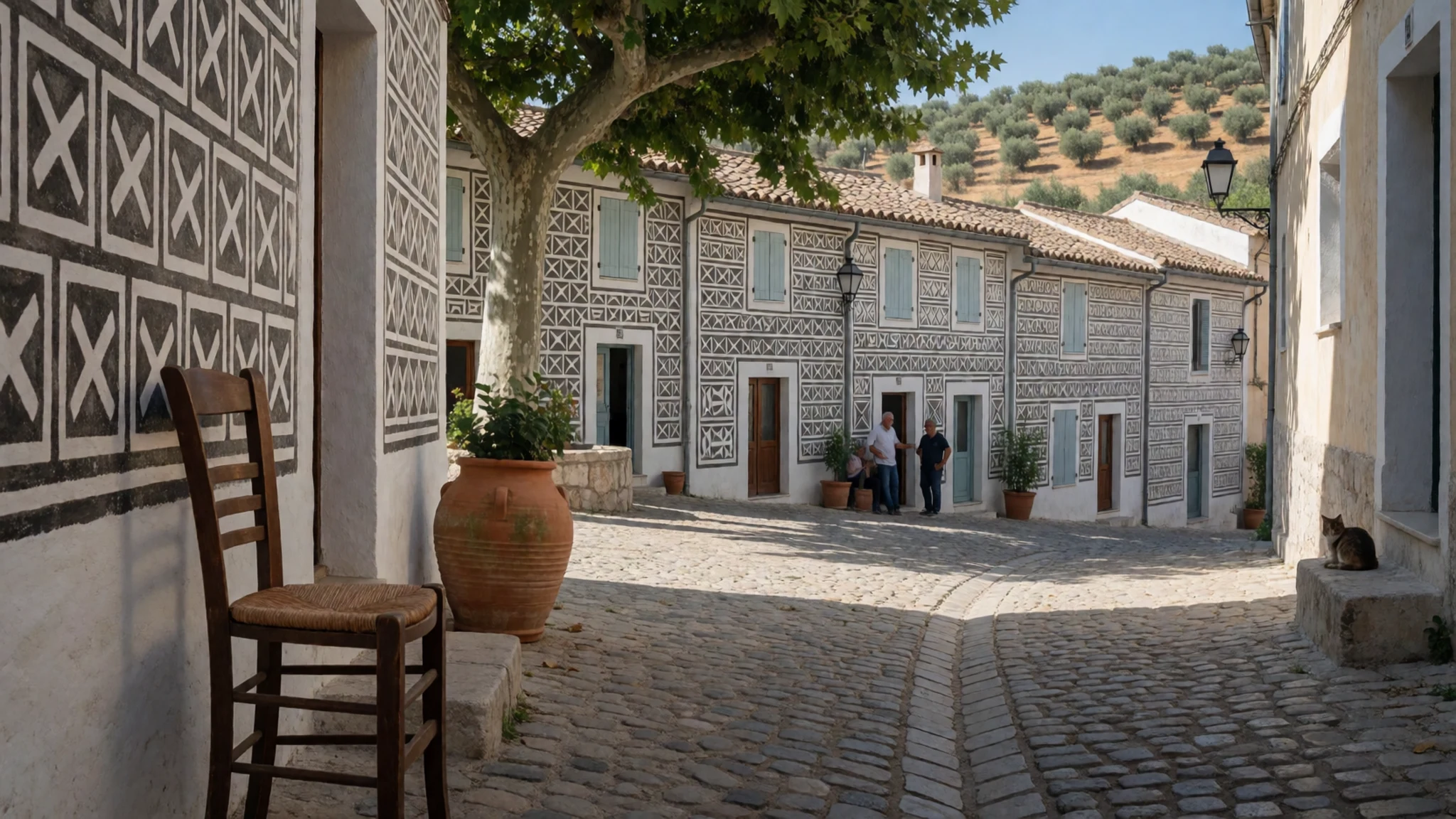
- Mastiha Museum — Southern Chios, near the mastic villages
The Mastiha Museum is dedicated to the mastic tree and its resin, showing how the crop is grown, harvested and used. It makes the southern villages easier to understand before or after a drive through them. Check the museum's official listing for hours and tickets.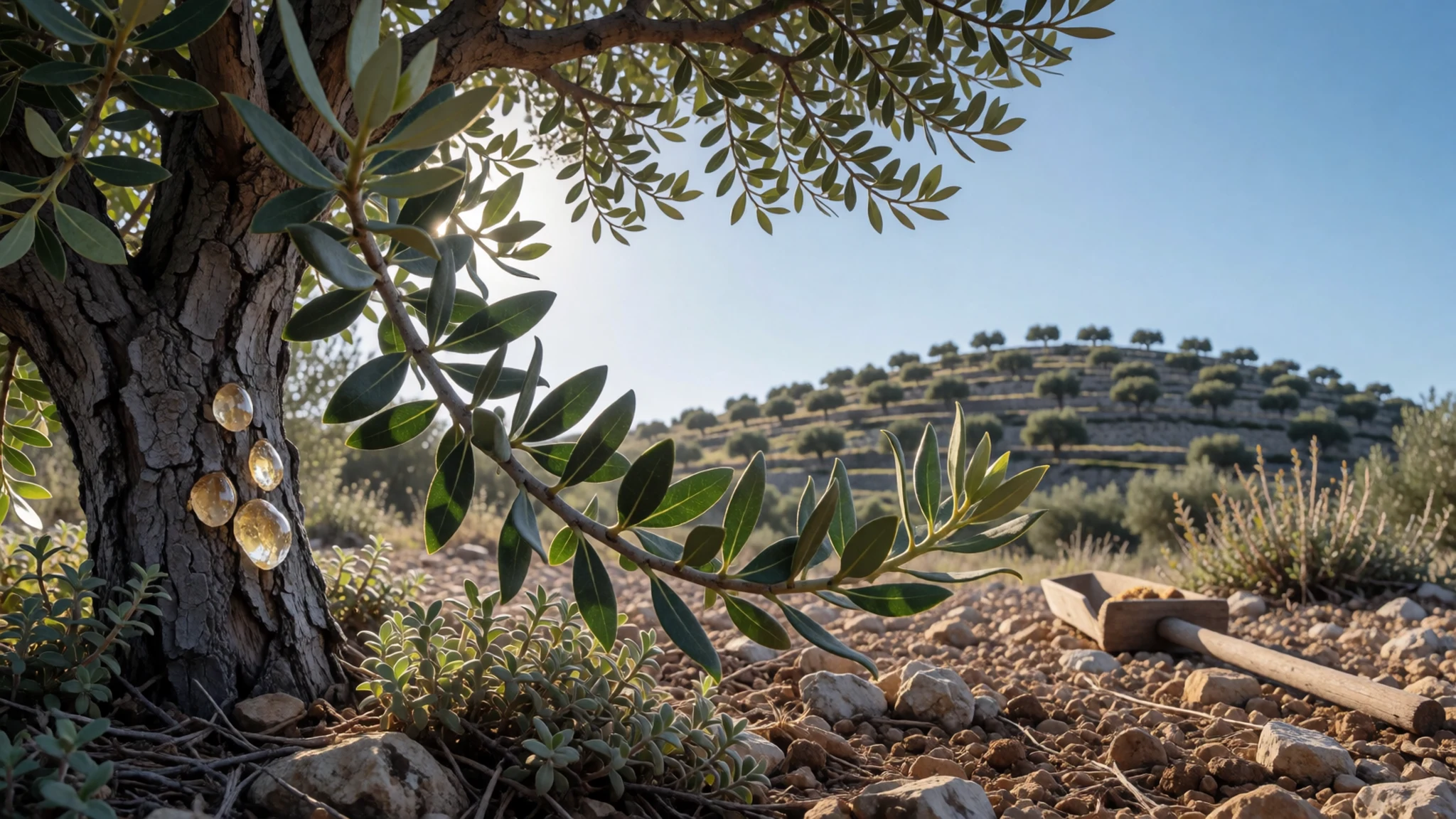
- Castle of Chios — Chios town (Chora)
The Castle of Chios, a Byzantine fort from the 10th century, sits beside the harbour in the main town. Its walls enclose a lived-in quarter of old houses, once the island's capital under the name Kastron. Combine it with a stroll along the waterfront and the market streets.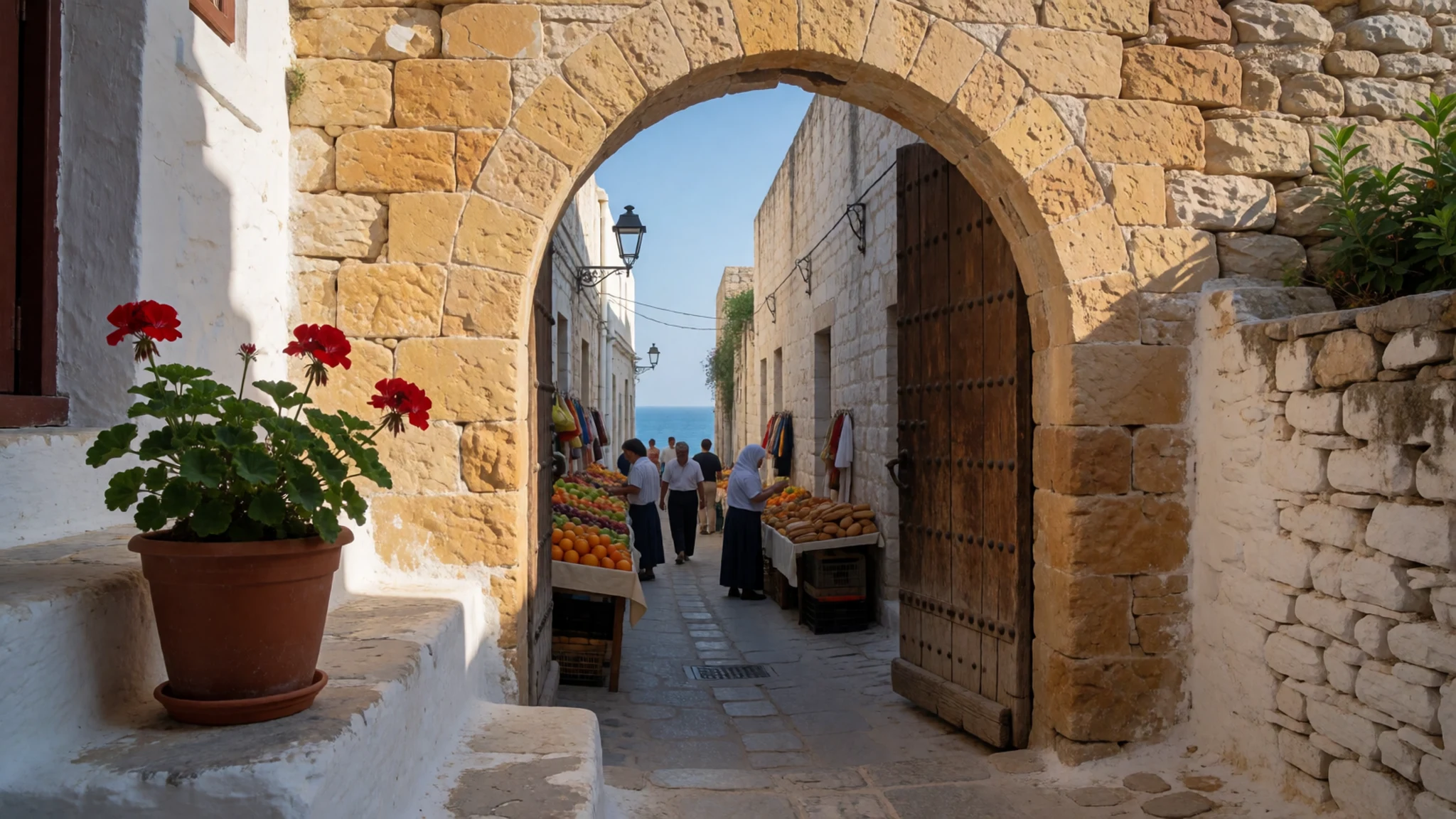
Culture
Chios is an Orthodox Christian island, and church life shapes the calendar more than any tourist festival does. Monasteries such as Nea Moni keep the island's religious and artistic memory, with mosaics from the Byzantine period, and village churches are used daily rather than preserved for show. Easter is the high point. During Easter in the town of Vrontados, two opposing parishes engage in a tradition known as rouketopolemos, where local teams launch tens of thousands of homemade rockets at each other's church bell towers. It is loud, smoky and taken seriously by those involved, so anyone coming for it should expect crowds, closed roads and little sleep. Beyond religion, the island's identity rests on seafaring and mastic. Merchant shipping families carried mastic, olives, figs, wine, mandarins and cherries to other ports, and the sea is still part of everyday talk. Sport centres on football and water polo in Chios town, and the island is twinned with places as far apart as Çeşme in Turkey, Genoa in Italy and Guiyang in China. The island's history of loss in 1822 is remembered with care, and locals appreciate visitors who listen. Cover your shoulders and knees when entering a monastery or church, and ask before photographing inside or photographing worshippers.
What to wear
Chios has no single costume that visitors will meet on the street. Old village dress here followed the wider Aegean pattern of home-woven cotton, linen and wool, with embroidered aprons and headscarves for women, and today it mostly appears at church festivals, weddings and folk dance performances. Local folklore collections are the best place to see it up close. Everyday clothing now is relaxed and practical: shorts, linen shirts and sundresses in summer, jeans and light jackets in the cooler months, with smarter casual wear for an evening on the harbour front in Chios town. For visitors, the island is dry and sunny, so pack light, breathable fabrics, a sun hat and sunglasses. Carry a scarf or shawl and a long-sleeved top for monasteries and churches, where shoulders and knees should be covered. Footwear matters more than fashion: village lanes are cobbled and steep, Anavatos is loose stone, and some beaches are pebbly, so bring sturdy sandals or trainers with grip and, if you plan to walk the hills, proper walking shoes. In spring and autumn the northern Aegean wind can be cool, so add a light layer for evenings and ferry decks.
What to eat
- Mastelo — Grill houses and tavernas in Chios town and the villages
Mastelo is a local cheese that is often grilled until it softens and browns at the edges. It makes a rich starter, best with bread and a squeeze of lemon, and it suits sharing at a table with other small plates.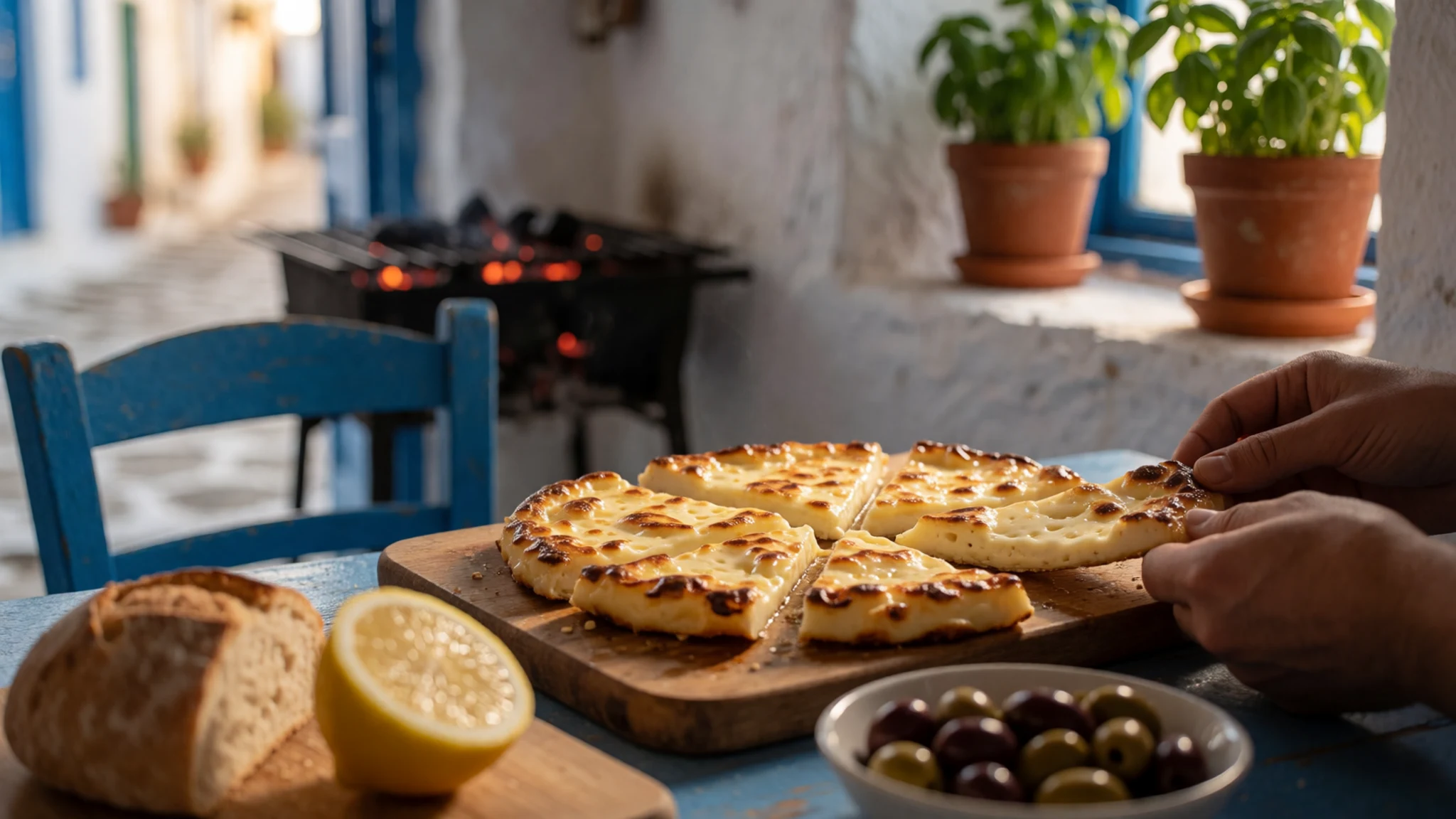
- Sfougato — Family-run tavernas and village eateries
Sfougato is a local omelette, baked or fried thick and soft, usually made with vegetables or herbs and cheese. It works as a light lunch or a mezze dish and tastes best when eaten warm with something fresh alongside.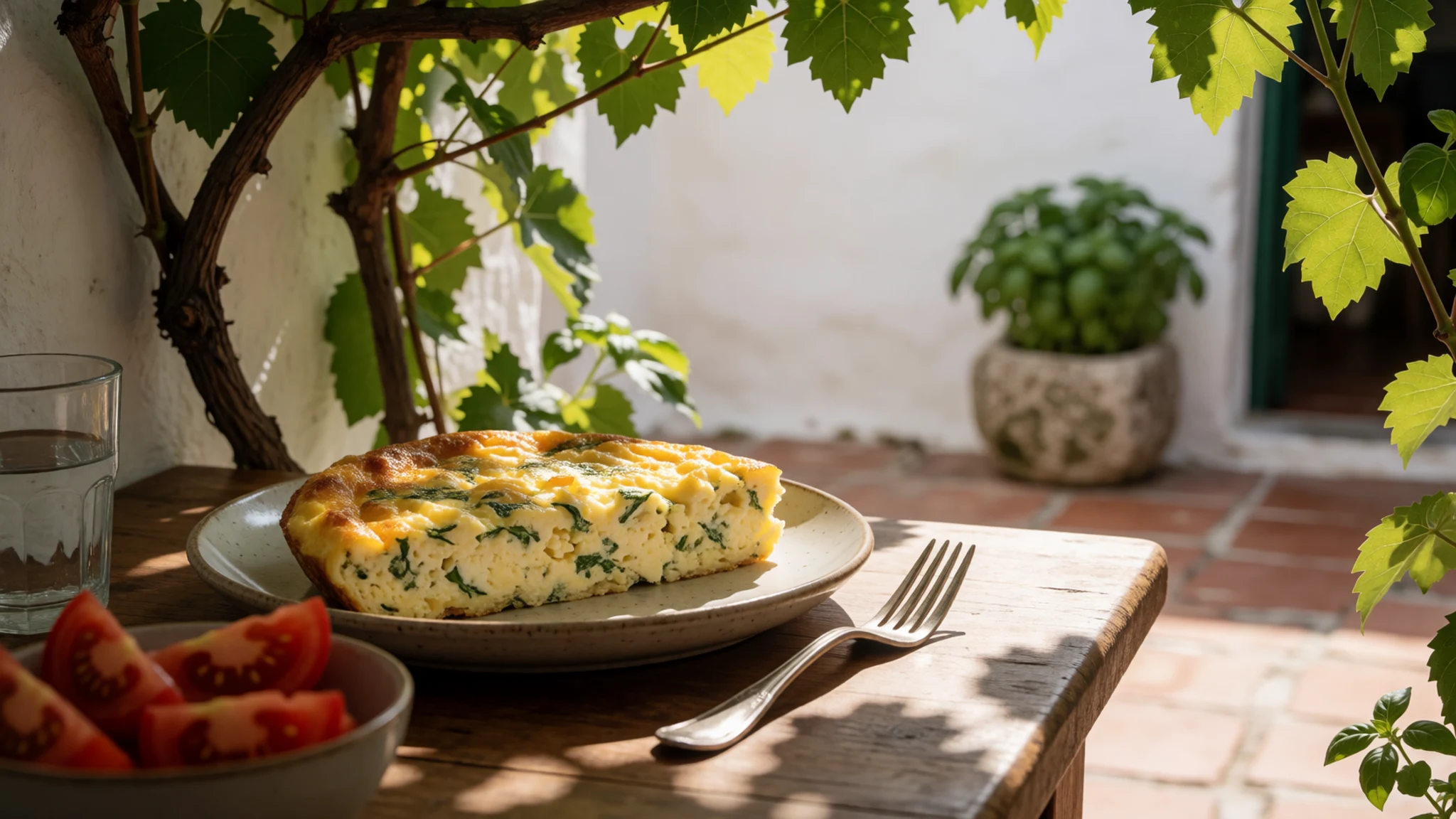
- Neratzopita — Pastry shops and bakeries in Chios town
Neratzopita is a traditional pastry linked to the island's citrus growing, built around the aroma of bitter orange. It is more of a perfumed sweet than a heavy dessert, and works well with a small coffee in the afternoon. - Mamoulia and masourakia — Village bakeries and sweet shops, especially around festivals
Mamoulia and masourakia are traditional island sweets, often made for holidays and family gatherings. Expect nuts, spice and sweetness in small portions. Buy a few from a bakery to carry in your bag for a hillside stop. - Mastiha — Cafés and tavernas in Chios town, and shops in the southern mastic villages
Mastiha is the island's signature drink, a clear liqueur flavoured with mastic resin, with a faintly piney, resinous taste. It is usually served small and cold after a meal. Try a taste first, since the flavour is distinctive and not for everyone. - Souma — Village kafeneia and family-run tavernas
Souma is a strong local spirit, traditionally made by home distillers and often passed around informally at village gatherings. Take it slowly, and ask for a small glass with water on the side. It pairs well with grilled cheese and salty snacks.
Plan it
Best time. May–June and September–October, when the island is warm and settled with fewer crowds than July–August, which can be hot and busy. Easter suits those who want to see the Vrontados rocket tradition and accept crowds. Winters are quieter and windier, and some seasonal services reduce or pause.
How long. 3–5
Getting there. Chios Island National Airport, named after Homer, has flights from Athens and Thessaloniki, with extra seasonal services in summer from some European cities, so check current schedules. Ferries run daily from Piraeus (Athens), more often in summer, and there are year-round links with Samos and Lesvos. From Turkey, reach Çeşme by bus from Izmir airport, then take the short boat crossing. The last leg to Chios town is a short taxi or bus ride, and a hire car is useful beyond that.
Budget. mid
Tips
- Book flights early, since fares rise sharply close to the date
- Hire a car to reach the mastic villages, Nea Moni and Anavatos, and start early to avoid the midday heat
- Carry some cash for village cafés, bakeries and small shops
- Bring water, sun cream and a hat for walks, since the interior is dry and exposed
- Check ferry and flight timetables on the official sites before you travel, as seasons change them
Etiquette
- Cover shoulders and knees in monasteries and churches
- Ask before photographing people, worshippers or the inside of a church
Nearby
Sources
- Wikidata Q160483 (CC0)
- Wikipedia: Chios (CC BY-SA 4.0)
- Wikivoyage: Chios (CC BY-SA 4.0)
- Photo: Chios Prefecture satellite image (NASA) (Public domain)
- Photo: Locator map, Dimos Chiou (Pitichinaccio) (CC BY 3.0)
- Photo: Chios map (Kelisi) (CC BY-SA 4.0)
- Photo: Pyrgi village (Petille) (CC BY-SA 2.0)
- Photo: Mesta village (Kostisl) (Public domain)
- Photo: Chios Municipal Park (Arthur Pennant) (CC BY-SA 2.0)
- Photo: Rocks of Saint Markella (Forsterfoto) (CC BY 2.5)
- Photo: Chios tetradrachm (CNG) (CC BY-SA 2.5)


