Athens
Athens, Greece
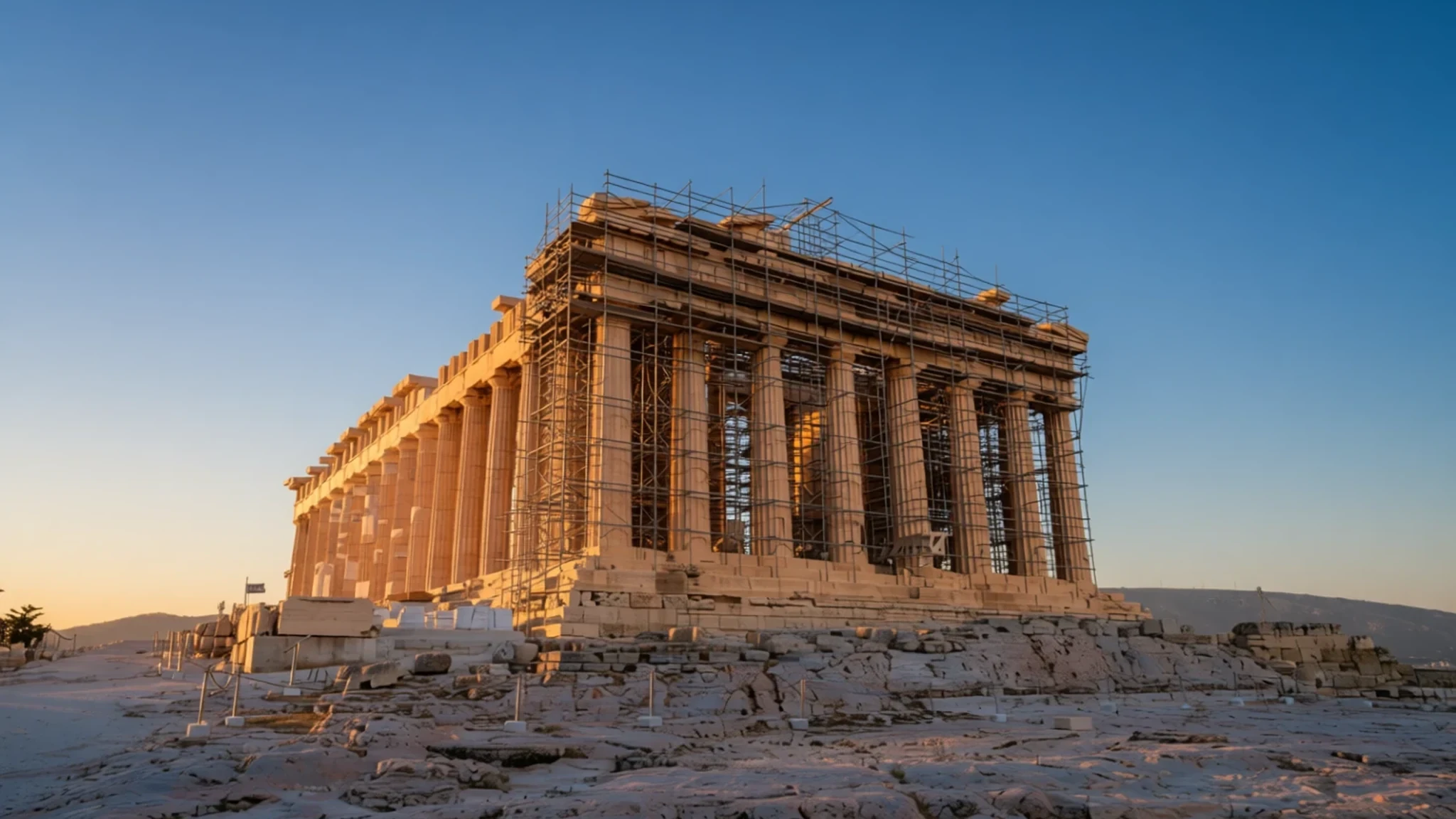
Athens layers millennia of democratic heritage, ancient sanctuaries, and bustling Mediterranean street life beneath the watchful shadow of the Acropolis.
The place
Athens serves as the capital and largest city of Greece, anchoring the Attica region as a prominent coastal metropolis on the Mediterranean. Within its municipal boundaries, the city accommodates a population of about 640,000 residents across a compact land area that sits at an elevation of 74 m above sea level. This dense urban core forms the heart of a much wider metropolitan expanse stretching across the surrounding plains toward the sea. As one of the oldest continually inhabited settlements in the world, Athens records a human presence stretching back over several millennia.
Geography shapes the Athenian experience profoundly. The city unfurls across a basin framed by limestone massps such as Parnitha, Penteli, and Hymettus, while rocky outcrops like the Acropolis and Lycabettus rise dramatically from the urban grid. The climate is distinctly Mediterranean, bringing long, dry summers and mild winters that encourage outdoor café culture throughout the year. Neighbourhoods shift in character rapidly, from the neoclassical facades of Plaka winding directly beneath the ancient citadel to the gritty, creative hubs of Exarchia and the bustling commercial arteries around Monastiraki.
Today, Athens balances its monumental past with the pulse of a modern European capital. Cranes and scaffolding punctuate the skyline alongside ancient marble pillars, reflecting a city constantly excavating, repairing, and reinventing itself. Visitors encounter a place where ancient history is not sequestered behind glass, but woven directly into daily routines, where morning coffee is sipped within sight of crumbling sanctuaries, and where evening promenades fill public squares long after the midday heat has faded.
Its story
The story of Athens reaches back deep into prehistory, with the earliest traces of human settlement discovered in local limestone cavities such as the Cave of Schist. By the Bronze Age, the towering rock of the Acropolis had already transformed into a fortified Mycenaean stronghold, protected by massive stone ramparts whose remnants still endure. Unlike other Mycenaean power centres that suffered violent collapses, Athens navigated the shifting tides of the early first millennium BCE with continuity, preserving its identity while developing into a formidable maritime and cultural hub.
Classical antiquity brought Athens to its zenith. The city-state pioneered radical democratic governance, fostering unprecedented intellectual output in philosophy, theatre, and the arts. Following victories over Persian invaders, Athenians raised magnificent temples upon the Acropolis, including the Parthenon, as monuments to civic pride and divine favour. Yet this golden age proved fragile, eventually yielding to Macedonian hegemony and subsequent centuries of imperial rule under Roman, Byzantine, Frankish, and Ottoman authorities.
Each successive empire left tangible marks upon the Athenian landscape. Christian basilicas replaced pagan shrines, mosques rose inside ancient colonnades, and medieval fortifications altered the ancient contours. Following Greek independence in the nineteenth century, Athens was designated the national capital, prompting a wave of neoclassical urban planning that sought to marry the city's glorious classical heritage with modern European aspirations. Through every occupation and revival, the city has remained a resilient crucible of Mediterranean culture, shaped endlessly by the layers of its own monumental past.
What to see
- Acropolis of Athens — Acropolis
Perched high above the modern streets, this ancient citadel remains the defining symbol of classical Greece. Visitors ascend the rocky slopes to explore a complex of ruined sanctuaries, temples, and defensive walls that have stood for millennia as a testament to ancient engineering and artistic ambition.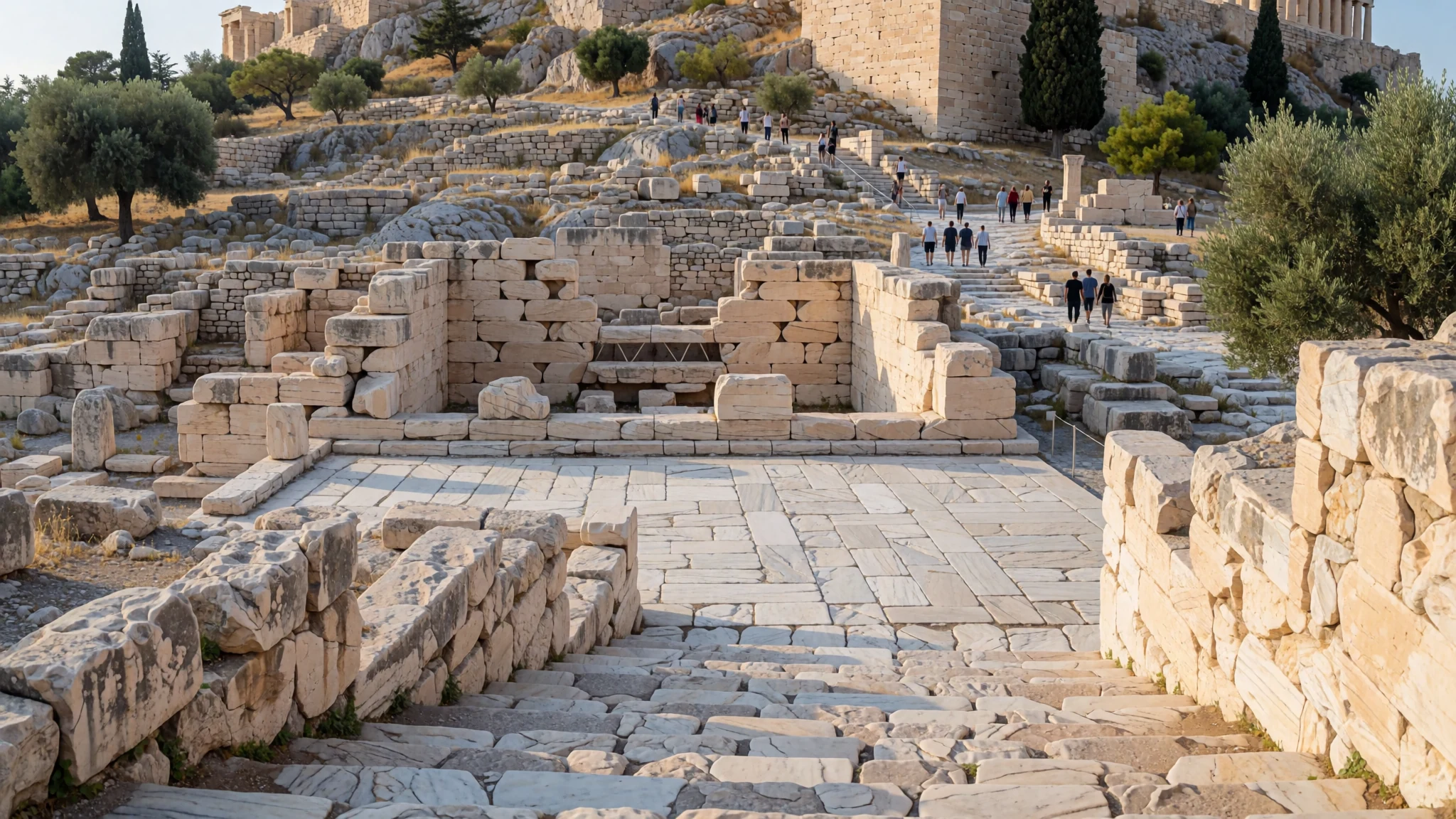
- Parthenon — Acropolis
Dominating the Acropolis summit, this monumental marble temple was erected in the fifth century BCE to honour the goddess Athena. Its refined architectural proportions and sculptural friezes represent the pinnacle of classical Greek design, having subsequently served as a Christian church and an Ottoman mosque over the centuries.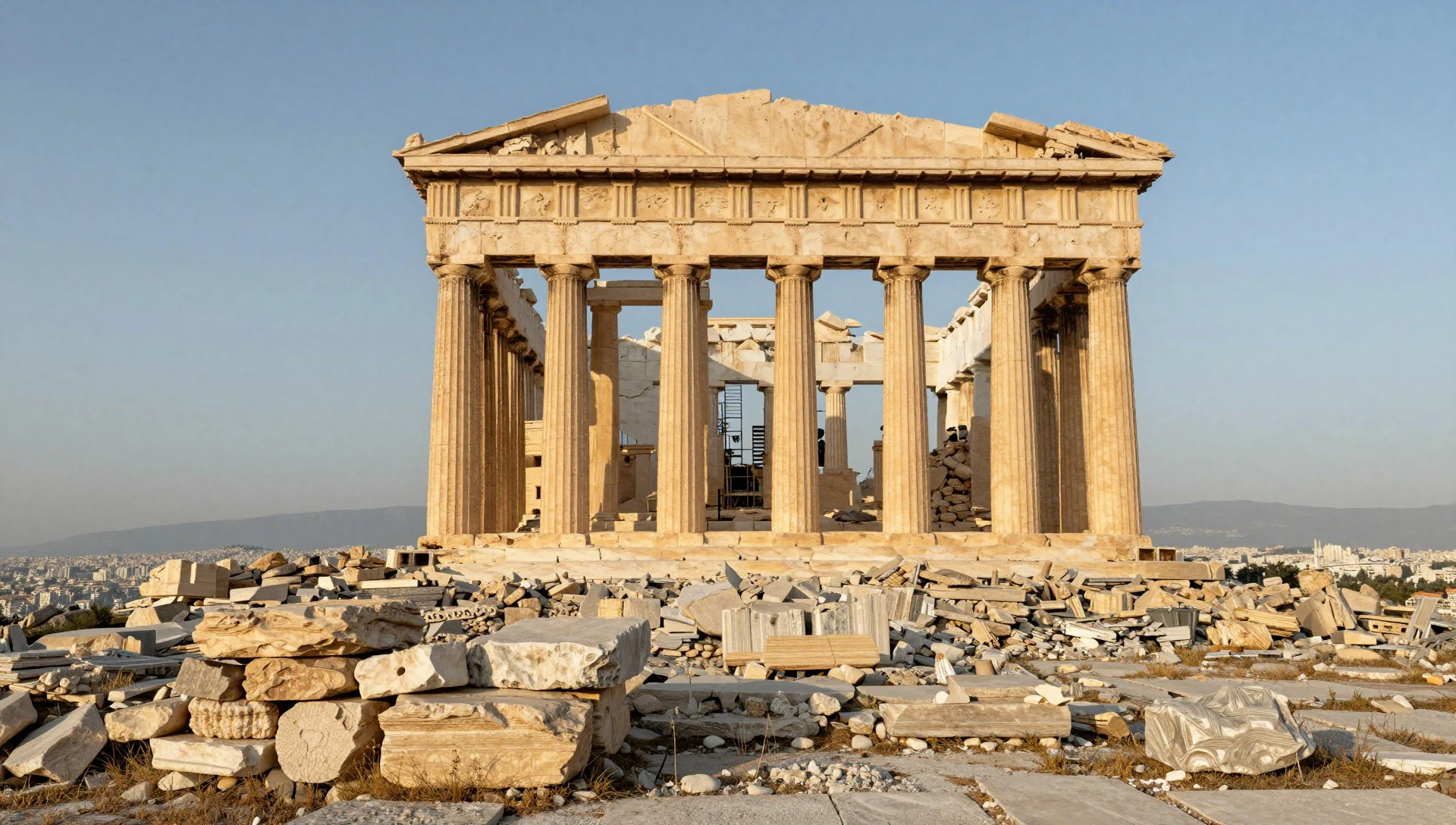
- Propylaea and Temple of Athena Nike — Acropolis
The monumental gateway serves as the grand entrance to the Acropolis, featuring sweeping rows of Pentelic marble columns. Directly beside it stands the elegant, compact temple dedicated to Athena of Victory, positioned proudly on a steep bastion overlooking the surrounding Attic basin.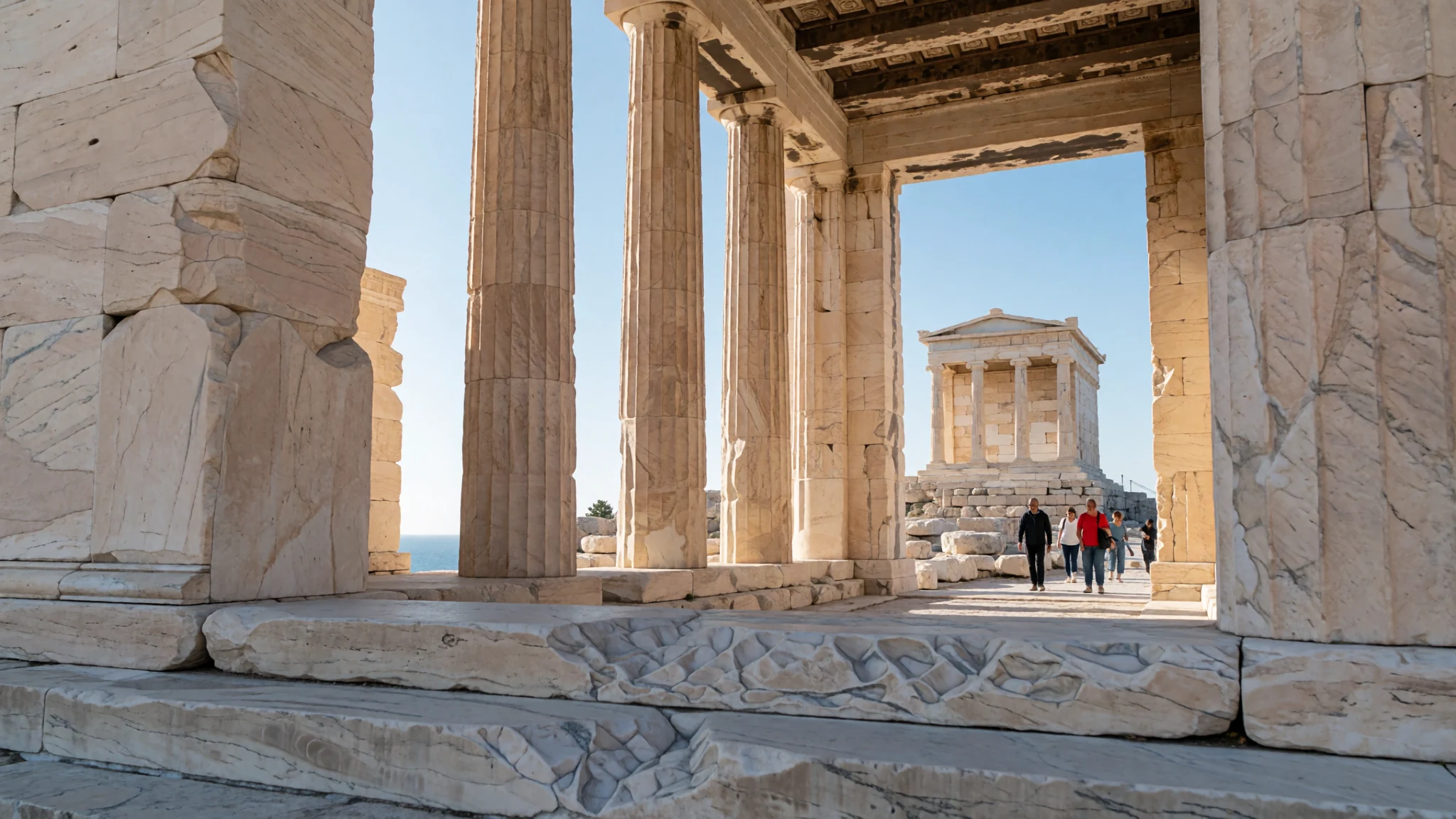
- Erechtheion — Acropolis
Renowned for its distinctive Porch of the Maidens supported by sculpted female figures, this intricate temple stands on the northern side of the Acropolis. Its asymmetrical layout accommodates sloping terrain and incorporates multiple sacred sites dedicated to ancient Athenian deities and foundational myths.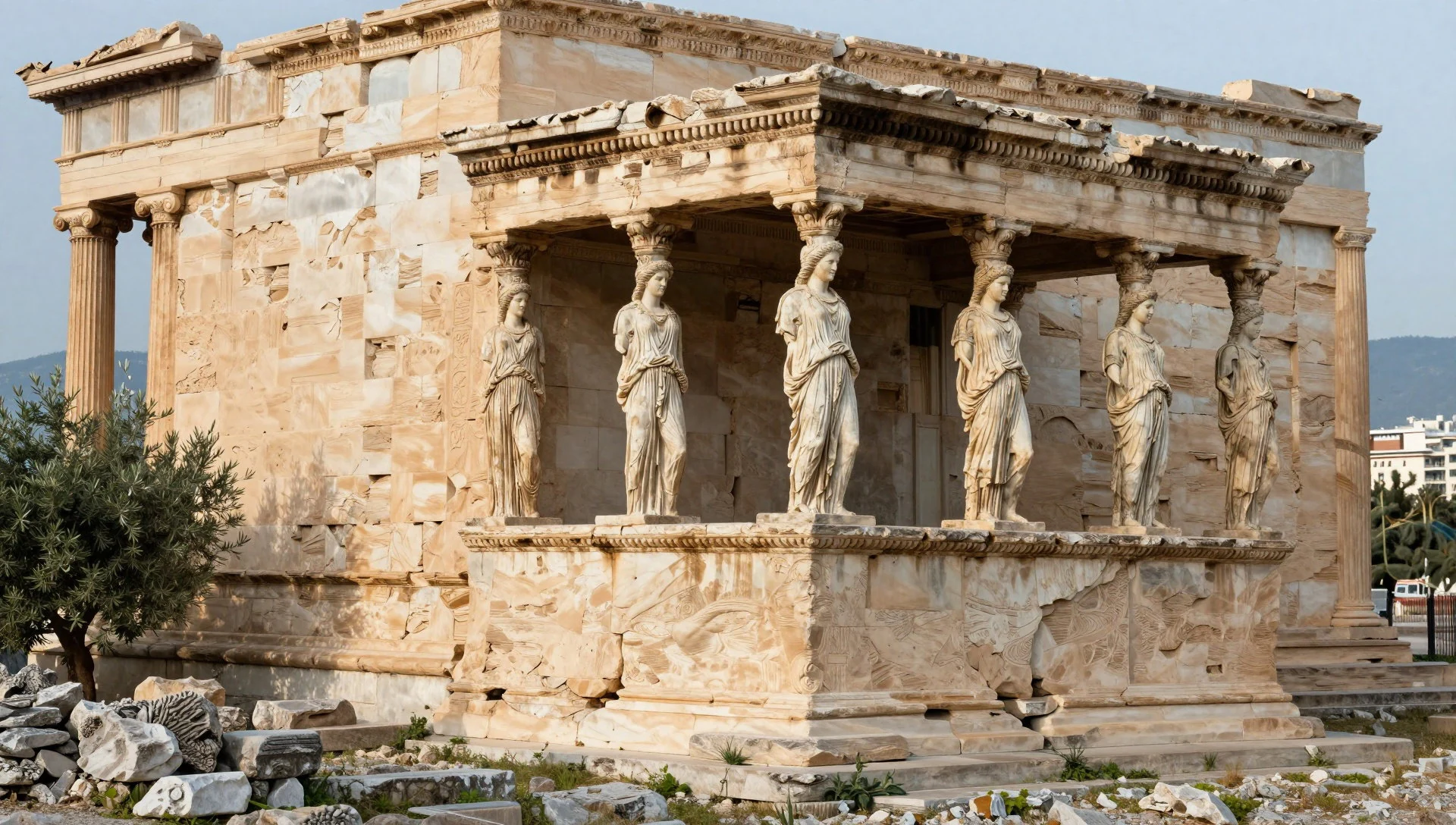
- Theatre of Dionysus — Plaka foothills
Carved into the southern foothills of the Acropolis, this ancient stone tier is widely regarded as the birthplace of European dramatic art. Classical playwrights premiered their great tragedies and comedies here before tiered audiences numbering in the thousands.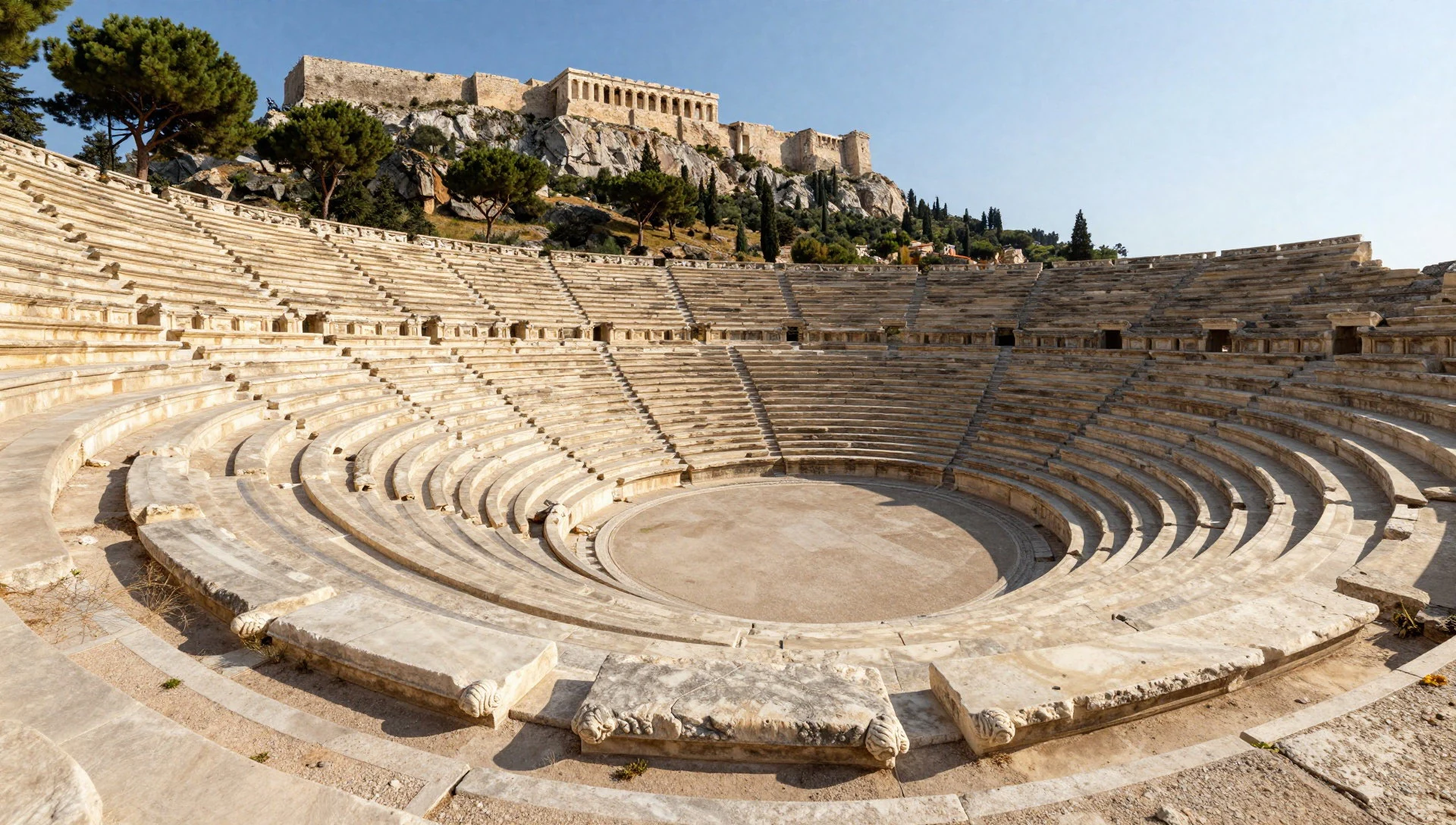
Culture
Athens functions as a vibrant global hub for archaeological scholarship, hosting numerous international research institutes alongside world-class repositories like the National Archaeological Museum and specialized collections dedicated to cycladic art, epigraphy, and Byzantine heritage. Academic curiosity permeates the city's intellectual climate, supported by institutions such as the University of Athens and the Archaeological Society. Beyond lecture halls and excavation sites, local culture is deeply rooted in social rituals. Conversations unfurl slowly across sidewalk café terraces, family gatherings anchor Sunday afternoons, and neighbourhood plazas hum with conversation late into the evening. Traditional hospitality remains a point of intense civic pride, where strangers are welcomed with warmth and generosity in family-run tavernas. When entering active Greek Orthodox churches, dress conservatively with shoulders and knees covered, and speak in hushed tones.
What to wear
Traditional Greek attire varies significantly by region, featuring intricately embroidered vests, woollen capes, and pleated kilts historically worn in mountainous areas, though these garments are now largely reserved for national holidays, ceremonial guards at the Hellenic Parliament, and folklore festivals. Contemporary Athenians favour a sleek, urban wardrobe that balances Mediterranean practicality with modern European sensibilities. Lightweight linens, tailored trousers, and stylish sunglasses dominate during the warm summer months, while leather jackets and smart layers appear as evening temperatures drop.
Visitors should prioritise comfort and practicality above all else. The city's ancient marble pathways, particularly around the Acropolis and historic quarters, become extraordinarily slick and polished underfoot, making sturdy walking shoes with reliable traction essential. Summers bring intense heat, so breathable natural fabrics are strongly recommended for daytime exploration. When planning visits to monasteries or active churches across the city, ensure you pack clothing that covers your shoulders and knees to comply with local modesty standards.
What to eat
- Kostas Souvlaki — Syntagma area
A legendary downtown institution operating since the mid-twentieth century, serving simple, perfectly grilled pork wrapped in pita with tomatoes, parsley, and a mild yogurt sauce rather than heavy garlic tzatziki.
- The Traditional — City centre
A quality village-style tavern tucked into the historic centre, offering hearty Greek comfort dishes prepared with seasonal vegetables, quality olive oil, and regional cheeses in a warm, unpretentious dining room.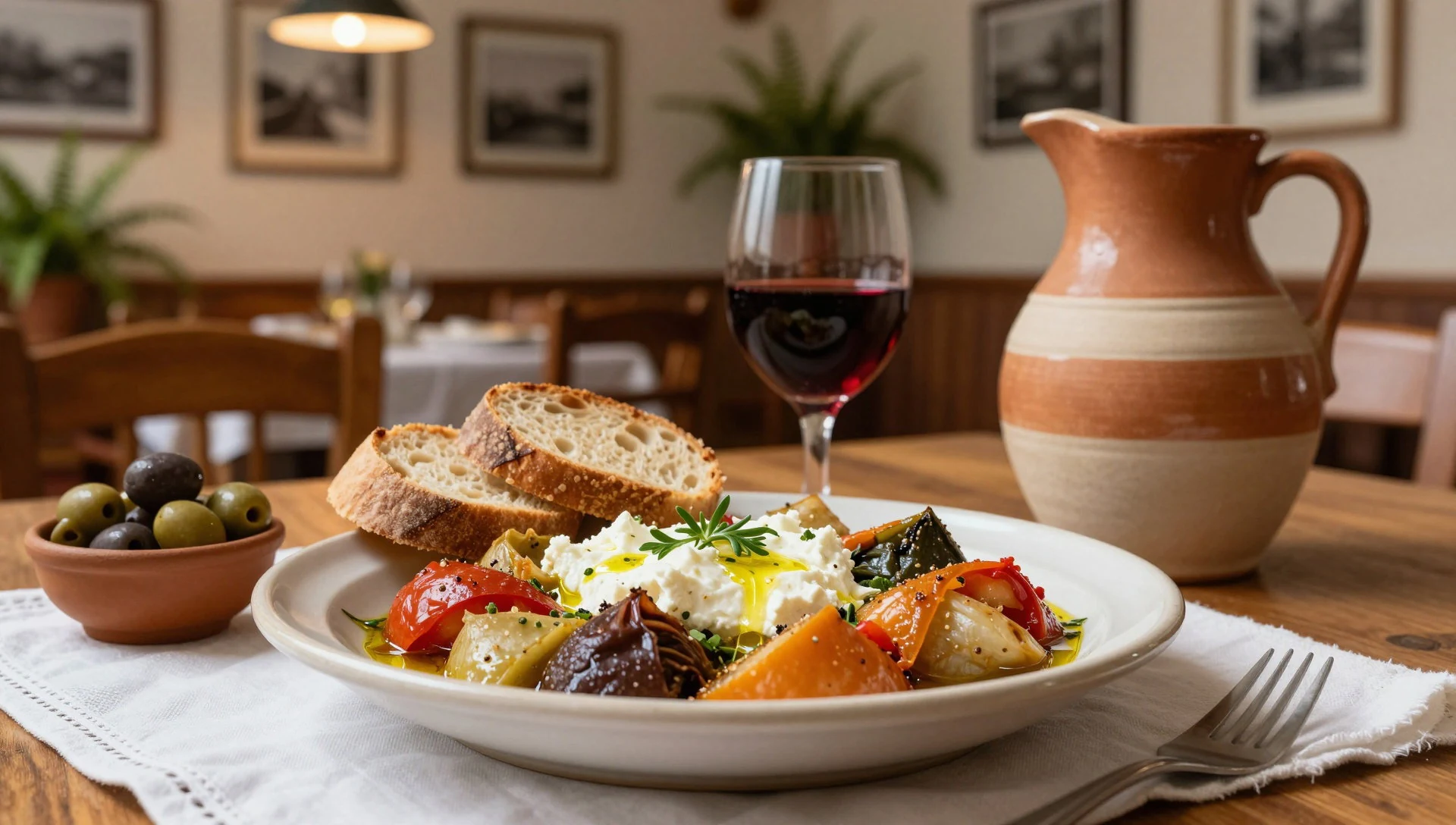
- Krasopoulio tou Kokkora — Downtown Athens
A wonderful, casual neighbourhood eatery in downtown Athens known for its friendly hospitality, traditional casserole dishes, grilled meats, and house wine served in traditional metal pitchers. - Vegan Beat Athens — Central Athens
A vibrant plant-based street food spot proving that traditional Greek comfort flavours can be reimagined entirely without animal products, offering inventive gyros and meatless souvlaki alternatives. - Aspro Alogo — Syntagma backstreets
An authentic, tucked-away local restaurant that rewards curious travellers with classic homestyle Greek recipes, attentive service, and an atmosphere far removed from standard tourist corridors.
Plan it
Best time. March to April and November offer the most comfortable temperatures and manageable crowds, avoiding the intense summer heat of June, July and August, when highs regularly exceed 40°C.
How long. 3–4
Getting there. Arrive at Athens Eleftherios Venizelos International Airport, then take the metro or suburban rail directly into the city centre in about 45 minutes.
Budget. mid
Tips
- Visit the Acropolis right at opening time to avoid heavy tour groups and midday heat.
- Wear footwear with strong rubber soles, as ancient marble pathways are very slippery.
- Carry cash for small bakeries, kiosks, and family-run tavernas.
- Drink plenty of water and seek shaded breaks during afternoon peaks in summer.
Etiquette
- Dress respectfully with covered shoulders and knees when visiting churches or monasteries.
- Greet shopkeepers and tavern owners politely upon entering and leaving.
Nearby
Sources
- Wikidata Q1524 (CC0)
- Wikipedia (rev 1382681478) (CC-BY-SA 4.0)
- Wikivoyage (rev 5405379) (CC-BY-SA 4.0)