Arkadi Monastery
Arkadi Monastery, Greece
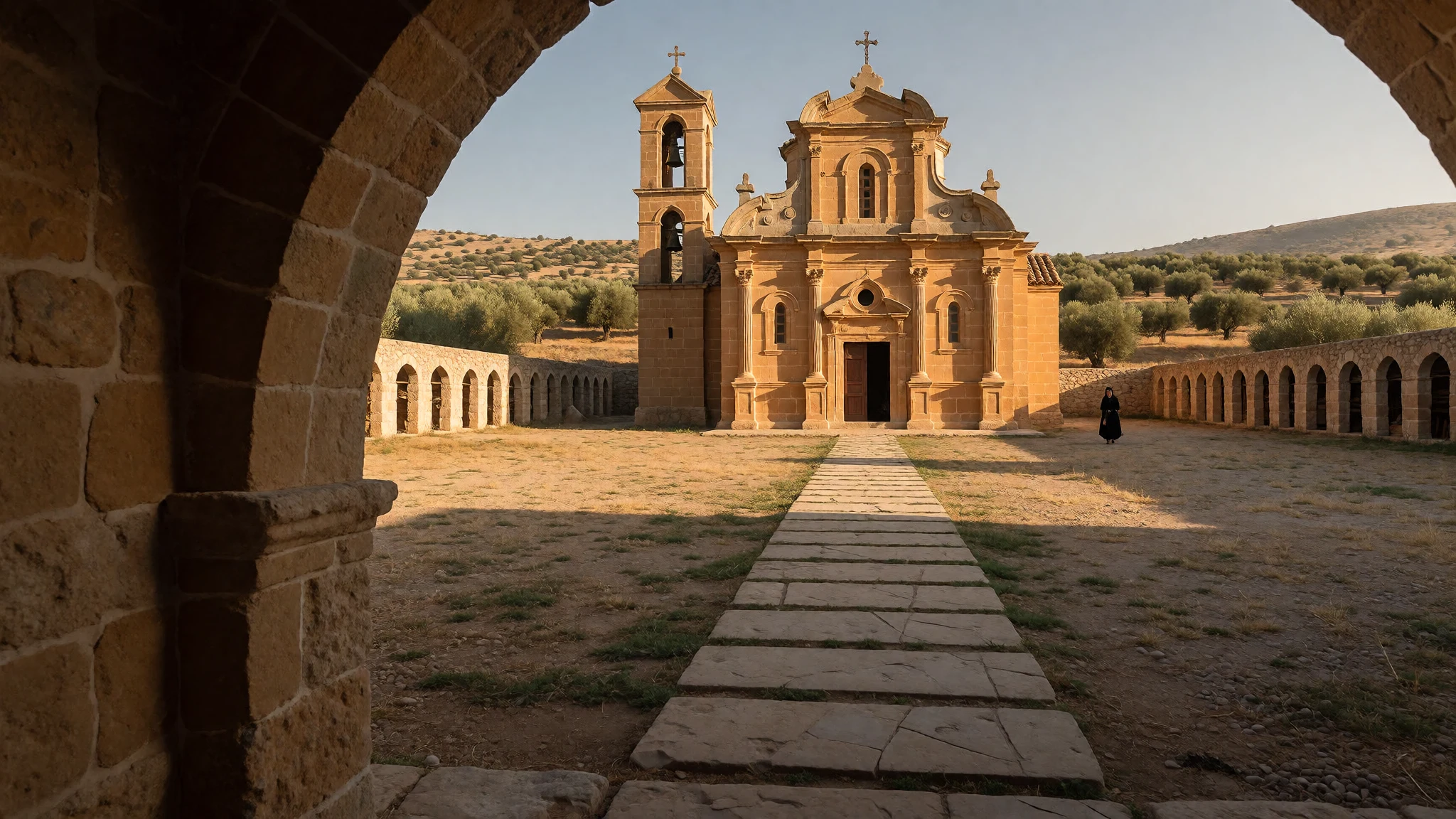
Arkadi Monastery is a working Orthodox monastery on a quiet Cretan plateau, and the place where Crete's 1866 stand against Ottoman rule is remembered.
The place
Arkadi Monastery (Μονή Αρκαδίου, Moni Arkadiou) sits on a fertile plateau about 23 km south-east of Rethymno, in the hills of northern-central Crete. From the approach road it reads first as a fortress: a high, thick wall closes in the whole complex, and inside it a wide courtyard holds the church, monks' cells, storerooms and a refectory. The church, the katholikon, is a Greek Orthodox building of the 16th century. Its façade borrows from the Italian Renaissance, with Roman and Baroque touches, a reminder that Venice then ruled the island. Around the walls the land is farmed, with olive groves and dry, scrubby hills, and a gorge cuts into the landscape nearby. Arkadi is a living religious house as well as a national shrine, so the mood is closer to a pilgrimage than a sightseeing stop. The 1866 events are taught in Greek schools and marked every 8 November, and visitors arrive from across Crete and beyond. The site is compact: an hour or two covers the courtyard, church and memorial spaces. The listed resident population is 3, so most of the noise on a busy day comes from visitors. Tour groups from the coast usually reach it in the late morning, which makes early or late-afternoon visits calmer, particularly in summer.
Its story
Arkadi Monastery has no firm founding date, and the explanations offered make a story of their own. One tradition credits the Byzantine emperor Heraclius; another credits the emperor Arcadius in the 5th century, which would explain the name. A more practical view notes that Cretan monasteries are often named after a founding monk, so an Arkadios may have started it, as with Vrontisiou, Arsiniou and Aretiou. The French botanist Joseph Pitton de Tournefort claimed the site had been an ancient city called Arcadia, whose springs supposedly dried up when it fell. Robert Pashley found evidence against this in 1837, and few now accept it. The firmest evidence is a 14th-century inscription over the door of an earlier church, published by K. Kalokyris in 1951, dedicating a church to Saint Constantine. The buildings seen today mostly date from the late 16th century, when the abbot Klimis Chortatzis, from a family tied to the Cretan Renaissance, rebuilt the complex. He made it a cenobitic community in 1573, meaning the monks lived and ate in common. The church took about 25 years, the façade went up in 1586, and a clock inscription is dated 1587. In 1866, during the revolt against Ottoman rule, 943 Greeks, mostly women and children, took shelter inside. After three days of fighting, the powder stores were fired on the abbot's order rather than surrender, and many inside died. The revolt went on, but the event drew international attention, and 8 November is now its day of remembrance.
What to see
- The katholikon façade — Central courtyard
The church stands in the middle of the courtyard and is the monastery's best-known image. Its stone front combines Renaissance proportions with Roman and Baroque details, and the building has two naves. A bell tower rises beside it. Late-afternoon light warms the stone, and the courtyard is quieter then.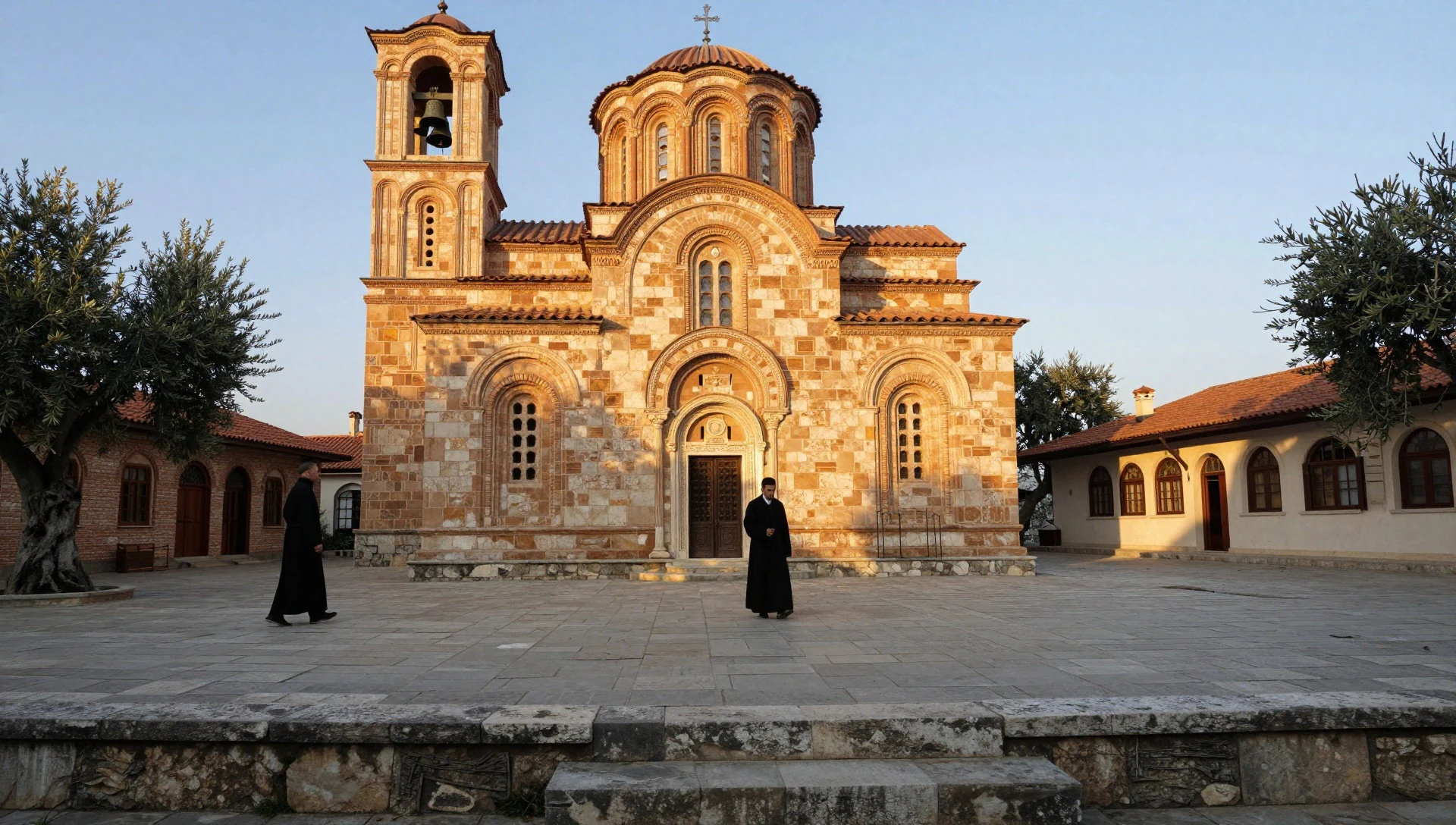
- The perimeter wall and cloister — Courtyard edges and entrance gate
Walking the inside of the thick outer wall shows how the monastery doubled as a stronghold. Cells, storerooms and the refectory line the courtyard, and the gate is the single main entrance. The arrangement explains both how a community lived here and why refugees thought it safe in 1866.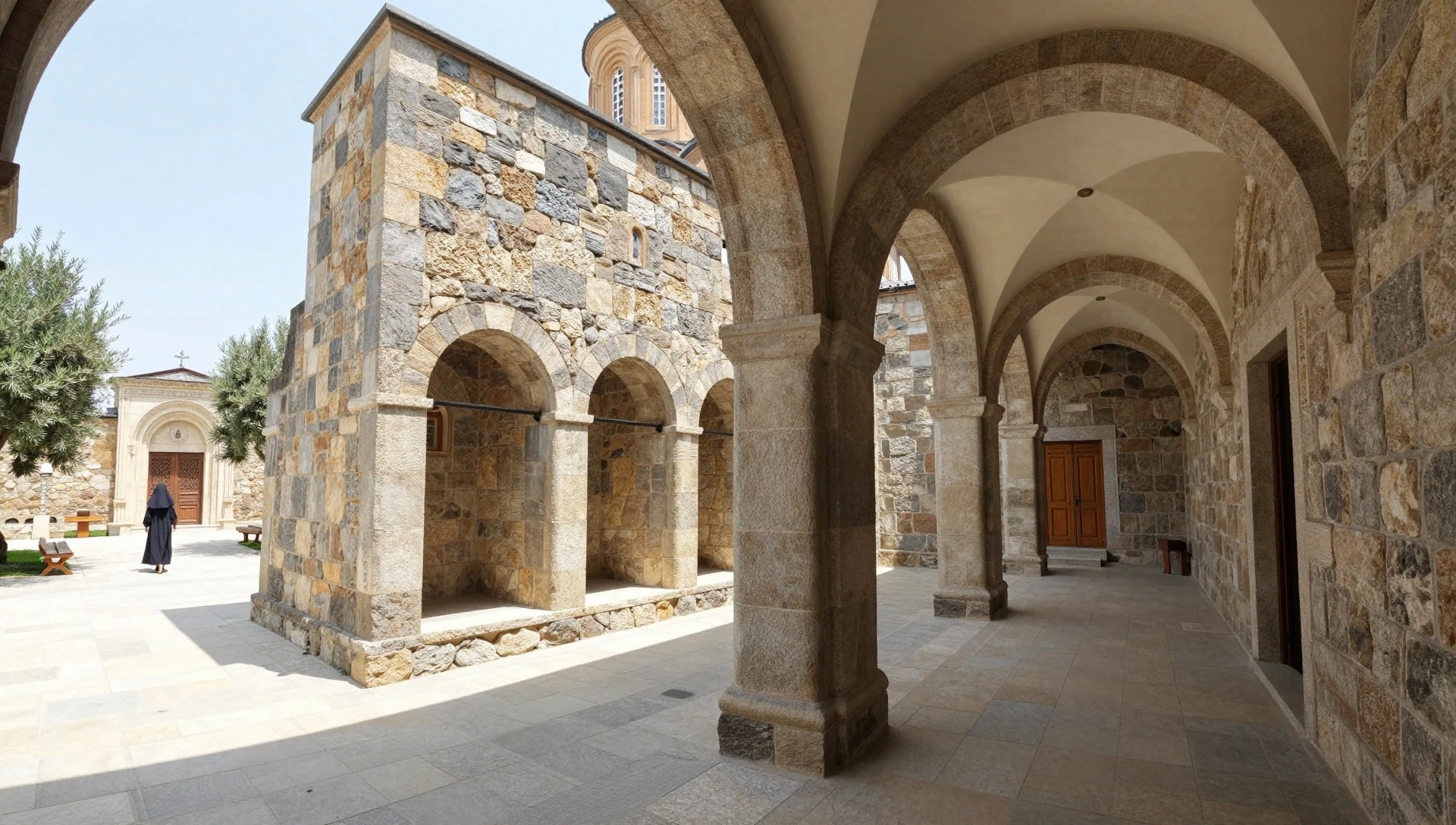
- The powder store memorial — Inside the monastery compound
A small room in the compound is linked to the explosion that ended the 1866 siege. Visitors tend to go quiet here, and it is worth reading the signs or asking a guide for the sequence of events. It is the emotional centre of the site, more than the church.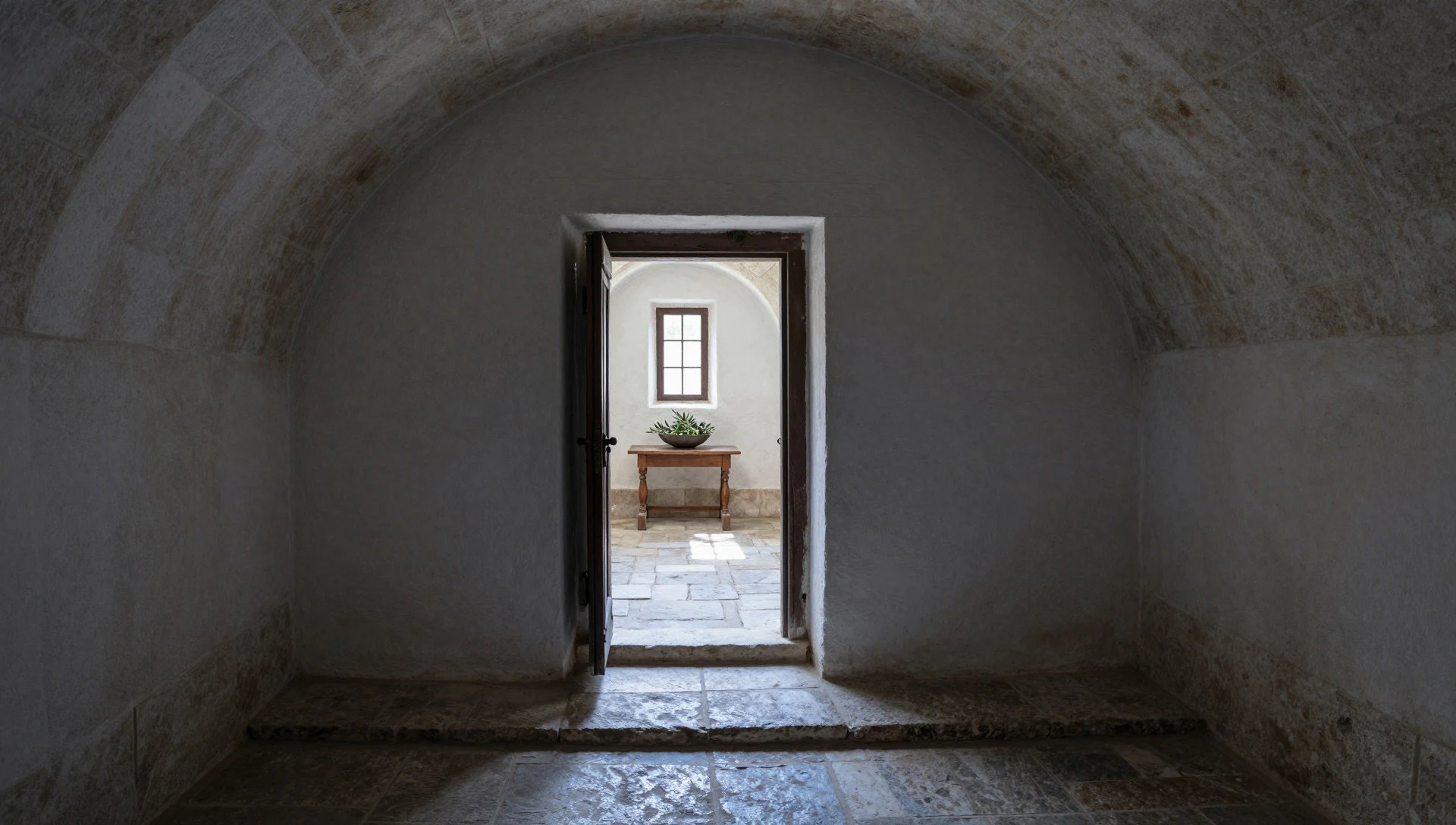
- The ossuary and museum space — Monastery grounds
Remains of those killed in 1866 are kept in a memorial ossuary, and a museum area shows icons, documents and relics of the revolt. The ossuary can be hard for some visitors. Check the official website for what is open on the day, as arrangements can change.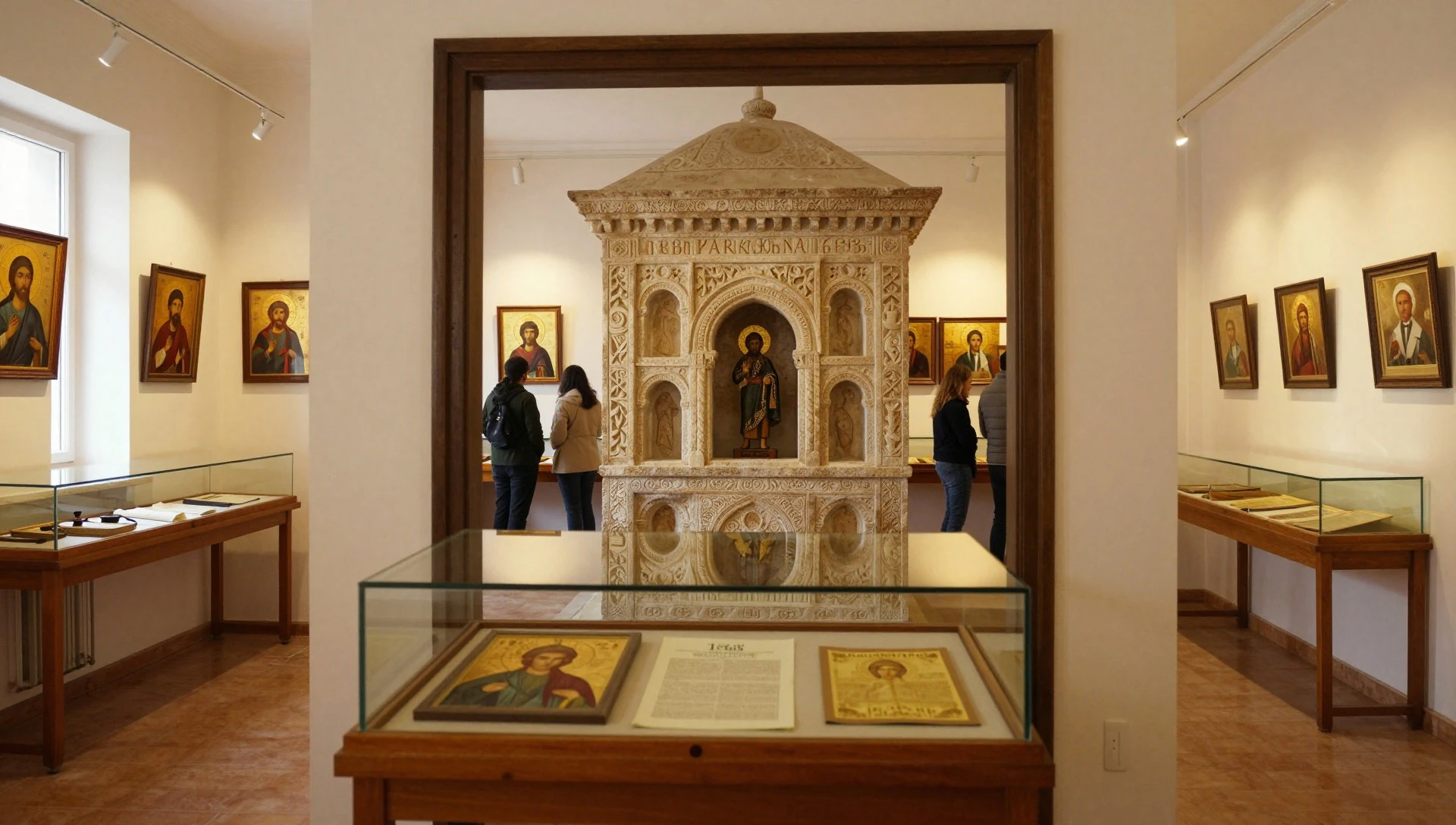
- Arkadi Gorge and the plateau — Countryside around the monastery
The land around the monastery explains why it was farmed, defended and hard to reach. A drive across the plateau shows olive groves, rough pasture and the cut of the gorge. Walkers can look for marked paths locally, wearing proper shoes and carrying water.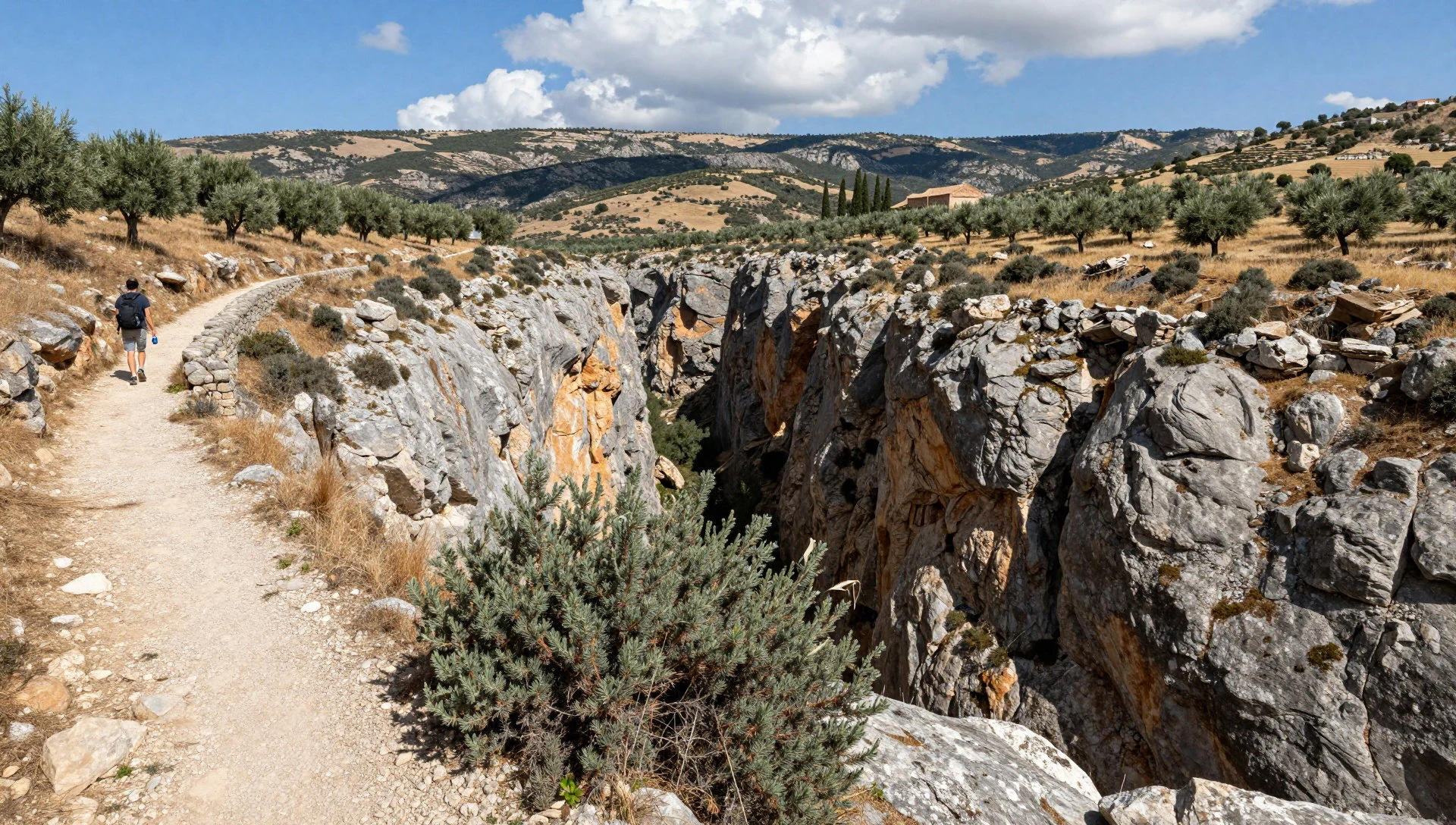
Culture
Arkadi Monastery matters to Cretans less as a church than as a symbol. The 1866 sacrifice is taught in schools, remembered in songs, and marked on 8 November with services and ceremonies at the site. The monastery's name has become shorthand for the island's long wish for freedom. It is also a living Greek Orthodox community, with the daily rhythm of services, candles and icons that goes with it. Orthodox visitors cross themselves, light a thin candle and kiss icons; non-Orthodox visitors are welcome to watch quietly. In the 16th century the monastery was known for learning, with a school and a library, and it belongs to the Cretan Renaissance, when Venetian rule shaped local painting, theatre and poetry. Georgios Chortatzis, author of the play Erofili, came from the same family as the abbot who rebuilt it. That mix of piety, scholarship and defiance explains why Greeks of all backgrounds come here, including school groups and families on Sunday drives. Remembrance is sombre rather than celebratory, and most visitors follow that tone. Dress with covered shoulders and knees, keep your voice low inside the church, and ask before photographing monks, worshippers or any service.
What to wear
Around Arkadi Monastery, traditional Cretan dress is mostly seen at festivals, weddings and commemorations, including 8 November. Men's dress centres on the vraka, baggy breeches in dark wool or cotton, worn with a sash, high leather boots and a fringed black headscarf, the sariki. Women's festive dress is a long embroidered skirt and bodice, often in woven wool and cotton from mountain villages. Weaving remains a living craft in upland Crete, and woven bags and runners are common souvenirs. Day to day, people in Rethymno and nearby villages dress like most of southern Europe: light cotton, jeans, simple shirts. Older villagers sometimes keep to dark clothes and a cap. The monks wear black robes and a tall brimless hat. Visitors should dress for a religious site first and the weather second. Shoulders and knees should be covered, so carry a light scarf or shirt to add at the door, and leave beachwear and very short shorts in the car. The courtyard is paved with stone that can be slippery, so wear flat, closed shoes with grip. Summer is hot and shade is limited, so bring a hat and sun protection. Spring and autumn evenings can be cool on the plateau, and a thin jacket helps. Walkers heading into the gorge need proper trail shoes.
What to eat
- Dakos — Village tavernas near the monastery and in Rethymno
A Cretan barley rusk softened with grated tomato, topped with crumbled soft cheese and olive oil, often with oregano. It is a light lunch that suits a hot day. Look for it in village tavernas around the plateau and in Rethymno.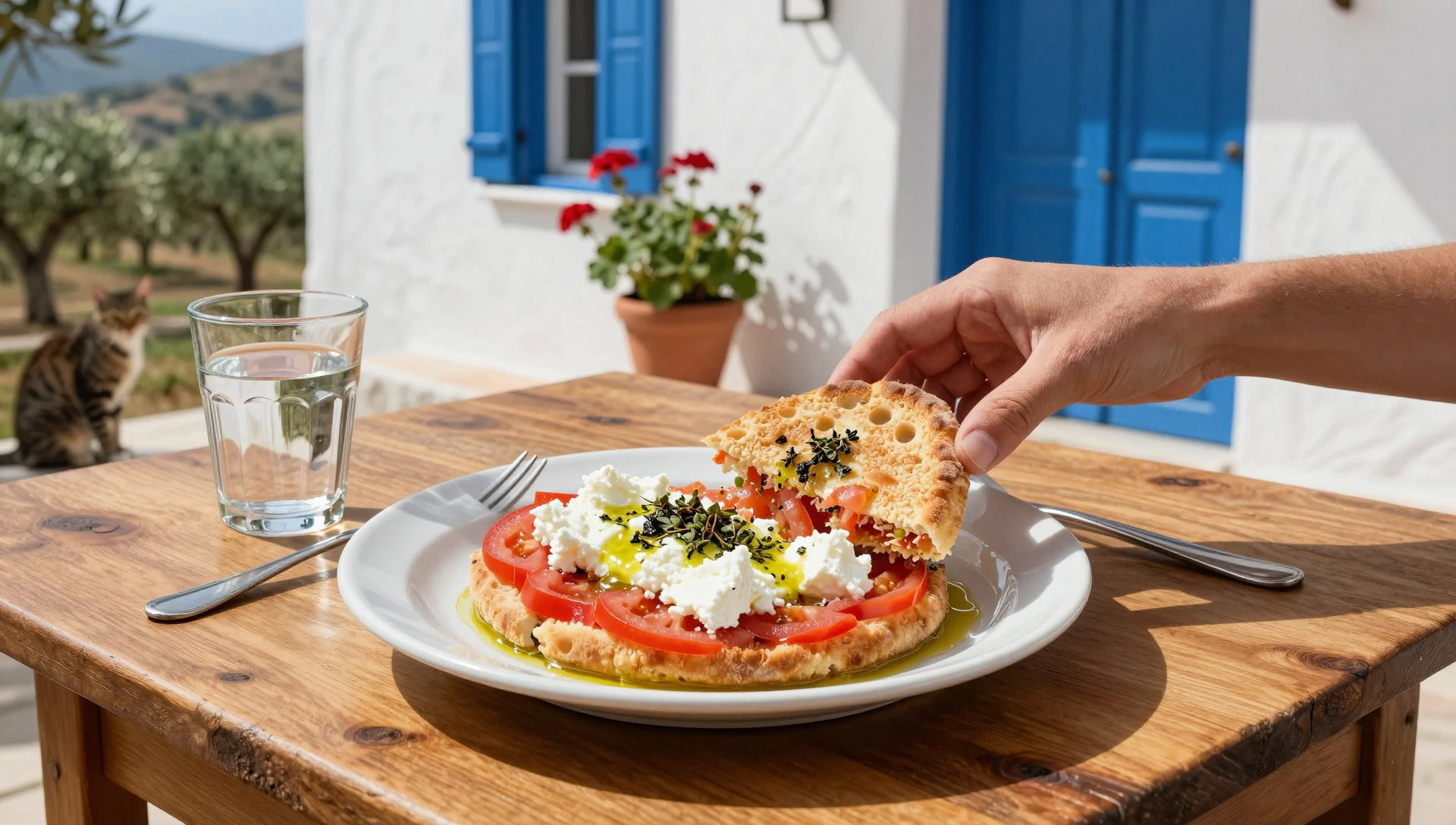
- Graviera and anthotyro — Rethymno's market streets and village dairy shops
Crete's local cheeses are the base of many meals. Graviera is a firm, nutty cheese for slicing, while anthotyro is soft and mild, used in pies and with honey. Buy them from dairy stalls and at small shops in the villages.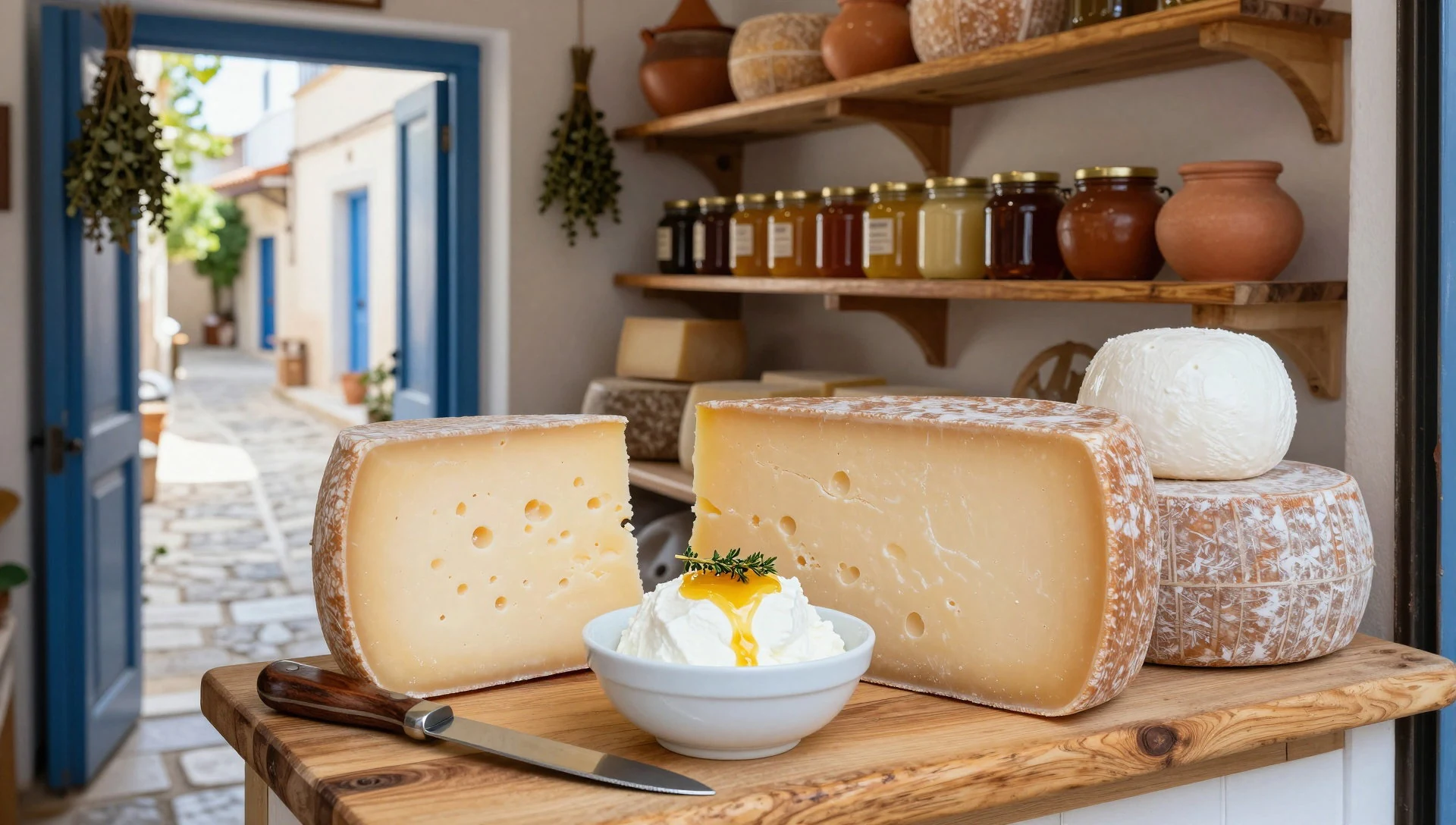
- Horta — Family-run tavernas in the villages of the plateau
Wild or farmed greens boiled, then dressed with olive oil and lemon, are a staple side dish across Crete. The mix changes with the season and the hillside. Ask what is local that day. - Kalitsounia — Bakeries in Rethymno and nearby villages
Small pastries filled with soft cheese, sometimes sweetened with honey or flavoured with mint, depending on the village and the season. They suit a mid-morning coffee stop and often appear at Easter and other celebrations. - Tsikoudia (raki) — Tavernas and kafeneia across the region
A clear spirit distilled from grape pomace, poured in small glasses at the end of a meal, often unasked. It is strong, so sip it slowly with food. Many tavernas serve it free after dinner.
Plan it
Best time. April–May and November are the most comfortable months, with milder daytime temperatures than the height of summer. July and August are hot and dry, with little shade in the courtyard, so go early or late. Winter is cooler and wetter. Around 8 November the anniversary brings ceremonies and larger crowds.
How long. 1
Getting there. Fly to Heraklion or Chania, then travel to Rethymno by road. The monastery is about 23 km south-east of Rethymno, and a hire car or taxi is the easiest last leg; ask locally about buses. Crete has no rail line. Ferries from Piraeus (Athens) also reach Rethymno; check Ferries.gr for schedules.
Budget. mid
Tips
- Check opening times and any visitor notices on the official website, https://www.arkadimonastery.gr, before setting out
- Aim for the early morning or late afternoon to avoid coach groups around midday
- Carry water and a hat, as the courtyard has little shade in summer
- Keep a small amount of cash for candles, souvenirs and village cafés
- Combine the visit with a meal in a village on the plateau or a stop in Rethymno
Etiquette
- Cover shoulders and knees before entering the church
- Speak quietly and do not photograph services or monks without asking
- Treat the powder store and ossuary as memorials, not photo backdrops
Nearby
Sources
- Wikidata Q541696 (CC0)
- Wikipedia: Arkadi Monastery (rev 1371213893) (CC BY-SA 4.0)
- Wikivoyage: Rethymno (regional unit) (rev 5244068) (CC BY-SA 4.0)
- Church of the Arkadi Monastery, Crete — Prekario (CC BY 3.0)
- Μονή Αρκαδίου — Parisdent (CC BY-SA 4.0)
- Plain of Arkadi (Crete, Greece) — Aeleftherios (CC BY 3.0)
- Arkadi's gorge (Crete, Greece) — Aeleftherios (CC BY 3.0)
- Monastery of Arkadi by Robert Pashley (Crete, Greece) (Public domain)
- Gabriel Marinakis — Aeleftherios (CC BY 3.0)
- Ioannis Dimakopoulos — Aeleftherios (CC BY 3.0)
- Route empruntée par l'armée turque pour se rendre au monastère d'Arkadi — Aeleftherios (CC BY 3.0)


