Thorikos
Thorikos, Greece
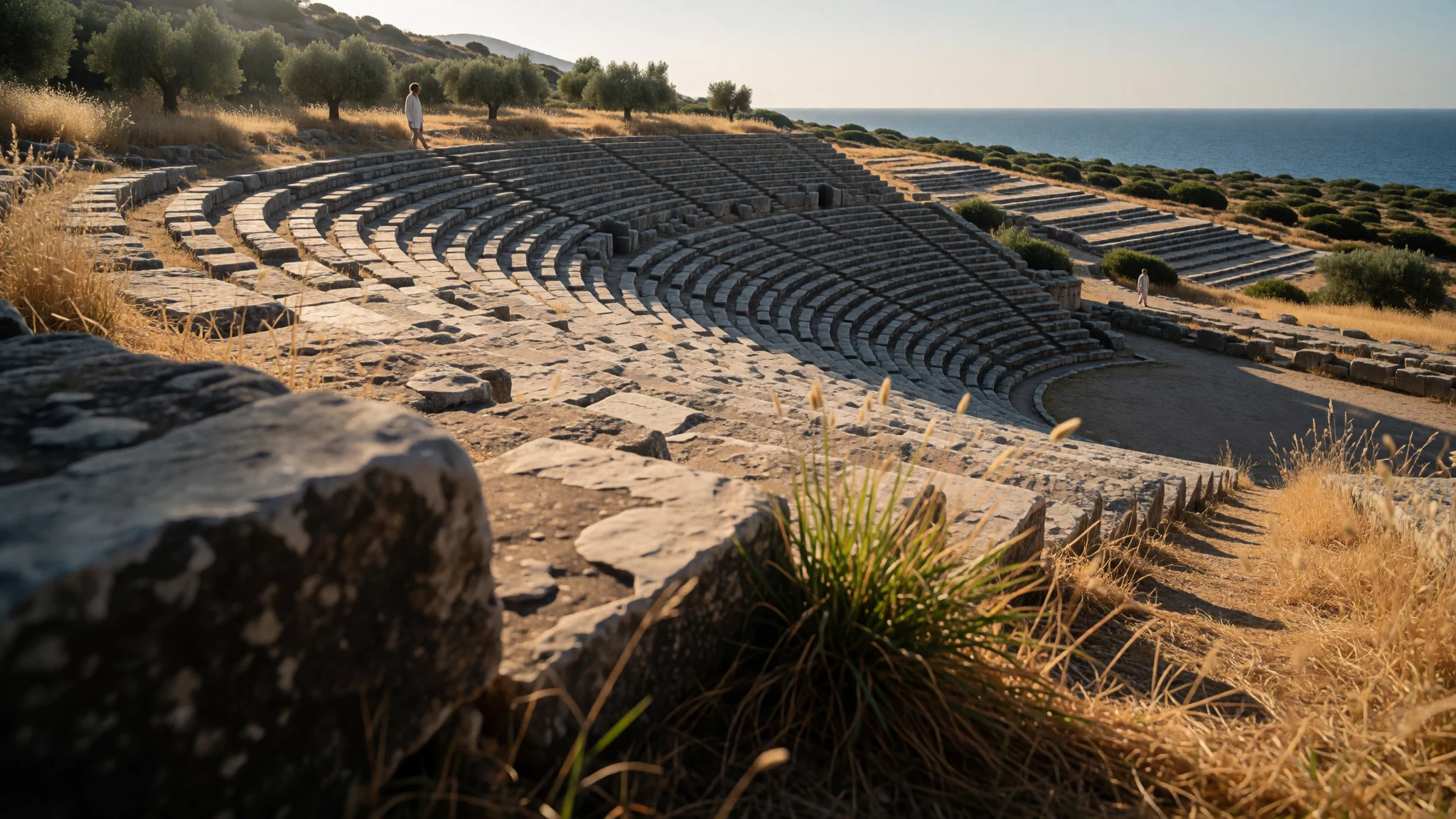
Thorikos offers an unusually shaped ancient theatre on a quiet Attic hillside, with sea views and almost none of Athens' crowds.
The place
Thorikos sits on the coast of Attica, north of the port town of Lavrio, and its theatre is the reason most people come. The Wikidata entry describes it as the oldest Greek theatre still standing, and the brief dates its first building to roughly 525–480 BC. What strikes a visitor first is the shape. Most Greek theatres are neat semicircles; this one is long and lopsided, with an elliptical dancing floor (the orchestra) and rows of stone seats that bend to follow the slope.
The setting is dry, scrubby and open. Pale rock, thyme and low pines climb the hill behind, while the Aegean fills the view in front. Beside the theatre lie the remains of an ore washery, a working structure used to separate metal from rock, which is a useful reminder that this was an industrial landscape as much as a cultural one. The site is small and can be seen in an hour or two, though the walking around it is on uneven ground.
Thorikos is not a place of grand columns or museum crowds. It rewards people who like ruins that still feel tied to their surroundings: a hillside, a bay, a few goats' worth of silence. It is also a good counterweight to a busy Athens itinerary, being reachable as a half-day trip. Expect little shade, few facilities, and the pleasure of having a very old public space largely to yourself.
Its story
The theatre at Thorikos belonged to a local community, a demos of ancient Attica, rather than to a great city. Its initial stage was finished somewhere between 525 and 480 BC, toward the end of the Archaic era, which is why it is regarded as a remarkably early instance of its type. In those years there was no standard design for a theatre, so the builders worked with the hillside as they found it.
That explains the odd outline. Later generations added to it. The seating was extended in the classical period, in the 4th century BC, with further changes around 300 BC, and some new rows were laid over the older arrangement. Scholars now think the elongated plan is a result of these successive enlargements, rather than a single bold idea.
The building was also not only for plays. It served as a meeting place where the citizens of Thorikos could gather and talk over local business, which is a reminder that Greek theatres were civic spaces as much as entertainment venues.
Modern attention came with excavation. The American School of Classical Studies at Athens dug at the theatre in 1886, and an 1888 plan drawn by William Cushing survives among the staged images. Earlier travellers had already sketched the ruin, including Edward Dodwell and Étienne Rey, whose engravings show it half buried and quite unrestored.
What to see
- The theatre's elliptical orchestra — Thorikos archaeological site
The long, oval dancing floor is the feature that sets Thorikos apart from the usual semicircle. Stand at the edge and look at how the seat rows curve unevenly around it. Early morning light shows the stonework best, and the sea sits neatly in the background.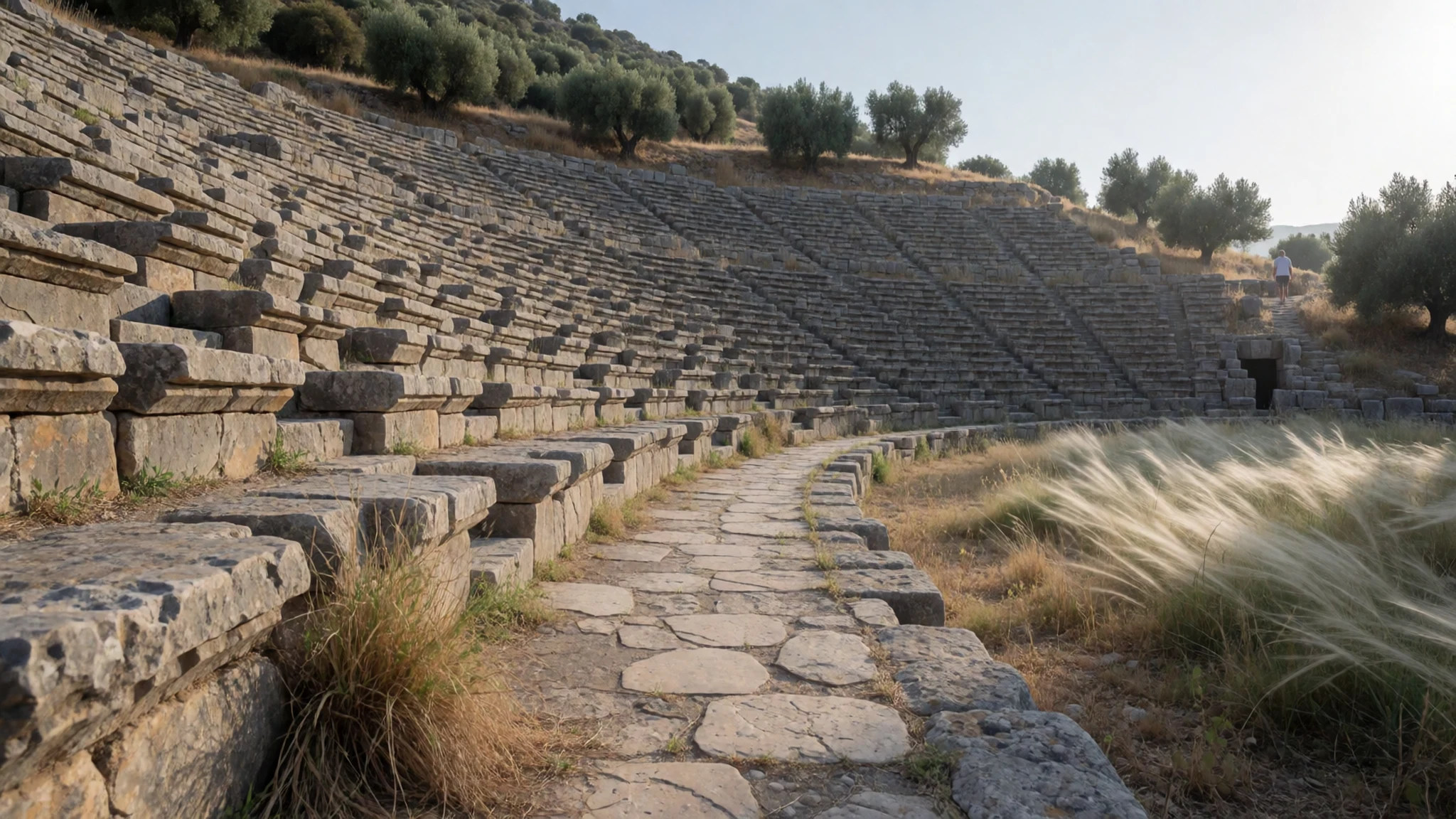
- The upper seating rows — Upper part of the theatre
Climb to the top tiers for the view that makes the visit. From here the whole odd shape of the theatre is clear, with the later additions laid over earlier rows, and the water beyond. Take care on the worn, uneven stone, and wear shoes with a proper grip.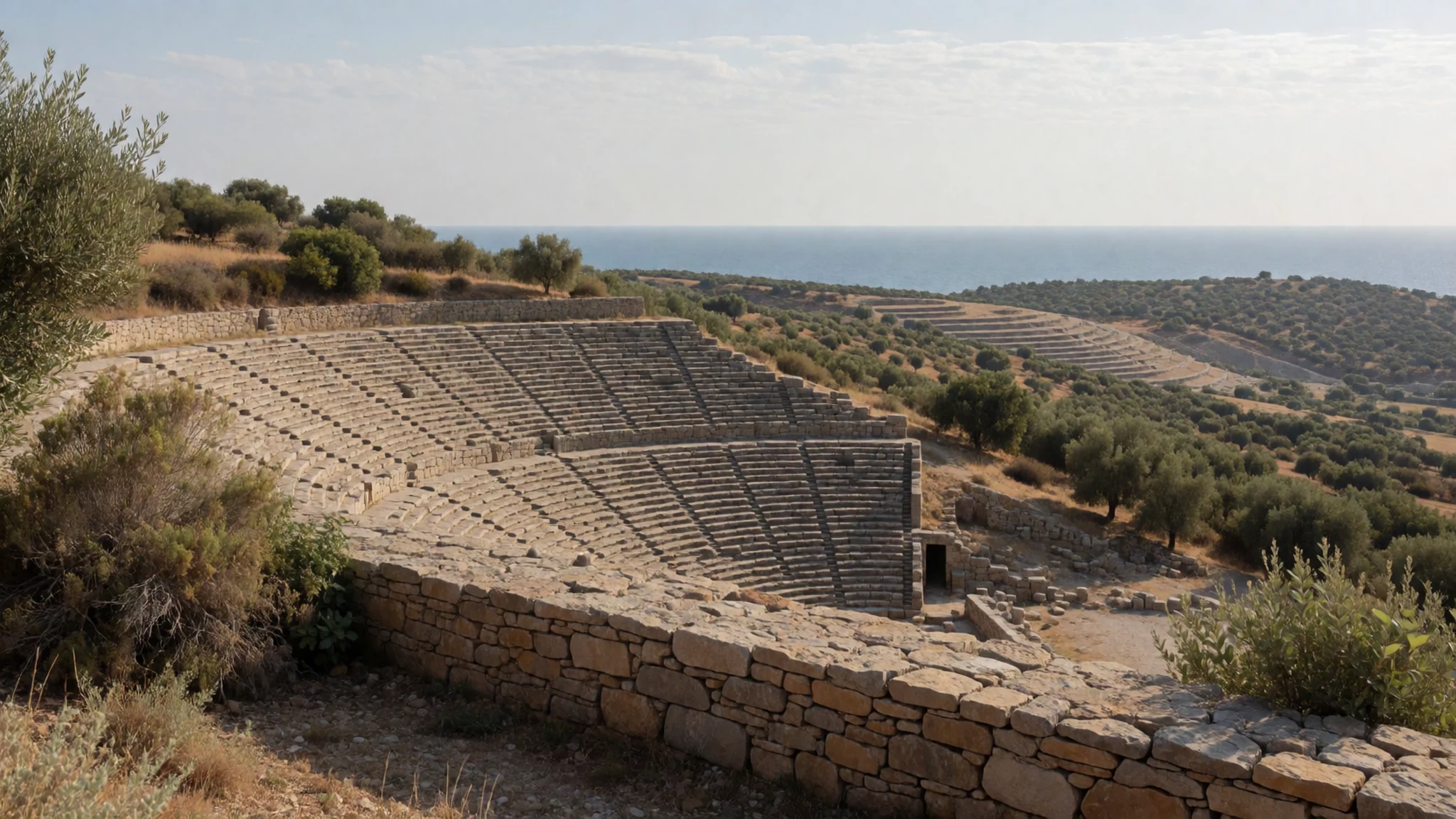
- The ore washery — Beside the theatre
Right beside the theatre are the remains of a washery used to concentrate lead ore. It shows the working side of the district, where mining shaped daily life. Look for the sloped, plastered surfaces where water once carried crushed rock across the floor.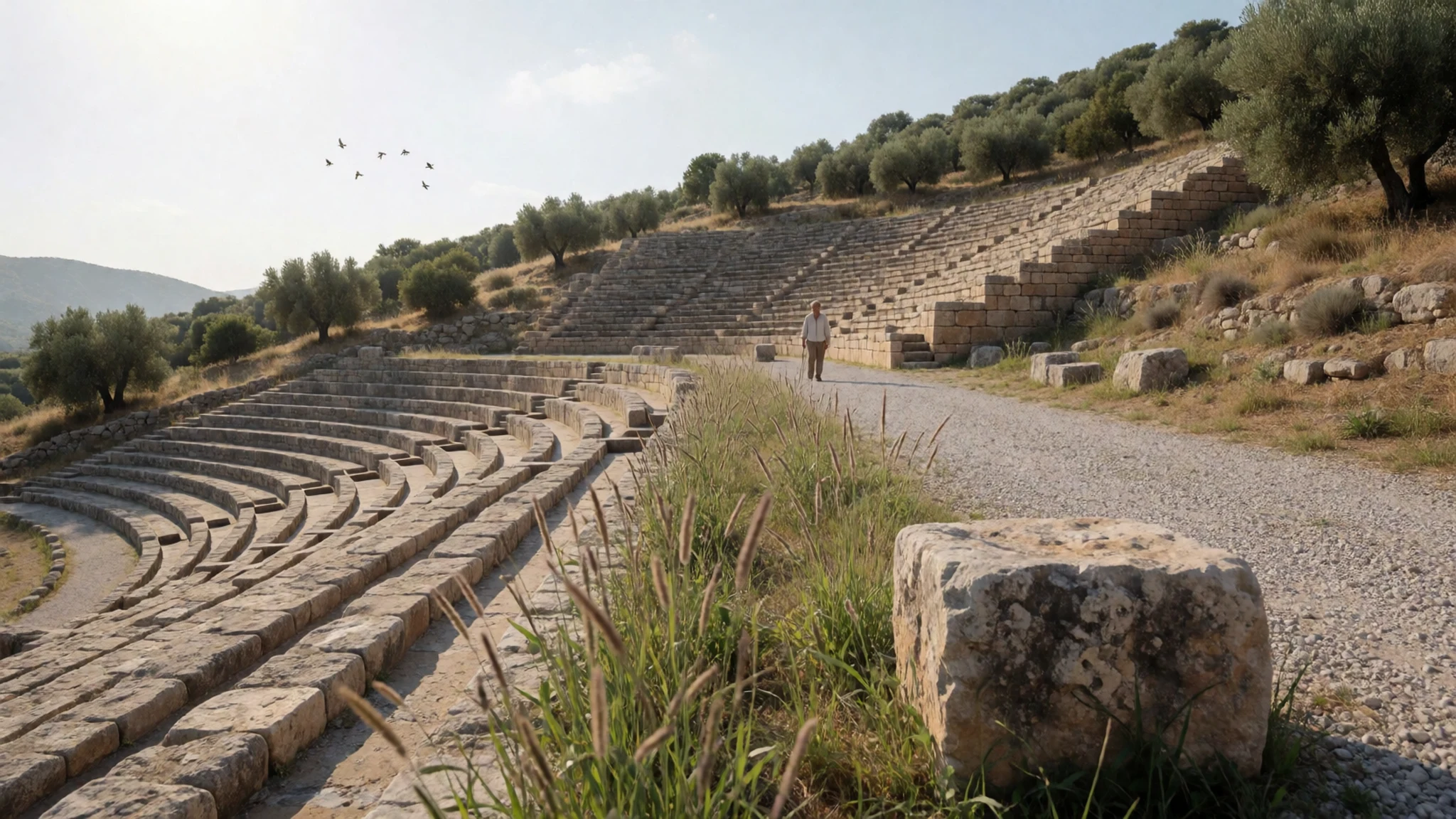
- Cushing's plan and old engravings — On-site, in your head or on your phone
The staged images include William Cushing's 1888 plan and early travellers' views by Dodwell and Rey. Comparing them with the ground in front of you is a pleasant way to see how much has been cleared, and how the odd outline was first understood.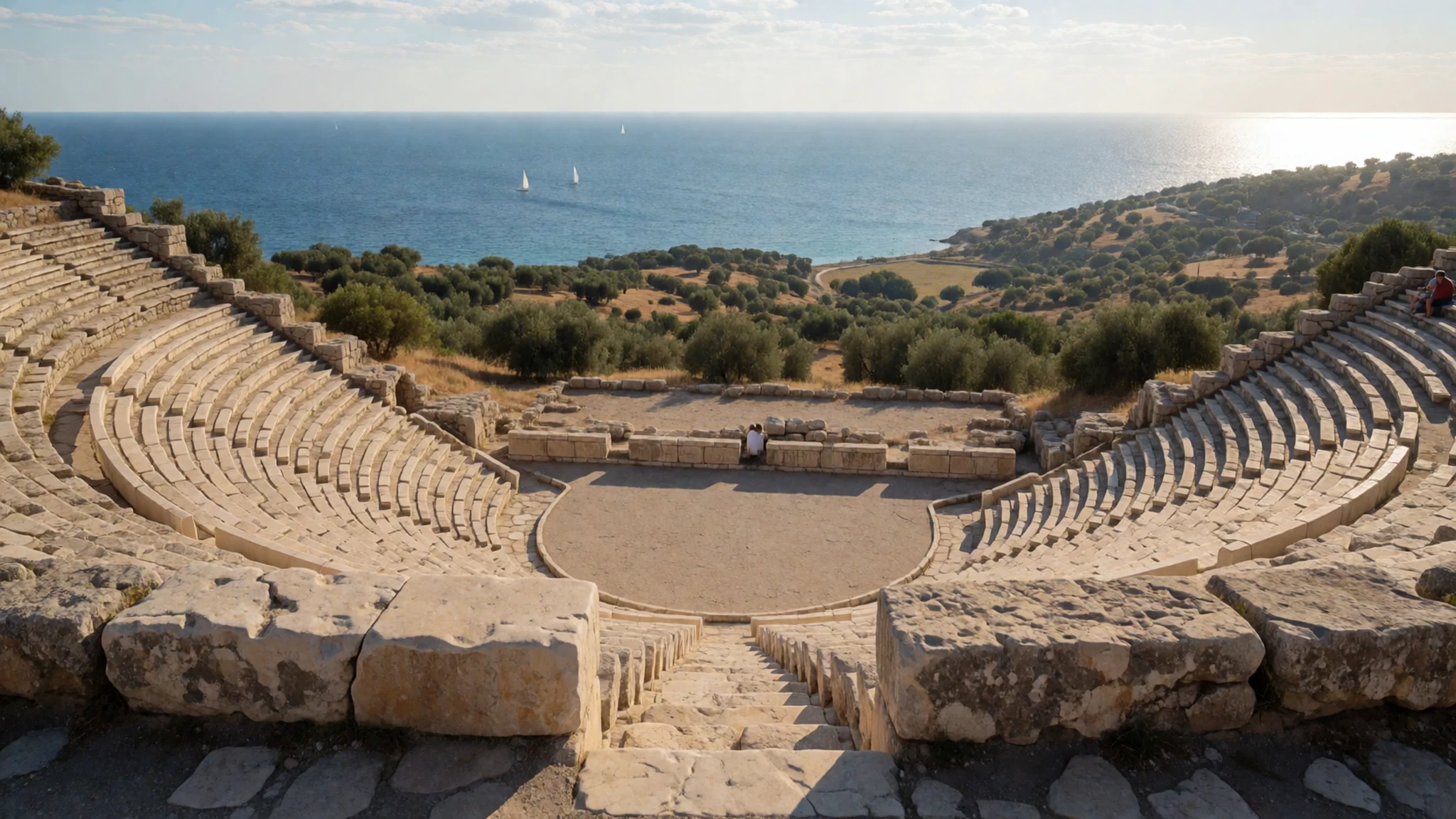
- The hillside and bay — Hill above the site
Walk a little way up the slope behind the theatre for a wider look at the Attic coast. The landscape is dry and open, and it is easy to imagine how mining, farming and civic life shared this one small corner of the coast.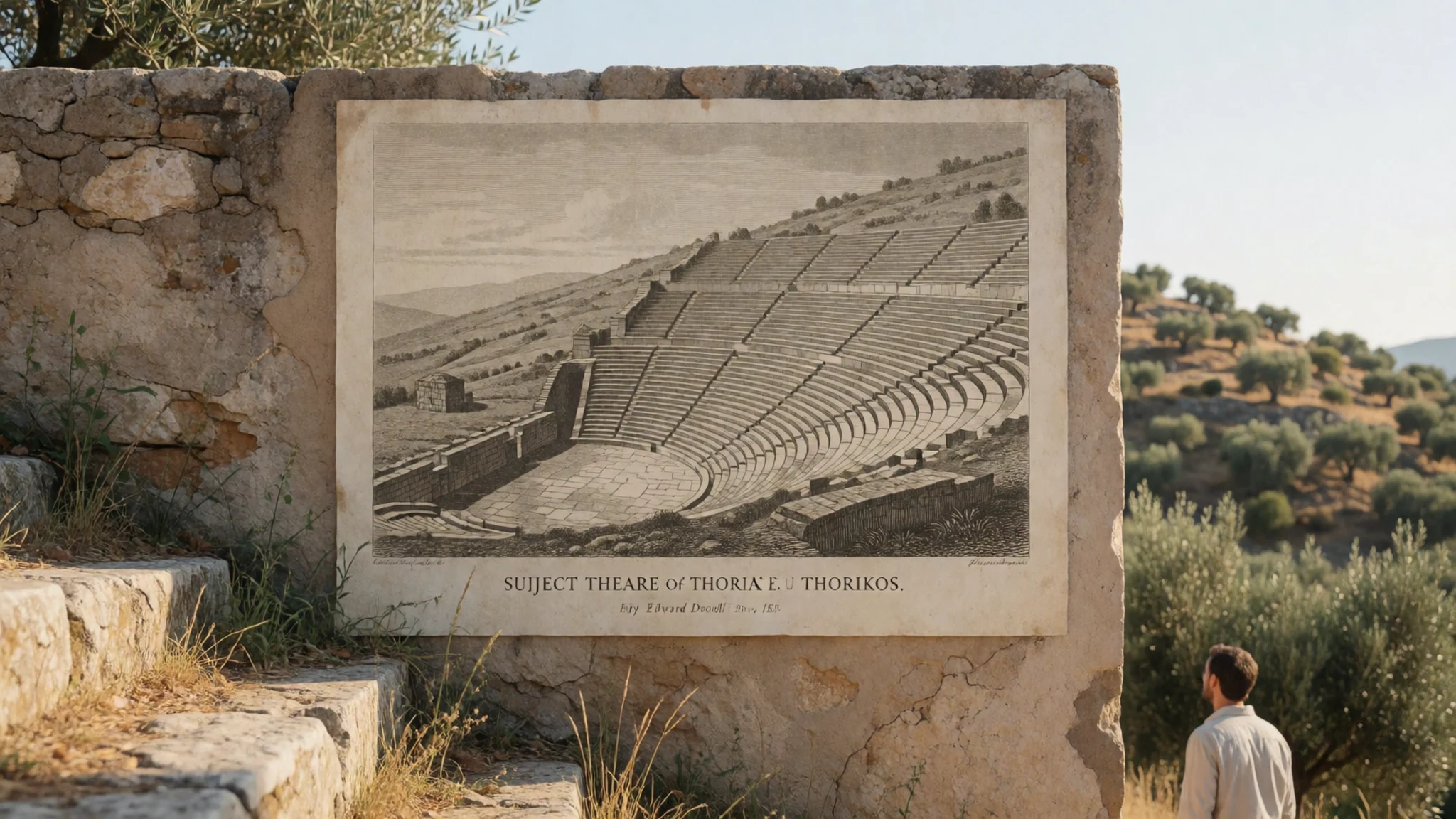
Culture
Thorikos shows how ancient Greek public life worked at village scale. The theatre was built for drama, but it also served as a meeting space where the citizens of the demos could gather. That mix of performance and local politics is easy to forget when thinking of Greek theatre as something grand and distant. Here the seats are modest, the setting is practical, and the whole place feels like part of a working community.
The industrial remains nearby add another layer. Mining and ore processing were part of the local economy, and the washery beside the theatre means that culture and labour sat side by side. Today the site is looked after as an archaeological area, and it is quiet enough that visitors tend to speak softly without being asked.
Greece takes its antiquities seriously, and sites like this are protected by law. Rules on what may be touched, collected or climbed are posted on signs and enforced by site staff. Local guides and the Belgian School at Athens, which has restored parts of the site, are good sources if you want more depth.
Stay on the marked paths and never sit on or remove stones from the ancient seating where signs or staff ask you not to.
What to wear
Thorikos has no costume tradition of its own to speak of, so the useful context is wider Greece. Traditional dress varied by region and island: wool and linen garments, embroidered aprons and waistcoats for women, and for men the pleated fustanella kilt in some areas. These are mostly worn today at festivals, national days and folk dance events, and in the ceremonial uniforms of the presidential guard in Athens.
Everyday dress around Lavrio and the Attic coast is casual and practical. Locals wear light cotton, linen, shorts and sandals in summer, with jeans and a jacket in the cooler months. People tend to dress neatly for town but nobody expects formality at an archaeological site.
For a visit, the main concerns are sun, heat and terrain. Wear a hat, light long sleeves or sunscreen, and sunglasses, because shade is scarce. Shoes matter most: the stone is uneven, polished by centuries of feet, and loose gravel lies between the rows. Trainers or sturdy sandals with a closed heel are better than flip-flops. In winter and early spring, bring a light waterproof, since showers and a breeze off the sea can make the hillside feel cooler than Athens. There are no modesty rules at the site, though if you plan to stop at a village church on the way, covered shoulders and knees are polite.
What to eat
- Fresh grilled fish — Harbour tavernas in Lavrio
The Attic coast is fishing country, and simple grilled fish with olive oil and lemon is the obvious order. Sea bream and red mullet are common choices. Look for it in the harbour tavernas around Lavrio, where the catch is usually the day's.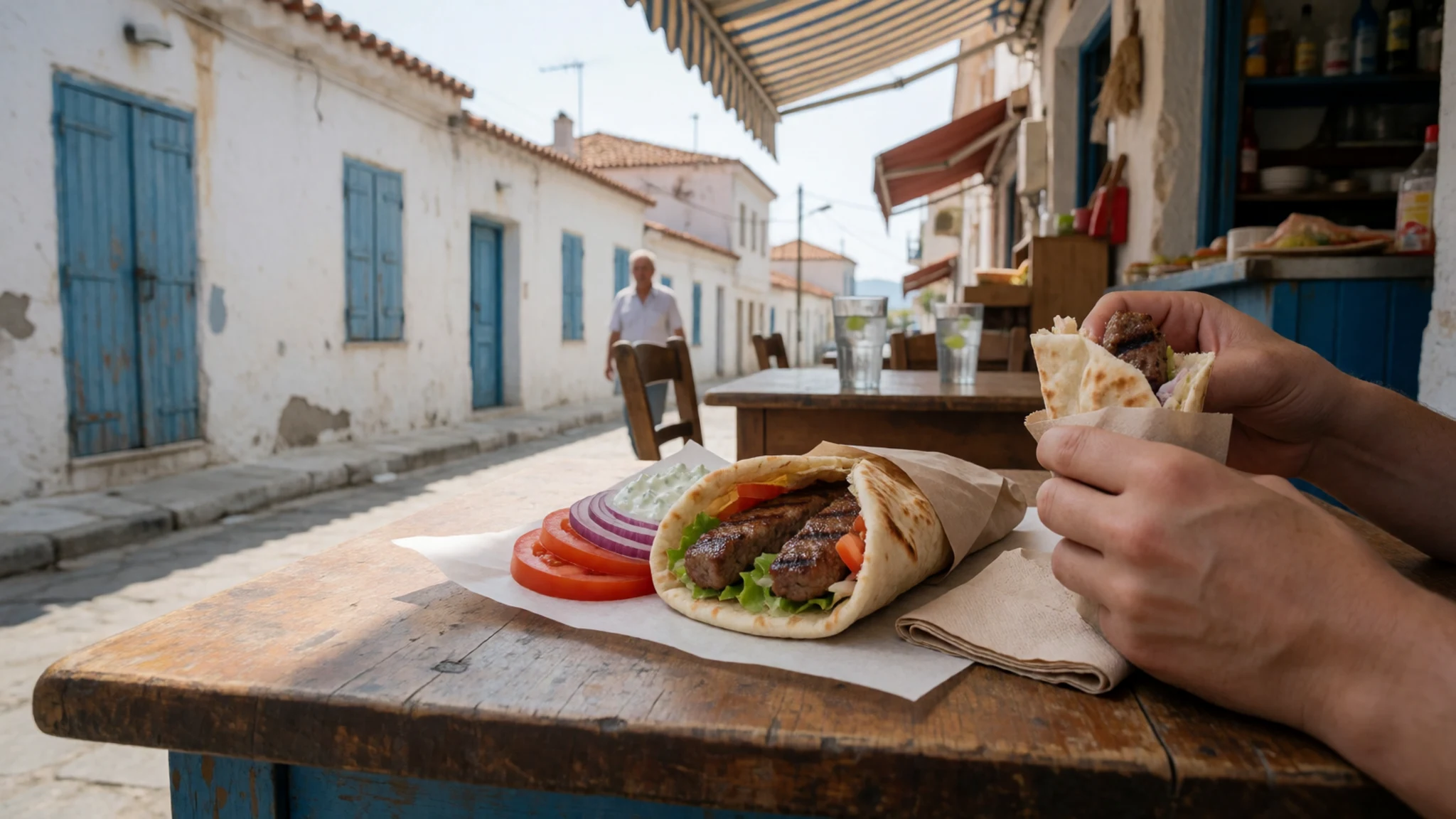
- Horiatiki salad — Any taverna near the coast
The classic Greek village salad of tomato, cucumber, onion, olives and a slab of feta, dressed with oil and oregano. It is cool, filling and the best answer to a hot morning on the ruins. Any taverna or café will serve it.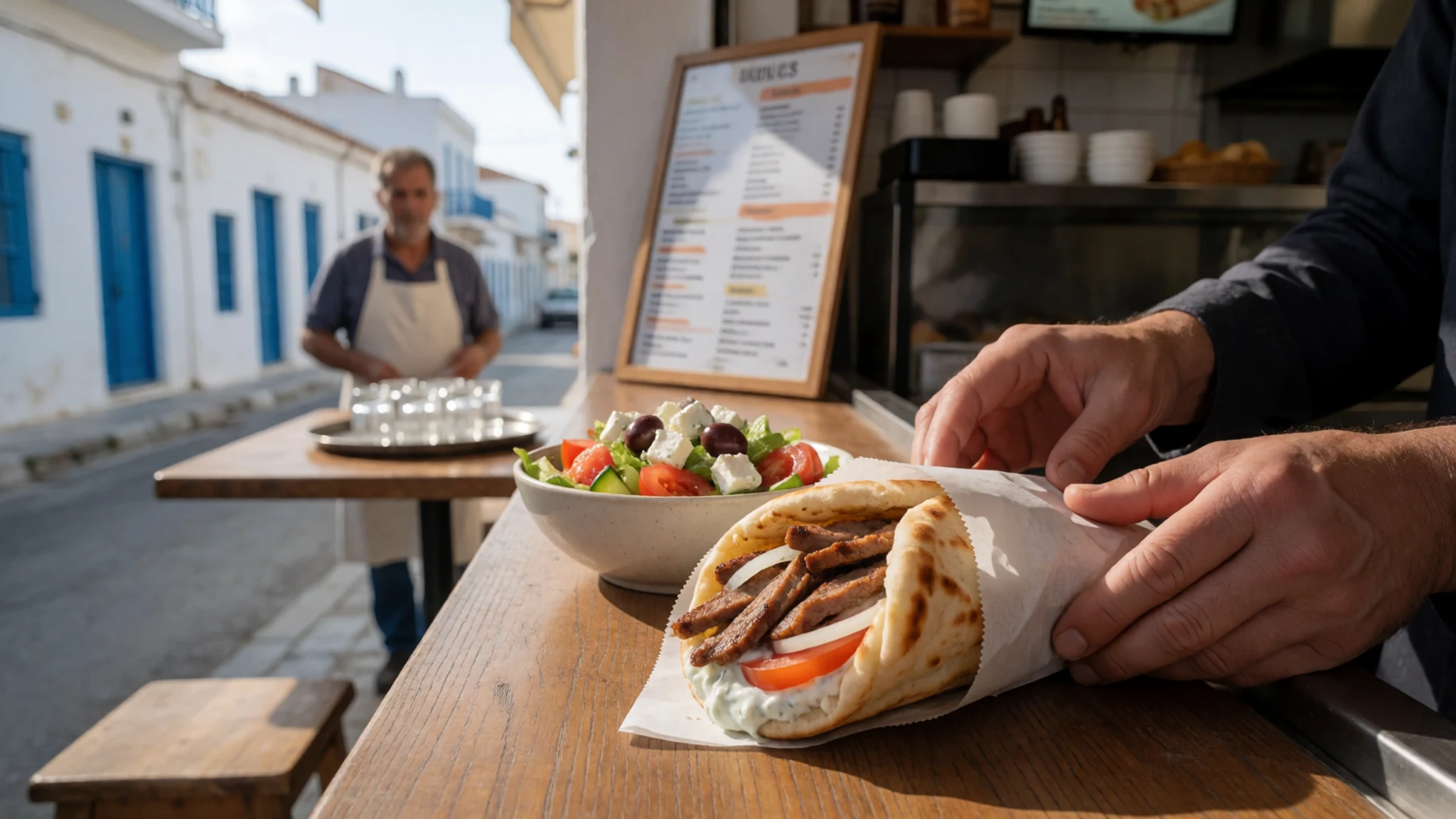
- Souvlaki and gyros — Grill shops in Lavrio town
Skewered grilled meat or sliced gyros wrapped in a warm pita with tomato, onion and sauce. It is cheap, fast and ideal for a lunch between a ruin visit and the bus home. Look for the small grill shops near the town centre. - Spanakopita and tiropita — Local bakeries (fournoi)
Flaky filo pies filled with spinach and feta, or just cheese. They make a good portable breakfast before an early start at the site, and bakeries sell them warm in the morning. Vegetarians will be glad of them. - Greek yoghurt with honey — Cafés and bakeries in Lavrio
Thick, tangy strained yoghurt poured over with thyme honey and sometimes walnuts. It suits a light breakfast or a cooling afternoon stop, and the thyme in the honey is the same plant that grows wild on the Attic hills around you.
Plan it
Best time. April–May and October–November, when the Attic weather is mild and the hillside is comfortable to walk. Midsummer is hot and shadeless, so go early or avoid it; winter can be showery but quiet.
How long. Half a day
Getting there. Fly into Athens International Airport, then take the suburban rail, metro or a bus towards Lavrio, or hire a car or taxi for the last stretch to the site. Check current routes and times before you go, as services change.
Budget. low
Tips
- Go early in the morning or late afternoon to avoid the heat and get the best light
- Carry water, a hat and sun protection, since there is little shade and few facilities
- Wear shoes with grip for the uneven stone
- Check the official Greek archaeological sites website for opening arrangements before travelling
- Combine it with Lavrio town for lunch and a harbour walk
Etiquette
- Do not climb on or sit on fragile stonework where signs ask you not to
- Take all rubbish with you and never remove stones or fragments
- Keep voices low and respect other visitors and any ongoing excavation work
Nearby
Sources
- Wikidata Q46812956 (CC0)
- Wikipedia: Theatre of Thorikos (rev 1365027774) (CC BY-SA 4.0)
- Wikivoyage (CC BY-SA 4.0)
- Photo 01-7018.jpg (C messier) (CC BY-SA 4.0)
- Photo 02, Edward Dodwell (Public domain)
- Photo 03, Étienne Rey (Public domain)
- Photo 04, William Cushing (Public domain)
- Photo 05, Pompilos (CC BY-SA 4.0)
- Photo 06, NikosFF (CC BY-SA 4.0)
- Photo 07, NikosFF (CC BY-SA 4.0)
- Photo 08, Dr Peter Tzeferis (CC BY-SA 4.0)


