Temple of Edfu
Temple of Edfu, Egypt
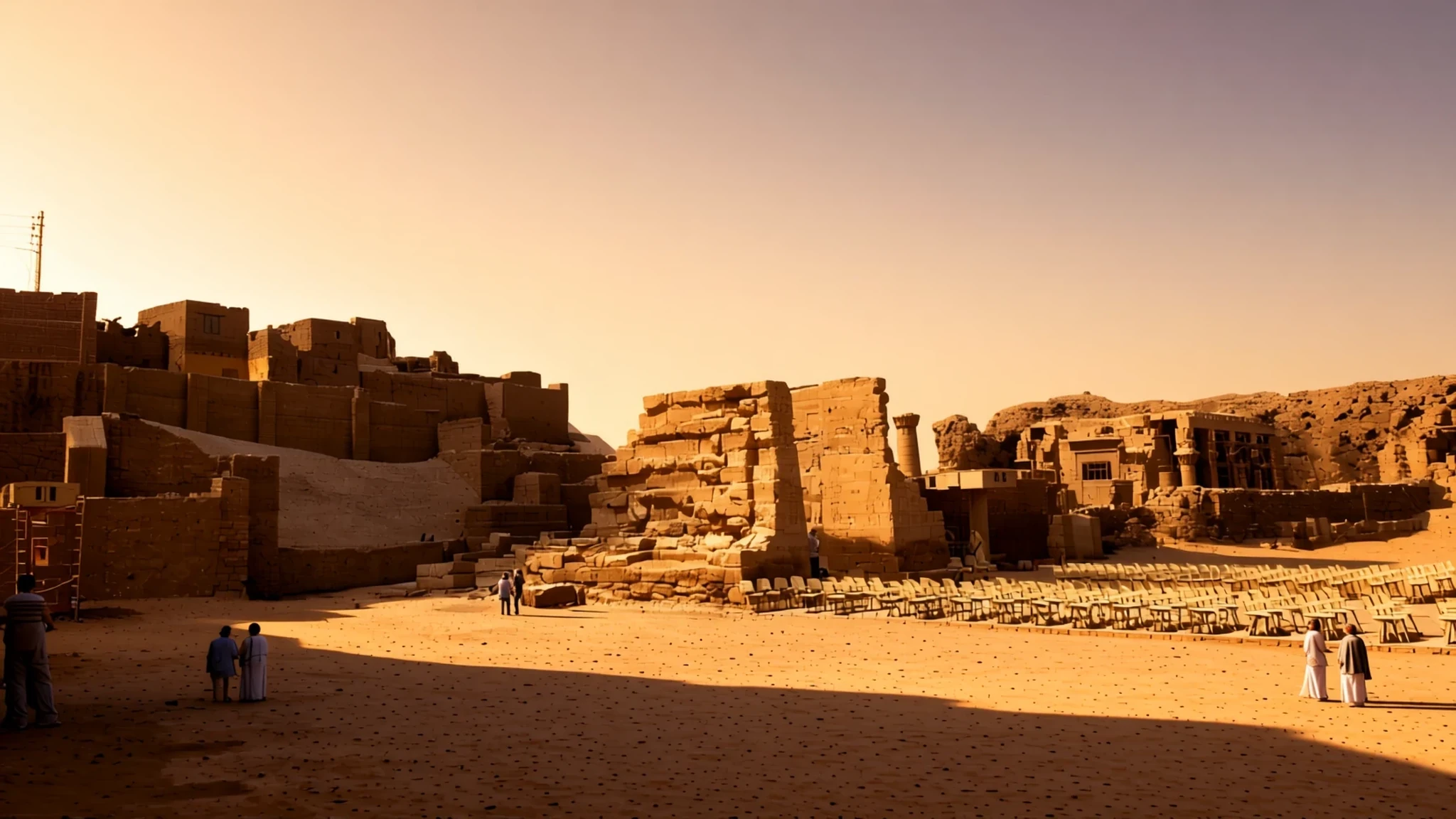
The Temple of Horus at Edfu is a remarkably intact Egyptian shrine, packed with carved scenes and Hellenistic-era inscriptions.
The place
Temple of Edfu sits on the west bank of the Nile in Edfu, Upper Egypt. It’s a temple complex dedicated to Horus, whose cult imagery is often shown as a falcon (or a falcon-headed human). The setting matters: you’re arriving by river routes, moving through an irrigated agricultural landscape outside the city, and then suddenly confronting a dense stone world that feels ancient and engineered.
What makes the site hit hard is the way the whole place reads as a functioning ritual machine. Doorways, pylons and courtyards lead deeper into spaces designed for ceremony. Inside, the walls carry inscriptions and scenes that connect the temple to older Egyptian religious ideas, while also reflecting the later political landscape of the Ptolemaic period. That mix is part of the fascination: this isn’t only about a god, but about how a community used text and images to explain mythology, authority and temple life.
Edfu itself is small enough to feel lived-in rather than staged. There’s also a sense of continuity with everyday life nearby—visitors usually arrive from Nile cruises or by road links between Luxor and Aswan, and many stay only long enough to see the temple before heading on. Even so, it’s worth slowing down. The carved reliefs reward quiet attention, and the light outside can change quickly, so timing the walk through the courts can make details feel sharper.
Crowds are usually manageable compared with the bigger headline sites, but during peak cruise and day-trip periods the forecourts do get busy. In the heat, the difference between a pleasant visit and a slog comes down to starting early and taking breaks in the shaded zones of the complex.
Its story
Temple of Edfu belongs to the Ptolemaic era of temple building, when rulers and priests invested in monumental structures across Egypt. The current temple was begun in the reign of Ptolemy III Euergetes and completed under Ptolemy XII Auletes, with construction developing from an earlier Horus temple on the same general site. Over time, later generations layered more building activity onto existing sacred ground, including evidence associated with New Kingdom rulers.
The layout tells its own timeline. A pillared hall and other early components originally framed the journey towards a sanctuary. At the heart of the complex is a barque sanctuary surrounded by chapels, while an inner sanctuary preserves a naos of Nectanebo II that predates the later building phases. It’s a reminder that the Ptolemaic temple was not a clean slate: it absorbed older sacred material and re-presented it within a new architectural vision.
Then came the long interruption. Desert sand and river silt gradually buried the temple, leaving much of it protected. Local homes eventually rose on top of the ruined ground, so the temple became both concealed and connected to daily life. By the late eighteenth century it was only partly visible, but later European expeditions and Egyptological work helped clear and identify the structure. Modern interventions also aimed to make the site easier to visit, including the introduction of visitor facilities and lighting for evening viewing.
Today, the Temple of Edfu is nearly intact and functions as a tangible bridge between eras—Ptolemaic religious expression, earlier Egyptian traditions, and the archaeology that brought the stone surfaces back into view.
What to see
- Temple of Horus at Edfu — Temple enclosure (Edfu, west bank)
The core temple complex is dedicated to Horus and is preserved in a way that lets visitors trace architectural and ceremonial movement. Carved wall scenes and inscriptions carry major Hellenistic-era material, with myth and ritual themes laid out across courts and chambers.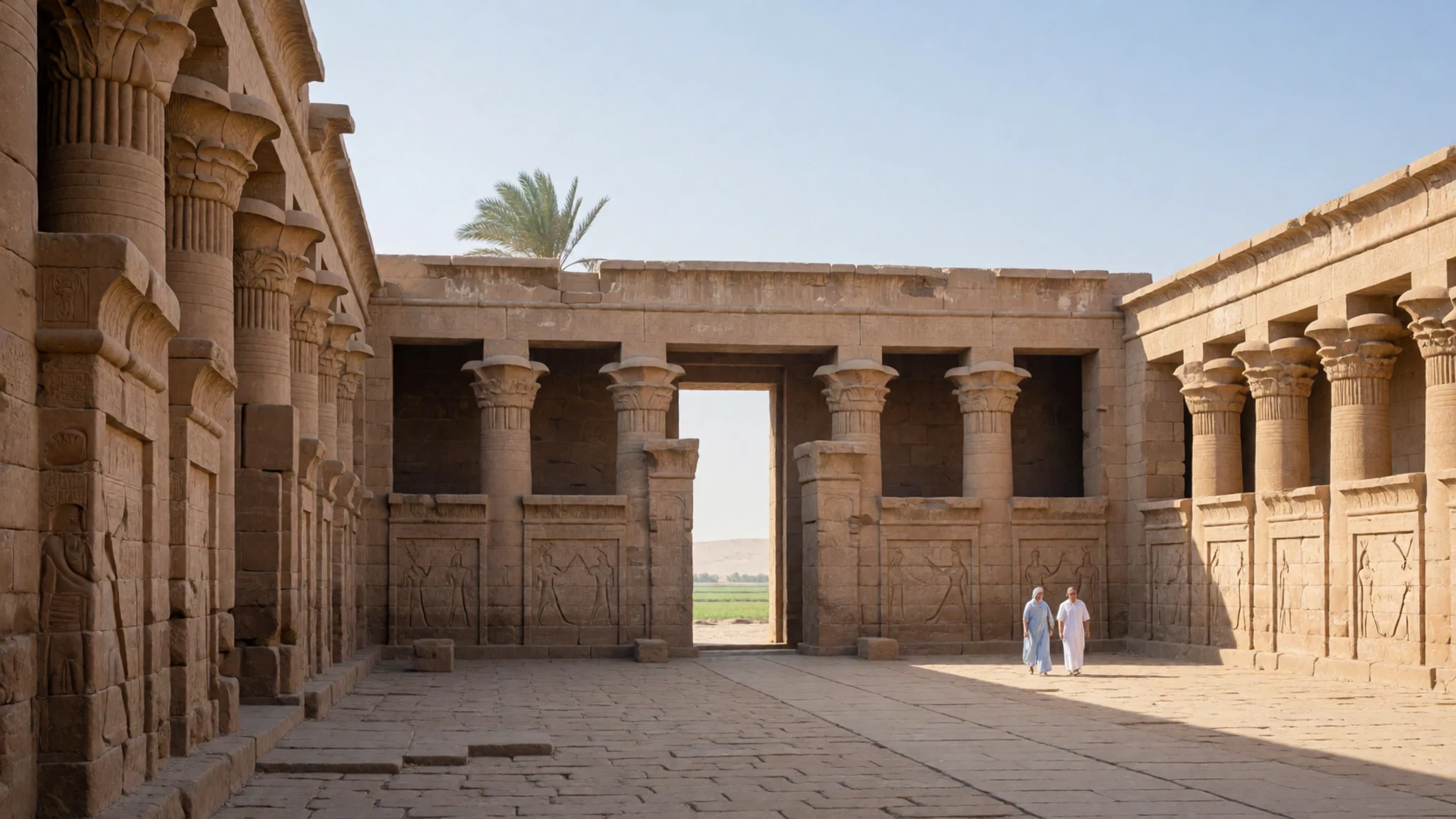
- Inner sanctuary — Deep inside the main temple
The inner sanctuary is set up for an intimate view of the temple’s sacred focal spaces. It’s a useful stop when the rest of the complex feels busy, because it draws attention to the way the sanctuary stands apart and how earlier sacred objects are preserved within later temple design.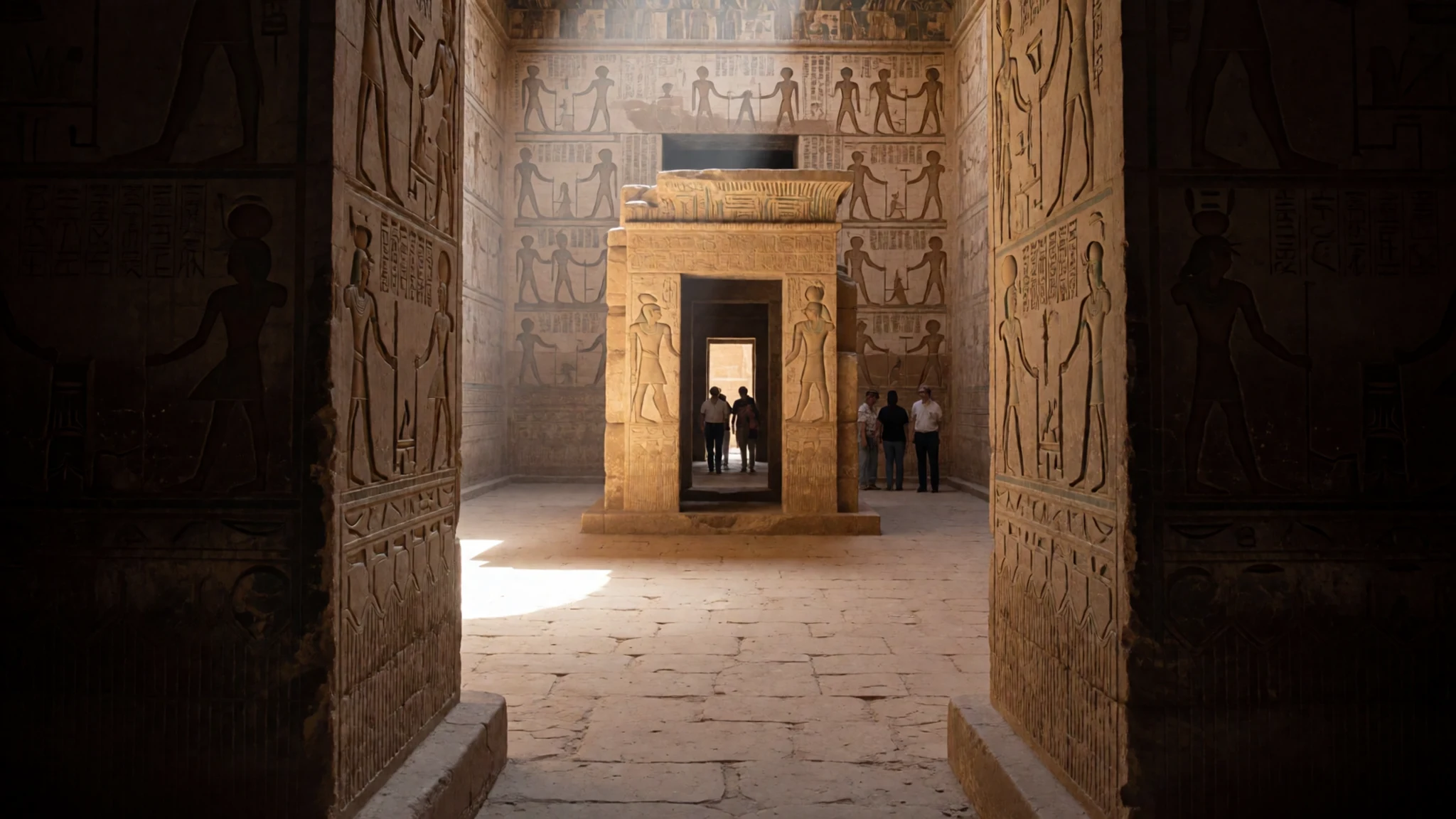
- Temple reliefs and inscribed walls — Courtyards and corridors around the sanctuary
Walk slowly along the accessible corridors and courtyards to find reliefs linked to temple myth and ritual. The texture of carved scenes can be more informative than a single overall view, especially where columns, doorways and outer walls preserve dense narrative imagery.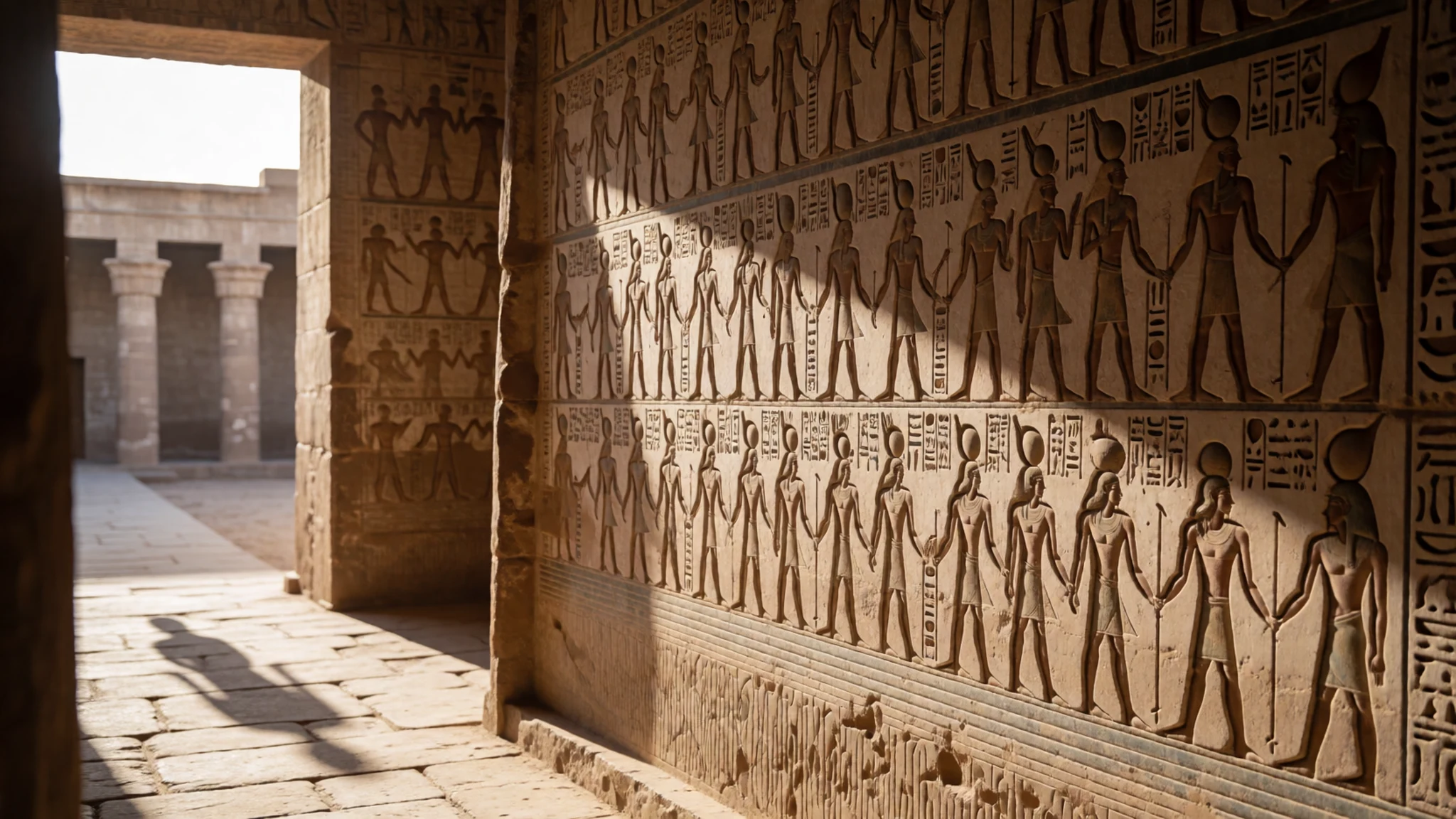
- Tell Edfu mound — Mound next to the temple
Just by the temple complex, Tell Edfu is less visually polished but archaeologically important. It marks the earlier town and its temple remains, giving context for how this part of the Nile landscape supported worship long before the stone you see today.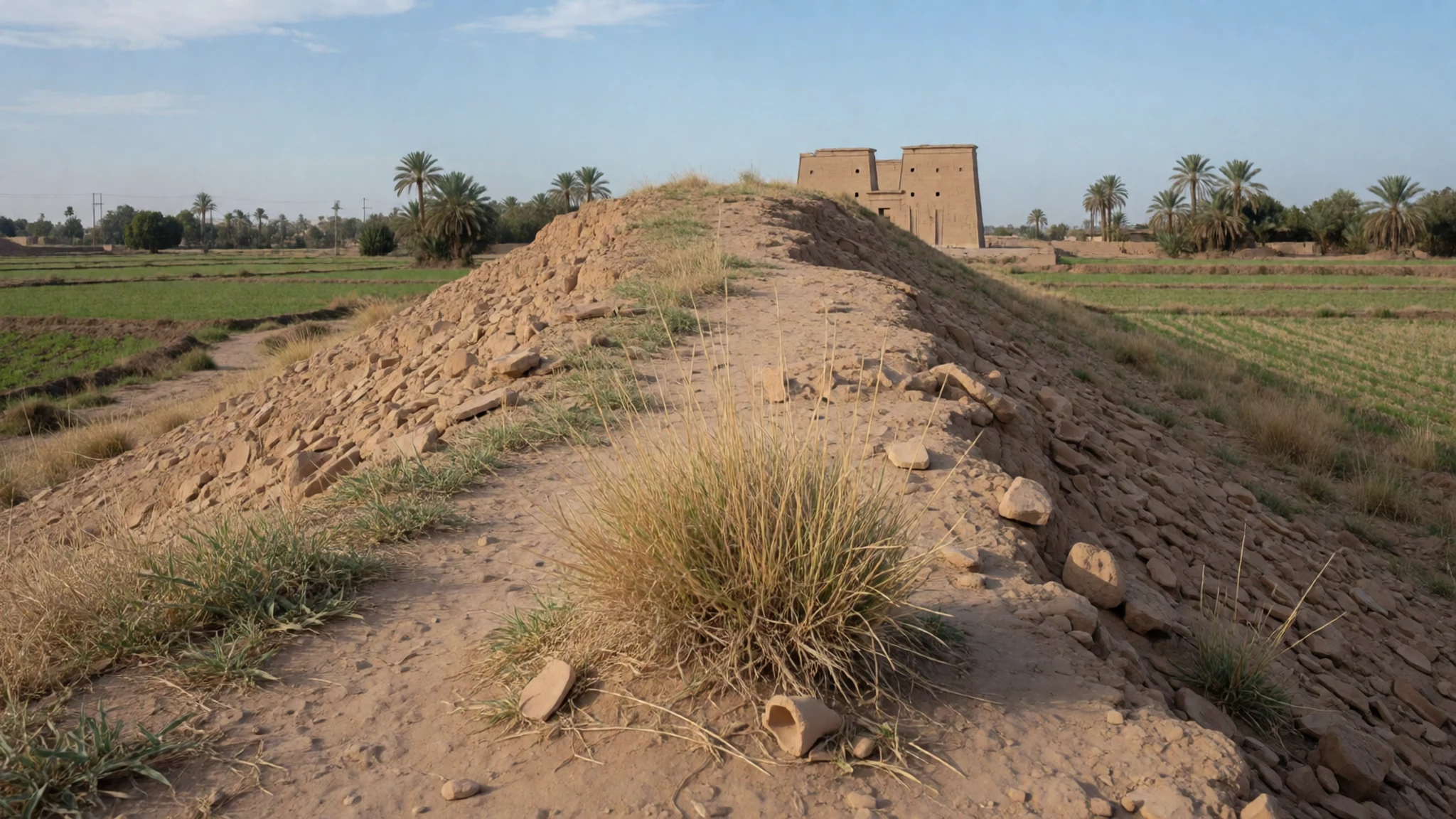
- St. Pachomius Monastery — West of Edfu (near town)
St. Pachomius Monastery is a still-active Coptic site that can be a grounding complement to the ancient temple. It’s known locally as a place to observe ongoing religious life rather than just monuments, so it tends to feel quieter and more everyday.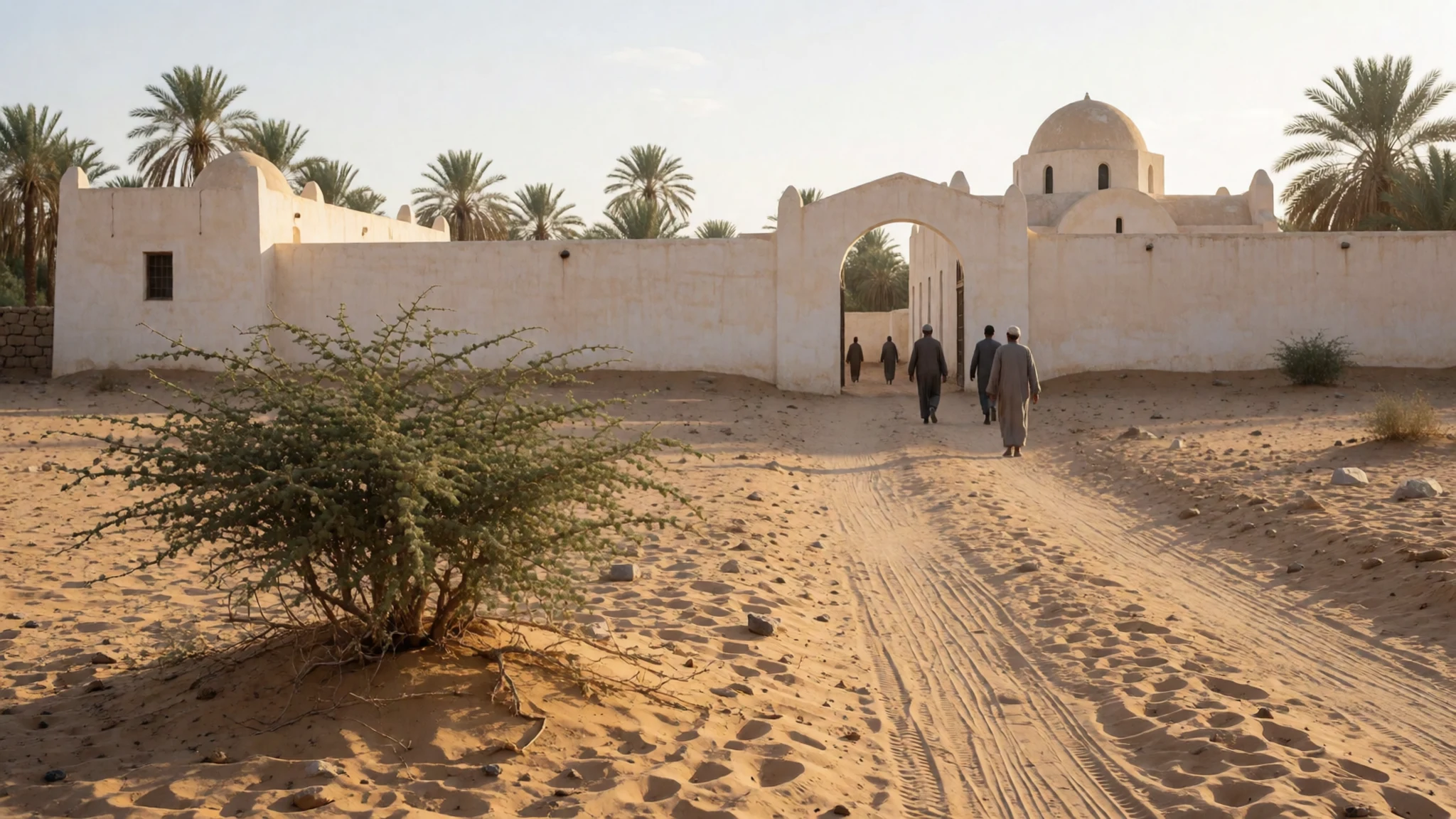
Culture
Temple of Edfu is a religious heritage site as much as an archaeological one, so behaviour that’s respectful and calm goes a long way. In Egypt, temples and shrines can attract visitors in waves, and the busiest moments often happen when riverboat schedules line up. If the complex gets crowded, the best move is to keep walking rather than stopping in doorways, and to step aside when someone wants a clear look at carvings or inscriptions.
Dress is the main practical consideration. A temple visit is easiest in breathable fabric that covers shoulders and knees, because you’ll feel the sun even when parts of the complex offer shade. Photography is usually allowed, but be aware that some areas feel more sensitive than open courtyards, and you don’t want to block others while framing shots.
One more thing: the site’s sacred focus means people may talk softly and move with intention. Loud phone calls and casual wandering through the most intimate spaces can feel out of place.
Visitor etiquette: dress modestly, keep voices down inside, and avoid blocking passages when taking photos.
What to wear
At the Temple of Edfu, the mix of hot weather and a sacred setting shapes what’s comfortable and appropriate. Traditional Egyptian clothing isn’t required, but modest coverage helps—think light fabric trousers or a long skirt, and a top that covers shoulders. In everyday Egypt, many people wear cotton shirts and long skirts or trousers, and visitors often mirror that practicality.
If visiting in warm months, breathable natural fibres (cotton/linen) work best because the heat can build quickly outdoors. Comfortable footwear matters: the temple surfaces can be dusty and uneven, so choose closed-toe shoes with grip rather than flimsy sandals.
For a more “Egyptian” feel, some travellers opt for a headscarf or a scarf around the shoulders. It’s not a requirement everywhere, but it can be helpful for sun protection and for feeling at ease in religious spaces. Keep a layer handy for evenings if arriving during cooler months, because night can feel cooler near the river.
Visitor takeaway: wear modest, breathable clothes and closed, grippy shoes—sun protection and comfort are the real priorities here.
What to eat
- Mint tea — Small tea stalls along the road from the Nile bridge to the temple
Mint tea is the easiest, safest pause between temple halls. It’s commonly offered by small cafés and tea stops along the road from the Nile bridge up to the temple area.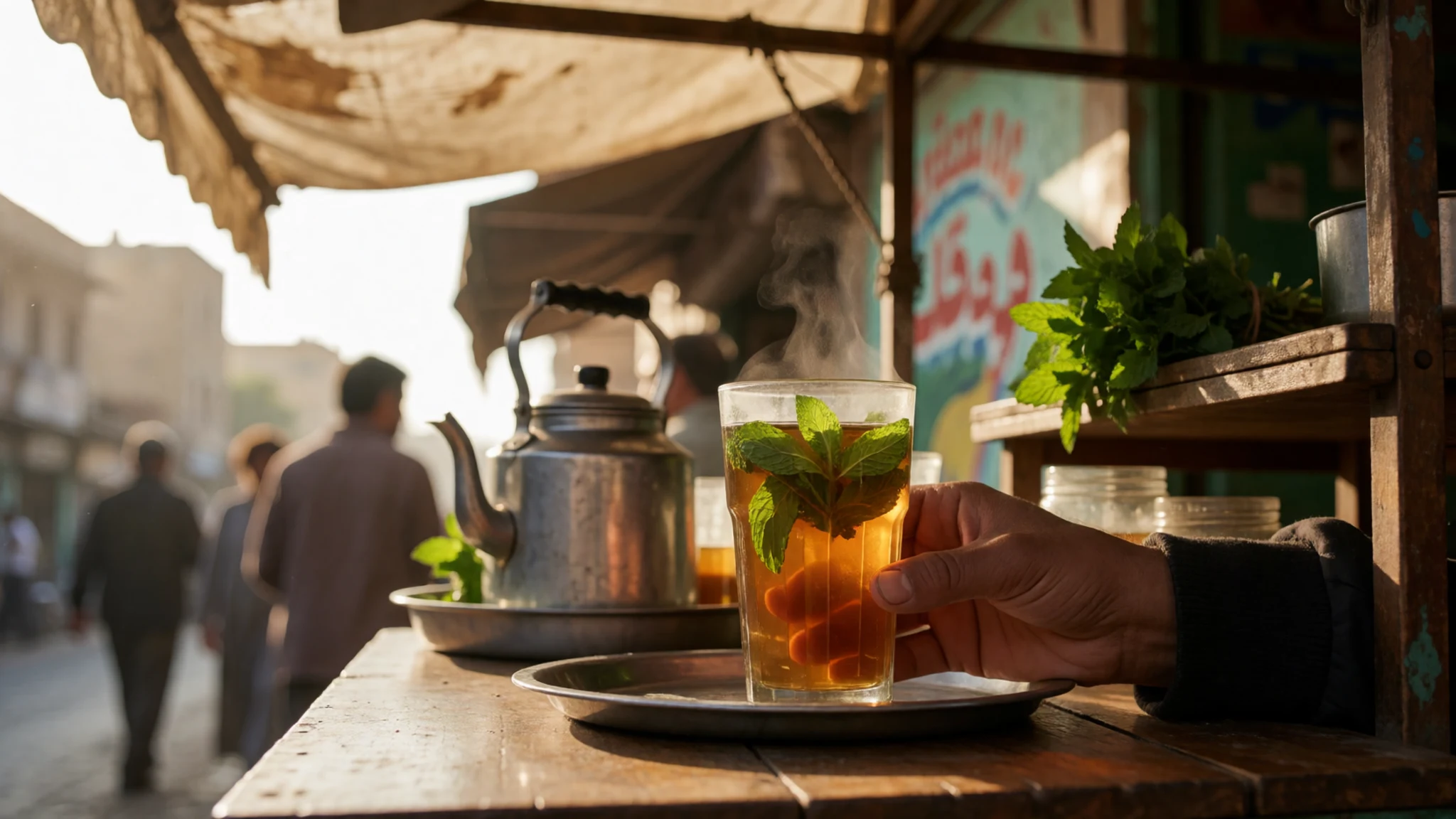
- Street snacks near the temple — Main drag between the Nile bridge and the temple
There’s a string of small eating places along the main route from the Nile bridge to the temple. In practice, it’s often easiest to choose a spot with steady local footfall.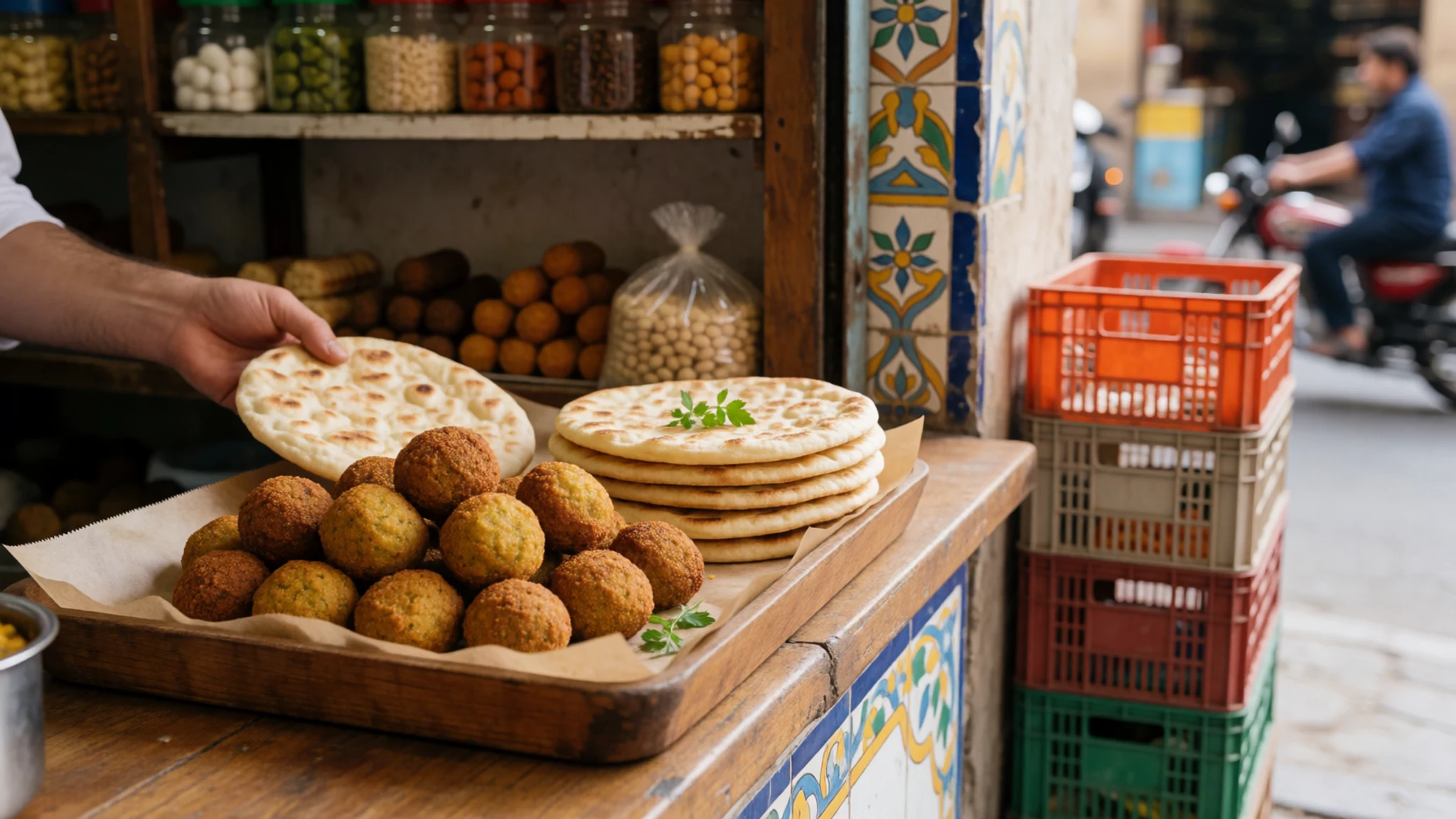
- Riverbank bites — Along the river bank south of the town centre
As you walk south along the river bank, informal snack options appear and the atmosphere is more relaxed. Great for quick refreshment when the sun is strong. - Simple local plates — Small local eateries near the hospital and main road
When in doubt, look for places where hospital staff are eating—these are usually serving filling, straightforward dishes rather than tourist-focused menus. - Iced drinks and cold refreshments — Any of the small cafés/eating places on the main street
To cool down between walks, pick up cold drinks where you stop for tea or meals. It’s a practical way to pace energy levels during a temple visit.
Plan it
Best time. March–April and late October–November tend to suit temple visits best. Summers around Edfu can be hot, and the site is outdoors for long stretches; choose shoulder-season months for more comfortable walking.
How long. 2–3
Getting there. Many travellers reach Edfu via Luxor–Aswan routes. By train, journeys from Cairo can involve going to Luxor first and then continuing to Edfu via Esna; after that, trains typically continue towards Kom Ombo and Aswan. If travelling overland, buses run between Luxor and Aswan, and long-distance taxi routes are arranged with stop-offs in towns like Edfu. Nile cruise boats dock at the river wharf on the west bank, with onward access arranged for the last leg to the temple.
Budget. mid
Tips
- Start early to beat heat and the first wave of day-trippers.
- If arriving from a cruise, confirm how long you’re allotted ashore so transport waits don’t eat the visit.
- Keep cash ready for small purchases around the temple area.
- Plan on slow walking—give time to read carvings and inscriptions rather than rushing through.
Etiquette
- Dress modestly (shoulders and knees covered) when entering temple spaces.
- Avoid blocking doorways or walkways while photographing reliefs.
- Keep voices low in quieter interior zones.
Nearby
Sources
- Wikidata Q613037 (CC0)
- Wikipedia (rev 1357487085) (CC BY-SA 4.0)
- Wikivoyage (rev 5248611) (CC BY-SA 4.0)
- Photo photos/01-temple-of-edfu-02.jpg (CC BY 3.0)
- Photo photos/02-temple-edfou-egypte.jpg (CC BY 3.0)
- Photo photos/03-s10-08-edfu-image-9886.jpg (Public domain)
- Photo photos/04-s10-08-edfu-image-9885.jpg (Public domain)
- Photo photos/05-temple-of-edfu-sanctuary.jpg (CC BY 3.0)
- Photo photos/06-edfu89.jpg (CC BY-SA 1.0)
- Photo photos/07-edfu-temple-relief-by-john-campana.jpg (CC BY 2.5)
- Photo photos/08-john-beasly-greene-american-born-france-edfou-sculptures-et-.jpg (Public domain)


_-_Google_Art_Project_(68321099).jpg)