Pyramids of Giza
Pyramids of Giza, Egypt
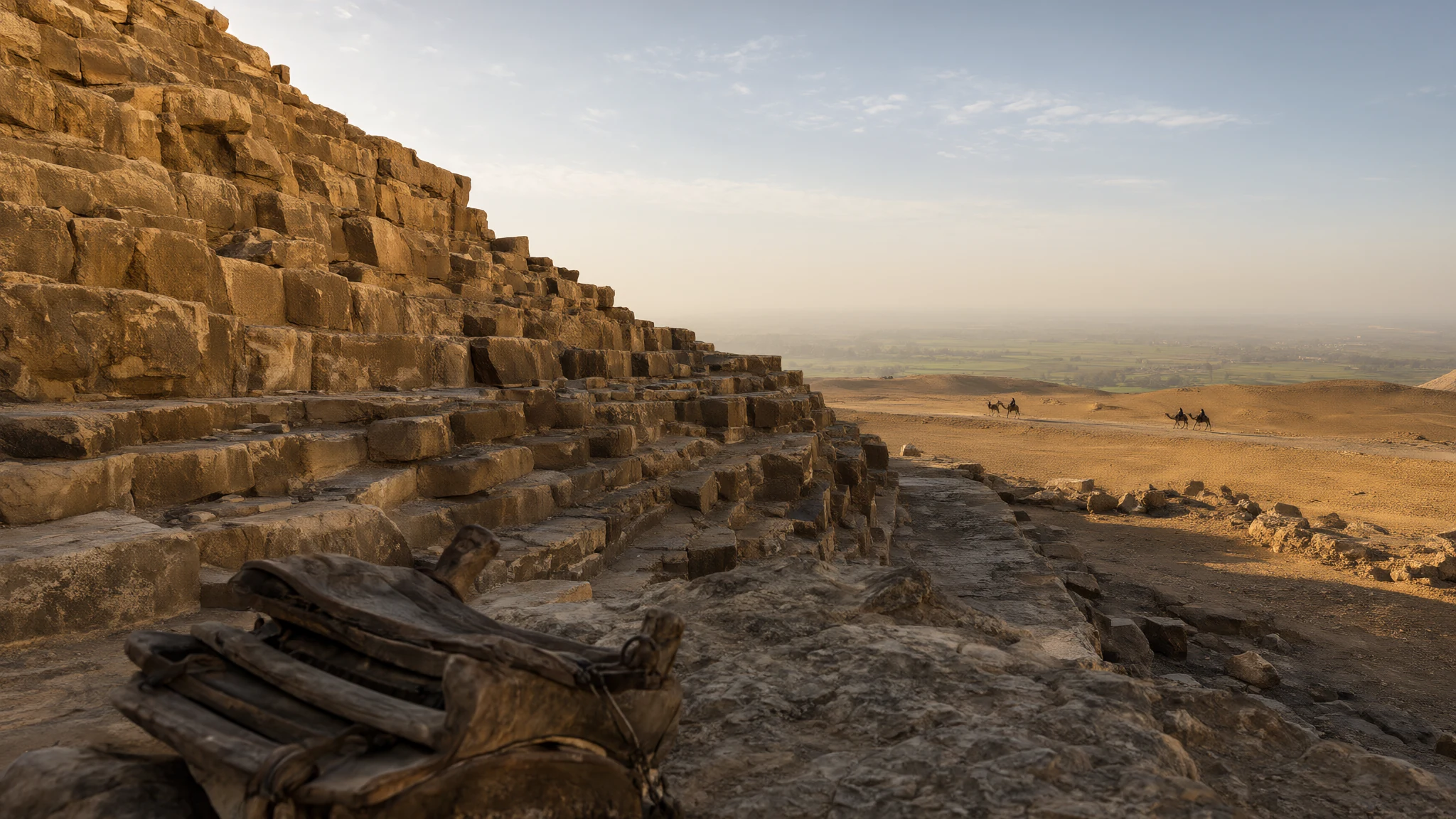
Stand before the last surviving wonder of the ancient world, where monumental stone tombs rise from the desert dust on the edge of the Nile valley.
The place
The Giza pyramid complex sits upon a stark desert plateau at the western edge of Egypt. Rising near the outer limits of the modern city of Giza, the site commands views across the arid landscape towards the fertile green ribbon of the Nile River valley. This ancient necropolis is dominated by three main stone monuments constructed for successive pharaohs: the Great Pyramid, the tomb of Khafre, and the smaller mortuary monument of Menkaure. Surrounding these colossal edifices are smaller subsidiary pyramids for queens, ruined mortuary temples, elevated causeways, and rows of flat-topped mastaba tombs where courtiers and family members were buried. Guarding the approaches stands the Great Sphinx, carved from the bedrock of the plateau with the body of a reclining lion and a human head. The underlying stone for these structures was quarried nearby from local geological formations, giving the entire complex a uniform, sun-bleached hue that shifts from pale gold at midday to deep amber as the sun drops towards the western horizon. The desert winds sweep constantly across the plateau, carrying fine sand that settles into the weathered crevices of the ancient masonry. While the immediate surroundings are heavily urbanised with sprawling neighbourhoods reaching right up to the archaeological zone boundary, stepping past the security gates transports the visitor into a silent realm of monumental architecture that has dominated the North African landscape for millennia.
Its story
The monuments of the Giza pyramid complex were raised during a period of extraordinary centralised power and artistic achievement in ancient Egypt. Construction took place under the rulers of the Fourth Dynasty of the Old Kingdom. Skilled artisans, royal architects, and a rotating workforce of labourers quarried millions of limestone blocks to erect these towering royal tombs. The engineering ambition required immense logistical organisation, from cutting stone blocks with copper chisels and wooden wedges to hauling them up earthen ramps under the blazing North African sun. These sacred enclosures were designed to secure the eternal wellbeing of the divine kings in the afterlife, serving as the focal point for elaborate mortuary cults supported by endowed lands and priests. Over subsequent centuries, as the Old Kingdom faded and new dynasties rose along the Nile, the necropolis gradually fell into quiet neglect, its temples slowly sanded over and its outer casing stones occasionally stripped away for later building projects elsewhere in the region. Classical travellers and Hellenistic writers later documented the marvels of the plateau, cementing their fame across the Mediterranean world. By the time modern archaeological excavation began in earnest, deep drifts of desert sand had buried much of the Sphinx and many surrounding structures, requiring decades of careful clearing to reveal the layout of the ancient landscape that visitors encounter today.
What to see
- The Great Pyramid — Giza plateau
The oldest and largest monument on the Giza plateau, built for pharaoh Khufu, towers over the surrounding desert as the lone surviving structure of the ancient wonders. Visitors can observe the colossal weathered limestone blocks scaling up its massive profile.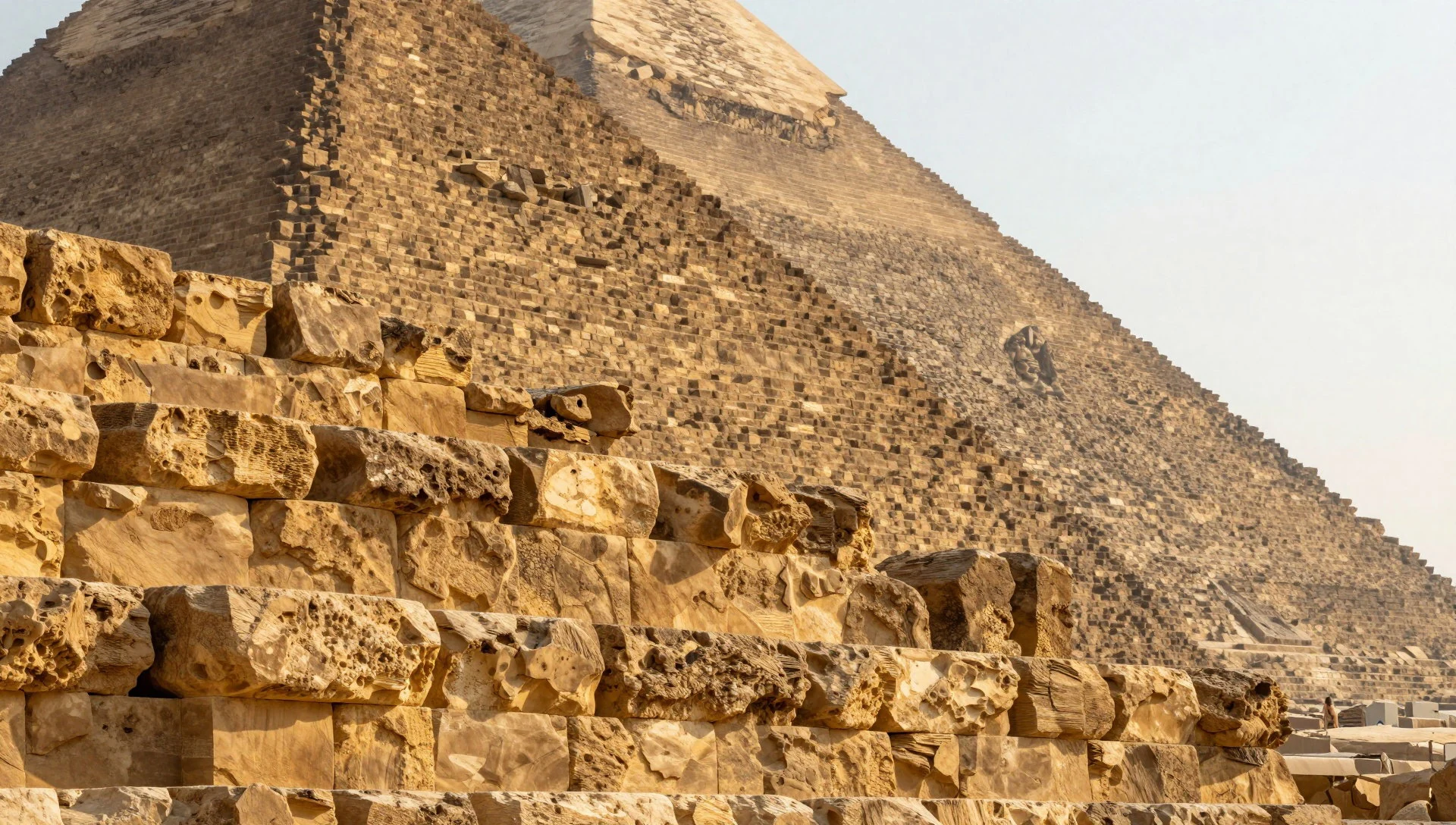
- The Great Sphinx — Lower plateau, front of Khafre complex
Carved directly out of the limestone bedrock of the plateau, this mythical guardian features a majestic lion body and a human head adorned with royal insignia. Centuries of sand accumulation and partial excavation have left a legacy of dramatic historical photography.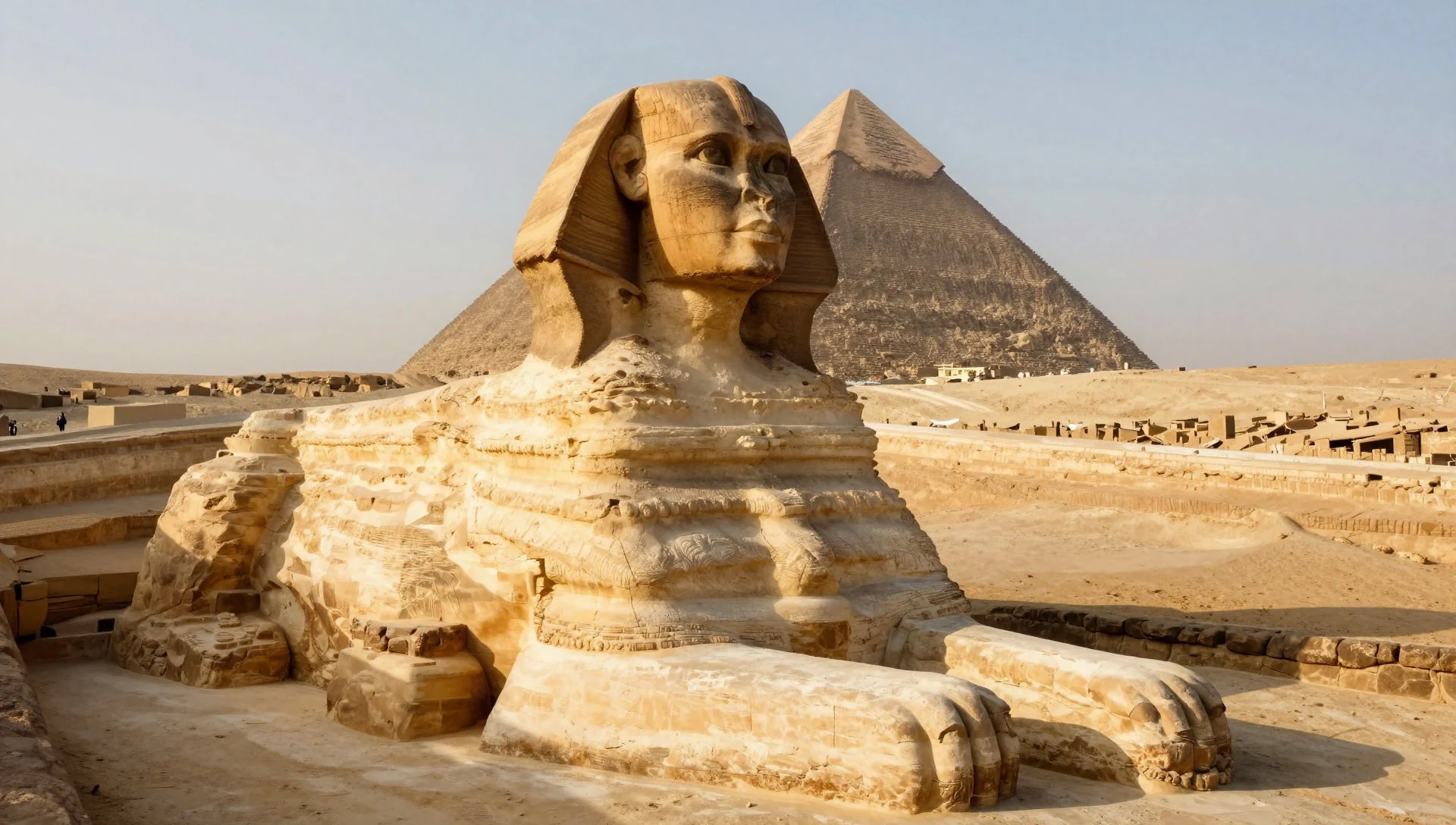
- Pyramid of Khafre — Central Giza plateau
Commissioned by Khufu's successor, this monument preserves a distinctive cap of smooth limestone casing stones at its very summit. It appears taller than its neighbour due to being set on higher ground across the swept limestone plaza.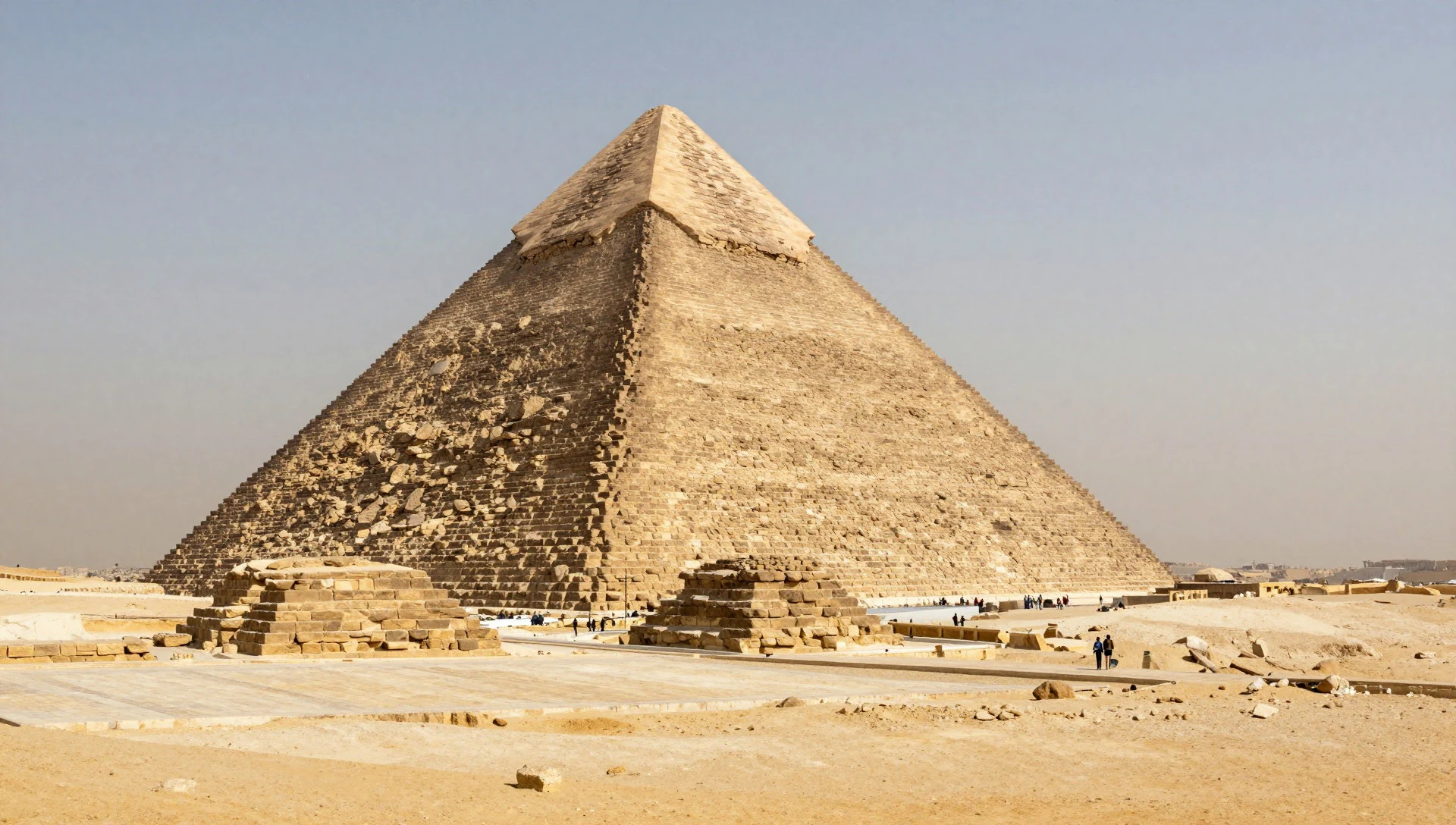
- Pyramid of Menkaure — Southern Giza plateau
The smallest of the three principal royal tombs at Giza, constructed for pharaoh Menkaure. Its lower courses feature striking pink granite blocks imported from southern quarries, offering a distinct textural contrast to the limestone around it.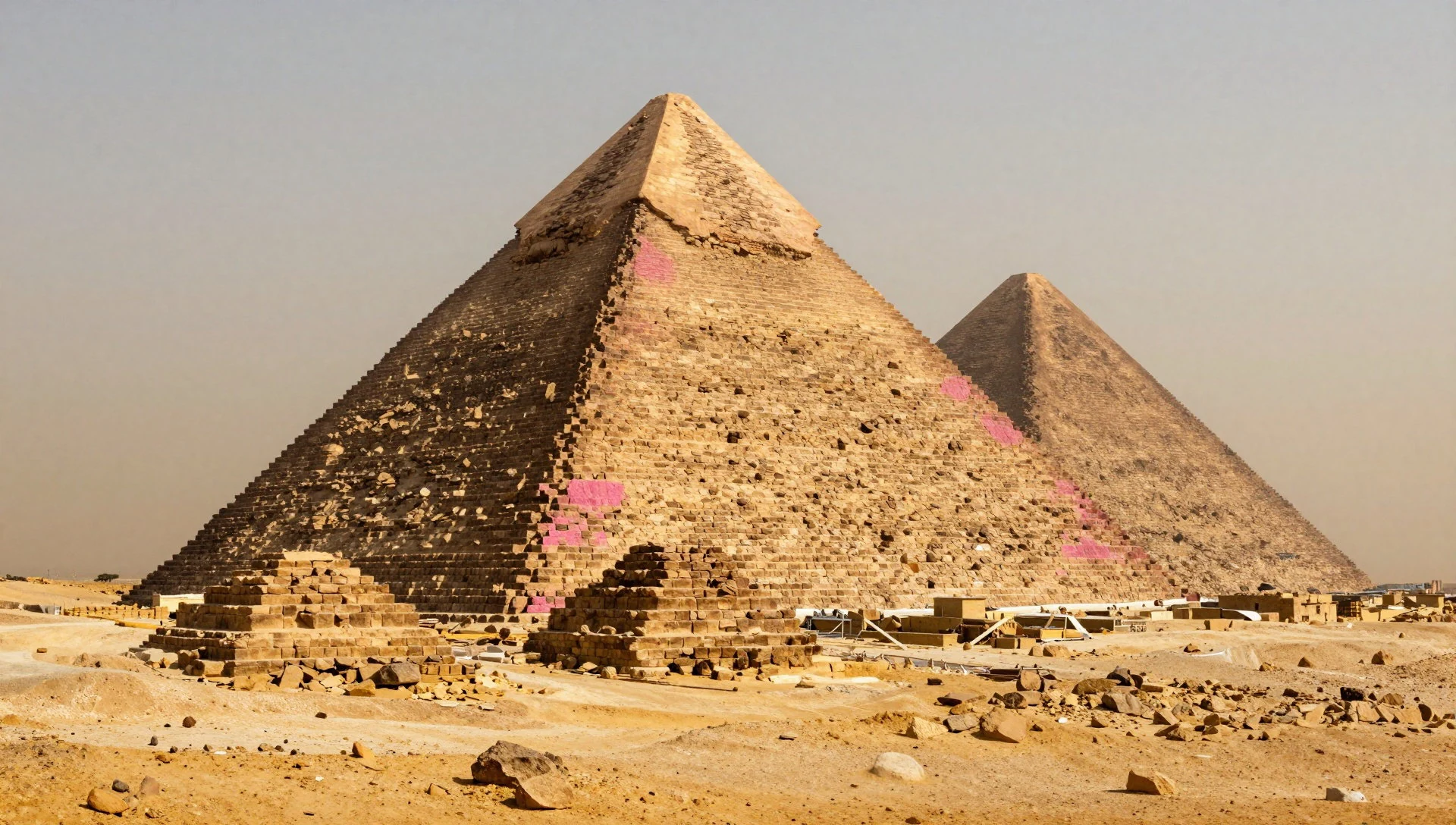
- Solar Boat Museum site — South side of the Great Pyramid
Associated with the royal burials, the pit remains mark where dismantled ceremonial cedar boats were carefully buried to transport the pharaoh's soul through the heavenly realms alongside the sun god.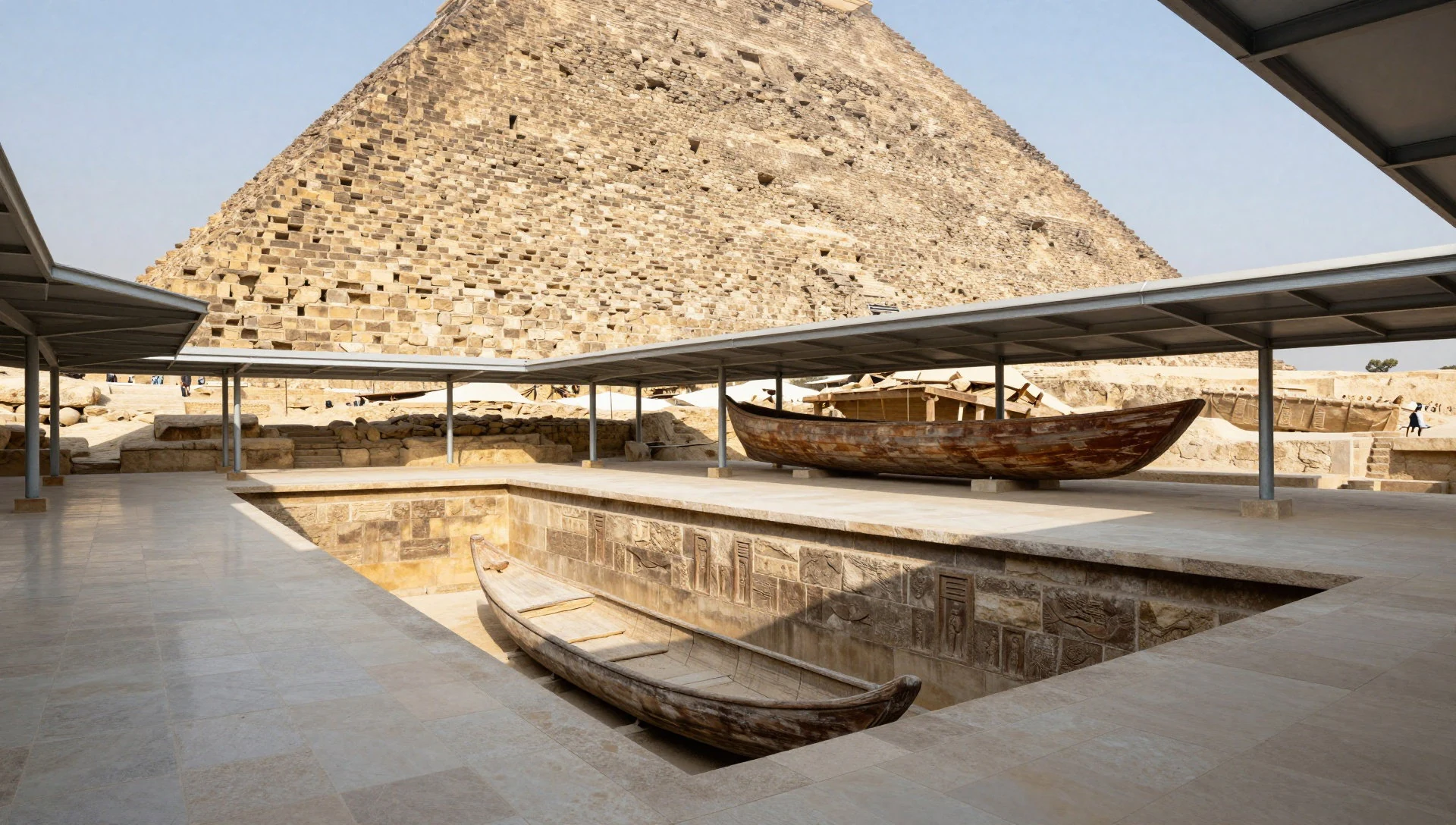
Culture
Visitors to the Pyramids of Giza and the wider Egyptian cultural sphere encounter a society rooted in traditional Arab and North African social customs where hospitality is treated as a fundamental duty. People are generally warm, expressive, and welcoming to strangers, viewing the care of guests as a matter of personal and communal honour. Conversations often unfold at a leisurely pace over tea, and social interactions place a high value on maintaining dignity and avoiding public embarrassment. When discussing matters of faith or local traditions, approach topics with sensitivity and respectful curiosity, as religious identity remains deeply intertwined with daily life across the country. Direct confrontation or blunt criticism should be avoided, as causing someone to lose face in front of others is considered deeply impolite and counterproductive. Instead, gentle phrasing and patience help build genuine rapport with local hosts, merchants, and guides. Always ask permission before photographing local residents, particularly women and elders, to show proper respect for personal privacy and local customs.
What to wear
Traditional attire across Egypt reflects both practical adaptations to a warm climate and Islamic modesty standards. Historically, loose-fitting cotton garments such as the traditional galabeya—a long, flowing robe—have been worn by men and women alike, providing cool ventilation under the desert sun alongside lightweight headscarves for sun protection. In modern urban areas and neighbourhoods near major heritage sites, everyday street wear for locals blends contemporary Western fashions with modest cuts, meaning men typically wear trousers and shirts, while women often opt for long skirts, tunics, or hijabs alongside modern trousers and jackets. For international travellers visiting the Pyramids of Giza, dressing appropriately means striking a balance between sun protection and cultural respect. Lightweight, breathable linen or cotton trousers, long skirts, and shirts that cover the shoulders and knees are ideal for coping with high temperatures while remaining respectful of local sensibilities. Sturdy, closed-toe walking shoes or trainers are essential for navigating the dusty, uneven gravel paths and steep stone ramps around the plateau.
What to eat
- Ful medames — Arabiata restaurant chain or local street stalls across Cairo and Giza
A comforting staple dish of slow-cooked fava beans seasoned with olive oil, cumin, garlic, and lemon juice, traditionally eaten for breakfast with warm flatbread.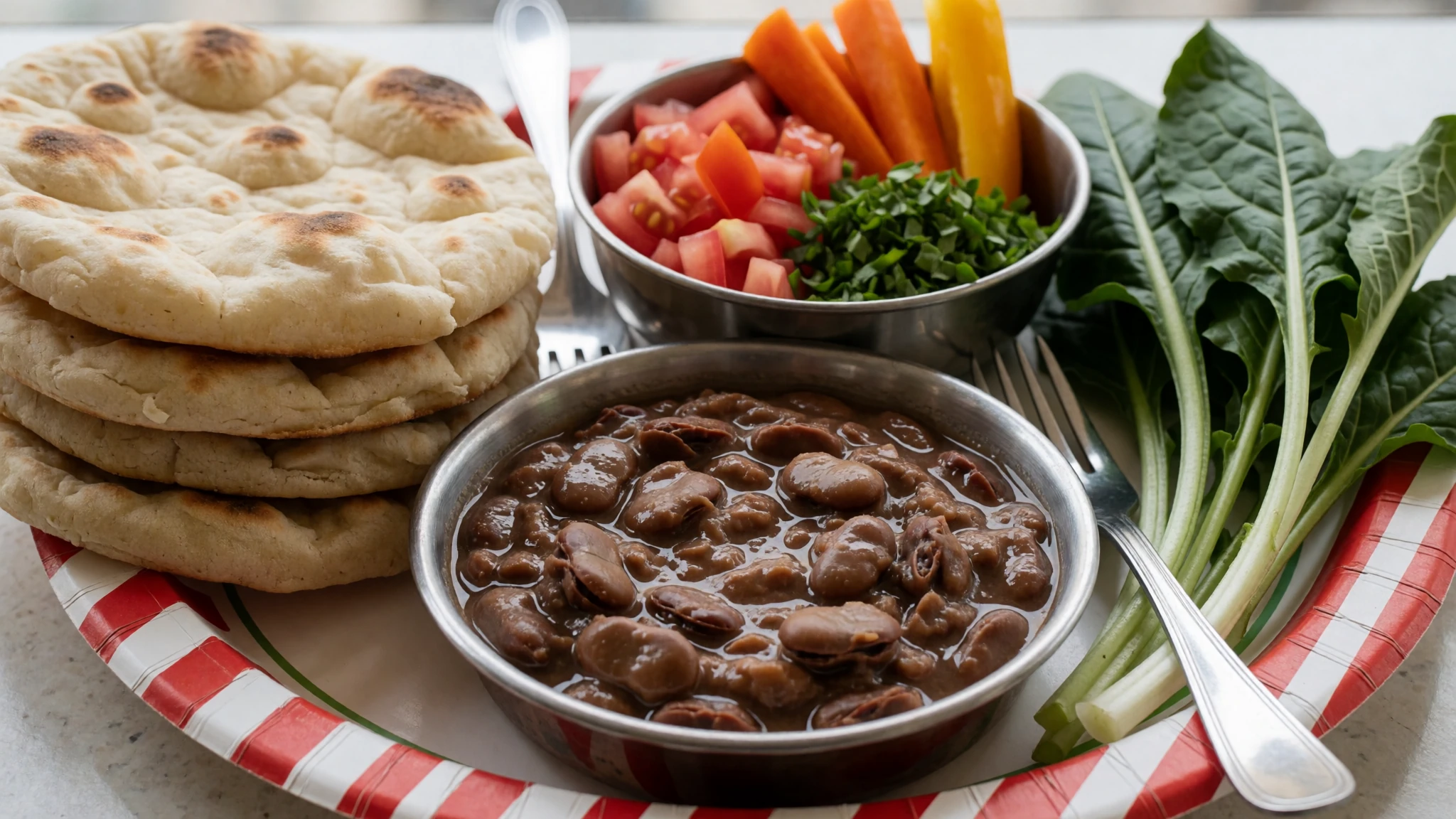
- Ta'ameya — Neighbourhood bakeries and traditional breakfast eateries
The local Egyptian variant of falafel, prepared with crushed fava beans instead of chickpeas, giving it a vibrant green interior and a crisp exterior crust.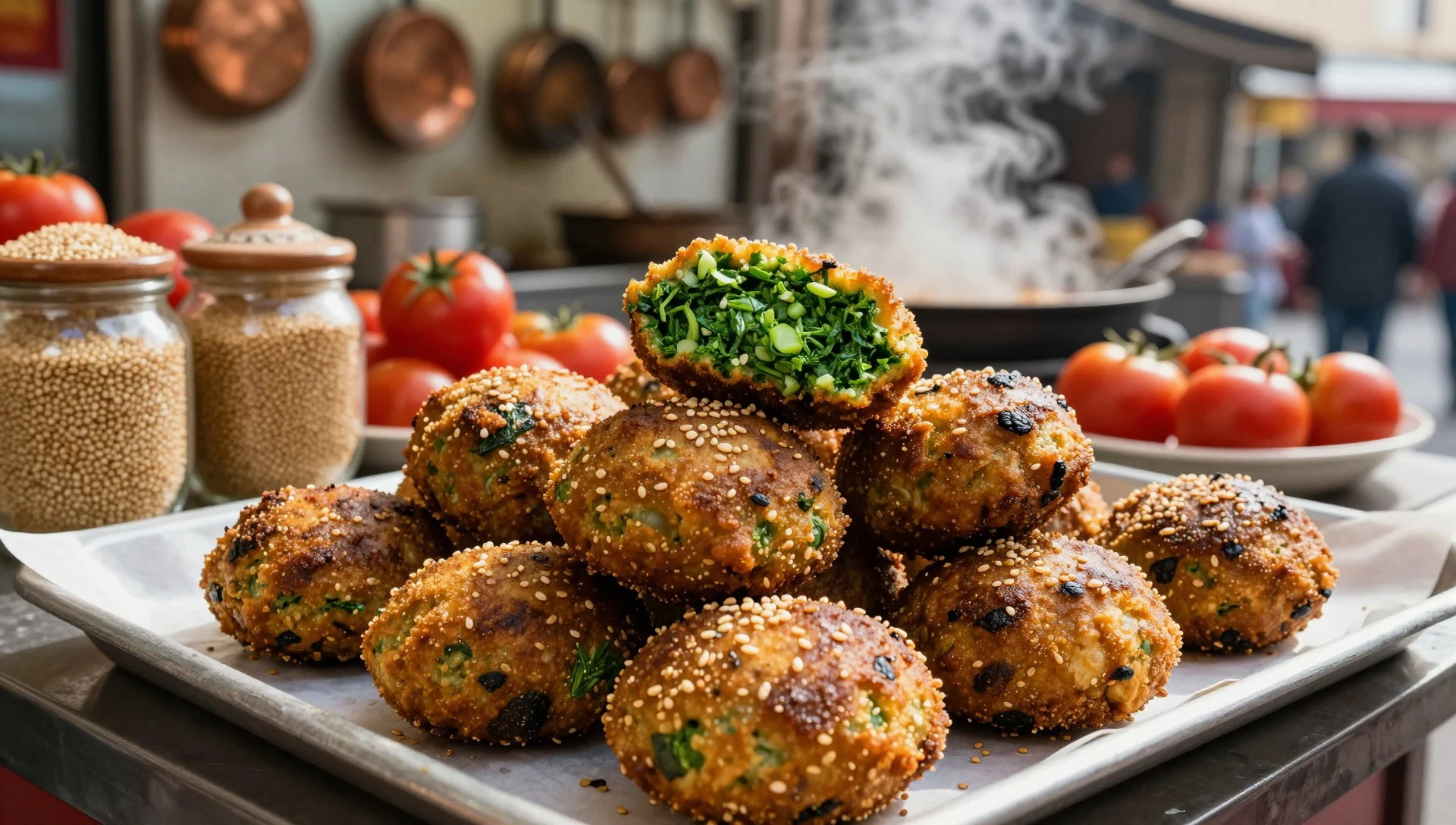
- Koshary — Specialist koshary shops throughout Cairo
A hearty, layered street-food favorite combining rice, macaroni, lentils, crispy fried onions, and a tangy spiced tomato vinegar sauce.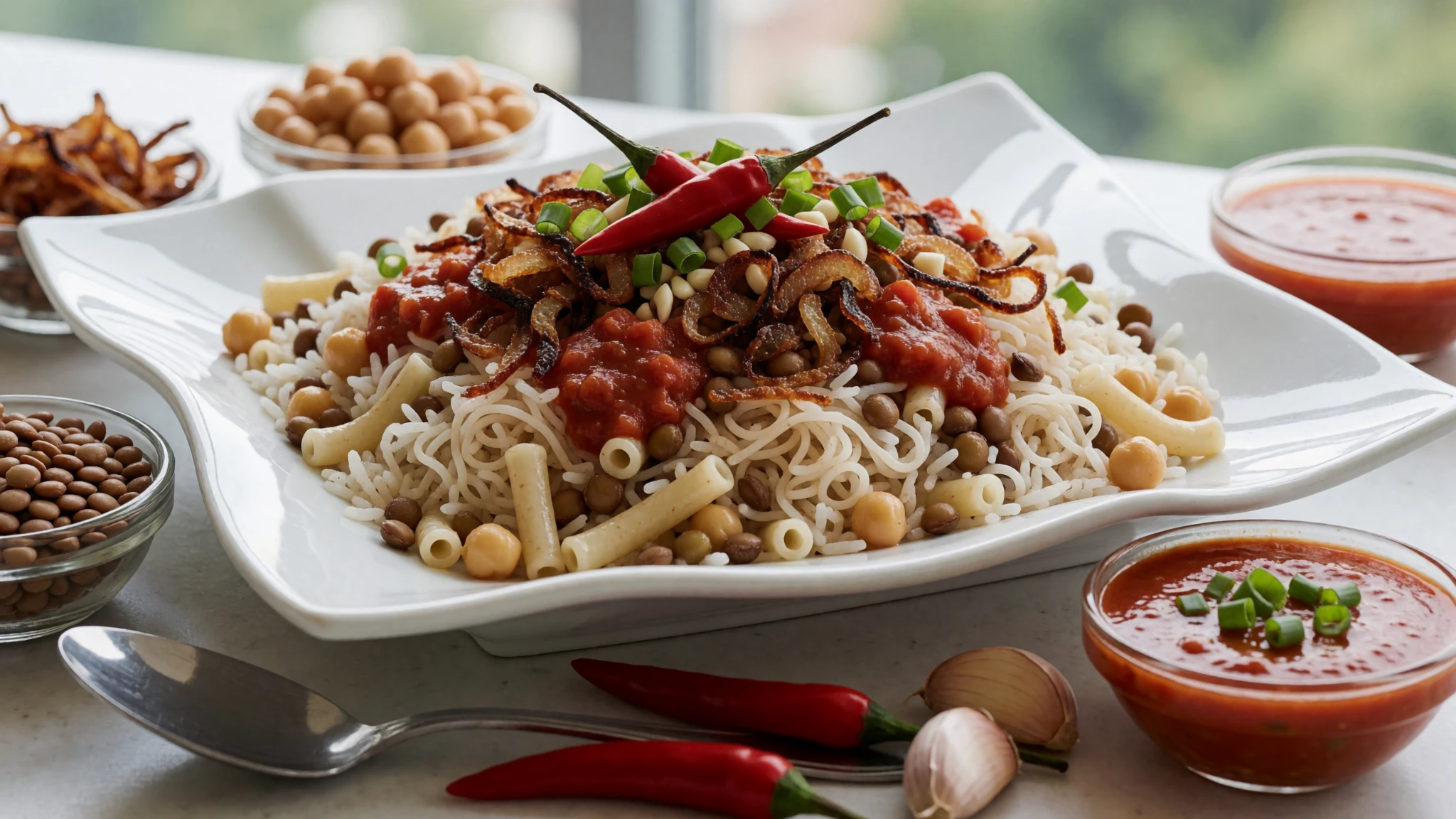
- Grilled Nile fish — Traditional fish markets and casual seafood stalls
Fresh catches from local waters seasoned with aromatic herbs and spices, then grilled over open flames at harbourside eateries.
Plan it
Best time. December to February bring the mildest daytime temperatures, while May to September bring the most intense, dry heat.
How long. 2–3
Getting there. Fly into Cairo International Airport, then take a taxi or rideshare service west across the Nile towards the Giza plateau.
Budget. mid
Tips
- Arrive at the ticket gates early in the morning before tour buses and midday heat peak.
- Carry sufficient local cash in small denominations for minor purchases and tips.
- Drink plenty of bottled water throughout your visit to counter the dry desert air.
- Wear comfortable, closed-toe walking shoes suitable for deep sand and uneven stone.
Etiquette
- Always ask permission before photographing local residents.
- Dress modestly with shoulders and knees covered when exploring heritage areas.
- Approach discussions regarding religion and local culture with patience and respect.
Nearby
Sources
- Wikidata Q12508 (CC0)
- Wikipedia (rev 1378290137) (CC BY-SA 4.0)
- Wikivoyage (rev 5410102) (CC BY-SA 4.0)
- Photo 01 (CC BY-SA 4.0)
- Photo 02 (Public domain)
- Photo 03 (CC BY-SA 4.0)
- Photo 04 (Public domain)
- Photo 05 (CC BY 3.0)
- Photo 06 (CC0 1.0)
- Photo 07 (CC BY-SA 2.5)
- Photo 08 (Public domain)


