Aswan
Aswan, Egypt
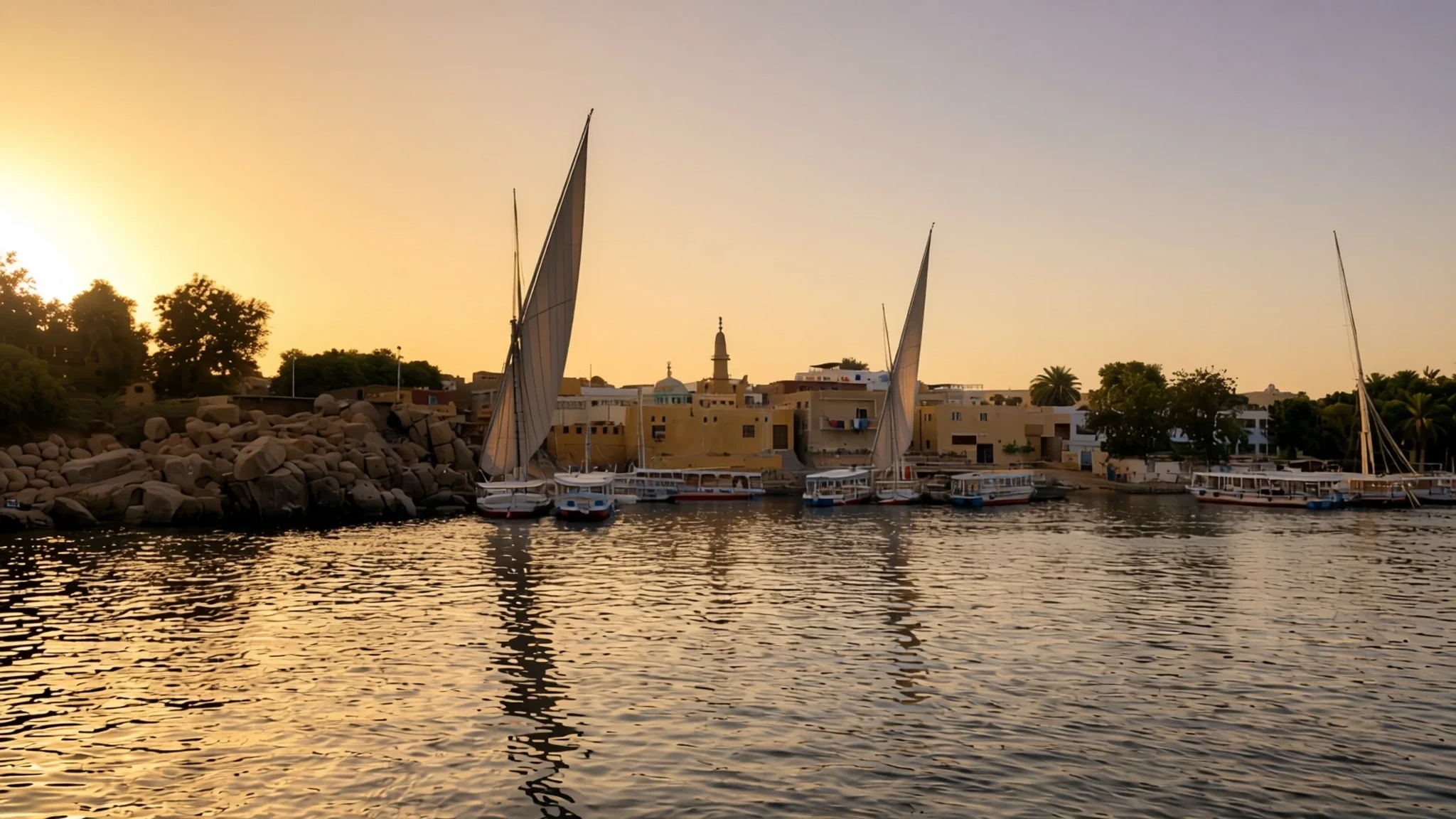
A laid-back Nile city of granite quarries, island villages and Nubian history, best visited in the cooler winter months.
The place
Aswan sits on the east bank of the Nile in Upper Egypt, just north of the Aswan Dam, where the river runs over the first cataract. It is the capital of Aswan Governorate and works as a market town as well as a tourist centre, so the streets near the water carry produce, building materials and visitors side by side. The city has grown to take in Elephantine, an island that was once a separate community and now sits within the urban fabric, with its own Nubian villages.
The setting is the main draw. The Nile is wide here, the banks are lined with palms and feluccas, and the granite outcrops breaking the water give the light a warm, rust-coloured glow. Quarries in the area have supplied stone for monuments for millennia, and some are still working, so the sound of cutting can be heard from the edge of town.
Winter is when most visitors come, and the pace of the city suits it. Summer heat is intense, and the middle of the day is best spent indoors or on the river. The Nubian villages on Elephantine and the cafés along the Corniche give a sense of the place beyond its monuments, with a strong Nubian identity alongside the Egyptian one. The city is a steady, unhurried base rather than a place to rush through.
Its story
Aswan began as Swenett, the frontier town that marked the southern edge of Ancient Egypt, later known to the Greeks as Syene. Its name is said to come from an Egyptian goddess of the same name, whom Greek and Roman writers linked with their own goddesses of childbirth. The word may also have echoed an Egyptian sign for trade or market.
Egyptian thought imagined the country opening at Swenett, because the Nile was understood to rise in the south and this was the southernmost town. The settlement stood on the east bank, just below the first cataract, where rock and rapids ran upstream toward Philae. Boats could sail from here to the Delta without meeting another barrier, which made the town a natural point of exchange and control.
The local stone was prized across the country. Quarries here supplied granite to monuments for centuries, and a fine rock the Greeks called syenite took its name from the town. The quarries are still operating today. Ancient geographers also took a keen interest in the town's latitude, since it lay close to the tropic line.
Later centuries added their own layers. The Fatimid cemetery is a crumbling reminder of the dynasty's reach, and the Monastery of St Simeon speaks to Christian life in the region. The modern dam flooded Lower Nubia, displacing its communities, and the objects rescued from that landscape now fill the Nubian Museum.
What to see
- Nubian Museum — Central Aswan, by the Nile
The Nubian Museum opened in 1997 as a joint project of the Egyptian government and UNESCO. It traces the region's history from prehistoric times up to the building of the Aswan Dam in the 1960s, when Lower Nubia was flooded. Its displays include finds rescued during the international campaign that recorded and moved monuments before the waters rose, and they give a good sense of what the dam covered.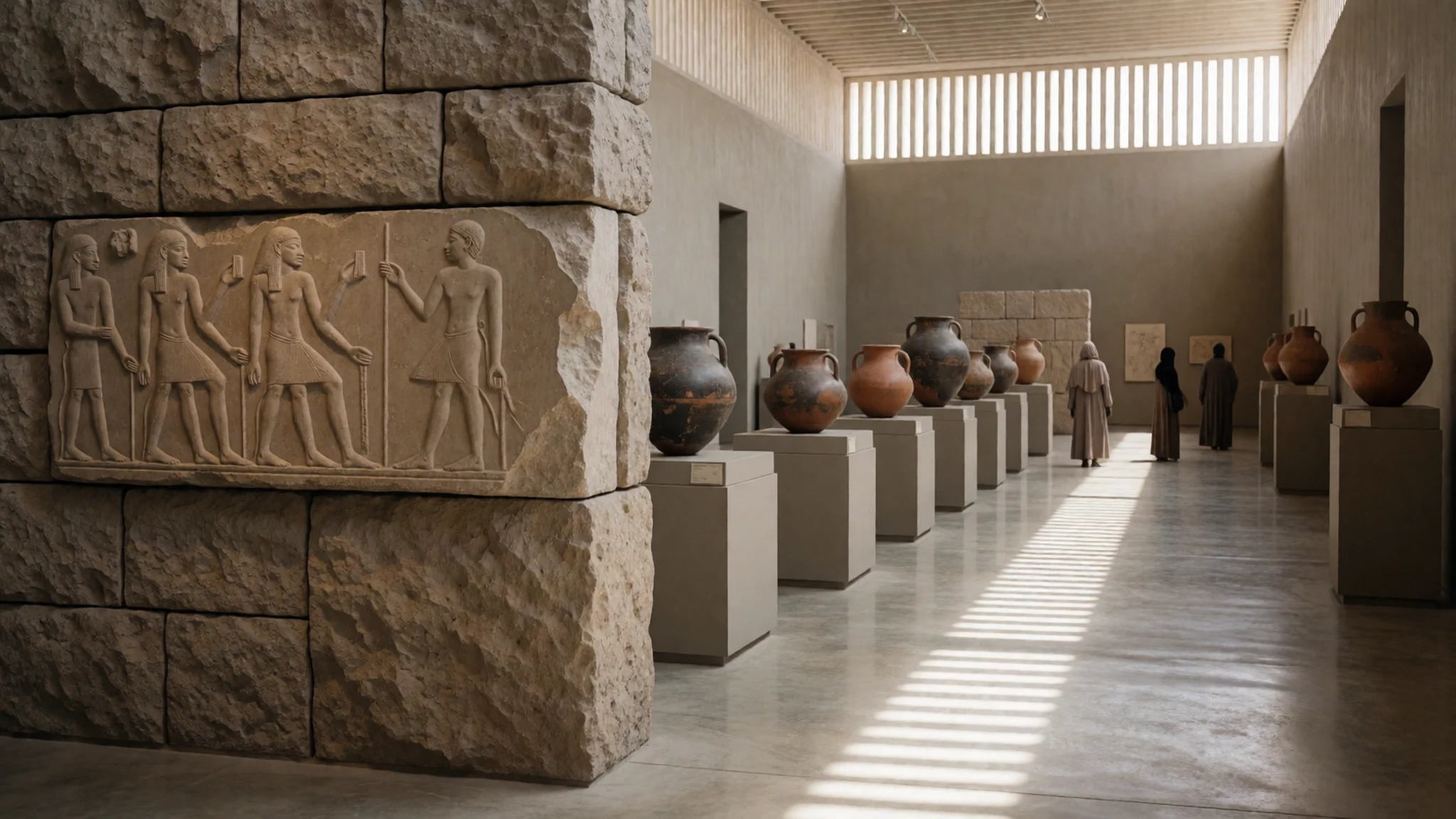
- Unfinished Obelisk — The quarry area, near the Nubian Museum
The Unfinished Obelisk is the largest known ancient obelisk, carved straight out of bedrock. Had it been completed, it would have stood about 42 m (120 feet) tall and weighed nearly 1,200 tons. Its unfinished state shows how the rock was worked. It is one of the clearest lessons in ancient stonework the city offers.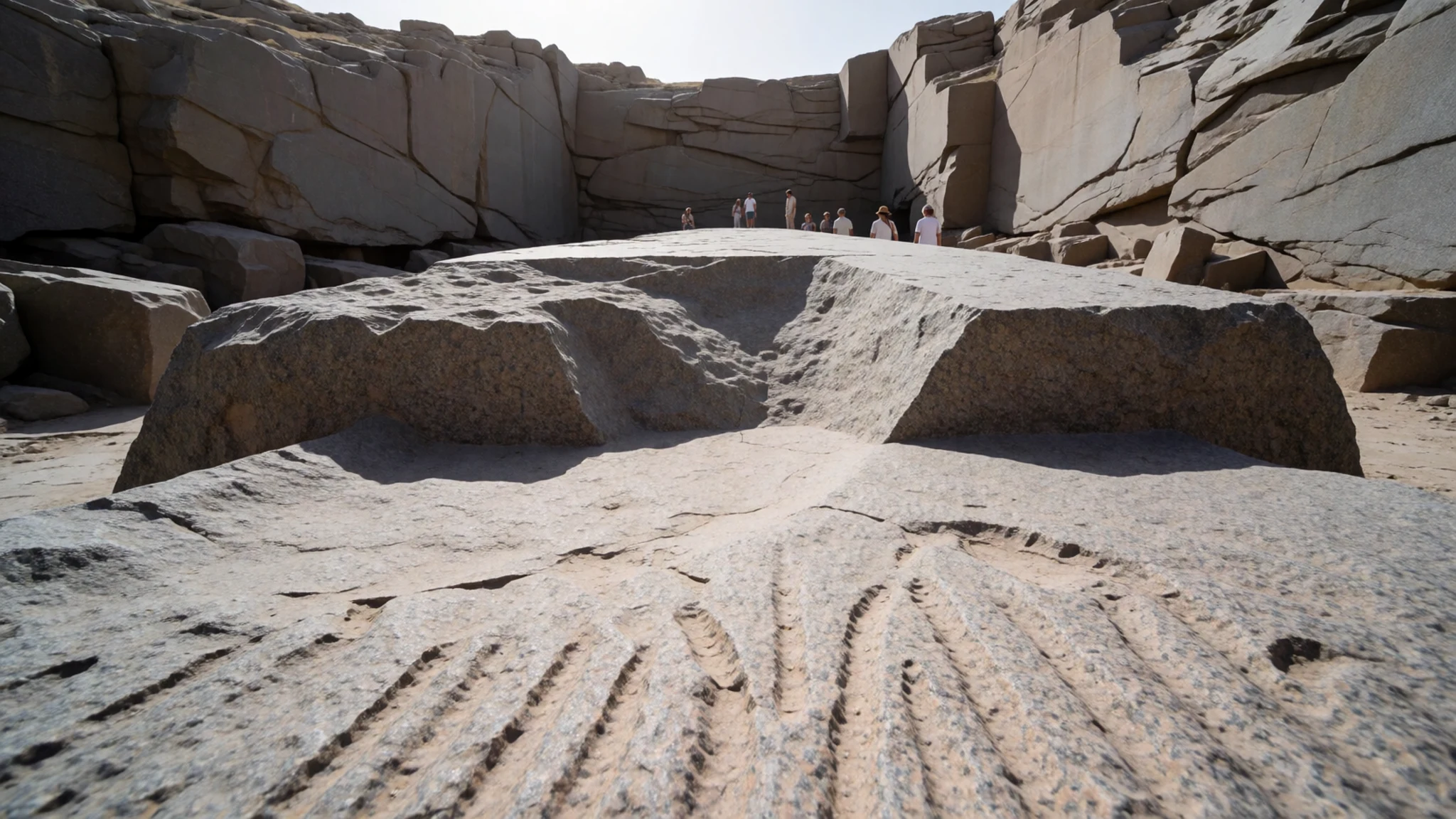
- Elephantine Island — Island in the Nile, reached by boat
Elephantine Island lies in the Nile just off the modern city and holds the Nubian villages of Siou and Koti. It is the site of an ancient town and temples, including those linked to Khnum, the ram-headed god, and to Satet. Nilometers, which measured the river's rise, are also here. A short boat ride brings visitors across, and the island's narrow paths are best explored slowly.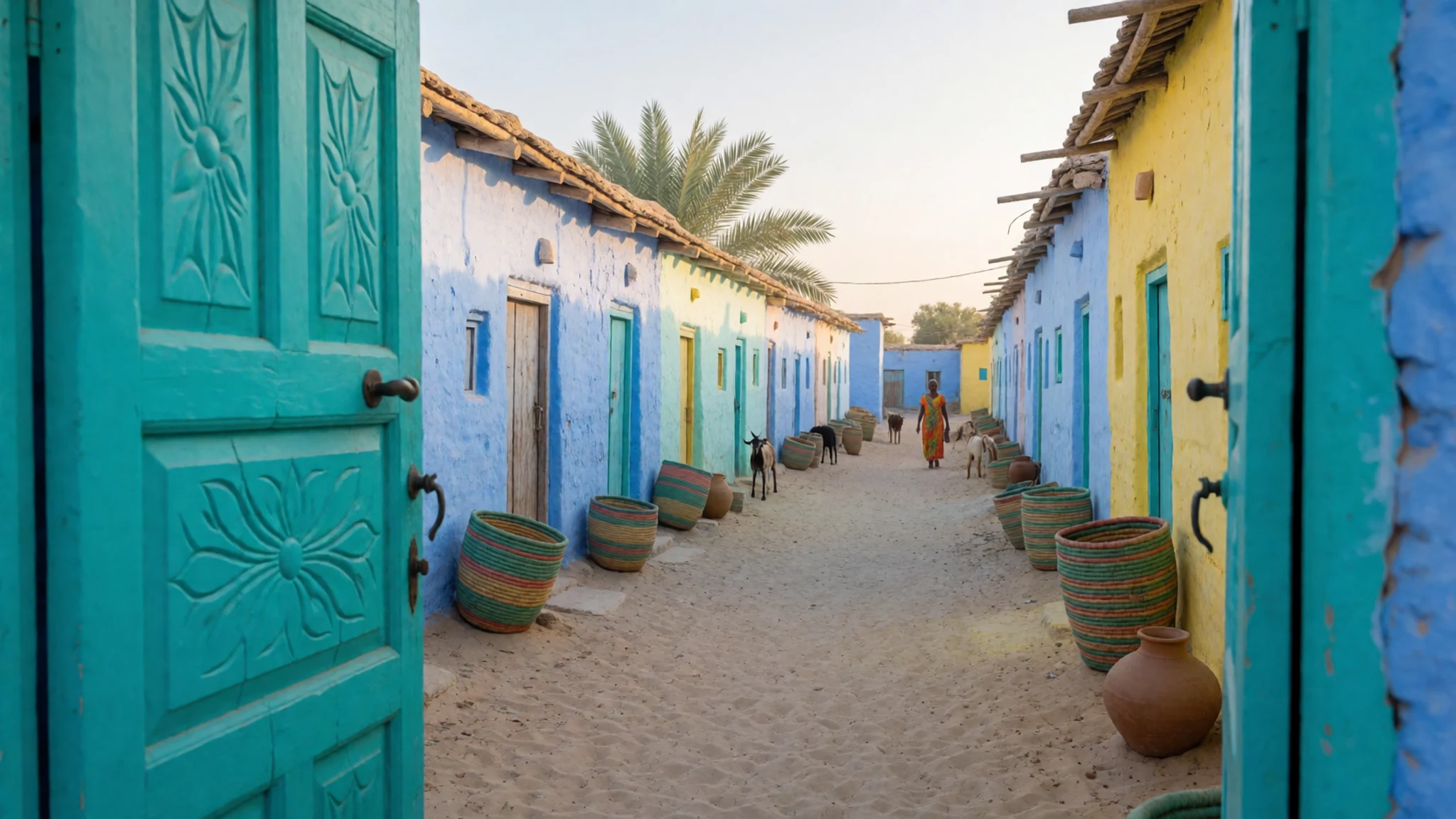
- Fatimid Cemetery — Southern part of the old town
The Fatimid Cemetery is a crumbling graveyard that shows the faded former glory of the Fatimid empire. Its tombs and funerary structures stand among the houses and open ground, and the site feels quiet and unhurried. Visit in the morning or late afternoon, when the light is kind and the heat has eased.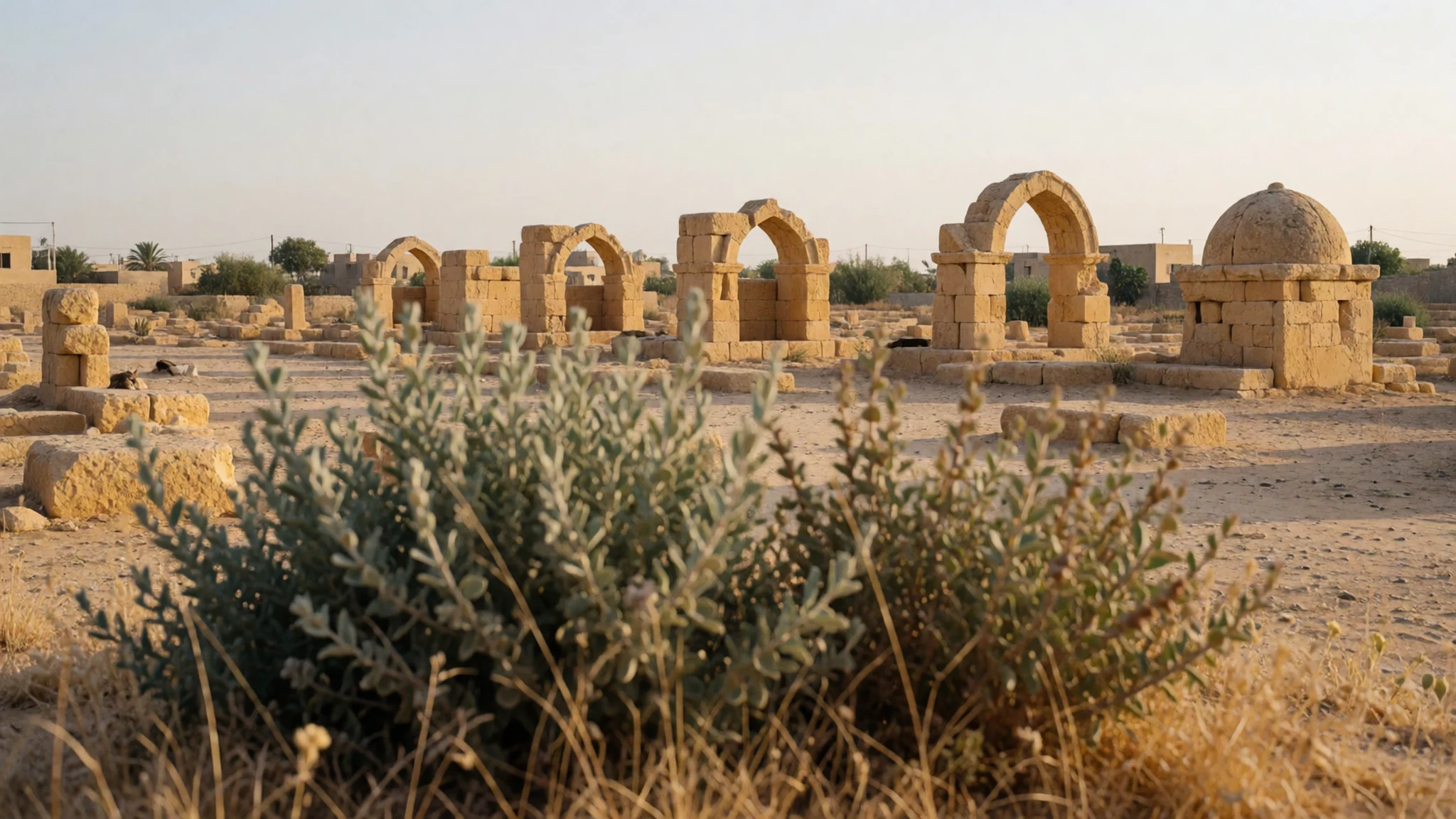
- Philae — Island in the Nile, south of the city
Philae is a cluster of ancient temples on an island in the Nile a short way south of Aswan, dedicated largely to the goddess Isis. The temple of Isis is its best-known building. The island is included in the UNESCO-listed monuments that run from Abu Simbel to Philae. Boats usually ferry visitors across, so plan it as a half-day excursion from the city.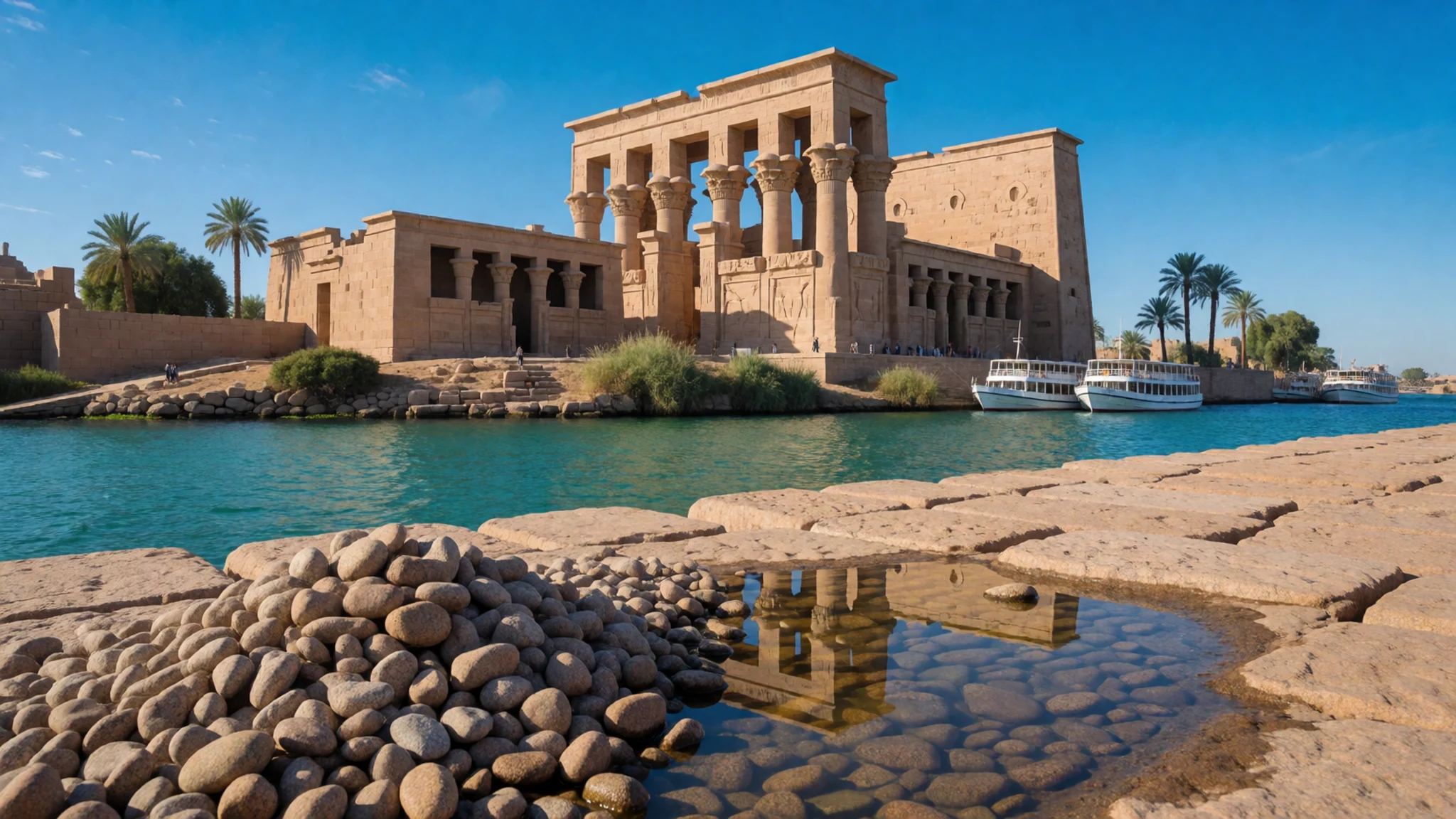
Culture
Aswan's identity is shaped by its Nubian communities, whose traditions have deep roots in the river life of the south of Egypt. Music has long been central to that life, with rituals linked to the Nile and a strong sense of community. The building of the High Dam displaced many families and changed the region's musical styles, so the sound of today's Aswan carries that memory. The Misr Public Library branch, opened in 2001, holds more than 60,000 books and hosts workshops and concerts, and it welcomes school and university groups from across Egypt. Daily dress in the city is relaxed, but covered shoulders and knees are expected in the old quarters and near religious sites. On Elephantine Island, ask before photographing residents or their homes, as many families welcome visitors but value their privacy.
What to wear
Traditional dress in Aswan reflects its Nubian heritage. Women have worn long, brightly coloured printed cotton dresses, often with a headscarf, while men have worn the long, loose cotton robe known as the galabeya. Cotton suits the climate, and the bright patterns remain a point of pride in Nubian communities. Some older residents still wear these styles at home and at family events.
What people wear now is much closer to what is worn across Egypt. Western-style clothes are common in the centre and along the Corniche, while the galabeya is still widely worn by men, especially in the older parts of town. Many women wear headscarves, and styles vary from household to household.
For visitors in Aswan, pick lightweight cotton or linen in loose cuts, with sleeves and hemlines that cover shoulders and knees. Carry a scarf to cover your hair or shoulders when entering a mosque or church. Choose sturdy closed shoes or sandals with grip for stone paths, sand and uneven island tracks, and bring a wide-brimmed hat for the strong sun.
What to eat
- Grilled Nile fish — The fish stalls near the city market
Fresh Nile fish, simply grilled and served with bread, salad and tahini. The best stalls sit near the city market, where the catch is weighed and cooked in view of customers.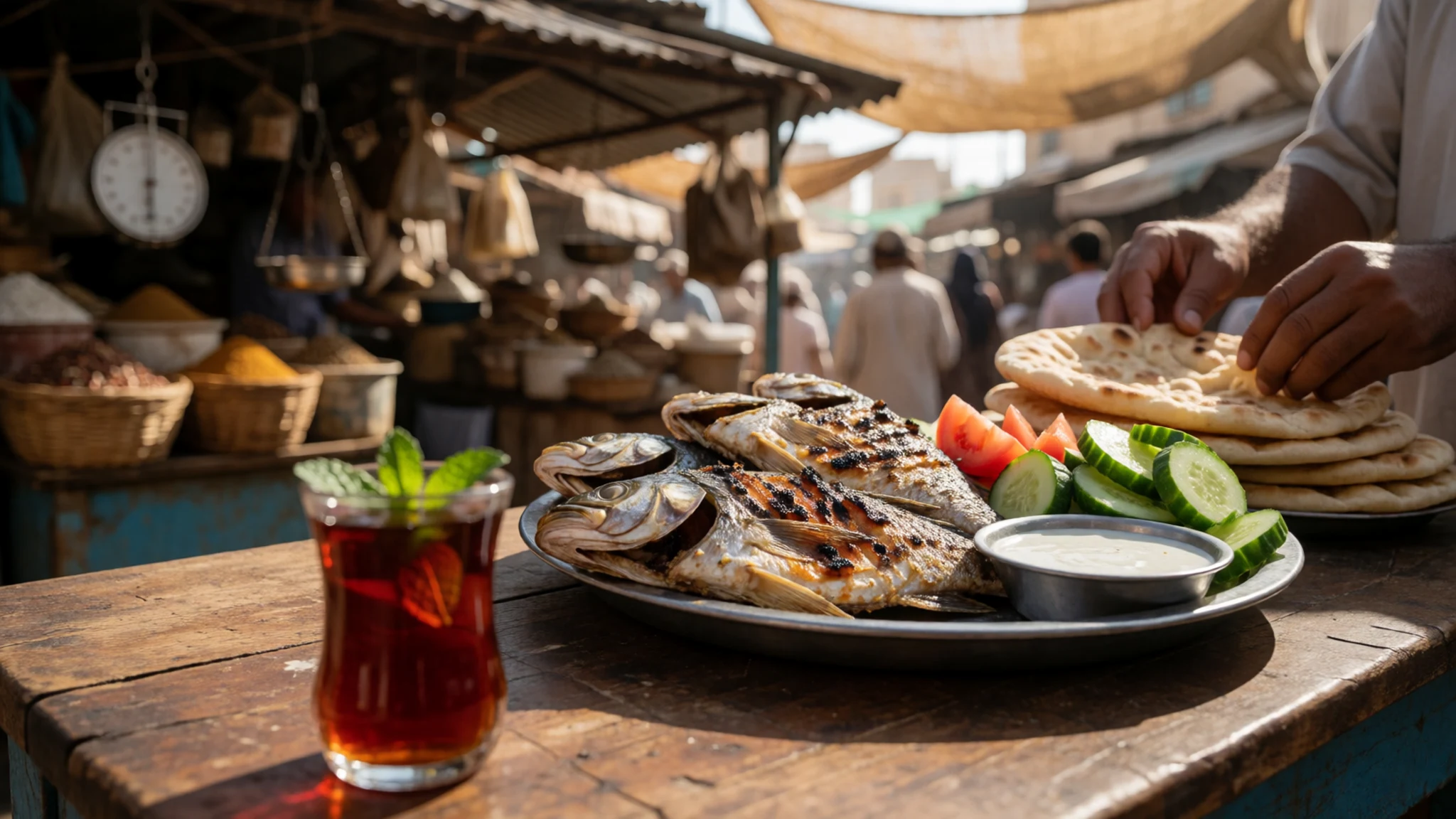
- Kofta and kebabs — Side-street grills in the city centre
Minced kofta and grilled kebabs are the everyday staple of local grills, served with bread, salad and tahini. Look for a busy grill on a side street in the centre, the kind popular with local families, where the menu is short and the bread is fresh.
- Grilled pigeon — Local grills in the city centre
Grilled pigeon is a local favourite for those who want something beyond fish and kebab. It is usually served with bread, salad and tahini at the same grills that serve kofta. It is tender and rich, and the grills that serve it are easy to find across the centre. - Clay-pot stews — Simple Egyptian eateries in the centre
Simple stews served in clay pots, with salad, mezze and rice, appear on the menus of plain Egyptian eateries. Many also serve breakfast all day, so the same room works for a morning meal and a late lunch. - Mint tea and shisha — Cafés along the Corniche and terraces facing the first cataract
Mint tea and shisha are served at riverside cafés, where a long sit with the river in view suits the slow pace of the city. Choose a terrace facing the water for the best light in the late afternoon.
Plan it
Best time. November to March, when the days are warm and dry and the nights cool, is the best window. April and October are not gentle shoulder months, as highs reach about 44 °C and the heat builds quickly. Summer is very hot, and the midday sun is hard going.
How long. 2–3
Getting there. Fly into the city's airport and take a taxi into town, or travel by the national rail line, which ends at Aswan. The overnight train from Cairo is comfortable, and the train is generally preferred over the road journey from Luxor.
Budget. mid
Tips
- Visit the Nubian Museum and the quarry sites early, before the afternoon heat builds
- Book train seats ahead in winter, when journeys fill quickly
- Carry Egyptian pounds in cash for small cafés, feluccas and markets, as cards are not accepted everywhere
- Agree felucca and taxi fares before you set off
- Check the official site before visiting any monument for opening times and tickets
Etiquette
- Dress modestly in the old quarters and near mosques and churches, covering shoulders and knees
- Ask before photographing people, especially women and families
- Remove your shoes when entering a mosque and follow the lead of worshippers
Nearby
Sources
- Wikidata Q29888 (CC0)
- Wikipedia (rev 1377883390) (CC BY-SA 4.0)
- Wikivoyage (rev 5394130) (CC BY-SA 4.0)
- Panoramic view of Aswan 2, Egypt — Vyacheslav Argenberg (CC BY 4.0)
- Panoramic view of Aswan, Egypt — Vyacheslav Argenberg (CC BY 4.0)
- Aswan island plants photo — Mohamedusrii (CC BY-SA 4.0)
- Aswan High Dam — شرف الدين (CC BY 3.0)
- Aswan bridge — Rémih (CC BY-SA 1.0)
- Elephantine Island by Zureks (CC BY 3.0)
- GD-EG-Musée Nubien001 — unknown author (CC BY-SA 2.5)
- Temple of Isis, Philae — Diego Delso (CC BY-SA 4.0)


