Alexandria
Alexandria, Egypt
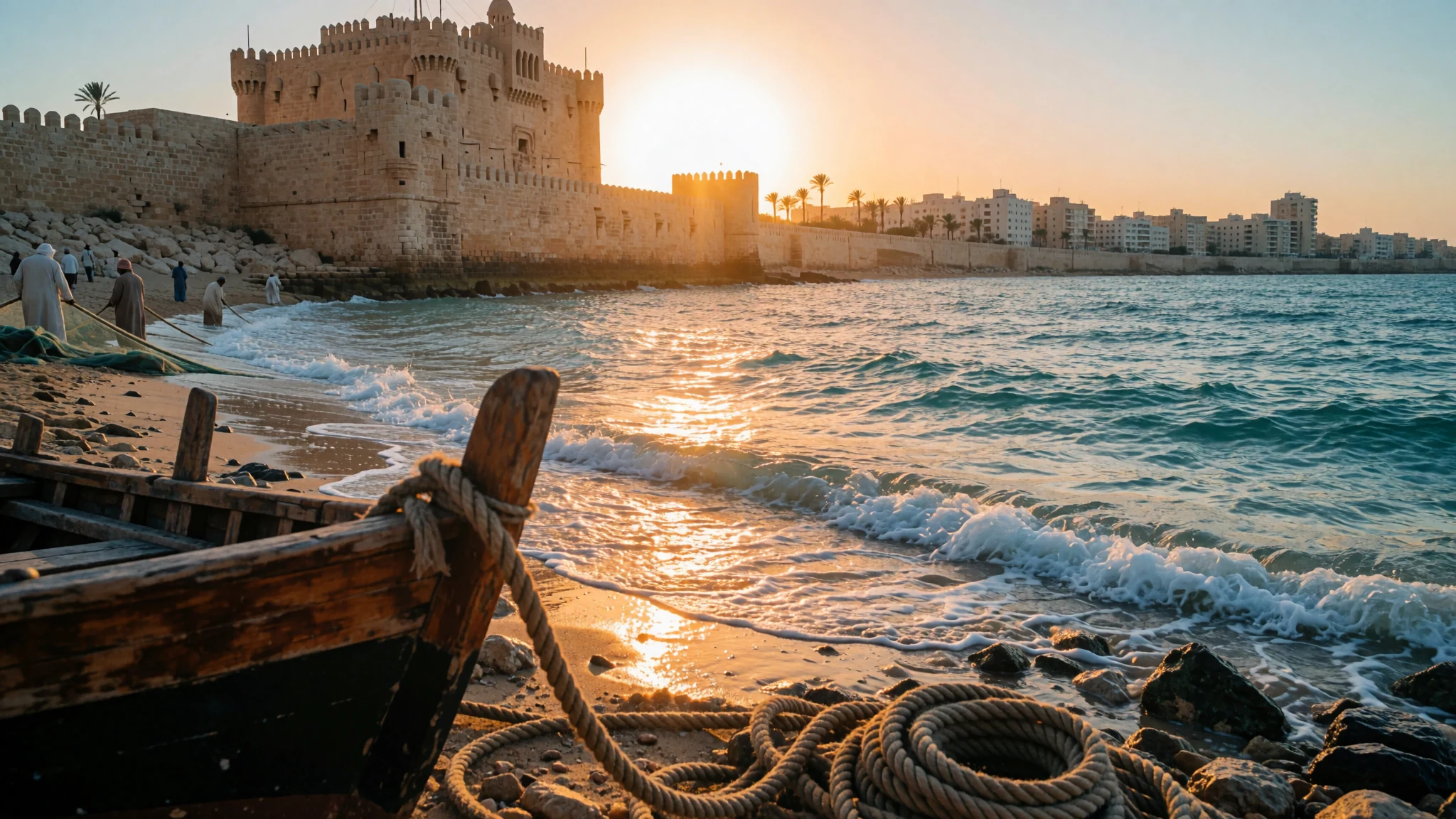
Alexandria is a Mediterranean port of Greek, Roman and Islamic layers, worth a few slow days on the seafront and among its ancient tombs.
The place
Alexandria sits on Egypt's Mediterranean coast, at the western edge of the Nile Delta, and runs for a long ribbon of seafront along the water. It is Egypt's main seaport and the country's second city after Cairo, home to about 5.4 million people. Locals have nicknamed it the Bride of the Mediterranean, a name that suits the faded grandeur of the Corniche, where old apartment blocks with balconies look out over fishing boats and the long curve of the bay.
The city is less a single monument than a set of layers. Greek and Roman remains lie scattered among medieval forts, Ottoman-era streets and the palaces of the khedives' era. The modern city is both an industrial centre and a cultural town, with shipyards, port traffic, a sizeable financial sector, an opera house and a well-known library. The waterfront stays busy, so the main roads bring lorries, taxis and plenty of honking.
Mornings suit the ancient sites while it is still cool, afternoons fit a slow walk on the Corniche or a long coffee, and evenings belong to seafood by the harbour. The sea breeze makes the city more comfortable than inland Cairo in summer, though the humidity is real. Alexandria is noisy, crowded and spread out, and it rewards patience more than a packed itinerary.
Its story
Alexandria was founded in April 331 BCE by Alexander the Great, who wanted a major Greek city on Egypt's coast bearing his name. The ground was not empty. Radiocarbon dating of shells and traces in the soil point to people using this stretch of coast in the Old Kingdom, and a small Egyptian fishing settlement called Rhakotis had grown up nearby long before Alexander arrived. Ancient sources also mention a trading post here in the age of Rameses the Great, but it had vanished by the time the Macedonians came.
Alexander's plan was ambitious. He envisioned a causeway out to the island of Pharos, which would enclose a pair of natural harbours either side of the land. Those harbours turned the new town into a commercial port linking Egypt to the Greek world and beyond. Nearby settlements such as Canopus and Heracleion were already important by then, and Heracleion has since been found underwater.
Under the Ptolemies, the dynasty that took Egypt after Alexander's death, the city became a centre of learning. The royal library and the Museion, a temple of the Muses where scholars were housed and fed, drew writers and mathematicians from across the Mediterranean. The library's collection was lost over time through fires and neglect, and historians still argue about how much was destroyed and when. Later Roman rule, earthquakes and shifting harbours reshaped the city, and the medieval Mamluk period left the Qaitbey fortress, built from stone recycled out of older ruins. Today the modern city sits over much of the ancient grid, so remains still surface during building work.
What to see
- Qaitbey Citadel — Anfushi promontory, at the tip of the land where the eastern harbour meets the open sea
The Mamluk sultan Qaitbay built this fort on the point of the Anfushi peninsula, using stone taken from older ruined buildings. Its walls and terraces are the best place to get a sense of the harbour, with fishing boats below and the Corniche and downtown skyline spread along the bay. Go in the early morning or late afternoon, when the light is kind and the stone is not yet hot.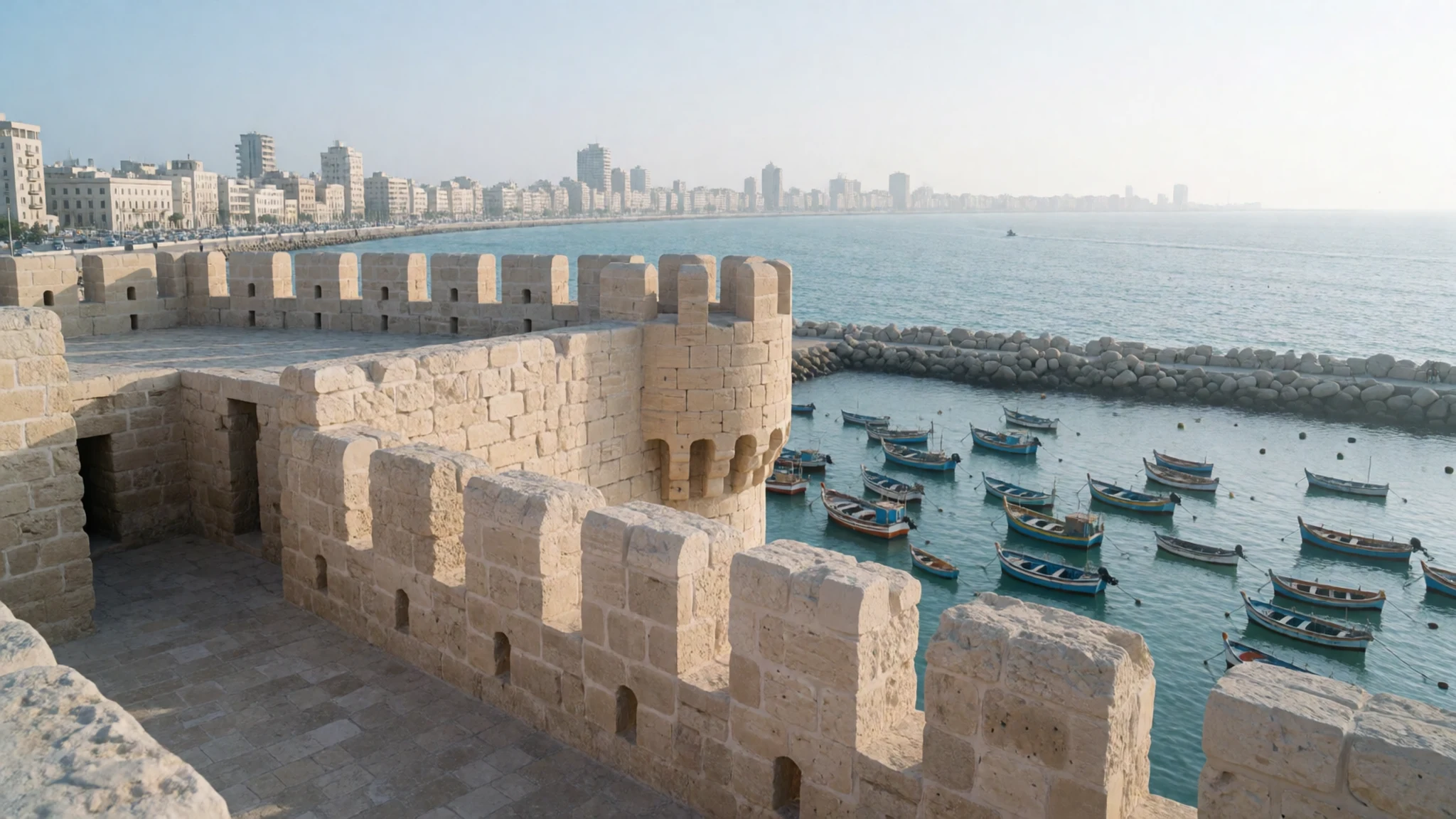
- Mostafa Kamel Necropolis — eastern part of the city, a short drive from the centre
This cemetery holds several tombs from the Greek era, carved into the rock and decorated in striking detail. The best-preserved chambers still show their painted and sculpted features, which makes the site one of the more rewarding quiet visits in the city. Expect a modest walk through an active residential area, and bring water.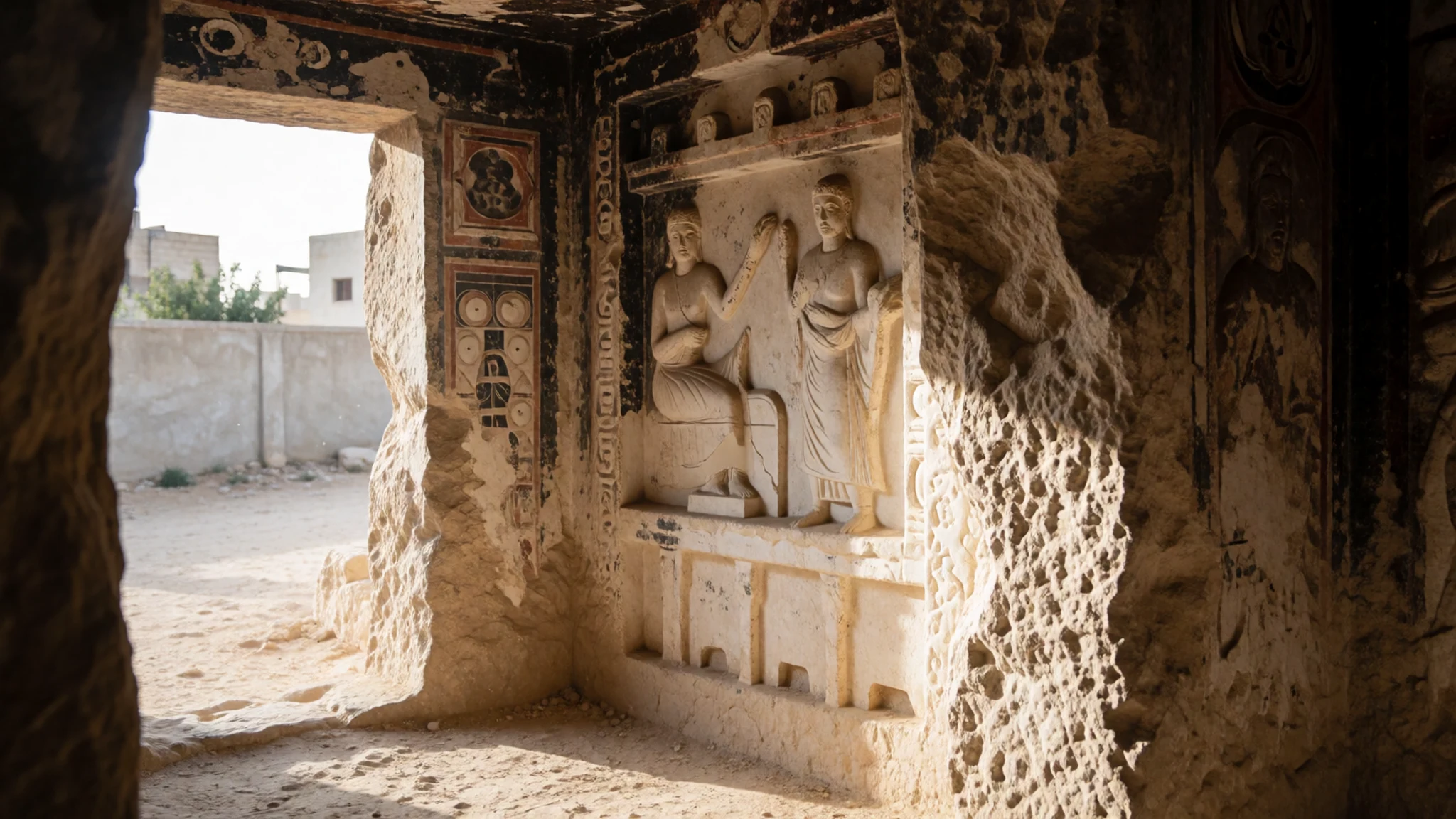
- Catacombs of Kom el Shoqafa — south-east of the old town, in a residential district
These catacombs were probably cut as the family mausoleum of a wealthy household and later widened to take other elite burials during the Roman period. A spiral stair leads down into chambers where carved details and tomb niches are still visible. The space is narrow and often damp, so wear shoes with grip and go slowly on the steps.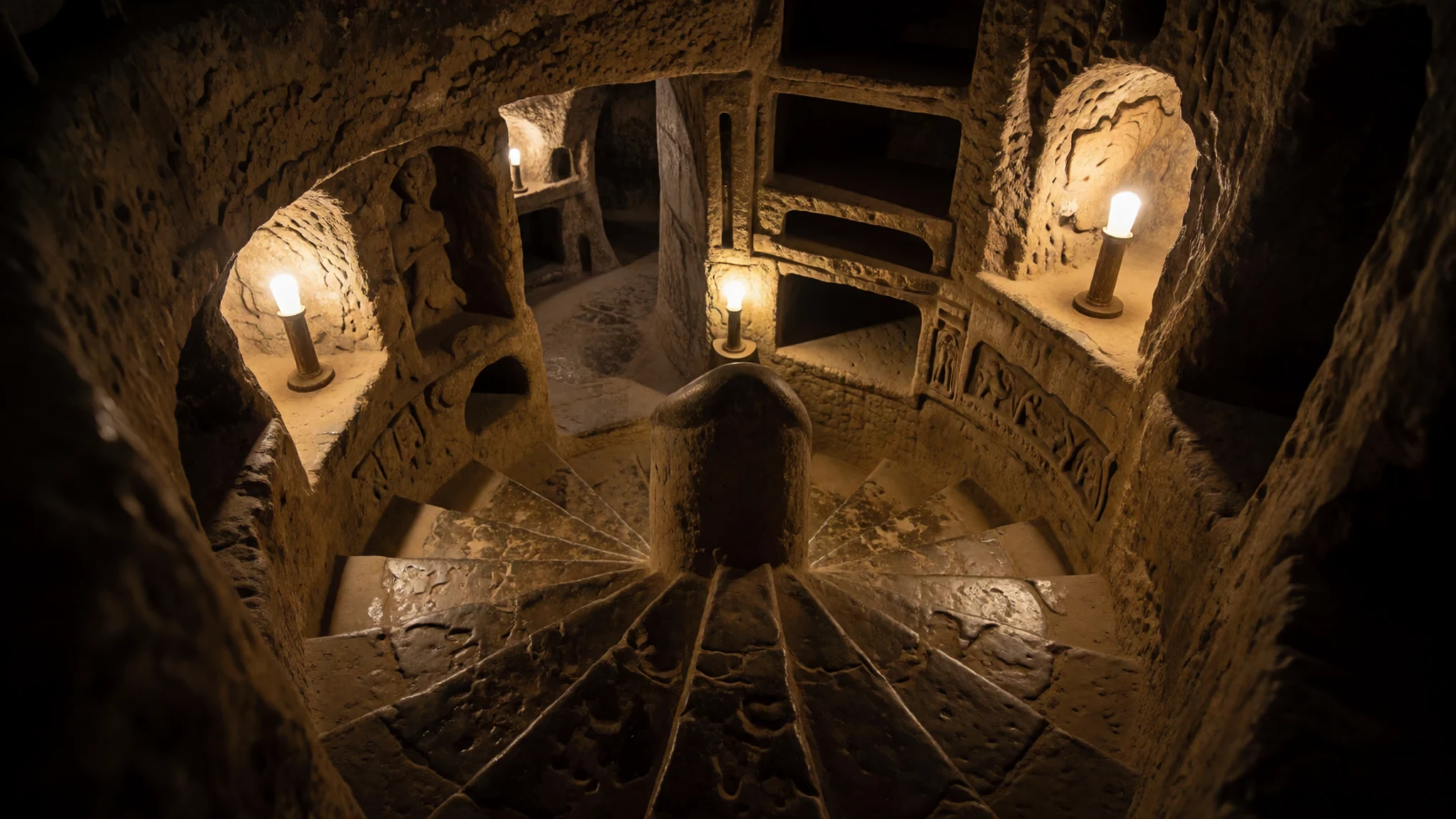
- Pompey's Pillar — south of the centre, near the Serapium ruins
A tall granite column stands here, raised in honour of the emperor Diocletian in the late Roman period. The enclosure around it also holds other ruins and sculpture, including remains linked to the Serapium, a temple associated with the cult of Serapis. The column is more impressive up close than from the road, and a short walk round the site is enough to see everything.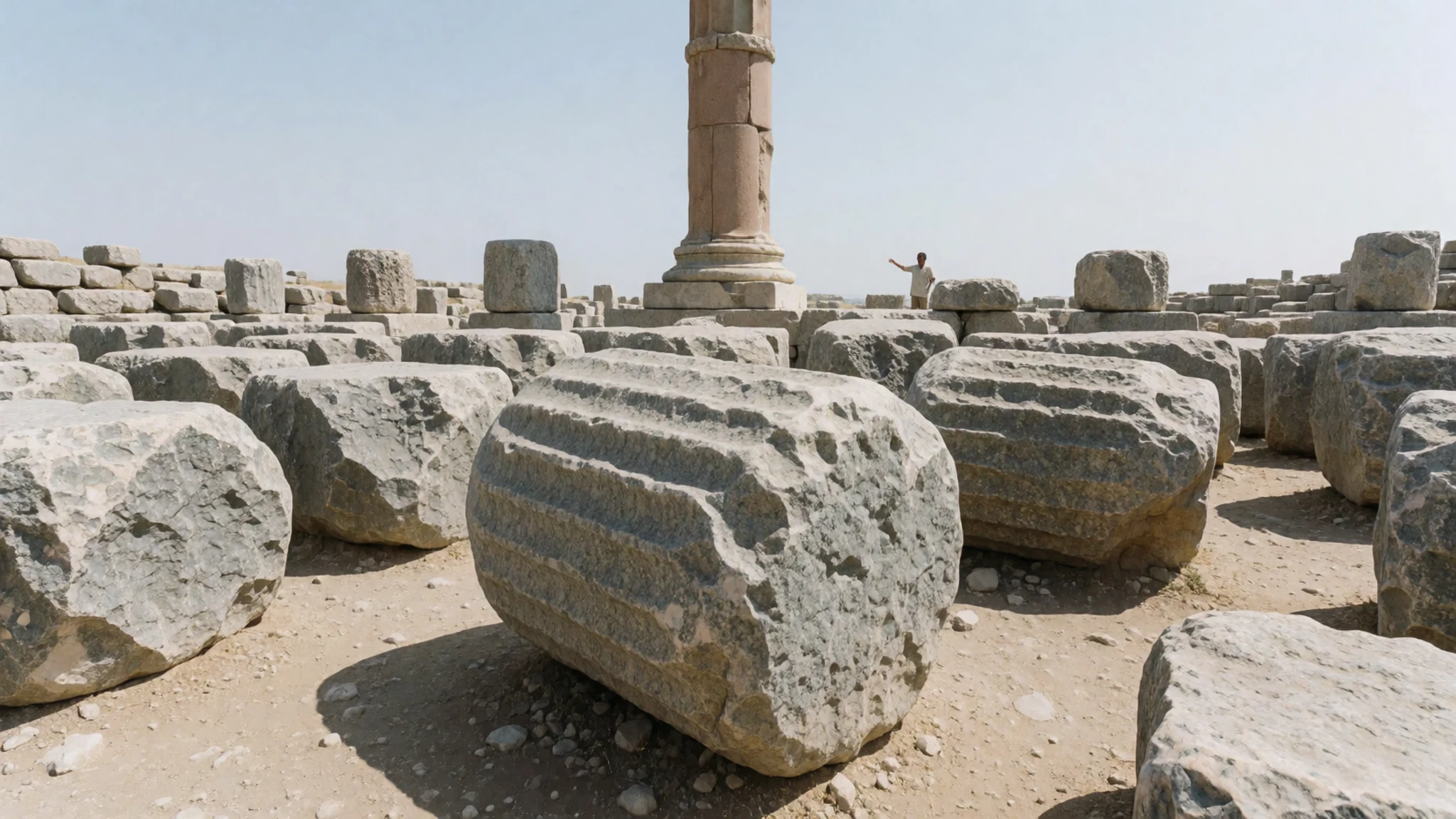
- Montaza Palace — eastern shore, in the Montaza gardens
Abbas Hilmi Pasha, the last khedive of Egypt, had this palace built on the eastern shore as a royal residence. Its gardens run down toward the sea and make a pleasant contrast with the dense streets of the city. The palace grounds are better suited to a relaxed half-day than a rushed visit, and the breeze off the water helps in summer.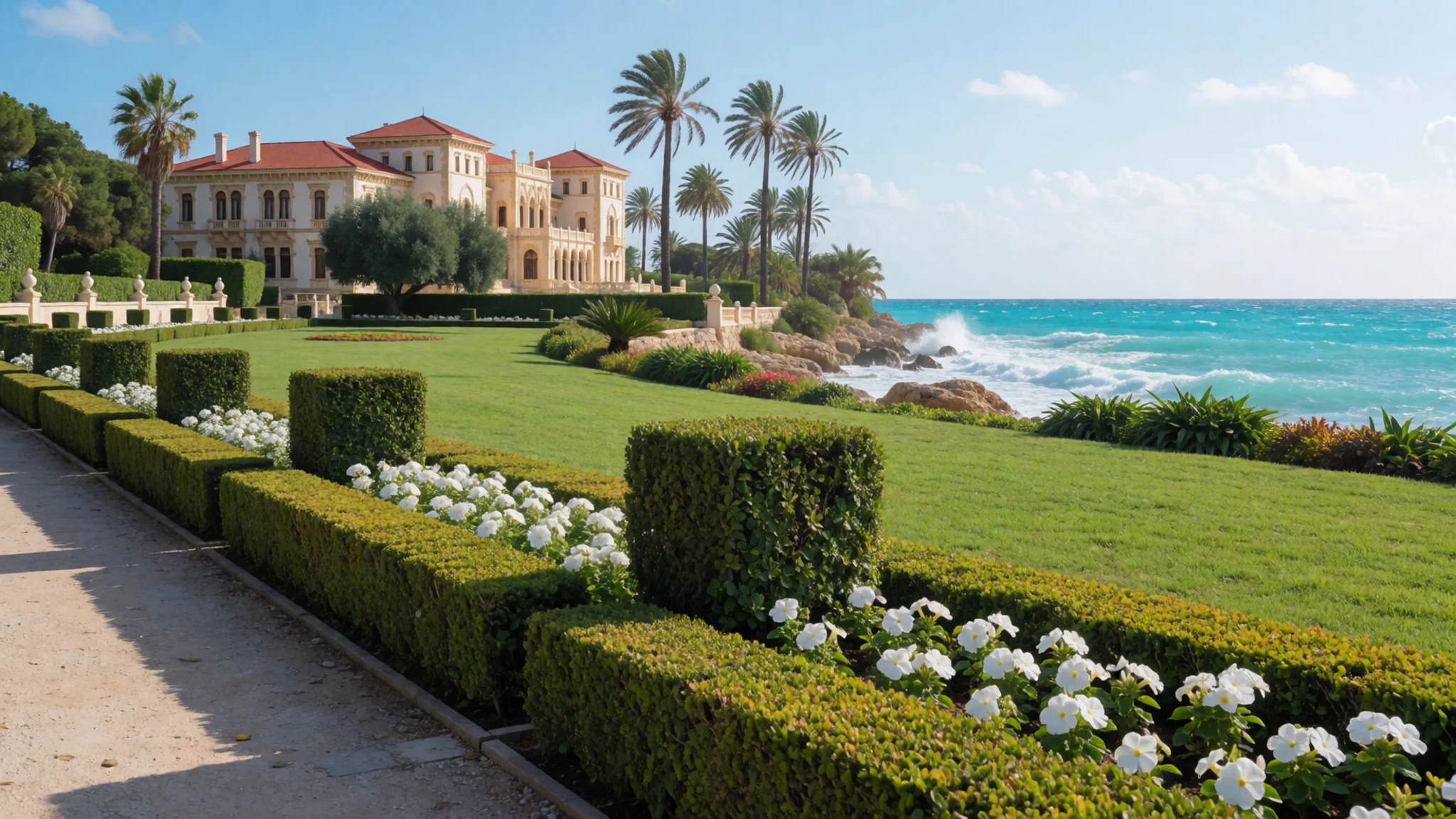
Culture
Alexandria's sense of learning is still visible. The Bibliotheca Alexandrina, a modern library and cultural centre, stands near the site of the ancient royal library, and the city hosts an annual Mediterranean film festival there. Alexandrians are proud of their reputation as a meeting point of cultures, and Greeks, Italians, Levantines, Jews and Egyptians all shaped its streets, its cafés and its cooking.
Daily life runs in Arabic, and most people are warm towards visitors who make an effort with a simple greeting. Friday is the main day of rest for many families, and the call to prayer marks the rhythm of the day. Keep your voice low near places of worship and during prayer times.
Photography needs care. Ask before photographing people, especially women and families, and avoid the port area and military sites altogether. Public displays of affection draw attention, so keep them private. Tips are expected in restaurants, by taxi drivers who help with bags, and by guides, so keep small notes handy. Dress modestly in residential districts and at religious sites, and always ask before taking a close photo of someone's face.
What to wear
Traditional dress in Alexandria belongs to the wider Egyptian tradition of loose, practical clothing. The galabiya, a long full-length robe, is worn by men and by many older people across the country, usually in cotton or a light blend. Women's traditional dress often includes a headscarf with a long dress, a robe or a shawl. Cotton and linen have long been central to Egyptian textiles, and the Nile Delta's fields and workshops supplied much of the fabric worn along this coast.
What people wear now is a mix. In the central streets and along the Corniche, jeans, shirts and fashionable dresses sit alongside headscarves, abayas and galabiyas. Younger residents tend towards Western styles, while older residents and many women in conservative neighbourhoods keep to modest, covered clothing. Few people dress for the beach outside the seafront resorts, so the modest norm applies on most streets.
Visitors should dress with light cotton or linen, long trousers or skirts, and covered shoulders. A scarf is useful for mosques and churches, and shoes that slip off easily suit mosques, while sturdy shoes with grip suit the uneven stone at the ancient sites. Pack a sun hat, sunglasses and a light layer for cooler evenings on the sea wall.
What to eat
- Kushari — any kushari shop in the city, usually a small street counter
Egypt's everyday comfort dish, kushari layers rice, lentils, short pasta and chickpeas under a tomato sauce and crisp fried onions. Counters across the city serve it by the bowl, often with a sharp vinegar sauce on the side. It is cheap, filling and a good first meal in the city.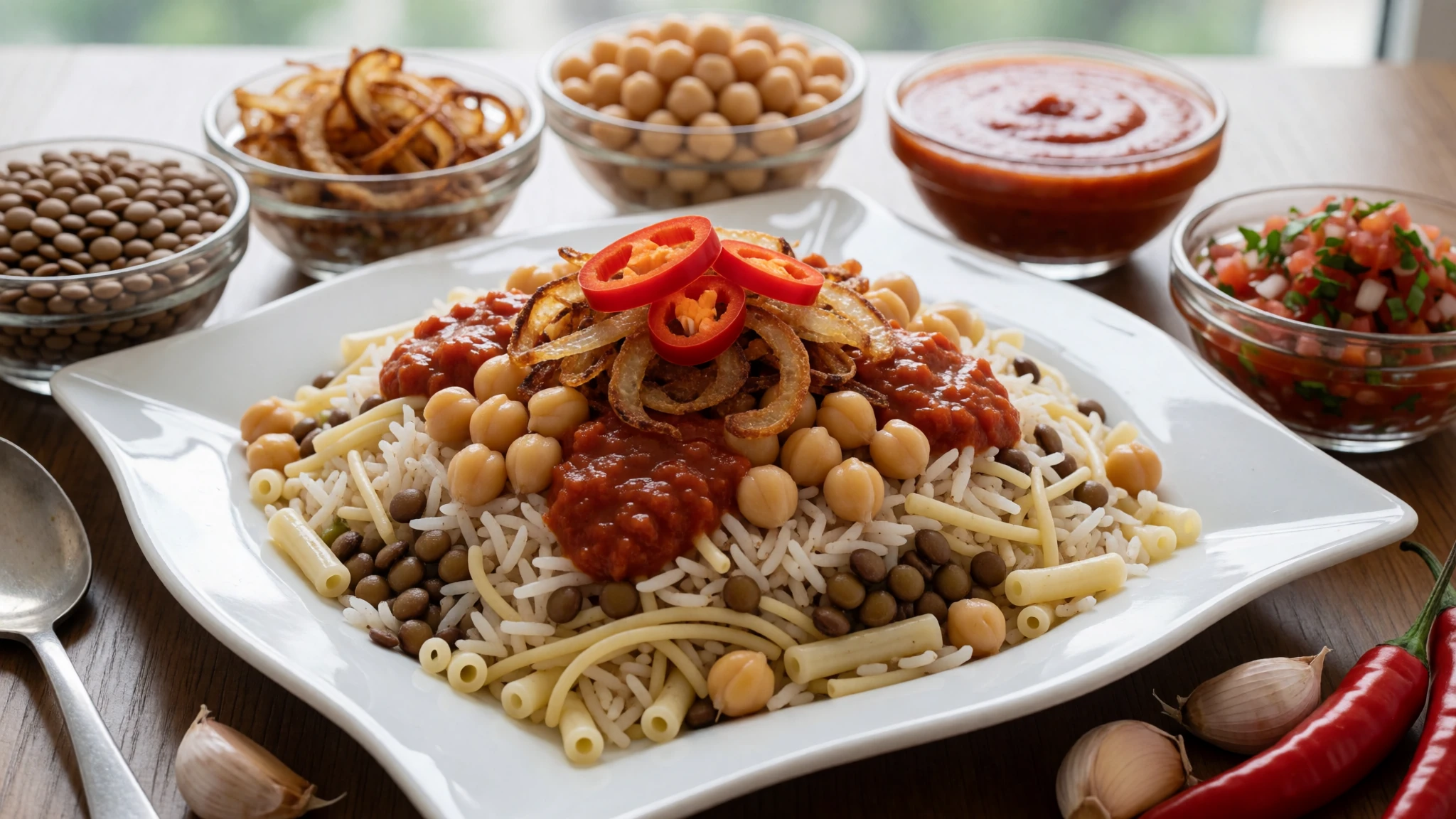
- Ful medames and falafel — neighbourhood ful shops in the older districts
Ful medames, slow-cooked broad beans dressed with oil, cumin and lemon, is a breakfast staple, often served with falafel and bread. The best stands are simple, busy and clean, with a steady queue of locals. Choose a shop that is full at breakfast time, which is a good sign of freshness.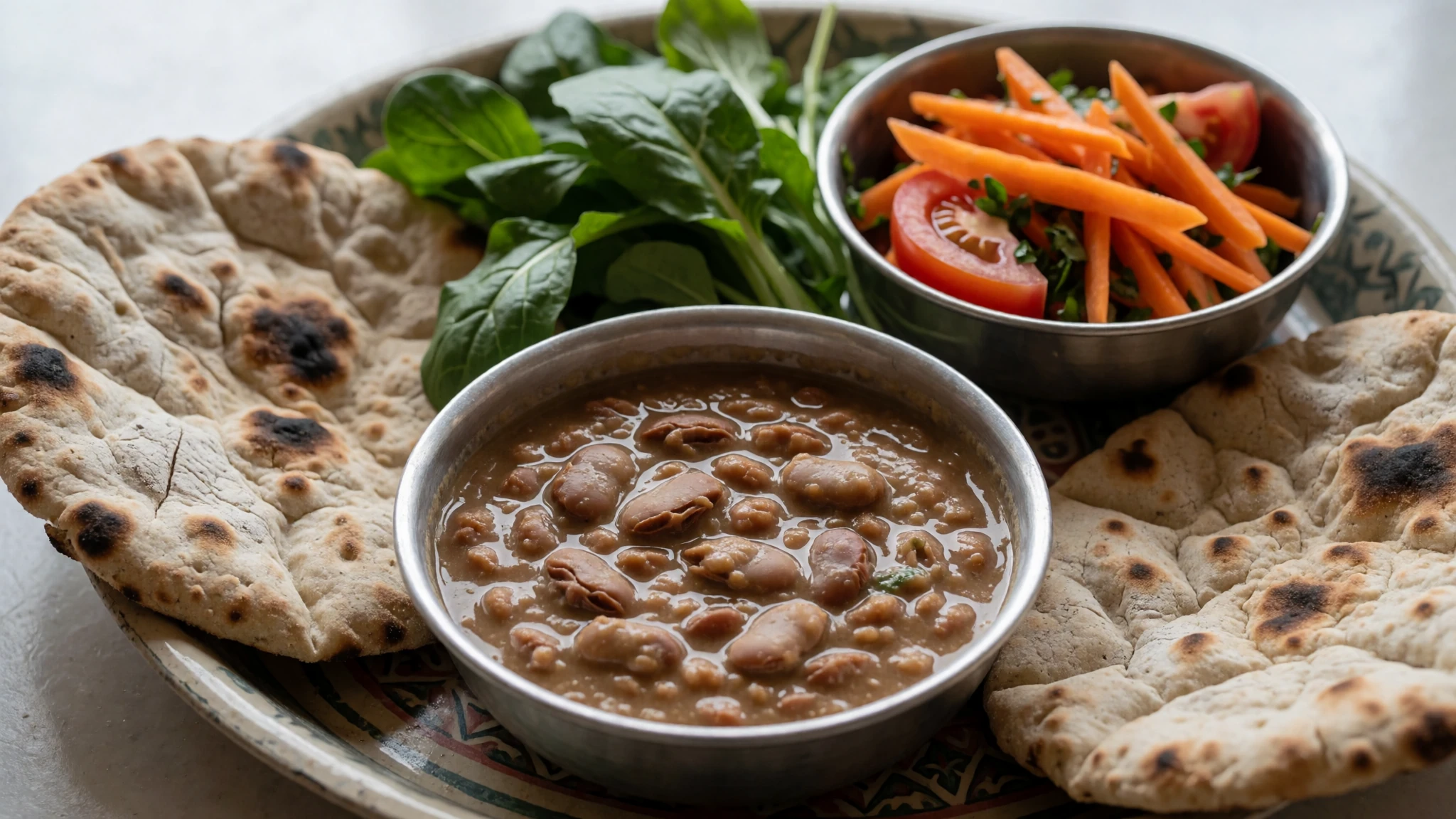
- Fresh fish and seafood — fish restaurants near the fishing harbour and along the eastern shore
Alexandria's port and fishing boats keep the city well supplied with fish, and grilled or fried catch is a local speciality. Restaurants near the harbour display the day's fish on ice, so you can choose your own. Ask the price per kilo before ordering, and agree the total before the cooking starts. - Fateer — pizza and fateer counters on the Corniche and in shopping streets
Fateer is a flaky, layered pastry, savoury or sweet, that serves as the local answer to pizza. It is often filled with cheese, meat or sugar and syrup, and baked to order in a hot oven. Fast, filling and cheap, it is popular with families on weekend evenings. - Egyptian coffee on the Corniche — cafés along the Corniche and the old downtown streets
Strong, sweet Egyptian coffee is served in small cups at cafés with chairs set out toward the sea. Sitting with a cup for an hour is a local pastime, and it gives a good view of the traffic and the water. Order it sweet or medium if you prefer less sugar.
Plan it
Best time. Spring and autumn are the easiest seasons, when the sea breeze keeps the city cooler and the ancient sites are comfortable to walk around. Summer is hot and humid along the coast, so plan outdoor sightseeing for early morning and save the afternoons for cafés and museums.
How long. 2–3
Getting there. Fly into Cairo, Egypt's main gateway, then take a train from Ramses Station in central Cairo. The fast express services are the quickest way to reach Alexandria. Domestic flights also run from Cairo and other Egyptian cities, but the train is usually the easiest final leg.
Budget. mid
Tips
- Book train tickets early for weekends and holidays, and check current timetables and fares with the official rail channels before you travel.
- Start the ancient sites early, before the heat and the midday crowds arrive.
- Carry Egyptian pounds in cash for small cafés, taxis and tips, as cards work mainly in larger hotels and shops.
- Drink bottled water and keep a hat handy, especially on the seafront in summer.
- Allow extra time for traffic on the Corniche and the main roads, which slow down at rush hour.
- Check the official city site at alexandria.gov.eg for local information before you go.
Etiquette
- Dress modestly in residential districts and at mosques and churches.
- Ask before photographing people, especially women and families.
- Remove shoes before entering a mosque and follow any instructions about covering your hair.
- Keep the port and military sites out of your photographs.
Nearby
Sources
- Wikidata Q87 (CC0)
- Wikipedia (Alexandria, rev 1382891958) (CC BY-SA 4.0)
- Wikivoyage (Alexandria, rev 5378472) (CC BY-SA 4.0)
- Skyline of Alexandria viewed from Qaitbey Citadel, ASaber91 (CC BY-SA 4.0)
- San Stefano Grand Plaza, TheEgyptian (CC BY-SA 1.0)
- Montaza Palace, Alexandria, Egypt, Ahnaf Saber (CC BY 3.0)
- Stanley bridge in Alexandria, Ahmedherz (CC BY-SA 4.0)
- San Stifano, Ahmed Hesham Medo (CC BY-SA 4.0)
- Museum of Fine Arts in Muharram Bey quarter, Roland Unger (CC BY-SA 2.0)
- Qaitbey Citadel and harbour boats, Hmkree (CC BY-SA 4.0)
- Opera house, Alexandria, Egypt, Roland Unger (CC BY-SA 1.0)


