Cape Town
Cape Town, South Africa
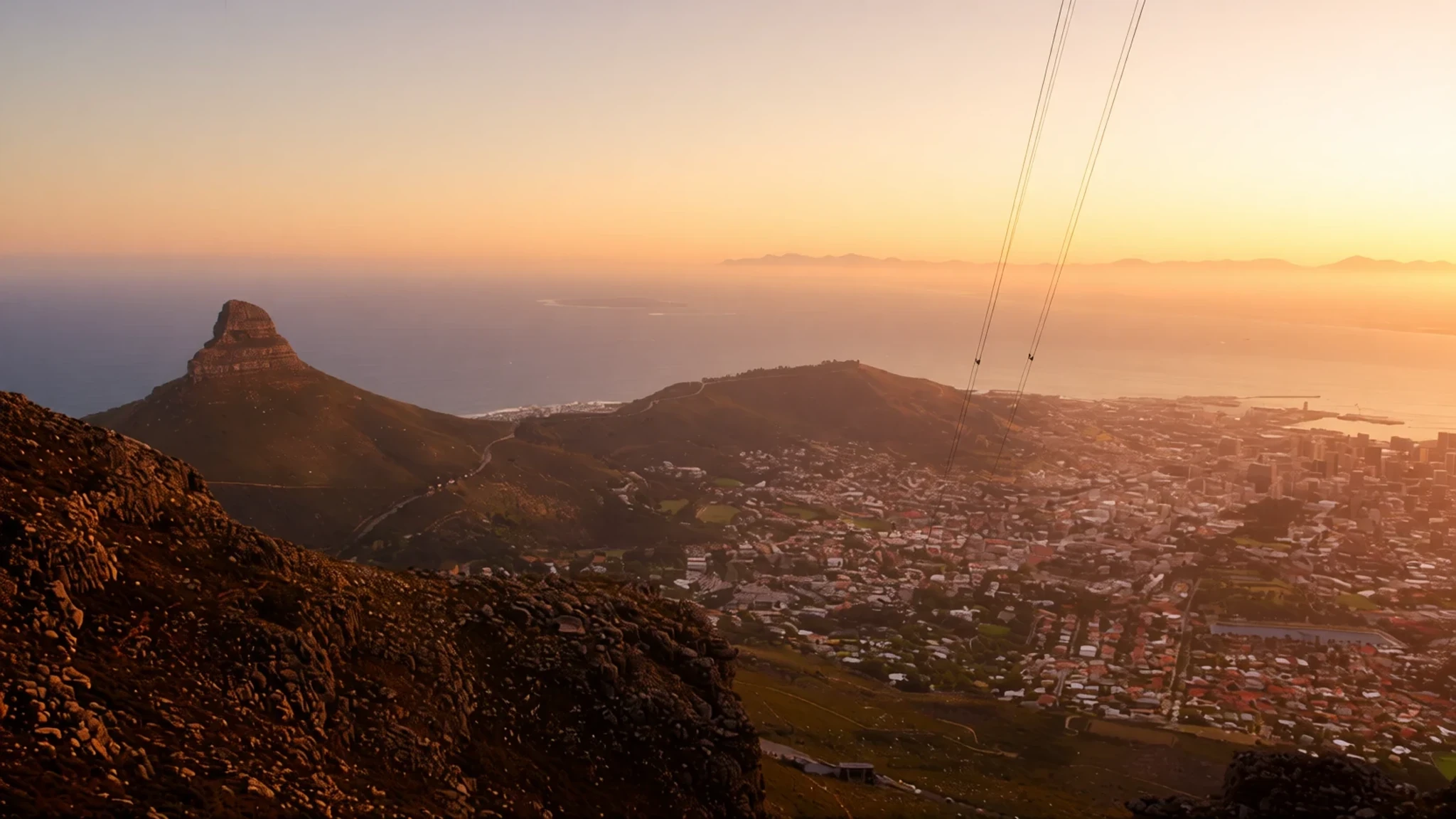
Cape Town pairs dramatic mountain peaks and two meeting oceans with a rich, complex heritage spanning centuries of trade, design, and cultural convergence.
The place
Cape Town serves as the legislative capital of South Africa, holding the seat of the national parliament while functioning as the primary urban hub for the Western Cape. Home to a population of roughly 3.8 million people, it stands as the second-most populous city in the country after Johannesburg. The settlement occupies a dramatic natural bowl on the shores of Table Bay, framed sharply by the steep scarp of Table Mountain and bounded by an extensive coastline that meets both the Atlantic Ocean to the west and False Bay to the south. Within the municipal boundaries, Table Mountain National Park preserves wild, indigenous fynbos vegetation alongside protected marine areas and rugged nature reserves. The City Bowl acts as the historic core, retaining the layout of early colonial administration alongside modern commercial towers. Visitors move easily from bustling waterfront promenades to quiet botanical glades, all within sight of iconic geological formations that shape every neighbourhood's horizon. The local climate encourages outdoor life, drawing travellers to coastal suburbs like Camps Bay and leafy inland valleys where viticulture thrives in proximity to the urban centre. Despite its modern metropolitan energy, the city's geography constantly reminds travellers of its dramatic maritime setting at the southwestern tip of the continent.
Its story
Human presence in the Cape region stretches back millennia, with archaeological excavations at Peers Cave in Fish Hoek revealing evidence of early habitation dating to the mid-Holocene. For centuries before European maritime expansion, indigenous pastoralist communities grazed cattle across the peninsula. Among these were the Goringhaiqua, a prominent Khoikhoi clan. Maritime exploration shifted the region's trajectory when Portuguese navigator Bartolomeu Dias reached the cape in 1488, initially naming it the Cape of Storms before King John II of Portugal redesignated it the Cape of Good Hope to signal optimism for a viable sea route to Asia. Vasco da Gama passed the headland in 1497. Early European attempts at dominance met fierce resistance; in 1510, the Portuguese admiral Francisco de Almeida and dozens of his men were defeated at the Battle of Salt River by Goringhaiqua warriors who utilised cattle trained to respond to specific human whistles and shouts. Permanent colonial administration began later, in 1652, transforming the sheltered bay into a vital victualling station for ships rounding the continent. Over subsequent centuries, the settlement expanded from a modest fort into a sprawling legislative capital, absorbing diverse waves of migration, trade, and forced displacement that forged its contemporary multi-ethnic identity.
What to see
- Bo-Kaap
This historic neighbourhood on the slopes southwest of the city centre is celebrated for its brightly painted houses and cobblestone streets. Historically home to Malay Muslim descendants of enslaved people, it preserves a distinct cultural heritage, vibrant local community traditions, and distinctive Cape Malay culinary influences.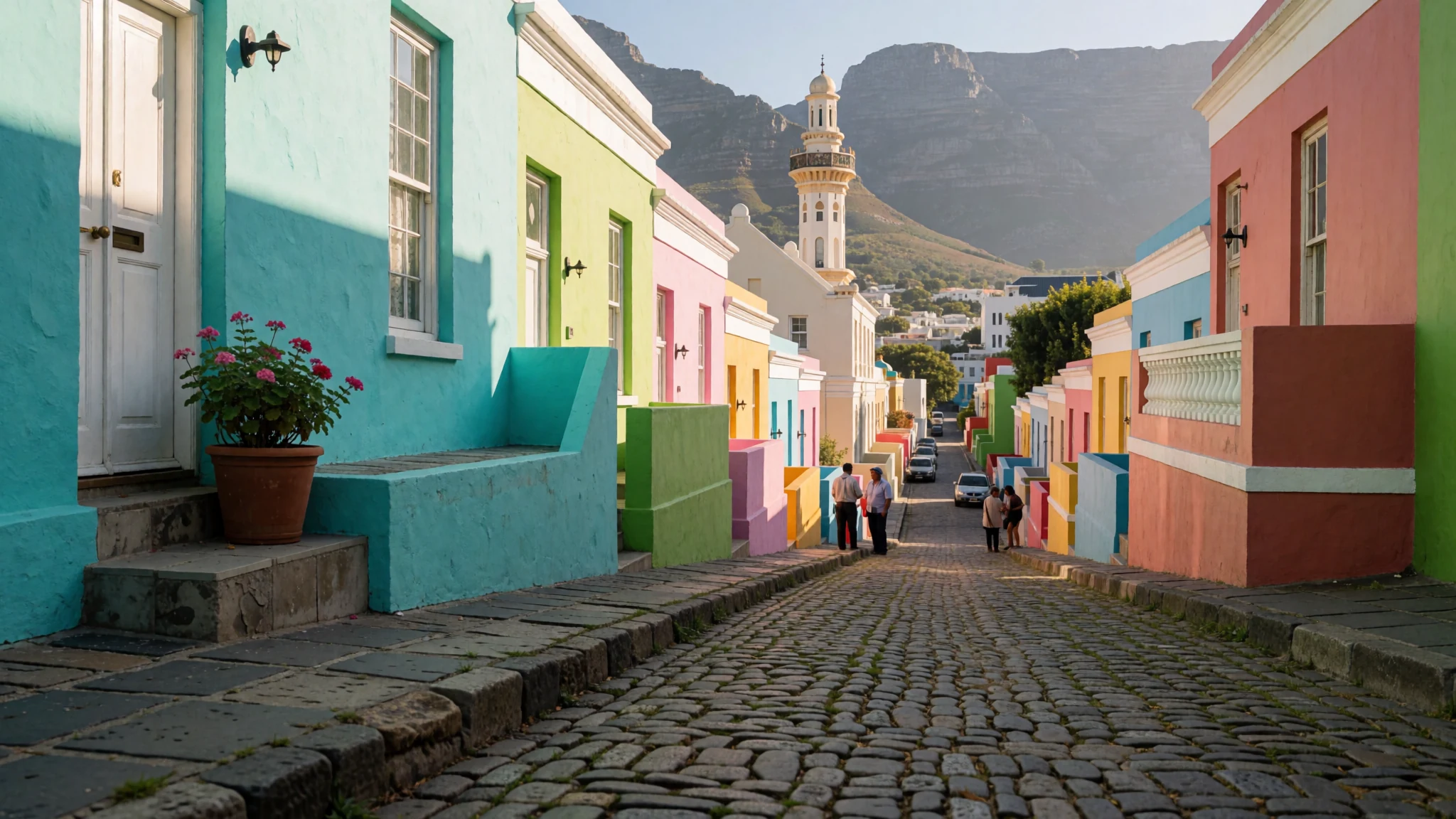
- Castle of Good Hope
Locally known simply as 'The Castle', this pentagonal fortification is the oldest surviving colonial building in South Africa. Constructed between 1666 and 1679 using stone and mortar, its bastions and yellowwood beams bear silent witness to early military strategy and the administrative origins of the settlement.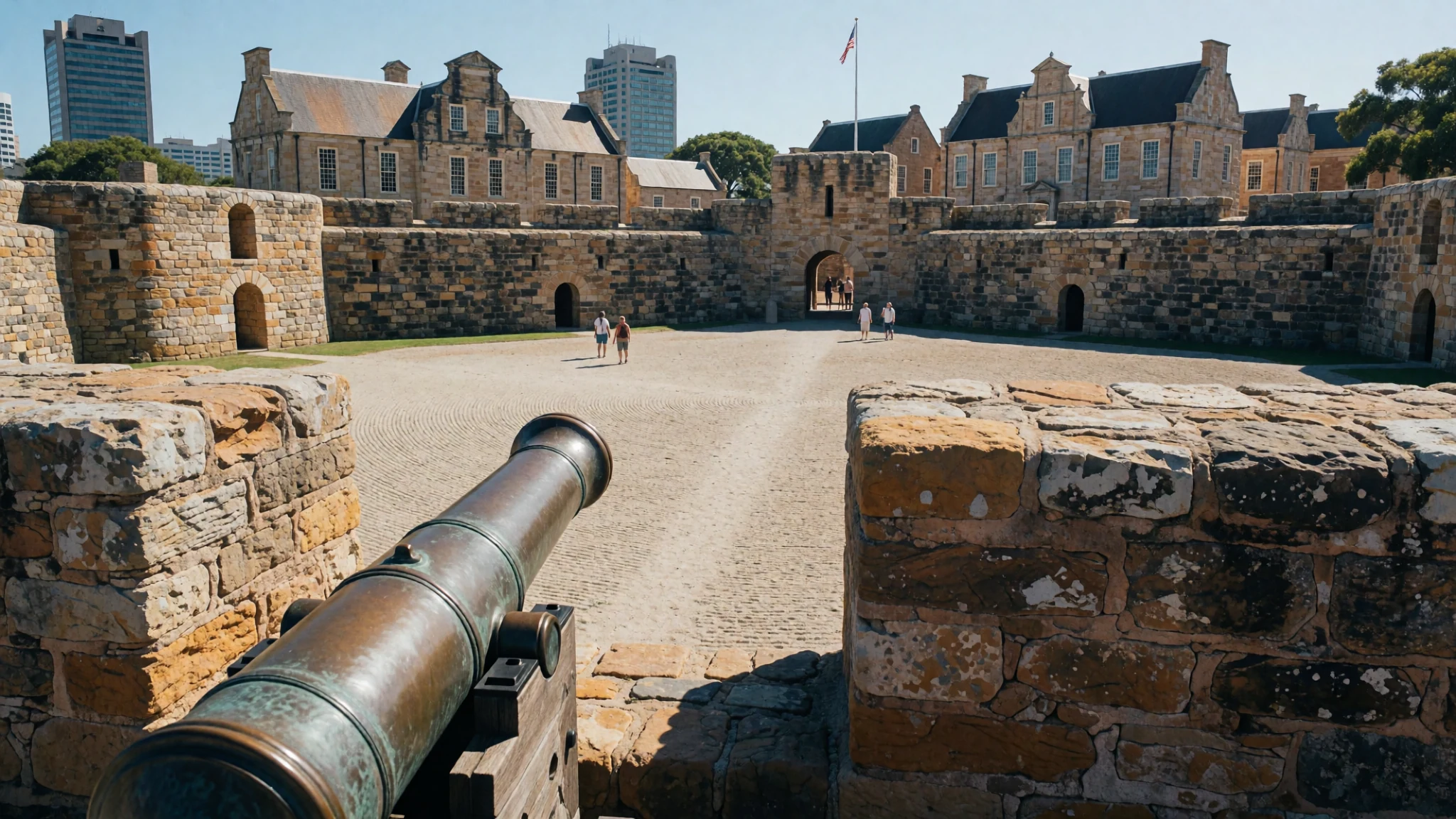
- City Hall
Completed in 1905, this grand Edwardian sandstone building facing Darling Street features striking bell towers and marble staircases. It gained profound historical significance in 1990 when Nelson Mandela delivered his first public speech from its balcony immediately following his release from prison.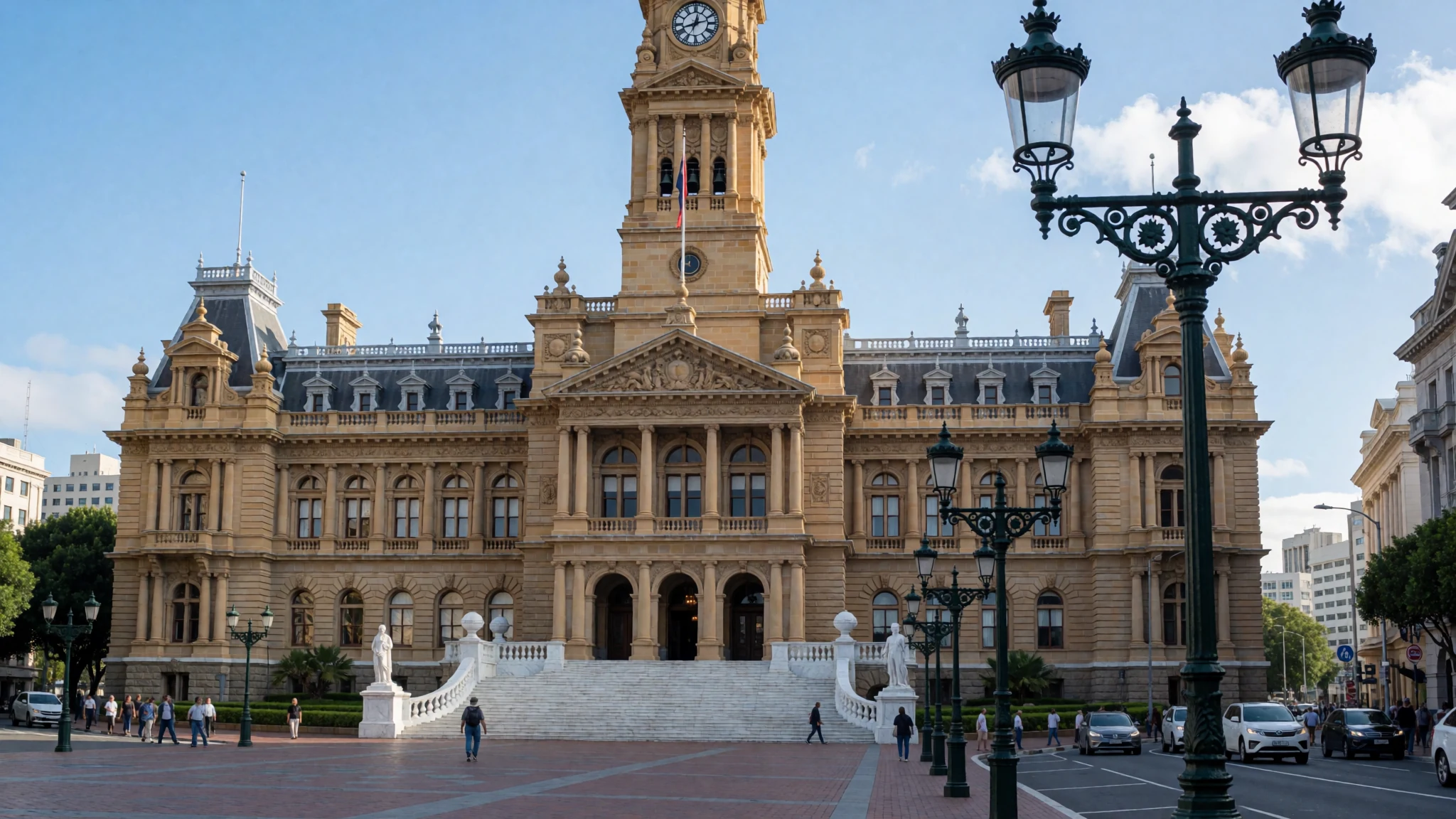
- Kirstenbosch National Botanical Garden
Sprawling across the lower eastern slopes of Table Mountain, this renowned sanctuary showcases the extraordinary botanical diversity of the Cape Floristic Region. Cultivated areas display indigenous flora from every major South African bioregion, framed by dramatic mountain backdrops and peaceful canopy walkways.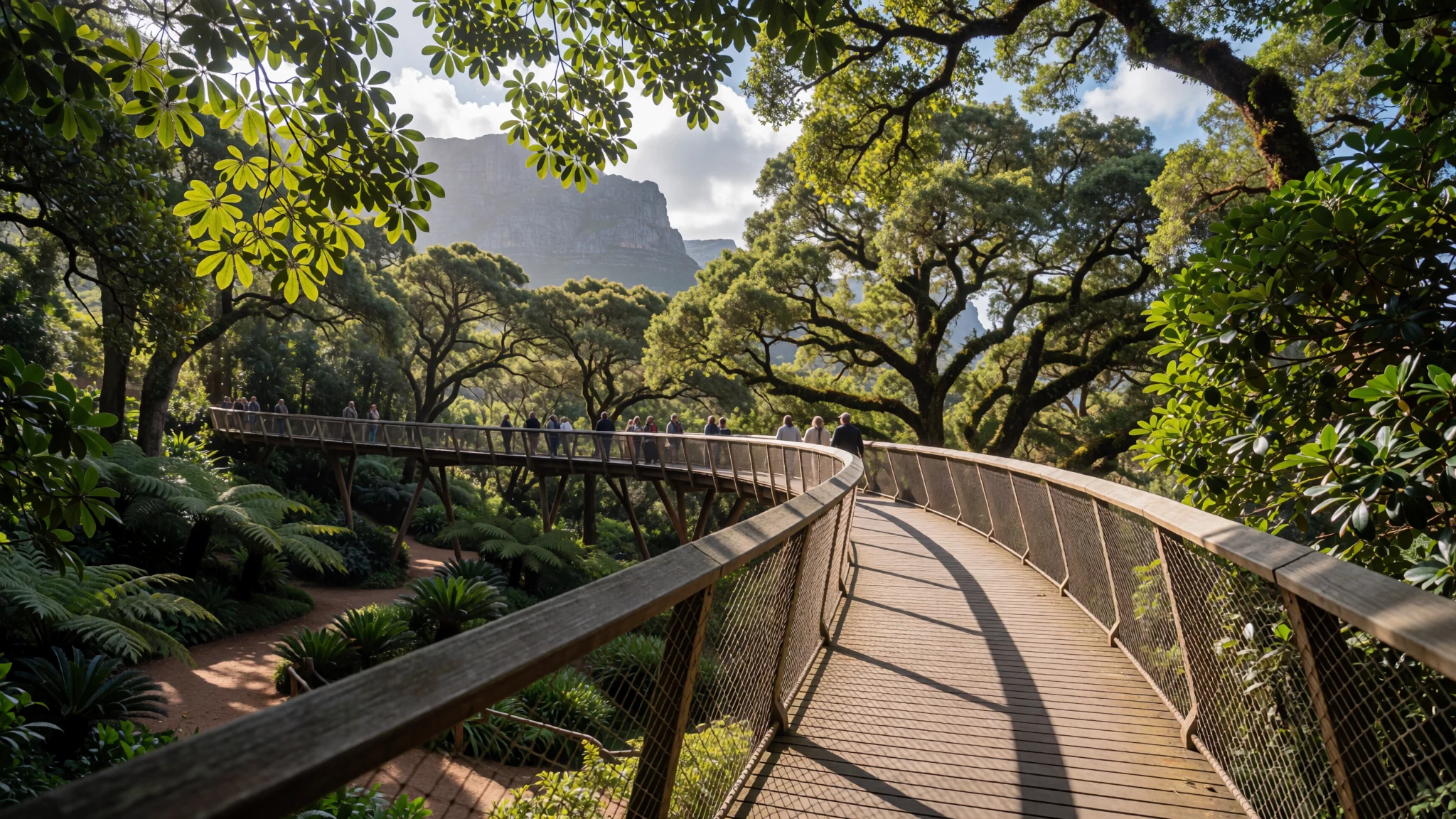
- Rhodes Memorial
Perched high on the lower slopes of Devil's Peak, this classical stone monument was erected to honour the imperialist politician and businessman Cecil Rhodes. Framed by a grand granite staircase and bronze lions, the site offers sweeping views across the Cape Flats toward False Bay.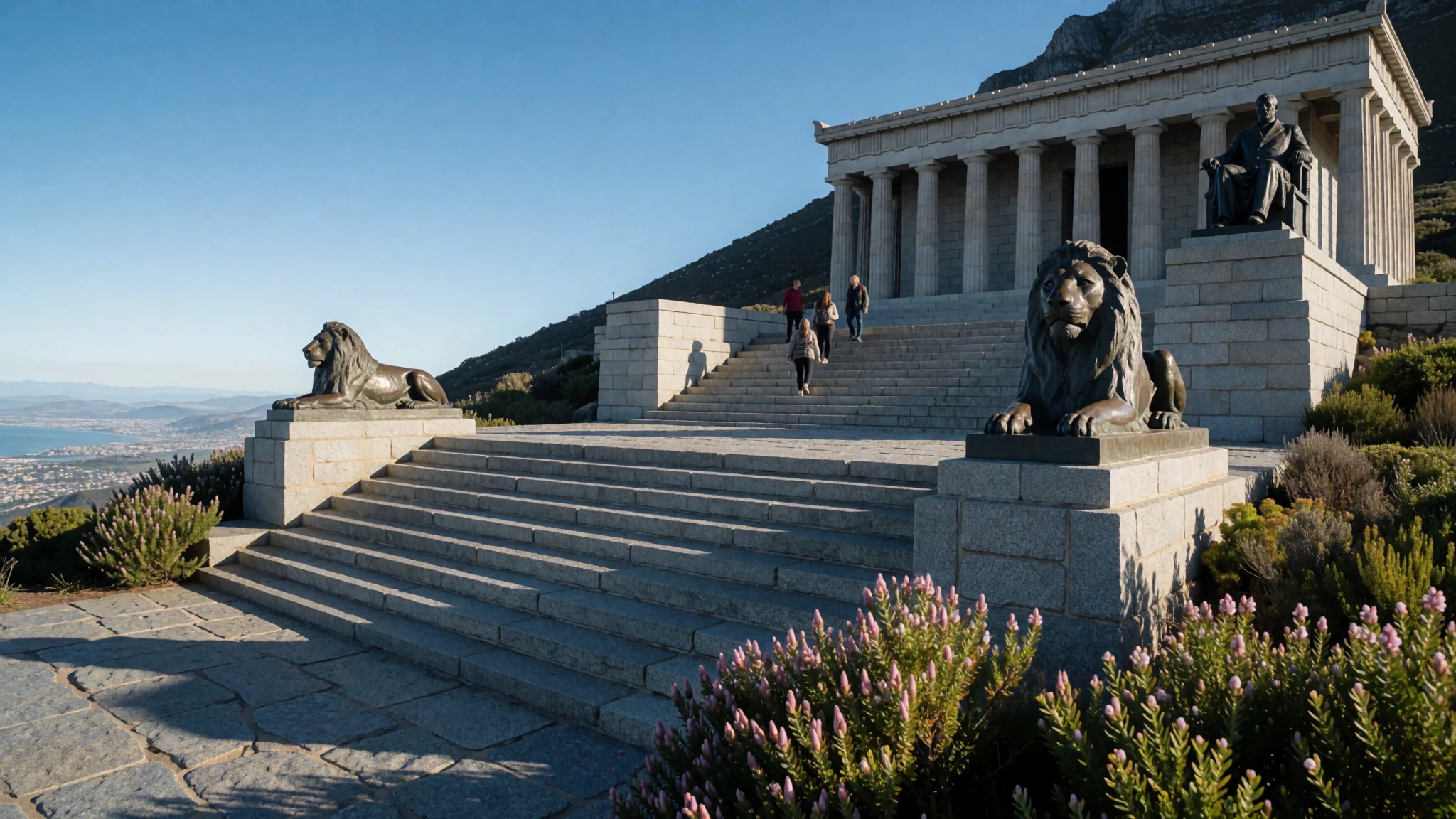
Culture
Cape Town possesses a remarkable architectural legacy, boasting the highest concentration of Cape Dutch style buildings anywhere in the world. This regional aesthetic fuses architectural traditions brought from the Netherlands, Germany, France, and Indonesia, characterised by ornate gables, thatched roofs, and thick whitewashed walls. Fine examples remain visible in leafy Constantia, around the historic administrative quarters of the Central Business District, and along parts of Long Street. Rural traditions persist alongside urban design; for instance, Mostert's Mill in Mowbray stands as South Africa's only operational historic windmill, originally built in 1796 and subsequently restored. Recognition of this creative spirit led to the city being named World Design Capital and designated as a UNESCO Creative Cities Network Design City. Contemporary cultural life thrives on collaboration, bridging diverse linguistic communities, culinary traditions, and artistic expressions across the metropolitan area. When visiting historic sites, places of worship, or traditional residential areas, always ask permission before taking photographs of local residents.
What to wear
Traditional attire in Cape Town reflects its complex multicultural heritage, particularly the vibrant, patterned garments worn within the Cape Malay and broader local communities during celebrations and religious observances. Historically, textiles ranged from imported European cottons and linens to durable workwear adapted for coastal farming and maritime labour. Today, everyday street style in the city is casual, practical, and heavily influenced by international trends, with denim, lightweight cotton shirts, and comfortable trainers dominating daily wear. Because coastal weather can shift rapidly from warm sunshine to brisk ocean winds and sudden mountain showers, locals dress in versatile layers. Travellers should pack breathable clothing for warm daytime temperatures, sturdy footwear for uneven cobblestones or mountain trails, and a windproof jacket or fleece for cooler evenings by the Atlantic shore. Modest attire is appreciated when visiting local community heritage sites and places of worship, but standard western casual wear is entirely acceptable throughout the city's restaurants, markets, and cultural venues.
What to eat
- Eastern Food Bazaar — Central Business District
Located in the bustling central district, this expansive indoor food hall serves generous portions of authentic South Asian curries, biryanis, and street-style grills in a lively, communal atmosphere.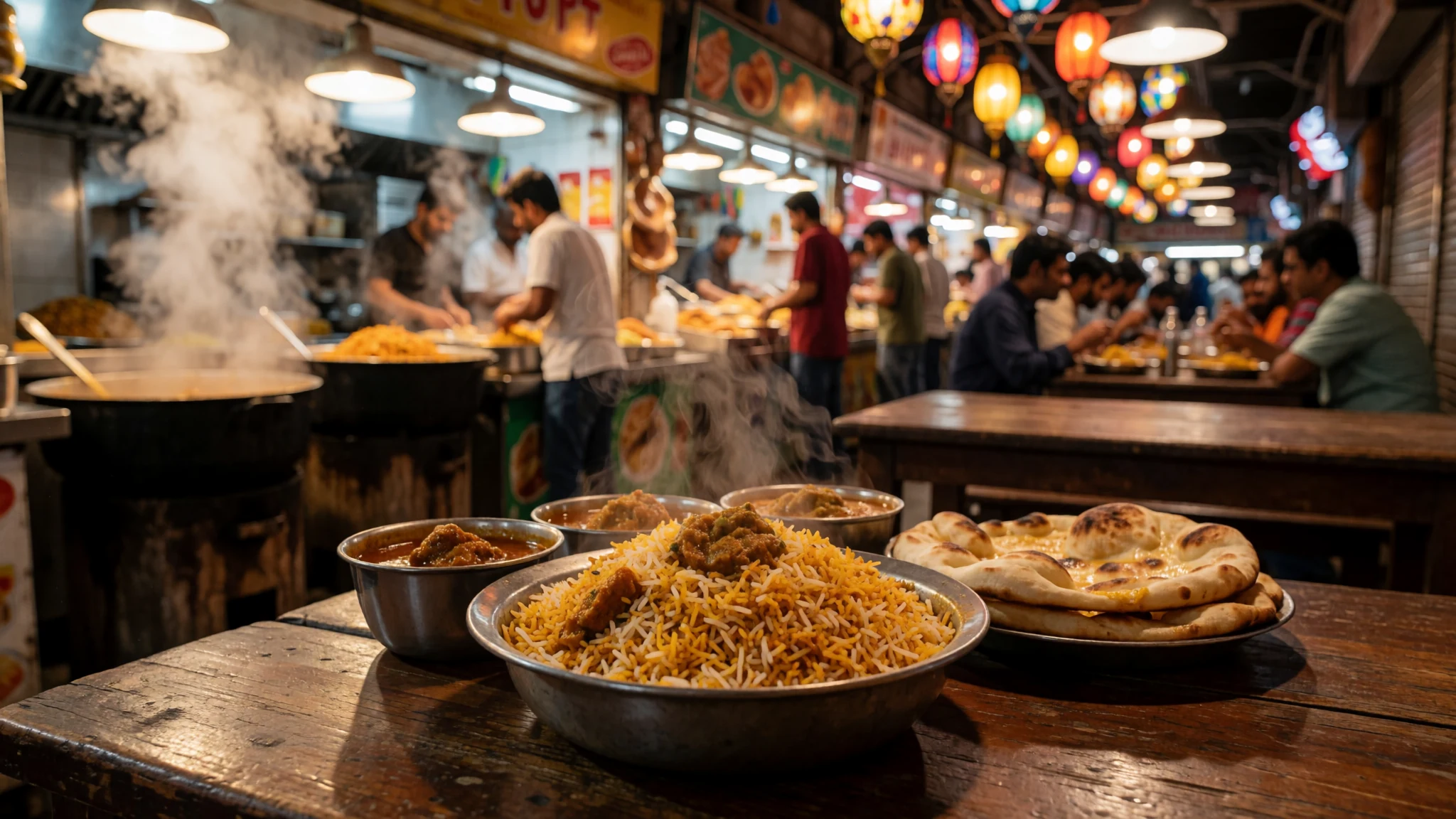
- Local Seafood and Snoek — Waterfront and coastal eateries
Freshly caught Atlantic seafood, particularly traditional smoked or braaied snoek, showcases the coastal catch harvested from nearby icy waters, often served with apricot jam or yellow rice.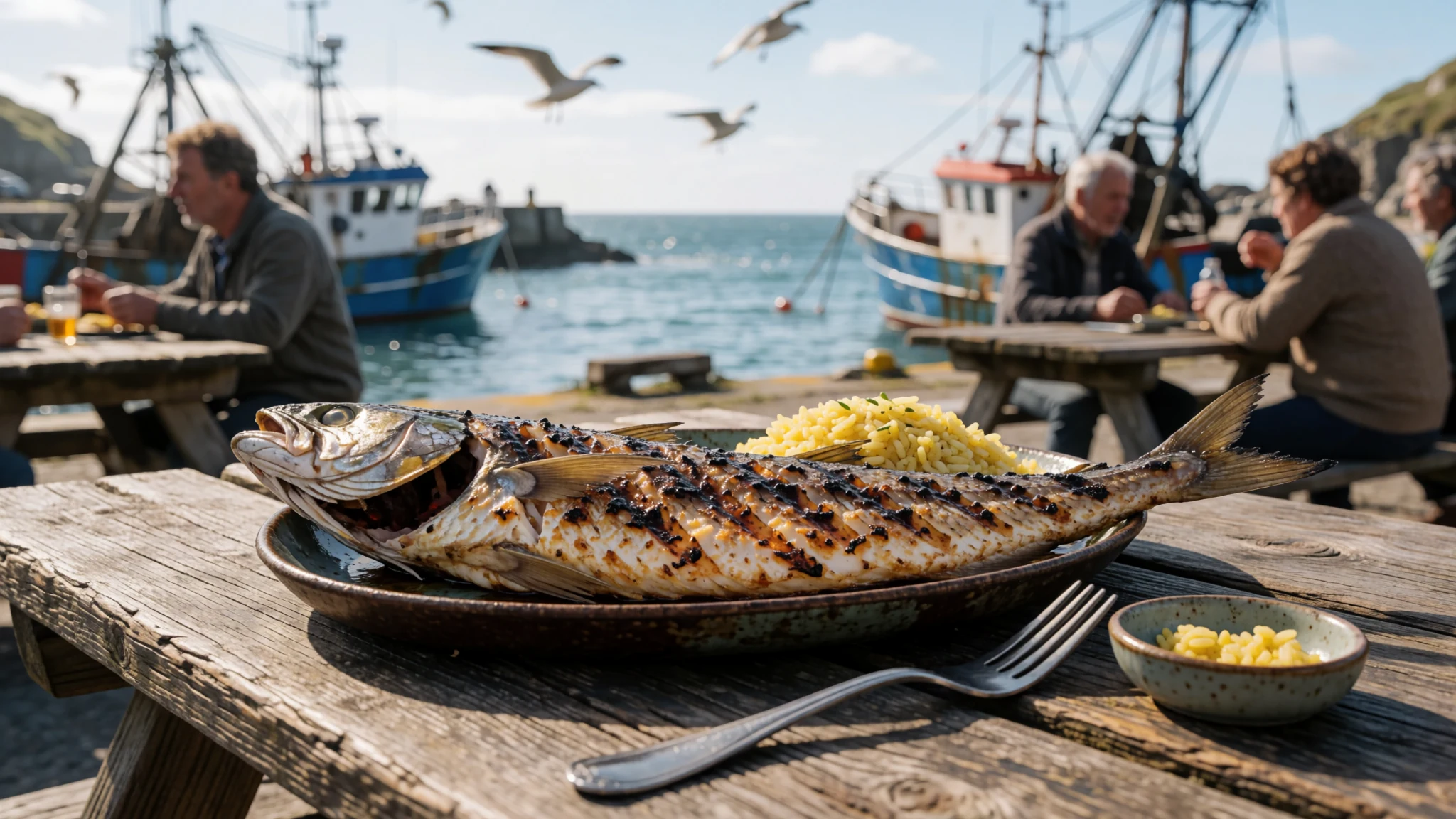
- Karoo Lamb — Traditional grills and steakhouses
Renowned across the region for its distinctive herbal flavour derived from the aromatic shrubs grazed in the nearby semi-arid interior, prepared simply over open flames. - Cape Winelands Produce — Constantia and surrounding vineyards
The valleys surrounding the city produce celebrated wines alongside abundant fresh orchard fruits, providing an exceptional pairing for regional dining tables.
Plan it
Best time. December to March, the local summer, brings warm, dry weather with the least rain, ideal for exploring both the mountains and the coast.
How long. 4–5
Getting there. Arrive at Cape Town International Airport. Use reputable ride-hailing apps like Uber or Bolt for transit into the city centre.
Budget. mid
Tips
- Use verified ride-hailing applications rather than unmetered airport taxis
- Remain safety-conscious and keep valuables secure when walking in unfamiliar areas
- Check weather conditions before attempting to ascend Table Mountain
- Book popular botanical gardens and museum tours in advance during peak months
Etiquette
- Always ask permission before photographing local residents in neighbourhoods like Bo-Kaap
- Observe local tipping customs in restaurants and cafes
Nearby
Sources
- Wikidata Q5465 (CC0)
- Wikipedia (rev 1381708606) (CC-BY-SA 4.0)
- Wikivoyage (rev 5396883) (CC-BY-SA 4.0)