Akhmim
Akhmim, Egypt
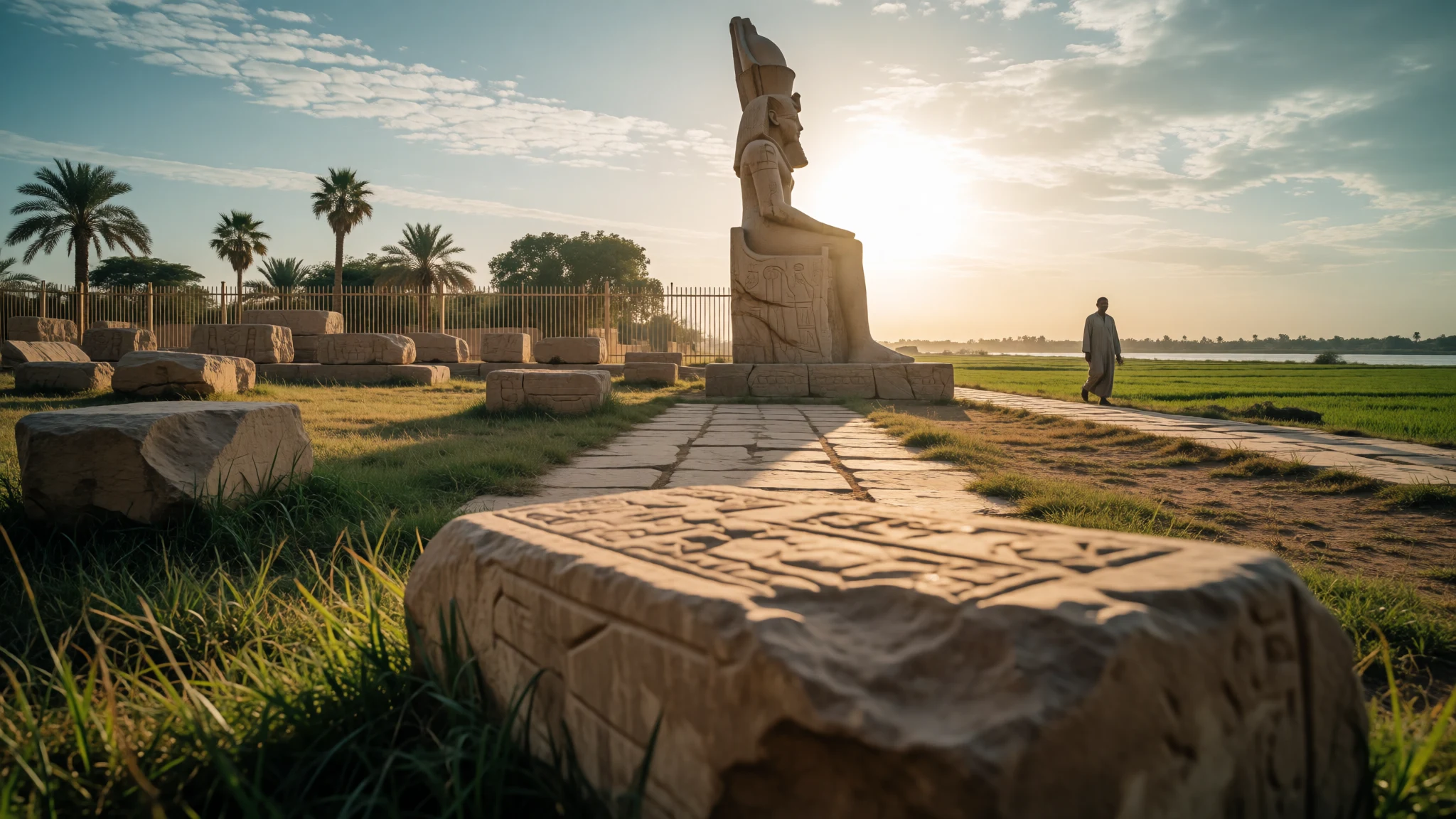
Akhmim is a working Nile town in Upper Egypt where colossal statues, old churches and weaving traditions sit among everyday streets.
The place
Akhmim stands on the east bank of the Nile in the Sohag Governorate of Upper Egypt, about 6 km northeast of Sohag city. It is a working town of about 158,000 people, at an elevation of 85 m, on the thin strip of farmland that the river keeps green between two deserts. Beyond the last fields the land turns to pale rock and sand within minutes, and in summer the heat comes off it in waves. The town has collected several names. Arabic speakers say أخميم, Coptic once rendered it as ⳉⲙⲓⲙ, the ancient Egyptians called it Ipu or Khent-min, and Greek writers knew it as Khemmis and later Panopolis. That layering shows on the ground. Pharaonic stone, Christian churches and monasteries, mosques and modern concrete blocks share the same streets, and a planned new Akhmim City has grown up nearby. This is not a polished tourist town. English signs are few, organised visitor facilities are thin, and most people met in the street are simply going about their day, which is a large part of the appeal. Markets and workshops start early, afternoons are quiet, and evenings by the river are when the town feels most alive. Akhmim works best as a half-day or full-day stop on a journey through Upper Egypt, paired with Sohag and the sites around it, rather than as a base for a long stay. Current travel advice for the region is worth reading before setting out.
Its story
Akhmim's long history begins with its god. The ancient Egyptians called the town Ipu, Apu or Khent-min, and it served as the capital of the ninth nome, or province, of Upper Egypt. Its patron was Min, a fertility deity shown in ithyphallic form and linked with Horus, who also watched over the caravan routes running into the eastern desert. Traders from the south are thought to have gathered at his festivals, and some reliefs show Nubians and people of Punt climbing poles before him. The Greeks recognised Pan in Min, which is how the town became Panopolis, the city of Pan. Herodotus wrote about Chemmis as the birthplace of the hero Perseus, with a temple, athletic games and prizes in the Greek manner. Modern scholars suspect he may have confused it with Coptos, another centre of Min's worship further south. Akhmim also features in the story of Yuya, a courtier under Tuthmosis IV and Amenhotep III, whose family is suggested to have come from here. After the pharaohs the town passed under Greek, Roman and Byzantine rule, kept a Coptic Christian community that still exists, and then became part of the Arabic-speaking Islamic Egypt that the Arabs introduced. The churches, a monastery of martyrs and the mosques belong to those later layers, while the statues in the open-air museum come from the earlier ones.
What to see
- Akhmim Open Air Museum — Central Akhmim
The open-air museum in the middle of Akhmim gathers carved stone blocks, statues and architectural pieces from the ancient town in one fenced space. It is the easiest place to grasp how old the settlement is, and the stone reads well in low morning light. Opening times and ticketing change, so ask locally before relying on them.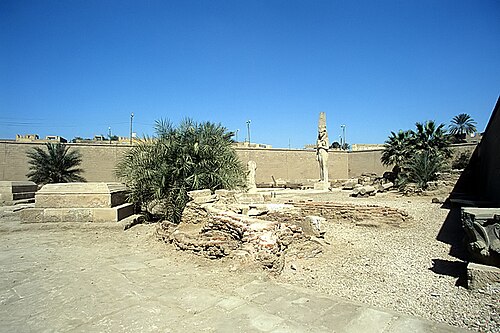
- Colossal statue of Meritamon — Open-air museum, Akhmim
A towering figure of Meritamon, daughter of Ramses II, is the signature piece among the open-air museum's stonework. Look at the face from the side as well as from the front, where the carving of the nose and lips shows most clearly. Early or late sun flatters it, and a local guide adds useful context.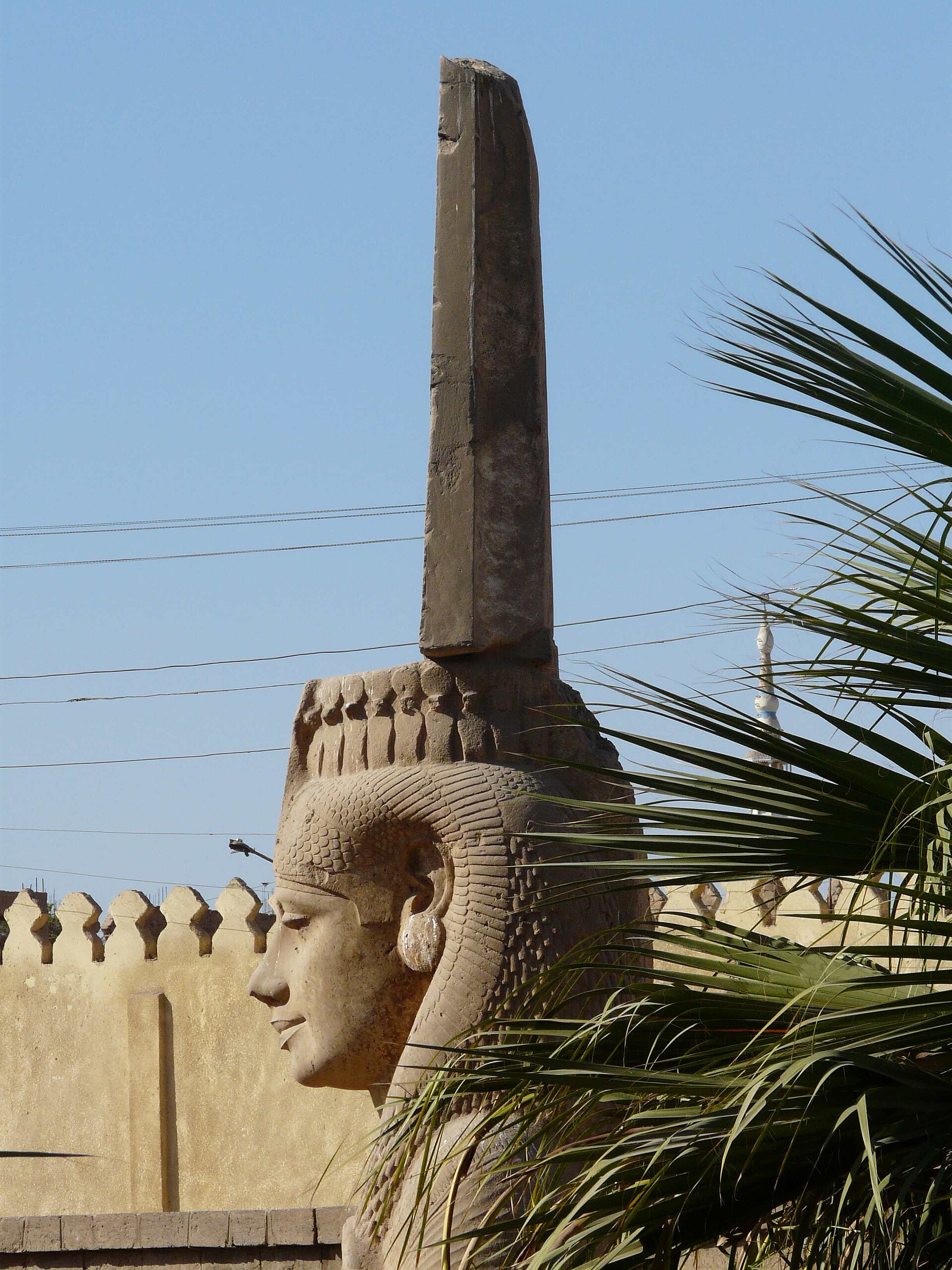
- Old church of Abu Seifein — Old town, Akhmim
Inside the old church of Abu Seifein, a Coptic Christian place of worship, the mood is quiet and dim, and the building shows how long Christianity has been part of Akhmim. Entry usually means finding a caretaker. Dress modestly, remove shoes if asked, and consider leaving a small donation.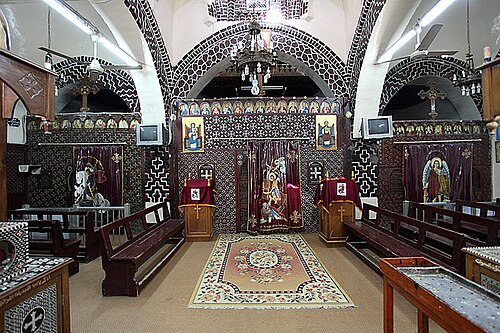
- Monastery of the Martyrs — Desert edge, east of Akhmim
East of the town lies a monastery of martyrs, where an image of the child martyr Zacharias of Akhmim is venerated. The road leads towards the desert edge, so the setting feels very different from the busy centre. It is a working religious site and access varies, so check with local contacts or a church first.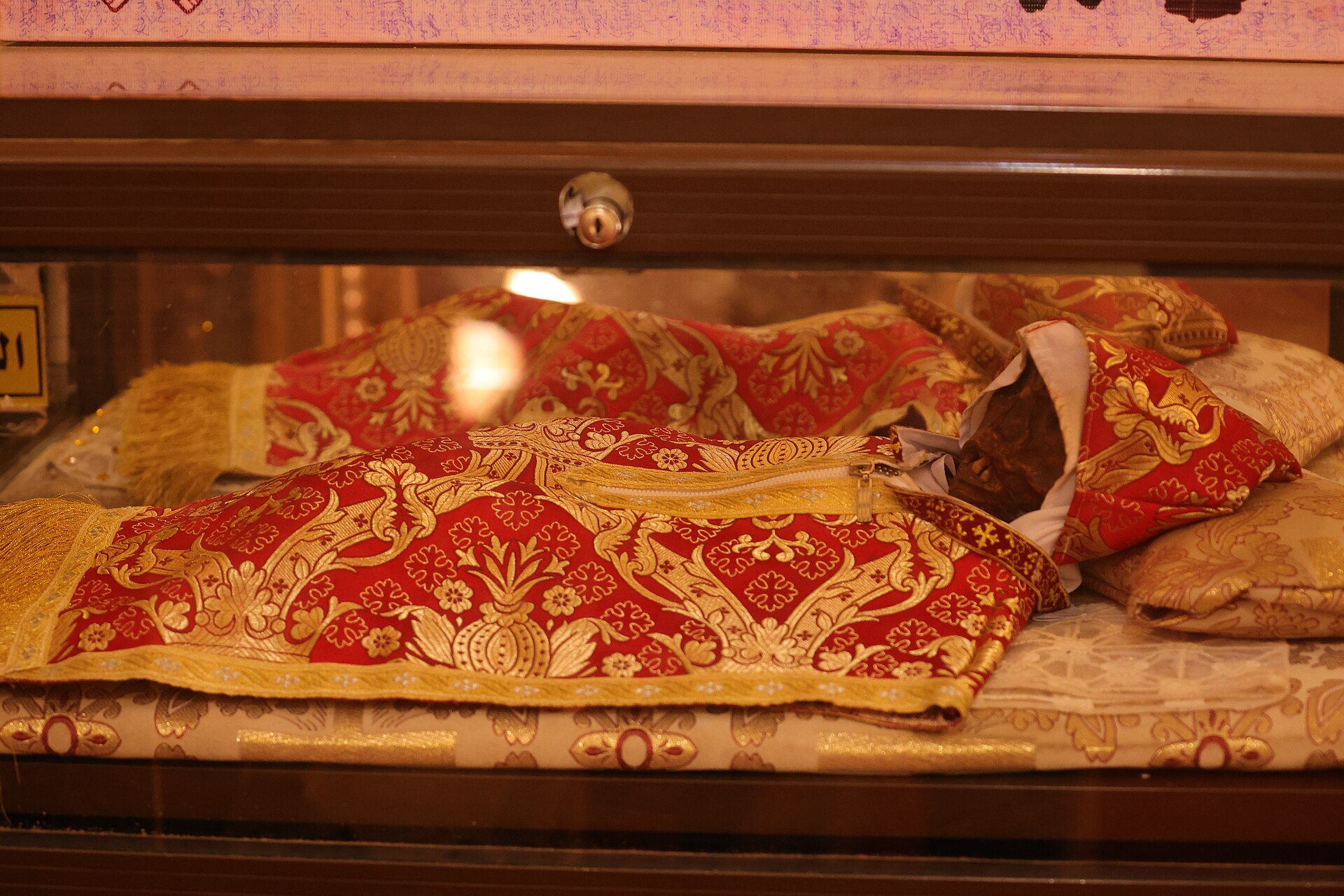
- The Nile bank and old streets — Riverside, Akhmim
Walking along the river and through the older lanes shows Akhmim as it is lived, with palms, small workshops, tea stalls and boys on bicycles. The painter Edward Lear sketched the view below Ekhmim from the water, and the scene still holds that mix of green fields and pale ridge. Late afternoon is the kindest hour.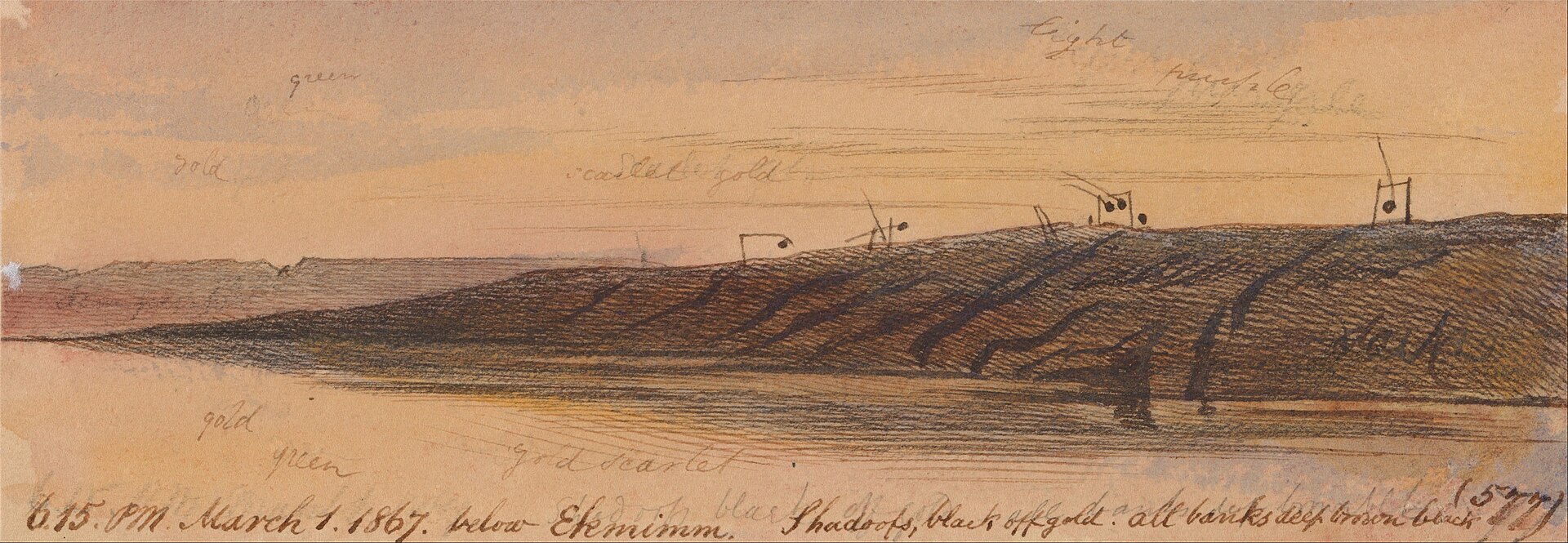
Culture
Akhmim is a town where Muslim and Coptic Christian communities live side by side, and hospitality is taken seriously. A stranger who stops to look at something is quite likely to be greeted, offered tea and asked where they are from. Refusing outright can sting, so a warm thank-you with a hand on the heart goes a long way. As elsewhere in Egypt, preserving face matters. Direct criticism, raised voices or open disagreement in front of others tends to land badly, and any feedback works best when softened with something positive. Religion comes up often in conversation, and the safest approach is curious and respectful rather than argumentative. Daily life follows the call to prayer and the Friday rhythm for Muslims, while Coptic Christians keep Sundays and long fasting seasons, so shops, churches and workshops may keep hours that differ from what a visitor expects. Upper Egypt is more conservative than Cairo or the coast, and families, especially women, may be reserved with strangers. Greeting people of your own sex first and letting them lead on handshakes avoids awkwardness. A few Arabic phrases, such as shukran for thank you and salam alaykum for peace be upon you, are warmly received. In a church or mosque, cover shoulders and knees, take off your shoes where others do, and keep your voice low.
What to wear
Akhmim has long been associated with weaving, and textile pieces from the town, including small items such as a child's head cover now in museum collections, show how much skill went into everyday cloth in the early Christian centuries. Traditional dress here is the galabeya, a loose ankle-length robe in cotton, or in heavier wool-blend cloth for winter, worn by men with a skullcap or a wrapped head cloth and by women in plain or patterned versions with a headscarf. Most men now wear a galabeya for farm work, prayers and home, and shirts with trousers in town, while many women wear long skirts or abayas with a head covering, though styles differ between families and communities. For visitors, comfort and modesty point the same way. Loose, light, long-sleeved cotton or linen and trousers or skirts below the knee keep off both sun and stares, and women should carry a light scarf for churches and mosques. A brimmed hat, sunglasses and sun cream matter in the dry heat. Winter evenings turn cool, so a thin layer helps. Closed, sturdy shoes suit dusty, uneven ground, and slip-ons make the frequent shoe removal at religious sites easy.
What to eat
- Ful medames — Small ful and falafel counters near the market, mornings
Slow-cooked fava beans mashed with oil, lemon and cumin, eaten with flatbread at breakfast. It is the everyday fuel of Egyptian towns, cheap and filling, and often topped with chopped tomato, parsley or a boiled egg. - Ta'ameya — Street stalls and snack counters around the town centre
Egypt's version of falafel, made from fava beans rather than chickpeas, which gives a bright green centre. Fried to order and tucked into bread with salad and tahini, it is a quick lunch or a breakfast side. - Aish baladi — Neighbourhood bakeries, best in the early morning
The rustic wholemeal flatbread of Egypt, puffed and slightly chewy, baked in bakeries throughout the town. Eaten warm, it serves as spoon, plate and wrapper for almost every other dish listed here. - Molokhia — Family-run eateries and home-style restaurants
A glossy green soup of finely chopped jute leaves with garlic and coriander, ladled over rice or bread, and often served with chicken or rabbit. Its slippery texture surprises first-timers, but it is a home-cooking staple. - Koshari — Koshari shops in the town centre and near the station
A hearty mix of rice, lentils and macaroni, topped with spiced tomato sauce and crisp fried onions. It is vegetarian, inexpensive and easy to order by pointing, which makes it a reliable choice for a first meal.
Plan it
Best time. November to March, when days are warm and dry; this is a hot desert climate, so June to August is punishing and sightseeing needs to happen very early. Winter nights can be cool.
How long. 1–2
Getting there. Fly to Cairo or Luxor, then take a train or road transfer along the Nile valley to Sohag. From Sohag, a taxi or microbus covers the roughly 6 km to Akhmim on the east bank.
Budget. low
Tips
- Go in the morning, before the heat builds and while light is good for stonework
- Carry small notes in cash, as cards are rarely accepted in Upper Egyptian towns
- Drink bottled water and use sun protection, even in winter
- Check current government travel advice for Upper Egypt, and ask a local contact about police arrangements for visitors
- Opening times at the open-air museum and churches change, so confirm locally on the day
Etiquette
- Ask before photographing people, especially women and children
- Cover shoulders and knees and remove shoes where others do at churches and mosques
- Accept offered tea graciously, and keep voices calm in disagreements
Nearby
Sources
- Wikidata Q340572 (CC0)
- Wikipedia: Akhmim (rev 1377050090) (CC BY-SA 4.0)
- Wikivoyage: Egypt (rev 5410102) (CC BY-SA 4.0)
- Open Air Museum of Akhmim — Roland Unger (CC BY-SA 1.0)
- New Akhmim City — أبو الدهب (CC BY-SA 4.0)
- Colossal statue of Meritamon — Kurohito (CC BY 3.0)
- Old church of Abū Seifein — Roland Unger (CC BY-SA 1.0)
- Akhmim child headcover — Anonymous (CC0 1.0)
- Barbería en Achmim, 1882 — Georg Ebers, Biblioteca de la Universidad de Sevilla (CC BY 2.5)
- Child Martyr Zacharias of Akhmim — 松照庵 (CC BY-SA 4.0)
- Below Ekhmim — Edward Lear (Public domain)


