Abydos
Abydos, Egypt
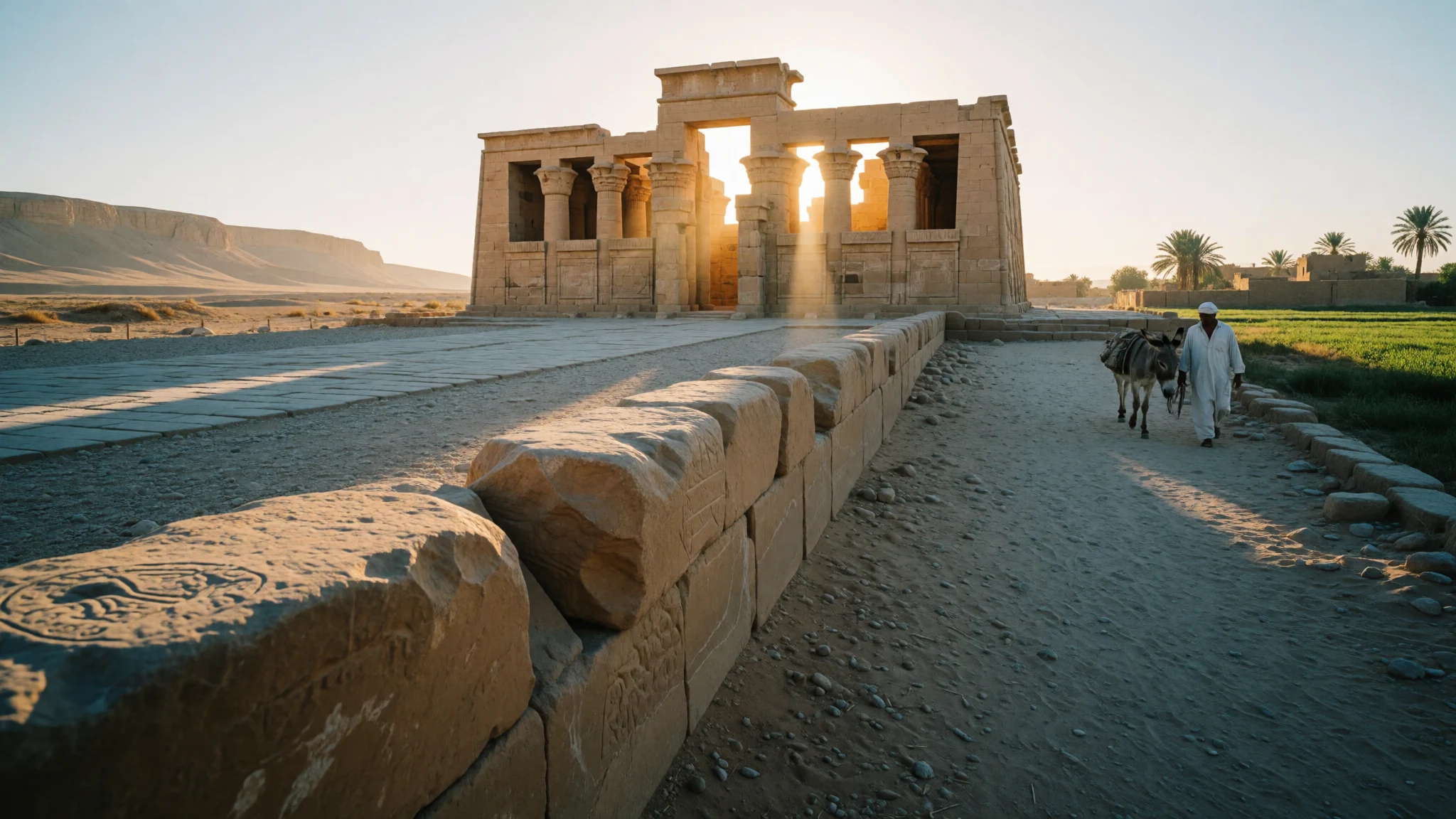
Abydos holds the temple of Seti I, where painted reliefs still carry colour and a list of kings, in a quiet desert setting.
The place
Abydos sits on the western edge of the Nile's farmland in Upper Egypt, at an elevation of 74 m, about 11 km back from the river where the fields give way to desert. The nearest modern settlements are El Araba El Madfuna and El Balyana, and the ancient city was known to its own people as Abedju. The English name is a Greek borrowing, taken from an unrelated town on the Hellespont. Today the site is an archaeological landscape rather than a town: a royal burial ground, temple ruins and huge enclosures scattered across low desert. The best-known building is the memorial temple of Seti I, a pale stone structure whose walls carry the Abydos King List, a chronological roll of pharaohs running from Menes to Seti's father, Ramesses I. Phoenician and Aramaic graffiti scratched on the walls add a much later layer. Further out lies Umm el-Qa'ab, where early kings were buried, and the mud-brick enclosures built behind the old town. Much of the ancient town, including the Great Temple, lies beneath modern buildings north of the Seti temple, so what can be seen is only part of what exists. A visit here feels calmer than a day in Luxor: fewer coaches, more space inside the temple, and a setting of canals, palms and flat farmland. The trade-off is logistics. Abydos works as a half-day or full-day trip from Luxor rather than a base, and access usually involves police arrangements. Heat is a real factor from late spring to early autumn, with little shade between monuments.
Its story
Abydos matters because Egypt's earliest kings chose it. In the Naqada III period, rulers based here brought most of Upper Egypt under one authority, overcoming rivals such as Nekhen. Around 3100 BCE, kings were being buried at Umm el-Qa'ab, among them Narmer, regarded as the founder of the First Dynasty, and his successor Aha. Some Second Dynasty rulers were buried here too, and three of them built vast funerary enclosures in the desert behind the town. Later observers took these for fortresses; the best preserved belongs to Khasekhemwy and is known as the Shunet El Zebib. From the Fifth Dynasty, a local god called Khentiamentiu, 'foremost of the Westerners', came to be understood as the dead king in the underworld, and the cult here grew around him and, in time, Osiris. Pepi I of the Sixth Dynasty built a funerary chapel that expanded over the centuries into the Great Temple of Osiris, whose ruins survive within the town enclosure. Being buried near the early kings became a wish for ordinary Egyptians as well, so the town grew as a place of pilgrimage and worship. Temples were rebuilt again and again down to the Thirtieth Dynasty, and the cemetery was never abandoned. The Nineteenth Dynasty temple of Seti I came late in this long story, raised at a site that was already ancient and already holy.
What to see
- Temple of Seti I — Abydos temple site
The memorial temple of Seti I is the reason most visitors come to Abydos. Its carved reliefs are finely cut and keep traces of paint, and one corridor holds the Abydos King List, a row of royal cartouches running from Menes to Ramesses I. Allow time for the sanctuaries behind the façade, not just the entrance.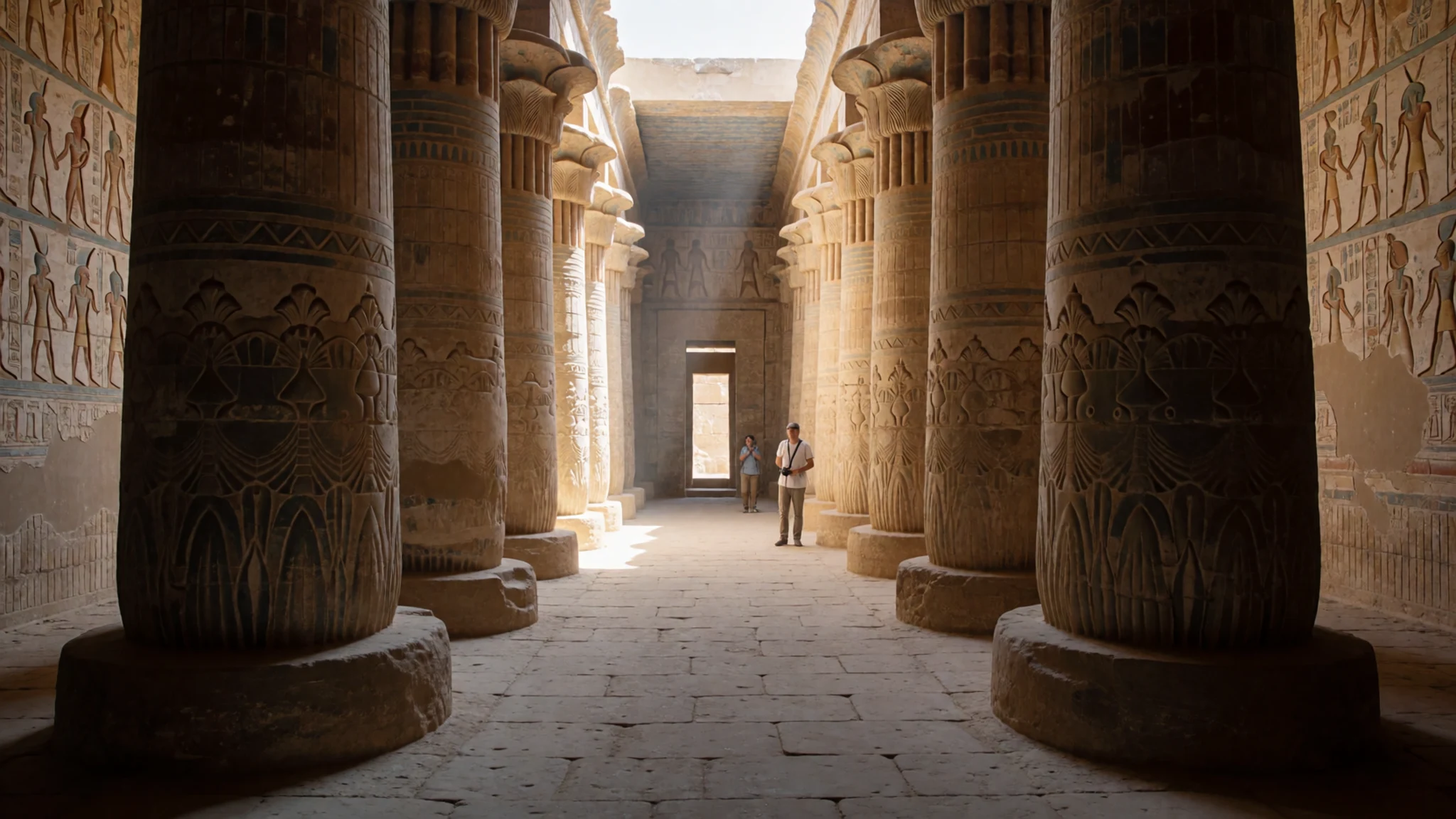
- Osireion — Behind the Seti I temple
The Osireion belongs to the Seti I complex but was cut deep beneath it, in the manner of a royal tomb from the Valley of the Kings. Its plain, massive stonework contrasts with the carved and painted temple beside it, and access to the lowest level depends on conditions on the day.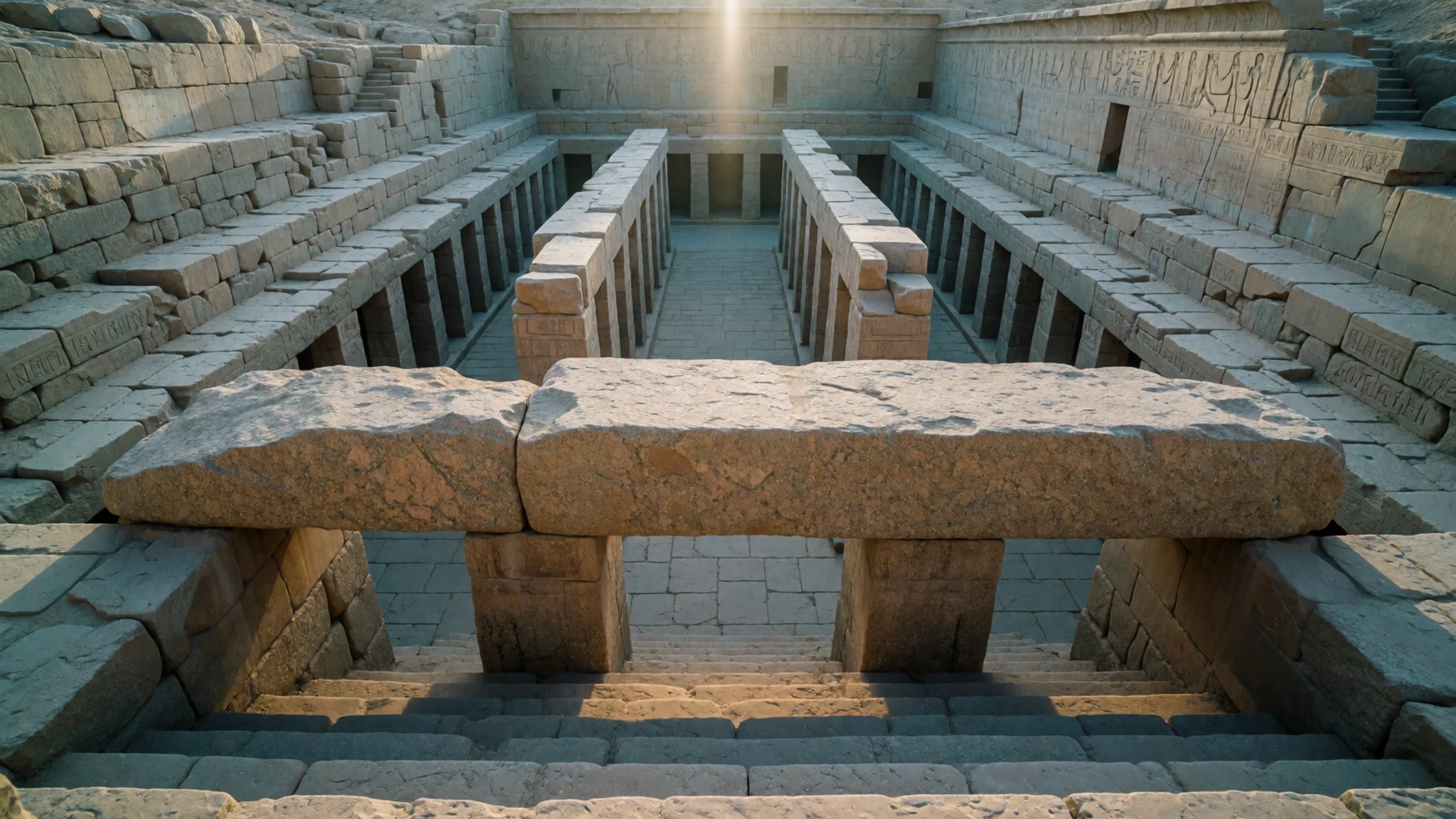
- Temple of Ramesses II — Beside the Seti I temple
Close to Seti's temple stands a smaller, simpler temple of his son Ramesses II. Less of it survives, and its own list of pharaohs, once displayed here, is now in the British Museum. It takes little time to see and is worth it for the surviving carved scenes and a sense of scale beside his father's building.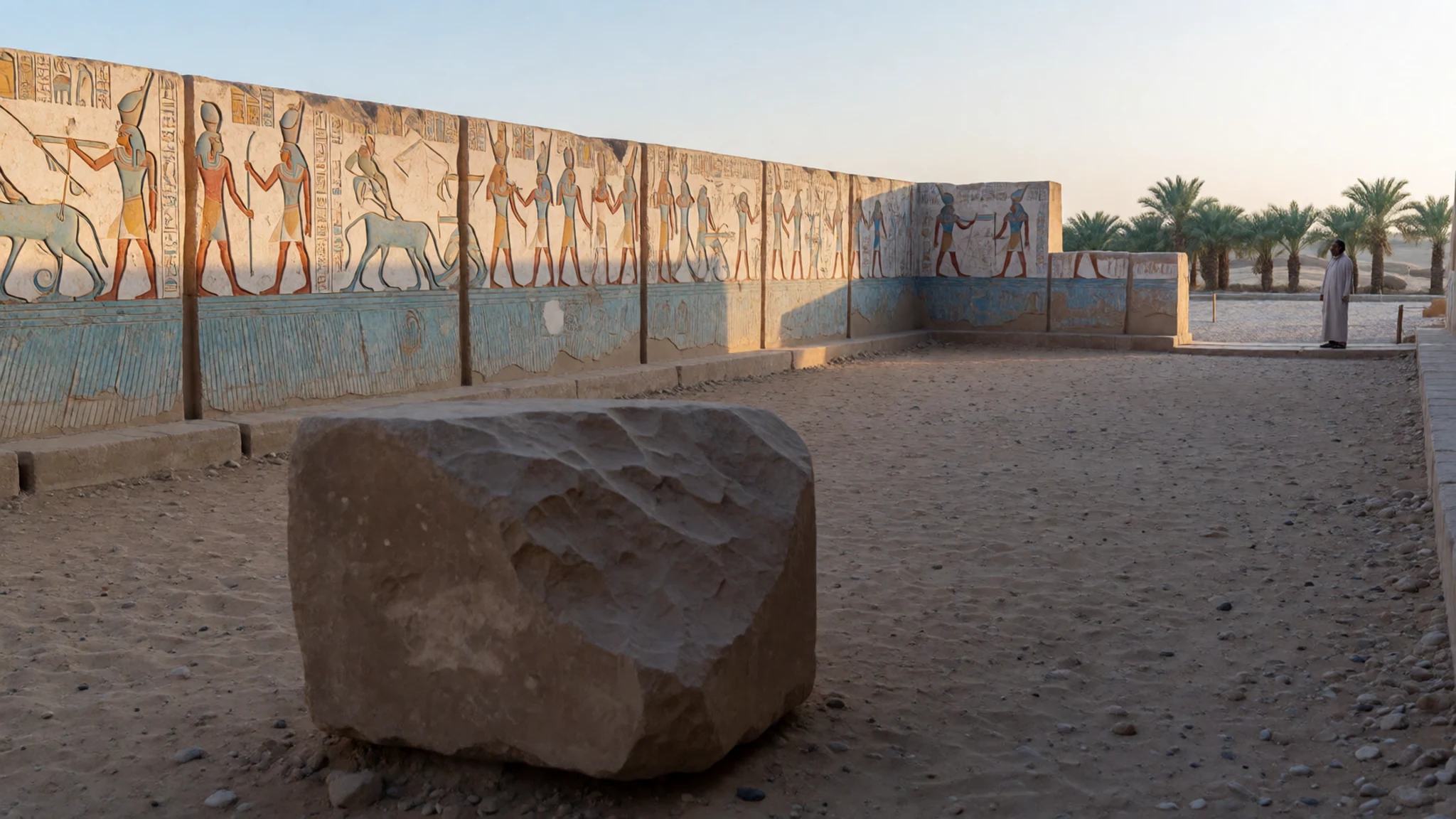
- Umm el-Qa'ab — Desert south-west of the temples
Umm el-Qa'ab is the early royal cemetery in the desert south-west of the temples, where First Dynasty kings and the last two of the Second were buried. The tombs are low, ruined burial chambers rather than monuments, so the draw is the history and the open desert. Ask the site police or guardians about access first.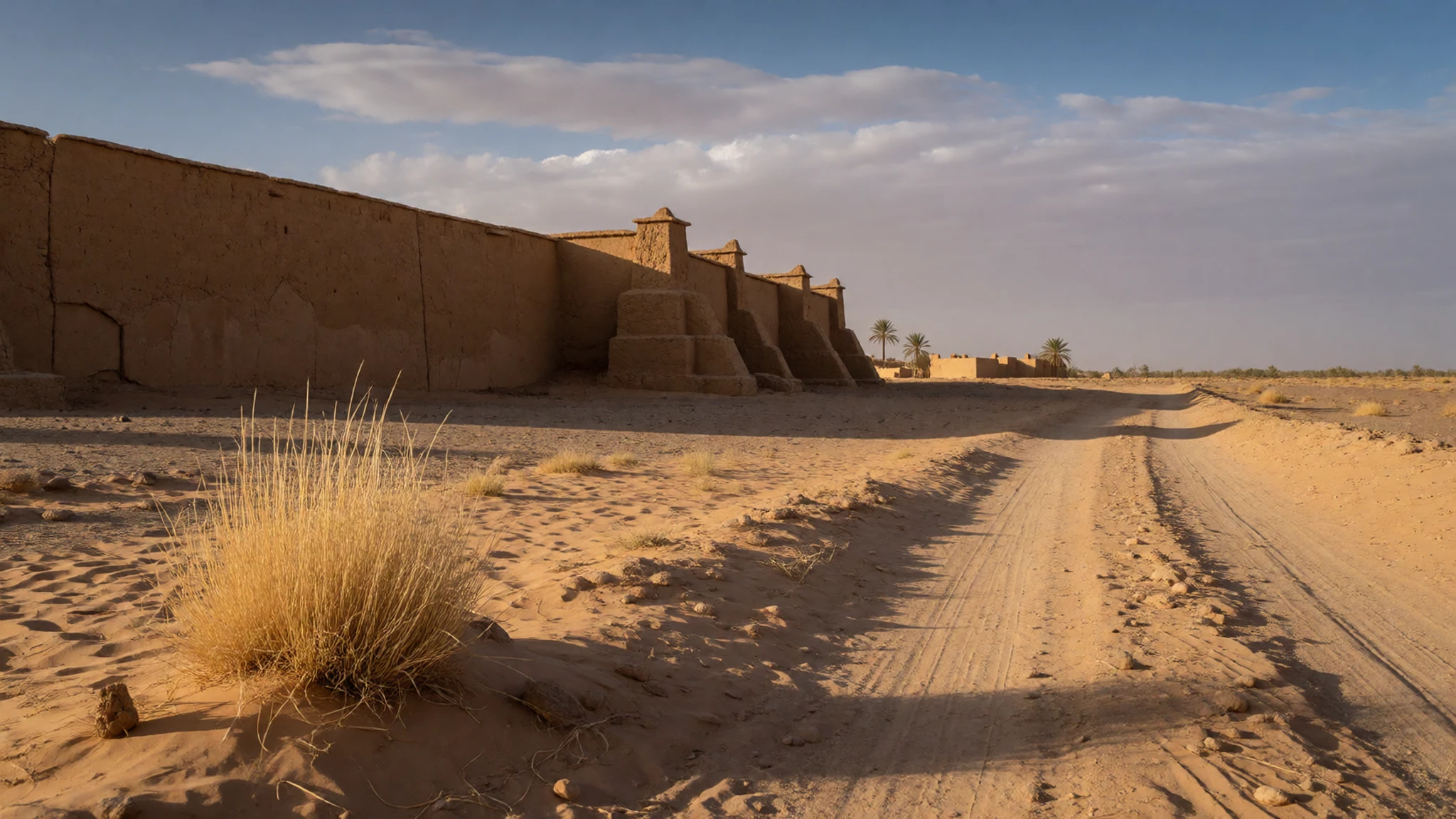
- Shunet El Zebib — Desert behind the old town
The Shunet El Zebib is the enclosure of Khasekhemwy, a Second Dynasty king, standing in the desert behind the old town. Its tall mud-brick walls are the most complete of three such funerary enclosures at Abydos. Later observers mistook them for forts; they belong to the king's funerary cult.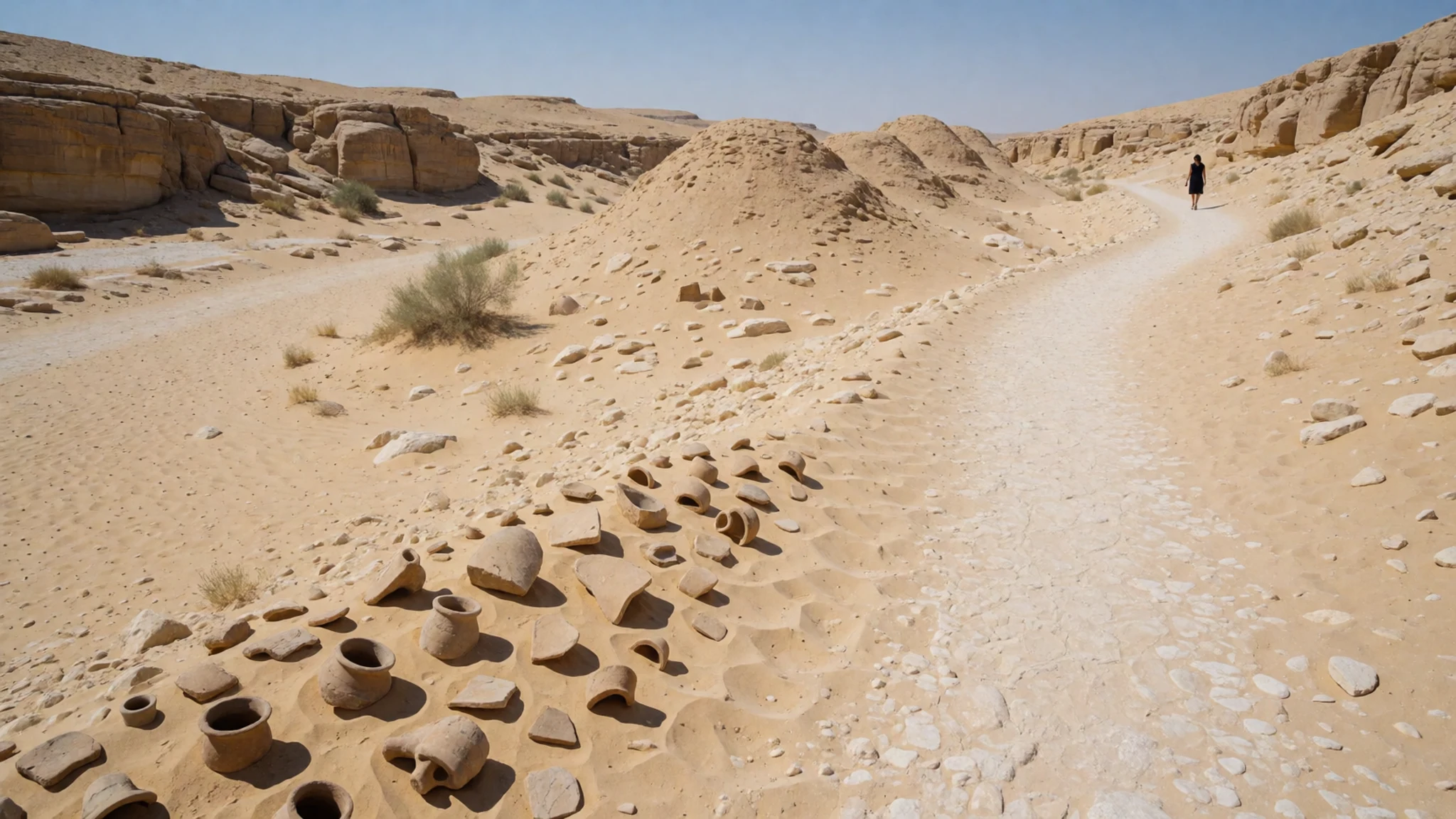
Culture
Abydos has been a place of pilgrimage for thousands of years, and the habit of treating it as sacred still shapes how the site feels. Ancient Egyptians linked the town with Osiris, ruler of the dead, and wanted their burials or memorials near the early kings. The temples here were built for ritual rather than display: the sanctuaries behind Seti I's façade were chapels for different gods, and the walls show kings and priests making offerings. Around the site, daily life is rural Upper Egypt, with farming families, irrigation canals and small shops in El Balyana and El Araba El Madfuna. Hospitality is a point of pride, and a short chat with the temple guardians is often part of the visit. A local guide is genuinely useful for reading the reliefs, which are easy to admire and hard to decode alone. Police presence on the approach road and at the temple is routine and is there for visitors' security, so it is simplest to follow their guidance without fuss. Arabic is the everyday language, with some English at the temple, and a few Arabic greetings go a long way. Ask before photographing any guardian or villager, and keep voices low and hands off the painted reliefs inside the temple.
What to wear
Abydos, like most of Upper Egypt, dresses for sun and modesty more than for show. The traditional garment is the galabeya, a loose ankle-length robe worn by men and women, usually in cotton: plain or striped for men, darker or patterned for women. Men often add a skullcap or wound turban against the sun, and women commonly wear a headscarf or longer veil. Cotton has long been a staple of the Nile Valley, and linen is the cloth of the ancient temple walls, where kings and priests appear in white pleated garments. Daily wear now mixes old and new: farmers and older men in galabeyas, younger men in shirts and trousers or jeans, and women in long skirts or tunics with scarves and light abayas. The galabeya is kept for prayer, family occasions and fieldwork. Visitors should dress for dry heat and conservative villages. Light, loose cotton or linen with covered shoulders and knees suits everyone, and a scarf or shawl helps with sun and with respect. A wide-brimmed hat, sunglasses and sunscreen matter more than style. Closed, flat shoes with a good grip cope with sand, loose stone and uneven steps better than sandals. Winter mornings can be cool, so a light layer is useful.
What to eat
- Ful medames — Breakfast counters in El Balyana
Ful medames is slow-cooked fava beans mashed with oil, lemon, cumin and chopped herbs, served with flatbread. It is the standard Egyptian breakfast and a cheap, filling start before a day on the sites. Look for it at simple breakfast counters in El Balyana.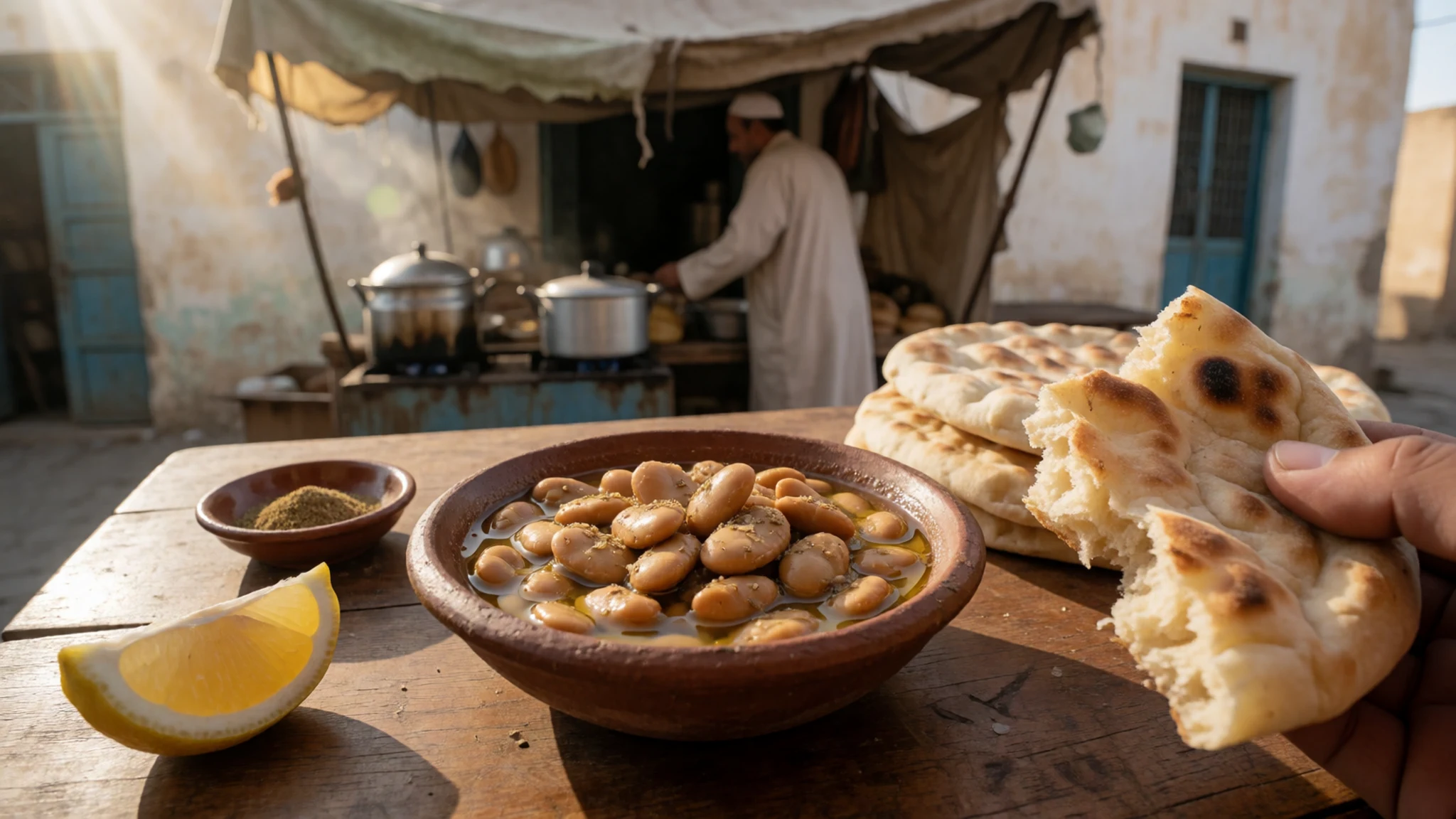
- Ta'amiya — Street stalls in El Balyana
Ta'amiya, Egypt's fava-bean falafel, is green inside from herbs and crisp outside. It is eaten in bread with salad and tahini, and works as a quick lunch. Try it from a street stall or sandwich counter in El Balyana town.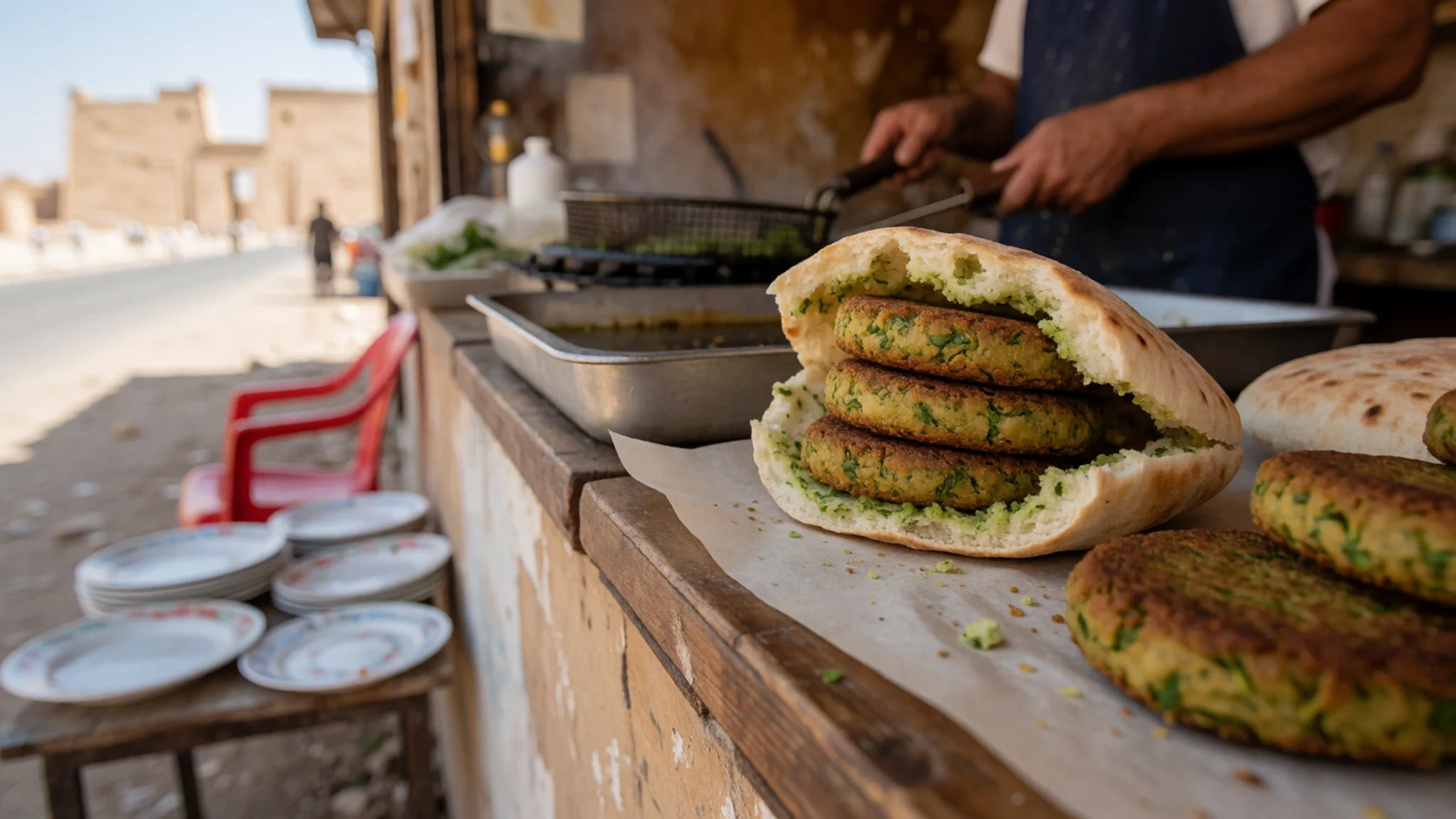
- Aish baladi — Village bakeries around Abydos
Aish baladi is the everyday wholemeal flatbread of Egypt, baked puffed and slightly chewy, and used as plate, spoon and wrapper. In villages around Abydos it is often baked fresh in the morning at small neighbourhood bakeries. Buy it warm and eat it with cheese or beans.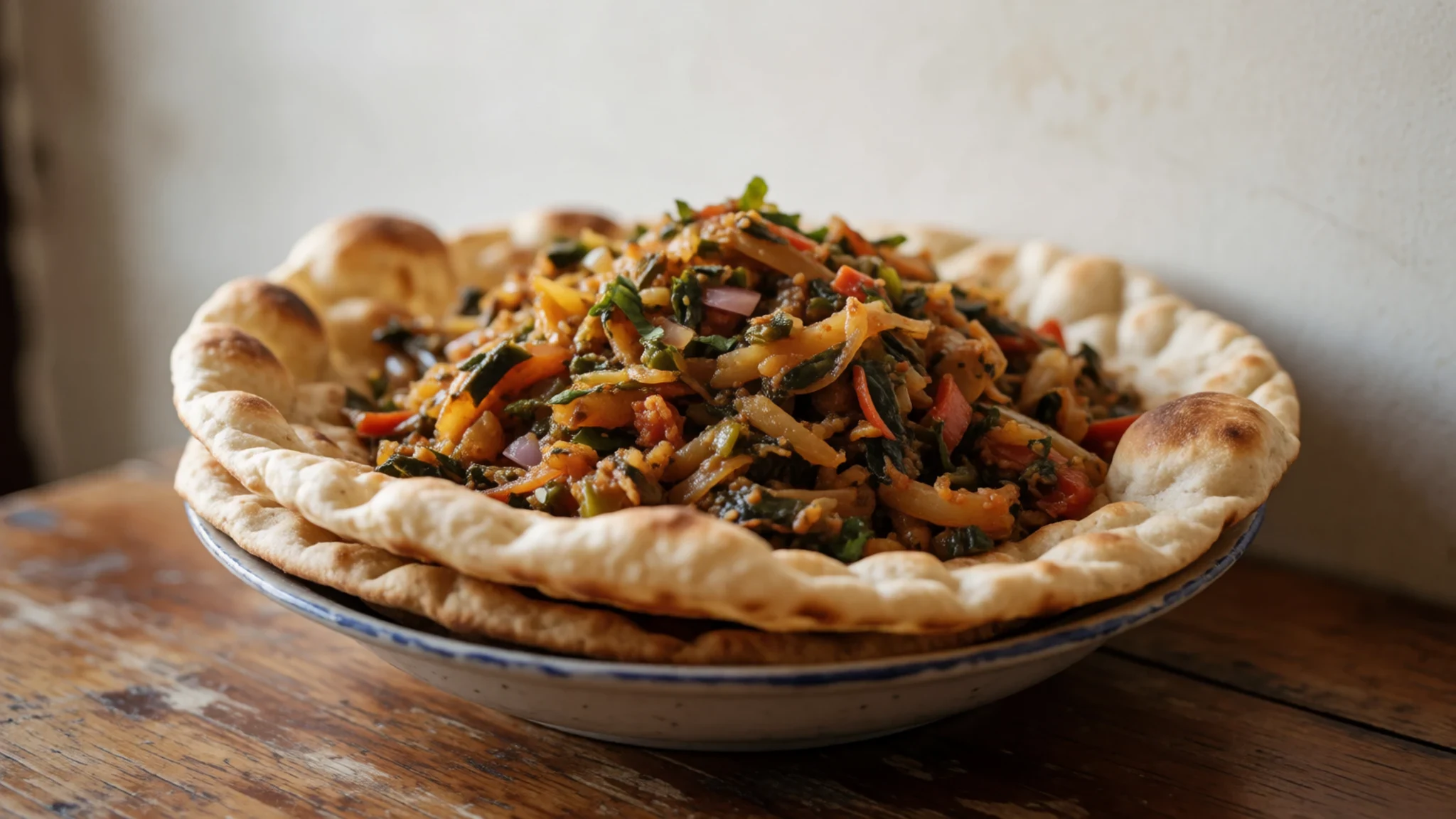
- Hamam mahshi — Local grill eateries in town
Hamam mahshi is pigeon stuffed with rice or freekeh and grilled or roasted, a celebratory dish in Upper Egypt. It is usually served at local grill restaurants and family-run eateries rather than at tourist stops, so ask where townspeople eat.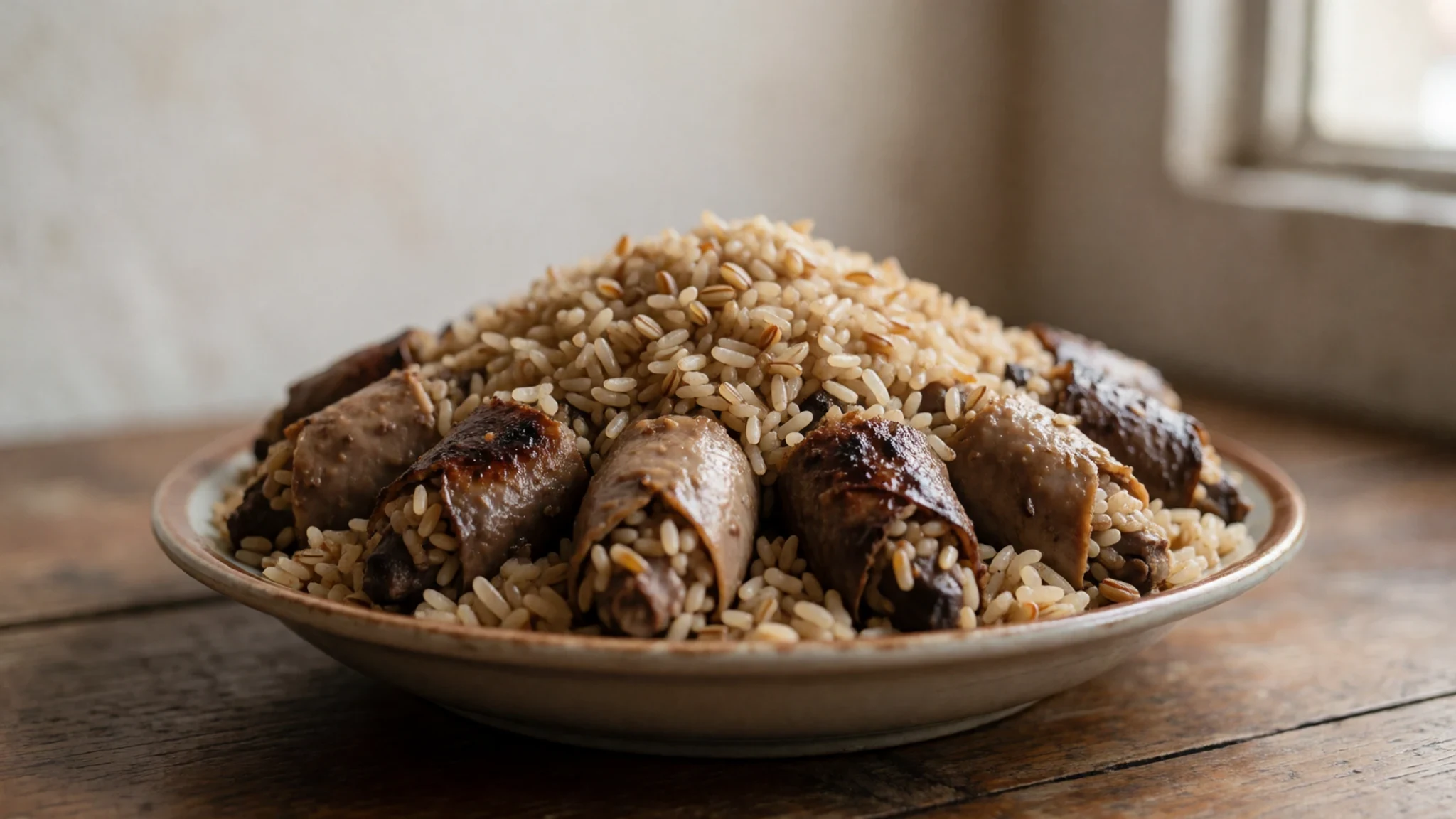
- Shai and karkade — Cafés on the square facing the temple
Shai, strong and often sweet black tea served in a glass, is the drink of every pause. The cafés on the square facing the temple are the natural place to sit with one after the visit, or try karkade, a hot or cold hibiscus infusion, instead.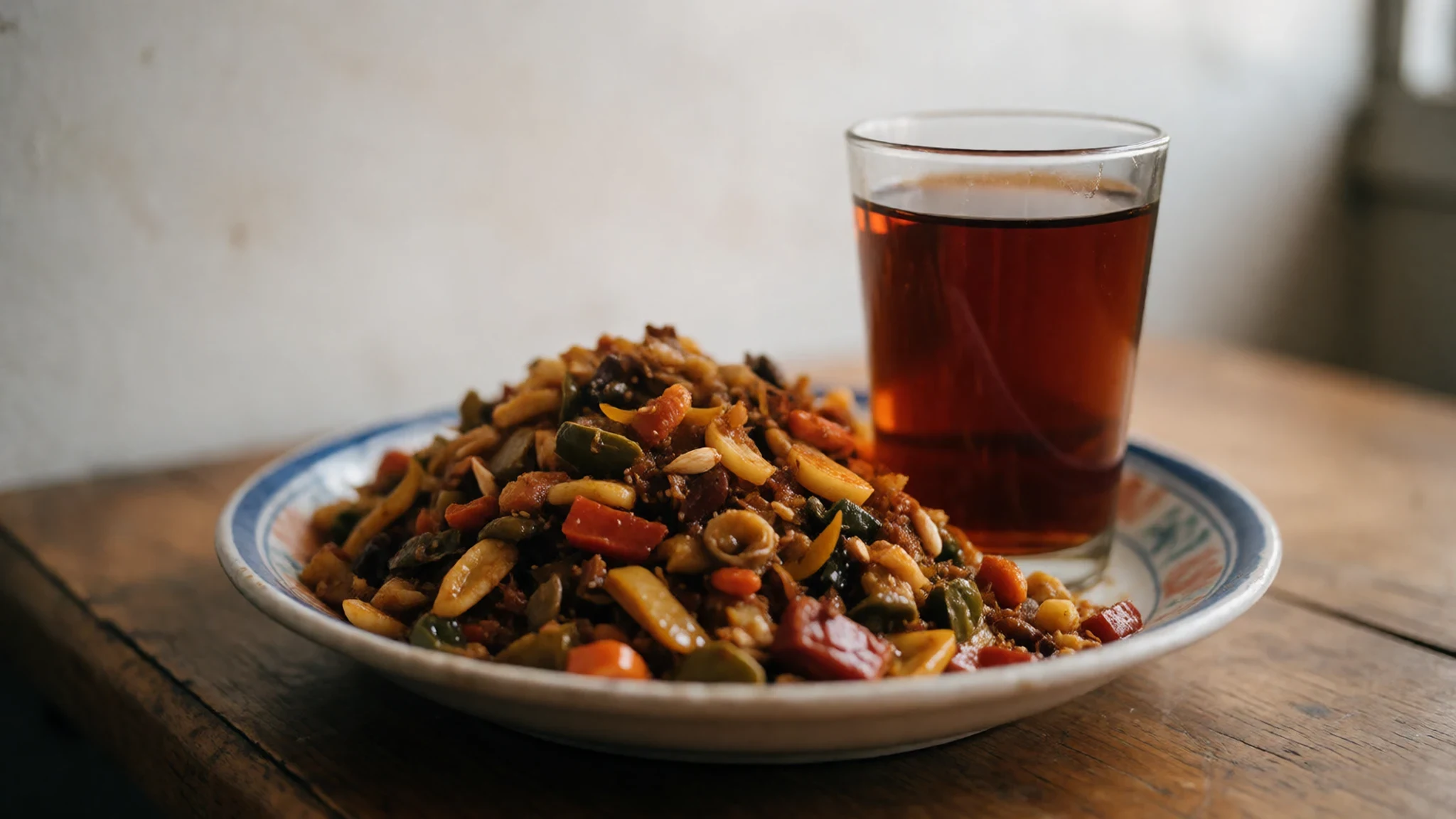
Plan it
Best time. November to March, when days in Upper Egypt are warm rather than punishing and morning light is soft for the reliefs. Summer is very hot with little shade between monuments, so go at opening time if travelling then.
How long. 1
Getting there. Luxor is the usual base, with its own airport. From Luxor, take a train north to the station at al-Balyana, then a police-escorted taxi or the tourist police to the temples (about 11 km from the Nile). Check train times locally and confirm the return arrangement before leaving the site.
Budget. low
Tips
- Check current conditions and police arrangements before going; access to the site can change and visits are often escorted
- Carry small-denomination notes for taxi fares, as drivers rarely have change
- Start early to beat the heat and fit in both the Seti I temple and the desert sites
- Bring water, a hat and sun protection, as shade is scarce between monuments
- Check the official antiquities sources for opening hours and ticket details before travelling
Etiquette
- Dress modestly, with shoulders and knees covered
- Ask before photographing guardians, police or villagers
- Do not touch the painted reliefs
Nearby
Sources
- Wikidata Q192268 (CC0)
- Wikipedia: Abydos, Egypt (rev 1383125244) (CC BY-SA 4.0)
- Wikivoyage: Abydos (rev 5062383) (CC BY-SA 4.0)
- Photo: Façade, Temple of Seti I (Roland Unger) (CC BY-SA 1.0)
- Photo: Khasekhemwy Monument (II) (Institute for the Study of the Ancient World) (CC BY 2.5)
- Photo: Enceinte de Khasekhemouy (Soutekh67) (CC BY-SA 4.0)
- Photo: Temple of Seti I, Abydos (Steve F-E-Cameron) (CC BY 3.0)
- Photo: Journey of the dead to Abydos (One dead president, David Liam Moran) (CC BY-SA 2.5)
- Photo: Temple of Osiris at Abydos (Steve F-E-Cameron) (CC BY 3.0)
- Photo: Sanctuary of Amun-Re, Seti I temple (Olaf Tausch) (CC BY 3.0)
- Photo: Osireion, view to the north (Roland Unger) (CC BY-SA 1.0)


