Amarna
Amarna, Egypt
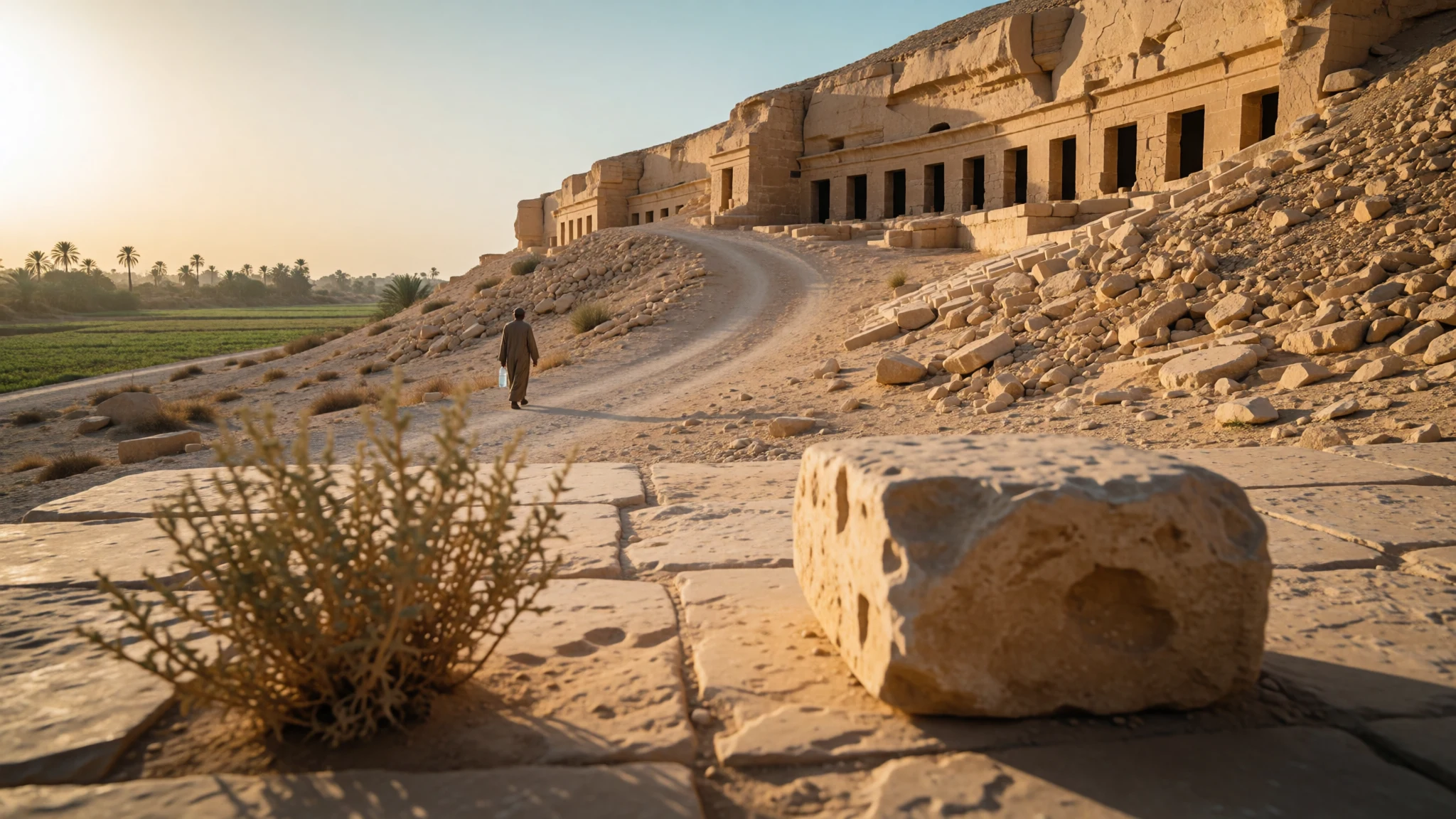
Amarna is a short-lived pharaonic capital left empty in the desert, where a king's religious experiment can be walked through in half a day.
The place
Amarna is an archaeological site on the east bank of the Nile in Egypt's Minya province, at about 195 metres above sea level. Its ancient name was Akhetaten, and it was built as a capital from scratch around 1353 BCE according to the facts block. Nothing here is a standing monument in the Luxor sense. What remains is a wide, pale crescent of desert between river fields and a ring of cliffs, scattered with foundations, low walls and rock-cut tombs.
The nearest big city is al-Minya, to the north, and Cairo lies a long road beyond that. The site is a little far from everything, which is part of its character: quiet, dry and open. Villages sit along the edge of the cultivation, with el-Till in the north and el-Hagg Qandil in the south, and the town of Deir Mawas faces the site from the opposite bank.
The ruins are spread over many kilometres, so the visit is a series of short stops rather than one walk. Northern tombs, a palace, temple foundations and a workers' village each sit in a different pocket of the plain. Much of what archaeologists know comes from excavation rather than from anything visible above ground, and a Cambridge University team has dug here almost every year since 1982. Expect space, silence, sun and very few other visitors. Shade is scarce, and a good imagination helps, because the city itself is mostly outlines in the sand.
Its story
Amarna exists because of one pharaoh's decision. Akhenaten, who ruled in the late Eighteenth Dynasty, turned away from the long-established gods of Egypt and promoted the worship of the Aten, the sun's disc. To give the new faith a home he founded a capital on virgin ground, far from the temples of Thebes, and named it Akhetaten, which can be read as the horizon of the Aten. Boundary stelae were cut into the cliffs to mark the city's limits, and a few are still there.
The city grew quickly. Palaces, temples open to the sky, villas for officials and a village for the craftsmen who carved the tombs all rose within a few years. Court artists developed a distinctive style, with elongated figures and relaxed, intimate family scenes of the king, his queen Nefertiti and their daughters under the rays of the sun.
Then it ended almost as fast. Akhenaten died in 1332 BCE by the dates in the sources, and the capital was abandoned soon afterwards. The court went back to the old gods and old cities, and later generations remembered the king as a heretic. Mud-brick houses decayed, stone was carried off for reuse, and the desert took the rest. Because the city was occupied for so short a time, archaeologists treat it as an unusually clear snapshot of one moment in ancient Egyptian life. Activity in the area continued in later periods, up to Roman times, but the city's story is essentially that single brief reign.
What to see
- The Northern Tombs — Cliffs east of el-Till, north Amarna
A group of rock-cut tombs in the cliffs above el-Till, made for officials of Akhenaten's court. Their walls carry scenes of the king and queen worshipping the Aten. This is the usual first stop and the easiest to reach, with a small kiosk and toilets at the foot of the slope.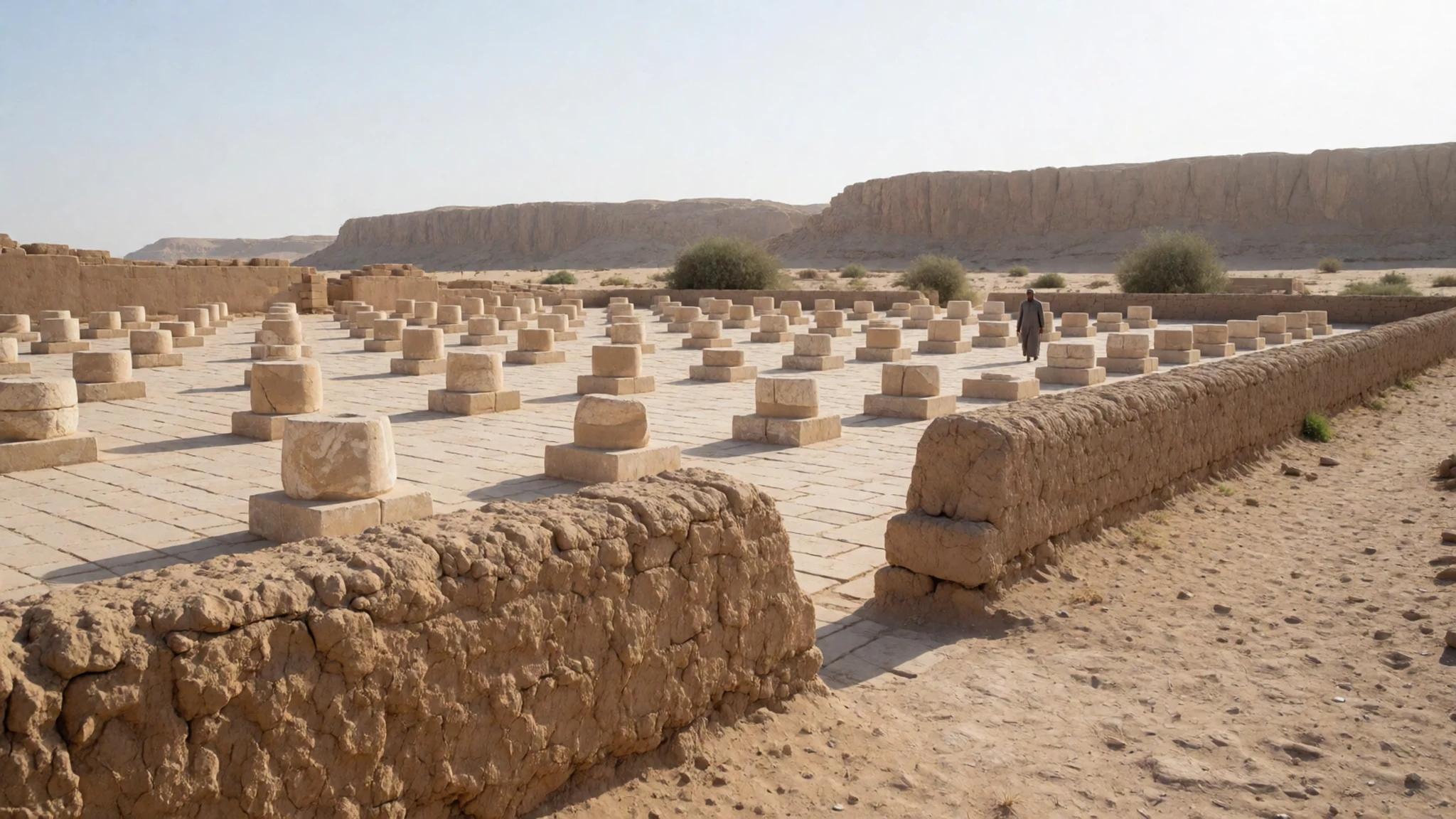
- The Northern Palace — North Amarna, near el-Till
A palace complex on the northern edge of the city, usually visited on the way back to the ferry. The remains are foundations and low walls rather than rooms, so it rewards a little reading beforehand. It gives a sense of how large and open the royal quarters once were.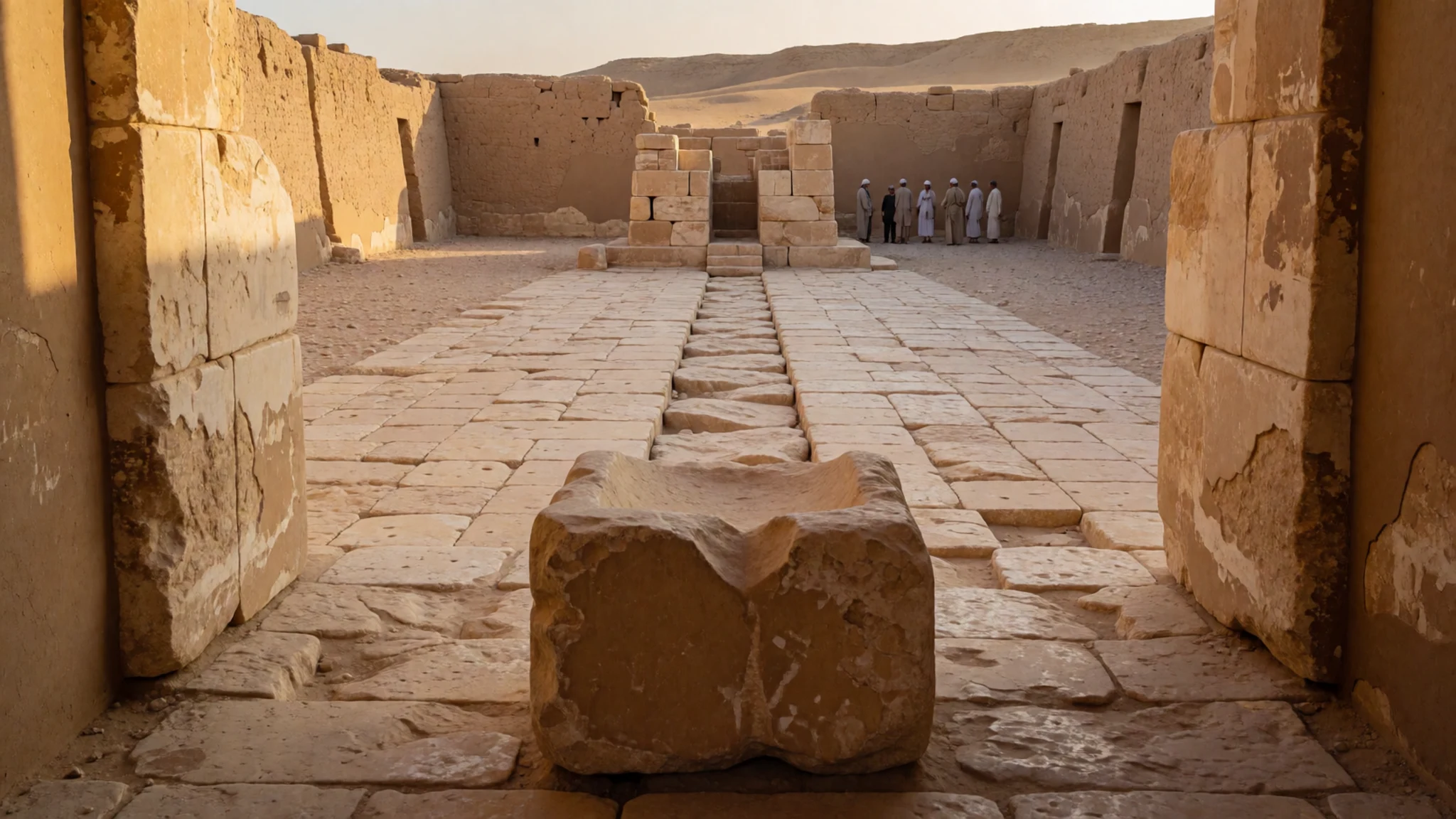
- The Great Aten Temple — Central city
The main temple of the sun god in the central city, laid out as an open-air sanctuary so that the Aten's light could fall everywhere. Little rises above the sand today, but the footprint is clear. Visiting it means taking a longer circuit that includes the central city.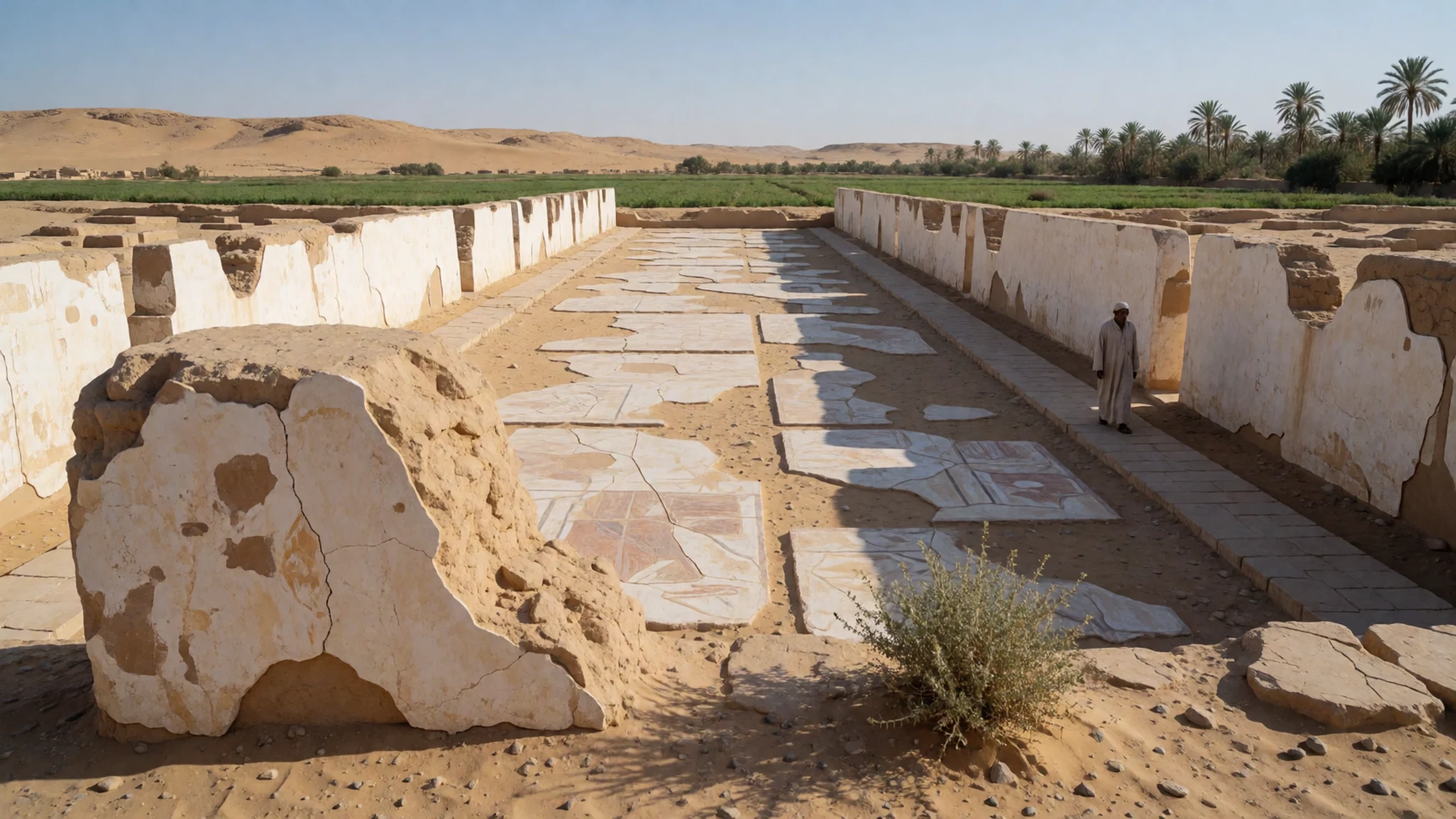
- The Small Aten Temple — Central city
A smaller temple of the Aten close to the Great Temple, with surviving foundations and stone elements that hint at its design. It is often combined with the central city detour. Bring patience and a photograph of a reconstruction, since the ground plan is what you see.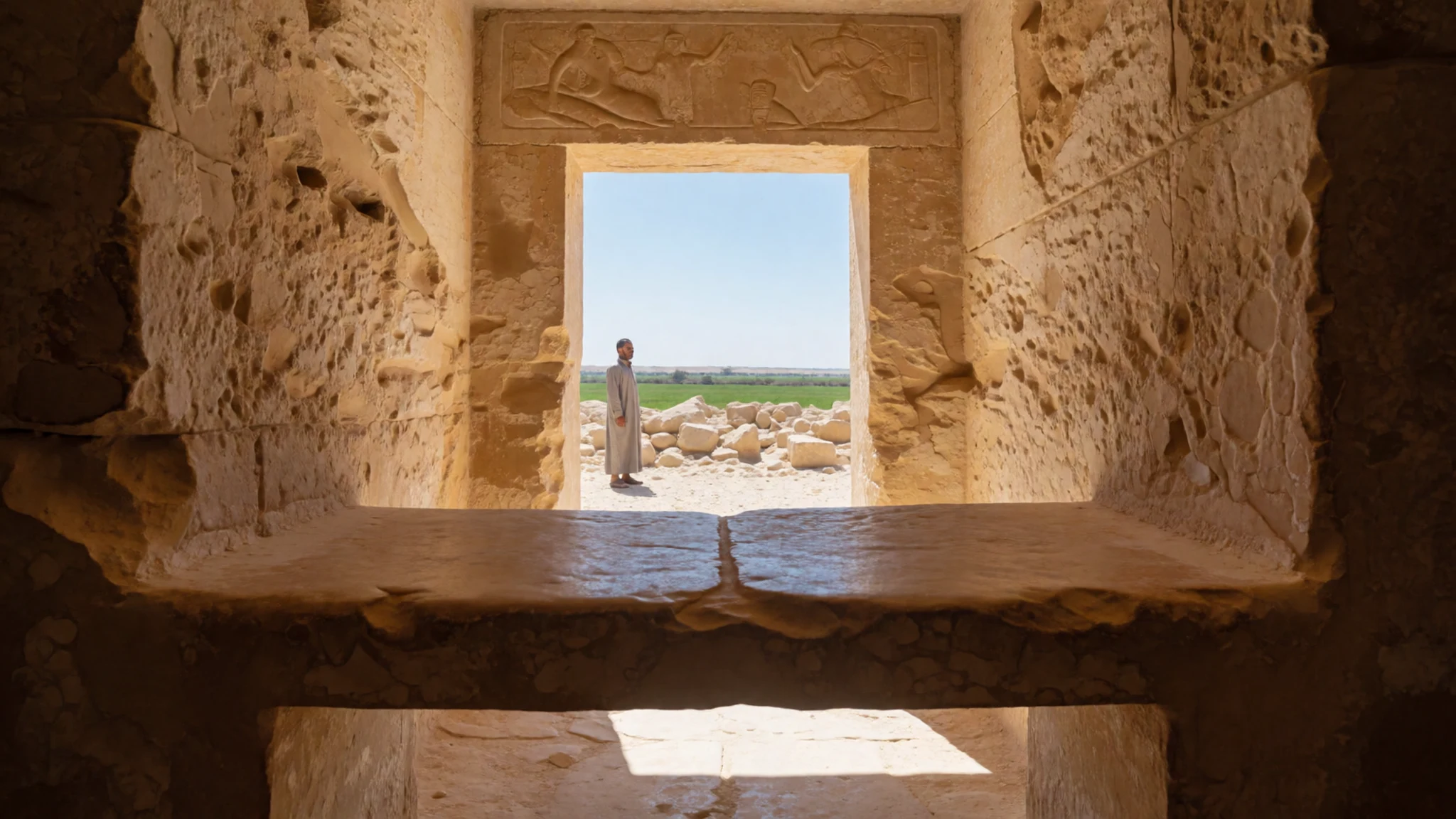
- The Southern Tombs — South Amarna
A second cluster of cliff tombs at the southern end of the site, reached by a long track beside the fields that passes through much of the ancient city. Plan most of a day for this trip. The route is as interesting as the tombs, and few visitors make it.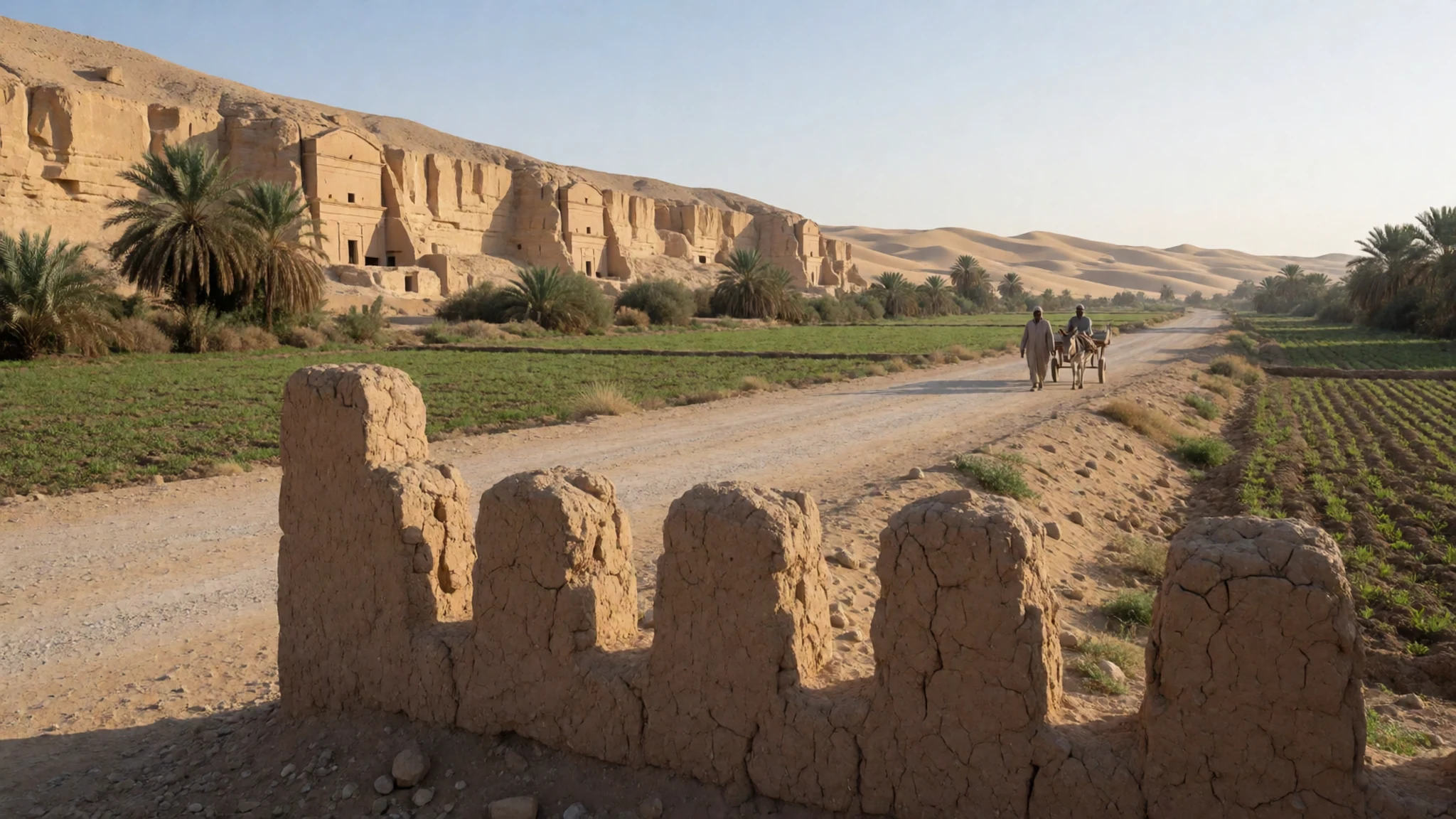
- The Royal Tomb of Akhenaten — Royal Wadi, east of the city
The tomb prepared for the king himself, in a dry valley a drive beyond the Northern Tombs along an extension of the asphalt road. The burial chamber is carved into the rock and is worth the extra trip for the sense of remoteness as much as for the decoration.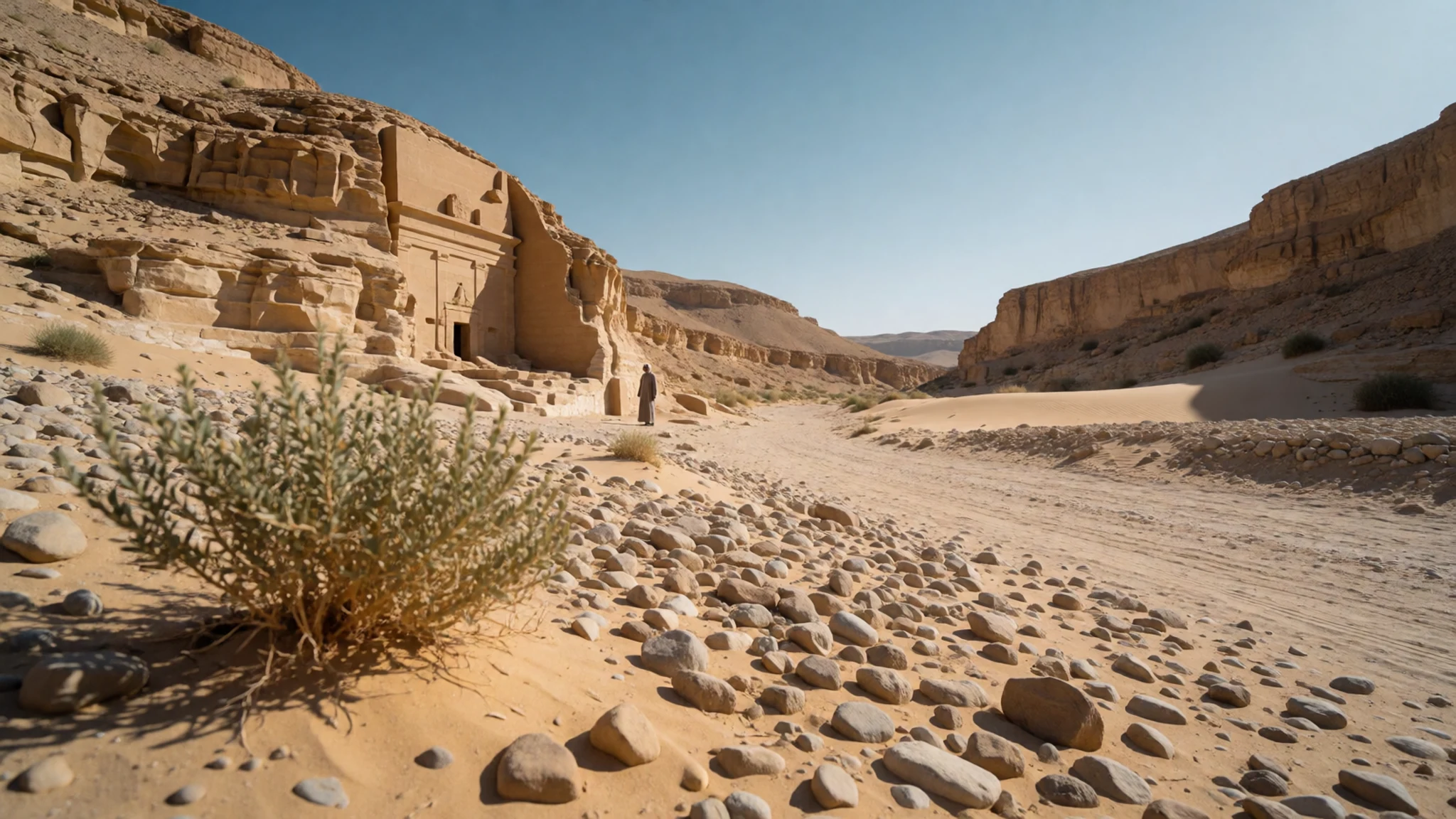
Culture
Amarna's culture is the story of a religious revolution that did not last. Akhenaten's devotion to the Aten replaced a crowded pantheon with a single sun disc, and art followed the idea. Relief scenes show the royal family in relaxed poses, bathed in rays that end in tiny hands. Court sculptors worked in a style that is instantly recognisable in museums, with long faces, soft bodies and a sense of movement.
The city also shows ordinary working life. The workmen's village housed the people who built and decorated the tombs of the elite, and it can be compared to the better-known workers' settlement at Deir el-Medina near Luxor. Scribes, stonecutters and painters lived here, and fragments of tomb relief show scribes bent over their work.
After the king's death the city was abandoned and his reign was later treated as a heresy, so Amarna was deliberately left behind. Today the site belongs to the villages that surround it. Local people farm the strip along the river and run the ferries and vehicles that visitors rely on, and the Tourist Police based at the el-Till ferry accompany foreign visitors around the site. Their presence is part of how the visit works, so treat it as routine rather than alarming.
Stay with your escort, follow the route you are given, and do not wander onto unexcavated ground, climb on ancient walls or pick up fragments from the surface.
What to wear
Amarna's ancient dress is known from tomb reliefs and statues. Linen was the fabric of the age, woven fine and sometimes pleated, and the court is shown in long, translucent garments, broad collars and elaborate wigs or crowns. Ordinary workers wore simple linen kilts. This was daily dress in a hot climate, and it was not tied to any one festival.
In the villages around the site today, men commonly wear the galabeya, a long loose cotton robe, often with a head cloth against the sun. Women in rural Minya usually wear long dresses or robes with a headscarf. Town clothes in Minya and Mallawi are a mix of modest everyday Western and traditional styles.
Visitors should dress for strong sun and a conservative region. Loose, light cotton or linen trousers or long skirts, with shoulders and upper arms covered, are comfortable and respectful in the villages. A wide-brimmed hat, sunglasses and a scarf for dust are useful. Wear closed, sturdy shoes with good grip, because the ground is sandy, stony and uneven, and the tomb slopes can be loose underfoot. There is almost no shade on the plain, so cover up rather than rely on sunscreen alone. Evenings in the cooler months can be chilly, so a light layer is worth packing.
What to eat
- Ful medames — Small breakfast eateries in Minya and Mallawi
Slow-cooked fava beans mashed with oil, lemon and cumin, eaten with flatbread. It is the standard Egyptian breakfast and is easy to find at simple morning eateries in Minya and Mallawi before heading to the site.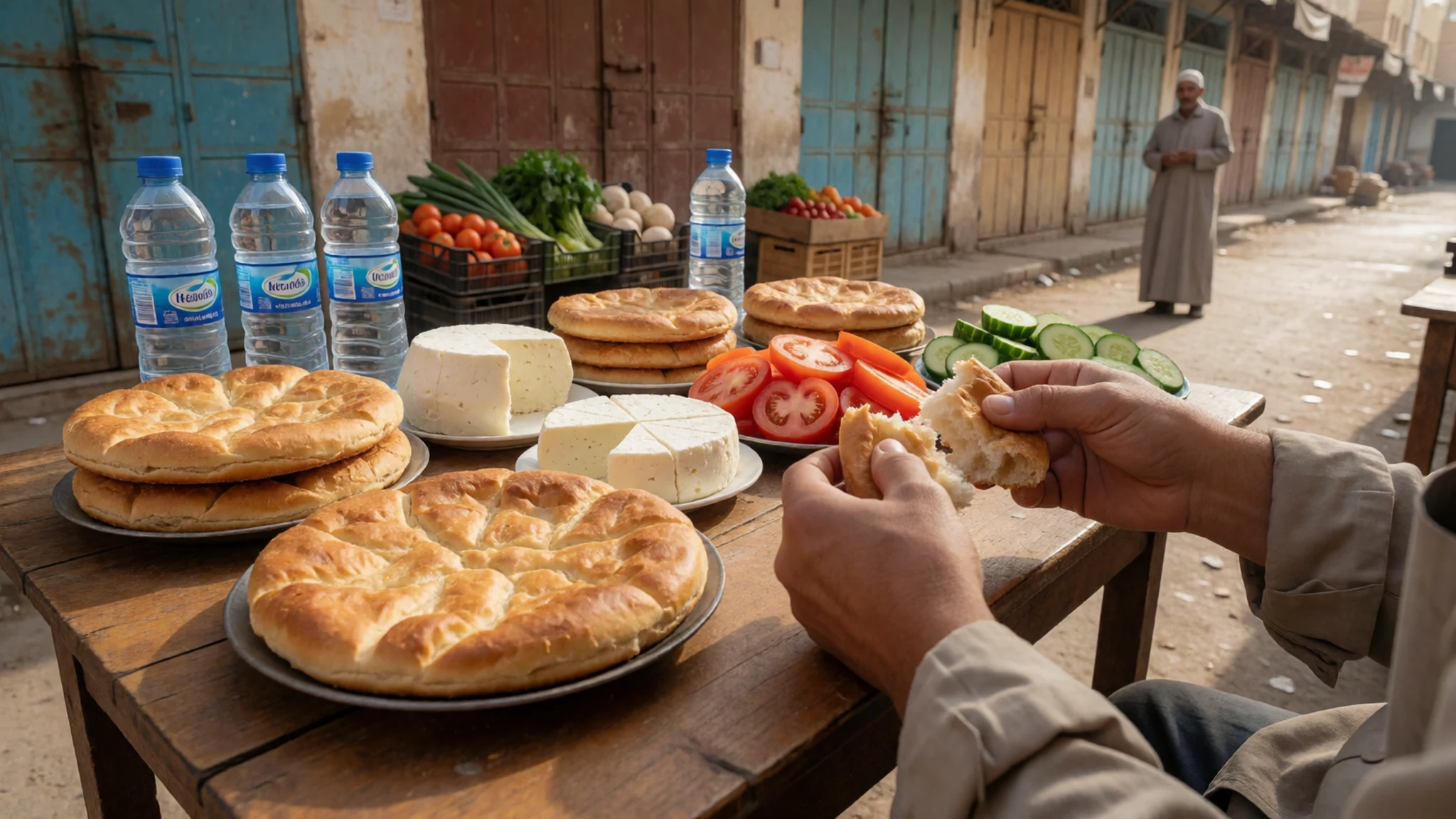
- Ta'amiya — Street stalls and sandwich counters in Minya
Egypt's version of falafel, made with fava beans rather than chickpeas, fried until green inside and crisp outside. It is usually served in bread with salad and tahini, and works as a portable lunch for a day among the ruins.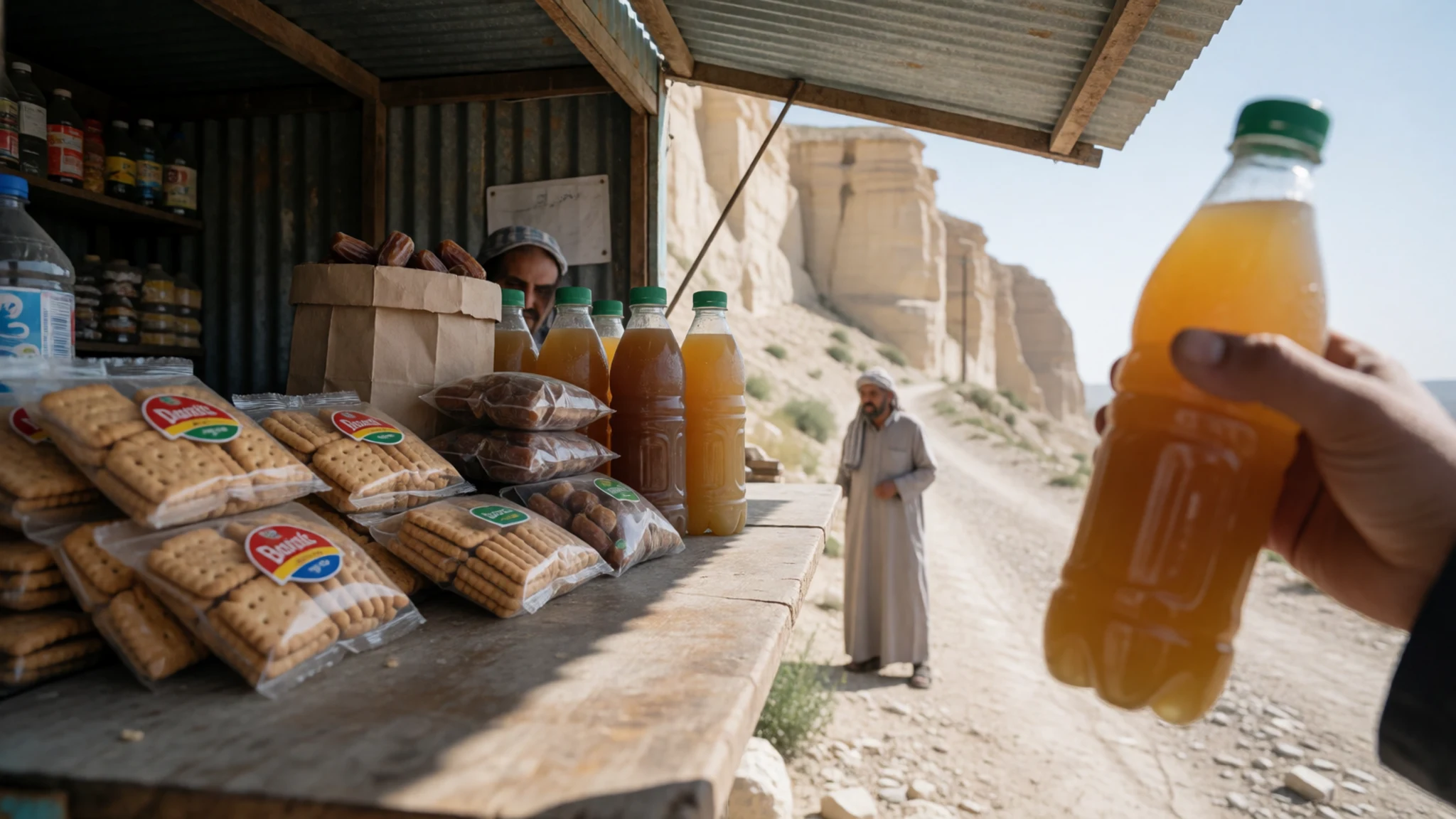
- Koshari — Koshari eateries in Minya town centre
A bowl of rice, lentils, macaroni and chickpeas topped with spiced tomato sauce and crisp fried onions. It is cheap, filling and vegetarian, and is sold at dedicated koshari eateries in most Egyptian towns.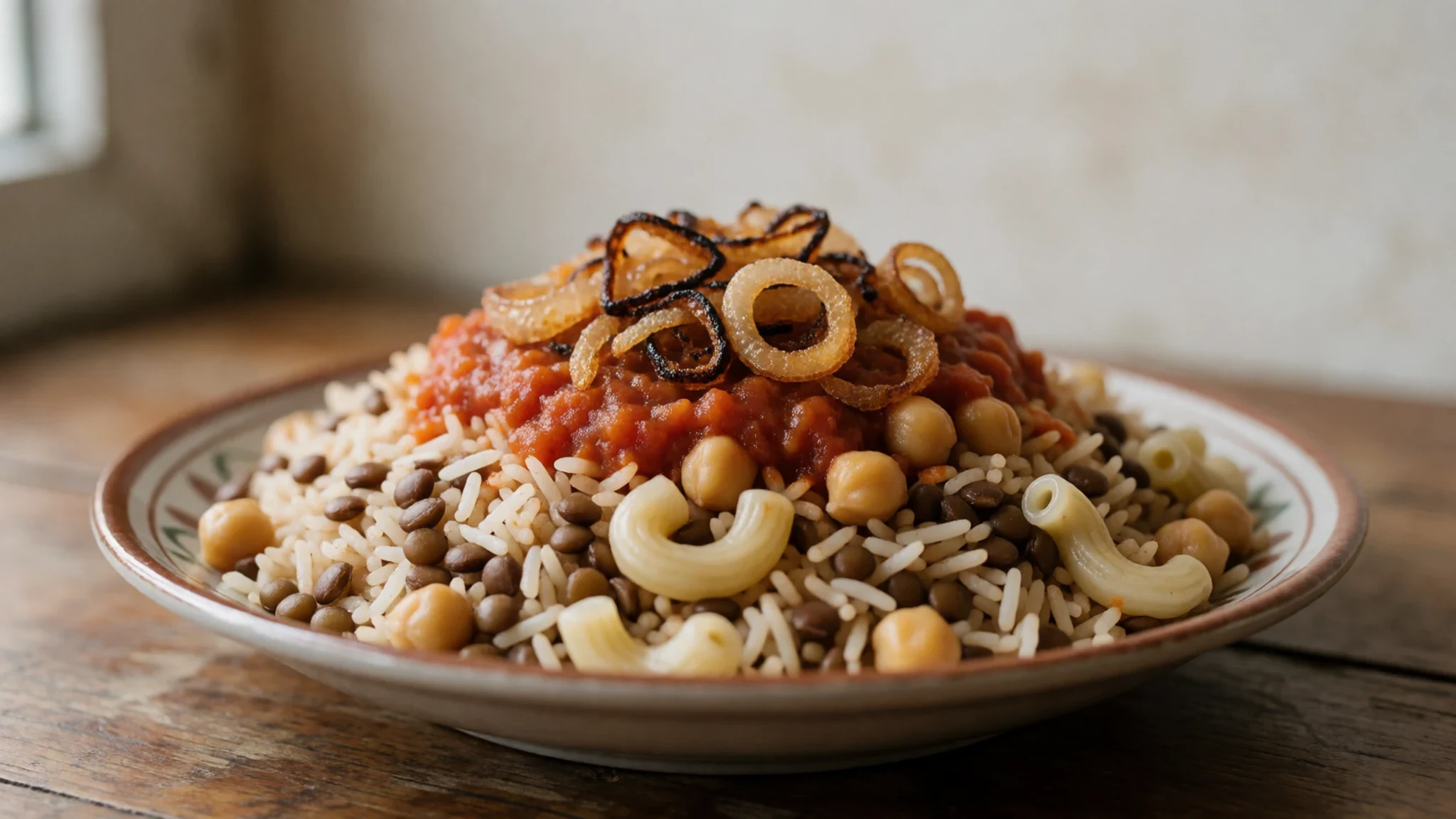
- Egyptian flatbread (aish baladi) — Neighbourhood bakeries and village shops
Wholemeal flatbread baked in village ovens, soft and slightly chewy. It accompanies almost every meal and makes a practical picnic base with cheese, olives or tomatoes bought from local shops.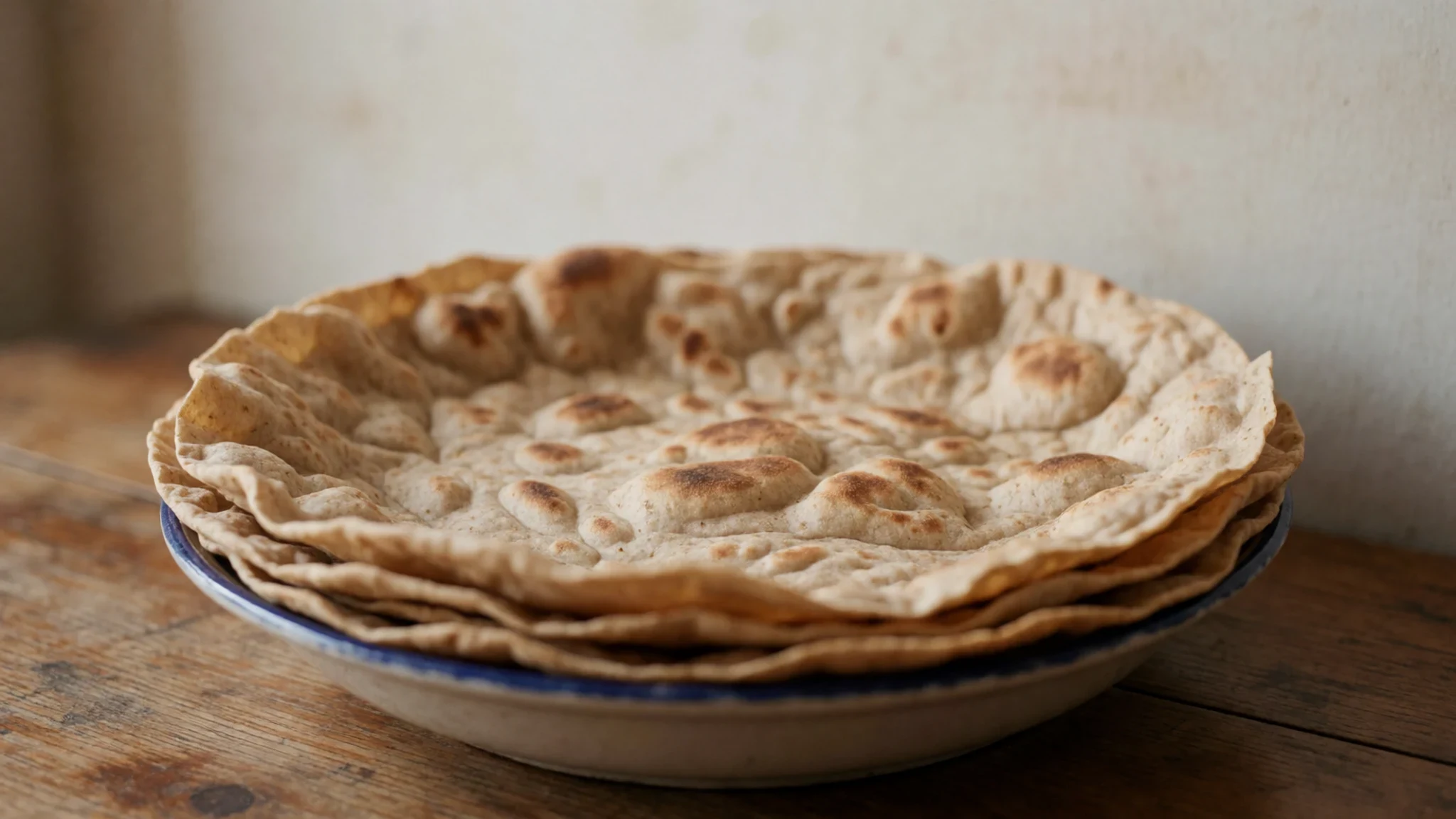
- Tea and fresh sugarcane juice — Tea stalls and juice carts in towns near the ferry
Strong sweet tea is offered everywhere, while sugarcane juice is pressed to order from carts. Both are welcome in the heat, though check that ice and water are from a trustworthy source.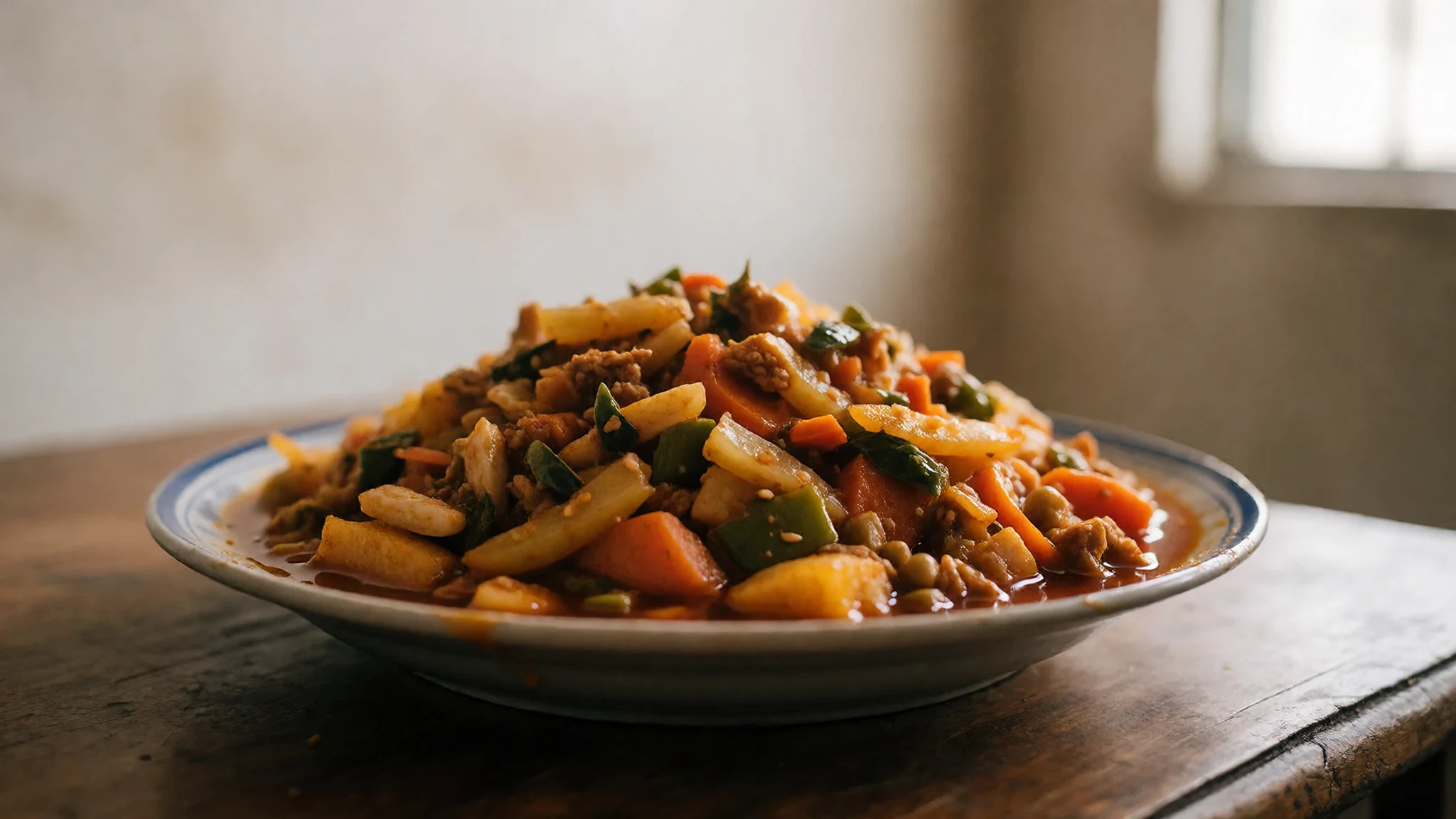
Plan it
Best time. October to March, when days are warm rather than fierce. The site is open desert with little shade, so summer visits, especially from June to August, are very hot and best avoided.
How long. 1–2
Getting there. Fly into Cairo, then travel south by road or rail to Minya, or on to Mallawi, which has a railway station. Road and rail links reach the west bank of the Nile only, so the last leg is a tourist ferry to el-Till, where vehicles can be hired.
Budget. low
Tips
- Allow half a day for the Northern Tombs, the Northern Palace and a central city detour, and most of a day to add the Southern Tombs
- Bring water, food and some toilet tissue, as facilities at the site are limited to a small kiosk
- Stay in Minya or Mallawi, because there is no accommodation at Amarna itself
- Use the el-Till ferry, where Tourist Police meet foreign visitors, and avoid the el-Hagg Qandil crossing
- Start early to beat the heat and the midday glare
Etiquette
- Stay with your police escort and follow the agreed route
- Ask before photographing people in the villages
- Do not climb on walls or remove anything from the ground
Nearby
Sources
- Wikidata Q5736 (CC0)
- Wikipedia: Amarna (CC BY-SA 4.0)
- Wikivoyage: Amarna (CC BY-SA 4.0)
- Small Temple of the Aten, Akhetaten (en:User:Markh) (CC BY 3.0)
- Burial Chamber of Akhenaten at Amarna (Aidan McRae Thomson) (CC BY-SA 2.0)

