Abu Mena
Abu Mena, Egypt
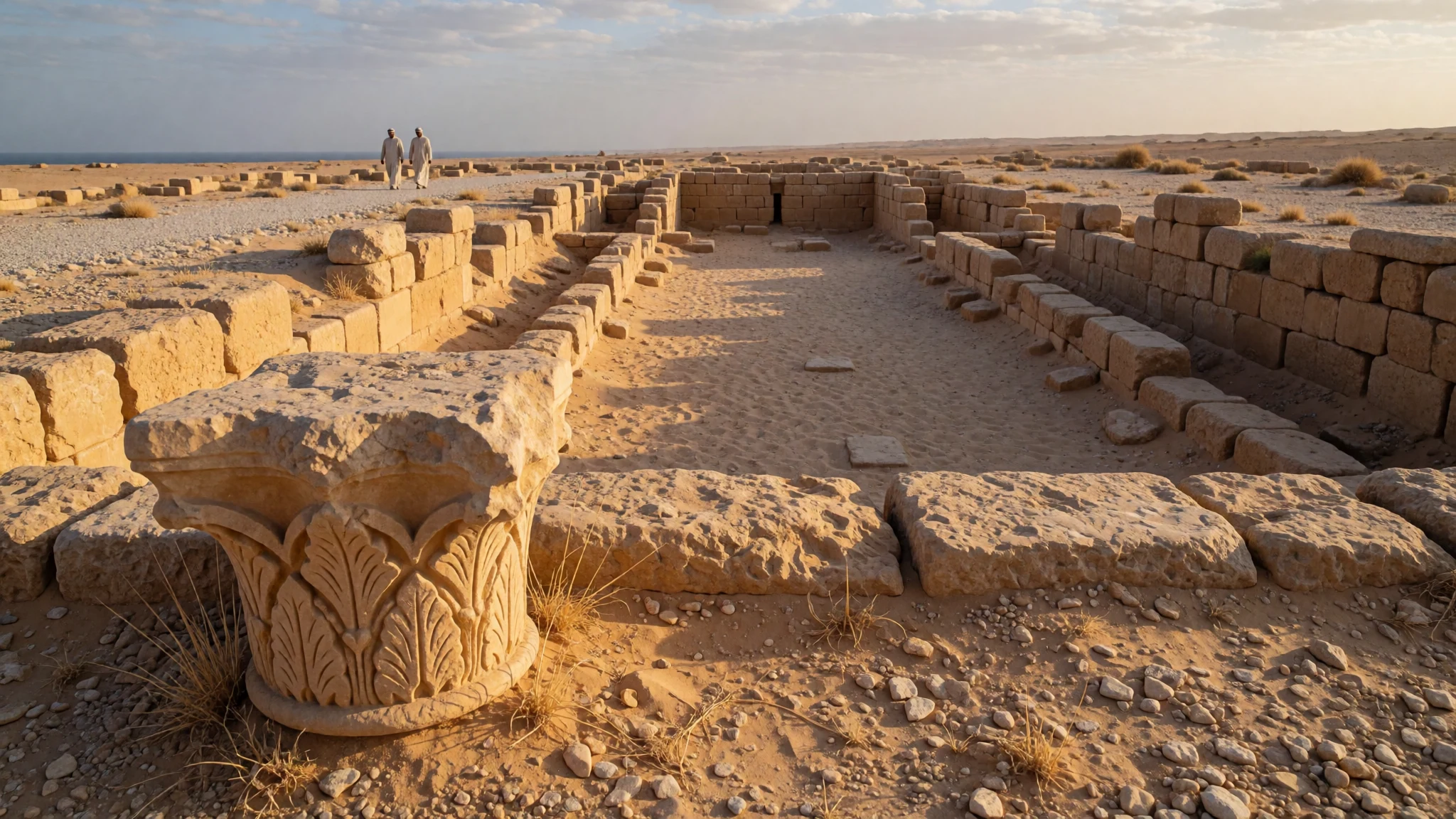
Abu Mena is Late Antique Egypt’s pilgrimage layers in one compact place: sparse ruins, living devotion, and a real sense of sacred geography.
The place
Abu Mena (also spelt Abu Mina; Arabic: أبو مينا; Coptic: ⲁⲃⲃⲁ ⲙⲏⲛⲁ) is a town and monastery complex tied to Christian pilgrimage in Late Antique Egypt. Today, what draws most visitors is the site itself: there are very few standing buildings, but the ground tells the story. Foundations for major structures—especially the great basilica—are still legible as outlines, foundations, and raised traces across the archaeological area.
It’s located in Egypt’s coastal region area, about 50 km (31 mi) southwest of Alexandria and close to the New Borg El Arab city. That geography matters because it changes the “feel” of the place: it’s not an isolated desert fantasy; you can sense how the pilgrimage route would have connected to a larger world, with Alexandria nearby as a historic centre of gravity.
The site’s condition is part of the visit. Agricultural activity in the surrounding area has pushed up the water table, and over time that has destabilised parts of the complex. You’ll notice the emphasis on protecting structures—sometimes literally by dealing with the ground under buildings—because erosion and collapse aren’t distant threats here, they’re visible processes.
Crowds are usually quieter than Egypt’s headline monuments, but Abu Mena can still feel busy if the pilgrimage season brings coach groups and coordinated arrivals. Plan for bright sun, dusty paths, and the fact that “seeing” here often means reading the remains with imagination.
Best months are generally the cooler, drier parts of the year: January–February and November–December bring gentler temperatures, while March–April and October can also feel more comfortable for wandering among foundations, courtyards, and religious spaces within the same compound.
Its story
Abu Mena’s story begins with Menas of Alexandria, a martyr whose legend shaped how the pilgrimage landscape developed. In later accounts, Menas’s body was carried from Alexandria on a camel and taken into the desert beyond Lake Mareotis. The turning point in the tale is simple and memorable: at a certain spot the camel refused to go further, despite attempts to urge it along. That stubborn refusal was interpreted as a sign of divine will.
From there, the narrative moves into burial, forgetting, and rediscovery. Different versions describe how the tomb’s location became lost over time—until a local shepherd encountered miraculous signs and recognised the place. The Ethiopian Synaxarium describes healing that began with a sheep suffering from a scab and improved after contact with water near the shrine. The story then expands into a practice of taking dust from the sacred place, mixing it with water, and using it for healing.
Those elements—journey, refusal, lost-and-found tomb, healing connected to the shrine—are exactly the kind of threads that help explain why Abu Mena became a monastery complex and pilgrimage centre, even as centuries passed and the physical structures changed. In the ground today, that shift is tangible: the buildings may not stand the way they once did, but the site still carries a map of devotion.
Abu Mena also sits within modern heritage management. It was designated as a World Heritage Site in 1979 and later entered a “in danger” phase in 2001, before being removed from that danger list in 2025. As a visitor, that timeline isn’t just paperwork—it’s reflected in the ongoing struggle to keep foundations stable where water levels and sand affect what remains.
What to see
- Ruins across the archaeological grounds (foundations of major buildings) — Abu Mena archaeological complex
Abu Mena’s core experience is walking the outlines: foundations of major structures spread through the site even where walls no longer stand. It’s archaeology you read with your feet—courtyard shapes, basilica traces, and layered stonework.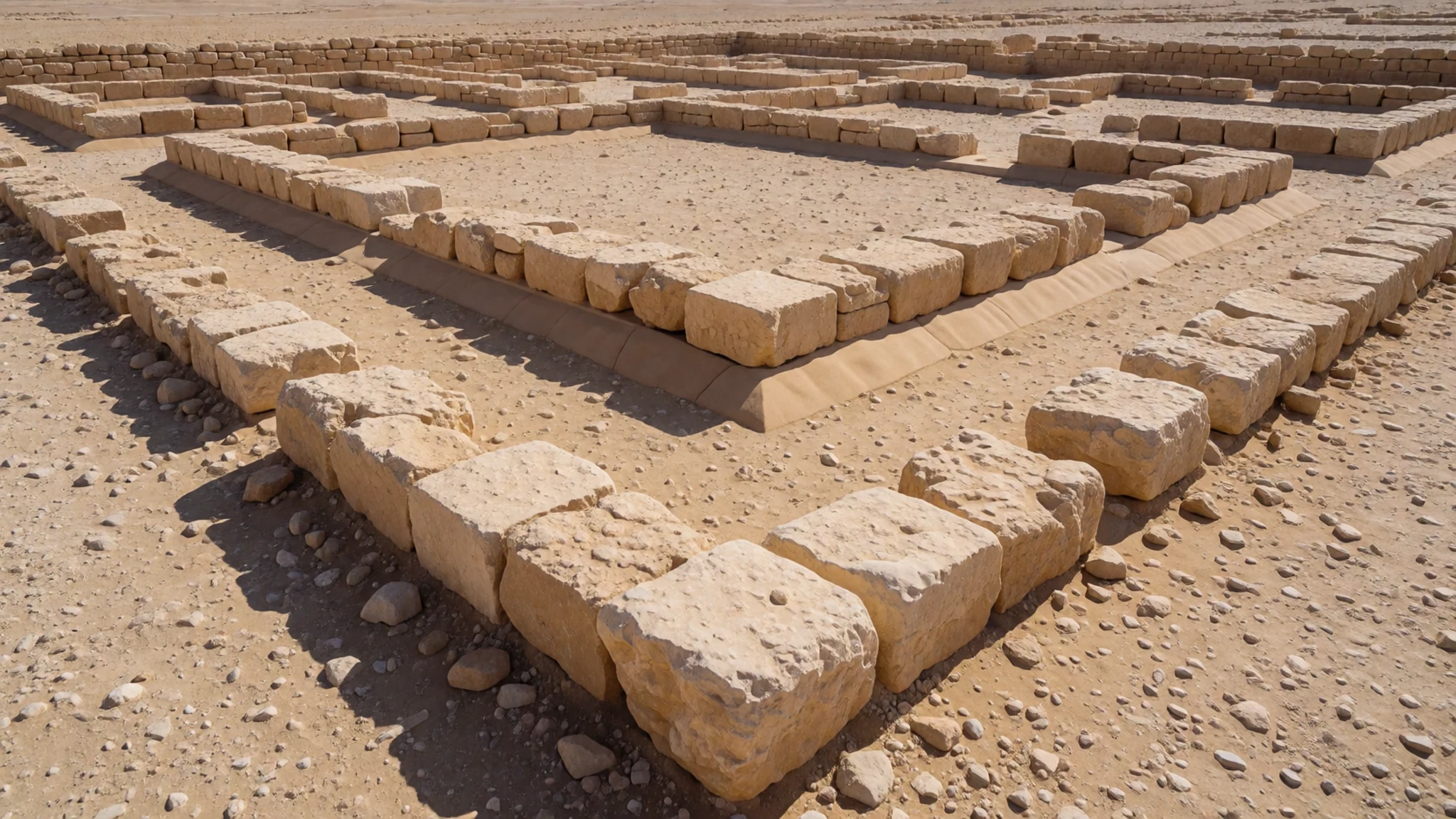
- Religious complex at Abu Mena (pilgrimage spaces) — Abu Mena monastery compound
Abu Mena includes active pilgrimage areas inside the wider monastic setting, so the visit isn’t only about ruins. The religious complex sits alongside the archaeological traces, keeping the site’s sacred purpose very present.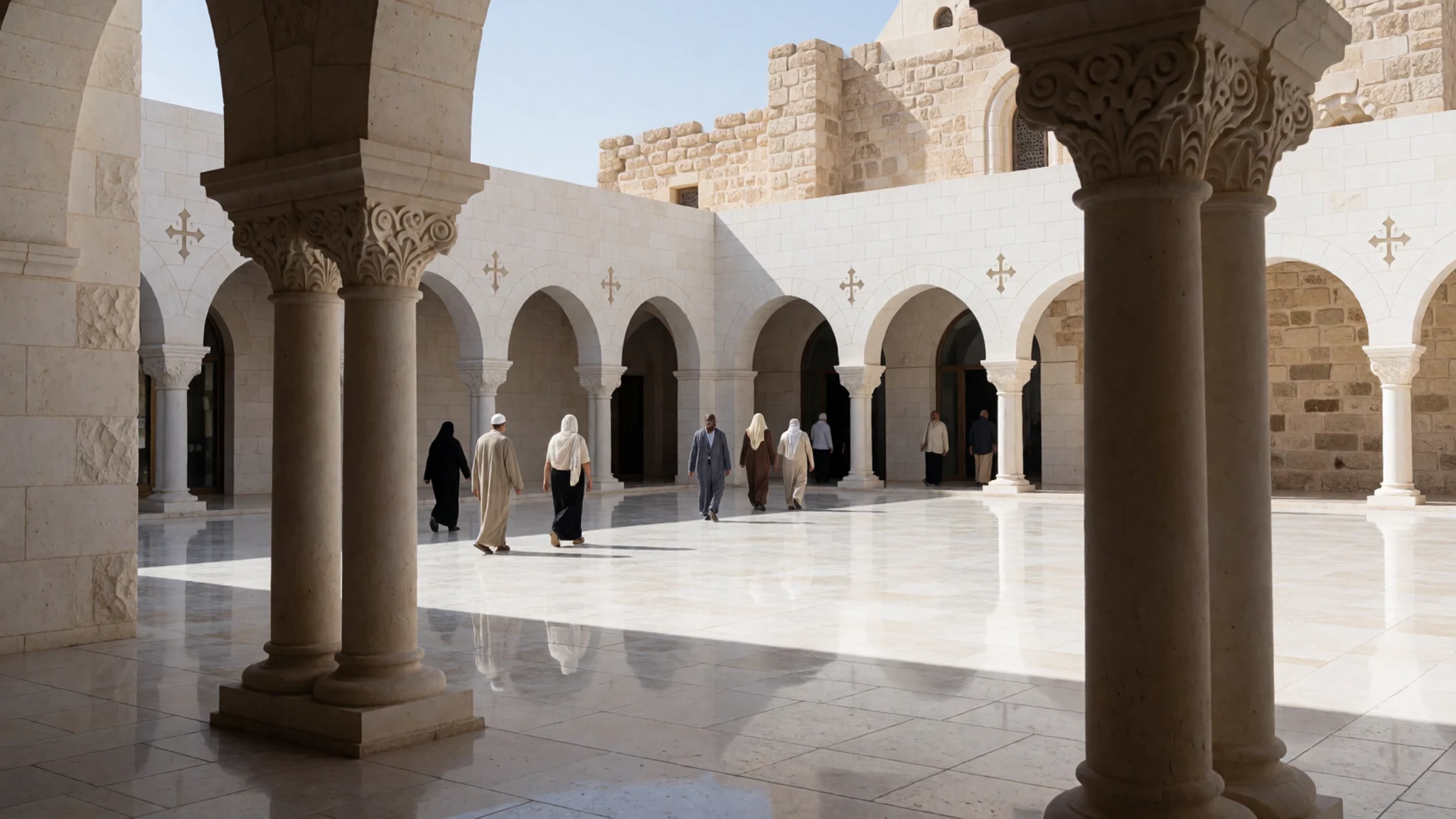
- Modern Monastery (Cathedral of Saint Menas) — Abu Mena monastery compound
Abu Mena has a modern monastic church presence linked to Saint Menas. It gives context to the older legends by keeping a living focus at the same site, even though much of the ancient fabric is gone.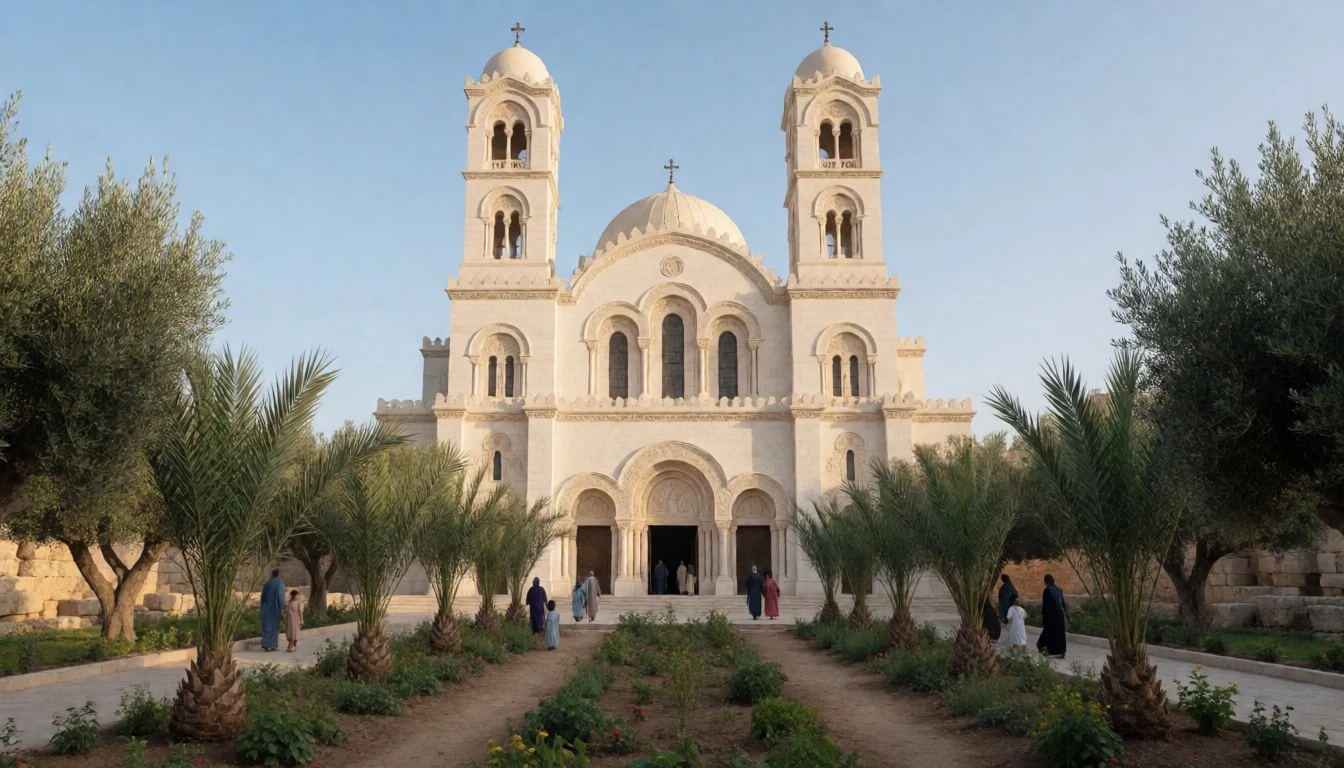
- Basilica of the crypt area (foundational remains) — Central basilica/crypt zone
The basilica and crypt area remains are among the most recognisable parts of Abu Mena’s footprint. Even where standing height is limited, the shape of the sacred layout is still clear enough to follow with care.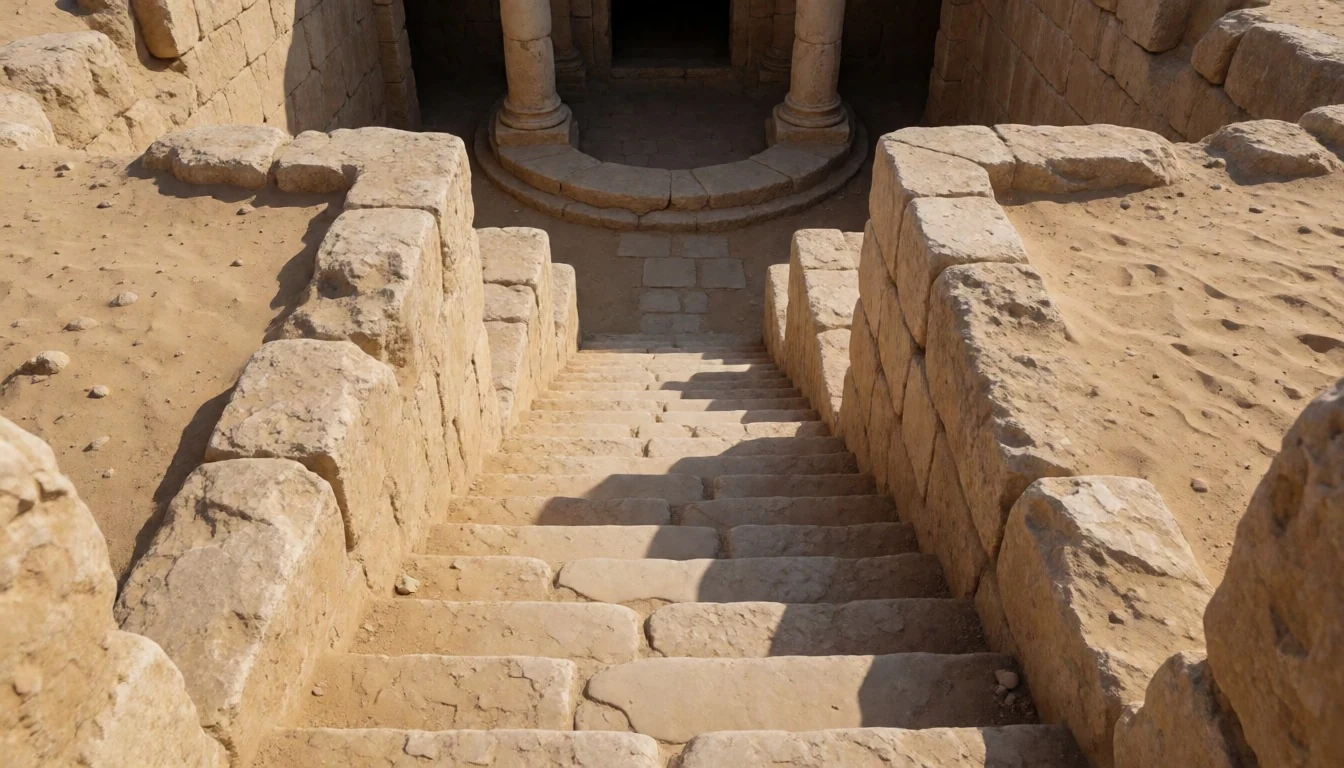
- Artifacts and on-site exhibition pieces — On-site visitor/archaeology areas
On-site displays and artefacts help bridge the gap between legend and material culture. They’re useful for understanding what the foundations represent and how daily religious life connected to the pilgrimage function.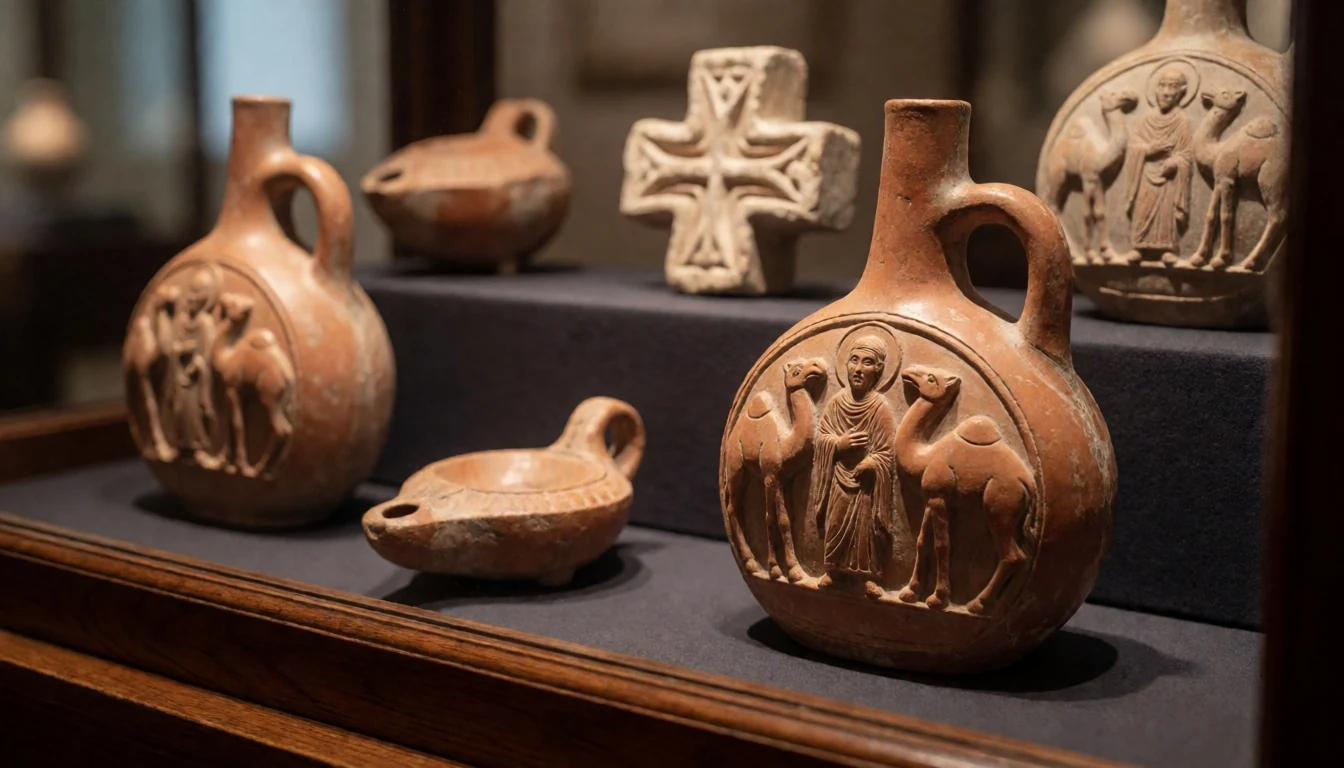
Culture
Abu Mena is a pilgrimage site as well as an archaeological area, and that mix shapes visitor behaviour. Because the ancient structures are largely foundation-level, people tend to slow down naturally—reading the ground, looking for alignments, and taking in how the religious narrative is anchored in place. That makes the atmosphere respectful, even when numbers rise.
The biggest practical “culture” point is modesty and noise. In pilgrimage zones, conversations should stay soft, and phone calls are best kept to a minimum. If the modern monastery spaces are open to visitors, dress matters: loose, non-revealing clothing is the norm in religious settings, and shoulders and knees are generally safer. Footwear is another simple factor—some paths are dusty and uneven, and you may need to be prepared for changes in entry rules near sacred thresholds.
If you want photos, be discreet and follow any on-site guidance, especially near clergy, worshippers, and active ritual areas.
Finally, remember that heritage protection is ongoing here. Foundations can be fragile, and areas may be cordoned or treated carefully. Staying on permitted routes is part of respecting both the living religious function and the vulnerable archaeology beneath.
Visitor etiquette: dress modestly for religious areas, keep voices low, and avoid photographing worshippers up close without permission.
What to wear
At Abu Mena, clothing is mainly about fitting the religious-and-archaeology mix. Traditional dress in the region is rooted in long fabrics—often cotton or linen for breathability—typically in modest, full-length silhouettes. In modern everyday life around Egypt, many people wear Western-style clothes, but the expectation of covering remains stronger near holy places.
For a visitor, practical clothing matters more than looking “traditional”. Plan for heat and sun in the warmer months and for cooler evenings when you visit in March–April or October–November. Lightweight long sleeves and trousers or a long skirt work well for comfort and modesty. A scarf is handy if entry rules or local customs call for covering shoulders.
Footwear should be solid and closed-toe: the grounds are archaeological and can be dusty or uneven. Avoid very delicate soles that slip on sand or grit. If the site or nearby religious spaces have entry areas where shoes are removed, wear footwear that’s easy to take on and off.
In short: breathable layers, full-length bottoms, modest coverage for religious spaces, and sturdy shoes for walking foundations and crossing dusty paths.
What to eat
- Koshari — Alexandria, city-centre eateries
Koshari is a dependable Alexandria staple: layers of pasta, lentils, chickpeas and spiced tomato sauce, usually topped with crispy onions. For a straightforward lunch, look for a well-known koshari eatery in the city’s restaurant strip.
- Ful medames (fuul) and falafel — Alexandria neighbourhood eateries
Ful and falafel are the breakfast-and-snack backbone in Alexandria—slow-cooked fava beans with olive oil and herbs, often alongside falafel and tahini. There are plenty of casual, friendly spots where locals grab a quick, filling plate.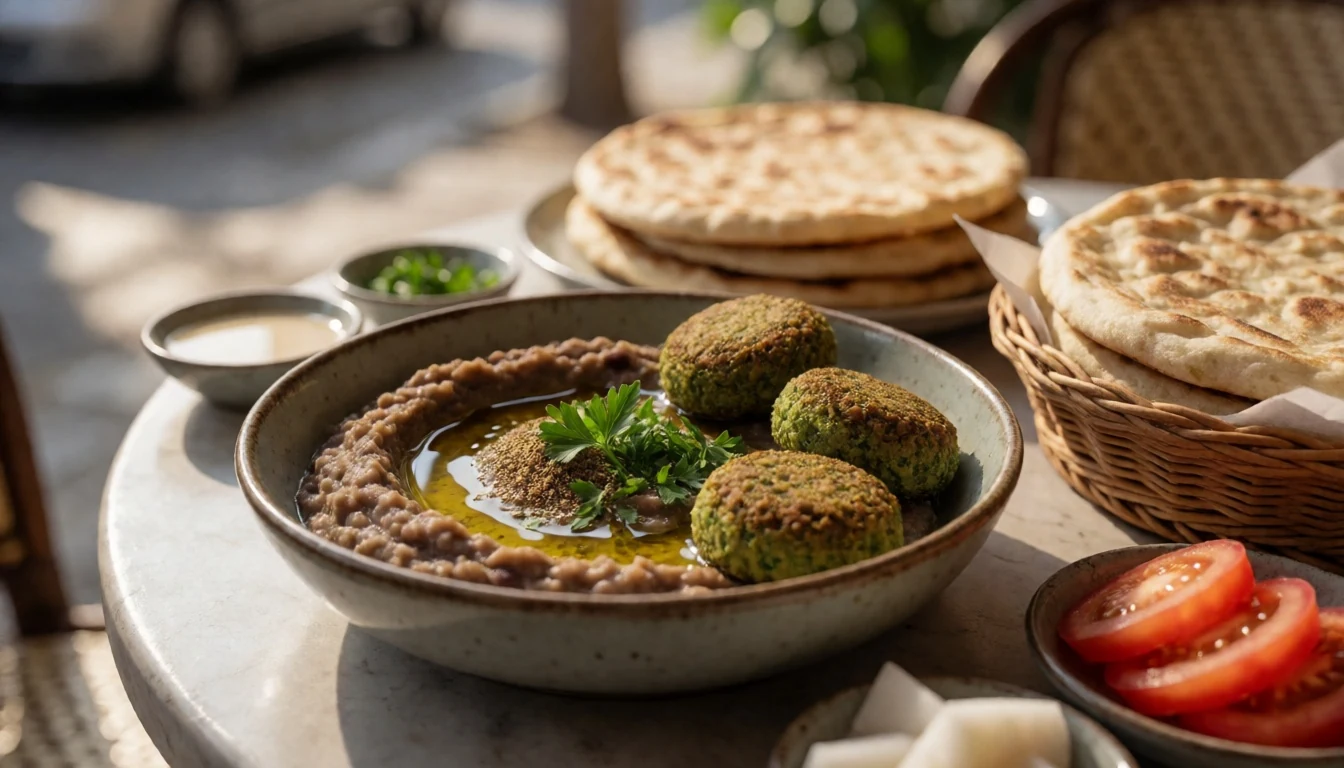
- Seafood dishes — Along the waterfront restaurant areas
Because Alexandria is a coastal city, seafood places are plentiful. Expect grilled fish, fried seafood, and simple sides that let the main ingredient do the talking—best enjoyed when the heat has eased a bit. - Fateer and pizza-style fast food — Casual fast-food counters and street-level shops
If the day needs something quick, look for fast options such as pizza and Arabic equivalents like fateer. These are convenient when schedules are tight and walking time around sites runs long. - Ice cream-style dessert — Dessert stalls and ice cream shops
Alexandrian ice cream is often described as a little stretchy—an elastic, soft-serve feel rather than a dense scoop. It’s an easy treat for a sunny walk, especially after a long afternoon outdoors.
Plan it
Best time. January–February and November–December are usually the most comfortable for walking; the hottest, driest stretch is typically June to September, when long stretches across the grounds can feel especially intense in the sun.
How long. 2–3
Getting there. Fly into Cairo (CAI) as the main portal of entry, then travel onward overland to the Alexandria area and connect to Abu Mena; trains between central Cairo and Alexandria depart from Ramses Station and can be air-conditioned.
Budget. mid
Tips
- Start early to avoid the hottest part of the day when walking foundations and courtyards
- Build in time to read the site slowly—Abu Mena rewards wandering rather than rushing
- Plan your logistics around Alexandria connections, since Abu Mena is accessed from that wider region
- Carry water and sun protection; the grounds can be dusty and bright
Etiquette
- Keep voices low and act respectfully in pilgrimage areas
- Dress modestly for religious spaces and follow any shoe-removal rules at entrances
- Ask before photographing people who are praying or participating
Nearby
Sources
- Wikidata Q9278 (CC0)
- Wikipedia (rev 1382833496) (CC BY-SA 4.0)
- Wikivoyage (rev 5378472) (CC BY-SA 4.0)
- Photo photos/01-ruins-at-abu-mena-vi.jpg (CC BY 2.5)
- Photo photos/02-religious-complex-at-abu-mena-xiii.jpg (CC BY 2.5)
- Photo photos/03-abu-mena-modern-monastery-01.jpg (CC BY-SA 1.0)
- Photo photos/04-artifacts-at-abu-mena-ii.jpg (CC BY 2.5)
- Photo photos/05-artifacts-at-abu-mena-iv.jpg (CC BY 2.5)
- Photo photos/06-artifacts-at-abu-mena-vii.jpg (CC BY 2.5)
- Photo photos/07-basilica-of-the-crypt-at-abu-mena-ii.jpg (CC BY 2.5)
- Photo photos/08-basilica-of-the-crypt-at-abu-mena-iii.jpg (CC BY 2.5)


