Taitung
Taitung, Taiwan
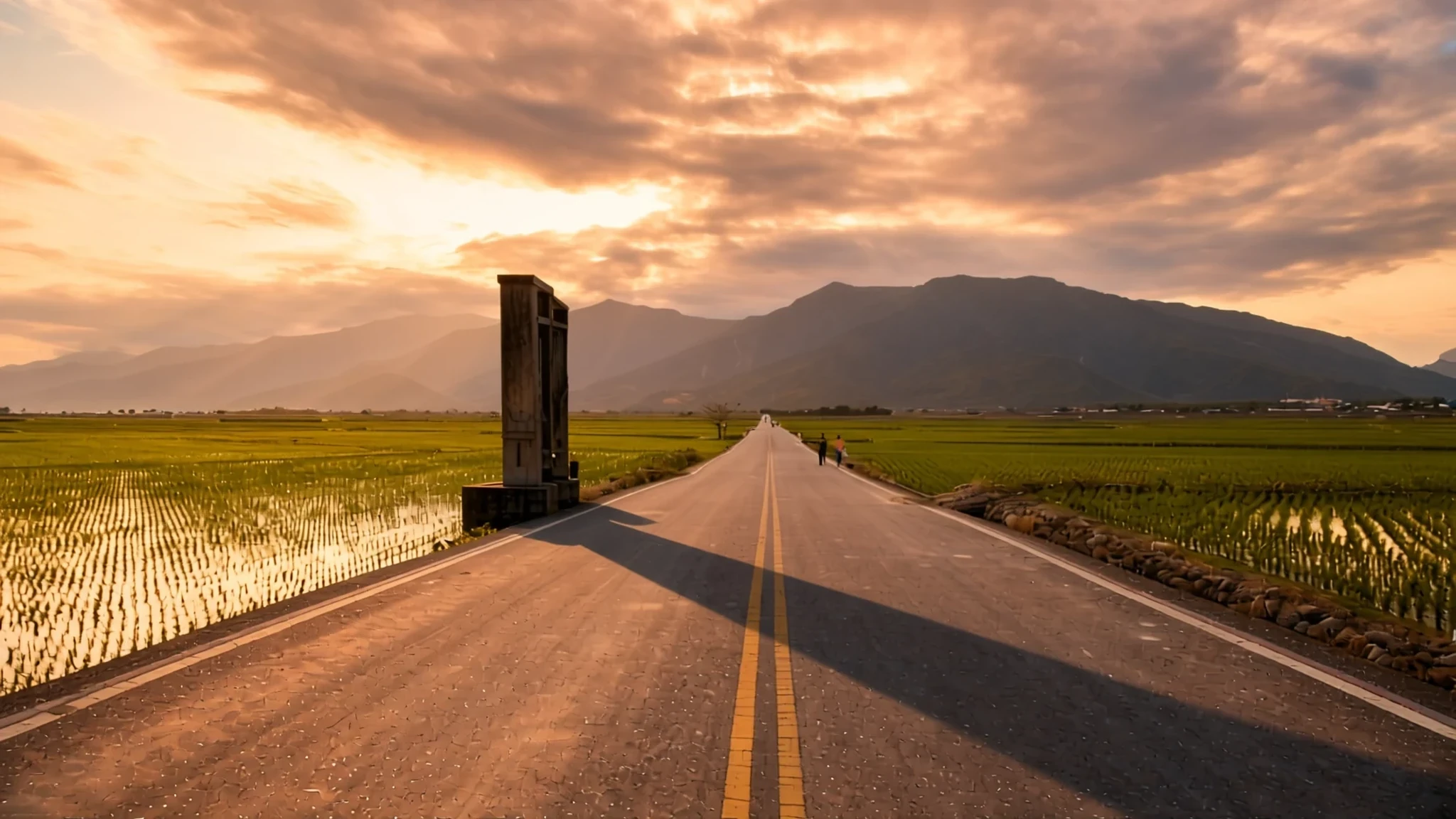
Taitung is Taiwan's slow south-east coast city, where indigenous culture, a Pacific shoreline and a low green skyline still set the pace.
The place
Taitung sits on the Pacific edge of south-eastern Taiwan, a low city held between the coastal hills and the open ocean. The streets run flat across a narrow plain, so the sky stays wide and the ridges remain visible from ordinary junctions. Carp Hill, a wooded rise inside the urban area, looks over rooftops, trees and the road toward the sea; that downhill view is the one the staged photographs record. The built fabric is modest: shops, schools, county offices and low housing, with the campus of National Taitung University forming a greener edge rather than a separate town. The waterfront is a park and a sea wall, not a dense resort front. A short ride south, the Kararuan shore turns to dark rock, grass and a road that tracks the surf. Inland and north, the plain gives way to farming townships and hot-spring valleys that belong to the wider county, while the city itself stays compact around the railway. TRA Taitung Station is the practical centre. Trains, long-distance buses and the walk to the old warehouse quarter all begin there, and the grid a visitor uses on foot is the grid those sheds and the station still anchor. Weather comes off the ocean. Summers are hot and wet, many afternoons end in hard rain, and typhoons can shut the coast and the mountain roads without much warning. Winters are milder and drier, with a wind that feels marine rather than cold. Amis and Puyuma families are part of ordinary neighbourhood life, beside Hoklo, Hakka and mainlander neighbours, which is why indigenous languages, food and festivals are visible in the centre and not only in a museum.
Its story
Taitung's story starts with the indigenous peoples of this south-eastern plain, long before any city administration drew a boundary here. The Puyuma, who name themselves Pinuyumayan, and the Amis, who name themselves Pangcah, farmed, fished and traded along the shore and in the valleys behind it. The Chinese name Beinan, still used for a district and for the archaeological park, records the Puyuma settlement that Qing officials wrote down. Beneath that park lie slate burials and the footings of houses from a prehistoric community, and Qing rule dated an administration here as Pi-lam Subprefecture in 1875, upgraded and renamed Taitung Prefecture in 1888. Under Japanese rule the settlement was mapped as Taitō-gai, a small official town at the difficult end of the east-coast route. Colonial engineers set out streets, a station and links toward the sea, and the staged survey maps still show that tight grid pinched between hill and water. After Japanese administration ended, the Mandarin name Taitung took hold and the county government seated itself here. For a long time the south-east stayed the hard way around Taiwan: mountains inland, a rough ocean outside, and only a late railway joining the city to the west. That separation kept the town small and left indigenous languages and harvest festivals in public view, where the industrial cities of the west had already covered them over. Easier journeys changed the tempo more than the scale. The South-Link railway and domestic flights brought weekend travellers, and disused freight sheds became studios, stalls and a music ground. The story a visitor can actually see is therefore stacked in a small area: a prehistoric burial ground, a Japanese street plan, a living Amis and Puyuma present, and a coastal county seat that spent most of its modern life hard to reach.
What to see
- Carp Hill — City centre
Carp Hill, Liyu Mountain, is the wooded rise inside Taitung that shows the city's shape in one look. Paths climb through trees to platforms facing low roofs, the station quarter and the Pacific, the same downhill view as the staged photograph. People come for air and outlook rather than a temple circuit. Mornings and late afternoons are kinder on the open sections, which have little shade.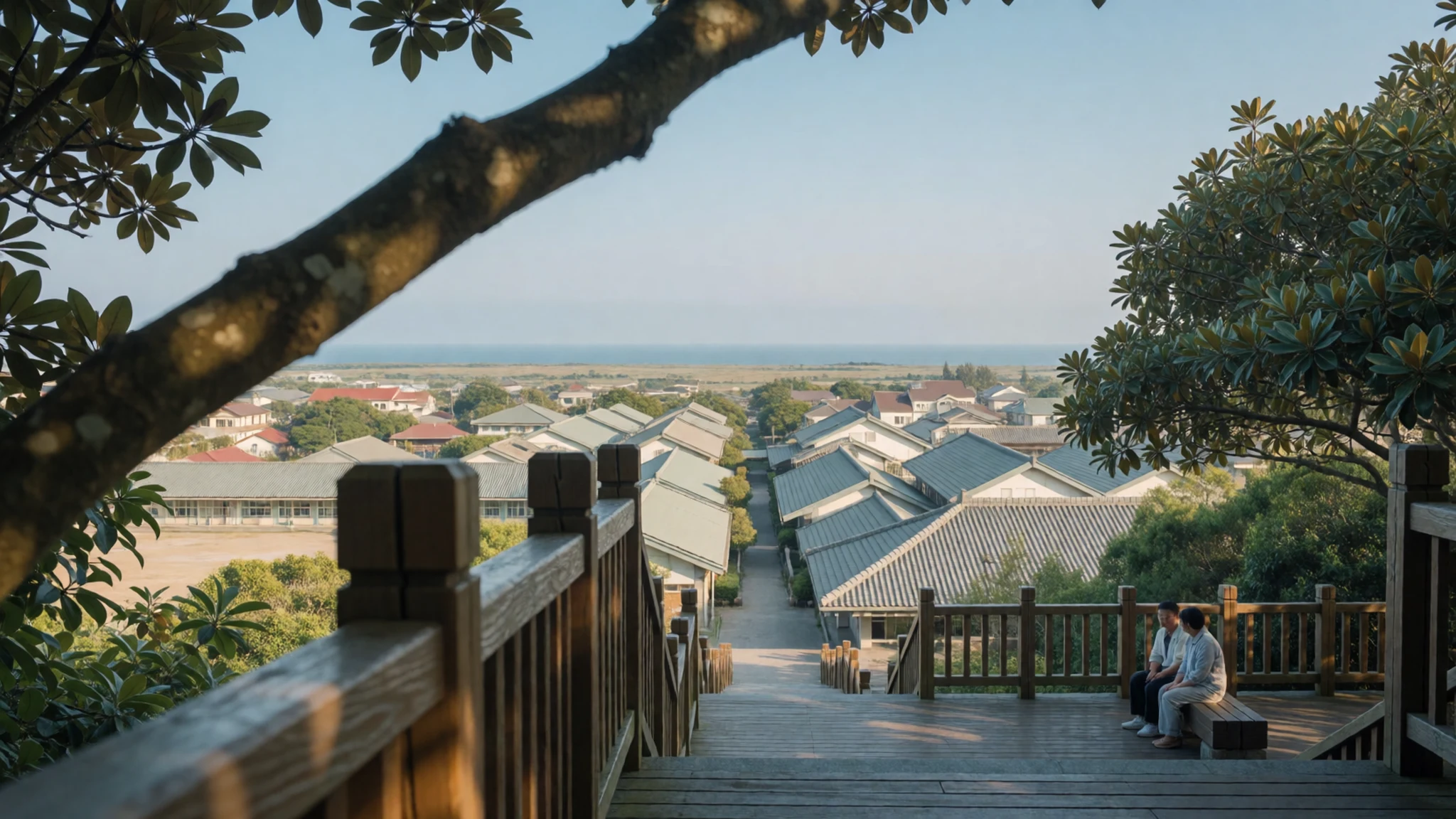
- Kararuan Coast — South of the city, along the coastal road
The Kararuan coast is the rocky Pacific shore just south of Taitung, where the road runs beside grass, dark stone and open water. Sculptures and a paved edge make it a place to pause rather than a swimming beach, and the wind is the usual company. It shows Taitung's other face, ocean weather instead of the street grid. Stay off wet rock in a rough sea.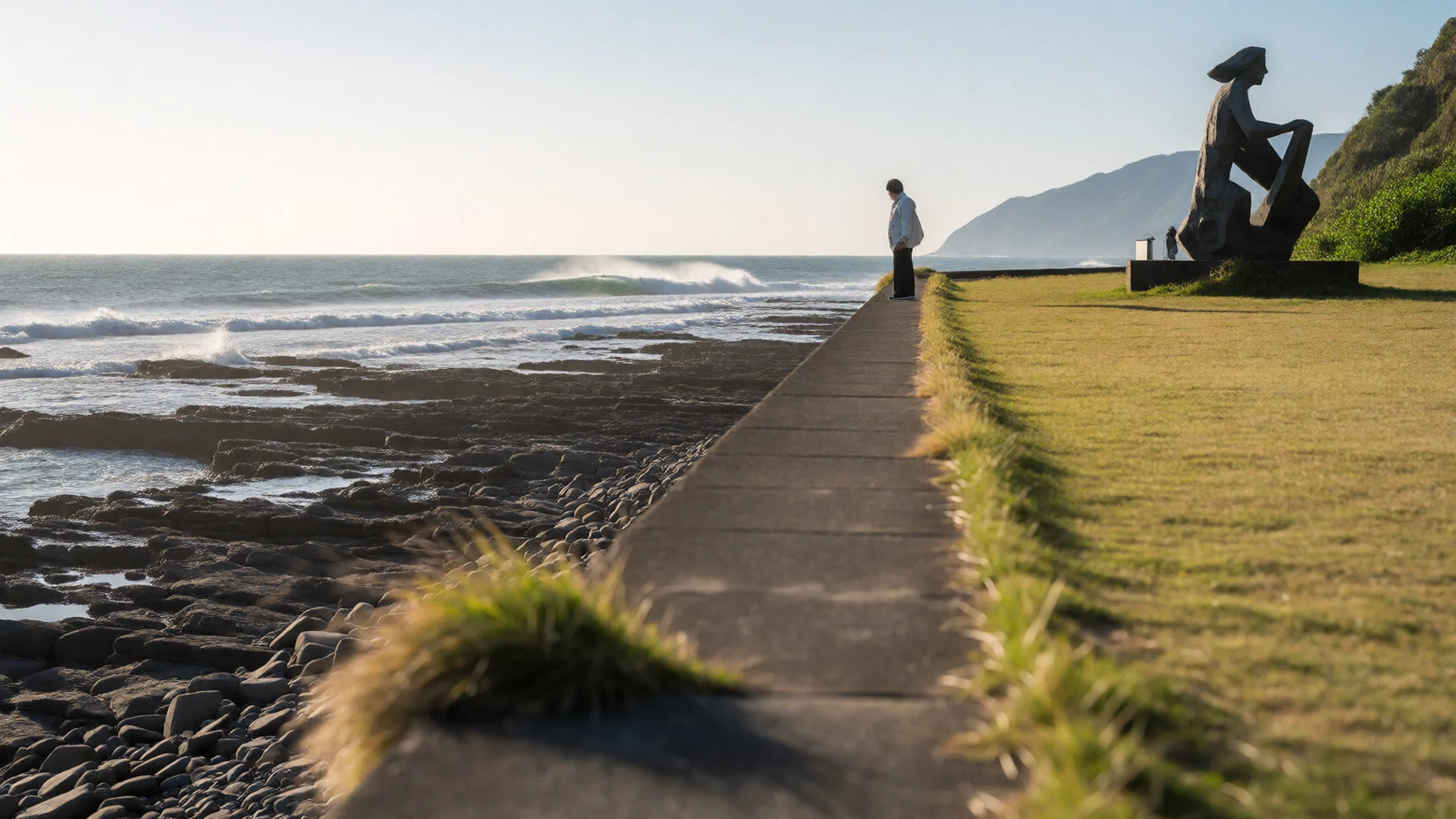
- Taitung Railway Art Village — Beside the tracks, near TRA Taitung Station
The Taitung Railway Art Village fills former freight warehouses beside the tracks, a short walk from the station. Sheds that once stored goods now hold studios, small shops and weekend stalls, with a night market in the lanes when the weather allows. It is a ready place in Taitung to meet the city's craft and music without leaving the centre. The interest is the reused sheds and whoever is working.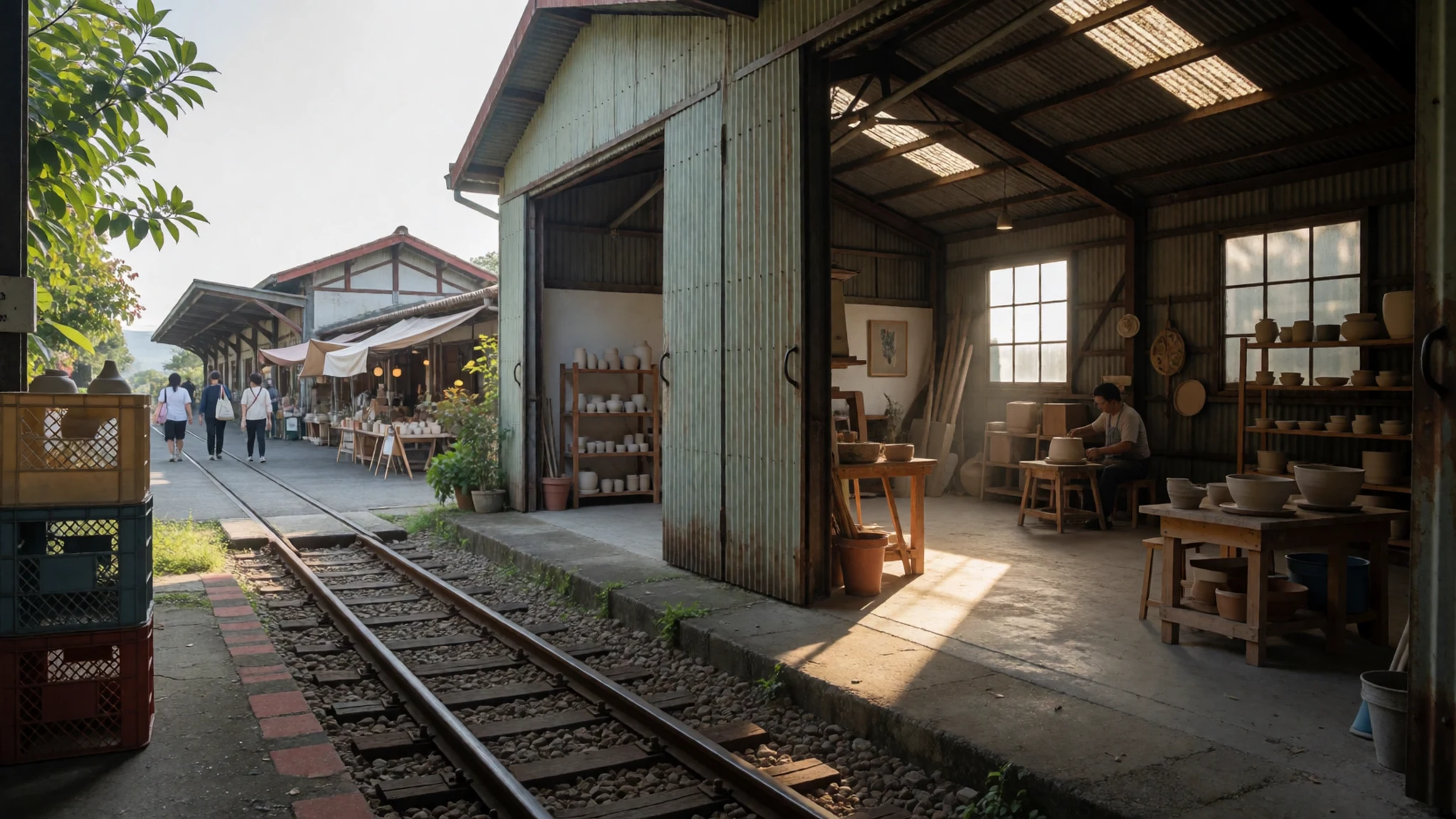
- Tiehua Village — Next to the old rail yards, central Taitung
Tiehua Village is the open-air cluster of stages, food stalls and small creative shops beside Taitung's old rail yards. Evenings are when it matters: indigenous singers, visiting bands and a crowd that sits out with snacks instead of filing into a theatre. The ground is informal and can be cheerfully loud. The city's night-time cultural life concentrates here, so a Taitung evening usually ends at Tiehua.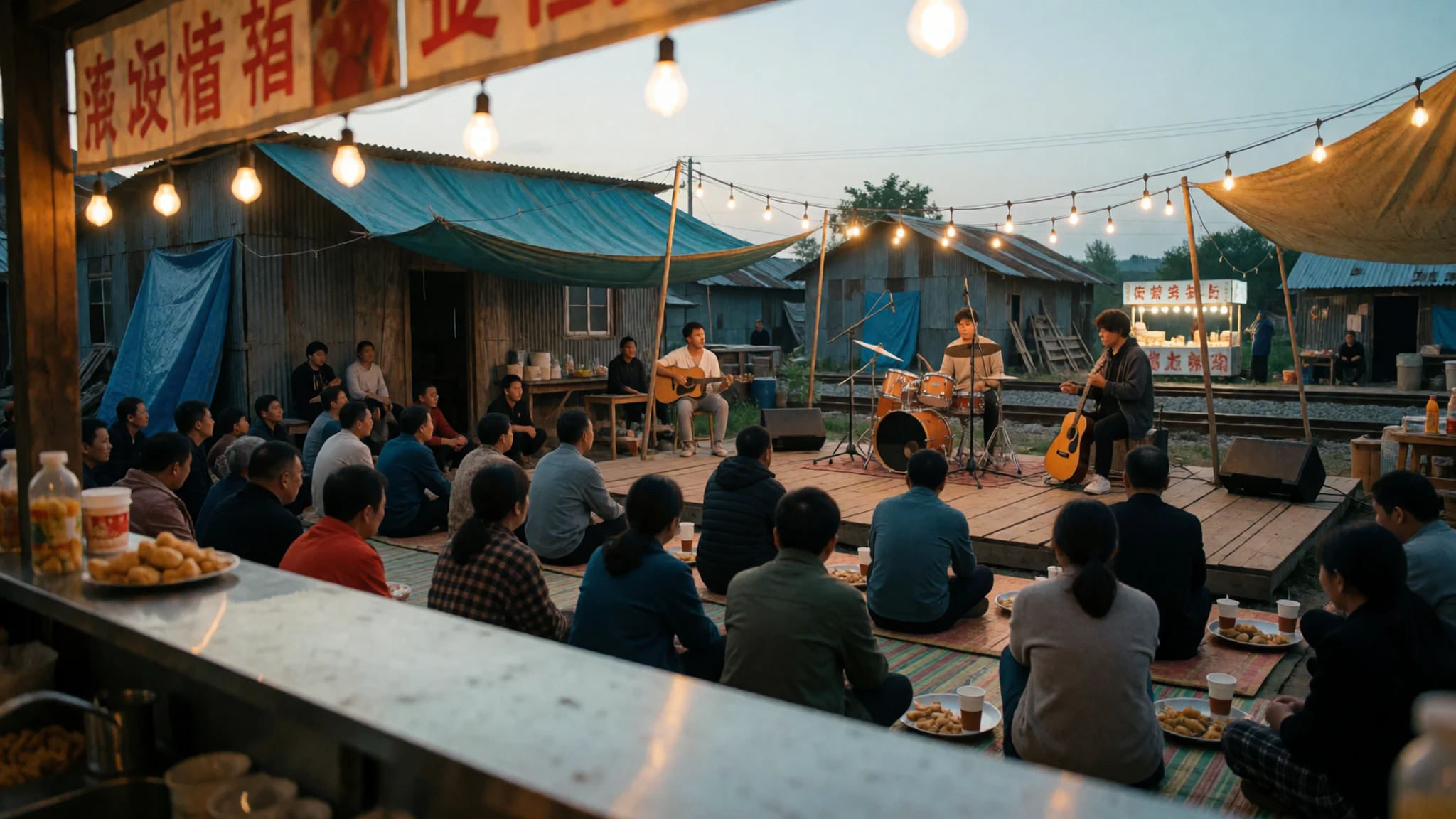
- Beinan Cultural Park — Beinan district
Beinan Cultural Park, in Taitung's Beinan district, holds a prehistoric settlement and burial ground within the modern street plan. A museum stands over excavated ground where slate coffins and house footings of the Beinan culture came to light, and the lawns work as an ordinary city park. The visit is quiet: shaded walks, indoor displays, and proof that people lived here long before the Japanese grid. Stay on the paths.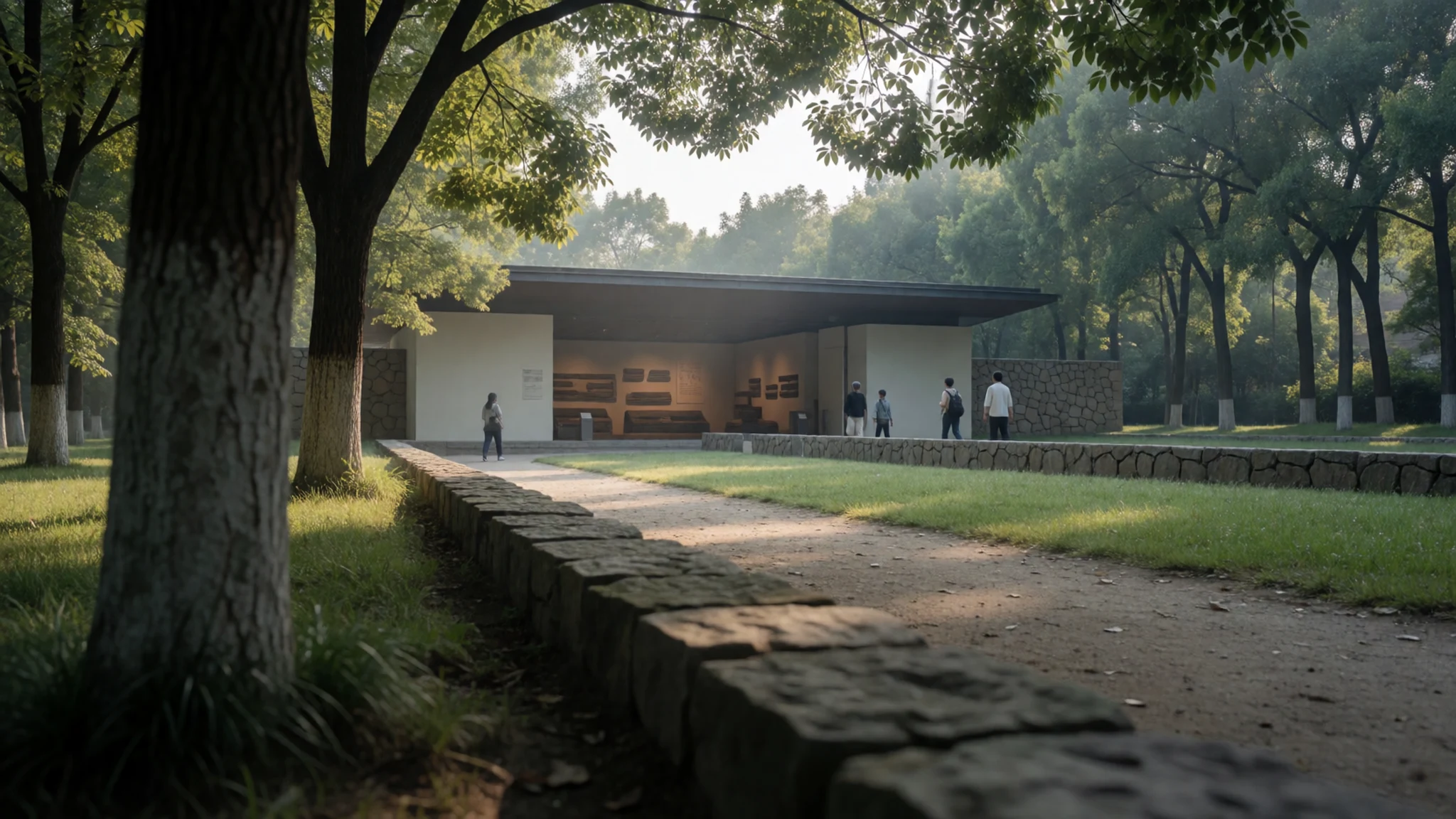
Culture
Culture in Taitung is indigenous and coastal before it is metropolitan. Amis and Puyuma communities keep harvest festivals, song traditions and ceremony calendars that remain family events, not only shows put on for outsiders, and people introduce themselves as Pangcah and Pinuyumayan. Around the old railway sheds, Tiehua Village gives those voices a public evening, mixed with Taiwanese independent bands and craft stalls, so the south-east can be heard without a packaged tour. Han Taiwanese life runs in parallel: temple calendars, night-market habits, schoolyards and the Mandarin of a county capital, with Hokkien and Hakka spoken in homes and shops. Beinan Cultural Park adds a deeper local layer, a prehistoric community on this same plain, treated as neighbourhood heritage. The city is also the usual departure point for Green Island and Orchid Island, whose Tao seafaring culture is related in the wide Austronesian sense and still distinct, and it should not be collapsed into Amis or Puyuma life in the city. If you attend a festival or photograph dancers, ask first and stay at the edge until someone invites you closer.
What to wear
Fashion in Taitung starts with indigenous formal dress, worn for ceremonies and performances rather than for a weekday errand. Amis and Puyuma clothing is built on handwoven cloth: geometric weave, embroidery, shell and bead ornaments, sashes and headwear that can mark age, gender and the occasion. Reds, blacks and bright woven bands recur, though each community keeps its own cut and palette. Those clothes appear at harvest festivals, on singers at Tiehua Village, and as carefully made textiles on craft stalls, not as outfits hired out on the pavement. On an ordinary day the city dresses like any warm part of Taiwan. Light shirts, trousers or shorts, sandals or trainers, sun sleeves and a hat against the coastal glare, with a thin rain jacket in the bag from late spring into autumn. Students and office staff look much as they do in Taipei, only with fewer heavy coats, and scooter riders add a helmet and a cloth over the neck and arms. A visitor does well to follow that practical habit: breathable clothes, a hat, and shoes that can take Carp Hill's paths and the uneven coastal pavement. Add a wrap or longer trousers if invited to a ritual or a family gathering. Covered shoulders and knees are the polite default at temples and at indigenous ceremonies; a festival ground is not a beach.
What to eat
- Bamboo-tube rice — Indigenous eateries and evening stalls around Tiehua Village
Bamboo-tube rice is glutinous rice steamed inside a length of bamboo, a mountain method still used in Taitung's indigenous kitchens. The tube is split open and the rice comes out smoky and sticky, often with pork or salted vegetables. Seek it at indigenous eateries and evening stalls around Tiehua Village.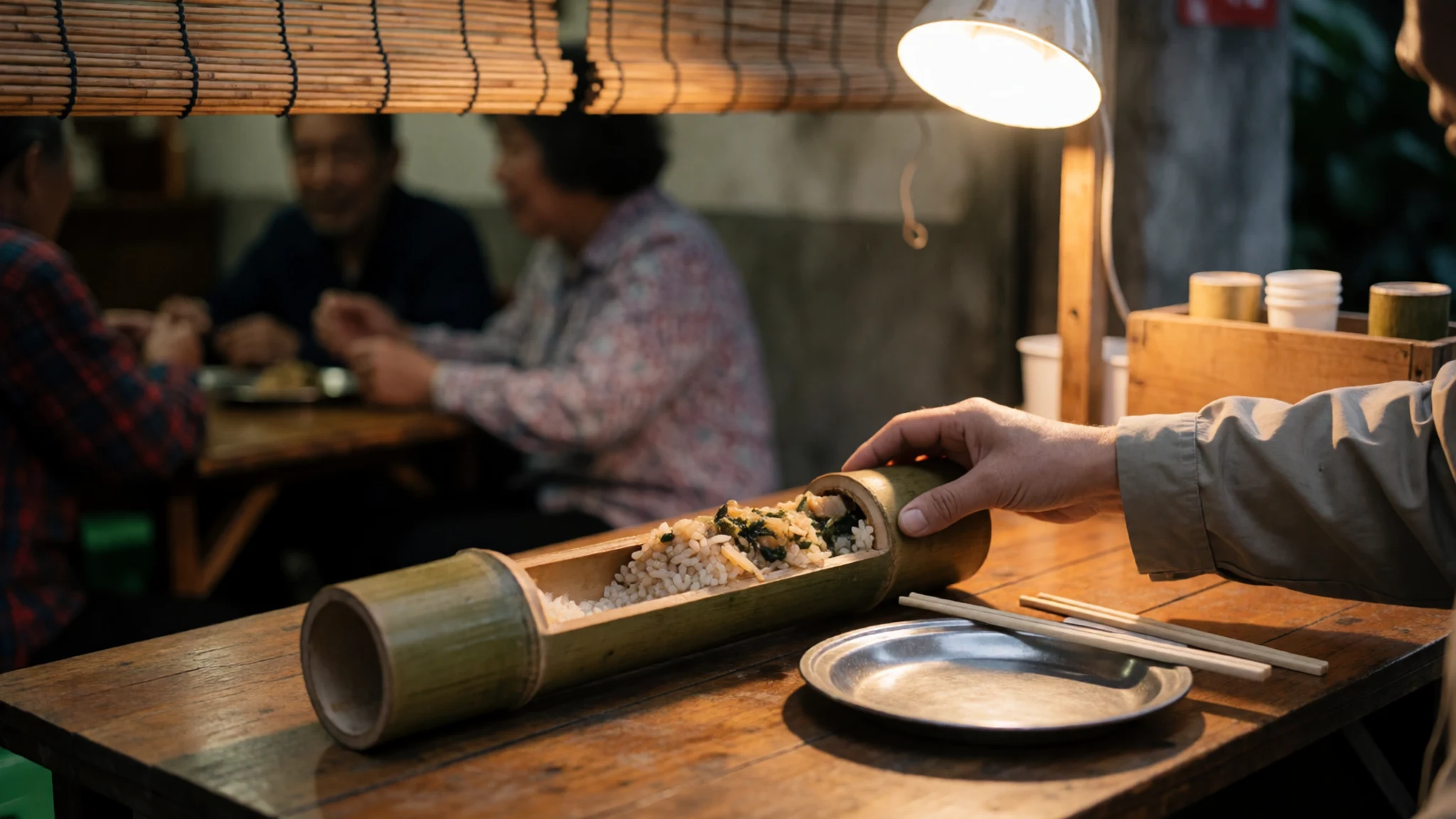
- Cinavu — Indigenous eateries in the city
Cinavu, a Taitung indigenous staple, is a leaf-wrapped parcel of millet or glutinous rice with pork or sweet potato. Indigenous eateries around the city serve it to peel open at the table. Ask for it by name where Amis or Puyuma cooking is advertised.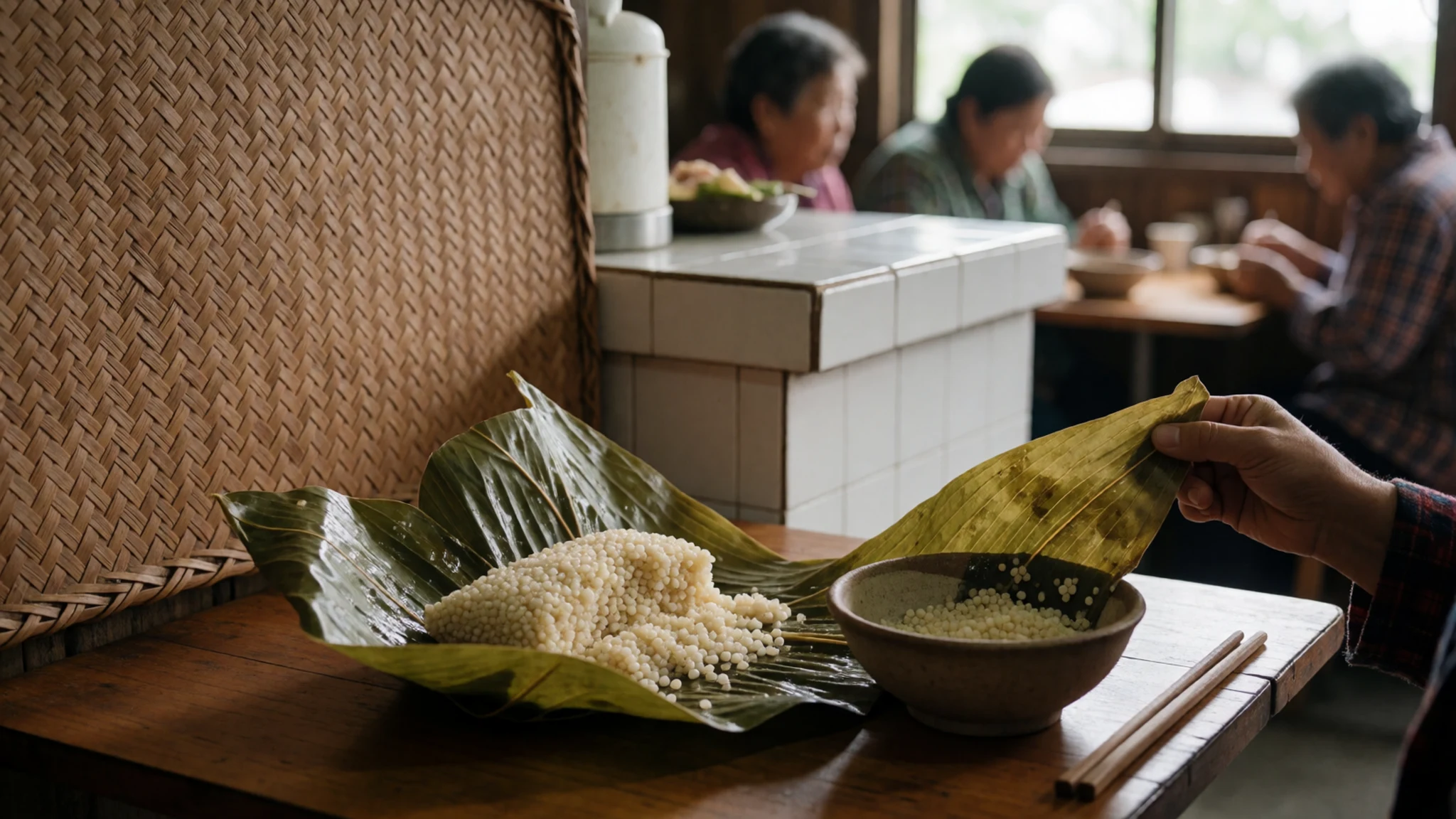
- Fugang grilled fish — Fugang fishing harbour
Grilled fish at Fugang, the harbour a short ride from Taitung, is the morning's landing cooked with salt, garlic and citrus. The sensible order is whatever the cook points to, not a fixed dish. Eat near the water in the middle of the day. - Malao — Markets and specialist shops in central Taitung
Malao is Taitung's peanut brittle, a hard sweet of malt sugar and local peanuts that snaps into shards. Shops in the centre box it as a gift, and market stalls sell smaller bags for the train ride. Buy it sealed, and leave any piece that has turned soft. - Custard apple — Morning markets in the city
Custard apples are a Taitung County crop sold ripe in the city's morning markets, heavy and sometimes already splitting. Wax apples, pineapples and other seasonal fruit share the same stalls. Eat a ripe one soon and trust the seller on what will travel.
Plan it
Best time. November to April is the easier season in Taitung, drier and less heavy with heat. Summers are hot and humid, with heavy rain and typhoons that can close the coast and the island ferries at short notice.
How long. 2–3
Getting there. Domestic flights from Taipei land at Taitung Airport. Taiwan Railway services reach TRA Taitung Station, in the centre, along the east-coast line and over the South-Link from the west. The art village and Tiehua Village are walkable from the station; Kararuan and Fugang Harbour need a local bus, a bicycle or a taxi.
Budget. mid
Tips
- Rearrange coastal and island plans if a typhoon warning is posted; the east coast does not keep a fixed timetable in a storm.
- Carry cash for market stalls, indigenous eateries and smaller buses.
- Walk Carp Hill and the Kararuan road in the morning; open pavement has little shade later in the day.
- Reserve east-coast train seats early for weekends and public holidays.
- A bicycle suits the flat centre, but the coastal road is windy, so give scooters room and keep to the side.
Etiquette
- Ask before photographing people, especially dancers and elders at a festival.
- Stay at the edge of a ceremony until someone invites you further in.
- Remove shoes wherever you see others doing so, at a home, a temple or a ritual space.
- Do not climb sculptures on the Kararuan coast or step onto wet rock for a picture.
Nearby
Sources
- Wikidata (CC0)
- Wikipedia (CC BY-SA 4.0)
- Wikivoyage (CC BY-SA 4.0)