Dasyueshan
Dasyueshan, Taiwan
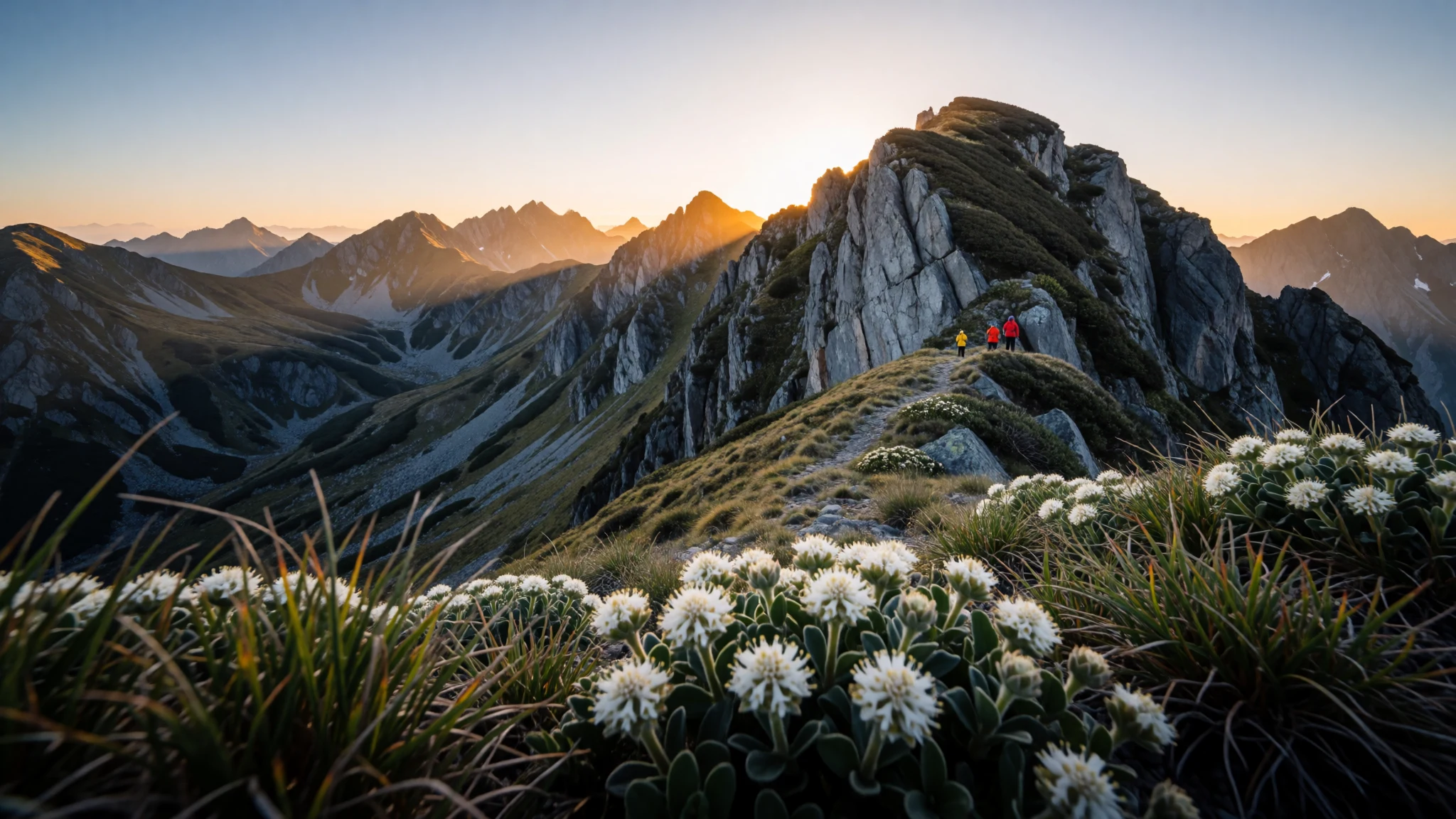
Dasyueshan is a 3,530 m 'big snow mountain' in central Taiwan, with replanted forest, rare pheasants and cool air within reach of Taichung.
The place
Dasyueshan, or Daxue Mountain, rises to 3,530 m along the Xueshan Range in central Taiwan, on the border between Miaoli and Taichung. The Chinese name means 'big snow mountain', and the height explains it: winter can bring frost and occasional snow to the upper slopes while the Taichung plain below stays mild. Most visitors do not aim for the main summit. They go instead to the Dasyueshan National Forest Recreation Area in Heping District, Taichung, which covers one section of the mountain and several lower peaks. The tallest of these, Siaosyueshan or Little Snow Mountain, reaches 2997 m. The recreation area was once a logging zone. Much of the cleared ground has been reforested, and the old working landscape is now a popular scenic destination and a well-regarded birdwatching spot. Birders come for the Mikado pheasant, Swinhoe's pheasant and the Taiwan partridge, shy forest birds that are far more often heard or glimpsed at first light than seen on demand. Because the mountain belongs to Taichung's territory but lies well away from the city centre, most travellers sleep in downtown Taichung and treat the mountain as a long day or an overnight trip. Accommodation near the mountain itself is thin, so timings need slack. Weather changes fast at altitude: sun, cloud and cold can all arrive within one afternoon, and a mild morning in the city says little about conditions on the ridge.
Its story
Dasyueshan's story is mostly the story of what happened around it. Long before the logging roads, Indigenous people lived on the plain where modern Taichung stands. They grew millet and taro and hunted deer, and the word for deer survives in several place names across central Taiwan, such as Shalu and Lukang. The city itself was founded in 1705 as Dadun, meaning 'large mound', under Changhua County. The Qing dynasty had taken western Taiwan from the Cheng family in 1682 and was tightening its grip, and a garrison followed in 1721. Relations with Indigenous communities were tense. In 1731 a revolt broke out north of the city, near the Dajia River, after officials forced local people into labour. The following year the rebels were pushed south as far as Changhua before Qing forces drove them back into the mountains, which is a reminder that the high country was long a place of refuge and independence. A different rising in 1786, led by Lin Shuang-wen, grew out of the nearby town of Dali. It was put down by a coalition of Hakka, Quanzhou Fujianese descendants and Indigenous volunteers. In 1885 Taiwan became a province of Qing China, and the settlement was named capital of Taiwan Prefecture. The forest recreation area is a much later chapter: a logging landscape that has been replanted and reopened for walkers, birdwatchers and day visitors.
What to see
- Daxue Mountain main peak — Xueshan Range, on the Miaoli–Taichung border
The 3,530 m summit is the mountain's namesake and a sight in its own right, a broad high ridge that can wear snow or cloud in cold months. Reaching the top is a serious high-altitude outing, so most people admire it from lower viewpoints. Check conditions and permits before any attempt.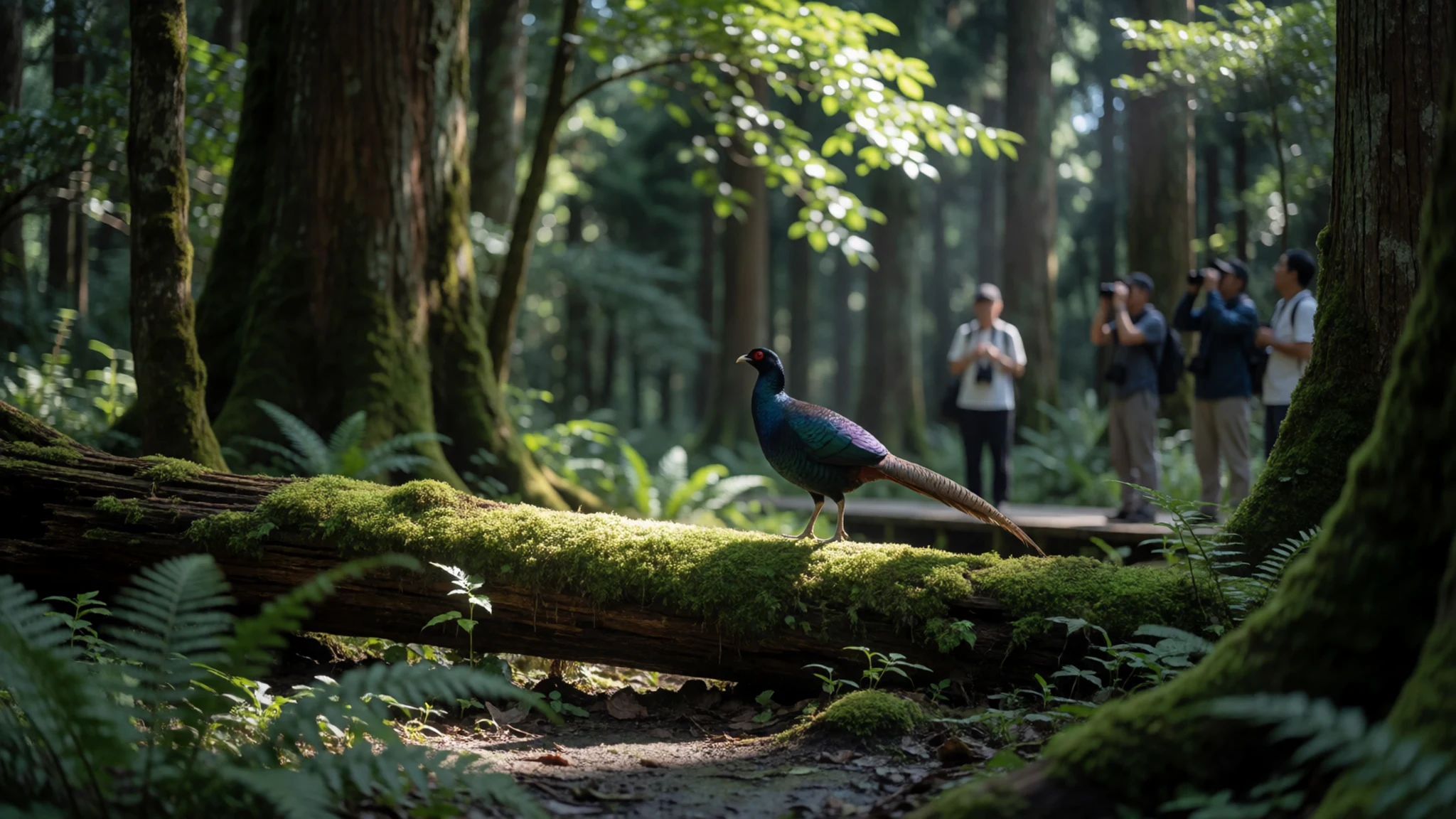
- Dasyueshan National Forest Recreation Area — Heping District, Taichung
This is the part of the mountain most visitors actually use, in Heping District. A former logging area, it now has reforested slopes, scenic stops and walking routes. The cooler air is a relief after Taichung's lowland heat. Confirm opening arrangements with the official operator before travelling, as access can change with weather.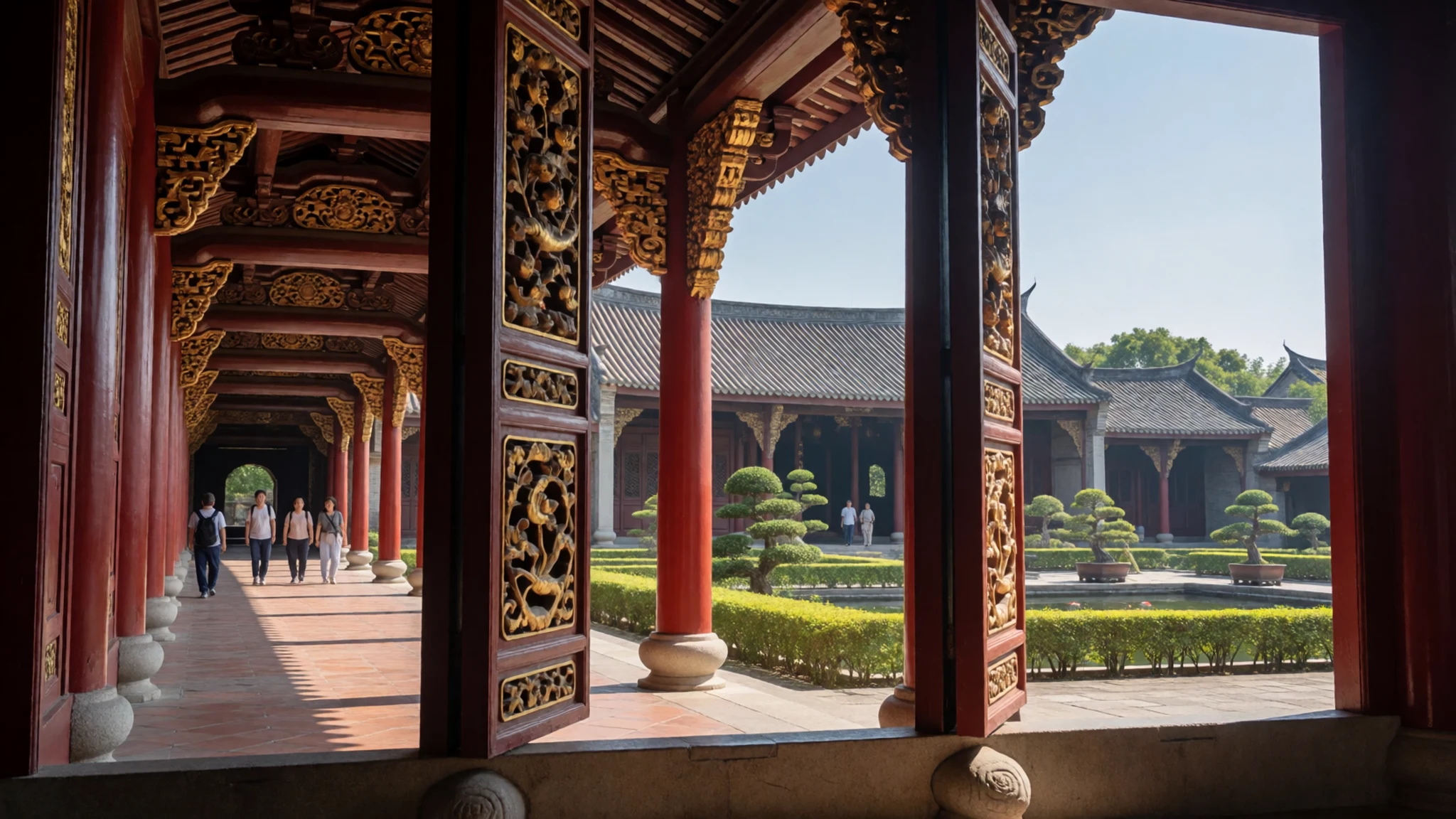
- Siaosyueshan (Little Snow Mountain) — Within the recreation area, Heping District
The tallest of the shorter peaks in the recreation area, at 2997 m. It gives a taste of the high mountain environment without the commitment of the main summit. Expect thinner air, quick weather shifts and views that appear and vanish with the cloud.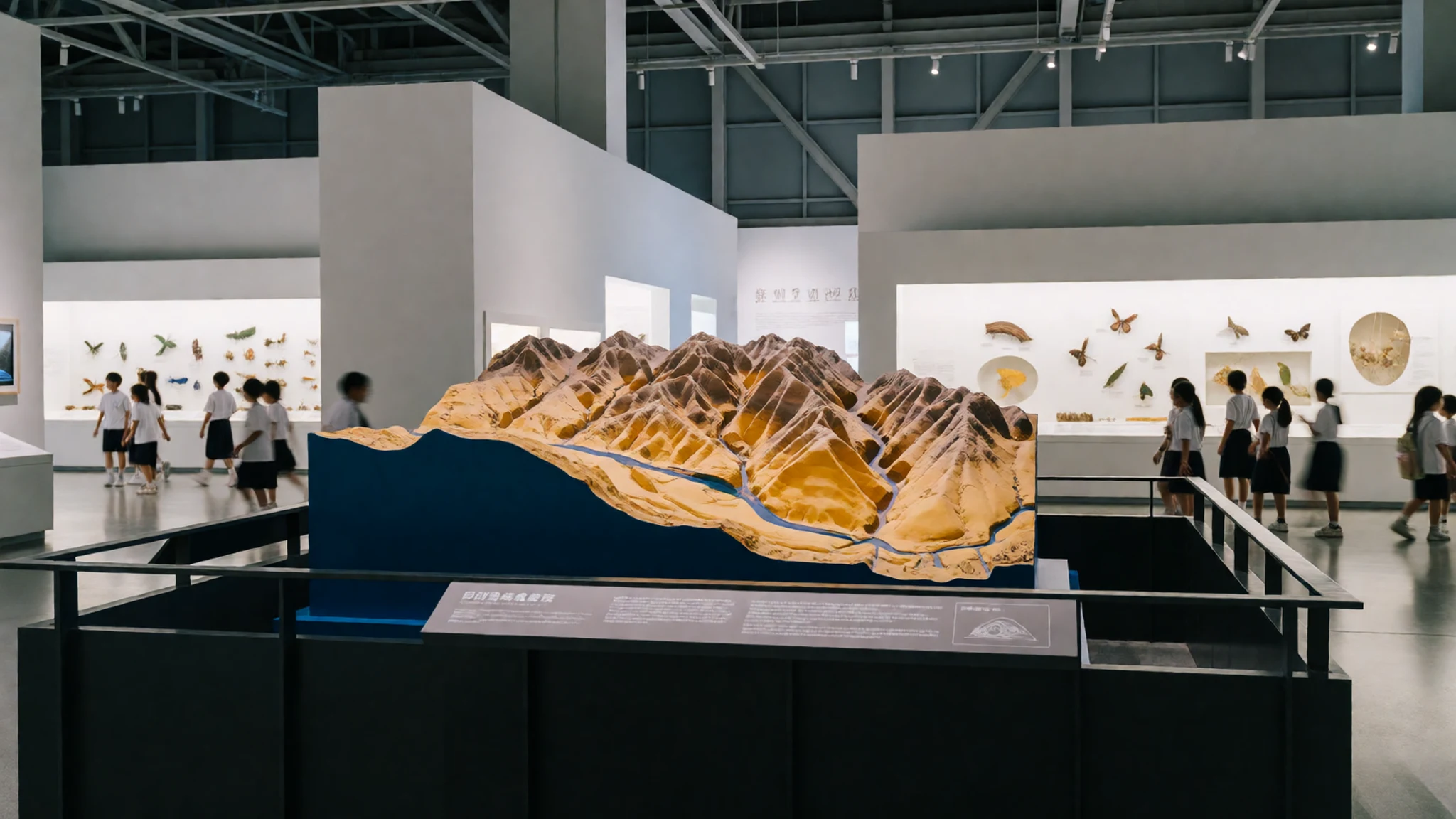
- Birdwatching in the forest — Forest roads and trails of the recreation area
The recreation area is known for pheasants and other forest birds, including the Mikado pheasant, Swinhoe's pheasant and the Taiwan partridge. Dawn and dusk are the best hours. Patience and quiet matter more than equipment, and a local guide improves the odds considerably.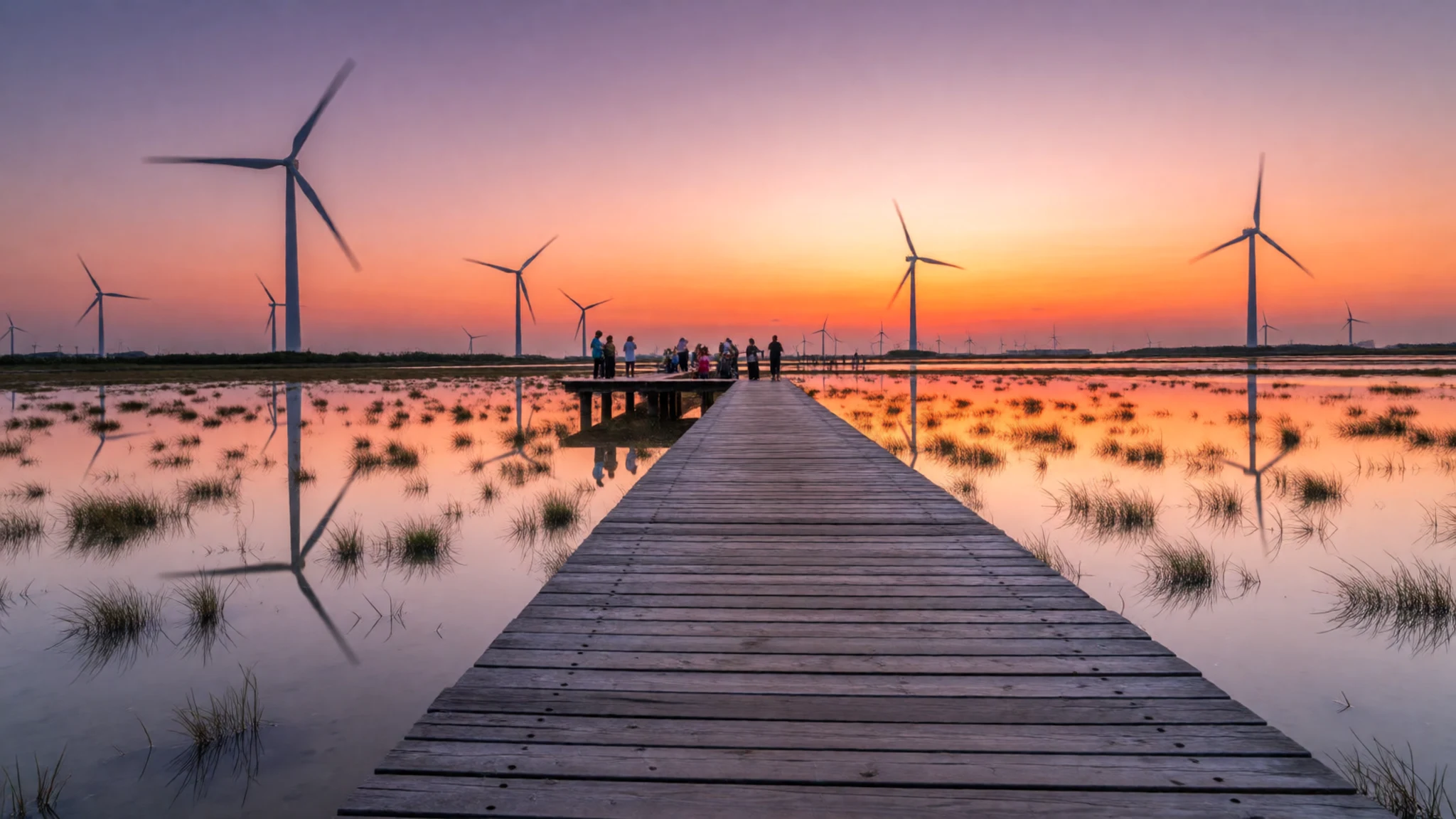
- Gu-Guan Hot Spring — Mountain Line, Taichung
Wikivoyage lists this hot spring on Taichung's 'Mountain Line', and it suits a soak after a cold, tiring day on the hills. Facilities and opening arrangements vary, so check locally before building a plan around it.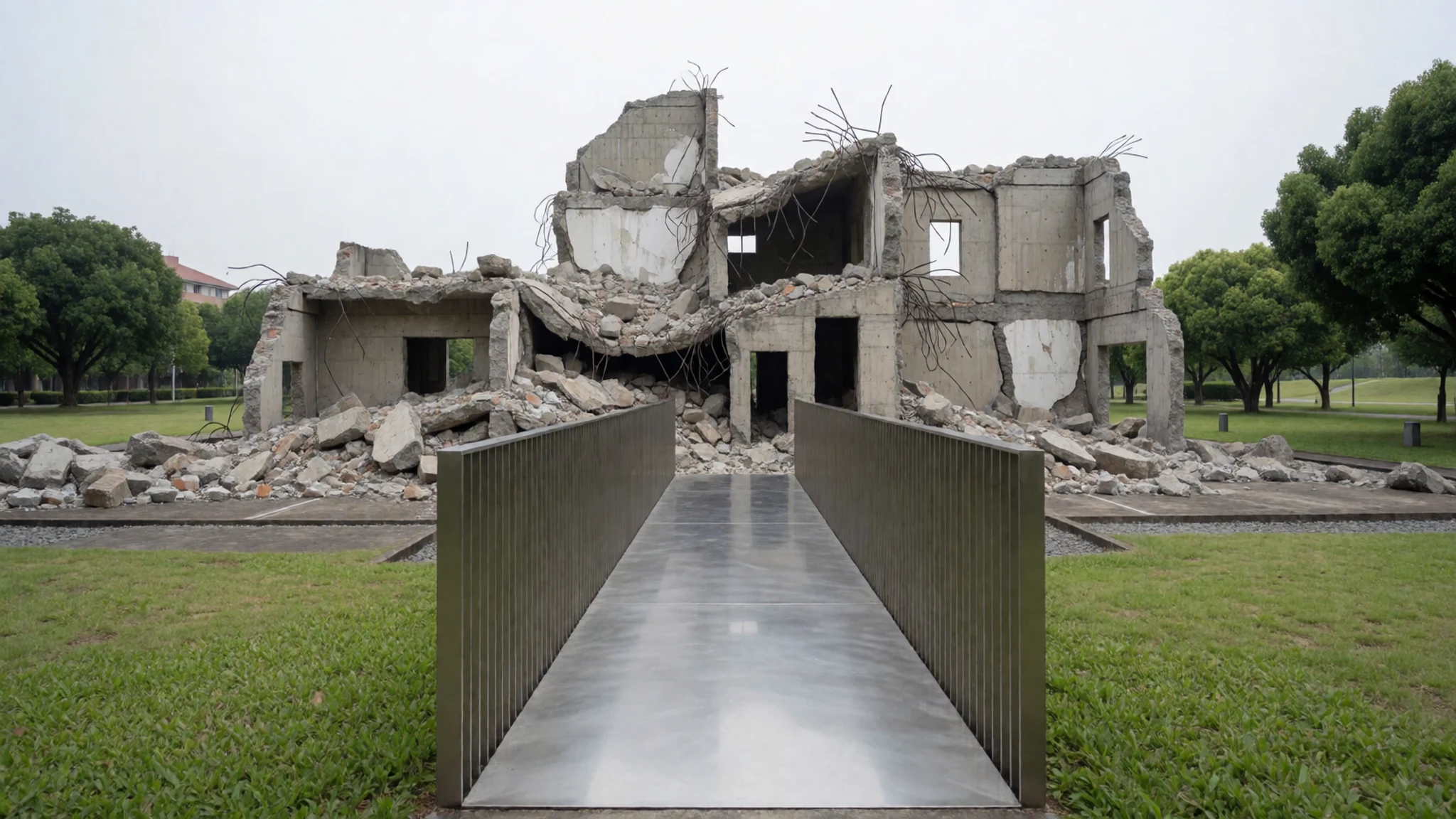
- National Museum of Natural Science — Central Taichung
A sensible wet-weather fallback in central Taichung, made up of seven museums under one roof. It helps put the island's wildlife and landscapes into context before or after a trip to the mountain. Check the official site for current hours and ticketing.
Culture
Dasyueshan sits in Heping District, part of a wider central Taiwan where Indigenous, Hakka and Hoklo (Fujianese-descended) histories overlap. The mountain's logging past shaped the roads and settlements that visitors use today, and the shift to reforestation reflects a broader change in how Taiwan values its high forests: less as timber, more as habitat, water source and place to walk. Day-trip culture is strong. Families and friends from Taichung head uphill for cool air, tea and a picnic, and weekends and public holidays can be busy on the access roads. Birdwatching has its own quiet etiquette, with small groups, hushed voices and long stillness at dawn. In the city below, temples are part of everyday life, and Taichung's Pao Jiue Temple with its gold seven-floor Buddha is one example worth seeing on the way. Taiwanese hosts are used to visitors who speak no Chinese, and gestures, smiles and a translation app go a long way. Politeness is expected at the counter and on the trail, where passing walkers usually exchange a quick greeting. Rubbish is carried out rather than left behind, a habit most people follow without being reminded. On the mountain, keep to marked paths and stay quiet near the forest roads at dawn so you do not disturb the birds that people have come to see.
What to wear
Traditional dress around Dasyueshan belongs to the communities who have long lived in central Taiwan. Indigenous peoples of the mountains are known for woven cloth, often in bold geometric patterns made from plant fibres such as ramie, and worn today mainly at festivals and ceremonies. Hakka communities have their own tradition of plain, dark-blue cotton clothing, now more often seen in craft shops and heritage displays than on the street. Everyday clothing in Taichung is casual and practical: light layers, trainers, scooter helmets and rain jackets, with smarter dress for work and temples. On the mountain, locals dress for the weather, with fleeces, windproof shells and caps. A visitor should do the same. At 3,530 m on the main peak and nearly 3,000 m on Siaosyueshan, mornings can be cold even when the city is warm, so bring a warm mid-layer, a waterproof jacket, gloves and a hat for cold months. Wear sturdy shoes with grip, since forest paths and old logging roads can be damp or muddy. Sun cream and sunglasses still matter at altitude. When visiting temples in Taichung, cover shoulders and knees, and take a light scarf for the shift between mountain chill and city humidity.
What to eat
- Sun cake (太陽餅) — Taichung bakeries and shops in the downtown area
A flaky round pastry with a sweet maltose filling, closely tied to Taichung's bakeries. Traditional versions use pork lard, so vegetarians and those avoiding pork should ask for a vegetarian version. Look in the city's bakeries and gift shops.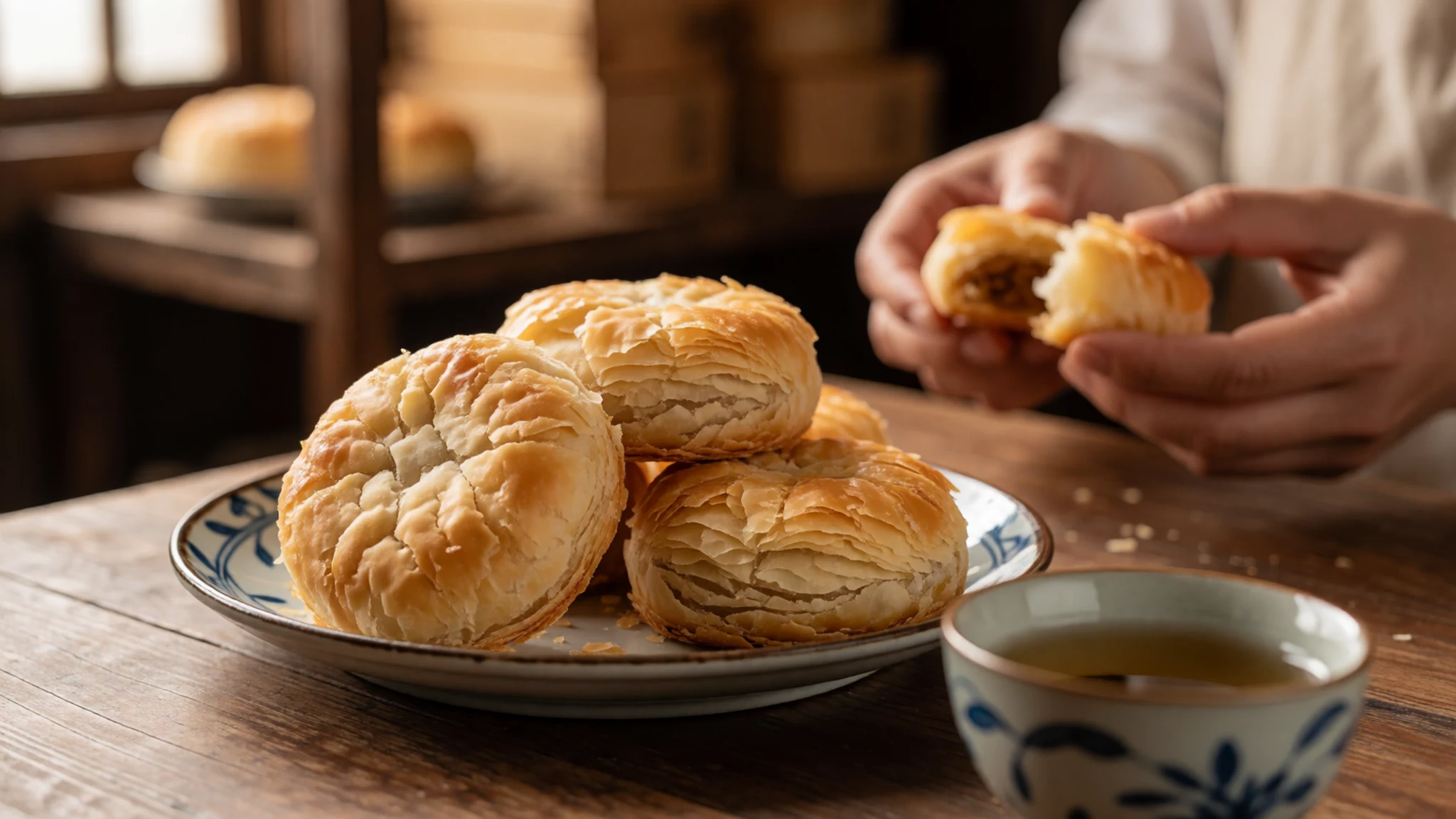
- Pineapple cake (鳯梨酥) — Chinese bakeries across central Taichung
A buttery shortcrust pastry around a dense pineapple jam, usually sold in neat boxes and good for taking home. Flavour and sweetness vary between bakeries, so sampling a few is part of the fun.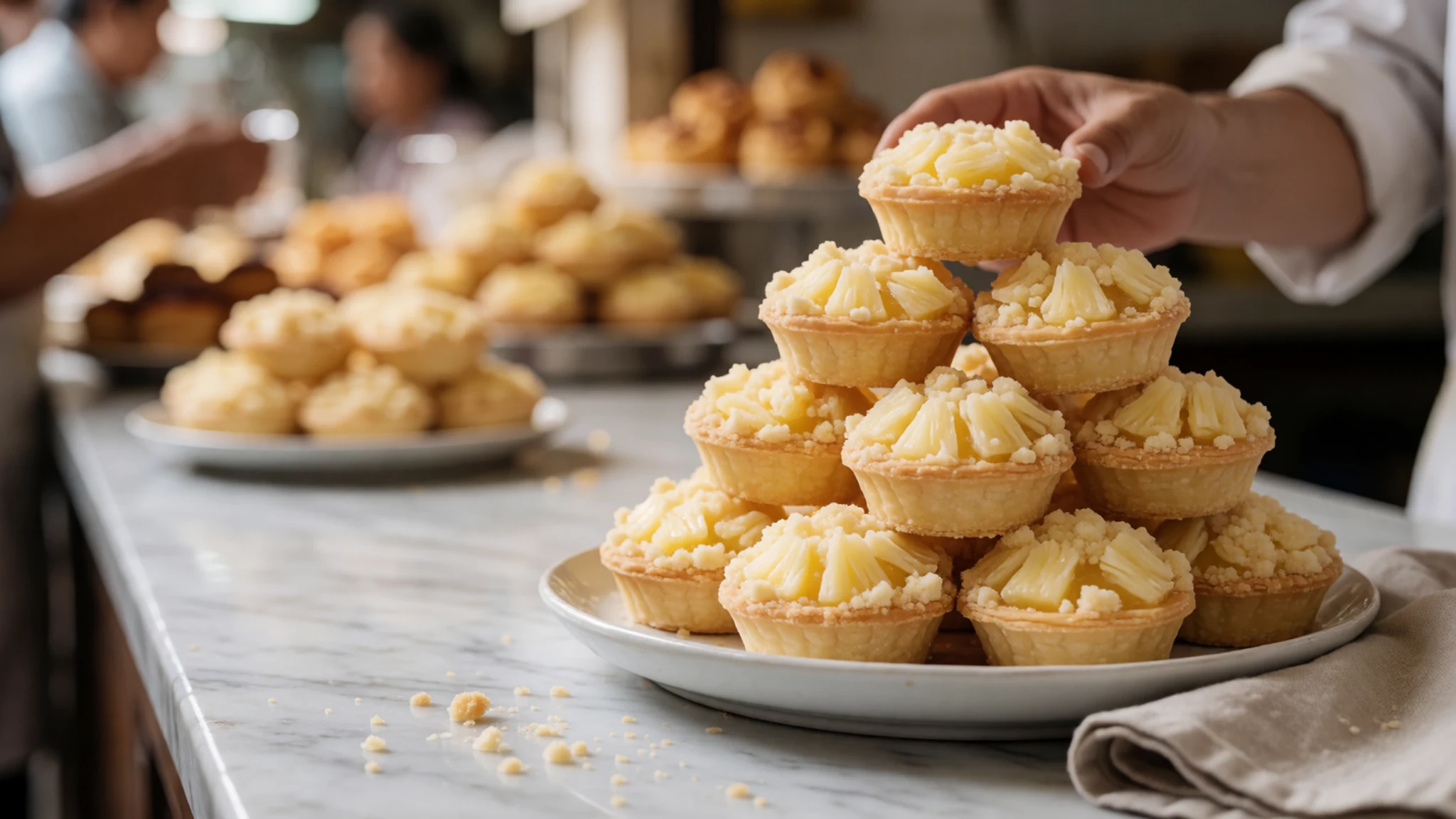
- Noodle dishes — Neighbourhood noodle shops and street vendors
Noodle shops are everywhere in Taichung, serving bowls from light broths to richer, saucier versions. Many are quick, cheap and informal, and are a good way to eat before an early mountain start. Pointing at what others are eating works well. - Night-market snacks — Feng Chia Night Market and the city's traditional markets
Feng Chia Night Market is one of several markets in central Taichung offering grilled skewers, fried snacks, sweet drinks and desserts. Go hungry, bring cash and be prepared for crowds, especially on evenings and weekends. - High-mountain tea — Tea houses in Taichung, such as around Jin Ming First Street
Taiwan's upland tea-growing districts supply cool-climate teas with a clean, floral character. A pot at a tea house is a calm way to end a hill day. Jin Ming First Street is mentioned by Wikivoyage as a place for tea.
Plan it
Best time. April–May and October–November are usually the most comfortable, with milder weather and better chances of clear views. Winter is cold on the high ground and the name 'big snow mountain' is earned, so check road and weather conditions. Summer is hot and humid in the lowlands, and afternoon cloud and rain are common in the hills.
How long. 2–3
Getting there. Fly to Taipei or Taichung International Airport, or take the Taiwan High Speed Rail to Taichung station in Wuri District. Taichung is the base for the mountain. From there the last leg into Heping District is by road, so check current transport options and access rules with the official recreation-area operator.
Budget. mid
Tips
- Stay in downtown Taichung, where accommodation is plentiful, and allow a full day for the mountain trip
- Start early: birds are most active at dawn and mountain weather often closes in by afternoon
- Carry layers, water and some cash, as facilities are limited on the upper slopes
- Check road and weather conditions on the day, and confirm opening arrangements on the official site
- Allow time for altitude and cold if heading above the recreation area
Etiquette
- Keep noise low on forest roads and trails, especially at dawn when birdwatchers are out
- Carry all rubbish out with you and stay on marked paths
- Dress modestly and remove shoes where asked when visiting temples in Taichung
Nearby
Sources
- Wikidata Q10938459 (CC0)
- Wikipedia — Mount Daxue (rev 1369555240) (CC BY-SA 4.0)
- Wikivoyage — Taichung (rev 5419408) (CC BY-SA 4.0)
- Photo: Mt.DaXue 大雪山主峰, Peellden (CC BY-SA 4.0)
- Photo: Relief location map of Taiwan, Uwe Dedering (CC BY-SA 2.0)


Wildlife
- Mikado pheasant (animal)
Remember the Mikado pheasant as Taiwan's much-loved forest bird, sometimes called its unofficial national bird. In Dasyueshan, its voice often carries through the high forests, so you may hear it before you see it. A local guide can tell you the best time and place. Watch from a respectful distance, stay quiet and still, and never feed it, so it keeps its natural wariness. - Swinhoe's pheasant (animal)
Swinhoe's pheasant, the Taiwan blue pheasant, is a bird found only in Taiwan, and it wears the colours of the national flag. In Dasyueshan, listen for its calls drifting through the high forests. A local guide will know where and when you have the best chance of a glimpse. Keep a gentle distance, hush your voice, move slowly, and never offer food, so it stays wild. - Mikado pheasant (bird)
Remember the Mikado pheasant as Taiwan's much-loved forest bird, sometimes called its unofficial national bird. In Dasyueshan, its voice often carries through the high forests, so you may hear it before you see it. A local guide can tell you the best time and place. Watch from a respectful distance, stay quiet and still, and never feed it, so it keeps its natural wariness. - Swinhoe's pheasant (bird)
Swinhoe's pheasant, the Taiwan blue pheasant, is a bird found only in Taiwan, and it wears the colours of the national flag. In Dasyueshan, listen for its calls drifting through the high forests. A local guide will know where and when you have the best chance of a glimpse. Keep a gentle distance, hush your voice, move slowly, and never offer food, so it stays wild.