Eluanbi Lighthouse
Eluanbi Lighthouse, Taiwan
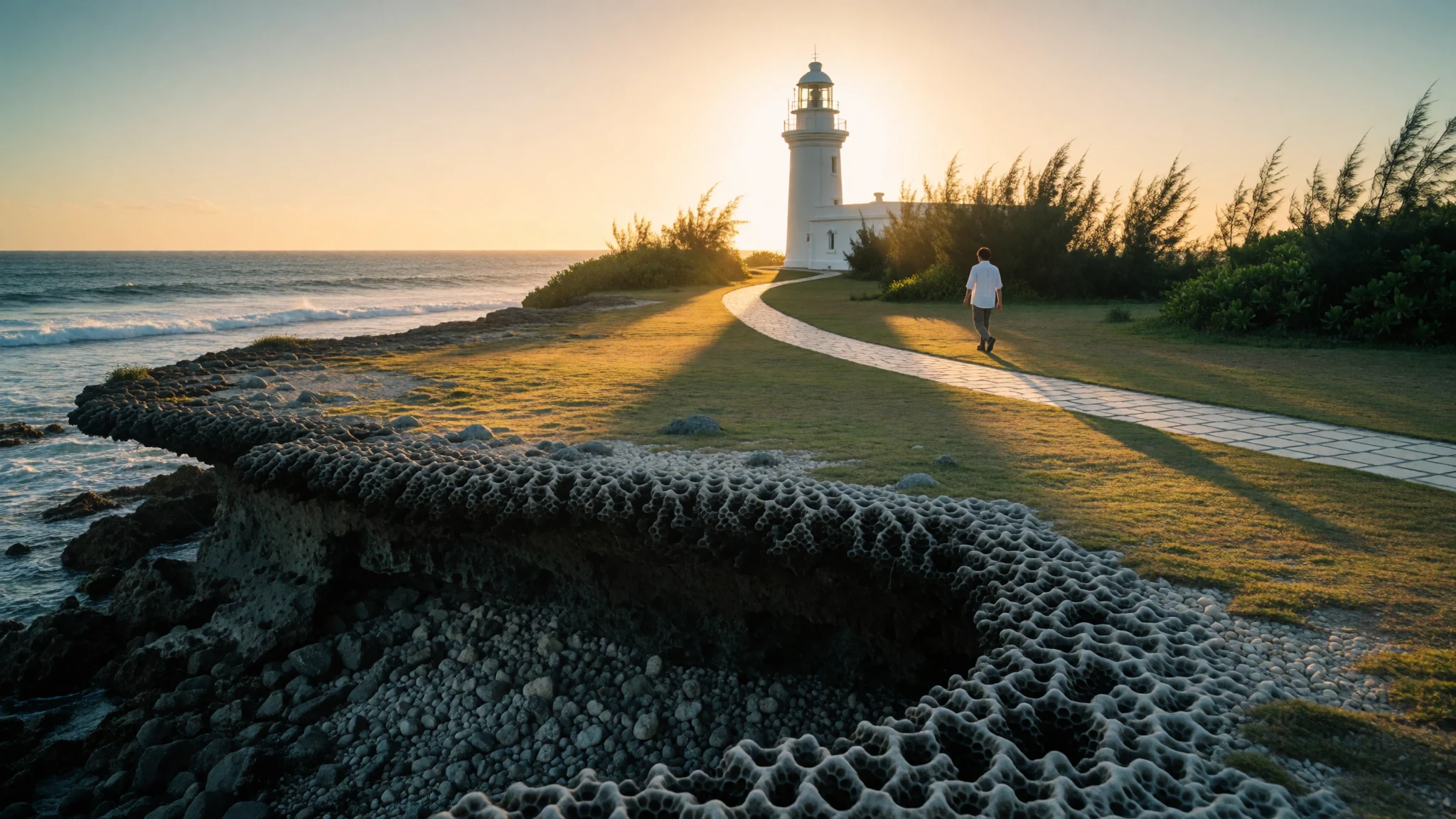
Eluanbi Lighthouse marks the southern tip of Taiwan, where an old fortified light watches two seas meet.
The place
Eluanbi Lighthouse stands on Cape Eluanbi, the southern tip of Taiwan's main island, in Hengchun township of Pingtung County, close to Eluan village. The cape acts as a hinge between waters: on one flank lie South Bay and the Taiwan Strait, running out to the South China Sea, and on the other lies Banana Bay, facing the Philippine Sea. Wind is constant here and the sea changes colour with the weather, which explains why ships needed a light at this spot. Today the grounds are a landscaped park inside Kenting National Park, with paths across coral rock, tropical shrubs and open lawns around the white tower. The lighthouse is open to visitors all year, though opening hours and any entry charge should be checked locally before travelling. It is an easy stop on a Kenting trip, and tour coaches arrive in numbers, so late mornings and holiday weekends feel busy. Heat and humidity are the other fact of life: the far south of Taiwan is tropical in character and shade is scarce on the open cape. Pingtung County itself has a mixed population. Hakka families are numerous in the county, yet in Pingtung they have long since blended into the Minnan-speaking majority and no longer use their own dialect. Paiwan communities live in the nearby hills and along the coast, and their history is tied closely to the story of the lighthouse. Hengchun old town, a short drive north, makes a natural companion stop for the cape.
Its story
Eluanbi Lighthouse exists because of wrecks. Ships passing Cape Eluanbi in earlier centuries faced offshore reefs known as Qixingyan and strong currents, and crews who struggled ashore after a wreck often met hostility from local people. Two such episodes, involving the American ship Rover and a convoy from the Ryukyu islands, grew into diplomatic crises and drew American and Japanese military expeditions. The Qing court then disclaimed responsibility for the areas held by indigenous communities, which left the south open to foreign takeover, and officials began to build coastal defences. The lighthouse was part of that response. Its construction was directed through the Imperial Maritime Customs Service under the British official Robert Hart, who arranged to buy the cape from local leaders and placed an English engineer, John Reginald Harding, and the architect W. F. Spindey in charge of the works. A Chinese officer, Wang Fulu, oversaw the site and the troops sent to guard it. Opposition from the Paiwan and other indigenous groups was fierce and lasted throughout, so the tower was designed as a fort as well as a light, with a ditch, gun positions and barbed wire around it and gunports in its walls. It was the only armed lighthouse on the island. The builders also blasted coral near a creek and laid a concrete jetty, because the beaches were hard to land on in heavy swell. Wikidata gives the founding as 1882. George Taylor, the first keeper, learnt some Paiwan and kept good relations with them, though he still had a Chinese guard under a German officer.
What to see
- Eluanbi Lighthouse — Cape Eluanbi, Hengchun
The white tower sits in a landscaped park on the cape, ringed by the ditch and gun positions that made it a fort as much as a light. Walk the perimeter to read the defensive features, then follow the paths to the seaward edge, where both bays and the open ocean come into view. Mornings are cooler and quieter.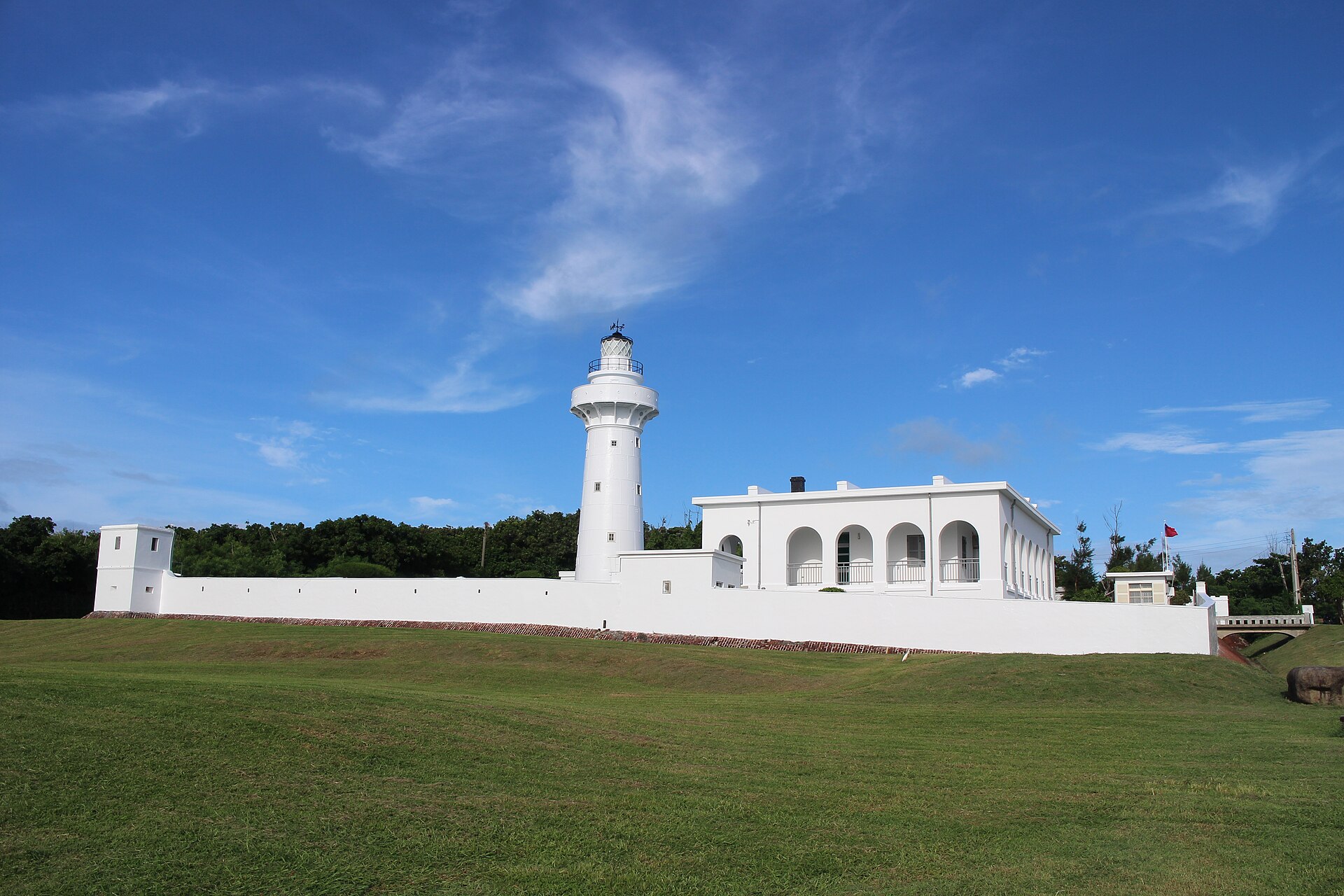
- Hengchun Old Town — Hengchun township
Hengchun Old Town is a walled settlement, and Wikivoyage notes that no other castle town in Taiwan has kept every one of its original gates. Strolling the gates and the lanes between them takes a relaxed hour or two. Old Street is where local snacks are sold, so it pairs well with the cape. - Gaoshi Shrine — Gaoshi village, Mudan
This Shinto shrine stands in Gaoshi, a Paiwan village in Mudan, and recalls the Japanese period. The original building was destroyed by a typhoon and a new shrine was built in its place in recent years. It is a quiet stop for anyone interested in layered local history rather than coastal views. - Kucapungane — Southern mountains, northern Pingtung County
Kucapungane is a Rukai village high in the southern mountains, largely abandoned for decades and known for its slate houses. It lies well north of the cape, so it suits a separate day trip. Road and trail access can change with weather, so check conditions locally and consider going with a guide. - Old House of Siiao Family — Northern Pingtung County
This house dates to the reign of the Xianfeng emperor in the Qing period. After Taiwan passed to Japan, conflict broke out between local residents and the Japanese, and the house is linked to that episode. It is in the north of the county, so it works best as part of a wider Pingtung loop.
Culture
Eluanbi Lighthouse sits in a part of Taiwan where several communities have layered their histories. The Paiwan, an indigenous people of the southern hills and coast, have lived here far longer than the lighthouse has stood, and their resistance to its building is central to the cape's story. Han Chinese settlement followed, bringing Minnan-speaking communities and Hakka families. In Pingtung the Hakka have largely taken on Minnan as an everyday language, even as family halls such as the one at Wukou keep a distinct architectural tradition. The Japanese period left Shinto shrines, one of which, at Gaoshi, was rebuilt for a Paiwan village after a typhoon destroyed the original. Local life is also shaped by folk temples, where incense, offerings and festival processions mark the calendar, and by the rhythms of a tourist coast: weekend visitors from the cities, coach tours and busy food stalls. The pace in the far south is easier than in Taipei, and hospitality often revolves around sharing snacks, fruit and tea. At the lighthouse the fortress design is a reminder that this was contested ground, and reading a little about the Paiwan beforehand makes the setting easier to understand. When visiting villages, shrines or temples around Hengchun, ask before photographing people or ceremonies, keep your voice low, and leave your shoes neatly where others have left theirs at the door.
What to wear
Around Eluanbi Lighthouse, traditional dress is mostly a matter of festivals and heritage events. Paiwan ceremonial clothing uses woven and embroidered cloth, glass beads and decorated headdresses, with patterns that traditionally signal family or standing, and it is worn at celebrations and rites rather than daily. Hakka households in the wider county are associated with plain indigo-dyed cotton jackets, once practical wear for farm work and now seen mainly in museums and costume displays. Everyday dress today is relaxed and suited to heat: T-shirts, shorts, sandals, sun hats and sunglasses, with helmets and light rain jackets for scooter riders. Surf and beach wear is common in the Kenting area, though people generally cover up again away from the sand. A visitor should pack light, breathable cotton or linen, a wide-brimmed hat, sunscreen and a thin windproof layer, since the cape is exposed. Closed shoes or sturdy sandals with grip are wise for coral rock, damp paths and long walks on the headland. For temples and shrines, cover shoulders and knees. In the cooler dry months a light jumper helps in the evenings, and a compact umbrella or poncho is useful at any time of year.
What to eat
- Green bean garlic ice (綠豆蒜) — Dessert stalls and cafés in Hengchun town
Despite the name, this has no garlic: peeled mung beans resemble minced garlic and are used in a sweet shaved-ice dessert. It comes from Hengchun and is a welcome cooler after the hot cape. - Egg crisp cake (蛋酥餅) — Hengchun Old Street (恆春老街)
A crisp baked snack said to have originated in old Hengchun. Savoury versions come in four flavours: thai basil, corn, onion and shallot. They keep well, so they make easy gifts or road snacks. - Dragon fruit burrito (火龍果捲餅) — Snack shops and cafés around Hengchun and Kenting
A wrap whose crust and dressing are made with fresh red-fleshed dragon fruit, filled with salad vegetables and a choice of meat. It is a local twist rather than an old tradition, and a light lunch in hot weather. - Night-market grilled seafood — Night markets in the Hengchun and Kenting area
Night markets operate in most Taiwanese towns, and the coast here suits grilled squid, shellfish and fish skewers cooked over charcoal. Go when the stalls are busy for the freshest turnover, and bring cash for small vendors.
Plan it
Best time. November to April is the more comfortable stretch, drier and less oppressive than the rest of the year, with March and April pleasant for walking the cape. Summer is hot and humid, and the typhoon season in late summer and early autumn can close paths or disrupt transport, so check forecasts.
How long. 1–2
Getting there. Pingtung County is linked to the rest of Taiwan by the TRA rail network, and regional and national bus lines cover the area. Travel to Hengchun by rail and bus or by road from the south-western cities, then take a local bus or taxi for the last leg to the cape.
Budget. low
Tips
- Go in the early morning for cooler air, softer light and fewer coaches
- Bring water, sunscreen and a hat, as shade on the cape is limited
- Check the official site or local sources for current opening hours and any entry charge
- Carry some cash for night-market stalls and small shops
- Watch weather warnings in typhoon season and keep plans flexible
Etiquette
- Ask before photographing people, villagers or ceremonies
- Stay on marked paths in the park and take rubbish with you
- Keep noise down and remove shoes where a temple or shrine requires it
Nearby
Sources
- Wikidata Q5367908 (CC0)
- Wikipedia: Eluanbi Lighthouse (rev 1200358479) (CC BY-SA 4.0)
- Wikivoyage: Pingtung County (rev 5414430) (CC BY-SA 4.0)
- Photo: Eluanbi Lighthouse, Suicasmo (CC BY-SA 4.0)
- Photo: Eluanbi Lighthouse, Kenting National Park, Taiwan, Bernard Gagnon (CC BY-SA 1.0)
- Photo: Taiwan scene 1934, unknown author (Public domain)
- Photo: Eluanbi Lighthouse, Venation (CC BY 3.0)
- Photo: Eluanbi Sunrise, WEI, WAN-CHEN (CC BY-SA 4.0)
- Photo: Eluanbi Lighthouse outbuilding, WEI, WAN-CHEN (CC BY-SA 4.0)
- Photo: Eluanbi Lighthouse, Kenting National Park, Xavier Berlioux (CC BY-SA 4.0)
- Photo: Eluanbi Lighthouse, Outlookxp (CC BY-SA 4.0)


