Dongshi Fisherman's Wharf
Dongshi Fisherman's Wharf, Taiwan

Dongshi Fisherman's Wharf is a converted working port on Taiwan's west coast, good for open sky, oysters and an unhurried seaside afternoon.
The place
Dongshi Fisherman's Wharf (東石漁人碼頭) sits on the coast of Dongshi Township in Chiayi County, western Taiwan. It began as a working fishing port and now doubles as a waterfront for walking, eating and watching the evening light. The setting is low and open: flat coastal land, tidal water and a wide horizon facing the Taiwan Strait. Nothing here is hilly or dramatic in the usual postcard way. The appeal lies in the sky, the breeze and the mix of leisure and trade, with boats and fishing gear never far from the promenade and the food stalls.
Photographs of the wharf show a broad, landscaped waterfront with walkways and plenty of room, while the older fishing harbour and its boats lie close by. Oyster farming is part of the local scene, and the township's shoreline has been shaped by it. This is an outing rather than a long stay, and a half-day fits it well, ideally paired with the harbour, the oyster beds and an evening meal of local seafood.
Weekends bring families from the surrounding towns, and the wharf can feel busy then, with slow traffic on the approach roads and queues at popular stalls. A weekday is calmer. Summer is hot and humid, the sun is strong, and shade on the open waterfront is limited, so the cooler months are kinder. Typhoon weather can disrupt facilities and boats, so it is worth checking conditions before setting out.
Its story
Dongshi Fisherman's Wharf exists because of a change in how Taiwan thought about its fishing industry. After Taiwan joined the World Trade Organization, the government concluded that traditional fishing would struggle against competition from mainland China, and that the sector needed to change direction. The answer was to move part of it towards recreation. A port would no longer only land catch; it could also welcome visitors who wanted to eat, stroll and spend a leisurely day by the water.
Dongshi Township suited the idea. It has a coastline, a fishing community and a position within easy reach of other towns in Chiayi County. Officials took an existing fishing port in the township and transformed it into a multipurpose wharf, keeping the harbour's practical role while adding leisure uses around it.
That makes the wharf young compared with the fishing traditions of the surrounding coast. Its story is less about legend than about policy, economics and adaptation: a community and a government deciding that the sea could earn a living in a new way as well as an old one. Anyone curious about this will find the evidence on the ground. The newer waterfront sits beside the working harbour, and seafood and oysters link the two, because the same coastal waters supply both the kitchens and the boats. Looking past the leisure side to the boats, nets and early-morning routines shows what the project set out to keep alive.
What to see
- The wharf waterfront — Dongshi Township
The landscaped promenade is the heart of Dongshi Fisherman's Wharf. It is wide, flat and easy for families and older visitors, with open views over the water. Walk it slowly, stop at the stalls, and notice how the old harbour and the newer leisure area meet. Shade is scarce, so bring a hat.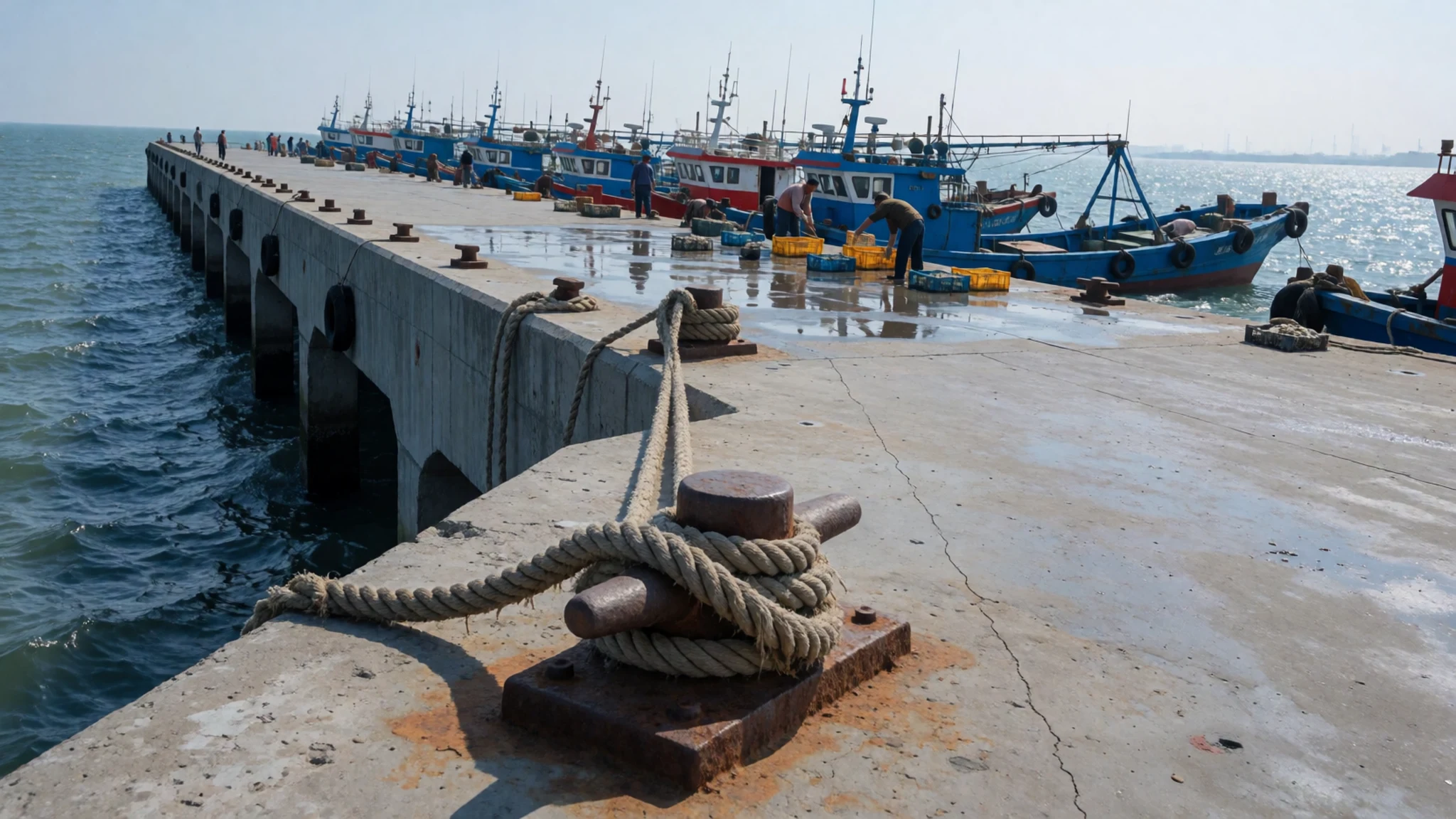
- Dongshi fishing harbour — Dongshi Township
Beside the leisure area, the working harbour shows what the place was built around. Boats tie up, gear is sorted and the daily routine carries on whatever the weekend crowds are doing. Early morning is the best time to watch, and a respectful distance from working crews is wise.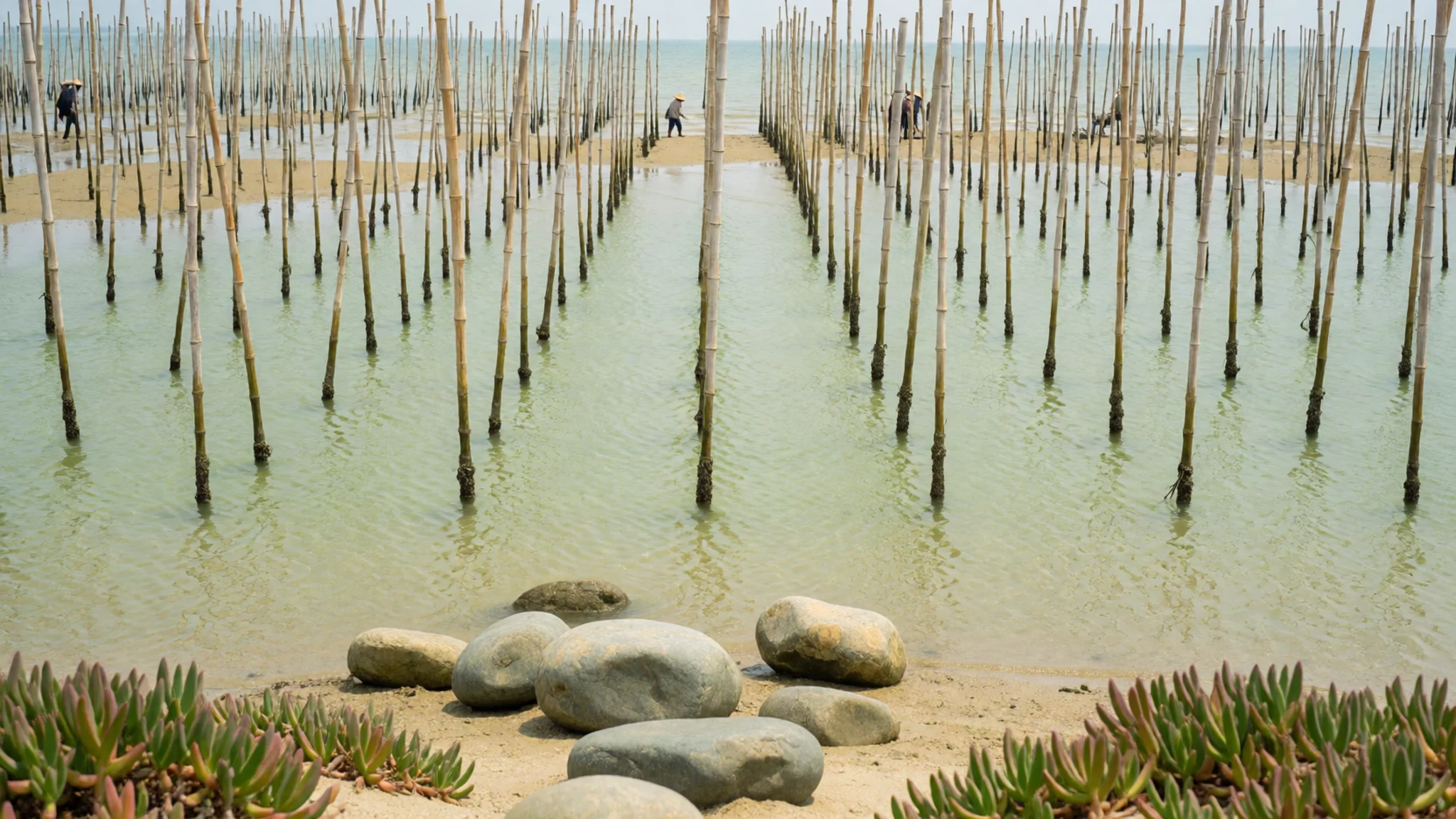
- Oyster farms — Coastal Dongshi Township
Oyster cultivation is part of the shoreline around Dongshi, and the beds can be seen from the coastal roads and harbour edges. The view is plain rather than pretty, but it explains why oysters dominate local menus. Stay on public paths, since the beds are people's livelihoods.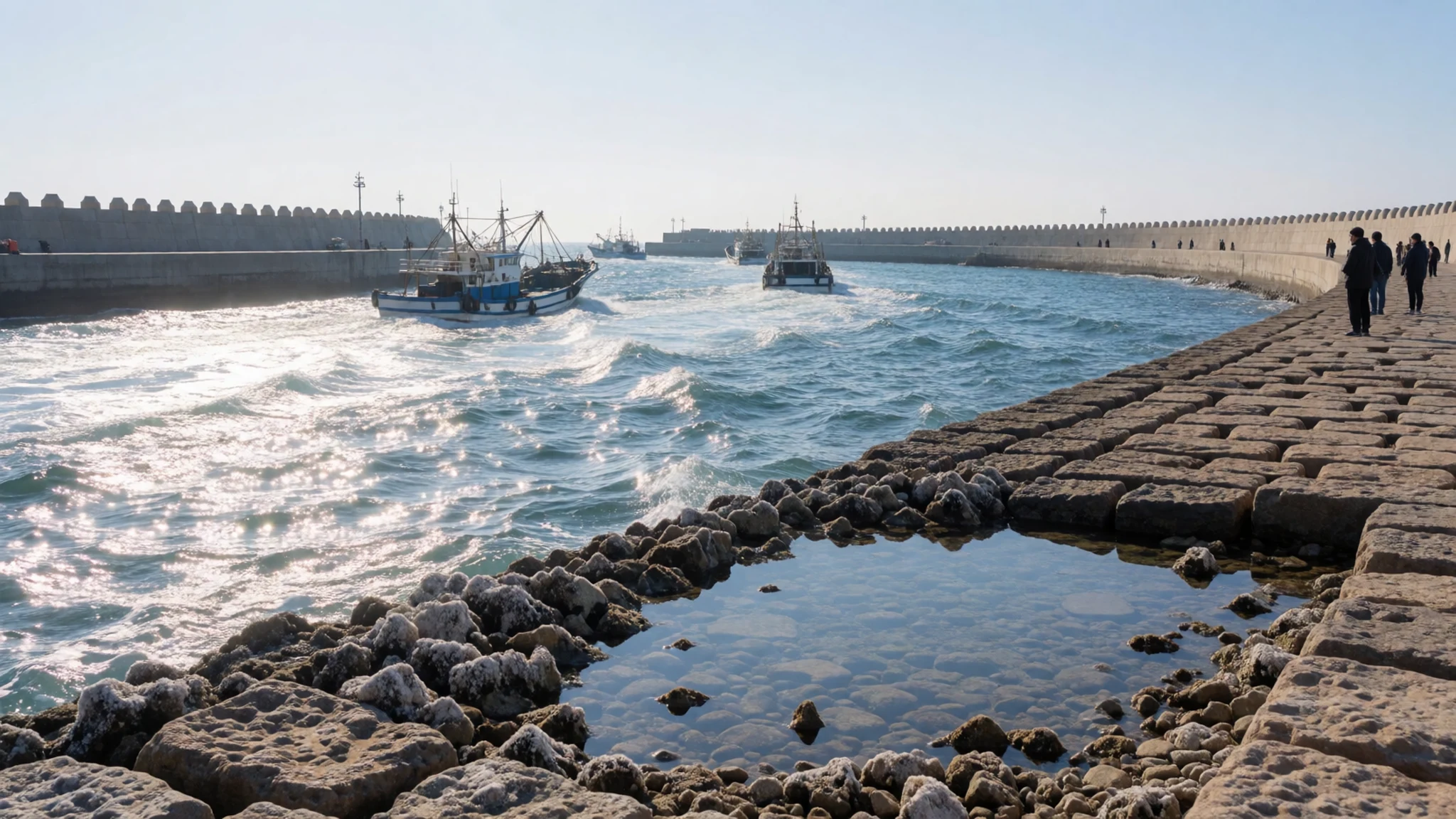
- Harbour entrance — Dongshi fishing port
The entrance to the fishing port is a good short stop for photographs of the sea approach and the boats passing through. It gives a sense of scale and of the harbour's working side, away from the promenade. Take care with traffic and keep clear of vehicles moving in and out.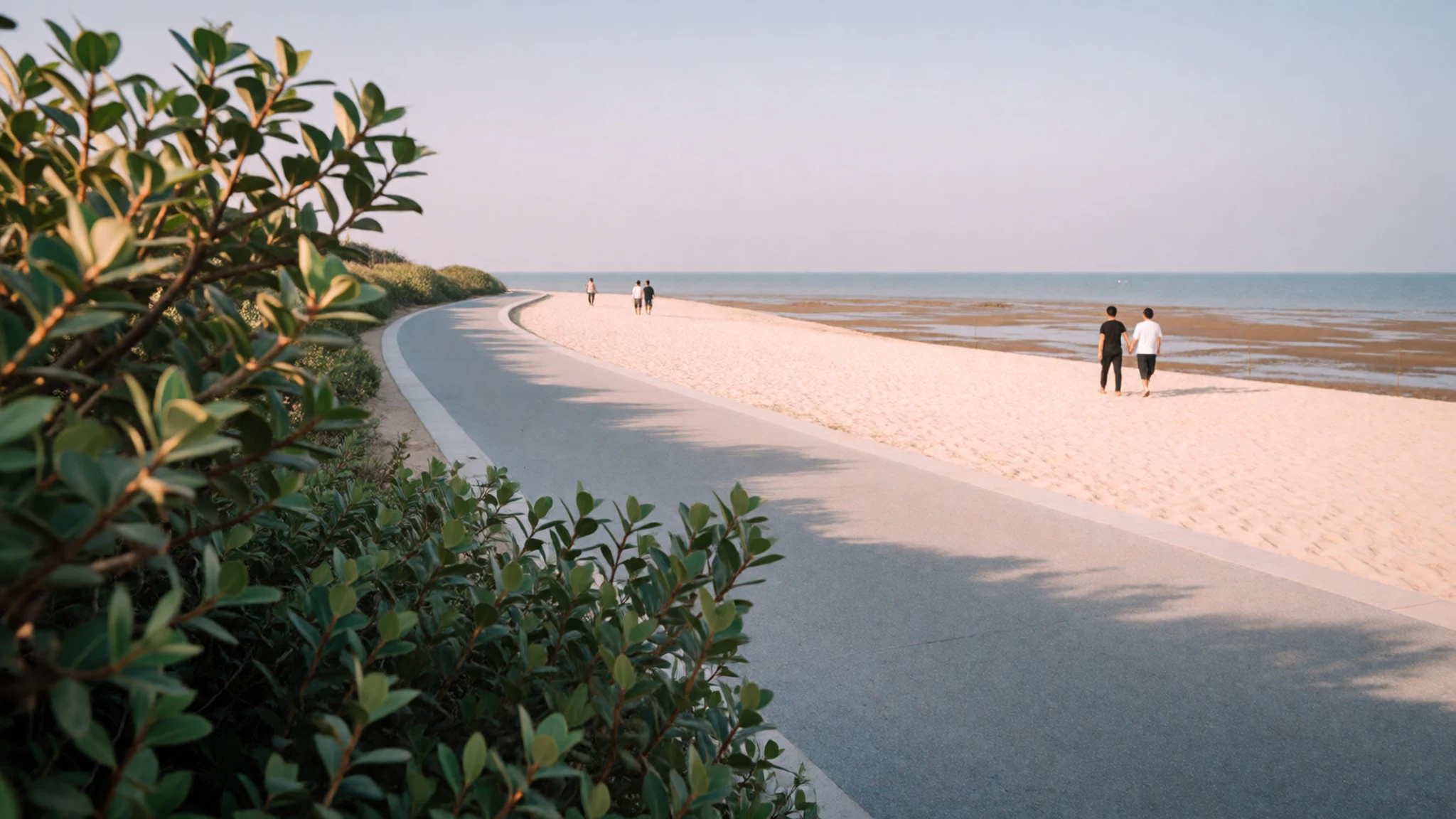
- Sunset along the coast — Dongshi waterfront
Because the wharf faces west over the Taiwan Strait, evenings are the time many visitors choose to come. The light flattens and warms over the water, and the heat eases. Arrive with time to spare, expect company at weekends, and check the weather, as cloud and haze can hide the sun.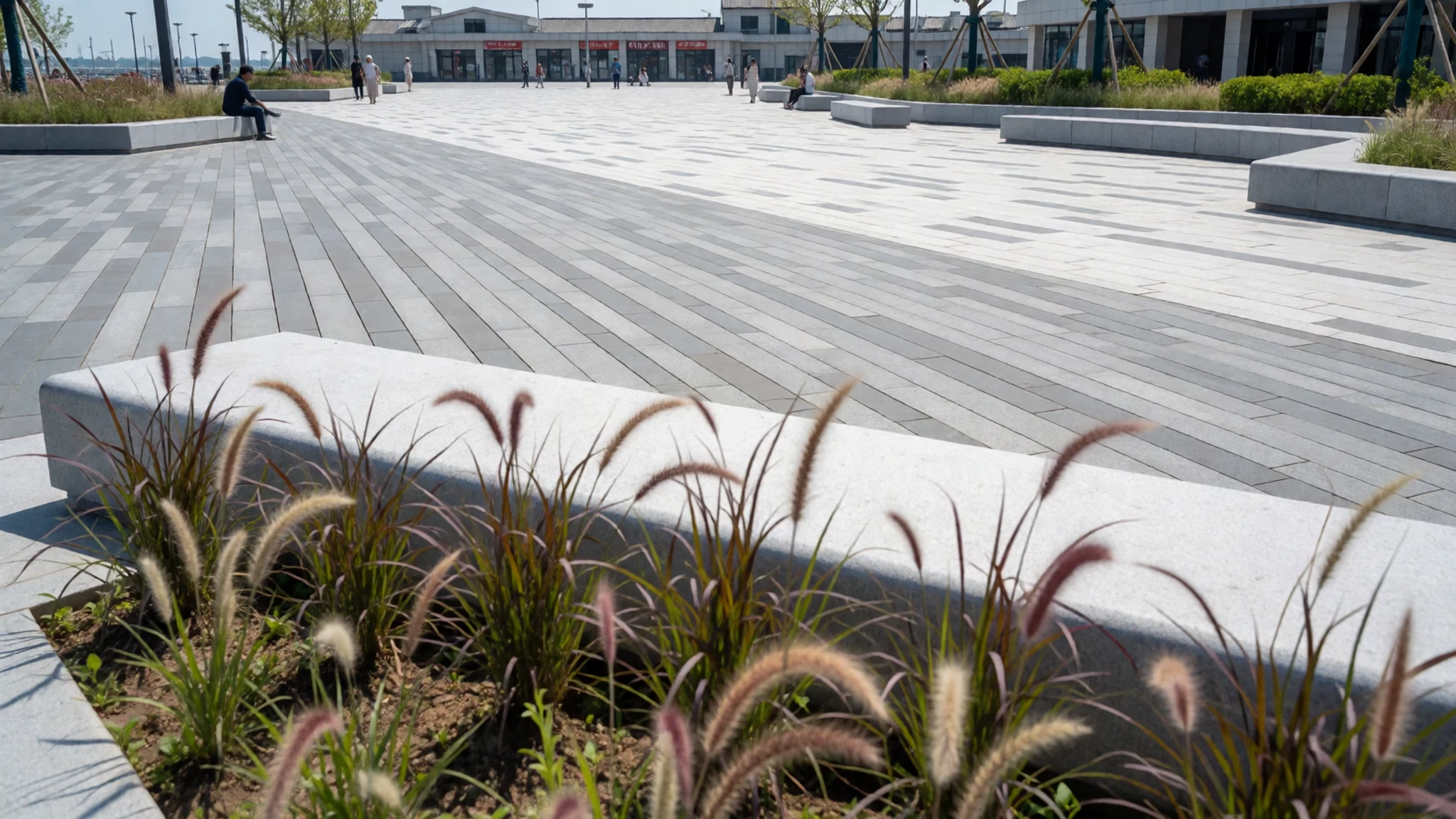
Culture
Dongshi Fisherman's Wharf belongs to a stretch of Taiwan's west coast where fishing and oyster farming have long shaped daily life. Most people in the area speak Mandarin, and many also speak Taiwanese Hokkien, the language of much of the island's coastal communities. A few words of greeting in either are welcomed warmly, though English is not widely spoken, so a translation app helps.
Coastal communities in Taiwan commonly honour Mazu, the goddess of the sea, who is believed to protect those who work on the water. Small temples and shrines near harbours are working places of worship, with incense, offerings and worshippers coming and going through the day. Fishing families may also mark festival days and the lunar calendar with offerings, firecrackers and processions, which can be loud and bright. Visitors who come across one are generally welcome to watch from the side.
The wharf itself is a modern leisure space, so the atmosphere is casual and family-centred. Eating is social: dishes are shared at the table, and seafood is chosen fresh from the display. Queuing is normal at busy stalls, and people tend to be patient and polite even on crowded weekends. The harbour is also a workplace, and crews and boat owners should be treated as colleagues at work, not as part of the scenery.
At any harbour temple near Dongshi, keep your voice low, do not touch the offerings, and ask before photographing worshippers.
What to wear
Dongshi Fisherman's Wharf is a casual coastal place, and its clothing tradition is the working dress of Taiwan's fishing and farming families rather than ceremonial costume. Historically, coastal workers wore plain cotton shirts and trousers, wide-brimmed or conical hats, headscarves and long sleeves against the sun, with boots or sandals for wet ground. Hakka communities elsewhere in Taiwan are known for dark blue cotton jackets. Formal Han-style garments such as the changshan and qipao now appear mostly at weddings, festivals and performances rather than in daily life.
Today people at the wharf wear what suits the heat: T-shirts, shorts or light trousers, caps and sun visors, with sun sleeves and wide hats popular among those who avoid tanning. Sandals and trainers are both common. Local workers on the harbour wear practical waterproofs and rubber boots. Nobody dresses up for an afternoon here, and dress is relaxed.
For visitors, light, breathable cotton or quick-dry fabrics work best in the humid months, with a hat, sunglasses and high-factor sunscreen, since the waterfront offers little shade. Choose shoes with a good grip for damp harbour surfaces, and avoid thin flip-flops near working docks. A light rain jacket or compact umbrella is sensible in any season, and a windproof layer helps on cooler evenings by the water. If you plan to visit a temple, cover shoulders and knees, as modest dress is expected.
What to eat
- Oysters — Seafood stalls and eateries around the wharf and harbour
Oysters are the signature of the Dongshi coast, where they are farmed in the nearby shallows. They are served grilled, fried in omelettes, in soup or fresh with sauces. Choose a stall or eatery where shells are opened to order and turnover is quick.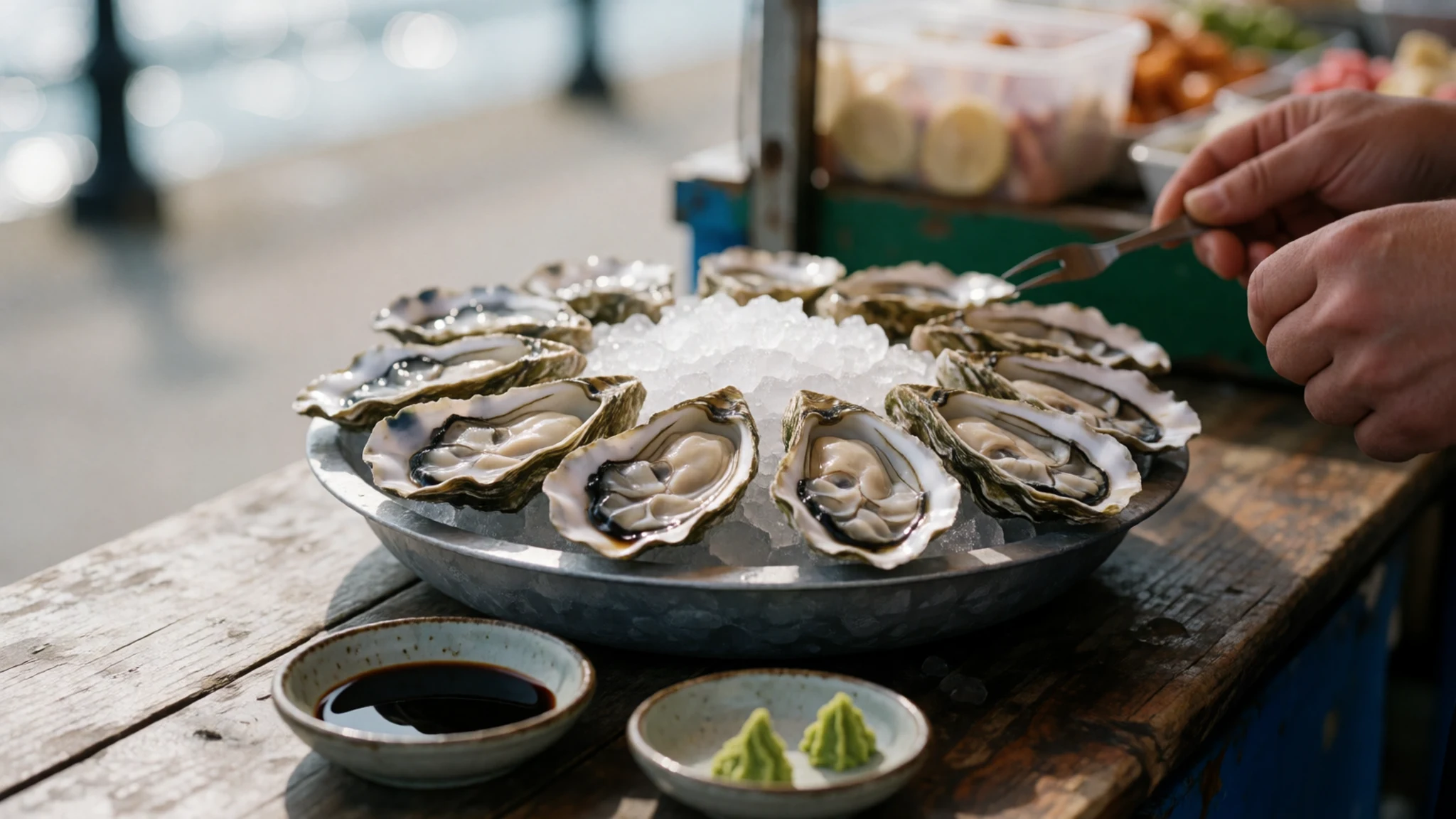
- Oyster omelette (ô-á-chian) — Street food stalls near the waterfront
A Taiwanese classic: small oysters cooked into a glossy, starchy egg batter with greens and finished with a sweet-savoury sauce. It is soft, rich and a fair introduction to local seafood cooking, and it is easy to share as a starter.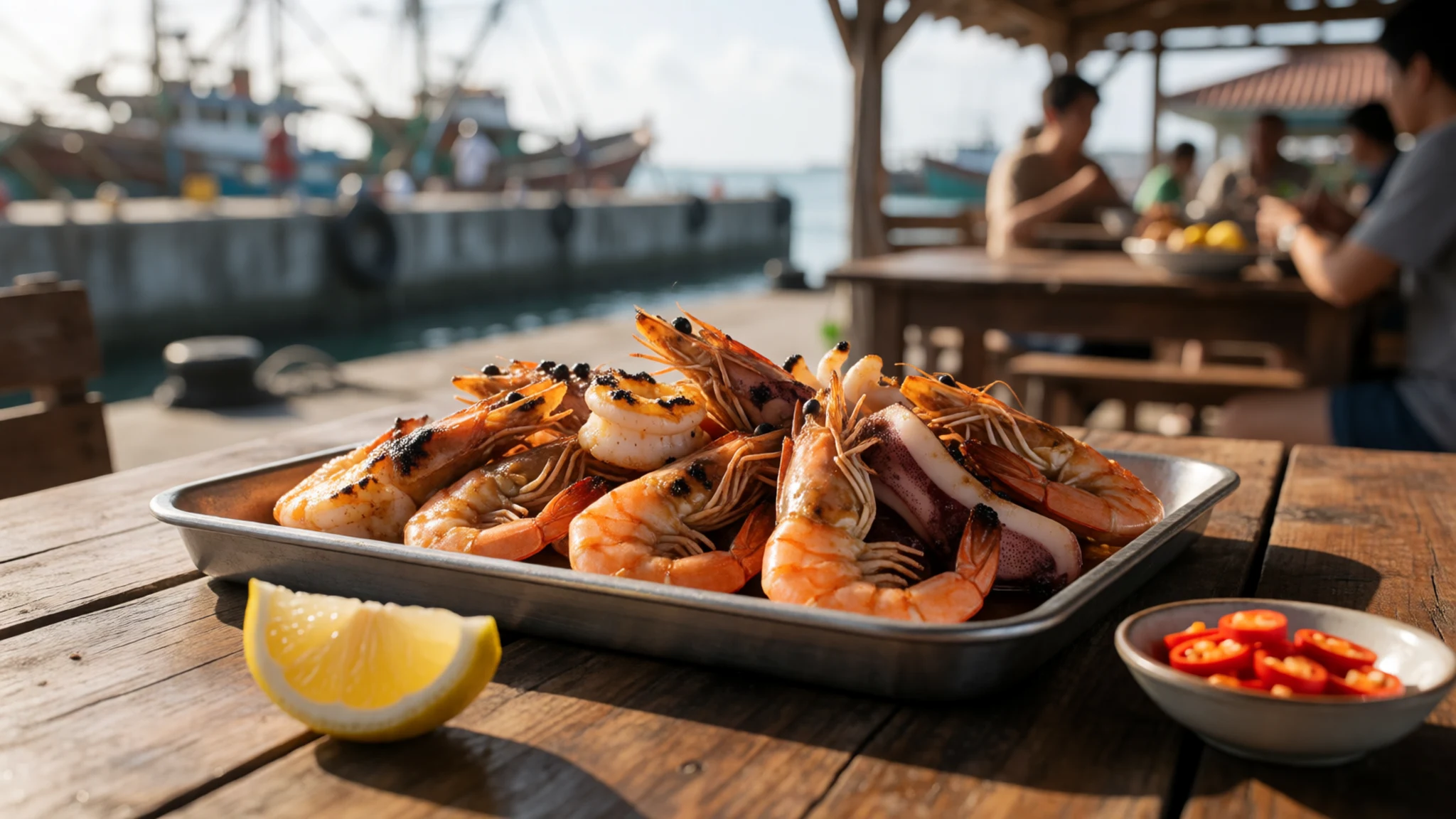
- Grilled fresh fish and squid — Harbour-side seafood restaurants and stalls
Whole fish, squid and shellfish are grilled over charcoal or pan-fried with garlic, salt and chilli. Pick from the day's display and ask how it will be cooked. Fish are usually priced by weight, so confirm the price before ordering. - Shrimp dishes — Seafood restaurants near the fishing port
Prawns and shrimp appear boiled, salt-baked, stir-fried with garlic or deep-fried in a light coating. They are best eaten shell-on and with hands, as locals do. Order a couple of dishes to share rather than one large plate each. - Fish soup and congee — Small local eateries in Dongshi Township
A simple bowl of fish soup or seafood congee suits a cool evening or an early start at the harbour. The broth is clear and lightly seasoned, with ginger and spring onion. It is a gentle option for anyone wary of strong flavours.
Plan it
Best time. March–April and October–November, when the weather is milder and the open waterfront is easier to enjoy. Summer is hot and humid with strong sun, and typhoon season can disrupt boats and facilities, so check the forecast.
How long. 1
Getting there. Fly into Taoyuan International Airport near Taipei, then take the Taiwan High Speed Rail to Chiayi. From the station, continue by local bus, taxi or hired car to Dongshi Township, about the last leg of the trip. Check current timetables locally, as services change.
Budget. low
Tips
- Choose a weekday if possible, as weekends bring crowds and slow traffic on the approach roads
- Come late afternoon for the evening light and cooler air, but check the weather first
- Carry water, a hat and sunscreen, as the waterfront has little shade
- Keep some cash for small stalls, although many places also take cards or mobile payment
- Check the official local tourism pages for events and opening details before travelling
Etiquette
- Keep a respectful distance from working boats and crews, and never block the harbour roads
- Ask before photographing people, especially fishers at work and worshippers at temples
- Queue at busy stalls and take your litter with you
Nearby
Sources
- Wikidata Q19852822 (CC0)
- Wikipedia: Dongshi Fisherman's Wharf (rev 1366970974) (CC BY-SA 4.0)
- Wikivoyage: Chiayi County (CC BY-SA 4.0)
- Photo: Dongshi Fisherman's Wharf, Chiayi County (Mk2010) (CC BY-SA 4.0)
- Photo: Relief location map of Taiwan (Uwe Dedering) (CC BY-SA 2.0)
- Photo: Dongshi Fisherman's Wharf, Chiayi (Mk2010) (CC BY-SA 4.0)
- Photo: Dongshi Fishing Harbor (lienyuan lee) (CC BY 3.0)
- Photo: Dongshi Oyster Farm (lienyuan lee) (CC BY 3.0)
- Photo: Dongshi fishing port entrance (呂卓勳) (CC BY 2.5)
- Photo: Fisherman's Wharf (Ethan Lee) (CC BY 3.0)
- Photo: Dongshi Fishing Harbor (lienyuan lee) (CC BY 3.0)


