Alishan
Alishan, Taiwan
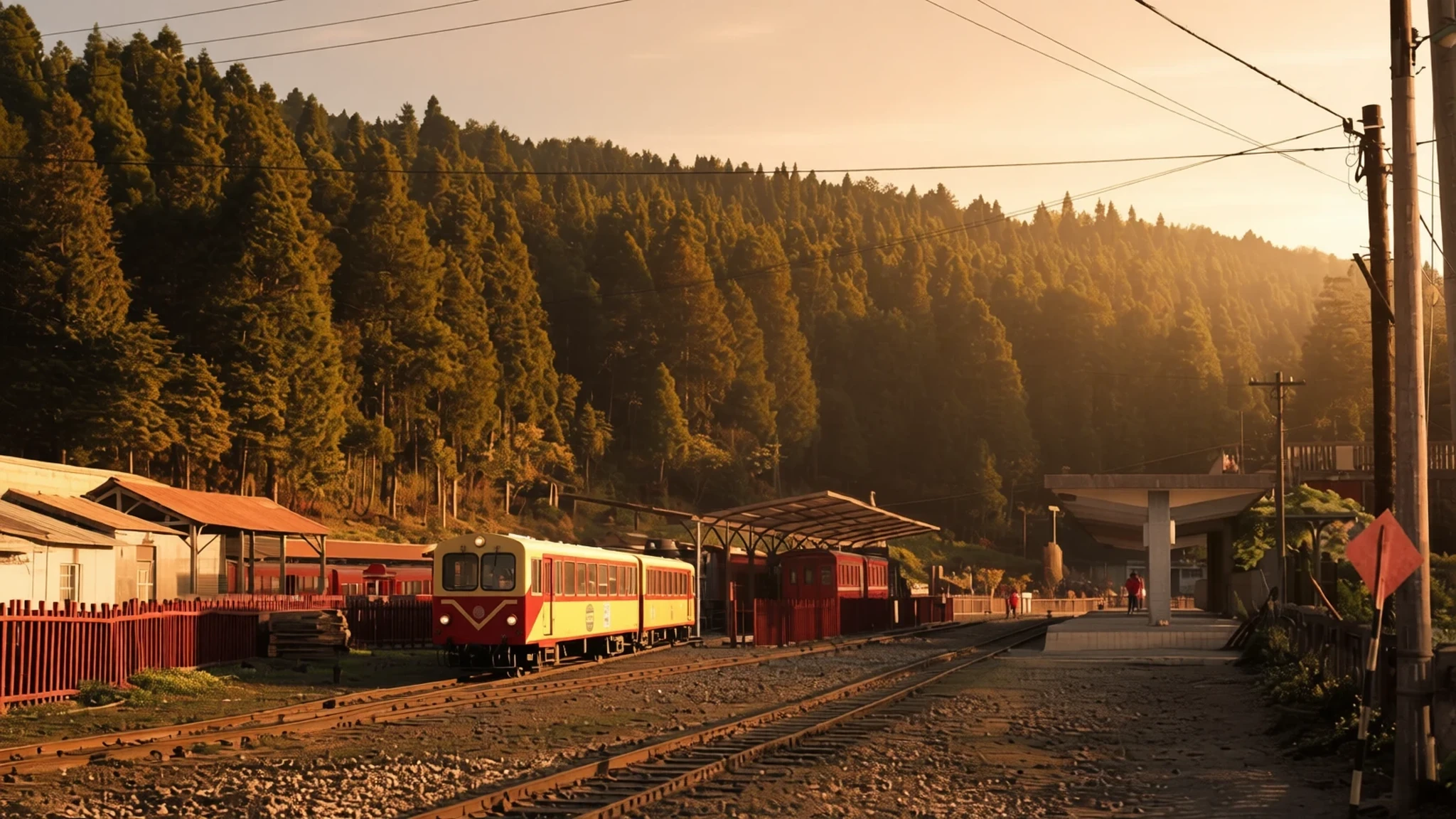
Alishan is a cool, misty mountain forest in Chiayi County, reached by a historic narrow-gauge railway and home to the Tsou people.
The place
Alishan is a mountain township in Chiayi County, in the western highlands of Taiwan. It is classed as an indigenous township, and its population is only about 5,000 people, spread over a large, steep area of forested ridges. The township's recorded elevation in the facts is 1,462 m, though the forest park and its famous viewpoints sit on the higher slopes. The Alishan National Scenic Area covers most of the township and spills into neighbouring ones, so the name on a map and the name on a ticket do not always mean the same patch of land.
The climate is subtropical highland: mild and cool rather than hot, with the coldest weather from December to February. Summer is the wet season, and the rain is heavy. When typhoons cross Taiwan, mountain places like this can receive extraordinary downpours, and roads and rail lines are sometimes closed. Cloud and mist are normal at any time of year, which is part of the appeal, since the forest looks best half-hidden.
Chiayi County runs from the Taiwan Strait in the west up to the Yushan range in the east, and the Tropic of Cancer passes through it. A visitor climbs from flat farmland and night-market towns into cedar-scented forest within a few hours. The air is noticeably cooler up top, which is why many Taiwanese families treat Alishan as a break from lowland heat. Most visitors come for sunrise, tea, tall trees, blossom in spring and the small railway, then go home by evening. A night or two allows quieter walks once the day-trip groups have left.
Its story
Alishan is traditional Tsou territory. The Tsou are a people with rich oral histories of clan migrations into the land between Yushan and the Chianan Plain. Each clan once had its own settlement. The first town to bring several clans together, Tfuya, formed around 1600, and the earliest written mention comes from Dutch records of 1647, which describe it as a settlement of about 300 people. The name Alishan itself is said to come from a Tsou word, Jarissang.
The twentieth century brought outside rule and outside names. Under Japanese administration the area was treated as restricted land, and the forests were opened up for timber, which is why the narrow-gauge railway exists. After 1945 the township was named Wufeng, after a Qing-era merchant, Wu Feng, whom Han Chinese legend credits with persuading indigenous people to give up headhunting. Many Tsou felt that the tale was a racist one, with their ancestors cast as savages to be reformed.
Martial law ended in 1987, and with it came more room to speak openly. In 1989 indigenous protesters challenged the Wu Feng story in school textbooks and pulled down statues of him wherever they could find them. The township was renamed Alishan in March 1989, which is also the founding date in the facts. That history is worth keeping in mind when walking round: the Japanese-era railway and shrines, the Han Chinese temples and the Tsou villages all belong to the same mountain, and each group tells a different version of it.
What to see
- Alishan Forest Railway and Alishan Station — Alishan forest recreation area
The narrow-gauge forest railway is the classic way up the mountain, built for logging and now carrying passengers. Alishan Station is a small wooden terminus where walkers set out into the forest. Services and seat reservations change, so check the official site before planning a day around a particular train.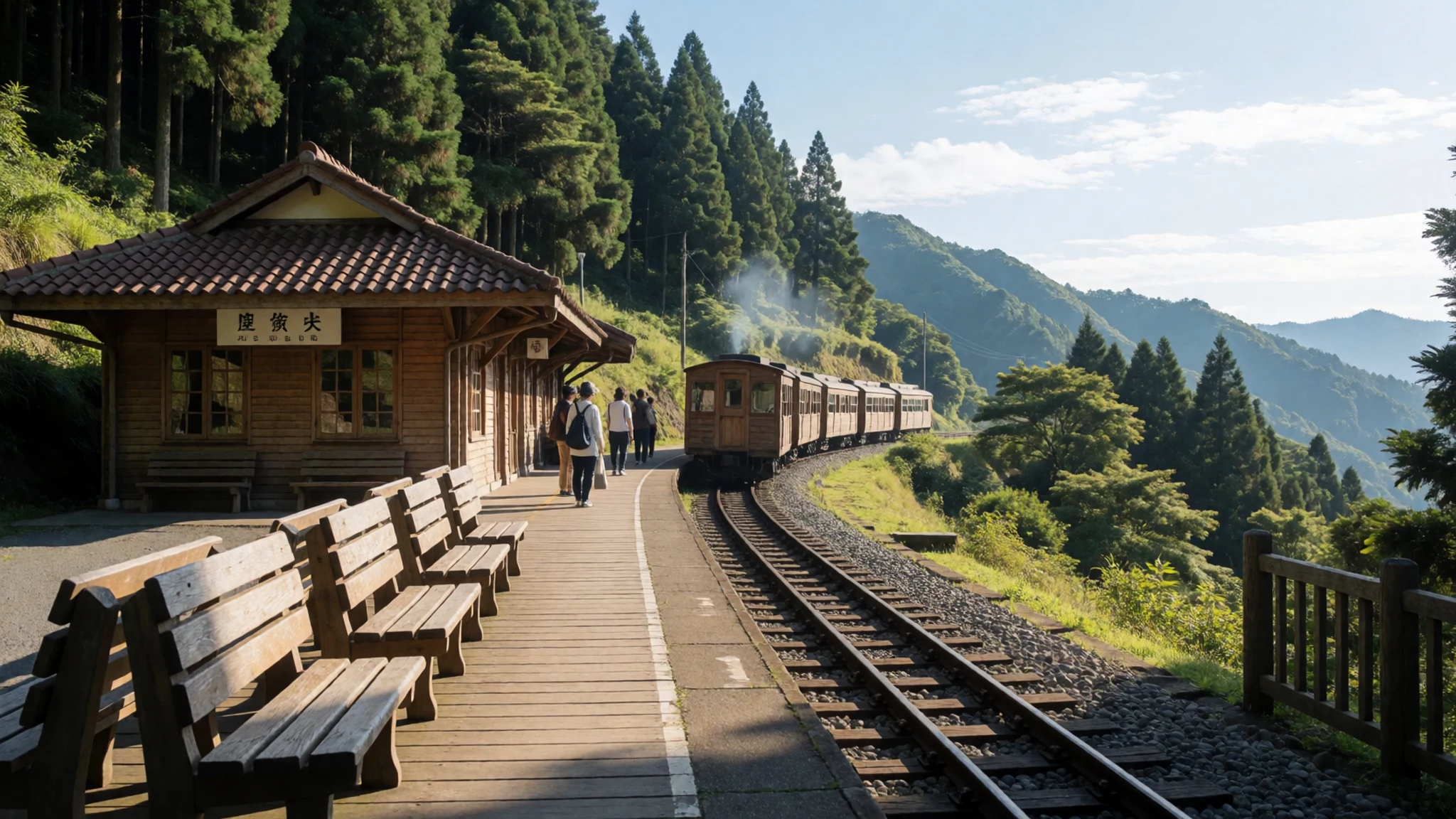
- Shouzhen Temple — Alishan forest recreation area
A Chinese temple among the trees near the main forest paths, especially pretty when cherry blossom is out in spring and the mist lies low. It is a working place of worship, so visitors move quietly around local people burning incense. It makes an easy, free pause between longer forest walks.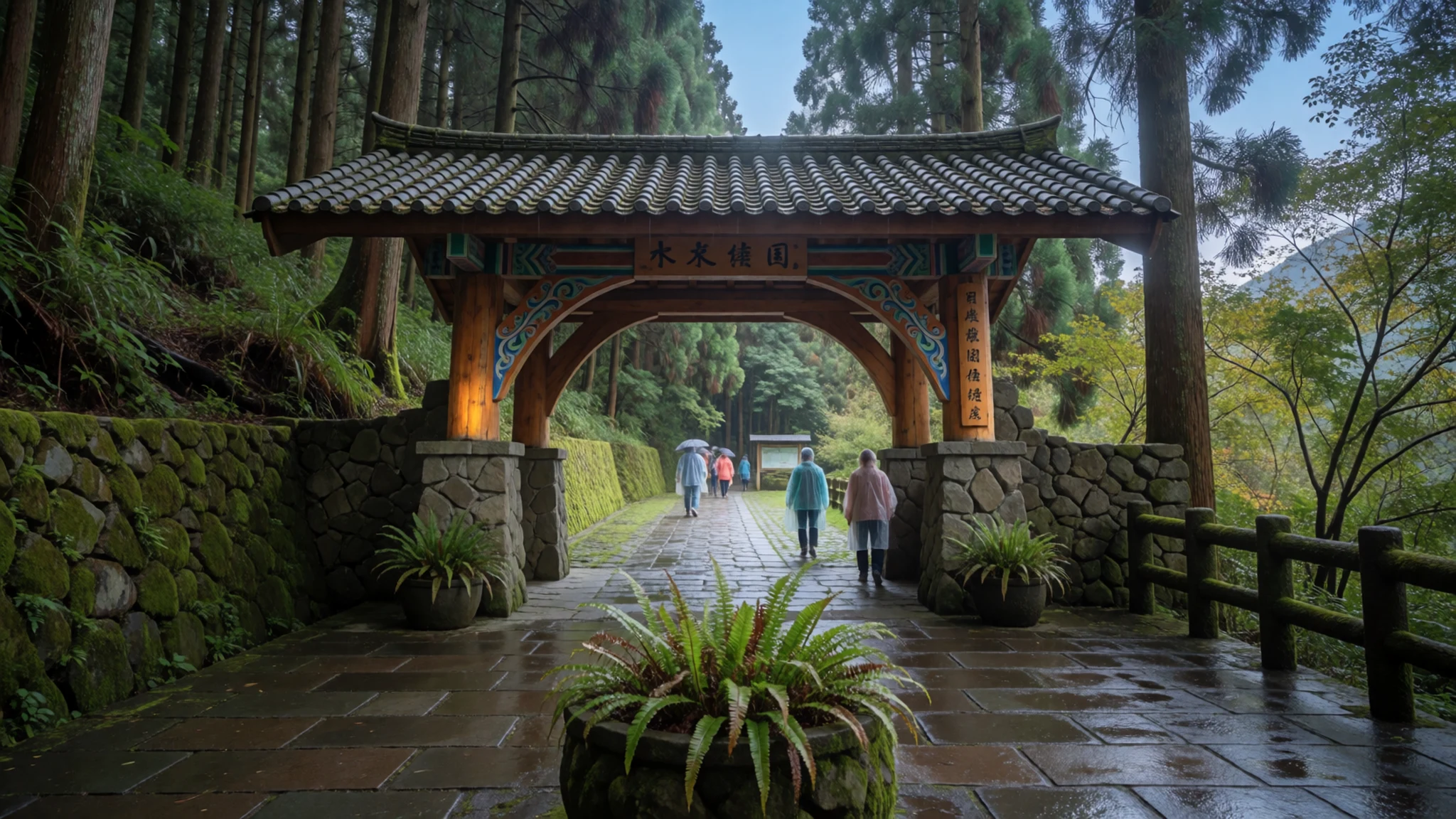
- Tree Spirit Pagoda — Alishan forest area
Despite the name, this is a cenotaph rather than a pagoda. It was raised by Japanese foresters to honour the spirits of felled trees, reflecting the Kodama belief that trees hold a divine presence. Reaching it involves a pleasant forest walk, and the quiet is the main reward.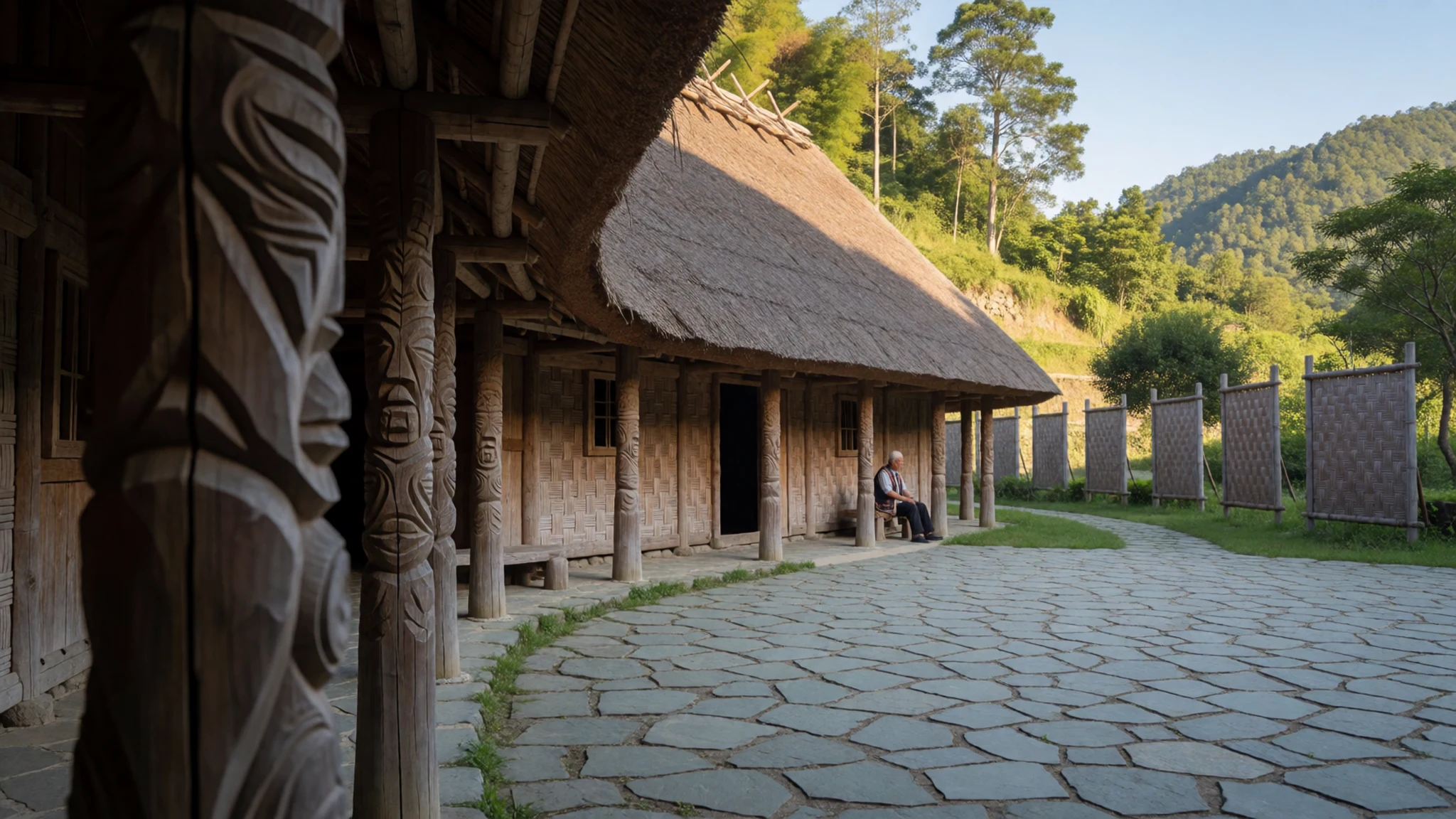
- Fenqihu Old Street — Fenqihu, Chiayi County
A small railway-era street of old houses selling snacks and take-away food. It lies on the rail line below the main resort and is a friendlier, lower-key stop than the busiest viewpoints. Allow time for a slow wander, a snack and a look at the old wooden facades.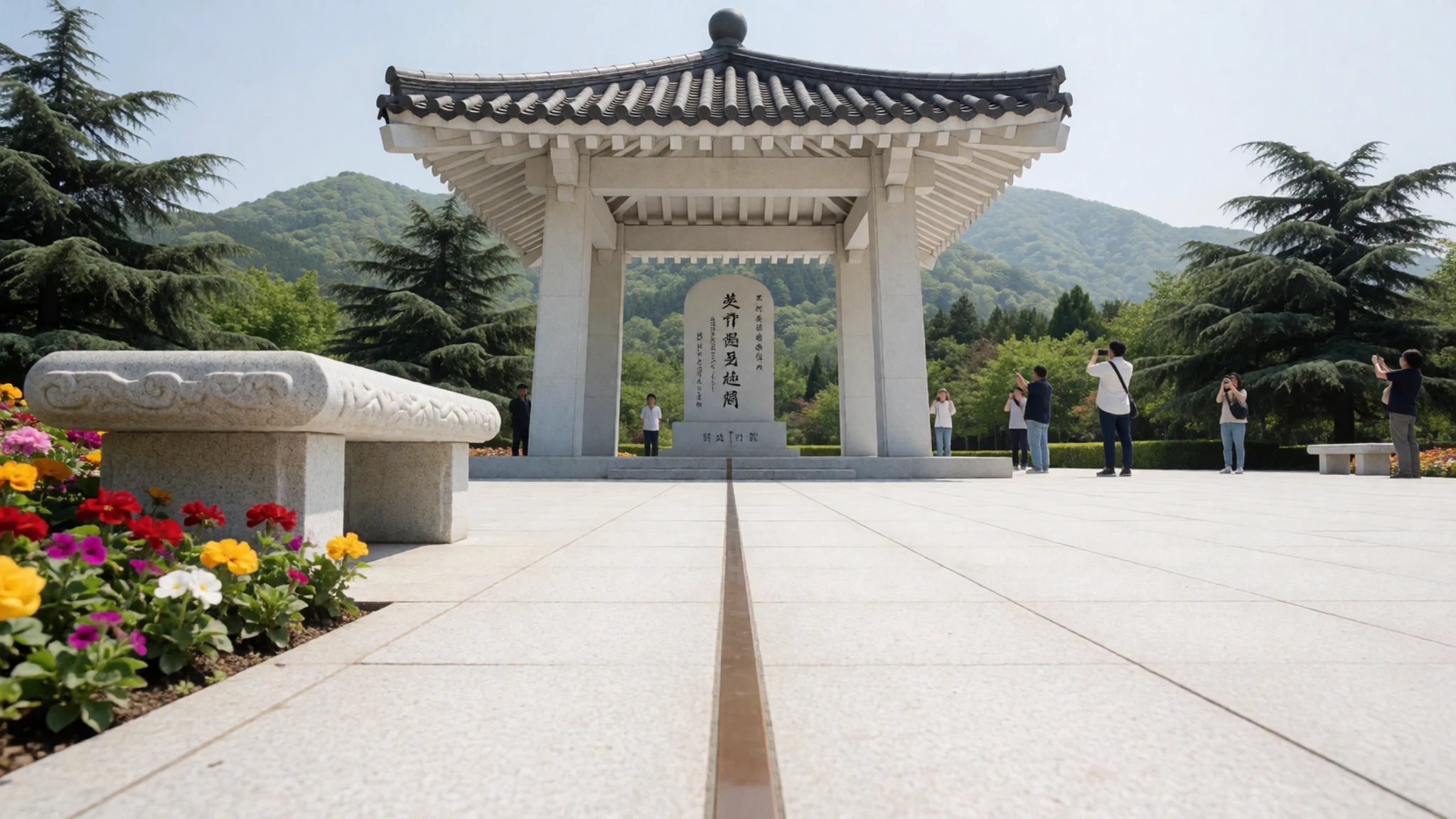
- Tsou villages and the Yuyupas cultural park — Tsou villages around Alishan
The Tsou communities around Alishan, such as Lalauya (named for the maple forest in the Tsou language) and Cayamavana, are where the mountain's indigenous history is most alive. The Yuyupas cultural park introduces Tsou traditions. Go with respect: these are homes and living communities, not only attractions.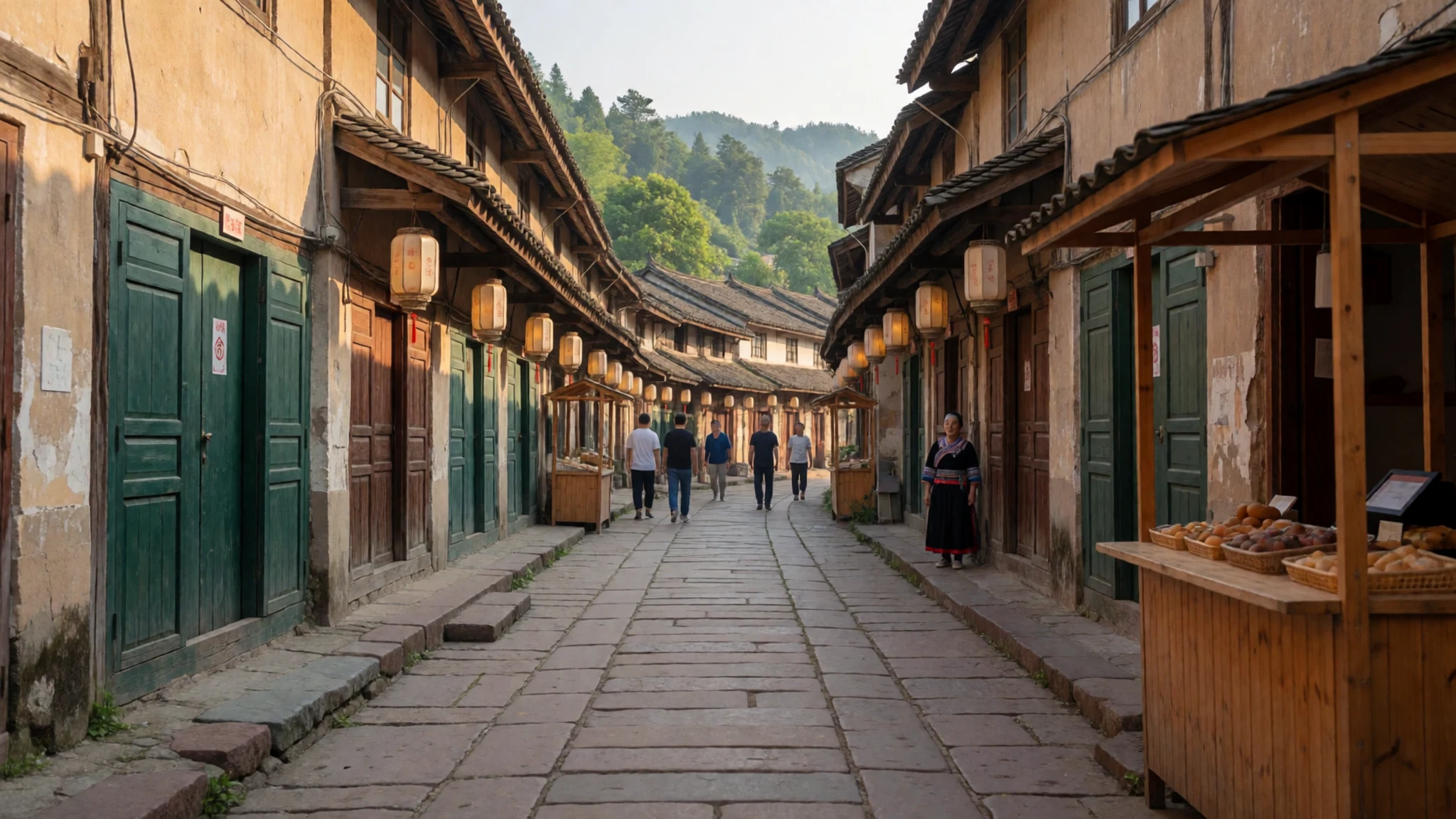
Culture
Alishan's culture is layered. The Tsou, whose homeland this is, have their own language, clan structures and ceremonies, and their communities sit scattered across the mountain, among them Lalauya and Cayamavana. The township was officially renamed in 1989 after indigenous protest, so identity here is a recent and sometimes sensitive subject. Tsou-run cultural parks and local guides are the best way to learn about it first-hand, and buying tea, crafts and meals from Tsou families helps keep that culture on its own land.
A second layer is Japanese: the forest railway, the timber industry and the Tree Spirit Pagoda all date from that period, together with an older reverence for old trees that still shapes how people look at the forest. A third is Han Chinese religion, seen in small temples such as Shouzhen Temple, where locals burn incense and leave offerings. Many visitors are Taiwanese families, and the atmosphere is usually friendly, relaxed and early to bed.
Sunrise is the daily ritual. People rise before dawn, gather at viewpoints in warm jackets, and wait together for light over the cloud sea. Tea is the other constant, grown on the surrounding slopes and sold and drunk everywhere. Nobody expects visitors to know the details of any of this, only to be curious and polite. Ask before photographing people in Tsou villages, and stay on marked paths in the forest, never taking plants or bark as souvenirs.
What to wear
In Alishan, traditional dress belongs to the Tsou, and it is now mostly worn for festivals, ceremonies and cultural performances rather than every day. Tsou clothing traditionally uses leather, cloth and woven or embroidered trim, with headwear and decoration that mark the wearer's role. Exact patterns and meanings vary by clan and community, so it is best to ask a Tsou guide or cultural park host rather than guess.
Day to day, people on the mountain dress for the weather: jackets, fleeces, trousers, waterproofs and sturdy shoes. Taiwanese visitors often arrive well wrapped for the pre-dawn sunrise, then peel layers off later. In villages and farms, practical outdoor clothes are normal, and nobody dresses up for the forest.
Visitors should plan for cool, damp conditions in any season. Pack layers, a light waterproof or compact umbrella, and warm clothing for sunrise and for the cold months from December to February. Shoes need good grip, because wooden boardwalks and forest steps get slick in the mist. Shorts are fine in warm weather, but at temples and in Tsou villages, covered shoulders and knees are a courteous choice. A hat and a spare pair of dry socks are small things that make a wet day much more comfortable.
What to eat
- Alishan mountain tea — tea houses and shops on the slopes and in villages
Tea grown on the surrounding high slopes is the local signature. It is light, floral and often served in small cups. Buy or taste it at tea houses and shops around the mountain, and ask how it was grown and roasted.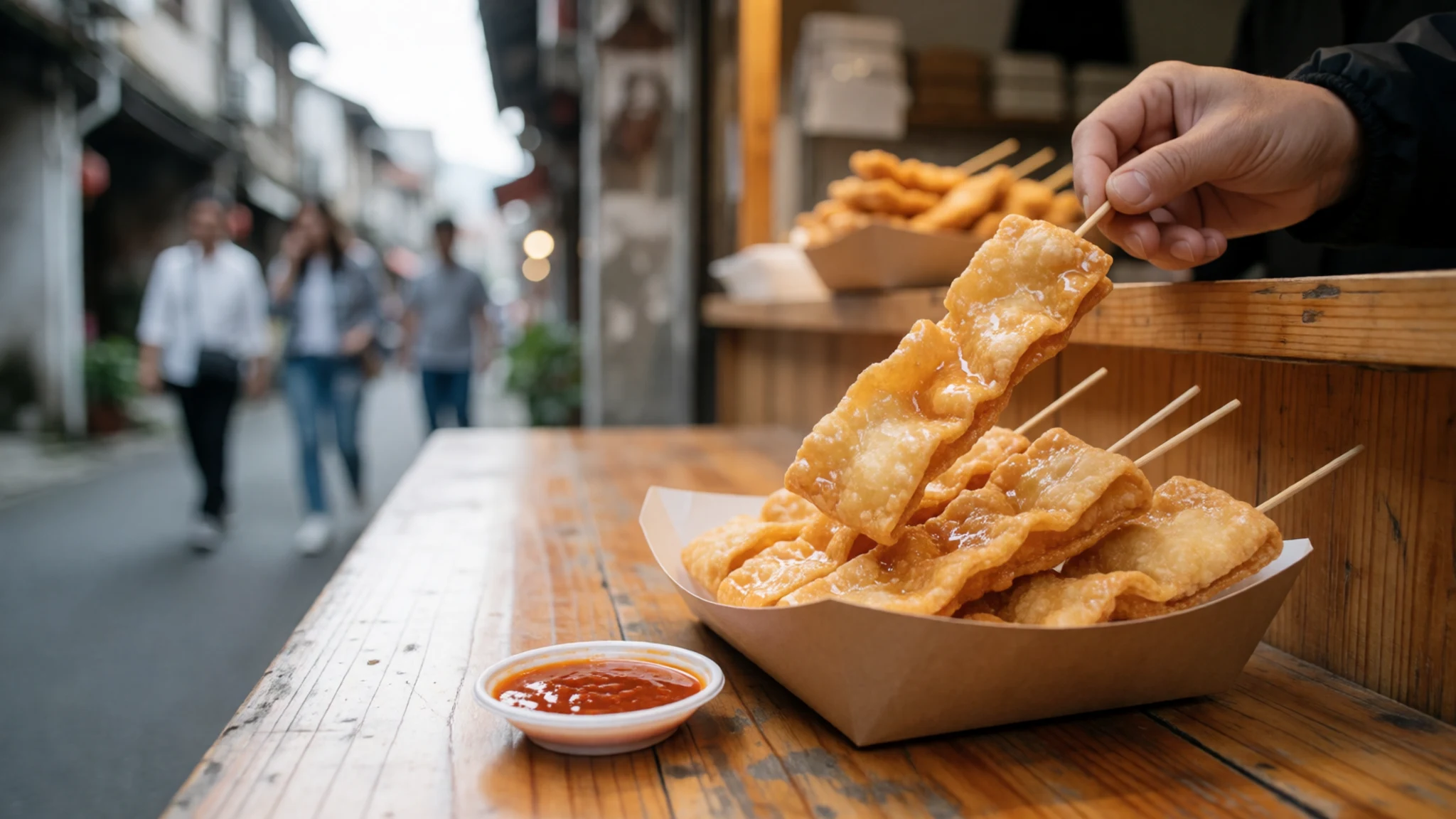
- Railway-style lunchbox (biandang) — near Fenqihu and Alishan stations
A simple boxed meal of rice, meat or vegetables and pickles, long associated with Taiwanese rail travel. It makes a practical lunch on a mountain day. Look for it near stations and small eateries along the old railway route.
- Turkey rice (huoji rou fan) — small eateries in Chiayi city
Shredded turkey over rice with savoury sauce, a staple in Chiayi city and a good last meal after coming down the mountain. It is cheap, filling and found at small counters rather than formal restaurants. - Night-market snacks — Dalin and Minxiong night markets
Dalin and Minxiong night markets in the county offer grilled meats, fried snacks, sweet drinks and local specialities. They are lowland stops on the way up or down, and a good place to try several small dishes in one visit. - Mountain vegetables and local home cooking — small family-run eateries near Fenqihu and the forest area
Eateries near the forest area serve stir-fried greens, bamboo shoots and other mountain produce with rice and soup. Menus are often in Chinese only, so a translation app and some pointing helps. The cooking is simple and warming on a cold, misty day.
Plan it
Best time. March–April for cherry blossom and mild weather, and October–November for clearer skies and cool, comfortable days. Summer is the wet season with heavy rain and typhoon risk, while December to February is cold.
How long. 2–3
Getting there. Fly to Taiwan and travel to Chiayi, which is linked by the high-speed rail and the regular rail network, with a small airport serving Penghu and Kinmen. From Chiayi, take the forest railway or a mountain bus or road to Alishan; check current services on the official site, https://alishan.cyhg.gov.tw/.
Budget. mid
Tips
- Book trains and accommodation well ahead for sunrise weekends and the blossom season
- Check road and rail closures after heavy rain or typhoons before travelling
- Start early for sunrise viewpoints and quieter forest paths before the day groups arrive
- Carry some cash for small shops, tea sellers and village eateries
- Bring warm layers and rain gear, even in summer
Etiquette
- Ask before photographing people in Tsou villages, and treat them as homes, not displays
- Stay on marked paths and do not take plants, bark or soil from the forest
- Keep voices low at temples and at sunrise viewpoints
Nearby
Sources
- Wikidata Q709917 (CC0)
- Wikipedia: Alishan, Chiayi (rev 1384104560) (CC BY-SA 4.0)
- Wikivoyage: Chiayi County (rev 5397518) (CC BY-SA 4.0)
- Photo: Lalauya (Yiken) (CC BY-SA 2.5)
- Photo: View from Alishan (Taiwantaffy) (CC BY 3.0)
- Photo: Alishan National Forest Recreation Area main entrance (徐芳蘭) (CC BY 2.5)
- Photo: YUYUPAS Park (Xiaolong Zheng) (CC BY 3.0)
- Photo: Cayamavana (Bellenion) (CC BY-SA 4.0)
- Photo: Shouzhen Temple with cherry blossom (Outlookxp) (CC BY-SA 4.0)
- Photo: Army Map Service map of Formosa (Public domain)
- Photo: Alishan Station (Jāzeps Baško) (CC BY 2.5)


