Beipu
Beipu, Taiwan
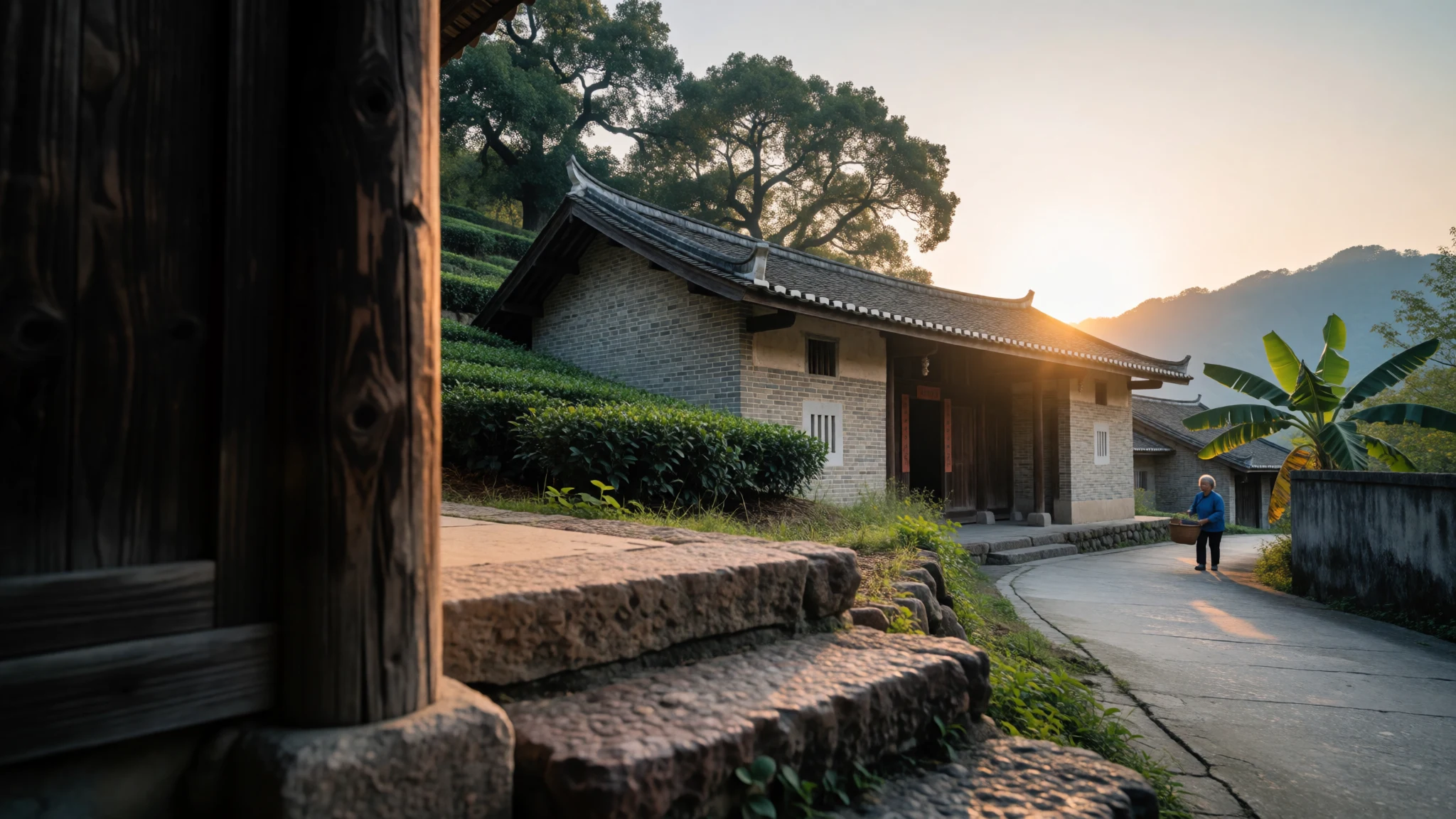
Beipu is a small Hakka hill township where tea is ground into a nutty paste and old family mansions line the lanes.
The place
Beipu (北埔) is a rural township in Hsinchu County, in north-western Taiwan, with a population of about 8,300 and an elevation of 344 m. It sits where the coastal plain begins to rise into tea-growing hills, and the air is humid, green and often misty. Across Taiwan it is known as a centre of Hakka culture, the heritage of a Chinese-speaking community with its own language, cooking and customs. The old core is small enough to cover on foot in a morning: a few lanes of low brick and timber buildings, restored family mansions, a temple, and tea houses where the signature drink is ground rather than steeped. Around the centre, hillsides carry tea bushes and orchards. The farms here are linked with dongfang meiren, a tea prized for its sweet, fruity character. Weekends bring coach parties and day-trippers from Hsinchu and Taipei, and the main lane gets crowded by late morning; weekday mornings feel like a village again. Summers are hot and sticky, and rain can arrive in any season. Beipu is cheap to visit compared with the big cities. It works well as a slow day out, or as a base for walks and drives into the Lionhead Mountain area nearby.
Its story
Beipu's recorded history as a settlement begins in 1834, when the Qing court gave two men the right to open the area for farming: Jiang Siou-luan, a Cantonese farmer, and Jhou Bang-Jheng, a merchant from Fujian. Their partnership drew in Hakka farmers and tea growers, and over the following decades the settlement grew into a regional hub for trade and administration. The grand houses still standing in the old town, with their courtyards and carved beams, come from this period of prosperity and were built by families who gained from the land grant. The township's darkest episode came in 1907, when the Hoppo Uprising broke out against Japanese colonial rule. Insurgents from the Hakka community and from the indigenous Saisiyat people rose against the colonial administration. The response was harsh: troops and police hunted down Hakka villagers and killed a large number of them, mostly young men. Many came from Neidaping, a mountain hamlet in the south of the township, which was left with a generation missing. The uprising is remembered locally, and it helps explain why Beipu guards its Hakka identity so firmly. A walk through the old houses and temples passes through layers of frontier settlement, trade, tea and colonial-era rupture, all packed into a very small area.
What to see
- Jiang A-Sin Ancient House — Old town, Beipu
The Jiang A-Sin Ancient House is a restored family residence at the edge of the old town, and a good way to understand how prosperous Hakka settlers lived. Guided tours are available, explaining the layout, the timberwork and the family's role in developing the district. Check the official township website before going for current visiting arrangements. - Beipu Old Street — Old town, Beipu
Beipu Old Street is the walkable core of the township, a cluster of historic buildings, tea houses, snack stalls and craft shops along narrow lanes. It fills up at weekends, especially around midday, so an early start or a weekday visit leaves more room to look at the brickwork and eaves. Allow time to sit down for tea. - Jingguangfu House — Old town, Beipu
Jingguangfu House is a Chinese-style mansion dating from 1835, built during the first wave of settlement. Its courtyard plan, tiled roofs and carved details show the confidence of the families who profited from the land grant. It stands a short walk from the old street, so it fits easily into a morning loop on foot. - Citian Temple — Old town, Beipu
Citian Temple is dedicated to Guanyin, the goddess of peace and mercy. Local farmers built it in 1835 to pray for calm after tense encounters with indigenous neighbours. It still works as a neighbourhood temple, with incense, offerings and worshippers passing through, while snack sellers outside add a lively edge to the approach.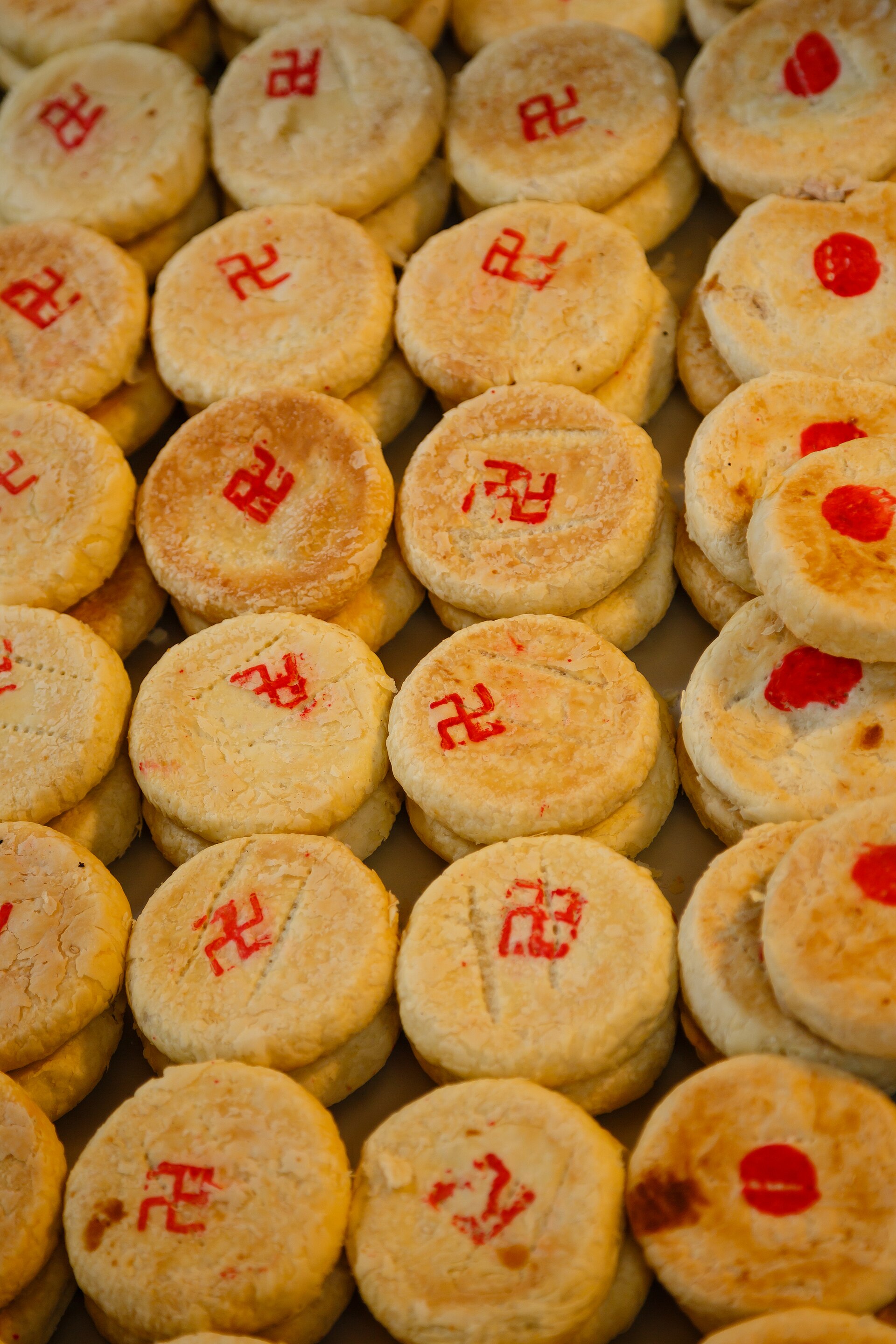
- Green World Ecological Farm — East of the old town
Green World Ecological Farm lies a short distance east of the old town. It combines an educational farm, a small zoo and a botanical garden with a large plant collection. It suits families and anyone wanting an open-air break from the lanes. Check the farm's own channels for current opening details and ticketing before heading out. - Beipu Cold Spring — South of the old town
Beipu Cold Spring lies south of the old town, with a waterfall, a fish pond and picnic areas. The spring water is cool and gently alkaline, traditionally used for skin and joint complaints, though it should not be drunk. It makes a relaxed stop on a warm day, best reached by car or taxi.
Culture
Beipu is a living centre of Hakka culture, and it shows in everyday habits more than in staged performances. The Hakka are known for thrift, hard work on hillside farms, and a cuisine that leans on salted, pickled and preserved ingredients that kept well out in the fields. Family and ancestry matter: the old mansions were built around courtyards and ancestral halls, and clans still gather in them. Hakka is still heard in shops and homes, alongside Mandarin and Taiwanese Hokkien. Temple life carries on as well. Citian Temple, dedicated to Guanyin, was built by local farmers praying for peace after clashes with their indigenous neighbours, and incense, offerings and festival days still centre on it. Tea is the social glue: guests are offered a bowl or cup almost as soon as they sit, and conversation moves slowly over it. The Saisiyat people, whose communities lie in the nearby hills, have their own distinct traditions, and their history is woven into the township's past. The old houses are the best place to see how these communities and trades fit together, and guided tours explain how families lived. At Citian Temple, keep your voice low, step over rather than on the threshold, and ask before photographing worshippers at the altar.
What to wear
Traditional Hakka dress in Beipu centres on the blue shirt (lanshan), a loose, side-fastening jacket sewn from cotton dyed with indigo. The dark colour hid field dirt and survived repeated washing, which suited farming families on the tea slopes. Women wore it with black trousers and often a headscarf or wide-brimmed hat against the sun; men's versions were plainer. Today the blue shirt mostly appears at festivals, in cultural performances and in craft shops, while the bold peony and flower-print cotton sold as Hakka floral cloth has become a popular modern souvenir for bags, aprons and tablecloths. Everyday dress in Beipu is plain and practical: T-shirts, jeans or light trousers, caps and sturdy shoes, with a rain jacket never far away. For visitors, think warm, humid and walkable. Choose breathable cotton or quick-dry layers, a hat and sunscreen for summer, and a light waterproof for sudden showers. Shoes need grip for wet stone lanes and hill paths. At Citian Temple and the old ancestral halls, cover shoulders and knees out of respect. In winter, evenings in the hills can feel cool and damp, so a light jacket or fleece is worth packing.
What to eat
- Lei cha — Tea houses along Beipu Old Street
Lei cha is the township's signature: tea leaves, peanuts and other grains ground to a thick paste in a bowl, then loosened with hot water. It tastes nutty, earthy and filling, somewhere between a drink and a light meal, and is often served with small snacks. - Dongfang meiren tea — Tea shops and tea houses in the old town
A tea linked with the surrounding slopes, known for a sweet, fruity, honey-like character that rewards slow sipping. Many tea shops pour small tasting cups, so buyers can try before choosing, and brewing tips are usually offered freely. - Ban tiao — Small eateries and stalls near the old street
Wide, silky rice noodles served with minced pork, fried shallots and a savoury sauce, or in broth. This Hakka staple makes an easy lunch between sights and is usually filling without being heavy. - Caozaiguo rice cakes — Snack stalls near Citian Temple
Chewy cakes made from glutinous rice and a green herb, filled with savoury radish or sweet paste. They are eaten warm or at room temperature, and are easy to carry while walking the lanes.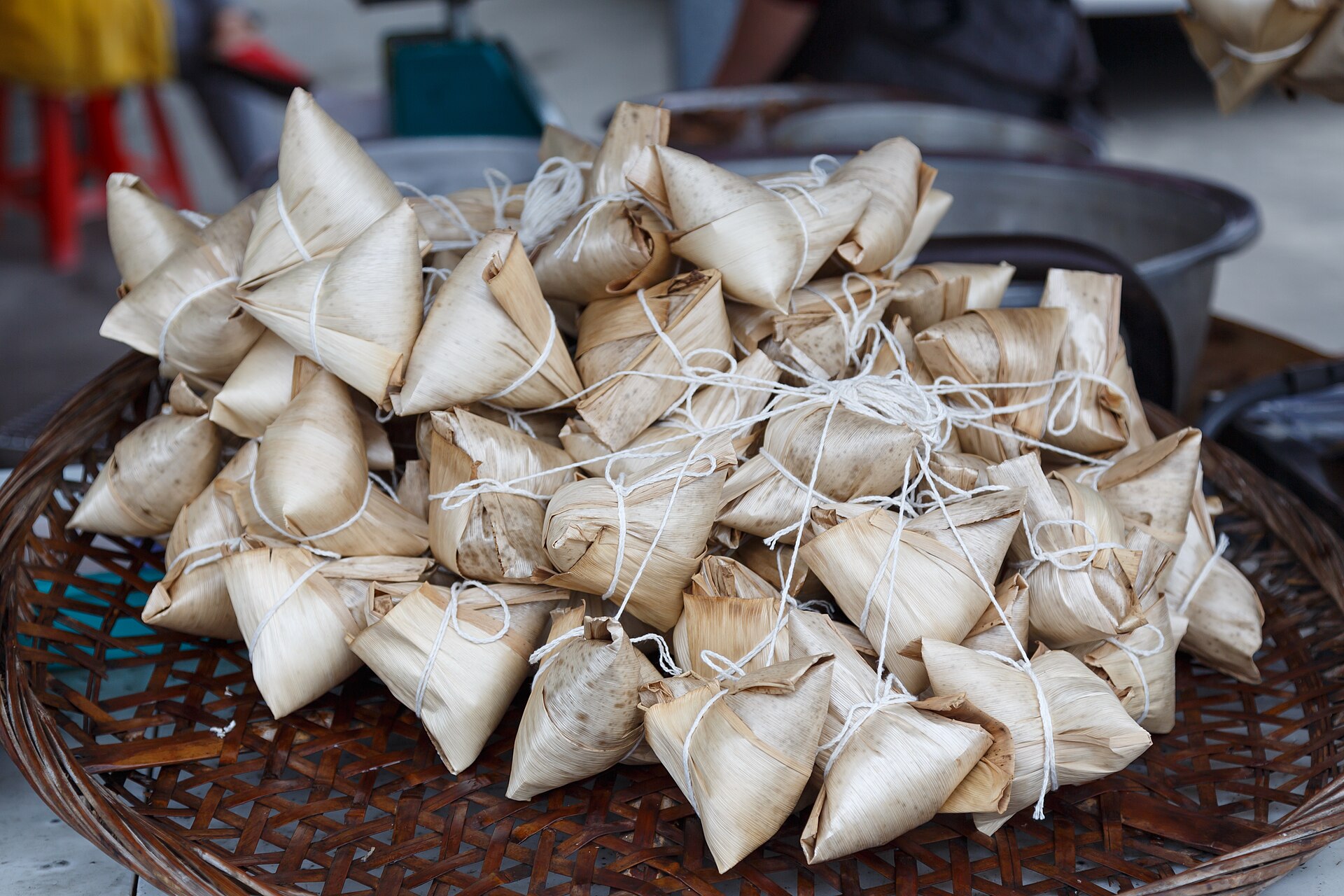
- Hakka stir-fry — Family-run restaurants in the township centre
Hakka home cooking favours salty, preserved flavours: stir-fried pork with dried tofu, pickled greens or salted vegetables, eaten with plain rice. Dishes are meant for sharing, so a group can order several and taste widely.
Plan it
Best time. October–November and March–April, when the air is milder and the hills are clearer; summers are hot and humid, and rain can interrupt any season, so pack for showers.
How long. 1–2
Getting there. Fly to Taoyuan International Airport, take the high-speed rail to Hsinchu station, then continue by taxi, local bus or hire car into the hills; the last leg is by road, and the township website has directions at https://www.beipu.gov.tw/. Check current timetables before travelling.
Budget. low
Tips
- Visit on a weekday, or before late morning at weekends, to beat the crowds on the old street.
- Carry some cash for small stalls and tea houses, as not every vendor takes cards.
- Bring a rain jacket and insect repellent for hill walks.
- Use a taxi or hire car for the farm and cold spring, which sit outside the walkable centre.
- Check the township website for events and opening details before you go.
Etiquette
- Lower your voice and dress modestly at Citian Temple.
- Ask before photographing worshippers or people at work in tea houses.
- Do not drink the cold spring water.
Nearby
Sources
- Wikidata Q713556 (CC0)
- Wikipedia: Beipu (rev 1375110737) (CC BY-SA 4.0)
- Wikivoyage: Beipu (rev 5277221) (CC BY-SA 4.0)
- Photo: Mountain of fire-fingers, Hsinchu, Taiwan (Peellden) (CC BY 3.0)
- Photo: Monument in Taiwan (Yuriy kosygin) (CC BY 3.0)
- Photo: Beipu Township Library Building (人人生來平等) (CC BY-SA 4.0)
- Photo: 314, Taiwan (Dennis Pacheco) (CC BY 3.0)
- Photo: 314, Taiwan, Nankeng Village (Dennis Pacheco) (CC BY 3.0)
- Photo: Cookies with Buddhist swastika, Beipu (Uwe Aranas) (CC BY 3.0)
- Photo: Sale of food in Beipu 01 (Uwe Aranas) (CC BY-SA 4.0)
- Photo: Sale of food in Beipu 02 (Uwe Aranas) (CC BY-SA 4.0)


