Chishang
Chishang, Taiwan
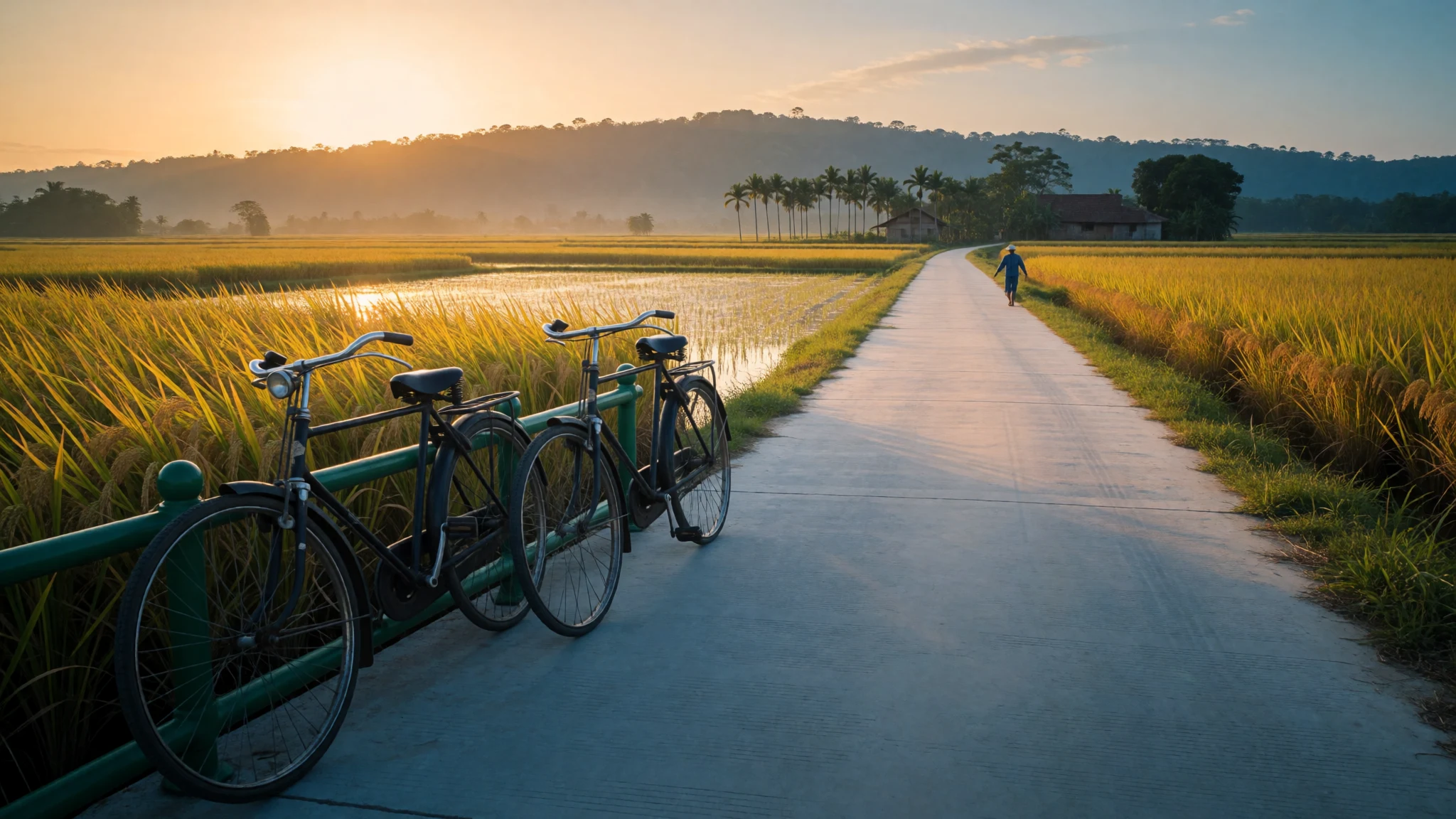
Chishang is a rice-farming township in Taiwan's Huatung Valley, best seen by bicycle between the paddies, with a railway boxed lunch.
The place
Chishang (池上) is a rural township in Taitung County, in the Huatung Valley of south-eastern Taiwan. Its population is 7,488 and it stands at 377 metres above sea level, which takes a little of the edge off the heat on the coast. Official records class it as both a township and an Indigenous area, a hint that the farming landscape rests on older layers of settlement.
Everything here is organised around rice. Paddies run to the edge of the built-up streets, irrigation channels thread between them, and a line of mountains closes the view behind the fields. Little of it is monumental. The main public buildings in the centre are the township office, a plain civic block, and the railway station, rebuilt and completed in 2016. The rest is low houses, shops selling boxed lunches, and cyclists heading out along the field roads.
The sights are spread through the countryside but close enough for a bicycle to link them: a wooden waterwheel, a viewing pavilion, a pond for bird-watching, a temple, and small museums about rice, lunch boxes and the Hakka community. The appeal lies in the surroundings more than in any single stop.
Chishang suits a slow day or two rather than a checklist. Weekends and the autumn harvest bring tour groups and photographers to the well-photographed roads, while weekdays outside the season are quiet. Summers are hot and humid, typhoons can bring heavy rain and cancelled trains, and the town is small, so food and beds are limited and fill fast during events.
Its story
Chishang's recorded history is a story of arrivals. Indigenous Makatao people came from Pingtung about 160 years ago, and other groups followed, including Taivoan from Kaohsiung and, in the 1950s, a very small number of Siraya from Tainan. Hakka families also settled in the valley, and a small museum now keeps their history. The Indigenous Night Ceremony is still held each November, so the older communities remain part of the township's calendar.
Rice shaped what came next. The variety grown here was introduced to Taiwan under Japanese colonial rule, and local farmers took to it quickly. Water was the constant concern on the valley floor, and a wooden waterwheel was built to help irrigate the surrounding farmland; the wheel that stands by the fields today recalls that effort.
The railway gave the harvest a second use. Boxed lunches (飯包) were first made to feed passengers, with local rice at the centre, and the habit outlasted the era of platform sales. In 1994 a community association converted an unused fertiliser warehouse into the Rice Village Museum, an early sign that residents saw their farming heritage as worth showing to outsiders.
More recently the fields themselves became the draw. A long road through the paddies took its name from a coffee brand, a lone tree in one field became a photographers' stop after appearing in that brand's advertising, and an autumn harvest arts festival, attended by the president in 2020, brought Chishang national attention.
What to see
- Chishang Waterwheel — Fields south-west of the town centre
At Chishang, this wooden waterwheel was built to help irrigate the surrounding farmland. It is a simple stop, rewarding mainly for what it explains: why this flat valley grows rice so well. It makes a sensible first pause on a bicycle loop, with fields all around and little to distract from them.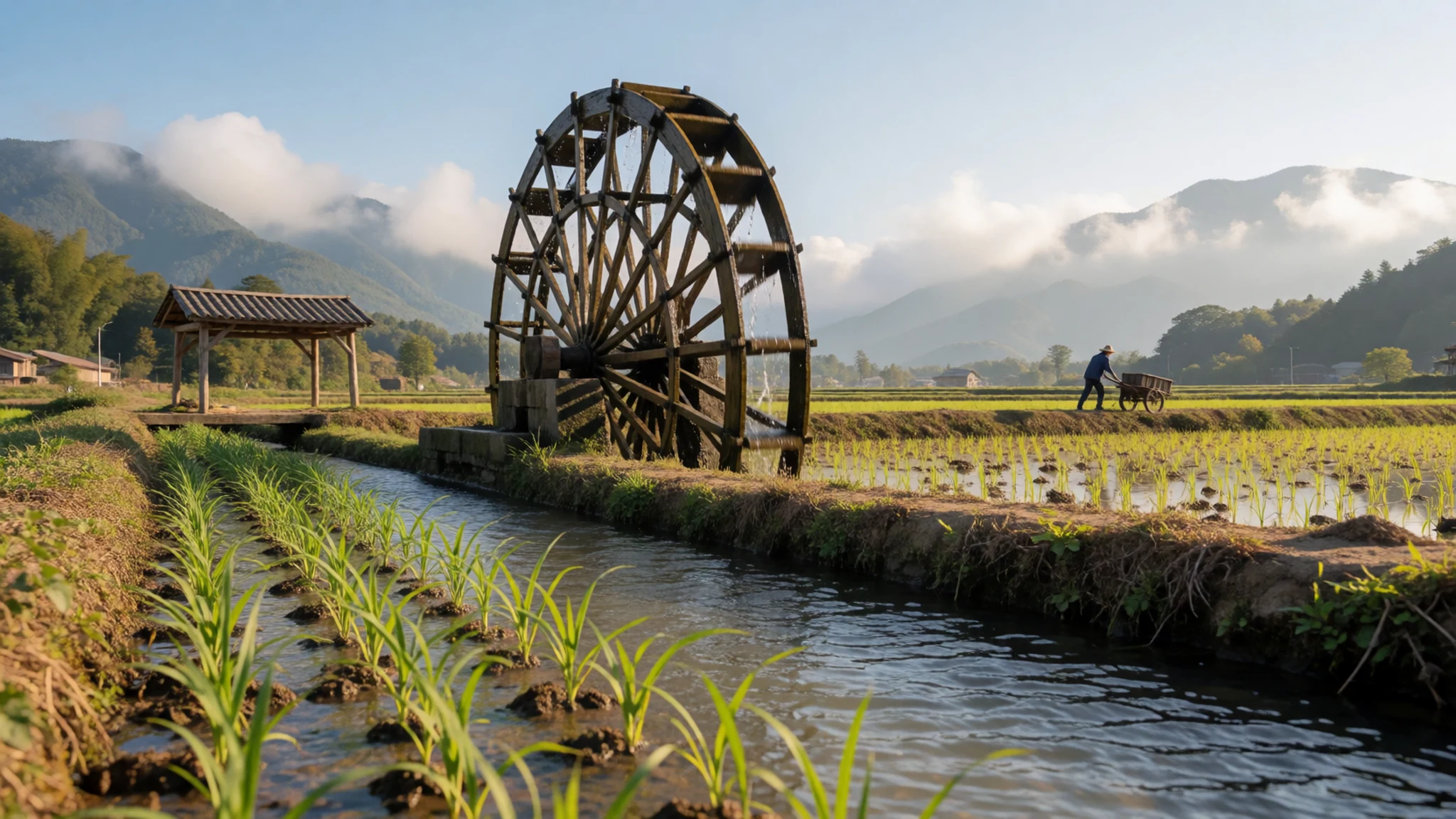
- Mr Brown Road — Rice fields south of the town
A long, straight road running through the paddies, named after a coffee brand sold in Taiwan. The photo shows a car-free avenue, so it suits walking and cycling. Expect other visitors taking pictures at weekends and at harvest; early morning is calmer and the light is softer.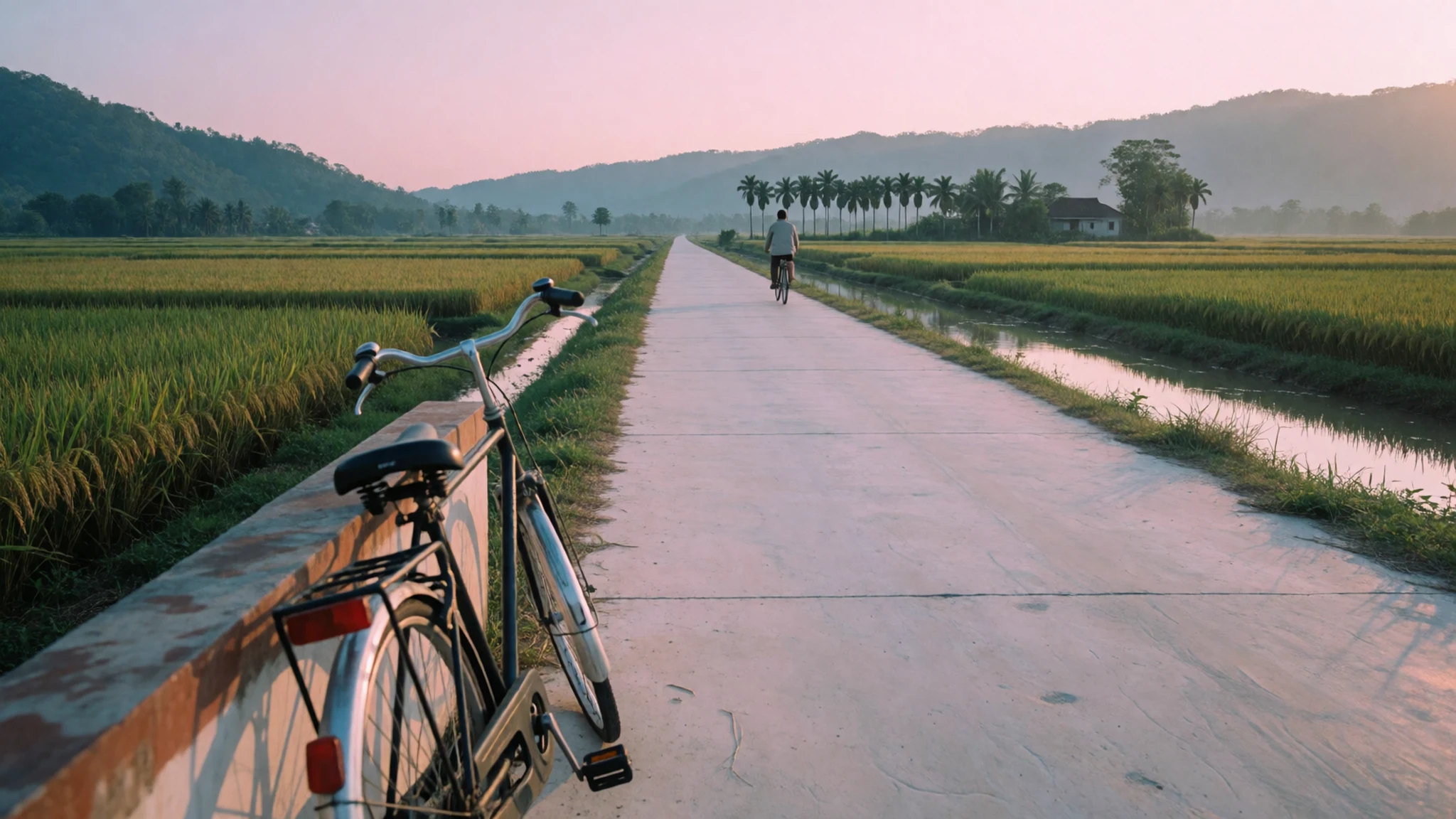
- Great View Pavilion — Fields south of the town centre
A wooden pavilion with a clear outlook over the surrounding fields. Climbing it shows how the paddies are laid out against the mountains, which is hard to grasp from ground level. It lies close to the waterwheel and Mr Brown Road, so the three fit into one short outing.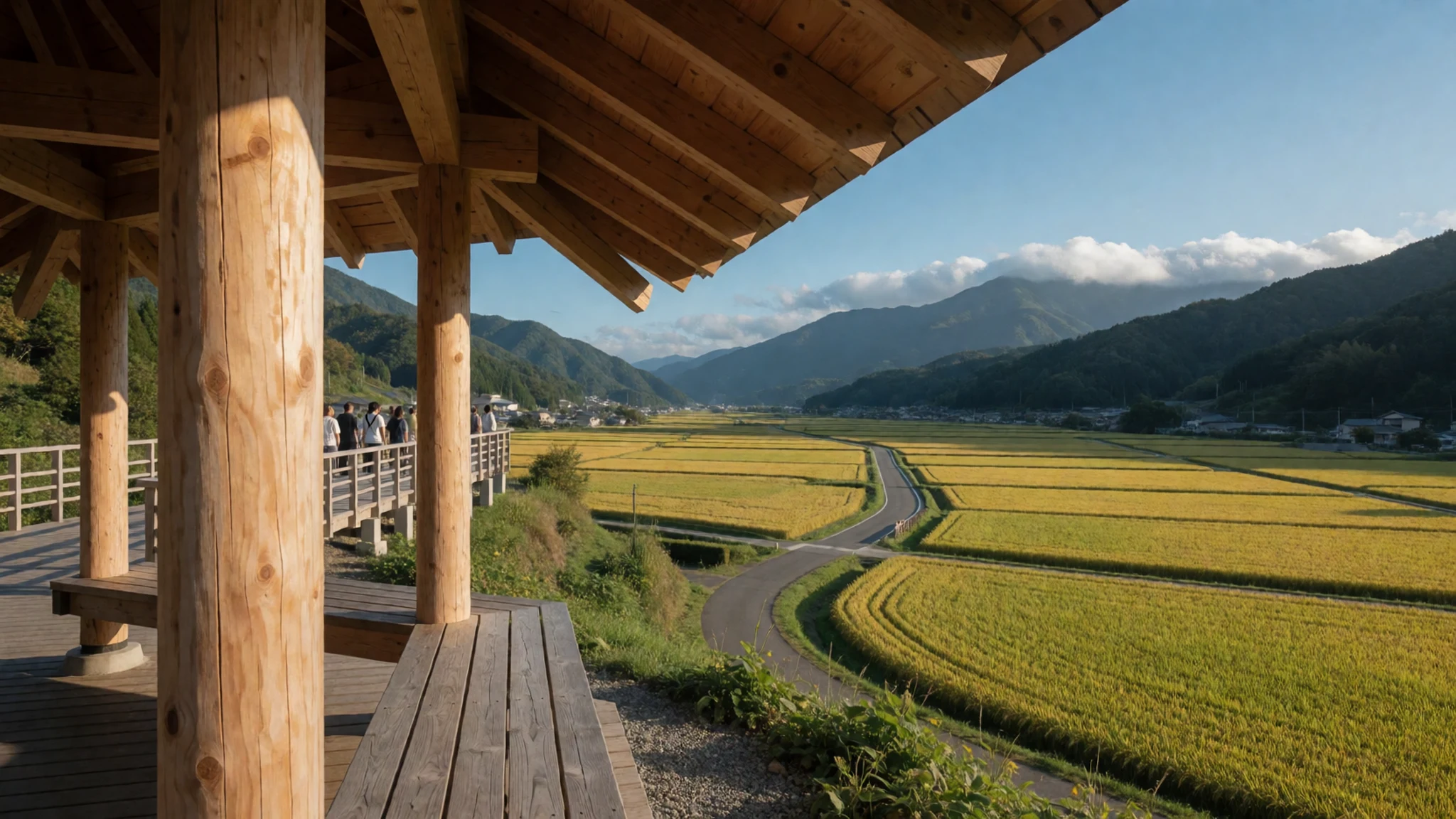
- Wu Tao Chishang Lunch Box Cultural History Museum — North of the town centre, near the railway
A museum devoted to the boxed lunch that also works as a restaurant, so the history comes with something to eat. It explains how a meal made for railway passengers became a signature of the town. Check the official township website for current arrangements before planning around a visit.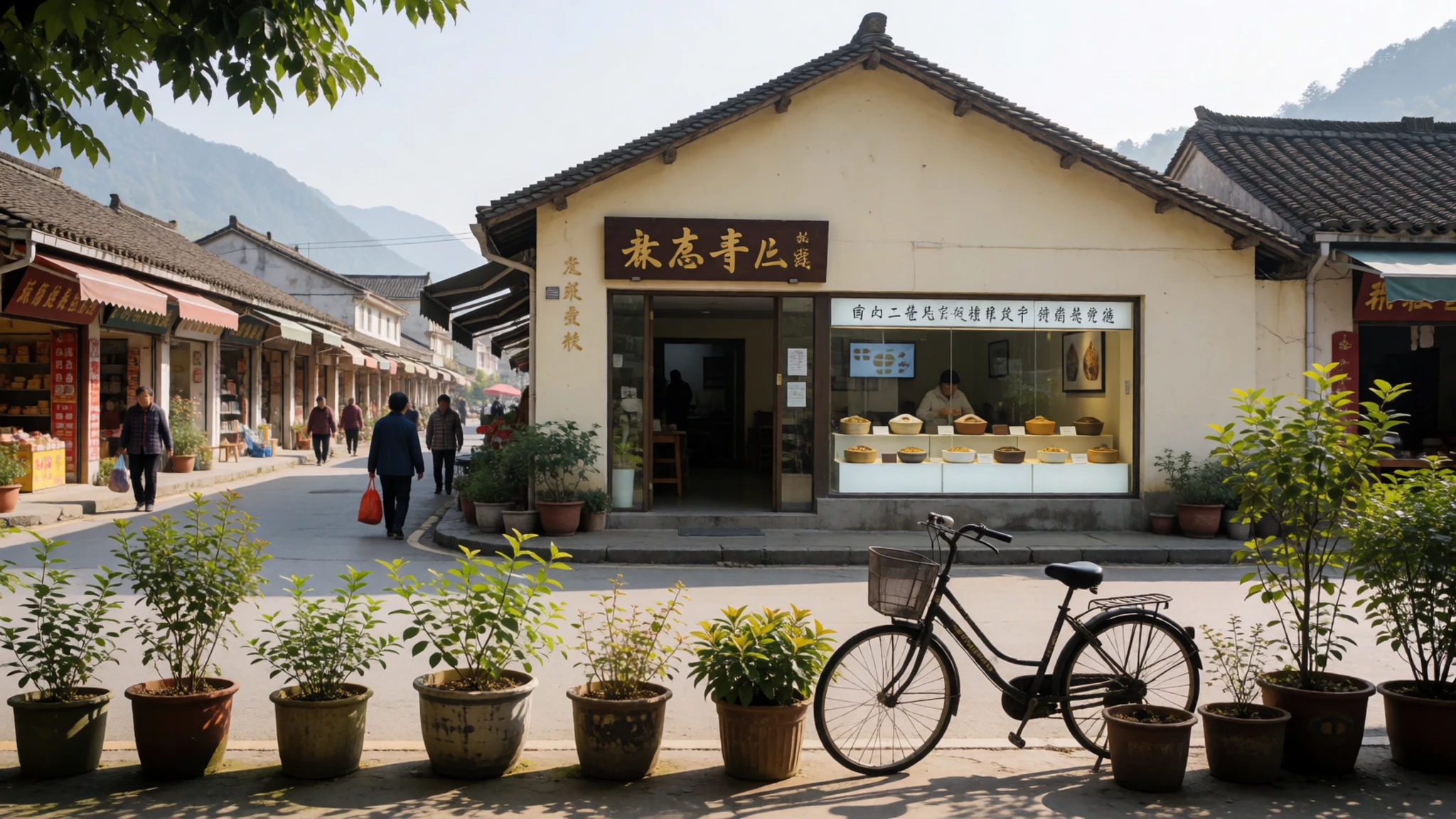
- Rice Village Museum — South-east edge of the township
Housed in a former fertiliser warehouse and set up by a local community association, this museum looks at rice growing in the valley. It is a small, local effort rather than a polished institution, and that is part of its character. Go for context on the farming you will have cycled past.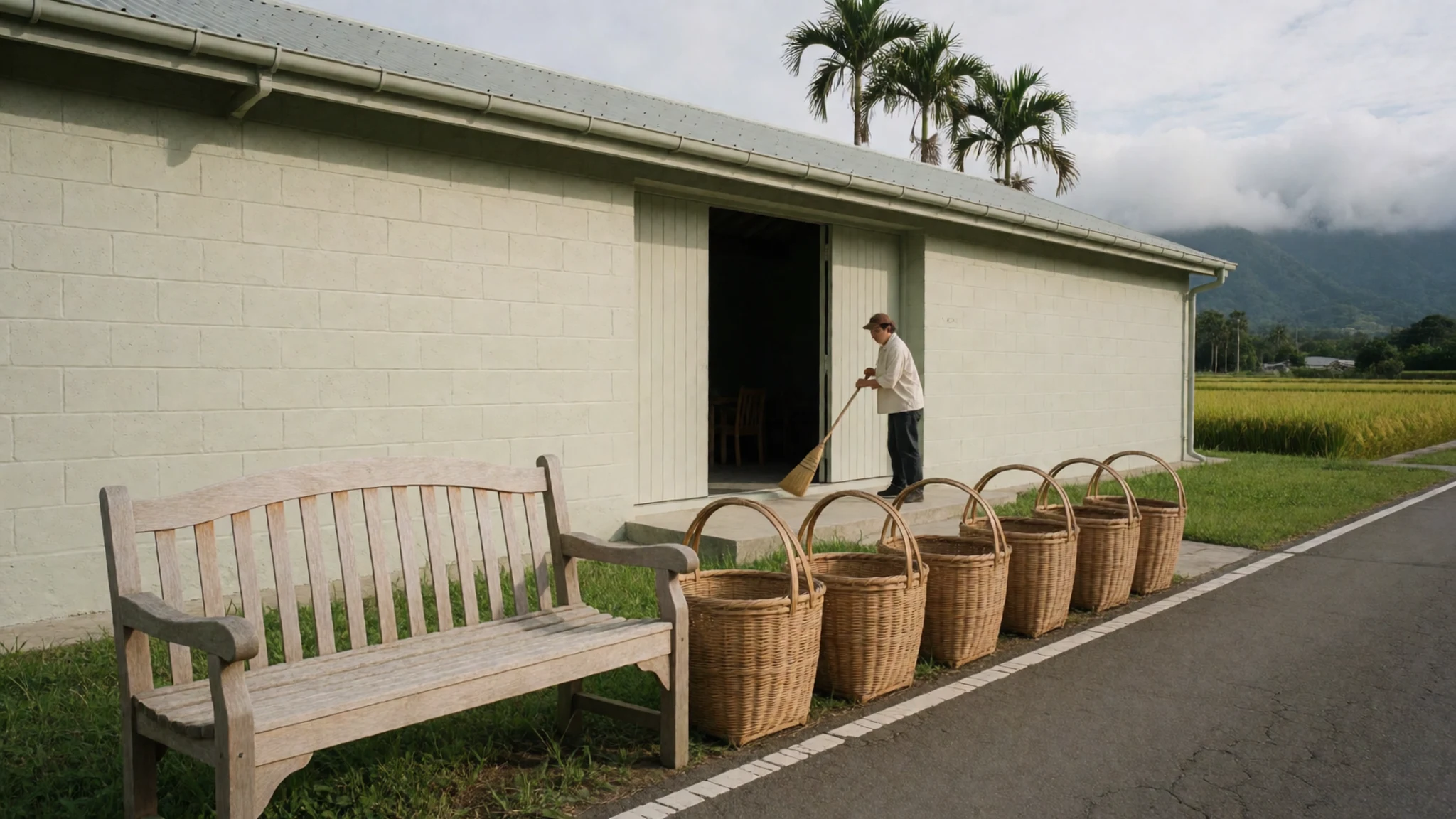
- Dapo Pond — North-east of the town centre
Dapo Pond is ringed with cycling tracks, walking paths, shelters, a spot for fishing and another for watching birds. It offers a gentler change from the open rice fields and a good place to rest in the middle of a loop. Bring binoculars if birds interest you.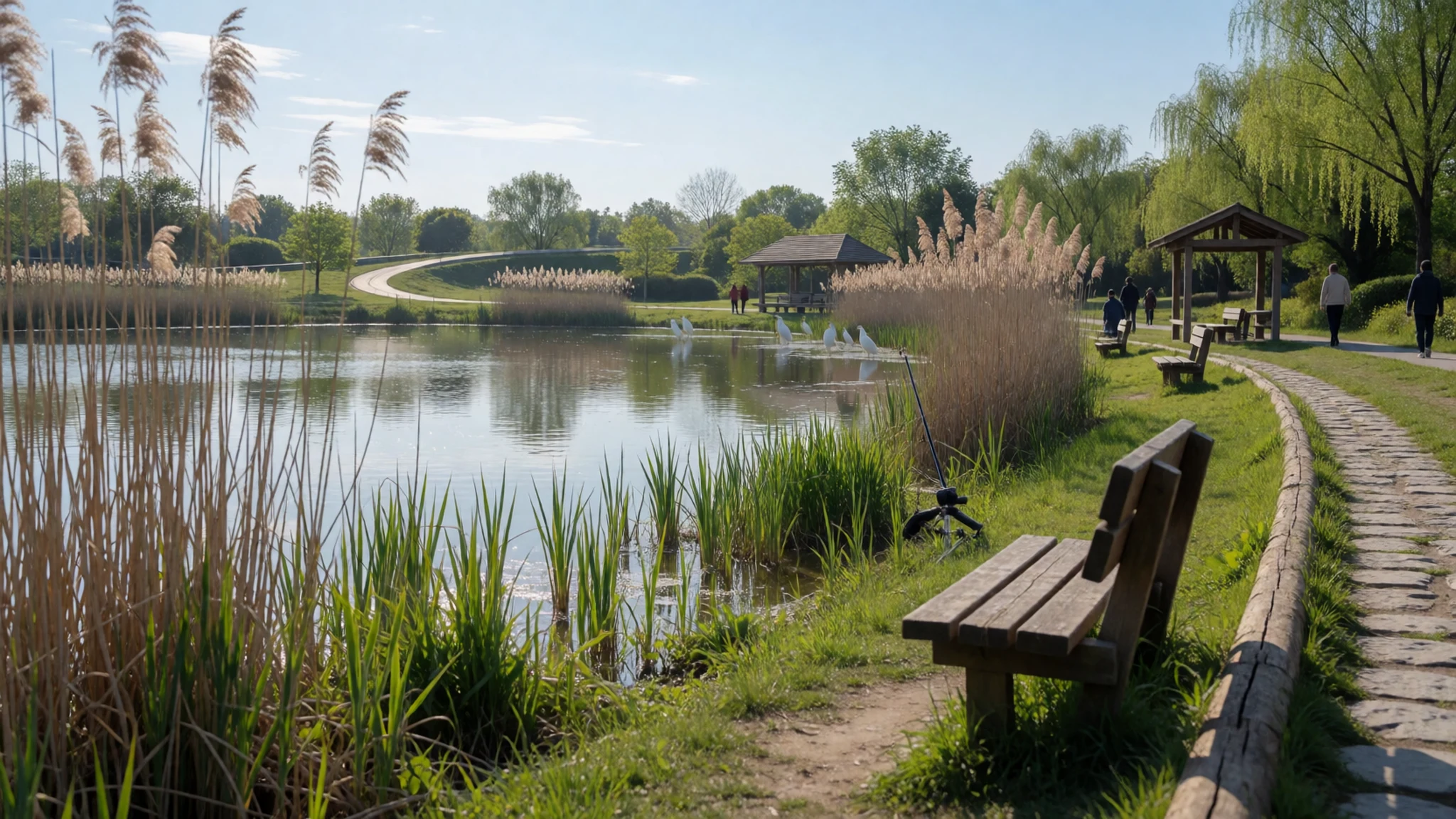
Culture
Chishang's culture is layered: Indigenous Makatao, Taivoan and Siraya communities, Hakka families, and the rice farmers whose work defines the valley. The Indigenous Night Ceremony, held every November, is the clearest sign that older traditions are living ones, and it belongs to the communities who hold it rather than being staged for visitors. It is worth asking locally whether any part is open to guests before turning up.
The Hakka museum gives a short introduction to a community whose presence in the valley is easy to miss from the road. Yuqing Temple is an everyday place of worship rather than an attraction, and the rhythm of the town folds around such places, with incense, offerings and neighbours stopping by.
Rice is the other strand of local identity. The calendar turns on planting and harvest, community groups run museums, and the autumn harvest arts festival turns the fields into a shared stage. Even the boxed lunch carries that pride: it is a plain meal built on local grain, first made for railway passengers, and still eaten with a sense of ownership.
Life here is unhurried, and people are generally friendly to visitors who arrive without fuss. Chishang is a working farming township, not a theme park, and the fields are someone's livelihood.
At Yuqing Temple and any ceremony, keep your voice low, dress modestly, and ask before photographing worshippers or participants, especially at the November Night Ceremony.
What to wear
Chishang's traditional dress is tied to its different communities. Indigenous groups wear ceremonial clothing, usually woven or embroidered, at events such as the November Night Ceremony; styles differ between groups, and visitors should not assume one look. Hakka tradition is associated with indigo-dyed cotton shirts in dark blue, a practical cloth for farm work, now worn mostly at festivals and seen in craft souvenirs.
What people wear day to day is practical farming and village clothing. Farmers work in long sleeves, wide-brimmed hats or towels against the sun, and rubber boots in wet fields. In town, T-shirts, shorts and sandals are normal, and at weekends many visitors arrive in cycling gear or casual outdoor clothes. Nobody dresses up for dinner.
For a visitor the sun and the terrain matter most. Summers are hot and humid, so pack light, breathable, quick-dry clothes with long sleeves for sun protection, a hat and sunscreen. Bring a light rain jacket in any season, since showers and typhoon weather can arrive quickly. Autumn evenings can be cooler, so a thin layer helps.
Wear closed shoes or sturdy trainers for field paths, which can be muddy, and keep sandals for the pond area. Carry a scarf or light shirt to cover shoulders and knees at Yuqing Temple. Cyclists should avoid loose trouser legs and might want padded shorts for longer loops.
What to eat
- Chishang boxed lunch (飯包) — Lunch-box shops on the streets around the railway station, and the lunch box museum
The town's signature meal: local rice with a few simple cooked side dishes in a lunch box, first made for railway passengers. Order one for a picnic by the fields. It is filling, plain and made for eating on the move.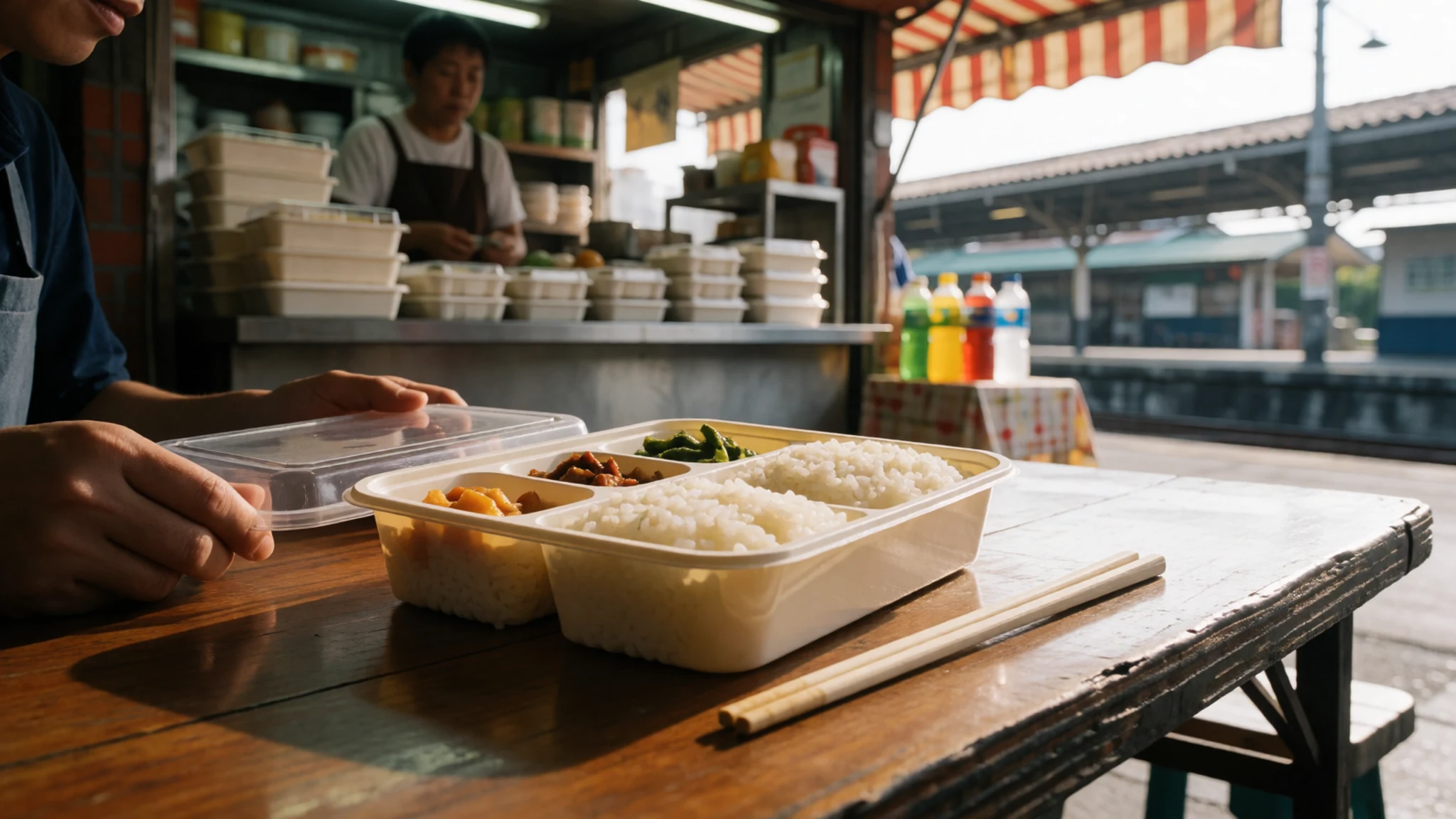
- Local Chishang rice — Small local eateries in the town centre
The grain itself is the point here. Eaten plainly, with a few vegetable or meat dishes, it shows why the valley is known for rice. Ask in any small eatery whether the rice is from the area.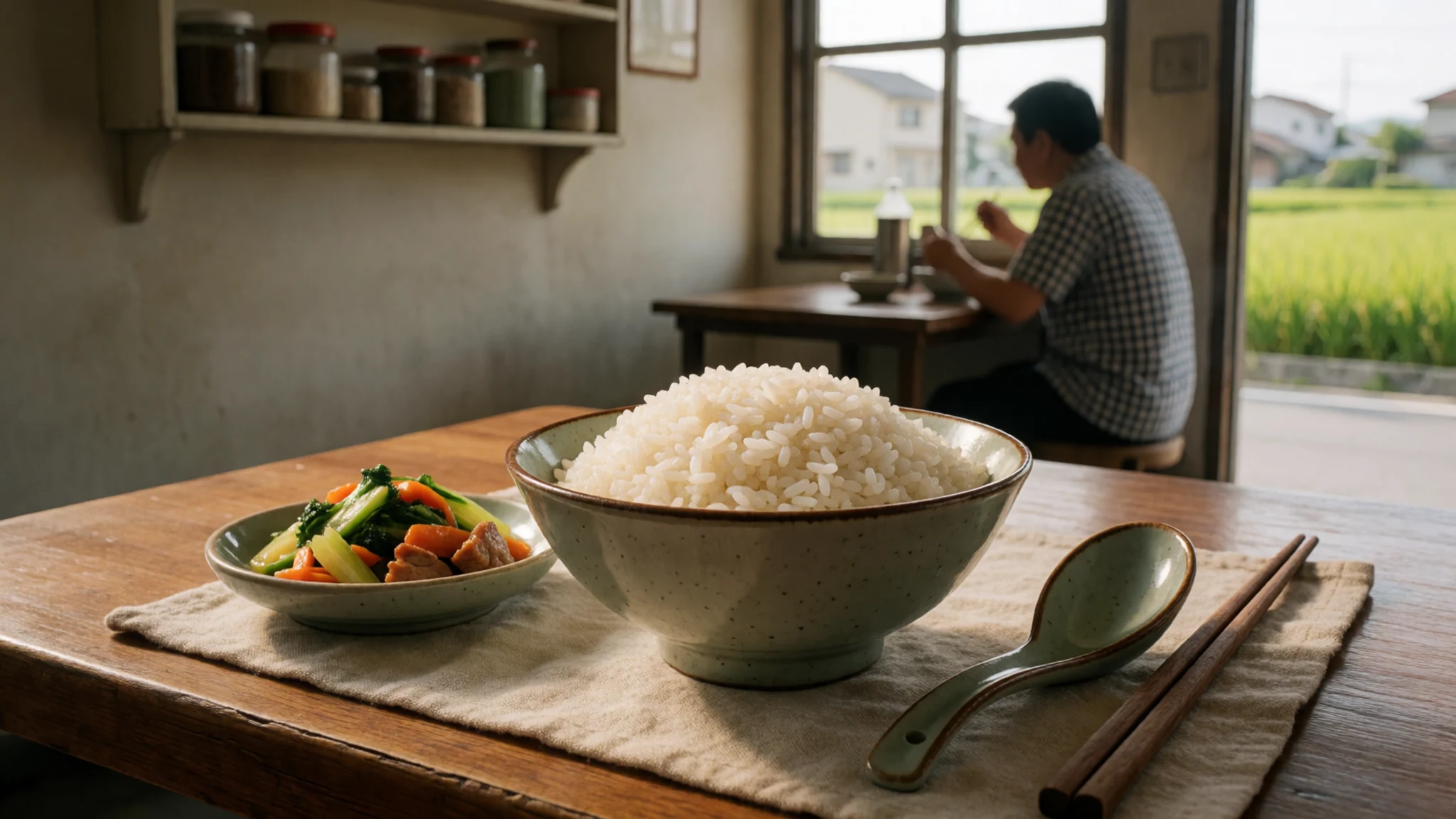
- Hakka stir-fry — Hakka-run eateries in the valley, asked about locally
Hakka cooking leans towards salty, preserved and well-seasoned flavours, and a stir-fry with pork and vegetables is a common way to try it. Availability varies, so ask locally which eateries serve Hakka dishes. - Tea eggs — Convenience stores in the town
A cheap Taiwanese snack of eggs simmered in spiced tea and soy, kept warm and sold in many convenience stores. They are handy fuel on a long bicycle loop, and the one in Chishang is as ordinary as anywhere in Taiwan. - Mr Brown coffee — Shops and convenience stores near the fields
The road took its name from this bottled and canned coffee brand sold across Taiwan. A cold one from a shop, drunk beside the paddies, is a small, slightly silly ritual, and a sensible hot-day drink with a bit of sugar.
Plan it
Best time. October–November, when the rice is golden and the Indigenous Night Ceremony is held in November. Summer is hot and humid, and typhoon season can bring heavy rain and disrupt trains, so check forecasts before travelling.
How long. 1–2
Getting there. Taiwan Railways trains stop at Chishang station in the Huatung Valley, reached from Hualien to the north or Taitung to the south; Taitung is the nearest airport. From the station, walk or cycle to the fields. Check the township website (https://www.cs.gov.tw/home/index.php) for events and visitor information.
Budget. low
Tips
- Book beds well ahead for weekends and harvest season, as the town is small
- Cycle early in the morning for softer light and fewer people on the field roads
- Carry some cash for small shops and stalls, and take water and sun protection
- Check the township website for festival dates and current opening arrangements at the museums
- Keep a rain layer and an eye on typhoon forecasts in late summer and early autumn
Etiquette
- Stay on the roads and paths; do not walk into the paddies for photographs
- Ask before photographing people, worshippers or ceremony participants
- Keep your voice low at Yuqing Temple and dress modestly there
Nearby
Sources
- Wikidata Q1135297 (CC0)
- Wikipedia: Chihshang, Taitung (rev 1375476143) (CC BY-SA 4.0)
- Wikivoyage: Chishang (rev 4988329) (CC BY-SA 4.0)
- Photo: The museum of Chihshang Fanbao, Mike841125 (Public domain)
- Photo: Landscape of golden paddy field with Takeshi Kaneshiro Tree, JianEn Yu (CC BY 2.5)
- Photo: Chihshang Township Office, SSR2000 (CC BY-SA 4.0)
- Photo: Mr. Brown Avenue, Chishang, lumoplank (CC0 1.0)
- Photo: Rice fields of Chishang, lumoplank (CC0 1.0)
- Photo: New Chishang Station, Eric Deng (CC BY-SA 4.0)
- Photo: Official Photo by Mori / Office of the President, 總統府 (CC BY 2.5)
- Photo: 7-Eleven Dongchi Store, Mike841125 (Public domain)


