Taichung
Taichung, Taiwan
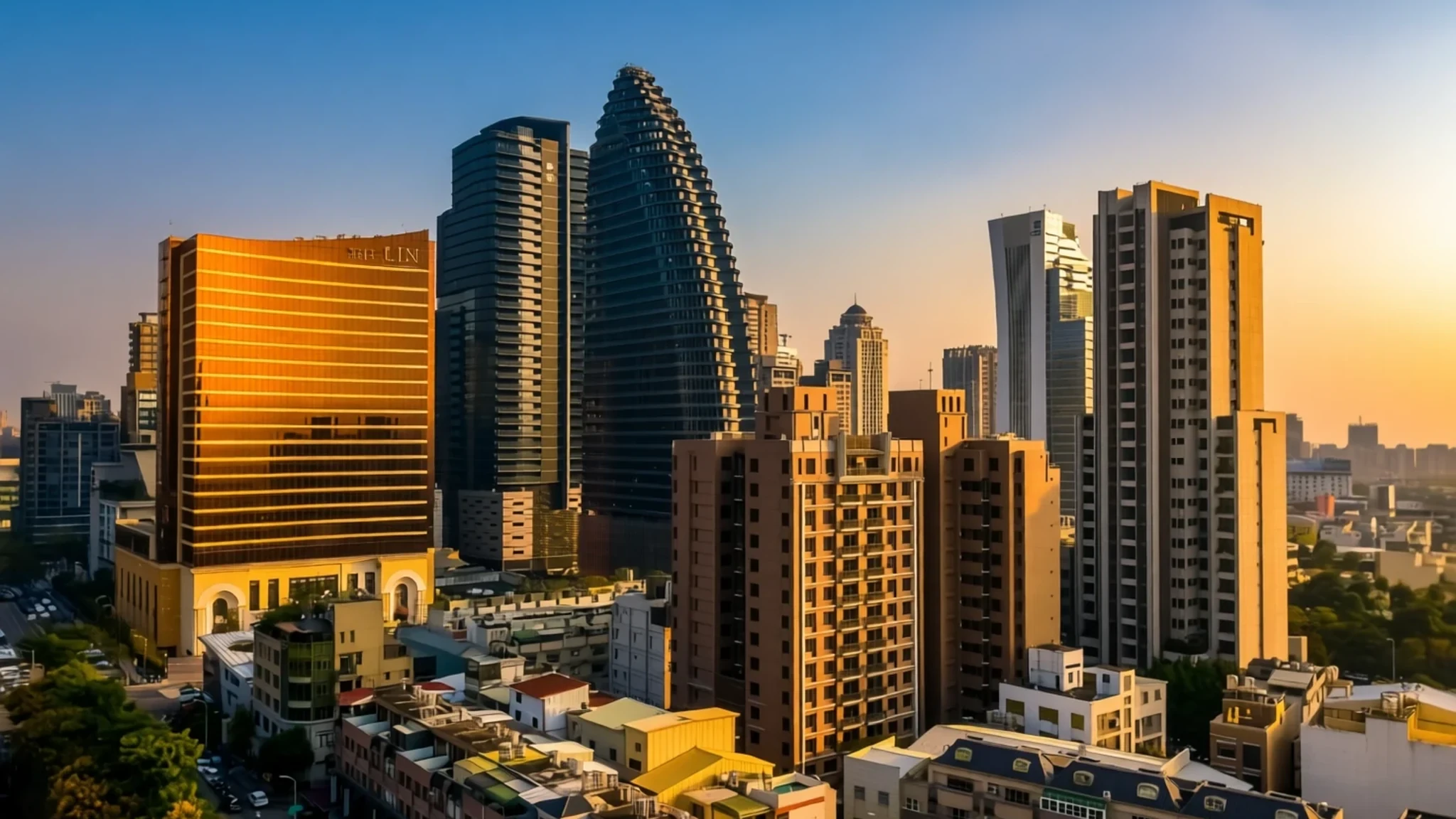
Taichung is a wide Taiwanese city of night markets, a planned centre and a coast close enough for dusk.
The place
Taichung is Taiwan's central city, spread across the flat west of the island where the coastal plain meets the first ridges of the central mountains. The urban area is wide rather than tall: older roads still run outwards from the railway station in the radial plan set out under Japanese rule, while newer districts stretch west across rezoned land. The name, written 臺中, means central Taiwan, and the city has long been the hinge between north and south — a place to change trains as much as a place to linger.
The centre still gathers around the old railway station and the park beside it. From there the city breaks into distinct neighbourhoods. North of the park, the National Museum of Natural Science stands beside a long greenway of lawns, cafés and design shops. Further west, the Seventh Redevelopment Zone is the newer skyline of towers, broad roads and shopping malls, quite unlike the low streets nearer the station. West of the centre, the university belt around Fengjia fills with students once lectures end. The coast is close enough for an afternoon at Gaomei, where a boardwalk crosses tidal flats. Eastward the land rises towards Dakeng and the trails that leave the city for the hills.
What ties these pieces together is ordinary civic life rather than a single monument. Temples share blocks with convenience shops, and the evening meal often happens standing up at a market stall. The city is honest about its sprawl: distances are real, and a day spent only in the centre misses the wetland and the hills. Visitors who give it time find a Taiwanese city that is busy without being crushing, proud of its bakeries and its night markets, and still close to open country.
Its story
Taichung's story begins on a plain that was already inhabited when the modern roads were drawn. Indigenous communities, among them the people later called the Taokas and the Papora, farmed and traded along the rivers and the coast. Han settlers from Fujian arrived across the Qing centuries, planting rice and opening market towns. One of those towns was Dadun, in today's centre near the park, titled Taiwan-fu when it became the provincial capital, before the seat moved to Taipei.
The city now called Taichung took its shape under Japanese rule, when the colonial government chose this stretch of plain for a new regional seat. Engineers laid roads radiating from a railway station and made the city a junction on the north-south line. That decision is still visible in the old station, the park beside it and the official buildings of the centre. Taichung was not an ancient capital. It was a designed city, and the design still organises how the centre is walked.
After the Second World War the city grew with Taiwan's industrial economy. Machine shops, small factories and later precision trades spread through the surrounding districts, while schools, hospitals and markets thickened the centre. A merger of the old city with the surrounding county produced the wide municipality of today, taking in harbour land on the coast, old market streets and hills that once felt separate.
The railway stayed the spine, and high-speed rail on the southern edge later tied Taichung closer to Taipei and Kaohsiung. A walk from the old station towards a night market still passes a colonial façade, a post-war shophouse and a glass tower in the same district. Taichung is a city redrawn more than once, with earlier drawings left underneath.
What to see
- Seventh Redevelopment Zone — Xitun District
Taichung's newer commercial face rises in the Seventh Redevelopment Zone, a planned district of broad avenues and high towers west of the old centre. The skyline here is the one city photographs show: glass blocks, malls and wide pavements rather than shophouses. Evening light on the towers is reason enough to pass through.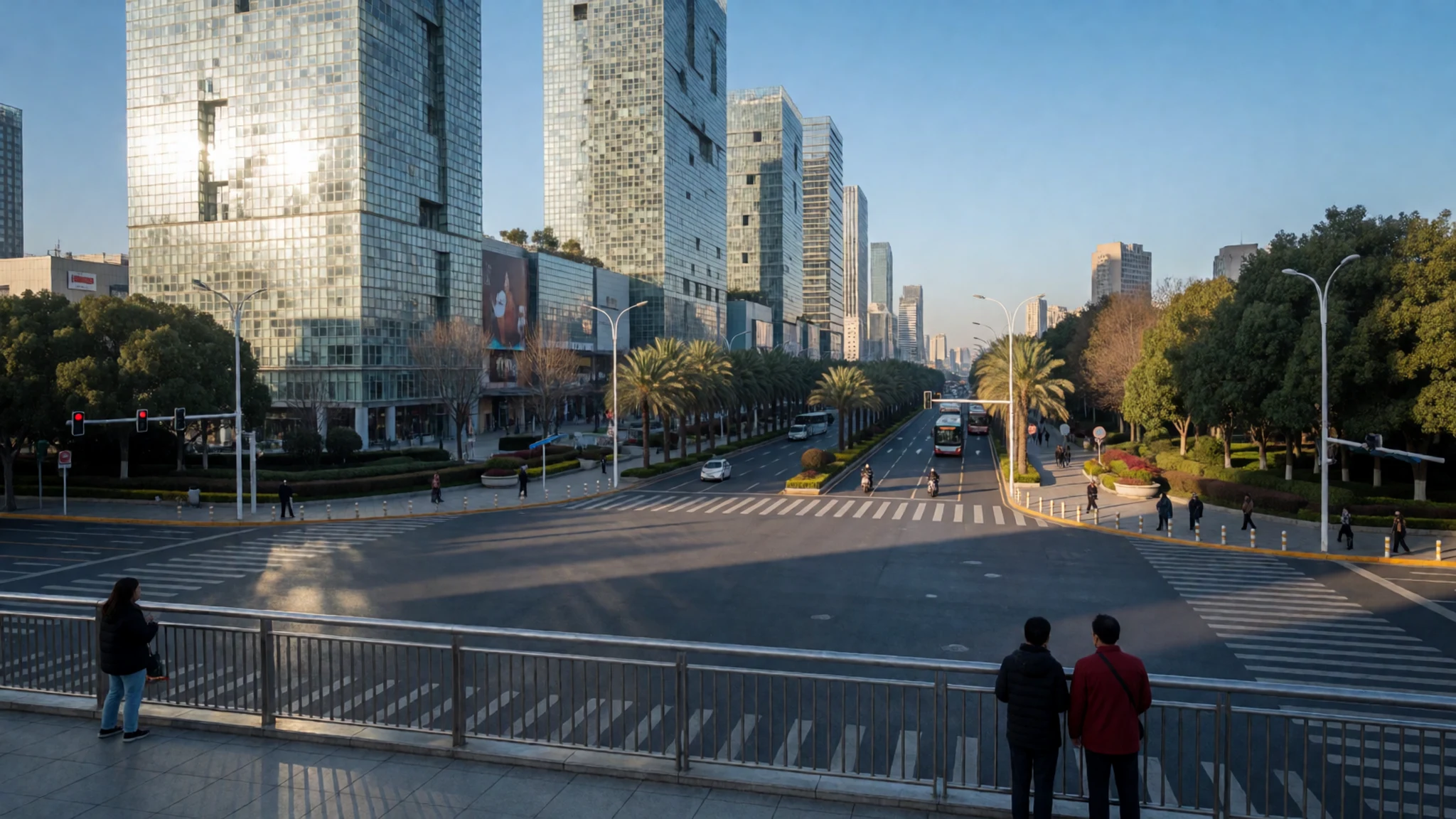
- National Museum of Natural Science — North District
The National Museum of Natural Science gives Taichung a slow indoor morning, with galleries on the natural world and a botanical garden whose tropical conservatory opens off the grounds. Families treat the complex as a local outing. Garden paths stitch the museum to the nearby greenway, so the visit feels like part of the neighbourhood. Current galleries are best confirmed on the museum's own site.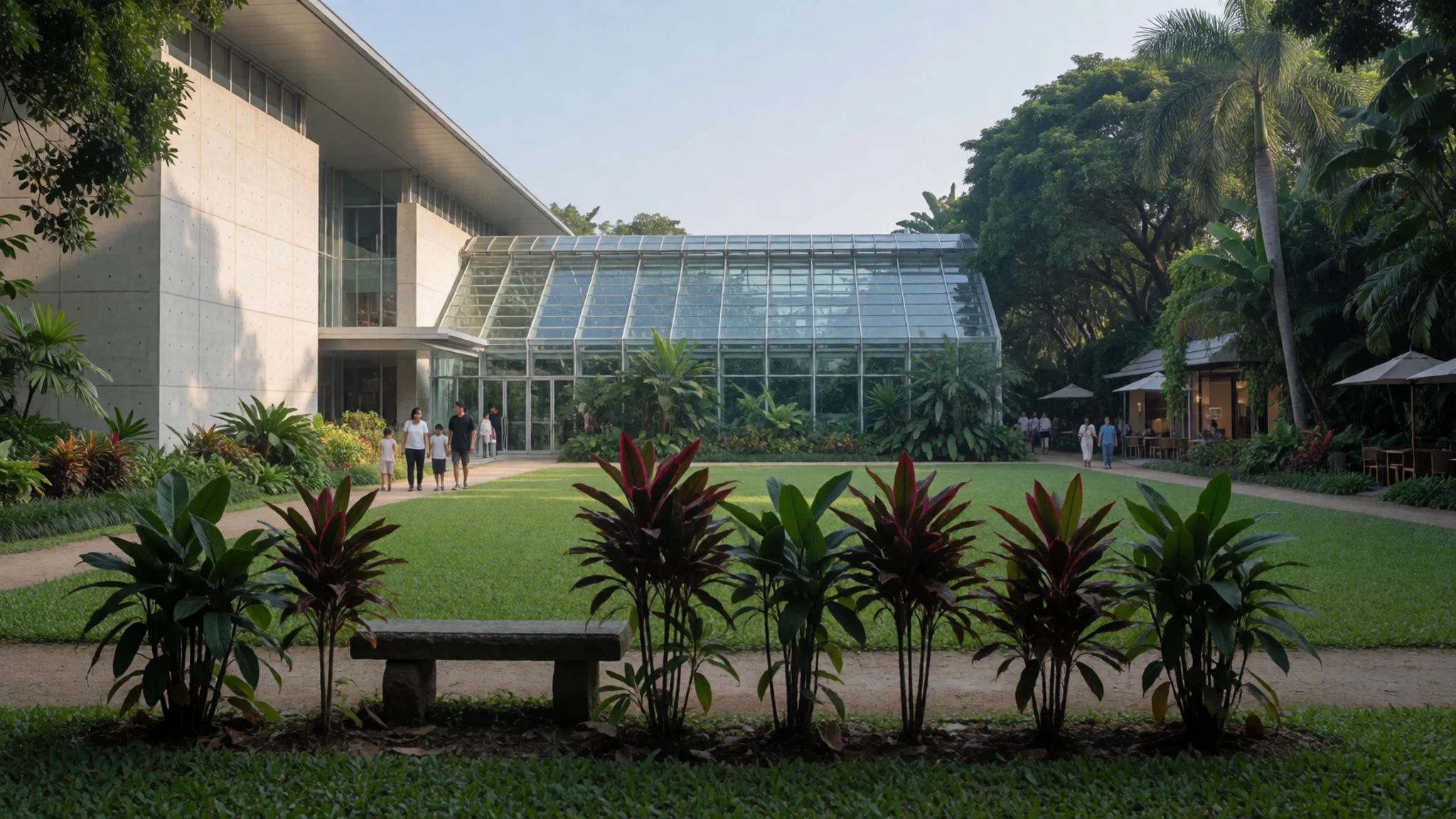
- Old Taichung Station — Central District
Taichung's old railway station still marks the centre the Japanese planners drew, a compact historic building beside the park and the newer elevated tracks. It is the right place to understand the city's plan: roads run outwards from it in straight lines, and the park across the way is where local life gathers on an ordinary afternoon.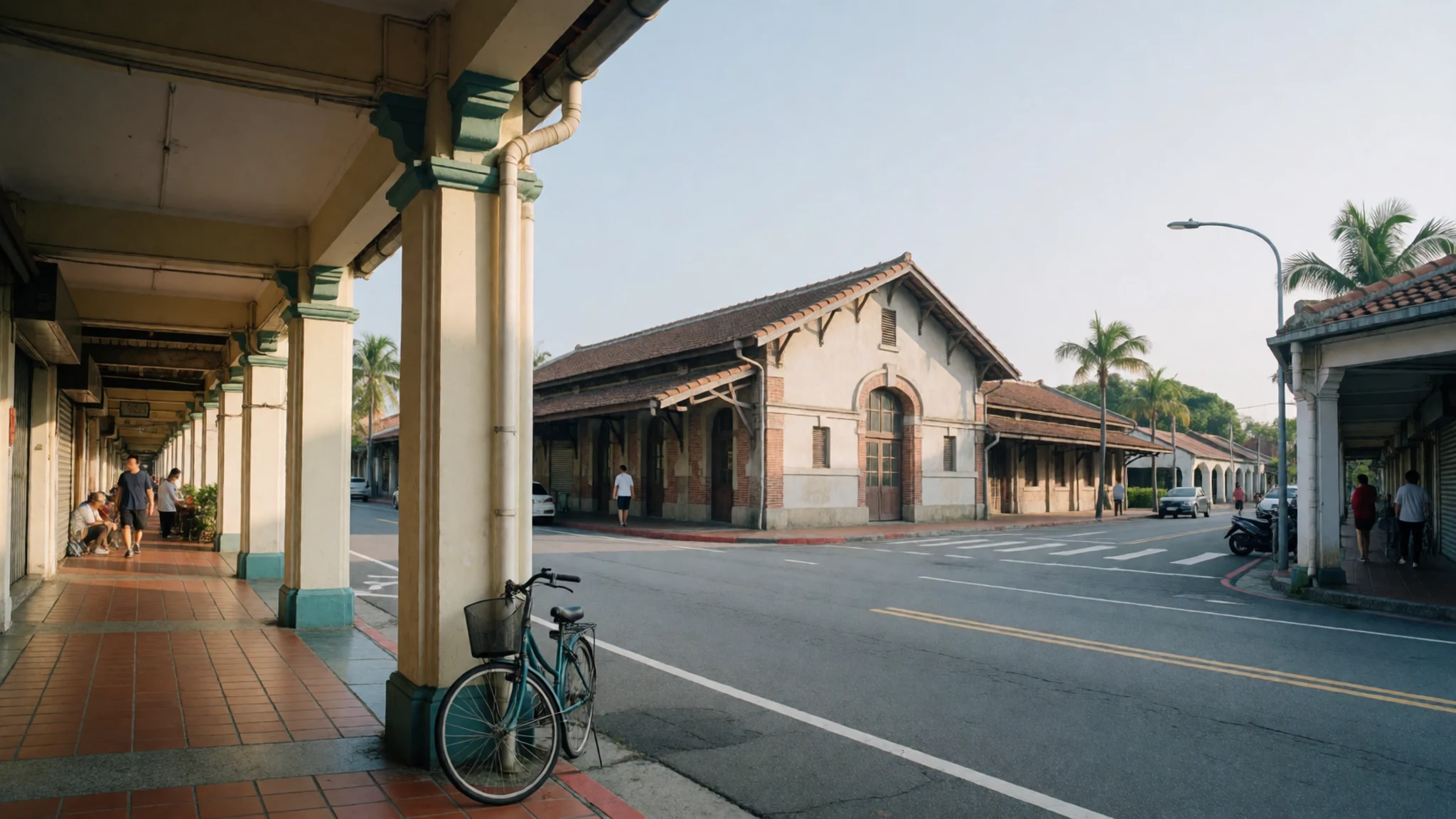
- Luce Chapel — Tunghai University, Xitun
Taichung's Luce Chapel stands on the Tunghai University campus, a thin concrete shell set among trees west of the centre. The walls curve up to a single ridge, and the interior stays hushed when the campus outside is busy. The visit is short: the path, the interior when the door is open, and the lawns around it. Students, bicycles and shade are part of the scene.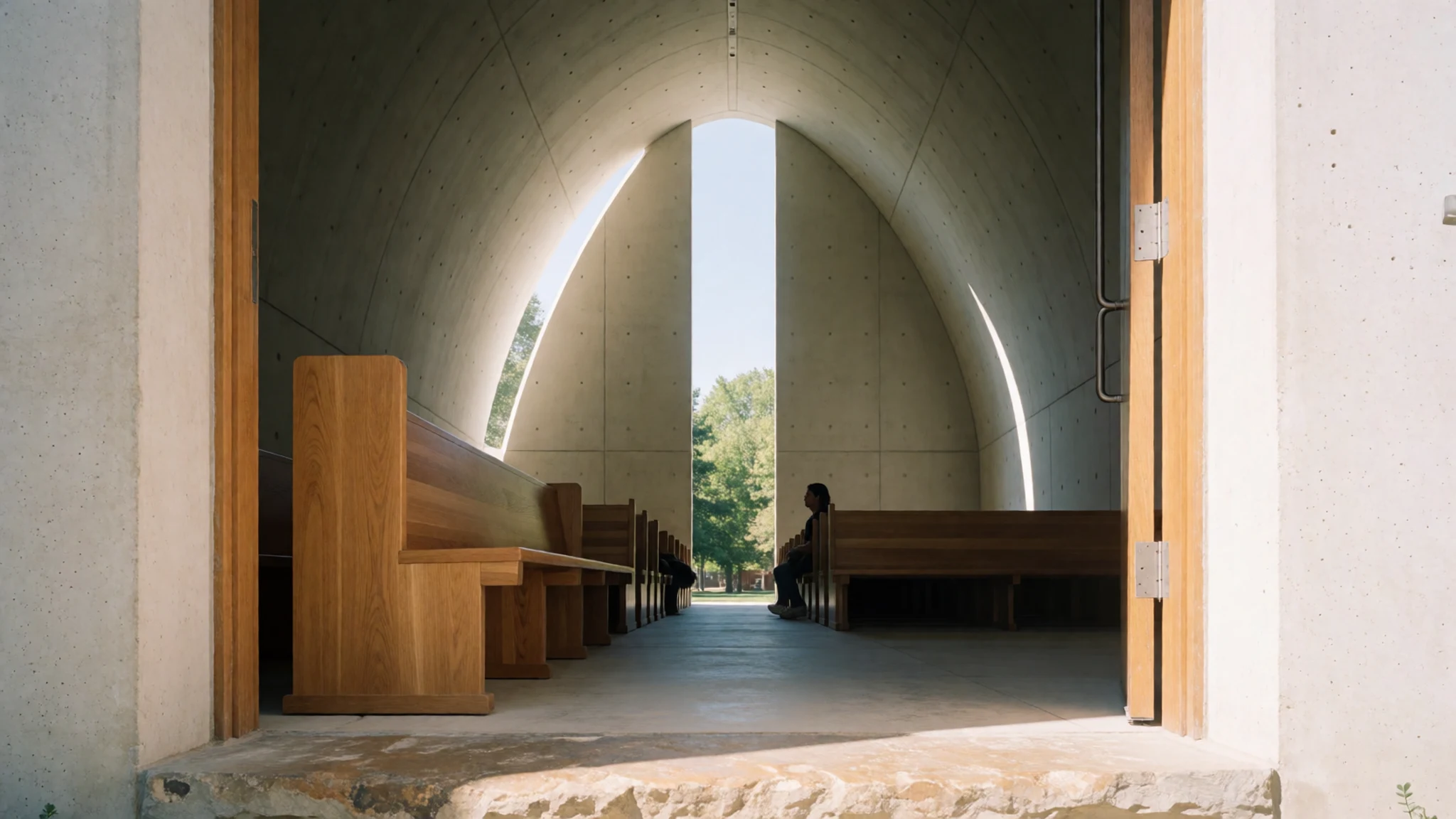
- Gaomei Wetland — Qingshui coast
Taichung's Gaomei Wetland lies on the western coast, a spread of tidal mudflats reached by a long boardwalk. Late afternoon is the kind hour: the light drops, waders work the flats, and wind off the channel is part of the walk. The site is exposed, with little shade, so a hat and water matter in the warm months.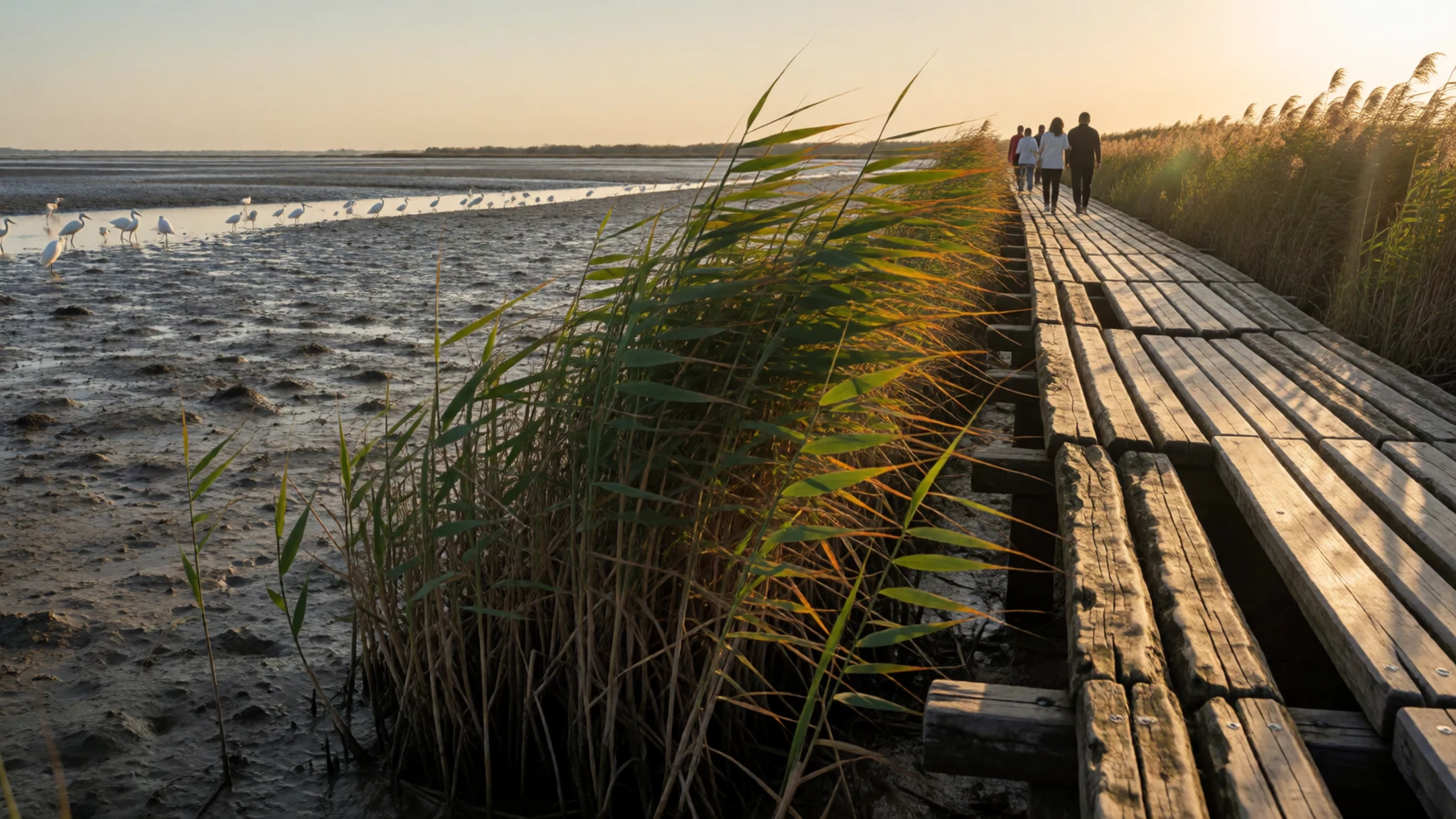
Culture
Taichung's everyday culture mixes a planned Japanese-era centre with the market habits of a Taiwanese city. Temples are working buildings. On festival days incense thickens at neighbourhood shrines as people arrive with fruit rather than with a sightseeing plan. The Mazu cult, strong along this coast, still shapes the local calendar: processions move through ordinary streets, and scooters wait while the chairs pass. Beside that religious life sits a current one. A student community around Fengjia and the western universities keeps those districts busy after dark, with music, portrait studios and the café culture of contemporary Taiwan.
Food is the other public language. Bakeries, especially those with a Japanese sponge-cake lineage, are taken seriously, and a gift box of pastries is a normal thing to carry onto the train. Night markets are where families and students eat, standing up, comparing queues and treating the meal as a walk. Baseball is civic entertainment as well: a match night means cheer squads, snack trays and a full stand of local supporters.
At temples in Taichung, dress modestly, keep clear of a procession, and ask before photographing people who are praying.
What to wear
Taichung does not keep a single court costume in daily view, but the city's textiles are still readable in specific places. Hakka communities in the eastern hill towns keep an indigo cloth tradition, and blue festival dress still appears when those towns mark a feast day. Temple clothing is the other formal register. Women at a Mazu procession may wear a bright embroidered jacket, and festival groups turn out in matching shirts that mark which temple they walk with. Indigenous weaving is more often seen in cultural centres than on the pavement, though patterned cloth and beadwork appear when troupes perform.
Most days the city dresses for heat and for scooters. Around Fengjia, young people follow a loose East Asian city uniform: light shirts, wide trousers, sun sleeves and trainers suited to a night market. Office streets in the Seventh Redevelopment Zone look smarter, with linen and plain dark clothes through the humid months and a warmer coat once winter evenings cool. Qipao-style dresses hang in portrait shops; they are a costume for the camera, not the usual clothes of a bus queue.
Visitors do well in breathable clothes, with a hat for the coast and the hills, and shoes that slip off at a temple step. Covered shoulders and knees are the respectful choice inside shrines. Cotton or linen handles the humid months, and a compact raincoat belongs in a bag from late spring into autumn.
What to eat
- Sun cake — pastry shops in the station quarter
Taichung's sun cake is a round, flaky pastry with a sweet malt-sugar filling, packed in tins for the journey home. The crust shatters and the centre is sticky rather than creamy. Pastry shops around the station quarter sell it by the box. It is best the day it is bought.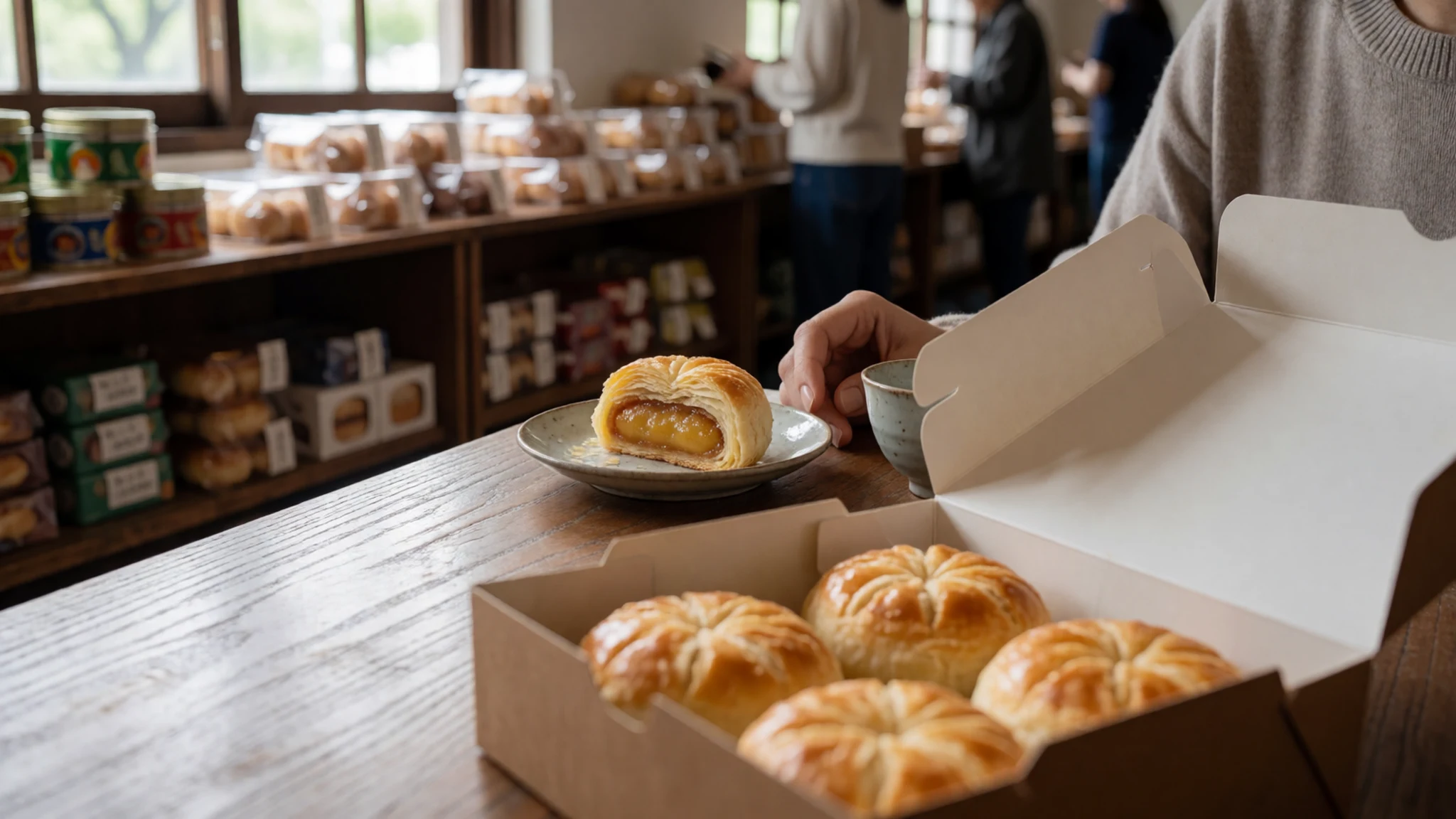
- Pearl milk tea — tea counters and night markets
Pearl milk tea is the cold drink Taichung treats as local: black tea, milk and tapioca pearls, shaken over ice. Stalls and sit-down counters both make it along shopping streets and inside night markets. Sweetness and ice are chosen at the counter. Less sugar lets the tea come through.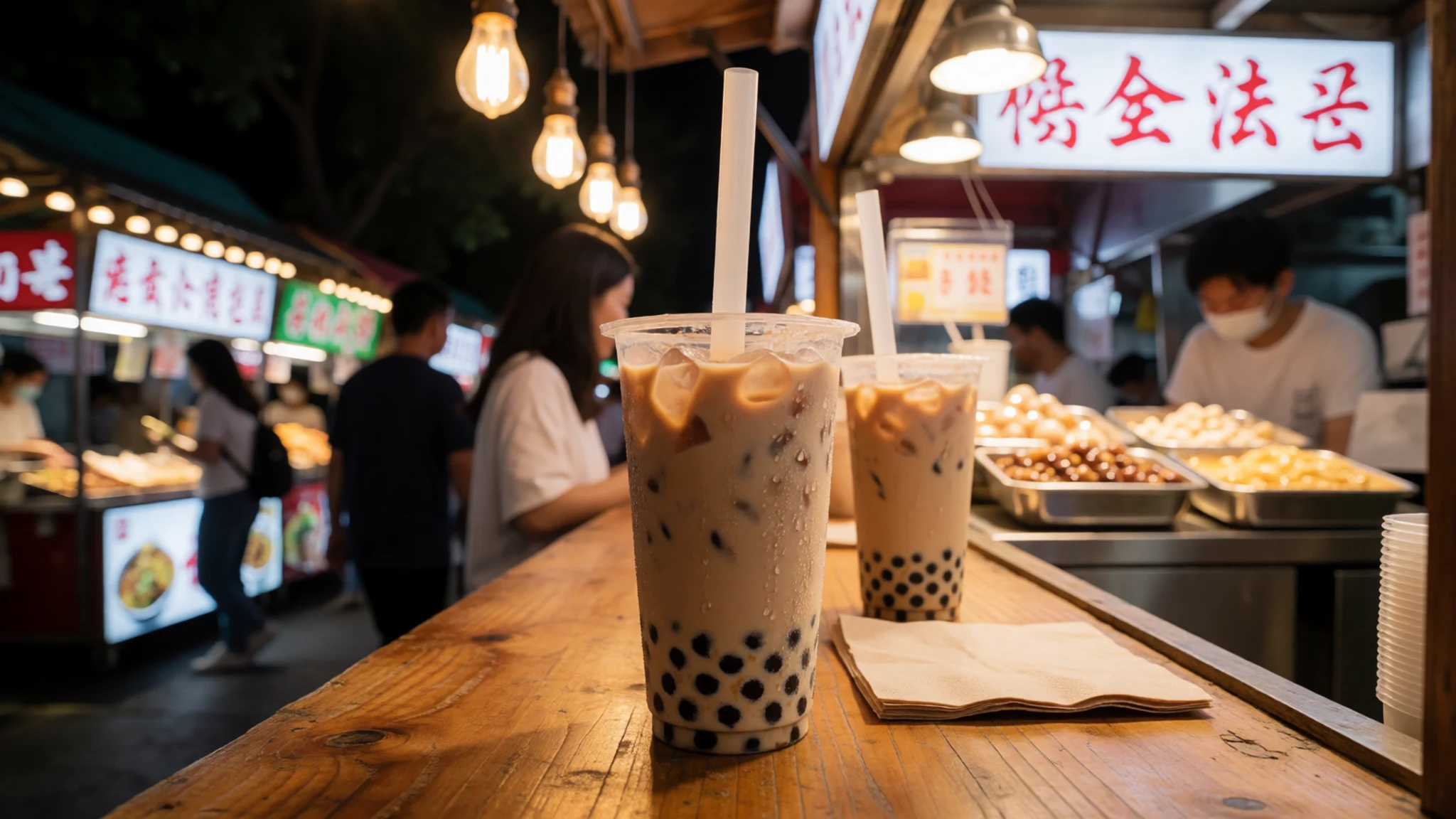
- Taichung ba-wan — traditional markets in the older districts
Taichung ba-wan is a plump, translucent meat pudding, softer than the fried versions common further south. Pork is the usual filling, with a sweet-savoury sauce spooned over the top. Traditional market stalls in the older districts are the place for it, and some shops sell little else. - Squid thick noodles — Fengjia Night Market and Zhonghua Night Market
Squid thick noodles — hua zhi yi mian — are a Taichung night-market habit: chewy wheat noodles tossed with cuttlefish, often dry rather than in soup, with a peppery, slightly sweet edge. Fengjia's student streets and the older Zhonghua market both have stalls that lead with this dish. - Honey castella — station-quarter bakeries and mall food halls
Honey castella is the plain Taiwanese sponge, baked in a ring or a loaf, that Taichung bakeries turned into a travelling gift. The crumb is soft and lightly sweet. Station-quarter bakeries and western mall food halls sell it by the slice or the box.
Plan it
Best time. October to April is the easier stretch in Taichung, and November to February the most comfortable: days are warm rather than harsh, June is hottest, August wettest, and winter nights near 4–8°C ask for a proper coat. Late spring brings the plum rains. High summer is hot and humid, with heavy showers and the chance of typhoons, so outdoor plans need a flexible afternoon.
How long. 3–4
Getting there. Taichung Airport handles some regional flights, while most long-haul arrivals land at Taoyuan and continue on Taiwan High Speed Rail to Taichung HSR Station in Wuri. A local train, city bus or taxi covers the last stretch into the centre. Inside the city, buses cover every district, the conventional railway links the old centre with the coast, and the MRT runs from Wuri's high-speed station through the urban area.
Budget. mid
Tips
- Carry cash for night-market stalls; cards work in malls and larger shops.
- Use the MRT and buses across the west, and the local railway towards the centre and the coast.
- Keep outdoor plans for the morning in the warm months, when afternoon rain is common.
- Reserve high-speed rail seats ahead of weekends and public holidays.
- Confirm opening on the museum and university chapel's own sites before a special trip.
Etiquette
- Remove shoes wherever a temple shows a step up and indoor slippers.
- Stand aside for religious processions instead of crossing through them.
- Ask before photographing people at prayer or at a market stall.
Nearby
Sources
- Wikidata Q245023 (CC0)
- Wikipedia: Taichung (CC BY-SA 4.0)
- Wikivoyage: Taichung (CC BY-SA 4.0)