Sutton Hoo
Sutton Hoo, United Kingdom

Sutton Hoo is where a buried Anglo-Saxon ship and its treasures changed what we know about early England, set on a quiet Suffolk estuary.
The place
Sutton Hoo is an archaeological site near Woodbridge in Suffolk, on high ground above the River Deben. It holds two Anglo-Saxon cemeteries, used in the sixth and seventh centuries. The grassy mounds are low and modest, and the first impression is of a quiet, open heath rather than a grand monument. The drama is underground, or rather it was, and now lives in the stories told here.
Seen from the far bank of the estuary, the mounds show as a loose row of gentle humps against the skyline, roughly two dozen in all. That is a useful way to grasp why the spot was chosen: it was meant to be seen from the water, by anyone travelling the river. The second burial ground lies a short walk upstream of the first, on its own hill-spur. Centuries of ploughing flattened the tops of many mounds, so some look more like swellings in the grass than the heaps they once were.
The site is run by the National Trust, and the official page at https://www.nationaltrust.org.uk/sutton-hoo is the place to check opening arrangements and tour options. The visitor centre is the anchor of the day. It holds original finds, replicas of others, and a full-scale reconstruction of the burial chamber, so you can picture the layout before walking out to the mounds. Allow time for both the indoor displays and the open-air walk, and expect exposed, breezy ground, because there is little shelter on the heath.
Its story
The Sutton Hoo story begins in 1938, when the landowner, Edith Pretty, asked a self-taught local archaeologist, Basil Brown, to open some of the mounds on her land. In one of them he found rows of iron rivets, the ghost of a ship. As the scale of the find became clear, national scholars took over the dig, and what emerged was an undisturbed ship burial with a chamber full of objects.
The finds were extraordinary in range: weapons and a helmet for display, a musical instrument, gold and garnet fittings for clothing, and silverware that had travelled from the Eastern Roman world. Together they showed an East Anglian court that was wealthy, well connected and far from the grim, isolated picture people had often held of the period. Because written records from the time are so thin, the objects themselves became the main evidence.
Most scholars think the person honoured was Rædwald, the first king of the East Angles and a real historical figure, though the body itself left almost no trace in the acid soil. Readers of the Old English poem Beowulf have long noticed echoes in the ship funeral, and some finds have parallels in Sweden.
Excavation did not stop with the great ship. Later campaigns in the twentieth century explored the wider area and uncovered more burials. Then, in 2000, preparatory work for the visitor centre led to the partial exploration of the second burial ground.
What to see
- The burial mounds — The burial ground, above the River Deben
The walk across the heath to the mounds is the heart of a visit. The grassy humps are low, and some are barely raised after farming wore them down. Pause at the viewpoints over the Deben estuary and try to imagine how the row looked from a passing boat.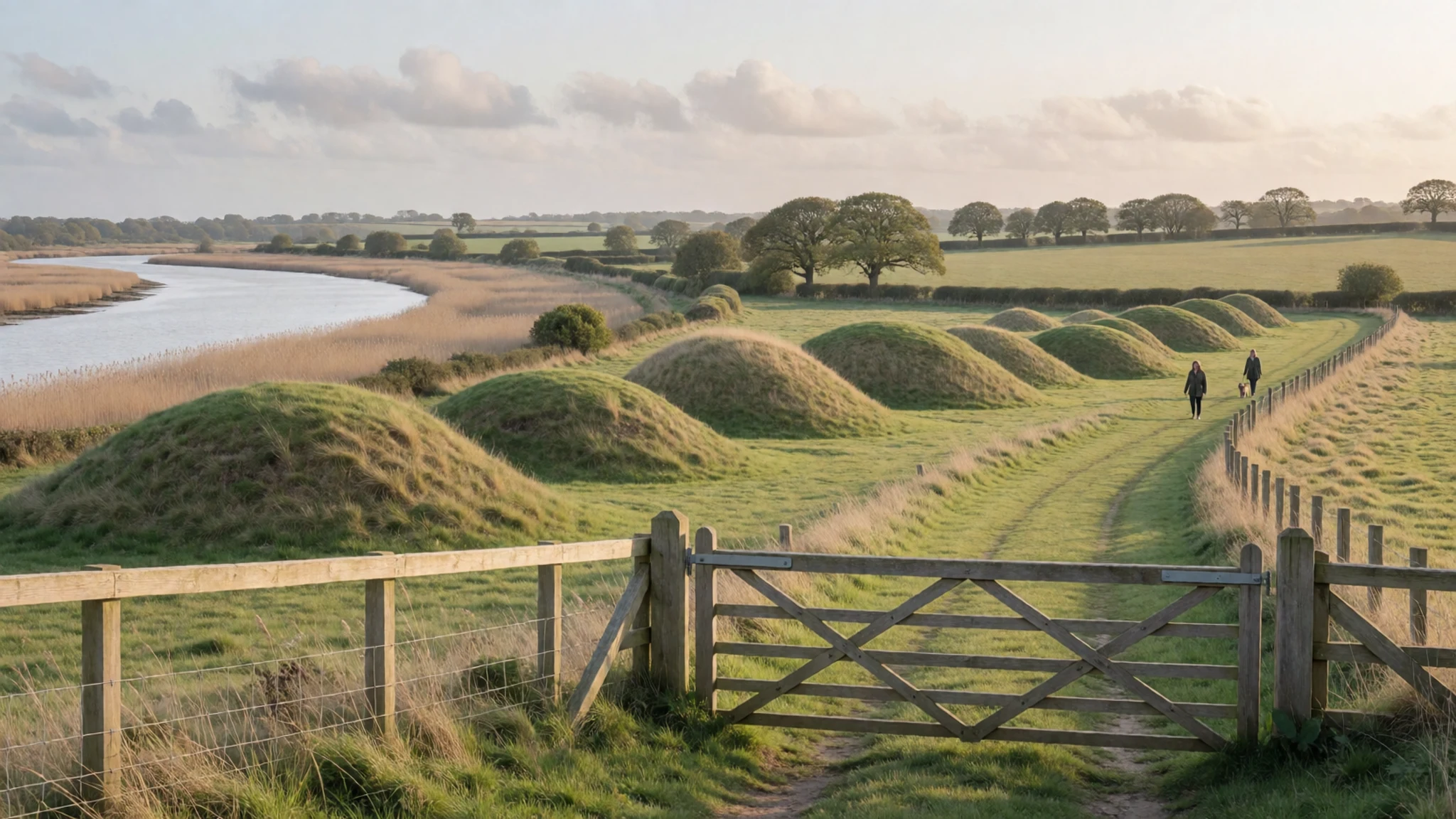
- The ship burial site — The first cemetery
The spot of the great ship burial is marked on the ground, and the scale becomes real as you pace out the outline. Nothing of the wooden hull survives as timber; the memory of it lies in the shape the ground once took and in the displays elsewhere.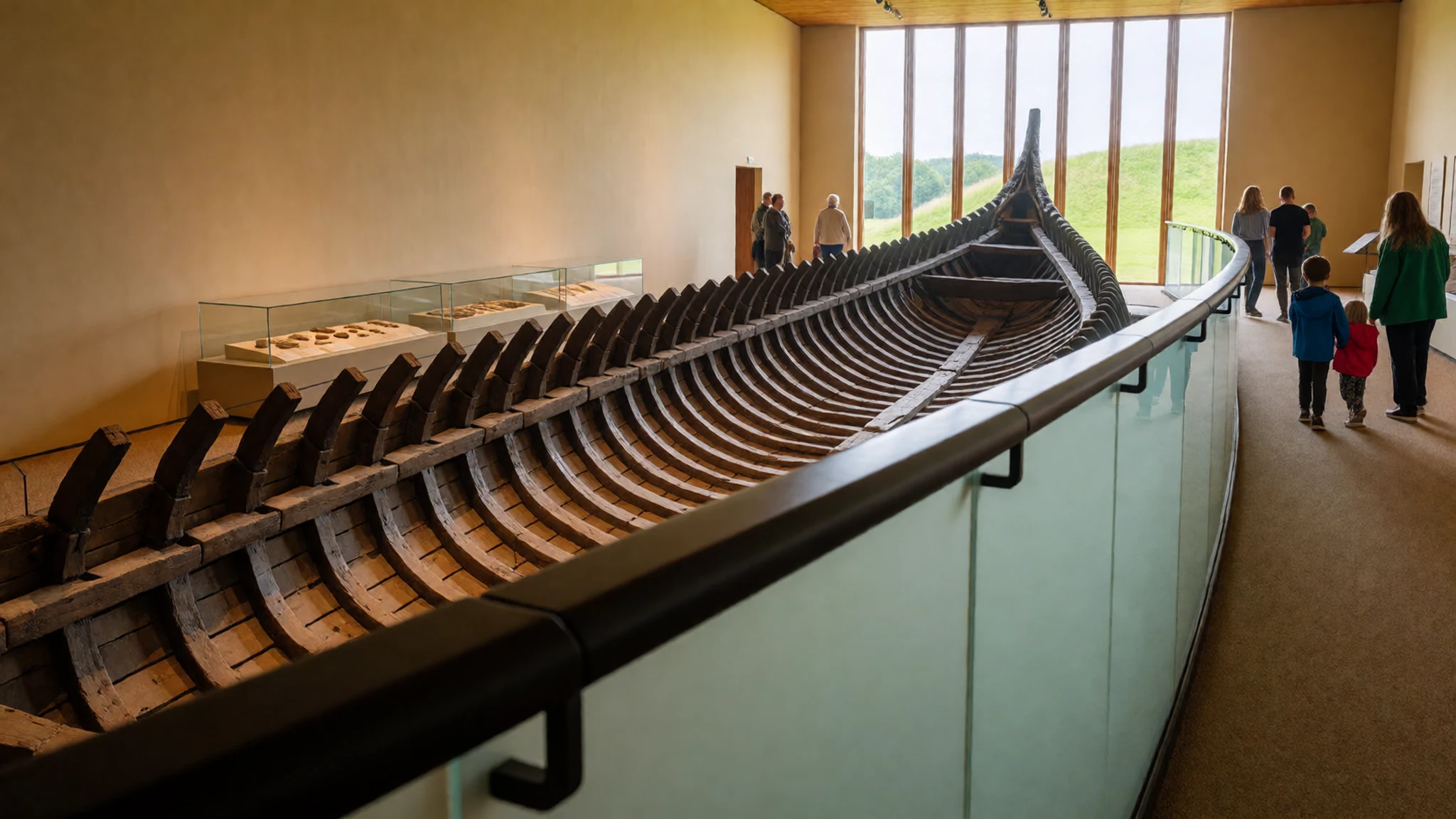
- The reconstructed burial chamber — Visitor centre
Inside the visitor centre, a full-scale reconstruction shows how the chamber and its goods were arranged. It is the best way to make sense of what the mounds hide, and it is worth seeing before or after the walk outside, so the two halves of the story join up.
- Original finds and replicas — Visitor centre exhibition
The exhibition mixes original objects with replicas, including a copy of the famous helmet with its face mask. Look closely at the metalwork and the garnet inlay; the fine detail is what convinces people that this was a sophisticated court, not a rough camp.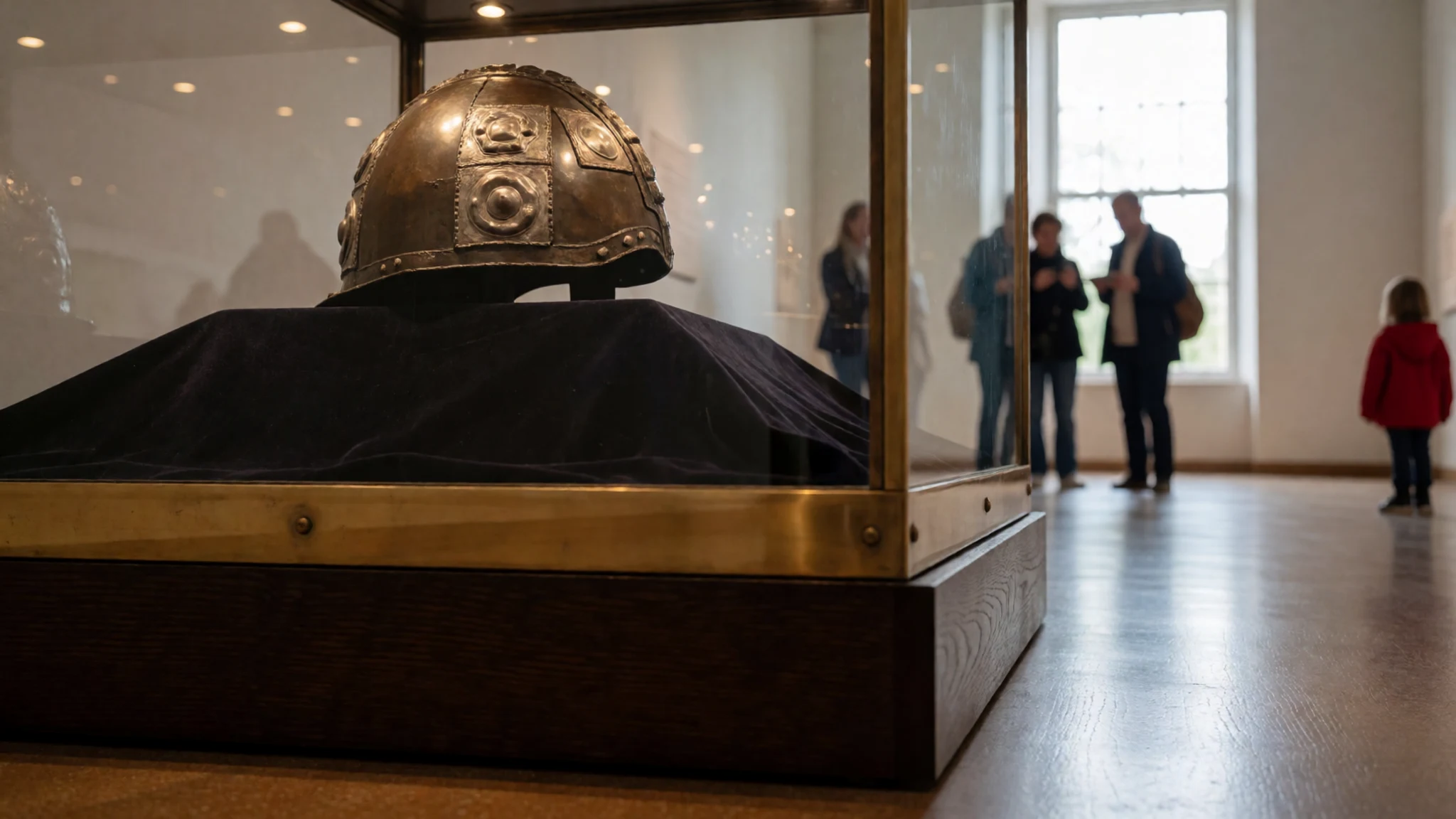
- The second burial ground — Upstream of the first cemetery
A short distance upstream, on its own hill-spur, lies a second cemetery found only when work began for the visitor centre. It feels quieter than the main field, and gives a sense of how large the whole burial landscape was and how much may still be understood.
Culture
Sutton Hoo sits at the meeting point of archaeology, poetry and national memory. For many British visitors it is tied to school lessons about the so-called Dark Ages, a phrase that the finds themselves helped to undermine. The objects show craft, trade and ceremony at a level few had expected, and they changed how historians describe early England.
There is also a literary side. The ship funeral invites comparison with Beowulf, where a king is sent to sea in a ship loaded with treasure. Whether or not the two are directly linked, the pairing gives the site a mythic quality that guides and displays are happy to explore.
The story of Edith Pretty and Basil Brown is a favourite local theme. Brown was a self-taught digger of modest background, and Pretty was the landowner who wanted the mounds opened. Their partnership is often retold as a reminder that major discoveries can come from patient, ordinary people.
The site is also a burial ground, even if the people buried there died long ago. Staff and volunteers treat it with a quiet seriousness, and the atmosphere on the heath is more reflective than festive. Guided talks tend to combine hard evidence with honest admissions about what remains unknown, which is part of the charm.
Please keep to the marked paths and do not walk or climb on the burial mounds, which are fragile and protected.
What to wear
Sutton Hoo has no living costume tradition, but the finds show how the East Anglian elite dressed in the seventh century. Gold and garnet fittings, such as clasps, buckles and a purse lid, were made to fasten and decorate clothing and belts. The garments themselves, probably wool and linen, have rotted away, so the metalwork is what tells the tale of status and display.
Today, people in Suffolk dress for a mild, changeable climate. Practical layers, waterproof jackets, jeans or walking trousers and sturdy shoes are normal, and nobody expects smart clothes in the countryside. Wax jackets and wellington boots are familiar sights on muddy days, and cyclists and dog walkers share the paths.
For a visit, dress for the weather rather than the occasion. The heath is open and breezy, so bring a windproof layer even in summer, and a light waterproof for showers. Comfortable walking shoes or boots with a good grip are best, since the grass can be wet and uneven after rain. In cooler months, add a hat and gloves, because the estuary wind can feel sharper than the forecast suggests. There is no formal dress code, and no need to cover shoulders or heads. In bright weather, sun protection helps, as shade is limited. A small rucksack is easier than a large bag on the paths.
What to eat
- Gastropub lunch — Pubs in Woodbridge and nearby villages
Suffolk is known for gastropubs that build menus around local farming and fishing. A pub lunch in Woodbridge or a nearby village is a relaxed way to eat well after the walk, with seasonal vegetables, meat and fish.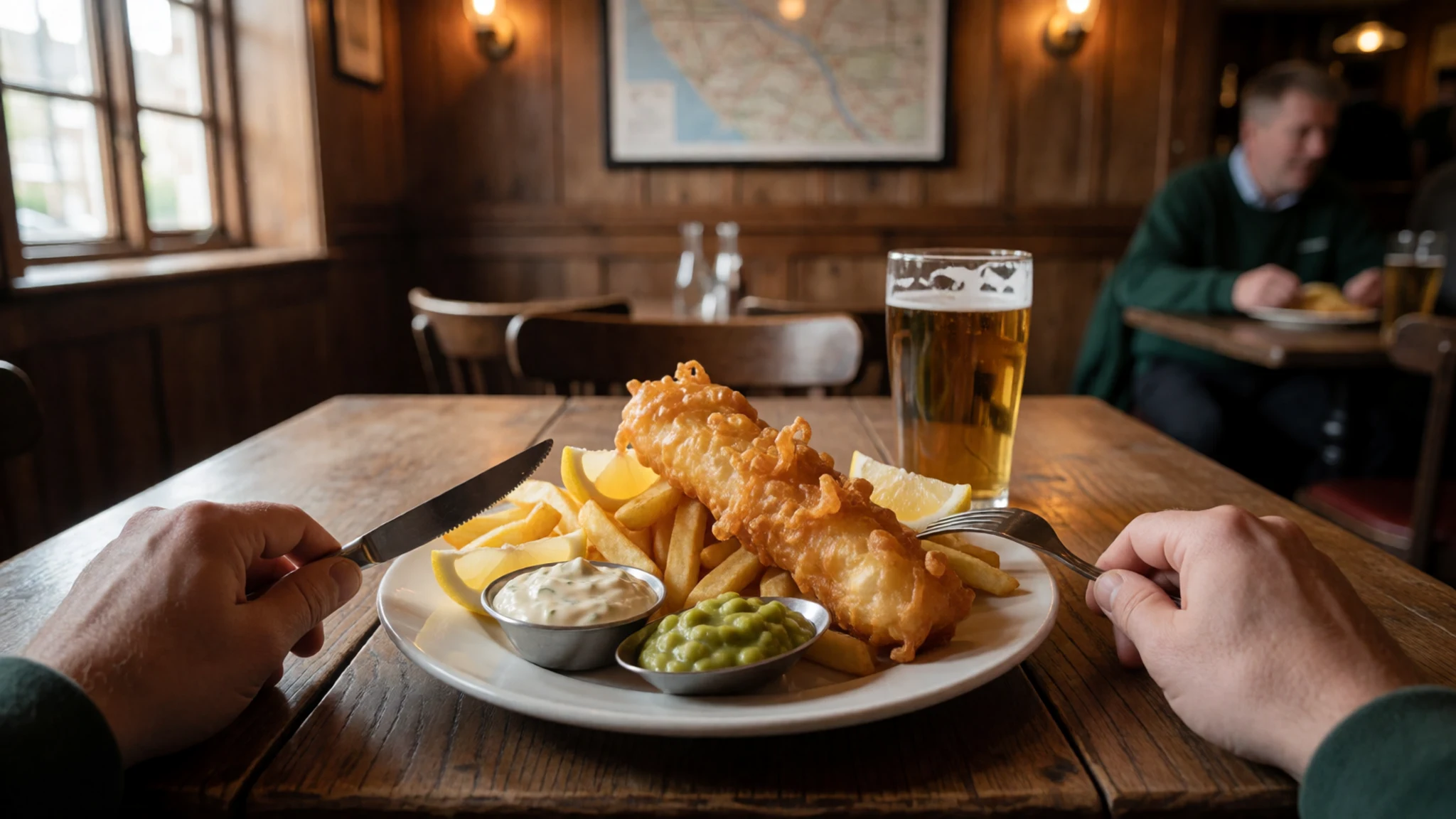
- A pint of local ale — Traditional Suffolk pubs
Southwold's Adnams brewery is a well-known Suffolk name, and its beer is poured in many pubs across the county. Try a local ale with lunch, and ask the bar staff what is on that day; the choice often changes by season.
- Fresh local fish — Coastal towns and Woodbridge eateries
With a long coastline, Suffolk has a strong fishing tradition. Look for locally caught fish on pub and restaurant menus, often served simply, pan-fried or battered with chips. Ask what came in that day, as menus change with the catch.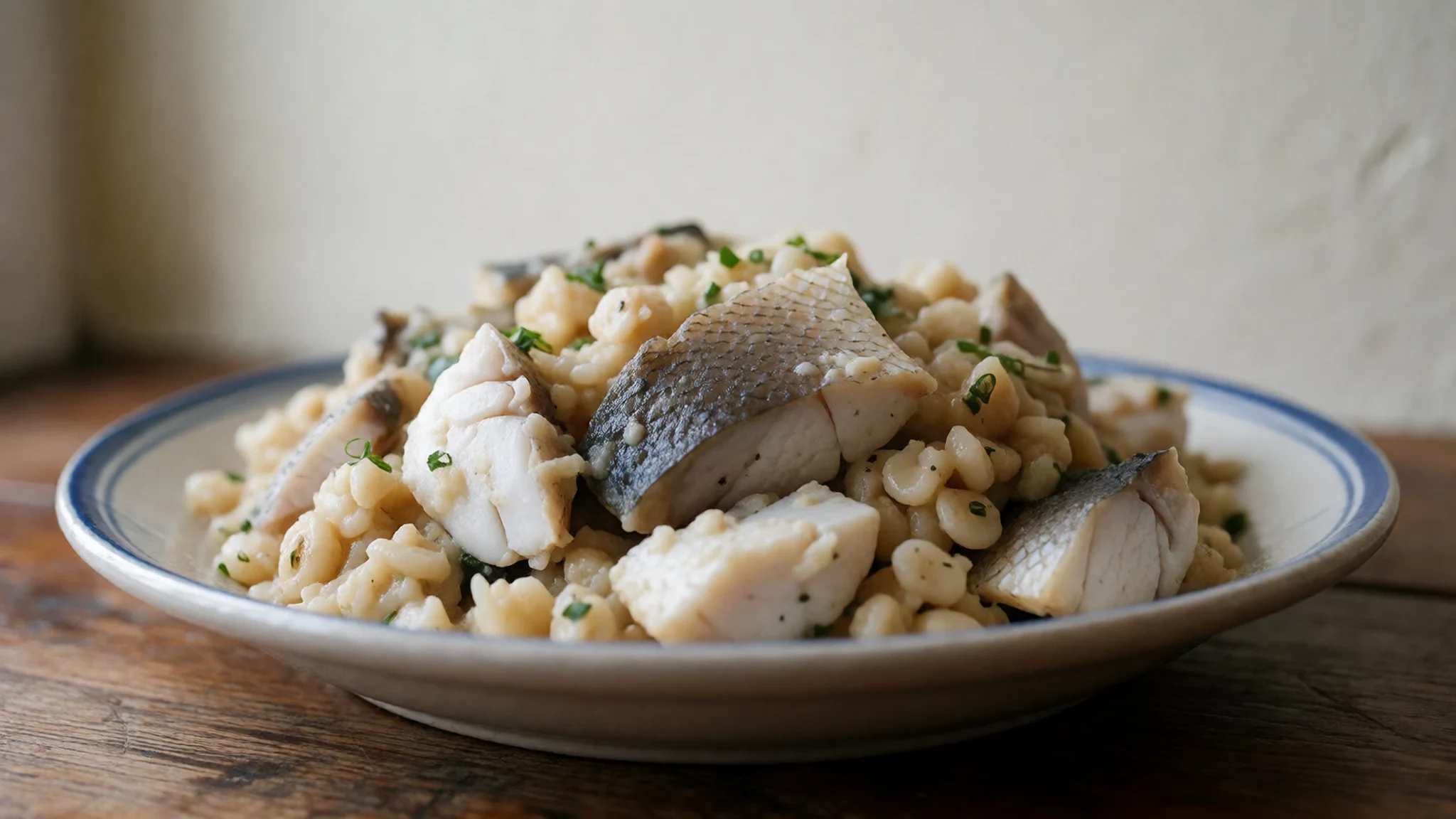
- Ploughman's lunch — Village pubs and country cafés
A classic English pub dish of bread, cheese, pickles and salad, often with a slice of ham. It suits a day outdoors, and many pubs use regional cheese and chutney, so it can taste quite different from one place to the next.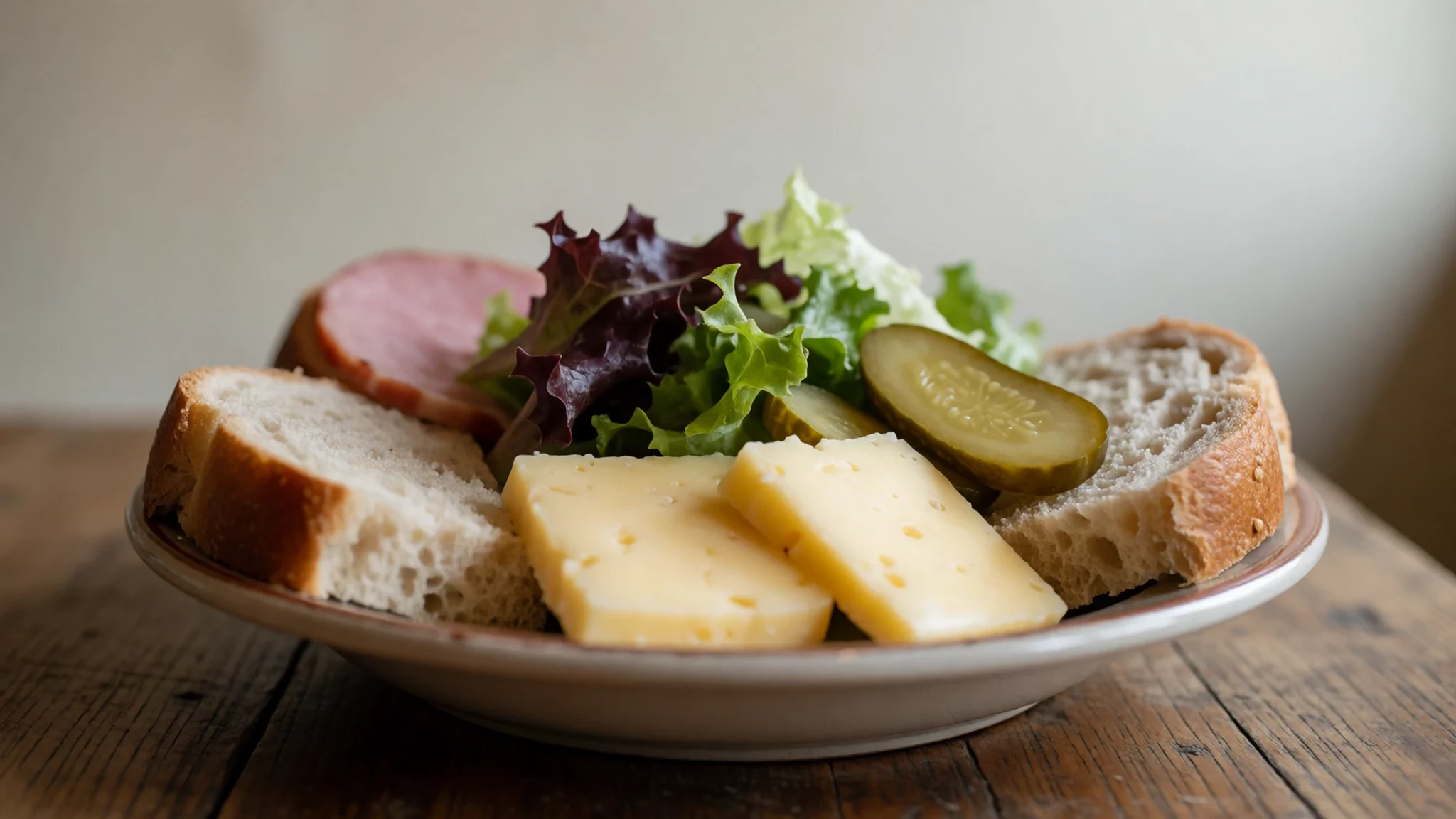
- Locally sourced farm produce — Farm shops and markets around Woodbridge
Farm shops and village markets in the area sell fresh vegetables, eggs, bread, cheese and preserves from nearby farms. They are good for a picnic to take onto the heath, or for gifts, and the produce changes with the seasons.
- Tea and cake at the visitor centre — The visitor centre café
After the walk, a pot of tea and a slice of cake is the traditional reward. The visitor centre has a café, and a hot drink is especially welcome on windy days. Check the National Trust site for current catering arrangements before you go.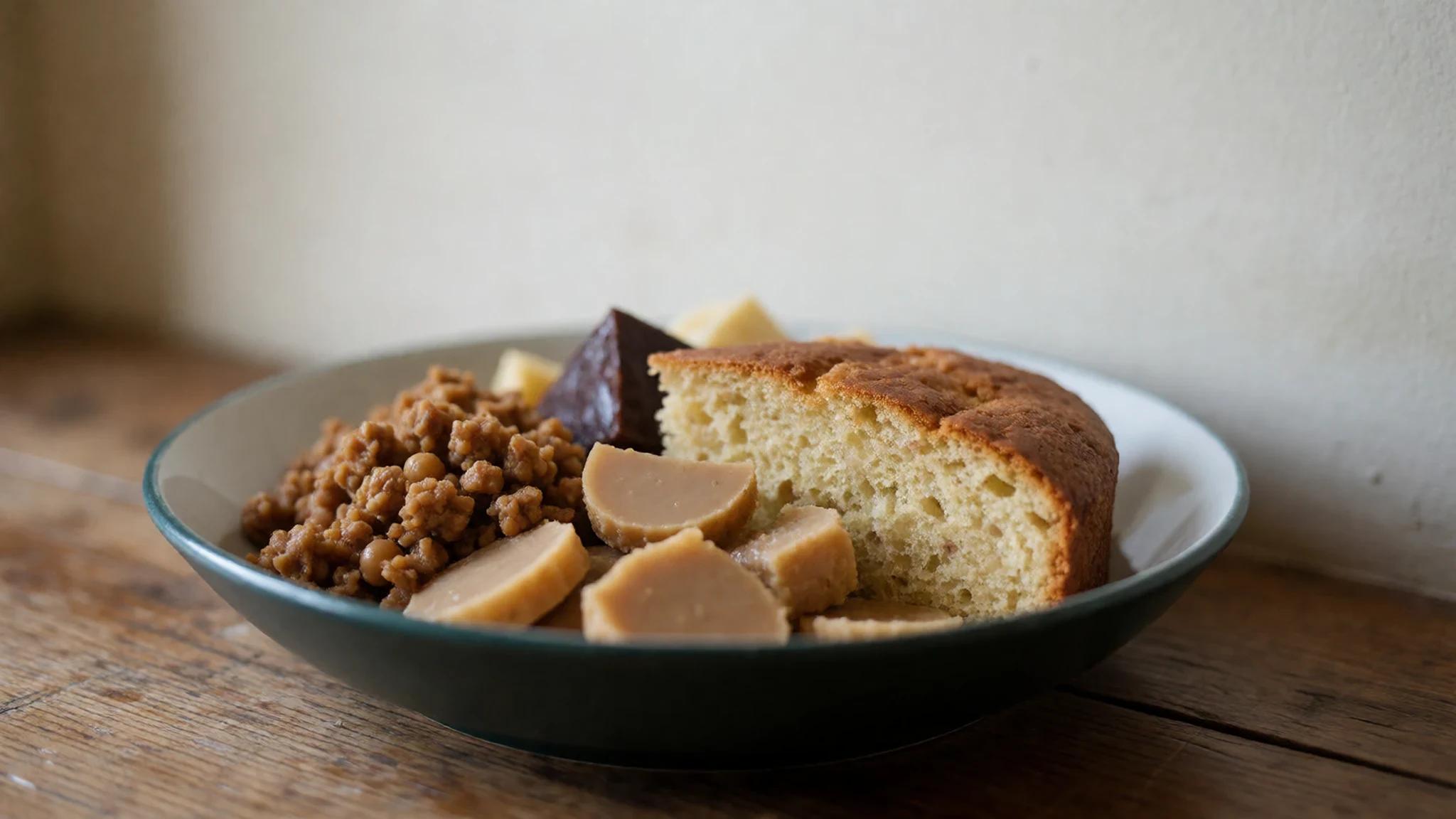
Plan it
Best time. April to June and September to October are the most comfortable months, with mild weather and longer daylight for walking the open heath. Summer can be busy at weekends and school holidays; winter is cold, windy and damp but quiet.
How long. 1
Getting there. The nearest major airports are London Stansted and Norwich. From either, continue by train or road to Ipswich or Woodbridge, then take a taxi or local transport for the last leg. London to Ipswich by train takes about an hour and a half.
Budget. mid
Tips
- Check the National Trust website for opening arrangements, tours and any booking needs before you travel
- Arrive early on weekends and school holidays to avoid the busiest crowds
- Bring a windproof layer and waterproof shoes, as the heath is exposed
- Allow time for both the exhibition and the outdoor walk
- Take care on rural lanes in frost or poor visibility
Etiquette
- Stay on marked paths and off the mounds
- Keep dogs under control where they are permitted and follow any signs
- Speak quietly near guided talks so others can hear
Nearby
Sources
- Wikidata Q503256 (CC0)
- Wikipedia: Sutton Hoo (rev 1383981752) (CC BY-SA 4.0)
- Wikivoyage: Suffolk (rev 5194528) (CC BY-SA 4.0)
- Sutton Hoo burial ground 5, User:Amitchell125 (CC BY 3.0)
- Sutton Hoo burial site, Alex Healing (CC BY-SA 2.0)
- Wicklaw and Ipswich, Dr Steven Plunkett (Public domain)
- Grave goods from mound 17, Jor Viking (CC BY-SA 2.5)
- Burial mound 2, Geoff Dallimore / SilkTork (CC BY-SA 1.0)
- Sutton Hoo ship model, Sjöhistoriska museet (CC BY 4.0)
- Sutton Hoo helmet reconstructed, Gernot Keller (CC BY-SA 2.5)
- Byzantine Christening Spoons, JASpencer (CC0 1.0)


