Suncheon Bay
Suncheon Bay, South Korea
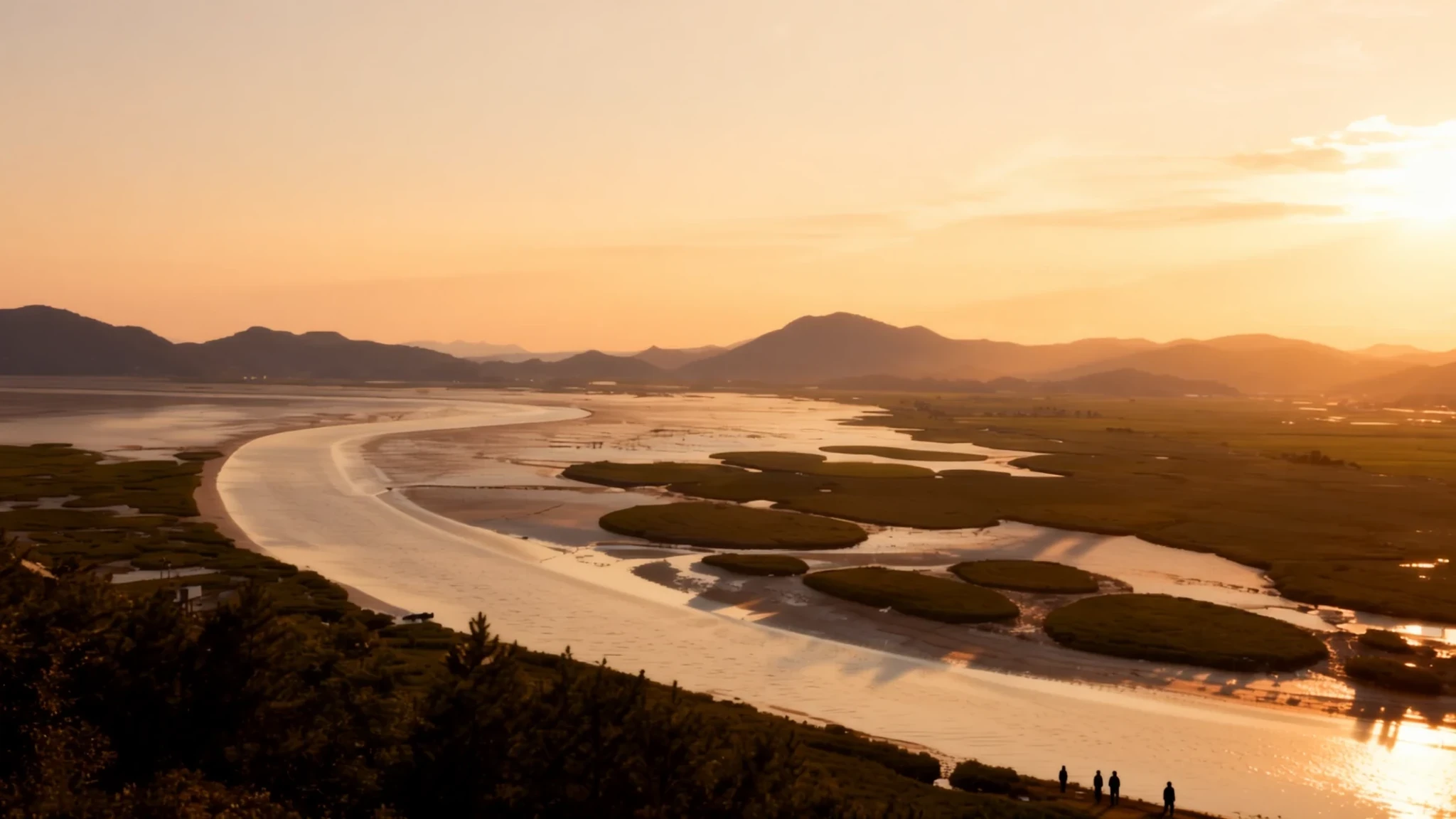
Suncheon Bay is a Ramsar-listed coastal wetland of reeds, mudflats and migratory birds, reached by an easy rail journey from Seoul.
The place
Suncheon Bay sits on the southern coast of South Korea, in Suncheon, South Jeolla Province. It is a coastal wetland, and the numbers in the park's own descriptions tell the story: a stream of 3.5 km (2.2 mi), a tideland of 2,221 ha (5,490 acres) and a reed field of 230 ha (570 acres). Most of the area is open mud, and the reeds form a fringe along the channels where the tide comes in and out.
The setting matters for the weather. South Jeolla belongs to the Honam region and has the mildest climate on the peninsula, with plenty of rain. That is why the surrounding plains are farmland, growing rice, barley, wheat, pulses and potatoes, and why the coast is dotted with oyster and seaweed farms. Close to the bay, the land is flat, green and low, with hills only in the distance.
What draws people is the combination of habitat and ease. Migratory birds use the mudflats, and the reed beds shelter other wildlife, yet the paths are laid out so that visitors can walk, cycle-free, along boardwalks and embankments without wet feet. The bay is protected as a Ramsar wetland, and the official park site, suncheonbay.go.kr, is the place to check opening arrangements and any seasonal closures before travelling.
The mood changes with the light and the tide. At high water the channels fill and the reeds seem to float; at low water the mud shines and is patterned by crabs and birds. Autumn turns the reeds gold, which is when the bay is busiest and most photographed.
Its story
Suncheon Bay's modern story is one of a working coast that came to be valued for what it already had. For generations the tidal flats and reed beds were simply part of the farming and fishing landscape of South Jeolla, a region known as a granary and for its seafood. Reeds were a local resource, and the mud fed shellfish and the birds that came and went with the seasons.
The change was in how the place was seen. As coastlines elsewhere in Korea were drained and reclaimed, the survival of this wide, natural shoreline became notable in itself. Suncheon Bay Ecological Park became the first Korean coastal wetland to be registered as a Ramsar site, on 20 January 2006. That listing gave the bay an international status and a reason for careful management, with boardwalks and observation points built to keep feet off the mud and disturbance away from the birds.
Since then the bay has grown into a visitor destination without losing its character as a protected wetland. The region around it has other claims on a traveller's time, among them the tea country of Boseong County and the Getbol tidal flats of the wider coast, which carry World Heritage status. Suncheon Bay fits into that larger picture: a stretch of shoreline where tide, reed and bird life are still the main event, and where the lesson of conservation is easy to read from a wooden walkway.
What to see
- The reed fields — Suncheon Bay Ecological Park
The great reed beds are the signature view of Suncheon Bay. Boardwalks run through and beside them, so visitors walk at eye level with the stems. The reeds rustle in wind, hide small birds, and change from green to silver to gold across the year. Allow time for slow walking and photographs.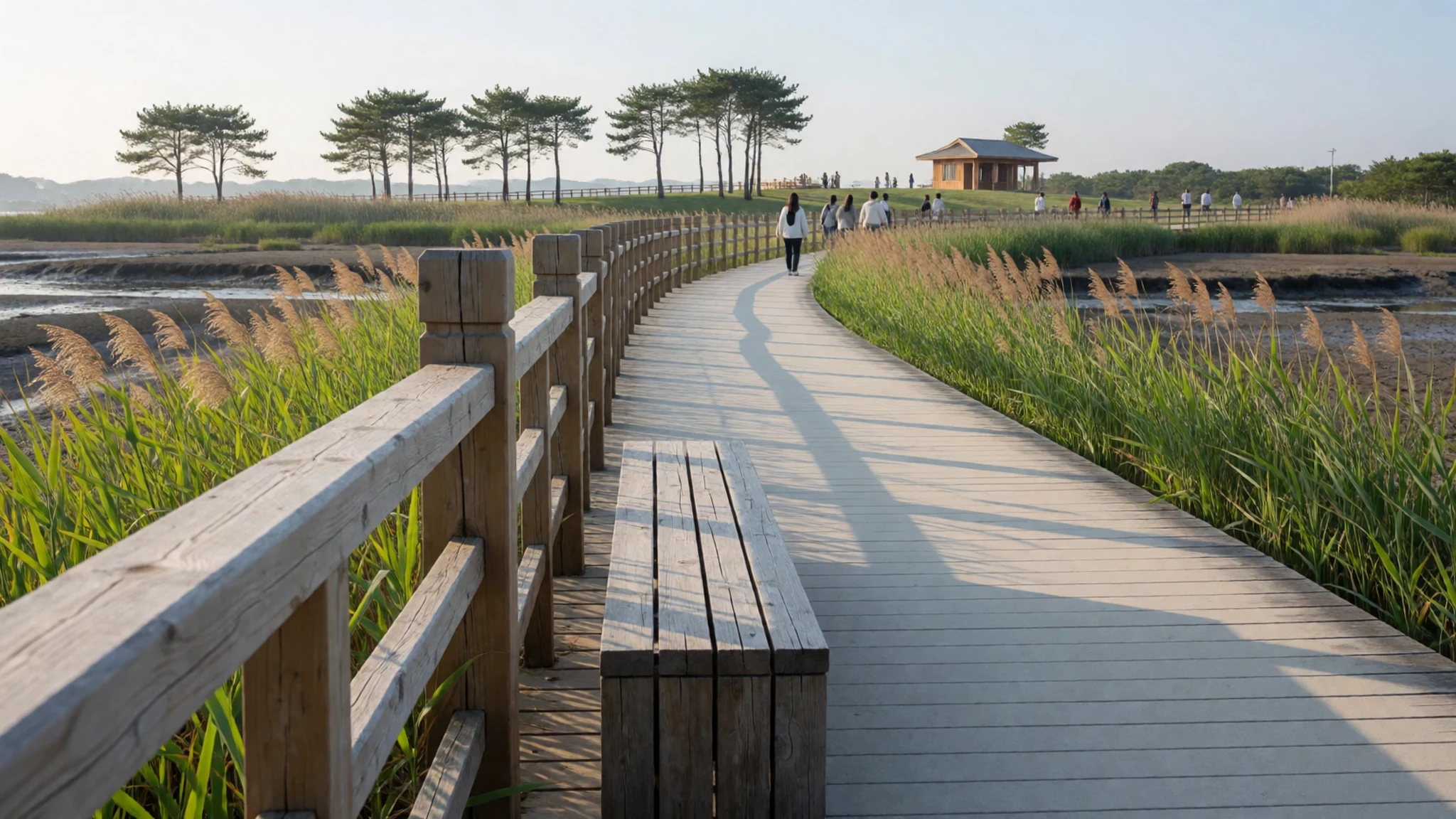
- The tidal mudflats — Seaward side of the bay
Beyond the reeds lies the open tideland, a wide expanse of grey mud that shines at low water. Crabs, mudskippers and wading birds feed here. The scale is best appreciated from the raised embankments, where the pattern of channels can be seen winding towards the sea.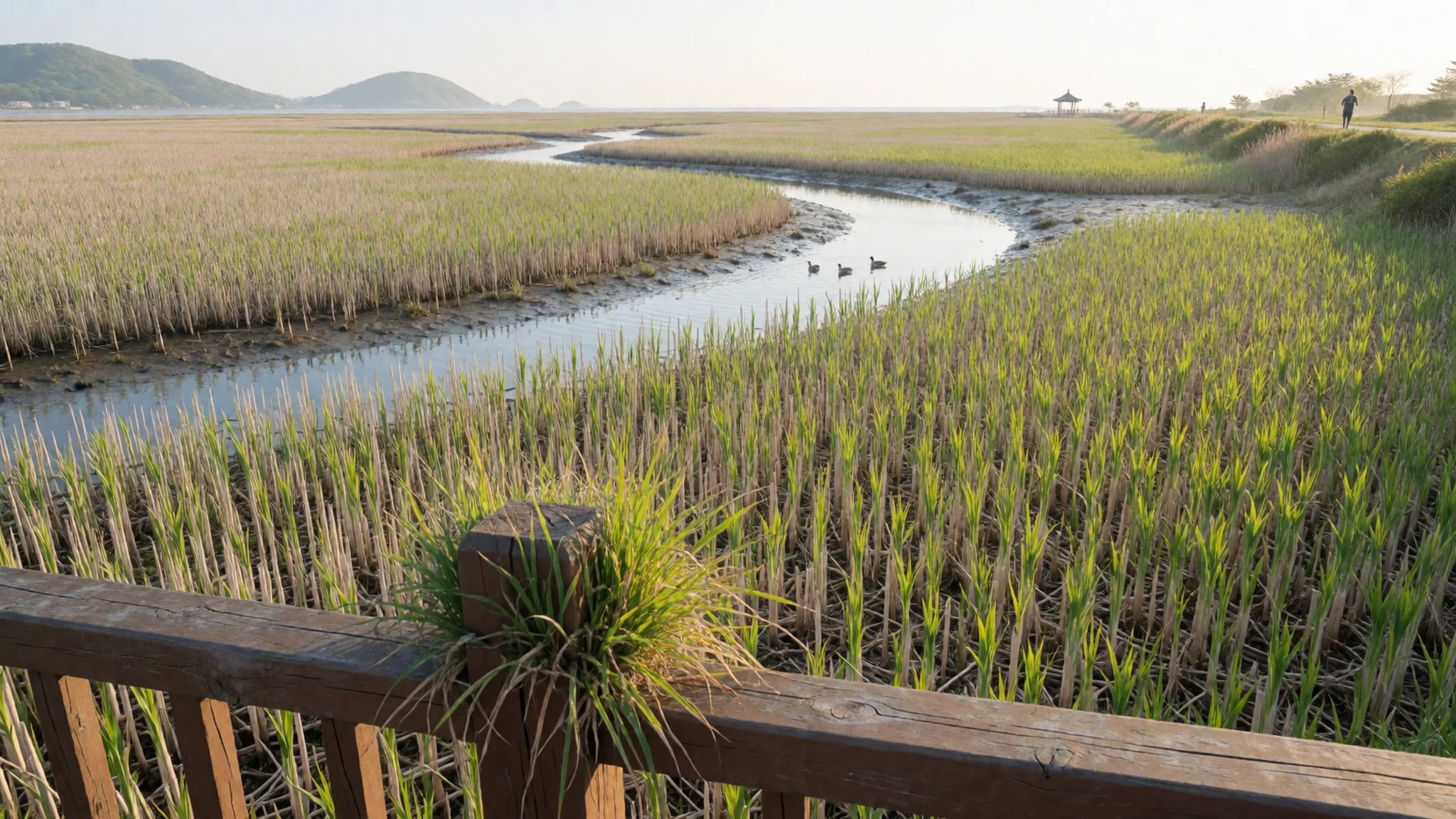
- The winding stream — Through the reed beds
The 3.5 km stream threads through the wetland, and its curves are one of the most photographed features of the bay. Seen from above or from a viewpoint on the hills, it looks like a drawn line across the reeds. Tide height changes its look completely.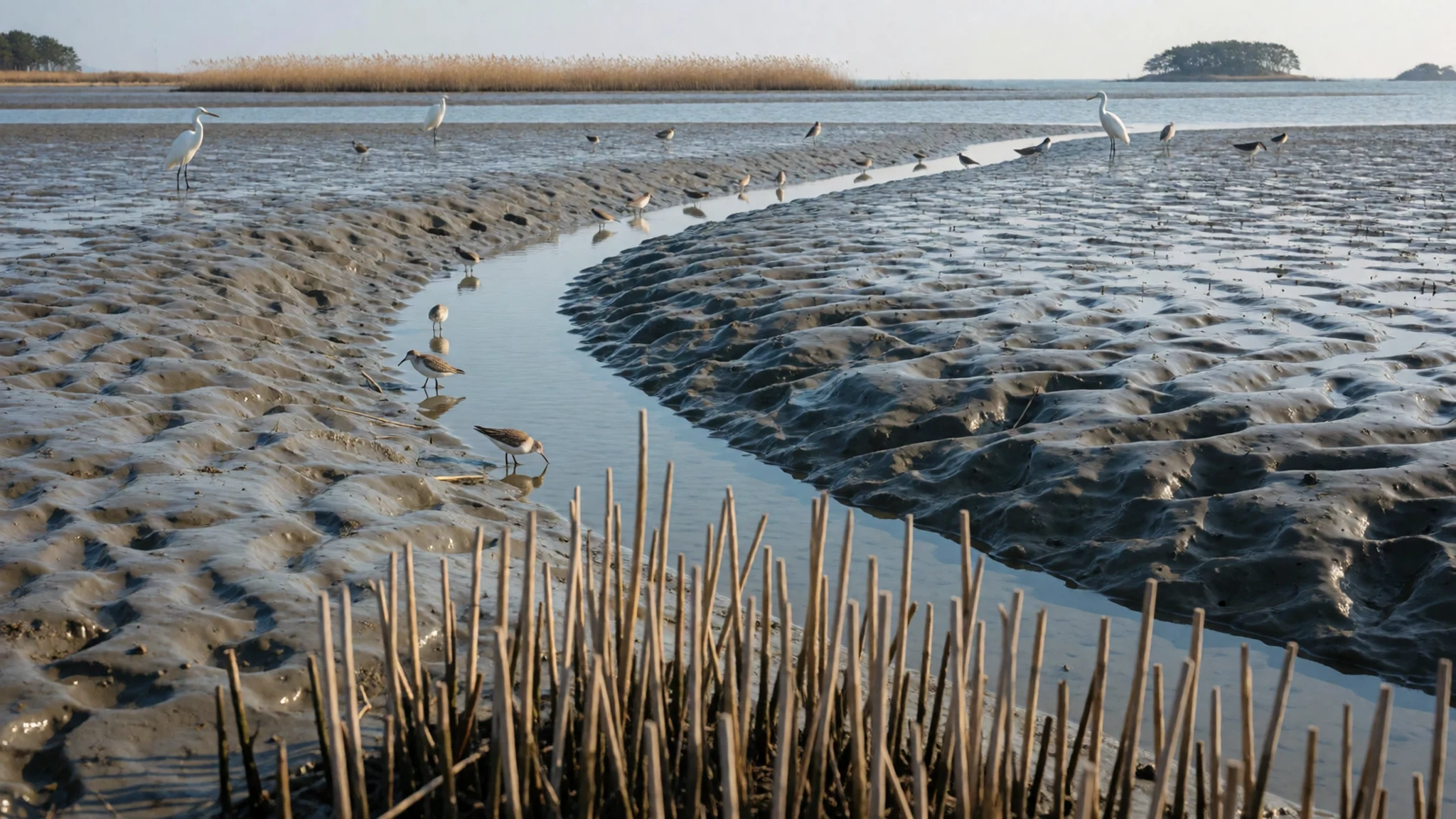
- Birdwatching points — Observation decks around the park
Migratory birds use the bay, and the observation points are placed to let visitors watch without disturbing them. Binoculars help a great deal, and quiet movement helps more. Cold months and the migration seasons bring the most variety, though the check on timing is best made with the park.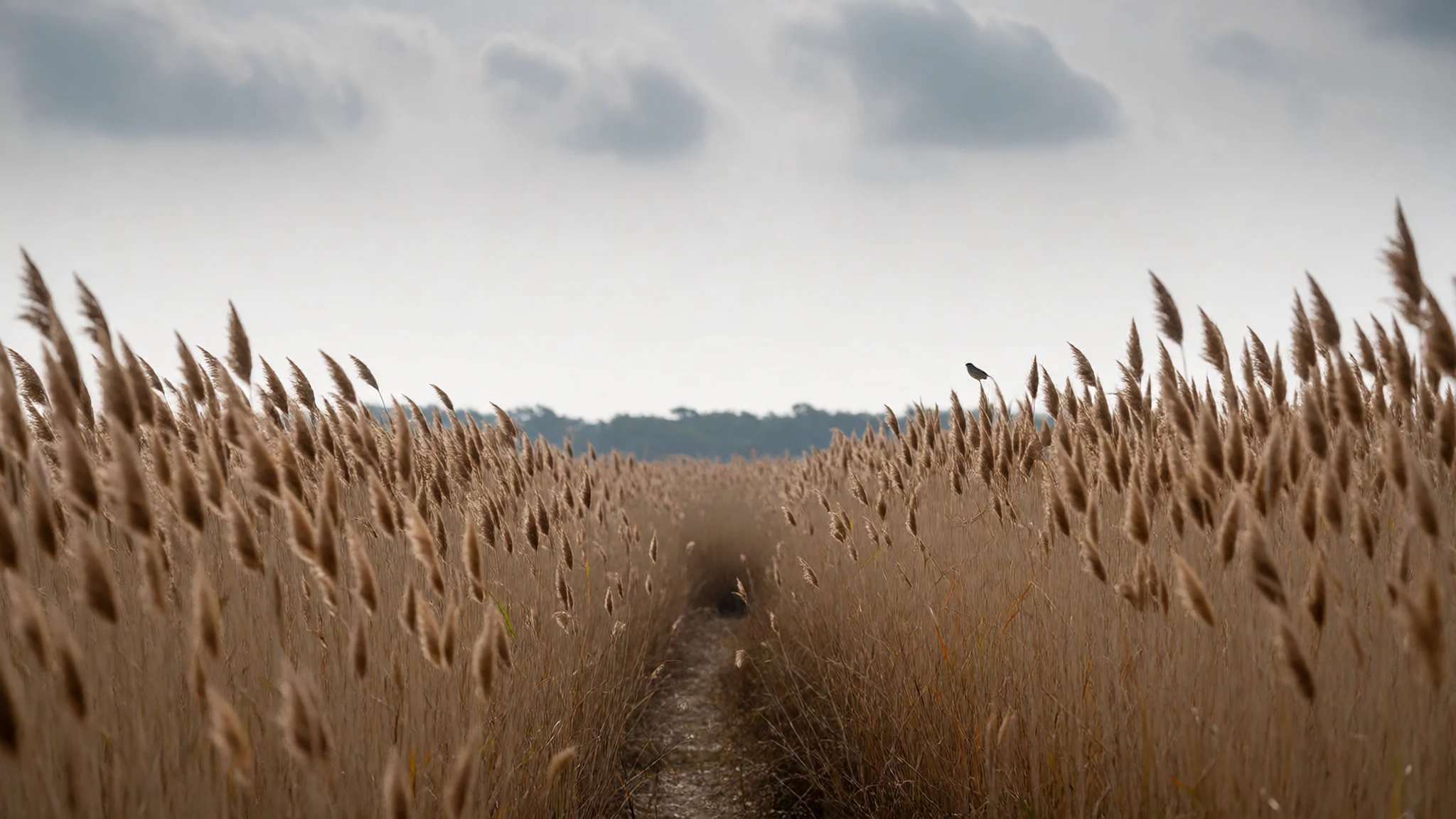
- Reeds in autumn colour — Reed boardwalks
In autumn the reed fields turn golden and the bay is at its most photographed. Late afternoon light makes the stems glow, and the boardwalks fill with visitors. Weekends are crowded, so go on a weekday morning if possible, and bring a light layer because the evening wind off the water cools quickly.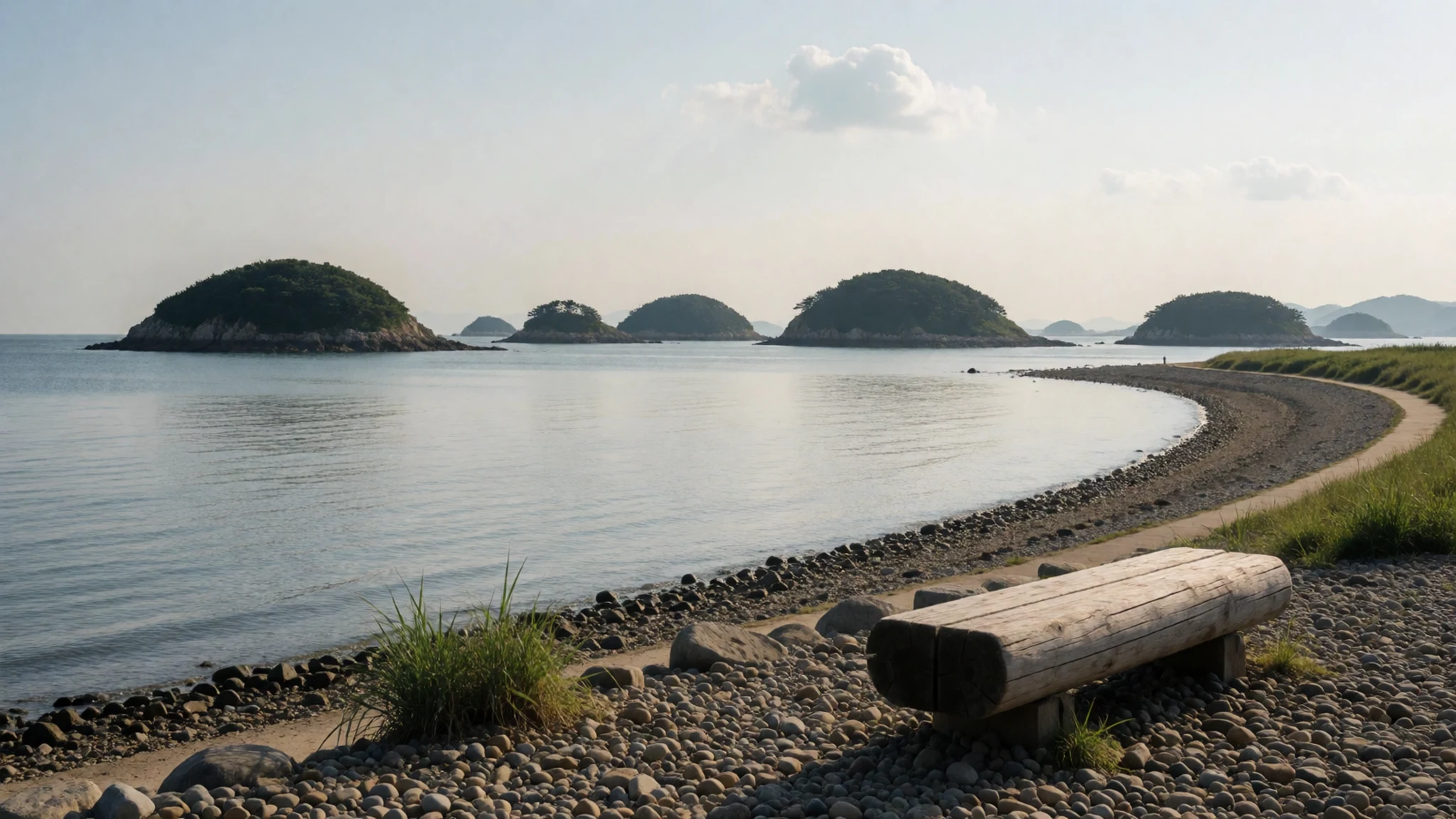
Culture
Suncheon Bay is a place where Korean attitudes to nature and food meet. The South Jeolla region, known as Honam, has a reputation across the country for generous cooking, and the coast's oysters, seaweed and shellfish are part of daily life rather than a tourist show. Local people see the wetland as both a larder and a landscape, and the pride in having it protected is real.
Visits are often social. Families, school groups and older walking clubs are common on the boardwalks, and many visitors come for the photographs of the reeds in autumn. Conversation is easy and cheerful, and people are generally happy to point out a bird or a good viewpoint if asked.
The bay's protected status shapes behaviour. Paths and decks are there to keep people off the mud, and rangers and signs explain the limits. Respecting them is understood as part of enjoying the place, not an inconvenience. The park also sits within a wider regional culture of tea in Boseong, seafood on the coast and rice in the plains, so a day here fits naturally with local eating and short drives to nearby sights.
Stay on the marked boardwalks and paths, keep your voice low near the birds, and never step onto the mudflats or pick the reeds.
What to wear
Suncheon Bay has no dress of its own, so the traditional clothing here is the Korean hanbok, a garment of jacket (jeogori) and skirt or trousers, made in silk, ramie or hemp depending on season. Lighter ramie and hemp suit summer, silk is for festivals and weddings. Hanbok is worn now on holidays such as Chuseok and Lunar New Year, and sometimes for photographs at heritage sites.
Day to day, locals dress in practical modern clothes. Walkers wear outdoor gear, caps and sturdy trainers, and families dress casually for the boardwalks. Farming and fishing people wear work clothes, boots and sun hats, which is the everyday look of the coast around the bay.
Visitors should dress for open, exposed ground. The wind off the water can be sharp, and the reed fields offer almost no shade, so a hat, sunscreen and sunglasses matter in warm months, while a windproof layer and a scarf matter in autumn and winter. Wear comfortable closed shoes with grip for boardwalks and embankments, which can be damp after rain or tide. Light waterproofs are sensible given the abundant rainfall of the region. There are no religious dress rules on the bay itself, though modest, casual clothing is the norm if you combine the trip with a temple visit elsewhere in Suncheon.
What to eat
- Kkomak (cockles) — Seafood eateries in Suncheon town
Cockles from the tidal flats are a regional favourite, usually boiled and dressed with a spicy soy seasoning, or served with rice. They are chewy and briny. Look for them at seafood restaurants and market stalls in Suncheon and along the coast.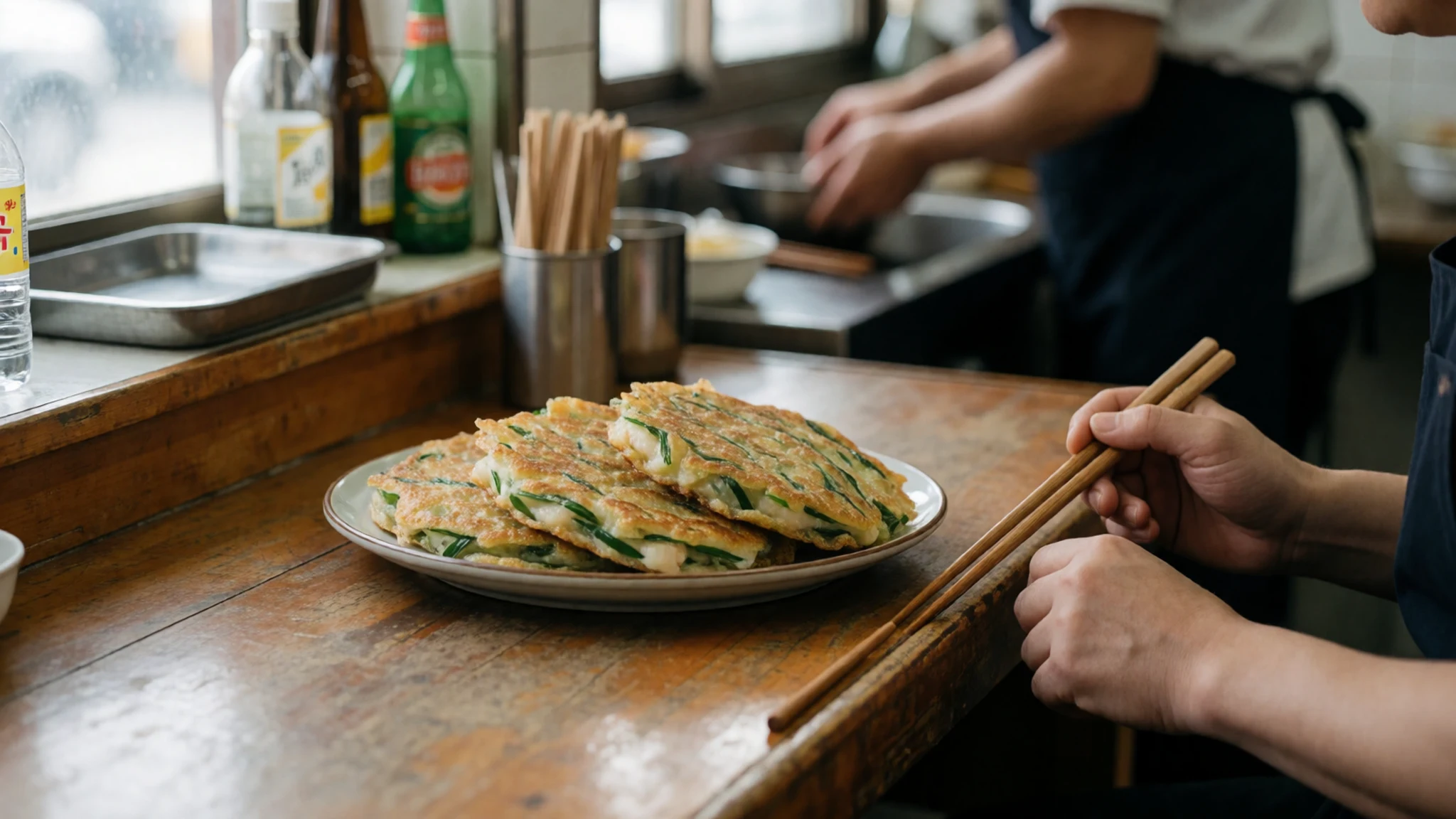
- Jeolla-style banchan spread — Traditional Korean restaurants in Suncheon
The Honam region is known for meals that arrive with many small side dishes, from kimchi and seasoned vegetables to fish and egg. It is a generous way to sample local cooking. Order a set meal at a traditional Korean restaurant in the town.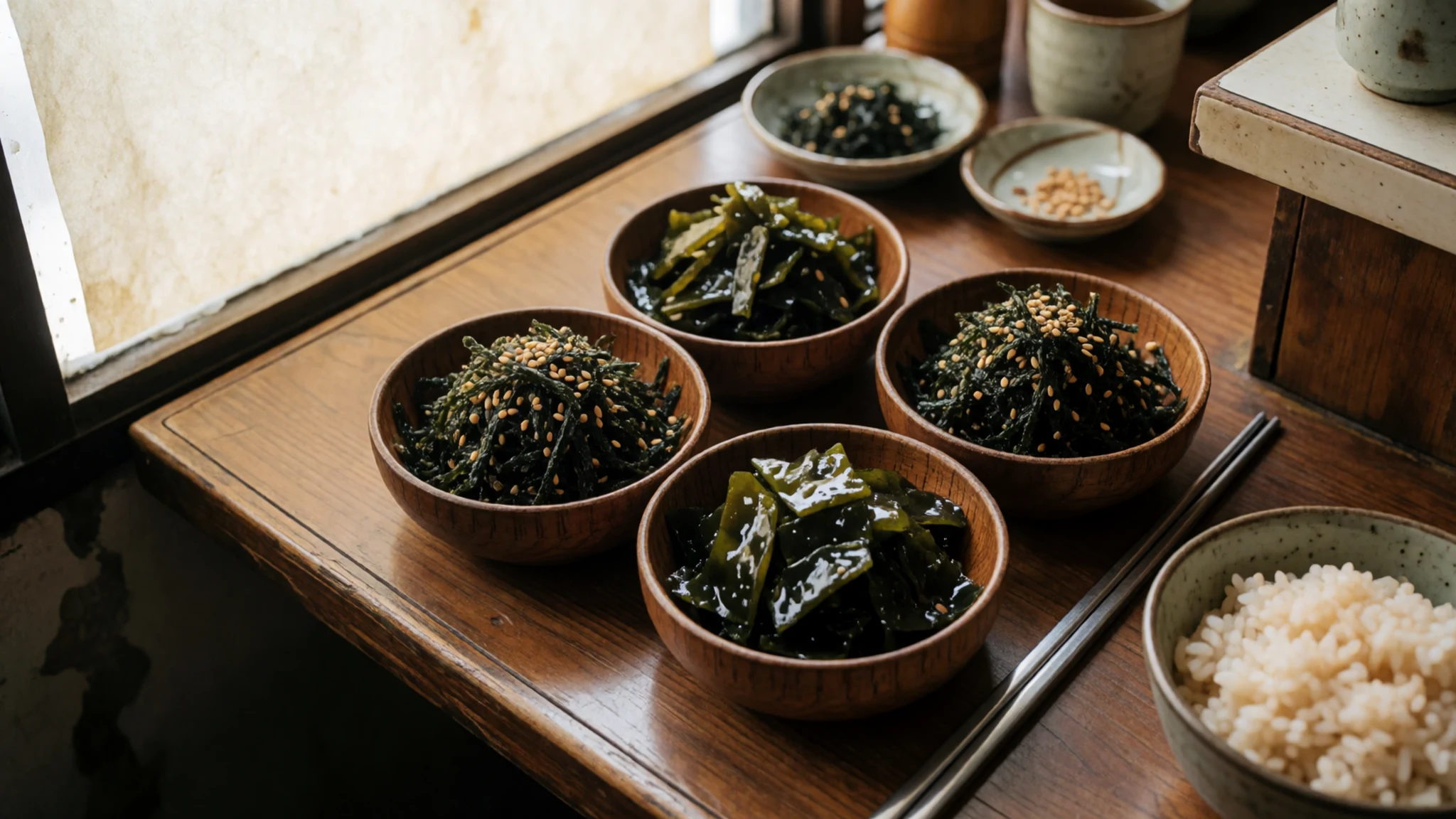
- Oysters — Coastal eateries and the local market
The coast produces oysters in quantity, and they appear grilled, steamed, raw or in soups and rice dishes. Winter is the usual season for the best flavour. Many coastal eateries and markets serve them simply, with a dip of chilli sauce. - Gim (seaweed) — Markets and shops in Suncheon
Seaweed is grown along the South Jeolla coast and eaten as crisp roasted sheets, wrapped around rice, or in soups. It is a good, light snack to carry on a walk. Packets are sold in markets and shops across the region. - Boseong green tea — Tea shops and cafes around Suncheon
Boseong County, nearby, is noted for green tea. Tea is served hot or cold, and appears in ice cream, cakes and noodles. It makes a pleasant stop after a windy walk on the bay, and is easy to buy as a gift.
Plan it
Best time. April–May for mild weather and fresh green growth, and October–November for golden reeds and clear air. Summer is hot and rainy, and winter is cold and windy, though winter suits birdwatchers.
How long. 1–2
Getting there. Yeosu's RSU hub runs plenty of services to Gimpo in Seoul, while Gwangju's KWJ offers a more limited range of domestic routes. The KTX Jeonla Line runs from Seoul to Suncheon, and the last leg to the bay is by local bus or taxi from the town.
Budget. mid
Tips
- Go on a weekday morning in autumn to avoid the biggest crowds
- Bring a windproof layer, a hat and water, as there is little shade
- Check the official site, suncheonbay.go.kr, for opening arrangements and any closures
- Carry a card and a little cash for small stalls and local buses
- Use binoculars for the birds and plan around the tide
Etiquette
- Stay on the boardwalks and never walk on the mudflats
- Keep noise down near the birds and do not feed wildlife
- Take litter away with you
Nearby
Sources
- Wikidata Q486960 (CC0)
- Wikipedia: Suncheon Bay (rev 1366683192) (CC BY-SA 4.0)
- Wikivoyage: South Jeolla (rev 5386870) (CC BY-SA 4.0)
- Photo: Panorama of Reed fields in Suncheon bay (Bandoche) (Public domain)
- Photo: Suncheon Bay, a Ramsar site in South Korea (Jjw) (CC BY-SA 4.0)
- Photo: 20150808 RX10 DSC01732 (최광모) (CC0 1.0)
- Photo: Suncheon Bay Ecological Park with Reed Fields (Photo and Share CC) (CC BY 2.5)
- Photo: 순천만 (최광모) (CC0 1.0)
- Photo: 20150808 RX10 DSC01716 (최광모) (CC0 1.0)
- Photo: 20150808 RX10 DSC01739 (최광모) (CC0 1.0)
- Photo: 20150808 RX10 DSC01741 (최광모) (CC0 1.0)


