Su Nuraxi
Su Nuraxi, Italy
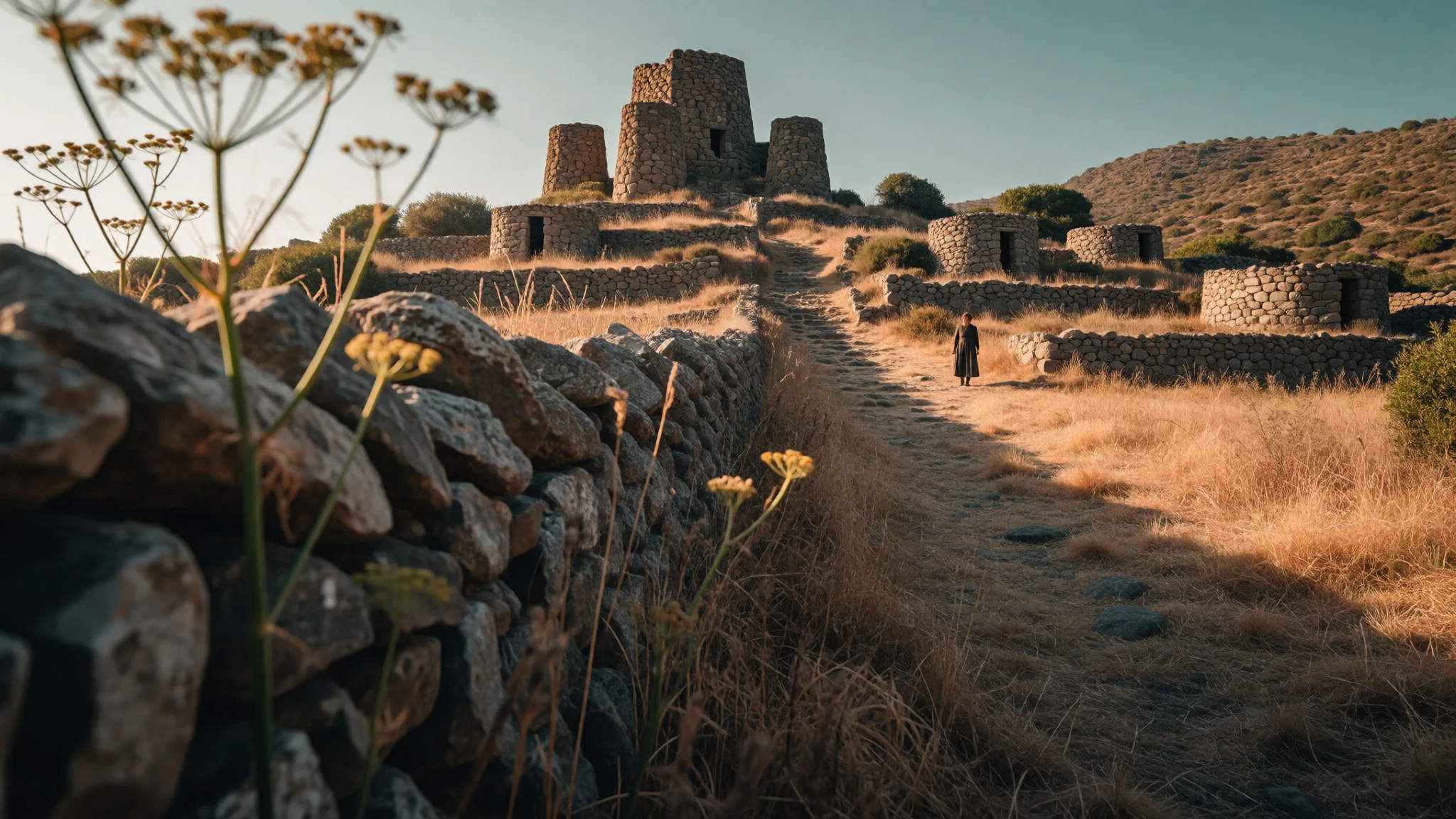
Su Nuraxi is a Bronze Age stone fortress and village in Sardinia, walkable room by room, with no equivalent elsewhere in Europe.
The place
Su Nuraxi sits at the edge of Barumini, a small town in the Marmilla area of southern Sardinia, on flat farmland with low hills around it. The name is Campidanese, the southern Sardinian speech, and simply means 'the nuraghe'. A nuraghe is a tower built of massive stone blocks without mortar, and Sardinia has them in the thousands. This one is the most complete example visitors can walk through.
The heart of the site is a central tower with four corner towers joined by a bastion, a fortress that began in the seventeenth century BC. Around it spreads a tangle of round huts, lanes and small courtyards, the village that grew up beside the fortress over many centuries. The stone is dark and heavy, and in the open landscape the towers read from a long way off.
The site is run as an archaeological park, and UNESCO listed it in 1997 as Su Nuraxi di Barumini. Visits are usually on guided walks, which suits the layout: the passages are narrow and the logic of the rooms is hard to read alone. Sardinia's interior is quiet, farming country, so the mood is more of a field with ancient towers than a monument precinct. Most travellers arrive from Cagliari by car, and many fold it into a wider loop of the island's prehistoric sites. Shade is scarce, so the weather shapes the visit more than the crowds do.
The official website is http://www.fondazionebarumini.it for current visiting arrangements.
Its story
Su Nuraxi belongs to the Nuragic civilisation, the Bronze Age people of Sardinia who left no written language and are known almost entirely through their stonework. The first tower here dates to the seventeenth century BC. It was a single, tall, tapering structure, and over time more towers were added around it, turning a lookout into a bastion with a courtyard.
A village then grew around the fortress, and people lived there from the thirteenth century BC into the sixth. Huts were rebuilt, lanes reshaped, and the older stone was reused. That long occupation is why the site feels layered rather than frozen at a single moment.
The place was buried for much of its later history. A mound of earth and rubble covered the towers and the village, and local people knew it simply as a hill. Excavation in the twentieth century revealed the fortress and the huts around it, and the work showed how large the settlement had been. Scholars regard it as the finest expression of Nuragic building, which is why it carries World Heritage status.
The builders' own explanation of why they raised these towers is lost. Defence, authority, storage and ritual have all been proposed, and the honest answer is that nobody can be sure. What remains is the evidence of skill: curved walls, corbelled roofs and staircases cut inside the thickness of the stone, all assembled without binding material and still standing after more than three thousand years.
What to see
- The central tower — Su Nuraxi archaeological park, Barumini
The tallest element of the nuraghe, rising at the middle of the four-tower bastion. Guides lead visitors through its low entrance and up inside the wall to see the corbelled chambers and the stairway. The stonework is tightly fitted, and it is worth pausing to look at how the courses curve inward overhead.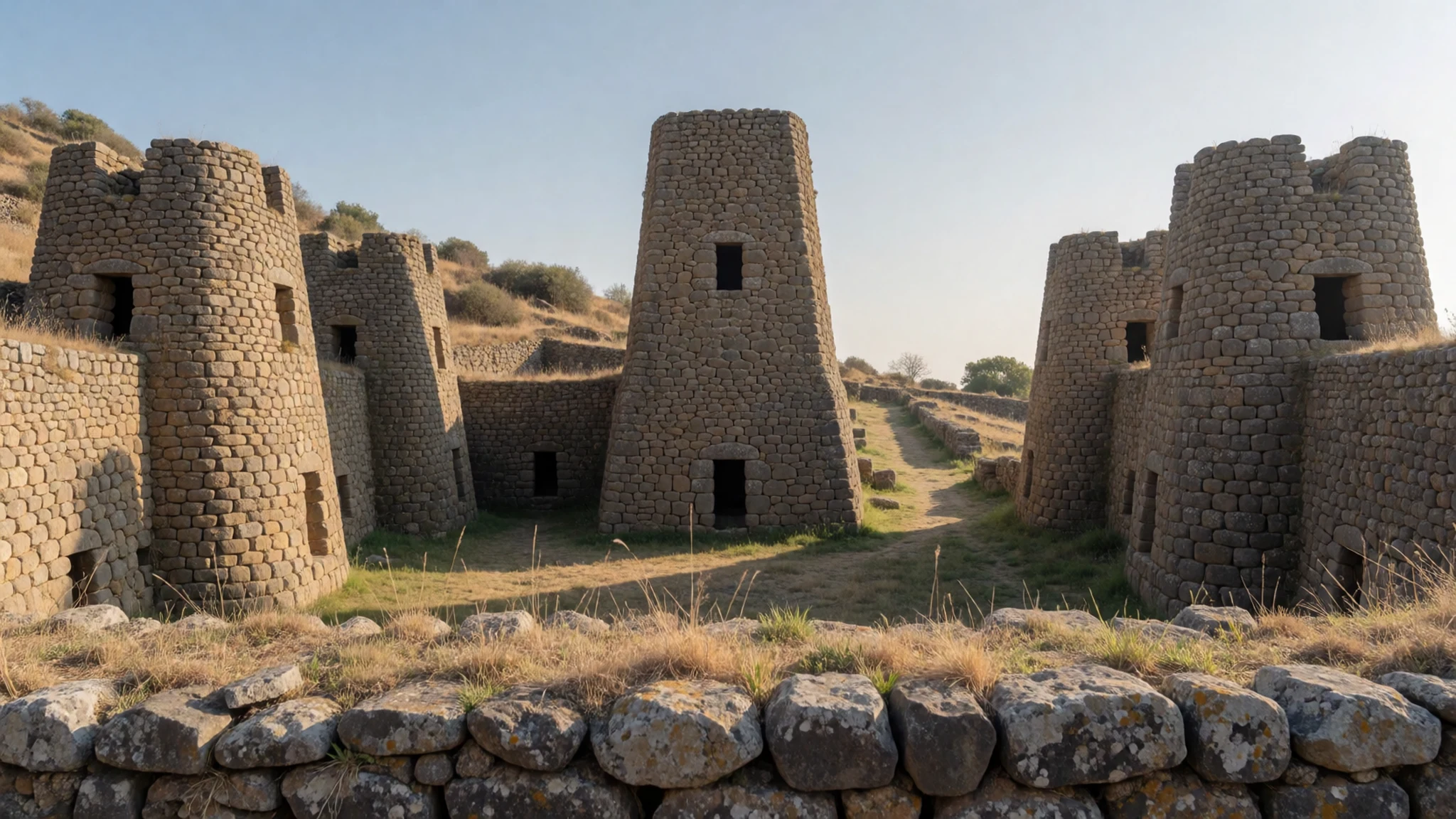
- The four corner towers and bastion — Su Nuraxi archaeological park, Barumini
Around the central tower, a defensive ring of four smaller towers is linked by thick walls. Walking the courtyard between them shows how the fortress was meant to be defended. Look for the narrow openings and the wells, which hint at how a besieged garrison could have held out.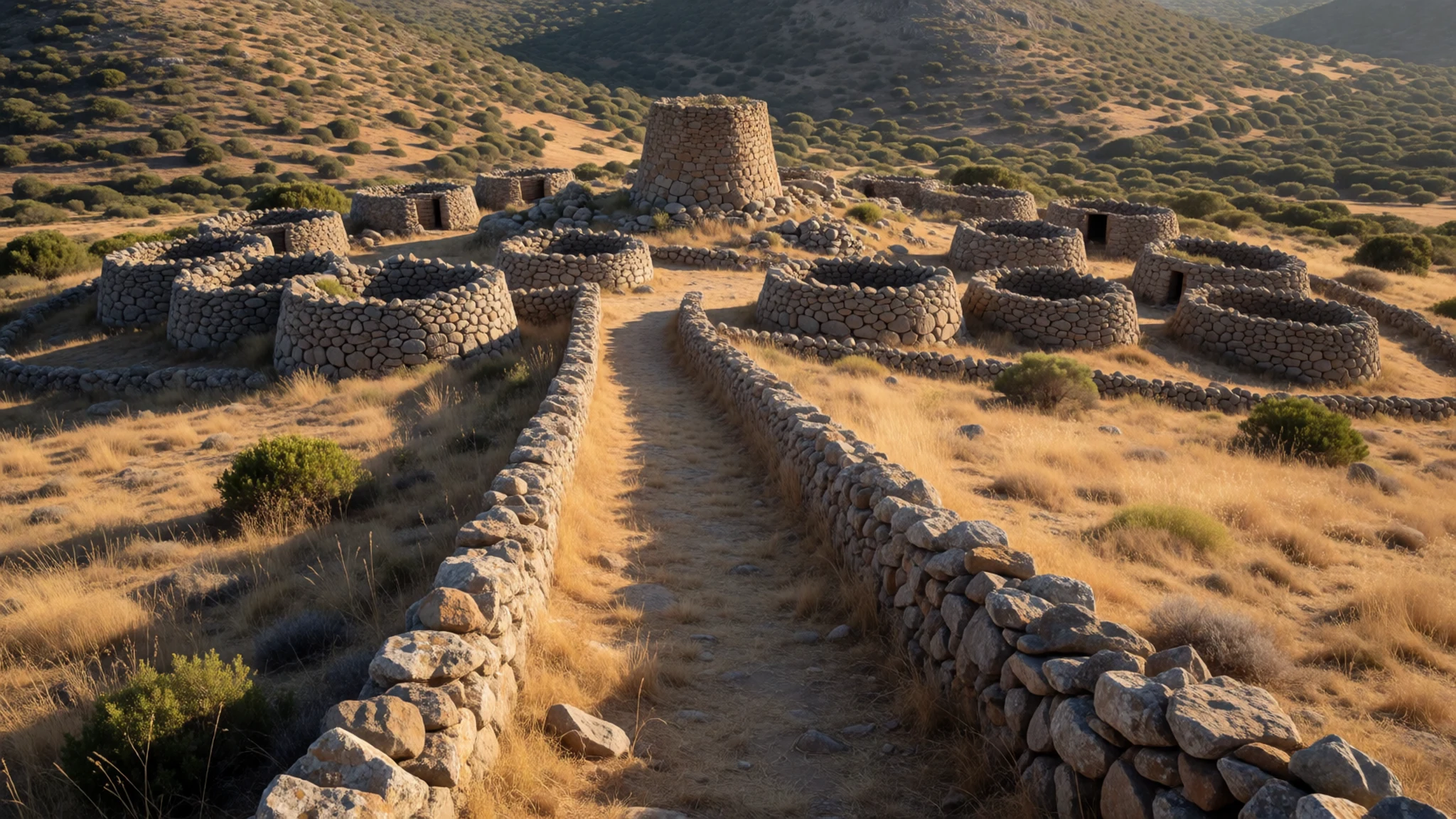
- The Nuragic village — Beside the nuraghe, Barumini
Spreading outside the walls are the round foundations of dwellings and workshops, with lanes between them. People lived here from the thirteenth century BC to the sixth. From above the layout reads like a honeycomb, and at ground level the roofless huts show room sizes and doorways clearly.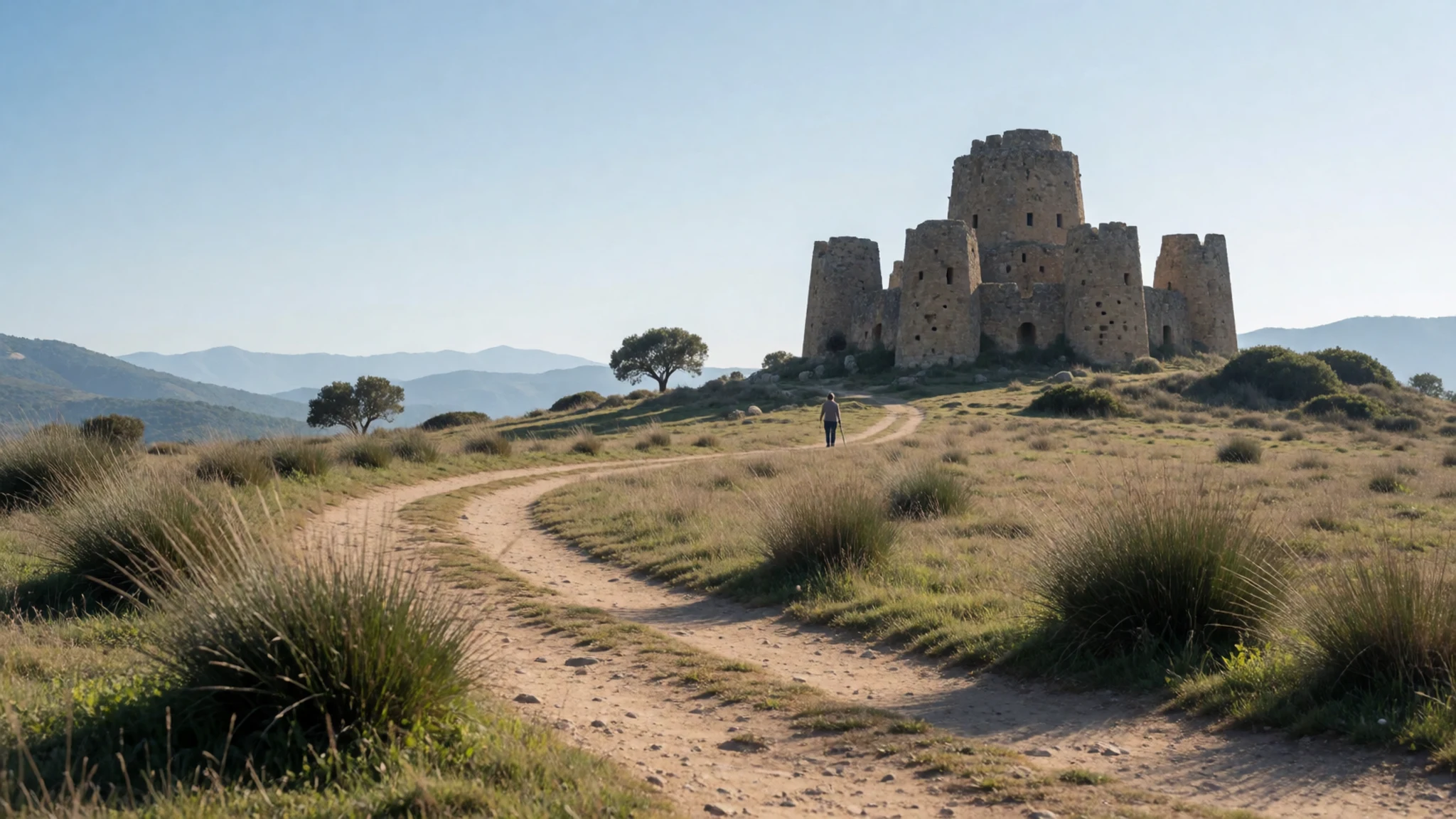
- The view from the walls — Top of the nuraghe
From the top of the fortress the surrounding plain opens out, with the castle hill of Las Plassas visible in the distance. It explains the choice of site: wide sightlines across farmland in every direction. It is also the best place to appreciate how the towers dominate an otherwise flat landscape.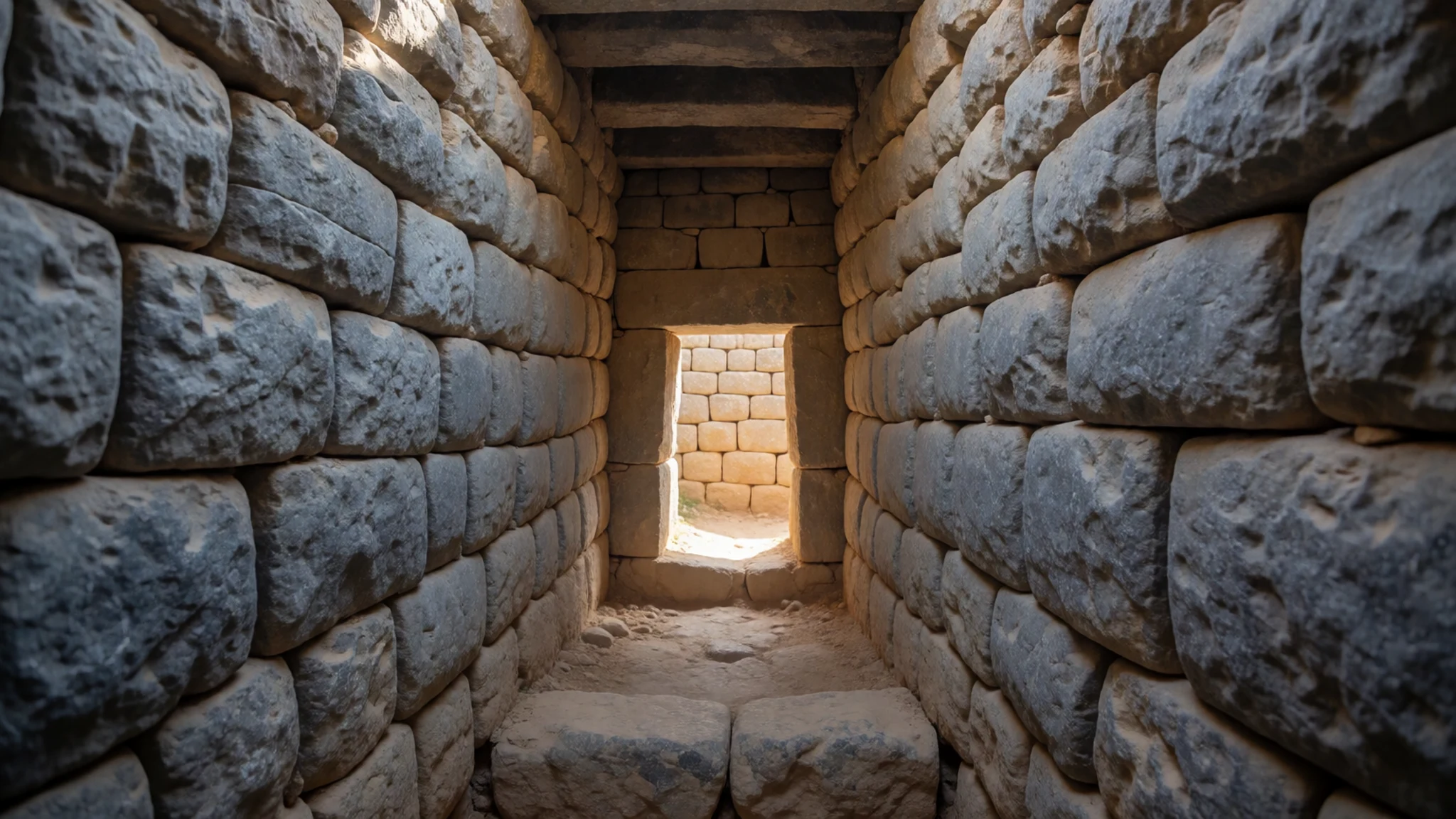
- Nuragic models and finds — Barumini and exhibitions
A stone model of a nuraghe, found at Su Nuraxi, has been shown in exhibitions on Nuragic art and gives a clear picture of how the towers once looked with their upper levels intact. Ask at the site about finds and museum displays in and around Barumini.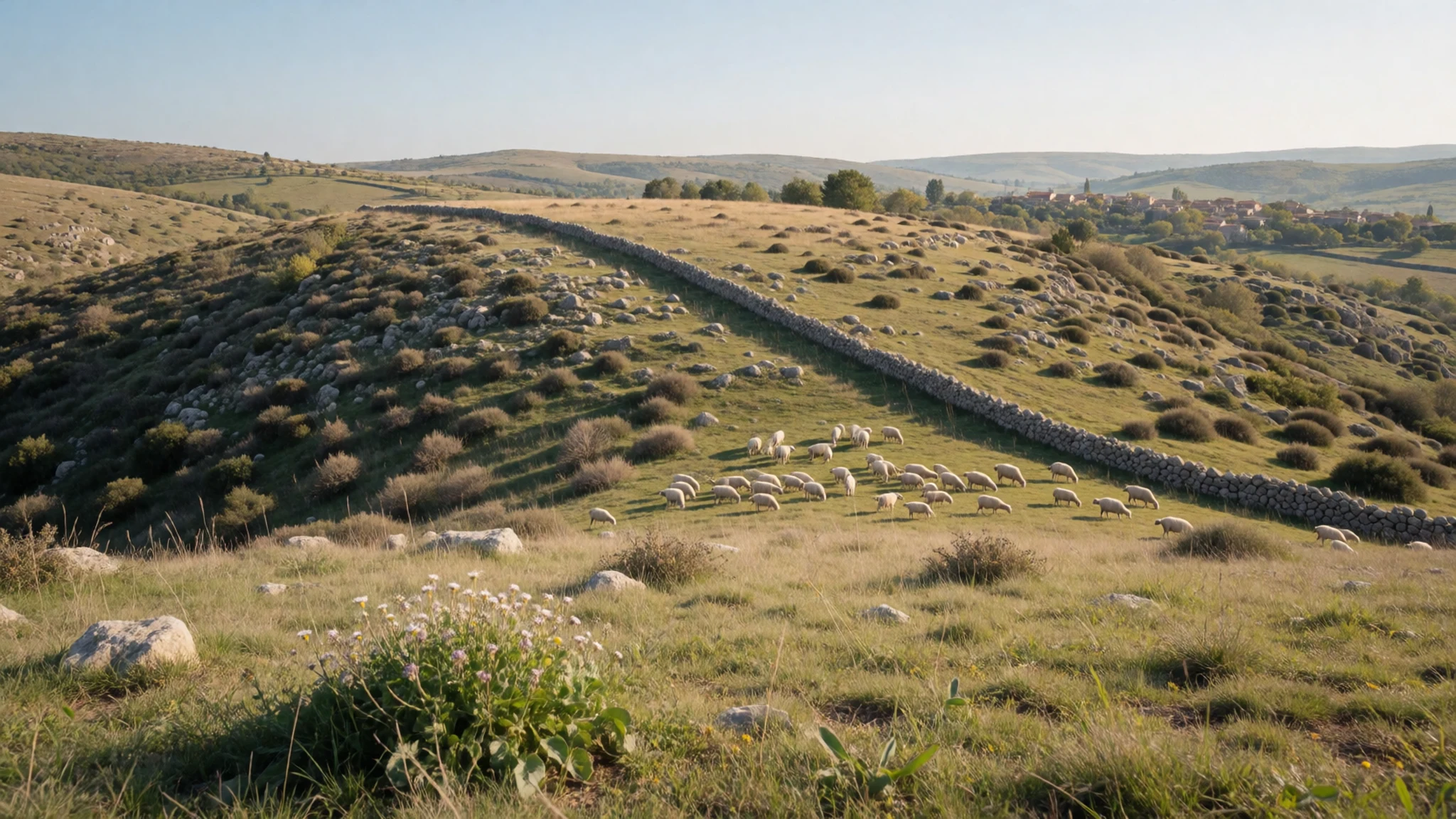
Culture
Su Nuraxi sits in the Sardinian interior, where people tend to be quiet and reserved and deeply attached to their land and language. Do not expect the loud, talkative Mediterranean stereotype; warmth comes slowly, through patience and a few words of Italian. Many villages in the Marmilla area keep their own festivals, dialects and food habits, and the local pride in the Nuragic past is real. The towers are treated as a shared inheritance rather than a tourist attraction.
Meals follow local rhythm. Restaurants in small towns often close between lunch and the evening, and the evening meal starts late by British or Indian standards. Planning around that saves frustration. Sardinian is a language in its own right, and hearing Campidanese in Barumini is normal; a greeting in Italian is always welcome, and a question about the nuraghe usually draws a proud answer.
The Nuragic builders left no writing, so the culture of the site is read through objects and architecture. Guides fill in what is known and are frank about what is guesswork, which is part of the charm. Respect for that uncertainty, and for the fragile ancient walls, is what the place asks of visitors.
Do not climb on or lean against the ancient walls, and stay with your guide on the marked paths.
What to wear
Su Nuraxi has no costume tradition of its own recorded from the Nuragic period, since the builders left no written description, though small bronze figurines from the island show people in belted tunics and cloaks. Later Sardinian dress is better documented. Traditional costume varies village by village, and typically uses wool, linen and heavy embroidered cloth, with women's skirts, bodices and headscarves in strong colours and men's dark waistcoats, trousers and the black cap called a berritta. It appears at festivals and processions rather than in daily life.
Today people in Barumini and the surrounding farming towns wear ordinary European clothes: jeans, shirts, light jackets, and practical shoes for work in the fields. Smart casual is the norm for church or an evening out, and nobody dresses up for a day at the ruins.
For a visit, dress for sun and stone. The site is open and shade is thin, so wear a hat, sunglasses and light, breathable clothing in summer, with sunscreen. Spring and autumn mornings can be cool, so bring a light layer. Footwear matters most: paths are uneven, with worn stone and gravel, and you will go up and down narrow steps inside the towers. Closed, grippy shoes or trainers are far better than sandals. There are no strict modesty rules at the site, though covered shoulders are courteous if you also visit a village church.
What to eat
- Culurgiones — Family trattorie in Barumini and nearby towns
Filled pasta parcels from Ogliastra, stuffed with potato, pecorino (sheep's milk cheese), egg and onion. They are pleated shut by hand and usually served in a simple tomato sauce. Look for them in family-run trattorie across the island.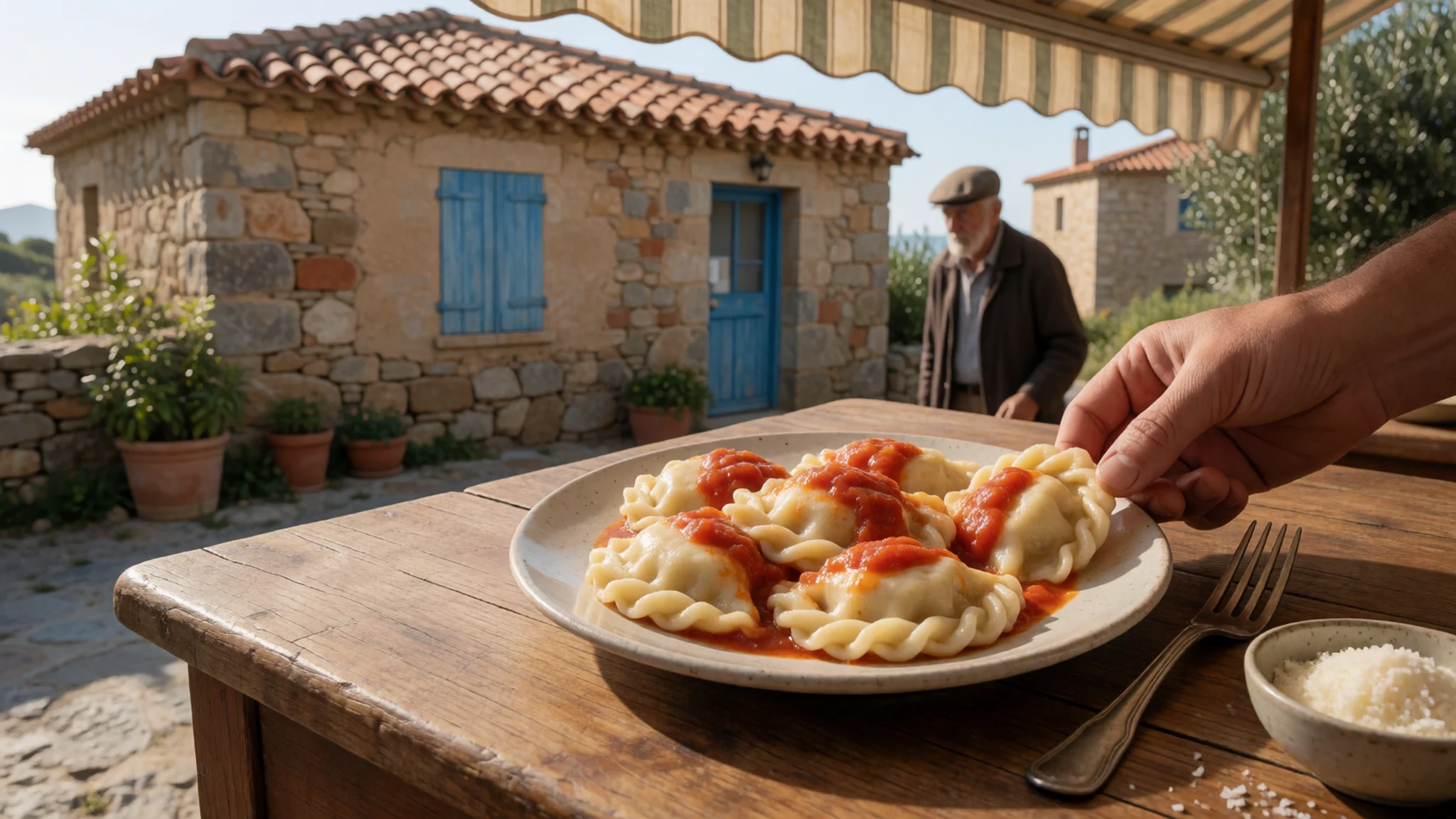
- Malloreddus — Village trattorie around the Marmilla area
Small ridged dumplings, something like gnocchi, served al dente with a tomato, meat or cheese sauce. They are a staple of southern Sardinian home cooking and an easy first dish for newcomers to local food.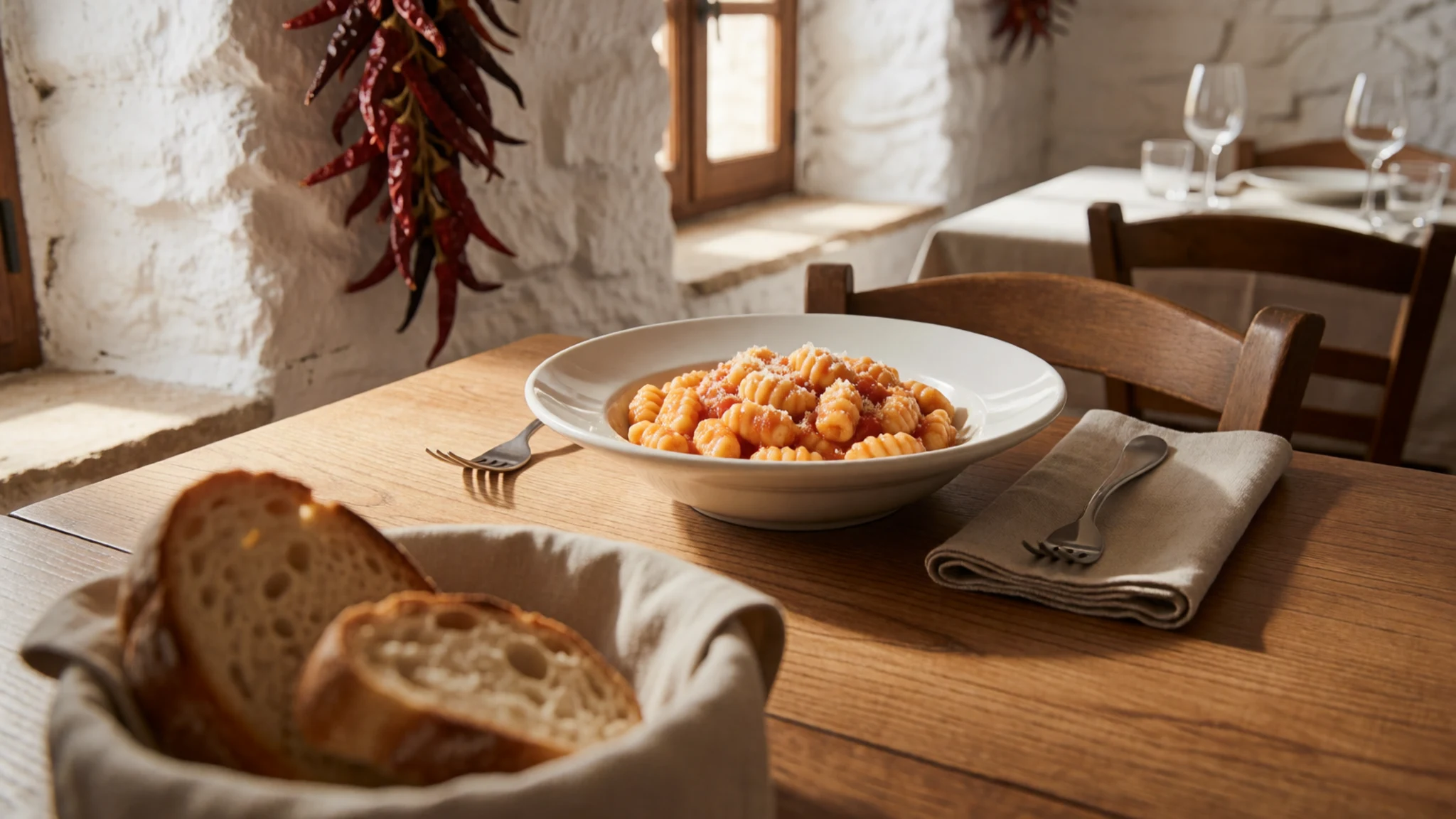
- Porcheddu — Country restaurants in inner Sardinia
Young pig roasted slowly over a wood fire with myrtle, the aromatic local shrub, which flavours the crackling skin and soft meat. It is a speciality of inner Sardinia and a centrepiece at festivals and long Sunday lunches.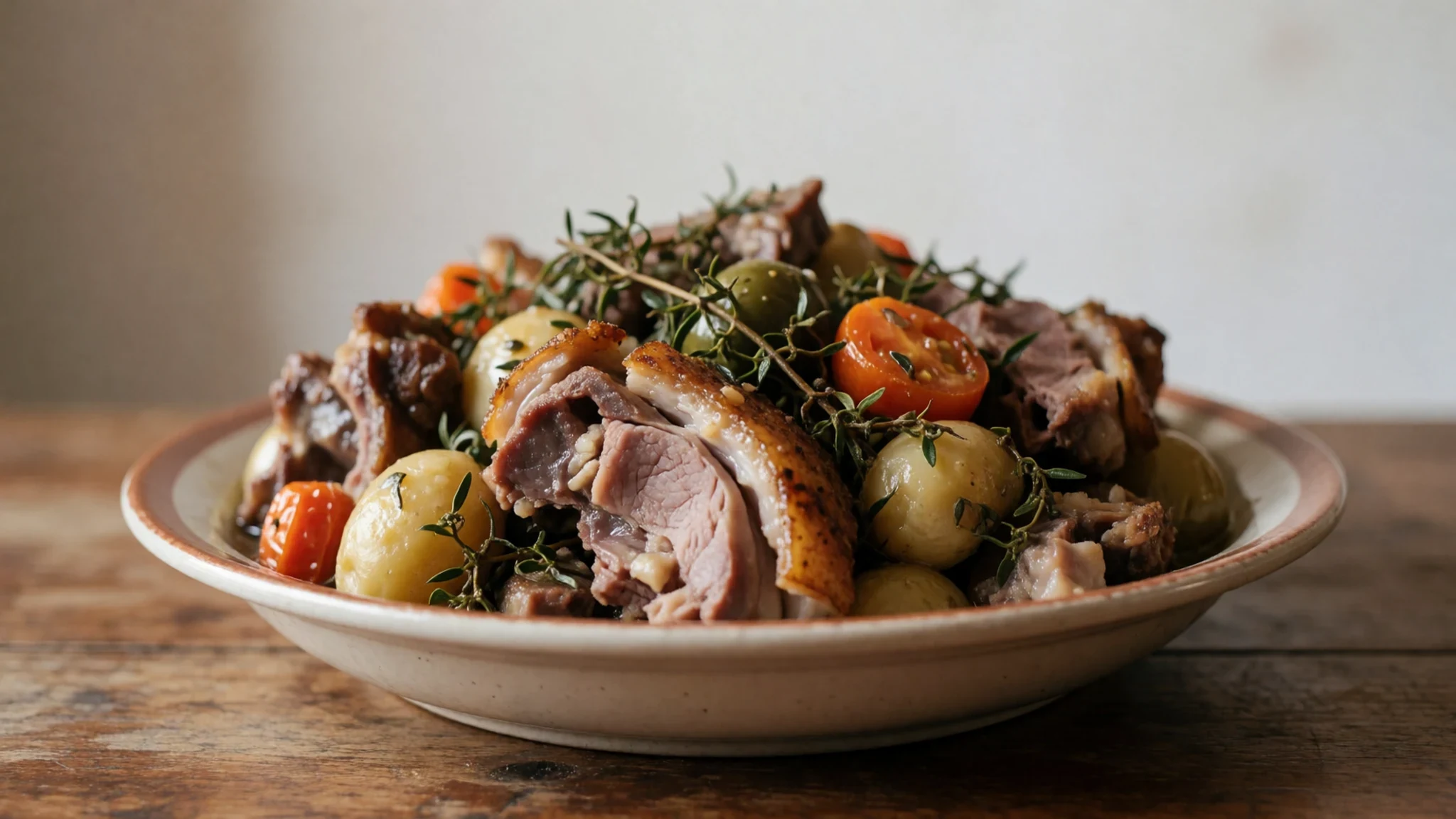
- Salsiccia di cinghiale — Butchers and rustic eateries in inland towns
Wild boar sausage, dense and richly flavoured, usually grilled or served as part of a mixed platter of local cured meats. Many other sausage types exist on the island, so ask what the house recommends before choosing.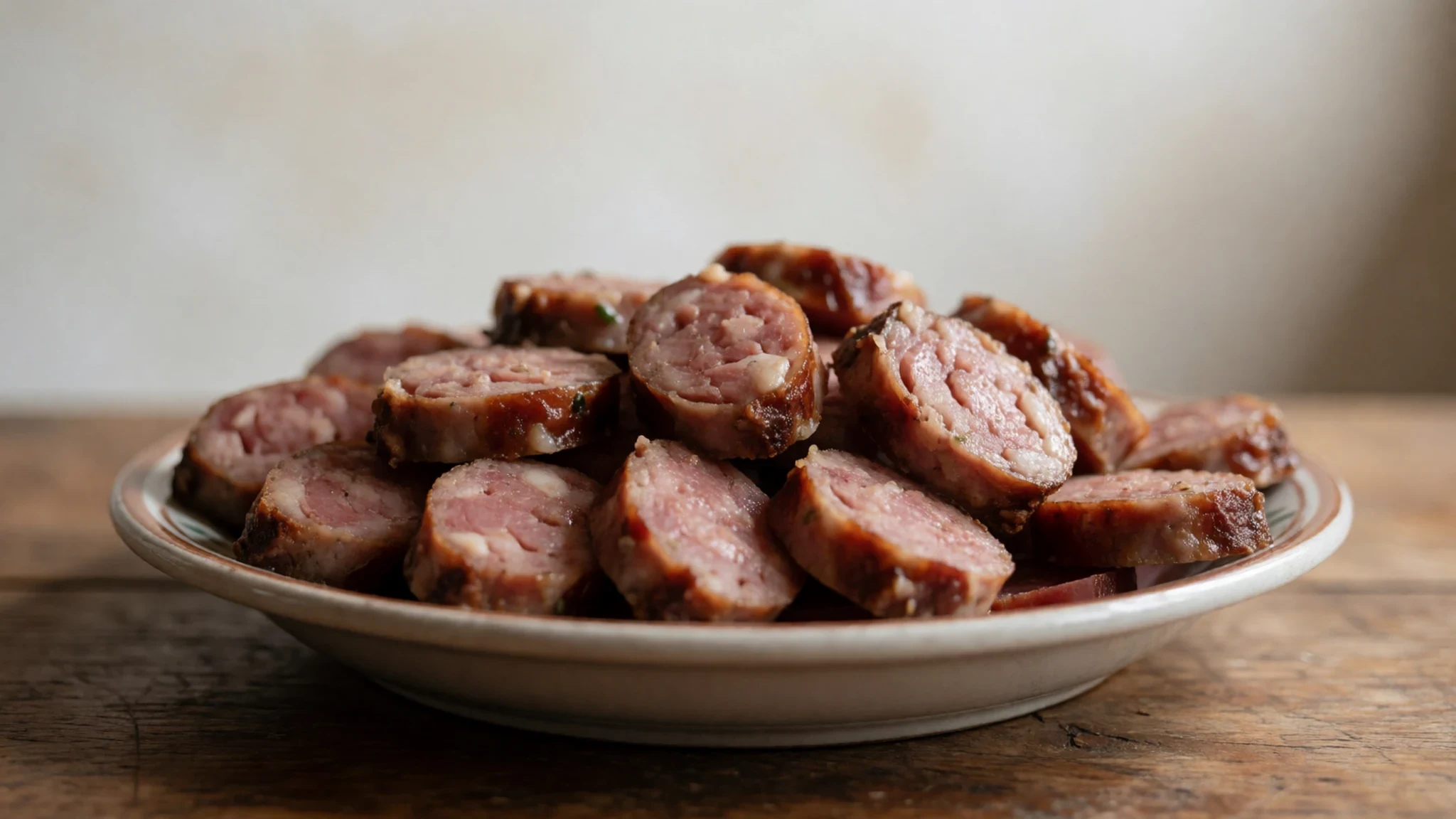
- Stufato di capretto — Traditional restaurants in the interior
A rich casserole of kid goat slow cooked with artichokes and wine, thickened at the end with egg. It is hearty, savoury and best in cooler months, and it shows the pastoral side of Sardinian cooking very clearly.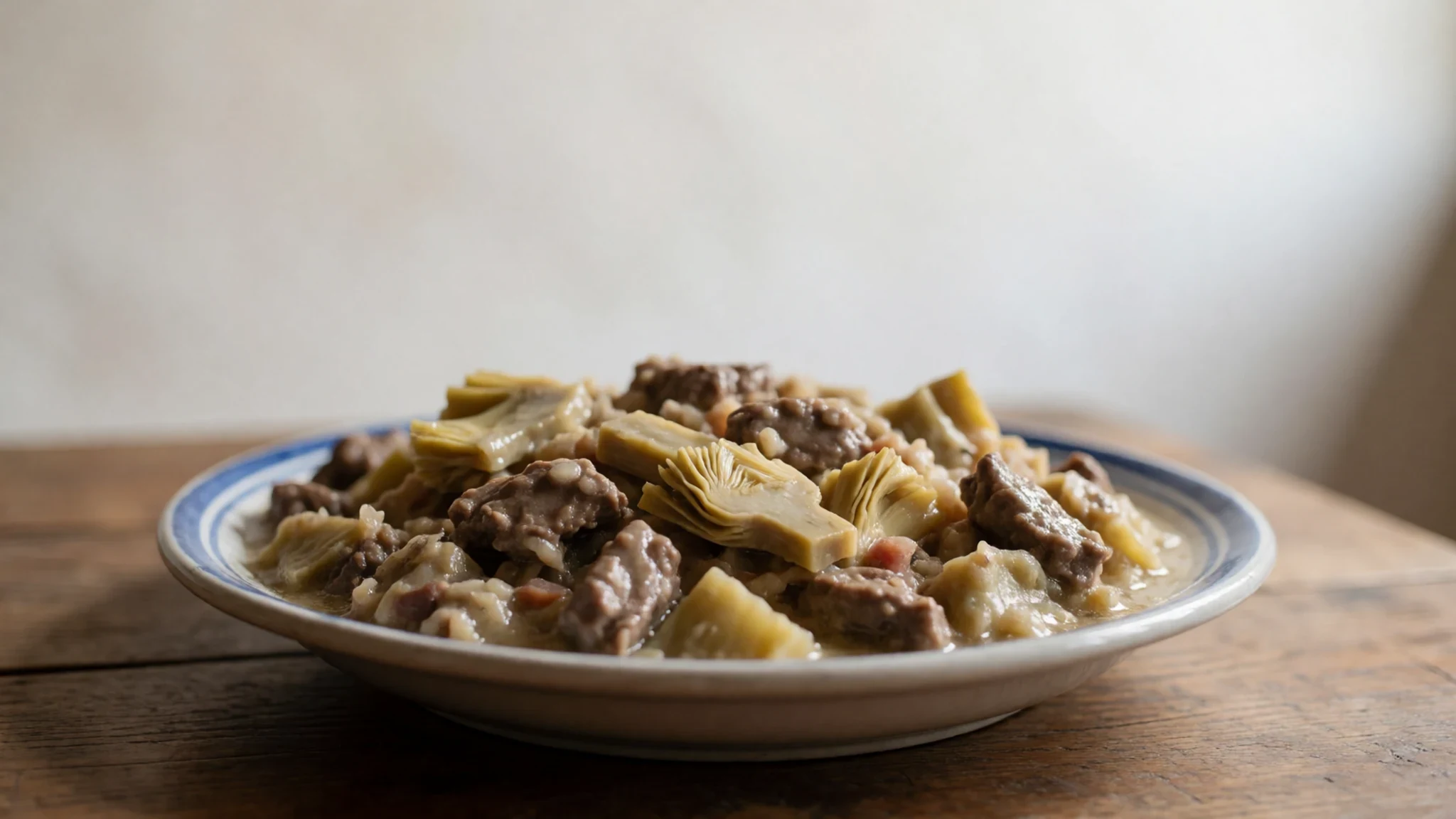
Plan it
Best time. April–June and September–October. Spring and early autumn are warm without the summer heat, and the site has little shade; July and August are hot and busier, while winter is cool and quiet.
How long. 1
Getting there. Fly to Cagliari-Elmas (CAG), the busiest airport in Sardinia, then drive north-west to Barumini; a hire car is the easiest way, as public transport is slow. Ferries also reach Cagliari, Porto Torres and Olbia.
Budget. low
Tips
- Check the official site for current opening arrangements and guided tour times before setting out
- Go early in the day to beat the heat, as there is little shade
- Wear sturdy closed shoes for uneven stone and narrow steps
- Carry water and sun protection, and plan lunch ahead as local kitchens close in the afternoon
- Cards and cash are both useful in small towns, so keep some cash
Etiquette
- Stay with your guide and on marked paths
- Do not climb on or move the ancient stones
- Greet people in Italian before asking questions
Nearby
Sources
- Wikidata Q253241 (CC0)
- Wikipedia: Su Nuraxi (Barumini), rev 1364984076 (CC BY-SA 4.0)
- Wikivoyage: Sardinia, rev 5366097 (CC BY-SA 4.0)
- Photo: Central tower of the Nuraghe at Saint Antine of Torralba (Public domain)
- Photo: Norbert Nagel, Su Nuraxi 30 (CC BY 3.0)
- Photo: Francesco ghiani, Su Nuraxi MIBAC (CC BY 3.0)
- Photo: Michel Royon, Barumini Pano 11 (CC BY 3.0)
- Photo: Ciamabue, Su Nuraxi 2 (CC BY 2.5)
- Photo: Sailko, Arte nuragica modello di nuraghe (CC BY 3.0)
- Photo: Vid Pogacnik, Su Nuraxi from the N-NE (CC BY-SA 4.0)
- Photo: Norbert Nagel, Su Nuraxi 07 (CC BY 3.0)


