Stromboli
Stromboli, Italy
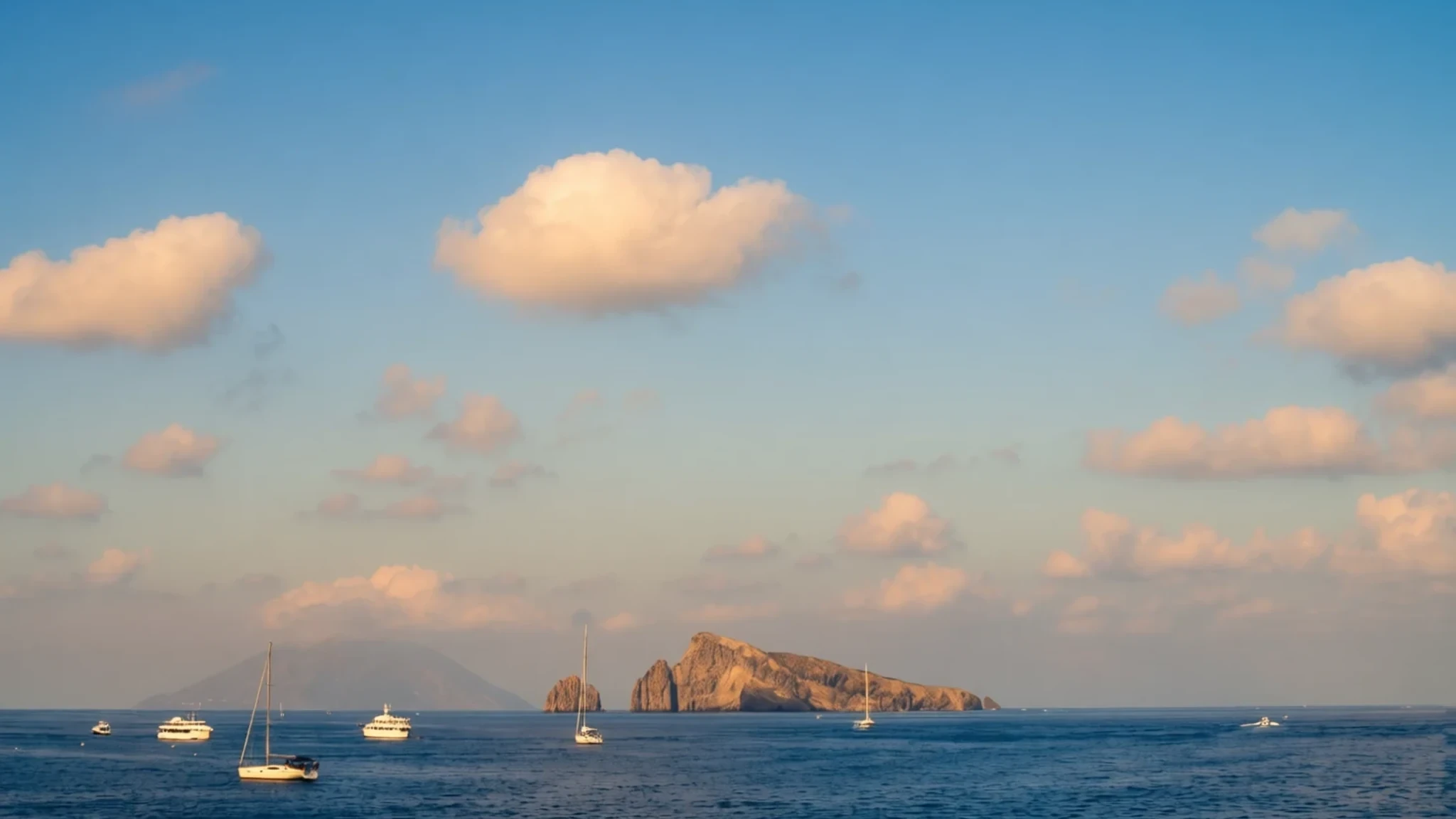
Stromboli is a small Italian island where a volcano erupts every few minutes, and a night climb brings fire glowing above the sea.
The place
Stromboli is an island in the Tyrrhenian Sea, north of Sicily, and one of the seven Aeolian Islands. It is really the top of a volcano: the island is about 12.6 square kilometres, and the summit stands 926 metres above the water. Most of the mountain lies below the waves. Roughly 450 people live here, nearly all in the main village on the northeast side, with a far smaller settlement, Ginostra, on the opposite coast.
The volcano never fully rests. Small explosions throw glowing rock into the air again and again, and sailors have used the glow for navigation for centuries, which is why the island is nicknamed the Lighthouse of the Mediterranean. From a boat at dusk the flashes are easy to see; from the village, the summit often shows a faint orange smudge after dark.
There is no airport and no real road network. Houses are low, white and cube-shaped, set among capers, prickly pears and black lava sand. Scooters and small electric carts carry people and luggage along narrow lanes, and the village streets have no lighting, so a torch matters at night. The pace is slow, the sea is close everywhere, and the mountain is the only thing anyone really talks about. Many visitors stay two or three nights; some come back every year.
Its story
Stromboli sits in an arc of volcanic islands that Greek storytellers linked with Aeolus, keeper of the winds. It is easy to see why: weather changes quickly out here, and a mountain that breathes smoke would have looked like a god's workshop to early sailors. The island's activity has been noted by travellers for as long as people have written about the Mediterranean, and its steady glow made it a landmark at sea.
The eruptions themselves follow a pattern. Most are modest bursts, regular enough to watch from a safe viewpoint. Now and then the volcano produces something larger and more violent, and in recent years this has happened more than once, including an episode that killed a hiker. Authorities respond by closing paths, restricting the summit or requiring guides, and these rules have changed from season to season. Eruptions here can also set off tsunamis, a hazard the islanders know well.
Life on the island has bent around this. Fishing and small-scale farming once sustained the villages, and many families left for other countries when times were hard. Tourism now provides most of the income, yet the villages have changed less than one might expect: no big hotels dominate the shore, and Ginostra still has a harbour so tiny that it handles one boat at a time. The mountain sets the terms for everyone, residents and visitors alike.
What to see
- The summit climb with a guide — Stromboli village to the summit
The main reason to come is the evening ascent to see eruptions from close range. It rises roughly 900 metres in about three hours, then descends over loose, sandy ground in around two. Beyond 400 metres a guide is required, and the authorities may close the top, so ask locally about current conditions.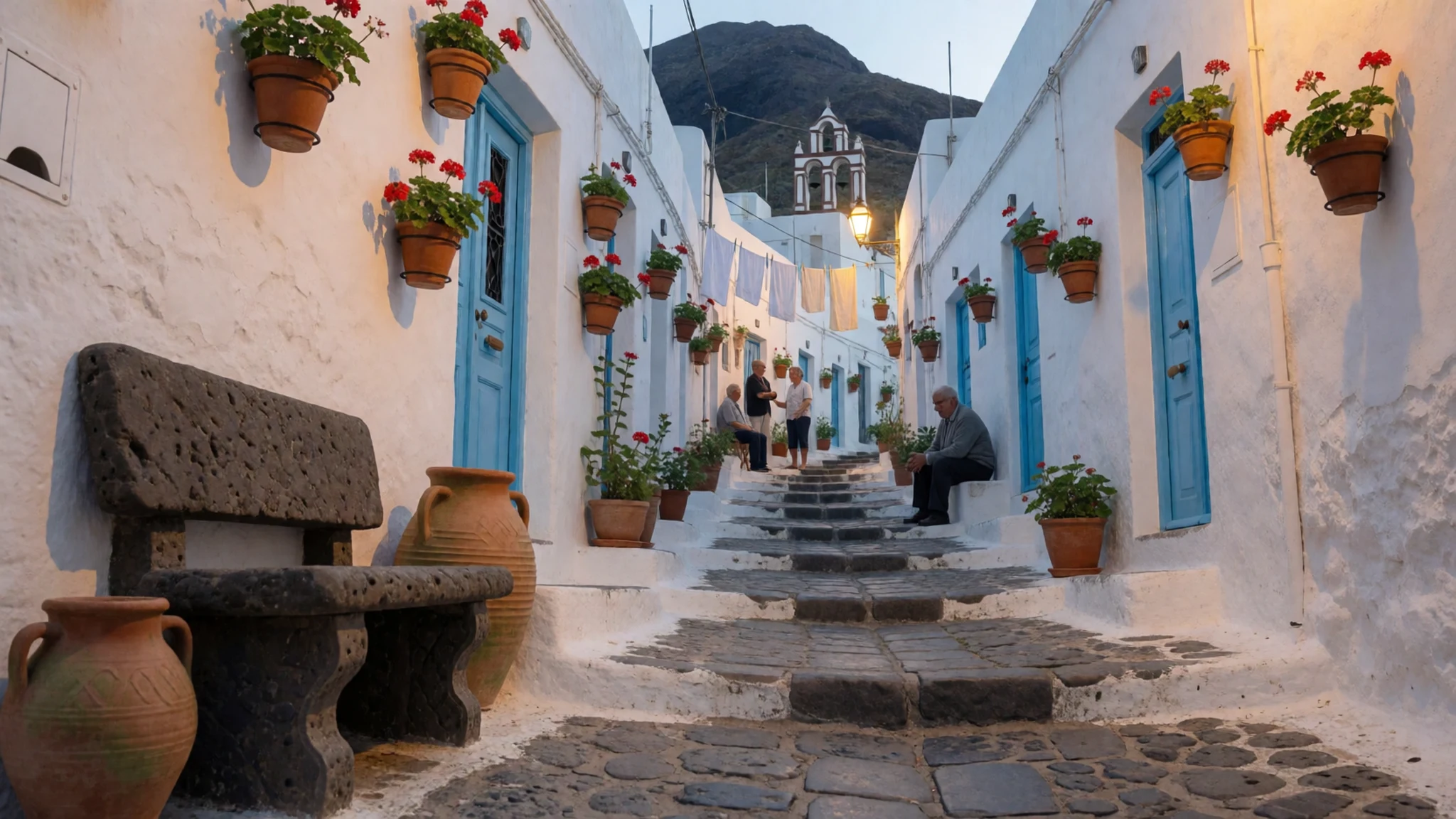
- Sciara del Fuoco — Northwest flank of the volcano
The Sciara del Fuoco, the 'Stream of Fire', is the broad scar of rubble and ash that runs down the northwest side of the mountain into the sea. Rock thrown from the craters rolls down it, and it is best seen from a boat or from the lower trail viewpoints.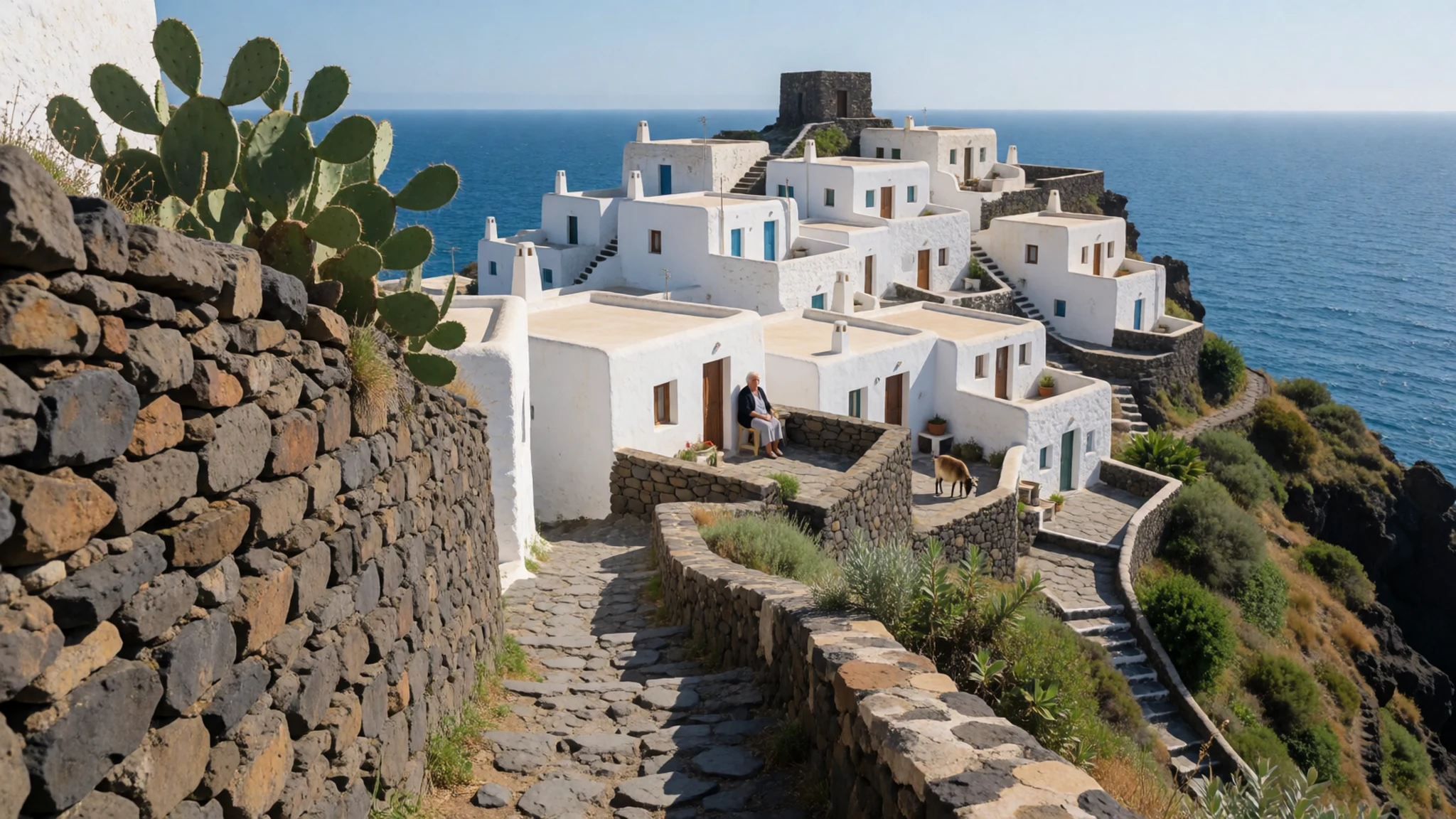
- Stromboli village — Northeast coast
The main village is a tangle of whitewashed houses, small shops and lanes that end at the sea. Aeolian building style is visible in thick walls, flat roofs and shaded terraces. It is worth wandering slowly in the late afternoon, before the climbers set off.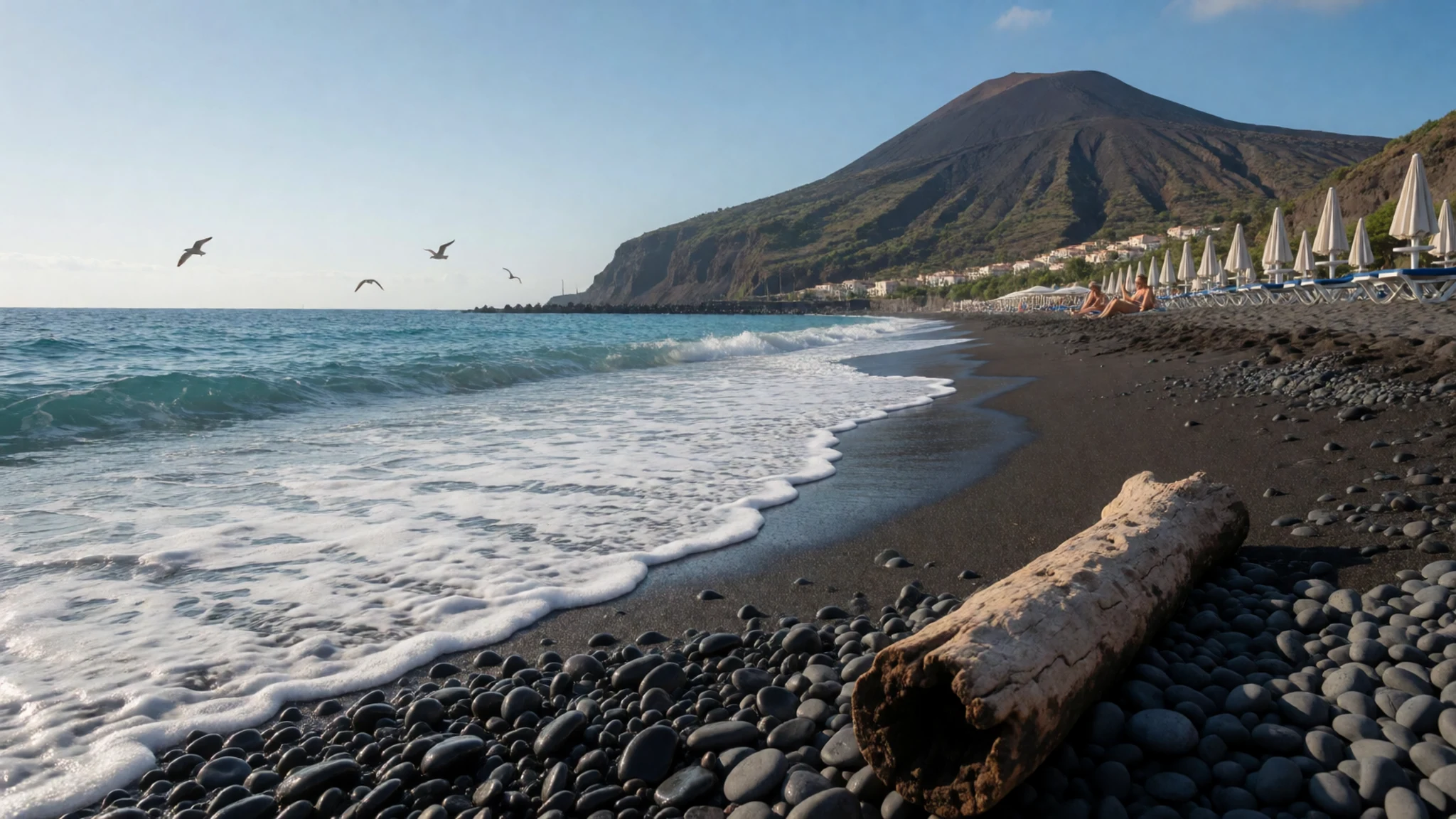
- Black sand beach — Beside Stromboli village
Near the village, a beach of fine black lava sand makes a good place to swim and rest after a hike. The sand heats up fiercely at midday, so sandals help. In the evening, the beach is quiet and the volcano's glow starts to show.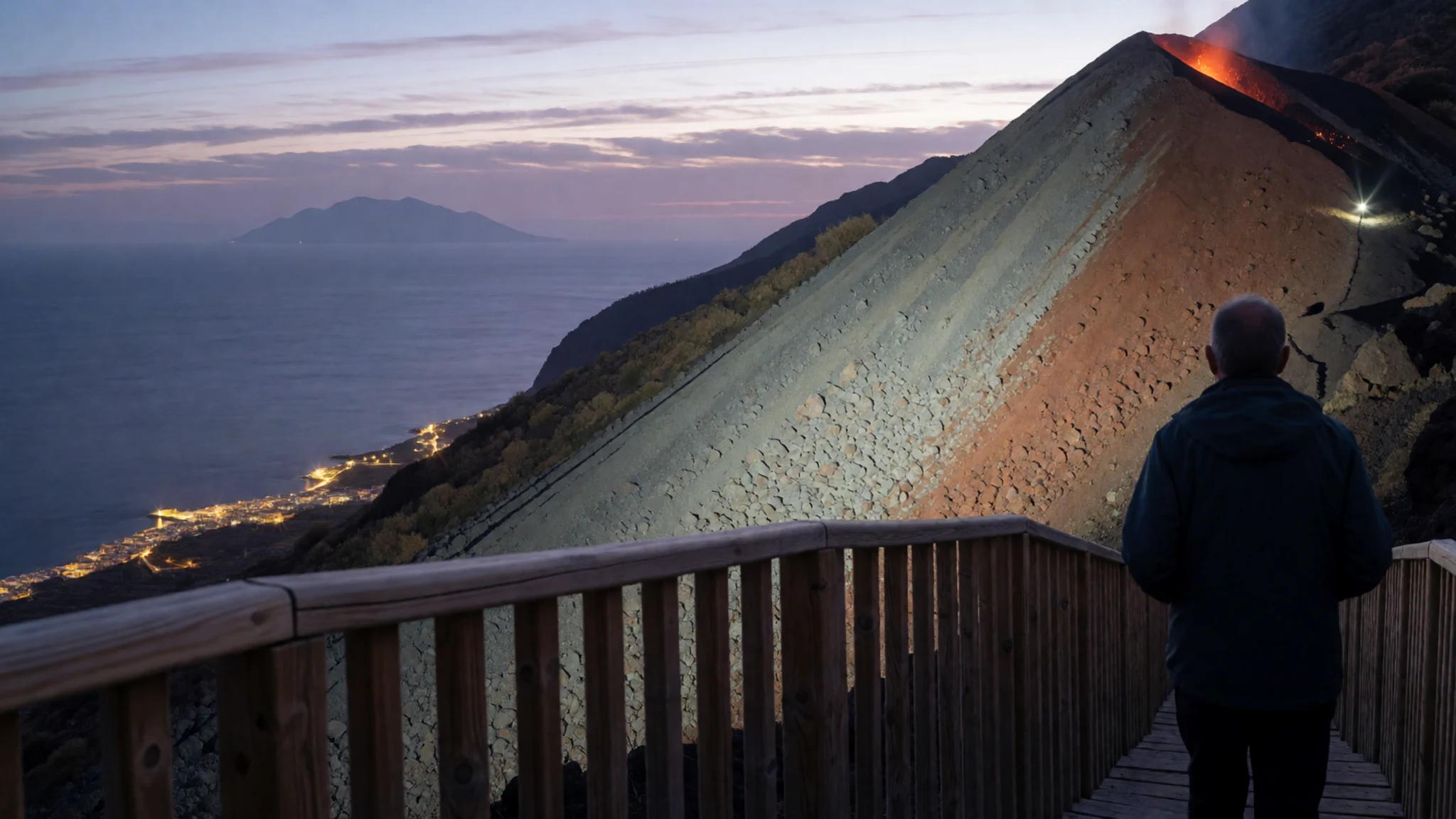
- Ginostra — Southwest coast
Ginostra is the island's second, much smaller village, on the side facing away from Stromboli village. It has a harbour so small that only one boat fits. It can be reached by boat or by a long hike, and it feels remote even by the island's standards.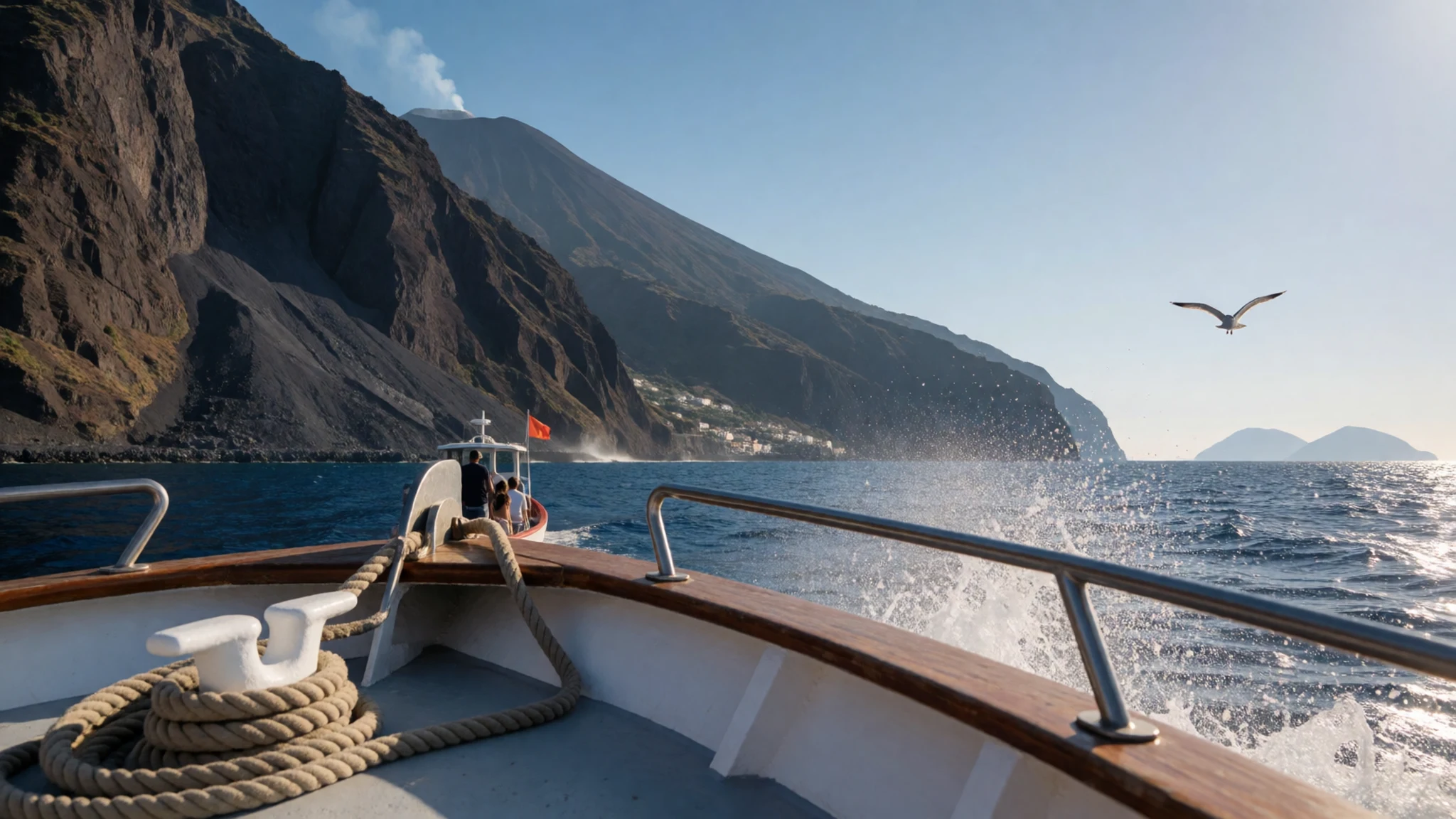
- A boat trip round the island — Departures from Stromboli village
Circling the island by boat shows the whole shape of the mountain, the steep cliffs and the Sciara del Fuoco from the water. After dark, some trips pass beneath the slope to watch the eruptions glowing from the sea, which is safer than being on the summit.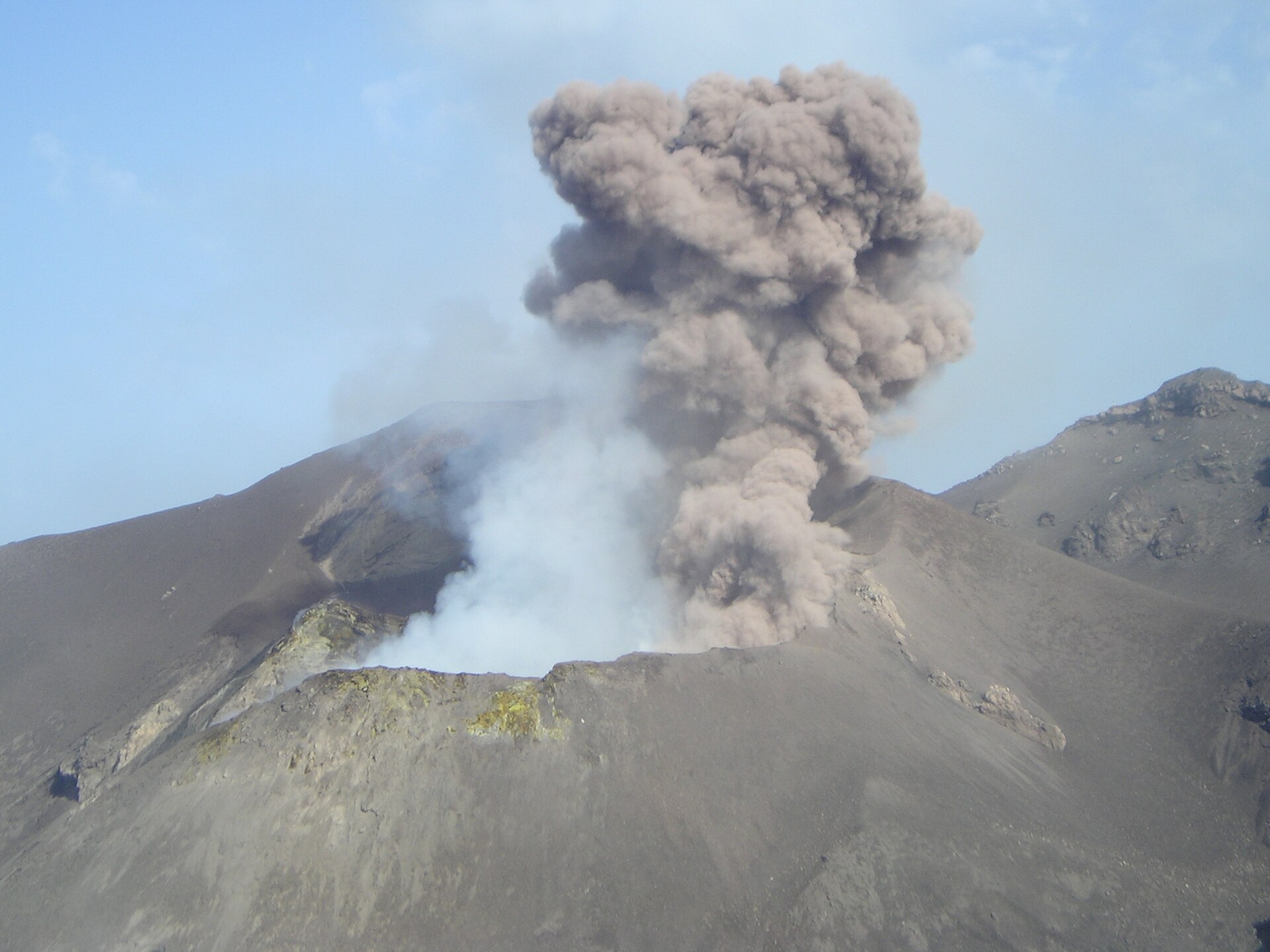
Culture
Stromboli's culture is that of a small island community in the Aeolian chain, shaped by fishing, farming, emigration and now the steady flow of walkers. Families are close-knit, and many houses are handed down. Island life runs to the rhythm of the boats: when the sea is rough, ferries and hydrofoils stop, and everyone simply waits.
The volcano is part of daily conversation. Locals watch its mood the way people elsewhere watch the weather, and they take warnings from the authorities seriously. Guides are often islanders or long-term residents, and their knowledge of the paths and of the mountain's changing behaviour is the reason the rules about guided climbing exist.
Cuisine, language and festivals reflect the wider Aeolian and Sicilian world. The local Sicilian name for the island, Struògnuli, is still heard. Religious life centres on the large church in the village, and its square is the island's main meeting place in the evening. Visitors who arrive outside the high season find the island much quieter, with a few restaurants and shops open and the pace even slower.
On the mountain, follow your guide's instructions exactly, stay on the marked path and never wander towards the craters for a better photograph.
What to wear
Stromboli has no single famous regional costume that visitors will meet today. Historically, islanders dressed as rural and seafaring people across southern Italy did: sturdy wool and cotton, dark jackets and caps for men, long skirts, aprons and headscarves for women, all made for wind, sun and hard work. Such clothing now survives mainly in old photographs and occasional festival displays.
Today, people on the island dress simply. Residents wear shorts, linen shirts, sandals and sun hats in summer, with fleeces and waterproofs in the cooler, windier months. Guides and boat crews wear practical outdoor gear, often with sturdy boots. Evenings in the village are casual, and nobody dresses up.
Visitors should plan for two different settings. In the village and on the beach, light cotton clothes, a hat, sunglasses and sandals are enough. For the volcano, wear proper walking boots, long trousers and a warm layer, because the summit is windy and cold after dark even in summer. Take a windproof jacket, gloves in the shoulder seasons and a head torch with fresh batteries. Boots can be rented from guide services and shops. For church visits, covering shoulders and knees is courteous. Leave open sandals and flip-flops for the beach, as the descent is over loose sand and stones.
What to eat
- Fresh grilled fish — Fish restaurants in Stromboli village, near the harbour
Fish caught around the Aeolian Islands is usually served simply, grilled with olive oil, lemon and herbs. Swordfish and tuna are common in season, and the best choice is whatever the kitchen says came in that day.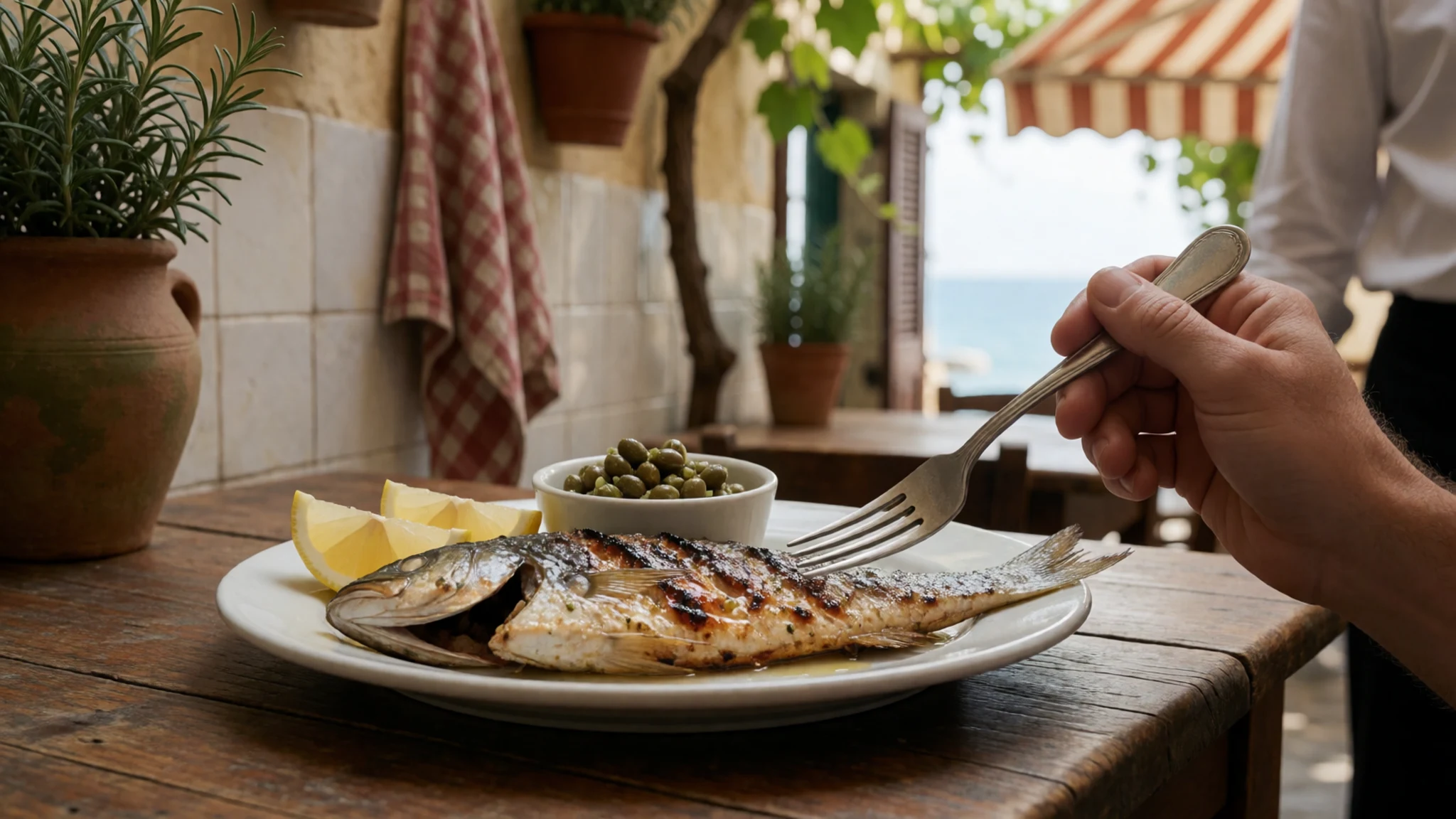
- Pasta with capers and tomato — Trattorie in the village lanes
Capers grow wild on the island's walls and slopes, and they appear in pasta sauces with tomato, olives and basil. The flavour is salty, bright and sharp, and it is a cheap, filling meal after a long climb.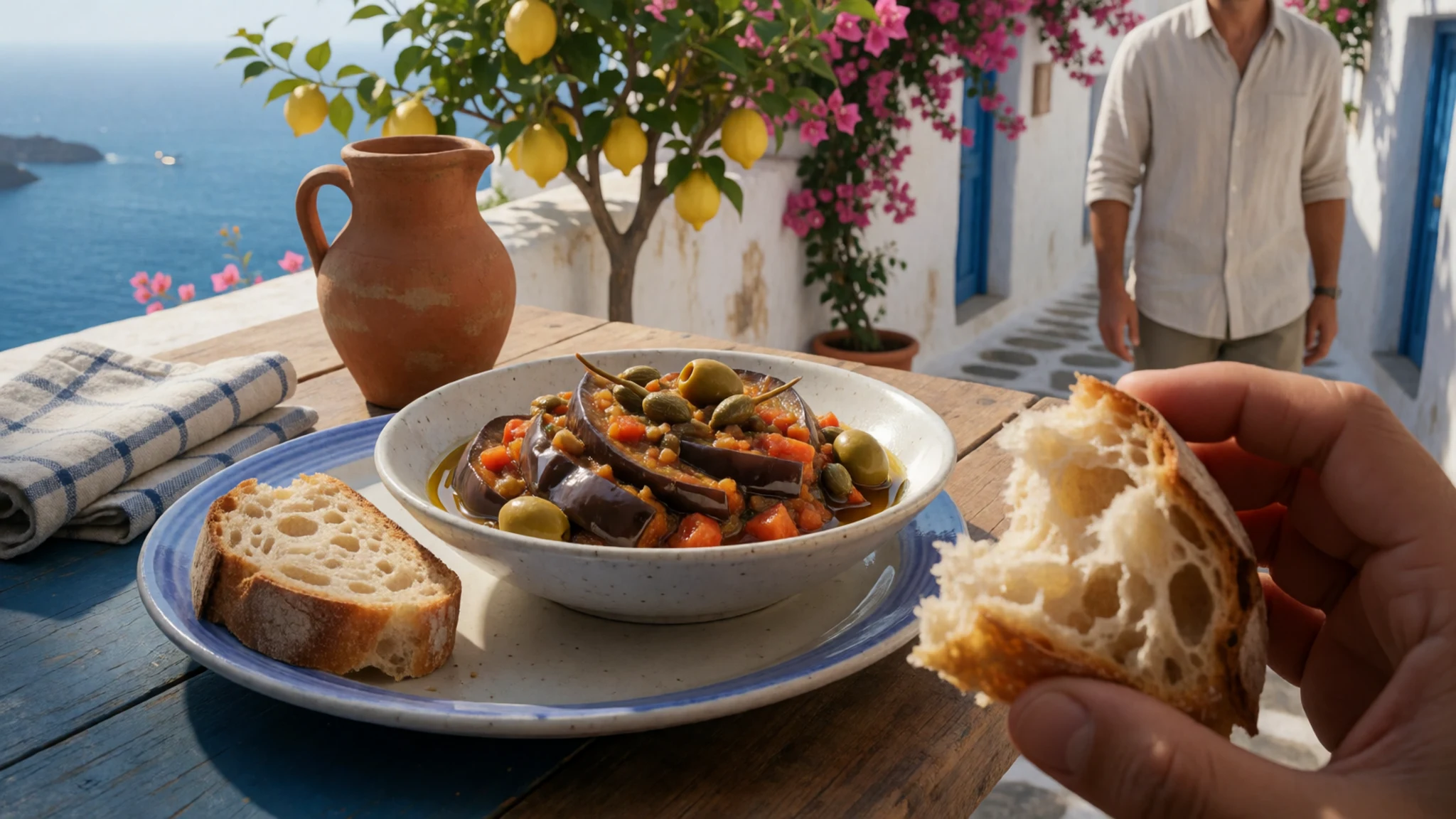
- Pizza near the trails — Pizzerias at the start of the trails
A pizza is a sensible meal before or after the volcano climb. Some pizzerias sit right at the foot of the paths leading up the mountain, so hikers can eat while waiting for their guide group to gather. - Mediterranean home-style cooking — Small trattorie in Stromboli village
Some village kitchens cook in a looser, personal Mediterranean style rather than standard Italian menus, so the dishes depend on the season, the catch and the chef's mood. Ask what is good that evening and let the kitchen decide. - Lunch in Ginostra — The main trattoria in Ginostra
Ginostra has very few places to eat, so lunch there is a simple affair at its main trattoria, with fresh local ingredients and an unhurried pace. It makes a fine break during a boat trip or a long hike to the village. - Granita and a drink in the square — Open-air bars near the large church
Sicilian-style granita, a half-frozen sweet made with lemon, almond or coffee, is the classic refresher on hot afternoons. In the evening, locals and visitors gather for a drink at the open-air bars beside the village church.
Plan it
Best time. May–June and September–October are the sweet spot: warm, mostly settled weather, and fewer people than the peak of summer. July and August are hot and busy, and the climb is tiring in the heat. Winter brings rough seas that can cancel boats.
How long. 2–3
Getting there. There is no airport. Fly to Sicily (Catania or Palermo) or to Naples, then take a hydrofoil or ferry to Stromboli; you may need to change at Lipari. Operators include SNAV, Siremar, Ustica Lines and NGI, so check current timetables on their official sites. A shorter crossing runs from Tropea on the Calabrian coast.
Budget. mid
Tips
- Book the guided climb and your accommodation well ahead in summer
- Bring a head torch, at least 1.5 litres of water and proper boots, which can be rented locally
- Carry cash for small shops and eateries, as not everywhere takes cards
- Leave a day spare, since rough seas can cancel boats and the summit can close
- Do not bring a car; there is nowhere to use it
Etiquette
- Climb only with a licensed guide above the allowed height and obey path closures
- Do not leave the marked paths, and treat the fragile island environment carefully
- Camping is not permitted, so book a room
Nearby
Sources
- Wikidata Q131148 (CC0)
- Wikipedia: Stromboli (rev 1384687581) (CC BY-SA 4.0)
- Wikivoyage: Stromboli (rev 5419036) (CC BY-SA 4.0)
- Carsten Steger, Aerial image of Stromboli (CC BY-SA 4.0)
- Steven W. Dengler, The Island of Stromboli (CC BY-SA 2.0)
- Strombolielicottero.jpg (CC BY 3.0)
- kuhnmi, A Piece of Stromboli (CC BY 2.5)
- Davide Mauro, Area attrezzata Stromboli (CC BY-SA 4.0)
- kuhnmi, Ascending Stromboli (CC BY 2.5)
- Hein56didden, Attenzione Vulcano in attività pericolosa (CC BY-SA 4.0)
- Hein56didden, Case eolliane (3) (CC BY-SA 4.0)


