Stagira
Stagira, Greece
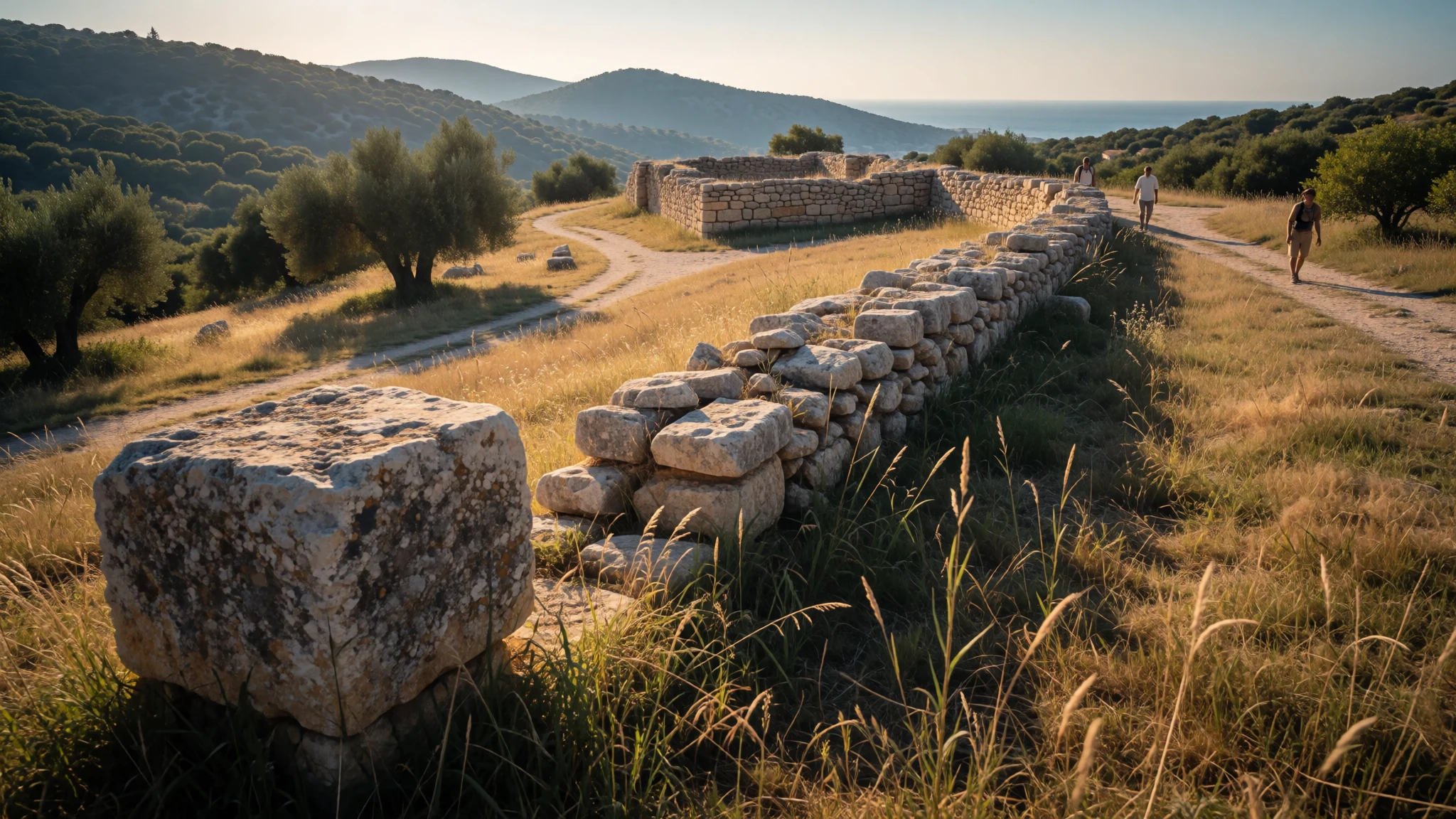
Stagira is the quiet Chalkidiki hillside where Aristotle was born, now a scatter of ancient walls, house foundations and sea views.
The place
Stagira is an archaeological site on the eastern side of the Chalkidiki peninsula, in the region of Central Macedonia, northern Greece. Wikidata describes it as an ancient city and polis, and its fame rests on one citizen: Aristotle, philosopher, polymath, pupil of Plato and tutor to Alexander the Great. The label used on the facts record is Stageira, and you will see Stagirus and Stagira on maps and signs as well, plus the Greek Στάγειρα.
The ruins are not in the modern village of Stagira. They lie some distance to the northeast of it, beside the seaside town of Olympiada, on a low headland where the land runs down to the water. That placement matters for a visit. This is not a monument with a grand façade; it is a hillside town laid out in stone, and the reward is walking its lines and looking out to sea as its residents did.
What survives is modest but legible: stretches of the defensive walls, the footings of houses, and the remains of public buildings. Pine, scrub and wildflowers grow between the stones, and the headland is breezy even when the coast is hot. Expect birdsong, cicadas in summer and very few people. There is little shade, so the visit is about the landscape as much as the archaeology. Many travellers pair it with a swim at Olympiada afterwards, which suits the place well: an hour or two among philosophers' stones, then a beach.
Its story
Stagira was founded in 655 BCE by Ionian settlers who came from the island of Andros. For its first two centuries it was a small coastal city caught between larger powers. Xerxes of Persia occupied it in 480 BC, and later it joined the Delian League led by Athens. In 424 BC it left that alliance during the Peloponnesian War, and Athens answered with a siege under the general Cleon in 422 BC. Cleon died that year at the battle of Amphipolis, and Stagira stayed on the Spartan side for the rest of the war.
The city's worst blow came in 348 BC, when Philip II of Macedon took it and destroyed it. Aristotle, born here, later tutored Philip's son Alexander, and Philip repaid the debt by rebuilding the city and bringing its scattered people home. Further construction came after that, with an aqueduct, a pair of shrines dedicated to Demeter, and numerous houses.
Tradition holds that the people of Stagira brought Aristotle's remains back to his birthplace, buried him there and founded a festival in his honour, the Aristoteleia. Scholars treat this as tradition rather than proven fact, so it is best enjoyed as a story the place tells about itself.
The site was lost to general knowledge for centuries. In 1886 the Danish archaeologist Karl Frederik Kinch explored Chalkidiki and identified Stagira by matching the ground to ancient descriptions. Today it is open to the public and remains a cultural landmark of the region, drawing visitors mainly because of its famous son.
What to see
- The ancient city walls — Archaeological site, headland near Olympiada
The defensive walls are the clearest sign that Stagira was a real fortified town. Follow them along the headland and you can see how the builders used the slope and the coast. Sections are low and tumbled, so go slowly, and look for how the line turns to meet the shoreline.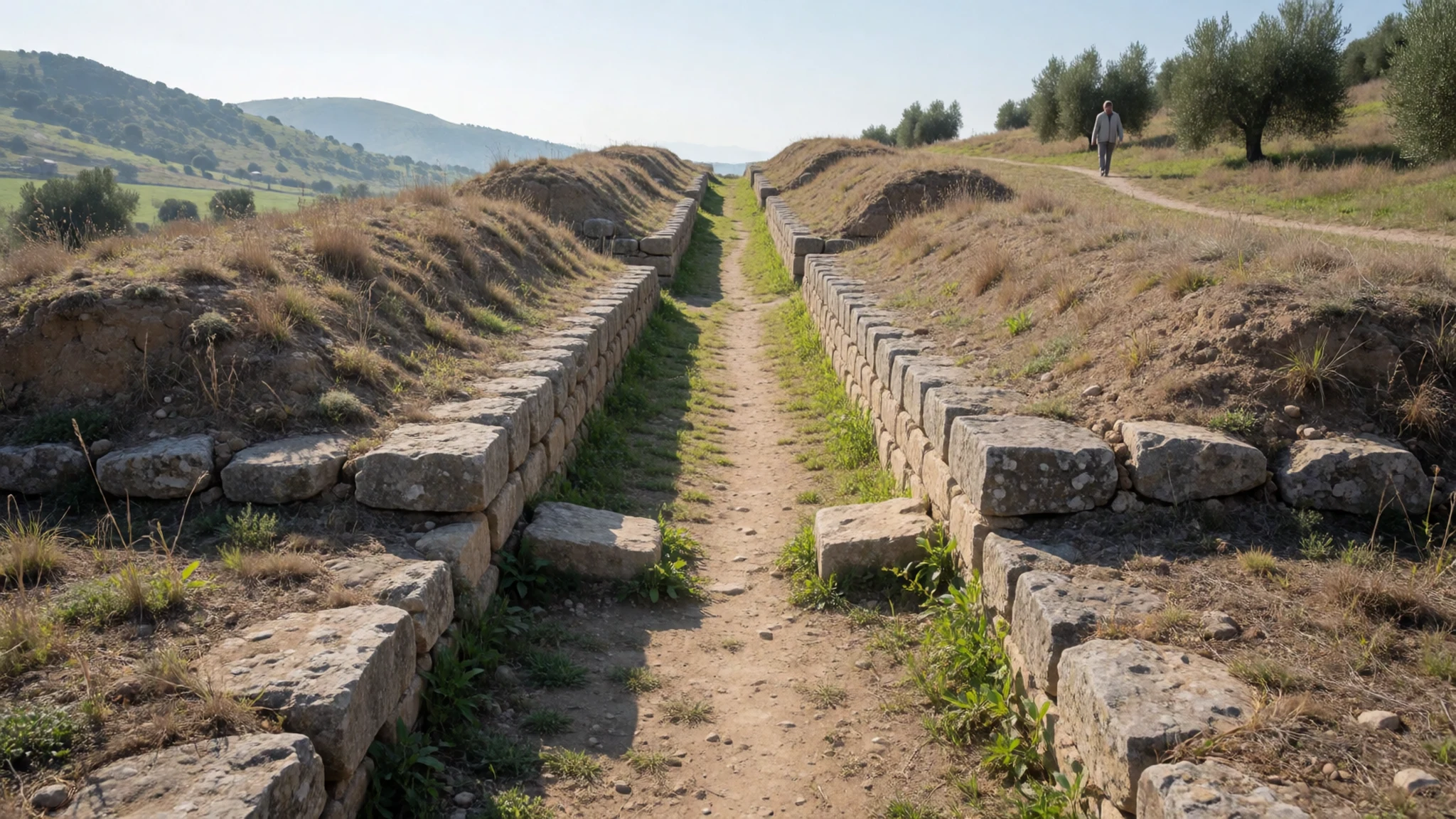
- House foundations — Residential quarter of the site
Between the paths lie the footprints of ordinary homes, many from the rebuilding that followed Philip II's destruction of the city. Small rooms, doorways and street lines can be traced. Stand in one and imagine the family life it held; this is where the place feels most human and least monumental.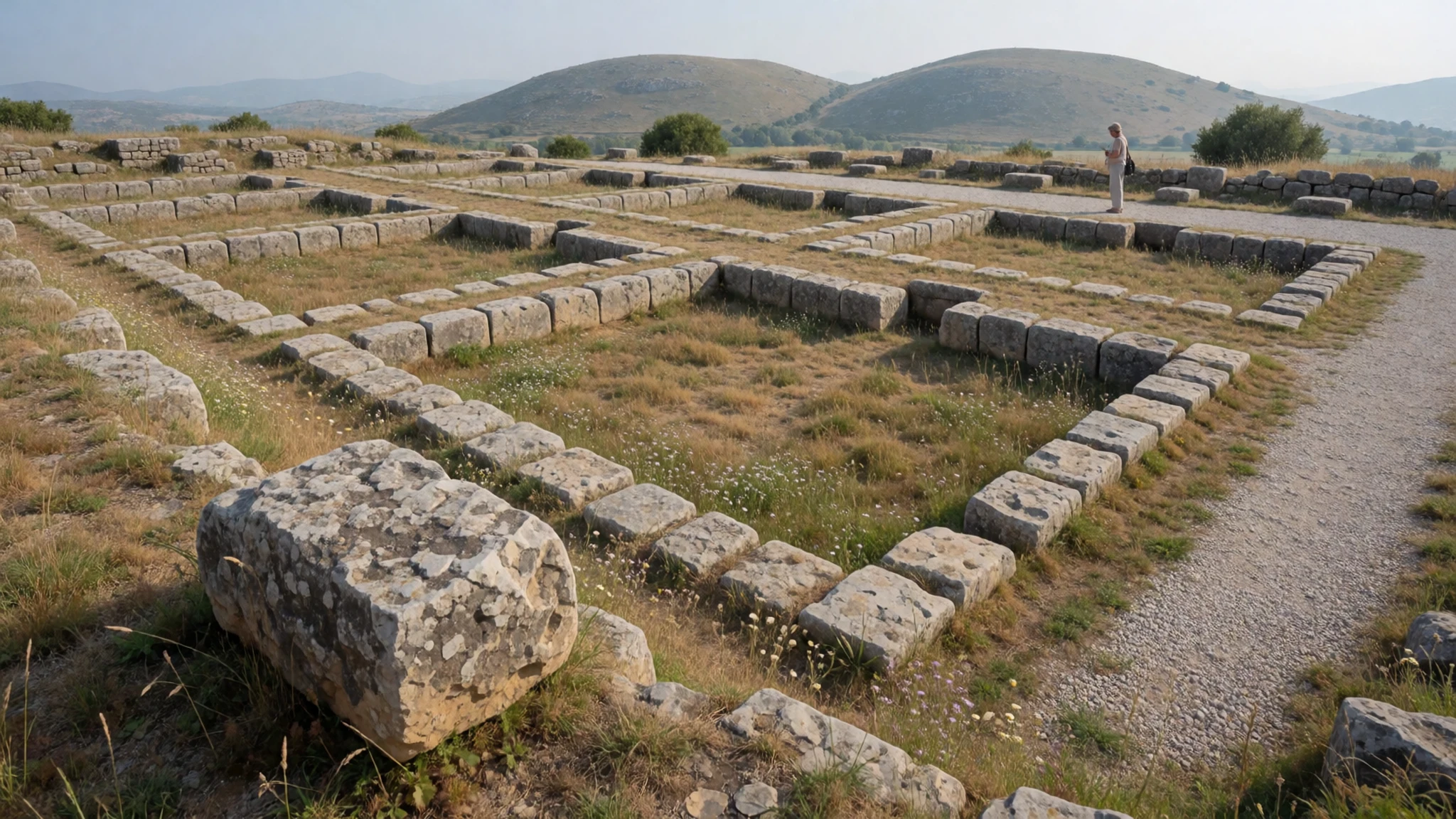
- Public buildings and shrine remains — Central part of the site
Public structures are among the visible remains, and the rebuilt city is recorded as having two shrines to Demeter. Look for larger, more regular stonework than the houses show. Information boards on site help you tell what is what; without them, the ground can look like a pleasant tangle of rubble.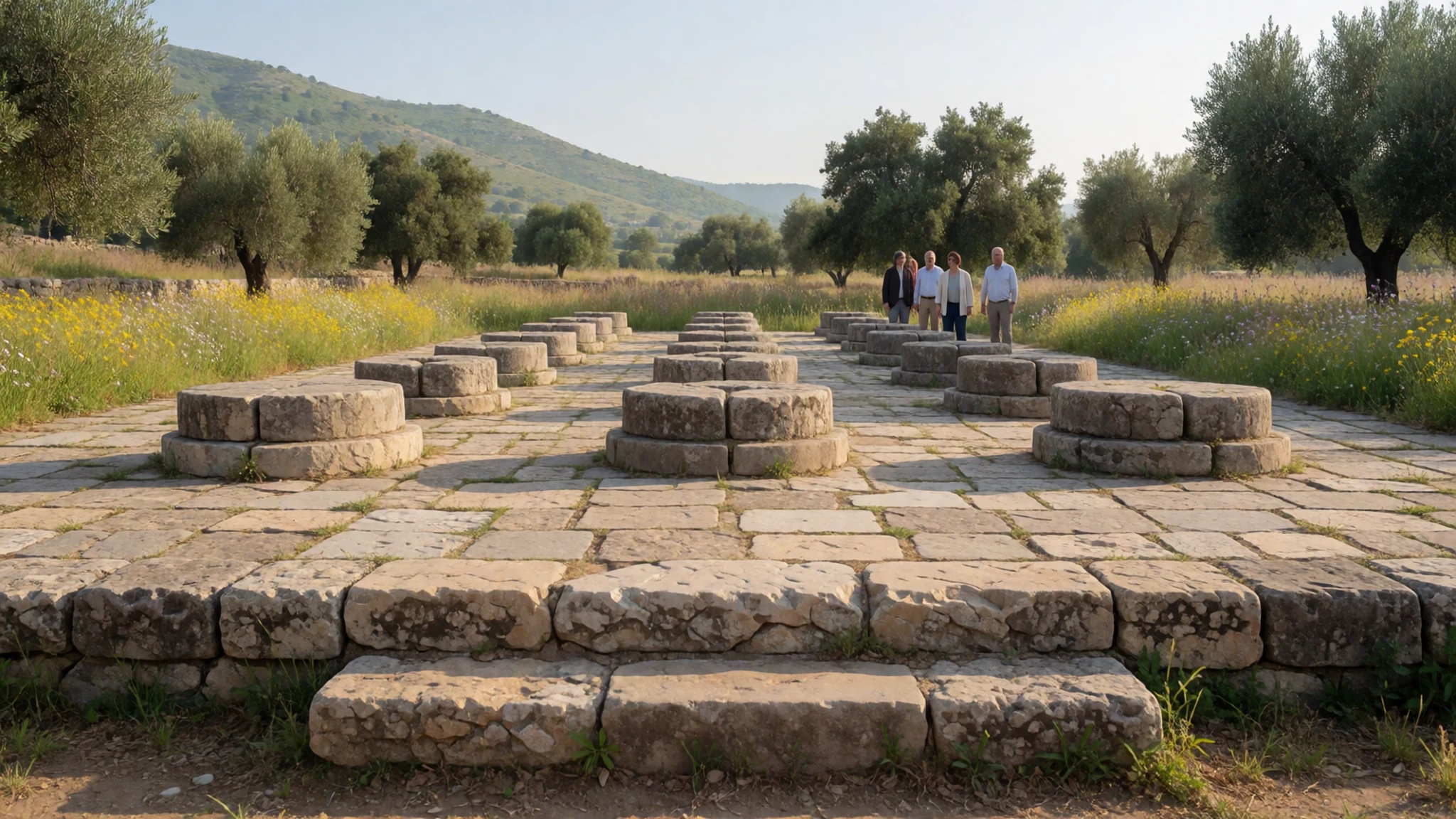
- Sea views from the headland — Seaward edge of the site
The viewpoints at the edge of the ruins look out over the Aegean and the Chalkidiki coast. They explain why settlers chose the spot: water, trade routes and a defensible rise. Late afternoon light is gentle on the stone, and the breeze is welcome in summer.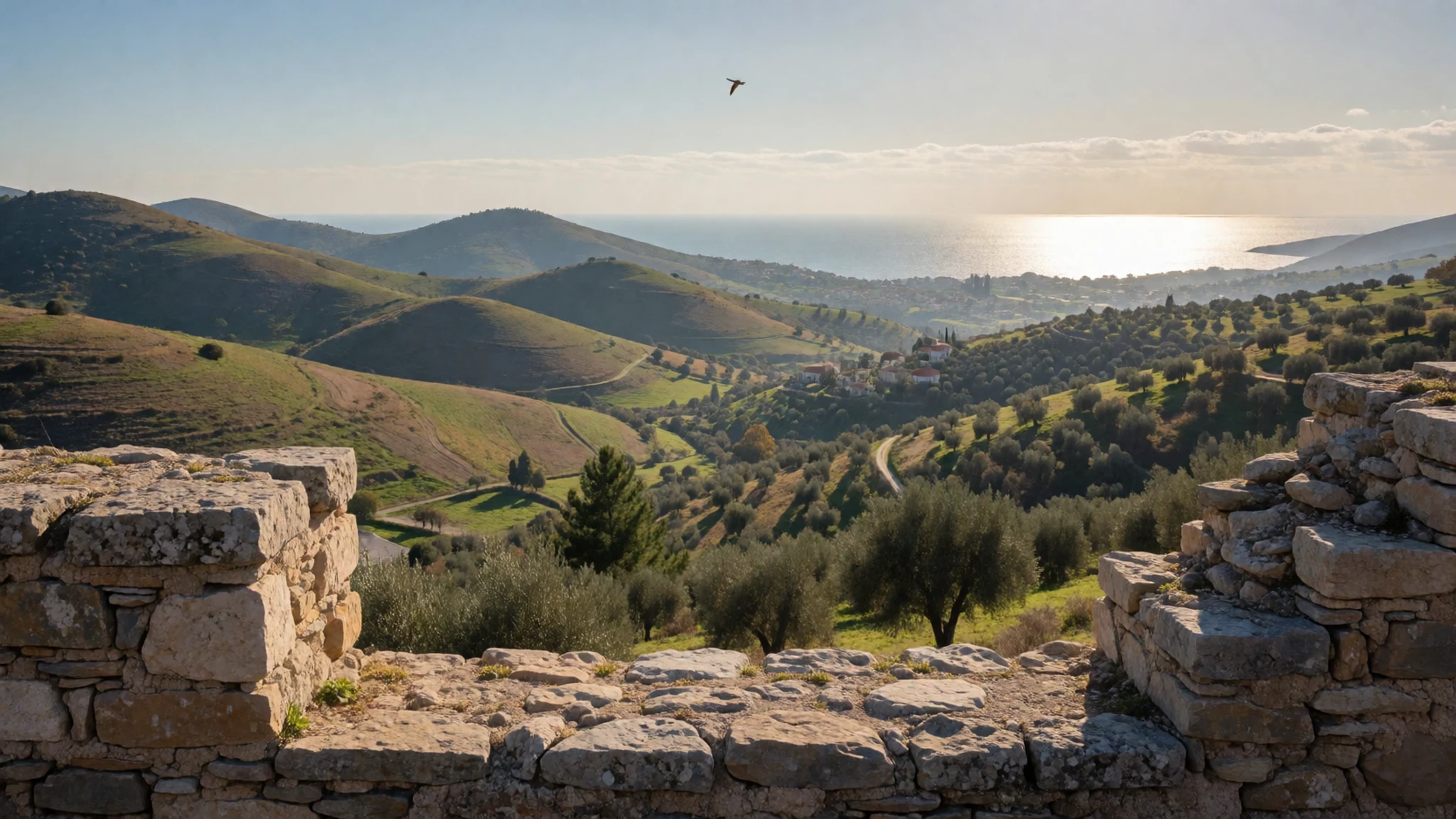
- Olympiada seafront — Olympiada, next to the site
The neighbouring town of Olympiada sits right beside the ruins and makes a natural second stop. It is a small coastal resort with a waterfront, beaches and eateries, handy for a swim and a meal after walking in the sun. It also gives you somewhere to stay close to the site.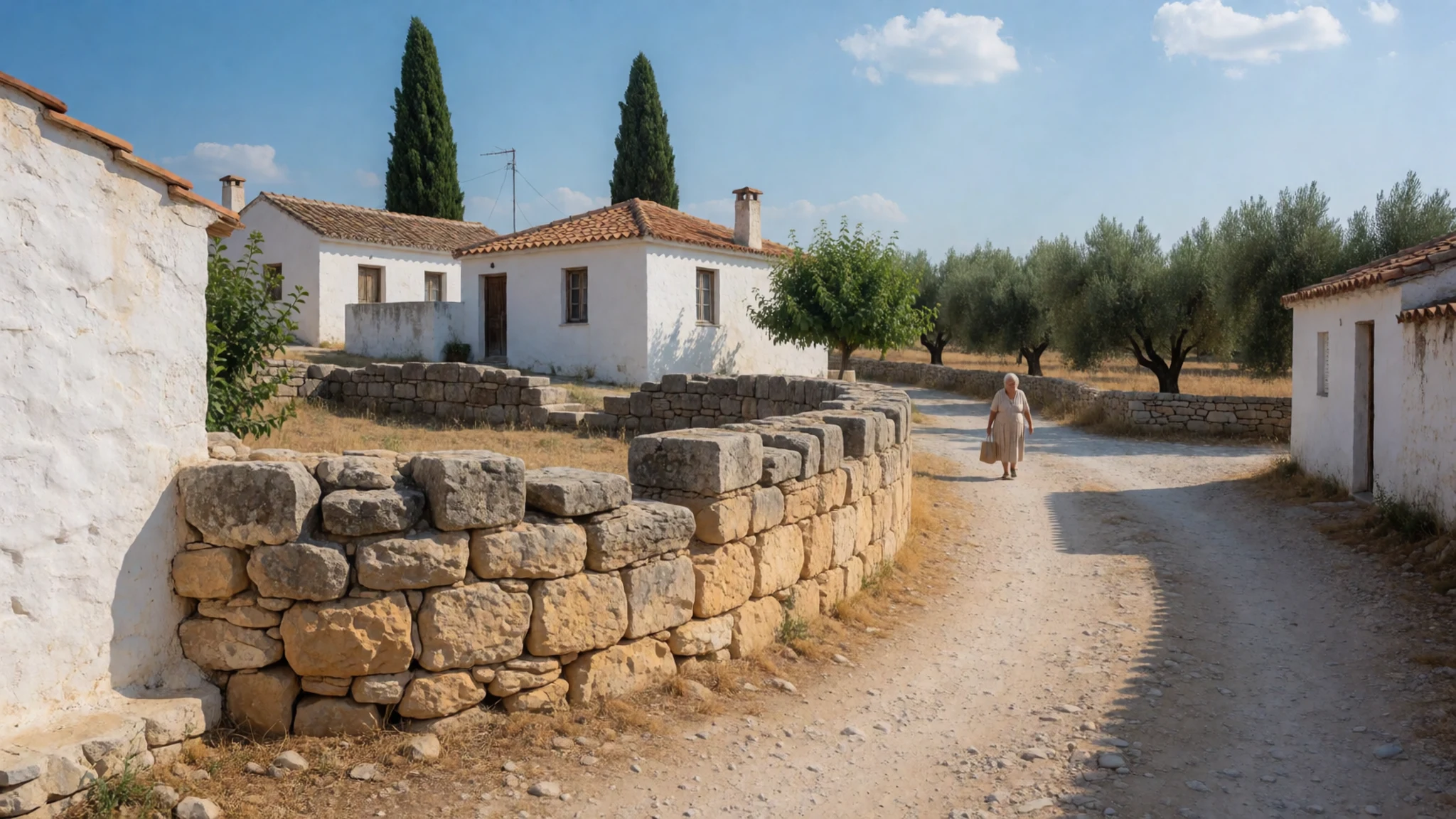
Culture
Stagira's culture is really the culture of an idea. The town gave the world Aristotle, and everything about the place leans on that: the memory of a philosopher who studied under Plato, taught Alexander the Great and wrote on subjects from logic to biology. Locals in the region are proud of the connection, and it shapes how the area presents itself to visitors, with the site treated as a cultural landmark rather than a simple tourist stop.
There is also the older Greek habit of honouring a great citizen. Tradition says the Stagirites brought Aristotle's remains home and founded the Aristoteleia festival in his name. Whatever the truth of that, the instinct is familiar across Greece, where ancient names are worn lightly but taken seriously.
Day to day, Chalkidiki life runs on a slower, seasonal rhythm. Villages are quiet outside summer, coastal towns like Olympiada fill with Greek holidaymakers in July and August, and long lunches stretch into the afternoon. Conversation is warm and direct, and a few words of Greek, such as kalimera for good morning and efharisto for thank you, go down well.
Bring a little knowledge of the story and the site repays you; without it, it can look like stones on a hill. A short read about Aristotle beforehand turns it into a conversation with the place.
Visitor etiquette: stay on the marked paths, do not climb on or remove stones from the walls and foundations, and take only photographs.
What to wear
Stagira has no regional costume of its own that a visitor will meet, so the traditional picture is the wider northern Greek one. Village dress historically used wool, linen and cotton, woven at home: heavy wool cloaks and capes for shepherds, embroidered linen blouses and layered aprons for women, and the fustanella, a pleated kilt, in other parts of Greece. These now appear mainly at festivals, weddings and dance performances rather than daily life.
What people wear now is ordinary Mediterranean casual. In the villages and in Olympiada that means shorts, light cotton shirts and sandals in summer, and jeans with a jumper or light jacket in the cooler months. Beachwear is for the beach; locals tend to dress a little more neatly for town evenings and restaurants. Older villagers, especially women, may still dress conservatively in dark colours.
For a visitor, the site is the main consideration. It is exposed, with little shade, so wear a hat, sunglasses and light, breathable clothes that cover shoulders in strong sun. Sun cream matters from late spring to early autumn. The ground is uneven, with loose stone, roots and dry grass, so sturdy closed shoes or trail sandals are better than flip-flops. Bring a light layer for the sea breeze, which can feel cool in spring and autumn, and a rain jacket for the shoulder seasons. No special modesty rules apply at the ruins, but if you visit a village church, cover shoulders and knees.
What to eat
- Horiatiki salad — Any taverna in Olympiada or nearby villages
The Greek village salad of tomato, cucumber, onion, olives and a slab of feta, dressed with olive oil and oregano. In summer, with Chalkidiki tomatoes, it is simple and excellent. Order it as a shared starter.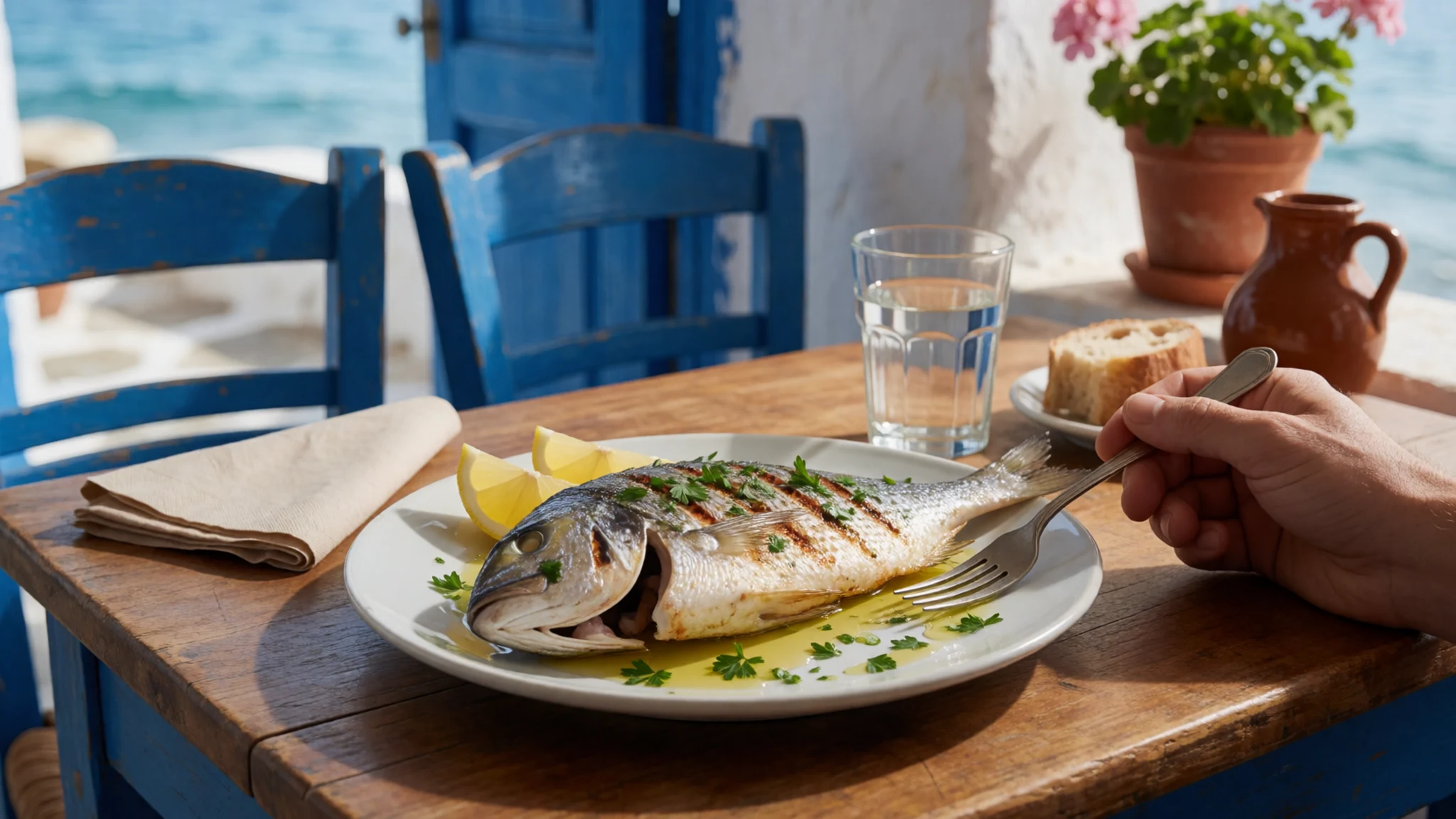
- Grilled fish and seafood — Seafront tavernas in Olympiada
The coast here supplies fish, squid and prawns, usually grilled with olive oil and lemon and sold by weight or by the plate. Ask what was caught that day, and expect it to be simply cooked.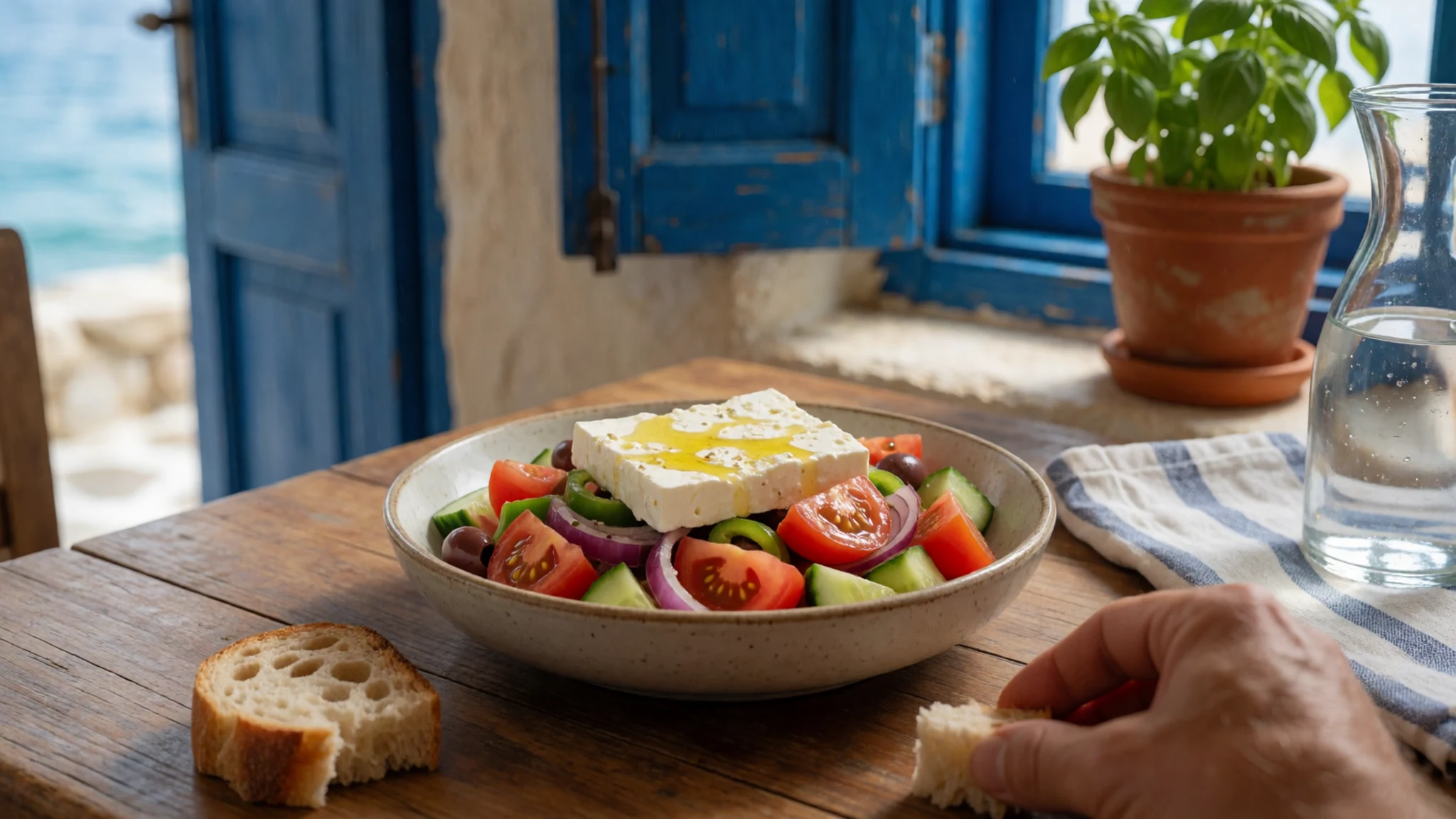
- Souvlaki and gyros — Grill shops in coastal towns and village squares
Skewered grilled pork or chicken in pitta with tomato, onion and sauce, a quick, cheap and filling lunch after the ruins. Many places also serve it on a plate with chips and salad. - Olives and local olive oil — Village shops and roadside stalls in Chalkidiki
Chalkidiki is known for its olive groves, and the green olives are a staple on the table. Good oil is poured generously over almost everything; buy a bottle from a producer or shop to take home. - Spanakopita and tiropita — Bakeries in Olympiada and nearby towns
Flaky pies of spinach and feta, or cheese alone, baked in filo. They are an easy breakfast or snack, and a good choice for vegetarians, though always ask about fillings.
Plan it
Best time. April–June and September–October. Spring is green and comfortable for walking on an exposed site; autumn is warm and the sea is still swimmable. July and August are hot and busy on the coast, and the site has little shade.
How long. 1
Getting there. The nearest major airport is Thessaloniki, from where Stagira and Olympiada are reached by road in the Chalkidiki peninsula; a hire car is by far the easiest way, as public transport to the site is limited, so check local bus information in advance. The ruins lie beside Olympiada, not in the modern village of Stagira.
Budget. mid
Tips
- Go early or late in the day to avoid the heat; the site has little shade
- Wear sturdy shoes and bring water and sun protection
- Check the official site for opening days and any entry charges before you go: http://odysseus.culture.gr/h/3/eh351.jsp?obj_id=2463
- Hire a car in Thessaloniki; distances in Chalkidiki are long and buses are infrequent
- Combine the visit with a swim and a meal in Olympiada, and carry some cash for small places
Etiquette
- Stay on marked paths and do not climb on the ancient walls
- Take no stones or fragments away
- Cover shoulders and knees if you visit a village church
Nearby
Sources
- Wikidata Q846127 (CC0)
- Wikipedia: Stagira (ancient city), rev 1364719578 (CC BY-SA 4.0)
- Photo 20160515_306_stagira, Jean Housen (CC BY-SA 4.0)
- Photo 20160515_307_stagira, Jean Housen (CC BY-SA 4.0)
- Photo 20160515_309_stagira, Jean Housen (CC BY-SA 4.0)
- Photo 20160515_316_stagira, Jean Housen (CC BY-SA 4.0)
- Photo 20160515_319_stagira, Jean Housen (CC BY-SA 4.0)
- Photo 20160515_320_stagira, Jean Housen (CC BY-SA 4.0)
- Photo 20160515_322_stagira, Jean Housen (CC BY-SA 4.0)
- Photo 20160515_323_stagira, Jean Housen (CC BY-SA 4.0)
- Wikivoyage (CC BY-SA 4.0)


