Southampton
Southampton, United Kingdom
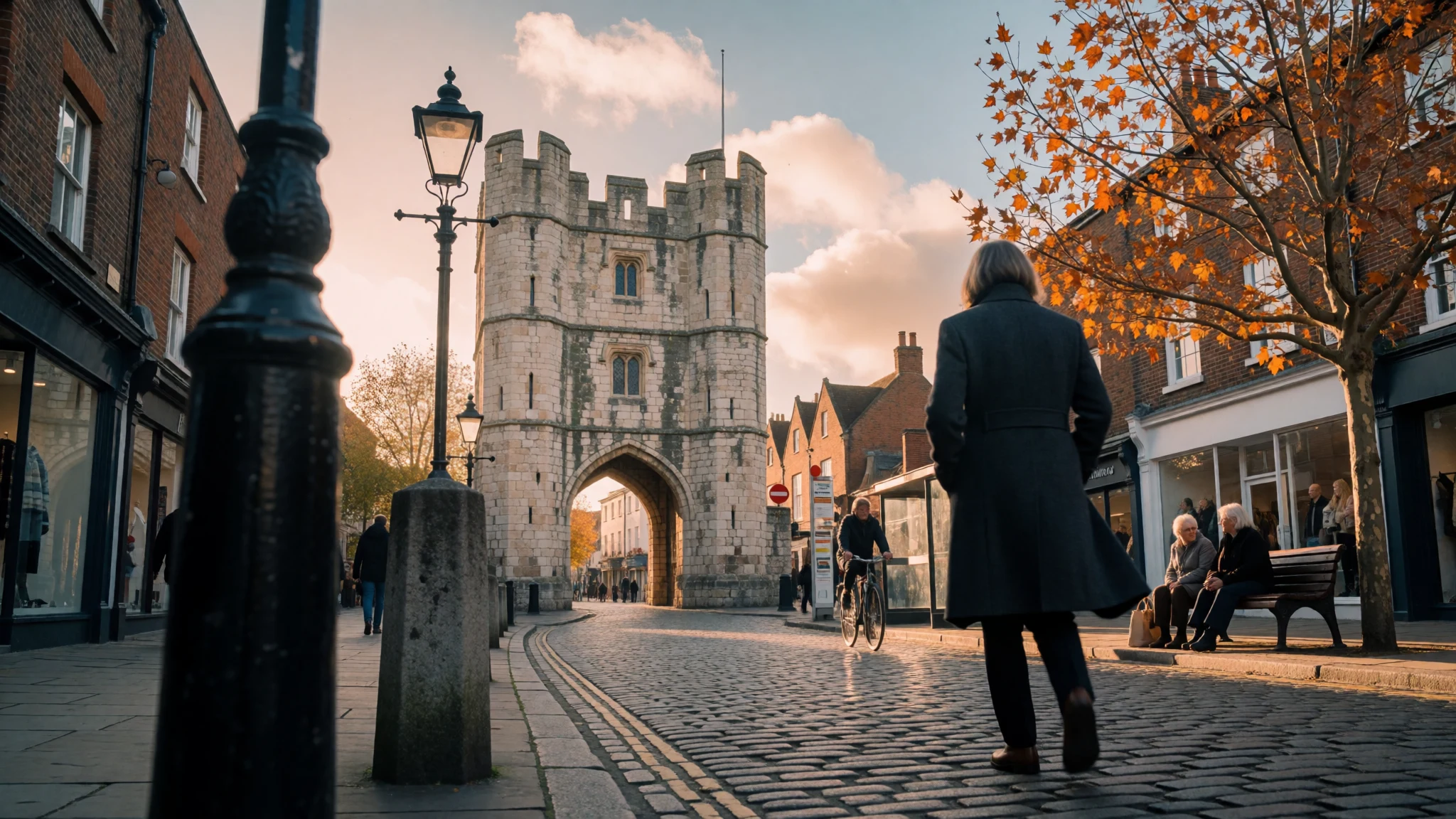
Southampton is a working port city where medieval walls, Titanic history and the great cruise liners share the same waterfront.
The place
Southampton sits on the south coast of England, in Hampshire, at the head of Southampton Water. Two rivers, the Test and the Itchen, meet here, and the Hamble joins from the south. That position made the city a natural harbour, and the sea still shapes everything about it: the cranes, the container yards, the cruise terminals and the ferries to the Isle of Wight.
The city has a population of about 271,000 according to the facts used for this reading, and it is part of a larger urban belt along the coast that includes Portsmouth. London lies to the north-east, and the New Forest begins just to the west, so the city works well as a base for green country as well as for the sea.
Southampton's fame rests on ships. The Titanic left from here, and many of the crew who died were local. The Spitfire was built in the city. In the last century it was a major port for ocean liners, and today it is a home port for very large cruise ships, with Cunard running a regular crossing to New York. It was also one of the main embarkation points for D-Day.
That history has a cost. The city was heavily bombed in the Second World War, and much of the centre was rebuilt in plainer postwar styles. What survives from earlier centuries is therefore patchy but rewarding: stretches of town wall, a gatehouse, a few merchants' houses. Expect a practical, lived-in city, with large shopping streets, a big student population and sea air, rather than a postcard old town.
Its story
People have lived around Southampton since the Stone Age. After the Roman conquest, a fortified trading settlement called Clausentum grew up where Bitterne Manor now stands, serving as a port and outpost for Winchester. It had a wall, two ditches and probably a bath house, and it was given up around the year 410.
The Anglo-Saxons then built a larger town across the Itchen, in what is now the St Mary's district. They called it Hamwic, a name that shortened over time to Hamtun and then Hampton, and it gave Hampshire its name. Excavations there have produced one of the richest collections of Saxon objects in Europe. Viking raids weakened Hamwic in the late ninth century, and a fortified settlement on the present medieval site took its place by the tenth.
After the Norman Conquest of 1066, Southampton became the main crossing point between Winchester, then the capital, and Normandy. Wealth followed trade. The castle was raised in the twelfth century, and merchants' houses of the same period, such as King John's House and Canute's Palace, still stand in part as evidence of that prosperity.
The later chapters are better known: the age of the great liners, the Titanic's departure, and the bombing of the Blitz, which flattened large areas. Each left marks that are still easy to find, from the medieval walls to the memorials near the centre. The city's story is less one of a single golden age than of a harbour that kept reinventing its trade.
What to see
- Bargate — City centre
The medieval gatehouse stands in the middle of the main shopping area, so people stream round it all day. It was begun around the twelfth century and extended later. The upper floor has held heritage displays, and the lions on the front have been restored. Check the official site for opening.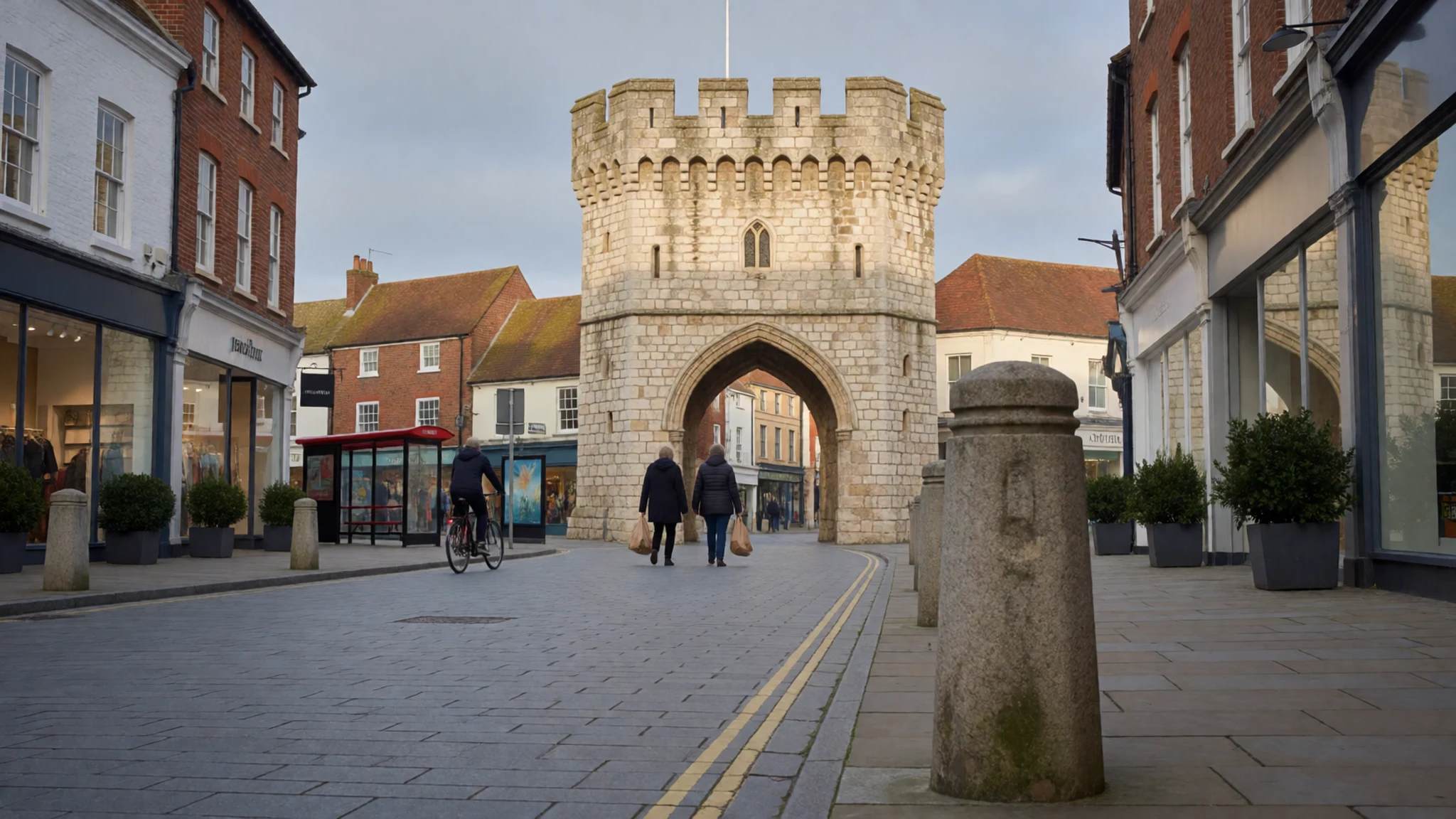
- Town walls and arcades — Western old town
Long stretches of the old defences survive on the western side of the centre, with arched arcades and towers such as the William Nycoll tower. A slow walk along them shows how the medieval town met the water, and it costs nothing. Quiet in the morning.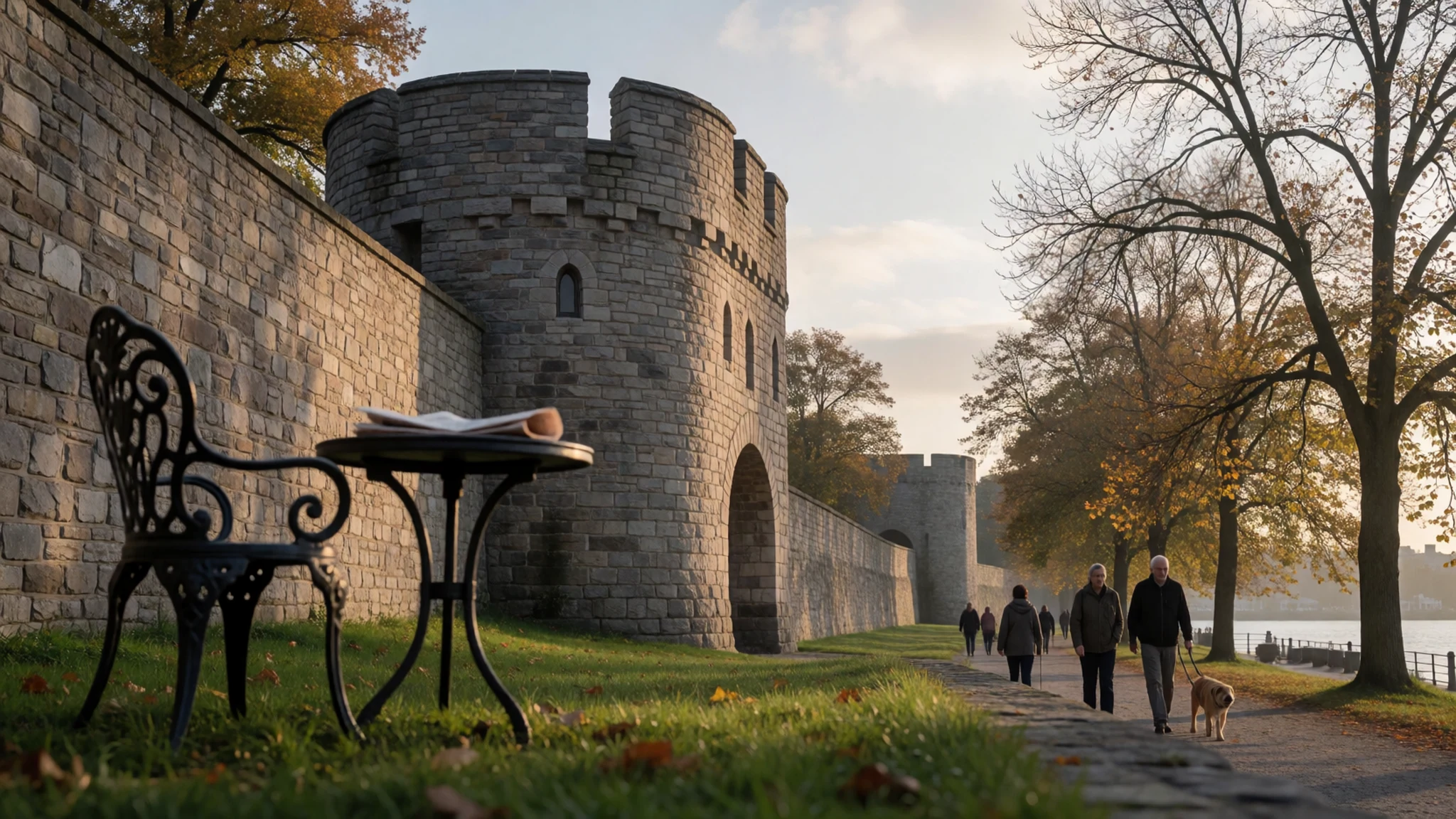
- SeaCity Museum — Civic centre area
Opened in 2012, this museum has one gallery on the city's history through objects and interactive displays, and another on the Titanic's voyage and sinking. Because so many local families lost people, the Titanic material feels personal rather than sensational. Check the official site for tickets and times.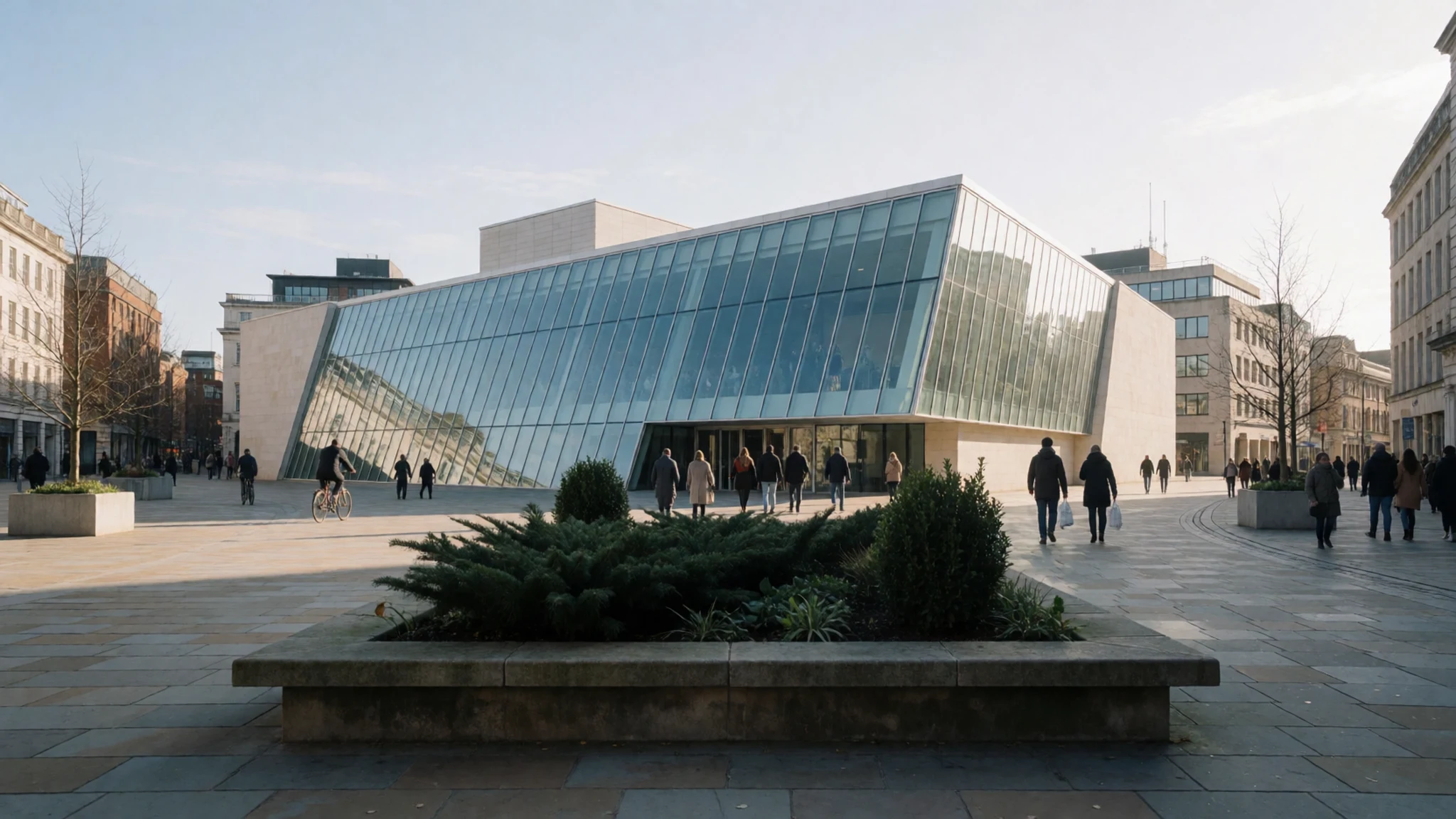
- God's House Tower — Old town waterfront
A thirteenth-century gatehouse in the city walls, reopened as an arts centre in 2021. It has changing exhibitions, galleries, a café and a local heritage library, and entry is free. It is a good stop for combining medieval stonework with contemporary art.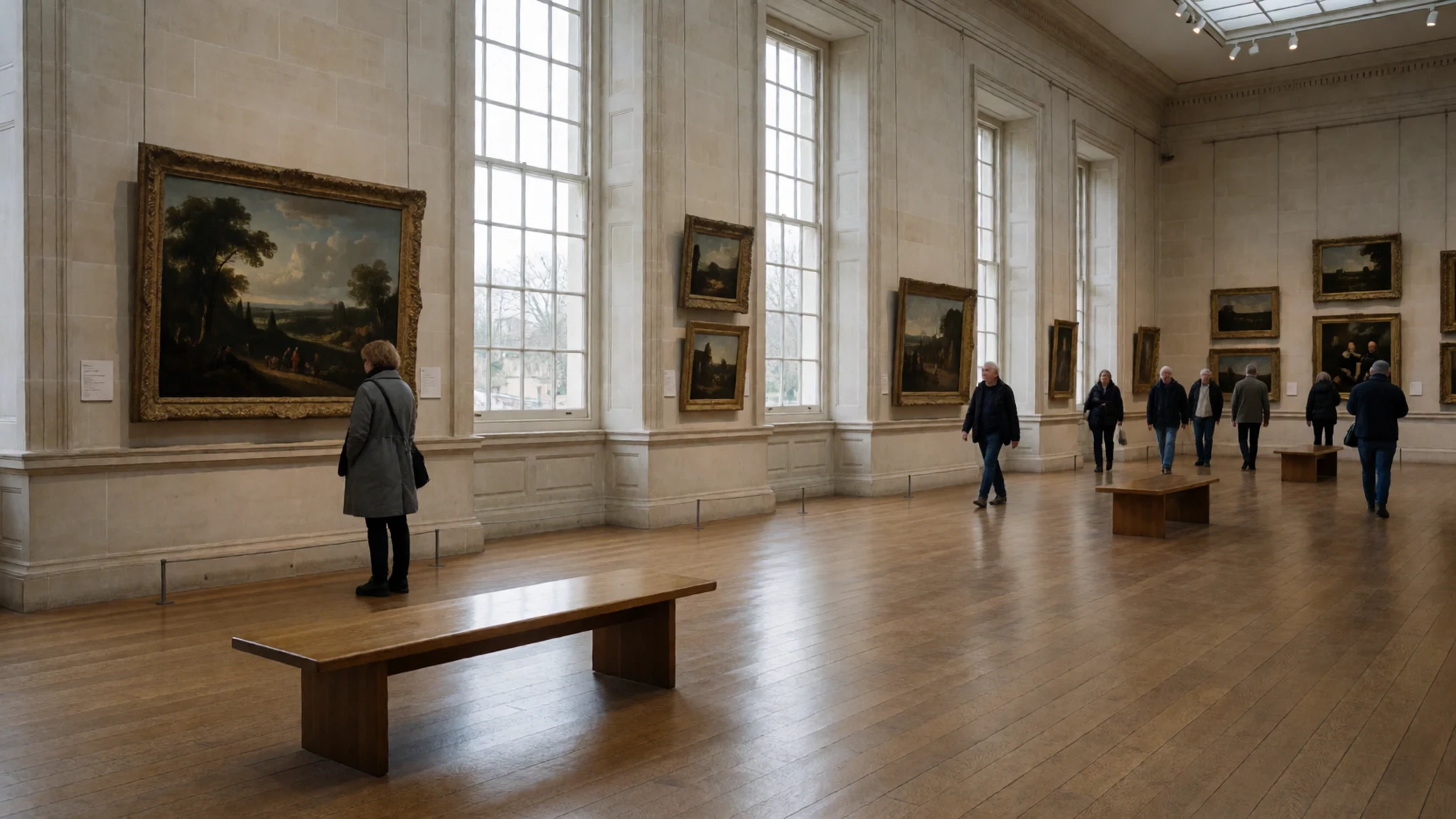
- Medieval Merchant's House — Old town
One of the earliest surviving merchants' houses in England, it shows how a trading family lived and worked beside the harbour. The rooms are small and atmospheric. Opening is seasonal and run by a heritage body, so check before going.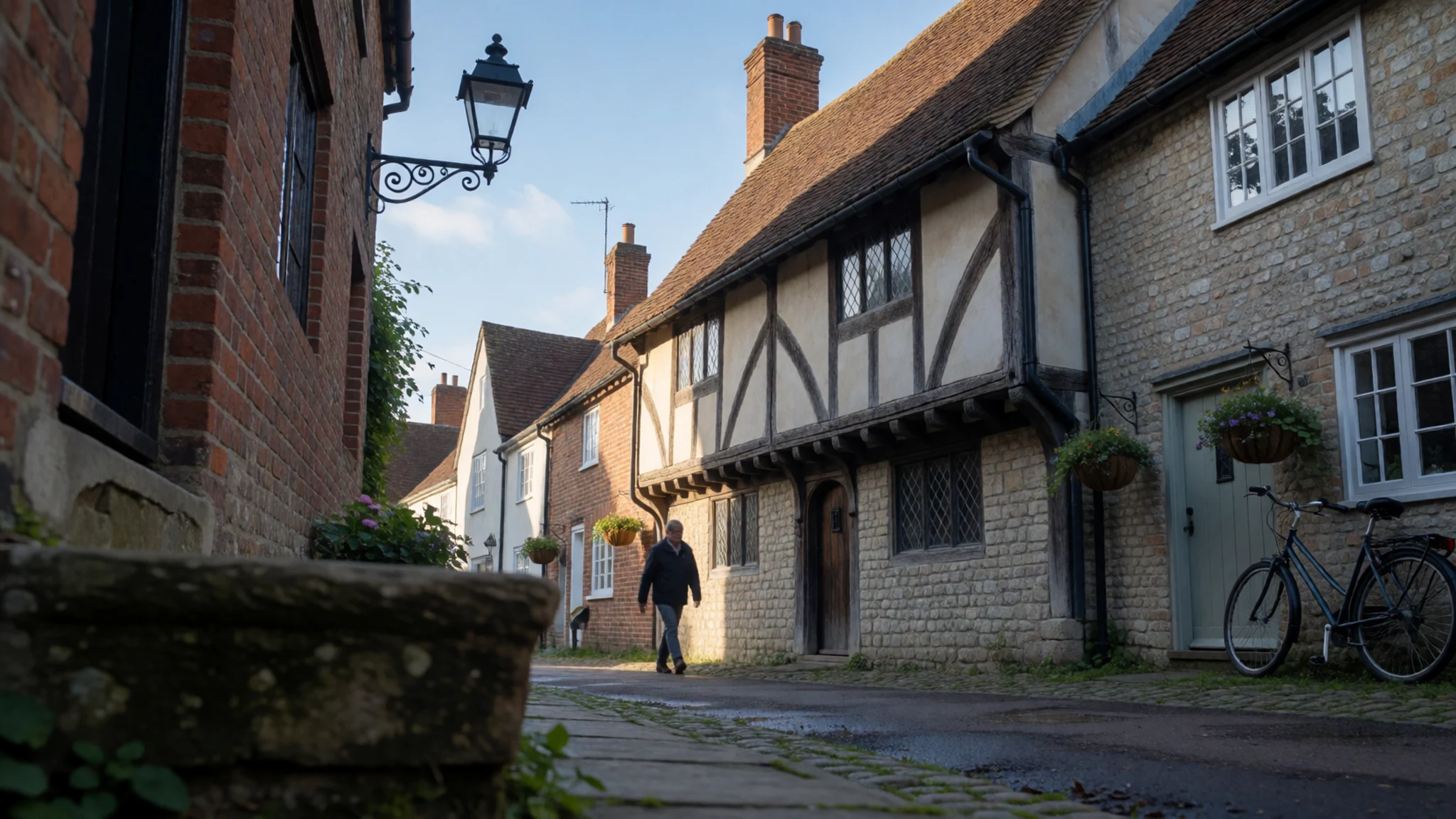
- Southampton City Art Gallery — Civic centre
The collection holds some 3,500 works spanning six centuries, and is a calm contrast to the busy shops nearby. Next door in the university quarter, the John Hansard Gallery shows contemporary work. Both are worth an hour on a wet afternoon.
Culture
Southampton's culture is that of a port: outward-looking, mixed and unfussy. Generations of sailors, dockworkers, engineers and passengers have passed through, and the city's communities reflect that, from long-established Hampshire families to Polish, South Asian, Caribbean and Chinese neighbourhoods. The food, shops and places of worship on streets such as Bedford Place and Oxford Street show it plainly.
The sea and its tragedies sit close to daily memory. Memorials to the Titanic's engineers and other crew stand near the centre, and locals still speak of the ship as a hometown loss, since hundreds of the dead lived here. The Second World War is similarly present: the Blitz, the evacuation of children, and the city's part in D-Day are told in museums and plaques.
There is also a lively student side, thanks to two universities, which means gigs, galleries and late-night kebab shops. Football is a shared language, and Southampton's club has a loyal following; match days fill pubs and trains.
The tone is friendly but reserved, in the usual English way. People queue patiently, apologise easily and appreciate a simple thank-you to bus drivers and shop staff. Humour is dry, and small talk about the weather is a standard opener. At memorials and in the museum galleries about the Titanic, keep your voice low and ask before photographing other visitors who are paying their respects.
What to wear
Southampton has no single traditional costume. The region's older working dress belonged to the sea and the land: wool jerseys, oilskins and heavy boots for dockers and fishermen, and tweed and waxed cotton for the nearby countryside. Those fabrics, especially wool and waxed cotton, still define British practical clothing, and the maritime look of striped knits and navy coats remains familiar here.
Today people dress casually and for the weather. Jeans, trainers, hoodies and waterproof jackets are normal, with smarter clothes for work or an evening out. Students bring a relaxed, secondhand-friendly style, and on cruise days you will see formal wear heading for the terminals, including dinner jackets and evening dresses for the big liners. Football shirts appear on match days.
Visitors should plan for changeable, often breezy conditions by the water. A light waterproof jacket is useful in every season, with layers in spring and autumn and a warm coat in winter. Comfortable, closed shoes suit the cobbles, wall walks and long shopping streets, and wet pavements can be slippery. In summer, light cotton clothes and a hat are enough, though evenings by the water cool quickly. No special dress is required for museums or churches, but modest, quiet dress is appreciated at memorial services.
What to eat
- Fish and chips — Takeaway shops around the city centre
Battered fish with thick chips, salt and vinegar, eaten from paper. Southampton has several long-running takeaways in the centre, and a portion eaten by the water on a breezy day is the classic simple lunch.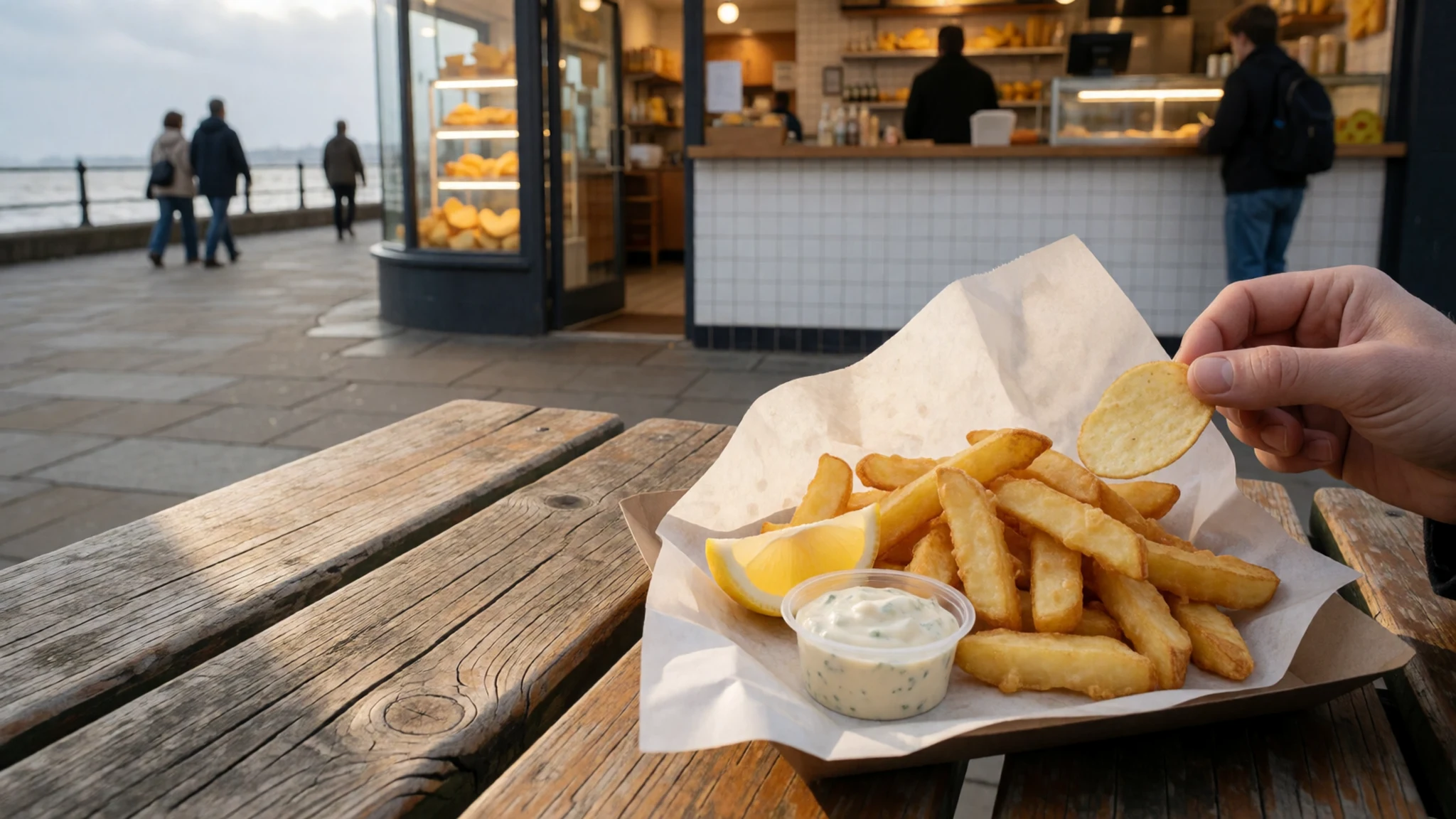
- Piri piri chicken — Chicken restaurants near the centre and Bedford Place
Grilled chicken in a hot chilli and garlic marinade, a Portuguese-African influence that is now a high-street favourite. Order it with chips or rice and ask for the heat level you want.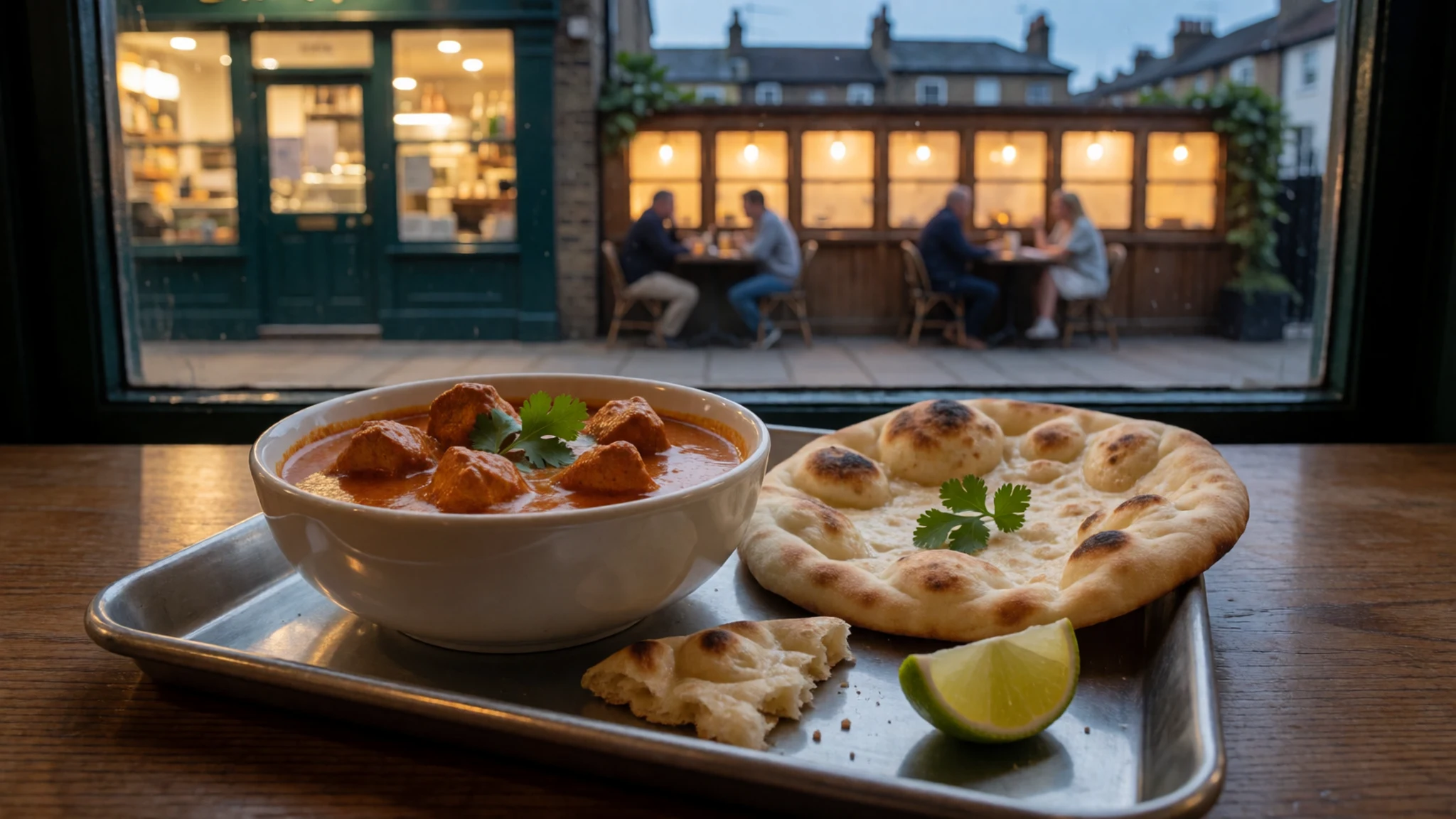
- Curry house dinner — Bedford Place and nearby streets
Student-friendly curry houses serve British-Indian staples such as masala, korma and biryani, alongside Punjabi takeaways with home-style dal and rotis. Indian visitors will find familiar flavours, though often milder than at home. - Pie and mash — Pie cafés and pubs in the north of the centre
A British comfort dish of pastry pie with mashed potato and gravy, offered by small specialist pie shops. Good for a cold, wet day, and often with vegetarian fillings too. - Late-night kebab and pizza — Bedford Place and the streets around the Bargate
After the pubs close, kebab and pizza shops serve doner meat, chips and garlic sauce. It is cheap, filling and part of the city's student nightlife. Halal options are common, so ask at the counter. - Sunday roast — Pubs across the city, especially near the Common
Roast meat or a nut roast with potatoes, vegetables, Yorkshire pudding and gravy, a weekly ritual in British pubs. Book ahead, since good pubs fill on Sundays.
Plan it
Best time. May to September is the driest and warmest stretch, with long evenings for walking the walls and the waterfront. Winters are mild but grey, wet and windy, though cruise and shopping seasons stay busy.
How long. 1–2
Getting there. Southampton Airport is just north of the city, with a railway station beside it and trains into Southampton Central taking about 8 minutes. Heathrow is the main international gateway, reached by coach or by rail via Woking. London Waterloo to Southampton Central is about 1 hour 15 minutes by train.
Budget. mid
Tips
- Allow extra time on cruise embarkation days, when roads and the station get crowded
- Start with the walls and Bargate early, before the shops fill up
- Carry a light waterproof, since the weather changes quickly
- Check museum and heritage-house opening on official sites before travelling
- Cards are widely accepted, but carry a little cash for small stalls
Etiquette
- Queue patiently at bus stops, counters and ticket machines
- Keep voices low at the Titanic memorials and in museum galleries
- Say thank you to bus drivers when you step off
Nearby
Sources
- Wikidata Q79848 (CC0)
- Wikipedia: Southampton (rev 1383272069) (CC BY-SA 4.0)
- Wikivoyage: Southampton (rev 5388014) (CC BY-SA 4.0)
- Photo 01 Bargate 2021 (Geni) (CC BY-SA 4.0)
- Photo 02 Arcades and western wall (Murgatroyd49) (CC BY-SA 4.0)
- Photo 03 Flag of Southampton (Public domain)
- Photo 04 Medieval wall (Christophe.Finot) (CC BY-SA 2.5)
- Photo 05 Titanic Engineers Memorial (Marek) (CC BY 3.0)
- Photo 06 Air Raid Precautions, 1940 (Public domain)
- Photo 07 Civilian Evacuation Scheme (Public domain)
- Photo 08 Southampton Civic Centre west wing (Public domain)


