Songnisan
Songnisan, South Korea
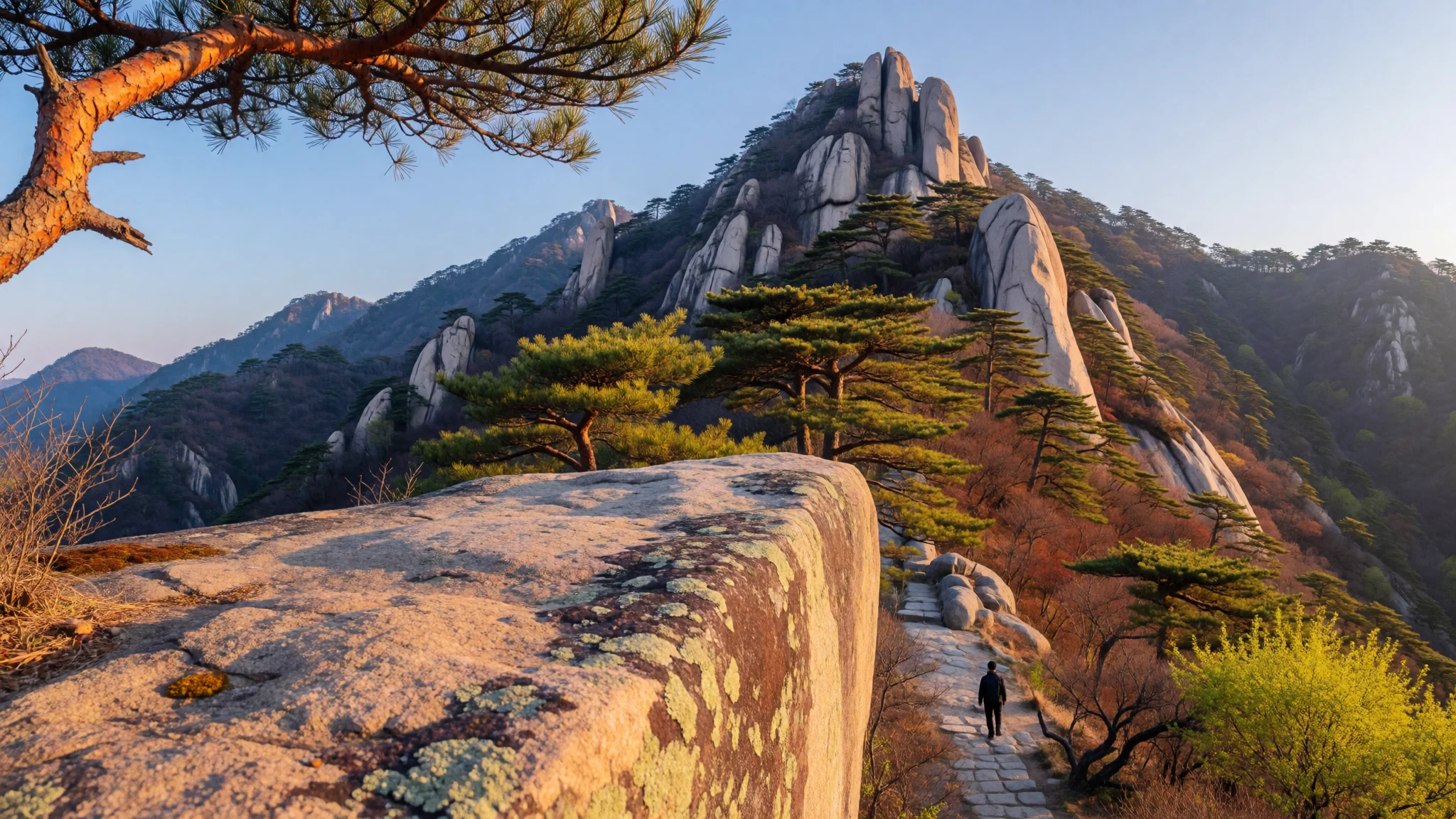
Songnisan pairs a working Buddhist monastery with granite ridges, forest paths and rain-soaked cloud, all in the quiet middle of South Korea.
The place
Songnisan sits in the middle of South Korea, on the line between the provinces of Chungcheongbuk-do and Gyeongsangbuk-do, in the Sobaek mountain range. The national park was created in 1970, the sixth in the country, and covers about 274 square kilometres around nine peaks and a scatter of temples. Its name is usually translated as 'remote from the ordinary world'. That suits the mood better than the numbers: roughly 1.5 million people visit each year, so autumn weekends are lively rather than solitary. The remoteness is more about atmosphere than distance. Beopjusa temple lies well inside the park and is linked by road, so the first stretch is easy, while the higher ridges need proper walking. Trails branch off in many directions, and the authorities close some of them when conditions are judged dangerous, which matters after heavy rain or snow. Rain brings its own reward here, because low layered cloud drifts between the ridges and gives the granite skyline a painted look. The park shelters otters, flying squirrels and mandarin ducks, along with protected animals such as the small-eared cat and the marten, though most walkers are lucky to spot a squirrel. Sanae-ri, the village beside the park, holds most of the lodging and has camping options too, which makes it the natural base for day walks. Summer is green and warm, autumn is the busiest and most colourful season, and winter is cold and quiet.
Its story
Songnisan carries two names in its history. Before the one used today, the mountain was called Gubongsan, meaning 'nine peak mountain', a plain description of the ridge line. The newer name comes from a legend set in the Silla period. A monk called Jinpyoyulsa was walking up towards the temple of Beopjusa when he passed a group of farmers. Their oxen, so the tale goes, lowered their heads to him as if in repentance. The farmers were moved enough to follow him to the temple and take up Buddhist practice themselves. From then on the range was known as Songnisan, the 'mountain to leave the world', and the idea stuck: a place where ordinary life is set down at the foot of the slope. Beopjusa itself dates from 553 and is a head temple of the Jogye Order of Korean Buddhism, so the legend is tied to a monastery that has been in use for well over a thousand years. The landscape keeps adding its own folklore. An old pine near the temple road carries the title of a government minister, a rank said to date from 1464, and local people still point it out with affection. The park came much later, formalised in 1970, but the older reading of the mountain as a retreat still shapes how visitors behave and what they come looking for.
What to see
- Beopjusa Temple — Slopes of Songnisan, inside the park
Beopjusa, a head temple of the Jogye Order, dates from 553 and stands on the slopes of Songnisan, a short road journey inside the park. It is a working monastery, so chanting and daily routines carry on around visitors. Temple stays are offered here for those wanting a night inside; check the official programme for booking.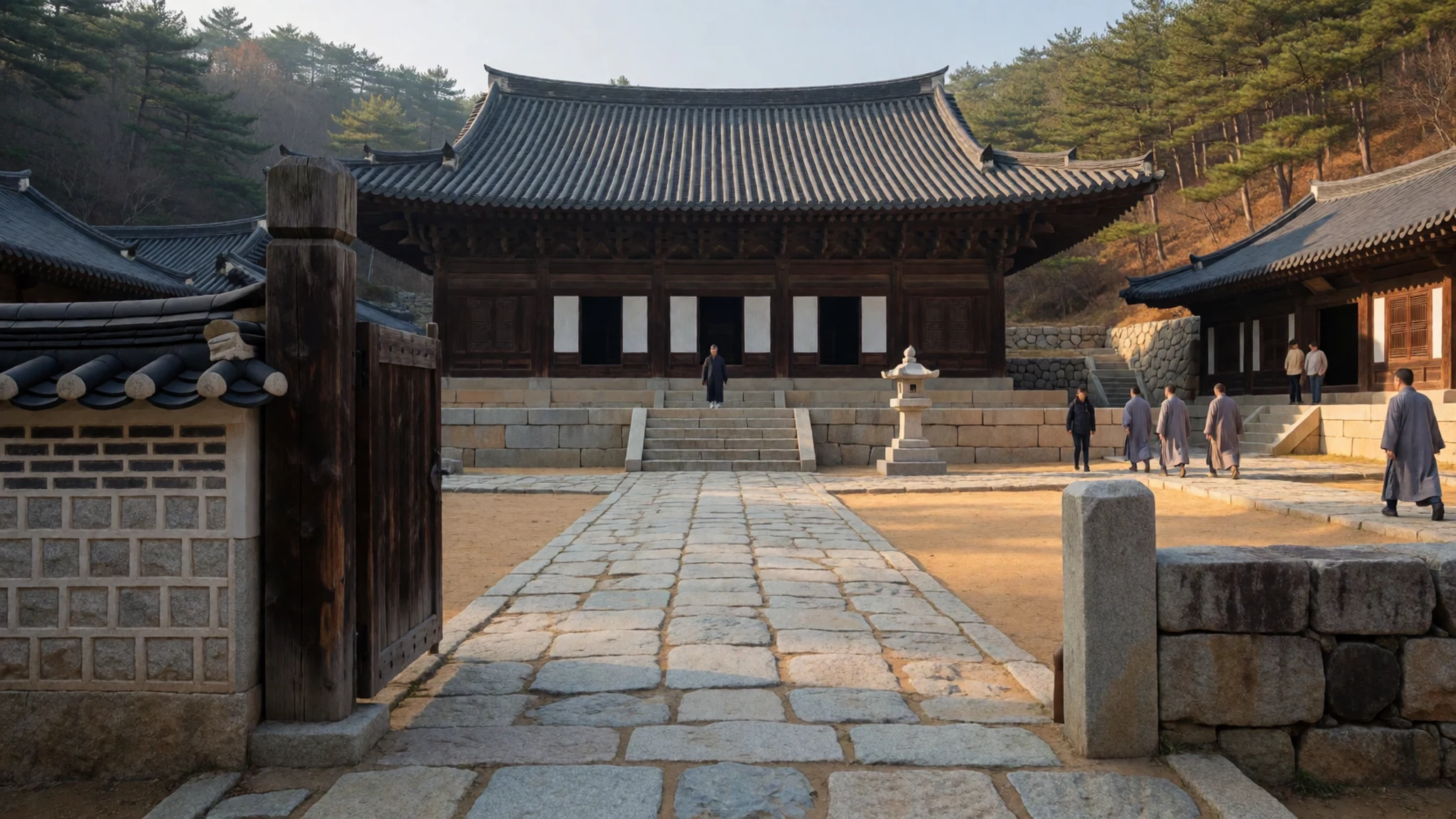
- Munjangdae viewpoint — High ridge of the park
Munjangdae is a rocky viewpoint on the high ridge, and several well-known photographs of the neighbouring peaks, including Gwaneum Peak, are taken from it. The climb takes real effort. The reward is a view over layered ridges, especially after rain when cloud settles in the valleys. Check trail status before setting out, as some paths close.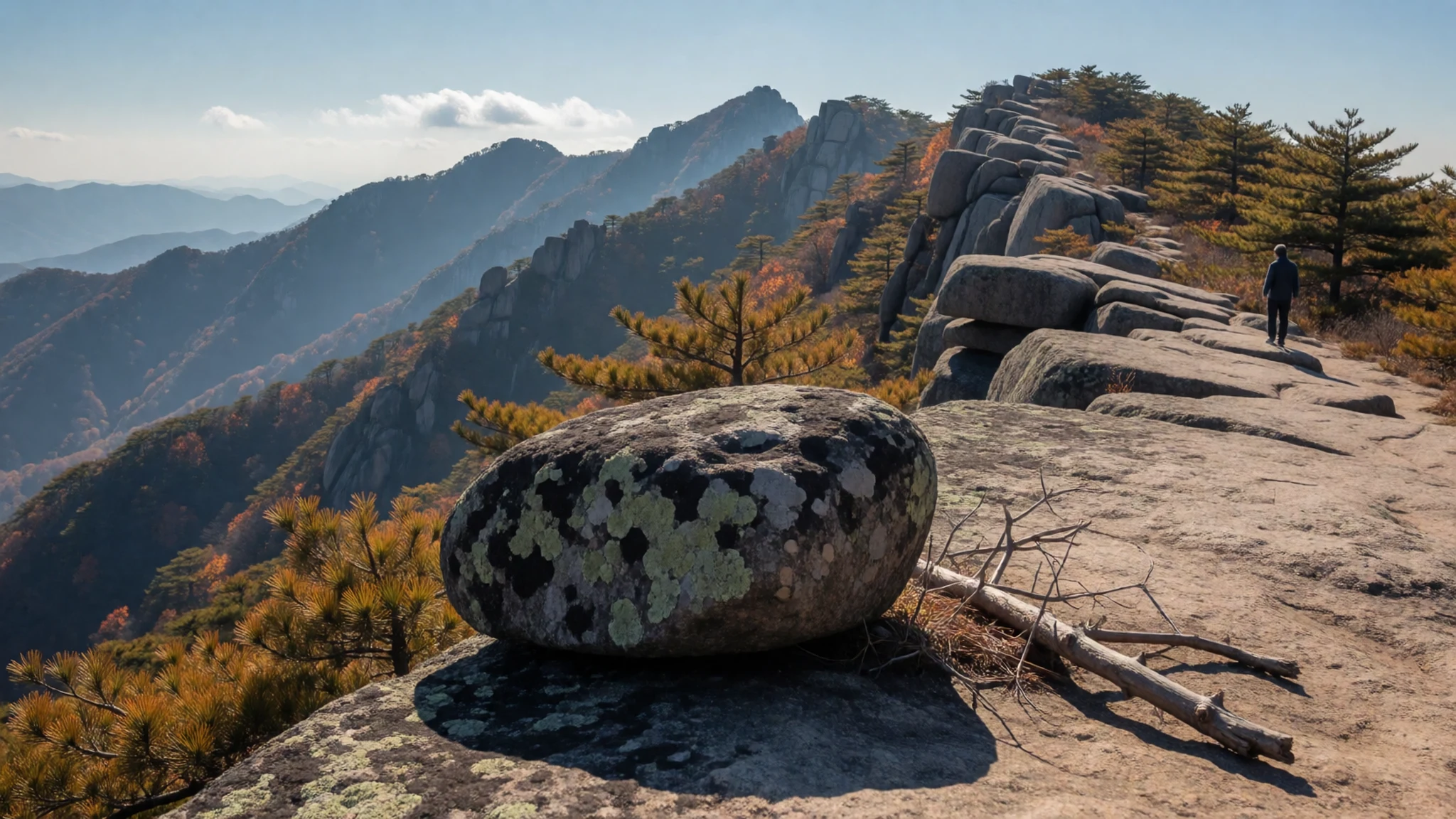
- Jeongipumsong pine — Beside the road to Beopjusa
This old pine is known by a court title, jeongipumsong, because tradition gives it the rank of a government minister, held since 1464. It is an easy stop on the way to the temple and a good example of how folklore and landscape are mixed together in the park.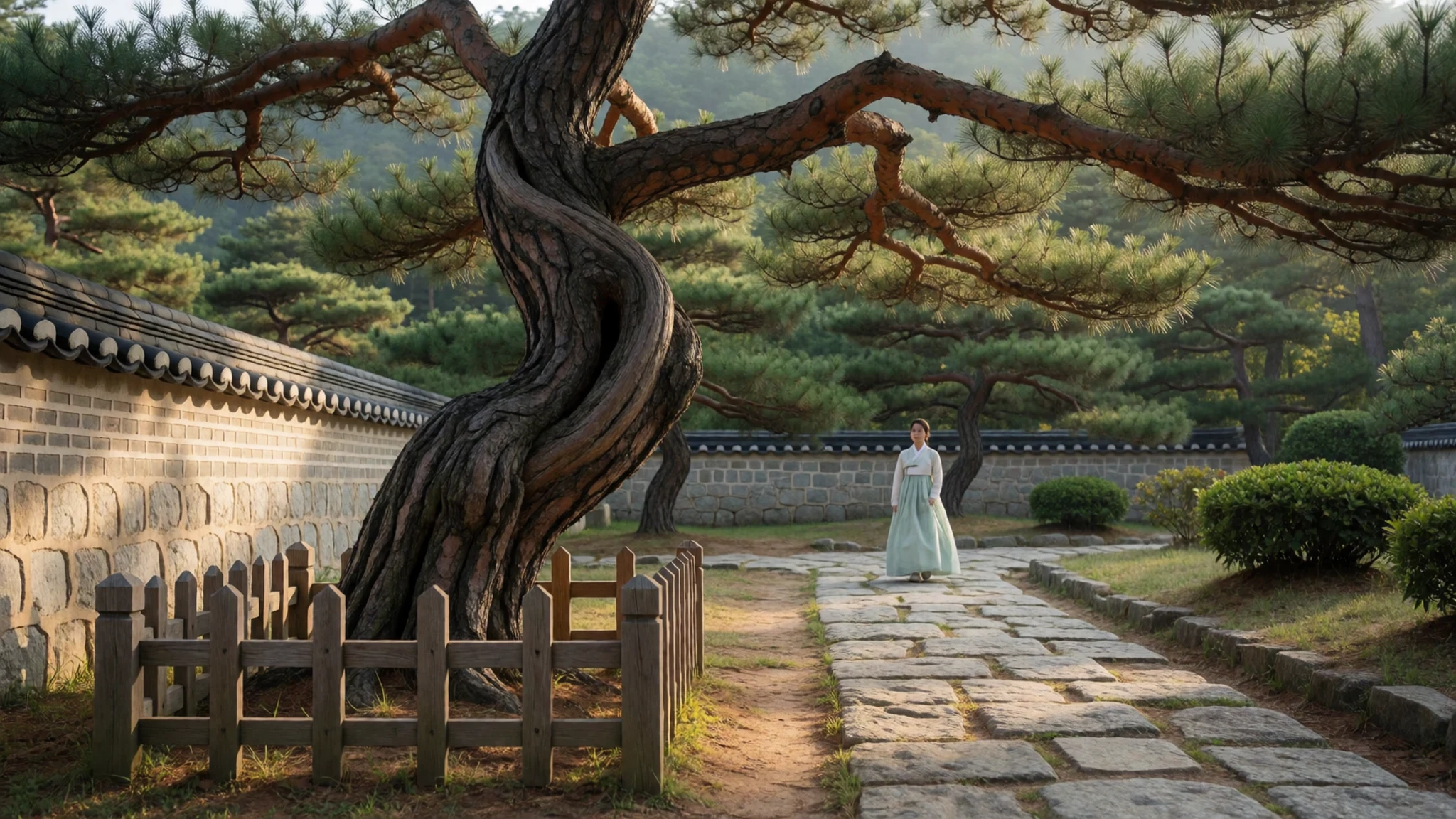
- Creek paths near the temple — Valley below Beopjusa
Winding creeks run through the forest below the temple, and flat paths follow them. These are the gentlest walks in the park and suit families, slow mornings and anyone not ready for the ridges. The water is loudest after rain, and autumn leaves collect along the banks.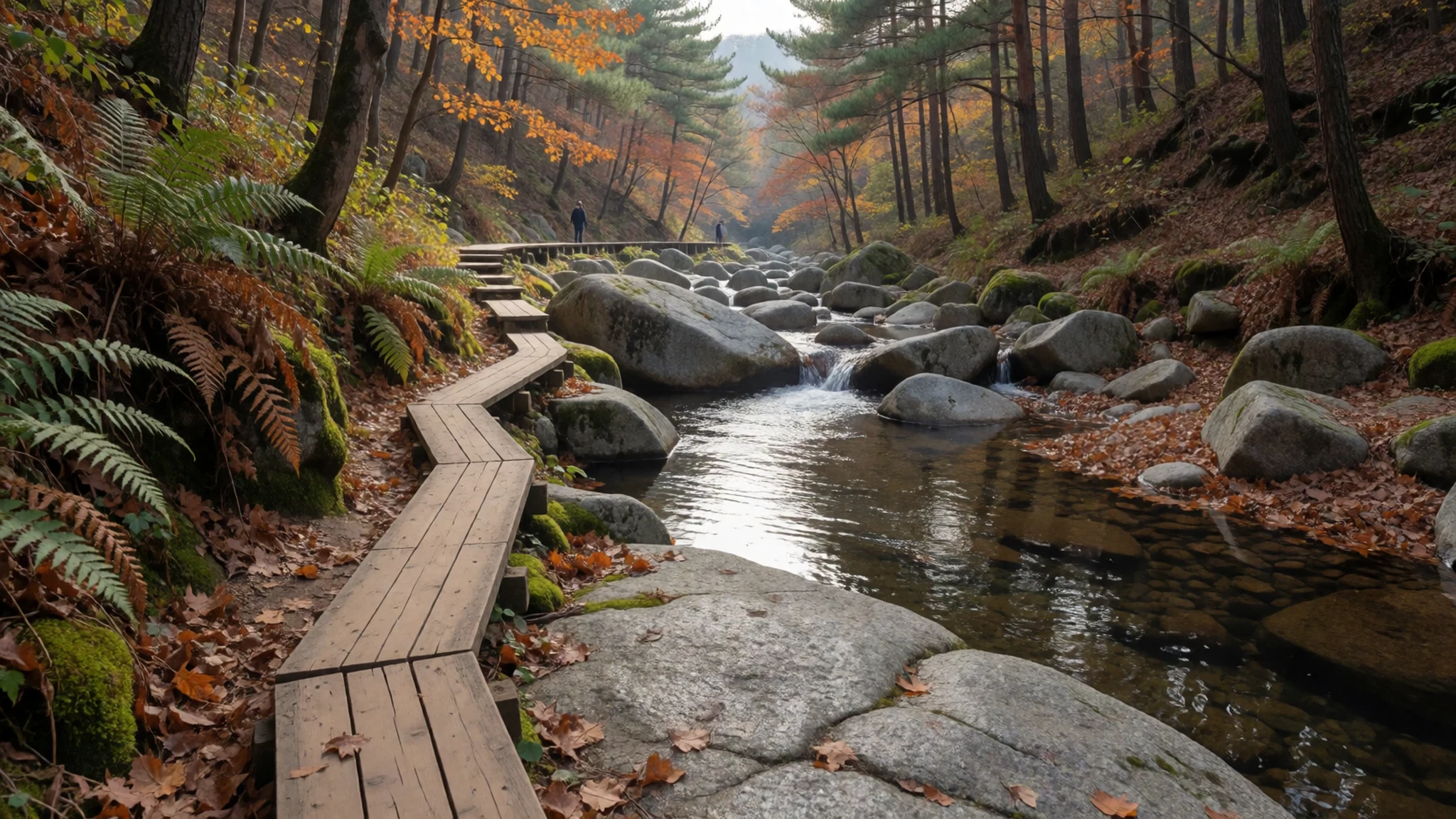
- Temple spring and lanterns — Inside the Beopjusa compound
Inside the Beopjusa grounds, natural mountain spring water runs into a carved stone bowl, and visitors may drink from it. In late spring the courtyards fill with coloured paper lanterns hung for Buddha's birthday, a lively contrast with the grey stone and dark timber of the halls.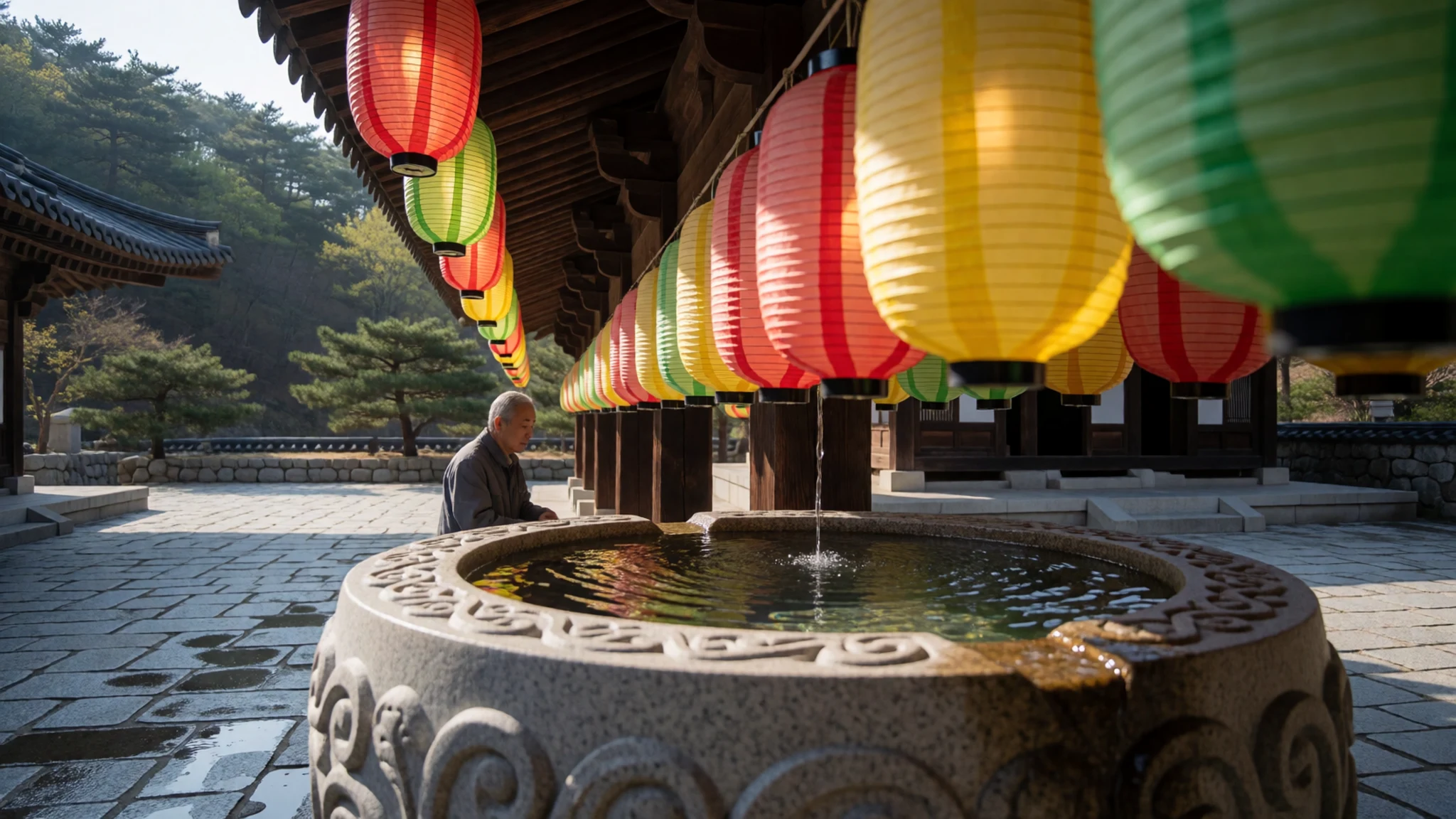
Culture
Songnisan is as much a religious landscape as a hiking one. The name, read as 'mountain to leave the world', reflects a long Buddhist habit of treating high ground as a place to step away from daily life, and Beopjusa has anchored that idea since its founding. The temple belongs to the Jogye Order, a Korean Buddhist order, so the compound follows its calendar: morning and evening chanting, seasonal ceremonies and, in late spring, rows of colourful lanterns hung for Buddha's birthday. Temple stay programmes let visitors join the rhythm, with early rising, meditation and simple vegetarian meals eaten in silence. Outside the temple, Korean mountain culture is social and cheerful. Walking groups in matching outdoor kit are common, and the descent usually ends with a shared meal and a bowl of makgeolli, the cloudy rice drink, at the eateries near the park gate. Weather shapes the mood too. Rainy days are valued for the cloud that gathers between the ridges, and autumn weekends bring families out in numbers. Walkers on narrow paths usually greet each other with a nod or a short hello, and it is polite to return it. At Beopjusa, keep your voice low, follow the signs for where photography is allowed, and take off your shoes before stepping into any hall.
What to wear
Around Songnisan, traditional dress is rarely seen on the trails, but it remains part of Korean life. The hanbok has a short jacket (jeogori) over a full wrapped skirt (chima) for women, and a jacket with loose trousers (baji) for men. It is made in silk for festive wear, and in ramie and hemp for hot weather, with cotton for everyday use. Families put it on for Seollal, Chuseok and weddings, and for photographs at heritage sites. At Beopjusa, monks wear plain grey robes, a useful reminder that the temple is a living community and not a museum. On the mountain, what people actually wear is technical outdoor kit: bright jackets, quick-dry trousers, walking poles and sturdy boots, often in matching colours for group outings. In town, everyday clothes are casual and practical. Visitors should dress for the terrain and the weather. Wear shoes with a good grip for granite and wet leaves, and pack layers, because ridges are cooler and windier than the valley and winter is cold. A light rain jacket earns its place in any season. For the temple, choose covered shoulders and knees, avoid slogans and very short clothes, and wear socks that are easy to slip on and off at hall doors.
What to eat
- Sanchae bibimbap — Eateries along the approach road in Sanae-ri
Rice topped with seasoned mountain greens, served with chilli paste and often a bowl of soybean stew. Wild leaves and roots give it an earthy bitterness. It is a natural meal before or after a day on the trails.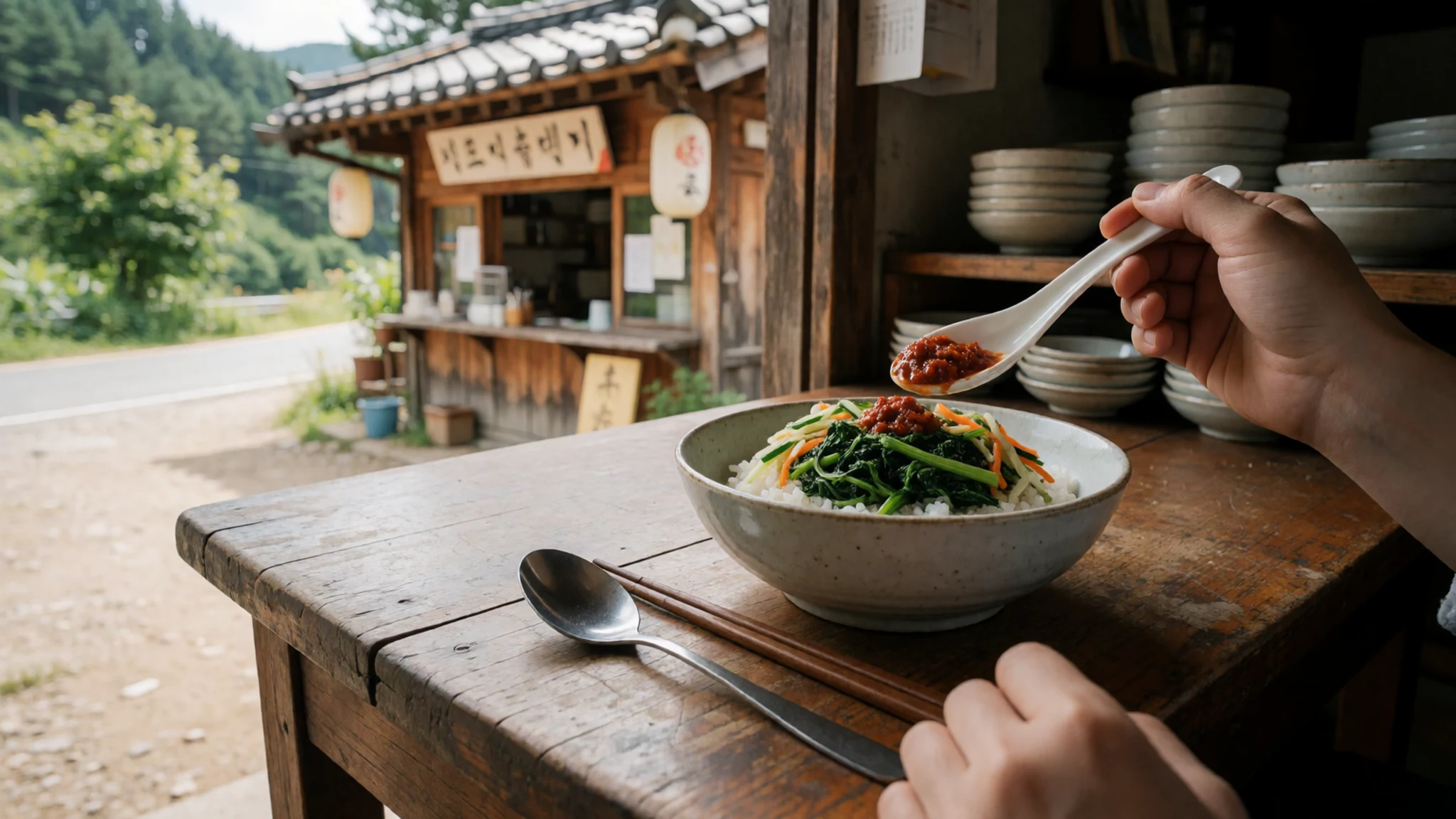
- Dotorimuk — Mountain-food restaurants near the park gate
A soft, mild jelly made from acorn starch, cut into strips and dressed with soy, sesame oil and spring onion. It is a long-standing mountain dish in Korea, often eaten as a light side or paired with a drink.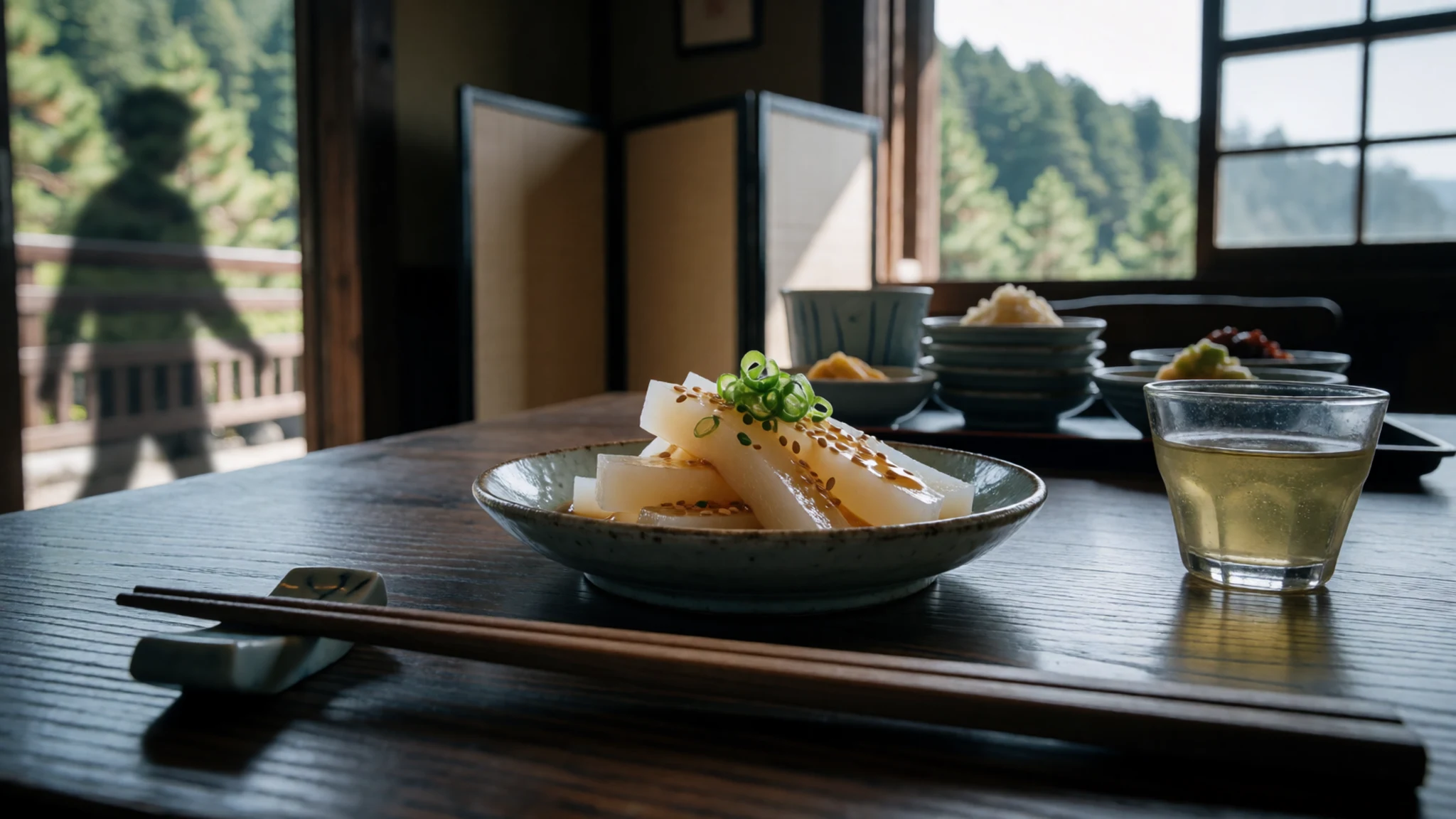
- Pajeon with makgeolli — Casual eateries in Sanae-ri village
A crisp spring-onion pancake eaten with makgeolli, the lightly sparkling rice drink. This is the classic end to a hike, shared at a low table with whoever else came down the mountain that day. - Deodeok-gui — Restaurants serving mountain set meals
Bellflower root, beaten flat, brushed with a chilli and soy glaze and grilled. It is chewy, slightly bitter and fragrant, and is usually served as one dish among many in a mountain set meal with rice and side plates. - Temple food (sachal eumsik) — Temple stay meals at Beopjusa
Vegetarian cooking made without meat, fish or strong alliums, built on seasonal vegetables, grains, pickles and soups. Meals are plain and balanced and are eaten quietly. This is the most direct way to taste the monastery's own cooking.
Plan it
Best time. April–May for fresh green leaves and mild walking weather, and October–November for autumn colour, though that is also the busiest season. Summer is warm and green, with rain that fills the creeks, and winter is cold, with some paths closed.
How long. 1–2
Getting there. Most visitors come overland from Seoul or another city, by intercity bus or by car towards the village of Sanae-ri, which sits at the park entrance. From there Beopjusa temple is connected by road, and the higher ridges are reached on foot. Check current bus timetables locally before travelling.
Budget. mid
Tips
- Arrive early on autumn weekends, when the road and car parks fill up
- Check which trails are open before starting a ridge walk, as some close when conditions are judged dangerous
- Carry a rain layer and water, and keep a little cash for small village eateries
- Book a temple stay ahead if wanting a night at Beopjusa, using the temple's official programme
- Stay in Sanae-ri for the easiest access to food and trailheads
Etiquette
- Take off your shoes before entering any temple hall
- Keep your voice low in the temple grounds and ask before photographing monks
- Take your rubbish with you from the trails
Nearby
Sources
- Wikidata Q2889792 (CC0)
- Wikipedia: Songnisan National Park (rev 1362908613) (CC BY-SA 4.0)
- Wikivoyage: Songnisan National Park (rev 5418486) (CC BY-SA 4.0)
- Photo: Gwaneum Peak at Songnisan, Yoo Chung (CC BY-SA 2.5)
- Photo: Songnisan as seen from Munjangdae, Ashy Minivet (CC0 1.0)
- Photo: Beopjusa, Steve46814 (CC BY 3.0)
- Photo: Jeongipumsong Pine, gary4now (CC BY 3.0)
- Photo: Beopjusa Temple Stay Korea Songnisan, MeganYoungmee (CC BY 3.0)
- Photo: Beopjusa entrance gate, MeganYoungmee (CC BY 3.0)
- Photo: Beopjusa spring water, MeganYoungmee (CC BY 3.0)
- Photo: Beopjusa lanterns, MeganYoungmee (CC BY 3.0)


Wildlife
- Eurasian otter (animal)
The Eurasian otter is a furry, water-loving animal that eats mostly fish and guards its own stretch of river like a stern landlord. Songnisan's national park shelters otters, though I cannot promise a season or hour for meeting one, so bring patience rather than expectations. Watch from a generous distance, keep your voice low and your footsteps soft, and consider a local guide who knows the water. Never offer food; a wild otter must find its own supper.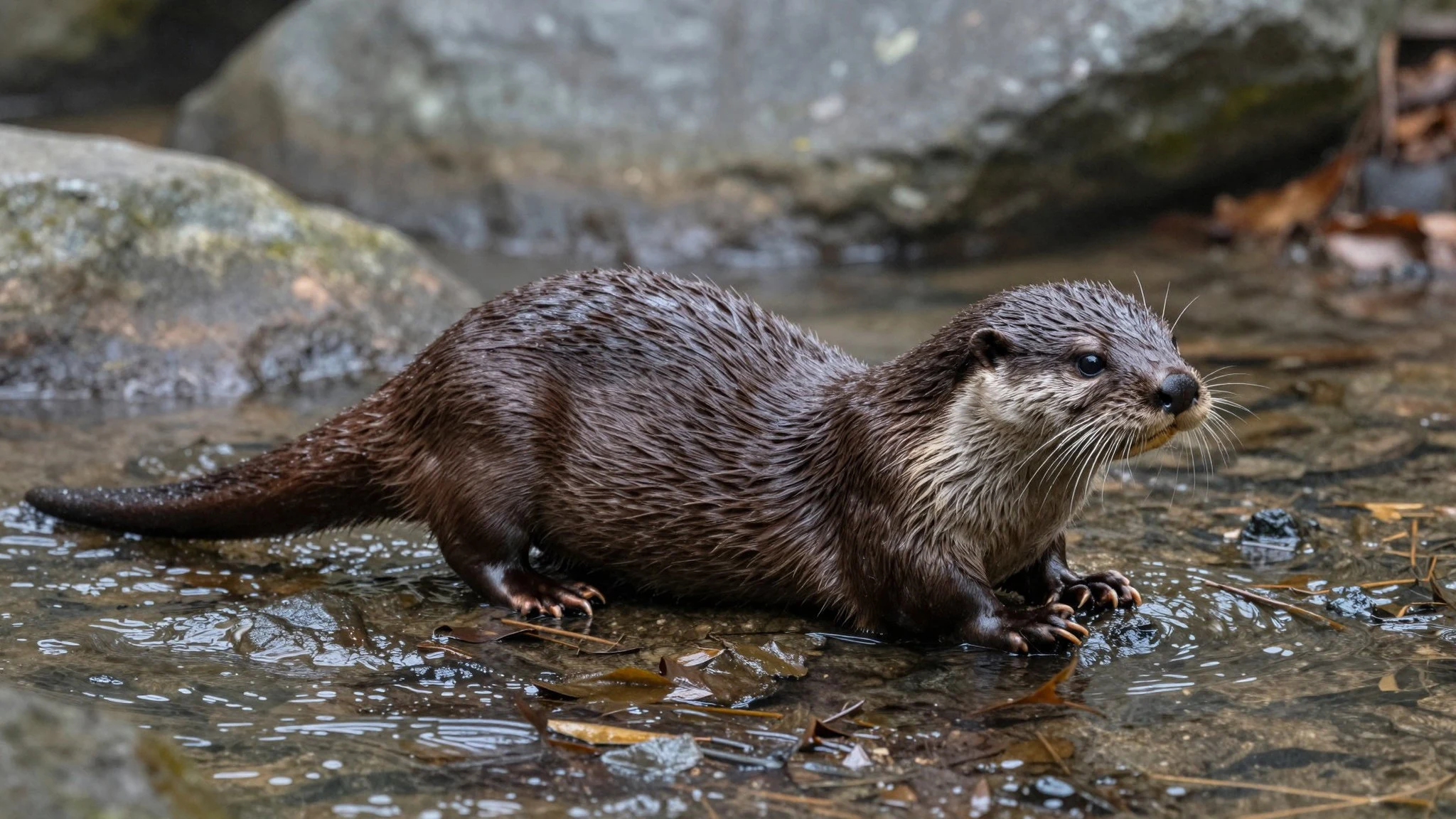
- Mandarin duck (animal)
Remember the mandarin duck as the dazzling one: the drake is richly coloured, while his mate is plain and subtle. It is a mid-sized duck that perches, and Songnisan's national park is one of the places that shelters it, though the notes give no month or hour to look. Keep well back, speak softly and move slowly, and a guide can help you find a good vantage point. Please never feed it, however friendly it seems. - Mandarin duck (bird)
Remember the mandarin duck as the dazzling one: the drake is richly coloured, while his mate is plain and subtle. It is a mid-sized duck that perches, and Songnisan's national park is one of the places that shelters it, though the notes give no month or hour to look. Keep well back, speak softly and move slowly, and a guide can help you find a good vantage point. Please never feed it, however friendly it seems.