Soluntum
Soluntum, Italy
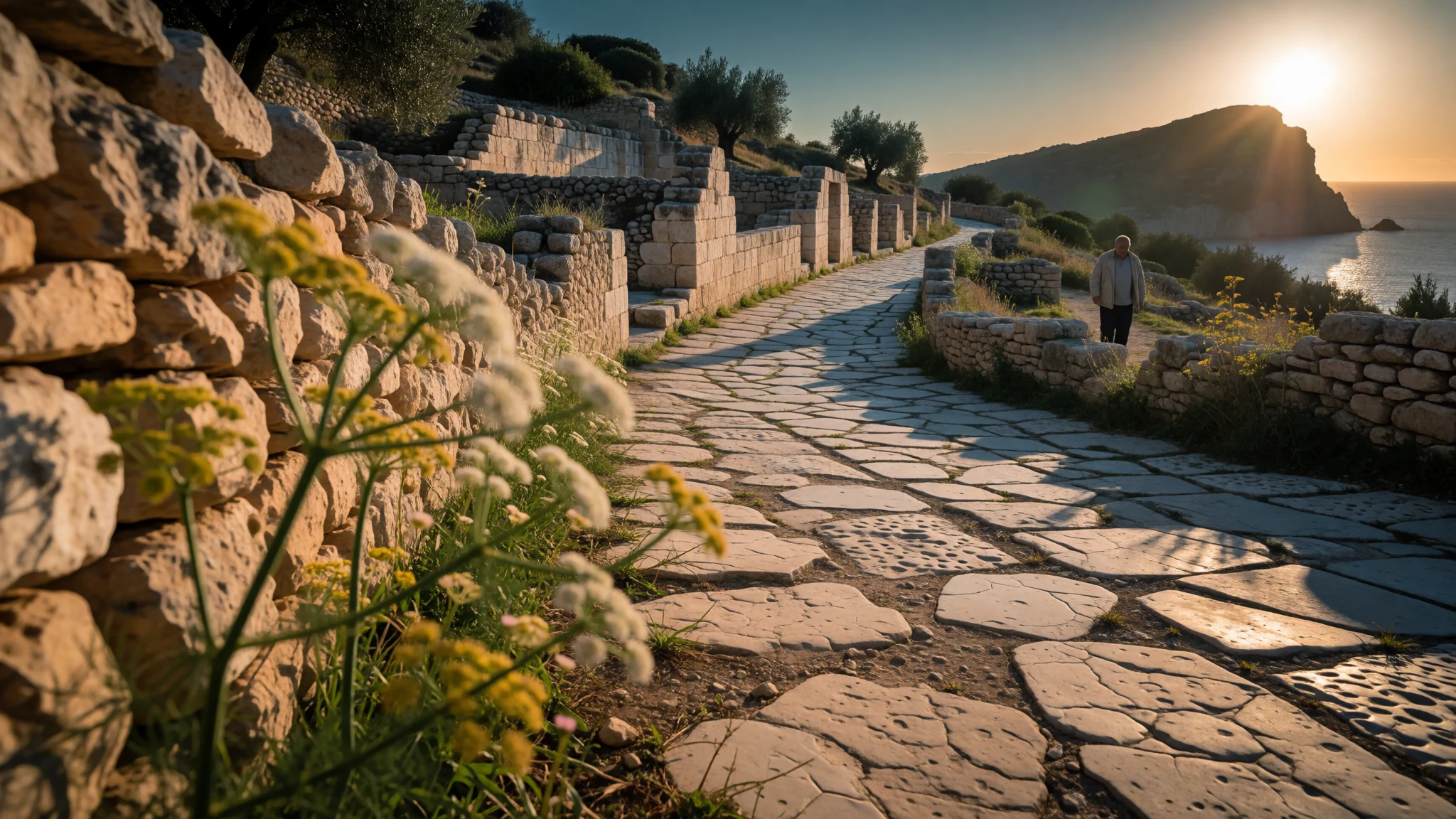
Soluntum is a Greek, Roman and Punic hill town left half-excavated above the Sicilian sea, a quiet half-day from Palermo.
The place
Soluntum is an ancient city on the northern coast of Sicily, in the comune of Santa Flavia, a short way east of Palermo. It sits on the southeast flank of Monte Catalfano, at about 183 m above the sea, and the climb from the car park rewards you with long views over the Tyrrhenian coast and the bold headland of Capo Zafferano nearby.
The town covers about 10 ha, and roughly half of it has been dug out. That is enough to show how it worked: straight streets cut into the slope, each marked with a small sign, with houses, cisterns, a theatre and public buildings ranged along them. Boards scattered around the site explain different aspects of the city, so you can wander without a guide.
What makes Soluntum interesting is its mix. It began as a Phoenician settlement, passed through Carthaginian, Greek and Roman hands, and the remains show all of these influences side by side. The layout and many buildings are Hellenistic, while later Roman habits show in the baths and the houses.
It is a modest, uncrowded site compared with the grand Sicilian temples, and the slope means real walking. Expect open ground, little shade and a lot of sky. The reward is atmosphere: a whole ancient neighbourhood to yourself, with the sea always in view. The Italian regional heritage office runs the site; check the official website for opening arrangements before you go.
Its story
Soluntum's story begins with the Phoenicians, who set up trading posts across western Sicily, including Motya and Panormus, the modern Palermo. Thucydides names them as the founders of Solus. Yet the first Soluntum was probably not on this hill. No early remains have turned up in the excavated town, while a Punic burial ground at Capo Solanto, to the south, holds graves from the sixth and fifth centuries BC, and that is now thought to mark the original settlement.
The city's fortunes followed the wars between Carthage and the Greeks of Sicily. When Carthage invaded the island in 409 BC, Soluntum stayed loyal even after Dionysius of Syracuse destroyed Motya. In 396 BC it was betrayed to him and destroyed.
The town you walk through today is its successor, built around the mid-300s BC higher up Monte Catalfano. In 307 BC Carthage gave it to soldiers and mercenaries who had served the Greek leader Agathocles, which brought a Greek element to the population.
During the First Punic War it was at first Carthaginian, then surrendered to Rome after Panormus fell in 250 BC. Roman rule suited it. The second and first centuries BC were its best years, when building gave it the full set of a Hellenistic town. The theatre and a new stoa date to the second century BC, and a great statue of Zeus, or Baal, was dedicated in a local temple at about the same time.
What to see
- The main street and the grid — Archaeological area, Monte Catalfano
The ancient streets climb the hillside and are still readable as a plan, each with a small sign. Walking the main axis uphill gives the best sense of the town: house fronts, steps, drains and side lanes, with the sea opening out behind you.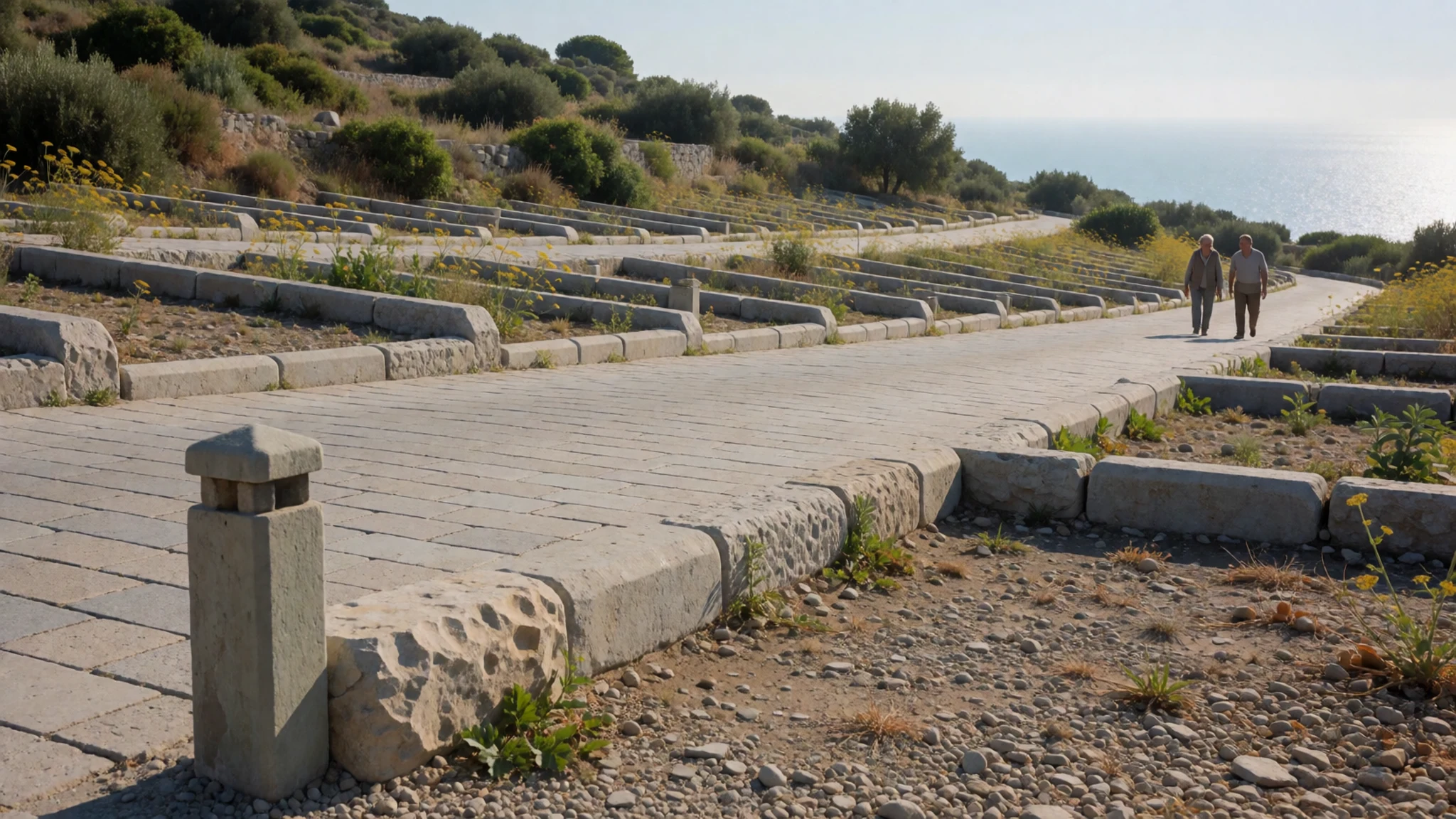
- The Gymnasium — Upper town
One of the larger public buildings on the slope, usually called the Gymnasium, with courtyards and column bases that suggest a place for gathering and instruction. It is a good spot to pause, and a reminder of how strongly Greek habits shaped the town.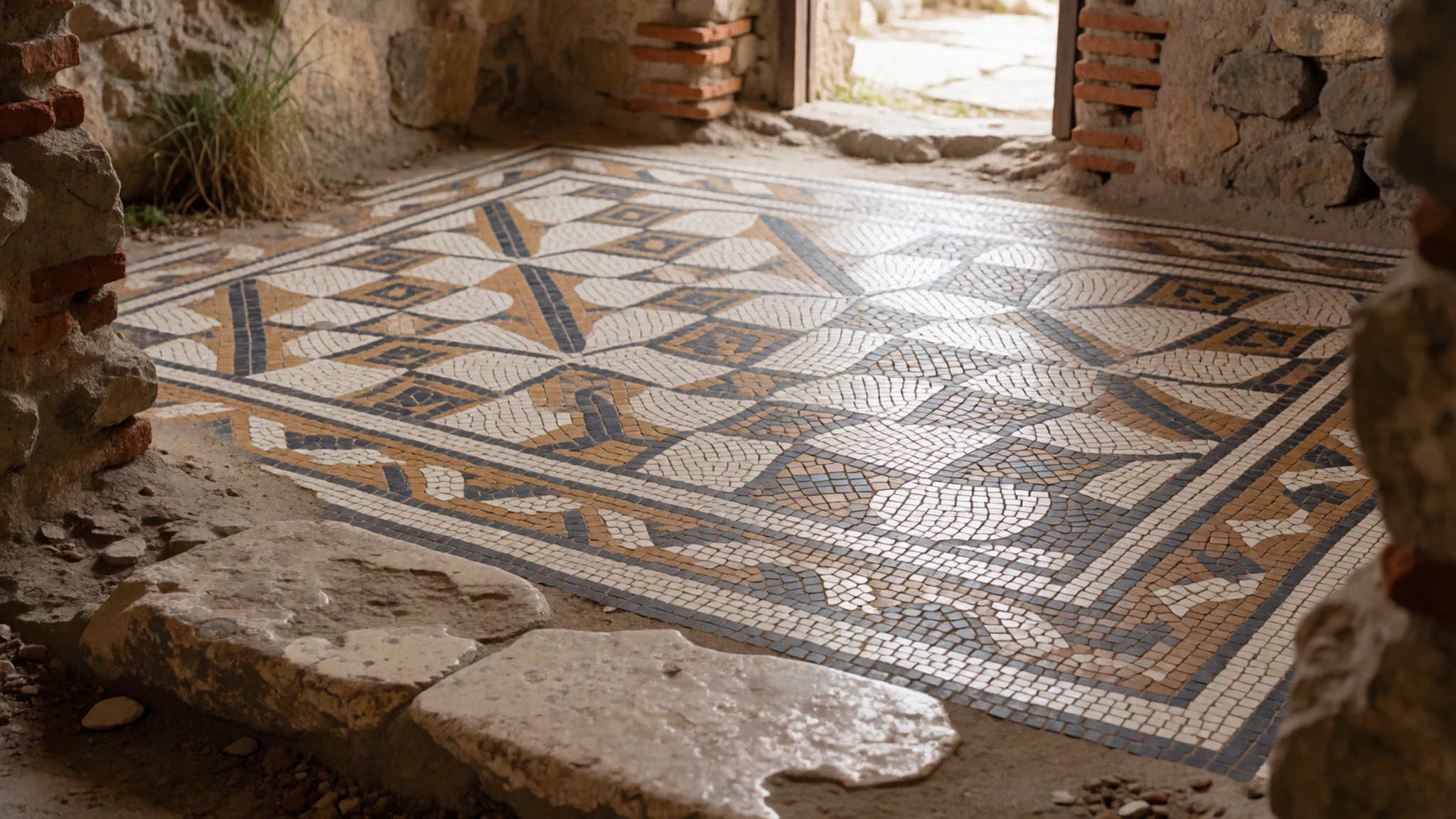
- The Roman bath — Central site
The remains of a public bath show the rooms where Soluntum's residents bathed, including a cold room, the frigidarium. A plan redrawn from published excavation work helps you read the layout, and it is one of the clearest examples of Roman influence on the site.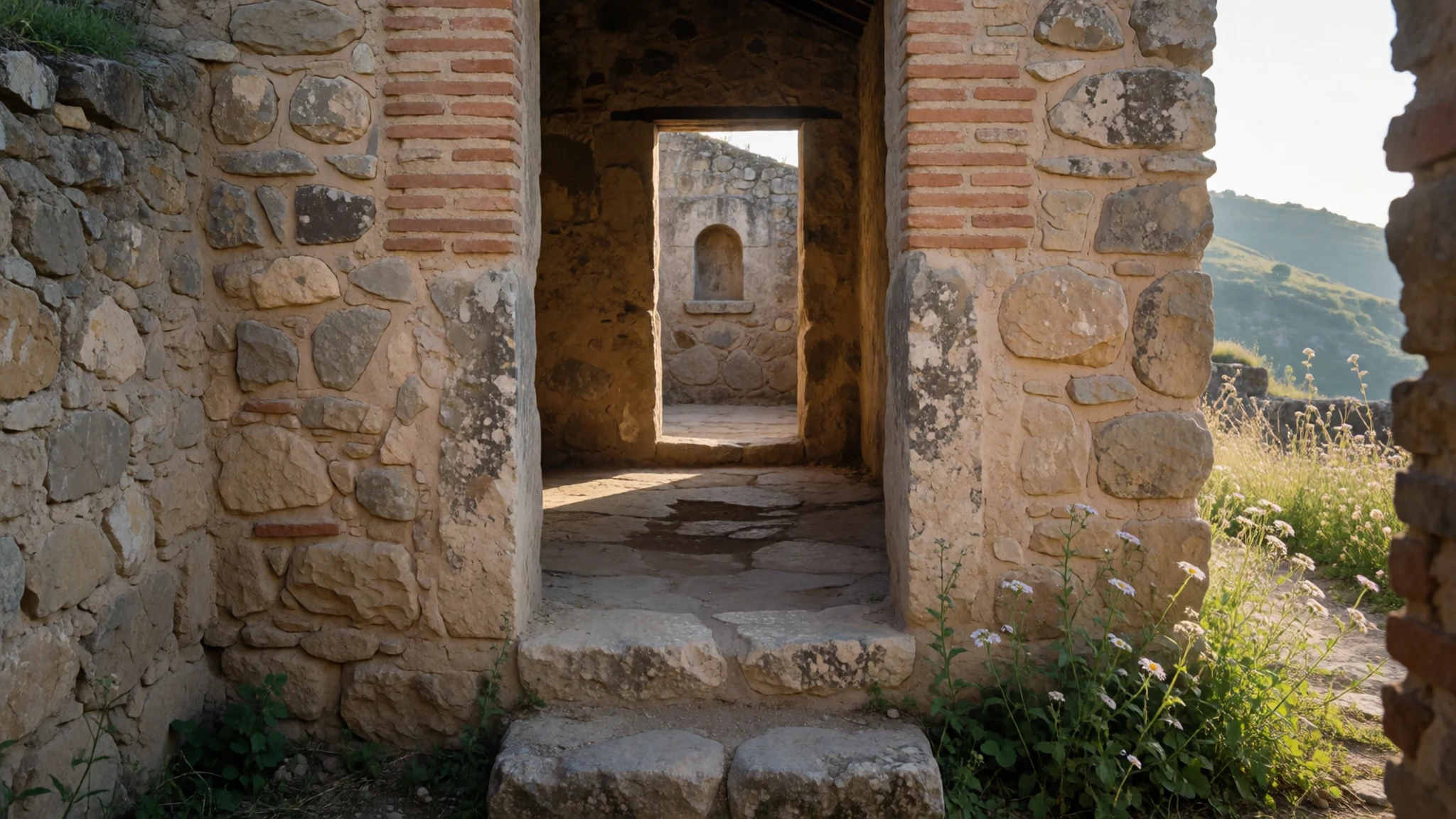
- Mosaic floors in the houses — Houses along the main street
Several ruined houses still hold ancient mosaic floors, and a first-century BC mosaic survives in the bath. Wall paintings can also be seen in a few small protected areas, though in poor condition. They are modest compared with Sicily's great villas, but intimate and domestic.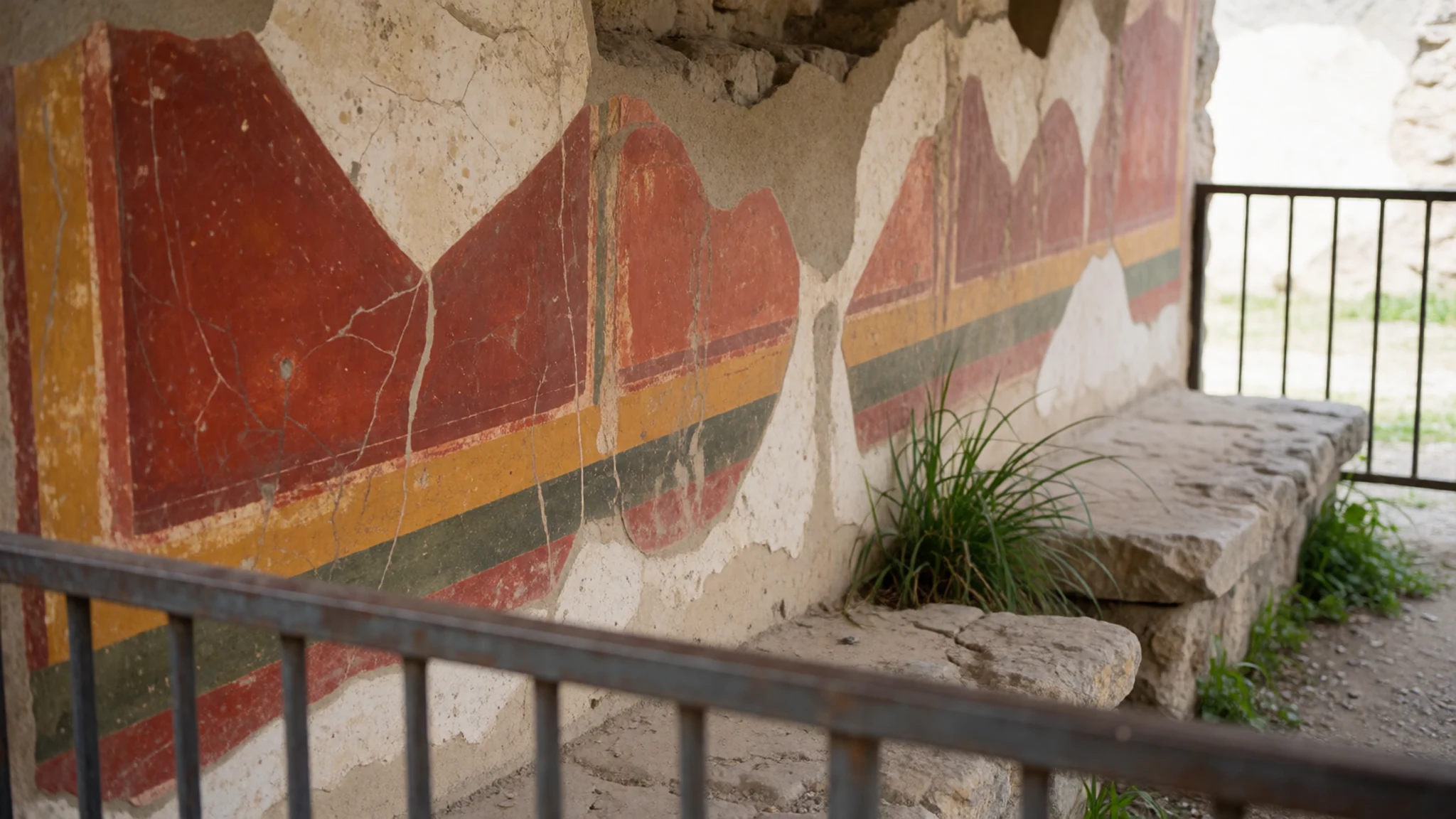
- The theatre and stoa — Public buildings area
The theatre and a stoa, a long colonnaded walkway, were built in the second century BC. Carved architectural fragments from the stoa lie around the site. Together they show the civic heart of the Hellenistic town, and the theatre has the best outlook.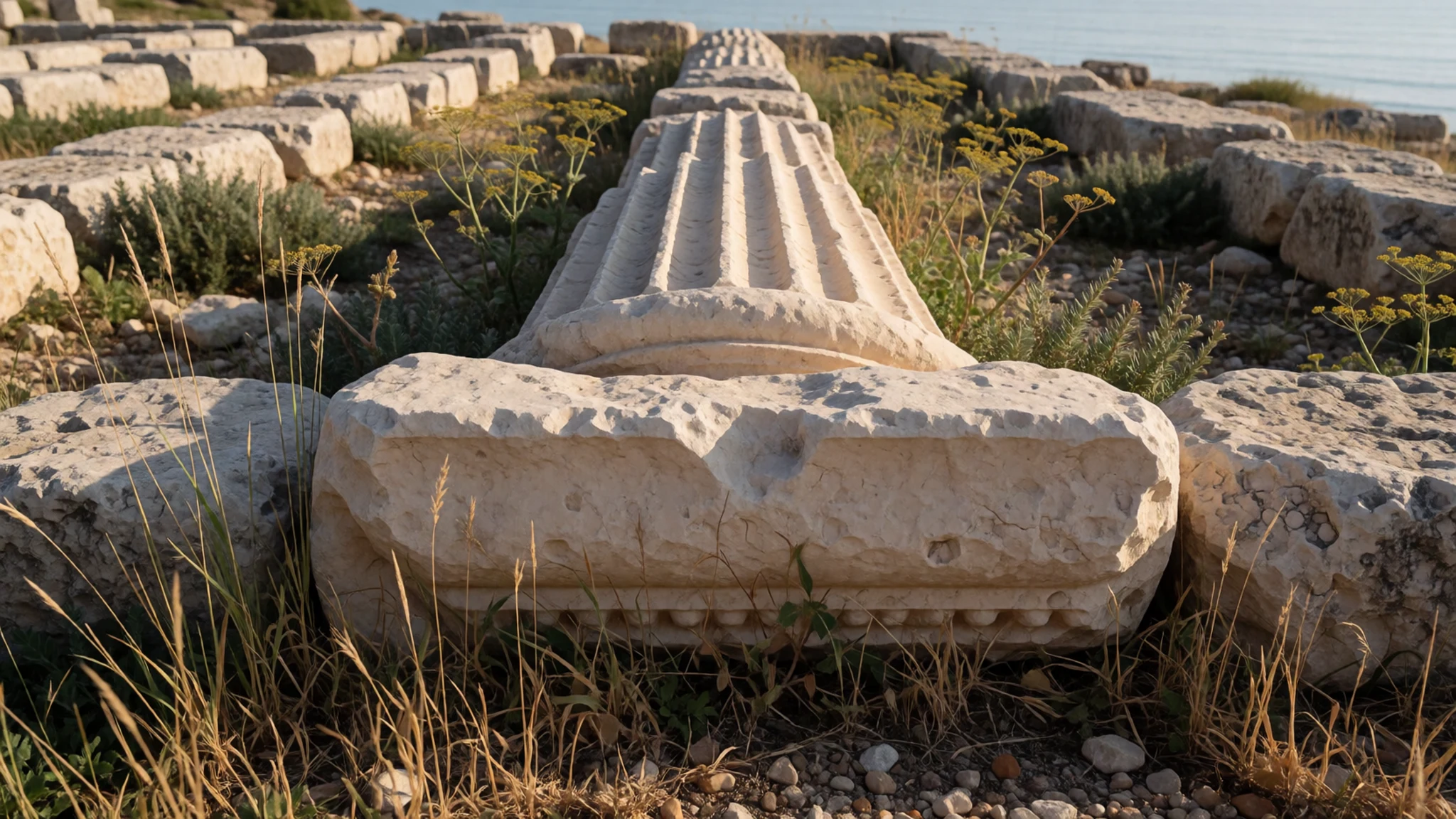
Culture
Soluntum's culture is layered rather than single. Its founders were Phoenicians, and later Punic Carthage dominated the region, so early religion here looked to Near Eastern gods. Greek settlers and soldiers then added their own habits, and Rome finally absorbed the town. A statue dedicated in a local temple to Zeus, also called Baal, captures that blending: one figure, two names, two traditions.
The town's layout is Greek in spirit, with a gymnasium, theatre and stoa for exercise, performance and public life. The Roman bath adds a different social ritual, bathing together. Houses with mosaics and painted walls show that residents cared about decoration at home.
Today the site belongs to the wider life of Sicily, where Palermo and its coast carry many such layers. Locals in Santa Flavia and nearby Porticello treat the ruins as a quiet backdrop, and school groups and walkers are common visitors. The Sicilian regional heritage service manages the area, and small information boards give context in the places that matter.
Treat it as a place where ordinary people lived and worked, not just as scenery. Stay on the marked paths and do not step on the mosaics or climb on the walls and column bases, which are fragile and easily damaged.
What to wear
Soluntum is an ancient site, so its traditional dress is the clothing of antiquity. Phoenician, Greek and Roman residents wore draped garments of wool and linen, such as the Greek chiton and himation and the Roman tunic and toga, held with pins and belts. Wool was the staple for cooler months, and linen suited summer. These are known from art and finds across the Mediterranean rather than from Soluntum alone.
People in Sicily today dress in the relaxed, neat way common across southern Italy: light cotton and linen in summer, jeans and layers in cooler months, and a smarter look in Palermo for dinner. Beachwear belongs at the beach, not in town. Older residents often favour tidy, conservative clothes, and in churches shoulders and knees are normally covered.
For a visit to the ruins, dress for the hillside. The ground is uneven, with worn stone and loose gravel, so wear sturdy closed shoes or trainers with good grip rather than sandals. Shade is scarce, so bring a hat, sunglasses and sun cream, and wear light, breathable clothing in the warmer months. In spring and autumn a light jacket helps in the sea wind. Nothing special is needed for the archaeological area itself, but carry a scarf or light shawl if you plan to step into a church in Palermo on the same day.
What to eat
- Pane e panelle — Street stalls and markets in Palermo
Chickpea-flour fritters served in a soft bread roll, a Palermo street food staple. The panelle are thin, crisp and savoury, and often eaten with a squeeze of lemon. They are a cheap, filling snack before or after the ruins.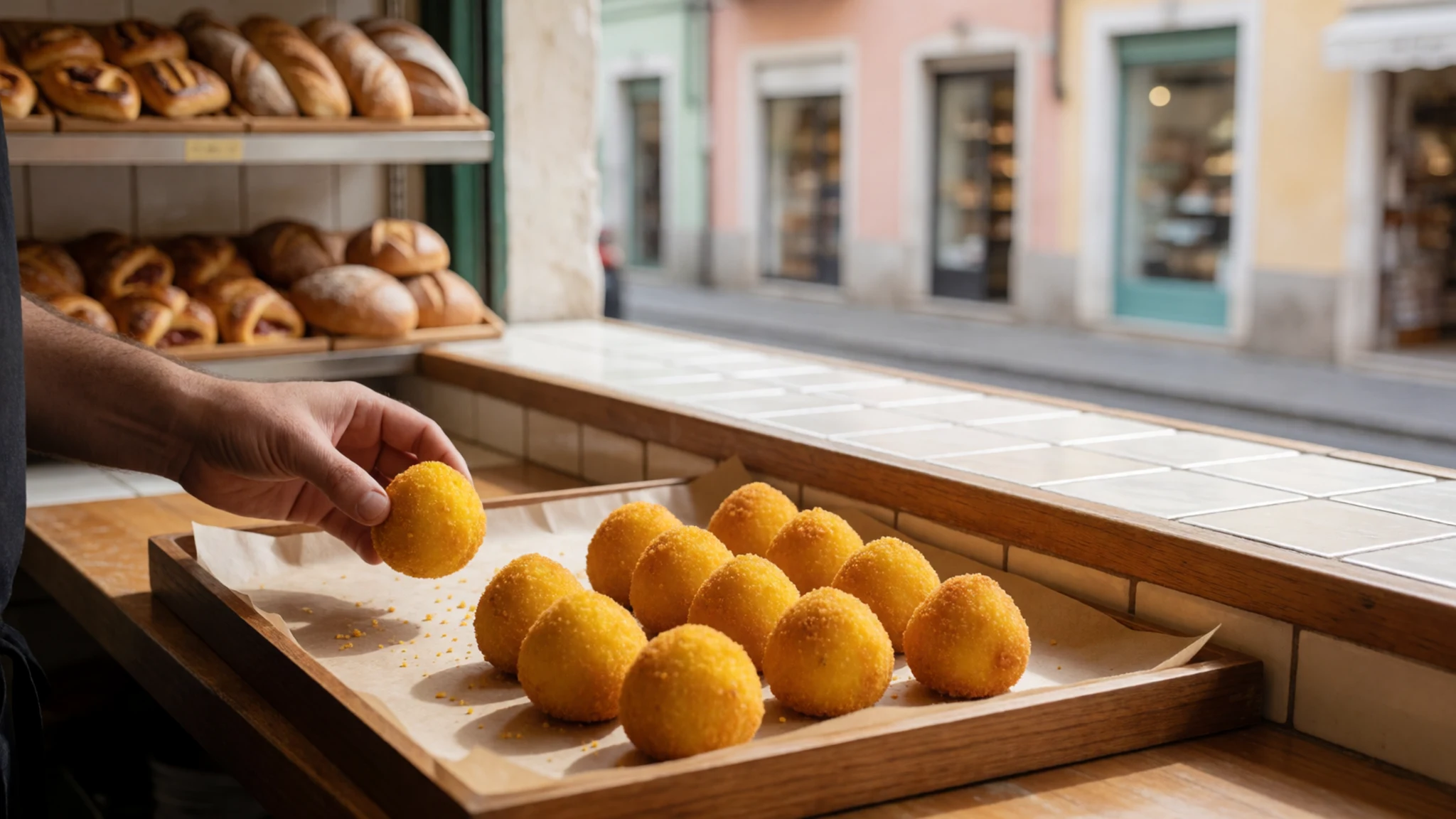
- Arancine — Bars and rosticcerie around Palermo and Santa Flavia
Fried rice balls with a crisp breadcrumb coating, filled with ragù and peas, or sometimes ham and cheese. In Palermo they are called arancine, a point of local pride. Order one at a bar counter and eat it warm, standing up, as locals do.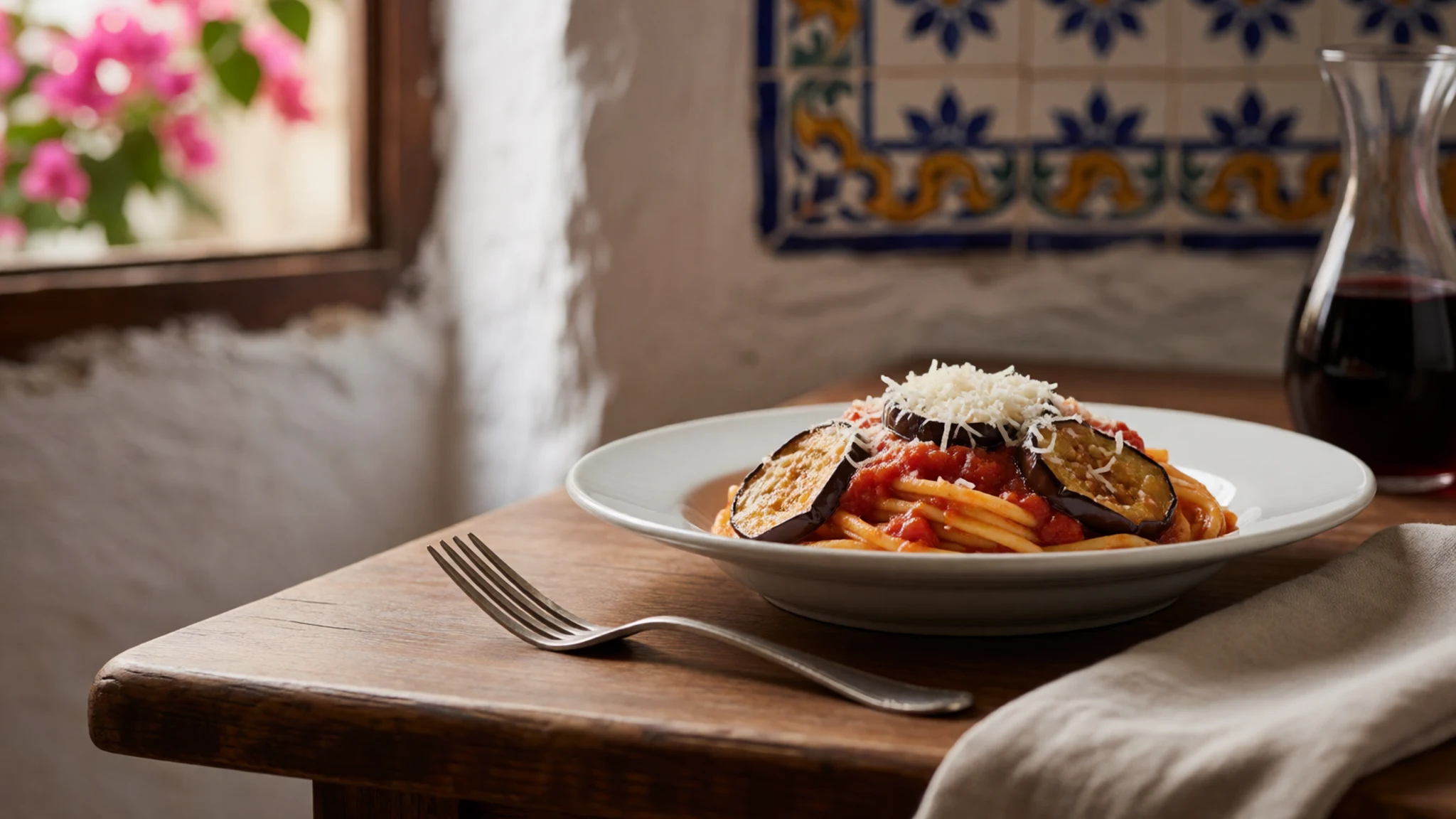
- Pasta con le sarde — Family-run trattorie in Palermo and the coastal villages
A Sicilian pasta dish made with fresh sardines, wild fennel, pine nuts, raisins and breadcrumbs. It balances sweet and savoury in a way that feels distinctly Sicilian, and it suits a seaside lunch after a morning on the hillside. - Fresh grilled fish — Seafront eateries at Porticello and nearby harbours
Porticello is a fishing village, so the local catch, simply grilled with olive oil and lemon, is the obvious choice. Ask what came in that morning, and let the kitchen choose the fish and the cooking, which is usually straightforward and good. - Cannoli and granita — Pasticcerie and cafés in Palermo and along the coast
Cannoli are crisp pastry tubes filled with sweetened ricotta, sometimes with candied fruit or chocolate. Granita is a half-frozen, icy dessert flavoured with lemon, almond or coffee, often eaten with a brioche in summer. Both are excellent after a hot walk.
Plan it
Best time. April–May and October–November, when Sicily is warm but not fierce and the hillside is comfortable to walk. July and August are hot with little shade on the slope, so go early if you must. Winter can be showery and breezy but quiet.
How long. Half a day, or one day combined with Palermo
Getting there. Palermo airport, then Palermo Centrale station for the train to Santa Flavia, about 20 minutes. From the station walk up the hill roads to the archaeological area's car park. If you're going by car from Palermo, head east on the SS113 following the coastline, then take the signposted route up into the hills.
Budget. low
Tips
- Go early or late in the day to avoid heat and have the paths to yourself
- Bring water and a snack, as shade and refreshments on the hill are limited
- Wear sturdy shoes for the uneven slope and steps
- Check the official website for opening arrangements before you travel
- Download an offline map, since the route from the station is unsigned in places
Etiquette
- Keep to the marked paths and do not walk on mosaics or climb walls
- Take your litter with you and leave stones and fragments where they lie
- Keep voices down and give other visitors room at the viewpoints
Nearby
Sources
- Wikidata Q631432 (CC0)
- Wikipedia: Soluntum (CC BY-SA 4.0)
- Wikivoyage: Solunto (CC BY-SA 4.0)
- Allie_Caulfield, 2009-03-22 03-29 Sizilien 389 Solunto (CC BY 2.5)
- Davide Mauro, Ginnasium Solunto (CC BY-SA 4.0)
- Udimu, mappa di Solunto (CC BY-SA 4.0)
- Udimu, Plan of the Roman bath at Solunto (CC BY-SA 4.0)
- Udimu, Solunto bath frigidarium (CC BY-SA 4.0)
- Udimu, Soluntum public bath (CC BY-SA 4.0)
- Udimu, Solunto bath mosaic (CC BY-SA 4.0)
- Udimu, Solunto stoa architectural element (CC BY-SA 4.0)


