Šolta
Šolta, Croatia
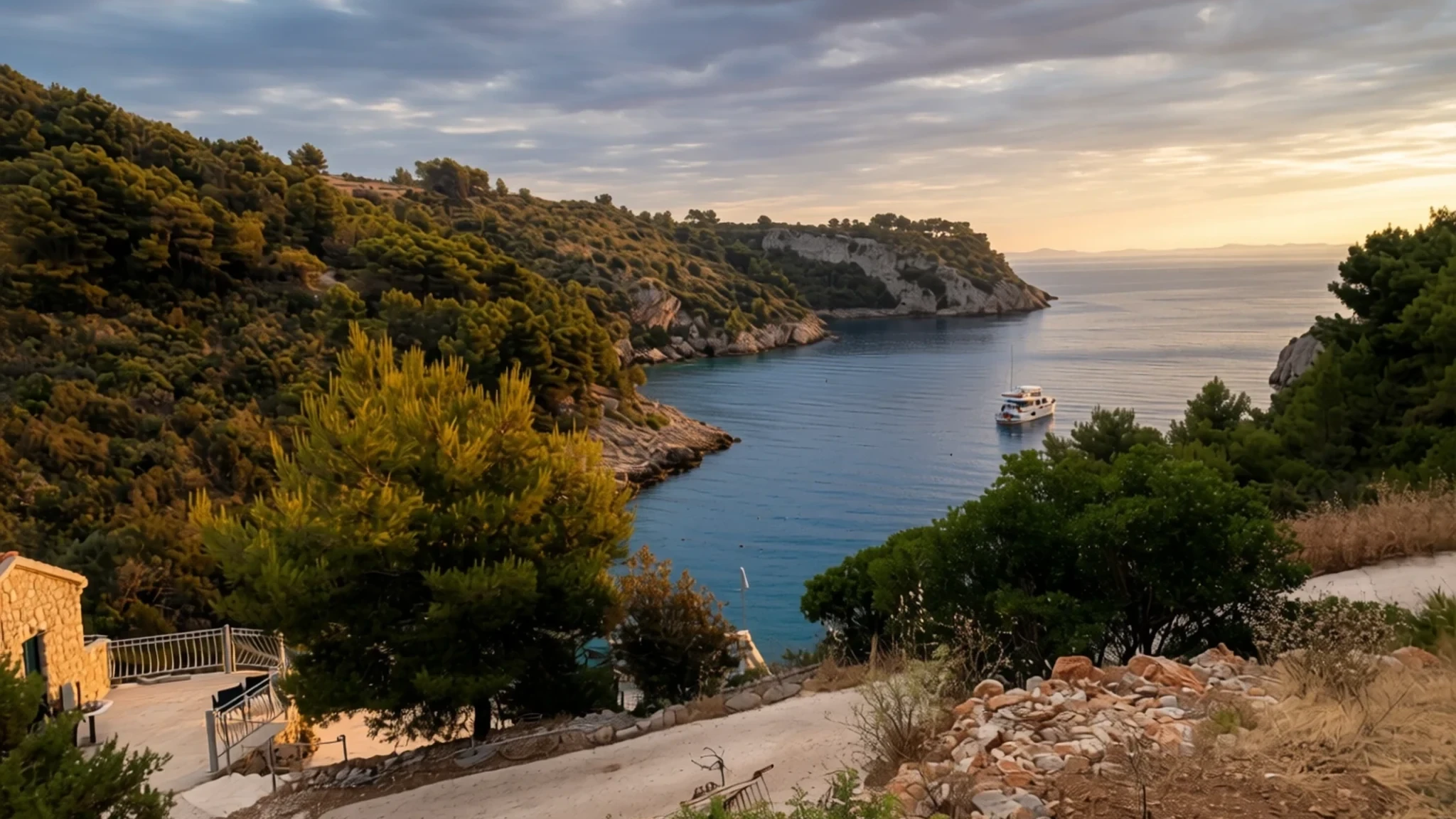
Šolta is a quiet Dalmatian island a short ferry hop from Split, with stone villages, clear water and slow harbours.
The place
Šolta sits in the central Dalmatian archipelago of the Adriatic, just across the Split Channel from the city of Split. It lies west of Brač and east of the two small Drvenik islands. The island is long and narrow, stretching roughly east to west, with a ridge running along its spine and the highest ground reaching 236 metres. Most of the land is limestone, covered in scrub, olive groves, vines and fig trees.
The geography explains the pattern of life. The four main villages, Grohote, Gornje Selo, Srednje Selo and Donje Selo, sit inland, a habit of older centuries when pirates made the shore risky. The coast belongs to the working harbours and the tourist bays. Rogač is where the ferry docks and so serves as the main port. Maslinica, in the west, is a fishing harbour sheltered from all but north-westerly winds. Stomorska on the north coast is another harbour town, and Nečujam is where much of the island's tourism clusters.
The feel is rural rather than resort. There are souvenir shops and restaurants around the harbours, but away from them the roads wind between dry-stone walls, small chapels and old houses roofed in stone. It suits people who like to cycle, swim, snorkel or walk the coast, and who are content with a few cafés and no nightlife to speak of. Summer brings visitors from Split and yachts from further afield, but the island is large enough to find a quiet bay.
Its story
Šolta has been lived on for a very long time. A prehistoric hill-fort stands near Gradac, Roman farm estates left foundations around Mirine and Rogač, and early Christian sarcophagi and basilica remains turn up in Grohote, Stipanska and Gornje Selo. The Latin name was Solentium, and the Italian name Solta is still used.
Under Austro-Hungarian rule the villages carried Italian names, such as Villa Superior for Gornje Selo and Porto Olivetto for Maslinica. The administration's land records were never completed for the whole island, which leaves parts of it with only site plans and unclear ownership, and still complicates property sales today. The telegraph reached Grohote in 1874, late even by the standards of small places in the empire.
The island's wealth rested on vines, olives and fishing. Vines grew here from antiquity, and the red variety Dobričić is local. DNA studies link it to the ancestry of Zinfandel, which Mike Grgich helped carry to California. The Split family of the writer Marko Marulić, born in 1450, were early enthusiasts for it, and he lived on Šolta too. In the nineteenth century cheap Italian wine entering duty-free, along with mildew and phylloxera, badly damaged local viticulture.
In April 1941 Italy occupied the island, and Germany took over after the armistice of September 1943. In March and April 1944 two British-American commando raids, ten days apart, took prisoners and wrecked installations.
What to see
- Maslinica harbour — West coast
Maslinica is a small fishing harbour in the west, lined with old Mediterranean-style buildings, boats and yachts. Sunset is the best time, when the light turns the stone gold. A castle of the Marchi family, dating from 1706, stands by the shore. Several small islets lie just off the port.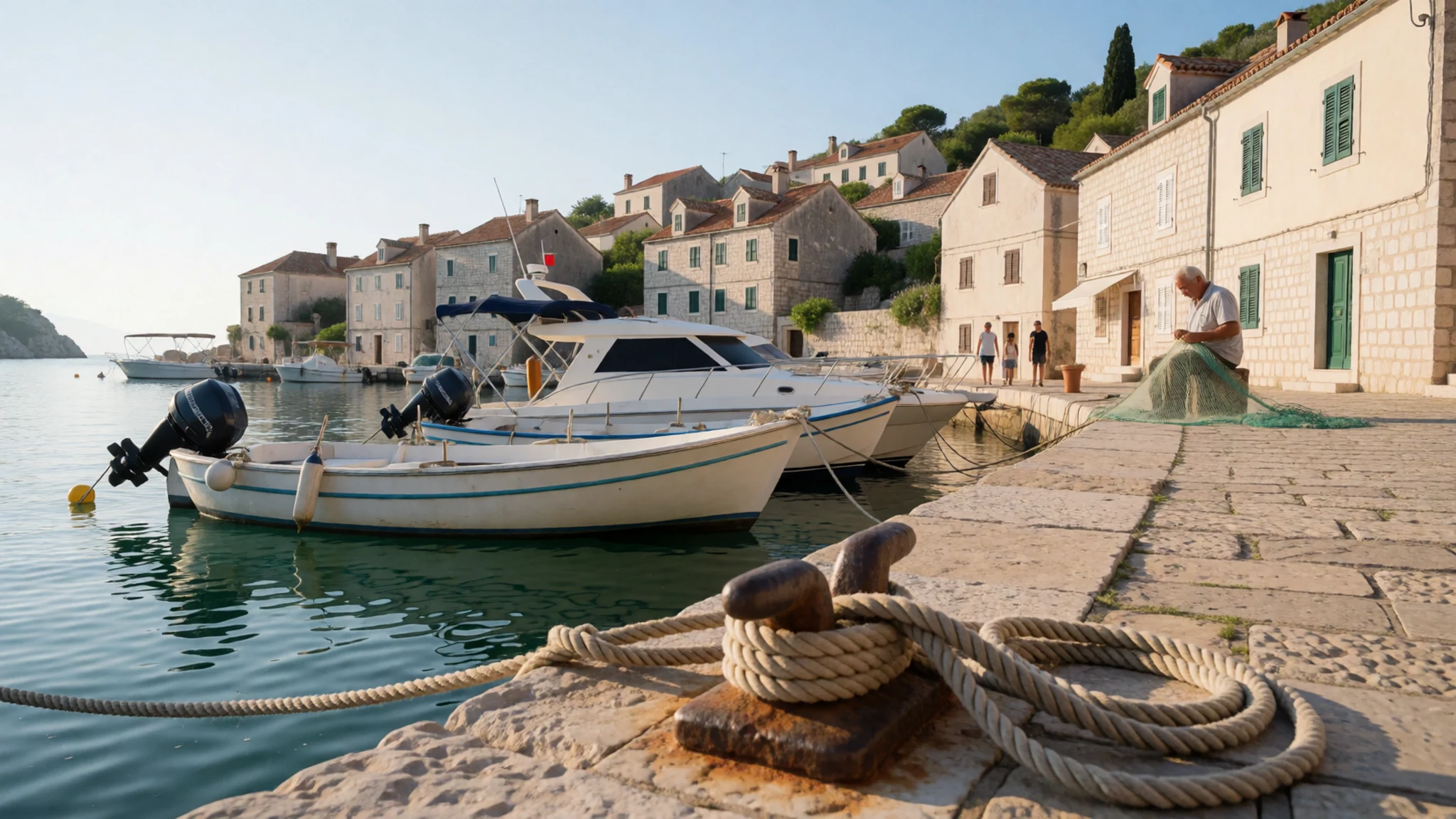
- Stomorska — North coast
Stomorska is the other popular harbour town, on the north side facing the mainland. It has a waterfront of restaurants and shops, a church of St Nicholas, and easy swimming nearby. It works well as a base for walking and cycling, and for catching the view across to Brač.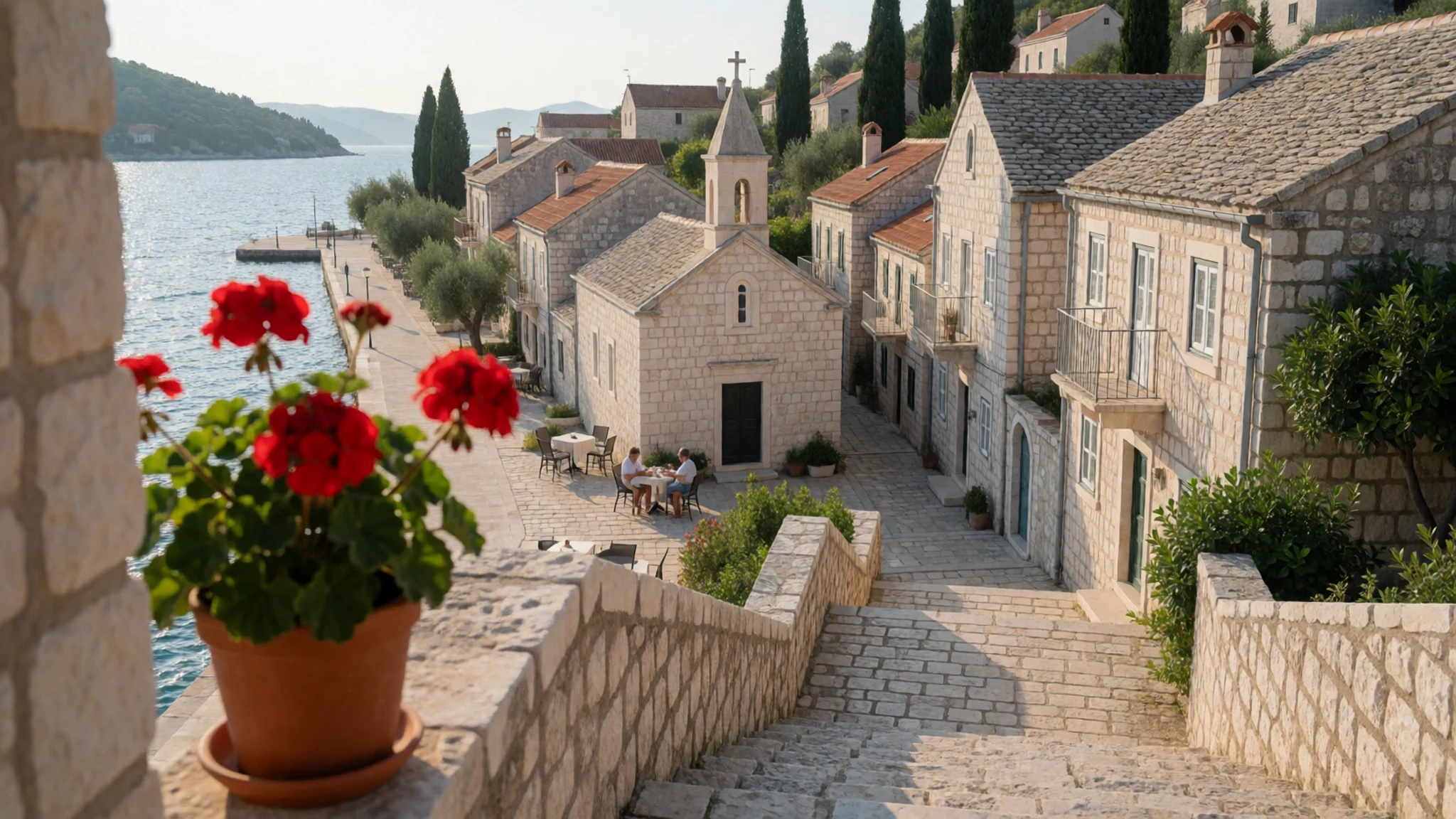
- Nečujam bay — North coast
Nečujam is the centre of the island's tourism and a sheltered bay with clear water and the mainland mountains behind. Look out for a bunja, a single-room stone hut, and the memorial house of the writer Marko Marulić. The Kontesa shipwreck is a draw for divers.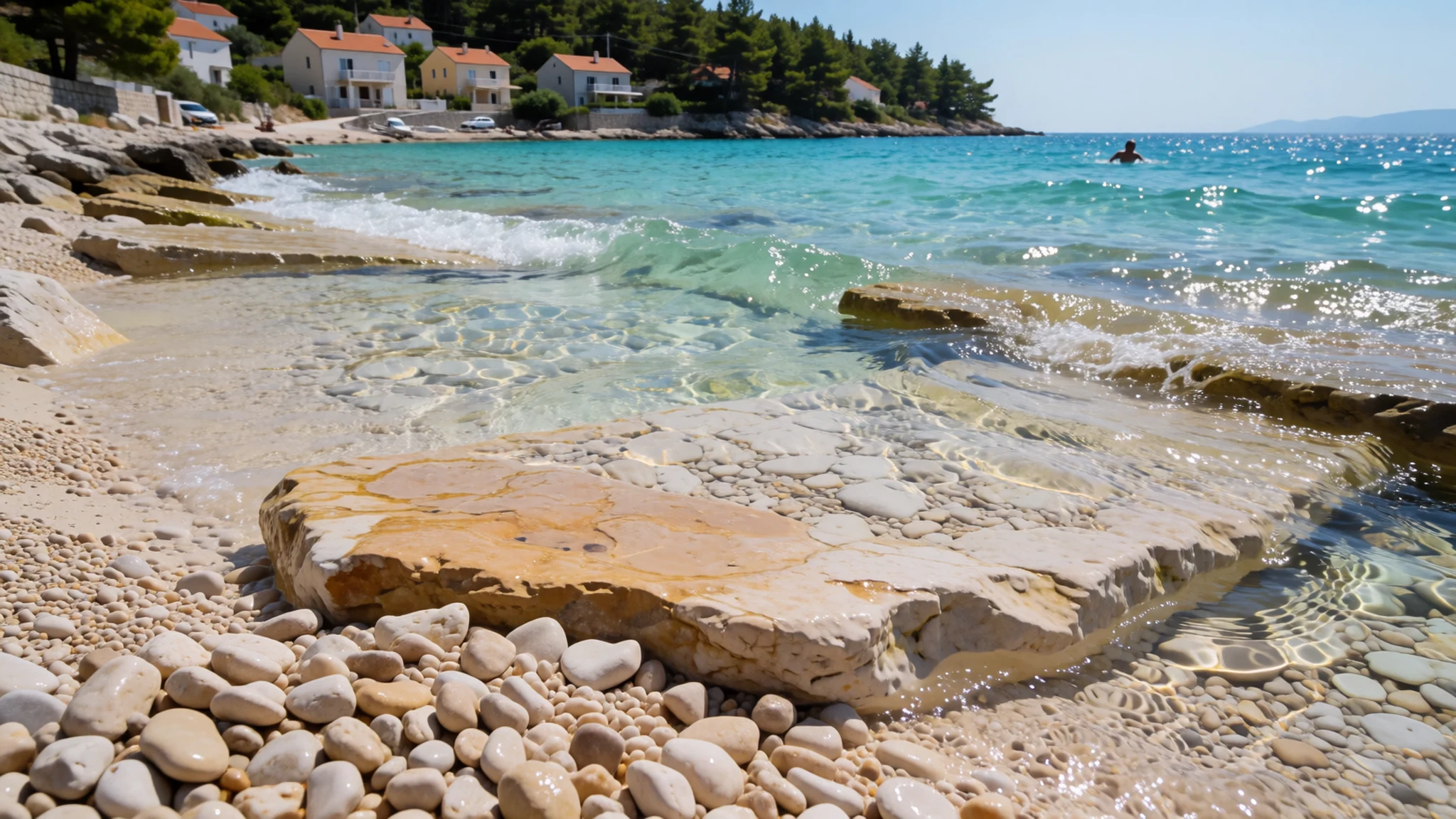
- Grohote — Island interior
Grohote is the largest inland village, with old limestone houses, some still roofed with stones. Ancient sarcophagus lids lie in front of the parish church of St Stephen, and the remains of an early Christian basilica and its baptismal font survive. It is a good place to see everyday island life.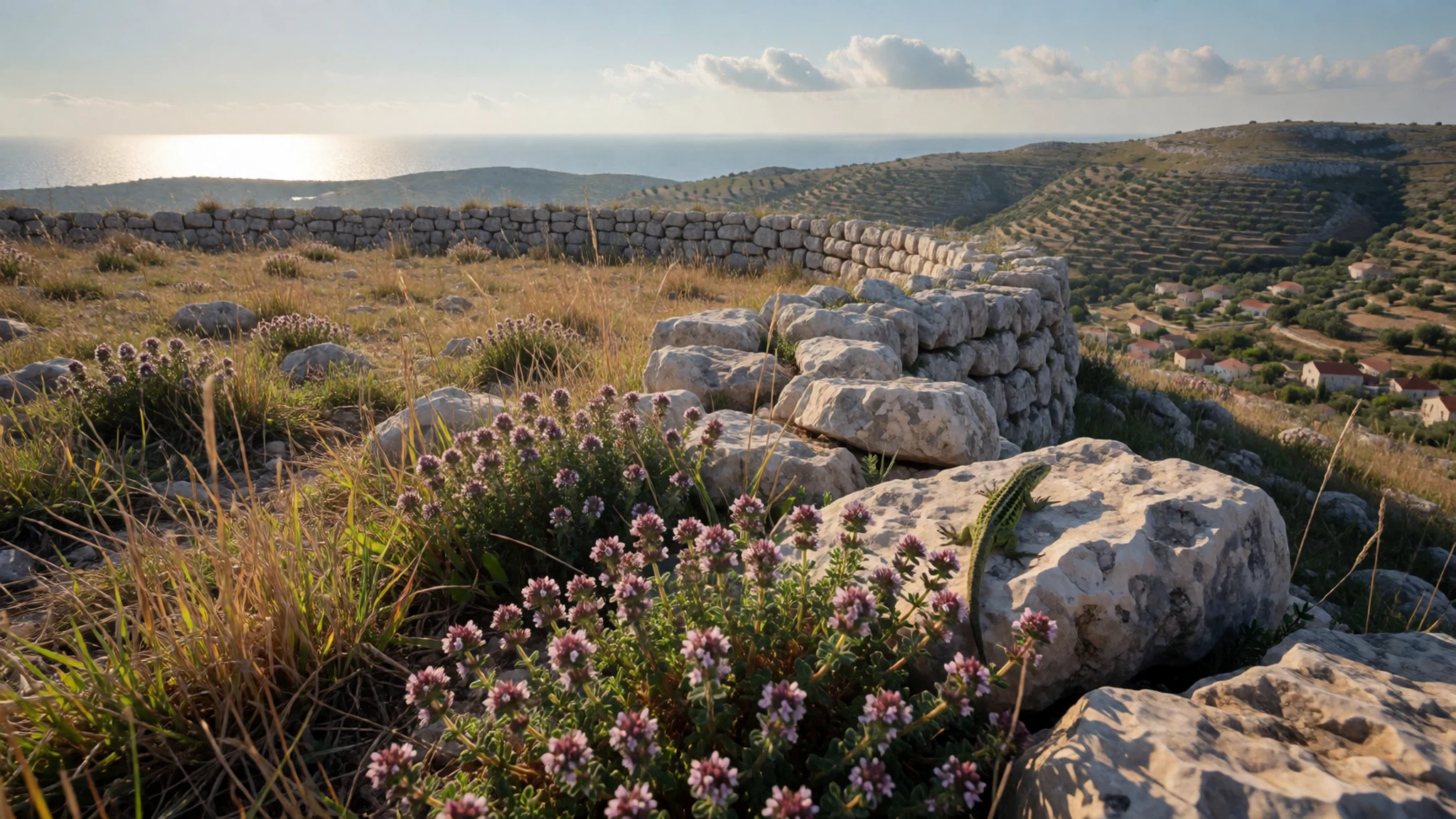
- Gornje Selo — Island interior
Gornje Selo is a hill village looking west across the island. It has two churches, Our Lady of Bori and St John, plus scattered late-antique remains and sarcophagi in the surrounding fields. Come for the quiet lanes and wide views rather than for any single monument.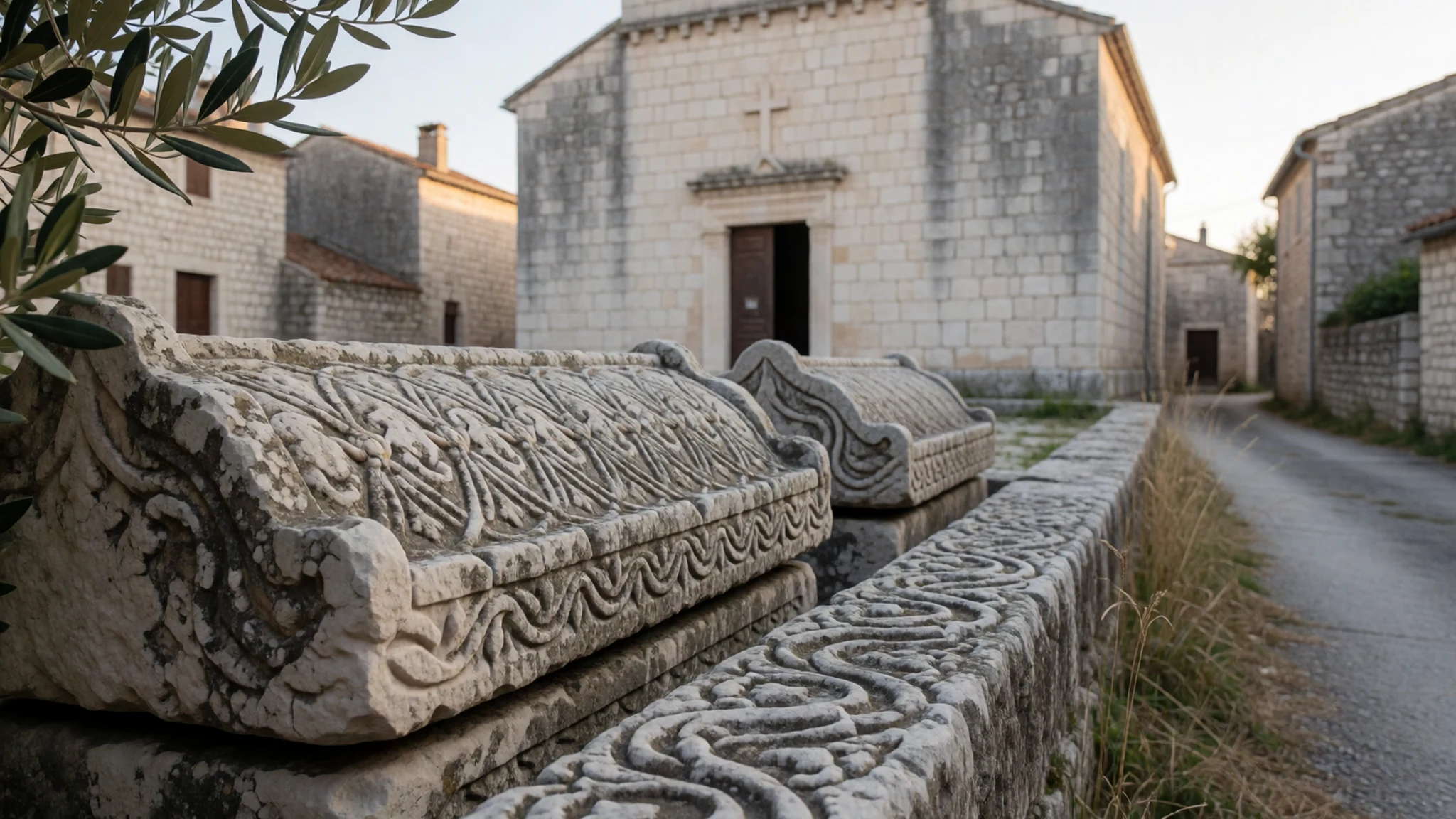
Culture
Šolta's culture is that of a Dalmatian island community: Catholic, agricultural and tied to the sea. Each village has its parish church and small chapels, often built over or beside far older remains, and feast days still bring neighbours together. Fishing, olive oil, wine and figs shape the year more than any festival calendar does.
The island's long layering shows in its names. Italian forms such as Maslinica's old Porto Olivetto survive from the Austro-Hungarian period, and Croatian is spoken everywhere. English is common around the harbours in summer, but a greeting in Croatian is welcomed.
There is a friendly local habit worth knowing. Each summer the tourist community runs a contest for the best-kept apartment, house plot and village, and winners receive a diploma. If your host has one on display, it reflects real pride in welcoming guests.
The pace is unhurried. Shops may close in the early afternoon heat, and evenings are for sitting out by the harbour. Fig trees line many paths and the fruit ripens in August, and people are generally relaxed about passers-by picking a few from roadside trees, though not from fenced gardens.
When visiting village churches and chapels, dress modestly with shoulders and knees covered, and keep your voice low if a service or private prayer is under way.
What to wear
Šolta has no single famous costume of its own. Like much of Dalmatia, older islanders once wore dark wool and linen suited to farm and boat work, with women in dark skirts and headscarves and men in woollen caps, and festive versions of these appear at folklore events and church feasts. I have not found island-specific textile names in the sources, so it is safest to treat these as general Dalmatian traditions.
Today people dress simply and for the weather. In summer that means shorts, linen shirts, sundresses and sandals or boat shoes, with swimwear on show at the beaches and little fuss made about it. Evenings in harbour restaurants are casual, perhaps a clean shirt or light dress. Fishermen and farmers still favour practical work clothes and sturdy shoes.
For visitors, pack light, breathable cotton and linen, a wide-brimmed hat, sunglasses and strong sun protection, since shade is limited on the coast and inland paths. A light layer helps on windy ferry crossings and spring or autumn evenings. Bring proper footwear: the coastal paths are rocky and the limestone is sharp and slippery, so trainers or light walking shoes are better than flip-flops. Water shoes are useful at pebbly bays and for entering the sea around sea urchins. Carry a scarf or shawl for church visits, and put a shirt on when walking through villages away from the beach.
What to eat
- Grilled fresh fish — Harbour restaurants in Maslinica, Stomorska and Rogač
Fish caught around the island is usually grilled whole with olive oil and a little salt, often sold by weight. Ask what came in that day. Maslinica, as a fishing harbour, is a natural place to try it.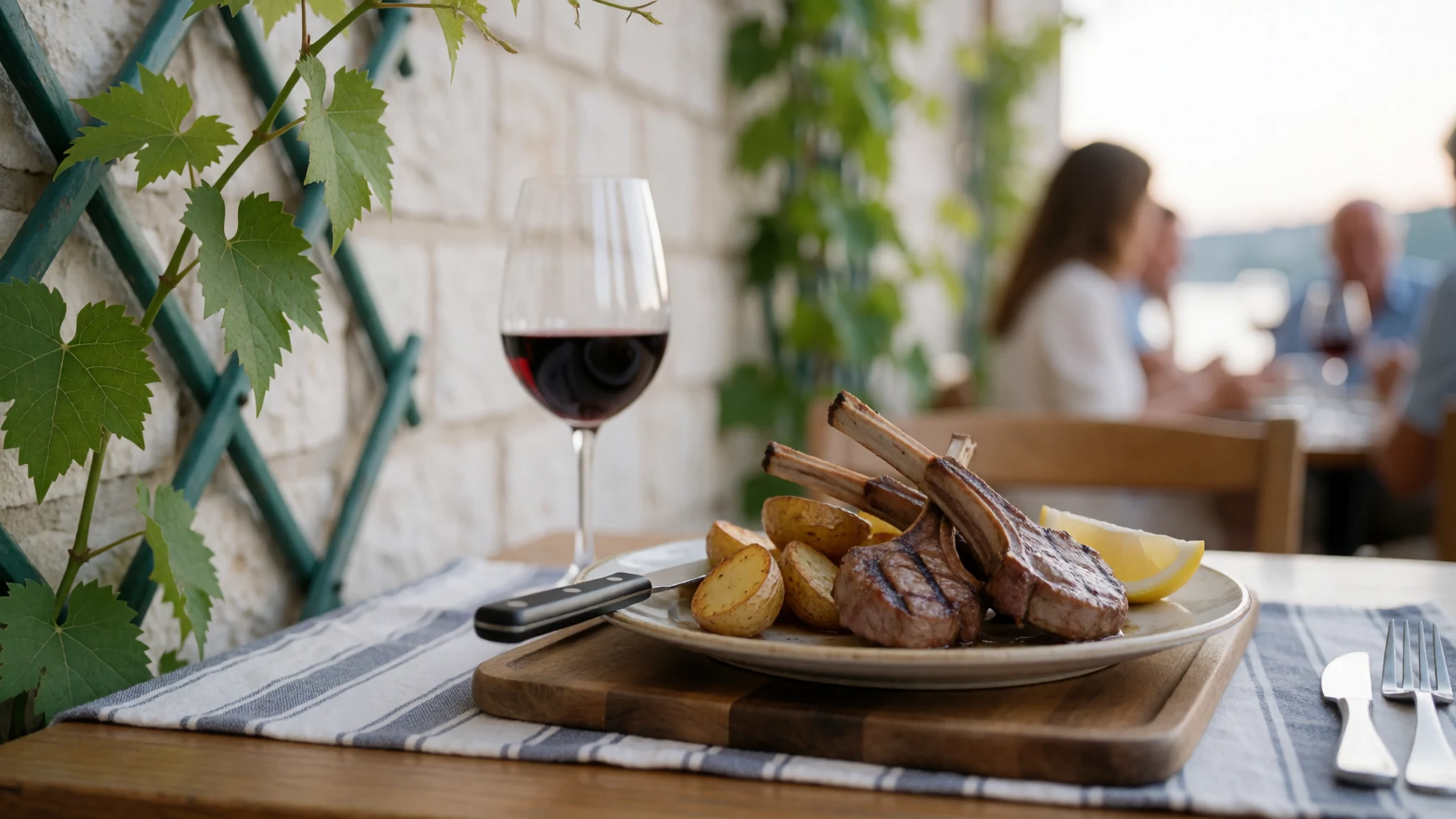
- Island olive oil — Village households and roadside stalls
Olives are one of the island's main crops, and the oil is used on everything. Look for small bottles from local growers, and taste it with bread. It also makes a practical edible souvenir to carry home.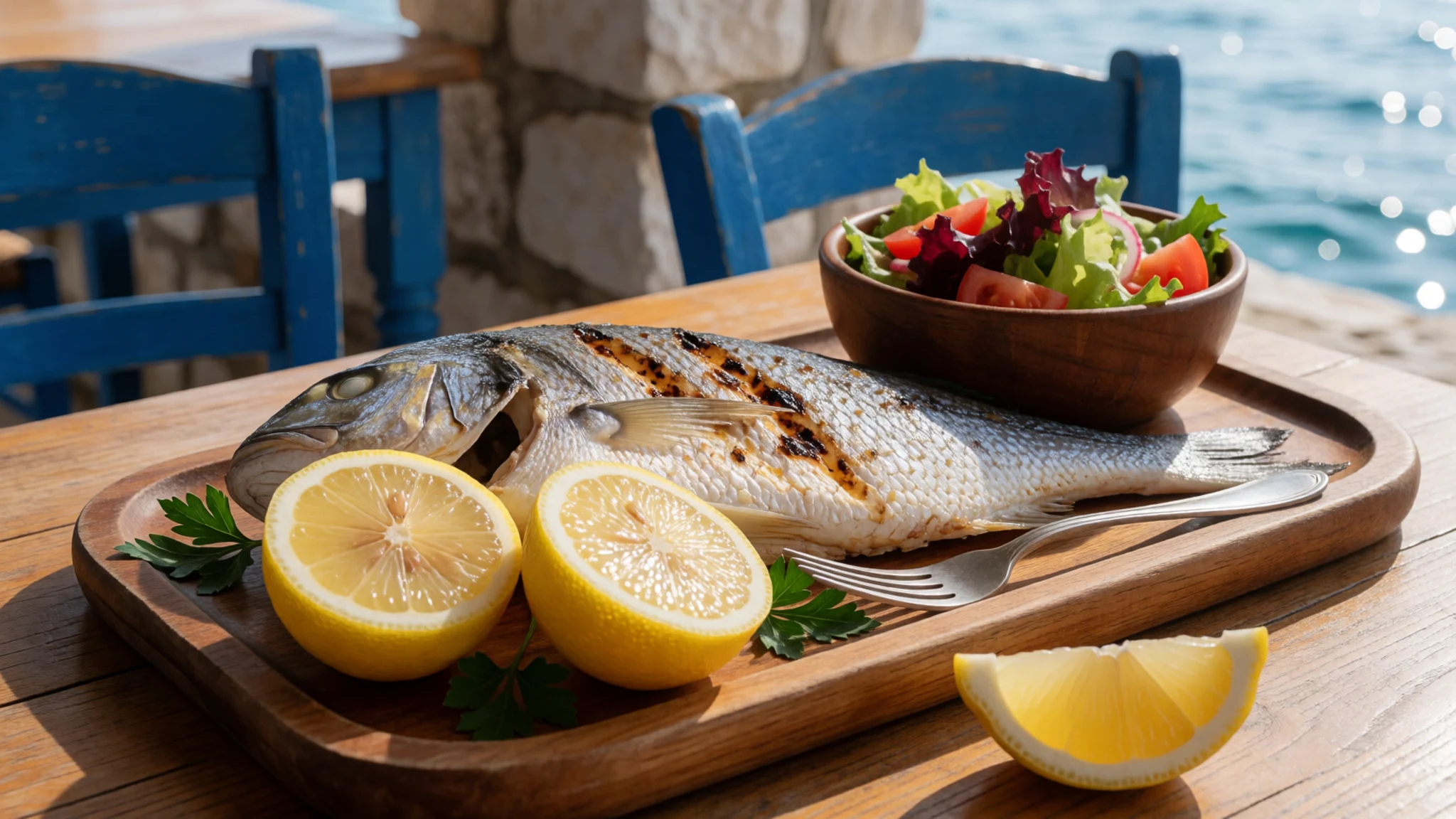
- Dobričić red wine — Local restaurants and family cellars
Dobričić is the island's own red grape, with a long history here and a family link to Zinfandel. Ask for a glass with meat dishes. Quantities are small, so it is worth asking a restaurant or producer. - Fresh figs — Roadside trees across the island in August
In August fig trees across Šolta are heavy with ripe fruit, and picking from an unfenced roadside tree is a well-loved treat. Eat them warm from the sun, or find them in jams and desserts. - Meat and seafood grills — Restaurants around Maslinica, Stomorska and Rogač
Harbour eateries serve grilled meats alongside seafood, typically with simple sides such as grilled vegetables or potatoes. Menus are straightforward and portions generous. Sit by the water in the evening and let the meal run long.
Plan it
Best time. May–June and September–October are best: warm enough to swim, with fewer visitors and gentler heat than July and August, when the coast is busiest and hottest. Figs ripen in August.
How long. 2–3
Getting there. Fly to Split airport, then go into Split town and take the Jadrolinija car-and-passenger ferry across the Split Channel to Rogač, the main port, in the middle of the island. Check the official Jadrolinija site for current timetables and fares, which change by season. Buses or a hired car or bike cover the last leg to Maslinica, Stomorska or Nečujam.
Budget. mid
Tips
- Check ferry times in advance, as they vary by month, and book vehicle space early in summer
- Hire a bike or scooter to reach the quieter bays and villages
- Carry some cash for small shops, stalls and harbour cafés
- Bring water and sun protection for coastal walks, as shade is scarce
- Book summer accommodation well ahead, since the island has limited beds
Etiquette
- Cover shoulders and knees when entering village churches
- Do not pick fruit from fenced gardens or private orchards
- Take litter away from beaches and coves
Nearby
Sources
- Wikidata Q392225 (CC0)
- Wikipedia: Šolta (rev 1384118656) (CC BY-SA 4.0)
- Wikivoyage: Solta (rev 5093282) (CC BY-SA 4.0)
- Photo 01, Joadl (CC BY-SA 3.0 at)
- Photo 02, Joadl (CC BY-SA 3.0 at)
- Photo 03, Joadl (CC BY-SA 3.0 at)
- Photo 04, Joadl (CC BY-SA 3.0 at)
- Photo 05, Joadl (CC BY-SA 3.0 at)
- Photo 06, Joadl (CC BY-SA 3.0 at)
- Photo 07, Joadl (CC BY-SA 3.0 at)
- Photo 08, User:Mjurin (Public domain)


