Soča River
Soča River, Italy
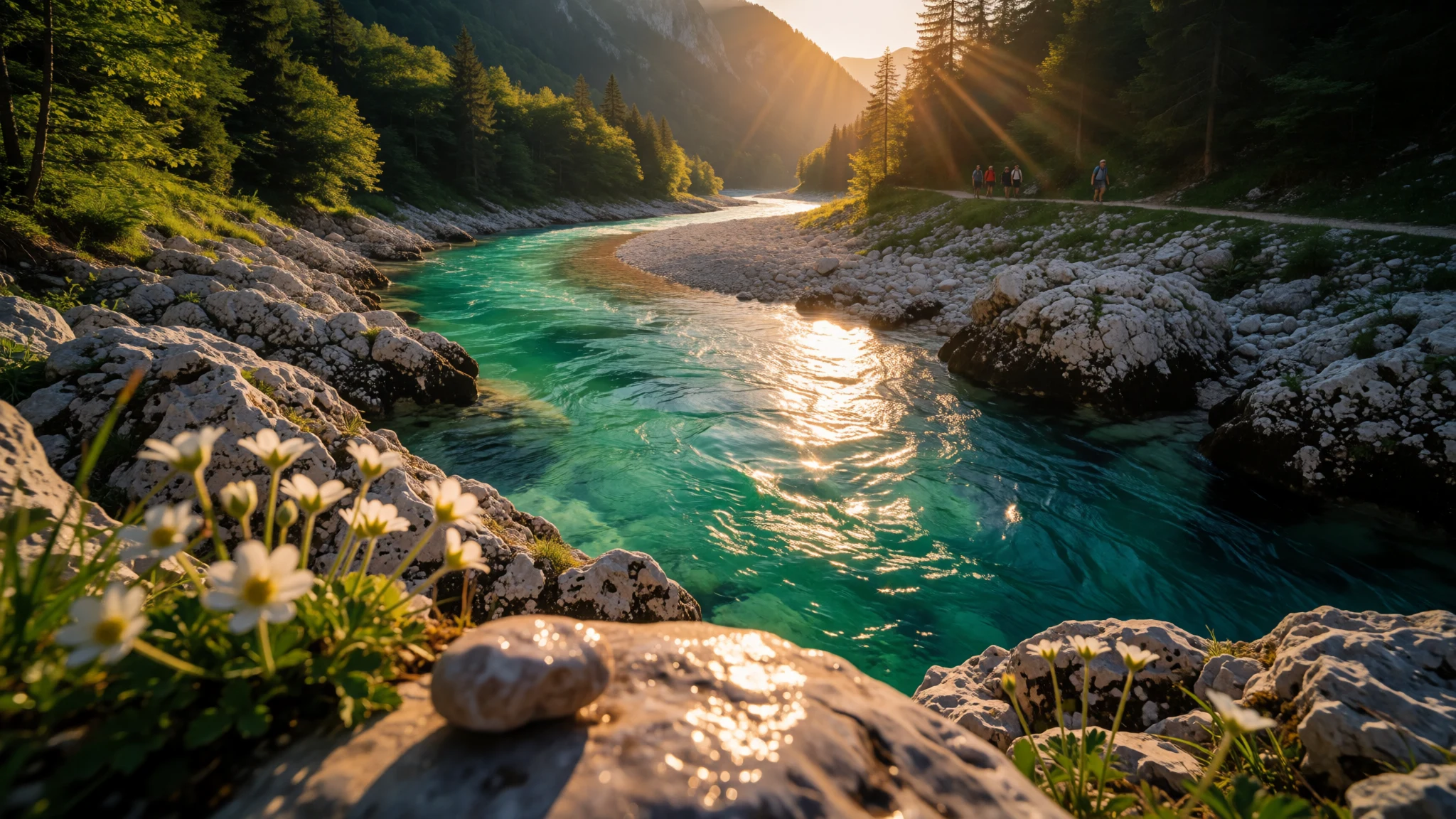
Soča River runs an unlikely turquoise through the Julian Alps, with cold swims, white-water paddling and quiet First World War history close by.
The place
Soča River rises in the Trenta Valley, high in the Julian Alps of north-western Slovenia, and reaches the Adriatic about 138 km later, close to Monfalcone in Italy. Slovenia holds roughly 96 km of that course and Italy the remaining 43 km, where the same water goes by the name Isonzo. The source lies at 876 metres, so the river begins as a cold mountain stream and keeps an Alpine temper for much of its length, fed by snowmelt in the upper valley and by rain further down. On the way it passes Bovec, Kobarid, Tolmin, Kanal ob Soči, Nova Gorica, where the Solkan Bridge crosses it, and Gorizia. The upper valley sits within Triglav National Park. What draws photographers is the colour: a clear turquoise-to-emerald that looks retouched and is not, strongest where the water slides over pale stone in pools and narrow gorges. The towns are modest. Bovec and Kobarid are the largest, with bars, restaurants and a few shops, and the rest are small villages rather than cities, so evenings are quiet. Bovec is where most of the adventure business gathers, with rafting, kayaking and hydrospeed operators, while fly-fishing and riverside walks suit people who prefer to keep their feet on land. Summer brings swimmers and sunbathers to the gravel banks, though the water stays cold even in July. The valley combines easily with Ljubljana, Lake Bled or a day across the border in Italy.
Its story
Soča River carries more names than most rivers, and each marks a different claim on the valley: Soča in Slovene, Isonzo in Italian, Lusinç in Friulian, Sontig in German and Aesontius or Isontius in Latin. That layering is the history of a frontier. Before the First World War the river ran roughly parallel to the line between the Kingdom of Italy and the Austro-Hungarian Empire, which made the valley a front once the two countries went to war. The fighting here was bitter and long, and it reached its climax in the Battle of Caporetto in October and November 1917. Caporetto is the Italian name for Kobarid, and the word later became shorthand in Italy for a sudden, humiliating collapse. The retreat that followed also gave Ernest Hemingway the backdrop for A Farewell to Arms. Today the traces are quieter than the story: marked trails to old positions, small memorials, a museum in Kobarid and a church on a hillside above the town that serves as an Italian ossuary. The border has moved since then, and the twin towns of Nova Gorica and Gorizia now sit side by side across it. Visitors who come only for the colour of the water often leave having learned something about the war too, because the history is woven into the ordinary landscape of meadows, farms and river terraces.
What to see
- The source in the Trenta Valley — Trenta Valley, Triglav National Park
Soča River begins in the Trenta Valley inside Triglav National Park, where the water emerges high among limestone peaks. The upper reach is cold, clear and shallow in places, with gravel banks that suit a short walk and a paddle. It is the quietest part of the river, best approached early, before tour groups arrive.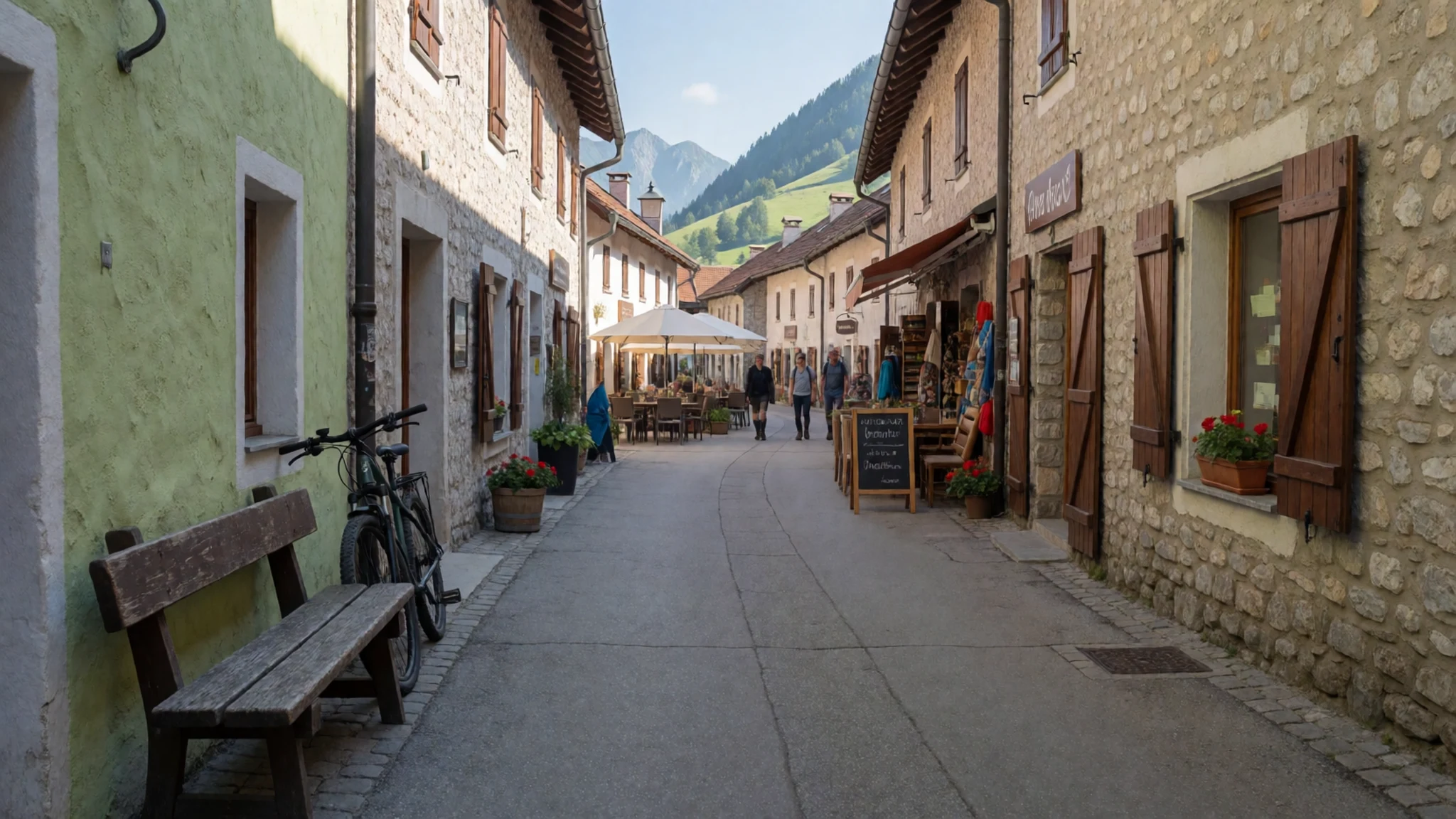
- Bovec — Upper Soča Valley
Bovec is the valley's adventure hub, a small town ringed by mountains where rafting, kayaking, hydrospeed and canyoning outfits are based. Guided trips suit beginners and families as well as experienced paddlers, and several operators run courses. Walkers and cyclists can use the town as a base too, with bars and restaurants close by.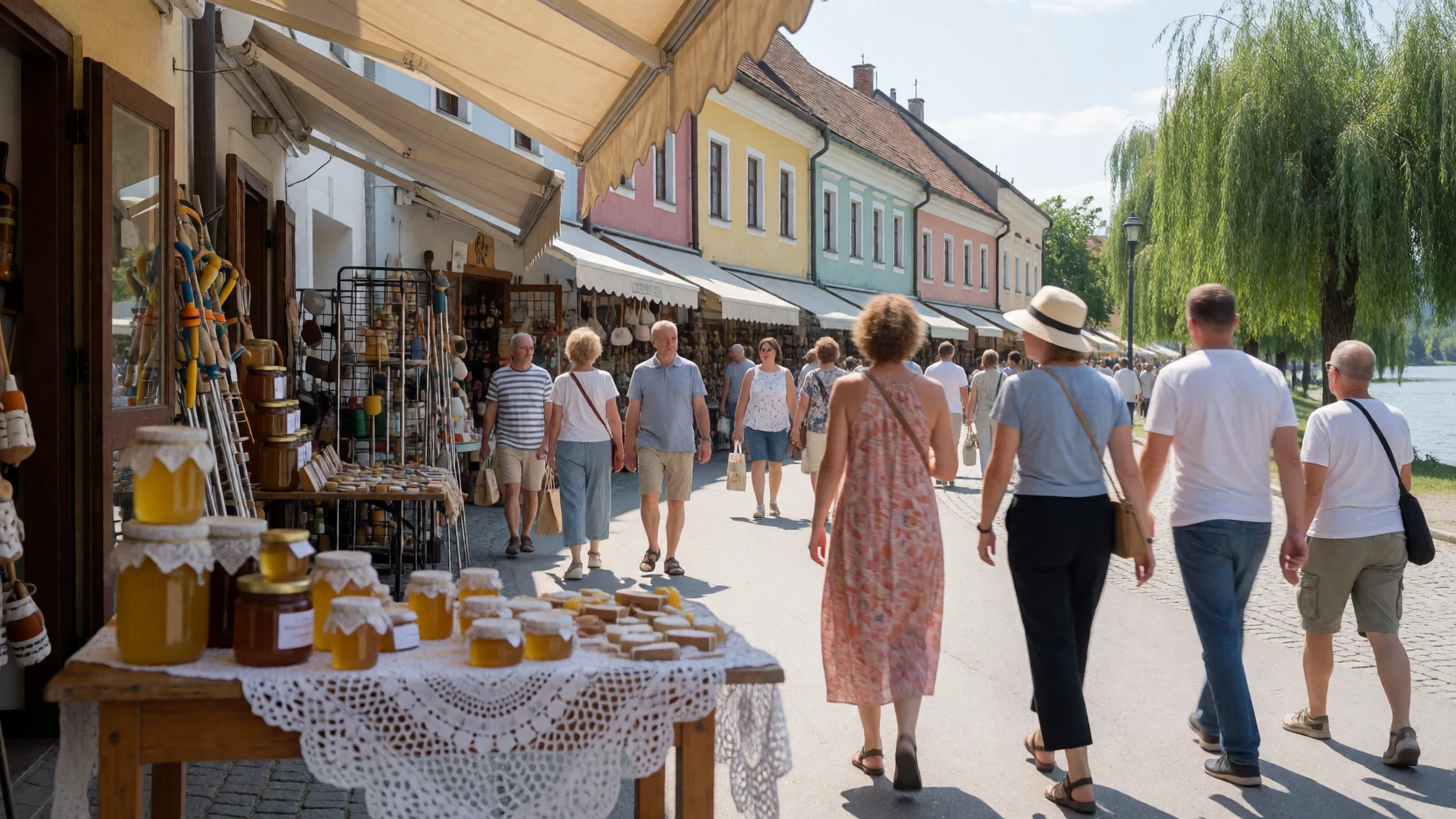
- Kobarid — Middle Soča Valley
Kobarid sits above a wide bend of the river and is known to Italians as Caporetto. Its compact centre has cafés and a museum devoted to the First World War fighting in the valley, and walking trails lead out to the water and to old front-line positions. Check locally for opening times before building a day around it.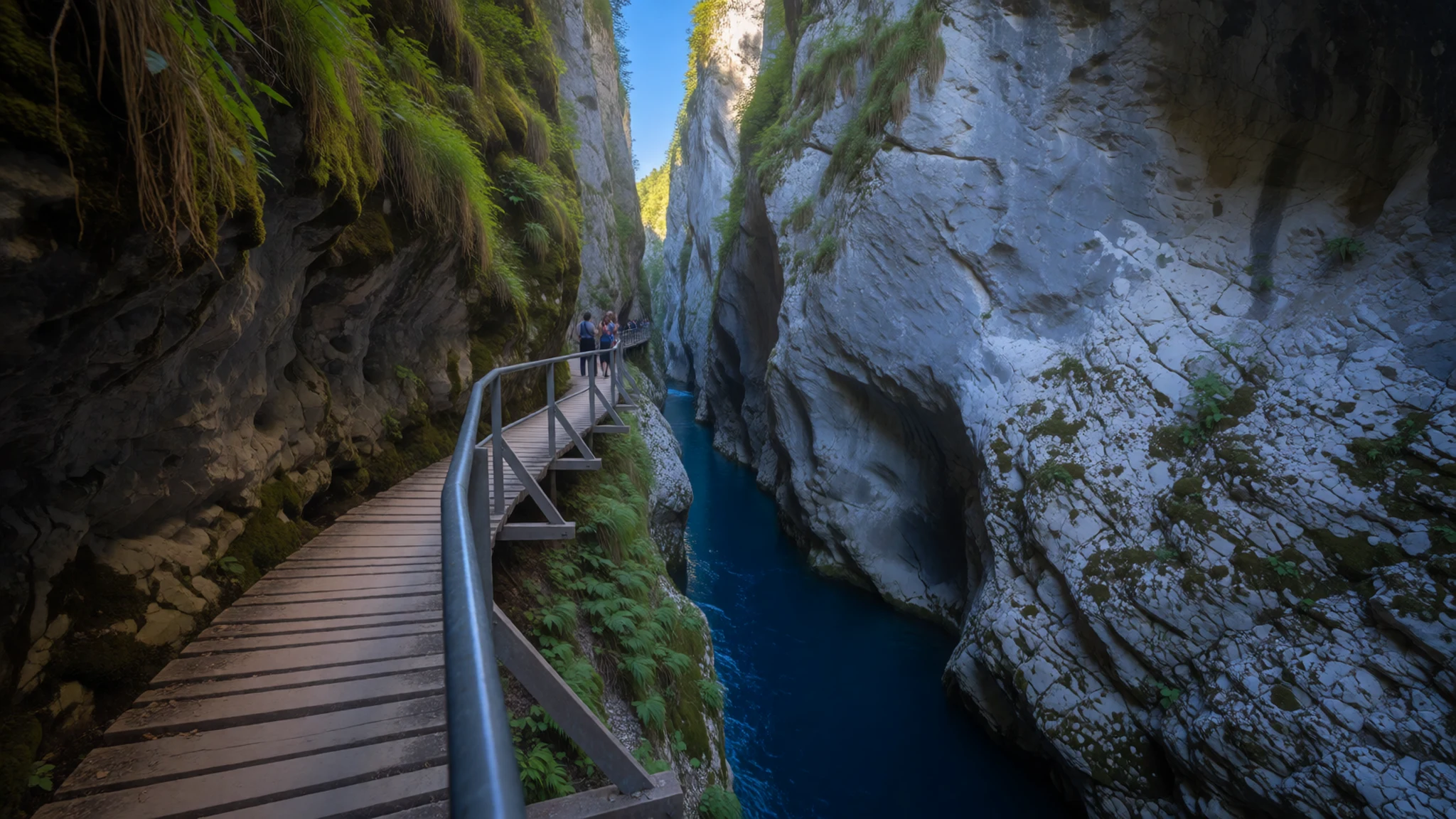
- Tolmin Gorges — Tolmin
Tolmin is a market town where the Soča meets the Tolminka, and the gorge walk nearby follows a narrow cut of rock and green water. Guided and self-guided visits are sold through valley operators with online booking. Wear shoes with good grip, because paths can be wet, and check that the route is open before setting off.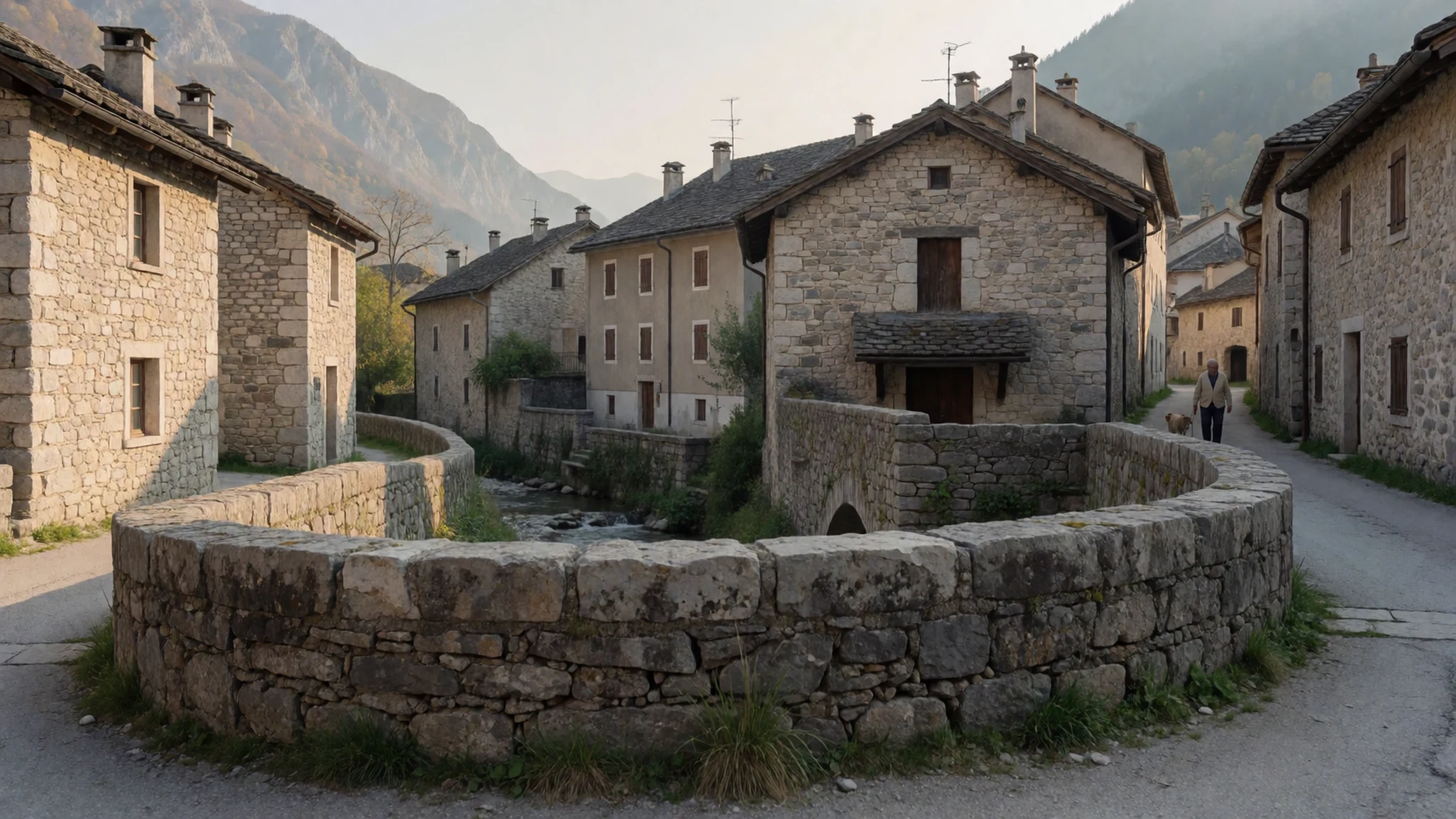
- Solkan Bridge and Nova Gorica — Nova Gorica, on the Slovenian–Italian border
Solkan Bridge crosses the Soča at Nova Gorica, where the river leaves the mountains and broadens towards the plain. Nova Gorica and Italian Gorizia stand side by side here, split by a border that is now easy to cross on foot, so coffee in Italy after a morning in Slovenia is entirely possible.
Culture
Soča River shapes a culture that is Slovene at its core, with Italian and Friulian influence growing stronger towards the border. Life in the upper valley revolves around the outdoors: farming and herding on the slopes, fishing in the river, and since the rise of adventure sport, guiding, instructing and running campsites. Many people in Bovec, Kobarid and Tolmin work in tourism, so English is widely spoken, but a greeting in Slovene is appreciated and costs nothing. Language, food and architecture shift as the river moves south, and Gorizia feels distinctly Italian even though the water is the same. The First World War is a living memory here rather than a museum piece. Families still tend wayside memorials, trails follow old military paths, and the Italian ossuary above Kobarid holds the remains of many soldiers. Local anglers take their river seriously, and rules on fishing, access and camping are set to protect the water, so it is worth asking at a tourist office before pitching a tent or casting a line. Evenings are unhurried, with long meals, local cheese and wine from the hills towards Italy. Treat war memorials and cemeteries as places of mourning: lower your voice, stay on the paths and never sit or climb on the monuments.
What to wear
Soča River country has its own folk dress, tied to the wider Primorska region of western Slovenia. Traditional costume typically combines wool, linen and cotton, with bodices, aprons and headscarves for women and waistcoats and hats for men, and it appears today mainly at festivals, church feasts, village parades and brass-band events rather than daily life. What people actually wear now is practical mountain clothing: walking trousers, fleeces, light waterproofs, sturdy boots and, in summer, shorts and swimwear on the river banks. Locals dress neatly for town evenings but rarely formally, and nobody will look twice at hiking gear in a restaurant. Visitors should dress in layers, because the upper valley is cool in the mornings and the river keeps the air fresh even on hot days. Bring a rain jacket in any season, boots or trainers with grip for gorge paths and wet stones, and a pair of water shoes if swimming, since the banks are gravel and rock. Rafting and canyoning operators normally supply wetsuits and helmets, but ask when booking. Church interiors and war memorials call for covered shoulders and knees, and a light scarf in a day pack handles that easily.
What to eat
- Frika — Village inns and farm restaurants around Tolmin and Bovec
Frika is a crisp, golden cake of grated potato and cheese, fried in a pan and served in wedges. It is hearty mountain food, welcome after a day on the water. Look for it in village inns and farm restaurants around Tolmin and Bovec.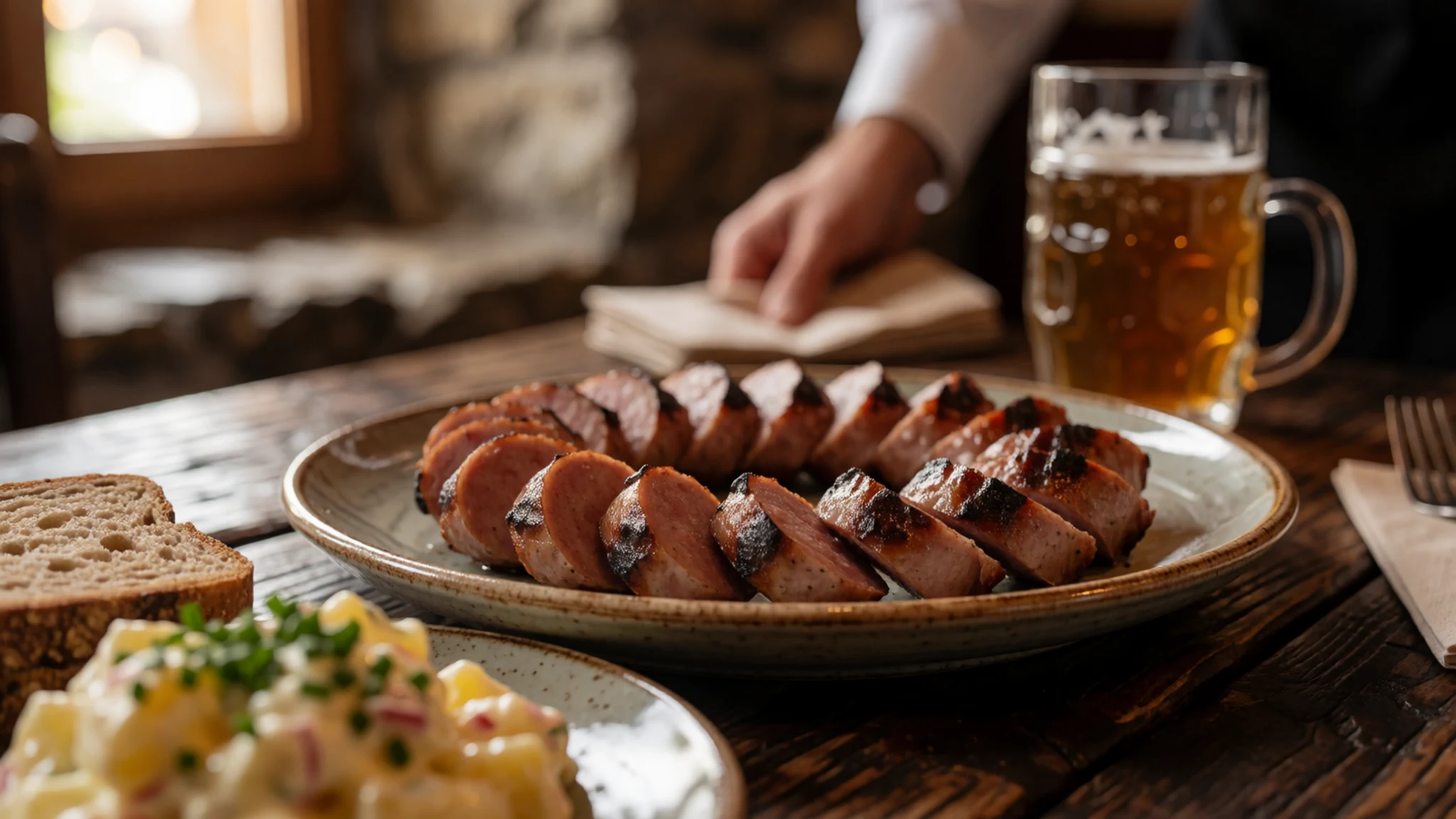
- Tolminc cheese — Farm shops and market stalls in the Tolmin area
Tolminc is a hard cow's-milk cheese from the Tolmin area, made in the mountain pastures and sold in rounds. It is nutty and firm, good with bread and local wine. Buy it from cheese counters, farm shops and small markets in the valley.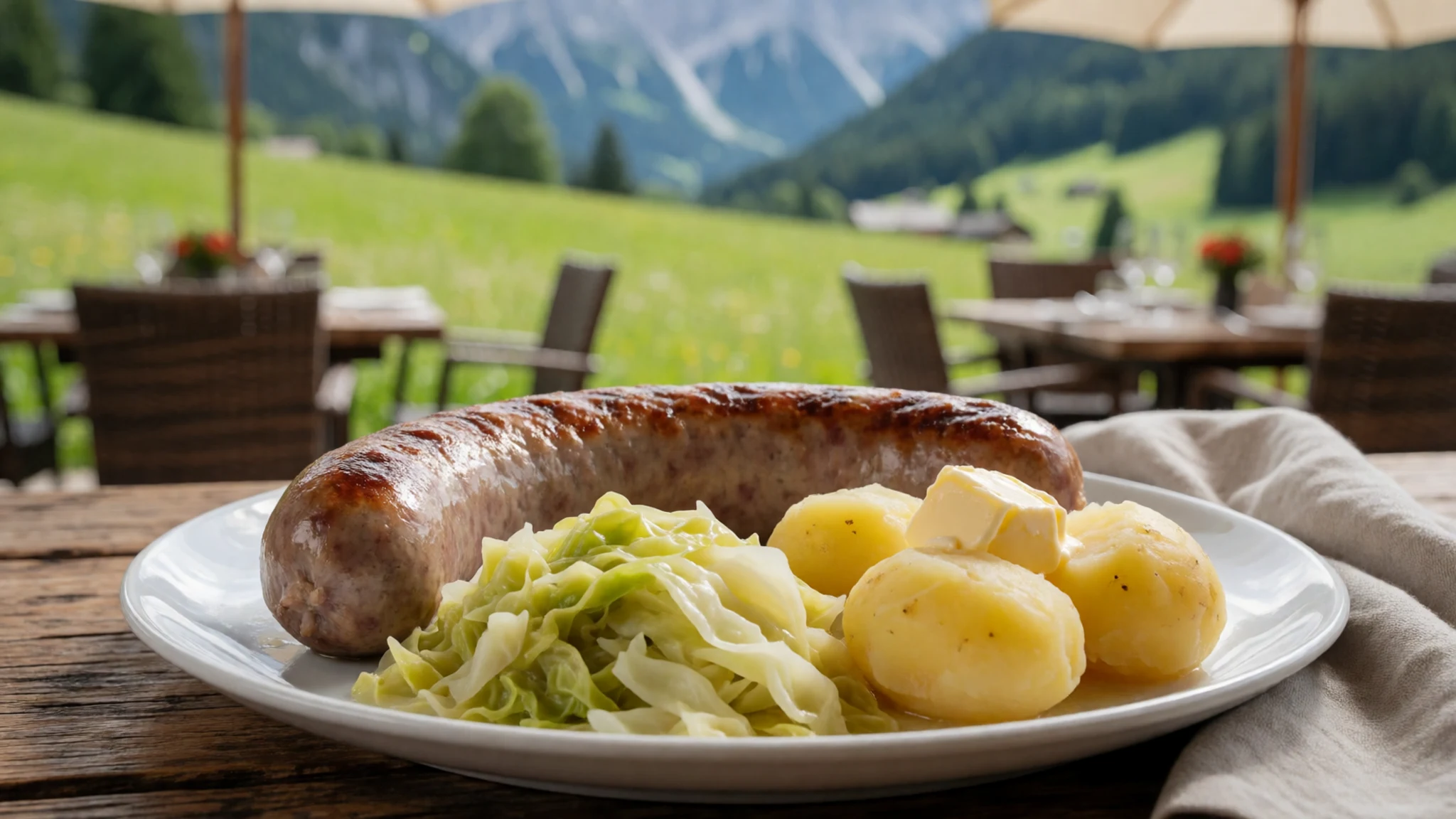
- Bovec sheep cheese — Bovec shops, farm stalls and mixed platters in local restaurants
Bovec sheep cheese comes from flocks grazing the upper valley, and has a sharper, saltier flavour than the cow's-milk cheeses. It is sold in wedges in Bovec and often appears on a mixed platter with cured meat and bread. - Trout from the river — Riverside eateries and village inns along the valley
Trout is a staple on valley menus, usually grilled or pan-fried with lemon, potatoes and greens. Fishing is regulated to protect the river, so ask where the fish comes from. Many riverside eateries and village inns serve it through the season. - Štruklji — Traditional inns and home-style restaurants in Kobarid and nearby villages
Štruklji are rolled dumplings made from thin dough around fillings such as cottage cheese, walnuts or herbs, then boiled or baked. Served as a side or a sweet, they are traditional across Slovenia, and most valley restaurants and inns include a version.
Plan it
Best time. Late May to September for swimming and river sports; early summer runs higher and faster with snowmelt, while July and August are warmest and busiest. Water stays cold all season, and autumn suits walking and quiet photography.
How long. 3–4
Getting there. Trains link Ljubljana and Nova Gorica with stations in the valley, and Kanal and Most na Soči are the usual stops for the most visited stretches; check the Slovenian railways timetable for current services. The nearest airports are Ljubljana in Slovenia and Trieste in Italy, and the last leg to Bovec or Kobarid is easiest by car or local bus.
Budget. mid
Tips
- Book rafting, canyoning and kayak courses early for July and August, when operators fill up
- Bring water shoes and a warm layer, since the river is cold and banks are stony
- Start gorge walks and viewpoints early to avoid the busiest hours
- Carry some cash for small villages, farm stalls and car parks, though cards work in most restaurants
- Ask operators about river levels before any water trip, because snowmelt and rain change conditions quickly
Etiquette
- Take all rubbish with you and keep to marked paths and access points along the river
- Ask before camping or fishing, because rules protect the river and local landowners
- Keep voices low at war memorials and the ossuary above Kobarid
Nearby
Sources
- Wikidata Q202760 (CC0)
- Wikipedia: Soča (CC BY-SA 4.0)
- Wikivoyage: Soča Valley (CC BY-SA 4.0)
- Soca Kobarid.jpg, Unknown author (CC BY 3.0)
- Soca in Slowenien bei Bovec, Florian Jesse (CC0 1.0)
- A shoot of Isonzo., T137 (CC BY 3.0)
- Soca River, Slovenia, Lucash (CC BY 3.0)
- Swimming and sunbathing, Soča River near Soča/Lepena, Slovenia, 2013, DimiTalen (CC0 1.0)
- 02 Altes Sägewerk an der Soca, Brigitte (CC BY-SA 2.0)
- 026 Soca, Brigitte (CC BY-SA 2.0)
- 027 Soca, Brigitte (CC BY-SA 2.0)


