Skara Brae
Skara Brae, United Kingdom
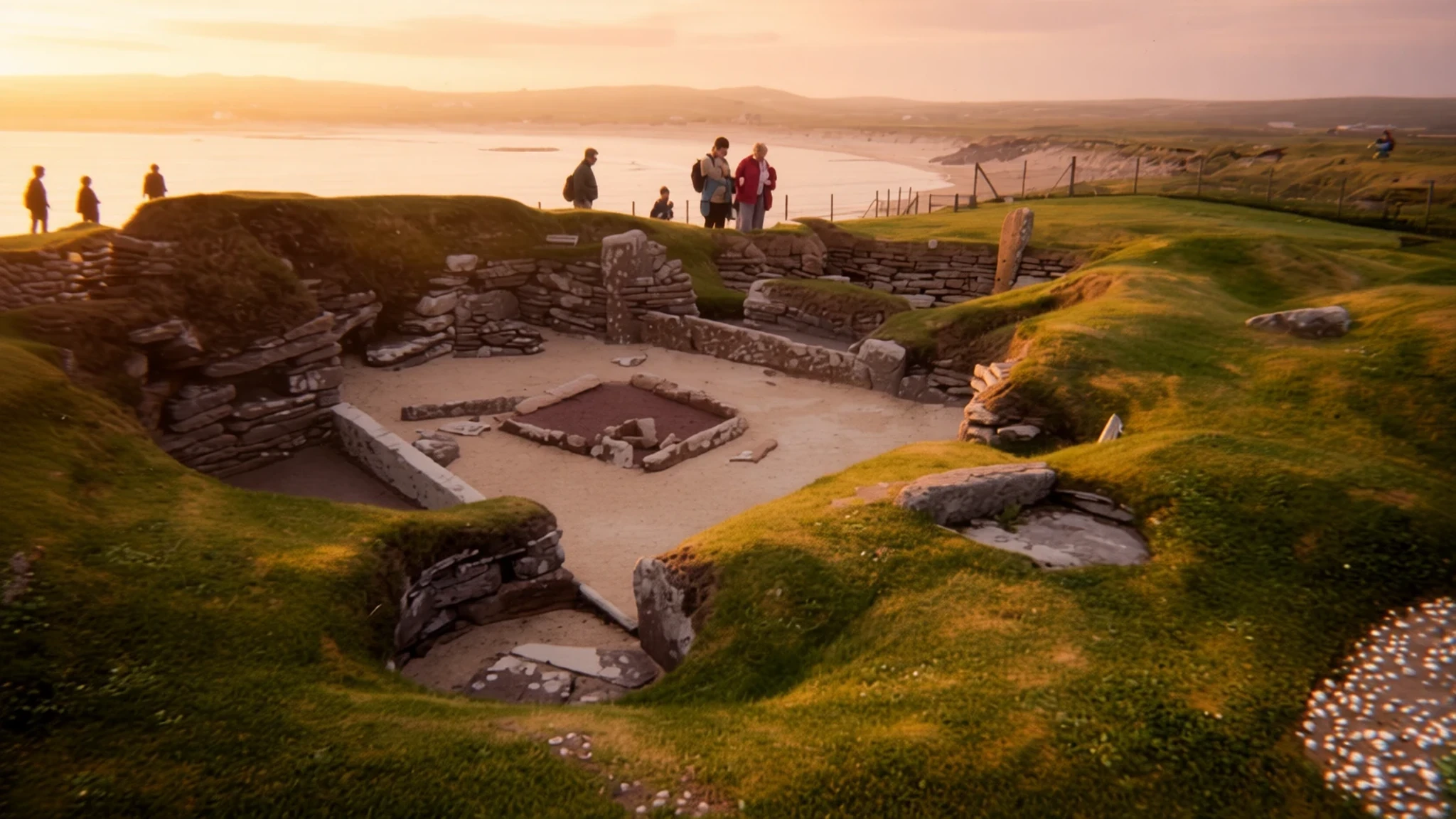
Skara Brae is a Stone Age village on Orkney whose stone beds, dressers and hearths survive almost as their owners left them.
The place
Skara Brae sits on the Bay of Skaill, on the west coast of Mainland, the largest island of Orkney. The setting is low, green and exposed: a curve of sand, a scatter of grassy mounds, and the Atlantic close enough that wind is part of every visit. The village was built of local flagstone, and that is why so much of it has lasted. Walls, doorways, passages and fittings are made of the same slabs that split naturally from the nearby shore.
The settlement dates from about 3180 BCE, and people lived here for several centuries. What visitors see today is ten structures linked by covered passageways, with stone furniture still inside the houses. Beds, shelves and hearths stay in place, so the layout of a household can be read at a glance. Sand dunes buried the village for a very long time, which kept it intact until a storm stripped the cover away and revealed the walls.
The site belongs to the wider group known as the Heart of Neolithic Orkney, which holds UNESCO World Heritage status. Historic Environment Scotland looks after Skara Brae with local partners, and it is open throughout the year. A visitor centre and a reconstructed house stand beside the path, and the original village is viewed from above, from a walkway and a short outer path. Nearby, Skaill House and the beach make a natural half-day. The islands are windswept, treeless and farmed, and the old red sandstone gives the walls and fields a warm tone under grey skies.
Its story
Skara Brae was found by weather rather than by archaeologists. A great storm tore into the dunes above the Bay of Skaill and exposed the outlines of stone buildings that had lain under sand for thousands of years. Excavation followed, and the village turned out to be among the most complete Neolithic settlements in Europe.
The people who lived here farmed and kept animals, and the sea and shore were close at hand. They built low, sunken houses and packed the surrounding ground to keep out the wind. Each house followed a similar plan: a central hearth, a bed on each side, and a stone dresser facing the door. Narrow passages joined the homes, so that people could move between them under cover. Stone was the only building material available in quantity on a largely treeless island, and the builders used it for nearly everything, including the furniture.
Occupation ran from about 3180 BCE to around 2500 BCE. Then the village was left behind, and the sand slowly took it back. Nobody knows precisely why people moved on. What remains is an ordinary place rather than a ceremonial one: a group of homes where families cooked, slept and stored their goods.
That ordinariness is the point. The nearby standing stones and chambered tombs show how Neolithic Orcadians honoured the dead and the sky, while Skara Brae shows how they lived from day to day. Later centuries brought Vikings, Norse sagas and Scottish rule, but this village is far older than any of them. The storm that revealed it is part of the story too, a reminder that the same coast that protected it also threatens it.
What to see
- The village houses — Bay of Skaill, west Mainland
The core of the visit is the cluster of linked houses, seen from a path along the top of the walls. Stone beds, dressers and hearths are visible in each room. Look for the doorways, which are low, and the passages that connect the homes.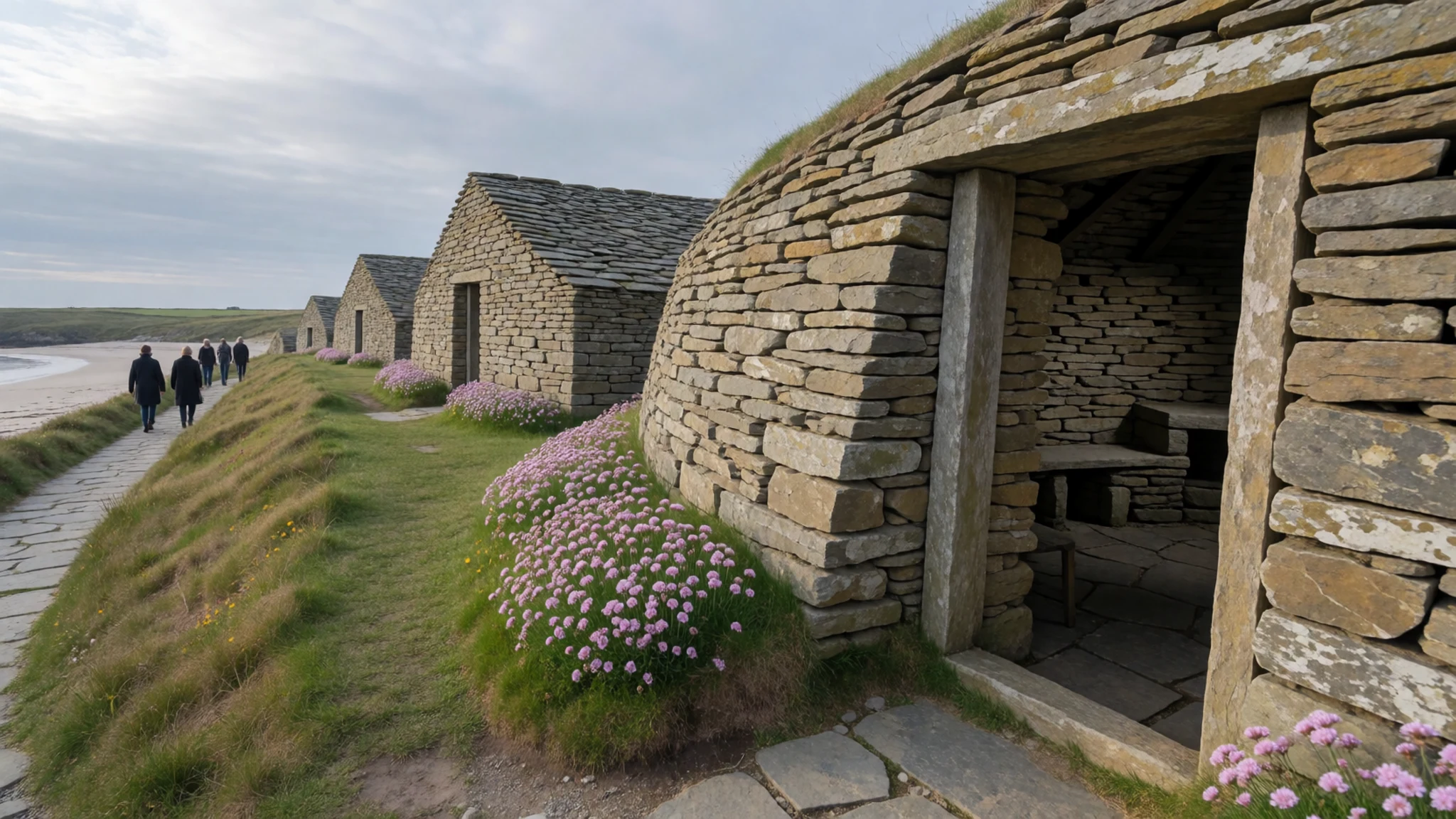
- The reconstructed house — Visitor centre, Skara Brae
Beside the visitor centre stands a full-size replica of one house, built to show how a home might have felt inside. It is useful to see before the original, because it explains where the bed, hearth and dresser sat and how the room worked as a whole.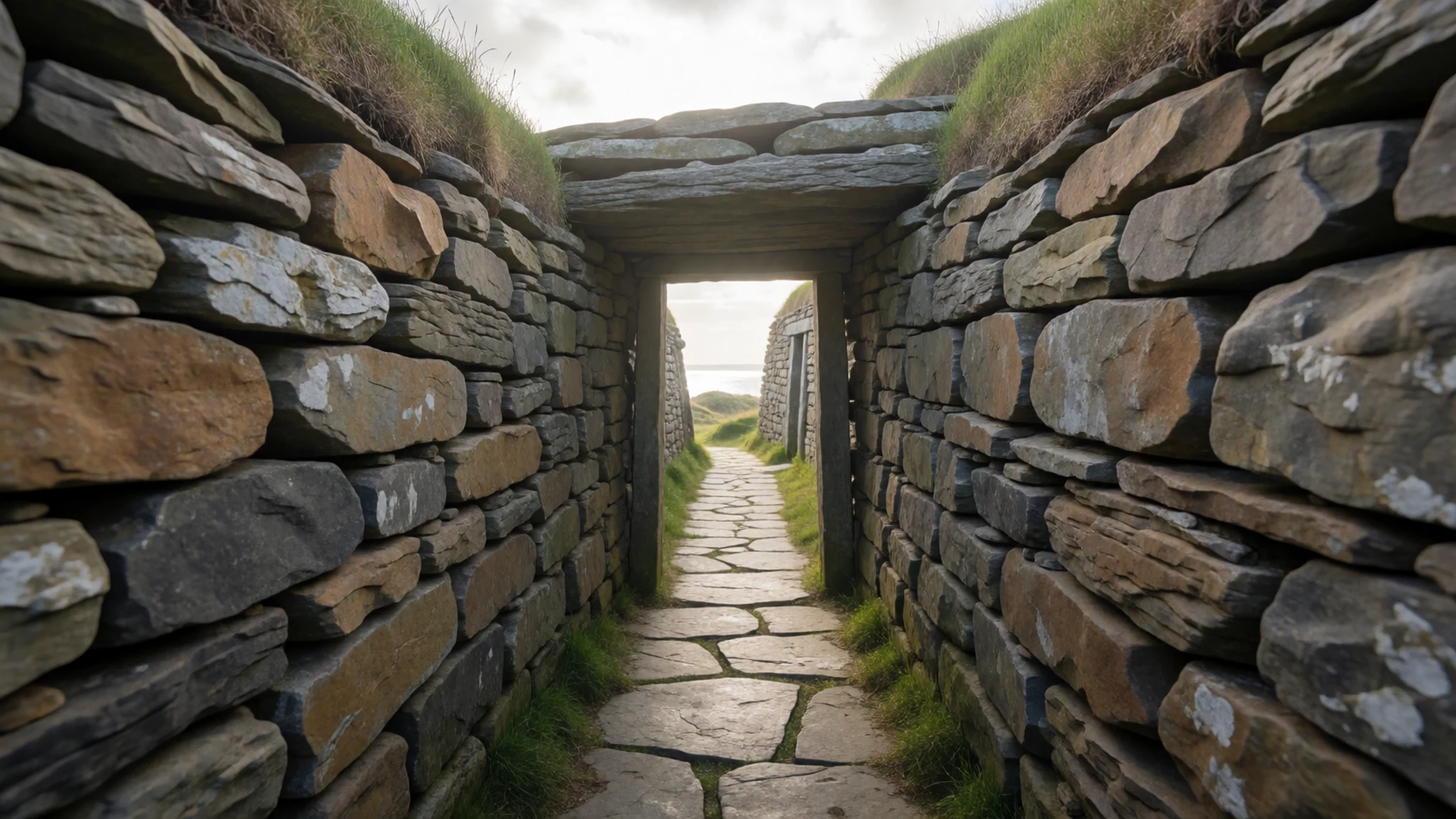
- Bay of Skaill — West Mainland, Orkney
The wide sandy bay beside the village is worth walking after the ruins. The same coast that buried Skara Brae and later exposed it is easy to read from the beach. Expect wind, big skies and surf, and take care near the water in rough weather.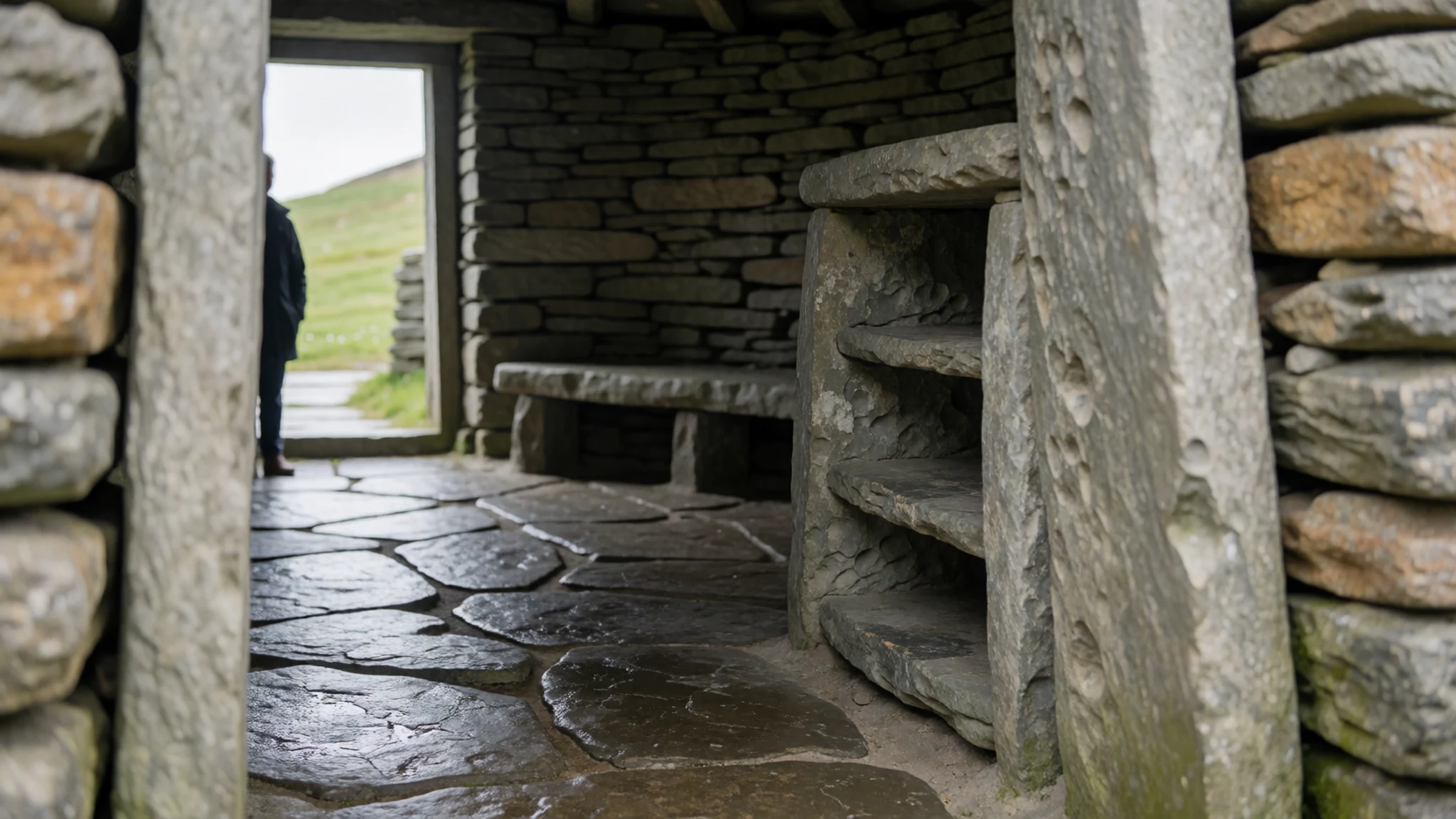
- Heart of Neolithic Orkney — Stenness, Mainland
Skara Brae is one of four sites making up this World Heritage group, and the others are within a short drive around Stenness. The standing stones cope well with crowds, while the chambered tombs are small and can need advance booking. Check the Historic Environment Scotland website before setting out.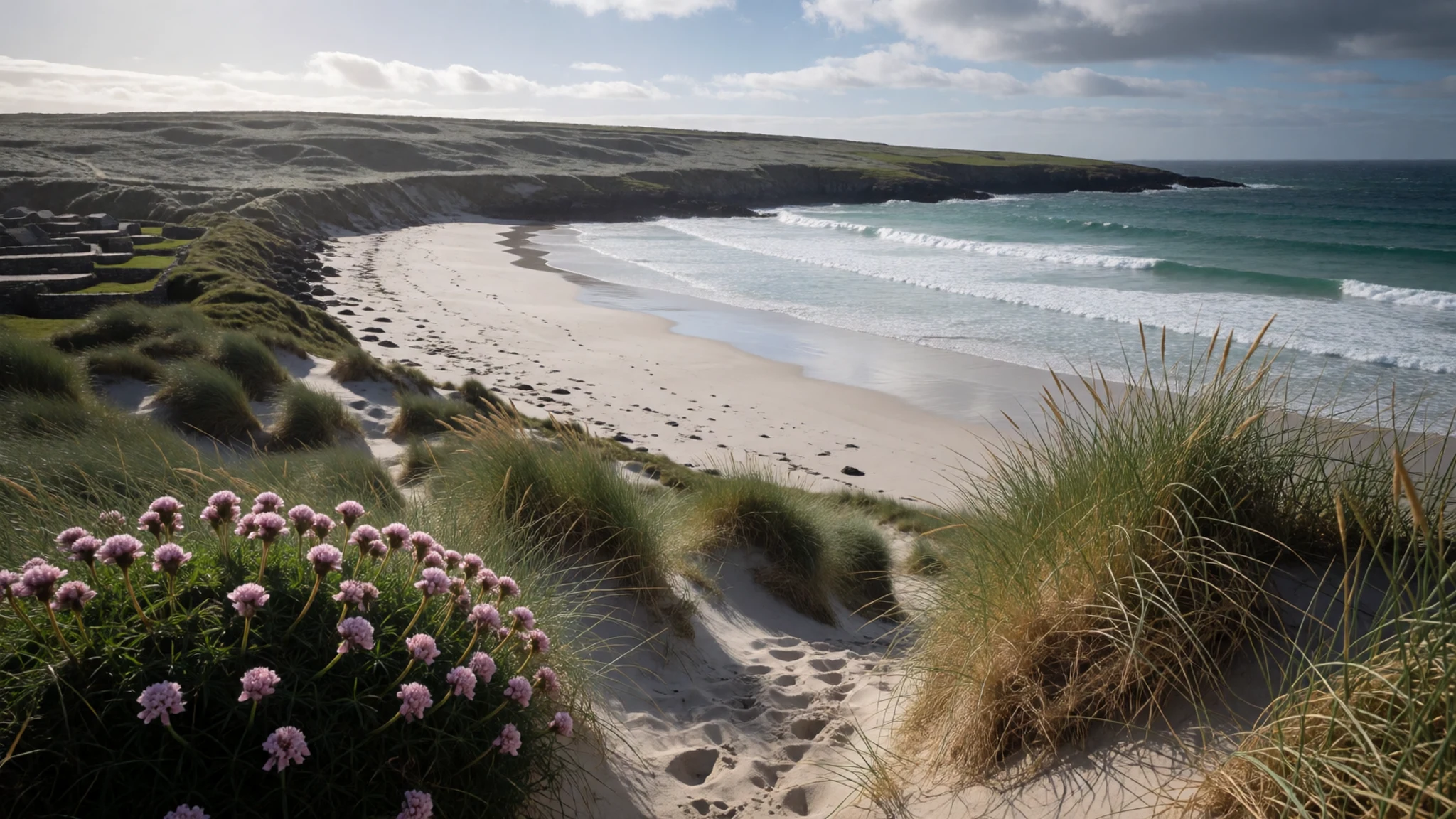
- Lesser-known Neolithic sites — Across Orkney
Orkney has far more prehistoric remains than one trip can cover, and many are free and rarely visited. Some have only a signpost and a grassy path leading to an opening in a hillside. They suit travellers who want quiet, and they ease pressure on the busiest places.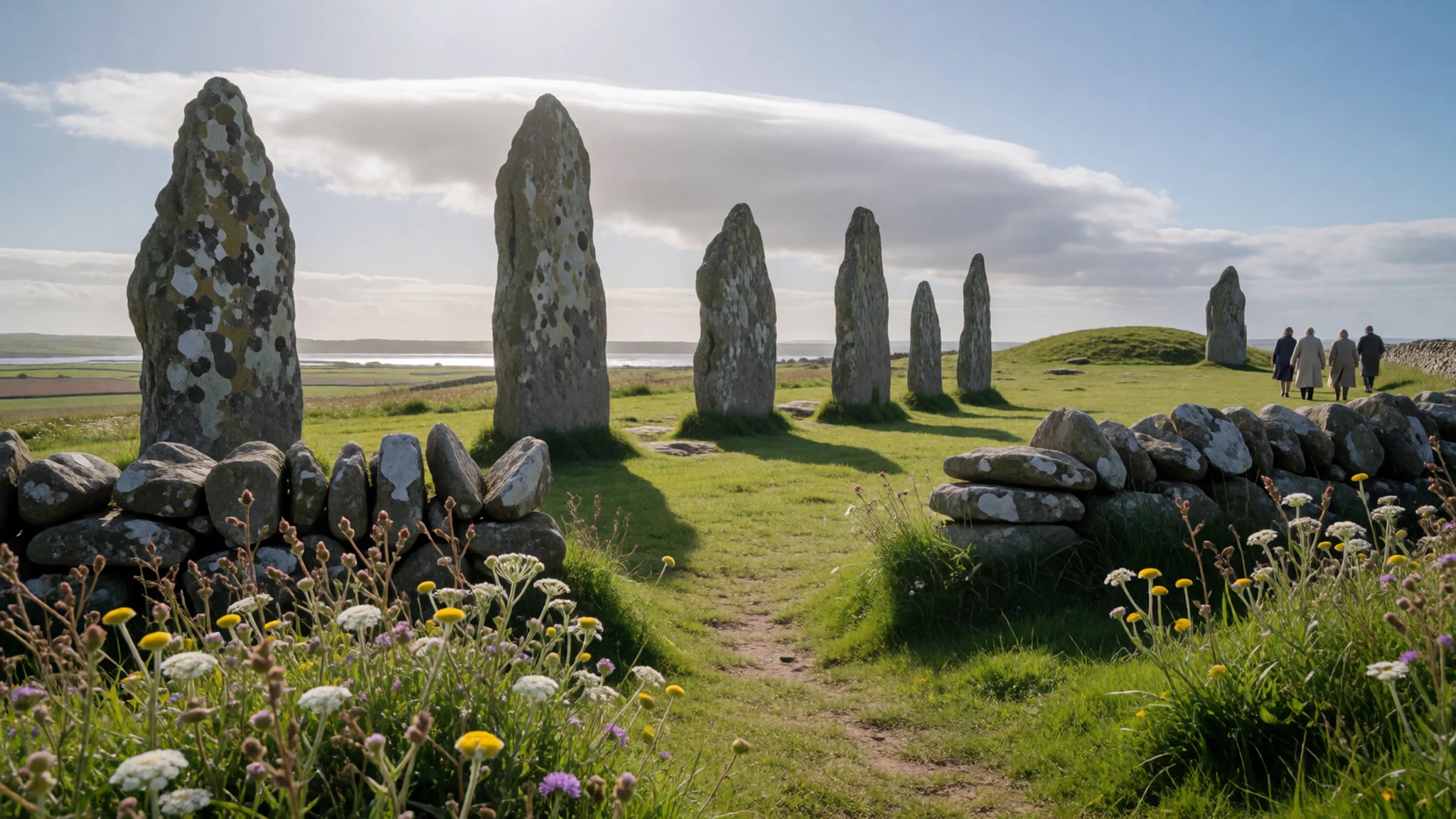
Culture
Skara Brae has no living tradition attached to it in the way a temple or shrine does, so its culture is a story about how a place is remembered. Orkney people treat their prehistoric landscape as part of everyday life. Farmers work fields beside standing stones, and children grow up knowing that the hill behind the school may hold a chamber older than any written record.
That sense of long time shapes local identity. Orkney was ruled by Norse earls for centuries, and the islands still carry Norse place names, sagas and a distinct dialect flavour. The Orkneyinga saga, written down by Norse-speaking Christians, is the main early narrative, though it is not a dependable history. Scottish rule came later, and Orcadians often describe themselves as Orcadians first.
Care of the site is shared between Historic Environment Scotland, the local council and conservation bodies, and the work is taken seriously. The village is fragile, exposed to wind, rain and a rising sea, and the rules about not touching the walls exist for good reason. Guides and staff are usually generous with questions, and the visitor centre explains the finds clearly.
Orkney's pace is unhurried. Shops and small eateries can close early, and many sites rely on trust rather than turnstiles, so good manners count for a lot.
Stay on the marked paths and never climb on or lean against the ancient walls.
What to wear
Skara Brae has no surviving textiles, so nothing is known with certainty about what its people wore. Archaeologists find bone needles, pins and beads, which suggests that skins, hides and woven fibres were sewn and fastened, and that ornament mattered. Beyond that, any picture of Neolithic dress is informed guesswork, and no clothing from the village is on display.
In Orkney today, traditional dress is not worn in daily life. Knitwear is the local textile tradition, and islanders favour practical layers: wool jumpers, waterproof jackets, sturdy boots and caps or hats against the wind. Fair Isle patterns belong to nearby Shetland, but wool is common across the northern isles, and woollen goods are sold in craft shops. People dress for weather first, and nobody stands on ceremony, so smart clothes are rarely needed.
For a visit, the weather decides everything. The site is open to the sky on a windy coast, and even a bright summer day can turn cold and wet within minutes. Wear a waterproof jacket, a warm layer and a hat, and carry gloves outside summer. Shoes should be sturdy with a good grip, because paths and grass can be slippery and the beach is sandy. There are no dress rules for the site itself, and no modesty codes apply, though it makes sense to cover up against sun and wind alike. Sunglasses are useful on bright days at the bay, and a small daypack keeps hands free.
What to eat
- Orkney whisky — Distilleries in and around Kirkwall
Orkney's two best-known distilleries, Highland Park and Scapa, are both in Kirkwall and offer tours. Tastings are a good rainy-day plan after the ruins. Smaller makers are spreading too, including one on Sanday and another on the east of Mainland.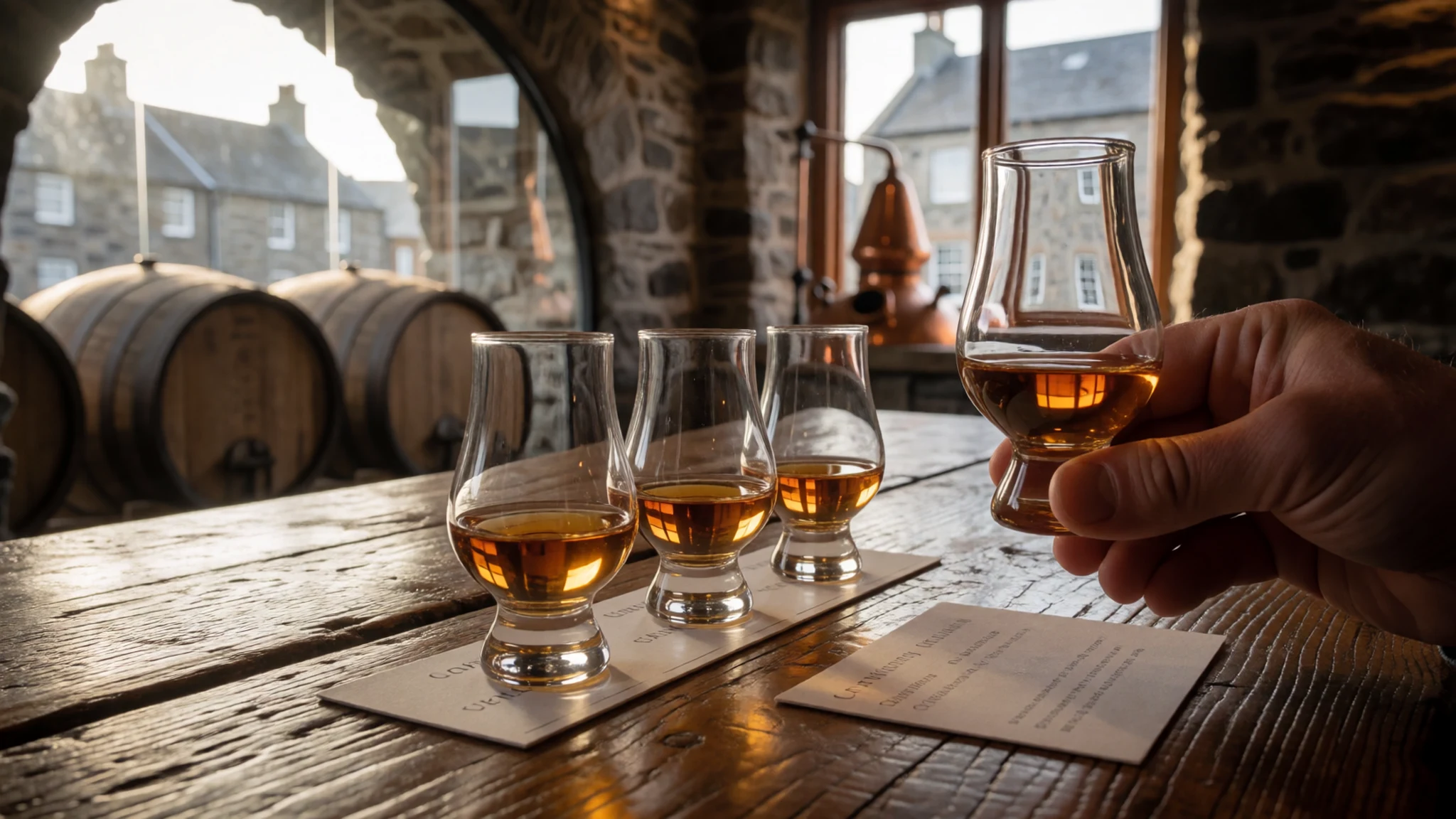
- Orkney Brewery ale — Between Skaill and Birsay, west Mainland
A brewery between Skaill and Birsay runs tours and serves tasting flights in its cafe. Its position close to Skara Brae makes it an easy stop for a drink once the walk around the village is done.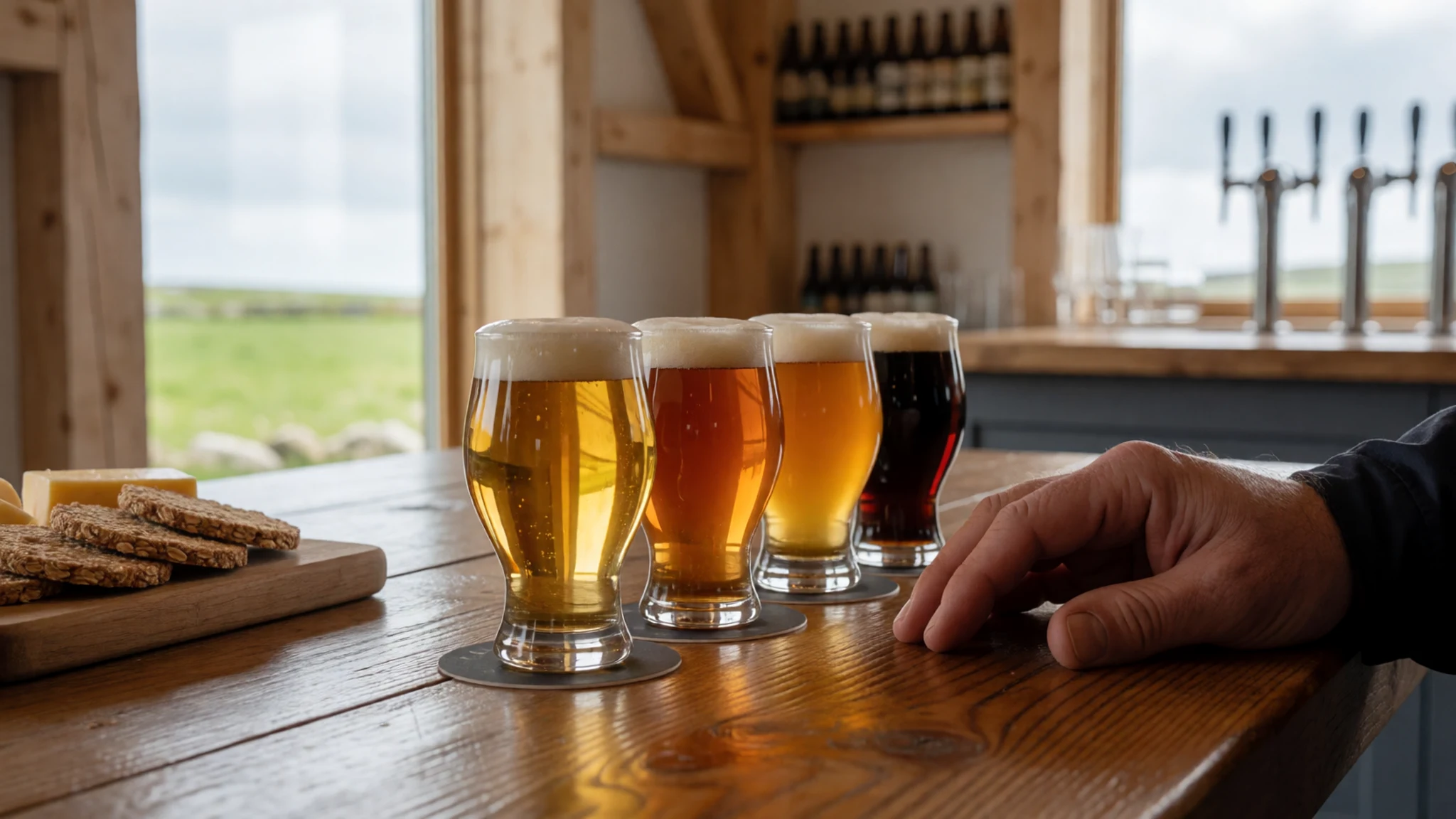
- Orkney gin and vodka — Deerness, east Mainland
The distillery on the east tip of Mainland makes gin and vodka, and its whisky is still maturing. Bottles are good gifts, and the spirits show how the islands have turned local grain and botanicals into a small drinks scene.
- Island rum — Lamb Holm, near the Italian Chapel
A rum distillery sits on Lamb Holm, beside the turnoff for the Italian Chapel. It is an unusual product for the far north of Scotland, and the spot makes an easy pairing with a chapel visit on the way between islands.
- Orkney wine — Lamb Holm, by the Italian Chapel turnoff
Orkney Wine is made on Lamb Holm, close to the Italian Chapel turnoff. It is a curiosity rather than a staple, but worth tasting for the novelty, and the rum distillery next door makes one stop serve two.
Plan it
Best time. May to September is the easiest stretch, with longer daylight and milder weather. Summer is busiest and accommodation prices can be steep, so late spring and early autumn suit those who want quiet. Winter is open but wild, wet and dark, with strong winds.
How long. 2–3
Getting there. Fly to Kirkwall Airport (not ORK, which is Cork in Ireland), or take a ferry from Scrabster to Stromness (about 90 minutes) or from Gill's Bay to St Margaret's Hope (about an hour). Skara Brae is on the west coast of Mainland, reached by car, tour or taxi from Kirkwall or Stromness.
Budget. mid
Tips
- Book ferries and accommodation early for summer, as prices rise at peak times
- Visit early or late in the day to avoid tour groups
- Carry waterproofs and layers whatever the forecast says
- Check the Historic Environment Scotland website for opening times and tickets
- Book the chambered tombs ahead, as some limit entry and fill up for days
Etiquette
- Stay on marked paths and off the ancient walls
- Do not touch or remove stones, shells or finds
- Take litter home and keep dogs under control near the site
Nearby
Sources
- Wikidata Q816437 (CC0)
- Wikipedia: Skara Brae (rev 1382642482) (CC BY-SA 4.0)
- Wikivoyage: Orkney Islands (rev 5257901) (CC BY-SA 4.0)
- Photo: Orkney Skara Brae, Dr. John F. Burka (CC BY 3.0)
- Photo: Skara Brae, Bewahrerderwerte (CC BY-SA 4.0)
- Photo: House 1 of Skara Brae, Wknight94 (CC BY 3.0)
- Photo: Covered house 7 of Skara Brae, Wknight94 (CC BY 3.0)
- Photo: Skara Brae ground plan 1950, V. Gordon Childe (Public domain)
- Photo: Bay of Skaill from Snusgar, Wayne Easton (CC BY-SA 2.0)
- Photo: Skara Brae, Bewahrerderwerte (90) (CC BY-SA 4.0)
- Photo: Skara Brae, Bewahrerderwerte (91) (CC BY-SA 4.0)


