Shizuoka
Shizuoka, Japan
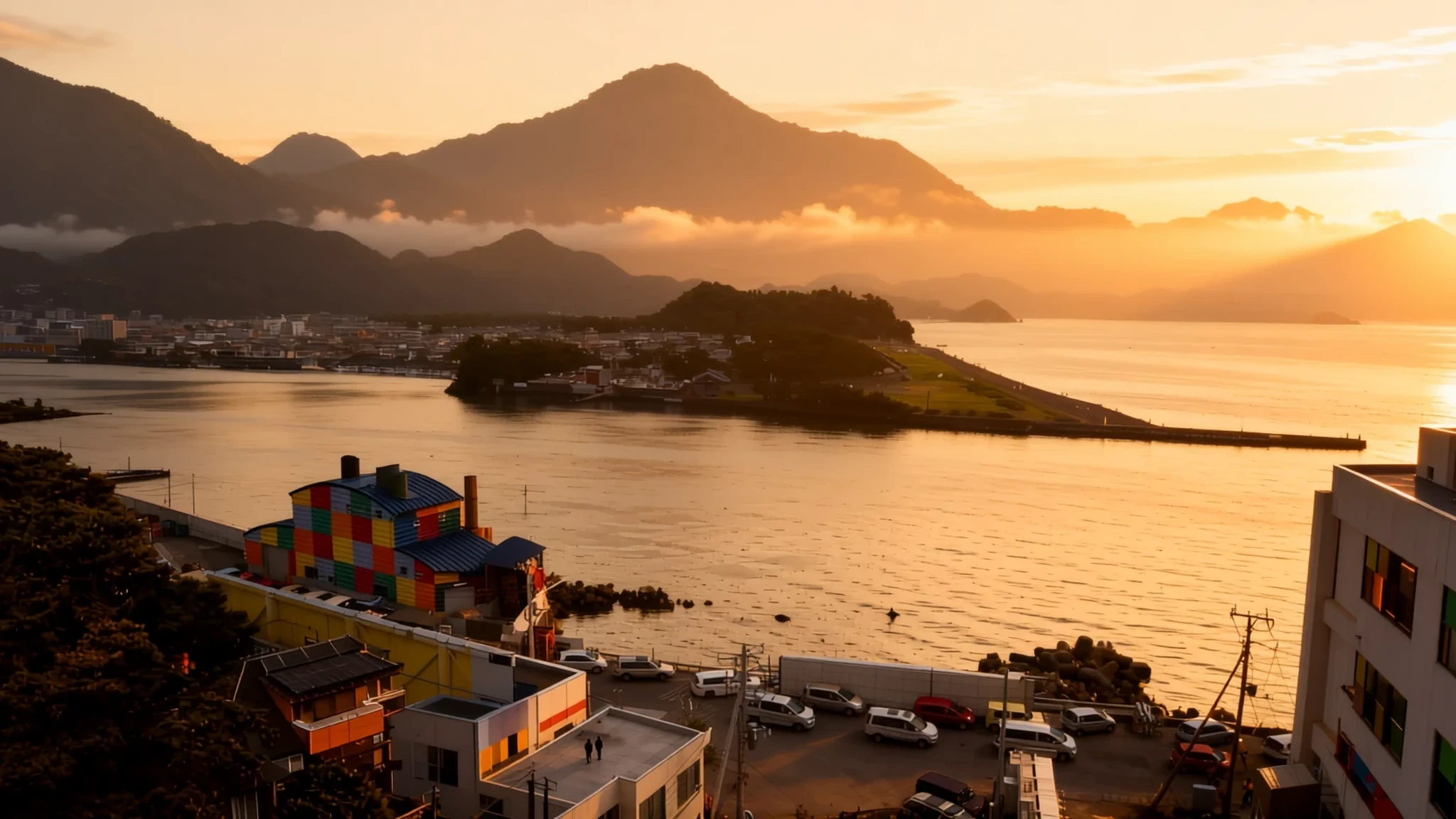
Shizuoka is a relaxed Tokaido city where Mount Fuji, pine-fringed beaches, a shogun's tomb and fresh tuna and eel sit within easy reach.
The place
Shizuoka is the capital of its prefecture, home to about 685,000 people, and it sits at only 12 m above sea level on the coast of Suruga Bay. It lies roughly halfway between Tokyo and Nagoya along the old Tokaido corridor, with the Minami Alps rising to the north and the bay to the south. That position explains most of what the city is: a place people pass through by train, and a place that quietly rewards those who stop.
The city is a government-ordinance designated city, and it is far larger on the map than its centre suggests. After merging with the port town of Shimizu, it took in a huge stretch of mountain, tea country and shoreline. The result is a municipality where you can go from a shopping arcade to a river valley to a pine beach without leaving the city limits.
The flat central district is a fan of land laid down by the fast-flowing Abe River, which carried sand and earth down from the mountains over the ages. The same process built the curved Miho peninsula, which hooks out into the bay.
The centre is compact and easy on foot: department stores and arcades around Denmacho and Shin-Shizuoka, a castle park with moats near the middle, and the station as the hub. Everyday life feels unhurried compared with Tokyo or Osaka, and the pace suits a short stay. Mount Fuji appears on clear days from the hills and the coast, though in summer haze often hides it. Winter and early spring give the sharpest views.
Its story
Shizuoka has been lived in since prehistoric times. Burial mounds called kofun are scattered across the city, and the Toro site records a major farming settlement from the Yayoi period, roughly 400 BC to AD 300. The reconstructed site is a quiet, open green space today.
In the early Nara period, the province of Suruga was established, and at some point between 701 and 710 its capital moved from the Numazu area to the banks of the Abe River. The place was called Sunpu, a contraction of the words for the provincial government seat. That name stuck for centuries and still appears on the castle and in local history.
In the Muromachi period, Sunpu was the base of the Imagawa clan. They fell at the Battle of Okehazama, after which the town passed to Takeda Shingen and then to Tokugawa Ieyasu. Toyotomi Hideyoshi later moved Ieyasu elsewhere and put another lord in charge. After the Toyotomi defeat at Sekigahara, Ieyasu took Sunpu back in 1601 and gave it to one of his own retainers.
Ieyasu's link with the town runs deeper than that. He is remembered as the founder of the Tokugawa shogunate, and Sunpu became associated with his later years and with his burial. The modern city is much younger as an administrative unit: it took its present form in 2003, when Shizuoka merged with Shimizu.
What to see
- Nihondaira — Eastern Shizuoka
A hill in the middle of the city, about 308 m high, reached by road or ropeway. Its lookouts give wide views over Shimizu port, the Izu Peninsula and Mount Fuji. Go on a clear morning, ideally in winter, when the air is crisp and the mountain stands out.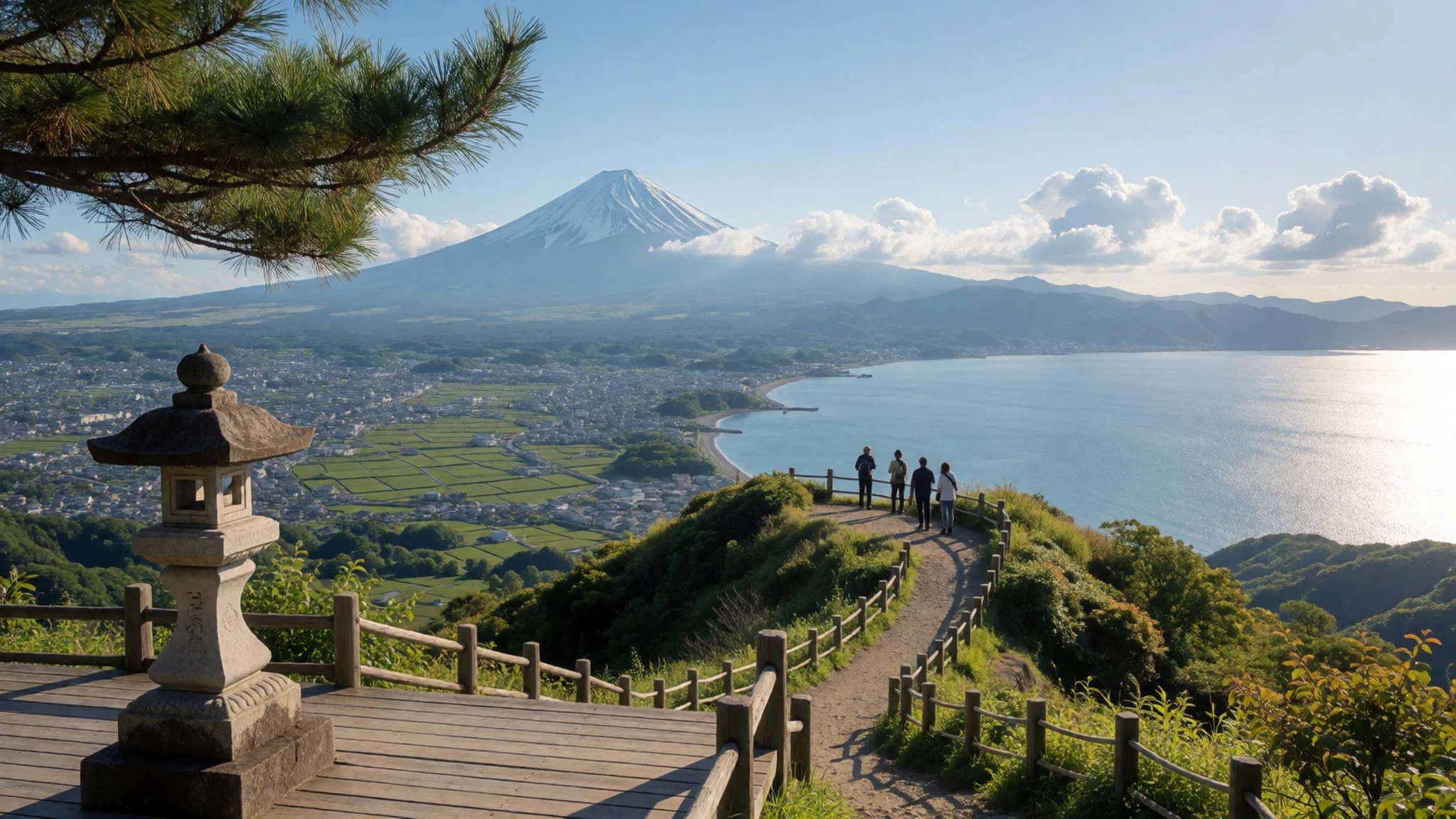
- Miho no Matsubara — Miho peninsula, Shimizu
A long curve of pine trees along a shingle beach on the Miho peninsula, framed by Mount Fuji on clear days. It is counted among Japan's New Three Views. The walk beneath the pines is gentle and shady, and the sea breeze helps in summer.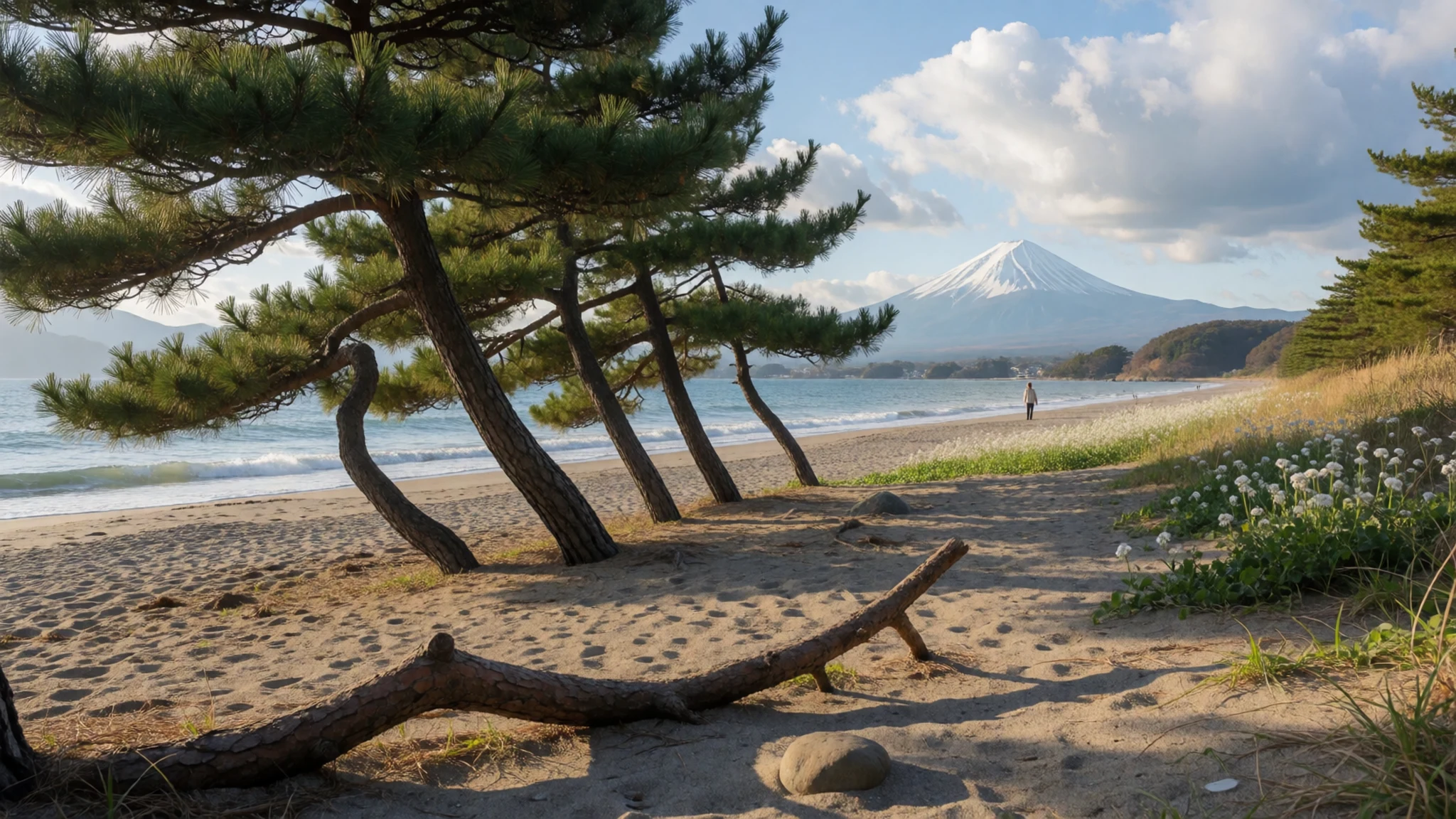
- Kunozan Tosho-gu — Mount Kuno, south of the centre
The actual burial place of Tokugawa Ieyasu, whose official mausoleum is at Nikko. Most buildings here date from 1617, and the shrine's colourful carving stands out against the wooded hillside. Expect a climb of steps, or take the ropeway from Nihondaira.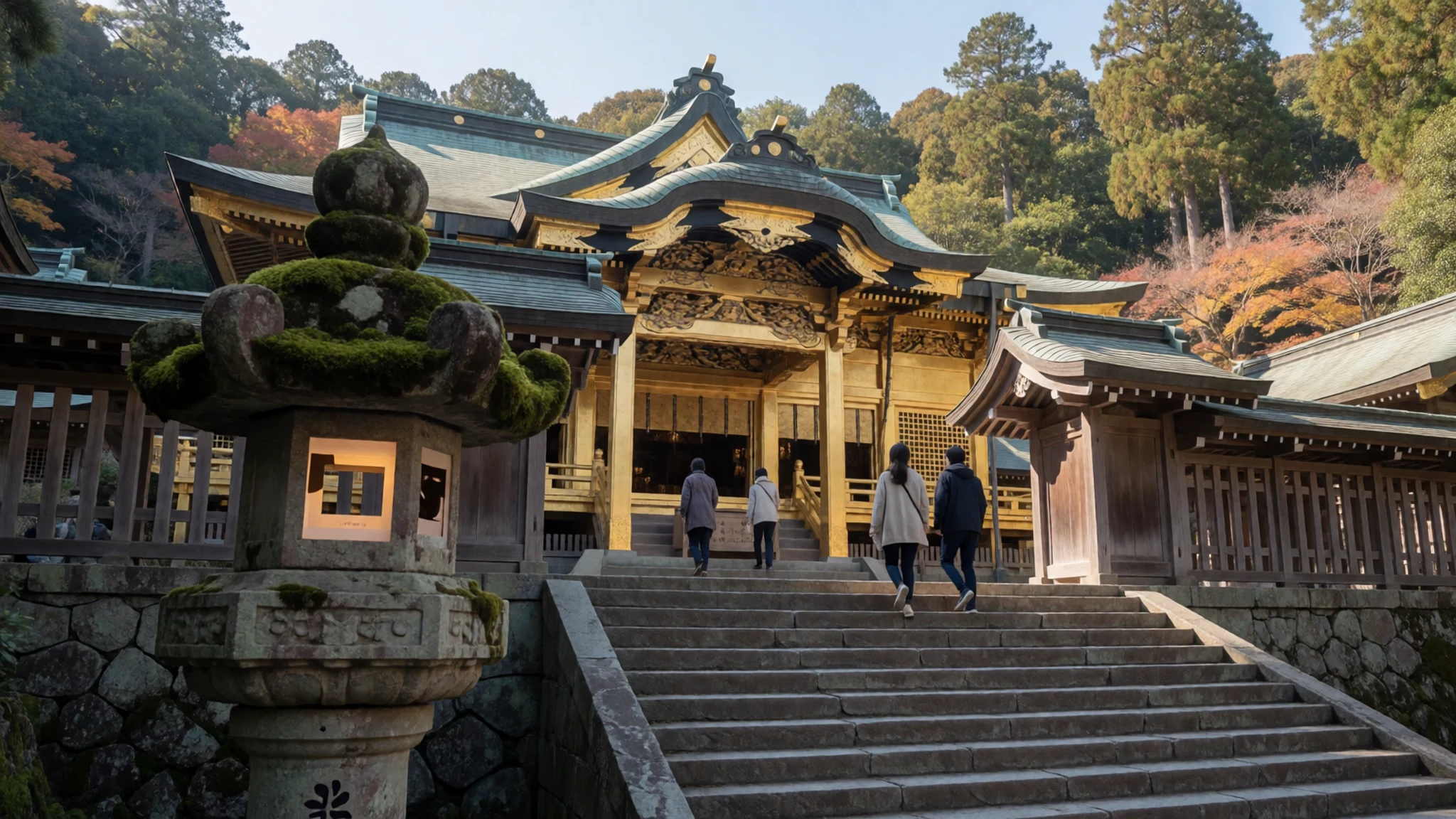
- Sunpu Castle — Central Shizuoka
The castle keep has not been rebuilt, so what remains is a broad park with moats and stone walls. The restored corner turret and gatehouse are the highlights, and the grounds are pleasant for a walk. Cherry blossom time brings crowds from nearby offices and families.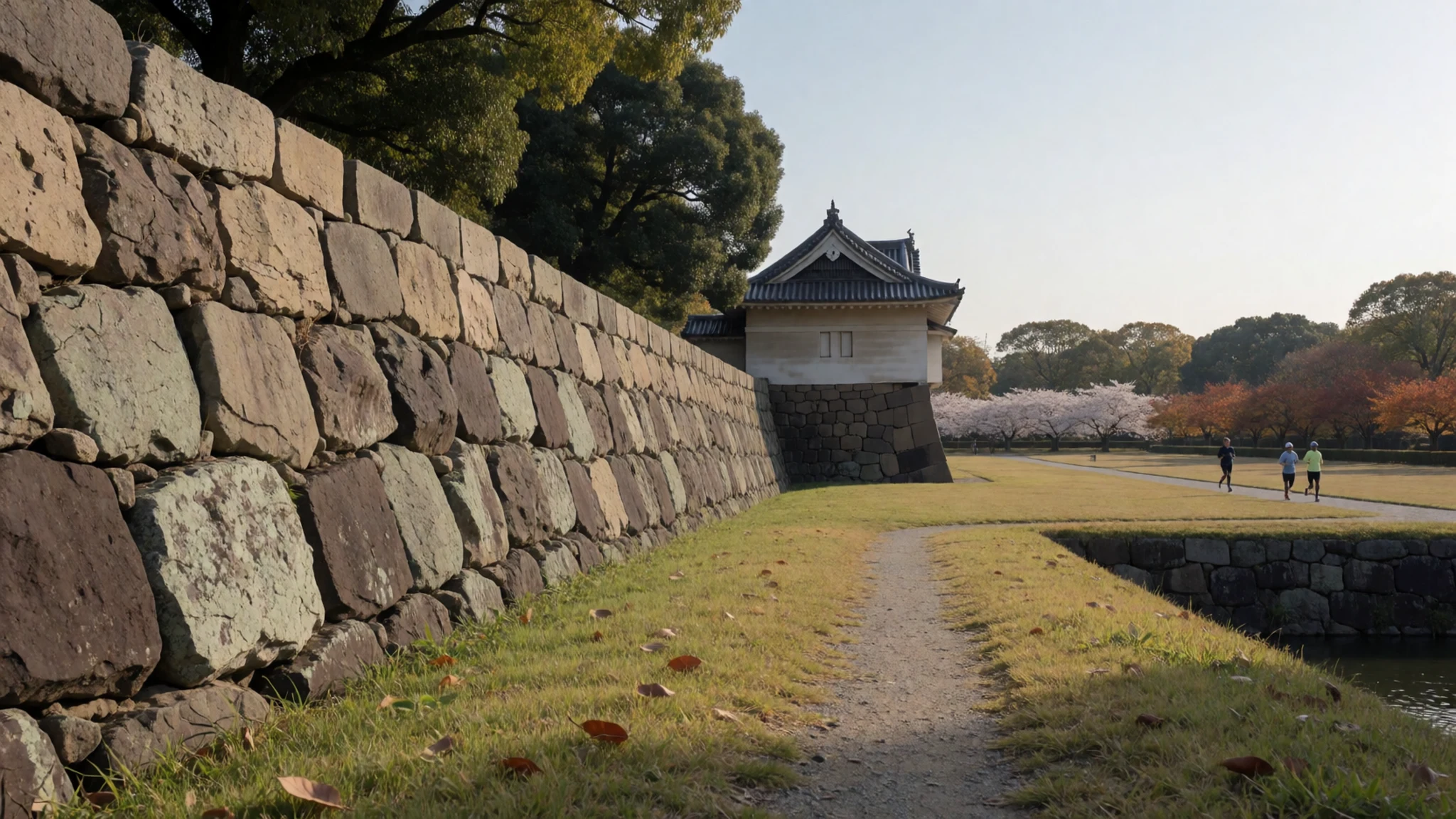
- Toro site — Southern Shizuoka
A reconstructed Yayoi-period village with raised-floor storehouses and pit dwellings set beside rice fields. It is a calm place to picture life in the city more than two thousand years ago, and an easy half-day by bicycle or bus from the station.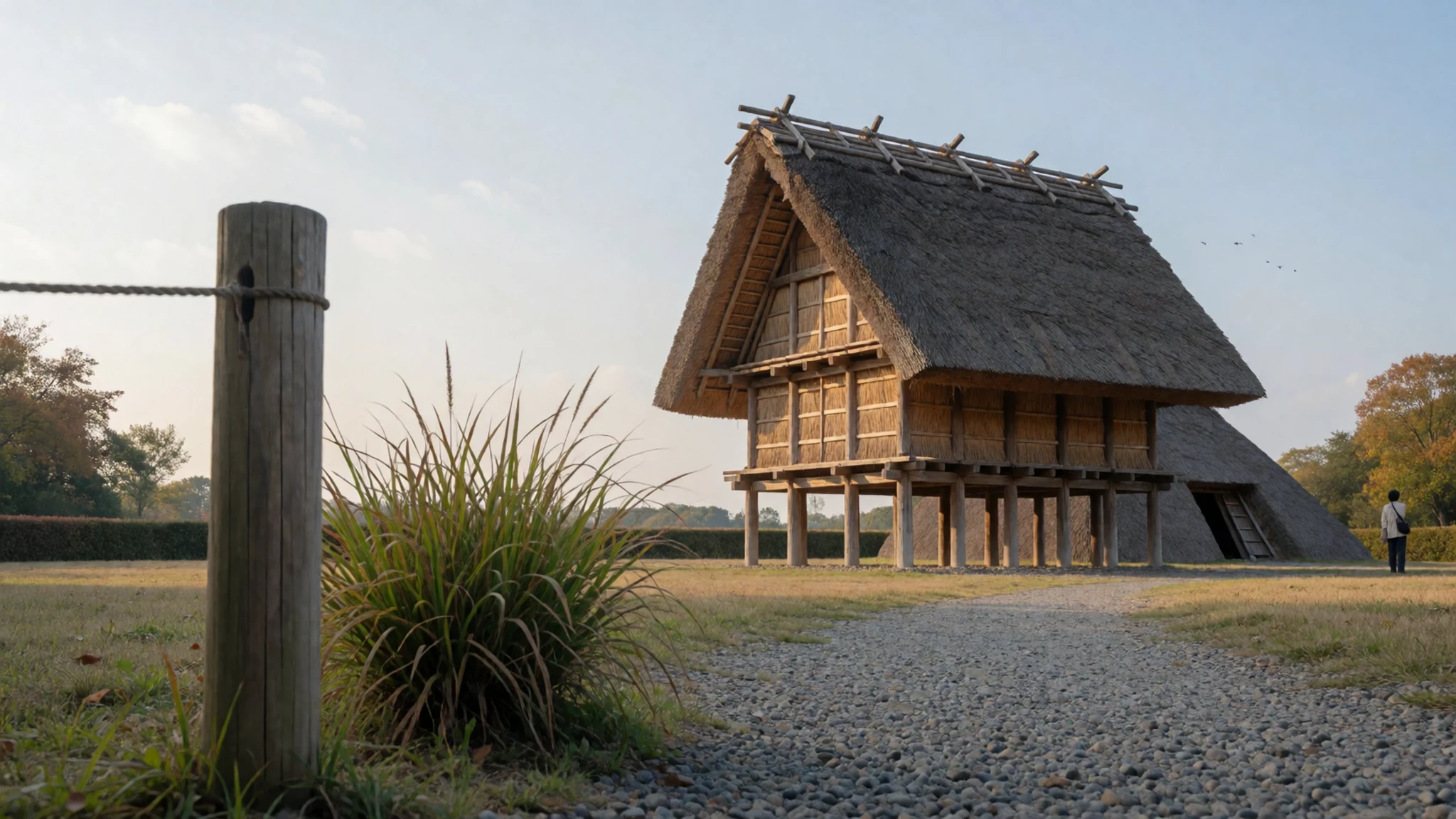
Culture
Shizuoka's culture is shaped by its role as a stop on the Tokaido, by its tea and by the memory of Tokugawa Ieyasu. Daily life is practical and polite rather than showy, and festivals tend to be organised around the seasons and the river.
The Shizuoka Festival takes place in April, when cherry blossom is at its height. Its flower-viewing procession echoes Ieyasu's habit, in the 17th century, of taking feudal lords to Sengen Shrine to see the blossom. Families picnic under the trees in Sunpu Castle park, and the whole centre feels festive.
In late July, the Abekawa fireworks are launched upstream on the river. They began after the Second World War as a way of remembering the dead and praying for recovery, and they have since become a local summer fixture. Crowds gather on the riverbank early to claim places.
In November, the Daidogei World Cup fills streets and squares with street performers, including jugglers, mime artists and acrobats, over four days. Many shows are free, and it is a good time to see the city's public spaces in use.
Shizuoka is also known as a tea-growing region, and tea is part of hospitality here; a cup is often offered to guests without being asked.
When you visit a shrine such as Sengen or Kunozan Tosho-gu, bow slightly at the gate, keep your voice low, and do not photograph worshippers or priests without asking.
What to wear
Traditional dress in Shizuoka is the same as elsewhere in Japan: the kimono, made of silk for formal wear and cotton or linen for summer, and the lighter yukata, a cotton robe. Yukata appear at summer evenings, such as the Abekawa fireworks, while kimono are worn at weddings, coming-of-age ceremonies and the occasional spring festival. Many visitors see local people in work clothes, with happi coats at festivals and wide-brimmed hats among the tea fields.
Everyday clothing in the city is plain and neat: office wear in the centre, casual layers and sportswear on weekends, and fans of the local football club in orange shirts on match days. Young people follow the fashion trends of Tokyo but with a slightly quieter palette.
For visitors, comfort matters more than style. Summers are hot and humid, so choose light cotton or linen and carry a small towel and a hat. Winters are mild, but a warm layer is useful on Nihondaira and at the coast, where the wind is strong. Spring and autumn suit a light jacket.
Wear shoes that slip off easily, since you will remove them at some temples, restaurants and guesthouses, and wear clean socks. For hill walks at Kunozan and Nihondaira, go for sturdy trainers. At shrines, you do not need special clothing, but avoid beachwear and very revealing outfits. Bring a compact umbrella in the rainy season.
What to eat
- Unagi (eel) — Eel restaurants near the station
Grilled eel over rice is a Shizuoka speciality, brushed with a sweet soy glaze and served in a lacquered box. Look for eel specialists in the streets around the station and the central district. Lunch sets are usually the best way in.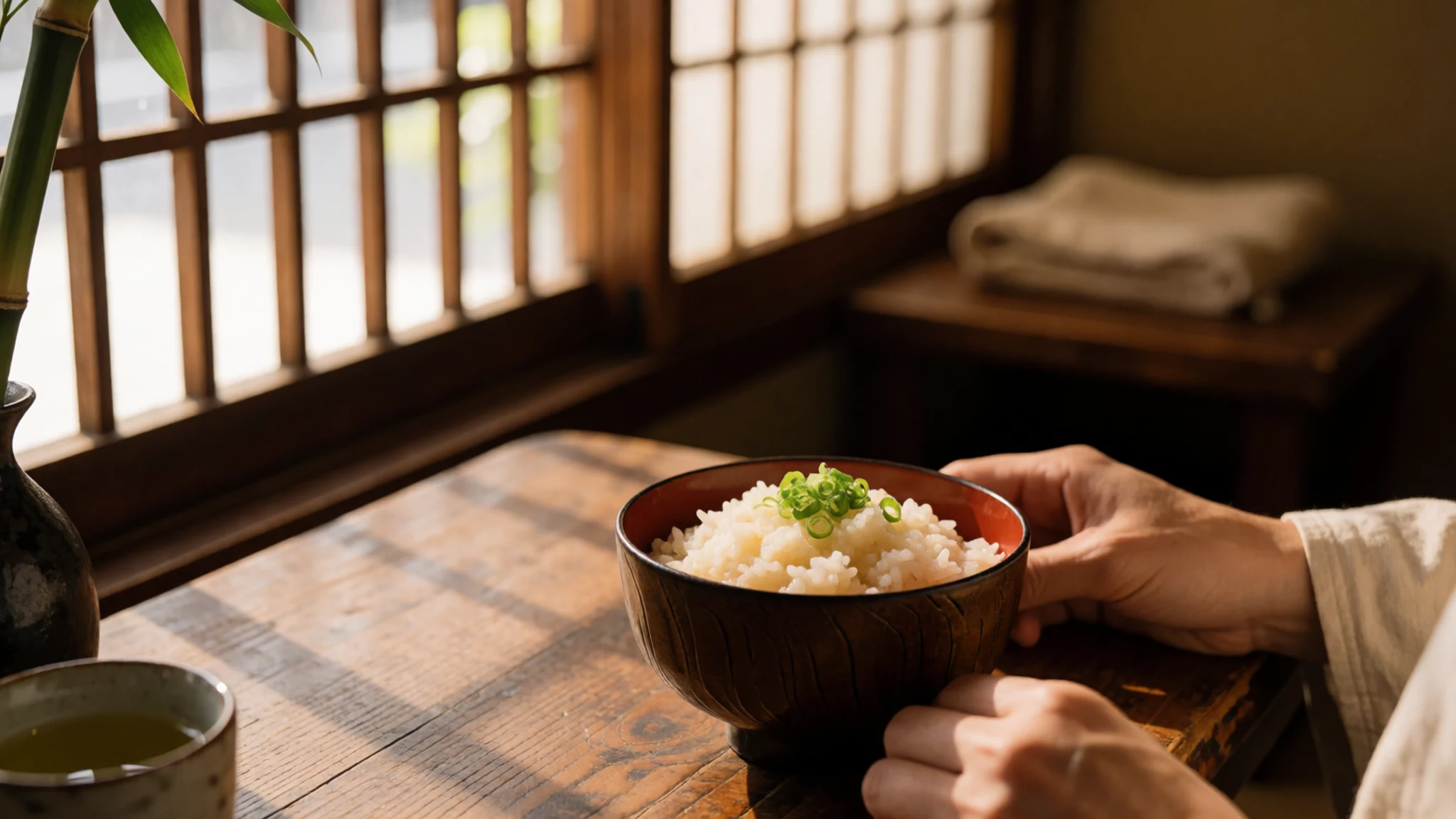
- Fresh tuna — Tuna restaurants in central Shizuoka and the port area
Shimizu's port supplies tuna, served as sashimi, rice bowls and seared slices. Specialist tuna restaurants in the centre often have queues at midday, so go early or off-peak. Pair it with a bowl of miso soup.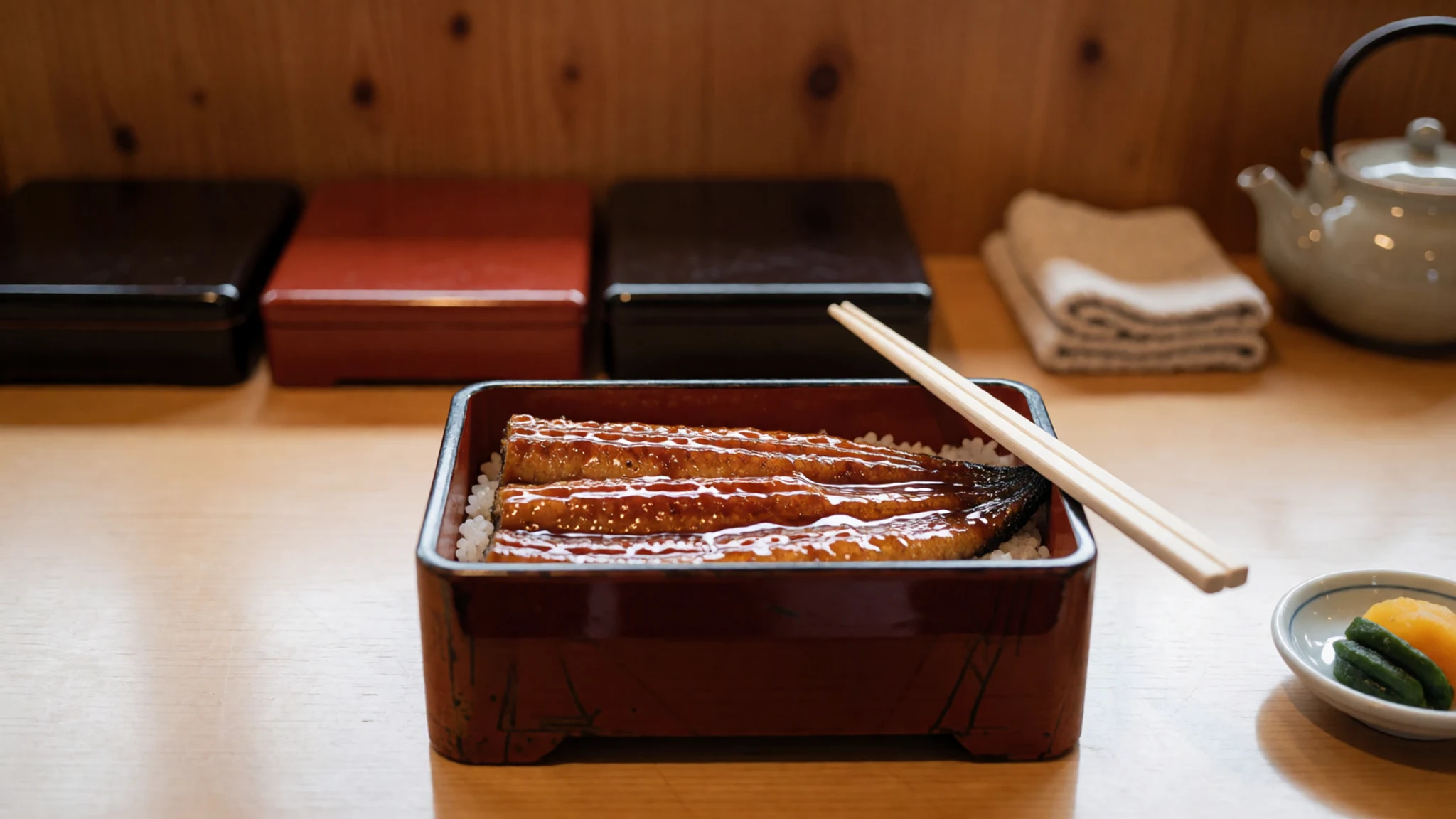
- Tororo-jiru — Traditional restaurants in the city
A soup of grated mountain yam, poured over rice and eaten with barley. It is mild, slippery and filling, and is associated with the Tokaido road. A few old restaurants in the city serve it in traditional rooms. - Shizuoka tea — Tea shops and cafés around the centre
The prefecture is known for its green tea, from fresh sencha to roasted hojicha. Try a pot at a tea shop or a café, and ask for the local variety. It is gentle, grassy and goes well with Japanese sweets. - Shizuoka oden — Small eateries and stalls near the station
A street-food stew where skewered fish cakes, eggs and radish simmer in a dark broth. Locals eat it with fish powder and mustard. Look for stalls and small eateries in the older arcades near the station, especially in cool weather.
Plan it
Best time. March–April for cherry blossom and the Shizuoka Festival, and October–November for clear air and mild days. June is the rainy season, and July–August are hot and humid, though the fireworks make late July lively. Winter gives the sharpest Mount Fuji views.
How long. 2–3
Getting there. Mount Fuji Shizuoka Airport has buses to Shizuoka Station, but the main gateways are Haneda, Narita and Chubu airports. Shizuoka is a stop on the Tokaido Shinkansen: about one hour from Tokyo, a little under an hour from Nagoya, 90 minutes from Kyoto and 1 hour 45 minutes from Shin-Osaka. The centre is walkable from the station.
Budget. mid
Tips
- Go to Nihondaira early in the morning for the clearest views of Mount Fuji
- Check the official city website (https://www.city.shizuoka.lg.jp/) for festival dates and opening times
- Carry some cash for small restaurants, shrines and market stalls
- Queue early at the popular tuna restaurants, or visit outside peak lunchtime
- Use a day trip to combine Miho no Matsubara with the port and the hill
Etiquette
- Take your shoes off when you see a raised floor or slippers
- Keep your voice low at shrines and do not photograph worshippers without asking
- Do not eat while walking through shrine grounds
Nearby
Sources
- Wikidata Q174691 (CC0)
- Wikipedia: Shizuoka (city) (CC BY-SA 4.0)
- Wikivoyage: Shizuoka (CC BY-SA 4.0)
- Photo: Shizuoka montage (CC BY 3.0)
- Photo: Mount Fuji and Port of Shimizu from Nihondaira (Alpsdake) (CC BY-SA 4.0)
- Photo: Sunpu Castle Tatsumi Yagura (CC BY-SA 4.0)
- Photo: Miho no Matsubara (xe zna) (CC BY 3.0)
- Photo: Kunozan Tosho-gu (663highland) (CC BY-SA 4.0)
- Photo: Denmacho intersection (Akahito Yamabe) (CC BY-SA 4.0)
- Photo: Toro Site (Saigen Jiro) (CC0 1.0)
- Photo: S-Pulse Dream Plaza (CC BY-SA 4.0)


