Shimane
Shimane, Japan
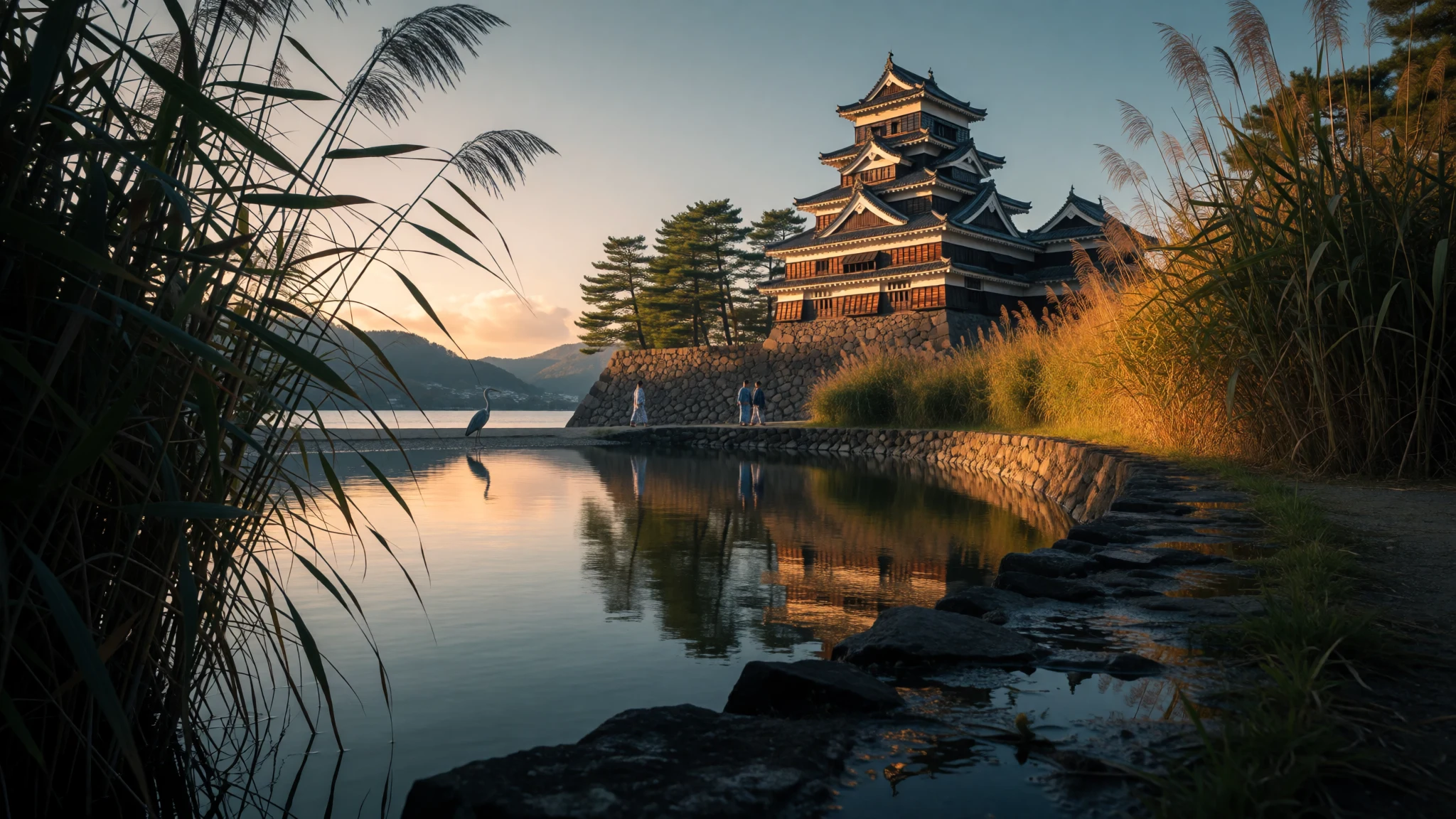
Shimane is a damp, quiet corner of western Honshu where a castle, an ancient shrine, lake-fresh seafood and spring horseback archery reward unhurried travel.
The place
Shimane was a small town on the Japan Sea coast, north of Matsue, and today the name lives on mainly through the prefecture around it. The town existed as a municipality from 1969 until 2005, when it was absorbed into Matsue, so visitors will find a coastal district on the map rather than a town hall and a centre. The wider prefecture lies on the western side of Honshu, in the strip called San'in (山陰), the shady side of the mountains. A mountain range divides it from the brighter San'yo side facing the Inland Sea, and winds off the Japan Sea drop their moisture on the northern slopes. The result is a damp, grey, changeable climate, and rain is possible in almost any month. The prefecture is thinly populated, with about 650,000 residents in 2023, and the number keeps falling. That gives the coast and lake country a calm, unhurried feel. Most outsiders come for Matsue's castle and the great shrine at Izumo, then move on, which leaves the fishing villages, ski slopes and festival towns to a handful of curious travellers. Public transport thins out away from the main rail line, so a car, or a carefully checked timetable, makes a large difference. The reward is space: lake shores at dusk, small harbours, and tables where the catch is local and the portions generous.
Its story
Shimane's story as a town is short and mostly administrative. It was formed as a municipality in Yatsuka District in 1969, a coastal community on the northern edge of the Shimane Peninsula. On 31 March 2005 it was merged, together with the neighbouring towns of Kashima, Mihonoseki, Shinji, Tamayu and Yatsuka and the village of Yakumo, into an enlarged Matsue. After that date the name stopped appearing on administrative maps, though it stays in older records, local memory and the prefecture's own title. The bigger story belongs to the region around it. San'in has long been set apart by its weather and its mountains, and for much of modern Japan's growth it sat well away from the busy Pacific corridor. Population has drained steadily towards big cities, and the prefecture is now among the most thinly settled in the country. Yet the area kept strong traditions. Matsue Castle is one of the few Japanese castles to survive in its original form. Izumo's shrine remains a major centre of Shinto worship, and Tsuwano preserves a long-running yabusame, the mounted archery festival, held each spring. Municipal mergers like the one that absorbed Shimane were a response to ageing and shrinking communities, and they explain why many small place names here now survive only on signposts, in festival calendars and in the memories of residents.
What to see
- Izumo Shrine — Izumo
Izumo Shrine, west of Matsue, is regarded in Japan as among the most important Shinto sites, and it draws pilgrims throughout the year. Come early, walk the approach slowly and allow time to see the main hall. The mood is quieter and more rural than at the famous Kyoto shrines.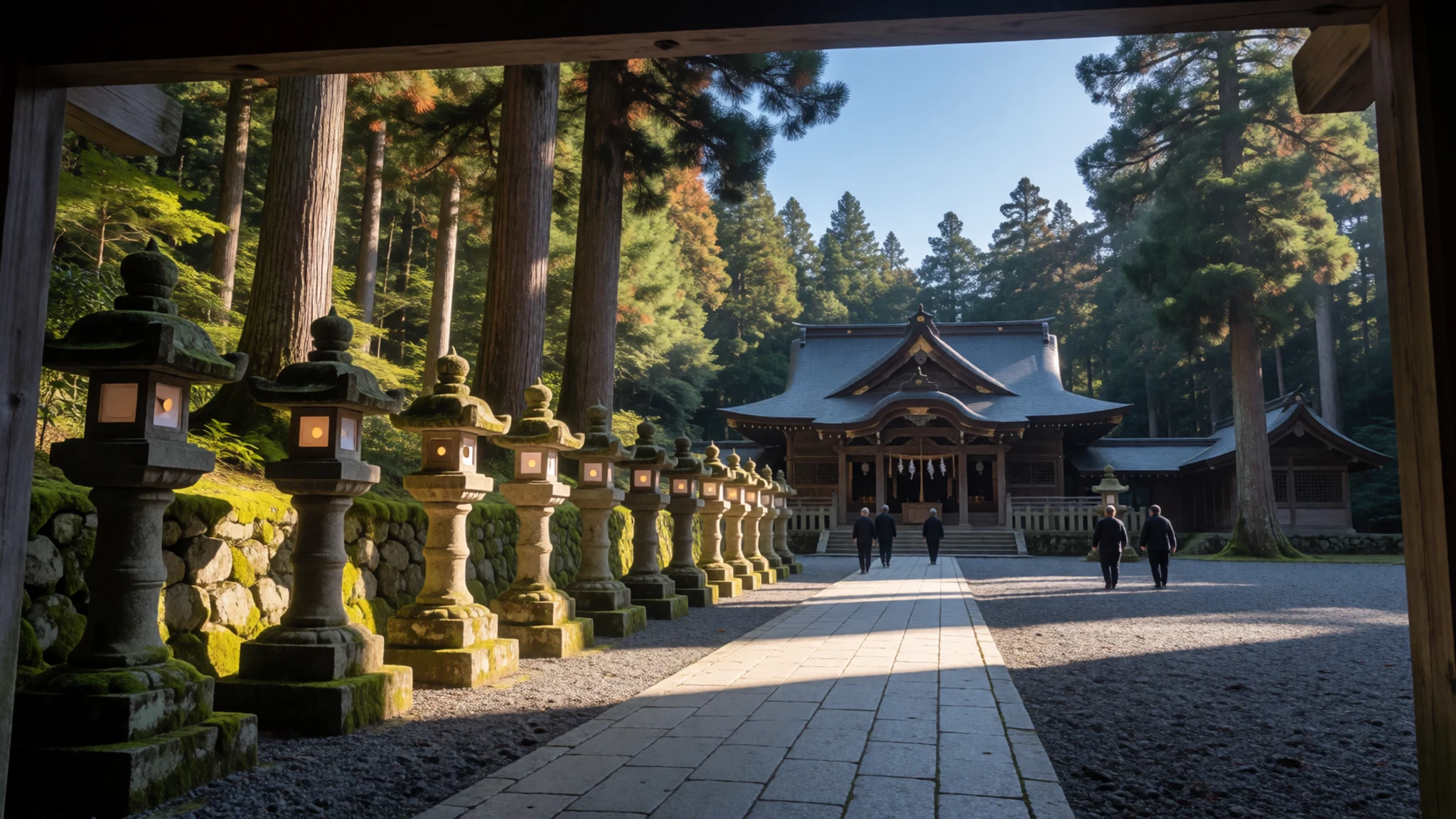
- Matsue Castle — Matsue
Matsue Castle is a dark-timbered fortress on a low hill above the moat, and one of the few Japanese castles to survive from the feudal period. Climb inside for views over the town and Lake Shinji, then walk the moat-side lanes where old samurai houses still stand.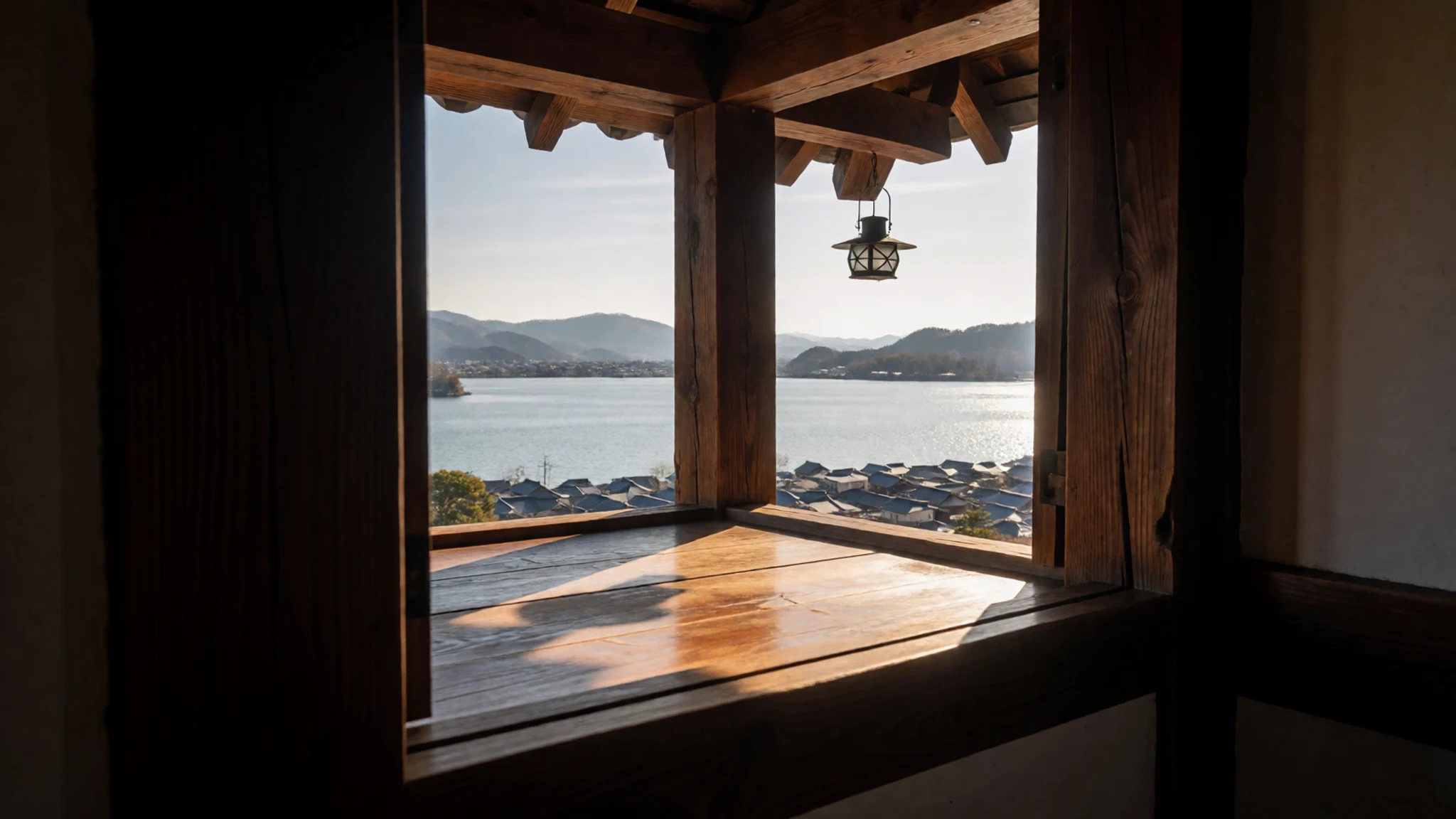
- Lake Shinji — Matsue
Lake Shinji lies beside Matsue and is best enjoyed at the end of the day, when the water goes still and the light turns copper. Locals walk its shore for the sunset. The lake also feeds the area's food culture, giving the town clams, eel and sea bass.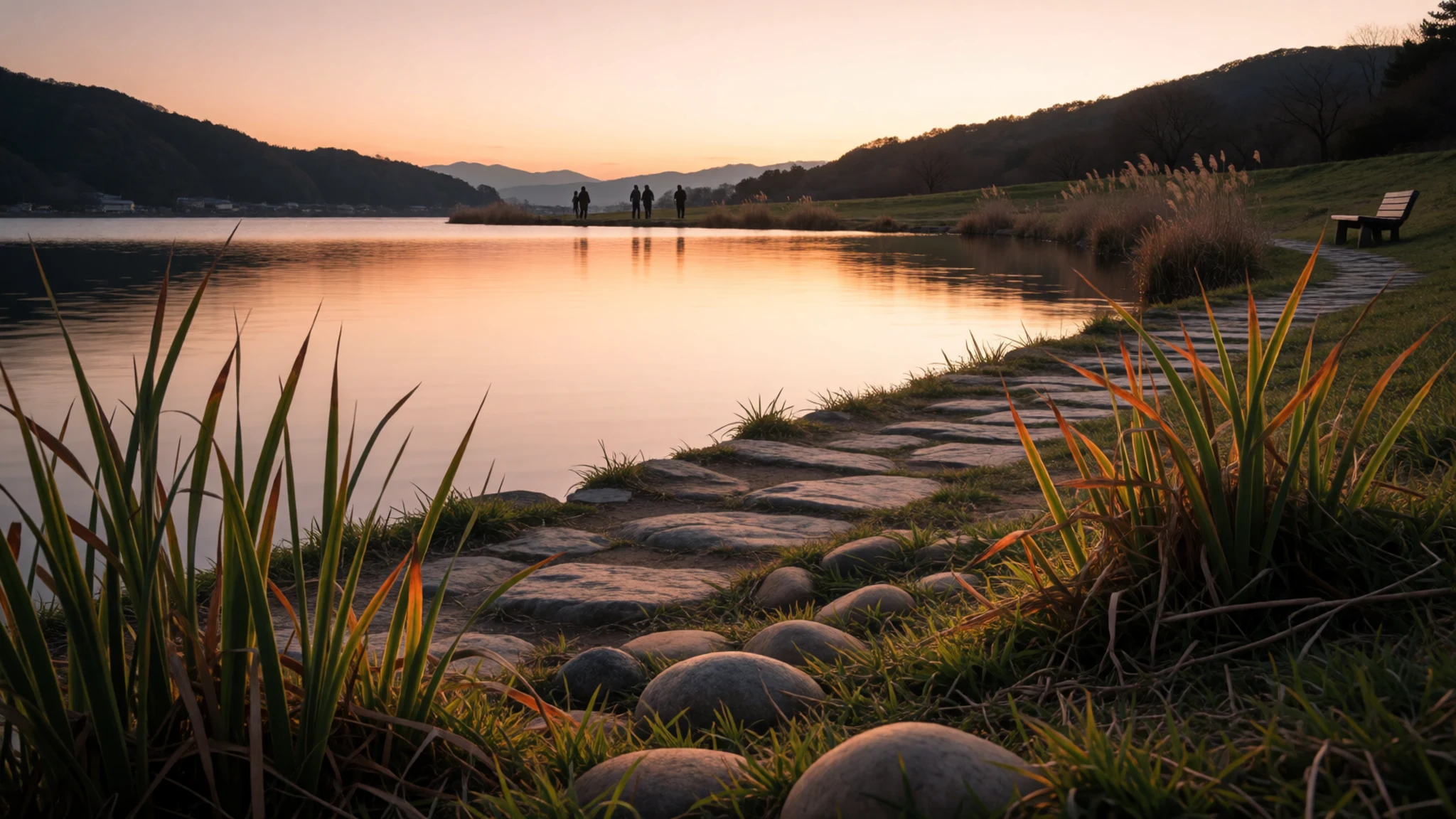
- Tsuwano yabusame — Tsuwano, western Shimane
Tsuwano holds one of the best-known yabusame festivals in Shimane, where riders in traditional dress gallop down a track and loose arrows at wooden targets. It usually falls in early April, and with luck coincides with cherry blossom. Check the dates with the local tourist office before planning.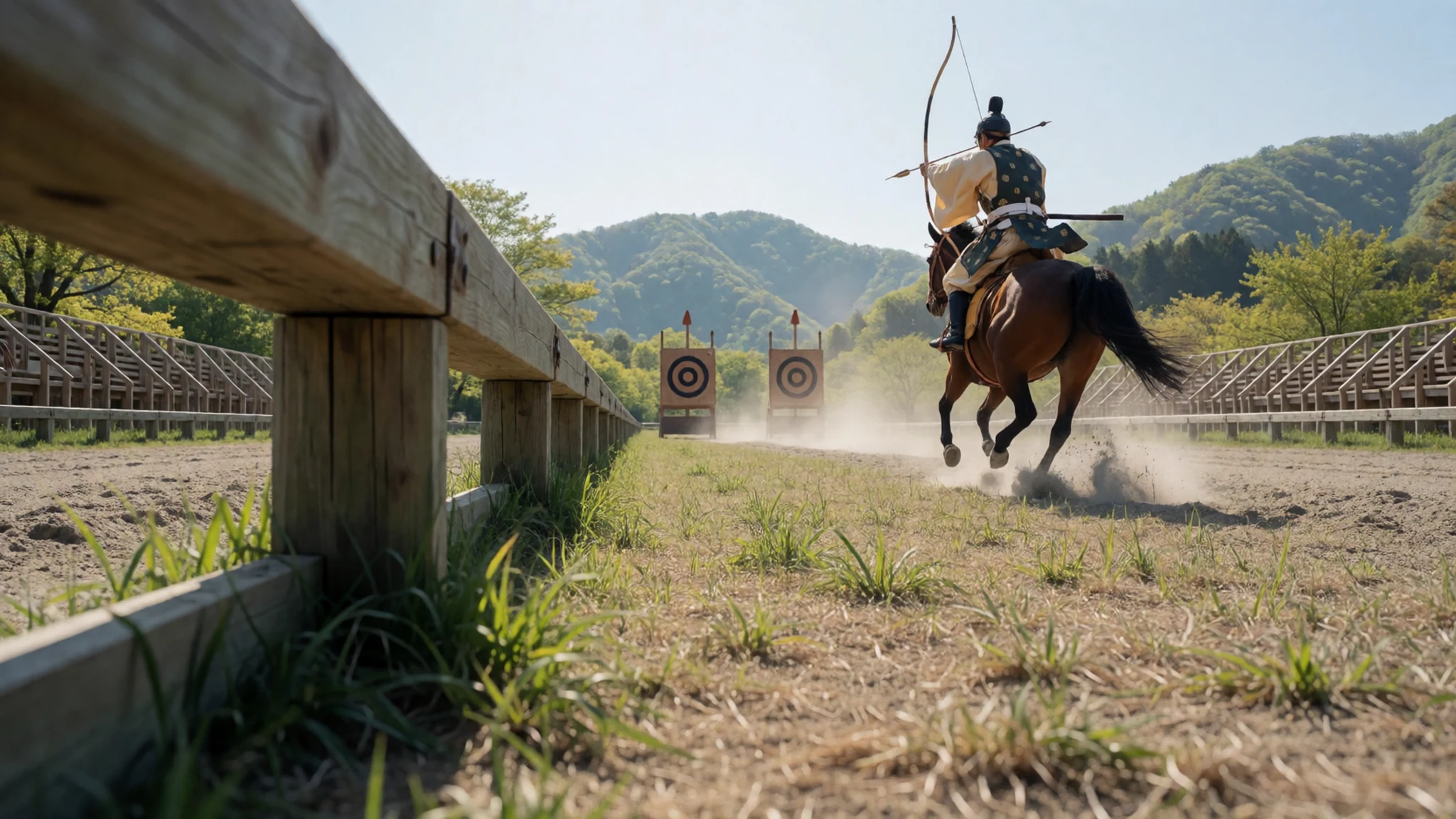
- Oki Islands — Japan Sea, offshore
The Oki Islands lie off the Shimane coast in the Japan Sea and feel remote even by local standards. They can be reached by air from Izumo or Osaka-Itami, and by sea from the mainland. Plan around the weather, which can cancel crossings, and give the trip a few unhurried days.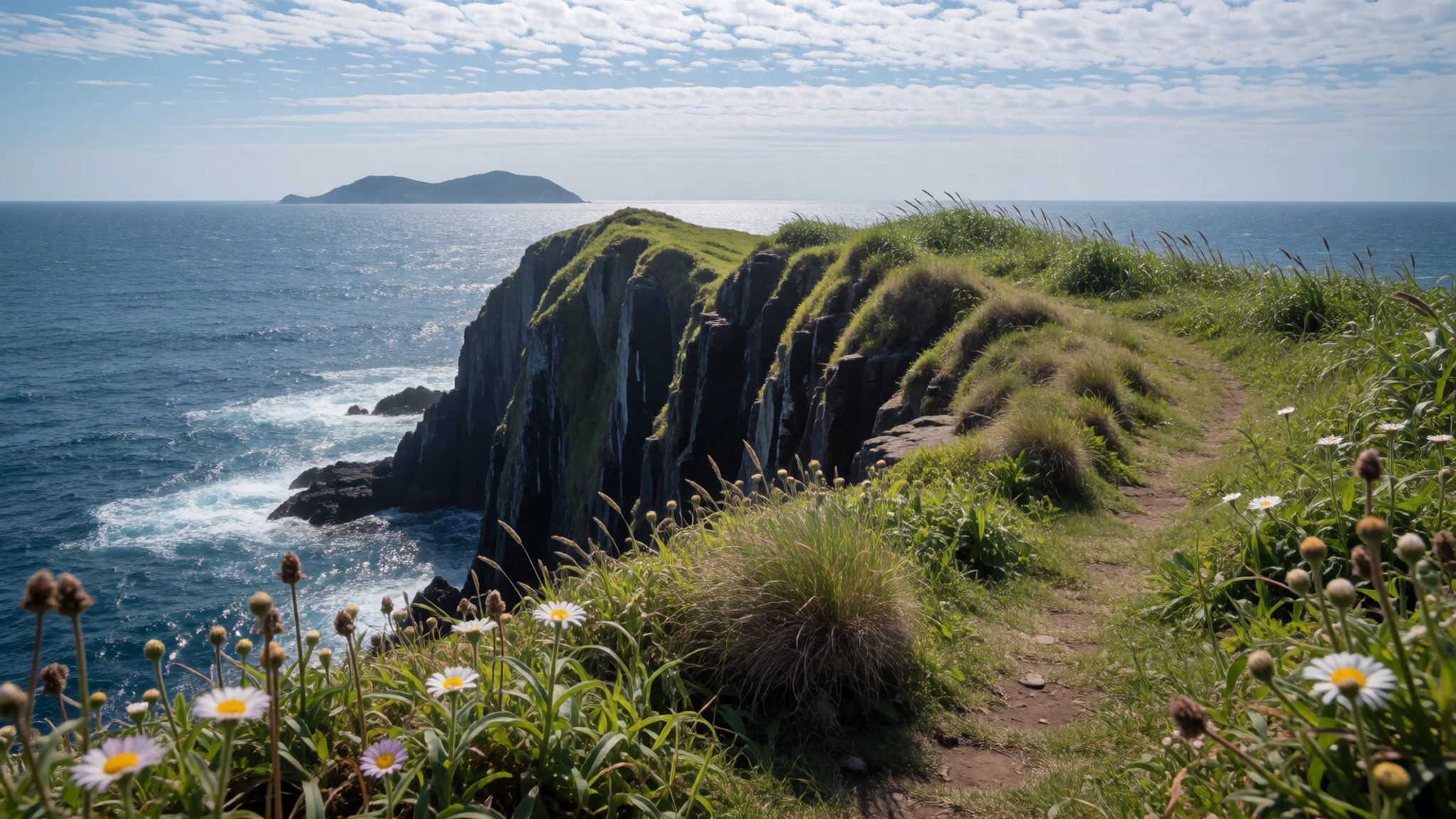
Culture
Shimane's culture is shaped by its shrines, its farming and fishing communities, and a calendar of local festivals. Izumo is the spiritual centre, associated in Japanese tradition with gatherings of the gods, and shrine visits still punctuate family life here: New Year, weddings, school exams and harvest. At Izumo Shrine the usual two claps of prayer are traditionally four, a small detail that locals appreciate when visitors notice it. Matsue has a gentler, tea-loving, castle-town character, while the coastal districts, like the former town of Shimane, are quieter and more tied to the sea. Festivals follow the seasons. Yabusame, mounted archery, is held in spring at Tsuwano and other sites, and many towns hold fireworks displays in August, when families gather in summer cotton robes. Food is part of the culture too: soba served in stacked lacquer bowls at Izumo is a social meal, shared and slurped without ceremony. The population is ageing, and festivals are often kept alive by a small circle of volunteers, so visitors are usually welcomed with curiosity rather than suspicion. Pace of life is slow, shops close early in smaller towns, and the damp San'in weather is a constant topic of conversation. At shrines, bow briefly at the gate, stay quiet near worshippers, and ask before photographing anyone taking part in a ritual or festival.
What to wear
Shimane's traditional dress follows the national pattern rather than a distinct regional costume. The kimono, usually silk for formal occasions, appears at weddings, coming-of-age ceremonies and shrine visits at New Year. In summer the lighter yukata, a cotton robe, is worn to fireworks displays and local festivals, often with a sash and wooden sandals. Yabusame riders dress in historic hunting robes, wide trousers and stiff hats, a deliberate piece of living history that most spectators photograph with delight. Day to day, people wear what the weather demands: practical layers, waterproof jackets, sturdy shoes and umbrellas, because the damp San'in climate rarely stays dry for long. Older residents in fishing and farming districts favour plain, work-ready clothes, while younger people in Matsue dress much as they would in any Japanese city, in neat, understated casual wear. A visitor should pack for rain in any season, with a light waterproof, quick-drying layers and shoes that grip wet paving and slippery temple steps. Warm layers matter in winter, and ski resorts need proper snow clothing. For shrines, castles and festivals, shoulders and knees need not be fully covered, but tidy, modest clothing is appropriate. Shoes that slip off easily are a practical choice, since castle interiors, some inns and certain halls ask guests to remove them at the entrance.
What to eat
- Shijimi clams — Lakeside eateries around Matsue
Shijimi are small freshwater clams from Lake Shinji, usually served in a clear, savoury miso or broth soup. They are a staple of Matsue's table, and the soup is sold in lakeside eateries and small restaurants around the town.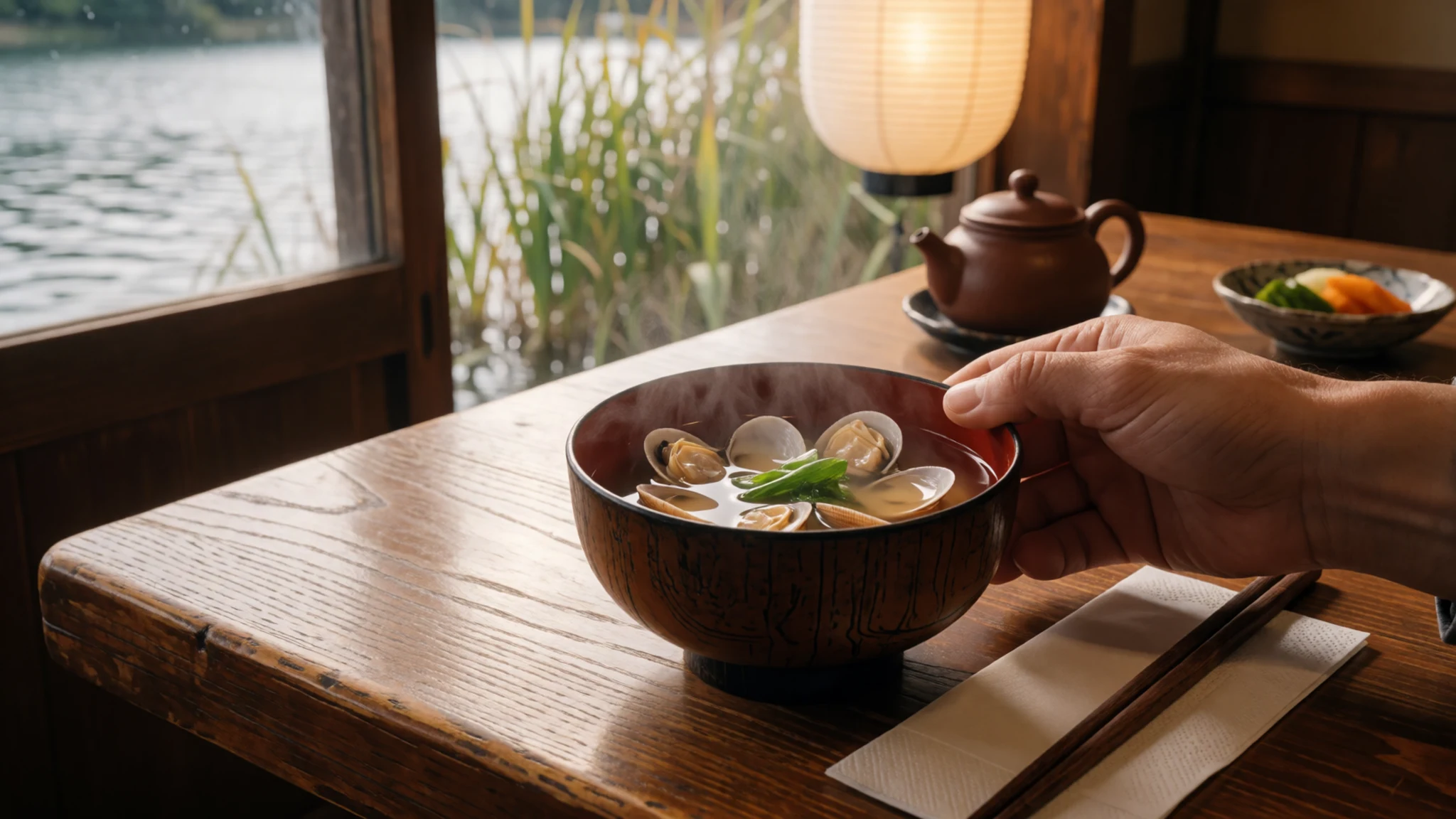
- Warigo soba — Soba shops near Izumo Shrine
Warigo soba is buckwheat noodles served in three stacked lacquer bowls, with toppings and broth poured over in turn. It is the classic way to eat soba in Izumo, and soba shops near the shrine serve it as a casual lunch.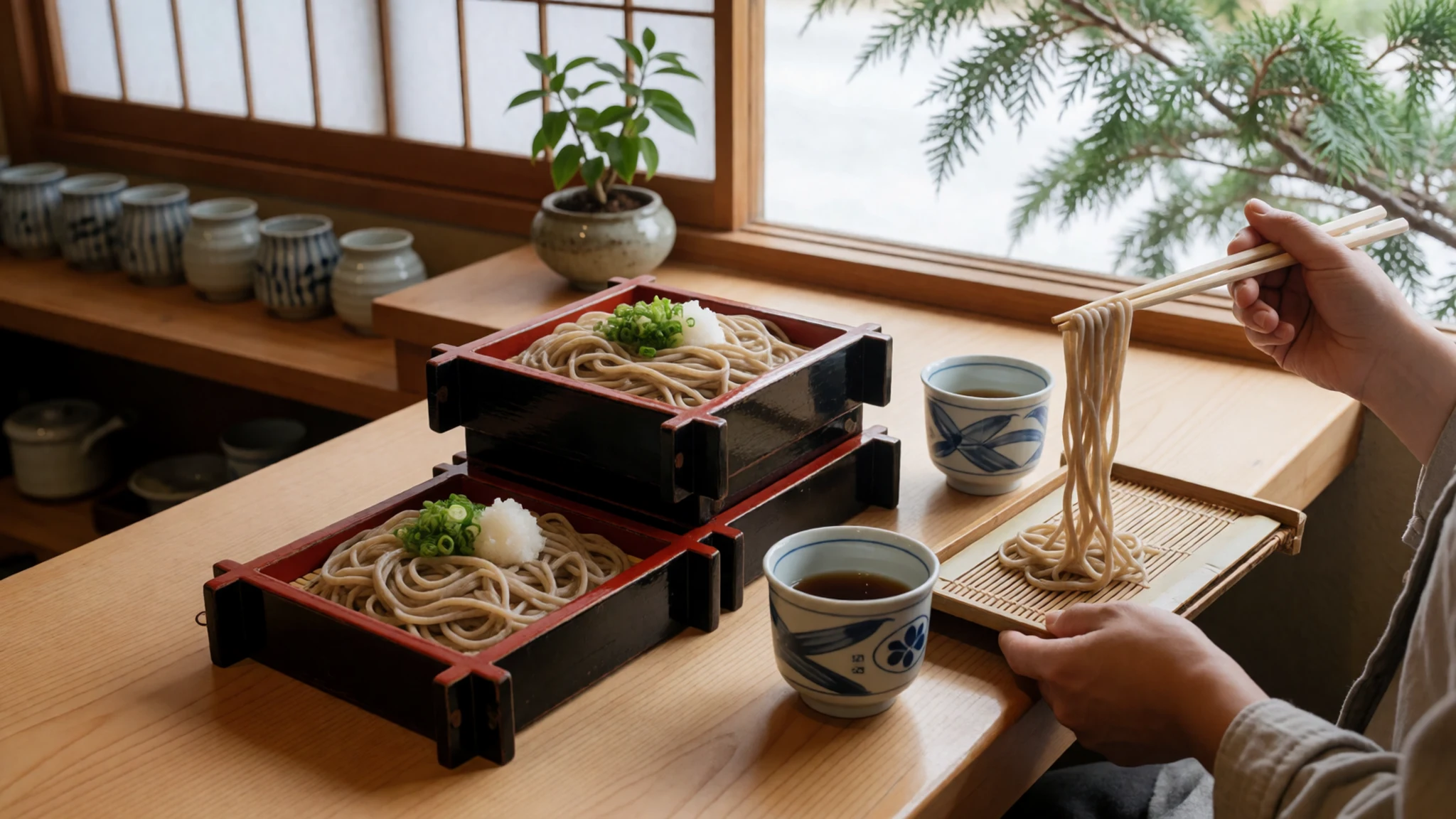
- Akaten — Fish shops and markets in Hamada
Akaten is a fried fish cake flavoured with red pepper powder, giving it a gentle heat and a rosy colour. It is a local snack from Hamada on the western coast, easily found in fish shops, markets and takeaway counters. - Lake Shinji eel and sea bass — Restaurants along Lake Shinji in Matsue
Eel, sea bass and icefish all come from the brackish waters of Lake Shinji, and are grilled, simmered or served as part of a set meal. Regional menus often feature several of the lake's fish together, so ask for a local set.
Plan it
Best time. April and May for mild weather and, in early April, yabusame and cherry blossom; October and November for cooler, clearer days. The San'in coast is damp in every season, so carry rain gear. August brings heat and local fireworks, and the ski season runs from late November to late March.
How long. 2–3
Getting there. Fly to Izumo Airport (IZO), which handles domestic services and is the nearest for Matsue and Izumo, or to Miho-Yonago Airport (YGJ) just over the Tottori border, which has some Seoul and Taipei flights. By rail, the JR San'in Main Line runs along the coast, the Super Yakumo links Okayama with Matsue and Izumo, and the Sunrise Izumo sleeper comes from Tokyo. For coastal districts, finish by local bus, taxi or hire car.
Budget. mid
Tips
- Check the official Shimane tourism guide site for festival dates, as yabusame and fireworks timings change each year
- Carry a compact umbrella or rain jacket in every season, since the San'in side is damp
- Hire a car or check bus timetables before heading to coastal villages, as services are thin
- Carry some cash for small shops, markets and rural eateries
- Book accommodation early around major festivals and for the Oki Islands, where space is limited
Etiquette
- Remove shoes when you see a raised floor, slippers or a shoe rack at the entrance
- Bow briefly at shrine gates and keep your voice low near worshippers
- Ask before photographing people at festivals or rituals
Nearby
Sources
- Wikidata Q7496828 (CC0)
- Wikipedia, Shimane, Shimane (rev 1352619020) (CC BY-SA 4.0)
- Wikivoyage, Shimane (rev 5310022) (CC BY-SA 4.0)